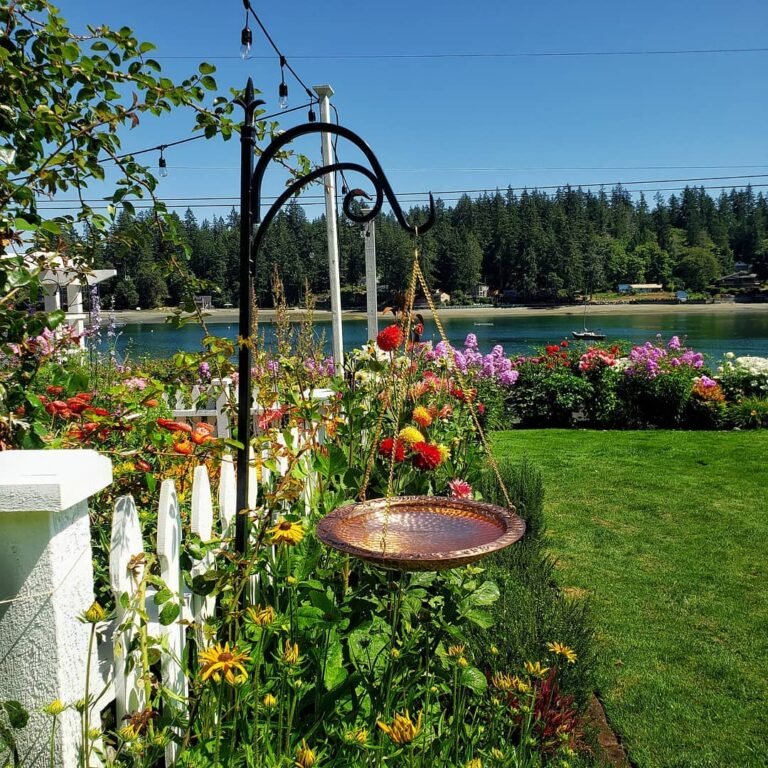
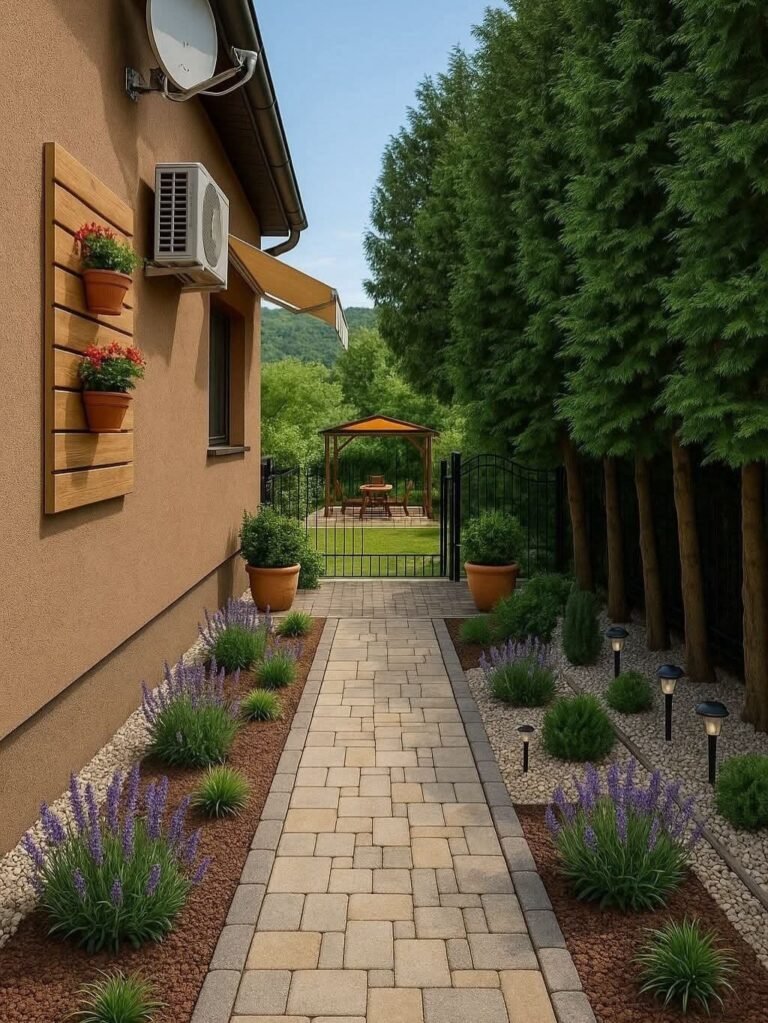
15 Cottage Garden Looks With Unexpected International Colour Palettes
Grew up thinking cottage gardens only came in one version. Soft pink roses. Lavender. White foxgloves. The English version. Nothing else considered.
Then I visited a garden in Portugal — terracotta walls, cobalt blue tiles, bougainvillea in shocking magenta — that had every structural quality of a cottage garden. Abundance. Informality. Things spill over their boundaries. Just entirely different colours.
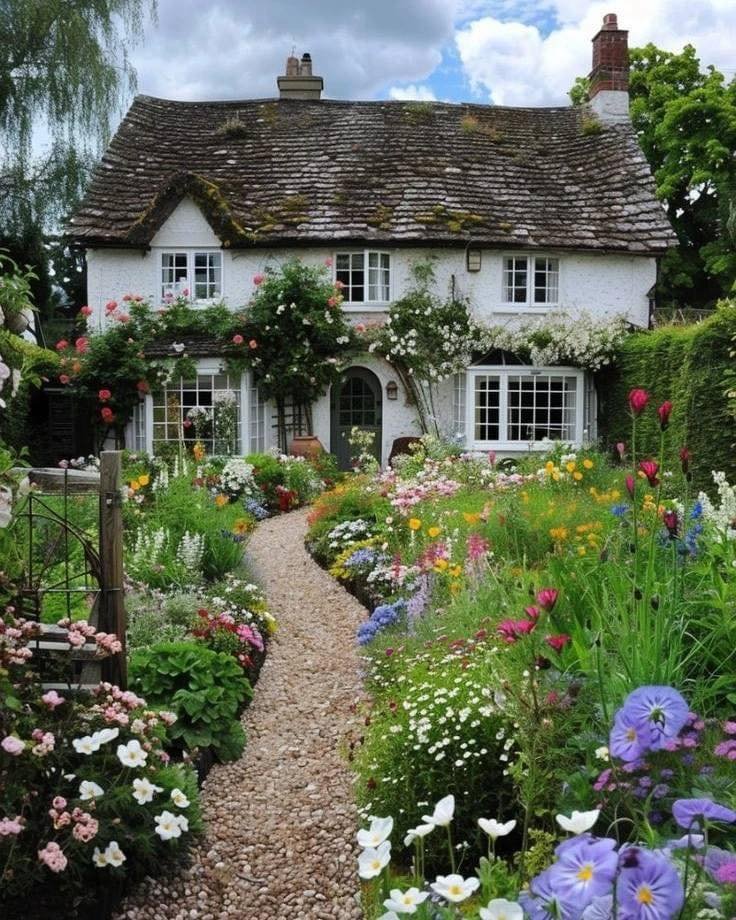
The cottage garden is a style, not a palette. The informality, the layering, the overflowing edges — those are the rules. The colours are not rules at all. They are choices.
Every culture has its own relationship with colour outdoors. Every culture produces gardens of abundance. Here are 15 of those combinations applied to cottage garden structure.
What Makes Something a Cottage Garden Regardless of Palette
The structural rules that do not change:
Abundance:
- More plants than feel appropriate
- Every space planted
- Nothing sparse
- Generosity is the point
Informality:
- Plants allowed to self-seed
- Edges soft not hard
- Things growing into each other
- Controlled chaos
Layering:
- Ground cover beneath
- Mid-height border plants
- Tall back-of-border
- Something climbing always
Repetition through the scheme:
- Same plant appearing throughout
- Not a single specimen of everything
- Thread of continuity
- Repeated plants = designed, one of everything = collected
The soft edge:
- Plants spilling over path
- Nothing contained rigidly
- The garden overflows itself
- Containment is the enemy
None of these rules mention colour.
The palette is the variable. The structure is the constant.
How International Palettes Work in Cottage Structure
The translation process:
Take cottage structure:
- Layered planting
- Overflowing abundance
- Climbing plants
- Informal edges
- Repeated elements
Apply international palette:
- Colour relationships from another culture’s design tradition
- Plant choices that deliver those colours
- Supporting materials (pots, walls, furniture) in the palette
- Result: recognisably cottage, unrecognisably the same
The supporting materials matter:
- Pot colour carries the palette when plants are not in flower
- Wall or fence colour sets the backdrop
- Furniture colour is part of the scheme
- Year-round palette maintained by materials, not just planting
1. The Portuguese Azulejo Palette (Cobalt, White, Terracotta)
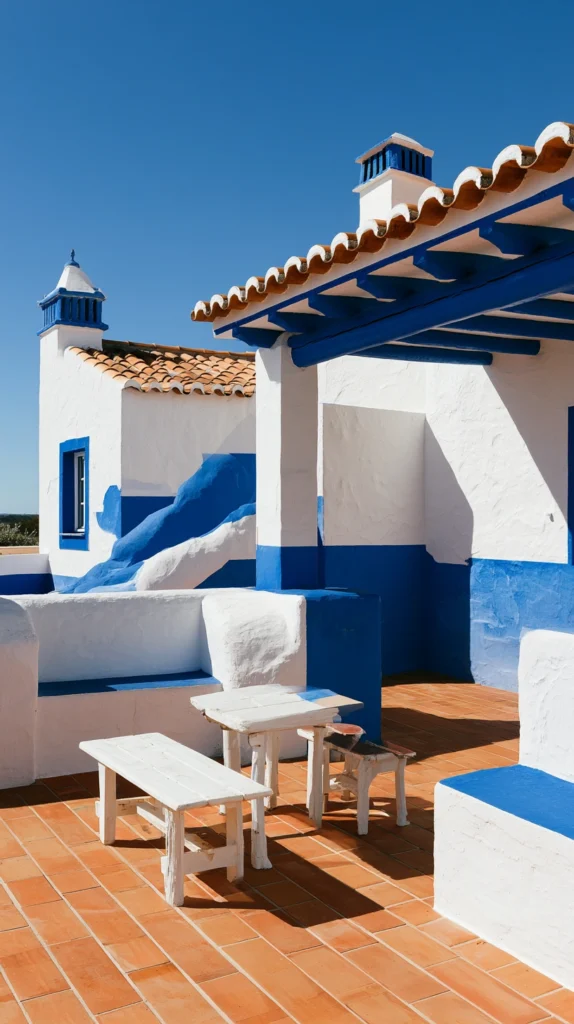
Deep cobalt blue with bright white and warm terracotta — the palette of hand-painted tiles meeting sun-bleached walls.
The cultural reference:
Portuguese azulejo tiles:
- Deep cobalt blue patterns on white
- Applied to exterior walls, fountains, staircases
- Centuries of tradition
- The defining visual of Lisbon
Applied to cottage structure:
- Blue and white as the primary relationship
- Terracotta warm against both
- Nothing soft or pastel
- Saturated and confident
The plants:
For cobalt blue:
- Anchusa ‘Loddon Royalist’ (deep blue, tall)
- Delphinium ‘Black Knight’ (darkest blue available)
- Veronica spicata (blue spires, long season)
- Agapanthus ‘Navy Blue’ (late summer, architectural)
- Aconitum (monkshood, deep blue, autumn)
For white:
- White foxglove (Digitalis purpurea ‘Alba’)
- Antirrhinum ‘White Giant’ (snapdragon)
- Cosmos ‘Purity’ (white, feathery, long season)
- White rose (Rosa ‘Iceberg’ — reliable, long-flowering)
- Achillea ‘The Pearl’ (white, flat heads, long season)
For terracotta accent (bridging plant):
- Helenium ‘Moerheim Beauty’ (warm copper-orange)
- Crocosmia ‘Emily McKenzie’ (burnt orange)
- Pot marigold Calendula in orange varieties
- Rudbeckia (warm gold-orange)
The supporting materials:
Terracotta pots throughout:
- Multiple groupings
- Varied sizes
- Weather-aged (most authentic)
- Some painted cobalt blue (deliberate callback to tiles)
Cobalt blue painted gate or shed door:
- Single element in cobalt
- Everything else white or terracotta
- The colour is concentrated not spread
- One cobalt accent, supported by everything else
Wall colour:
- White lime-washed fence or wall
- Backdrop that makes cobalt and terracotta both jump
- Nothing competes with white behind saturated colour
Cost breakdown:
- Cobalt blue plants (5 varieties, 3 each): $65
- White plants (4 varieties, 3 each): $50
- Terracotta bridge plants (3 varieties): $35
- Terracotta pots (assorted, 6): $55
- Cobalt paint for one element: $15
- Total: $220
My Portuguese border: The delphinium ‘Black Knight’ behind white cosmos — the photograph looked like a tile pattern happening in three dimensions.
Portuguese Palette Tips
The blue deepens with contrast:
- Blue beside white reads as cobalt
- Blue beside green reads as purple
- White neighbours are essential
- Separate blue from blue with white always
Seasonal management:
- Delphiniums: cut to ground after first flush, second flowering in September
- White cosmos: self-seeds — welcome it
- Terracotta accents: Crocosmia naturalises and spreads
- Scheme improves year on year
2. The Moroccan Riad Palette (Saffron, Cobalt, Celadon Green)
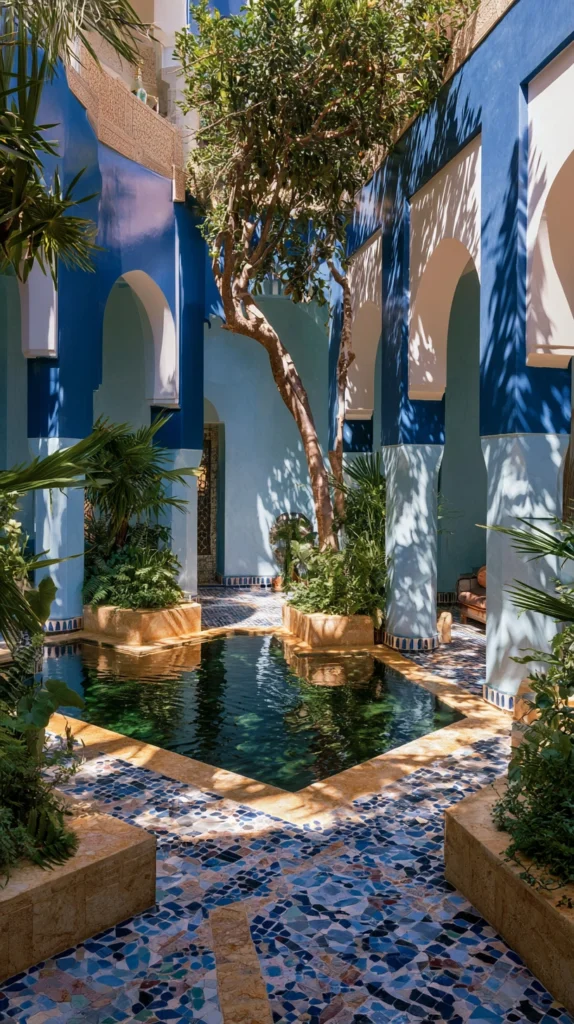
Deep gold, saturated blue, and soft sage green — the palette of shaded courtyard gardens and geometric tiles.
The cultural reference:
Moroccan riad gardens:
- Interior courtyard gardens
- Geometric tile patterns
- Citrus trees in terracotta
- Fragrant jasmine on walls
- Water at the centre
Applied to cottage structure:
- Gold and deep blue as the core relationship
- Celadon and sage green as the buffer
- Intense, warm, complex
- Nothing timid in this palette
The plants:
For saffron and gold:
- Rudbeckia ‘Goldsturm’ (intense gold, late summer)
- Achillea ‘Gold Plate’ (flat gold heads, long season)
- Helenium (warm gold to orange, autumn)
- Dahlia ‘Kelvin Floodlight’ (large gold heads)
- Anthemis tinctoria (chamomile-like, gold)
For cobalt:
- Salvia ‘Indigo Spires’ (deep blue, long season)
- Anchusa (intense blue, early summer)
- Baptisia australis (blue pea flowers, structural)
- Scabiosa ‘Deep Blue’ (pincushion flowers)
For celadon and sage:
- Stachys byzantina (silver-sage lamb’s ears)
- Artemisia ‘Powis Castle’ (silver-grey mound)
- Lavender (blue-grey, fragrant)
- Euphorbia (lime-green acid — contrast not harmony)
The supporting materials:
Terracotta in ochre or saffron glaze:
- Glazed pots in warm yellow-gold
- Against white or cream wall
- Citrus tree in largest pot (authentic reference)
- Geometric pattern in small tile insert on wall
Blue painted wall element:
- Single wall or shed in deep blue
- Zellij-inspired tile edging on path
- Or cobalt mosaic stepping stone
- The geometry of Morocco in cottage informality
Cost breakdown:
- Gold plants (4 varieties, 3 each): $55
- Blue plants (3 varieties, 3 each): $45
- Sage-green foliage plants (3): $30
- Glazed yellow terracotta pots (4): $60
- Tile stepping stone: $25
- Total: $215
3. The Japanese Wabi-Sabi Palette (Moss Green, Stone Grey, Blush)
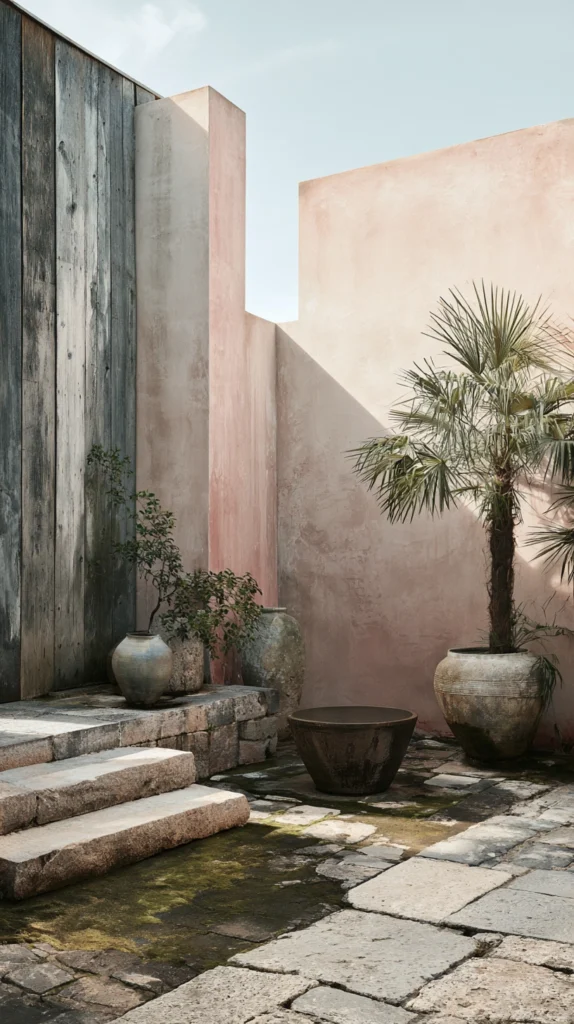
Muted sage, weathered grey, and pale blush — the palette of impermanence and beauty in imperfection.
The cultural reference:
Wabi-sabi aesthetic:
- Beauty of impermanence
- Irregular, aged, incomplete
- Moss on stone
- Faded, weathered, subtle
- Nothing bright or new
Applied to cottage structure:
- Same informality, different intention
- Colours that age and fade (and look better for it)
- Grey and green as the body
- Blush as the quietest possible colour accent
- Nothing saturated
The plants:
For moss and sage green:
- Alchemilla mollis (lime-green, spills everywhere)
- Hosta (bold blue-green leaves)
- Ferns (all textures, all shades of green)
- Epimedium (ground cover, quiet green)
- Hellebore (dark green foliage, year-round)
For stone grey:
- Stachys byzantina (silver lamb’s ears)
- Eryngium (steel blue-grey, architectural)
- Artemisia (silver-grey throughout)
- Sedum (grey-green, structural)
- Santolina (silver button foliage)
For blush (the quietest accent):
- Rosa ‘Cecile Brunner’ (tiny blush climber)
- Echinacea ‘Magnus’ (pale pink — more blush than pink)
- Astrantia (blush-white, delicate)
- Japanese anemone (pale pink, late summer)
- Phlox ‘Norah Leigh’ (white with faint blush)
The supporting materials:
Aged stone and weathered wood:
- Grey stone pots (not terracotta)
- Weathered cedar furniture
- Moss encouraged on every stone surface
- Nothing new-looking
Aged materials deliberately:
- Yogurt on stone to encourage moss
- Leave furniture to silver naturally
- New stone buried temporarily (accelerates aging)
- Patina is the goal
Cost breakdown:
- Green foliage plants (5): $55
- Grey foliage (4): $40
- Blush flowering (4): $45
- Grey stone pots (3): $70
- Total: $210
The most calming palette on this list. Everything muted. Everything aged. Nothing demanding attention. Attention given anyway.
4. The Mexican Fiesta Palette (Magenta, Coral, Lime Green)
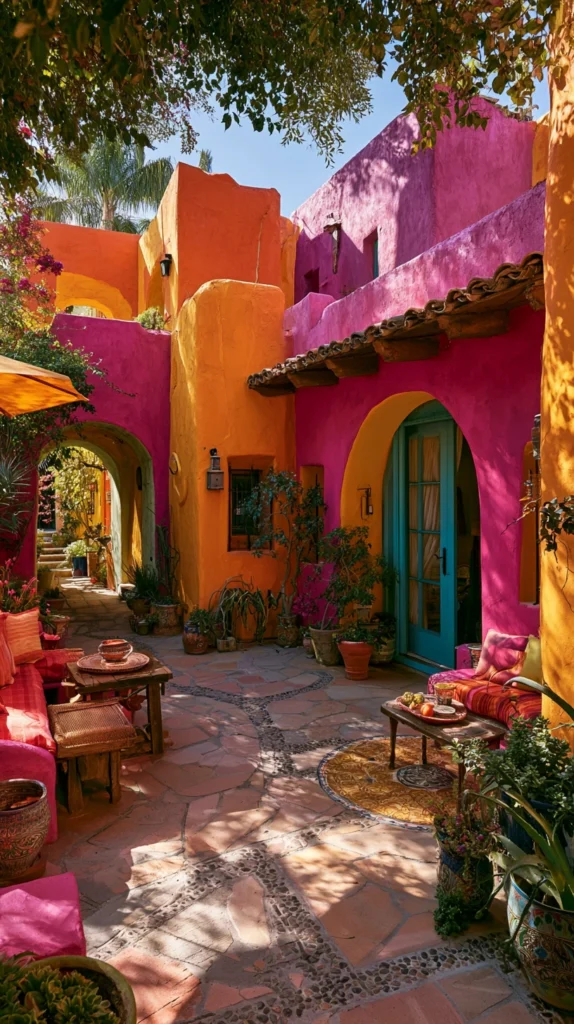
Shocking pink, warm coral, and acid lime — the palette of folk art, Frida Kahlo’s garden, and painted market stalls.
The cultural reference:
Mexican colour tradition:
- Casa Azul (Frida Kahlo’s house): cobalt and magenta
- Market textiles: maximum saturation
- Painted facades: no colour too bold
- The embrace of colour as joy
Applied to cottage structure:
- Maximum saturation throughout
- Nothing soft
- Lime green as acid contrast
- The most joyful palette on this list
The plants:
For magenta and shocking pink:
- Lychnis coronaria (magenta, self-seeds everywhere)
- Cosmos ‘Dazzler’ (magenta, feathery foliage)
- Dianthus ‘Doris’ (magenta pink)
- Bougainvillea (in warm climates or large pots)
- Geranium (Pelargonium) ‘Attar of Roses’ (magenta)
For coral:
- Hemerocallis ‘Stafford’ (dark coral daylily)
- Crocosmia ‘Lucifer’ (hot red-coral)
- Kniphofia (red hot poker, coral varieties)
- Dahlia ‘Bishop of Llandaff’ (red-coral)
- Geum ‘Totally Tangerine’ (coral-orange, long season)
For lime green (the contrast that makes everything work):
- Euphorbia characias (architectural, lime)
- Alchemilla mollis (lime-green fountain)
- Nicotiana ‘Lime Green’ (lime flowers, unusual)
- Fennel foliage (lime-green, feathery)
The supporting materials:
Painted elements in cobalt (Kahlo reference):
- Bright cobalt blue painted shed or gate
- Magenta flowering plants against it
- The contrast is the composition
- Most photographed version of this palette
Terracotta but painted:
- Some pots left natural
- Some painted in cobalt, some in yellow
- Multi-coloured pot collection
- Folk art aesthetic in the grouping
Cost breakdown:
- Magenta plants (4 varieties, 3 each): $55
- Coral plants (3 varieties, 3 each): $50
- Lime green contrast (3 plants): $30
- Painted pots: $15
- Cobalt gate paint: $15
- Total: $165
Most energising palette on this list. Cannot be half-committed. Either the full saturation or a different palette entirely.
5. The Scandinavian Midsommar Palette (Cloudberry, Birch White, Cornflower)
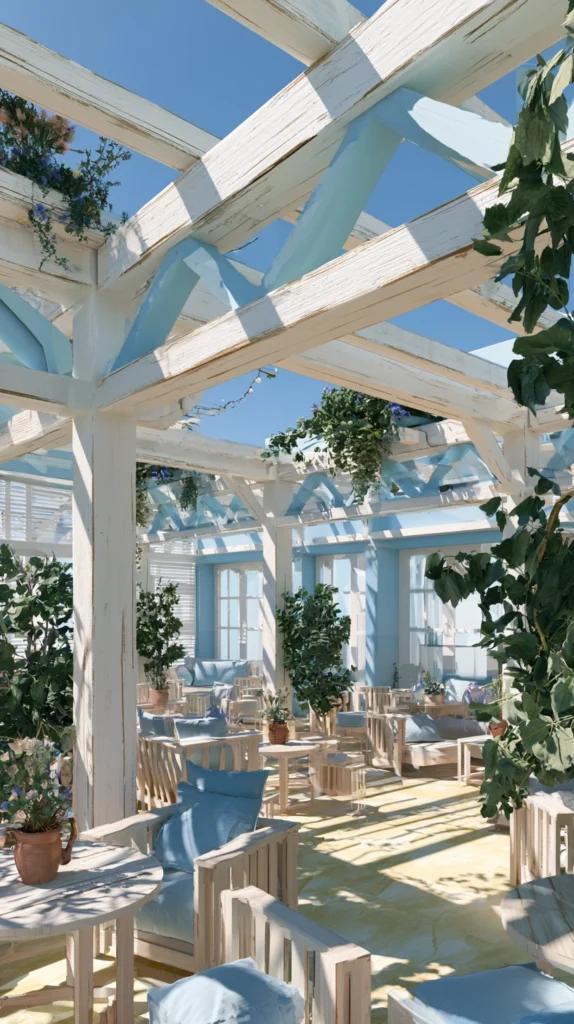
Warm cream-white, clear cornflower blue, and soft gold — the palette of midsummer Nordic meadows and painted wooden houses.
The cultural reference:
Scandinavian midsummer:
- Meadow flowers (cornflower, cow parsley)
- Birch trees and their white stems
- Pale yellow sunlight
- White painted wooden farmhouses
- Garlands of wildflowers
Applied to cottage structure:
- Light and airy version
- Nothing heavy
- Blue and white as backbone
- Gold as warmth
- Maximum freshness
The plants:
For cornflower blue:
- Centaurea cyanus (cornflower — essential and authentic)
- Nigella damascena (love-in-a-mist, blue)
- Phacelia (intense blue, bee magnet)
- Scabiosa (pincushion, soft blue)
- Veronica gentianoides (pale blue, spring)
For birch white and cream:
- Anthriscus sylvestris (cow parsley, white)
- Ammi majus (similar to cow parsley, white)
- White foxglove
- Achillea ptarmica ‘The Pearl’
- Gypsophila paniculata (baby’s breath clouds)
For cloudberry gold:
- Rudbeckia (clear gold)
- Anthemis tinctoria ‘E.C. Buxton’ (pale gold)
- Helenium ‘Wyndley’ (warm gold)
- Achillea ‘Moonshine’ (sulphur yellow, pale)
The supporting materials:
White-painted elements throughout:
- White picket fence (most Scandinavian)
- White painted shed
- Or white lime-washed stone wall
- White as the structural colour
Blue accents in materials:
- Cornflower blue painted door
- Or window frame
- Echoes the cornflower planting
- Palette visible in winter (material) and summer (plants)
Birch trees (if space allows):
- White stems architectural year-round
- Dappled light below (meadow feel)
- Underplant with cornflowers
- Most authentic Scandinavian backdrop
Cost breakdown:
- Blue plants (4 varieties, 3 each): $45
- White-cream plants (4 varieties, 3 each): $50
- Gold plants (3 varieties, 3 each): $40
- White paint for one element: $20
- Birch tree (small): $60
- Total: $215
Most fresh and airy palette on this list. Everything light. Everything moving in the breeze. The garden feels like a cool morning regardless of temperature.
6. The Indian Holi Palette (Turmeric, Fuchsia, Teal)
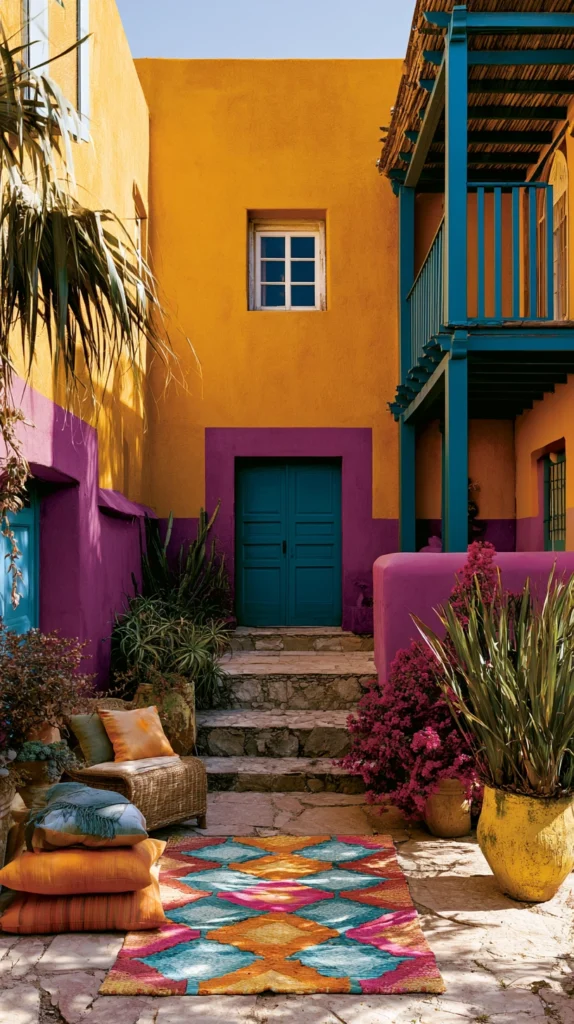
Deep turmeric yellow, vivid fuchsia, and jewel teal — the palette of festival, ceremony, and the subcontinent’s relationship with saturated colour.
The cultural reference:
Holi and Indian colour tradition:
- Festival of colour and spring
- Marigolds used ceremonially
- Maximum saturation in textile and architecture
- Colour as celebration not decoration
Applied to cottage structure:
- Three saturated colours
- Each strong enough to stand alone
- Together: festival in a garden
- Fuchsia and teal: the most unlikely combination that works completely
The plants:
For turmeric and marigold yellow:
- Marigold (Tagetes) — authentic cultural reference
- Rudbeckia ‘Indian Summer’ (large, gold)
- Helenium (warm gold to amber)
- Dahlia ‘David Howard’ (orange-gold)
- Coreopsis ‘Full Moon’ (clear yellow)
For fuchsia:
- Lychnis coronaria (magenta — most reliable)
- Cosmos ‘Dazzler’ (magenta-fuchsia)
- Dianthus ‘Doris’ (fuchsia pink)
- Phlox paniculata ‘Starfire’ (deep fuchsia)
- Persicaria amplexicaulis ‘Firetail’ (intense magenta)
For teal and jewel blue:
- Veronicastrum virginicum (tall blue spires)
- Salvia ‘Caradonna’ (deep blue-violet)
- Agapanthus (teal blue in certain varieties)
- Baptisia (blue-green pea flowers)
- Echinops (steel blue globe thistle)
The supporting materials:
Teal painted element:
- Shed door or garden wall
- Teal as backdrop to fuchsia planting
- The complement relationship (opposite on colour wheel)
- Most dramatic material choice
Gold terracotta:
- Pots glazed in amber or gold
- Marigold plants in terracotta
- Both orange: plants and pots agree
- One material, two expressions
Cost breakdown:
- Yellow-gold plants (4 varieties, 3 each): $55
- Fuchsia plants (4 varieties, 3 each): $55
- Teal-blue plants (3 varieties, 3 each): $45
- Teal paint for element: $18
- Total: $173
7. The Greek Island Palette (Aegean Blue, Whitewash, Terracotta)
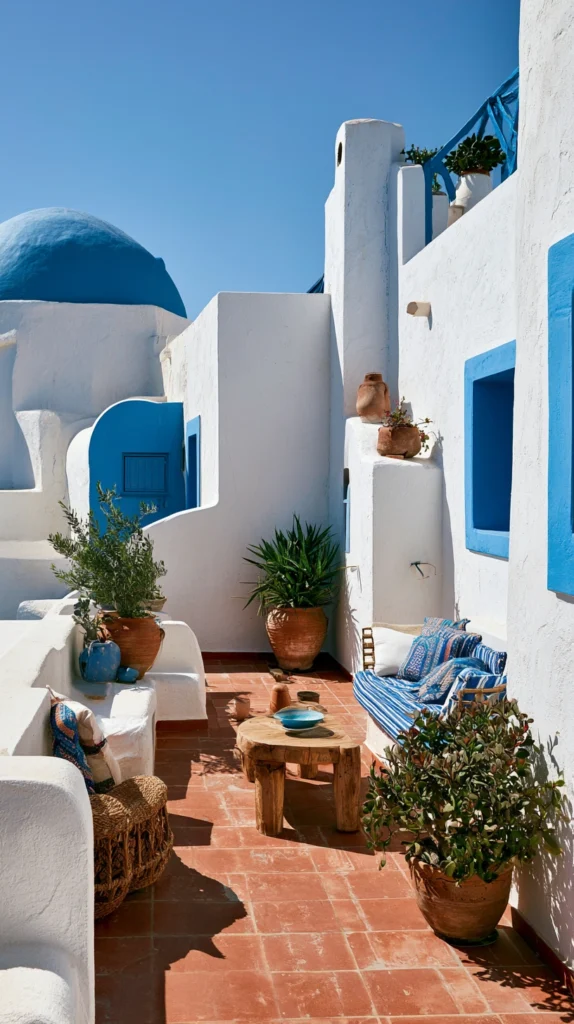
Clear Aegean blue, brilliant white, and sun-baked terracotta — the palette of Cycladic architecture and hillside gardens.
The cultural reference:
Santorini and Greek island visual:
- Brilliant white walls, blue domes
- Bougainvillea in magenta (grows against white)
- Terracotta pots cascading down steps
- Mediterranean herbs in stone planters
- Everything sun-bleached and simple
Applied to cottage structure:
- White as the structural colour (backgrounds)
- Blue as the signature
- Terracotta as the material thread
- Bougainvillea or its substitute as the drama
The plants:
For Aegean blue:
- Anchusa ‘Loddon Royalist’ (intense, similar to nothing else)
- Cynoglossum amabile (forget-me-not relative, sky blue)
- Salvia patens (clear blue, intense)
- Agapanthus (tall, blue, architectural)
- Plumbago (sky blue, wall plant)
For white (abundant):
- White climbing rose (‘Iceberg’ — reliable)
- White cosmos (self-seeds generously)
- White gypsophila (clouds of white)
- White phlox (scented)
- Arabis (low, white spring)
For bougainvillea substitute (frost-free zones: real bougainvillea):
- Lychnis coronaria (magenta-pink, bright)
- Or bougainvillea in large pot (overwinter inside)
- Clematis ‘Nelly Moser’ (pink-white against blue wall)
- Geranium (Pelargonium) ‘Rouletta’ (red-white bicolor)
The supporting materials:
White-rendered fence or wall:
- Limewash over existing fence
- Most impactful material change possible
- Everything in front of white: vivid
- Blue pots, terracotta pots, coloured plants — all jump
Blue painted pots:
- Some terracotta pots painted Aegean blue
- Some left natural
- Mix: the stepped Santorini aesthetic
- Casual arrangement down steps (if steps exist)
Cost breakdown:
- Blue plants (4 varieties, 3 each): $55
- White plants (4 varieties, 3 each): $50
- Accent plants (magenta, 3): $30
- White limewash: $35
- Blue painted pots (3): $25
- Total: $195
8. The Dutch Golden Age Palette (Burgundy, Cream, Forest Green)
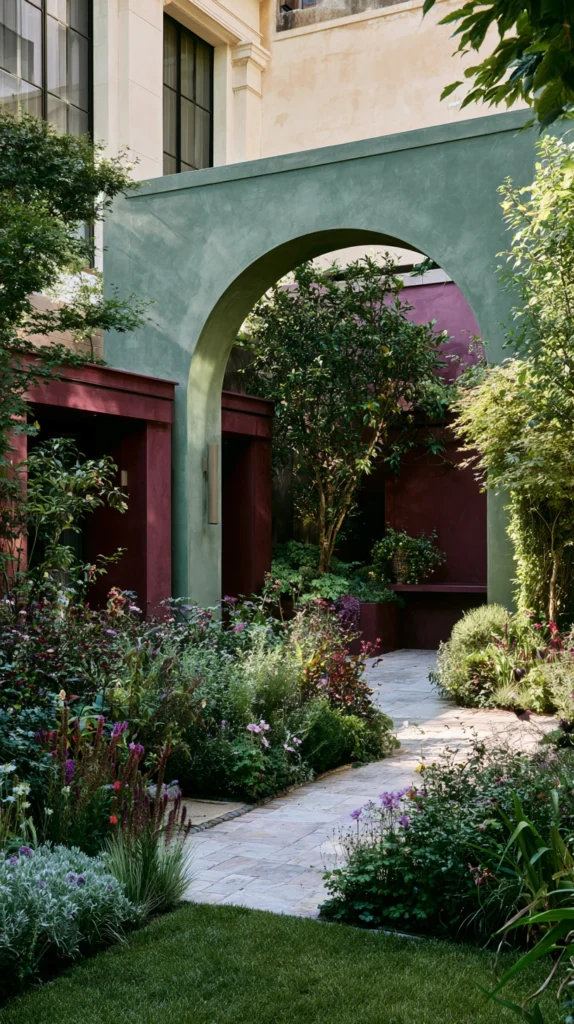
Deep wine red, rich cream, and dark forest green — the palette of Dutch Old Master flower paintings and Flemish gardens.
The cultural reference:
Dutch Golden Age florals:
- Jan van Huysum, Rachel Ruysch paintings
- Tulips, peonies, roses in deep reds and creams
- Dark green foliage
- Jewel-like intensity
- Formal-informal balance (Flemish garden)
Applied to cottage structure:
- Dark green as the structural colour (hedge, evergreen)
- Burgundy and cream as the planting
- Rich and jewel-like not fresh and airy
- The most painterly of all the palettes
The plants:
For burgundy and deep red:
- Rosa ‘Tuscany Superb’ (old rose, deep crimson)
- Dahlia ‘Nuit d’Ete’ (near-black, deep burgundy)
- Cosmos ‘Rubenza’ (wine red, unique)
- Paeonia ‘Felix Crousse’ (deep crimson peony)
- Astrantia ‘Ruby Wedding’ (dark burgundy)
- Knautia macedonica (deep red pincushion)
For cream and ivory:
- Rosa ‘Crème de la Crème’ (climbing, cream)
- Dahlia ‘Café au Lait’ (warm cream-blush — most saved flower)
- Antirrhinum ‘Ivory Queen’ (snapdragon)
- Cosmos ‘Xanthos’ (cream cosmos)
- Digitalis (foxglove) cream varieties
For forest green (structural):
- Yew hedge as backdrop
- Or dark-painted fence
- Buxus (box) edging
- Euonymus (dark, evergreen)
The supporting materials:
Dark green painted structures:
- Fence, pergola, or shed in deep forest green
- Cream and burgundy plants against it
- The Old Master painting recreated
- Most refined colour backdrop available
Aged copper accents:
- Copper watering can
- Copper labels
- Aged verdigris patina
- Warm metal echoing burgundy
Cost breakdown:
- Burgundy plants (5 varieties, 2 each): $65
- Cream plants (4 varieties, 2 each): $55
- Dark green structural plants: $45
- Forest green fence paint: $40
- Copper accessories: $25
- Total: $230
The most sophisticated palette on this list. Every other cottage garden on the street will read as simpler beside this one.
9. The Brazilian Tropicana Palette (Bird of Paradise Orange, Jungle Green, Electric Blue)
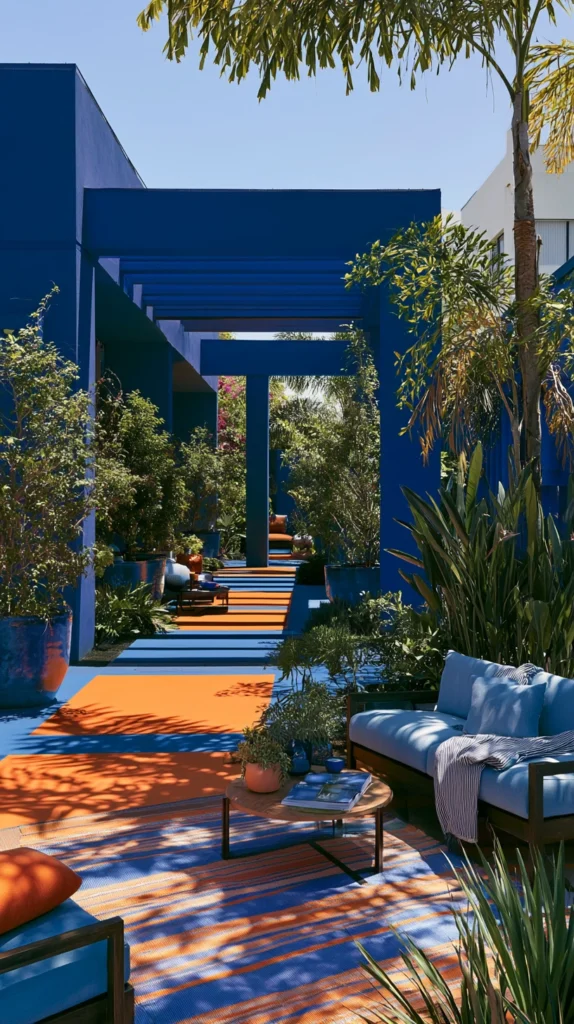
Vivid orange, deep jungle green, and electric blue — the palette of Burle Marx landscape design and Brazilian energy.
The cultural reference:
Roberto Burle Marx:
- Brazilian landscape architect
- Bold geometric designs
- Tropical plant abundance
- Colour used architecturally
- National parks and Copacabana promenade
Applied to cottage structure:
- Informality kept (cottage rule)
- Tropical plants added for scale and drama
- Orange as the sun signature
- Blue as the unexpected
- Green so deep it is almost black
The plants:
For vivid orange:
- Hemerocallis ‘Stafford’ (dark orange daylily)
- Crocosmia ‘Lucifer’ (flame red-orange)
- Kniphofia (red hot poker, orange varieties)
- Helenium ‘Rubinzwerg’ (warm orange)
- Dahlia ‘David Howard’ (orange-bronze)
- Canna lily (tropical, orange varieties)
For electric blue:
- Echinops ritro (globe thistle, blue)
- Agapanthus (clear blue, upright)
- Veronicastrum (tall blue spires, back of border)
- Salvia ‘Indigo Spires’ (deep blue, long season)
For jungle green:
- Gunnera manicata (giant leaves — statement)
- Fatsia japonica (bold leaves, evergreen)
- Hardy banana foliage
- Bamboo as screen
- Dark green creating depth
The supporting materials:
Vivid orange or yellow feature:
- One painted element in orange-yellow
- Or large orange glazed pot
- Echo of Brazilian architecture
- Warm accent colour materialised
Dark background essential:
- Dark painted fence (near-black or very deep green)
- Orange and electric blue jump forward
- White would flatten the drama
- Dark absorbs and projects the colours
Cost breakdown:
- Orange plants (5 varieties, 2 each): $65
- Blue plants (3 varieties, 3 each): $45
- Tropical-look green plants (3): $70
- Dark fence paint: $45
- Orange pot: $30
- Total: $255
10. The Persian Garden Palette (Rose, Pomegranate, Turquoise)
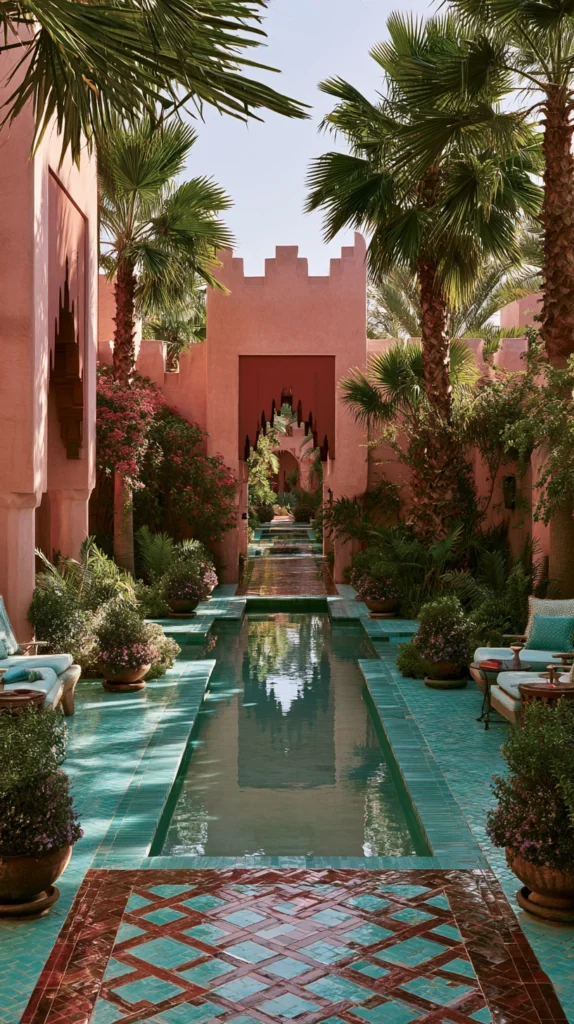
Blush rose, deep pomegranate red, and turquoise — the palette of Mughal gardens, Persian tiles, and the poetry of paradise.
The cultural reference:
Persian and Mughal garden tradition:
- The original paradise gardens (pairi-daeza = walled garden)
- Rose as the supreme flower
- Pomegranate as symbol
- Water as central element
- Turquoise and gold tiles
- Fragrance as primary design material
Applied to cottage structure:
- Rose in every form (climbing, shrub, standard)
- Pomegranate red as the saturated counterpoint
- Turquoise as the tile reference
- Fragrance non-negotiable here
The plants:
For blush rose (abundant):
- Rosa ‘Gertrude Jekyll’ (deeply fragrant, pink)
- Rosa ‘Olivia Rose’ (blush, reliable)
- Rosa ‘Gentle Hermione’ (cupped blush)
- Rosa ‘The Generous Gardener’ (climbing, blush)
- Paeonia (peony, blush varieties)
For pomegranate red:
- Dahlia ‘Arabian Night’ (dark red, jewel)
- Rosa ‘Tuscany Superb’ (deep crimson)
- Crocosmia ‘Lucifer’ (flame red)
- Tulipa ‘Queen of Night’ (near-black, spring)
- Persicaria amplexicaulis ‘Firetail’ (intense red)
For turquoise:
- Agapanthus (blue-turquoise varieties)
- Anchusa (most intense blue in cottage garden)
- Nigella (love-in-a-mist, blue-turquoise)
- Salvia patens ‘Cambridge Blue’ (clear turquoise-blue)
The supporting materials:
Turquoise water feature:
- Glazed turquoise bowl fountain
- Most authentic Persian reference
- Sound of water (paradise garden requirement)
- Turquoise glaze catches light
Turquoise painted element:
- Gate or shed in turquoise
- Rose trained against it
- Blush rose on turquoise: the Persian poster image
- Most photographed combination in this palette
Fragrance everywhere:
- This palette demands fragrance
- Roses must be fragrant (not just beautiful)
- Lavender at edges
- Jasmine on walls
- Fragrance is structural here
Cost breakdown:
- Blush rose plants (4 varieties): $80
- Red-pomegranate plants (3 varieties, 2 each): $55
- Turquoise-blue plants (3 varieties, 2 each): $40
- Turquoise glazed fountain bowl: $80
- Turquoise gate paint: $18
- Total: $273
Most fragrant palette on this list. Close your eyes and the garden is still present.
11. The Sub-Saharan Savanna Palette (Burnt Sienna, Ochre, Terracotta)
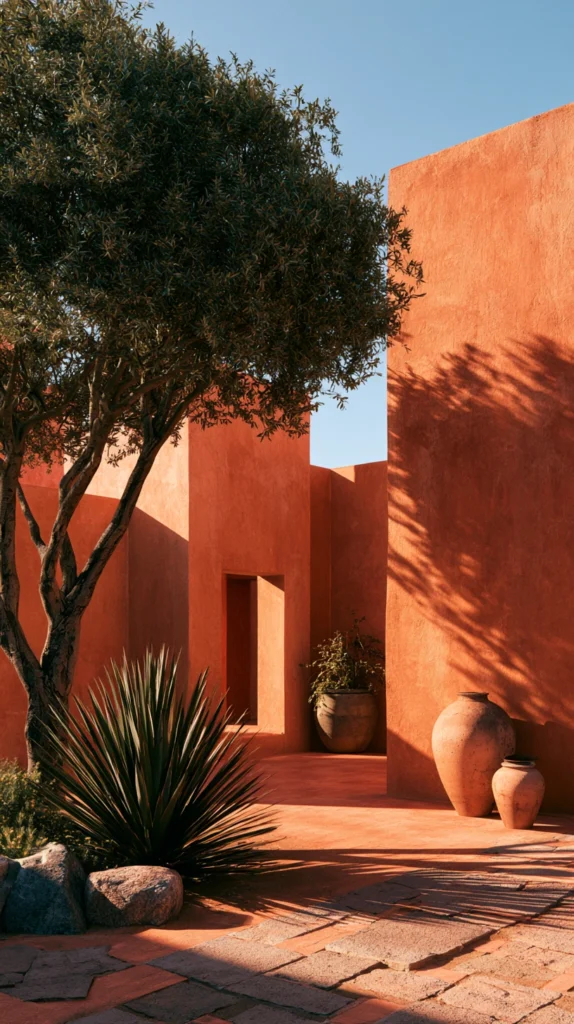
Warm earth tones — burnt sienna, deep ochre, and red terracotta — the palette of dried grasslands, red earth, and late afternoon African light.
The cultural reference:
African savanna light:
- Late afternoon gold
- Red earth (laterite soil)
- Dried grass in movement
- Acacia silhouettes
- The warmest possible natural palette
Applied to cottage structure:
- All warm tones, no cool
- Earth colours as the story
- Grasses as the movement element
- Nothing blue or cool anywhere
The plants:
For burnt sienna and warm red:
- Helenium ‘Moerheim Beauty’ (brick red, essential)
- Rudbeckia ‘Cherry Brandy’ (warm red-gold)
- Dahlia ‘Bishop of Llandaff’ (red)
- Hemerocallis ‘Stafford’ (deep orange-red daylily)
- Gaillardia ‘Burgundy’ (warm red)
For ochre and gold:
- Rudbeckia ‘Goldsturm’ (gold, the backbone)
- Helenium ‘Sahin’s Early Flowerer’ (gold-orange)
- Achillea ‘Gold Plate’ (flat gold heads)
- Coreopsis ‘Moonbeam’ (soft yellow-gold)
- Kniphofia (warm varieties)
For movement and grassland reference:
- Stipa gigantea (giant oat grass, gold)
- Pennisetum (fountain grass, warm tones)
- Miscanthus ‘Strictus’ (upright, gold late season)
- Deschampsia (hair grass, cloud movement)
- Panicum ‘Shenandoah’ (red autumn tones)
The grasses as design element:
- Grasses provide movement (wind-responsive)
- Dried grass heads winter structure
- Year-round presence
- Most undeplanted cottage element — here they are the spine
The supporting materials:
Red earth tones:
- Terracotta pots (never painted here — natural colour essential)
- Red gravel or decomposed granite
- Or red brick path
- Earth materials throughout
No white or cool materials:
- Every element warm-toned
- Palette compromised by cool white
- Even the bench: warm wood (not painted white)
- Ochre or terracotta furniture if painted
Cost breakdown:
- Warm red plants (4 varieties, 3 each): $55
- Gold-ochre plants (4 varieties, 3 each): $55
- Ornamental grasses (5): $65
- Terracotta pots (natural, 5): $45
- Red gravel for path: $50
- Total: $270
The palette that looks best in afternoon light. Golden hour makes this garden glow.
12. The East Asian Ink Painting Palette (White, Black, Celadon, Blush)
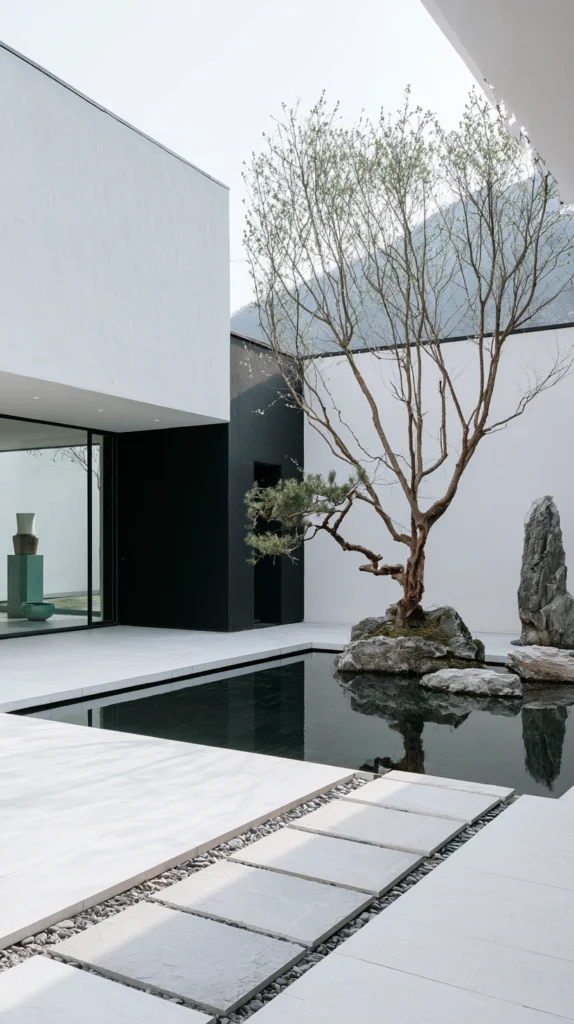
Near-white, near-black, celadon green, and palest blush — the palette of sumi-e ink painting and Chinese scholar gardens.
The cultural reference:
Sumi-e ink painting and Chinese literati gardens:
- Monochrome with touches of colour
- Space (negative space) as design element
- Restraint as the maximum statement
- Pine, plum blossom, bamboo as the classic plants
- The suggestion of more rather than the statement
Applied to cottage structure:
- Cottage abundance within a near-monochrome palette
- Most restrained version on this list
- White and near-black as the primary relationship
- Celadon and blush as the quietest possible colour
The plants:
For near-white:
- White climbing rose (abundant — this is cottage, white must overflow)
- White foxglove
- Gypsophila (white clouds)
- White cosmos
- Anemone ‘Honorine Jobert’ (white, late season)
For near-black (deep dark foliage and flower):
- Ophiopogon planiscapus ‘Nigrescens’ (black grass, ground cover)
- Dahlia ‘Chat Noir’ (near-black)
- Sambucus nigra ‘Black Lace’ (black-purple foliage, structural)
- Actaea simplex ‘Brunette’ (dark foliage, white flowers — palette in one plant)
For celadon:
- Euphorbia (grey-green)
- Hosta (blue-grey varieties)
- Sedum (grey-celadon)
- Artemisia (silver-grey)
For blush (the quietest touch):
- Rosa ‘Félicité Perpétue’ (small blush clusters)
- Astrantia ‘Roma’ (pale pink)
- Anemone ‘September Charm’ (soft pink)
The negative space:
- More space between plants than other palettes
- The ground between plants: mulched dark
- Dark mulch = near-black ground
- Space is part of the composition
The supporting materials:
Dark grey or black elements:
- Near-black painted structure
- Grey gravel path
- Dark stone pots
- Metal features in aged black
Celadon pot (the one colour statement):
- One celadon-glazed ceramic pot
- Prominent position
- White plant inside
- The painting’s single colour note
Cost breakdown:
- White plants (5 varieties, 2 each): $60
- Dark foliage plants (3): $55
- Grey-celadon foliage (3): $35
- Blush flowers (2 varieties): $30
- Celadon pot: $45
- Dark mulch (extensive): $40
- Total: $265
The most unusual palette on this list. Guests spend the longest here trying to understand why it is so different from every other cottage garden they have seen.
13. The Nordic Forest Palette (Spruce, Heather, Cloudberry Gold)
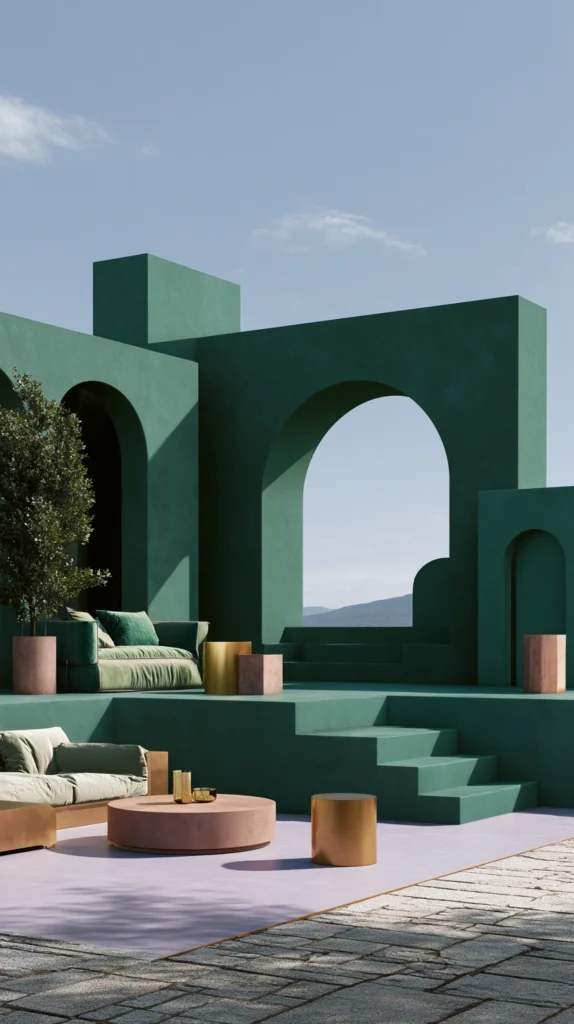
Deep spruce green, wild heather purple, and cloudberry warm gold — the palette of Scandinavian boreal forest floors and mountain meadows.
The cultural reference:
Nordic forest and fjord landscape:
- Spruce and pine (near-black green)
- Heather on moorland (purple-pink)
- Cloudberry (warm gold-orange berries)
- Lichen on rock (silver-grey)
- The late summer palette of northern wilderness
Applied to cottage structure:
- Deep conifer green as the dark backdrop
- Heather purple as the informal sweeping plant
- Gold as the warmth
- Silver lichen texture as the connector
The plants:
For deep spruce green (structural):
- Taxus (yew hedge, near-black green)
- Or dark fence behind
- Bergenia (dark glossy leaves)
- Pachysandra (dark ground cover)
- Dark pittosporum (mild climates)
For heather purple:
- Calluna vulgaris (heather — in masses)
- Erica (heath — winter flowering varieties)
- Lavender (purple, Mediterranean heather substitute)
- Salvia nemorosa ‘Caradonna’ (deep purple spire)
- Verbena bonariensis (airy purple, tall)
For cloudberry gold:
- Achillea ‘Moonshine’ (pale gold)
- Helenium (warm gold)
- Rudbeckia (clear gold)
- Geum ‘Totally Tangerine’ (warm gold-orange)
For lichen silver:
- Stachys (lamb’s ears, silver)
- Santolina (silver button)
- Artemisia (silver-grey throughout)
- Sedum (grey-green, texture)
Mass planting heather:
- Heather works in sweeping masses
- Not dotted individually
- Three to five plants together minimum
- Waves of purple across the border
Cost breakdown:
- Heather-purple plants (3 varieties, 5 each): $60
- Gold warm plants (3 varieties, 3 each): $45
- Silver foliage (3 varieties): $35
- Deep green structural (3): $50
- Total: $190
14. The Cuban Colonial Palette (Mint, Coral, Cream)
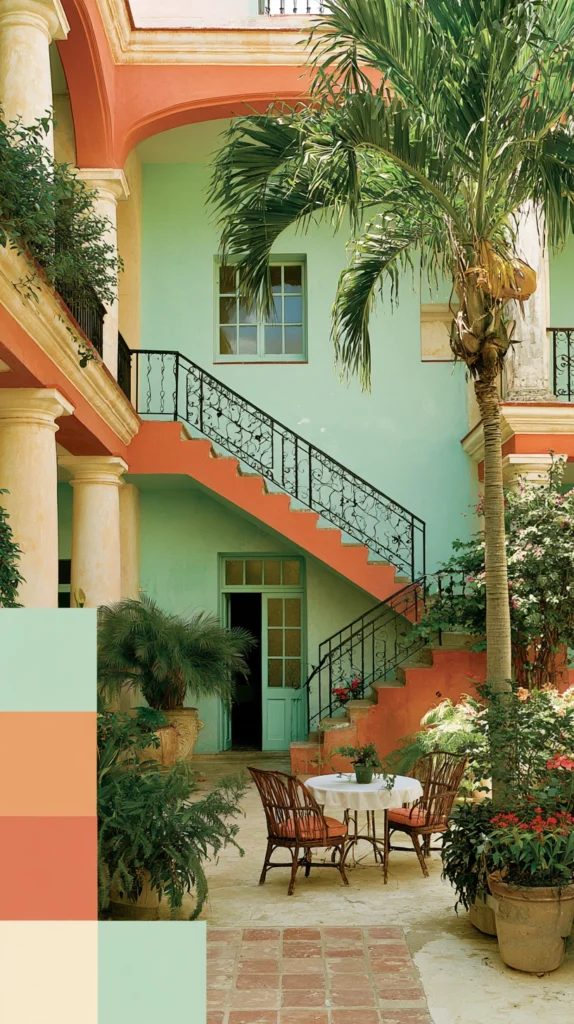
Faded mint green, warm coral, and aged cream — the palette of crumbling colonial architecture and vibrant Caribbean gardens.
The cultural reference:
Havana architecture:
- Colonial buildings in faded pastels
- Mint green and coral as common colours
- Cream and white as the base
- Wrought iron in black
- Exuberant planting in small courtyards
Applied to cottage structure:
- Pastel not saturated (faded, sun-bleached)
- Coral as the warm centre
- Mint as the cool relief
- Cream as the aged background
- Wrought iron as the material detail
The plants:
For coral:
- Hemerocallis ‘Pink Damask’ (coral-pink daylily)
- Geum ‘Totally Tangerine’ (clear coral)
- Rosa ‘Warm Wishes’ (coral-salmon rose)
- Dahlia ‘Karma Sangria’ (coral-pink)
- Antirrhinum (snapdragon) in coral varieties
For mint and soft blue-green:
- Nigella damascena (love-in-a-mist, blue-green)
- Eryngium (steel blue-green, architectural)
- Hosta (blue-green varieties)
- Eucalyptus (silver-mint foliage, grown as annual cut back)
- Lavender (blue-grey, close enough)
For aged cream:
- Cosmos ‘Xanthos’ (cream)
- Dahlia ‘Café au Lait’ (warm cream)
- Rosa ‘Crème de la Crème’ (cream climbing)
- Antirrhinum ‘Ivory Queen’
- Digitalis cream varieties
The supporting materials:
Mint-painted wall or fence:
- Faded mint — not fresh mint
- Mix white into the mint paint (faded effect)
- Sun-bleached appearance
- Coral plants against it
Wrought iron details:
- Black iron garden chairs (authentic)
- Iron window box brackets
- Ironwork gate detail
- The black anchors the pastels
Cream-painted wall element:
- Lime-washed area in cream
- Coral and mint plants against
- The three materials as palette
- Plants echo the paint
Cost breakdown:
- Coral plants (4 varieties, 3 each): $55
- Mint-blue plants (3 varieties, 3 each): $45
- Cream plants (3 varieties, 2 each): $40
- Faded mint paint: $20
- Wrought iron chair (secondhand): $45
- Total: $205
15. The English Country Garden Reimagined (The Unexpected Familiar)
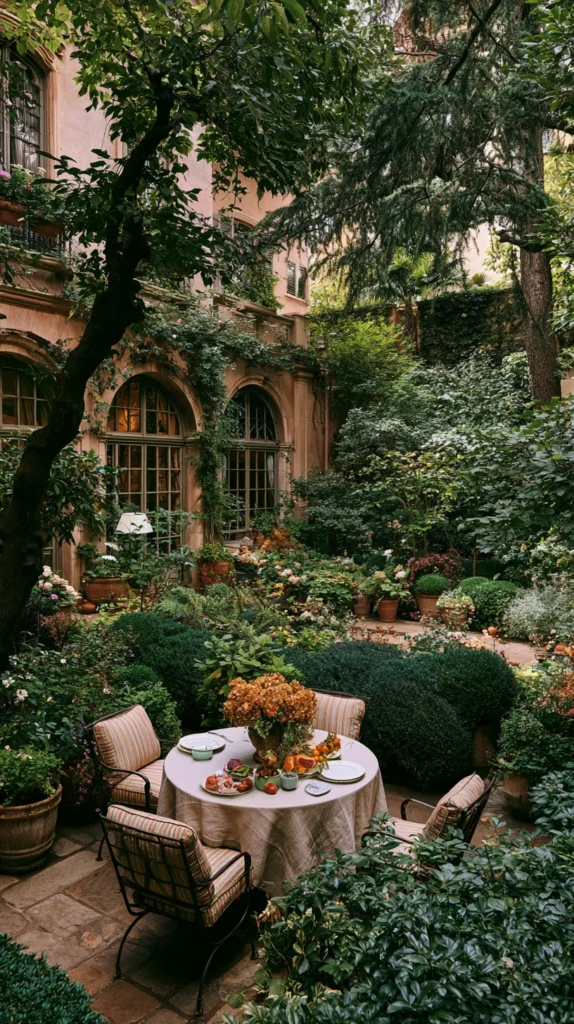
Classic English cottage colours pushed to their extremes — the palette everyone knows, made unfamiliar by going further than expected.
The cultural reference:
The original:
- Gertrude Jekyll and the Surrey school
- Soft pink and blue as the classic
- White as the peacemaker
- English restraint
The reimagined version:
- Same colours pushed to intensity
- Pink becomes magenta
- Blue becomes navy
- White becomes cream
- Restraint replaced by maximum abundance
Applied to cottage structure:
What changes:
- Every colour deepened by one shade
- Volume turned up not palette changed
- Abundance beyond what feels comfortable
- The English garden at its most confident
The plants:
For deep rose (not soft pink):
- Rosa ‘Munstead Wood’ (deep crimson, fragrant — David Austin)
- Rosa ‘Darcey Bussell’ (rich red-crimson, fragrant)
- Paeonia ‘Felix Crousse’ (deep crimson peony)
- Astrantia ‘Ruby Wedding’ (dark, not pale)
- Digitalis ‘Camelot Rose’ (deep rosy pink)
For near-navy (not pale blue):
- Delphinium ‘Black Knight’ (deepest blue)
- Aconitum ‘Spark’s Variety’ (deep navy)
- Anchusa ‘Loddon Royalist’ (intense blue)
- Salvia ‘Caradonna’ (deep purple-blue)
- Veronicastrum (tall blue-violet)
For rich cream (not white):
- Dahlia ‘Café au Lait’ (the cream standard)
- Rosa ‘Crème de la Crème’ (warm cream climber)
- Paeonia ‘Duchesse de Nemours’ (cream peony)
- Iris ‘Champagne Elegance’ (cream-buff)
For deep purple (the shadow colour):
- Salvia nemorosa (purple waves)
- Allium hollandicum (purple spheres)
- Catananche caerulea (blue-purple, delicate)
- Verbena bonariensis (airy purple)
The volume turned up:
Three times the plants expected:
- Where one rose was planted: three
- Where one delphinium: five
- Where one clump: a drift
- Cottage structure demands abundance — this version demands more
No bare soil:
- Ground cover under everything
- Alchemilla mollis between all border plants
- Self-seeding encouraged
- Every bare patch a plant waiting to happen
The supporting materials:
Deep green structure:
- Dark painted fence or shed
- Or established yew hedge
- Deep colours need dark backdrop
- White fence would flatten everything
Aged copper and verdigris:
- Copper labels
- Verdigris fountain
- Aged metal throughout
- Warm metal matches warm deep colours
Cost breakdown:
- Deep rose plants (4 varieties, 3 each): $80
- Navy blue plants (4 varieties, 3 each): $70
- Cream plants (3 varieties, 2 each): $55
- Deep purple (3 varieties, 3 each): $45
- Dark green paint: $40
- Total: $290
The most familiar palette made most intense. Visitors who know English cottage gardens stop and cannot immediately identify why this one is different. Then they see: everything they expected, but more of it.
Choosing the Right International Palette
Not every palette suits every garden:
Consider the light:
- Saturated palettes (Mexican, Indian, Brazilian): need strong sun
- Muted palettes (Japanese, Nordic Forest): beautiful in cool northern light
- Mediterranean palettes: suit warm south-facing gardens
- Earth palettes: glow in afternoon sun regardless of climate
Consider the architecture:
- Contemporary house: Dutch Golden Age, East Asian Ink, Scandinavian
- Victorian or Georgian: Persian, English Reimagined, Dutch
- Mediterranean render: Greek, Portuguese, Moroccan
- Rural: Nordic Forest, Savanna, Midsommar
Consider the commitment:
- Saturated palettes need full commitment (no mixing)
- Muted palettes more forgiving
- Earth palettes easiest to maintain character
- Monochrome palettes hardest to get right
The material anchor:
One painted element holds the palette in winter:
- When nothing is flowering
- The blue gate, the turquoise wall, the dark green fence
- Palette visible year-round through material
- Plants deliver in season, material delivers year-round
Getting Started This Weekend
The palette first:
Choose one from this list:
- Not elements from several
- Not the cottage palette you already have plus one new colour
- Commit to one cultural reference
- Everything else follows from the commitment
The first purchase:
Paint one element:
- Gate, shed door, or fence section
- The anchor colour of chosen palette
- This weekend, not eventually
- The painted element shows the commitment
The plants follow:
Buy three of the same:
- One variety, three plants
- Place together (repetition begins)
- First step of cottage structure
- Three plants of one variety signals intention
This weekend under $100:
- Paint for one element: $20
- Three plants (same variety, palette colour): $30
- One pot in palette material: $25
- One climbing plant for the anchor element: $18
- Total: $93
The palette is visible from the street. The cottage garden that follows will grow into it. The painted gate says where it is going before the first plant flowers.
International colour in cottage structure: the familiar made completely different. The difference is the point.