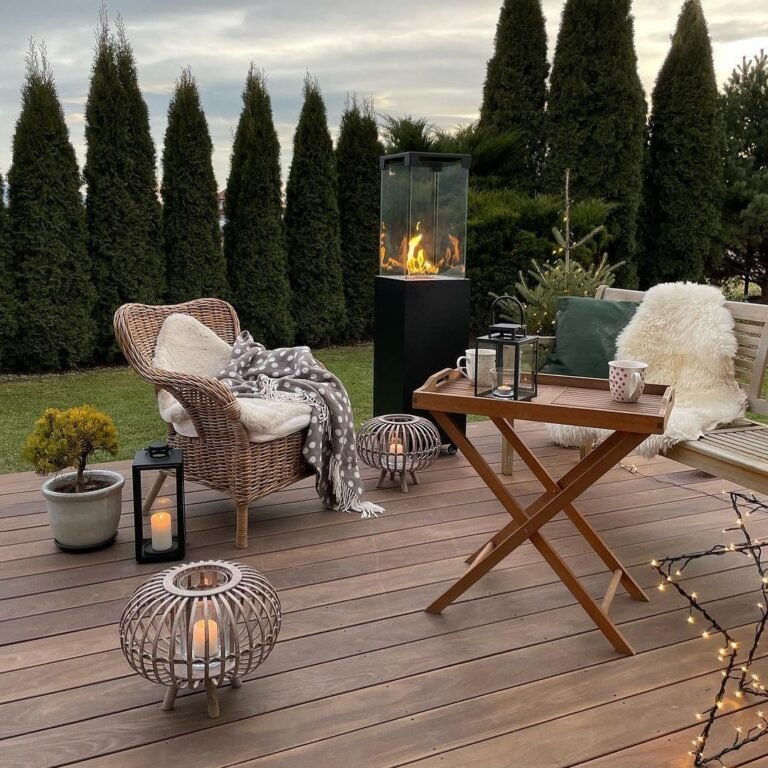
13 Outdoor Decor Ideas That Create a Pinterest-Worthy Space
Spent an embarrassing amount of time looking at outdoor spaces online before understanding what was actually different about them. Not the budget. Not the square footage. Not even the plants.
The difference was in the decor layer. The objects were placed with intention. The materials chosen for how they look together. The details that make someone stop and say that specific thing in that specific spot.
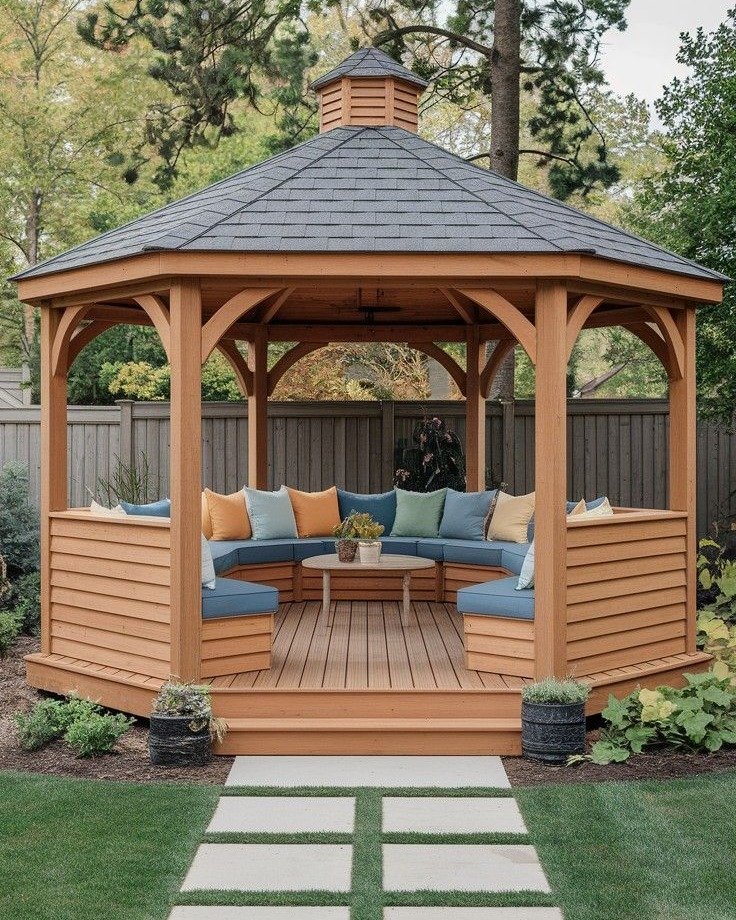
Decoration is the last layer. Most people either skip it entirely or get it wrong. Too much. Wrong scale. Mismatched materials fighting each other.
Get it right and the space goes from pleasant to photographed. From functional to saved. From a patio to a place with a personality.
Here are 13 decor ideas that do exactly that.
What Outdoor Decor Actually Does
It is not about objects:
What most people think decor is:
- Adding things
- Filling empty space
- Making it look finished
- Purchasing until it looks right
What outdoor decor actually does:
Tells a story:
- Objects together imply a life
- Terracotta pots plus worn wooden table plus herbs: someone cooks here with care
- Lanterns plus throws plus worn cushions: someone sits here in the evenings
- The story creates the feeling before the furniture does
Creates cohesion:
- Spaces that look designed share materials and palette
- Not matching — cohesive
- Two materials maximum working together
- One accent color throughout
- Everything in the same conversation
Adds the layer that furniture cannot:
- Furniture is structure
- Decor is personality
- A bench is a bench until something is placed on it
- A table is a table until the objects on it tell you what happens here
The difference between decorated and cluttered:
Decorated:
- Everything placed with intention
- Editing happened (not everything kept)
- Negative space between objects
- Objects relate to each other
Cluttered:
- Everything placed without editing
- More added without removing
- No breathing room
- Objects compete for attention
Rule before starting:
- Remove first
- Then add from this list
- Subtract twice as aggressively as feels right
- The space always needs less than it seems to
The Outdoor Decor Palette
Before any object is placed:
Choose two materials:
- Natural wood (teak, cedar, reclaimed)
- Terracotta (pots, tiles, accessories)
- Wicker or rattan (furniture, baskets, trays)
- Concrete (pots, accessories, surfaces)
- Wrought or powder-coated metal (black or aged brass)
- Natural stone (objects, surfaces, paths)
Choose one or two only.
Everything purchased passes through the filter:
- Is this one of the two materials
- If no: does it serve as the one accent color
- If neither: it does not go in the space
- Discipline here is what creates cohesion
The accent color:
- One only
- Appears in cushions, pots, candles, or plants
- Everything else neutral
- The accent does its job precisely because it is rare
1. The Tray as Outdoor Surface Styling (The Detail That Ties Everything Together)
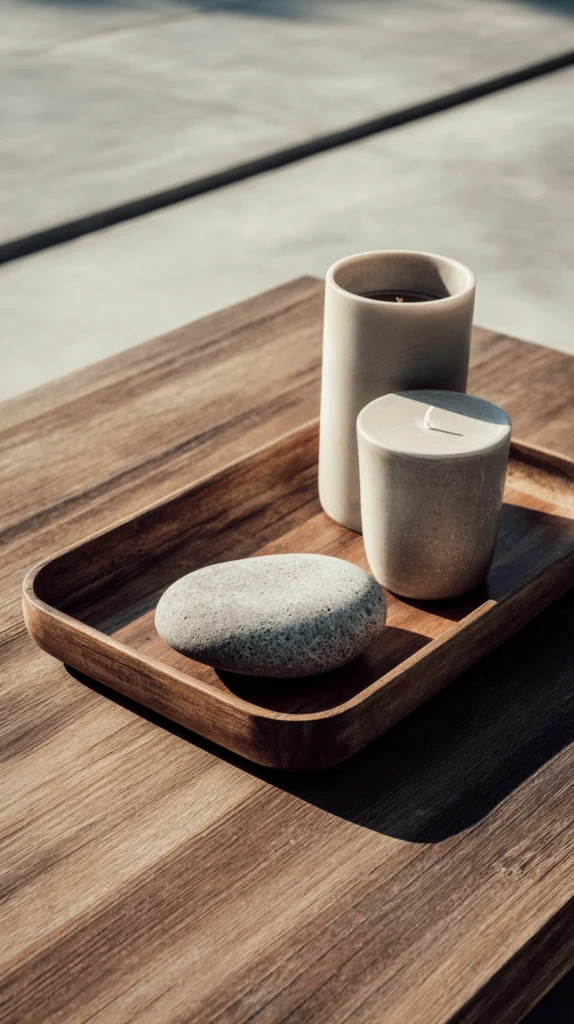
A decorative tray grouping objects on any outdoor surface — the interior design trick that works equally outdoors.
Why a tray changes surfaces:
Without a tray:
- Objects scattered on surface
- Each item isolated
- No relationship between them
- Surface looks like storage
With a tray:
- Objects gathered into one composition
- Tray creates boundary and belonging
- Objects become a vignette
- Surface looks styled
The tray principle:
- A tray is a frame
- Whatever is in a frame is art
- Same objects inside and outside a tray: different reading
- The tray does this with no additional cost
Tray materials for outdoors:
Reclaimed wood tray:
- Most charming option
- Weathers gracefully
- Found at salvage yards ($8–15)
- Or make from offcut boards
Galvanized metal tray:
- Industrial and handsome
- Weatherproof
- Works with black metal furniture
- $12–25
Wicker tray:
- Soft and natural
- Works with rattan furniture
- Weathers to silver-gray
- $10–20
Ceramic or slate board:
- Heaviest option
- Stays put in wind (advantage)
- Most refined
- $20–40
What goes on the tray:
The rule of odd numbers:
- Three to five objects
- Never two (pair = formal, not casual)
- Never six or more (cluttered)
- Three is enough
What photographs best:
Varied heights:
- One tall (candle, small plant, bottle)
- One medium (lantern, pot, object)
- One low (small dish, coaster stack, stones)
- Height variation creates visual interest
One plant always:
- Small succulent
- Herb cutting in water
- Air plant
- Living element anchors the composition
One candle or light:
- Pillar candle
- Small lantern
- Tea light in holder
- Light source on the tray completes it
One personal or found object:
- Smooth stone collected somewhere
- Small piece of coral or wood
- An interesting bottle
- The thing that makes it specific not generic
Where trays work outdoors:
Coffee table:
- Most common and most effective
- Tray takes up half the table
- Other half open (accessible)
- Clear defined zone
Side table:
- Single tray fills it
- Everything needed for sitting close
- Candle, drink, book
- Arm reach from seating
Potting bench or bar cart:
- Trays organize the working surfaces
- Corrals the objects
- Even working spaces look designed
- Multiple trays on one surface (different zones)
Cost breakdown:
- Reclaimed wood tray: $12
- Three objects (candle, small pot, stone): $20
- Small succulent in pot: $8
- Total: $40
My coffee table tray: Changed the reading of the entire seating area. Nothing else moved. The tray organized what was there and the space became a different thing.
Tray Styling Tips
Edit before placing:
- Clear the surface completely
- Choose three to five objects maximum
- Place on tray first
- Assess before placing tray on surface
Seasonal rotation:
- Change tray contents with seasons
- Same tray, different objects
- Spring: fresh herbs and small flowers
- Autumn: dried seed heads and darker candles
- Investment in tray pays across every season
2. Lanterns in Multiples (The Warm Light Composition)
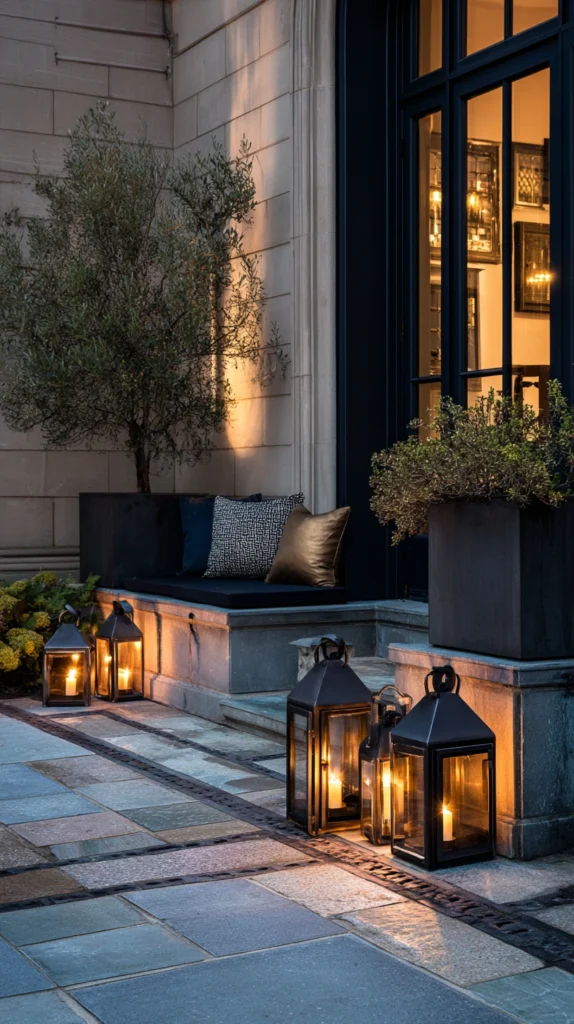
Grouped lanterns at varied heights — the outdoor lighting decor that creates warmth before anything is lit.
Why lanterns work differently from other lighting:
Lanterns are objects as well as light sources:
- Beautiful in daylight (sculptural)
- Beautiful at night (glowing)
- Both at the same time at dusk
- No other outdoor light source does this
The grouped approach:
Single lantern:
- Functional
- Not decorative
- Just a light
Three or more lanterns grouped:
- Composition created
- Visual weight created
- Decor not just function
- The arrangement is the idea
The height rule:
Within every group:
- One tall lantern (18–24 inches)
- One medium (12–14 inches)
- One short (6–8 inches)
- Touching or nearly touching each other
Never same height:
- Flat line of same-height lanterns = boring
- Varied heights = interesting
- The variation is the design
- One rule, significant result
Material and finish:
Matte black (most versatile):
- Works with wood, rattan, concrete
- Modern and traditional both
- Photographs with depth
- Consistent across any palette
Aged brass (warmest):
- Most charming material
- Glows in warm light
- Patinas naturally (gets better)
- Suits natural material palettes
Galvanized (most industrial):
- Raw and honest
- Works with reclaimed wood
- Ages to warm gray
- Less refined but charming
Pierced metal (most dramatic):
- Casts patterns on surfaces at night
- Moroccan association
- Striking even unlit
- One or two maximum (statement)
Placement strategy:
Floor clusters (beside seating):
- Beside sofa legs
- Flanking steps
- At path edges
- Ground level warmth
Surface groupings (on tables and shelves):
- Coffee table (beside the tray)
- Side tables
- Ledges and low walls
- Surface level warmth
Hanging (overhead):
- From pergola beams
- Tree branches
- Shepherd’s hooks
- Overhead warmth
All three levels simultaneously = complete lantern-lit space.
Candle inside:
Real flame (most charming):
- Pillar candle inside
- Flicker visible through glass or piercing
- Ritual of lighting is part of the experience
- Best for specific evenings
Flameless LED (most practical):
- Timer-set for dusk
- Consistent and reliable
- Realistic flicker on quality versions
- For daily use
Cost breakdown:
- Five lanterns (varied heights, matte black): $75
- Flameless candles with timers (5): $45
- Total: $120
The before and after: Same furniture, same plants, same space. Add a cluster of five lanterns at the corner of the seating area. The photograph changes entirely. The space changes entirely.
3. The Outdoor Throw and Cushion Layer (Softness That Photographs)
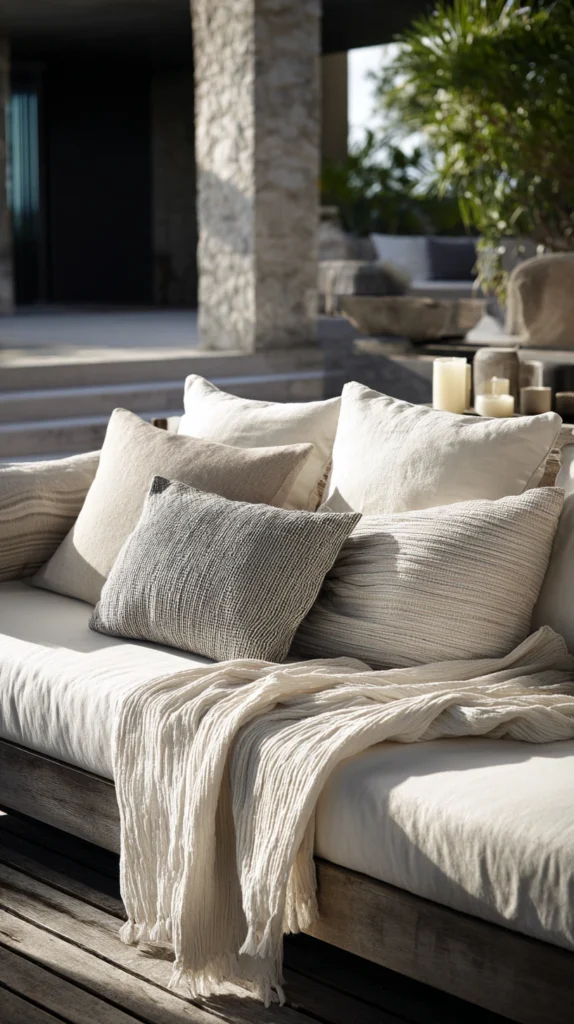
Quality outdoor cushions and throws styled with intention — the layer that makes outdoor furniture look like somewhere to stay.
Why the soft layer is the most-photographed decor element:
What cushions communicate:
- Comfort was considered
- Duration was expected
- The stay is welcome
- This is not a functional chair — it is an invitation
The photograph:
- Hard outdoor furniture: rigid and uninviting in photos
- Same furniture with cushions and throw: soft, inhabited, warm
- The soft layer changes the emotional reading of the image
- Every outdoor photo worth saving has this layer
Getting the cushions right:
Quantity:
- More than feels right
- Abundance signals welcome
- Six cushions on a three-seater sofa is not too many
- Two cushions on the same sofa is not enough
The arrangement formula:
Back row (largest):
- Two square cushions (22-inch)
- Matching or tonal (same color family)
- Structural backing
Middle:
- Two smaller squares (18-inch)
- Can introduce one pattern here
- Creates depth
Front:
- One lumbar or small square
- Different texture to others
- Statement position
The throw:
Placement (not folding):
- Draped not folded
- Casual toss over armrest
- One corner touching floor
- Never symmetrically positioned
Material:
- Cotton knit (light, casual)
- Chunky wool (autumn and winter feel)
- Linen throw (lightest, most elegant)
- Outdoor-rated versions available for all
Color:
- Same palette as cushions
- Slightly lighter or darker tone
- Not identical (interest) not contrasting (tension)
- Tonal family
The pattern rule:
Maximum two patterns:
- One geometric (stripe, grid, simple repeat)
- One organic (botanical, loose pattern)
- Everything else solid or textured
- Three patterns fighting = chaos
Pattern scale:
- Vary the scale of patterns if using two
- Large geometric + small organic
- Or small geometric + large botanical
- Same scale repeated: flattening
Outdoor-rated materials:
Sunbrella fabric:
- Most durable
- Fade-resistant (5-year guarantee)
- Quick-dry foam inside
- Worth the extra cost over cheap versions
Solution-dyed acrylic:
- Color throughout fibre (not surface)
- Cannot fade (dye is in the fibre)
- Weather-resistant
- Good middle-ground option
Cost breakdown:
- Four quality outdoor cushions: $120
- One pattern cushion (accent): $35
- Outdoor throw blanket (2): $60
- Total: $215
Most daily-use decor investment. Comfort creates use, use creates the life the space was designed for.
4. The Outdoor Art Piece (The Wall That Works)
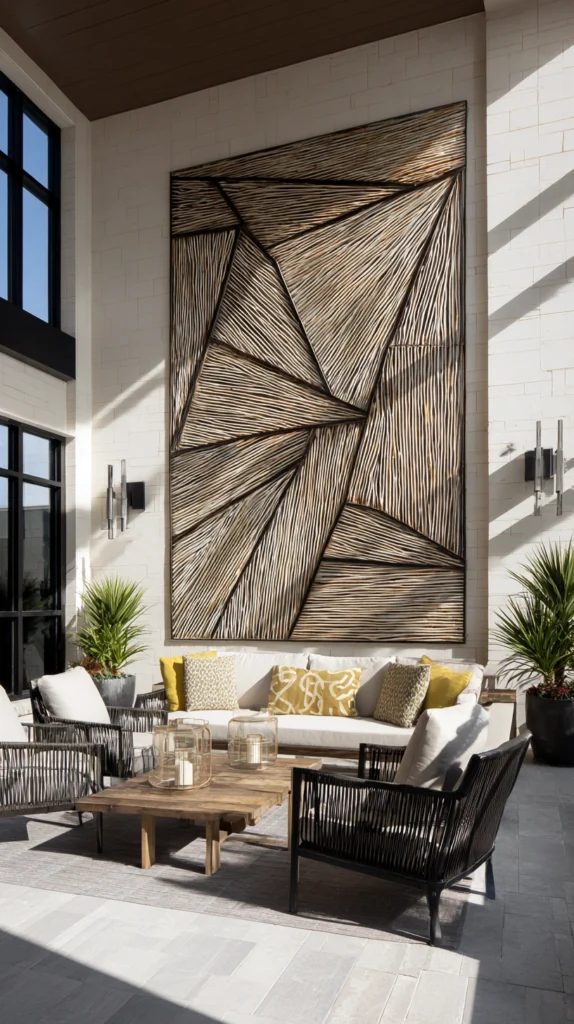
Weather-resistant wall art on a fence or exterior wall — the decor that makes vertical surfaces work as hard as horizontal ones.
Why outdoor art elevates a space:
The context it creates:
- Art implies someone curated this
- Curation implies taste and thought
- Taste and thought read as a designed space
- The space stops being accidental
Vertical surfaces without art:
- Just a fence
- Just a wall
- Background not feature
- Opportunity missed
Vertical surfaces with art:
- Backdrop becomes backdrop plus
- Eye has something to return to
- Space has a face not just a floor
- Dimension added
What works outdoors:
Metal wall art:
- Most weatherproof option
- Geometric or botanical forms
- Laser-cut designs
- Powder-coated black or rusted finish
Weathered wood panels:
- Driftwood compositions
- Reclaimed wood arrangements
- Horizontal board installation
- Ages beautifully
Ceramic or terracotta wall pieces:
- Individual pieces hung together
- Mix sizes and depths
- Gallery wall treatment
- Most fragile (not for windy positions)
Living art (plants on wall):
- Mounted planter pockets
- Vertical garden grid
- Moss frame
- Art that changes
The arrangement:
Gallery wall approach:
- Odd number of pieces (3, 5, 7)
- Varied sizes
- Asymmetrical arrangement
- Largest piece slightly off-center
Single statement piece:
- One large piece (36 inches minimum)
- Centered or off-center (design choice)
- Large plant or structure flanking
- More impact than multiple small pieces
The scale rule:
Pieces always larger than instinct suggests:
- Small art on large fence: disappears
- Same art larger: present and impactful
- Scale to the wall not to the hand
- Step back before deciding it is right
Positioning:
At eye level when seated:
- Not standing eye level
- Outdoor art viewed from seated position mostly
- Lower than interior art
- Test by sitting before fixing
Behind the main seating:
- Most photographed position
- Backdrop to every conversation
- Visible from approach to the space
- Anchors the seating area
Cost breakdown:
- Metal botanical wall art (large): $65
- Two smaller supporting pieces: $40
- Mounting hardware: $10
- Total: $115
My fence gallery: Three metal pieces behind the sofa. Every photograph taken at that sofa has the art in it. Backdrop becoming feature.
5. The Hanging Basket Done Properly (Overhead Green)
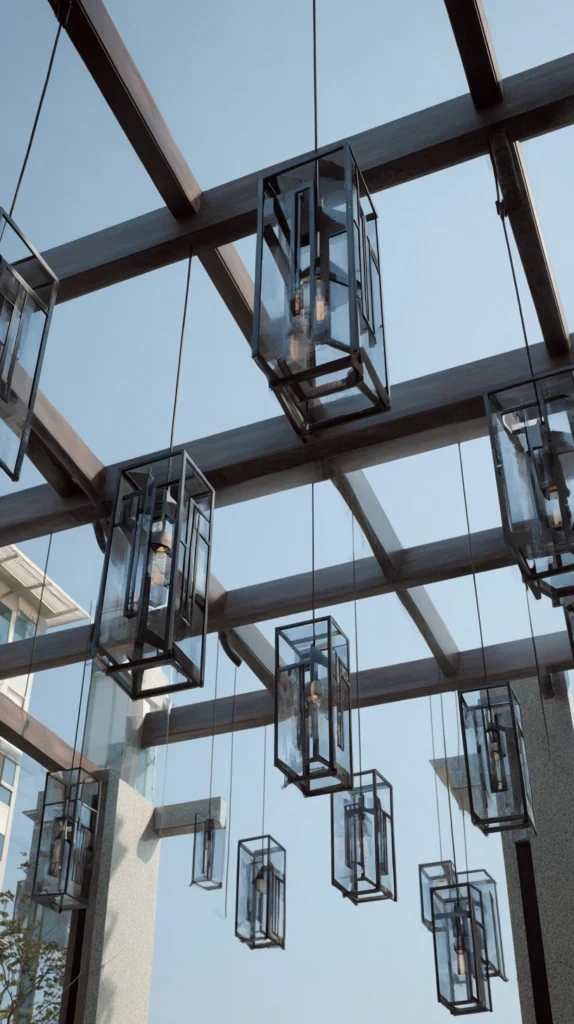
Full, overflowing hanging baskets positioned with intention — the overhead decor that frames and fills simultaneously.
Why hanging baskets are decor not just planting:
The position:
- Overhead element in any space changes how the space feels
- Hanging things create ceiling
- Ceiling creates room
- Even outdoors: overhead green = enclosed and intentional
The overflowing part:
- Thin, sparse basket: functional but not beautiful
- Overflowing, trailing basket: extravagant and charming
- The difference is planting density and watering
- The same basket, properly planted and maintained: different photograph entirely
Planting for overflow:
The basket size:
- 14-inch minimum (smaller dries out too fast)
- 16-inch is the sweet spot
- Coco liner (not plastic) breathes better
- Packed soil (no air gaps)
Planting density:
- Three to five plants per 14-inch basket
- More than feels right
- Close planting = fast coverage = the photo
- Sparse planting = gaps = disappointing
The composition per basket:
- One trailing plant (the overflow — main event)
- One bushy filler (fills center)
- One upright (height from center)
- All three working together
Best trailing plants:
- Lobelia (blue or white, delicate cascade)
- Fuchsia trailing (pink and purple, shade-tolerant)
- Bacopa (white, fine and delicate)
- Ivy (evergreen, works year-round)
- Million bells / Calibrachoa (profuse flowering)
The maintenance that creates the photograph:
Water daily in summer:
- Hanging baskets dry fastest of all containers
- Skip one day in heat: wilting
- Skip two: damage
- Self-watering baskets reduce frequency ($5–10 extra)
Feed weekly:
- Liquid tomato feed (high potassium)
- Encourages flowering not foliage
- Weekly is not excessive
- Under-fed basket: green. Fed basket: the photograph.
Deadhead every other day:
- Remove spent flowers immediately
- Signals to plant to produce more
- Takes five minutes per basket
- Transforms tired-looking to abundant
Where to hang:
Pergola beams:
- Multiple baskets at intervals
- Even spacing
- Creates living ceiling
- Most impactful use
Shepherd’s hooks:
- Freestanding
- Position anywhere
- Move to follow sun
- Pair them (symmetry at entrances)
Bracket on fence or wall:
- Single basket as focal
- Or row of matching baskets
- Transforms vertical surface
- Consistent height important
Cost breakdown:
- Two 16-inch baskets: $20
- Coco liners: $8
- Plants per basket (4 each): $30
- Liquid feed (season): $10
- Total: $68
Most maintenance-intensive decor on this list. Most visual return per square foot.
6. The Outdoor Candle Moment (Ritual Object as Decor)
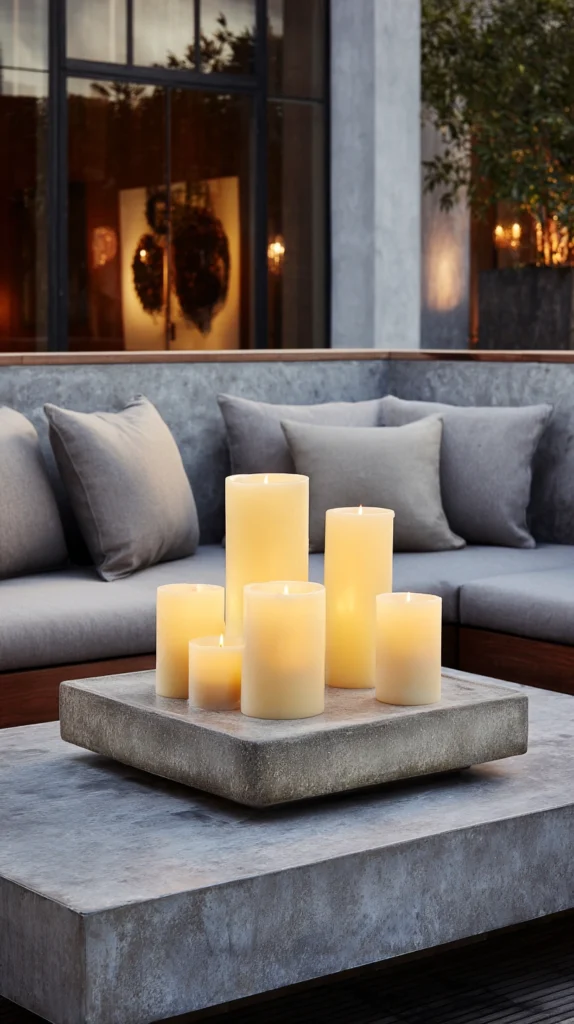
Candles and candle holders as outdoor decor objects — the detail that works in daylight as sculpture and at night as magic.
Why outdoor candles are irreplaceable:
The daytime presence:
- Interesting holders are sculptural objects
- Tell the viewer this space is used in the evening
- Promise the night version of the space
- Imply ritual and intention
The night presence:
- Flame changes everything it touches
- Moving light cannot be replicated
- Warmth radiates to nearby people
- The ancient association with safety and gathering
The outdoor candle collection:
Pillar candles (backbone of the collection):
- Various heights (4, 6, 8, 10 inch)
- Cream or white (never colored outdoors)
- Grouped in odd numbers
- On a tray, plate, or slate slab
Church candles on a plate:
- Pillar candles on an oversized ceramic plate
- Gravel or sand base (catches drips)
- Three candles on one large plate
- The simplest elegant candle arrangement
Storm lanterns with candles inside:
- Glass protects flame from wind
- Necessary outdoors (not just decorative)
- Column candle inside
- Most practical and most beautiful combined
Candlesticks outdoors:
- Unexpected and charming
- Iron or brass candlesticks
- Carried out for the evening
- Implies the dining table moved outside
The wind management:
Glass lanterns (best):
- Full glass enclosure
- Flame protected completely
- Can burn even in moderate wind
- Hurricane glass specifically designed for this
Deep-set holders:
- Candle below the rim of holder
- Rim blocks wind
- Concrete or ceramic (heavy = stable)
- Simple and effective
Flameless outdoors:
- For permanent placement in exposed areas
- Timer-triggered at dusk
- Zero wind management needed
- Sacrifice some of the magic
The arrangement outdoors:
At the table center (dining):
- Row of three down center
- Different heights
- Unscented (food nearby)
- Reflects in glasses and wine
On the tray (side table):
- One candle as part of the tray composition
- Always
- The tray is incomplete without it
Clustered at corner of seating area:
- Floor-level cluster
- Three storm lanterns grouped
- Warm light at ground level
- No other light source does this
Cost breakdown:
- Three storm lanterns: $45
- Pillar candles (collection): $25
- Oversized ceramic plate for grouping: $15
- Total: $85
The evening ritual: Lighting candles before sitting outside. Act of lighting = transition from day. Designed ritual creates designed calm.
7. The Vintage or Found Object (The Unexpected Detail)
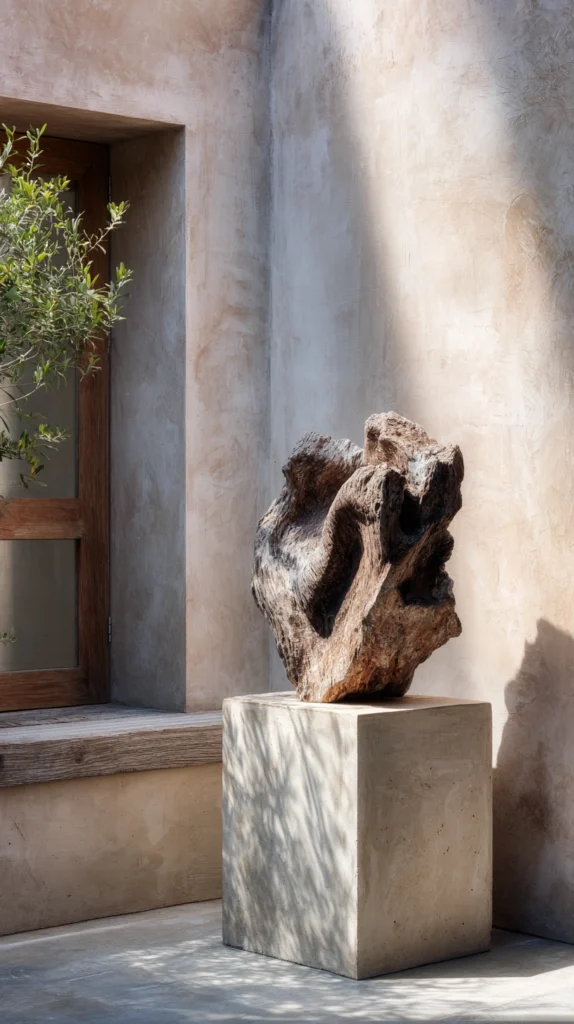
One unusual or found object placed with intention — the decor element that gives the space a story nobody else has.
Why found objects create the most-saved spaces:
The uniqueness:
- Cannot be bought in any shop
- Specific to one person’s life
- Implies history and travel and curiosity
- The viewer cannot replicate it exactly
The story it implies:
- Someone found this somewhere
- Someone saw the beauty in it before it was placed
- Someone has a life interesting enough to collect things
- The object is evidence of a person
The surprise:
- Expected outdoor decor has no friction
- Found objects have friction (pause, question, interest)
- Pause is the beginning of engagement
- Engagement creates the save
What works as outdoor found objects:
Industrial salvage:
- Old wheel or gear placed as object
- Vintage watering can (not used — displayed)
- Old wooden ladder as plant support
- Chimney pot as planter
Natural found objects:
- Large interesting boulder (positioned deliberately)
- Driftwood piece (size and form both important)
- Large seed pod
- Interesting root form
Architectural salvage:
- Old window frame as mirror alternative
- Antique gate panel as wall art
- Stone trough as planter
- Reclaimed corbel as shelf bracket
The placement:
Found objects need context:
- Not in the middle of nowhere
- Adjacent to planted area
- Integrated not isolated
- Looks arrived at not placed
Height as positioning choice:
- On a surface: smaller objects
- On a plinth (brick, log, stone): medium objects
- Directly on ground: large objects
- Elevated = display, ground = belonging
Where to find them:
Best sources:
- Salvage yards (most abundance)
- Car boot sales and flea markets (most unusual)
- Craigslist and Facebook Marketplace (most accessible)
- Your own shed (most overlooked)
- Walks on beaches, countryside (most free)
The shed audit:
- Objects already owned
- Forgotten and stored
- Old tools, containers, architectural fragments
- Often the best finds are already present
Cost breakdown:
- Salvage yard find: $15–40
- Or free (found, collected, already owned)
- Display materials (brick plinth, etc.): $5
- Total: $0–45
Best ROI on this list. Nothing bought new. Something specific and un-replicable placed with intention. The space has a story.
8. The Herb and Edible Display (Functional Objects as Decor)
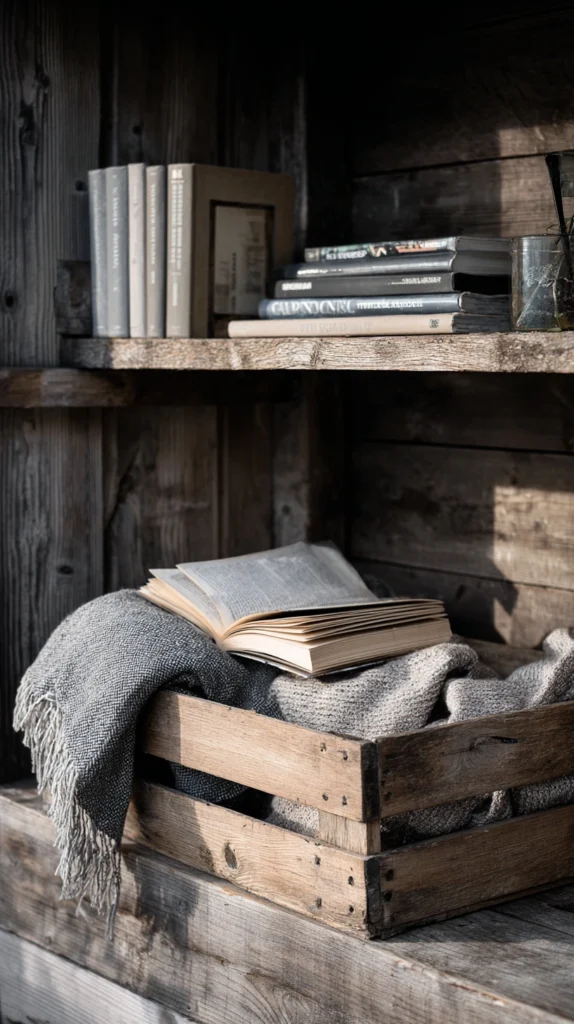
Culinary herbs styled as outdoor decor — the overlap of beautiful and useful that photographs better than either alone.
Why edible displays photograph so well:
The abundance signal:
- Lush herbs imply a kitchen that uses them
- Use implies a life centered on food and pleasure
- Food and pleasure: universally aspirational
- The display is evidence of the good life
The sensory layering:
- Sight: varied greens and textures
- Touch: textured leaves (rosemary, sage, thyme)
- Smell: brushed leaves release scent
- The photograph suggests all four
Staging the herb display:
The crate or wooden box:
- Reclaimed wooden crate as container
- Multiple small pots inside
- Or plants directly in crate (lined with plastic)
- Most-saved version of this idea
The terracotta cluster:
- Five to seven terracotta pots grouped
- One herb per pot (labelled)
- Copper or slate labels
- All different herbs, same pot material
The tiered shelf:
- Three-tier outdoor shelf
- Herbs on every tier
- Tallest at back, smallest at front
- Maximizes planting in minimal space
The herbs that photograph best:
For structure:
- Rosemary (woody, architectural)
- Sage (broad silver-green leaves, bold)
- Bay (glossy, structured, can be trained)
For texture:
- Thyme (tiny leaves, spreading)
- Oregano (soft mounds)
- Chives (upright, fine)
For drama:
- Purple basil (deep color, striking)
- Bronze fennel (feathery, copper)
- Lovage (giant architectural herb)
The labels:
Copper labels (most photogenic):
- Small copper tag on spike
- Punched or written with awl
- Weathers to dark bronze (beautiful)
- $1–2 each
Slate labels:
- Write with chalk or chalk pen
- Reusable
- Natural and charming
- $1–3 each
Carved wooden stakes:
- Write with wood burner
- Most handmade appearance
- Make rather than buy
- $0 if burner owned
The watering can in the composition:
Always include one:
- Galvanized or copper (not plastic)
- Placed beside the herbs not stored
- Implies recent tending
- The most reliable props in herb photography
Cost breakdown:
- Reclaimed crate: $8
- Seven herb plants: $35
- Terracotta pots (7): $28
- Copper labels: $14
- Galvanized watering can: $22
- Total: $107
My herb display: Positioned beside the outdoor kitchen area. Every photograph taken anywhere near it includes it. It photographs itself.
9. The Outdoor Bookshelf or Reading Stack (The Personal Detail)
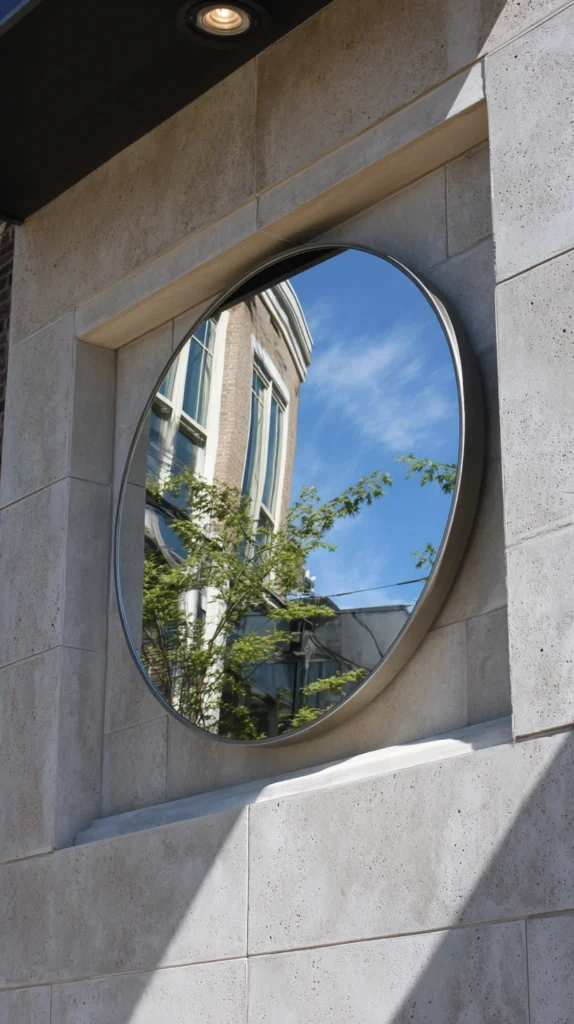
Books or a small outdoor shelf — the decor that adds personality and implies the specific use of the space.
Why books outdoors save so well:
The specificity:
- Books are personal objects
- Outdoors they are unexpected
- Unexpected personal objects: the most interesting decor
- Viewer wonders what the titles are
The life they imply:
- Someone sits here long enough to read
- That person brings books here deliberately
- The space is genuinely used not just displayed
- The books are proof
The practical approach:
Weatherproof storage:
- Wooden box with hinged lid
- Treated wood (exterior use)
- Three to five books visible or accessible
- One open face-down on armrest
The crate approach:
- Reclaimed wooden crate as open shelf
- Protected from rain by overhang or position
- Books arranged loosely (not library-neat)
- One or two face-out (spines more interesting than covers)
The basket:
- Wicker basket beside the chair
- Books and a throw inside
- Personal and immediate
- No assembly required
Which books:
Covers matter:
- Interesting or beautiful covers visible
- Design, gardening, travel photography
- Or personal favorites (honest)
- Avoid anything that looks randomly placed
The open book:
- Book left open on armrest or seat
- Page down (reading paused)
- The pose of someone interrupted not someone styling
- Most charming version of this detail
Supporting accessories:
Reading glasses on a book:
- If owned
- Left as if mid-reading
- Immediate story created
- Most personal detail possible
Bookmark visible:
- Old postcard as bookmark
- Or folded corner (honest)
- Or leather bookmark
- Page depth visible = how far through
The mini outdoor library:
For a dedicated reading space:
- Mounted weatherproof shelf on fence
- Ten to fifteen books
- Consistent spines visible
- Curated not collected randomly
Cost breakdown:
- Wicker basket: $18
- Three to five books (already owned): $0
- Weatherproof box if needed: $25
- Total: $18–43
Cheapest most personal outdoor decor available. Uses what is already owned. Creates the most specific story of any detail on this list.
10. The Outdoor Mirror (Space and Light Doubled)
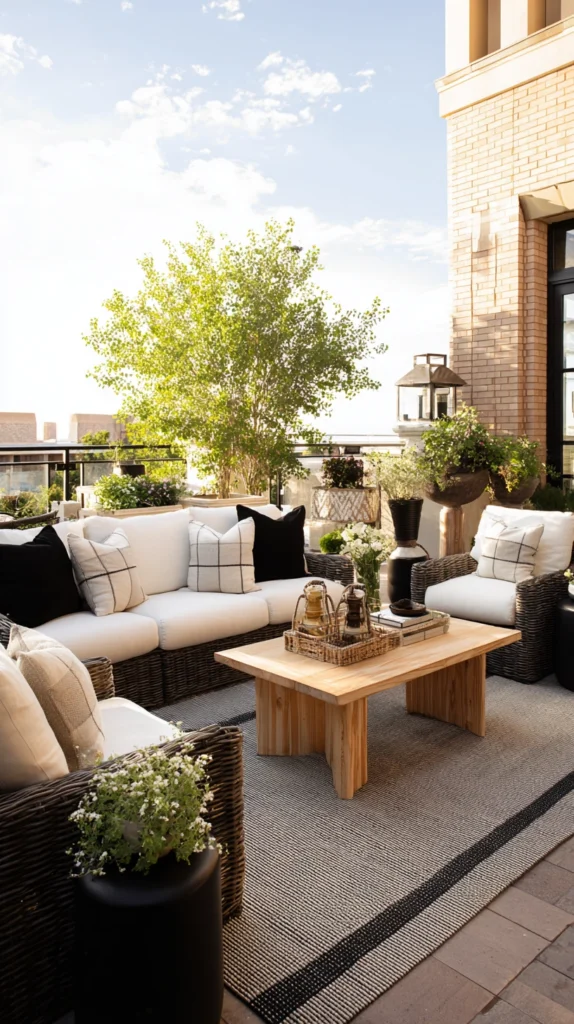
A weather-resistant mirror on a fence or wall — the decor trick that makes small spaces feel larger and dark corners feel lighter.
Why outdoor mirrors transform spaces:
The light:
- Reflects available light back into space
- North-facing or shaded areas brighten dramatically
- Garden reflected in mirror: twice the green visible
- Most cost-effective light addition available
The space:
- Mirror implies continuation beyond the wall
- Eye reads depth that is not there
- Small garden feels larger immediately
- Classic interior trick works identically outdoors
The garden reflected:
- Mirror opposite planting: double the flowers visible
- Mirror reflecting sky: light brought down
- Mirror reflecting tree: canopy doubled
- Position determines what it gives back
Choosing the outdoor mirror:
Metal-framed (weatherproof):
- Powder-coated frame
- Most practical option
- Arch or round (most popular shapes)
- $40–120
Aged metal frame:
- Vintage styling
- Weathering adds character
- Antique shop or Craigslist source
- More charming than new
Upcycled window:
- Old sash window
- Multiple panes create pattern
- Frame already weathered
- $0–20 from salvage
The shape:
Round (most saved):
- Softest shape
- Works against any hard fence
- Contemporary and traditional both
- Most universally appealing
Arch:
- Implies doorway
- Depth illusion strongest
- Taller format
- Cottage garden favorite
Rectangular:
- Most light returned (most surface area)
- More formal
- Gallery-style framing
- Works in contemporary spaces
The position:
At eye level from seated position:
- Not standing height
- Outdoor spaces mostly used seated
- Sitting down: what does the mirror show
- This is the test
Framed by plants:
- Climbing plant on wall around mirror
- Vines framing the glass
- Integration not isolation
- Most-saved mirror photograph version
The reflection decision:
Mirror shows garden (ideal):
- Positioned opposite planting
- Green reflected = garden doubled
- Most charming result
- Position opposite the best view
Mirror shows sky:
- Angled upward slightly
- Light and cloud reflected
- Brightens dark corners most effectively
- Less expected than garden reflection
Cost breakdown:
- Round metal-framed outdoor mirror: $65
- Climbing plant to frame it: $18
- Mounting hardware: $10
- Total: $93
My garden mirror: Positioned opposite the main border. The border exists twice now. Small garden feels half as small. One object, two outcomes.
11. The Rug as Room Definer (Foundation of Every Styled Space)
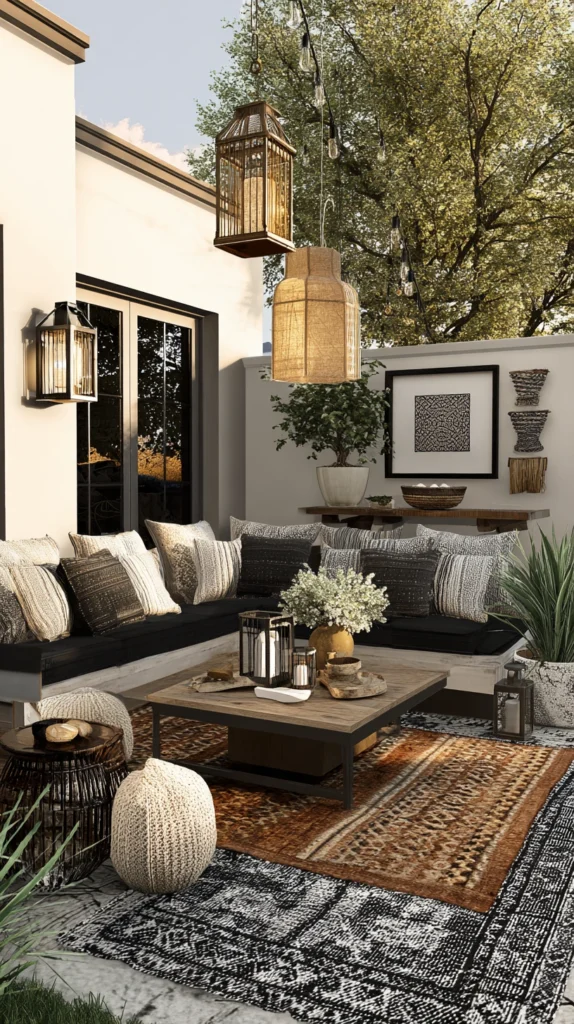
A properly scaled outdoor rug beneath the main seating — the decor foundation that makes every object placed above it work harder.
Why the rug is decor not just furniture:
The room it creates:
- Without rug: furniture scattered on paving
- With rug: furniture in a room
- Same furniture, same paving, same space
- Rug creates the room from nothing
The decor function:
- Every object placed on or near it now belongs to a composition
- Tray on coffee table above the rug: part of a designed space
- Same tray without the rug: isolated object
- Rug gives context to everything above it
Why scale matters more than any other rug decision:
Too small (common mistake):
- Rug floats under coffee table only
- Furniture has no relationship to it
- Makes the space feel smaller not larger
- Worse than no rug in most cases
Right size:
- All furniture legs on the rug
- Or all front legs on (acceptable minimum)
- Extends 12-18 inches beyond furniture
- The floor feels warm and complete
The pattern question:
Patterned rug as statement:
- One bold rug and everything else simpler
- Geometric is the outdoor pattern that works best
- Sets the palette everything else follows
- The most decisive decor choice in the space
Neutral rug as foundation:
- Everything else can have pattern and color
- Warm gray, cream, sisal tones
- Flexible palette above it
- Safer but less decisive
Layered approach:
- Larger neutral underneath
- Smaller patterned over (offset)
- Designer detail for no additional skill
- Pattern contained not repeated everywhere
Outdoor rug materials:
Polypropylene:
- UV and weather resistant
- Soft underfoot (better than it sounds)
- Washable (hose down)
- Most practical for exposed spaces
Natural fiber (jute, sisal):
- Most beautiful texture
- Covered areas only
- Not rain-proof
- Brings a quality synthetic cannot match
Recycled plastic:
- Most durable
- Waterproof completely
- Texture varies by product
- Most sustainable option
The barefoot test:
Walking barefoot on a warm outdoor rug:
- Changes the relationship to the space
- Nobody walks barefoot on cold paving
- Everyone walks barefoot on a warm rug
- Barefoot = relaxed = lingering = the space earning its purpose
Cost breakdown:
- Large outdoor rug (8×10): $85
- Smaller layered rug: $40
- Rug pad (non-slip): $20
- Total: $145
The single decor item that makes every other item work better. Start here before adding anything else to an outdoor space.
12. The Outdoor Shelf or Ladder Display (Vertical Decor)
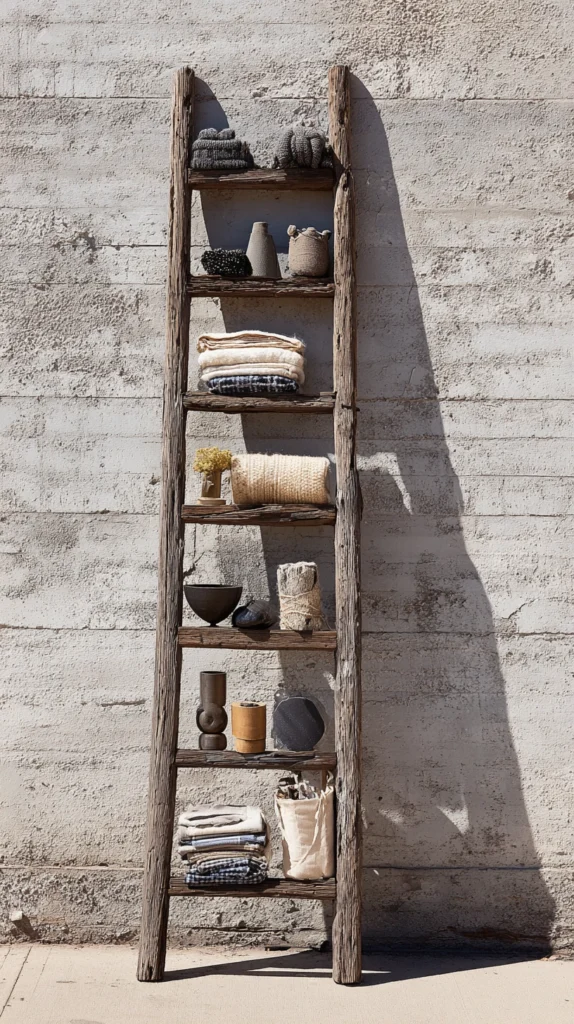
A leaning ladder or mounted shelf as outdoor display — the vertical decor surface that uses wall and fence space productively.
Why vertical displays photograph so well:
The height:
- Most outdoor decor is low (ground and table level)
- Vertical element adds height
- Height creates dimension in photographs
- Eye travels up the composition
The abundance:
- Shelves hold many objects
- Many objects in a vertical line = generous display
- Abundance signals care
- Generosity reads in the photograph
The ladder approach:
Vintage wooden ladder:
- Leaned against fence or wall
- Objects hung on rungs
- Plants on rungs (small pots)
- Most casual and charming version
Sources:
- Salvage yards ($10–25)
- Craigslist free section
- Barn sales
- Own storage (often already owned)
What goes on the ladder rungs:
Hanging pots:
- Small terracotta pots wired on
- Trailing plants cascade
- Each rung a different plant
- Living ladder
Dried herbs and flowers:
- Bundles hung upside down
- Lavender, rosemary, chamomile
- Drying while displaying
- The working garden aesthetic
Small lanterns:
- Hung from rungs
- Different heights
- Glowing in the evening
- Vertical lantern display
The mounted shelf:
Weather-treated wood:
- 1×8 board, sealed
- Bracket-mounted to fence
- One to three shelves
- Simple and clean
What goes on outdoor shelves:
Lower shelf (most accessible):
- Candles and lanterns
- Objects used regularly
- Watering supplies
Middle shelf:
- Small potted plants
- Decorative objects
- Books in covered section
Top shelf:
- Trailing plants spill down
- Structural objects (not used)
- Statement pieces
The consistency rule:
All objects on the shelf from one or two materials:
- All terracotta
- All galvanized metal
- All weathered wood
- Mixed materials on a shelf: clutter
Cost breakdown:
- Vintage ladder: $20
- Three small pots for rungs: $15
- Plants: $20
- Or mounted shelf (3-tier): $35
- Objects from existing collection: $0
- Total: $35–55
My ladder display: Leaned against the dark-painted fence. Terracotta pots on rungs, lavender drying from top. Every season different objects. Same ladder.
13. The Welcome Detail at the Entrance (First Impression Decor)
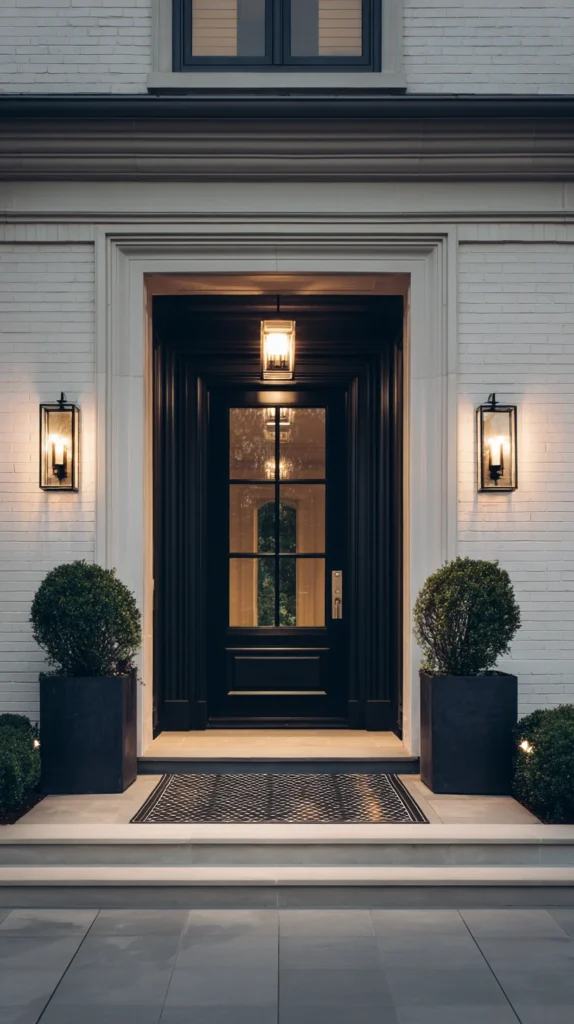
A deliberately styled entrance — gate, door, or path start — the decor that sets expectation before anything inside the garden is seen.
Why entrance decor matters most:
The first impression is irreversible:
- Every subsequent impression filtered through the first
- Good entrance: everything inside looks intentional
- Neglected entrance: everything inside read with doubt
- One small investment, largest cumulative return
The entrance tells the visitor:
- Someone cares here
- Decisions were made here
- What is inside was chosen
- What is inside will have been worth coming to
The elements:
The door number:
An overlooked decor opportunity:
- Most house numbers: functional only
- Styled house number: character and care
- Visible from street: first specific detail seen
Options:
- Ceramic tile numbers (handmade appearance)
- Brushed brass numbers on dark background
- Painted numbers in script on stone
- Copper numbers with verdigris patina
The door itself (if applicable):
- Dark color (charcoal, forest green, navy)
- Fresh paint (the signal of recent care)
- Clean and polished (brass or black hardware)
- One potted plant each side (minimum)
The flanking plants:
Matching pair (always):
- Same pot, same plant, same height
- Exact matching not approximate
- Symmetry signals confidence at the entrance
- One different: intention absent
Year-round presence:
- Evergreen plants only for permanent flanking
- Box ball, standard bay, olive, topiary cone
- Not seasonal flowers (disappear in winter)
- Must look right in January as well as June
Seasonal color added:
In front of or beside the permanent evergreens:
- Seasonal plants in smaller pots
- Spring: tulips
- Summer: lavender or agapanthus
- Autumn: ornamental grass or late hydrangea
- Change the seasonal, keep the permanent
The entrance mat:
Often neglected, always noticed:
- Natural fiber (coir, seagrass)
- Substantial size (larger than instinct)
- Clean (the maintenance signal at the entrance)
- No faded or worn-through mat ever
The lighting at the entrance:
After dark, entrance must be lit:
- Wall light each side of door (symmetry)
- Or path lighting leading to door
- Warm temperature only
- Entrance that disappears at dark: missed opportunity daily
The welcoming scent:
Something fragrant at the entrance:
- Nearest plant to door: fragrant
- Rosemary beside the path (brushed by legs)
- Lavender beside the door
- Or jasmine trained around the frame
- Arrival accompanied by scent = visceral welcome
Cost breakdown:
- Styled house numbers: $30
- Two matching pots with evergreen plants: $90
- Seasonal color (small pots): $25
- New entrance mat: $30
- Path or door lighting (2): $40
- Fragrant plant: $15
- Total: $230
The test: Approach the house as a visitor. Walk from the street to the door. Notice every detail. The entrance decor is the only decor that every single visitor experiences, every single time.
What Binds All 13 Together
The material language:
Every decorated outdoor space worth saving speaks one language:
- One or two materials dominating
- One accent color recurring
- Nothing that does not belong to the conversation
- The discipline of cohesion
The editing that preceded the adding:
Before any of the 13 ideas were added:
- Something was removed
- Space was made
- Breathing room was created
- The additions land in clear space not crowded space
The layering sequence:
Not all at once:
- Foundation first (rug, lighting, cushions)
- Then objects (tray, lanterns, art)
- Then personal details (books, found objects, herbs)
- Then entrance (last but first impression)
Each layer makes the next one readable.
Getting Started This Weekend
The highest-return first investment:
The outdoor rug (#11).
Before any object is styled, before any candle is placed, before any lantern is grouped — the rug defines the space. Every decor decision after it lands in context.
This weekend under $100:
- Outdoor rug (8×10): $85
- Three lanterns from HomeGoods: $30
- One large terracotta pot already owned, plant added: $15
- Total: $130
That is a decorated outdoor space. Incomplete. Developing. But cohesive, intentional, and warmer than what was there.
The sequence from there:
Week one: Rug and lanterns (foundation and light) Week two: Cushions and throw (soft layer) Week three: Tray styling on surfaces (objects into compositions) Week four: One found or personal object (story added) Month two: Art on the fence, herbs displayed, entrance styled
Choose by what bothers you most:
Space feels cold and hard: Cushions and throw (#3), rug (#11), candles (#6) Space feels generic: Found object (#7), outdoor art (#4), books (#9) Space feels dark: Mirror (#10), lanterns (#2), uplighting Space feels unfinished: Tray styling (#1), entrance detail (#13), hanging baskets (#5) Space feels flat: Ladder display (#12), outdoor shelf, vertical art
The outdoor space that photographs itself is not the most expensive one or the most designed one.
It is the one where every object belongs, where the materials agree, where the light is warm, and where something specific tells you a person with a particular life put these things here.
That person is you. These 13 ideas are how the space starts to show it.