15 Fall Vegetable Garden Ideas for Late Harvests
Most vegetable gardeners spend September looking at the remains of summer — spent tomato plants, bolted lettuce, the last courgettes nobody wants anymore — and call it done. Pack it in. Wait for spring.
That instinct wastes four months of growing season and some of the best growing conditions a kitchen garden gets all year.
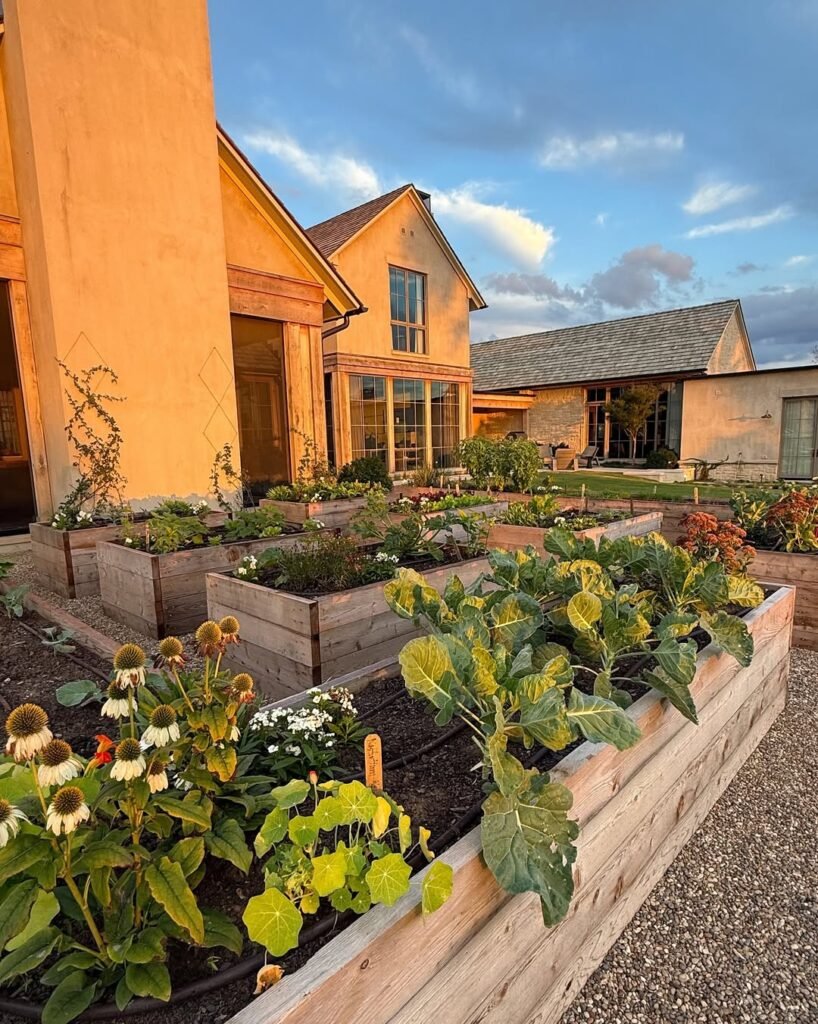
The autumn kitchen garden is not a consolation prize for what summer was. It is its own season, with its own crops, its own rhythms, and its own harvests. The cool temperatures that close down the summer garden open the autumn one. Crops that bolted in July’s heat grow slowly and sweetly in October’s cool. The frost that seems to end things intensifies flavours in kale and parsnip and Brussels sprout that nothing else can replicate.
Here are 15 ideas for keeping the kitchen garden producing through autumn and into winter.
Why Autumn Growing Beats Summer for Certain Crops
The seasons are not equal for all vegetables:
Summer advantages:
- Long days (more photosynthesis)
- Warm soil (fast germination)
- High temperatures (tomatoes, aubergines, peppers need this)
- The summer crops: true heat-lovers
Autumn advantages:
- Cooler temperatures (leafy vegetables sweeter, less prone to bolting)
- More reliable rainfall (less irrigation)
- Fewer pests (aphid populations crash, slug pressure lower than spring)
- Frost converts starches to sugars in certain crops — a flavour improvement summer cannot deliver
The key insight:
- Most summer crops fail in autumn (too cold)
- Most autumn crops fail in summer (too hot, too fast, too bitter)
- These are different gardens, not the same garden at different temperatures
The Timing Reality
The most important number in autumn gardening:
The first frost date:
- Every growing region has an average first frost date
- Most cool-season crops: tolerate several degrees of frost
- Some: improved by frost
- A few: killed by the first frost regardless
- Know this date: it governs every autumn planting decision
The “days to maturity” calculation:
Working backward from first frost:
- A crop that takes 60 days to mature: needs to be in the ground at least 60 days before first frost
- Add two weeks (autumn days are shorter, growth slower than the seed packet assumes in summer)
- Kale (50–70 days): last planting date approximately 10 weeks before first frost
- Winter lettuce (45 days): 8–9 weeks before first frost
Most autumn succession sowing: happens in August:
- This surprises many gardeners
- The crops that harvest in October: sown in late July to mid-August
- The crops that harvest in November and December: sown in August to early September
- The work is front-loaded: the reward is the autumn harvest
1. The Kale Planting (The Autumn Garden’s Foundation Crop)
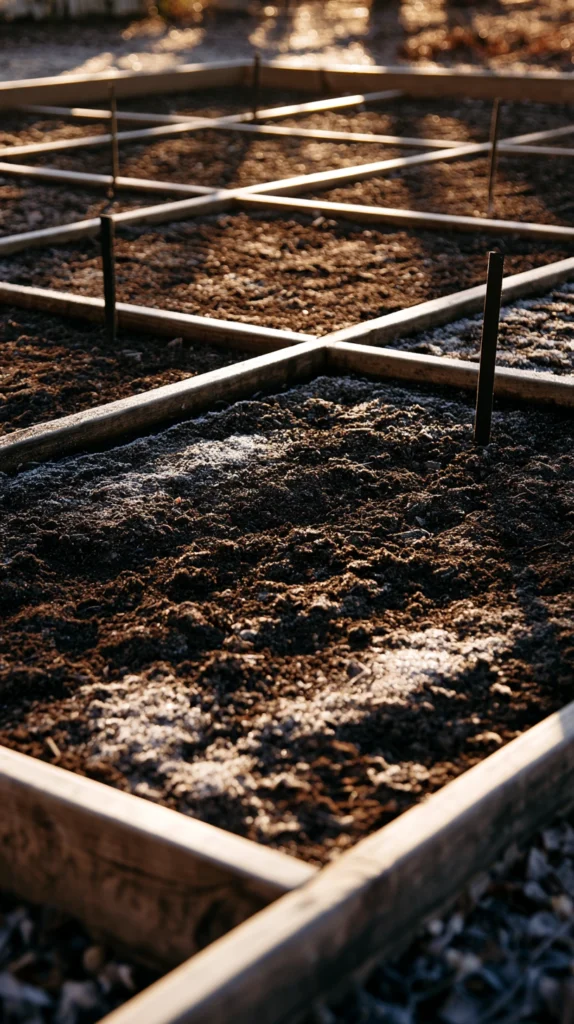
A dedicated kale planting — the crop that defines the autumn kitchen garden and continues producing through the hardest months of the year.
Why kale is the autumn gardener’s most important crop:
The frost factor:
- Kale: genuinely improved by frost
- The cold converts starch in the leaves to sugar
- A kale leaf picked after several hard frosts: sweeter and more complex than the same variety picked in summer
- The improving crop: the only category that autumn provides and summer cannot
The harvest period:
- Kale sown in July: harvesting from September
- The same plants: continue through October, November, December
- In mild winters: through February and into March
- One planting: five or six months of harvest
The varieties:
‘Cavolo Nero’ (Lacinato / Tuscan kale):
- Dark, deeply crinkled leaves
- The most refined flavour
- Most improved by frost
- Beautiful in the garden — architectural even as a food plant
‘Curly Kale’ (Red Russian, Dwarf Green Curled):
- The most common and most cold-hardy
- Ornamental as well as edible
- Frilly leaves: catch frost on the surface (beautiful in the garden)
- High yielding
‘Red Russian’:
- Flat, oak-shaped leaves with purple stems
- Milder flavour than curly kale
- Hardy and prolific
- The most tender kale variety
The planting:
Spacing (critical):
- 18–24 inches between plants
- Kale: grows large (24–36 inches tall)
- Under-spaced kale: poor yield, air circulation issues
- The 18-inch minimum: non-negotiable
Succession sowing:
- Sow every three weeks from July to September
- Each sowing: provides a different harvest window
- The overlapping harvests: continuous supply
Harvesting correctly:
The leaf, not the plant:
- Never cut the whole plant
- Pick the outer leaves when large enough, leave the centre
- The growing point at the centre: the source of continuous new leaves
- Pick 30% of the leaves at any one harvest: the plant recovers and produces more
Cost breakdown:
- Kale seed packet (three to four varieties): $4–8
- Compost for bed preparation: $20–30
- Total: $24–38
The kale bed in November: the most-visited part of the kitchen garden. Not because it is beautiful (though it is) but because there is always something to pick.
2. The Spinach Succession (Continuous Leaf Harvest)
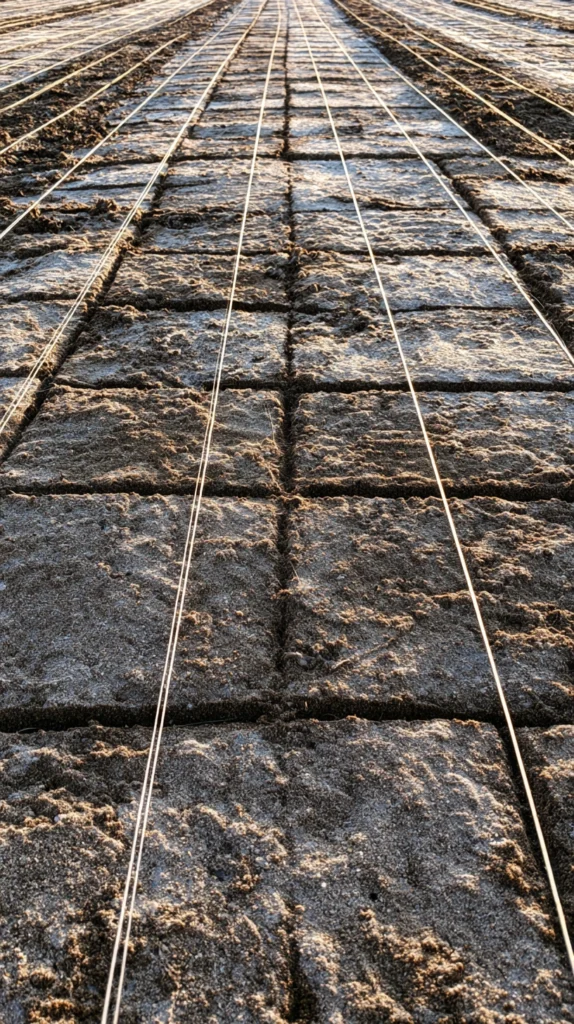
A series of successional spinach sowings — the crop that, when timed correctly, provides a near-continuous leaf harvest from September through December.
Why spinach is the autumn garden’s most underrated crop:
The summer bolting problem solved:
- Spinach in summer: bolts to seed almost immediately in heat
- Spinach in autumn: slows down, stays as leaf, harvests for weeks
- The same crop that fails in June: one of the autumn garden’s most reliable performers
- The cool temperature: transforms spinach from frustrating to productive
The succession approach:
Three sowings for continuous harvest:
Sowing one (late July to early August):
- Harvesting from September
- Continues through October
- The main autumn crop
Sowing two (mid-August):
- Takes over from sowing one as it slows in late October
- Harvesting October–November
Sowing three (September):
- Slower to establish (shorter days)
- But: smaller, tender leaves through November and December
- With cloche protection: into January
The varieties:
‘Medania’:
- The best autumn variety for many climates
- Large, dark, rounded leaves
- Bolt-resistant
- High yield
‘Matador’:
- Standard and widely available
- Reliable autumn performer
- A good choice for a first autumn spinach planting
‘Perpetual Spinach’ (actually Swiss chard):
- Not true spinach, but similar use
- Extremely hardy (survives almost any frost)
- Not as sweet as true spinach but more reliable as winter approaches
- Worth mixing in with the spinach sowings for the hardiest late harvest
The space:
Broadcast sowing in a wide bed:
- Rather than rows: sow across a wide bed (up to 4 feet)
- Thin to 3–4 inches between plants
- The wide bed: more harvest from the same area than row sowing
- Cut-and-come-again at this spacing: very productive
Cost breakdown:
- Spinach seed (two or three varieties): $4–8
- Total: $4–8 — one of the lowest-cost high-reward crops
3. The Root Vegetable Hold (Leaving Crops in the Ground as Natural Storage)
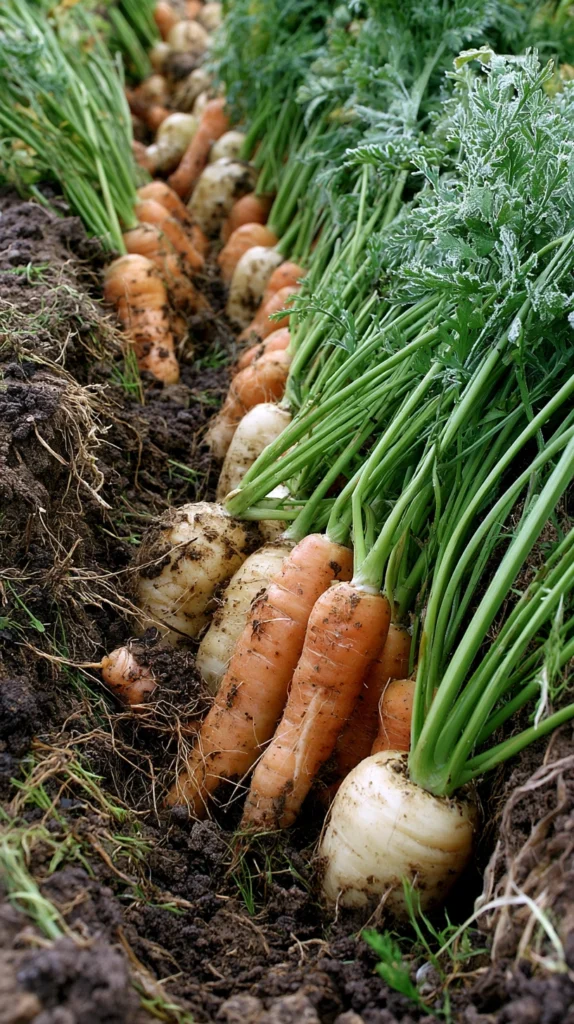
Parsnips, carrots, celeriac, and beetroot left in the ground through autumn and harvested as needed — the practice that uses the soil itself as a root cellar.
Why in-ground storage is the autumn garden’s cleverest trick:
The flavour transformation:
- Parsnips and carrots: starch converts to sugar in cold soil
- A parsnip dug after the first frost: dramatically sweeter than one dug in September
- The cold: the flavour’s friend
- Summer-harvested parsnip and frost-dug parsnip: almost different vegetables
The storage convenience:
- The ground: maintains a more stable temperature than most storage spaces
- Roots: remain in perfect condition for weeks or months in the soil
- Harvest as needed: not a bulk harvest that requires processing and storage
- The garden: the pantry
The crops:
Parsnip:
- Sown in spring, ready from October
- Leaves in ground until needed — up to March
- The later it is harvested: the sweeter
- The autumn and winter parsnip: at peak from first frost
Carrot:
- Some varieties are better autumn keepers than others
- ‘Autumn King’ (named for this purpose): the standard autumn/winter carrot
- In heavy frost areas: cover the bed with straw mulch (12 inches) to keep the ground workable
- Harvest: anytime from October through winter
Celeriac:
- Large, knobbly root
- Extraordinarily flavourful — celery and parsnip combined
- Hardy to significant frost
- Harvest from October, store in ground until March if not fully frozen
Beetroot (careful frost management):
- Less frost-hardy than parsnips and carrots
- Harvest before hard frost (below 28°F, -2°C)
- Or: deep straw mulch protects the roots in moderate frost areas
- The timing: harvest in October in colder zones, November-December in mild ones
The harvesting:
The frost indication:
- Soil temperature below 45°F (7°C): the sweet-conversion is happening
- Wait for this: the flavour reward is worth it
- If the first frost has not arrived: the parsnips are not yet at their best
Cost breakdown:
- Roots already growing from spring sowing: no additional cost
- Straw mulch for frost protection: $10–15
- Total: $0–15 — the harvest is already in the ground
4. The Brassica Row (The Architecture of the Autumn Garden)

Brussels sprouts, purple sprouting broccoli, and cabbage — the tall, structural crops that make the autumn kitchen garden look intentional and produce through the coldest months.
Why brassicas define the autumn kitchen garden:
The visual quality:
- Brassicas growing in autumn: architecturally interesting
- Brussels sprout plants (3–4 feet tall) covered in small sprouts along the stem: extraordinary
- The garden in November: brassicas provide more visual interest than almost any other food crop
- The productive garden: beautiful in this season specifically
The long-season reward:
- Planted as small plants in summer: producing from autumn through winter
- Some varieties: harvesting until February
- The investment: one planting, four or five months of harvest
Brussels sprouts:
Why they take patience:
- Sown in April–May
- Planted out in June
- Harvesting from October
- The longest lead time of any vegetable
- The result: worth the wait
The flavour with frost:
- Like kale: frost improves the flavour of Brussels sprouts significantly
- The sweet, nutty Brussels sprout from the garden in November: not the same vegetable as the bought ones
- The gardener’s advantage over the supermarket: the flavour achieved only by this weather and this timing
Harvesting correctly:
- Harvest from the bottom of the stem upward
- The sprouts at the bottom: mature first
- Work up the stem: the harvest extends over weeks
- Never strip the whole plant: the upper sprouts continue to develop
Purple sprouting broccoli:
The January and February vegetable:
- Planted in June–July
- Does not produce until January–February
- The longest wait of any crop
- The result: fresh broccoli in the hungry gap (the period of least garden abundance)
- The crop: specifically valuable because it arrives when nothing else does
Varieties:
‘Rudolph’: earliest (November–December) ‘Early Purple Sprouting’: January–February ‘Late Purple Sprouting’: March–April Three varieties planted together: a harvest that spans December to April from one planting effort
Cost breakdown:
- Brassica plants (from a garden centre if not grown from seed): $15–25 for a tray
- Or seeds (if sowing yourself): $4–8
- Total: $4–25
5. The Tunnel Cloche or Low Polytunnel (Extending the Season by Six Weeks)
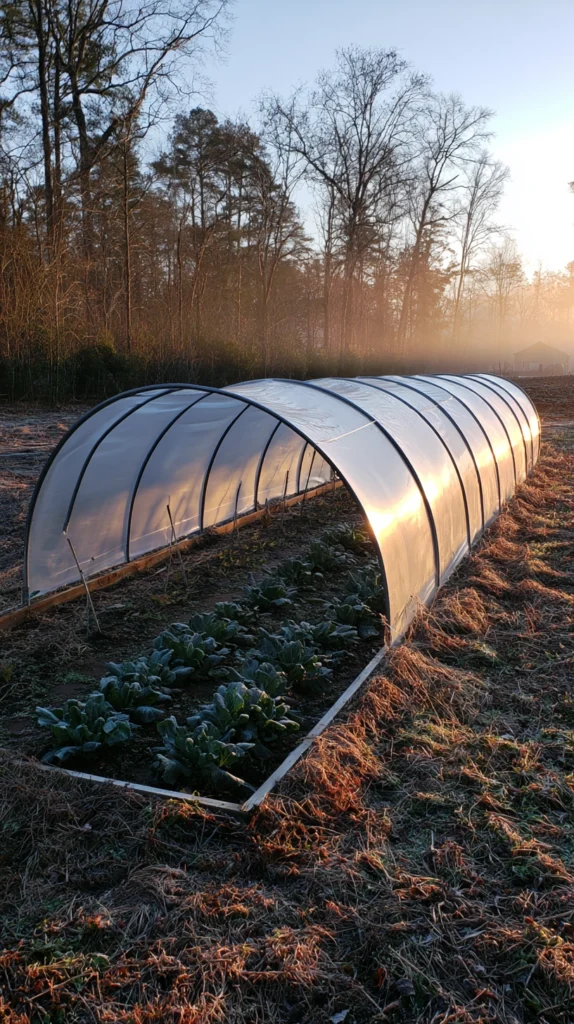
A row cover or low polytunnel over a bed or two — the low-cost structure that extends the productive season at both ends.
Why a cloche transforms the autumn garden:
The temperature reality:
- The difference between a covered bed and an uncovered bed in October: 5–10°F (3–6°C)
- That temperature difference: the difference between crops growing and crops standing still
- The difference between crops surviving and crops being destroyed by frost
- A small temperature buffer: weeks of additional harvest
What a cloche enables:
Later harvests:
- Salad leaves under a cloche: harvesting through November instead of October
- Spinach: through December
- The cloche: the simplest season extension available
Earlier starts:
- A cloche over a bed in late February: warms the soil
- Seeds germinate 2–3 weeks earlier than in the open ground
- The spring season: begins before spring
The types:
Fleece row cover (lightest commitment):
- Spunbond polypropylene
- Laid directly over plants (no structure required)
- Provides around 4°F (2°C) of frost protection
- Lets in rain and diffuses light
- The simplest, most affordable option
- Roll on at night, off during warm days if needed
Wire hoop and plastic cloche:
- A series of wire hoops supporting a plastic (or fleece) cover
- More rigid than bare fleece
- Better air circulation
- Can be left on for extended periods
Low polytunnel:
- A permanent or semi-permanent structure of metal hoops and polythene
- 2–3 feet tall, walking height possible in wider versions
- The most significant temperature gain (up to 10°F)
- The closest to a mini greenhouse
The crops to cover:
Worth covering (significant response to protection):
- Salad leaves (remarkable response to cloche protection — extends by 6–8 weeks)
- Spinach
- Peas (for an early spring start in February)
- Young brassica plants: protection through first hard frosts while they establish
Not worth covering (already cold-hardy):
- Kale (already handles frost well without protection)
- Parsnips and carrots in the ground
- Established Brussels sprouts
Cost breakdown:
- Fleece row cover (per 3-foot width, per yard): $0.50–1 per running foot
- Wire hoop kit: $20–40 for 10-foot tunnel
- Low polythene tunnel: $35–80
- Total: $20–80 depending on scale
6. The Salad Leaf Bed (Crisp and Cold)
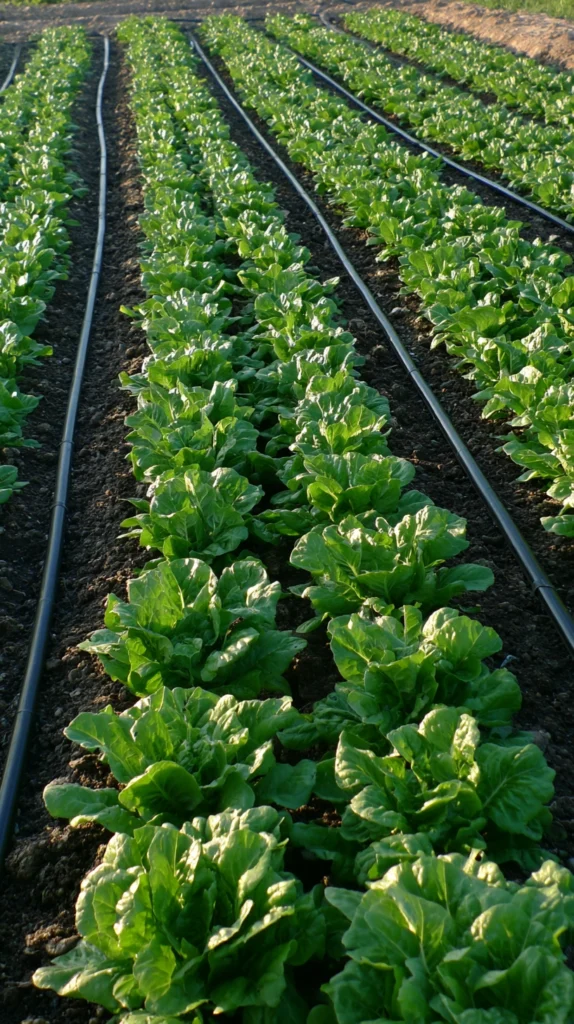
A dedicated bed for autumn and winter salad leaves — the harvest that continues long after most people believe salads are out of season.
Why autumn salads are distinctive:
The cool-weather sweetness:
- Hot summer lettuce: can be bitter, bolts quickly
- Cool autumn lettuce: sweeter, more tender, slower to bolt
- The same varieties: better-tasting in October than August
- The cold temperature: the improvement agent
The varieties that distinguish autumn salads:
Mizuna:
- Feathery, peppery leaves
- Extremely cold-hardy
- Cut-and-come-again in cool weather
- Continues well below freezing with cloche protection
Rocket (arugula):
- Autumn rocket: stronger-flavoured than summer (the cold intensifies it)
- Bolt-resistant in cool temperatures
- The reliable autumn leaf
- Direct sow from August into September
Mustard leaves:
- ‘Red Frills’, ‘Osaka Purple’, ‘Golden Streaks’
- More cold-hardy than standard lettuce
- Spicy and distinctive — adds character to autumn salads
- Highly productive, grow quickly in cool conditions
Corn salad (Lamb’s lettuce):
- The most cold-hardy salad leaf available
- Survives hard frost
- Small, mild, tender leaves
- Best sown in September for autumn–winter harvest
Claytonia (Miner’s lettuce):
- The cold-hardiest salad leaf
- Survives almost any frost
- Small round leaves with a delicate flavour
- Self-seeds if left to flower — once established, a permanent winter presence
‘Winter Gem’ lettuce:
- A butterhead-type lettuce bred specifically for winter
- More compact than summer varieties
- Tolerates temperatures just below freezing with cloche protection
- The most winter-reliable “true” lettuce
The cut-and-come-again approach:
Plant densely, cut frequently:
- Sow across a wide bed at high density
- Cut with scissors 1–2 inches above the soil
- The stumps: regrow within 2–3 weeks in warm weather, 3–4 weeks in cool
- Three or four harvests per planting
The mixed leaf bed:
Many varieties together:
- Not a monoculture of one variety
- A mix: some mild (corn salad, claytonia), some peppery (rocket, mustard), some structural (mizuna)
- The mixed harvest: one cutting provides a ready-made varied salad
Cost breakdown:
- Mixed autumn salad leaf seed collection: $6–12
- Fleece cover for the bed: $10–20
- Total: $16–32
7. The Garlic Planting (The Autumn Garden’s Long-Term Investment)
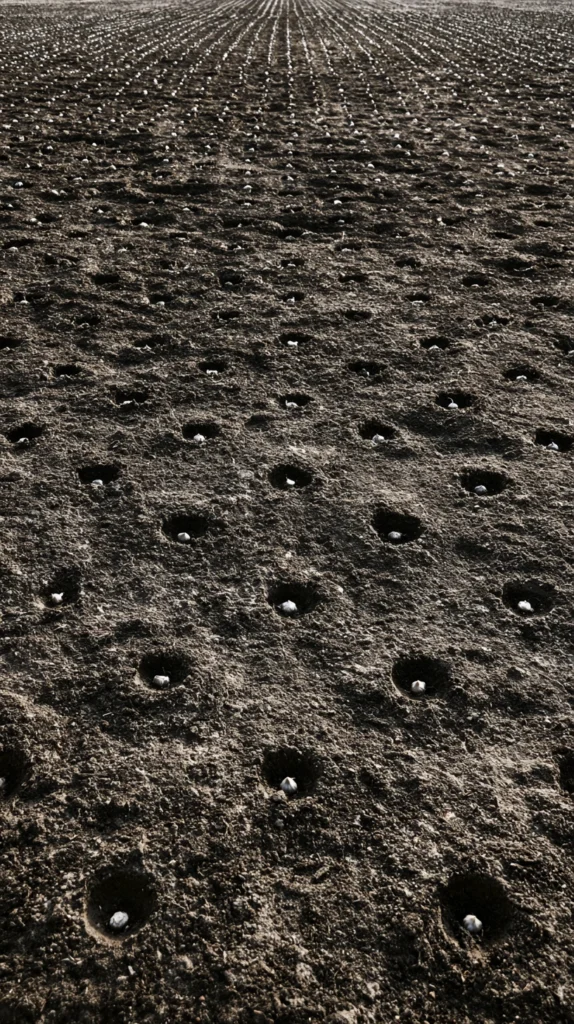
Garlic planted in October for a June harvest — the act of faith that turns autumn garden activity into next summer’s best flavour.
Why garlic is autumn’s most important planting:
The timing requirement:
- Garlic: must experience cold to develop properly
- Autumn planting: provides this cold period naturally
- Spring-planted garlic: often produces small, underdeveloped bulbs (not enough cold)
- The autumn planting: the only way to grow full-sized, well-flavoured garlic
The long game:
- Planted in October: harvested in June
- Eight months in the ground
- The patience: rewarded by flavour impossible to find in supermarket garlic
- Homegrown garlic: stronger, more complex, and at its best when fresh
The varieties:
Hardneck varieties:
- More flavourful, more complex
- Produce a scape (a curled green shoot in June) — harvest and eat the scapes before they straighten
- Shorter storage life than softneck (3–4 months rather than 6–9)
- Varieties: ‘Chesnok Red’, ‘Purple Wight’, ‘Lautrec Wight’
Softneck varieties:
- More widely grown commercially
- Longer storage life
- Suited to braiding
- Milder flavour than hardneck
- Varieties: ‘Solent Wight’, ‘Picardy Wight’, ‘Provence Wight’
The planting:
Timing:
- October to November (northern hemisphere)
- Before the ground freezes in colder climates
- After the autumn equinox (the cooling of the soil is the signal)
The preparation:
- Deeply worked, well-drained soil
- Compost worked in before planting
- Garlic: particularly sensitive to waterlogging (rots in wet ground)
- Raised beds: ideal for garlic in heavy soils
The technique:
- Break the bulb into individual cloves
- Plant each clove, pointed end up, 2 inches deep
- 6 inches apart in rows, rows 12 inches apart
- The largest cloves: plant these (the larger the clove, the larger the resulting bulb)
- The smallest cloves: save for cooking, they will not produce a full bulb
The spring emergence:
- By March: green shoots visible
- By April: the plants are visible and growing
- June: the scapes appear (for hardneck varieties) — harvest these
- When half the leaves have turned yellow (typically June): the bulbs are ready
Cost breakdown:
- One bulb of seed garlic: $4–8 (produces 8–12 cloves for planting)
- A full bed (60 cloves): $20–35 in seed garlic
- Total: $20–35 for a significant planting
8. The Overwintering Onion and Shallot Bed (Spring Harvest Without Spring Sowing)
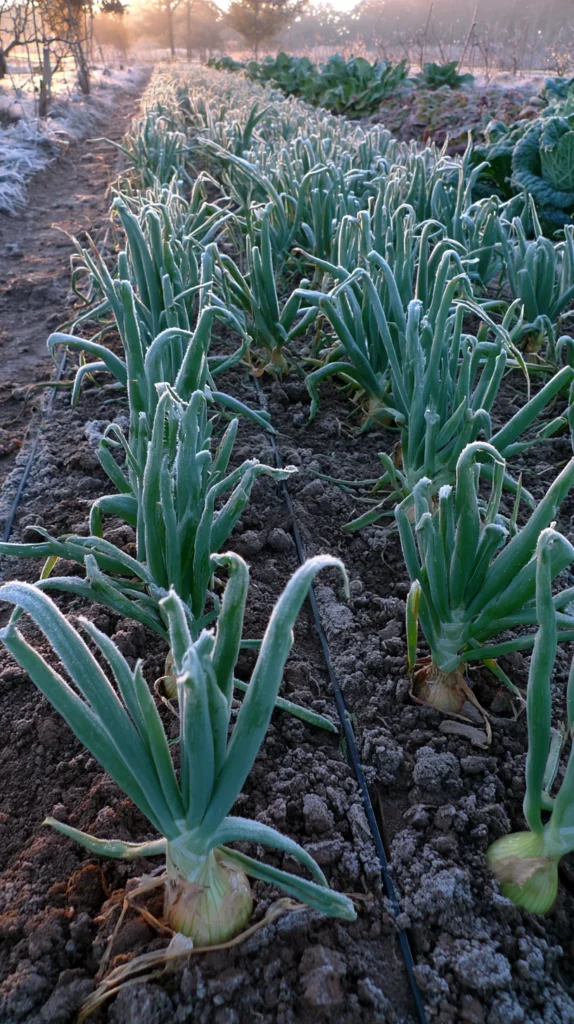
Autumn-planted overwintering onion sets and shallots — the crop that provides an onion harvest in May–June before summer-sown onions have even developed.
Why autumn-planted onions matter:
The early harvest:
- Spring-sown onions: ready July–August
- Autumn-planted overwintering varieties: ready May–June
- The early harvest: arrives when the vegetable garden is otherwise thin on produce
- The timing: fills the “hungry gap” with something practical and widely used
The sets versus seed question:
Autumn sets:
- Small, dormant onion bulbs, planted in autumn
- More reliable than seed for overwintering
- Ready to grow immediately after the cold period
- Varieties specifically bred for autumn planting: important (summer sets planted in autumn will bolt)
The autumn-specific varieties:
Onions:
- ‘Radar’: the standard autumn onion set
- ‘Senshyu Yellow’: reliable, good yield
- ‘Electric’: red onion variety for autumn planting
- All must say “overwintering” or “autumn planting” — standard summer sets will fail
Shallots:
- ‘Longor’: banana shallot, mild and sweet
- ‘Delicato’: round, milder than banana types
- Autumn-planted shallots: each set produces a cluster of 4–6 shallots by early summer
- The multiplication: remarkable yield from a small initial planting
The planting:
October:
- The ideal planting window for overwintering sets in most temperate climates
- Frost will follow, but the roots will establish before then
- The frost: does not kill them — they are bred for this
- They overwinter as small plants, resume vigorous growth in February
Spacing:
- Sets 4 inches apart
- Push into prepared soil, pointed end up
- Just below the surface (the tip: just visible)
- Birds: the main early problem (the tips attract them) — cover with fleece initially
Cost breakdown:
- Autumn onion sets (500g): $6–10
- Shallot sets (500g): $8–12
- Total: $14–22 for a significant planting of both
9. The Broad Bean Autumn Sowing (Spring’s First Harvest)
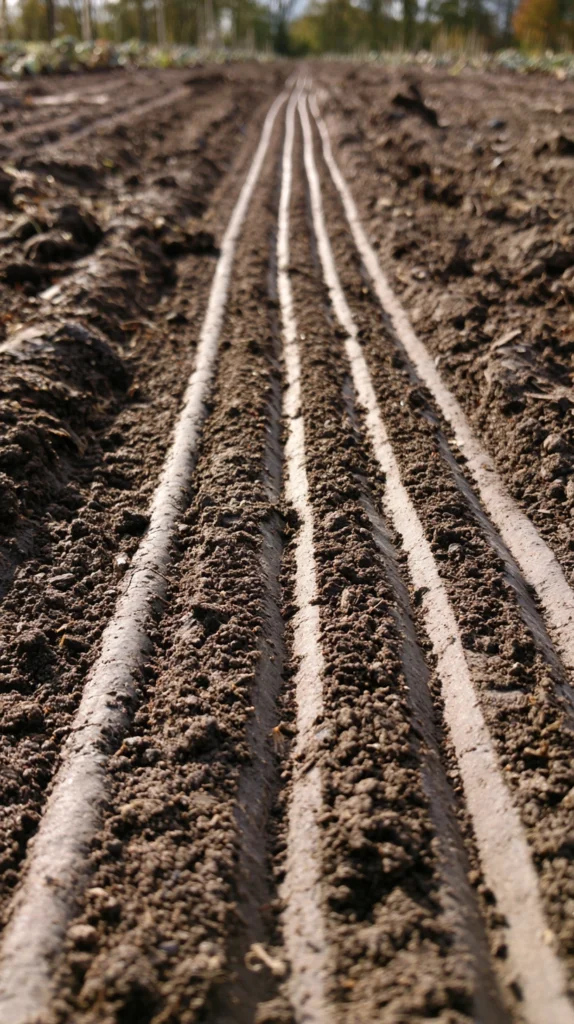
Broad beans sown in October–November — the overwintered crop that provides the spring kitchen garden’s first fresh vegetable harvest.
Why autumn-sown broad beans are superior to spring:
The establishment:
- Autumn-sown broad beans: develop strong root systems before winter
- Those roots: drive vigorous growth in early spring
- Spring-sown broad beans: start from scratch in cold soil
- Autumn-sown: 4–6 weeks further ahead than spring-sown when the growing season begins
The earlier harvest:
- Autumn-sown: picking in May
- Spring-sown: picking in June–July
- The difference: the May harvest is a full month ahead
- May broad beans are the first fresh vegetable from most kitchen gardens — valued disproportionately after the bare months
The varieties:
Hardy autumn-sowing varieties specifically:
- ‘Aquadulce Claudia’: the standard for autumn sowing, very hardy
- ‘Stereo’: extremely cold-hardy, reliable autumn variety
- ‘The Sutton’: dwarf variety (less wind-rock in winter), reliable
Varieties to avoid for autumn sowing:
- Most spring varieties: not reliably hardy enough
- Check the packet: “suitable for autumn sowing” or “overwinter variety”
The planting:
October–November:
- Before the first hard frosts in most climates
- The plant: establishes and then appears to do nothing through winter
- This is normal: the root system is developing underground
- February–March: suddenly vigorous top growth begins
The protection:
- Established broad bean plants: survive significant frost
- Young plants (less than 2 weeks old) at first frost: vulnerable
- In colder climates: plant in October so plants are 3–4 inches tall before the first frost
- A fleece cover over young plants during the coldest weeks: sufficient protection
The black bean aphid:
- The main autumn broad bean pest
- Appears on the growing tip in spring
- Pinch out the growing tip when the lowest pods begin to set
- The pinched tip: cooked as a vegetable (delicious, often discarded)
- The aphid: loses its foothold after the tip is removed
Cost breakdown:
- Broad bean seed (enough for a 10-foot row): $3–6
- Total: $3–6 — among the cheapest seed available
10. The Oriental Leaves Bed (Speed and Variety in Cool Conditions)
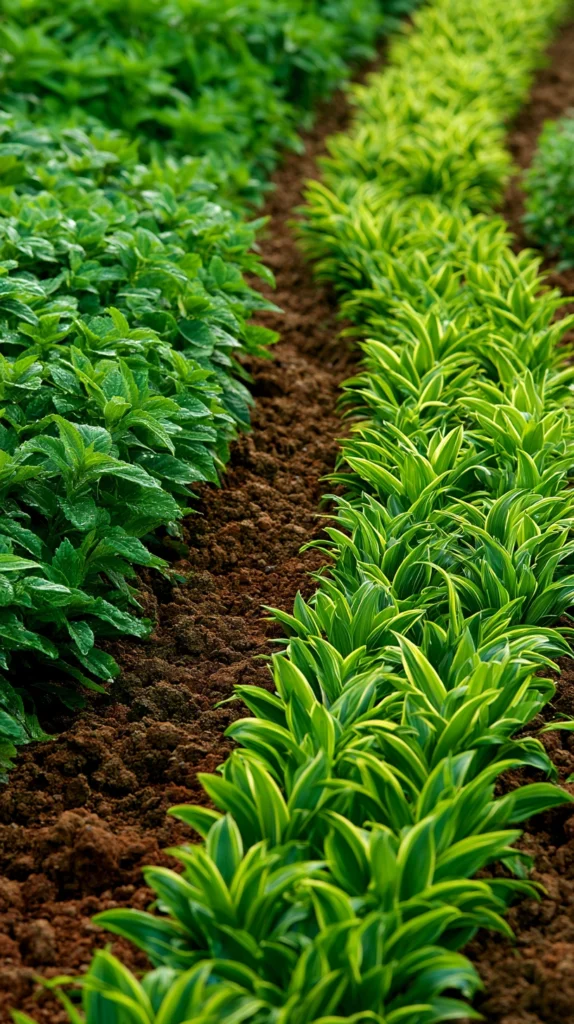
Pak choi, tatsoi, Chinese cabbage, and oriental mustards — the fastest-growing autumn crops, providing harvests in 3–6 weeks from sowing.
Why oriental leaves are the autumn garden’s speed crop:
The pace:
- Baby pak choi: ready in 3–4 weeks from sowing
- Tatsoi: 4–5 weeks
- Compared to: kale (8–10 weeks), cabbage (14+ weeks)
- The speed: the value of oriental leaves in autumn
- A gap in the harvest calendar: oriental leaves close it fastest
The bolt-resistance in cool weather:
- Oriental brassicas bolt in summer heat
- In autumn: they mature properly
- The crop that fails in July: the crop that succeeds in September
- The timing: specific and reliable
The varieties:
Pak choi:
- Thick white stems, mild rounded leaves
- Baby size (harvested at 4–6 inches): sweetest and most tender
- ‘Joi Choi’: reliable, slow to bolt even in autumn warm spells
- Sow from late July through October
- Winter-hardy varieties (‘Scarlette’, ‘Joi Choi’): survive light frost
Tatsoi:
- Dark, round, flat leaves forming a rosette
- More cold-hardy than pak choi
- Survives heavier frost
- Distinctive spoon-shaped leaves: beautiful and edible
- The cold-weather alternative when pak choi has finished
Mustard greens:
- Fast and peppery
- ‘Red Frills’: deeply frilled red leaves, very fast (3 weeks to baby leaf)
- ‘Golden Streaks’: yellow-gold, mild and fast
- Grow in autumn conditions better than almost any other leaf
Chinese cabbage / Napa cabbage:
- Larger, slower (8–10 weeks) but prolific
- Must be sown after mid-August (bolts in days if sown earlier)
- A head of Chinese cabbage from the autumn garden: weeks of stir-fry and kimchi material
The space efficiency:
Inter-planting:
- Oriental leaves grow quickly, are harvested and gone before slower crops need the space
- Plant between rows of kale or Brussels sprouts
- The fast crops: harvested by October. The slow crops: using that space from November onward.
- The same bed: producing two crops in the same season
Cost breakdown:
- Oriental leaf seed mix: $5–10
- Individual packets (3 varieties): $6–12
- Total: $5–12
11. The Hardy Herb Collection (Extending the Flavour Garden)
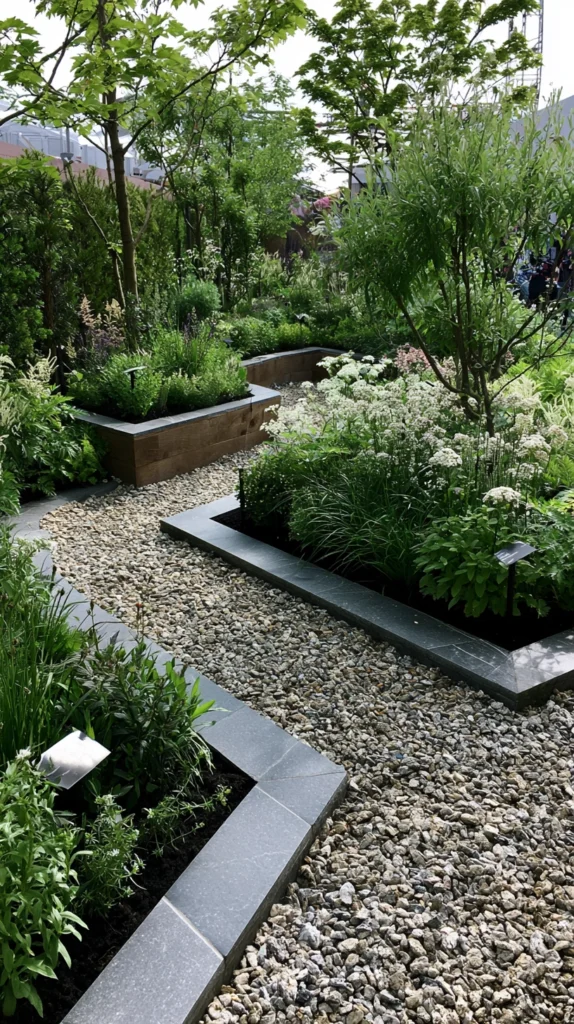
Perennial and biennial herbs left in place or added to the autumn garden — the flavour element that many gardeners lose when they clear the summer kitchen garden.
Why the herb garden is at its best in autumn:
The distillation effect:
- Cooler temperatures: concentrate essential oils in herbs
- Autumn herbs: often more intensely flavoured than their summer equivalents
- Rosemary in October: more aromatic than rosemary in July
- The cold: concentrating the oils
What stays through autumn and beyond:
The permanent perennials (do nothing):
- Rosemary: evergreen, available all year, better in autumn
- Thyme: evergreen, available all year
- Sage: semi-evergreen, holds leaves well into winter
- Chives: die back but can be cut as long as they have leaves
What to add for autumn specifically:
Flat-leaf parsley:
- Biennial: lives two years
- Autumn sowing produces plants that flower the following year but provide leaves through the current winter
- Hardier than curly parsley
- The most useful flavour herb in autumn and winter cooking
Winter savory:
- Perennial, more cold-hardy than summer savory
- Peppery and resinous
- Pairs specifically with beans (the autumn harvest of stored beans)
- Leaves available through winter
The forcing approach:
Mint:
- Dies back in autumn
- Dig a root, pot it up, bring inside
- Fresh mint through winter from an indoor pot
- The same root: replanted outside in spring
Chives:
- As with mint: pot up a clump before it dies back
- Inside on a windowsill: fresh chives through winter
- The forced indoor herb: the bridge between the outdoor season and spring
The container herbs:
Basil (before the frost):
- Basil is killed by the first frost
- Before it arrives: take cuttings
- Cuttings rooted in water: new plants for indoors
- Fresh basil through October and November from cuttings taken in September
Cost breakdown:
- Flat-leaf parsley plants (3): $8
- Winter savory plant: $5
- Mint pot for forcing: $6
- Total: $19 for additions alongside what is already growing
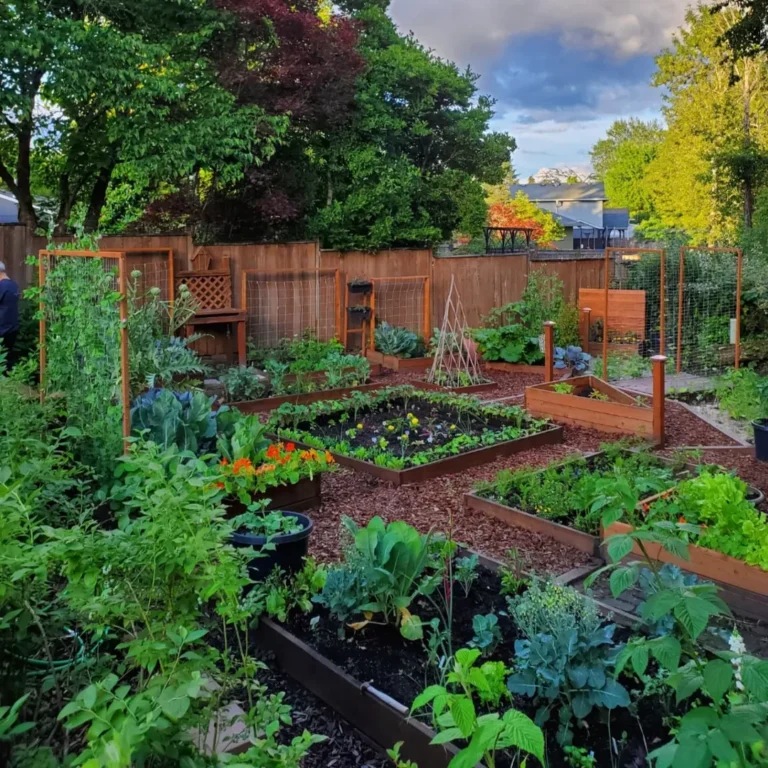
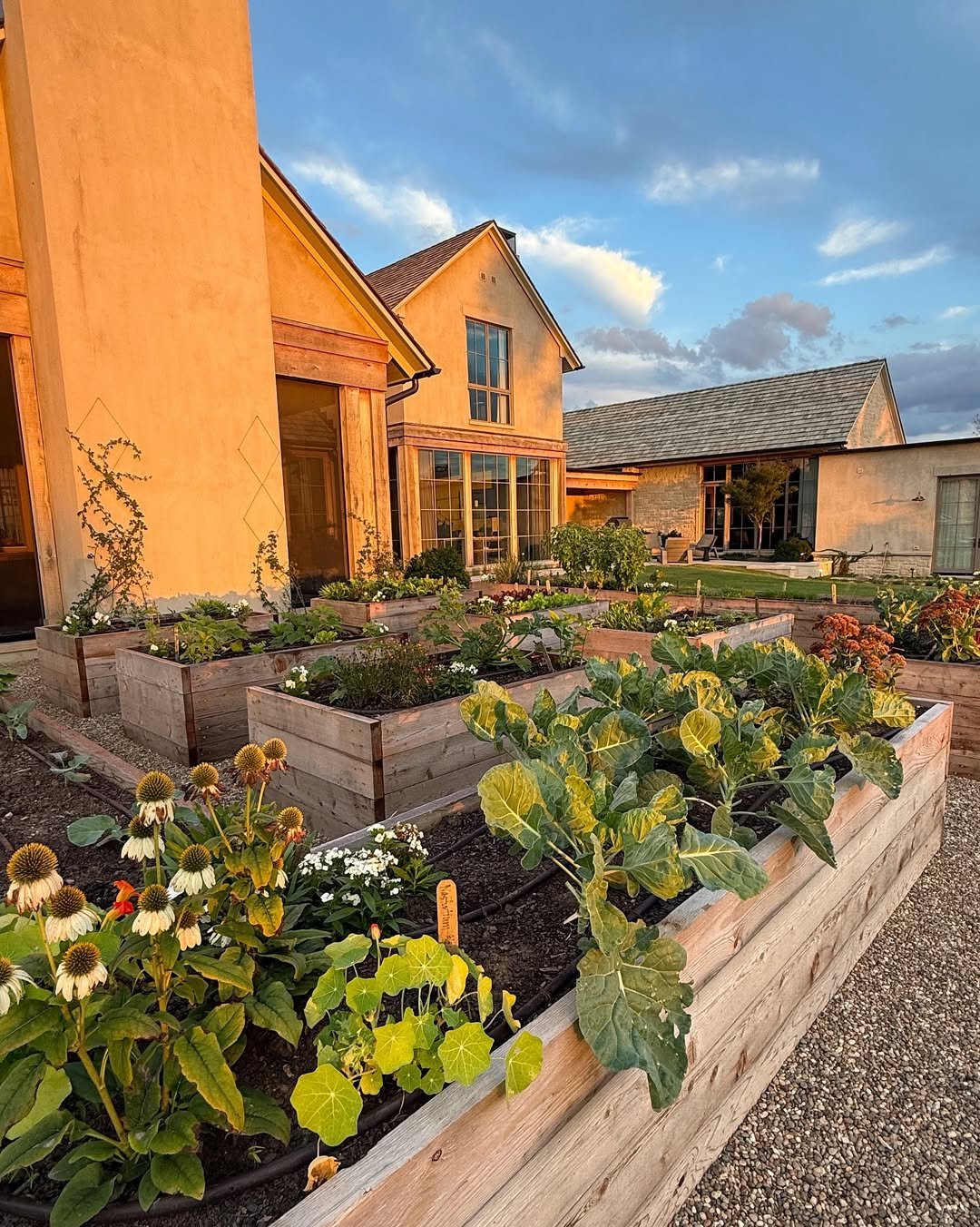
12. The Raised Bed Late Season Maximizer (Using Every Inch Through Frost)
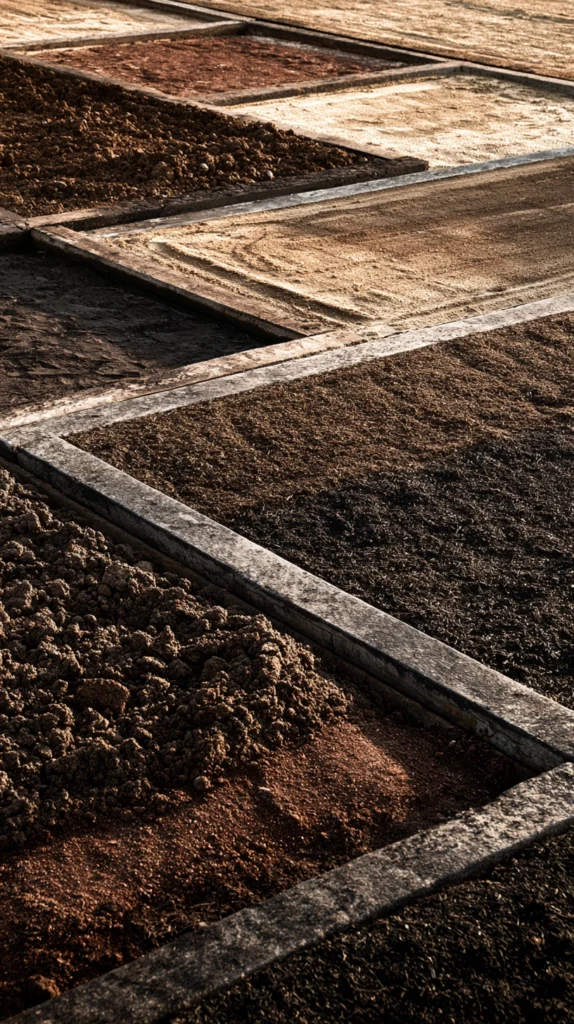
Strategic late-season management of raised beds — the approach to wringing the maximum production from the existing raised bed infrastructure through autumn and into winter.
Why raised beds are superior for autumn growing:
The temperature advantage:
- Raised beds: soil warms faster in spring
- Raised beds: soil drains better (wet autumn soil: fewer rot and disease issues)
- Raised beds: easier to cover with cloche or fleece (the sides provide attachment points)
- The raised bed: designed to extend both ends of the season
The bed-by-bed approach:
Bed one: the legacy bed (summer to autumn transition):
- Summer crops still producing: left in place
- Gaps created by finished crops: immediately filled with autumn transplants
- No whole-bed clear-and-restart: a gradual hand-off from summer to autumn crops
Bed two: the dedicated autumn bed:
- Cleared of summer crops in August
- Deeply amended with compost
- Sown or planted entirely with autumn crops (salad leaves, Oriental greens, spinach)
- The timing: this bed is at its productive peak September–November
Bed three: the overwintering bed:
- Planted with garlic, overwintering onions, and broad beans
- Looks quiet through winter
- The investment: April and May will repay it
The succession principle within a single bed:
A raised bed in October:
- One end: salad leaves currently being harvested
- Middle: kale at 12-inch height, beginning to produce outer leaves
- Other end: garlic just emerging from autumn planting
- Three crops at different stages: one bed, continuous activity
The compost application:
After every crop is cleared:
- A layer of compost on the cleared section
- 2–3 inches worked into the top layer
- The soil: improved with every crop cycle
- No synthetic fertiliser required: the compost cycle builds fertility
The bed covering system:
Fleece over wire hoops:
- Installed as temperatures drop below 40°F regularly
- The temperature inside: 5–8°F warmer than outside
- The crops: continuing to grow rather than simply surviving
- The cover: the single most productive intervention in an autumn raised bed
Cost breakdown:
- Compost (already part of kitchen garden practice): $0–30
- Wire hoops and fleece for one bed: $20–35
- Total: $20–65
13. The Cold Frame (The Bridge Between Garden and Greenhouse)
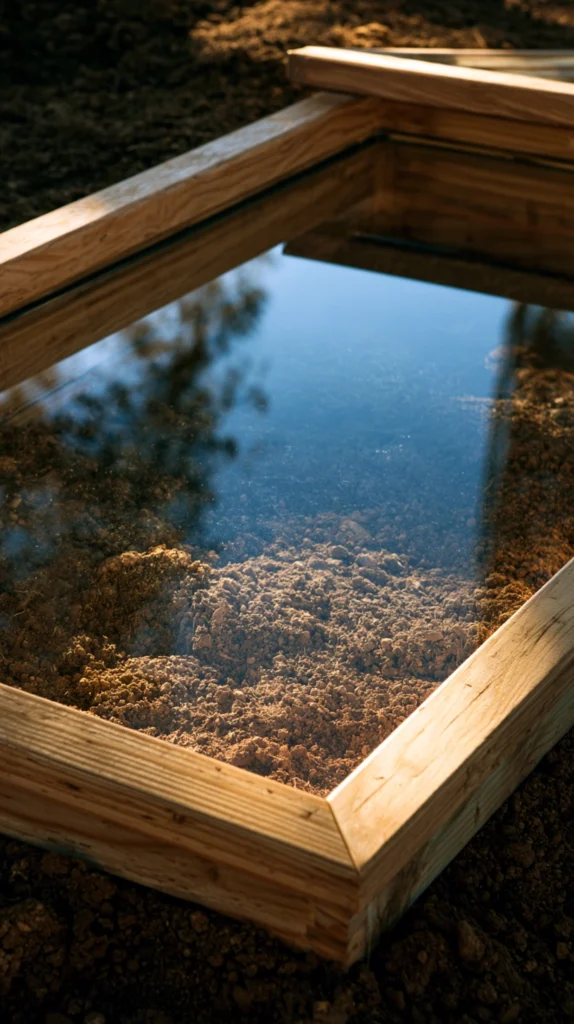
A simple cold frame — a bottomless box with a glass or polycarbonate lid — the structure that extends the growing season most significantly for the least investment.
Why a cold frame is the highest-return structure for the autumn garden:
The temperature gain:
- A good cold frame: maintains 15–20°F (8–11°C) above outside temperature
- On a sunny day: the temperature inside can be 40–50°F above outside air
- The soil temperature inside: rarely drops below freezing even in significant frosts
- The frame: makes growing in winter genuinely possible, not just theoretically possible
The dual function:
Autumn: extending the harvest of growing crops (salad leaves, spinach, herbs) Winter: protecting and growing cold-hardy crops through the coldest months Late winter/early spring: starting seeds and hardening off seedlings weeks before the last frost
The types:
DIY cold frame:
- A simple wooden box (old scaffold boards, reclaimed timber)
- Old window frames or storm windows as the lid
- The most affordable cold frame: built from salvaged materials for almost nothing
- The window: the most important element (clear, lets in maximum light)
- Many old houses: have unused sash windows — these become cold frames
Purchased cold frame:
- Aluminium or wood frame with polycarbonate lid
- Lightweight, easy to move
- More expensive than DIY but more polished
- $40–150 depending on size and material
Polycarbonate cloche-style frames:
- Corrugated polycarbonate bent over a bed
- Lighter than traditional cold frames
- Lower temperature gain but wider coverage
- More versatile across large beds
The management:
Ventilation (crucial):
- Cold frames: overheat rapidly on sunny days even in autumn
- Open the lid partially on any day above 50°F (10°C) outside
- Closed all night: the frost protection
- Open during the day: preventing heat damage
- The management: 10 minutes each morning and evening
What to grow in the cold frame:
October–November:
- Salad leaves (remarkable production in this environment)
- Spinach
- Coriander and flat-leaf parsley (herbs that otherwise struggle outdoors after September)
December–February:
- Overwintering lettuces (‘Arctic King’, ‘Winter Density’)
- Claytonia and corn salad
- Baby leaf crops at very slow growth rates
- Kale seedlings being propagated for spring planting
Cost breakdown:
- DIY cold frame (salvaged timber + old window): $0–25
- Purchased cold frame: $40–150
- Total: $0–150
The cold frame in January: fresh salad leaves, in January. Not from a shop. From the garden. The cold frame produces what nothing else in the winter garden can.
14. The Leek Row (Slow but Reliable)
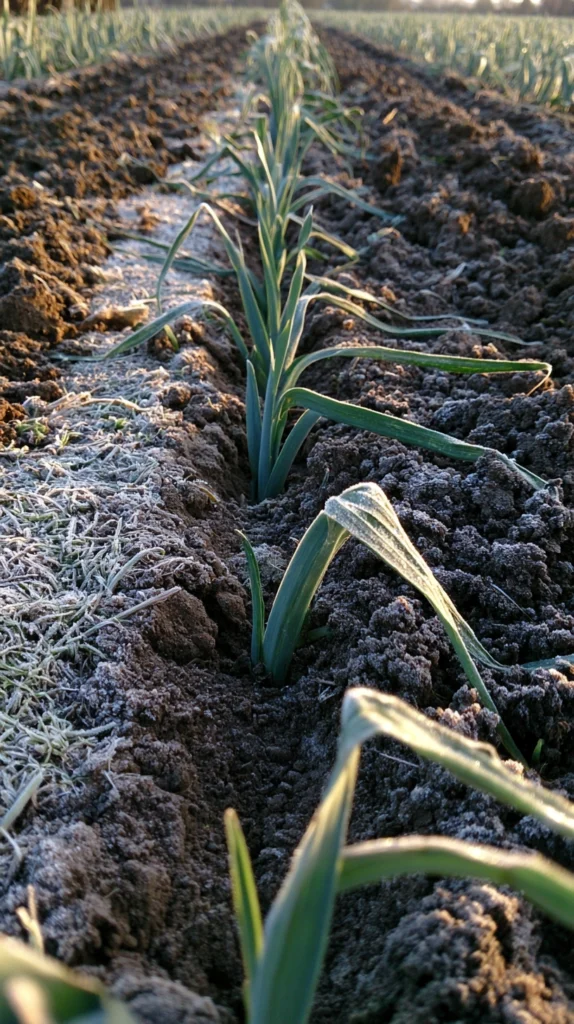
Leeks planted in summer, harvested through autumn and winter — the slow crop that rewards the patient gardener with the most reliable harvest of any winter vegetable.
Why leeks are the winter kitchen garden’s most valuable crop:
The harvest window:
- Leeks: ready from September
- Continue to improve through October, November, December
- Still harvestable in February and March
- The harvest period: 6 months from one planting effort
The frost improvement:
- Like parsnips and kale: leeks sweeten slightly with frost
- The February leek: milder and sweeter than the September one
- The slow crop: improving throughout its season
The reliability:
- Leeks: among the most reliable vegetables for late-season production
- Very few pests or diseases affect them significantly
- Once established: they essentially maintain themselves until harvested
- The low-maintenance winter crop: specifically valuable in the demanding autumn growing season
The varieties:
For autumn harvesting:
- ‘King Richard’: early, thin shanks, ready from September
- ‘Pandora’: mid-season, thick shanks, October–December
For winter and spring harvesting:
- ‘Musselburgh’: the classic variety, extremely hardy
- ‘Bandit’: dark blue-green flag, very cold-hardy, January–March
- ‘Oarsman’: late, harvesting February–April
Three varieties together: a harvest spanning September to April from one planting season
The planting (already done by this article’s readership):
Leeks: planted in June–July:
- Transplanted as pencil-thick seedlings into deep holes (the blanching method)
- The hole: creates the long white shank that makes leeks leeks
- By September: the holes have filled in and the leeks are beginning to develop
The harvest:
Fork underneath, not pull:
- Leeks: have deep roots
- Pulling: snaps the leek at the base
- A garden fork, pushed in beside the leek and levered gently: lifts the whole root
- The leek: harvested whole and clean
Selective harvest:
- Take the largest first
- Leave the smaller ones to continue growing
- The bed: thinned over months rather than cleared in one go
Cost breakdown:
- Leek seeds (already sown in spring/summer): negligible
- No additional autumn cost beyond maintenance
- Total: $0 if planting was done in spring
15. The Winter Squash Curing and Display (The Harvest Brought In)

Harvesting, curing, and storing winter squash — the autumn activity that turns the summer’s growing into months of kitchen use.
Why winter squash curing is the autumn garden’s most important post-harvest activity:
The curing principle:
- Freshly harvested winter squash: edible but not at peak flavour or storage quality
- Curing (storing at a specific temperature for 10–14 days): hardens the skin, improves flavour, dramatically extends storage
- Uncured squash: may last 4–6 weeks. Properly cured: 3–6 months.
- The curing step: the difference between a harvest that feeds the kitchen until November and one that feeds it until February
The harvest timing:
When to harvest:
- The stem: dried and corky (not green and pliant)
- The skin: hardened (fingernail does not pierce it easily)
- The colour: fully developed (not still ripening)
- After the first light frost: beneficial — colds signal the plant that the season is over, and the plant stops putting energy into the fruit (allowing it to fully ripen and harden)
The curing conditions:
The ideal:
- Temperature: 80–85°F (27–29°C)
- Humidity: 80–85%
- Duration: 10–14 days
The practical:
- A warm, dry room in the house (an airing cupboard, above a radiator)
- A greenhouse on a warm autumn day (can fluctuate — acceptable)
- A greenhouse in a cold spell: too cold (the squash will not cure properly)
- The kitchen windowsill: often works for smaller varieties
- Perfect conditions: not necessary. Close enough: sufficient.
After curing — the storage:
Cool and dry:
- 50–55°F (10–13°C): ideal storage temperature
- A garage, cellar, or cold but frost-free room
- Not the refrigerator: too cold and humid
- Not near a heat source: too warm
The display-as-storage:
Winter squash as kitchen decoration:
- A bowl of assorted cured squash on the kitchen counter or table
- Beautiful for months
- Each squash: used when needed, the display refreshing naturally
- The most honest form of kitchen display: useful objects displayed because they are beautiful, not objects displayed to simulate usefulness
The varieties and their storage lives:
Butternut: 3–4 months Acorn: 1–2 months (shorter than others — eat first) Delicata: 2–3 months Crown Prince: 4–6 months (the longest storage) Hubbard: 3–6 months Red Kuri / Uchiki Kuri: 3–4 months
Mixing varieties for successive harvest:
- Grow short-storage varieties alongside long-storage ones
- Eat the short-storage first (acorn, delicata)
- The long-storage varieties (Crown Prince, Hubbard) still eating in February or March
Cost breakdown:
- Squash already grown: no additional cost
- Storage (the space in the house): already exists
- Total: $0 — the curing and storage extends the value of what is already grown
The Autumn Kitchen Garden Calendar
The work, sequenced:
August (the critical sowing month):
- Kale: sow (Idea #1)
- Spinach: second and third sowings (Idea #2)
- Oriental leaves: sow (Idea #10)
- Salad leaves: sow (Idea #6)
- Cold frame crops: sow (Idea #13)
- Cloche and row cover: install over existing beds
September:
- Harvest and cure winter squash (Idea #15)
- Continue harvesting salad, kale, spinach
- Add compost to cleared sections
- Begin harvesting carrots and beetroot (Idea #3)
October:
- Plant garlic (Idea #7)
- Plant overwintering onion sets (Idea #8)
- Plant autumn broad beans (Idea #9)
- Leave parsnips and celeriac in the ground (Idea #3)
- First frosts: the parsnips and kale are now better than before
November:
- Brassicas at peak harvest (Idea #4)
- Cold frame fully operational (Idea #13)
- Leeks harvested as needed (Idea #14)
- Roots still in the ground: sweeter with every frost
December and beyond:
- Brussels sprouts: still producing
- Purple sprouting broccoli: approaching first harvest in mild winters
- Cold frame providing fresh leaves
- Garlic and onions: visible in the ground, waiting
Getting Started This Weekend
The immediate-impact autumn sowing:
One bed, three crops:
Sow now (if September or earlier):
- Mizuna and mixed oriental salad leaves (Idea #10): scatter across the front third of the bed
- Spinach (Idea #2): sow in the middle third of the bed
- Spring onions (not covered separately, but a useful fast crop): sow in the back third
Total seed cost: $8–15. Time: one hour. Harvesting beginning within 4–6 weeks.
The structural autumn planting (October):
- Garlic (Idea #7): the most important single October activity
- One bag of garlic sets: $20–30
- Plant in a prepared bed on a dry October morning
- The garden: now working for next June as well as this autumn
What the autumn garden provides that no other garden does:
The crops that only cold can make:
- Frost-sweetened parsnips dug in January
- Brussels sprouts after November frosts
- Kale in December, dark and sweet
The harvests that arrive when nothing else does:
- Purple sprouting broccoli in February
- Overwintered broad beans in May
- Fresh salad from a cold frame in January
The connection to the full year:
- Garlic planted in October: the June harvest
- Autumn onions: the May harvest
- The kitchen garden as a year-round system, not a summer project
The autumn garden is not the summer garden winding down. It is a different operation entirely — slower, more structured, producing food that winter could not otherwise provide. Every crop sown in August is a promise the October garden keeps. Every garlic clove pushed into October soil is a meal the garden is already beginning to plan for next June.
The season is not ending. It is changing.