15 Outdoor Corners That Feel Straight Out of a Luxury Resort
Stayed at a resort in Bali for five days. Spent most of it sitting in one corner of the outdoor terrace.
Nothing extraordinary about the furniture. Nothing expensive about the plants. But something about the way it was put together made leaving feel impossible.
Came home and spent six months figuring out what that corner actually had. Dissected every detail. Replicated it piece by piece.

Now I have that corner in my own backyard. Guests walk into it and go quiet for a second. That pause — that’s the thing I was chasing.
Here are 15 outdoor corners built on exactly that principle.
What Luxury Resorts Actually Do Differently
It is not the furniture:
Common assumption:
- Expensive furniture = luxury feel
- Designer pieces = resort aesthetic
- High budget required
- Impossible to replicate at home
The reality:
- Resort furniture is often simple
- Materials are quality but not exotic
- The arrangement does the work
- Layering creates the feeling
What they actually do:
They design for one sense at a time:
- Sight: layered light and green
- Sound: water or wind through leaves
- Touch: soft surfaces against hard structure
- Smell: jasmine, gardenia, fresh earth
- All four together = resort
They create enclosure:
- Nothing feels exposed
- Always a backdrop
- Always overhead element
- Contained but not cramped
They eliminate visual noise:
- No clutter
- No dead plants
- No mismatched objects
- Nothing that doesn’t belong
They commit to one palette:
- Two colors maximum
- One material language
- Repeated not varied
- Restraint everywhere
The formula: Enclosure + layered light + soft texture + one living element + zero clutter = resort corner
Every setup on this list follows it. Some add more. None remove any.
Why Corners Specifically
Corners are the secret weapon of outdoor design:
Three walls instead of one:
- Two fences or walls meeting
- Already partially enclosed
- Start ahead of open space
- Enclosure half-built for free
Natural focal point:
- Eye drawn to corners naturally
- Depth perception emphasizes them
- Plants and structures pop more
- Photography always looks better
Intimate scale:
- Smaller than full patio
- Easier to complete
- Lower cost to transform
- Achievable in a weekend
My approach:
- Ignored entire yard for years (overwhelming)
- Focused on one corner (manageable)
- Transformed it completely ($300)
- Entire yard felt elevated by one corner
Start with the corner. Always.
1. The Bali-Inspired Daybed Corner (The One That Started Everything)

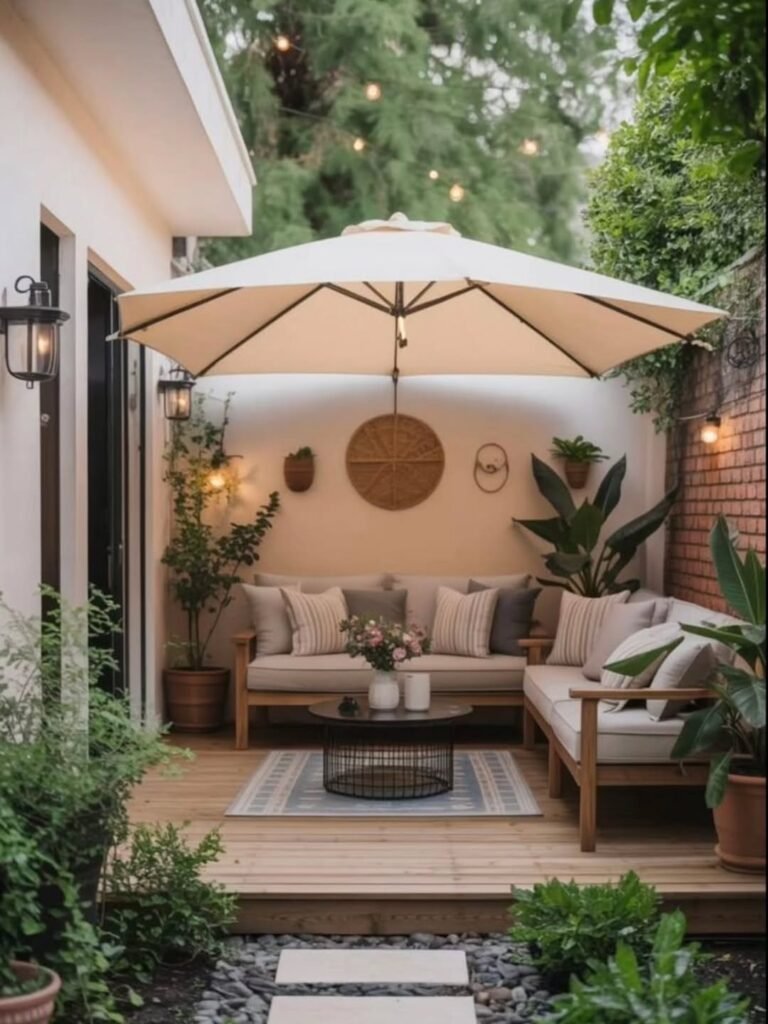
Low teak platform, linen cushions, overhead canopy — the resort corner in its purest form.
Why this one defines the category:
What Balinese resort design does:
- Everything low to ground
- Natural materials only
- Overhead shade always present
- Plants at eye level when seated
Recreating it:
The platform:
Teak or acacia day bed:
- Low profile (8–12 inches off ground)
- Slatted wood (breathes, dries fast)
- Natural finish (not painted)
- 80×60 inches minimum (generous)
Budget option (DIY platform):
- Scaffold boards (reclaimed)
- Two layers crossed
- Sealed with outdoor oil
- $60 in lumber
The cushion:
- 4-inch foam (outdoor-rated)
- Linen or canvas cover (natural white)
- Not removable cushions (slab style)
- Clean and uninterrupted
The overhead element:
Bamboo shade structure:
- Four bamboo poles (4-inch diameter)
- Lashed together at top
- Shade cloth or thatch panel on top
- Authentic and low-cost
Or shade sail:
- Triangle in natural canvas
- Off-white or warm taupe
- Attached to poles and fence
- Modern version of same principle
Pillow arrangement:
The resort pile:
- Two large square (24 inches) at back
- Two standard (20 inches) in front
- One lumbar across front
- All linen, all same family of white
Nothing patterned:
- Texture over pattern
- Fringe detail acceptable
- Embroidery subtle and small
- Simplicity reads luxury
Plants:
Tropical or tropical-looking:
- Bird of paradise (in container)
- Banana plant (dramatic scale)
- Elephant ear (bold leaves)
- One on each corner post
Ground level:
- Flat river stones around base
- No mulch (too suburban)
- Or decomposed granite (clean)
- Transition from structure to garden
The scent layer:
Frangipani or gardenia nearby:
- Potted if not hardy in your climate
- Bring in for winter
- The smell completes the Bali feeling
- Irreplaceable detail
Cost breakdown:
- Teak daybed: $280
- Outdoor cushion slab: $90
- Bamboo poles + shade: $65
- Pillows (5): $85
- Tropical plants (4): $120
- River stones: $30
- Total: $670
My Bali corner: The pause when guests walk in. That pause. Worth every dollar.
Bali Corner Tips
Keep it immaculate:
- Resort corners are always pristine
- Dead leaf on cushion breaks the spell
- Five-minute tidy before using
- Condition creates magic, neglect destroys it
Low lighting only:
- No overhead bright lights
- Solar stake lights at ground level
- Or tea lights in glass holders
- Low amber only — always
2. The Plunge Pool Corner (Cool Drama)

Small container pool with stone surround — the ultimate luxury signal.
Why a plunge pool reads resort immediately:
The association:
- Every luxury resort has water
- Water = relaxation = vacation
- Sight and sound both engaged
- Nothing else signals escape faster
The reality for most homes:
- Full pool: $30,000–80,000
- Above-ground stock tank: $400–800
- Perceived luxury gap: enormous
- Actual experience gap: surprisingly small
The stock tank pool:
Galvanized stock tank:
- 8-foot diameter, 2 feet deep
- $400–600 at farm supply stores
- Holds 700+ gallons
- Industrial chic aesthetic
Setup requirements:
- Level ground (critical)
- Drainage plan
- Pump and filter ($150)
- Chemical maintenance (simple)
The surrounding design:
Stone deck around tank:
- Flat stepping stones placed around perimeter
- 18-inch border minimum
- Natural fieldstone or slate
- Level with top of tank
Why the surround matters:
- Tank alone looks agricultural
- Stone surround looks designed
- 2-inch detail changes everything
- Transition from pool to landscape
Plants around perimeter:
Tall and lush:
- Bamboo screen (privacy + tropical)
- Ornamental grasses (movement)
- Elephant ears (bold, tropical feel)
- Ferns (shade areas)
Privacy screen:
- Bamboo panel on fence ($45)
- Or tall planters as screen
- Full enclosure = private resort
- Overlooked by nobody
Accessories:
Beside the tank:
- Wooden step stool (to get in)
- Hook for towel
- Basket with rolled towels
- Small waterproof speaker
The towel detail:
- Rolled white towels in basket
- Hotel-style presentation
- $12 for basic white towels
- Signals luxury immediately
Cost breakdown:
- Stock tank: $500
- Pump and filter: $150
- Stone surround: $80
- Bamboo privacy screen: $55
- Tropical plants (4): $100
- Towel basket and accessories: $45
- Total: $930
My stock tank corner: Neighbor kids assumed it was a “fancy hot tub.” Told them it was a $500 farm tank. They didn’t believe me.
3. The Cabana Corner (Canopied Retreat)

Fabric canopy with enclosed seating — resort pool-side in a home corner.
The cabana formula:
What makes a cabana a cabana:
- Overhead coverage (solid or fabric)
- Two or three sides defined
- Open front (views preserved)
- Furniture inside (sofa or daybed)
Building the canopy:
Pergola base (ideal):
- Existing pergola: perfect starting point
- Add sides with fabric curtains
- One side open
- Instant cabana from existing structure
DIY canopy frame:
- Four 4×4 posts
- Top beams connecting them
- Shade cloth or canvas roof
- Open front face
Fabric choices:
Stripe canvas (classic resort):
- Navy and white (nautical)
- Cream and tan (Mediterranean)
- Sage and white (organic)
- Stripe always reads sophisticated
Where to source:
- Outdoor canvas by the yard ($8–15 per yard)
- Or outdoor drop cloth hemmed ($12 each)
- Sewn or stapled to frame
- Replace every 2–3 seasons
Inside the cabana:
The sofa:
- Two-seater maximum (intimate)
- Deep cushions
- Covered in outdoor canvas
- Facing outward (views outside)
Side tables (both sides):
- Small and low
- Drink and book height
- Matching pair (symmetry signals quality)
- Wicker or teak
Hanging detail:
- One hanging lantern inside
- From canopy center beam
- Swaying slightly
- Warm amber inside the enclosure
Floor treatment:
Inside the cabana:
- Outdoor rug (defines zone)
- Pattern acceptable here (contained)
- Or smooth pebble mat
- Something that transitions from hard patio
Cost breakdown:
- Pergola frame (DIY): $200
- Canvas fabric + hardware: $90
- Two-seater outdoor sofa: $250
- Side tables (pair): $70
- Hanging lantern: $35
- Outdoor rug: $65
- Total: $710
My cabana corner: Sat inside it during a light rain once. Rain on canvas overhead. Felt like a different country entirely.
4. The Resort Planting Corner (Resort Landscaping Replicated)
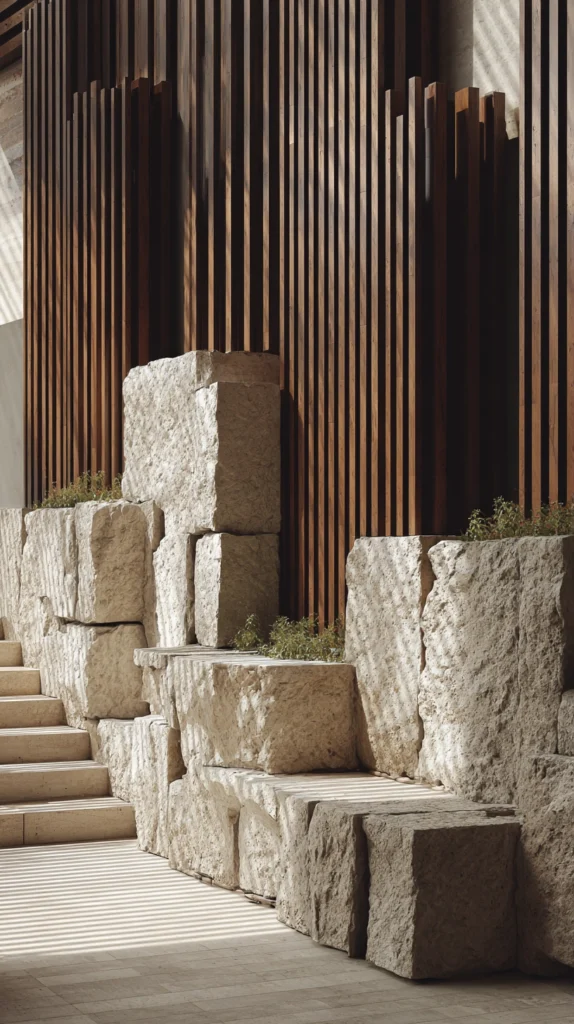
Layered resort-style landscaping — the green backdrop that makes everything look expensive.
What resort landscaping always has:
Three height layers always present:
- Ground cover (0–6 inches)
- Mid layer (2–4 feet)
- Canopy layer (5+ feet)
- Never just one height
Why height layering matters:
- Flat single-height = suburban
- Three heights = intentional design
- Depth created visually
- Tropical and lush feeling achieved
Building the layers:
Ground layer:
- Mondo grass (low, spreading, dark green)
- Baby’s tears (bright green carpet)
- Creeping thyme (gray-green, fragrant)
- Or smooth river pebble (negative space)
Mid layer (2–4 feet):
- Camellia (evergreen, flowers)
- Hydrangea (summer drama)
- Loropetalum (burgundy, year-round)
- Fatsia (tropical-looking, shade-tolerant)
Canopy layer (5+ feet):
- Japanese maple (elegant structure)
- Multi-stem crape myrtle (sculptural)
- Bamboo (fast, tropical)
- Or tall ornamental grass (movement)
The resort trick with repetition:
Same plant repeated:
- Three of same mid-layer plant
- In arc or line
- Not one of each different
- Repetition = professional landscape
Odd numbers only:
- Three camellia not two
- Five hostas not four
- Seven mondo grass clumps not six
- Odd = natural, even = stiff
Negative space:
The thing most home gardens miss:
- Resorts leave space between plants
- Not every inch planted
- Ground cover or pebble visible
- Breathing room between elements
My home garden mistake:
- Crammed in as many plants as possible
- No space between anything
- Looked busy not lush
- Removed half the plants — looked immediately better
Cost breakdown:
- Canopy layer plant: $80
- Mid layer plants (3): $75
- Ground cover flats (3): $45
- Pebble mulch (1 ton): $50
- Total: $250
Highest transformation per dollar on this list. Plants done right change everything around them.
5. The Outdoor Shower Corner (Ultimate Luxury)
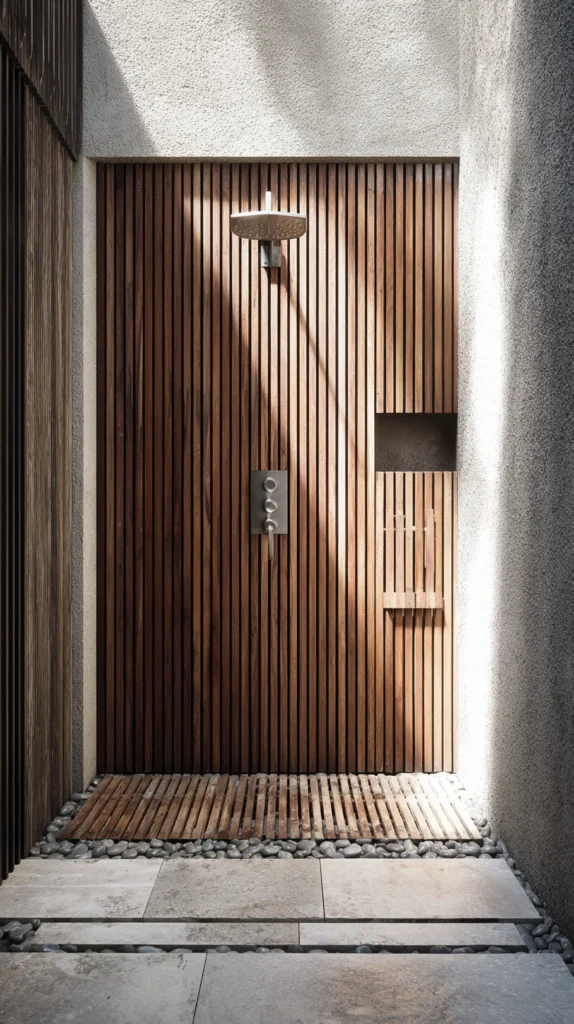
Freestanding outdoor shower — the resort amenity nobody expects at home.
Why outdoor showers read as pure luxury:
The association:
- Beach resorts
- Tropical villas
- The end of a perfect day
- Rinsing off before the pool
The experience:
- Shower under open sky
- Completely different from indoors
- Temperature contrast with warm water
- Memorable every time
Building it:
The simplest version:
Garden hose conversion:
- Outdoor shower head ($25) connects to hose bib
- Wooden privacy screen around it
- River pebble floor
- Total: under $200
Proper plumbed version:
- Extend hot and cold lines outdoors
- Plumber required ($200–400 labor)
- Proper shower head mounted
- More comfortable year-round
The structure:
Three-sided screen:
- Teak or cedar panels
- U-shape (open top, open front entry)
- 6 feet tall (privacy)
- 3×3 feet interior (comfortable)
DIY screen:
- 2×6 cedar boards horizontal
- Spaced 1 inch apart (privacy + airflow)
- Cedar posts at corners
- Natural finish or teak oil
The floor:
Teak slat mat:
- Classic outdoor shower floor
- Elevates feet off ground
- Drains underneath
- $30–60 at outdoor retailers
Or river pebble:
- Smooth stones set in mortar
- Massage underfoot
- Drains naturally
- Most resort-authentic
The accessories:
Mounted outside the screen:
- Hook for towel
- Small shelf for products
- Hanging plant above (pothos trails beautifully)
- Outdoor lantern nearby (evening showers)
Surrounding plants:
Tropical enclosure:
- Tall bamboo behind screen
- Ferns at base
- Climbing vine on screen (over time)
- Private garden feel
The experience detail:
White cotton bathrobes on hook:
- Two robes hanging
- Visible from corner approach
- Signals the experience to come
- $20 each at HomeGoods
Cost breakdown:
- Shower head + hose connection: $35
- Cedar screen structure: $180
- Teak floor mat: $45
- Towel hooks + shelf: $25
- Plants: $55
- Robes (2): $40
- Total: $380
My outdoor shower: Used every summer evening after gardening. First outdoor feature guests ask to try. Worth the build entirely.
6. The Fire and Water Corner (Opposites Combined)
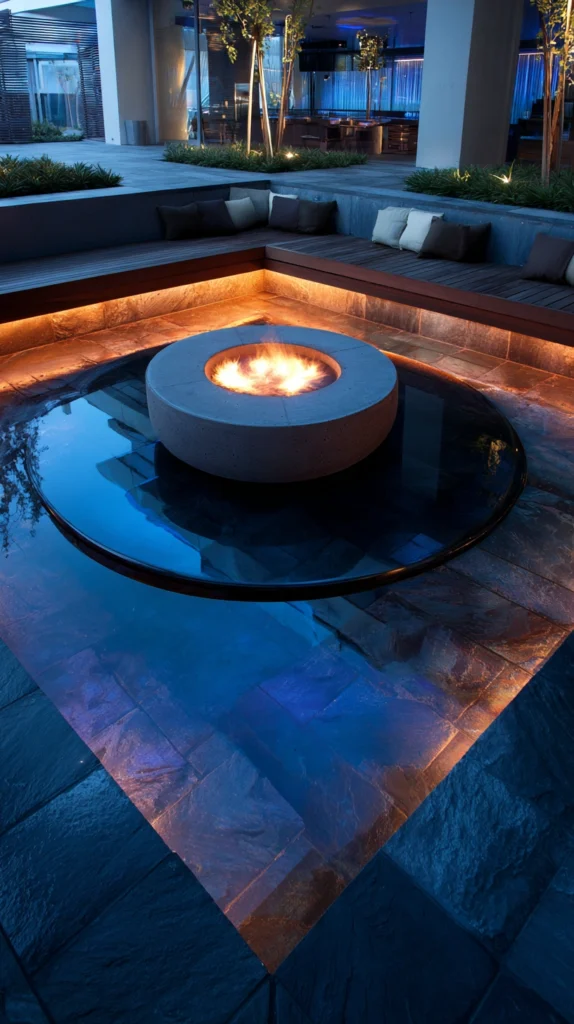
Small fire feature beside container water — the contrast that creates fascination.
Why fire and water together:
The sensory combination:
- Fire: warm light, crackling sound
- Water: cool sound, reflective surface
- Together: complete sensory environment
- Neither alone is as compelling as both
Resort spas always do this:
- Hot pool beside cold pool
- Fire torch beside water feature
- Contrast heightens both experiences
- Design principle with deep roots
The fire element:
Tabletop fire bowl:
- Concrete or ceramic bowl
- Bioethanol fuel (smokeless, clean)
- 12–16 inch diameter
- $60–150
Why bioethanol:
- No smoke (no smell on clothes)
- No wood to manage
- Indoor-outdoor safe
- Clean and resort-appropriate
The water element:
Glazed ceramic bowl fountain:
- 20-inch diameter bowl
- Small submersible pump ($15)
- Overflows gently over lip
- Recirculates
The sound:
- Gentle overflow trickling
- Not aggressive (not a waterfall)
- Subtle background sound
- Masks ambient noise
Arrangement:
L-shaped seating with both in view:
- Fire on one side table
- Water on other side table
- Seating in corner
- Both within arm’s reach
- Both visible from seated position
At night:
Fire reflects in water:
- Even small flame reflects
- Doubles visual impact
- Hypnotic movement
- Guests stare without realizing
Plants framing both:
- Low ferns between them
- Nothing tall (blocks view of either)
- Moss in bowl base (around fountain)
- Japanese aesthetic naturally
Cost breakdown:
- Bioethanol fire bowl: $95
- Ceramic water bowl + pump: $90
- Two side tables: $70
- Seating (two chairs): $160
- Plants and moss: $35
- Total: $450
My fire and water corner: Nobody sits anywhere else when it is running. Both running together at night — genuinely transportive.
7. The Hammock Garden Corner (Tropical Suspension)
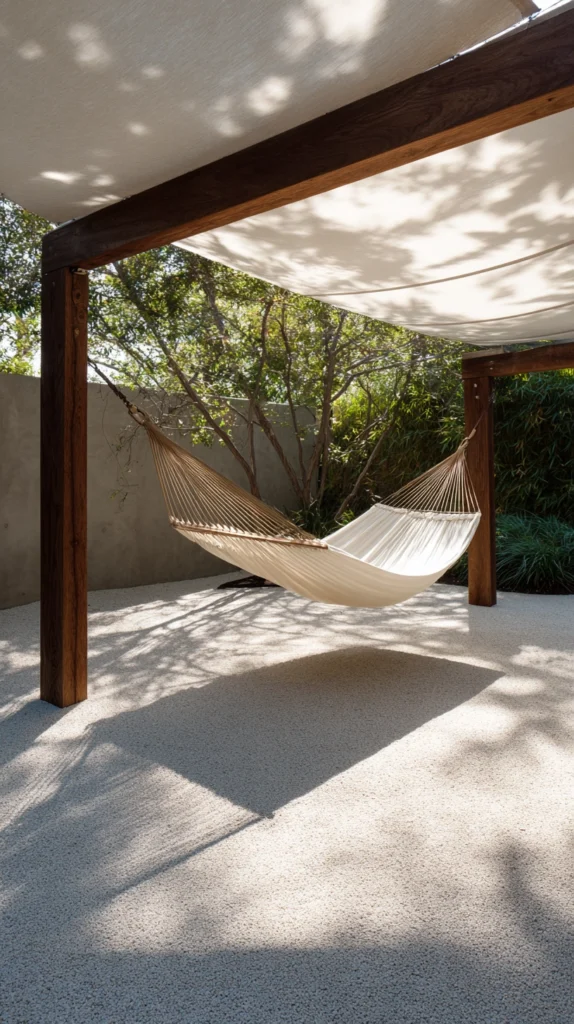
Woven hammock between mature plants — suspended in green.
Resort hammock corners done right:
What makes resort hammocks different:
- Surrounded by green (not floating in open)
- Overhead element above
- Proper sag and tension
- Materials match surrounding aesthetic
The green enclosure:
Plants as posts:
- Two large containerized trees
- Hammock hung between trunks
- Olive trees (perfect scale)
- Or multi-stem crape myrtle
Container tree setup:
- Large planter (18-inch minimum)
- Weighted base (stability critical)
- Eye bolt screwed into trunk
- Weight-rated hardware
Alternative with real posts:
- Two 6×6 cedar posts
- Set in ground (concrete footed)
- Decorative post caps
- Plants clustered at base (hide post feet)
The hammock itself:
Mayan woven style:
- Cotton or nylon
- Natural colors (tan, cream, sage)
- Wide enough for two (78 inches)
- Traditional spread at ends
The hang height:
- Hang points 12–15 feet apart
- 4–5 feet off ground at ends
- Sag to 18 inches off ground
- Correct sag = comfortable
Too tight = uncomfortable Correct sag = the resort experience
The overhead:
Shade cloth panel:
- Stretched between hang points
- 30% shade (not full block)
- Dappled light through
- Canvas or neutral fabric
Or existing tree canopy:
- Best option when available
- Natural and free
- Hammock reads as belonging
- Nothing added overhead needed
Surrounding ground treatment:
Decomposed granite under and around:
- Clean and finished
- No mud after rain
- Natural color
- Easy maintenance
Stepping stone approach:
- From patio to hammock
- Intentional path created
- Journey to the hammock matters
- Arrival = experience
Cost breakdown:
- Woven hammock: $75
- Post setup or container trees: $200
- Shade cloth: $40
- DG ground treatment: $50
- Path stones: $35
- Total: $400
My hammock corner: Took an afternoon nap in it three days after installation. Woke up disoriented — forgot I was home. Best possible outcome.
8. The Meditation Garden Corner (Still and Intentional)
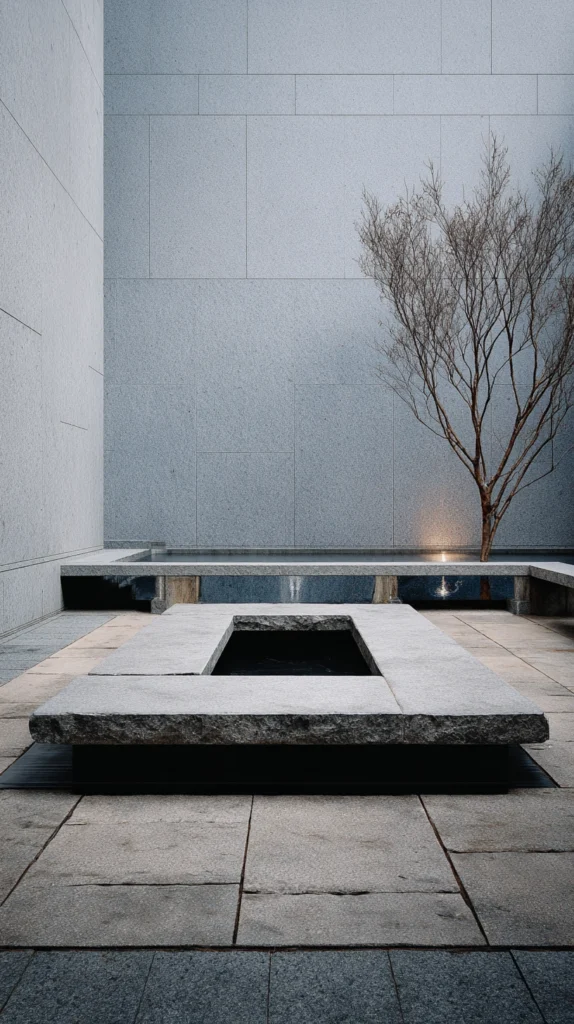
Japanese-influenced quiet corner — the resort’s most photographed but least-used space, done right.
Why resort meditation corners work:
They are designed for doing nothing:
- No table for activities
- No screen or entertainment
- Nothing but sitting and being
- Radical in a world of distraction
The design principle:
Emptiness as feature:
- Less is not compromise
- Less is the point
- Space to breathe is the luxury
- Resorts understand this
Building the corner:
Ground plane:
- Fine gravel or decomposed granite
- Raked weekly (the practice)
- 10×10 feet minimum
- Contained with simple edging
The seat:
- Single stone bench
- Or concrete block (sculptural)
- Or low wooden platform (zafu cushion on top)
- One seat only (solitary = meditative)
Three rocks:
- Odd number (always)
- Varied sizes
- Asymmetrically placed
- Partially buried (natural, not sitting on top)
One tree:
- Japanese maple (irreplaceable here)
- Or weeping cherry
- Or cloud-pruned boxwood
- Single specimen — not a collection
Water sound:
- Bamboo water spout (shishi-odoshi)
- Simple recirculating pump
- Bamboo tips and fills, tips and fills
- Rhythmic sound = meditative anchor
Moss:
- Between stones
- At base of tree
- Encourages it (don’t fight it)
- Signals age and establishment
What is explicitly excluded:
Never in this corner:
- Colorful flowers (disrupts calm)
- Mixed materials (too busy)
- Multiple plants species competing
- Decoration or accessories
- String lights (wrong here)
Why restraint is difficult:
- Impulse to add more
- Empty feels unfinished
- Trust the emptiness
- Resort designers do — so should you
Cost breakdown:
- Fine gravel (1 ton): $60
- Stone bench: $80
- Three feature rocks: $45
- Japanese maple: $90
- Bamboo water spout: $55
- Edging: $30
- Total: $360
My meditation corner: Used it twice a week. Noticed the difference in clarity after. The emptiness is doing work you can not see.
9. The Outdoor Bar Corner (Entertaining Elevated)

Dedicated outdoor bar setup — the resort amenity that transforms hosting.
Why an outdoor bar reads luxury immediately:
The signal it sends:
- Thought has gone into entertaining
- Guests are anticipated and prepared for
- Host is confident and generous
- This is a place things happen
The bar structure:
Repurposed console as bar:
- Teak console table (weather-resistant)
- Bar height (42 inches)
- Two bar stools
- Simple and functional
Or built-in option:
- Concrete block base
- Tile top (sealed)
- Built into corner permanently
- Most resort-authentic
The bar setup:
Top of bar:
- Drinks tray (corrals bottles)
- Ice bucket (essential)
- Glassware (stored in covered basket)
- One statement plant (small, architectural)
Behind the bar:
Floating shelf on fence:
- Two shelves mounted
- Glassware display
- Bottles arranged
- Small trailing plant from top shelf
Lighting the bar:
Under-shelf LED strip:
- Warm white tape light
- Illuminates bottles from behind
- $12 for 16 feet
- Plugs into outdoor outlet
Overhead pendant:
- Industrial pendant (outdoor rated)
- Hung directly above bar
- Spotlight effect on setup
- $45–65
The stool selection:
Counter or bar height:
- Match to bar height exactly
- Teak or powder-coated black
- Simple design (not overworked)
- Weather-rated materials
Surrounding plants:
At bar base:
- Two tall planters (flanking)
- Lemon tree in each (Mediterranean bar)
- Or rosemary topiary (herbal theme)
- Fragrant and thematic
Cost breakdown:
- Teak console bar: $180
- Bar stools (2): $140
- Floating shelves: $35
- Pendant light: $55
- LED strip: $12
- Planters + lemon trees: $110
- Accessories (tray, ice bucket): $45
- Total: $577
My outdoor bar: Hosting changed completely. Nobody goes inside for drinks anymore. Party stays outside. That is the goal.
Bar Corner Tips
The ice bucket rule:
- Always have ice ready before guests arrive
- Warm drinks kill outdoor entertaining mood
- Double-walled bucket holds ice 4+ hours
- Small detail, enormous impact
Glass storage:
- Covered basket protects from dust and bugs
- Take glasses out when guests arrive
- Put back when evening ends
- Repeat without thinking
10. The Dining Pergola Corner (Al Fresco Always)

Pergola-covered dining corner — the outdoor room that becomes the main dining room.
Why covered dining beats open dining:
The commitment it signals:
- Open table = casual option
- Covered pergola = permanent room
- Structure says “this is where we eat”
- Removes the decision every time
The pergola structure:
Attached to house (best):
- Uses house wall as one side
- Already has connection to kitchen
- Convenience = use
- Permit required in some areas (check)
Freestanding corner pergola:
- Two fence walls as two sides
- Pergola adds roof and two open sides
- Corner provides enclosure naturally
- No permit usually required
Roofing the pergola:
Options from open to closed:
Open beams:
- Dappled light through
- Rain falls through (use umbrella)
- Most natural
- Beautiful but impractical in rain
Shade cloth:
- 50% block
- Filters rain (light rain only)
- Keeps space cooler
- Green or tan (most natural)
Polycarbonate panels:
- Fully rain-proof
- Lets light through
- Clear or frosted
- Most practical option
The dining setup:
Table:
- Rectangular (seats more)
- 36-inch width minimum (space for food and arms)
- Teak or powder-coated aluminum
- Weather-immune materials
Chairs:
- Four to six (scale to pergola)
- Matching set (non-negotiable here)
- With cushions (comfort = lingering)
- Covers available (keep them clean)
The resort dining details:
Pendant lights over table:
- Two or three pendants in a row
- Above table, not high ceiling
- 30 inches above table surface
- Warm bulbs (amber, not white)
Climbing plants on pergola:
- Wisteria (purple, fragrant — aspirational)
- Jasmine (white, fragrant — faster)
- Climbing rose (classic)
- Three to five years for full coverage
The table styling that stays:
- Hurricane candles (always on table)
- Small potted herb centerpiece
- Napkins in holder
- Ready to eat always
Cost breakdown:
- Pergola (DIY kit): $350
- Polycarbonate roofing: $120
- Dining table: $220
- Six chairs: $270
- Pendant lights (2): $90
- Climbing plant: $25
- Table accessories: $50
- Total: $1,125
Biggest investment on this list. Biggest return. Meals outside went from occasional to default. Kitchen table now used for work only.
11. The Poolside Lounger Corner (Without the Pool)

Resort lounger setup beside any water feature — pool energy from a stock tank or pond.
The psychology of poolside:
What creates poolside feeling:
- Horizontal surface (the lounger)
- Water nearby (any water)
- Bright towels
- Drinks within reach
- Absolutely nothing to do
You do not need a pool:
- Stock tank ($400) creates the water
- Container pond creates the water
- Even a large reflective bowl works
- Water is water at small scale
The lounger itself:
Teak steamer chair:
- Adjustable back (flat to sitting)
- Classic resort aesthetic
- $150–250 for quality one
- Worth buying right once
Or sunbed/chaise:
- Aluminum frame
- Sling or cushion style
- Wheels (move to follow sun)
- $80–180 depending on quality
The setup around it:
Side table:
- Drinks table at arm height
- Small — just enough for glass and phone
- Or upturned log slice ($0)
- Or ceramic stool ($30)
Towel situation:
The resort towel formula:
- Oversized (beach towel minimum)
- White or white stripe
- Draped across lounger before lying down
- Folded extra on side table
Single white towel draped perfectly = instant resort. This is free and changes everything.
Umbrella or shade:
- Market umbrella ($80)
- Positioned to shade head and chest
- Feet in sun (most people prefer)
- Tiltable for changing sun angle
Surrounding the water:
Lush planting:
- Tall plants behind (backdrop)
- Ferns or hostas beside water
- Nothing blocking water view from lounger
- Frame without obstruction
The drink station:
- Small side trolley or bar cart
- Pre-loaded with afternoon drinks
- Ice bucket
- Glasses inverted (hotel style)
- Self-sufficient setup
Cost breakdown:
- Teak steamer chair: $200
- Market umbrella: $80
- Side trolley: $65
- Container water feature: $120
- Surrounding plants: $70
- Towels (good ones): $35
- Total: $570
My lounger corner: First time lying in it, genuinely forgot where I was for three minutes. That is the entire goal.
12. The Tropical Corner Planting (Green Architecture)
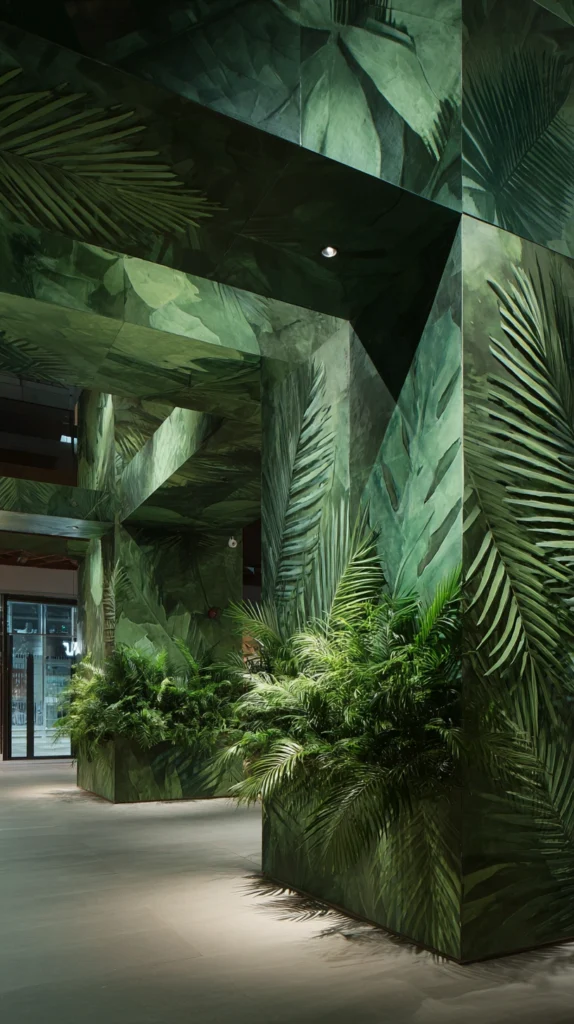
Dense tropical or tropical-style planting — the green architecture of resort landscapes.
What tropical resort planting achieves:
Instant sense of place:
- Dense green signals escape
- Large leaves = exotic location
- Overhead canopy feeling
- Urban world disappears
For non-tropical climates:
Tropical-looking plants that survive cold:
- Canna lily (root overwinters zones 7+)
- Hardy banana (Musa basjoo, zones 5+)
- Elephant ear (zones 7+, or dig up)
- Phormium (New Zealand flax, zones 7+)
- Fatsia japonica (zones 7+, truly tropical-looking)
The planting design:
Back of corner (tallest):
- Hardy banana or tall canna
- 6–10 feet in summer
- Bold and architectural
- Sets the scale
Middle zone:
- Fatsia (large tropical leaves)
- Elephant ear (dramatic)
- Or large-leaved hostas (shade corners)
- Fills the mid-story
Front and edges:
- Ground ferns (lacy texture)
- Mondo grass (dark, fine)
- Or impatiens (shade, color)
- Softens transition to hardscape
The density:
Resort planting is dense:
- No bare soil visible
- Every space filled
- Layers touching
- Abundance is the point
My approach:
- Plant at half the recommended spacing
- Looks fuller immediately
- Adjust as plants establish
- Dense from year one
Hardscape integration:
Stepping stones through planting:
- Path into the corner
- Reason to walk in
- Stone or concrete
- Surrounded by plants
Large decorative pot as focal:
- Tall urn or vase
- Empty or planted
- Sculptural anchor point
- Resort hotels always have this
Lighting the tropical corner:
Uplighting from below:
- Spotlights at base of tall plants
- Aimed upward
- Dramatic shadows on fence behind
- Night version completely different from day
Cost breakdown:
- Tall anchor plants (2): $80
- Mid-layer plants (4): $80
- Ground cover flats (3): $35
- Decorative urn: $65
- Uplight spotlights (3): $45
- Stepping stones: $30
- Total: $335
My tropical corner: Guests literally step into it to be surrounded by the plants. Designed to be entered, not just viewed.
13. The Moroccan Corner (Pattern and Lantern Light)
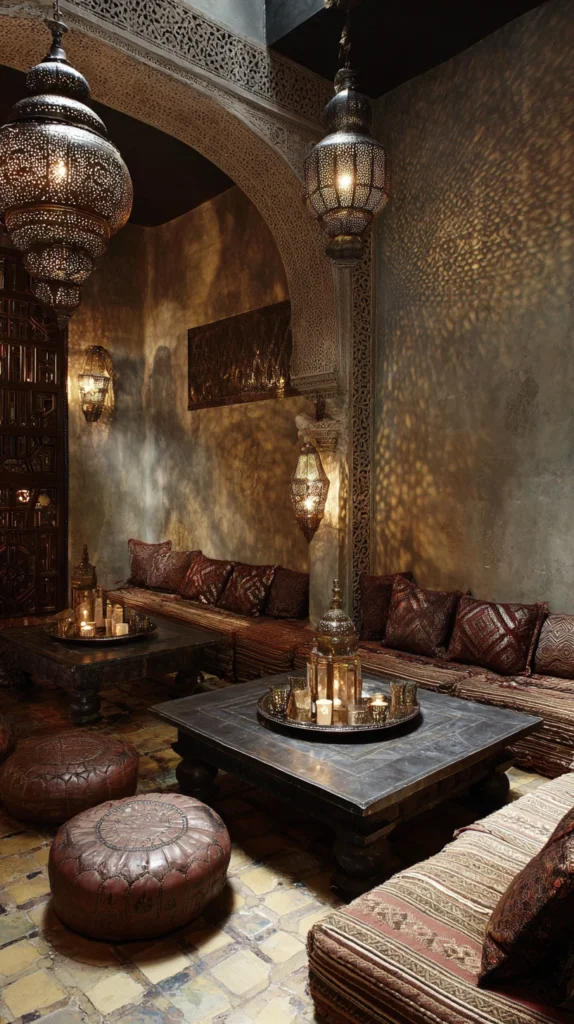
Kilim rugs, pierced lanterns, low cushion seating — the corner that transports.
Why Moroccan outdoor corners dominate saves:
The maximum escapism factor:
- Looks like a different continent
- Pattern and color rarely seen in home design
- Lantern light unlike anything else
- Completely committed aesthetic
The design commitment required:
- Half-Moroccan does not work
- All-in or start over
- Every element must agree
- Reward for full commitment is enormous
The ground layer:
Layered outdoor rugs:
- Two rugs overlapping at corner
- Kilim pattern (or Moroccan-style outdoor rug)
- Warm colors: terra cotta, saffron, cobalt
- Pattern on pattern works here only
Outdoor kilim options:
- Actual kilim (treat with outdoor sealer, $15)
- Moroccan-inspired outdoor rug ($45–90)
- Layer cheaper one beneath
- Top one does the work
Low seating:
Floor cushions:
- Large (30×30 inches)
- Jewel-toned covers
- Multiple (6–8 for a corner)
- No legs — floor level only
Low table:
- Brass or hammered copper tray (authentic)
- Or wooden tray on low stand
- 10–12 inches off ground
- Ornate detail welcome here
The lanterns:
Pierced metal lanterns:
- Cast patterns on surfaces at night
- Clusters of three to five
- Floor clusters and hanging
- Mix sizes within cluster
Inside the lanterns:
- Flameless LED (timer for dusk)
- Or tea lights (real flame is worth it here)
- Amber through the piercings
- Transforms entire corner at night
Wall treatment:
Painted pattern on fence:
- Moroccan stencil ($15)
- Deep jewel tone base (cobalt, terracotta)
- White or cream pattern over
- Most dramatic backdrop possible
Or hanging textiles:
- Outdoor-rated tapestry
- Or oilcloth with pattern
- Mounted to fence
- Colors carry the entire space
Plants in this corner:
Desert and Mediterranean:
- Olive tree (potted, iconic)
- Agave (architectural, desert)
- Pomegranate (small tree, authentic)
- Jasmine (climbing, fragrant)
Cost breakdown:
- Layered rugs: $90
- Floor cushions (6): $120
- Brass tray table: $55
- Pierced lanterns (5): $100
- Fence stencil + paint: $40
- Olive tree: $65
- Total: $470
My Moroccan corner: First outdoor space I designed where people immediately asked “can I photograph this?” Yes. Please.
14. The Stone and Moss Corner (Ancient Calm)
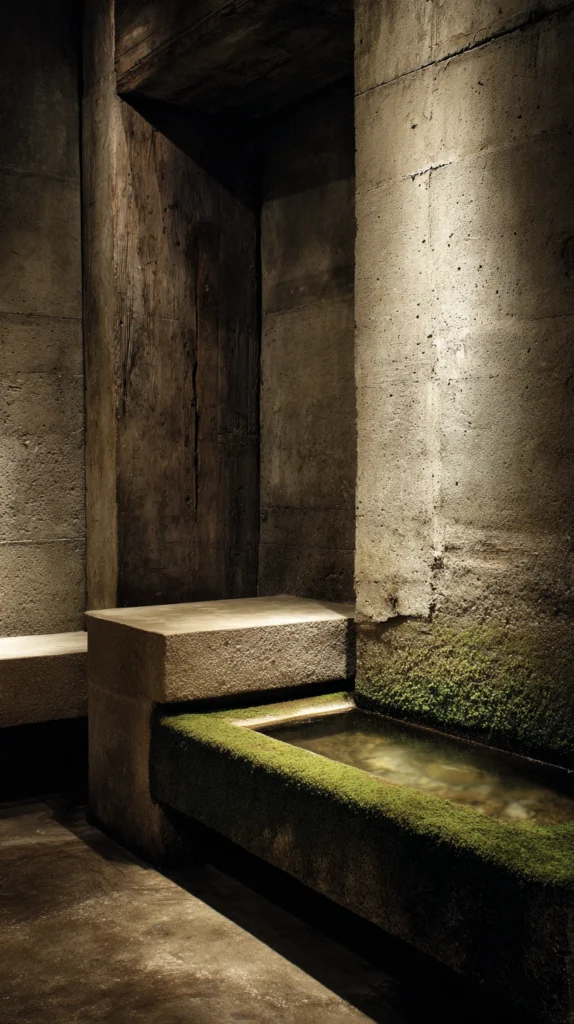
Natural stone, moss, aged wood — the corner that feels centuries old.
Why this aesthetic reads pure luxury:
The rarity factor:
- Age cannot be bought outright
- Patina signals permanence
- Moss grows slowly (or appears to)
- Feels inherited not assembled
Resort version:
- Aman resorts do this extraordinarily
- Japanese ryokan aesthetic
- Natural materials only
- Absolute restraint
Building instant patina:
Aged stone:
- Reclaimed fieldstone (not new)
- Craigslist free section (often available)
- Or new stone aged with yogurt method
- Yogurt applied = accelerated moss growth
Yogurt method:
- Blend yogurt with water
- Paint onto stone
- Keep moist first two weeks
- Moss establishes in 4–6 weeks
The layout:
Stone platform:
- Flat stones as low platform
- Two to three inches off ground
- Wooden platform on top (or just stone)
- Aged teak or driftwood surface
Moss between stones:
- Fill gaps with collected moss
- Keep moist first season
- Establishes and spreads
- Living grout
The seating:
Wooden bench (simple):
- Two thick slabs on stone legs
- Weathered gray finish
- No back (posture engages)
- Cushion optional (linen, unbleached)
Or boulder seat:
- Single large flat-topped boulder
- Smooth enough to sit on
- $0 if hauled yourself
- Most authentic option
Plants:
Shade-lovers only:
- Ferns (multiple varieties)
- Hostas (bold leaves, shade)
- Hellebores (winter flower, evergreen)
- Astilbe (feathery plumes)
The water element:
Stone basin:
- Large flat stone with natural hollow
- Or carved stone bowl
- Filled with water
- Reflective surface only (no pump)
Stillness is the point:
- Moving water is energetic
- Still water is meditative
- This corner is about stillness
- Let the water be calm
Cost breakdown:
- Reclaimed stone (free or $50)
- Wooden bench: $90
- Moss (collected or purchased): $20
- Shade plants (6): $70
- Stone basin: $45
- Cushion: $30
- Total: $305
My stone corner: Guests slow down when they reach it. Visibly. The body responds to this aesthetic before the mind catches up.
15. The Lantern-Lit Garden Path Corner (The Arrival Experience)

Lit path leading to a destination corner — the resort trick of creating arrival.
Why resorts design arrivals:
The journey matters:
- Getting somewhere is part of the experience
- Anticipation built along the path
- Arrival amplified by approach
- Home gardens never do this
Even 10 feet of path creates it:
- Short path is enough
- Light the path deliberately
- End it with a destination
- Transformation complete
The path:
Material:
- Irregular stepping stones (natural)
- Spaced for comfortable stride
- Moss or creeping thyme between
- Stone disappears into surroundings
Path width:
- Single file (18 inches) creates intimacy
- Not wide enough for two side by side
- Makes it a personal journey
- Deliberate narrowness
Lighting the path:
Ground-level only:
- Solar stake lights (12-inch height maximum)
- One every 3 feet
- Warm amber
- Lights the stone not the air
Or recessed step lights:
- Built into stone edges
- Light the path surface from side
- Most subtle option
- Most expensive ($20 each)
Or lanterns on stakes:
- Taller (18 inches)
- More decorative
- Spaced every 4 feet
- Visible from patio (draws eye and person)
The destination corner:
What waits at the end:
- The corner is the reward
- Must be worth arriving at
- Any of the previous 14 setups
- Or simple: chair, lantern, plant
The simplest destination:
- One chair (facing away from house)
- One side table
- One lantern
- One large plant behind
Cost: $150. Experience: priceless.
The planting along the path:
Both sides planted:
- Low ground cover at path edge
- Medium plants behind
- Brushing the path is intentional
- Scent released as you pass
Fragrant along path:
- Lavender (brushes legs, fragrant)
- Rosemary (reaches into path)
- Catmint (soft, fragrant edge)
- Jasmine (trained to arch overhead)
The jasmine arch:
- Two posts either side of path
- Crossbar connecting them
- Jasmine trained over top
- Walk through fragrance
Night photography truth:
This corner photographs best of all 15:
- Lit path receding into dark
- Warm pools of light
- Destination glowing at end
- Depth and mystery in one frame
Every resort brochure has this shot. Now yours does too.
Cost breakdown:
- Stepping stones: $55
- Path lighting (solar stake, 8): $65
- Destination chair: $80
- Side table: $30
- Lantern: $25
- Path planting (both sides): $70
- Jasmine arch: $45
- Total: $370
My garden path corner: Walked it barefoot at 10pm once. Warm stones, jasmine overhead, lanterns glowing. Forgot every difficult thing for about four minutes.
What All 15 Corners Share
Strip away every style difference:
Enclosure is always present:
- Fence or wall behind
- Plants framing sides
- Overhead element of some kind
- Never floating in open space
Light is always warm:
- No cool white anywhere
- No bright overhead floods
- Amber, candlelight, dusk-level
- Light level matches relaxation level
One material dominates:
- Teak in resort corners
- Stone in Japanese corners
- Brass and pattern in Moroccan
- Never three materials competing
Plants are never an afterthought:
- Integrated into structure
- Multiple layers always
- Alive and maintained
- The living element anchors everything
Nothing extra present:
- No random objects
- No dead plants ever
- No clutter on surfaces
- Every object placed, never landed
Getting Started This Weekend
The honest starting point:
One corner. That is all.
Not the whole yard. Not a master plan. One corner, chosen deliberately, transformed completely.
How to choose your corner:
The most enclosed:
- Already has two sides defined
- Needs less to feel complete
- Start with the best bones
The most visible:
- Most seen from house interior
- Daily visual impact highest
- Motivates continued investment
- Reward is constant
The most neglected:
- Psychological win when transformed
- Contrast is highest
- Before-and-after most satisfying
- Energy from the turnaround
This weekend under $150:
- Two large plants (enclosure): $60
- String lights (warm): $25
- One throw or cushion: $30
- Three lanterns (TJ Maxx): $35
- Total: $150
That is a resort corner. Not complete. Not finished. But unmistakably different from what was there.
Build from there:
Month 1: Add the focal piece (daybed, hammock, fire table) Month 2: Complete the planting (all three layers) Month 3: Add water or sound element Month 4: Style and accessorize
Choose your corner by the feeling you want:
Total escape: Bali daybed (#1), tropical planting (#12), hammock garden (#7) Social and entertaining: Outdoor bar (#9), dining pergola (#10), fire and water (#6) Pure calm: Meditation garden (#8), stone and moss (#14), Zen water (#6) Drama and color: Moroccan corner (#13), plunge pool (#2), cabana (#3) Daily ritual: Reading nook with path (#15), outdoor shower (#5), lounger corner (#11)
The resort feeling you have been chasing is not about budget. It is about commitment to one corner, done completely, with warm light and living green and one soft surface to sink into.
You already have the corner. You just have not designed it yet.