15 Beautiful Outdoor Ideas People Can’t Stop Saving
Noticed something about the outdoor photos that get saved millions of times. They are almost never the most expensive setups.
The most-saved outdoor photos are not resort pools or professionally landscaped estates. They are a hammock between two trees with the right light behind it. A table set for dinner outside with candles and one trailing vine. A corner with a chair that looks like someone just got up from it.
They save because of feeling, not because of budget. The feeling of a life lived well. Slowly. Outside.
Here is what creates that feeling, broken into 15 specific, buildable ideas.
Why These Ideas Keep Getting Saved
The save is an act of longing:
What happens when someone saves an outdoor photo:
- They are not saving the object
- They are saving the feeling it represents
- The slow morning it implies
- The unhurried evening it suggests
- The version of their life it shows them
What the most-saved outdoor photos have in common:
They look inhabited:
- Not staged, not showroom
- A book left open on the armrest
- A throw slightly askew
- Someone was just here and will be back
They have warmth:
- Warm light always
- Warm materials (wood, stone, terracotta)
- Warm colors (amber, sage, cream)
- Temperature felt through a screen
They have one thing that surprises:
- The unexpected arch covered in roses
- The bathtub in the garden
- The chandelier hanging from the tree
- The thing that makes them stop scrolling
They are achievable:
- Viewer can imagine doing this
- Not $50,000 of landscaping
- Not a team of professionals
- Possible, and the viewer knows it
The save is a promise to themselves.
This list is how to keep it.
What Separates Saved From Scrolled Past
The one-second test:
Scrolled past:
- Nice but generic
- Could be any backyard
- Nothing to stop the thumb
- Pleasant and forgettable
Saved:
- Something specific stops the scroll
- Detail registers before analysis
- Body responds before brain processes
- The save happens before the reason is known
The detail that stops the scroll:
- Always one unexpected or especially beautiful detail
- The rest can be ordinary
- One thing extraordinary is enough
- Find the one thing in every idea below
1. The Rose-Covered Arch (The Photo That Rewrites the Space)
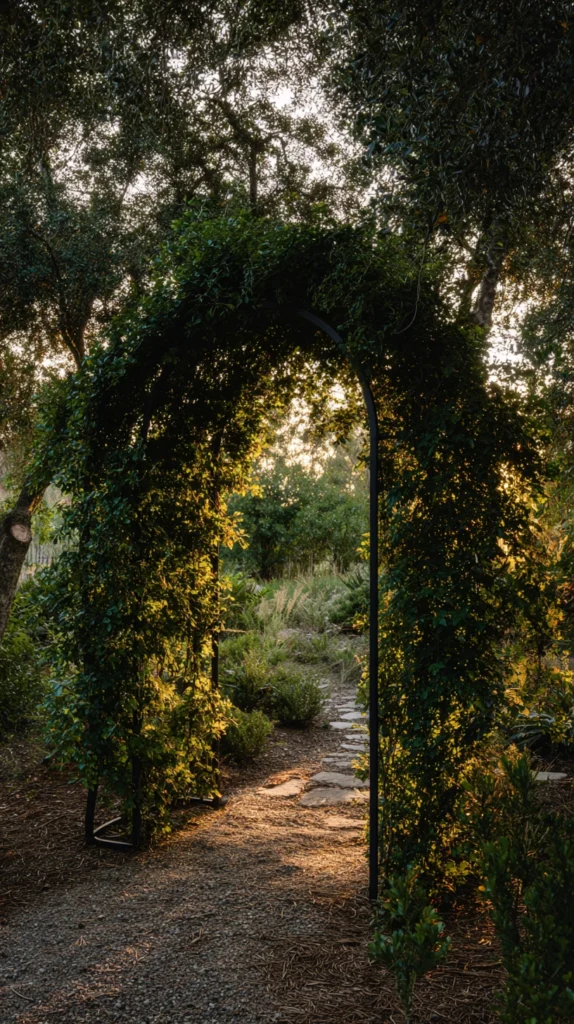
A flowering arch over a gate or path — the single outdoor element that photographs most beautifully of anything on this list.
Why rose arches stop every scroll:
The symbolism:
- Arches mean arrival and threshold
- Roses mean beauty and abundance
- Combined: the most universally beloved outdoor image
- Centuries of association working simultaneously
The photography:
- Frame within a frame (arch frames the view beyond)
- Flowers at eye level (not ground level)
- Movement possible (petals in breeze)
- Every season different (bare arch, bud arch, full flower arch)
The save happens because:
- Viewer imagines walking through it
- Imagines arriving home to it
- Imagines sitting beyond it
- One arch implies an entire life
Building the arch:
The structure:
Metal arch (most practical):
- Powder-coated black or green
- $55–95 depending on width and height
- Plants cover metal entirely in 2–3 seasons
- Start narrow (plants fill it)
Timber arch (most charming initially):
- Pressure-treated or cedar
- Weathers to silver-gray (beautiful)
- Wider and more imposing
- Built rather than bought: $60 in timber
Brick pillars with metal top (most permanent):
- Most investment
- Most luxurious long-term
- Cannot be moved
- Builds value permanently
The rose selection:
Climbing roses that photograph best:
‘New Dawn’ (pale pink):
- Vigorous (covers 20 feet)
- Repeat-flowering
- Disease-resistant
- Most widely planted arch rose for reason
‘Zephirine Drouhin’ (deep pink):
- Thornless (handle-able)
- Fragrant (stops people physically)
- Old rose character
- Suited to shadier arches
‘Iceberg’ climbing (white):
- Clean and bright
- Long-season flowering
- Photographs beautifully in any light
- Perfect against dark wood or metal
‘Compassion’ (salmon-pink):
- Exceptional fragrance
- Strong growth
- Repeat-flowering through summer
- Photographs with warmth
The timeline honestly:
Year 1: Small plant, establishment. Arch looks bare. Patience. Year 2: Significant growth. First flowering. The beginning. Year 3: Covering the arch. Real flowering. Worth photographing. Year 4+: Full and lush. The photo everyone saves. The wait was correct.
Plant now regardless of patience:
- Every year of delay is a year further from the photo
- The arch looks good as structure before coverage
- Annuals grown up it while waiting (sweet peas)
- Time investment starts the moment it is planted
The companion planting:
At the base of the arch:
- Low alliums or lavender
- Catmint (spills outward)
- Something that does not compete visually
- Ground anchors the arch
Cost breakdown:
- Metal arch: $75
- Two climbing roses: $45
- Sweet peas (while waiting): $3 seed packet
- Companion base planting: $25
- Total: $148
Return: One of the most-saved outdoor images in existence. Available to anyone with $148 and three years.
Rose Arch Tips
The pruning that creates the photo:
- Tie new growth horizontally (not just upward)
- Horizontal growth produces more flowers
- Vertical growth produces long bare canes
- One hour of tying in spring changes everything
Feeding for abundance:
- Rose fertilizer April and June
- Potassium encourages flowering
- Under-fed roses: leaves, few flowers
- Well-fed roses: the photograph
2. The Candlelit Outdoor Dinner Table (The Evening That Always Gets Saved)

A long table set for dinner outside at dusk — the outdoor image that represents the life most people are saving toward.
Why outdoor dining tables get saved:
The implied gathering:
- People around a table means connection
- Connection is the thing most longed for
- The table promises a specific kind of evening
- That evening: unhurried, warm, abundant
The dusk timing:
- Best photos always at dusk
- Natural light going warm and low
- Candles becoming visible
- The brief window of both working together
The setup:
The table:
- Long (more convivial than round for saving)
- Trestle or farmhouse style (most photographed)
- Seats at least six (abundance implied)
- No tablecloth sometimes (wood visible = organic)
Or with tablecloth:
- Linen (wrinkled is fine — intentional)
- White or natural (not patterned)
- Slightly too large (draping edges)
- Real linen not polyester (texture visible in photos)
The centerpiece:
What photographs best:
- Running cluster of candles down center (not one)
- Herbs or eucalyptus woven between candles
- Small fruit scattered (figs, lemons, pomegranates)
- Or potted herbs in a row (thyme, rosemary)
The candles:
- Unscented (outdoors, scent competes with food)
- Varied heights (pillar candles 4, 6, 8 inches)
- White or cream (never colored)
- At least seven on a long table (abundance)
The lighting overhead:
The canopy above the table:
- String lights directly overhead
- Lower than general canopy (drop them down 12 inches)
- Table feels spotlit
- The photo frames itself
Or a pendant above:
- Single industrial pendant
- Outdoor rated
- Hung from pergola beam
- Restaurant quality at home
What is on the table beyond centerpiece:
- Mismatched glasses (more charming than matching sets outdoors)
- Linen napkins loosely folded
- Bread in a linen-lined basket
- Olive oil bottle (label facing forward)
- Water in a glass jug (not plastic)
The plants framing the table:
Tall at ends:
- Two large container plants
- Ends of the table defined
- Like bookends of greenery
- Frames the table in photos
Cost breakdown:
- Long trestle table: $180
- Mixed candles and holders: $35
- Linen tablecloth: $40
- String lights overhead: $28
- Framing plants (2): $70
- Total: $353
My outdoor dinner setup: Photograph from this table used by three different people on their social media before I used it on mine.
3. The Wildflower Meadow Strip (The Save That Surprises)
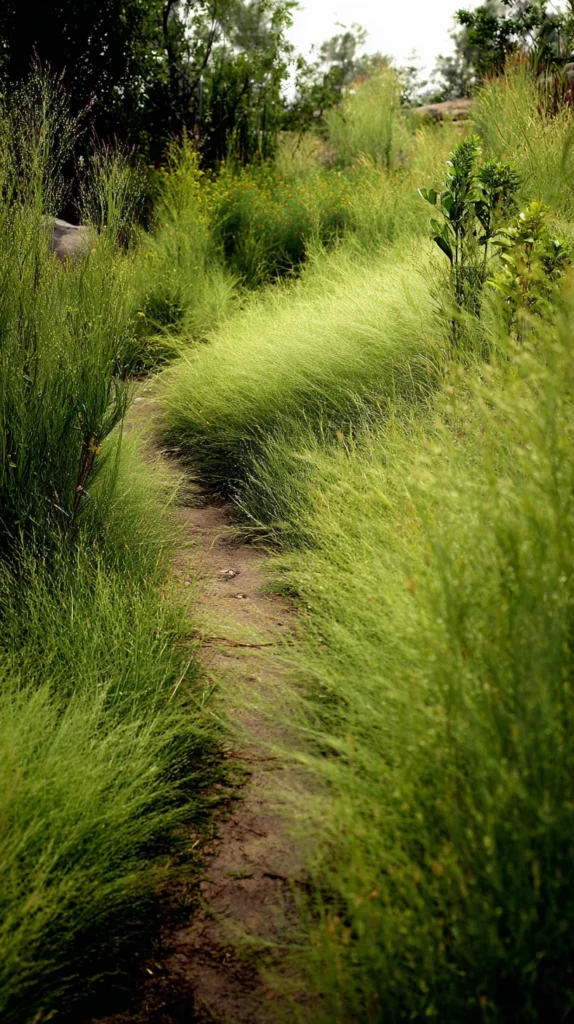
A strip or patch of wildflowers beside a path or fence — the garden detail that appears effortless and saves constantly.
Why wildflower images dominate saves:
The contrast with manicured:
- Most gardens are controlled
- Wildflowers are deliberately uncontrolled
- The contrast to everything else reads as bold
- Permission to let go is aspirational
The movement:
- Wildflowers move in any breeze
- Static gardens photograph flat
- Moving flowers: alive and present
- The save captures the feeling of wind
The wildlife visible:
- Bee on echinacea
- Butterfly on verbena
- These appear in wildflower photos
- Wildlife plus flowers: the most-saved natural combination
Making it:
The location:
- Beside a fence (linear, easy)
- Along a path edge (frames the walk)
- In a corner previously lawn (replaces problem)
- Or entire lawn section (bold decision)
The seed mix:
Annual meadow (results first year):
- Cornflower, poppy, ox-eye daisy, phacelia
- Direct sow onto cleared bare soil
- Results in 8–10 weeks from sowing
- Re-seed patches each autumn
Perennial meadow (builds over years):
- Echinacea, rudbeckia, verbena bonariensis, scabious
- Year two onwards rewards patience
- Permanent investment
- More wildlife as it matures
Native mix (best ecological):
- Region-specific wildflowers
- Maximum local wildlife
- Most authentic photograph
- Order from specialist seed supplier
The setup that photographs:
Path through or beside:
- Mown path alongside (intentional contrast)
- Or stepping stones through the middle
- Journey into wildness
- Distance from path adds depth in photos
One bench at the edge:
- Simple bench facing into wildflowers
- Implies sitting and watching
- Adds scale and human element
- Most saved version of the wildflower image
Height management:
- Tallest plants at back (against fence)
- Medium in middle
- Low at path edge
- Gradation reads naturally
Cost breakdown:
- Annual wildflower seed mix: $12
- Perennial plug plants (to supplement): $30
- Simple bench: $80
- Stepping stones through: $35
- Total: $157
ROI: Unmatched. Seeds costing $12 produce photographs that look like they took years and thousands.
4. The Outdoor Bathtub (The Detail That Stops Every Scroll)

A freestanding bathtub in a garden setting — the single most-saved unexpected outdoor detail.
Why outdoor bathtubs are saved so compulsively:
The surprise element:
- Nobody expects a bath outside
- Surprise stops the scroll completely
- Explanation takes a moment to resolve
- By then the save has happened
The fantasy it represents:
- Lying in warm water looking at sky
- Surrounded by garden
- Completely private
- The most luxurious possible outdoor moment
The truth:
- Does not need plumbing (filled with hose, drained by gravity)
- Works as planter (even better photograph)
- Or as outdoor soaking tub (with minimal plumbing)
- Even non-functional, the visual works
Using as a planter:
Most practical approach:
- Find old cast-iron bathtub (salvage yard, $50–150)
- Drill drainage holes in base
- Fill with gritty compost
- Plant trailing and architectural plants
What to plant:
- Lavender (multiple plants cascading)
- Or ornamental grasses (wild and free)
- Or nasturtiums (trail over sides, edible)
- Or mix of herbs (visual and useful)
The positioning:
Against a wall or hedge:
- Most saved version
- Backdrop provides context
- Climbing plant on wall above
- Bathtub belonging to the garden
In the middle of garden:
- Bolder statement
- More dramatic photograph
- All-sides view
- Higher commitment
The salvage finding:
Cast-iron roll-top (best photograph):
- Most iconic shape
- Heavy (very heavy — consider location permanently)
- Salvage yards, Craigslist, Facebook Marketplace
- $50–200 depending on condition
Pressed steel (lighter):
- Easier to move
- Less photogenic but fine
- Charity shops occasionally
- $30–100
Making it look intentional:
Weathering:
- Leave outside for one season
- Rust and patina develop
- Looks deliberately aged
- Better than pristine for this aesthetic
Plants around the base:
- Ground cover that grows up to it
- Looks embedded in garden not dropped in
- Takes one season
- Patience creates the photograph
Cost breakdown:
- Salvaged cast-iron bath: $120
- Compost and drainage gravel: $25
- Plants: $35
- Total: $180
Most talked-about element in any garden it appears in. Costs less than most furniture. Saves more than anything else.
5. The Greenhouse Potting Area (Productive Beauty)
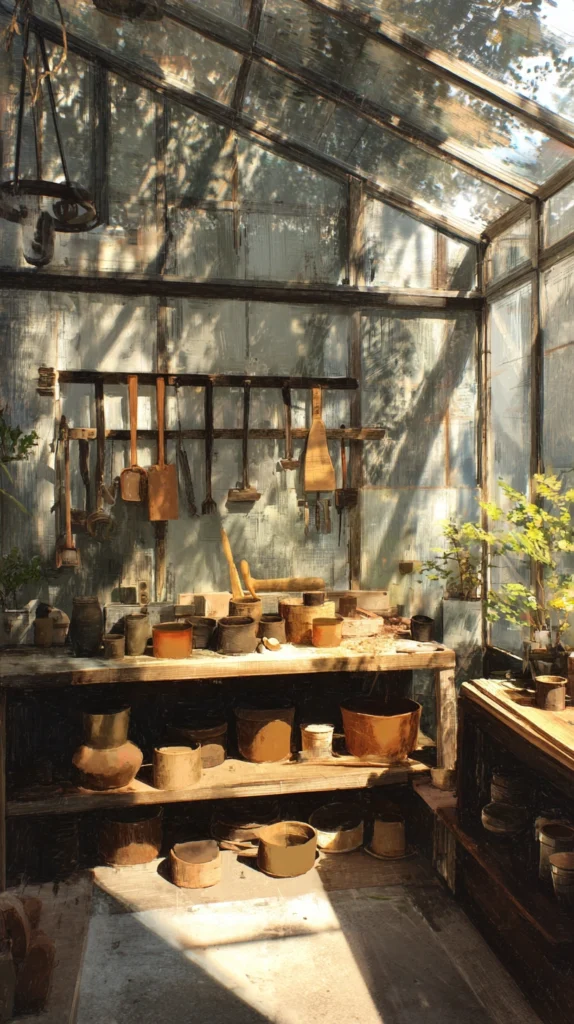
A greenhouse or cold frame with styling — the working garden feature that photographs as beautifully as any decorative element.
Why greenhouse photos save so well:
The abundance signal:
- Glass and green visible
- Growing things inside
- Productive and beautiful simultaneously
- The life it represents: self-sufficient, nourishing, purposeful
The aesthetic:
- Aged glass (misted, slightly green)
- Terracotta pots stacked
- Twine hanging
- Tools on hooks
- Beautiful chaos of productive life
The structure options:
Small lean-to greenhouse:
- Against south-facing fence or wall
- 6×4 feet (significant growing space)
- Glass or polycarbonate
- $150–400
Cold frame:
- Low, lidded box
- Hinged glass or polycarbonate lid
- $40–80 (or DIY from reclaimed window)
- Most charming option: old sash window as lid
Vintage glass cloche:
- Individual bell glass over single plants
- No structure needed
- Purely decorative as well as functional
- Most photographed greenhouse accessory
The styling:
Staged for the photograph and for use:
On the bench inside:
- Terracotta pots (varied, some stacked)
- Plants at various stages
- Seed packets in a jar
- Watering can (copper or galvanized)
Hanging:
- Bunches of dried herbs
- Seed heads
- Small tools on hooks
- String and labels on nails
On the floor:
- Larger pots below bench
- Bags of compost (fold-top closed)
- Trugs and baskets
- Nothing random — purposeful clutter
The outside of the structure:
Climber on the glass:
- Grape vine (traditional)
- Climbing rose
- Clematis (not too vigorous)
- Grows over and around
Potting bench outside:
- Extends the productive area visually
- Tool storage
- More photographic layers
- Terracotta everywhere
Cost breakdown:
- Small lean-to greenhouse: $280
- Terracotta pots (assorted, 10): $50
- Styling accessories: $30
- Climber outside: $18
- Total: $378
My greenhouse: Every time a visitor photographs it, it is the greenhouse. Not the expensive patio. Not the carefully planted border. The greenhouse.
6. The Tree Swing (Childhood and Calm Simultaneously)

A rope swing hung from a mature tree — the outdoor detail that saves because it represents something felt before it is understood.
Why tree swings are saved compulsively:
The emotional response:
- Immediate and pre-rational
- Childhood remembered
- Simplicity valued
- Slowness invited
The photograph:
- Empty swing: suggests someone will arrive
- Child in swing: pure joy
- Adult in swing: permission
- Swing at dusk with warm light: the most-saved version
Requirements:
The tree:
- Mature and healthy (critical for safety)
- Branch diameter 8 inches minimum
- Branch horizontal and strong
- Arborist check recommended for large swings
The attachment:
Rope directly (natural, classic):
- Thick natural rope (1.5 inch diameter)
- Loop over branch and knot
- Swing hangs from loop
- Simplest and most beautiful
Tree swing straps:
- Wide strap protects bark
- Adjustable length
- More secure for regular use
- $15–25 for proper set
The swing itself:
Solid wood seat (classic):
- 24-inch wide plank
- 2-inch thickness (substantial)
- Smooth and sanded
- Two ropes through holes at each end
Disc swing (contemporary):
- Round wooden disc
- Single rope
- Spin as well as swing
- Compact and striking
Hammock swing (luxurious):
- Fabric hammock shape on rope
- Lie or sit
- Most comfortable
- Most dramatic photograph
What surrounds the swing:
Ground below:
- Soft bark mulch (safety and appearance)
- Or established moss
- Nothing hard underneath (ever)
- Natural ground cover up to the mulch edge
Flowers beneath the tree:
- Shade wildflowers (bluebells, wood anemone)
- Or hostas and ferns
- Or simply grass
- Swing belongs to the garden
The evening photograph:
Dusk with warm light:
- Empty swing in golden light
- This is the most saved
- No staging required
- Just wait for the right hour
Cost breakdown:
- Rope (25 feet of 1.5 inch): $30
- Wood seat plank: $15
- Tree straps: $20
- Bark mulch below: $25
- Total: $90
Cheapest idea on this list. Possibly most saved. Three materials and an afternoon. The photograph takes years off the viewer’s internal age.
7. The Wisteria-Covered Pergola (The Classic That Never Stops Saving)

A pergola covered in wisteria — the oldest outdoor dream, still unsurpassed.
Why wisteria saves every single year:
The impossibility of it:
- Cascades of blue-purple hanging flowers
- Impossible fragrance
- Nothing else looks like it
- Too beautiful to be quite real
The timing:
- Two weeks of peak flower (May typically)
- During those two weeks: constant photography
- People drive specifically to photograph wisteria
- Saves peak during this window every year
The patience:
Honestly:
- Year 1–3: establishment, minimal flowering
- Year 4–5: first real flowers, beginning
- Year 6+: the pergola. The photograph.
- Worth every year of waiting
The consolation while waiting:
- Pergola structure itself is beautiful
- Hang wisteria curtains from it (immediate visual)
- String lights fill the gap
- Sweet peas year one (fast fragrant climber)
The structure:
Pergola dimensions:
- Minimum 8×10 feet (wisteria needs room)
- Posts 8 feet minimum height (clearance underneath)
- Beams at top (wisteria trained along)
- Cross beams create grid (wisteria fills it)
Wisteria selection:
Wisteria sinensis (Chinese):
- Most vigorous (covers large structures)
- Flowers before leaves (most dramatic)
- Needs strong structure (grows heavy)
- Most commonly planted
Wisteria floribunda (Japanese):
- Longer flower racemes (more dramatic hang)
- Flowers with leaves (slightly less impact)
- More manageable
- ‘Alba’ (white) and ‘Rosea’ (pink) available
Wisteria brachybotrys ‘Shiro-kapitan’:
- Compact and fragrant
- Earlier to flower than others
- Better for smaller structures
- Available in specialist nurseries
The training:
Two prunings per year (non-negotiable):
- August: cut all new growth to 5 leaves
- February: cut same growth to 2 buds
- This controls size and concentrates flowering
- Skip this and wisteria takes over everything
Tying in:
- Guide new growth along beams horizontally
- Horizontal growth = flowering spurs
- Vertical only = long bare ropes
- Direction of tie changes what it does
Cost breakdown:
- Pergola (DIY kit): $350
- Wisteria plant: $25
- Sweet peas while waiting: $3
- String lights (gap filler): $28
- Total: $406
Most photographed garden feature in the UK. For reason.
8. The Garden Bench in the Right Place (Location as Everything)
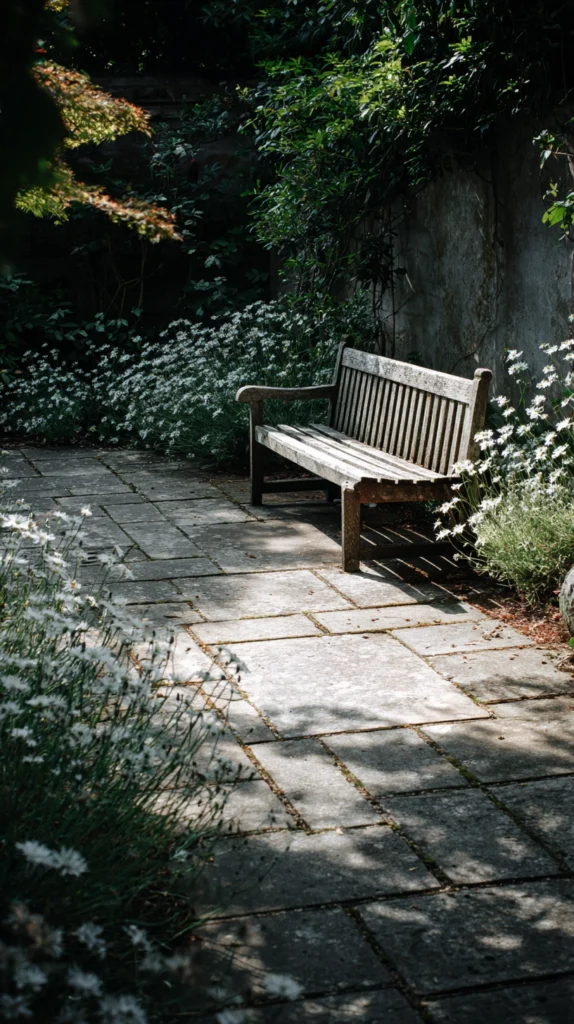
A weathered bench positioned at the best view point — the outdoor furniture detail that saves because of placement not product.
Why the correctly placed bench saves:
The implied rest:
- Bench in the right place says: stop here
- Stop here says: this is worth looking at
- This is worth looking at says: someone knew this
- Someone knew this says: this garden is loved
The photograph that saves:
- Empty bench with the view beyond
- Dappled light on the seat
- Single cushion left there
- One person sitting reading
Finding the right placement:
The view test:
- Sit in every potential spot
- What does the seated person look toward
- The best view from seated height is the location
- Not the convenient spot — the beautiful spot
Views worth bench placement:
- Into a flower border (facing the planting)
- Toward a water feature
- Down a path or garden axis
- Under the canopy of a tree
- At the end of the garden facing home
The bench itself:
Weathered teak (most saved):
- Silvery gray with age
- Permanent and heavy
- Needs no maintenance (just leave it)
- Gets more beautiful with each year
Cast iron and wood (most classic):
- Victorian style
- Ages beautifully
- Substantial and confident
- Salvage yards: $40–120
Simple wooden slatted:
- Unassuming and charming
- Painted white or dark green
- Or left to weather
- Accessible and achievable
The surroundings:
Plants grow up around and above:
- Bench embedded in garden not placed on lawn
- Ground cover at feet
- Arch or tree above (dappled shade)
- Planting each side (framing)
The single accessory:
- One cushion (left there)
- Or a book face-down on the seat
- Or a cup on the armrest
- One sign of use. Not staged.
The path to the bench:
- Stepping stones through planting
- Route creates arrival
- Journey makes sitting feel earned
- Most saved bench photos have this
Cost breakdown:
- Weathered teak bench (secondhand): $80
- Cushion: $25
- Plants around and above: $55
- Stepping stone path to it: $40
- Total: $200
My bench: Positioned it eight times before it was right. Eighth position: obvious in retrospect. Never questioned since.
9. The Outdoor Kitchen Corner (The Aspirational Save)

A simple outdoor cooking setup — not a full outdoor kitchen but one that implies it could become one.
Why outdoor cooking spaces save:
The lifestyle it represents:
- Summer evenings cooking outside
- Guests around a fire
- Unhurried, wine nearby, smoke in the air
- The dinner party that happens outside
The save is for the lifestyle not the appliance.
Starting simple:
What the photograph needs:
- A surface for food preparation (outdoors)
- A cooking element (grill, plancha, fire)
- Green around it (essential)
- Good light
What it does not need:
- Built-in appliances
- Stone countertops
- Full outdoor kitchen infrastructure
- $15,000
The buildable version:
The cooking element:
- Charcoal grill (most atmospheric, photographs best)
- Or small built-in plancha on brick base
- Or simple grill grate over fire pit
- Smoke is the photographer’s friend
The preparation surface:
- Wooden butcher block on trestle
- Or reclaimed timber on simple legs
- Weather-treated and left natural
- Surfaces that age into the garden
The storage below:
- Open shelving (bottles, oils, utensils visible)
- Hooks for tools
- Ceramic pots for herbs
- Visible organization is the aesthetic
The herbs growing beside:
Within arm’s reach of cooking:
- Rosemary (permanent, architectural)
- Thyme (ground level, fragrant)
- Sage (bold leaves, structured)
- Flat-leaf parsley (in pot, accessible)
These in terracotta beside the cooking area:
- Reach and pick while cooking
- The photograph and the function are the same thing
The lighting:
Focused on the cooking area:
- Clip light on pergola or beam above
- Or pendant over preparation surface
- Warm and directional
- Work light that photographs beautifully
Cost breakdown:
- Charcoal grill: $90
- Reclaimed timber prep surface: $45
- Terracotta herb pots (5): $40
- Hanging rack for tools: $25
- Pendant light (outdoor): $45
- Total: $245
The photograph from this space: Smoke, herbs, warm light, hands in motion. The most-saved food outdoor content available.
10. The Moon Gate (The Garden Detail That Stops Time)

A circular opening in a hedge or wall — the garden element borrowed from Chinese garden design that saves every time it appears.
Why moon gates are saved obsessively:
The circle is a universal symbol:
- Wholeness and completion
- The frame that invites stepping through
- Ancient garden element recognisable across cultures
- Nothing else in garden design is circular like this
The photography:
- Circle frames the view beyond perfectly
- Every view through a circle is composed by the circle
- Garden beyond is transformed by the frame
- One element, infinite photographs
Creating a moon gate:
In a hedge (most dramatic):
- Hedge grown to 6 feet minimum
- Circle cut with template
- Steel or willow circle inserted (maintains shape)
- Takes patience (years to establish)
In a fence or wall (achievable quickly):
- Round hole cut in solid fence
- Steel ring used as frame
- Immediate installation
- Most practical approach
As a freestanding arch:
- Metal circle on two legs
- No hedge required
- Placed in garden opening
- Instant moon gate effect
Freestanding option:
- Cor-ten steel circle (rusts warm)
- Or painted black metal
- 5–6 feet diameter (walk-through scale)
- Positioned to frame a view
The view through matters:
What is visible through the circle:
- A planted border (ideal)
- A specimen tree
- A focal point feature
- The best view in the garden
Position by view, not by convenience.
Plants around the gate:
Planted to integrate:
- Climber trained around the frame
- Flowers spilling around the circle
- Softens the hard edge of metal
- Circle becomes part of garden not feature dropped in
Best around a moon gate:
- Climbing rose (frames with flowers)
- Clematis (year-round with pruning)
- Ivy (evergreen, immediate)
- Jasmine (fragrant reward for approaching)
Cost breakdown:
- Cor-ten steel circle (freestanding): $180
- Climbing plants (2): $40
- Ground planting around base: $30
- Total: $250
The photograph through a moon gate is one of the most-saved garden images year after year. This single element changes the entire composition of the space around it.
11. The Outdoor Reading Nook With Curtains (The Private Escape)

An enclosed reading corner with fabric sides — the space that saves because it promises the one thing everyone wants: somewhere to disappear.
Why enclosed reading nooks save so consistently:
The escape fantasy:
- Enclosed space = protected from demands
- Private = truly alone
- Designed for one activity = focused permission
- The combination is the most-wanted outdoor experience
The specificity:
- Not a vague relaxation area
- A specific space for a specific thing
- The viewer knows exactly what they would do there
- Specificity creates desire
Building the nook:
The structure:
Pergola corner (best):
- Corner of pergola with posts
- Curtains hang from corner beams
- Three sides enclosed
- Front open (view maintained)
Freestanding canopy frame:
- Four posts with top beams
- Any location in garden
- Curtains on three sides
- Most flexible option
Between two trees:
- Rope or tension rod between trees
- Curtains hung from rod
- Natural posts
- Most magical version
The curtains:
Sheer white (most saved):
- Glows in sunlight
- Moves in breeze (alive)
- Filters light not blocks
- Both day and night beautiful
Linen natural (most sophisticated):
- Texture visible and beautiful
- Better privacy than sheer
- Cream or warm white
- Drapes with weight
Canvas (most durable):
- Handles weather
- Aged appearance quickly
- Off-white or ecru
- Most permanent solution
Inside the nook:
The seating:
- Daybed or deep chaise (lying down possible)
- Or two deep chairs facing each other
- Low and horizontal emphasis
- Made for duration not visits
The lighting inside:
- Fairy lights wound through curtain or frame
- Warm amber only
- Battery operated (no cord)
- Creates interior glow visible from outside
The finishing details:
Beside the seat:
- Side table (wide enough for book and cup)
- Small lantern on table
- Plant in corner (inside the nook)
The cushion pile:
- More than feels necessary
- Abundance signals welcome
- Varied sizes (pillows, bolsters, throws)
- This is not minimalism
Cost breakdown:
- Canopy frame or pergola corner: $160
- Curtain panels (4): $50
- Daybed cushion: $90
- Fairy lights: $20
- Side table and lantern: $45
- Total: $365
My reading nook: Built it and then spent an entire Saturday inside it without planning to. That is the measure of a successfully designed nook.
12. The Pebble or Mosaic Path (Handmade Beauty)

A handmade pebble or mosaic garden path — the outdoor detail that saves because it represents time, care, and irreplaceability.
Why handmade paths save:
The irreplaceability:
- Cannot be bought ready-made
- Took time to create
- Every one is unique
- Signals investment beyond money
The texture:
- Pebble paths are visually rich
- Every individual stone visible
- Pattern and randomness together
- Photography captures the texture perfectly
Pebble path construction:
The materials:
River pebbles (smooth):
- Most comfortable underfoot barefoot
- Natural and beautiful
- Source from landscape suppliers
- $50–80 per 100kg (covers significant area)
Mosaic tile pieces:
- Broken ceramics (smash old plates)
- Glass tiles
- Terracotta pieces
- Pattern-making possible
The construction:
Bedded in mortar (permanent):
- Concrete base poured
- Pebbles set in mortar while wet
- Pattern pressed in
- Takes a weekend, lasts generations
Dry-laid stepping stone approach:
- Individual handmade stones
- Cast concrete mixed with pebbles pressed in
- Each stone unique
- Laid on compacted sand base
The patterns:
Simple (for beginners):
- All pebbles vertical (edge-on)
- Rows alternating direction
- Clean and achievable
- More beautiful than it sounds
Intermediate:
- Spirals with contrasting pebble colors
- Center medallion with radiating lines
- Fan patterns
- Requires planning before laying
Advanced:
- Opus tessellatum (Roman tessellation)
- Fish scale pattern
- Pictorial (flower, bird, sun)
- Investment of time proportional to beauty
The path plants:
Between stones:
- Creeping thyme (fragrant underfoot)
- Mind-your-own-business (Soleirolia)
- Moss (shade paths)
- Baby’s tears (moist shade)
Beside the path:
- Low lavender (brushes legs)
- Alchemilla (lime-green, spills onto path)
- Catmint (soft edges)
- Planted to touch the path edge
Cost breakdown:
- River pebbles (for 20 feet of path): $60
- Cement for setting: $20
- Stepping stone molds (if casting): $15
- Path edge plants: $30
- Total: $125
My pebble path: Every single person who visits walks along it slowly. Nobody rushes a beautiful path.
13. The Terracotta Pot Collection (Abundance in One Material)

A collected grouping of terracotta pots — the outdoor detail that photographs most simply and saves most reliably.
Why terracotta pot collections save:
The abundance:
- Many pots together = generous outdoor life
- Generosity saves. Scarcity does not.
- Implies collecting over time
- Each pot has a story implied
The material:
- Warm orange-red (naturally charming in any light)
- Ages beautifully (patina, moss, salt marks)
- Natural and ancient material
- Consistent palette whatever the plants
The collection approach:
Gather differently sized:
- Giant (18-inch+): anchors the collection
- Medium (10–14 inch): backbone
- Small (4–8 inch): fill and detail
- Tiny (2–4 inch): windowsill scale at the edge
The arrangement:
Clustered not scattered:
- All together in one dense area
- Not dotted individually around garden
- Density = abundance = the photograph
Heights varied by elevation:
- Stack smaller pots on bricks or stones
- Upturned larger pots as plinths
- Some at floor level, some raised
- Different heights without different pots
The planting:
Not everything needs to be planted:
- Three or four planted
- Rest empty (or appear empty)
- Mix of planted and empty reads honest
- Not a garden center display
What to plant:
- One with lavender (classic)
- One with a small olive (architectural)
- One trailing (sweet potato vine, nasturtium)
- One with herbs (thyme, rosemary)
The weathering:
Age them on purpose:
- Yogurt method (see Trick #6 in landscaping article)
- Leave outside year-round
- Do not clean off moss
- Moss is the feature not the problem
The backstory each pot carries:
- One picked up on holiday
- One from a nursery three towns away
- One given by a neighbor
- One cracked but kept
- Collection is biography
Cost breakdown:
- Terracotta pots (10 varied sizes): $70
- Plants for four pots: $40
- Potting compost: $15
- Yogurt for aging: $2
- Total: $127
Most consistently saved outdoor still-life. No building required. No installation. Just collection and arrangement.
14. The Lantern-Lit Garden Path at Night (The Photograph Everyone Recognises)
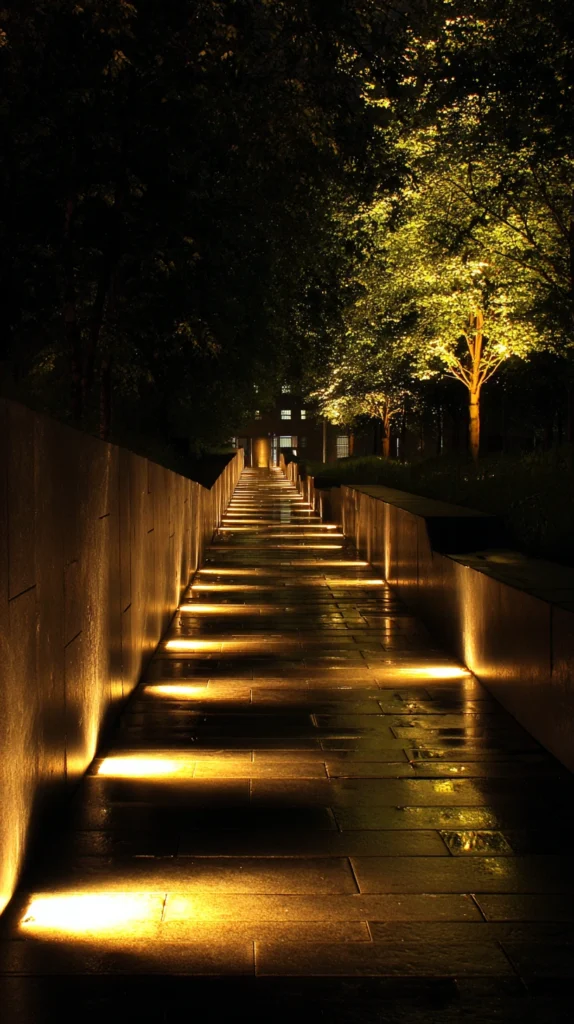
A garden path lit by ground lanterns at night — the image that represents the outdoor evening life everyone is saving toward.
Why the lit path at night is saved so compulsively:
The depth:
- Path receding into darkness
- Light pools at intervals
- Unknown at the end
- Mystery and invitation combined
The warmth:
- Amber light on stone or gravel
- Everything outside the pools in soft dark
- The contrast is the beauty
- Cold light would kill this entirely
The implied arrival:
- Path goes somewhere
- Somewhere is worth going
- Light shows the way
- The photograph is an invitation
Building the night path:
The path itself:
Stepping stones in gravel:
- Most photographed version
- Stones catch light
- Gravel reflects amber
- Puddles of light on each stone
Brick or cobble:
- Warm color naturally
- Individual bricks catch light
- Texture amplified at night
- Irregular laying more charming
The lighting:
Lanterns on stakes:
- 18-inch height (low, intimate)
- Spaced every 3–4 feet
- Same lantern repeated (cohesion)
- Solar or low-voltage
Flush step lights:
- Most refined option
- Invisible in daylight
- Pure light at night
- Recessed into edges
Solar path stakes (accessible option):
- No wiring
- Improves with larger solar panel
- $8–15 each (buy quality)
- Replace every 2–3 seasons
The planting beside the path:
Reaches into the path:
- Lavender brushes legs in passing
- Catmint spills from edges
- Alchemilla spreads
- Plants are not contained beside the path — they enter it
Scent at night:
Fragrant plants beside the path:
- Nicotiana (releases fragrance at dusk)
- Night-scented stock (cheap annual, enormous scent)
- Jasmine (trained to arch overhead)
- The path smells different at night
The destination the path leads to:
Whatever waits at the end matters:
- A bench (the most saved version)
- A fire pit
- A garden seat under a tree
- Something worth walking toward
The photograph:
Taken from path entrance looking down:
- Series of light pools receding
- Plants framing either side
- Something glowing at the end
- The image that represents outdoor evening life
Cost breakdown:
- Solar path lanterns (8): $80
- Path materials (stepping stones in gravel): $90
- Fragrant path plants (6): $45
- Destination bench: $80
- Total: $295
My lit path: Taken at 9pm on a June evening. The photograph has been saved by more people than anything else I have made.
15. The Overflowing Window Box (The Detail That Saves From the Street)
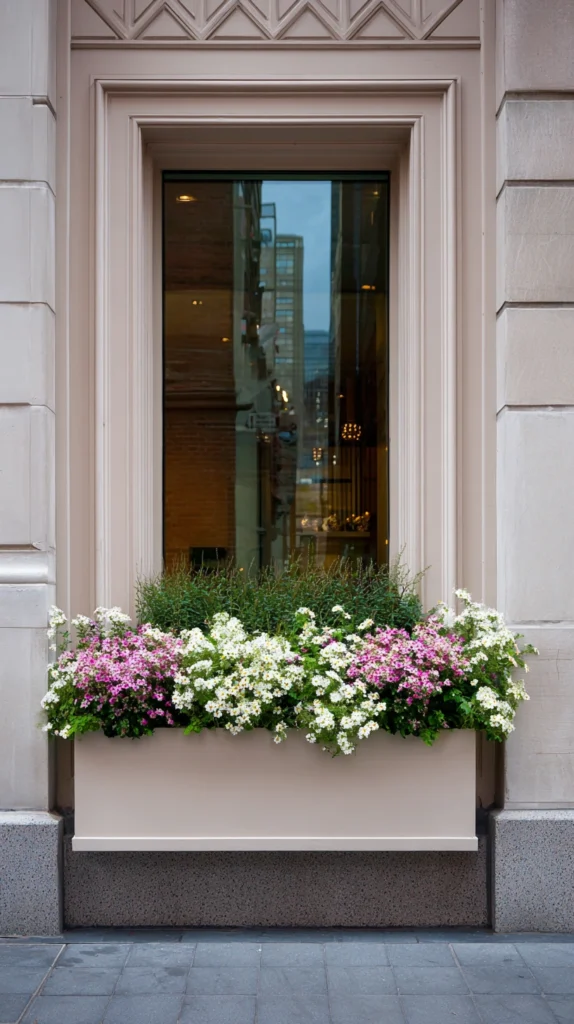
A generously planted, trailing window box — the outdoor detail that changes how a house reads from the street with the smallest investment.
Why overflowing window boxes save:
The generosity signal:
- Overflowing = abundance
- Abundance = care and investment
- Care = a home that is loved
- The street reads differently
The color at eye level:
- Most gardens are at ground level
- Window boxes bring color to eye height
- Vertical color reads differently
- More impactful per plant than any ground planting
The photograph:
- Shot from street level looking up slightly
- Window frame, box, trailing plants
- Flowers at face height
- The house has a face now
What makes it overflow:
Three plant formula:
- Thriller: tall central plant (vertical interest)
- Filler: medium bushy plant (fills sides)
- Spiller: trailing plant (cascades over front)
Summer thrilllers:
- Geranium (zonal or ivy-leaf)
- Upright fuchsia
- Osteospermum
- Calibrachoa (tall variety)
Fillers:
- Lobularia (sweet alyssum, fragrant)
- Bacopa (small white flowers)
- Diascia (pink, long season)
- Trailing lobelia (also works as spiller)
Spillers:
- Ivy geranium (trails dramatically)
- Sweet potato vine (fast and lush)
- Trailing lobelia (classic)
- Bacopa (doubles as both)
The box itself:
Material:
- Wooden (most beautiful)
- Painted or stained to match house
- Or left to weather
- Size: 8 inches deep minimum (roots need room)
Self-watering boxes:
- Reservoir in base
- Wicks water up as needed
- Window boxes dry fastest of any container
- Self-watering reduces daily need to twice weekly
The maintenance:
Weekly minimum:
- Water (daily in heat — the greatest commitment)
- Deadhead spent flowers
- Feed every two weeks (liquid feed)
- Remove any dead or struggling plant immediately
The replacement:
- Summer box: spring to first frost
- Winter box: evergreen, ornamental kale, heather
- Never leave an empty box (worse than no box)
- Seasonal change = ongoing care signal
Scale:
Fill the window width:
- Box as wide as window (minimum)
- Wider looks better
- Longer boxes more dramatic
- Do not use a box half the window width
Multiple boxes:
- Every window that faces the street
- All planted in same color palette
- Not identical but cohesive
- The house becomes the garden
Cost breakdown:
- Window box (30-inch): $25
- Plants (thriller, filler, spiller × 2): $30
- Self-watering insert: $15
- Liquid feed (season): $8
- Total: $78
Lowest cost on this list. Changes the street view of an entire house. No garden required. No planning needed. One box planted abundantly and the house is different.
What Every Saved Outdoor Image Has
Beyond the specific elements:
The image implies a life:
- Not a decorated space
- A life lived in a specific way
- Slowly, outside, with attention to small pleasures
- The save is for the life not the thing
It has warmth:
- Light, material, or color
- Often all three
- The body responds before the mind
- No saved outdoor image is cold
It has something alive:
- Plants always
- Often birds or bees visible
- Sometimes water moving
- Life implies that the space is used
It has one thing unexpected:
- The bathtub in the garden
- The moon gate framing nothing expected
- The chandelier in the tree
- One surprise is enough
It looks achievable:
- The save is partly a plan
- Viewer believes they could do this
- Not too perfect to be real
- The gap between current and possible is crossable
Getting Started
The save means something:
Why it matters that you saved it:
- Saves are decisions in waiting
- Most saves: never acted on
- This one: acted on
- That is the difference between the outdoor life wanted and the outdoor life lived
Starting this weekend:
Pick the save that has been in the queue longest.
Not the most ambitious. Not the most expensive. The one saved earliest that still exists in the collection.
That one was saved for a reason. The reason has not changed.
Under $150 this weekend:
- Rose arch planted (year one of three): $75
- String lights overhead: $28
- One terracotta pot with lavender: $20
- One weathered bench (secondhand): $40
- Total: $163
That is a space worth photographing. Not finished. Not the full vision. But real and inhabited and warm.
The save was a promise. Every idea on this list is how to keep it.
The outdoor life in those saved photographs is available. Not later. Not when the budget is ready. Not when the renovation is done.
This weekend. With whatever corner is available. With whatever is already there.
Start. The rest compounds from the first afternoon spent outside in a space designed to be sat in.