14 Landscaping Tricks That Make Homes Look More Luxurious
Drove through a neighborhood last spring and pulled over without planning to. One house on an ordinary street looked completely different from everything around it.
Same square footage as the neighbors. Same architectural style. Built in the same decade. But something about it read expensive in a way the others simply did not.
Sat there long enough to figure out what it was doing that the others were not. Not a single thing. A combination of specific, repeatable decisions that together created an entirely different impression.
None of them required a large budget. All of them required intention.
Here are 14 of those decisions.
Why Some Homes Look Expensive From the Street
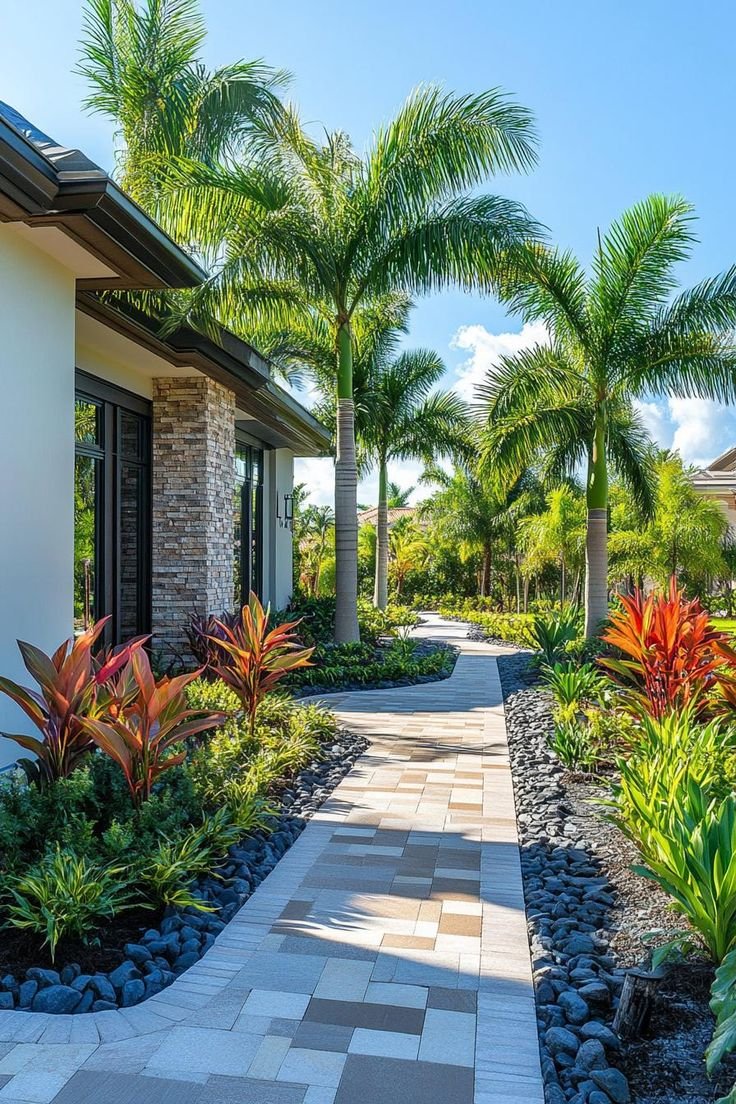
It is not the house itself:
What people assume:
- Expensive-looking requires expensive materials
- Large budget required
- Professional landscaper necessary
- Only achievable during full renovation
What is actually happening:
Luxury reads through specifics:
- Defined edges (someone cares)
- Repeated elements (someone designed this)
- Maintained plants (someone attends to this)
- Cohesive palette (someone made decisions)
The impression is of care and intention.
Not money. Care.
A freshly edged bed of three plants costs $40 and reads as intentional. An overgrown bed of thirty plants reads as neglected regardless of what was spent on them.
The luxury formula: Clean edges + repeated elements + correct scale + zero neglect = expensive appearance
Every trick on this list applies at least one of these. The best ones apply all four.
What Kills Curb Appeal Instantly
Before adding anything:
The subtraction list:
- Dead or dying plants (remove immediately)
- Mismatched materials competing with each other
- Overgrown plants hiding the house
- Cracked or stained hardscape
- Hose left out
- Bins visible from street
- Lighting that stopped working (worse than no lighting)
Remove everything on this list before adding anything new.
Ten dollars of subtraction returns more than one hundred dollars of addition when these problems are present.
The editing principle:
- Luxury landscapes have less than they could
- Restraint signals confidence
- Confident spaces look expensive
- Adding more rarely solves the problem
1. Repeat One Plant in Multiples (The Repetition Rule)

Same plant used three, five, or seven times — the single most powerful landscaping trick professionals use.
Why repetition reads as designed:
Random planting (most home gardens):
- One of this, one of that, one of another
- Eye jumps between unrelated elements
- No visual rhythm
- Looks like a collection not a design
Repeated planting (luxury landscapes):
- Same plant appearing multiple times
- Eye follows the rhythm
- Coherence created
- Looks deliberately conceived
The proof:
Hotel entrances:
- Same box ball repeated down entire drive
- Same standard lollipop tree each side of door
- Same grass clumps at intervals along border
- Repetition is the entire design strategy
They do not use variety. They use repetition.
How to apply it:
Choose one plant:
- Best suited to your conditions
- Architectural rather than fussy
- Low maintenance (repeat plants must stay healthy)
- Available in multiples at consistent size
Best plants for repetition:
Formal and structured:
- Box ball (Buxus): classic, year-round
- Lavender (trimmed): silver and purple rhythm
- Agapanthus: summer blue, striking line
- Allium: spring spheres repeated in border
Contemporary and bold:
- Karl Foerster grass: vertical accent repeated
- Kniphofia (red hot poker): dramatic repetition
- Salvia: repeated purple verticals
- Nepeta (catmint): repeated soft mounds
Classic and reliable:
- Hydrangea ‘Annabelle’: white domes in a row
- Rosemary standard (trimmed): formal rhythm
- Heuchera: color repeated in border
- Echinacea: naturalistic repetition
Spacing the repetition:
Equal intervals (formal):
- Same distance between each plant
- Measured not estimated
- More formal and deliberate
- Works for drives and entrances
Grouped clusters (naturalistic):
- Three together, gap, three together, gap
- Less formal but still repeated
- More garden-like feeling
- Works for mixed borders
The number rule:
- Odd numbers (3, 5, 7, 9)
- Even numbers feel static and corporate
- Odd numbers read as natural
- Minimum three for repetition to register
Cost breakdown:
- Six lavender plants: $36
- Or five box balls: $75
- Or seven Karl Foerster grasses: $70
- Total: $36–75
My repetition border: Replaced random cottage chaos with five repeated agapanthus. Same space. Neighbor assumed professional landscaper had visited. They had not.
Repetition Tips
Buy them all at once:
- Same size from same batch
- Inconsistent sizes break the rhythm
- Buy all in one trip
- Plant same day (uniform establishment)
Maintain uniformly:
- Trim all at same time
- Same height throughout
- One neglected plant breaks the entire line
- All healthy or replace the outlier
2. Define Every Single Edge (The Line That Changes Everything)

Crisp, clean edges on all beds and lawn transitions — the detail that separates maintained from neglected at 30 feet.
Why edges create perceived luxury:
Without edges:
- Lawn merges into beds
- Plants look unplanted (appeared randomly)
- No visual structure
- Everything soft and undefined
With crisp edges:
- Clear separation between every surface
- Plants look placed deliberately
- Structure apparent throughout
- Professional landscaper association immediate
The visible care signal:
Edges require maintenance:
- Someone cut these
- Someone maintains them regularly
- Attention given consistently
- Neglect is impossible to hide here
This is why luxury properties always have defined edges. It signals ongoing care more than any plant or feature.
The tools:
Half-moon edger (manual):
- Sharp blade, clean cut
- Most satisfying tool in the garden
- Takes 30 minutes per 100 feet
- Rewarding and therapeutic
Long-handled lawn edger (easier):
- Rolling blade along edge
- Less bending
- Slightly less precise
- Works well for long straight edges
String trimmer (fastest):
- Hold vertically for edging
- Requires practice for clean result
- Fastest method once mastered
- Not as clean as blade
Permanent edging (best investment):
Steel edging (Cor-ten):
- Rusts to warm brown (beautiful)
- Installed once
- Maintains edge indefinitely
- $2–3 per linear foot
Black aluminum:
- Clean and invisible
- Does not rust
- Flexible for curves
- $1.50–2.50 per linear foot
Once installed:
- No more re-cutting twice yearly
- Just maintain the top edge with trimmer
- Edge defined permanently
- Best landscaping investment available
Where to edge:
Every transition:
- Lawn to bed (obvious)
- Bed to path
- Gravel to grass
- Patio to planting
Never leave a transition undefined.
The maintenance schedule:
Without permanent edging:
- Recut edges twice yearly minimum
- Top trim monthly
- 2 hours per session for average garden
- Totals 8–10 hours yearly
With permanent edging:
- Top trim only (monthly)
- 30 minutes per session
- No recut ever
- Permanent professional appearance
Cost breakdown:
- Steel edging (100 linear feet): $250
- Manual installation: free
- Or: half-moon edger tool only: $25
- Total: $25–250
My edged garden: Edged beds on a Friday. Saturday morning neighbor commented the garden “looked different.” Nothing else changed. Lines did the work.
3. Add Uplighting to Feature Trees and Plants (Night Luxury)

Spotlights aimed upward at trees and architectural plants — the detail that separates luxury homes from standard ones after dark.
Why uplighting signals expense:
Standard homes at night:
- Porch light illuminates entrance
- Everything else dark
- Garden disappears
- No dimension or depth
Uplifted homes at night:
- Feature trees illuminated from below
- Dramatic shadows on walls
- Garden exists in darkness
- Dimension and depth visible from street
The value of night presence:
Hours calculation:
- Dark months (October to March): dark by 4:30pm
- Six months, dark 14 hours per day
- Garden visible in daylight: maybe 6 hours
- Garden visible with lighting: 20 hours
Uplighting triples the visible hours of the garden.
Getting it right:
Position of the light:
- At base of tree or plant
- Aimed upward at 45 degrees or steeper
- Slightly off-center (more dramatic shadows)
- Never aimed straight up (no shadow created)
The shadow is the feature:
- Light itself is incidental
- Shadow on fence or wall is the drama
- Branch shadows in winter are extraordinary
- Leaf shadows in summer even better
What to uplight:
Most effective subjects:
- Trees with interesting branch structure
- Bamboo (extraordinary shadow play)
- Large architectural plants (agave, phormium)
- Pleached trees (drama amplified)
- Ornamental grasses (movement visible in light)
What does not work:
- Low ground cover (too close, no shadow height)
- Flowering annuals (disappears seasonally)
- Dense shrubs with no structure
- Plants against no backdrop (needs wall or fence)
Product options:
Solar spike spotlights:
- $10–20 each
- No wiring
- Move easily (experiment with positions)
- Modern solar quality adequate for most uses
Low-voltage wired (best quality):
- Brighter and more reliable
- Transformer at house (one installation)
- Runs on landscape wire
- $20–40 per fitting plus transformer
Colour temperature:
- 2700K–3000K (warm white)
- Never cool white on plants
- Warm light on green creates gold-green (beautiful)
- Cool light on green creates clinical harshness
The front garden at night:
Three spotlights minimum:
- Feature tree at corner
- Architectural plant by entrance
- Something lighting the facade indirectly
- Together: completely different house after dark
Cost breakdown:
- Solar spotlights (4): $60
- Or low-voltage system (transformer + 4 fittings): $180
- Total: $60–180
My uplighting: Installed four solar spotlights on a Sunday. Drove past from the street that evening. Stopped the car. Did not recognise my own house for a moment.
4. Use Topiary or Clipped Shapes (Structural Confidence)
Clipped balls, cones, or standards — the architectural plant forms that signal both care and design confidence.
Why clipped forms read as luxury:
The maintenance signal:
- Topiary requires regular clipping
- Regular clipping requires commitment
- Commitment signals care
- Care reads as wealth of attention if not money
The architectural quality:
- Clipped forms hold shape year-round
- Structure visible in winter (unlike flowers)
- Geometric forms signal intention
- Contrast with naturalistic planting creates sophistication
The forms:
Ball (most versatile):
- Used singly or in pairs
- In pots at entrance (flanking)
- At intervals in border (rhythm)
- Year-round evergreen anchor
Cone:
- Vertical accent
- Pair either side of door (classic)
- Or single in key position
- More formal than ball
Standard (lollipop):
- Ball on a clear stem
- Most luxurious form
- Pair at entrance: immediate hotel aesthetic
- Requires stem protection (vulnerable to snapping)
Cloud pruning (highest luxury signal):
- Japanese-influenced irregular clouds
- Takes years to develop properly
- Or buy pre-shaped ($150–400)
- Most expensive-looking topiary form
Plants for clipping:
Box (Buxus):
- Classic topiary plant
- Slow-growing (precise shapes maintained easily)
- Now susceptible to blight in some areas
- Consider alternatives if blight prevalent locally
Alternatives to box:
- Ilex crenata (Japanese holly): identical appearance, resistant
- Pittosporum: faster, mild climates
- Lonicera nitida (poor man’s box): fastest, less precise
- Euonymus: reliable, varied foliage
Yew (Taxus):
- Best for large topiary
- Clips cleanly
- Recovers from hard cutting
- Slow but permanent
Maintenance:
Twice yearly clipping:
- Once in late spring (after main growth flush)
- Once in late summer (tighten before winter)
- Takes 10 minutes per plant
- Sharp secateurs or shears
The clip-and-step-back habit:
- Clip a section
- Step back to full view
- Correct from distance not close up
- Eye deceives from 12 inches
Cost breakdown:
- Two box balls (6-inch): $30
- Two Ilex standards (small): $80
- One cloud-pruned shrub (pre-shaped): $180
- Topiary shears: $25
- Total: $30–210
Pair of standards at front door: Most frequently photographed element of the front garden. More than any flower. More than any investment costing ten times as much.
5. Mulch Everything Properly (The Finishing Layer)
Deep, dark, fresh mulch on all beds — the detail that ties every planting together and signals completion.
Why mulch creates perceived luxury:
Unmulched beds:
- Bare soil visible between plants
- Weeds appear and signal neglect
- Rain splashes soil onto lower leaves
- Planting looks unfinished regardless of plants
Mulched beds:
- No bare soil visible
- Weed suppression (clean appearance maintained)
- Moisture retained (healthier plants)
- Finished and complete appearance
The dark color effect:
Dark mulch makes plants pop:
- High contrast between dark mulch and green foliage
- Same principle as dark fence and green plants
- Background darkness amplifies foreground color
- Pale mulch reduces this contrast significantly
Always dark:
- Fine composted bark (darkest, most refined)
- Cocoa shells (very dark, fragrant initially)
- Never light gravel (cold and industrial)
- Never pale wood chip (looks temporary)
Depth:
- 3 inches minimum
- 4 inches in weed-prone areas
- Less than 2 inches: thin and disappointing
- Do not skimp on depth
Coverage:
- All beds without exception
- Between every plant
- Up to (not touching) stems
- Trunk flare of trees left clear (critical)
Touching stems:
- Mulch piled against stems = rot
- Leave 4-inch gap around all stems
- Volcano mulching (piled against trunk) damages trees
- Pull mulch back, not forward
Refreshing annually:
Top up not replace:
- Existing mulch breaks down (adds organic matter)
- Top up to 3 inches each spring
- One cubic yard covers 100 sq ft at 3 inches
- Annual spring mulch is the single most effective maintenance habit
The transformation:
Before mulch:
- Mixed planting, bare soil between
- Weeds visible
- Looks like work in progress
After mulch:
- Same plants, dark ground between
- Weeds gone
- Looks designed and complete
Cost breakdown:
- Bulk bark mulch (3 cubic yards, covers 300 sq ft at 3 inches): $90
- Delivery: $40
- Total: $130
Spring mulch day: Takes three hours per year. Makes the entire garden look professionally managed for the other 362 days.
6. Frame the Front Door (Entrance Architecture)

Planted framing either side of the front door — turning an entrance into a destination.
Why front door framing works:
The focal point principle:
- Eye always moves to entrance of a building
- Frame the arrival point = amplify the welcome
- Symmetry here signals intention
- Matching pair either side = formal confidence
What luxury homes always have:
- Two matching elements either side of door
- Same size, same species, same container
- Vertical or structured form
- Year-round presence
The classic combinations:
Standards in matching pots:
- Two lollipop-trimmed bays, olives, or box
- Same size pot, same size plant
- Most immediately luxurious option
- Works on any architectural style
Tall architectural plants:
- Two topiary cones
- Two columnar yews
- Two Phormium
- Vertical emphasis frames entry
Clipped balls in containers:
- Lower than standards
- Wider entrance feeling
- Less formal than standards
- Works on cottage and contemporary
The container matters:
Matching containers (non-negotiable):
- Not similar, not same style — identical
- Both same material
- Both same size
- One different from the other breaks the symmetry
Container materials that read luxury:
- Lead (or lead-look fiberglass)
- Aged terracotta (large, 18-inch minimum)
- Concrete (modern homes)
- Versailles box (timber, formal)
Plastic containers at the front door:
- Immediately legible as cheap
- Even with expensive plant inside
- The container sets the price point
- Worth spending correctly here
The scale rule:
Containers must be substantial:
- 18-inch diameter minimum
- Smaller reads as underpowered
- Scale to door width (one-third door height as guide)
- Err generous not timid
Maintaining the framing:
Year-round presence:
- Use evergreen plants (not seasonal)
- Plants must look good in January
- Peak summer performance is not the test
- Winter performance is the test
Top dress containers annually:
- Remove top 2 inches of compost each spring
- Replace with fresh
- Adds nutrition without repotting
- Plants stay vigorous
Cost breakdown:
- Two standards (bay or olive) in pots: $200
- Or two box balls in lead-look pots: $120
- Top dressing compost: $15
- Total: $120–200
My front door framing: The estate agent used the photo of the front door specifically for the listing. Unasked. The framing created the shot.
7. Install a Defined Path to the Front Door (The Arrival Sequence)
A clear, intentional path from street to door — the route that creates an arrival experience rather than just a crossing.
Why paths signal luxury:
No defined path (common):
- Approach across lawn
- Or stepping stone scatter (worse)
- No sense of being welcomed
- Front garden is just space to cross
Defined path:
- Route created from street to door
- Arrival has sequence and intention
- Door approached not stumbled upon
- Formality appropriate to the house established
Path materials by house style:
Formal house (Georgian, Victorian):
- Brick (reclaimed preferred)
- Natural stone (sandstone, limestone)
- Straight line or gentle central axis
- Width: 36 inches minimum
Contemporary house:
- Large format concrete flags
- Steel-edged gravel
- Floating stepping stones in gravel
- Wider (48 inches reads more generous)
Cottage house:
- Irregular stone (tumbled, imperfect)
- Brick in herringbone pattern
- Gently curved (follows natural route)
- Planting right to the edge
The width:
- Narrow paths feel timid
- 36 inches: two people cannot walk side by side
- 42–48 inches: comfortable pair
- Wider communicates generosity
Edging the path:
Planted edges (most charming):
- Low hedging each side
- Box balls at intervals
- Lavender border
- Planting right to path edge
Hard edges (most formal):
- Steel or stone curb
- Clean and precise
- Low maintenance
- Modern interpretation
Lighting the path:
Every 6–8 feet:
- Low bollard lights (30cm height maximum)
- Solar option adequate
- Warm temperature only
- Subtle and functional
Or:
- Flush step lights (if level changes)
- Ground-recessed lights (invisible in day)
- Both more refined than bollard
The path as garden opportunity:
Planting beside creates the journey:
- Something to see en route
- Scented plant at mid-point (registers as passed)
- Something at door level (arrival moment)
- Path is not just efficient — it is experiential
Cost breakdown:
- Gravel path with steel edging (20 feet): $180
- Or reclaimed brick path: $350
- Path lighting (5 solar): $50
- Planted edge (lavender, 10 plants): $50
- Total: $280–450
My front path: Straight line, steel edged, gravel, lavender both sides. Estate agents call it a “strong arrival.” It is just a path. Done properly.
8. Raise a Planting Bed (Elevation Changes Everything)

One raised bed built to add height and structure — the dimensional change that makes flat gardens look designed.
Why elevation creates luxury perception:
Flat gardens (most common):
- All plants at ground level
- Eye sweeps across without stopping
- No dimension or depth
- Looks like maintenance project
Gardens with elevation:
- Height variation creates interest
- Eye moves up and down
- Three-dimensional quality
- Designed not just planted
The raised bed effect:
Same plants, raised 18 inches:
- More visible from approach
- Reads as considered placement
- Drainage improved (plants healthier)
- Defined boundary automatic
Construction options:
Dry-stack stone (most luxurious):
- No mortar
- Local fieldstone or sandstone
- Irregular and natural-looking
- Ages beautifully over decades
Sleeper walls (contemporary):
- Reclaimed railway sleepers
- Warm brown, structural
- Bold and modern
- Long-lasting if hardwood
Brick (formal):
- Matches house brick (best)
- Clean and permanent
- More technical to build
- Most house-integrated appearance
Cor-ten steel (most modern):
- Pre-rusted warm brown
- Precise and clean
- Pairs with contemporary architecture
- $15–25 per linear foot
Height and dimensions:
Standard raised bed:
- 18-inch height (comfortable to tend without kneeling)
- Or 24-inch height (more prominent from street)
- Width: 4 feet maximum (reach center without stepping in)
- Length: any
Where to raise:
Most effective positions:
- Front garden boundary (raised bed as low wall)
- Either side of path (elevated planting lines the route)
- Focal area viewed from main window
- Corner positions (two walls meet naturally)
Planting the raised bed:
For luxury appearance:
- Architectural plants at back (height behind)
- Repeated mounding plants in front (rhythm)
- Trailing plants at edge (softens the hard front)
- Three layers always
Cost breakdown:
- Dry-stack stone bed (20 sq ft): $180
- Or railway sleeper (same size): $220
- Plants: $80
- Total: $260–300
My raised front bed: Six inches of height change. Garden went from flat and uninteresting to the first thing people comment on.
9. Plant a Hedge (The Living Wall Investment)
A properly maintained hedge — the landscape element that creates enclosure, privacy, and year-round structure simultaneously.
Why hedges signal luxury:
The permanence signal:
- Established hedge takes years
- Signals long-term investment
- Cannot be achieved quickly
- Time itself is a luxury material
The maintenance signal:
- Clipped hedge requires regular attention
- Consistent maintenance visible
- Neglect immediately apparent
- Perfect clipping = ongoing care
What hedges do that fences cannot:
Year-round living wall:
- Changes with seasons (without disappearing)
- Wildlife habitat built in
- Sound absorption (traffic reduction)
- Air quality improvement
The green wall backdrop:
- Garden plants look better against green hedge
- Same principle as dark fence
- Neutral backdrop for everything in front
- Better than any painted surface
Hedge plants:
Formal and precise:
- Yew (Taxus baccata): slowest, finest, most luxurious
- Box (Buxus): classic, small scale, formal
- Hornbeam: keeps winter leaves, faster than yew
- Beech: copper leaf, keeps winter leaves
Contemporary and bold:
- Photinia ‘Red Robin’: red new growth
- Pittosporum: mild climates, varied foliage
- Griselinia: coastal and mild areas
- Bamboo: fastest, needs root barrier
Native and wildlife-friendly:
- Hawthorn: birds love it
- Holly: evergreen, berries
- Mixed native hedge: most ecological
- Most charming in rural settings
The clipping standard:
Twice per year:
- Early summer (after nesting season)
- Late summer/early autumn
- Top flat, sides slightly tapered (wider at base)
- Taper prevents shade-killing of lower growth
Wider at base rule:
- Base slightly wider than top
- Allows light to reach lower leaves
- Prevents bare bottoms developing
- Most professional hedges follow this
The hedge gap problem:
- Gaps in hedge read as neglect
- Fill by transplanting from dense sections
- Or new plant in gap (slower)
- Address immediately — gaps grow
Cost breakdown:
- Yew hedge (10 plants, 3-foot spacing, 30-foot run): $200
- Or hornbeam (same): $120
- Planting labor: $0 (DIY)
- Total: $120–200
My yew hedge: Planted it six years ago at 18 inches. Now at 5 feet. The garden that exists behind it could not exist without it.
10. Get the Lawn Right (The Frame Around Everything)
A properly maintained lawn — not perfect, but healthy, edged, and mown in the right direction.
Why the lawn matters more than any planting:
Surface area:
- Lawn is often 60–70% of visible front garden
- Largest single element in view
- In worse condition than plants: overrides all plant investment
- In good condition: makes all planting look better
The attention hierarchy:
- Visitor’s eye goes to largest surface first
- Lawn is the canvas the garden is painted on
- Neglected canvas undermines every detail
- Healthy canvas elevates every detail
What luxury lawn looks like:
Not perfect:
- Luxury lawns are not golf courses
- No brown patches
- No moss patches (or managed moss — different)
- No weeds asserting themselves
- Even color throughout
Well-mown:
- Stripes (light and dark alternating)
- Achieved by mowing in parallel lines
- Direction alternated each mowing
- Stripes are not difficult — just consistent
The stripe effect:
- Roller behind blade creates it
- Or use a mower with rear roller
- Stripes signal attention
- Light and dark alternating = professional
Well-edged (see Trick #2):
- Cannot be separated from lawn quality
- Best lawn with blurred edges reads as neglected
- Crisp edges are the frame
- Frame makes the painting
The height:
- 2.5–3.5 inches (longer than most people cut)
- Short cutting weakens grass
- Longer grass: deeper roots, drought tolerance, greener color
- Raise the cut height
Seasonal attention:
Spring (one morning):
- First cut of season (high setting)
- Rake out thatch and moss
- Edge all beds
- Apply spring fertilizer
Summer:
- Cut weekly in growing season
- Raise height during drought
- Water deeply if possible (or accept dormancy)
Autumn (one morning):
- Scarify to remove thatch
- Aerate if compacted
- Apply autumn fertilizer
- Overseed bare patches
Problem solving:
Moss (persistent problem):
- Iron sulphate treatment kills moss
- Scarify out after treatment
- Overseed
- Improve drainage if recurring
Bare patches:
- Overseed in spring or autumn
- Scratch surface, apply seed, tamp down
- Water daily until established
- Takes 3–4 weeks
Cost breakdown:
- Spring and autumn lawn care: $40 (products)
- Lawn feed (two applications): $25
- Overseeding (if needed): $15
- Total: $80 annually
Not glamorous. Not optional. The single largest surface visible from the street, maintained well, elevates every other investment made.
11. Create a Focal Point Visible From the Street (The Eye Anchor)

A deliberate focal point in the front garden — one element the eye finds immediately and returns to.
Why focal points signal design:
Garden without focal point:
- Eye scans without stopping
- Nothing to comment on
- Forgettable despite effort
- Elements compete without hierarchy
Garden with focal point:
- Eye stops immediately
- Something to say something about
- Memorable from first viewing
- Everything else supports one element
The focal point criteria:
It must be:
- Visible from the approach (street level)
- Higher than surrounding plants (or dramatically lower)
- Year-round interest (not seasonal only)
- The single strongest element in the composition
Focal point options:
Specimen tree (best long-term):
- Japanese maple (autumn fire, winter structure)
- Weeping silver pear (year-round silver)
- Multi-stem birch (white stems visible always)
- Magnolia (spring spectacle, architectural year-round)
Architectural plant:
- Phormium (bronze spikes, permanent)
- Agave (architectural, Mediterranean)
- Bamboo (movement, height, presence)
- Tree fern (extraordinary and immediate)
Structural hardscape:
- Large urn or container (empty is fine)
- Statement boulder
- Obelisk with climbing plant
- Well-head or architectural salvage
Fountain or water feature:
- Most effective focal point available
- Sound reaches visitor before visual arrival
- Movement and reflection both working
- Scale to garden (not too small)
The framing:
Focal point without framing is isolated:
- Lower planting around base
- Two flanking plants either side
- Path or sight line leading toward it
- Everything pointing to it
Lighting the focal point:
- Uplighting creates night presence
- Doubles the hours it works
- Essential for maximum return
Where to position:
Center of far end (classic):
- Eye drawn down garden axis
- Formal and strong
- Works for rectangular gardens
- Path leads directly to it
Off-center (more interesting):
- Rule of thirds positioning
- More naturalistic
- Creates dynamic tension
- Paths curve toward it
Cost breakdown:
- Japanese maple (small): $80
- Planting around base: $40
- Uplighting: $30
- Total: $150
My specimen maple: Third year. October. Eleven people have photographed it from the street without knowing who owns the garden. That is a focal point working.
12. Use Gravel Thoughtfully (Contemporary Ground Cover)

Gravel used with intention — not as a lazy lawn replacement but as a deliberate design material.
Why gravel done right reads luxury:
Gravel done wrong (most common):
- Thin layer scattered without edging
- Random stones migrate everywhere
- Weeds push through
- Reads as abandonment not design
Gravel done right:
- Deep layer (3 inches minimum)
- Sharp edging containing it completely
- Planted within it (not just hard fill)
- Dark color absorbs rather than reflects
The design difference:
Gravel as weed-free paving substitute:
- No personality
- Harsh and institutional
- Hot and reflective in summer
- Worst version of gravel
Gravel as garden component:
- Planted through it (key)
- Varying sizes (creates texture)
- Contained with precision edging
- Part of a composition
Planting through gravel:
The contemporary gravel garden:
- Large gravel area
- Architectural plants emerging from it
- Zero visible soil
- Plants appear self-seeded
Best plants through gravel:
- Stipa tenuissima (feather grass): moves beautifully
- Allium: tall, spherical, elegant
- Verbena bonariensis: see-through, purple
- Echinacea: structural, long season
- Euphorbia: evergreen, structural
- Sedum: ground hugging, autumn color
The planting density:
- Gravel gardens work with widely-spaced plants
- Negative space (visible gravel) is intentional
- Less density than soil garden
- More is not better here
Gravel selection:
Size:
- 10mm (pea gravel): moves underfoot, too small for paths
- 14mm: good balance of stability and appearance
- 20mm: most stable, bold appearance
- Mixed sizes: natural and textured
Color:
- Warm (buff, honey): most universally charming
- White: dramatic but reflects heat, shows marks
- Dark grey: contemporary, modern homes
- Match to house material always
Weed prevention:
Membrane underneath:
- Permeable landscape fabric
- Not plastic (roots need water)
- Combined with 3-inch depth
- Effective but not permanent
The better system:
- Deep layer without membrane
- Allows self-seeding of desirable plants
- Gravel becomes a living surface
- Most naturalistic result
Cost breakdown:
- Gravel (3 tons): $150
- Steel edging: $80
- Architectural plants (5): $90
- Landscape fabric: $25
- Total: $345
My gravel front garden: Replaced a struggling lawn. Plants cost less annually. Looks better year-round. Takes 20 minutes yearly.
13. Add a Water Feature at the Entrance (The Sound Before the View)
A water feature positioned to be heard on approach — luxury experienced before anything is seen.
Why entrance water features signal expense:
The arrival sequence matters:
- Sound registers before visual detail
- Water sound on approach: immediate psychological shift
- Body begins to relax before decision to relax
- Associate with hotels, spas, estate gardens
The subconscious processing:
- Visitor does not think: there is a water feature
- Visitor thinks: this place feels different
- The feeling precedes its source being identified
- Most powerful sensory design trick available
Placement:
Beside the front path:
- Heard from 20 feet as approaching
- Seen on arrival at path
- Accompanies the walk to door
- Entire arrival sequence enhanced
In front garden bed:
- Visible from street
- Reflective surface catches light
- Movement visible in still garden
- Focal point combined with sound
Either side of door:
- Heard loudest at door
- Traditional placement
- Formal symmetry option (two matching)
- Welcomed by sound
Feature types:
Wall-mounted spout:
- Spout emerges from wall or fence
- Falls into trough below
- Minimal footprint
- Modern and refined
Millstone or boulder with drill:
- Water emerges from drilled hole
- Flows over surface
- Into hidden reservoir
- Natural and ancient appearance
Formal urn:
- Water brims over lip
- Recirculates
- Classic and contained
- Matches formal planting
Container fountain:
- Large glazed ceramic
- Overflow or bubble
- Easy installation
- Move if necessary
The sound calibration (critical):
Too loud:
- Heard from the street constantly
- Aggressive not welcoming
- Creates anxiety not calm
- Reduce pump output
Right level:
- Heard clearly from 10 feet
- Background at 30 feet
- Heard when approaching not before seen
- Calming not assertive
Wildlife arriving:
Birds use water features within days:
- Visible from street (adds movement)
- Signal of ecological care
- Charming and immediate
- Robin in the fountain: luxury visual money cannot buy
Cost breakdown:
- Wall-mounted spout + reservoir: $180
- Submersible pump: $25
- Installation: DIY (half day)
- Total: $205
My entrance fountain: Delivery driver mentioned it unprompted on the third visit. Did not mean to tell him but told him everything about it anyway.
14. Maintain It All Consistently (The Compounding Return)
A regular, simple maintenance schedule — the practice that makes every other trick on this list work permanently.
Why consistent maintenance is the most powerful luxury signal:
The decay timeline:
Without maintenance:
- Week 3: edges begin to blur
- Month 2: weeds in beds
- Month 4: plants overgrown
- Month 6: investment of all other tricks invisible
- Year 1: back to where it started
With maintenance:
- Every trick compounds
- Edges stay clean (amplifies planting)
- Plants stay healthy (amplifies topiary)
- Mulch stays dark (amplifies color)
- Everything working simultaneously
What luxury properties have that others lack:
Not bigger budget:
- Consistent light maintenance
- Monthly attention not annual rescue
- Small regular effort not occasional massive effort
- The time is the investment more than the money
The monthly schedule (45 minutes total):
First weekend of every month:
- Edge any blurred transitions (10 min)
- Remove dead plant material (5 min)
- Deadhead visible plants (5 min)
- Check mulch level (5 min)
- Clean path and entrance (10 min)
- Check lighting working (5 min)
- Scan for anything that does not belong (5 min)
45 minutes. Once per month. Every other trick on this list stays effective.
The seasonal additions:
Spring (one morning):
- Apply fresh mulch
- Edge all beds formally
- Trim topiary first cut
- Apply lawn fertilizer
- Plant seasonal additions
Summer (one morning):
- Second topiary trim
- Lawn care (feed if needed)
- Replace any failed plants immediately
- Assess what is and is not working
Autumn (one morning):
- Cut back spent material
- Apply autumn lawn treatment
- Plant spring bulbs
- Clean and store anything temporary
The replace-immediately rule:
Dead plant left in place:
- Signals neglect
- Undermines every surrounding investment
- Visitor notices the dead plant not the five healthy ones
- Remove within one week of death
Replace within two weeks:
- Gap read as temporary
- Replacement signals care
- Investment protected
- Gap longer than a month: becomes the feature
The clean entrance habit:
Every week regardless:
- Clear path of debris (5 minutes)
- Remove any rubbish blown in
- Check nothing has fallen
- Entrance always pristine
Entrance is the first impression:
- Always. Without exception.
- Immaculate entrance + average garden = good impression
- Perfect garden + neglected entrance = bad impression
- Sequence matters
The neighbour effect:
Well-maintained garden:
- Raises entire street’s appearance
- Neighbours comment
- Some reciprocate
- Street elevates together
Cost breakdown:
- Annual products (mulch, feed, treatments): $150
- Time: 45 minutes monthly + 3 seasonal mornings
- Total: $150 per year + 15 hours
The compounding return: Every other trick on this list degrades without this one. Every trick on this list amplifies with this one. Maintenance is the infrastructure that everything else runs on.
What All 14 Tricks Share
They are all about signal not substance:
What they communicate:
- Someone attends to this (maintenance)
- Someone made decisions here (design)
- Someone invests time (care)
- Someone has been here a while (permanence)
None of them require:
- Large budget
- Professional help
- Major construction
- Starting over
They require:
- Clarity about what to do
- Commitment to doing it consistently
- Willingness to subtract before adding
- Patience for compound effects
The sequence that works:
Month 1 — Subtract:
- Remove dead plants
- Clear clutter
- Take mismatched elements away
- Clean everything
Month 2 — Define:
- Edge all beds
- Define the path
- Install permanent edging
- Mulch everything
Month 3 — Add structure:
- Plant repetition elements
- Frame the entrance
- Add topiary or clipped forms
- Raise a bed if applicable
Month 4 — Add life and light:
- Climbing plants on fence
- Uplighting on feature trees
- Water feature at entrance
- Focal point plant
Month 5 onward — Maintain:
- 45 minutes monthly
- Three seasonal mornings
- Replace failures immediately
- Compound every other investment made
Getting Started This Weekend
The highest-return starting point:
Edge everything first.
Before buying a single plant, before spending a single pound or dollar on materials — edge every bed in the garden to a clean crisp line.
This one action, costing either nothing (manual tool already owned) or $25 (buy the tool), changes the entire reading of the garden.
Then mulch everything dark and deep.
These two actions alone — clean edges and fresh dark mulch — applied to whatever planting already exists, will change the appearance of the garden more than $1,000 of new plants placed in undefined, unmulched beds.
This weekend under $150:
- Half-moon edger: $25
- Dark bark mulch (1 cubic yard): $40
- Three repeated plants (lavender or grasses): $30
- One bag of fresh compost for containers: $15
- Total: $110
That is a different garden. Not the finished garden. But one that reads as intentional, attended to, and designed — which is exactly what luxury looks like from the street.
Choose by what is most visible first:
- Street-facing lawn poor: Trick #10 (lawn) and Trick #2 (edges)
- Entrance undefined: Trick #6 (door framing) and Trick #7 (path)
- Garden flat and uninteresting: Trick #8 (raised bed) and Trick #11 (focal point)
- Garden looks random: Trick #1 (repetition) and Trick #4 (topiary)
- Garden dead at night: Trick #3 (uplighting) and Trick #13 (water)
The house has not changed. The impression of it is entirely changeable.
That is what every trick on this list proves.