12 Backyard Football Setups That Feel Like a Mini Stadium
There’s a certain kind of football fan who doesn’t just watch the game — they live it. The kind of person who instinctively checks the score before breakfast, who knows every squad rotation, and who has, at least once, seriously considered painting their fence in team colors. If that sounds like you, then your backyard deserves more than a flat patch of grass and a plastic chair.
A backyard football setup done right doesn’t require a floodlight budget or a groundskeeper on speed dial. What it does require is intention — a sense of how professional stadiums are designed to create atmosphere, and how those same principles can be scaled down to a space that’s entirely your own.
Whether you’re setting up for solo training, weekend kickabouts with the kids, or the kind of all-afternoon match-day gatherings that become neighborhood legends, these twelve setups will transform your outdoor space into something that feels genuinely stadium-worthy.
Why Your Backyard Setup Matters More Than You Think
A casual pitch in the backyard is easy to ignore. A designed football space, however, does something different — it creates ritual. It signals to your mind and body that this is a space where football happens, where focus sharpens, where great memories are made.
Professional clubs invest millions into their facilities not just for performance, but for psychology. The right environment breeds the right mindset. Your backyard version of that, however modest, carries the same principle at its core.
Let’s get into the setups that actually deliver.
1. The Turf-and-Line Hybrid Pitch
What Makes It Feel Professional
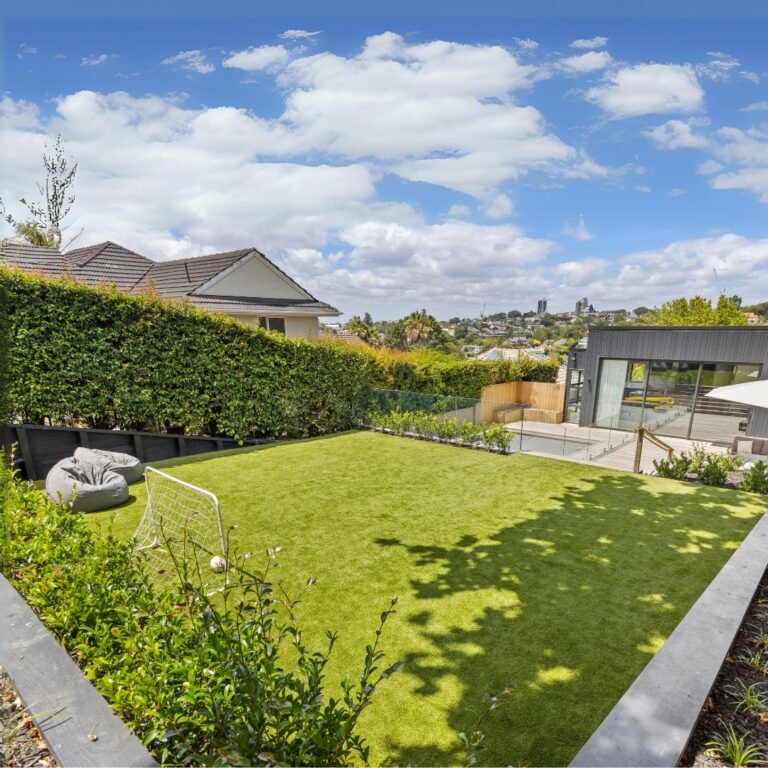
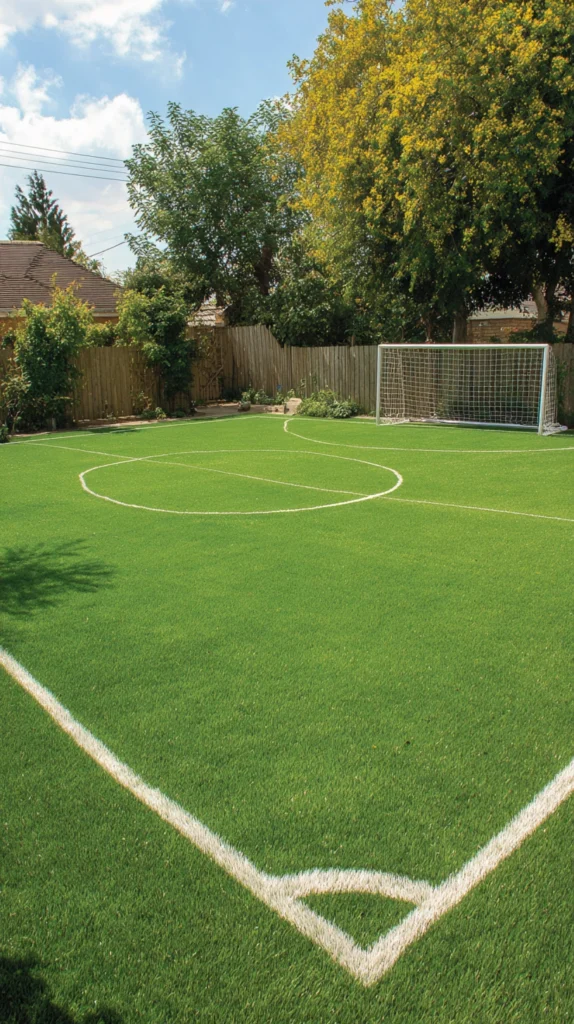
Nothing signals “serious football” quite like proper pitch markings on a quality surface. You don’t need a full-sized field — a well-marked 10×20 meter space with painted lines and artificial turf underfoot already reads like a scaled stadium training ground.
Artificial turf has come a long way. Third-generation surfaces now mimic the bounce and feel of natural grass while requiring zero maintenance beyond an occasional brush-down. Lay it over a compacted base, roll on white line markings using exterior-safe paint, and the transformation is immediate.
Key Details to Get Right
Keep the turf pile height between 30mm and 40mm for the most authentic feel. Mark a center circle and penalty area even on smaller pitches — these zones create structure for skill drills and small-sided games. A corner flag at each corner, even if decorative, completes the visual.
2. The Adjustable Goals Setup
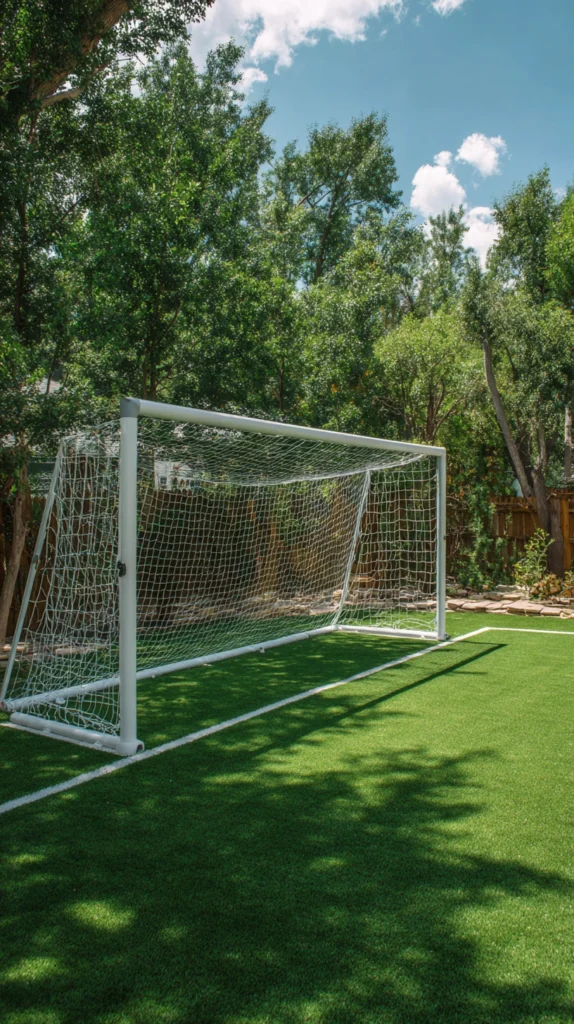
Size Matters for the Right Reasons
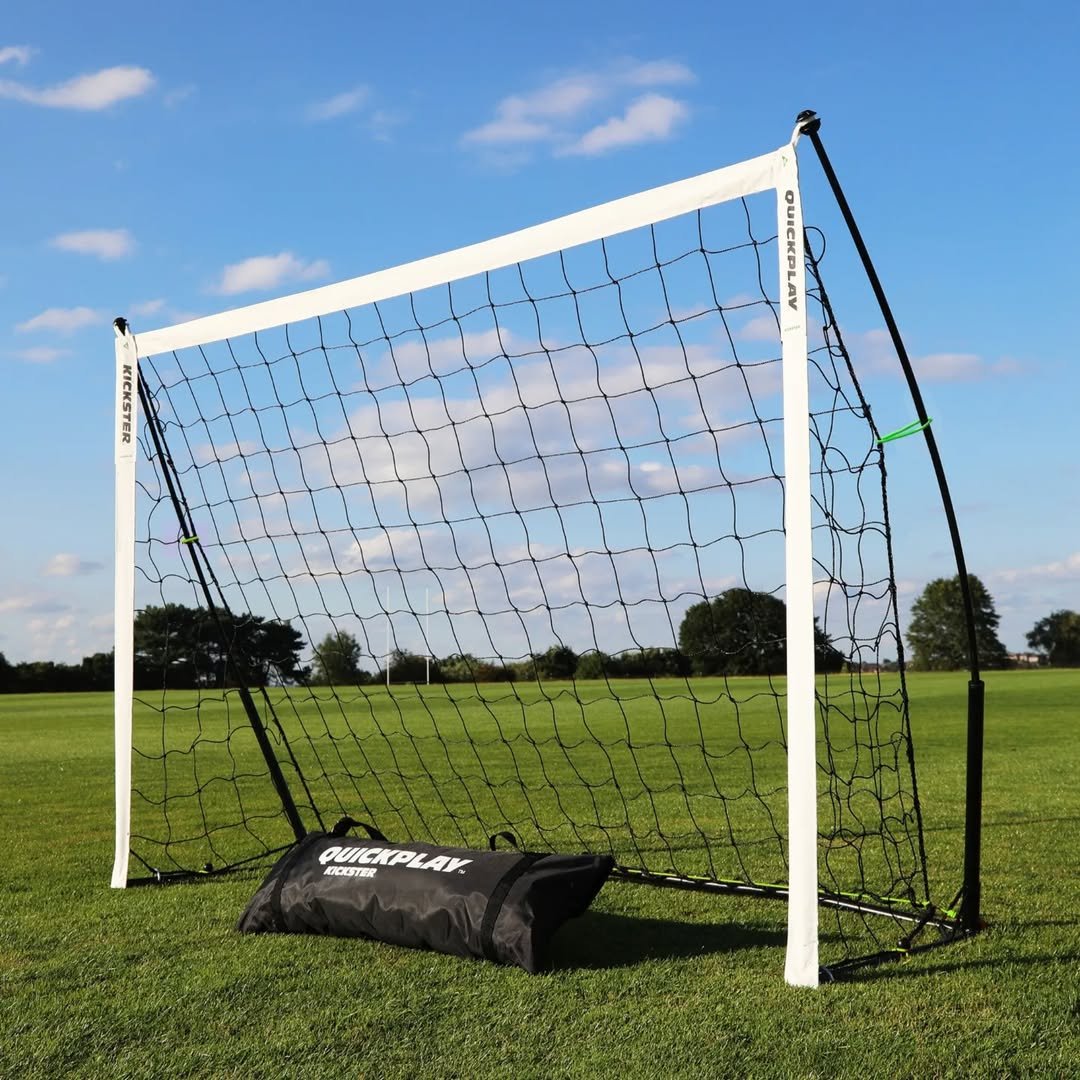
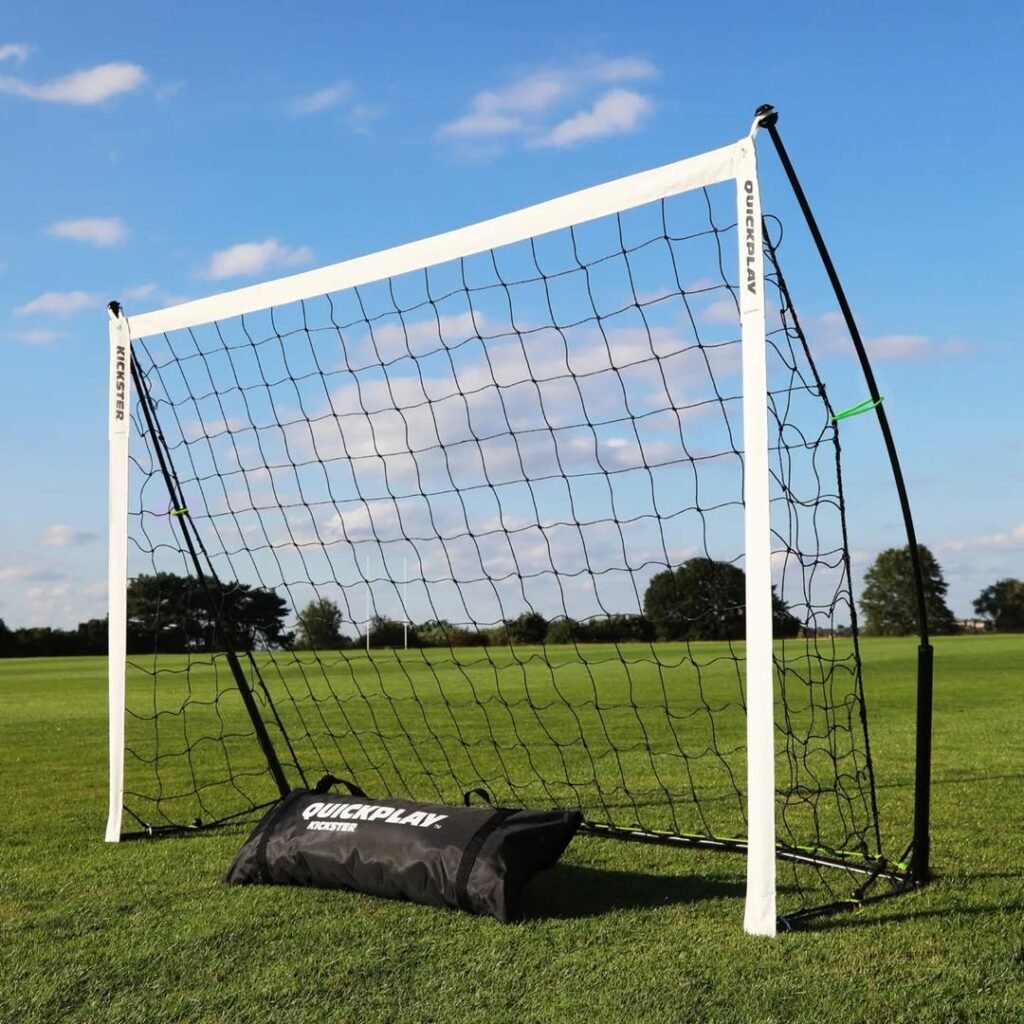
Standard backyard goals are often either too small to be satisfying or too large for the available space. The most effective setups use adjustable or modular goals — usually available in folding, pop-up, or bolt-together formats — that can be repositioned based on who’s playing and what’s being practiced.
A regulation 5-a-side goal (3.66m x 1.22m) fits neatly into most medium-sized backyards and creates an authentic shooting experience without dominating the space entirely.
Making It Look the Part
Use goals with proper net depth — shallow nets feel cheap, while deep nets with a full billow on shots create that satisfying visual you see in training ground footage. Anchor them properly to prevent tipping, and consider powder-coated frames in white or your team’s colors for a polished look.
3. The Training Wall Station
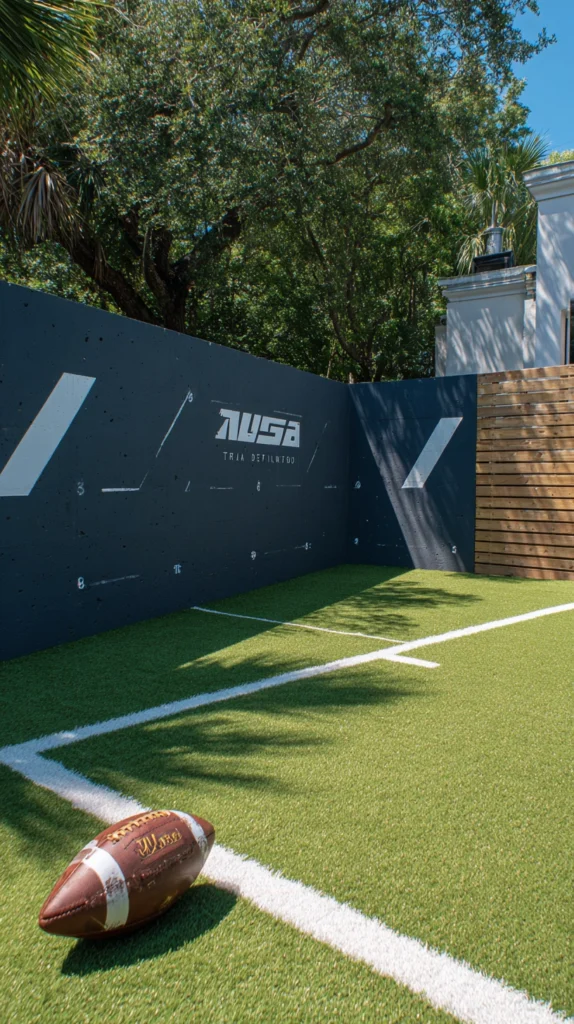
The Underrated Workhorse Setup
Ask any youth academy coach what piece of equipment they’d choose if limited to one, and the answer is almost always the rebounder wall or training board. A solid rebounder frame — or a permanent wall panel set at a slight angle — returns passes with variable pace and direction, simulating a real pass-and-receive exchange.
This transforms a solo session from meaningless juggling into structured, purposeful work. First touch, passing weight, quick release — all trainable alone.
Integrating It Into the Design
Position the wall at one end of your space so it doubles as a visual boundary. Paint it in a dark neutral or team color, and mark target zones with paint or tape for accuracy training. It looks intentional. It looks like a facility.
4. The Elevated Spectator Platform
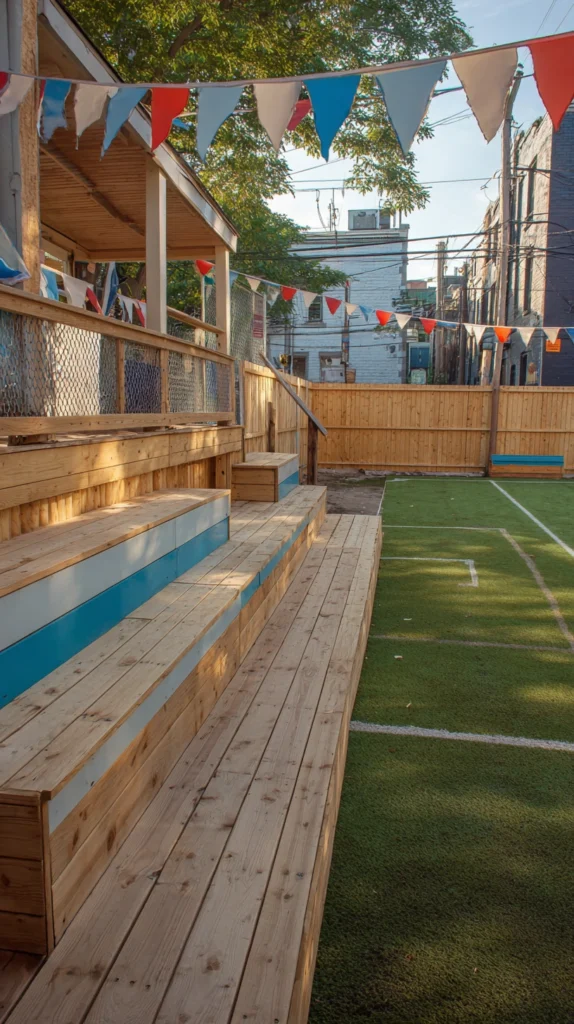
Because Every Game Deserves an Audience Section
Even a modest raised decking area or tiered platform creates a psychological “stands” effect in a backyard setting. When friends and family gather on an elevated section — even 40cm above pitch level — the space immediately divides into players and spectators. That separation is everything.
Use decking timber, composite boards, or even reclaimed scaffolding planks to build a simple elevated section along one side of your pitch. Add a railing with team-colored rope or banner bunting, and the atmosphere shifts completely.
Seating That Earns Its Place
Avoid mismatched garden chairs. Invest in a row of identical seating — folding stadium-style seats, or a built-in bench with backrest — so the spectator section reads as cohesive. This single decision elevates the entire setup visually.
5. The Floodlight Rig
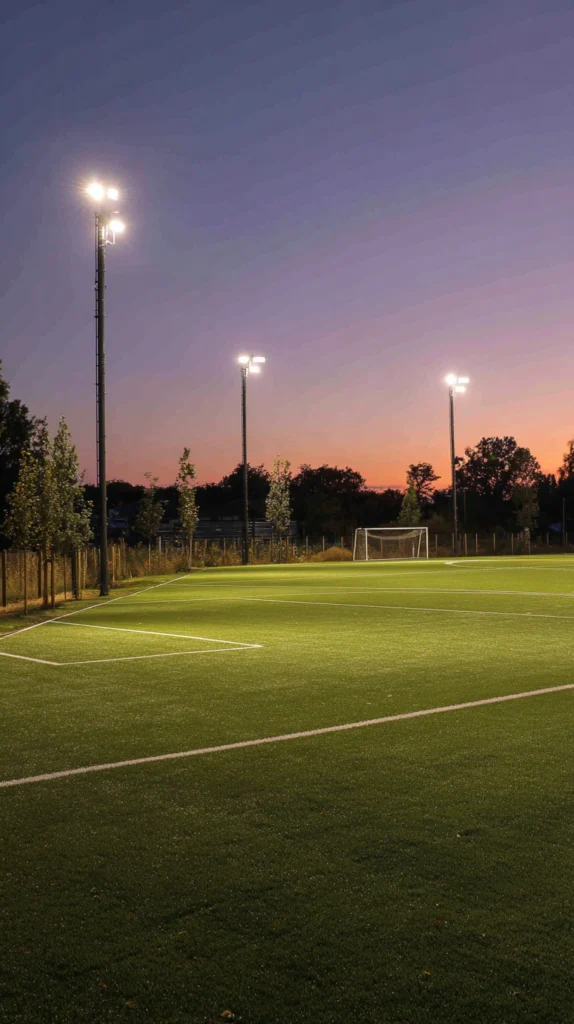
Playing Under Lights Changes Everything
If there’s one upgrade that most dramatically shifts the atmosphere of a backyard pitch, it’s floodlighting. Playing under artificial lights in the evening creates a level of theatre that no amount of daytime sunshine can match. The pitch looks sharper, shadows disappear, and the whole environment feels staged and electric.
LED floodlights mounted on four corner poles — or on the perimeter fence at head height — provide even coverage without harsh spots. Solar-powered options have improved dramatically and can sustain two to three hours of continuous light on a full charge.
Getting the Angle Right
Avoid lights aimed directly downward — these create uneven pools and dark patches. Angle fixtures at roughly 45 degrees across the playing surface for consistent, professional-grade coverage.
6. The Skill Zone Circuit
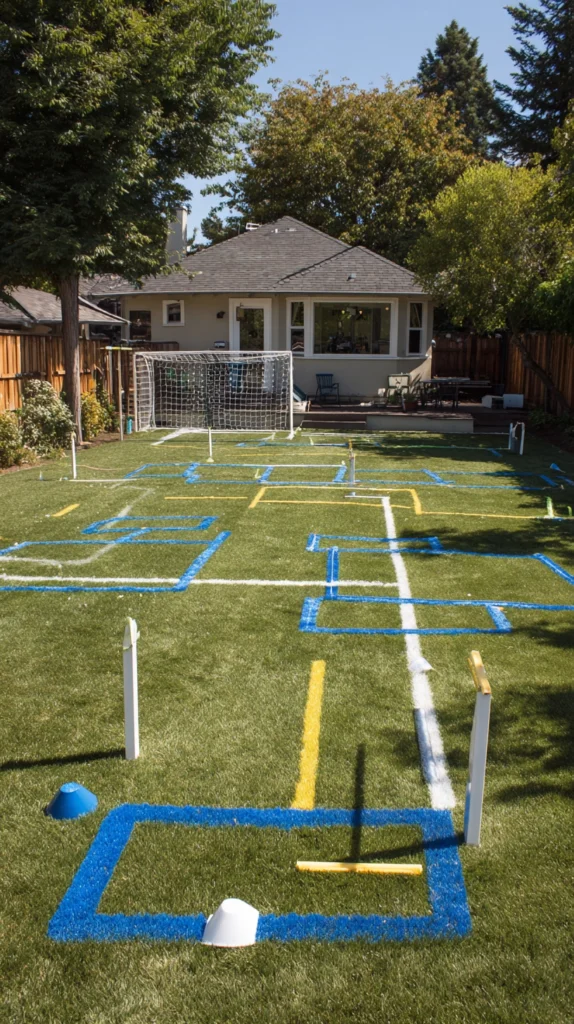
Turning Training Into a Multi-Station Experience
Rather than a single open space, a skill zone setup divides the backyard into a series of connected training stations. Think of it as a personal training ground circuit — a dribbling slalom section, a passing wall, a shooting zone, and a control mat area, each with clearly defined boundaries.
Use low agility poles, painted zones on the turf, and lightweight hurdles to define each section. This works especially well for backyard spaces that are narrow or irregularly shaped, since you’re working with the layout rather than around it.
The Stadium Gym Feel
Add a small equipment rack or wall-mounted storage unit in one corner — somewhere to hang bibs, store cones, and rack agility ladders. This functional corner creates the feeling of a proper training facility and keeps the space organized.
7. The Scoreboard Feature Wall
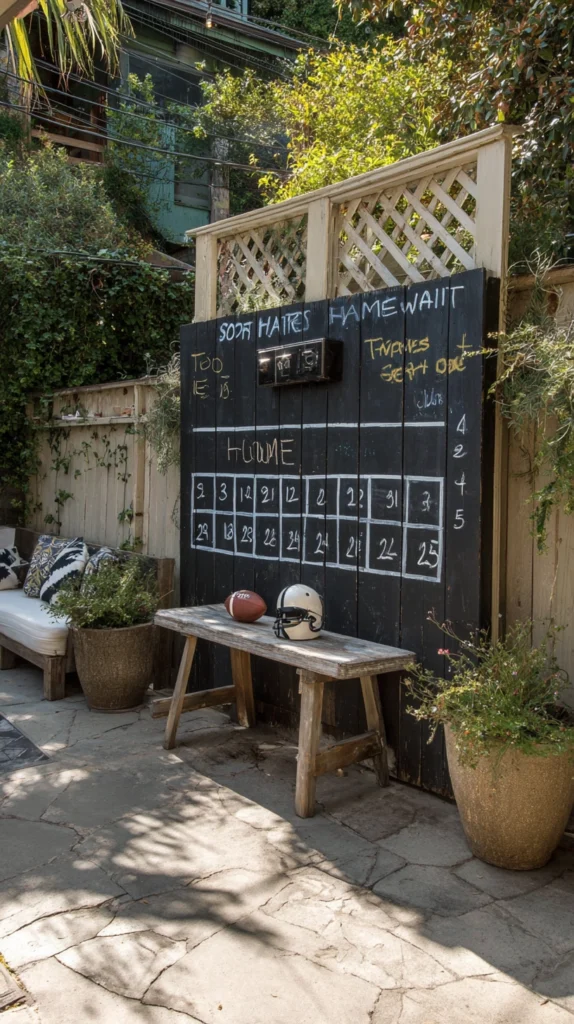
Keeping Score Keeps It Serious
A scoreboard is perhaps the most psychologically powerful addition to any backyard football setup. It transforms every kickabout into a contest with stakes. Even in five-a-side games between mates, having a physical scoreboard to update builds intensity and investment.
Blackboard paint on a single exterior wall or fence panel creates a DIY scoreboard that can be updated with chalk after every goal. Add a fixture date, team names, and a halftime line for structure.
Going Permanent
For a more durable version, use a sliding number track — the kind used in diner menus — mounted in a weatherproof frame. Teams are printed on vinyl labels, numbers slide in and out. It looks clean, it looks permanent, and it looks like someone cared about the details.
8. The Mini Press Box Corner
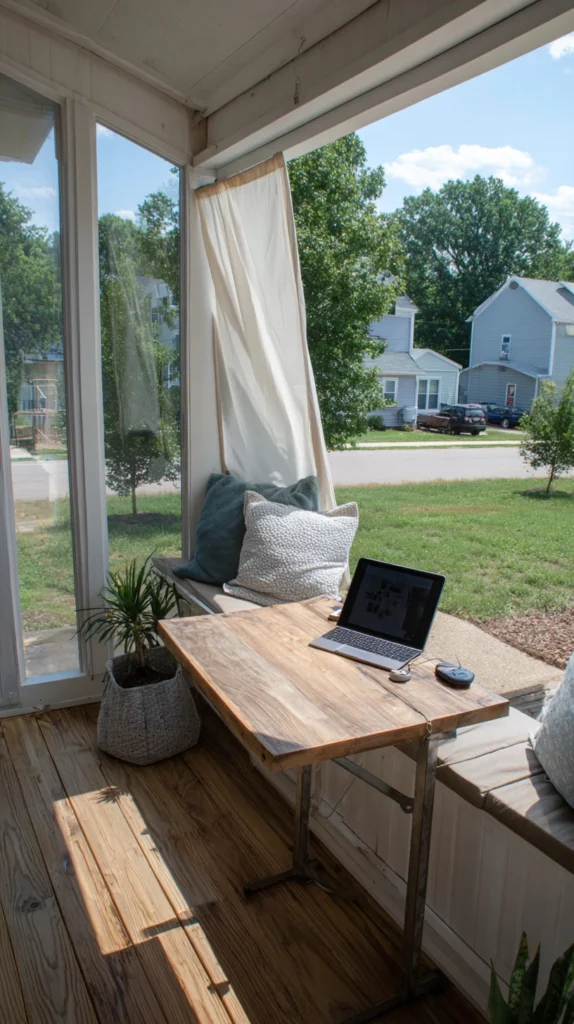
Where Commentary Lives
Every great stadium has a press box. Your backyard version might be a dedicated corner — a covered bench area with a small folding table, elevated just above pitch level, angled toward the goal.
This space works brilliantly for match-day viewing when connected to a small outdoor screen or tablet. A single canvas cover or pergola shade structure makes it feel deliberate. Add a mounted microphone for anyone who wants to commentate (and someone always will), and this corner becomes the most popular spot in the backyard.
9. The Ball Cannon Rebounder Station
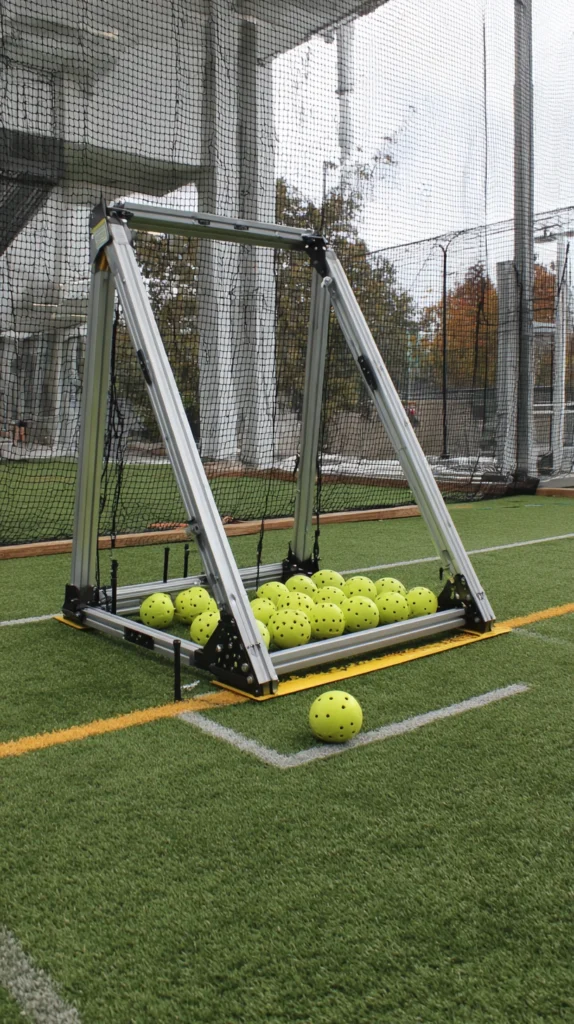
Simulating Real Match Pressure
A mechanical ball launcher or heavy-duty rebounder bungee frame puts players in reactive mode — the ball is coming whether you’re ready or not. This setup station is standard in professional academy environments and creates a training experience that static cone drills simply can’t replicate.
Position one in the training zone section of your layout for high-intensity interval-style sessions. Three minutes on the rebounder is exhausting, effective, and genuinely fun.
10. The Team Dugout Bench Setup
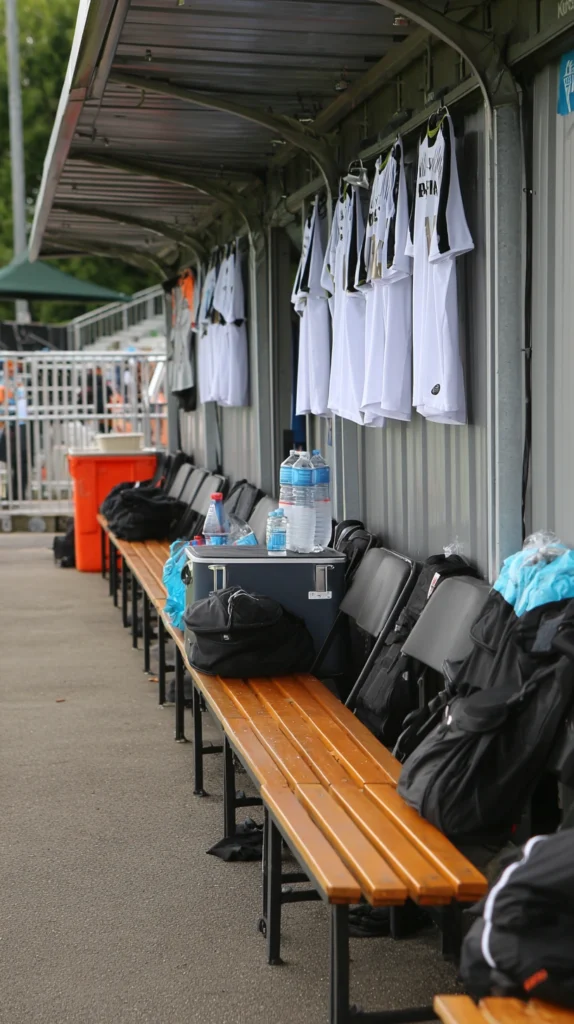
Both Teams Need Somewhere to Sit
A proper dugout — even a simple one — changes how players mentally engage with the game. Two opposing benches, positioned along the length of the pitch with a small gap between them, create a structure that mirrors the layout of professional touchlines.
Use matching bench designs in contrasting colors, or keep both neutral and drape team bibs over the seats before kickoff. A small cooler between benches holds water bottles or post-match drinks. It’s a minor addition that produces a major atmosphere shift.
11. The Acoustic Fence System
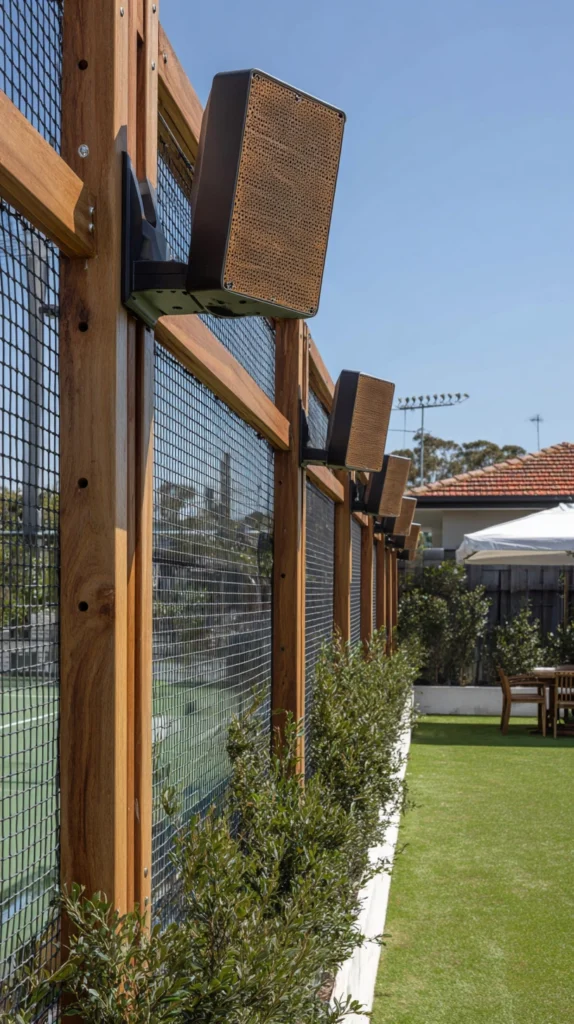
Crowd Noise Belongs in the Backyard
Bluetooth speakers mounted into fence posts, angled toward the pitch, can play crowd noise loops, club anthems, or pre-match buildup playlists. This isn’t as gimmicky as it sounds — the right audio environment changes how players move and how intensely they engage.
Weatherproof outdoor speakers are widely available and increasingly affordable. Mount them at head height for even distribution, and run them from a single hub connected to a playlist app on your phone. Pre-match music, halftime silence, full-time celebrations — all curated and controlled.
12. The Perimeter Advertising Board Setup
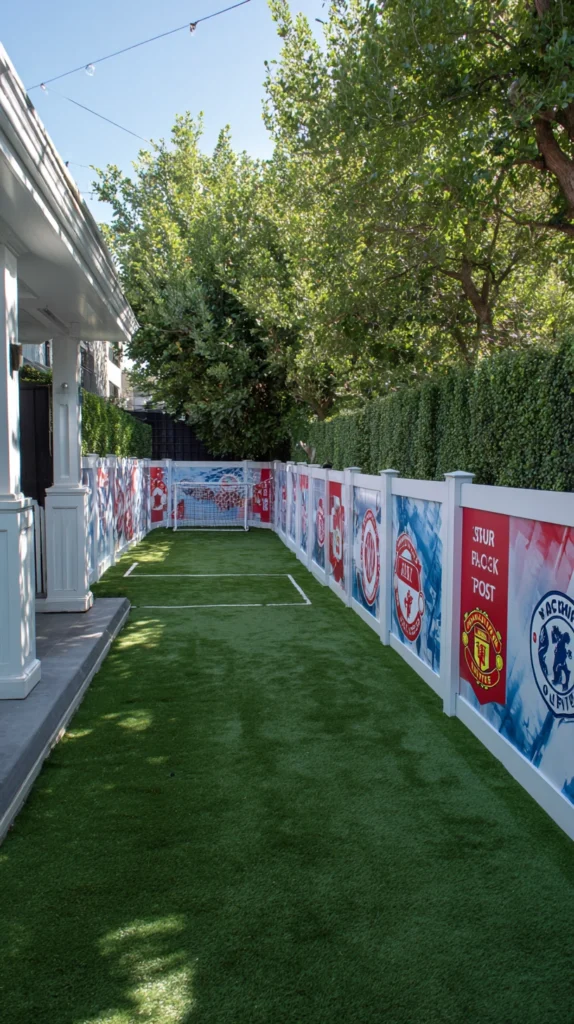
The Final Detail That Ties Everything Together
Professional pitches are framed by advertising boards. Your backyard pitch should have perimeter boards too — not for sponsors (though that’s a fun joke with friends), but for the visual framing they provide.
Use corrugated plastic panels in white, fixed to the inner edge of your boundary fence at shin height. Print or paint club crests, player names, or custom graphics onto them. From any angle, they visually enclose the pitch and create the unmistakable sensation of watching football inside an actual arena.
Bringing the Whole Setup Together
Start With Structure, Add Atmosphere
The most common mistake in backyard football setups is prioritising individual purchases over cohesive design. A floodlight means nothing if the goals are cheap. A scoreboard loses impact without a defined pitch. Start with the surface and goals, build the seating and lighting next, and layer in the atmosphere details — the boards, the scoreboard, the audio — as the foundation solidifies.
Scale to Your Space, Not Your Ego
A 60-square-meter backyard executed beautifully outperforms a 200-square-meter space thrown together carelessly every time. Measure what you have, design within it intentionally, and your mini stadium will feel larger than its footprint suggests.
Make It Seasonal
The best setups evolve. Summer configurations might prioritise open training zones and spectator space. Winter setups might pull the floodlights forward and tighten the pitch for smaller, faster games. A backyard football setup is never truly finished — and that’s exactly the point.
Final Thoughts
A backyard that genuinely feels like a mini stadium isn’t built in a weekend, and it isn’t the result of a single purchase. It’s the product of considered choices — surfaces, lighting, structure, sound, seating — each one reinforcing the others until the space stops feeling like a garden and starts feeling like somewhere football belongs.
The fans who build these spaces understand something important: football isn’t confined to the ninety minutes on a Saturday. It’s a way of inhabiting the world, and your backyard is just one more place where it gets to live.