14 Simple Rock Garden Ideas for Low-Maintenance Beauty
My front slope was a nightmare for years. Grass dying on the hill, constant erosion, mowing impossible.
Spent hours weekly trying to keep grass alive on a 30% grade. Looked terrible despite the effort.
Then I replaced it all with rocks and drought-tolerant plants. Zero mowing, no watering, actually beautiful.
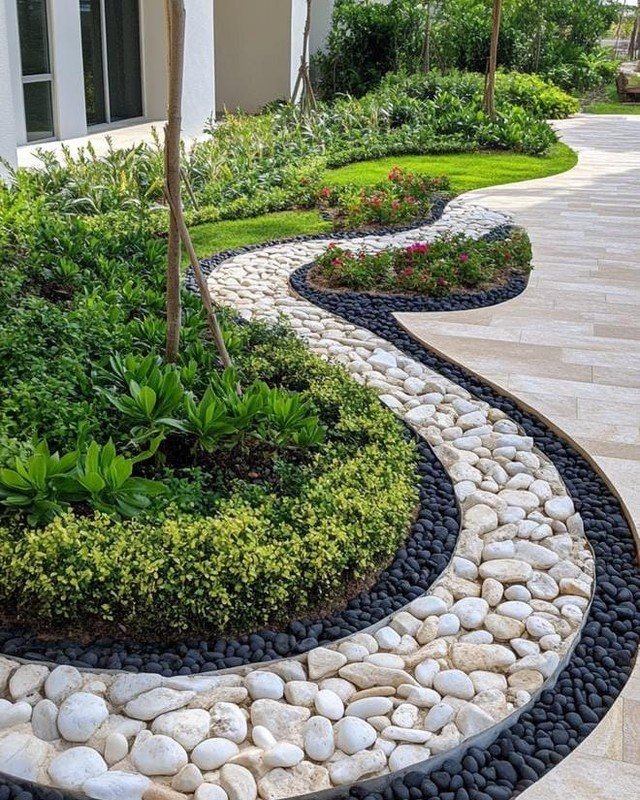
Now neighbors stop to compliment what used to be my ugliest problem area. Same slope, completely different reality.
Let me show you 14 rock garden ideas that turn problem spots into low-maintenance showcases.
Why My Grass Slope Failed
The impossible situation:
Steep grade problems:
- 30% slope (too steep for mower)
- Weed whacker only option
- Dangerous footing
- Exhausting work
Grass failures:
- Dried out constantly (water ran off)
- Eroded badly (rain washed soil)
- Patchy and brown
- Embarrassing
Weekly torture:
- 90 minutes weed-whacking
- Dangerous work (fell twice)
- Still looked terrible
- Hated it
Annual time investment:
- 78 hours yearly (26 weeks × 3 hours)
- Backbreaking labor
- Zero satisfaction
- Dreaded weekends
After rock garden conversion:
Transformation weekend:
- Saturday: Killed grass (cardboard method)
- Sunday: Added rocks and plants
- 16 hours total work
- One-time effort
Immediate benefits:
Zero maintenance:
- No mowing (ever!)
- No watering (after establishment)
- No erosion (rocks hold everything)
- Weeding maybe 2 hours yearly
Actually beautiful:
- Intentional design
- Varied textures
- Color contrast
- Eye-catching
Neighbor reactions:
- “That looks amazing!”
- “How did you do that?”
- “Thinking about doing mine”
- Validation
Cost:
- Rocks: $180 (3 tons, delivered)
- Plants: $120 (40 plants)
- Cardboard: Free
- Total: $300
Time saved yearly: 78 hours → 2 hours = 76 hours reclaimed Value at $20/hour: $1,520 yearly savings ROI: Under 3 months
My revelation: Rock gardens aren’t just pretty – they solve problems traditional landscaping can’t.
1. Alpine Rock Garden (Classic Style)
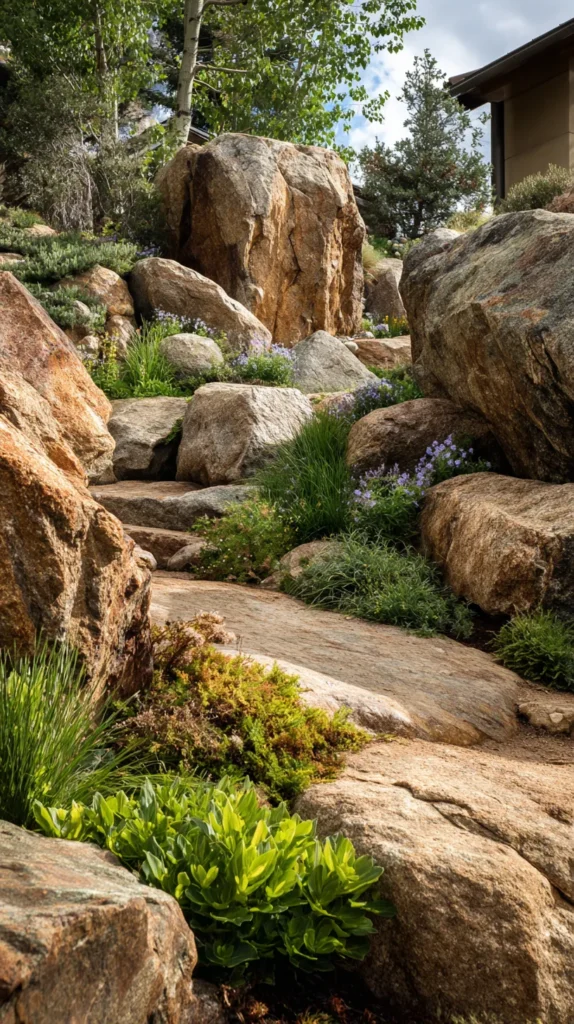
Naturalistic rock outcropping – mimics mountain slopes.
My front slope transformation:
Rock placement:
- Large boulders (100-300 lbs each)
- Partially buried (look natural)
- Clustered in groups
- Random not linear
Getting boulders:
Free sources:
- Construction sites (asked permission)
- Farmers clearing fields
- Craigslist free section
- I hauled myself (borrowed truck)
Placement strategy:
- Larger rocks downhill (visual weight)
- Smaller uphill
- Irregular spacing
- Natural appearance
Plant selection:
Alpine plants:
- Sedum (10+ varieties)
- Sempervivum (hens and chicks)
- Creeping thyme (fills gaps)
- Dianthus (pink flowers)
- Creeping phlox (spring carpet)
Why these work:
- Drought-tolerant (critical)
- Shallow roots (perfect for rock)
- Low-growing (1-6 inches)
- Colorful bloom
- Zero maintenance
Soil preparation:
Gritty mix:
- 50% native soil
- 30% small gravel (drainage)
- 20% compost (initial nutrition)
- Loose and fast-draining
Installation:
- Kill existing grass (cardboard + sheet mulch)
- Place large rocks first (anchor points)
- Fill gaps with gritty soil
- Plant in pockets (12 inches apart)
- Top-dress small gravel (2 inches)
- Water until established (6 weeks)
Current status (3 years):
- Plants spread and merged
- Zero irrigation needed
- Weeds minimal (maybe 5 yearly)
- Maintenance: 2 hours per year total
Cost breakdown:
- Rocks: Free (hauled myself)
- Plants: $80 (40 plants at $2 each)
- Gravel: $40 (1 ton small gravel)
- Compost: $20
- Total: $140
My alpine garden: Solved worst problem area, constant compliments, minimal investment.
Alpine Garden Tips
What works:
Drainage critical:
- Alpine plants hate wet feet
- Add gravel if soil heavy
- Slope helps naturally
- Never soggy
Start with classics:
- Sedum (easiest, spreads reliably)
- Hens-and-chicks (impossible to kill)
- Creeping thyme (fragrant, tough)
- Success guaranteed
Odd numbers:
- Groups of 3, 5, 7
- Never pairs or singles
- More natural
- Professional look
2. Desert Rock Garden (Xeriscape)
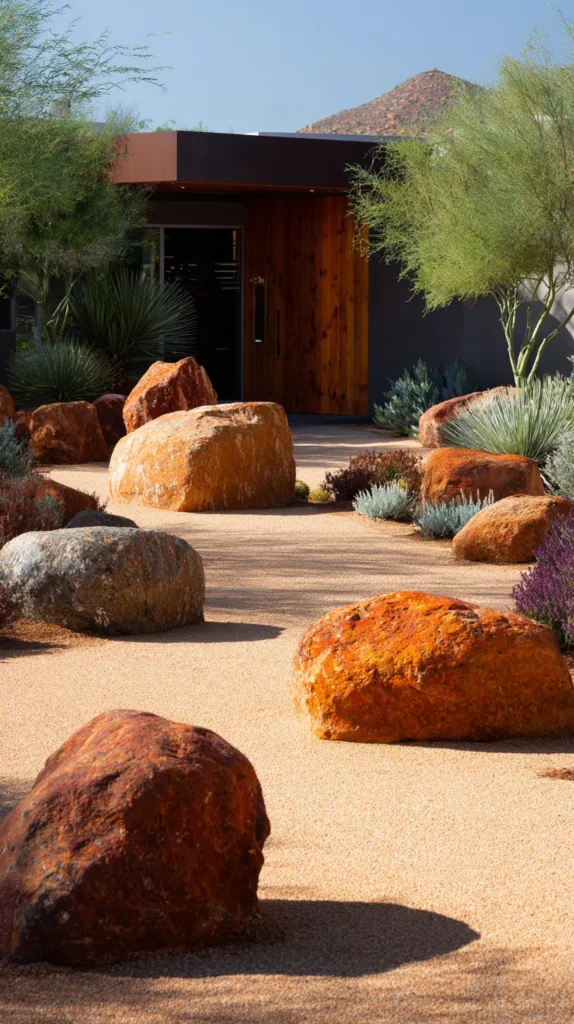
Southwestern inspired – ultimate low-water.
My backyard desert section:
Large rock features:
- Boulders (statement pieces)
- Stacked flat stones
- Desert colors (red, tan)
- Sparse placement (arid aesthetic)
Desert plants:
Succulents:
- Agave (dramatic spikes)
- Yucca (architectural)
- Opuntia (prickly pear cactus)
- Sedum (ground cover)
Drought-adapted:
- Red yucca (coral flowers)
- Mexican feather grass (movement)
- Desert marigold (yellow blooms)
- Sage varieties (fragrant)
Ground cover:
Decomposed granite:
- 2-inch layer (not gravel)
- Compacts firm
- Desert appearance
- Weed suppression
Why DG better:
- Smoother than gravel
- Compacts (stable)
- Natural desert look
- Doesn’t scatter
Maintenance reality:
Year 1:
- Water weekly (establishment)
- Pull few weeds
- 10 hours total
Years 2-3:
- Zero watering (except extreme drought)
- Weeding 1 hour yearly
- Trim dead leaves (30 min)
- Nearly maintenance-free
Climate considerations:
Best zones:
- Hot/dry climates (7-11)
- Low rainfall areas
- Full sun locations
- Southwest perfect
My zone 7:
- Works but less authentic
- Some succulents borderline hardy
- Bring tender ones in winter
- Adapted approach
Cost:
- Large rocks: $150 (purchased)
- Desert plants: $180 (15 plants, pricier)
- Decomposed granite: $80 (2 tons)
- Total: $410
My desert garden: Hottest driest section thrives, zero summer watering, sustainable landscape.
3. Stacked Stone Raised Bed (Structured Beauty)
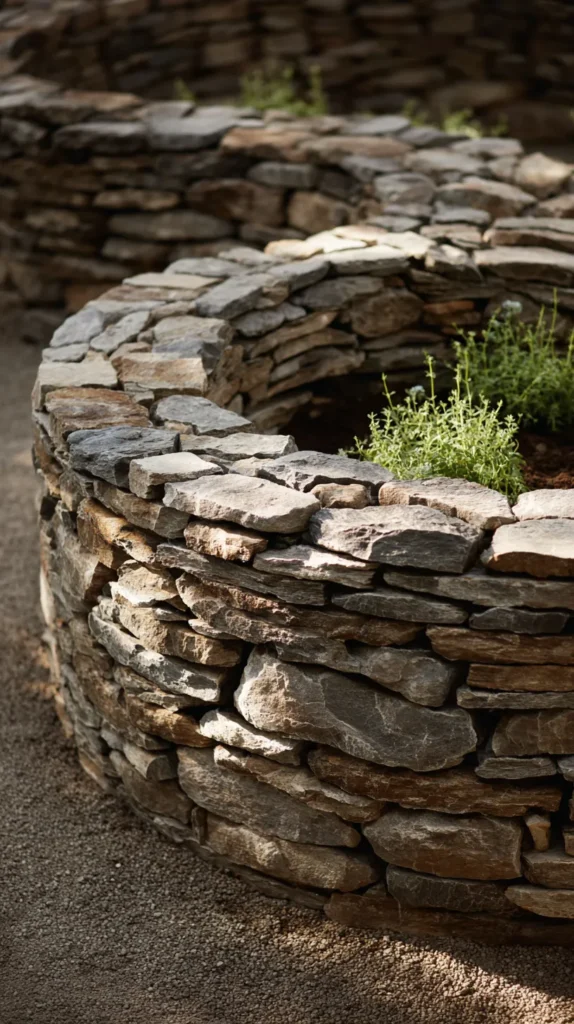
Dry-stacked stone walls – formal raised garden.
My herb garden conversion:
Design:
- Circular (6 feet diameter)
- 18 inches tall (two stone rows)
- Dry-stack (no mortar)
- Formal appearance
Stone selection:
Flat fieldstone:
- Roughly rectangular
- 2-4 inch thickness
- Natural irregular edges
- Local stone (cheaper)
Stacking technique:
- Largest stones bottom
- Smaller upward
- Slight inward lean (stability)
- Interlocking like puzzle
Interior:
Fill layers:
- Bottom: Gravel (4 inches, drainage)
- Middle: Garden soil mix
- Top: Quality topsoil + compost
- Well-draining
Plantings:
Mediterranean herbs:
- Rosemary (woody shrub)
- Thyme (cascades over edge)
- Oregano (spreads)
- Sage (silver foliage)
- Lavender (purple spikes)
Why herbs perfect:
- Love drainage (rock gardens provide)
- Drought-tolerant (low water)
- Aromatic (bonus)
- Culinary (functional)
Benefits:
Raised elevation:
- Better drainage (critical)
- Easier access (ergonomic)
- Defines space (structure)
- Visual interest (height)
Thermal mass:
- Stone absorbs heat (day)
- Releases at night
- Extends season
- Herbs thrive
Cost:
- Stone: $200 (1 ton fieldstone)
- Soil/amendments: $60
- Gravel: $30
- Plants: $100 (20 herbs)
- Total: $390
My stone herb bed: Beautiful and functional, easiest herbs I’ve grown, worth the effort.
4. Japanese Zen Garden (Minimalist Peace)
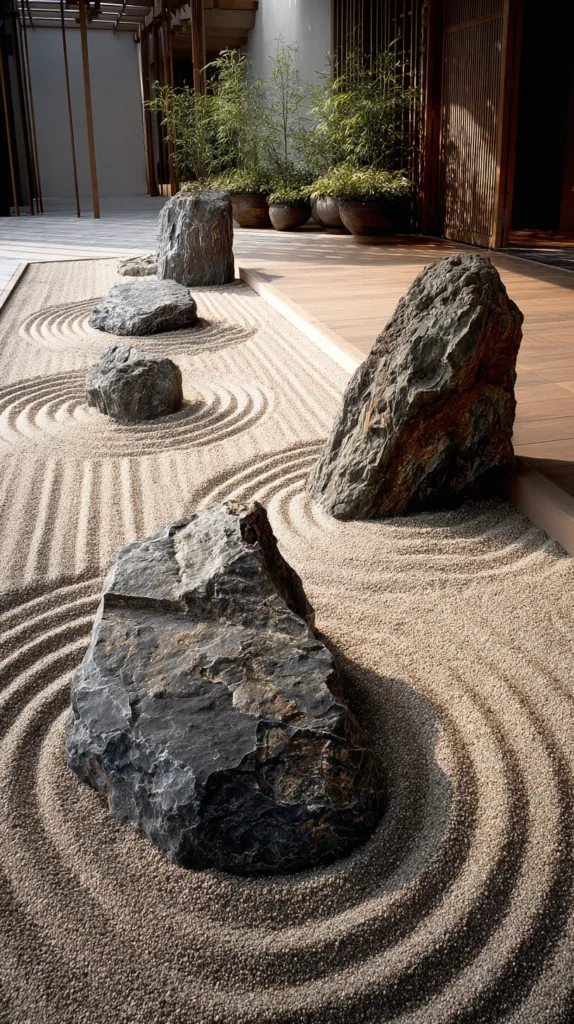
Raked gravel meditation – contemplative space.
My small Zen corner:
Size:
- 8×10 feet (manageable)
- Rectangular
- Enclosed by low wall
- Dedicated space
Elements:
Fine gravel:
- Pea gravel (smooth, uniform)
- 2-inch depth
- Raked in patterns
- Represents water
Three rocks:
- Large feature stones
- Odd number (traditional)
- Asymmetrical placement
- Represent islands/mountains
Minimal plantings:
- Small Japanese maple (one)
- Moss patches (edges)
- Bamboo grass (container, controlled)
- Simplicity essential
Rake patterns:
Weekly ritual:
- Bamboo rake (special purchase, $15)
- Wavy lines (water flowing)
- 15 minutes (meditative)
- Peaceful practice
Purpose:
Meditation spot:
- Bench facing garden
- Morning quiet time
- Stress relief
- Mental health
Aesthetic:
- Minimalist beauty
- Negative space valued
- Contemplative
- Calming
Maintenance:
Gravel grooming:
- Weekly raking (15 min, meditative)
- Occasional leaf removal
- Re-level if needed (rare)
- Simple upkeep
Cost:
- Pea gravel: $60 (1.5 tons)
- Feature stones: Free (found)
- Plants: $80 (minimal)
- Rake: $15
- Total: $155
My Zen garden: Daily morning spot, mental health tool, cheapest therapy.
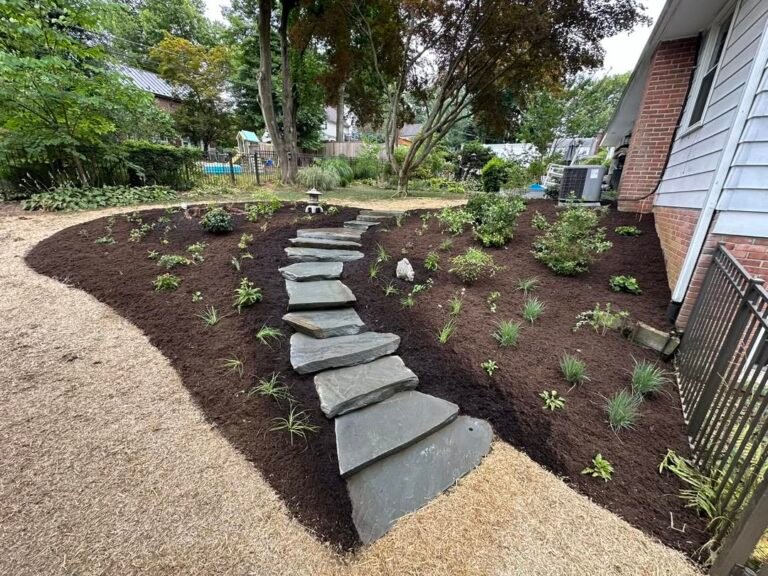
5. Flagstone Path with Rock Garden Borders (Functional Beauty)
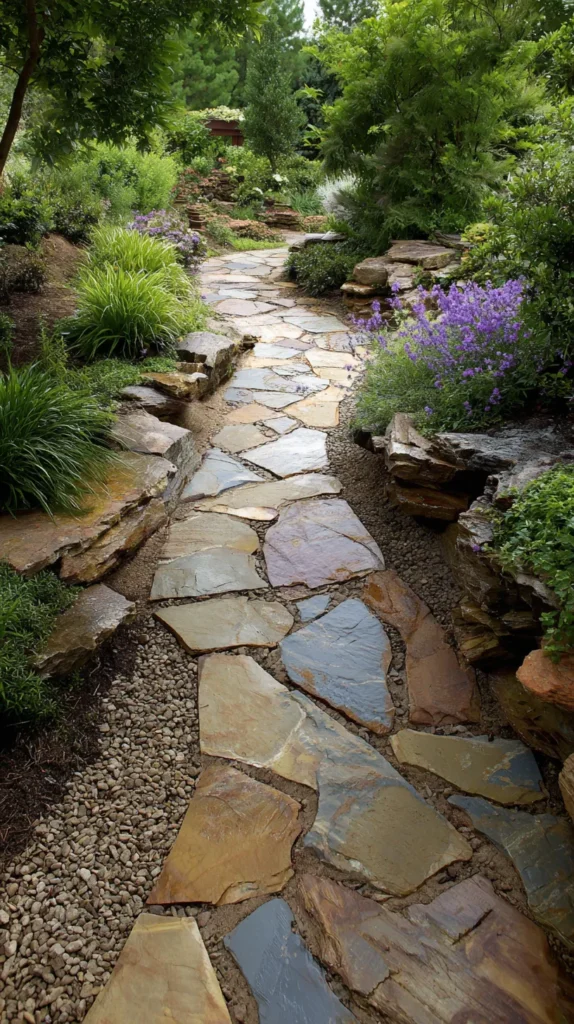
Walking path lined with plantings – practical and pretty.
My main garden path:
Flagstone path:
- 3-foot wide (comfortable)
- 20 feet long
- Irregular flagstones
- Gaps between stones
Gap treatment:
Creeping plants:
- Thyme (releases scent when stepped)
- Irish moss (soft green)
- Sedum (tough, spreads)
- Tough ground covers
Border plantings:
Both sides (12 inches wide):
- Larger rocks as edging
- Alpine plants between
- Cascading varieties
- Softens path edges
Plant selection:
- Dianthus (pink flowers)
- Creeping phlox (spring carpet)
- Hens-and-chicks (sculptural)
- Basket-of-gold (yellow blooms)
Construction:
Base preparation:
- Excavate 4 inches
- Gravel base (2 inches)
- Sand layer (1 inch)
- Stones set level
Why it works:
Functional path:
- Dry feet always
- Stable surface
- Comfortable width
- Actually used
Beautiful journey:
- Plants soften edges
- Flowers at feet
- Scent released
- Experience not just passage
Cost:
- Flagstone: $200 (20 stones)
- Gravel base: $40
- Border plants: $80 (40 plants)
- Total: $320
My flagstone path: Solves muddy path problem, beautiful walk, fragrant steps.
6. Corner Rock Garden (Problem-Spot Solution)
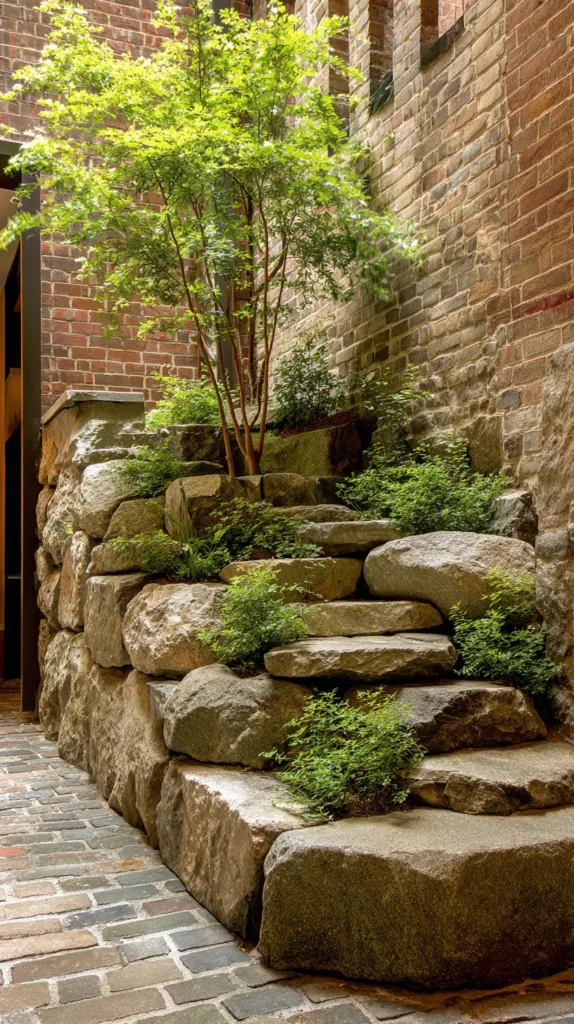
Awkward corner transformed – dead space to feature.
My unmowable corner:
The problem (3×5 feet):
- Between fence and shed
- Impossible to mow
- Weeds thrived
- Ugly neglected
Rock garden solution:
Tiered levels:
- Bottom level (flat stones)
- Middle tier (12 inches up)
- Top tier (24 inches)
- Creates depth
Rock placement:
- Stacked creating pockets
- Planting spaces between
- Varied heights
- Three-dimensional
Plantings:
Shade-tolerant:
- Hostas (bold leaves)
- Ferns (texture)
- Astilbe (pink plumes)
- Coral bells (colorful foliage)
Why shade plants:
- North-facing corner
- 2-4 hours sun max
- Shade rock gardens possible
- Different plant palette
Transformation:
Before: Embarrassing weed patch (30 min weekly weed-whacking) After: Attractive feature (zero maintenance) Time saved: 26 hours yearly Improved appearance: Dramatically
Cost:
- Rocks: Free (from larger project leftovers)
- Plants: $60 (12 shade plants)
- Soil: $15
- Total: $75
My corner garden: Turned problem to asset, proves rock gardens work in shade too.
7. Dry Creek Bed (Drainage Solution)
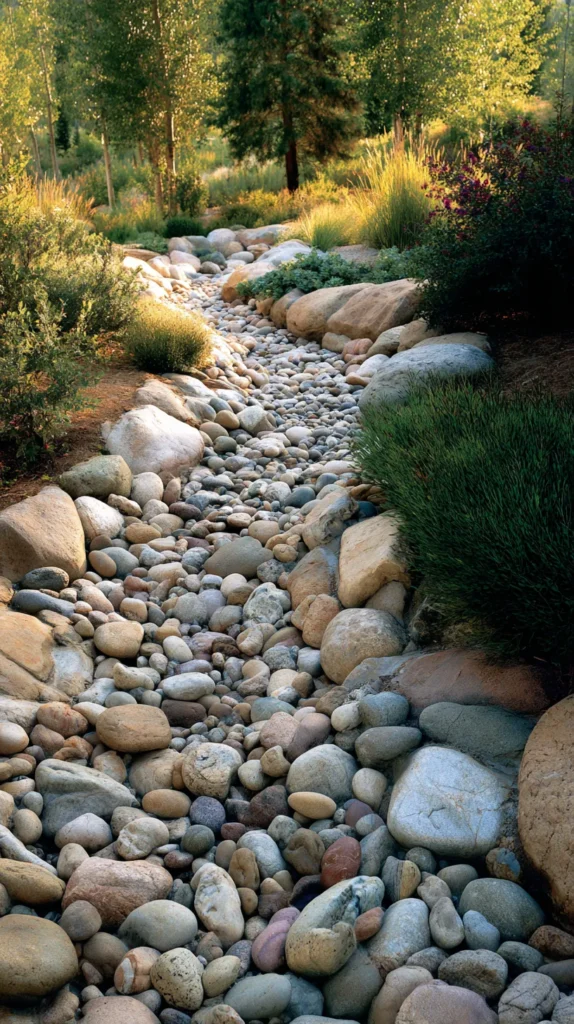
Simulated streambed – functional art.
My drainage problem:
Water flow issue:
- Downspout emptied on lawn
- Created muddy area
- Grass died
- Looked bad
Dry creek solution:
Design:
- 2 feet wide
- 15 feet long
- Meanders naturally
- Follows water flow
Rock layers:
Bottom (base):
- Large river rocks (4-8 inch)
- Streambed appearance
- Water flows through
- Structural
Sides (banks):
- Medium rocks (2-4 inch)
- Transition zone
- Holds larger rocks
- Natural banks
Edges (planting):
- Small gravel mulch
- Plants in pockets
- Softens edges
- Integration
Plantings:
Creek-side plants:
- Ornamental grasses (movement)
- Daylilies (creek natives)
- Black-eyed Susan (yellow)
- Sedges (water-loving)
Function:
Drainage path:
- Directs water away from house
- Prevents erosion
- Handles heavy rain
- Solves problem
Dry appearance:
- Looks like dried creek (most days)
- “Water” flows during rain
- Beautiful both ways
- Functional landscape
Cost:
- River rock: $150 (2 tons, various sizes)
- Plants: $60 (15 plants)
- Landscape fabric: $20
- Total: $230
My dry creek: Solved drainage problem beautifully, neighbors copied idea, functional art.
8. Vertical Rock Wall Garden (Space-Saving)
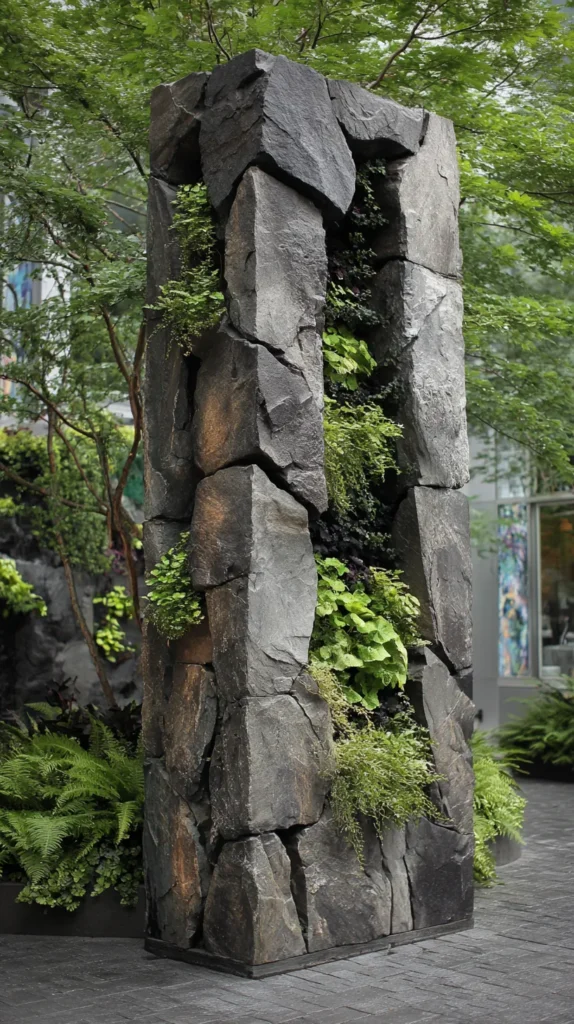
Stacked stone with planting pockets – growing vertical.
My fence-line wall:
Structure:
- 3 feet tall
- 12 feet long
- Dry-stacked stone
- Slight backward lean
Planting pockets:
Crevice planting:
- Gaps left during stacking
- Soil pockets created
- Plants inserted
- Roots grow into gaps
What thrives:
- Sedums (all varieties)
- Sempervivums (rosettes)
- Creeping thyme (cascades)
- Small ferns (moist pockets)
Construction technique:
Strategic gaps:
- Plan pockets while building
- Soil inserted as you stack
- Plant immediately
- Roots establish fast
Benefits:
Vertical growing:
- 36 square feet wall
- 50+ plants
- Small footprint (12 sq ft ground)
- Space efficient
Living wall evolution:
- Year 1: Plants establish
- Year 2: Filling in
- Year 3+: Mature cascade
- Gets better yearly
Maintenance:
- Virtually zero
- Occasional trim
- Check stability yearly
- Self-maintaining
Cost:
- Stone: $180 (1.5 tons)
- Plants: $100 (50 small plants)
- Soil: $20
- Total: $300
My vertical wall: Maximum plants minimum space, interesting feature, conversation piece.
9. Gravel Garden with Specimen Rocks (Modern Minimalist)
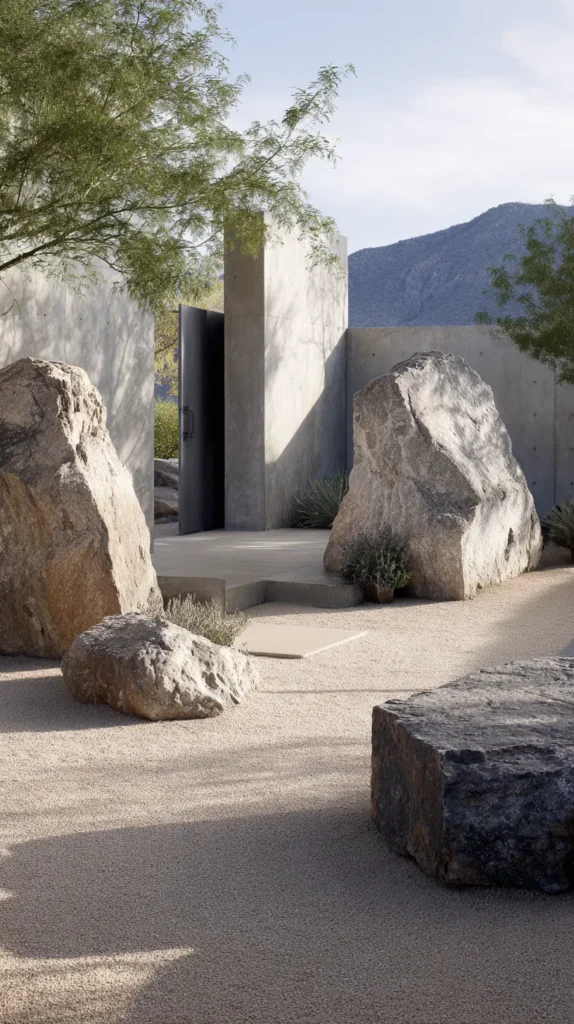
Clean contemporary design – architectural simplicity.
My modern front yard:
Ground plane:
- Pea gravel throughout (uniform)
- 3-inch depth
- Weed barrier underneath
- Clean appearance
Specimen rocks:
Feature stones:
- 3 large rocks (300-500 lbs each)
- Asymmetrically placed
- Sculptural quality
- Design statement
Where I got them:
- Landscape supply yard
- $150 each (expensive but worth it)
- Crane delivered/placed
- Professional appearance
Plantings:
Minimalist selection:
- Ornamental grasses (5 clumps)
- Architectural plants only
- Spaced widely (negative space)
- Repeating varieties
Specific choices:
- Karl Foerster grass (vertical accent)
- Blue oat grass (color)
- Yucca (sculptural)
- Spacing 6+ feet apart
Design principles:
Less is more:
- Few elements (high quality)
- Space between (valued)
- Repetition (cohesion)
- Simplicity (sophisticated)
Maintenance:
Minimal by design:
- No mowing (all gravel)
- Trim grasses once yearly (spring)
- Rake gravel occasionally
- 3 hours yearly total
Cost:
- Pea gravel: $180 (3 tons)
- Specimen rocks: $450 (3 rocks)
- Plants: $100 (8 plants)
- Weed barrier: $40
- Total: $770
Expensive but: Modern aesthetic achieved, ultra-low maintenance, design award-worthy.
10. Rock Garden Water Feature (Naturalistic Pond)
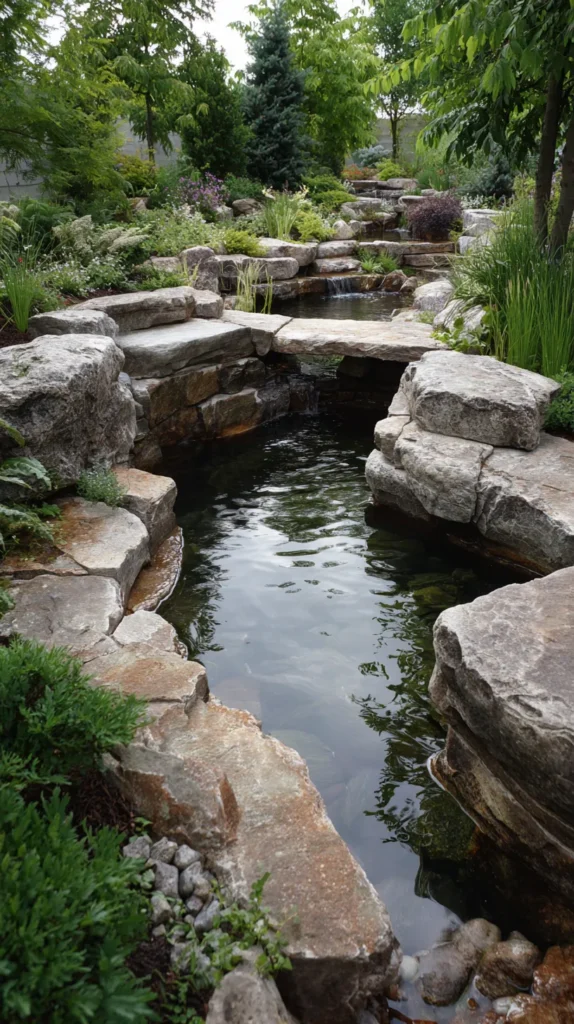
Small pond with stone surround – tranquil focal point.
My backyard pond:
Pond specifications:
- 6×8 feet
- 18 inches deep
- Preformed liner
- Recirculating pump
Rock surround:
Naturalistic edge:
- Large flat stones (coping)
- Varied sizes
- Irregular placement
- Looks like natural pond
Cascading area:
- Stacked stones (water flows over)
- Small waterfall (8 inches)
- Recirculation
- Sound element
Rock garden integration:
Surrounding plantings:
- Moisture-lovers near water
- Drought-tolerant away
- Gradual transition
- Natural appearance
Plants used:
- Water iris (in pond)
- Ferns (pond edge)
- Hostas (moisture zone)
- Sedum (dry zone)
Benefits:
Sound therapy:
- Trickling water (peaceful)
- Masks traffic noise
- Meditation spot
- Mental health
Wildlife attraction:
- Birds bathe
- Frogs resident
- Dragonflies
- Living ecosystem
Cost:
- Preformed liner: $150
- Pump: $80
- Rocks: $200 (2 tons)
- Plants: $120
- Total: $550
Maintenance:
- Pump cleaning (monthly, 15 min)
- Algae management (minimal)
- Top off water (weekly)
- Acceptable effort for enjoyment
My pond: Most peaceful spot, daily sitting area, worth the investment.
11. Terraced Rock Garden (Slope Stabilization)
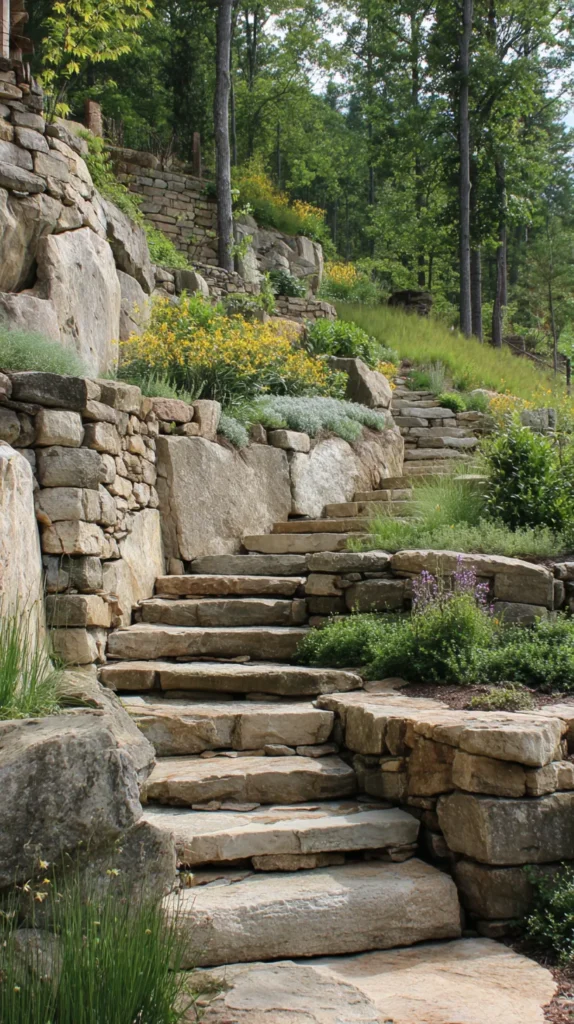
Stepped levels – functional and attractive.
My steep slope solution:
Problem: 25% grade, 20 feet long, eroding badly
Terraced solution:
Four levels:
- Each 5 feet wide
- 12 inches high
- Stone retaining walls
- Flat planting areas
Wall construction:
Dry-stack terraces:
- Fieldstone (local)
- Largest stones base
- Backward lean (stability)
- Planted pockets
Planting each level:
Top terrace (driest):
- Sedum exclusively
- Full sun, fast drainage
- Tough conditions
Second terrace:
- Creeping thyme
- Dianthus
- Moderate conditions
Third terrace:
- Daylilies
- Black-eyed Susan
- More moisture available
Bottom terrace (wettest):
- Hostas
- Ferns
- Collects runoff
Results:
Erosion eliminated:
- No soil loss (3 years)
- Stone walls hold everything
- Problem solved
- Permanent solution
Usable space created:
- 100 square feet planting (was unusable)
- Four distinct gardens
- Turned liability to asset
- Major win
Cost:
- Stone: $300 (3 tons)
- Plants: $150 (60 plants)
- Soil amendments: $50
- Total: $500
My terraced garden: Solved major problem, created beautiful feature, engineering success.
12. Raised Rock Garden Island (Lawn Focal Point)
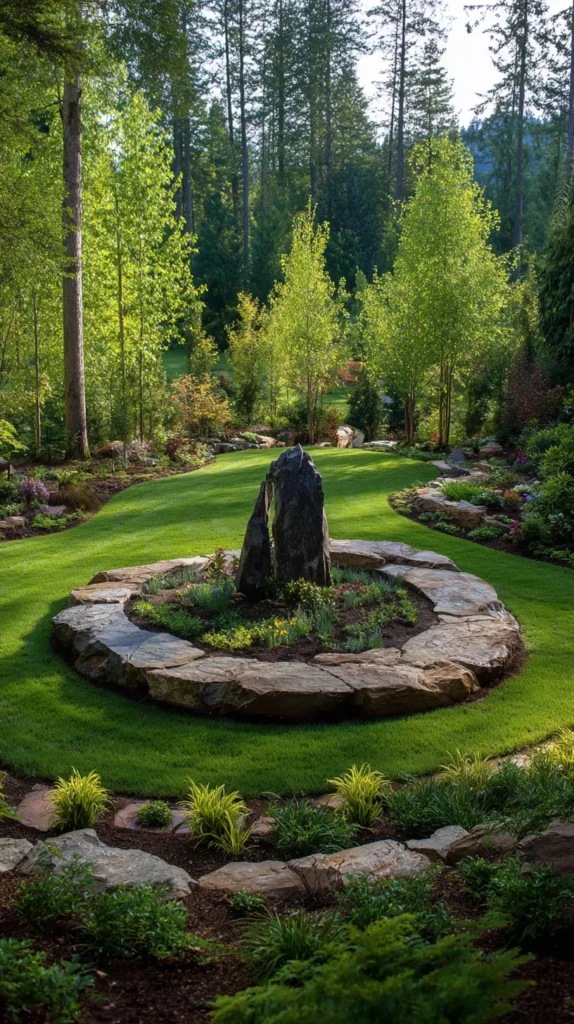
Freestanding rock bed – landscape feature.
My circular island:
Design:
- 12 feet diameter
- Center of front lawn
- 18 inches tall
- Circular shape
Edging:
Stacked stone border:
- 2-3 stone courses
- Dry-stacked
- Creates raised bed
- Defines shape clearly
Interior fill:
Layered construction:
- Gravel bottom (drainage)
- Quality soil mix
- Decorative rock mulch top
- Well-draining
Planting design:
Center focal point:
- Large ornamental grass (center)
- Pampas grass (dramatic)
- Tallest element
- Draws eye
Surrounding layers:
- Medium plants (ring 2)
- Low plants (ring 3)
- Cascading over edge (ring 4)
- Graduated heights
Specific plants:
- Center: Pampas grass (6 feet)
- Middle: Russian sage (3 feet)
- Low: Sedum varieties (6 inches)
- Edge: Creeping thyme (ground-hugging)
Purpose:
Eliminates mowing:
- 113 sq ft less mowing
- Island easy to mow around
- Net time savings
- Looks intentional
Visual interest:
- Breaks up lawn monotony
- Focal point from street
- Three-dimensional
- Professional appearance
Cost:
- Stone: $120 (edging)
- Soil: $50
- Plants: $80 (12 plants)
- Rock mulch: $40
- Total: $290
My island bed: Neighbors love it, reduces mowing, adds curb appeal.
13. Rock Alpine Trough Garden (Container Version)
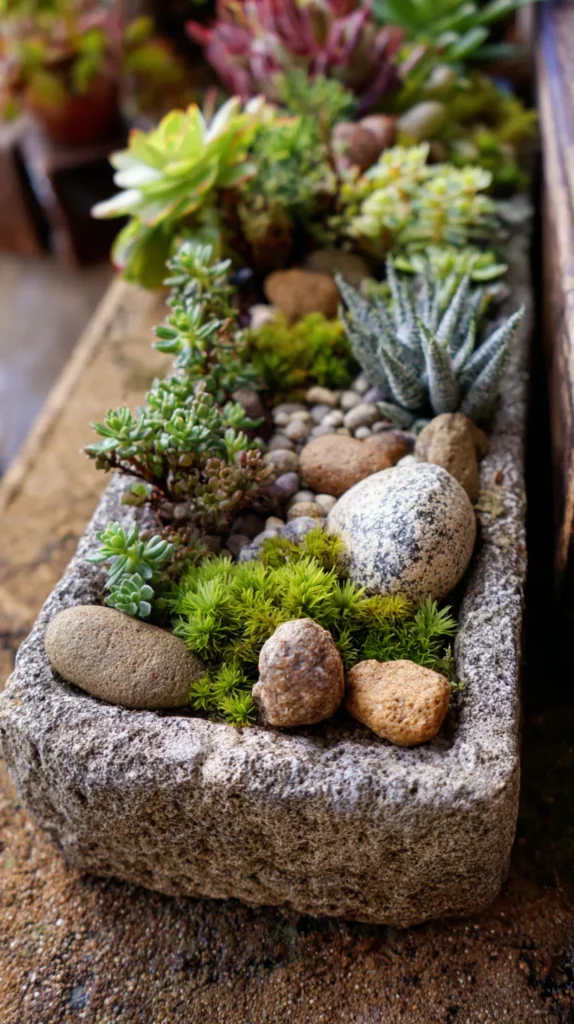
Hypertufa or stone trough – portable rock garden.
My container alpine garden:
Container:
- Hypertufa trough (DIY)
- 24×18×8 inches
- Made from concrete/peat/perlite
- Aged appearance
Making hypertufa:
Recipe:
- 2 parts peat moss
- 1 part perlite
- 2 parts Portland cement
- Water to consistency
Process:
- Mix dry
- Add water (thick)
- Press into cardboard mold
- Cure 4 weeks
- $30 materials
Planting:
Miniature landscape:
- Small alpine plants (6-8)
- Tiny rocks (1-3 inch)
- Miniature scene
- All in container
Plants selected:
- Tiny sedums
- Small sempervivums
- Miniature conifers (dwarf)
- Scale appropriate
Benefits:
Portable:
- Move to best light
- Protect from weather
- Rearrange design
- Flexible
Accessible:
- Table-height viewing
- Close inspection
- No bending
- Ergonomic
Experimental:
- Try new plants (small scale)
- Test combinations
- Low commitment
- Learning tool
Cost:
- Hypertufa materials: $30
- Small plants: $40 (8 tiny plants)
- Small rocks: Free (collected)
- Soil mix: $10
- Total: $80
My trough garden: Patio feature, close-up enjoyment, portable flexibility.
14. Decomposed Granite Garden (Southwestern Simplicity)
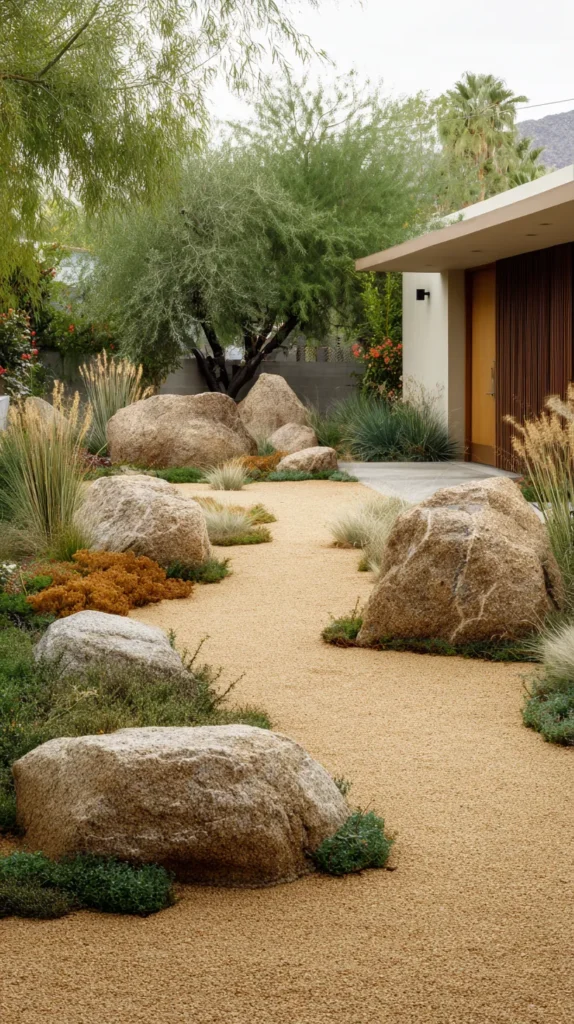
Compacted granite base – clean desert look.
My side yard transformation:
Ground cover:
Decomposed granite:
- 3-inch depth
- Compacts firm
- Natural desert color
- Weed suppression
Why DG not gravel:
- Smooth surface (comfortable barefoot)
- Compacts solid (stable)
- Natural appearance (not decorative)
- Cost-effective ($40/ton vs $60)
Accent rocks:
Large boulders:
- 3-5 feature stones
- Desert colors (red, tan)
- Partially buried (natural)
- Sculptural placement
Plant palette:
Desert-adapted:
- Agave (dramatic)
- Yucca (architectural)
- Red yucca (flower spikes)
- Desert marigold (seasonal color)
- Spacing 4+ feet (sparse appropriate)
Installation:
Prep work:
- Remove existing (kill grass)
- Grade for drainage
- Weed barrier fabric
- DG spread and compact
Compaction:
- Spread DG
- Water lightly (activates binders)
- Tamp/walk on
- Becomes hard
Maintenance:
Virtually zero:
- No watering (except establishment)
- Weeding maybe 1 hour yearly
- Rake smooth occasionally
- Incredibly low
Cost:
- Decomposed granite: $120 (3 tons)
- Boulders: $150 (5 rocks)
- Desert plants: $100 (10 plants)
- Weed fabric: $30
- Total: $400
My DG garden: Lowest maintenance area, sustainable landscape, perfect for climate.
Choosing Right Rocks
Not all rocks equal:
Local vs Imported
Local stone:
- Cheaper (no shipping)
- Natural to area
- Appropriate aesthetically
- My choice usually
Imported stone:
- Specific appearance
- Premium cost
- Special occasions
- Worth it sometimes
Size Considerations
My approach:
Mix of sizes:
- Large anchors (200+ lbs)
- Medium fillers (50-100 lbs)
- Small texture (1-10 lbs)
- Varied natural
Don’t:
- All same size (boring)
- All small (lack impact)
- All large (overwhelming)
Free Rock Sources
Where I found rocks:
Construction sites:
- Asked permission
- Excavated rock
- Free hauling
- Best source
Farmers:
- Clearing fields
- Happy to give away
- Boulder bonanza
- Free for taking
Craigslist free:
- Landscaping leftovers
- People give away
- Variety available
- Check daily
Plant Selection for Rock Gardens
What actually thrives:
Drought-Tolerant Essentials
Never fails:
- Sedum (all species)
- Sempervivum (hens-and-chicks)
- Thyme (creeping varieties)
- Dianthus (tough)
Avoid These
Mistakes I made:
High-water plants:
- Hostas (except shade rocks)
- Impatiens (annual hassle)
- Most perennials (need regular water)
Correct approach:
- Choose xeric (dry-adapted)
- Natives when possible
- Proven rock garden plants
- Success not struggle
Maintenance Reality
Actual time required:
First Year (Establishment)
Higher maintenance:
- Water twice weekly (until established)
- Weed as plants fill in
- 15 hours total
- Front-loaded
Years 2+ (Mature)
Minimal work:
- Weeding: 2 hours yearly
- Deadheading: 1 hour (optional)
- Maybe refreshing mulch
- Total: 3 hours yearly
Compare to lawn:
- Was: 78 hours yearly
- Now: 3 hours yearly
- Savings: 75 hours
- Massive difference
Cost Comparison
My actual spending:
Rock Garden (300 sq ft)
One-time investment:
- Rocks: $180 (3 tons, some free)
- Plants: $120 (40 plants)
- Amendments: $50
- Total: $350
Annual maintenance:
- Zero water (after year 1)
- Zero fertilizer
- Zero replacements (perennials)
- Ongoing: $0
Lawn (same 300 sq ft)
Annual costs:
- Mowing: 15 hours × $20 = $300
- Water: $60
- Fertilizer: $40
- Seed/repair: $30
- Annual: $430
10-year comparison:
- Rock garden: $350 one-time
- Lawn: $4,300 total
- Savings: $3,950
My Complete Rock Garden System
What I actually created (over 4 years):
Year 1 ($350):
- Front slope (alpine style, 200 sq ft)
- Main problem solved
- Momentum built
Year 2 ($290):
- Island bed (focal point, 100 sq ft)
- Lawn reduction
- Curb appeal
Year 3 ($320):
- Flagstone path (functional, 60 sq ft)
- Connected spaces
- Beautiful journey
Year 4 ($550):
- Pond with rocks (water feature)
- Relaxation spot
- Complete
Total investment: $1,510 over 4 years Total area: 600 square feet converted Time saved yearly: 120+ hours Property value increase: $3,000+ (per appraisal)
Before rock gardens:
- High maintenance
- Constant work
- Mediocre appearance
- Frustration
After rock gardens:
- Ultra-low maintenance
- Maybe 10 hours yearly
- Beautiful and unique
- Satisfaction
Getting Started This Weekend
Don’t rock entire yard at once.
This weekend ($100-200):
Priority 1 – Worst problem spot:
- Unmowable corner
- Eroding slope
- Dying grass area
- One small section
Starter project:
50-100 square feet:
- Kill existing grass (cardboard)
- Collect/purchase rocks ($50-100)
- Buy 10-15 plants ($30-60)
- Install over weekend
My recommendation:
Alpine corner garden:
- 3×5 feet (15 sq ft)
- Free rocks (hauled)
- $30 in sedum/hens-and-chicks
- 6 hours work
- Immediate satisfaction
See the difference, then expand gradually based on success and time.
Now go turn your problem spots into beautiful low-maintenance rock gardens!
Quick Summary:
Best starter rock gardens:
Alpine corner: Classic style, 15-50 sq ft ($100-200) Desert section: Xeriscape, low-water ($300-400) Dry creek bed: Solves drainage + beauty ($200-300) Island bed: Lawn focal point ($290) Flagstone path: Functional + pretty ($320)
By problem solved:
Steep slope: Alpine terraced garden Poor drainage: Dry creek bed Unmowable area: Any rock garden style Erosion: Terraced or large rocks Dead grass: Convert to rock + plants
Budget levels:
Under $150:
- Small corner garden (15-30 sq ft)
- Free rocks + budget plants
- Weekend DIY
$200-400:
- Larger areas (50-150 sq ft)
- Mixed free/purchased rocks
- More plants
$500-800:
- Major features (pond, modern design)
- Premium rocks
- Specimen plants
Essential materials:
Rocks (quantity for 100 sq ft):
- Large boulders: 2-3 (200+ lbs each)
- Medium rocks: 20-30 (20-50 lbs)
- Small rocks: Varies (gravel/DG 1-2 tons)
Plants (for 100 sq ft):
- 20-30 plants minimum
- 12-inch spacing typical
- Spread and fill over time
Soil amendments:
- Gritty mix critical (drainage)
- 50% native + 30% gravel + 20% compost
- Avoid heavy clay retention
Best rock garden plants:
Foolproof (never fail):
- Sedum (all varieties)
- Sempervivum (hens-and-chicks)
- Creeping thyme
- Dianthus
Excellent (very reliable):
- Creeping phlox
- Basket-of-gold
- Dwarf conifers
- Ornamental grasses
Desert specialists:
- Agave, yucca
- Prickly pear
- Desert marigold
- Red yucca
Rock sourcing:
Free sources:
- Construction sites (ask permission)
- Farmers clearing fields
- Craigslist free section
- Creek beds (check laws)
Purchased ($35-60/ton):
- Landscape supply yards
- Bulk delivery available
- Variety selection
- Convenience
Premium ($100-200 each):
- Specimen boulders
- Feature stones
- Delivered/placed
Installation timeline:
Small garden (50 sq ft):
- Weekend project (8-12 hours)
- Kill grass Saturday
- Install Sunday
- Immediate transformation
Medium (100-200 sq ft):
- 2-3 weekends
- Spread work
- Build gradually
Large (300+ sq ft):
- Phase over season
- Section by section
- Manageable chunks
Maintenance schedule:
Year 1 (establishment):
- Water 2× weekly (months 1-3)
- Weekly weeding (30 min)
- Total: 15-20 hours
Years 2+ (mature):
- Weeding: 2 hours yearly
- Trim: 1 hour optional
- Refresh mulch: Occasional
- Total: 2-3 hours yearly
Common mistakes:
- Heavy clay soil (needs gravel mixed)
- Too-small rocks (lack impact)
- High-water plants (wrong choice)
- No weed barrier (maintenance nightmare)
- Flat placement (looks artificial)
- Impatience (plants need 2 years to fill)
Design principles:
Rock placement:
- Odd numbers (3, 5, 7)
- Partially bury (natural look)
- Group clusters (not linear)
- Varied sizes (interest)
Plant spacing:
- 12 inches typical
- Closer for fast coverage
- Wider for specimen plants
- Allow spread room
Style matching:
Alpine: Irregular rocks, diverse small plants Desert: Large sparse rocks, architectural plants Zen: Few perfect rocks, minimal plants Modern: Specimen rocks, gravel field, grass clumps
Climate considerations:
Hot/dry (best for rock gardens):
- Desert style
- Succulents thrive
- Minimal water
- Perfect match
Moderate:
- Alpine style
- Wider plant palette
- More versatility
- My situation
Cold/wet:
- Drainage critical
- Gravel essential
- Rock mass helps
- Still possible
Space requirements:
Minimum viable: 15-20 sq ft (proves concept) Ideal starter: 50-100 sq ft (visual impact) Major feature: 200-500 sq ft (landscape focus) Full conversion: Whole yard (ultra-low maintenance)
Time savings:
50 sq ft lawn: 2 hours yearly mowing 50 sq ft rock garden: 15 min yearly Savings per 50 sq ft: 1.75 hours yearly
300 sq ft lawn: 12 hours yearly 300 sq ft rock garden: 2 hours yearly Savings: 10 hours yearly
Quick start supplies:
This weekend ($150):
- Small rocks: Free (collect)
- 1 ton gravel: $50
- 15 plants: $60
- Landscape fabric: $20
- Soil amendments: $20
Rental-friendly version:
Container rock gardens:
- Hypertufa troughs
- Large pots with rocks
- Portable
- Take when you move
Success indicators:
- Grass/weeds eliminated
- No watering needed (after year 1)
- Plants spreading and thriving
- Neighbors complimenting
- Mowing time reduced dramatically
- Actually enjoying yard work
- Area looks intentional and designed
Remember: Start small (50-100 sq ft proves concept), free rocks available (construction sites, farmers), drainage essential (mix gravel in soil), choose xeric plants (drought-tolerant only), be patient year 1 (plants establishing), maintenance drops year 2+ (mature garden nearly care-free), biggest savings is time (not just money), convert gradually (spread investment over years).