14 Tiny Outdoor Spaces Transformed Into Dream Retreats
My balcony was a graveyard for dead plants and forgotten furniture for two years. Six feet wide, eight feet long, zero personality.
I tried adding random pots. Bought a cheap plastic chair. Left a dead fern out there all winter.
Then I stopped seeing the limitation and started designing around it. Same tiny space, completely different life.
Now I drink my morning coffee out there every single day. Friends squeeze in for evening drinks. It feels intentional, curated, and genuinely relaxing.
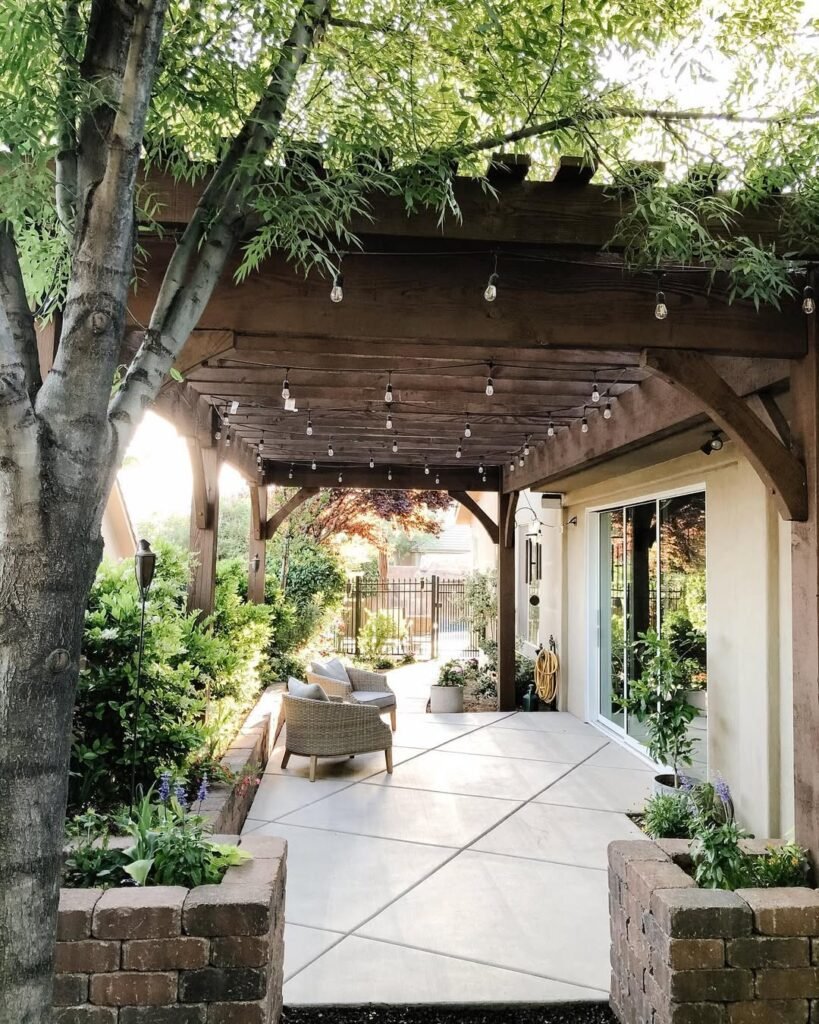
Here are 14 tiny outdoor spaces transformed into dream retreats — no matter how small your situation.
Why Small Spaces Feel Bigger Than They Are
The biggest mistake small space owners make:
What people do:
- Leave space mostly empty (feels abandoned)
- Buy undersized furniture (looks sad)
- Ignore vertical space completely
- Wait until they have more room
The reality:
- Small spaces reward intentionality
- Density creates coziness (not cramping)
- Vertical space triples your options
- Constraint forces better design
The three small-space rules:
Go bigger than feels right:
- One large rug beats three small ones
- One statement planter beats six tiny ones
- Oversized = intentional, undersized = afterthought
- Counterintuitive but always true
Use every vertical inch:
- Walls are free real estate
- Hanging plants double greenery without floor space
- Shelves create storage and display
- Trellises add height and life
Create one focal point:
- Small spaces need an anchor
- Everything else supports it
- Scattered = cluttered, focused = designed
- One great thing beats five mediocre things
My transformation math:
Before (unfocused):
- Random chairs: $80 (wrong scale)
- Assorted small pots: $60 (looked cluttered)
- Dead plants: priceless
- Result: depressing, never used
After (intentional):
- One bistro set (right scale): $120
- Three large planters: $90
- String lights: $30
- Result: used every single day
Spent slightly less. Used it infinitely more. Small spaces reward strategy.
1. Tiny Balcony Bistro (Coffee Corner Perfection)
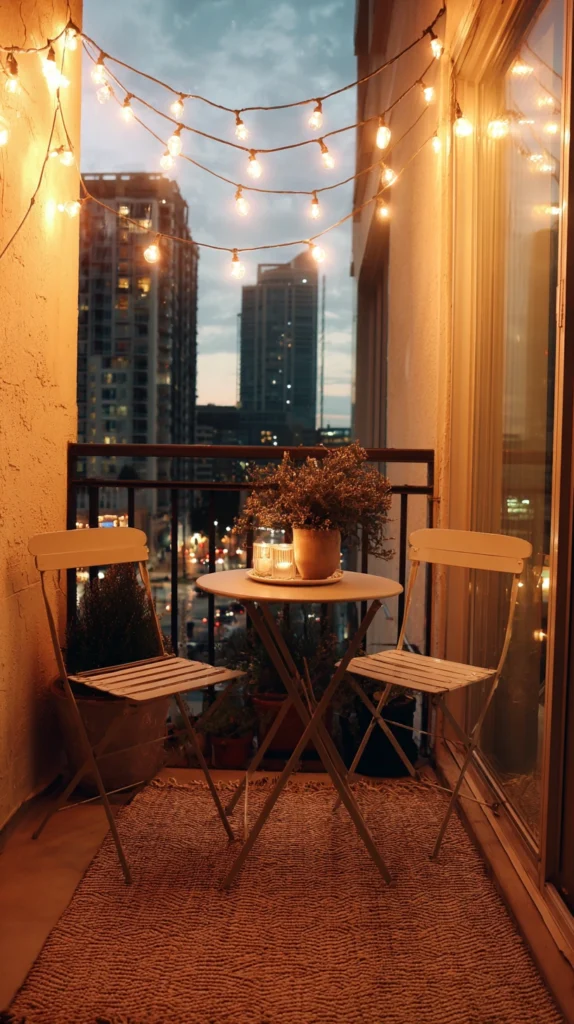
Two chairs, one table, total transformation — the simplest complete retreat.
My 6×8 balcony:
The problem:
- Too small for normal furniture
- Felt pointless and neglected
- Never actually sat outside
- Wasted space
Bistro set solution:
Scale matters everything:
- Standard patio set: too large (overwhelms)
- Bistro set: 24-inch table, two chairs
- Fits without crowding
- Leaves circulation space
What I bought:
Metal bistro set:
- French café style
- Foldable (stores flat in winter)
- Matte black finish
- $120 at Target clearance
Why bistro works:
- Right scale for small space
- Classic look (timeless)
- Folds away (flexible)
- Complete solution in one purchase
Layering the space:
Rug underneath:
- 4×6 feet (outdoor)
- Defines zone
- Adds softness
- Grounds the furniture
String lights above:
- Hung from balcony ceiling hooks
- Warm white (always)
- Zigzag pattern
- Creates ceiling definition
One large planter:
- Corner placement
- Tall ornamental grass
- Statement not filler
- Vertical interest
Morning ritual created:
- Coffee out there daily (now a habit)
- 20-minute morning routine
- Mental health impact significant
- Space designed for use, not display
Cost breakdown:
- Bistro set: $120
- Outdoor rug: $45
- String lights: $25
- Large planter + plant: $55
- Total: $245
My balcony: Went from never used to daily ritual. Smallest investment, biggest lifestyle change.
Bistro Setup Tips
What actually matters:
Table height:
- Counter height feels cramped outside
- Standard dining height (30 inches)
- Arms rest comfortably
- Proportion to chairs critical
Chair comfort:
- Test before buying
- Metal without cushion = 10-minute limit
- Add seat cushions ($15 each)
- Comfort = use, discomfort = abandonment
2. Balcony Privacy Wall (Cozy Enclosure)
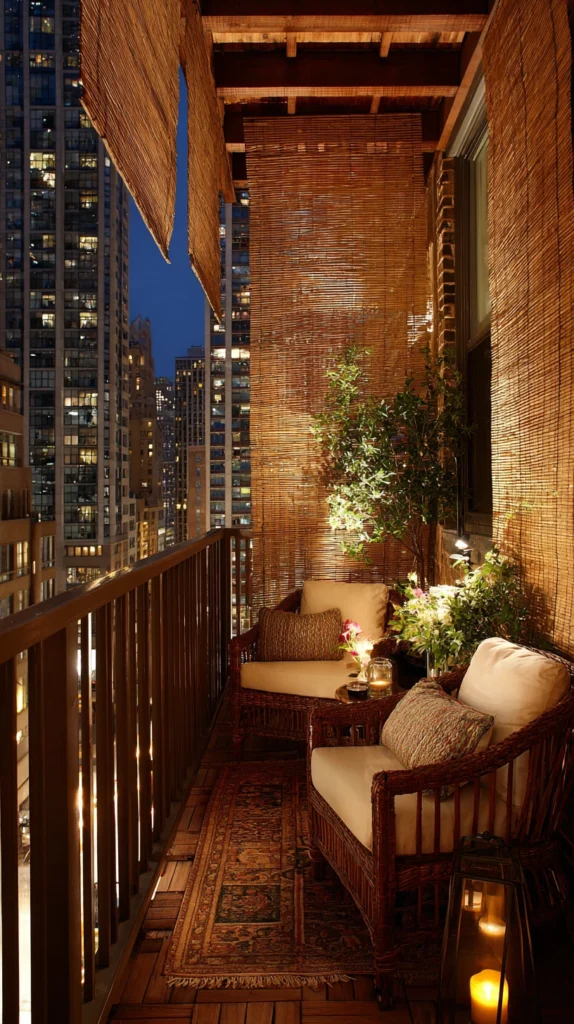
Turn exposed balcony into private sanctuary — neighbor sightlines eliminated.
My open-to-the-world balcony:
The exposure problem:
- Three neighbors could see directly in
- Felt like sitting in a fishbowl
- Never relaxed out there
- Privacy = comfort = use
Privacy screen solution:
Bamboo roll fence:
- Attaches to existing railing
- Zip ties or wire (secure)
- Natural warm tone
- Blocks 90% of sightlines
Where to buy:
- Amazon: $30–50 for 8-foot roll
- Home Depot: similar pricing
- Order extra (measure twice)
- Easy to trim with scissors
Installation:
- Unroll along railing
- Zip tie every 12 inches
- Top and bottom tied
- 30-minute project
Additional privacy layer:
Tall planters on railing:
- Planter rail hooks ($8 each)
- Trailing plants spill down
- Adds green visual barrier
- No floor space used
Plant selection:
- Petunias (trailing, colorful)
- Sweet potato vine (fast, lush)
- Ivy (evergreen option)
- Combination of all three
The psychological shift:
Before bamboo:
- Self-conscious outside
- Sat facing away from neighbors
- Never fully relaxed
- Rushed back inside
After bamboo:
- Enclosed and protected feeling
- Sat facing any direction
- Read full books out there
- Lingered for hours
Cost breakdown:
- Bamboo roll fence: $45
- Zip ties: $5
- Railing planters (4): $32
- Plants: $30
- Total: $112
My private balcony: Cheapest transformation on this list. Most impactful psychologically. Privacy changes everything.
3. Vertical Garden Wall (Green Everywhere)
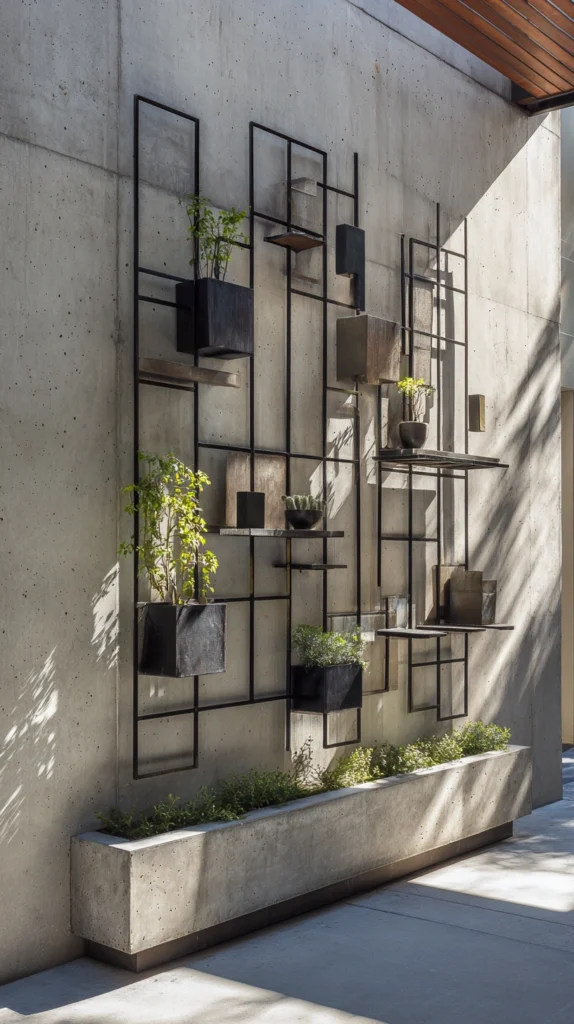
Floor-to-ceiling greenery — maximum plants, zero floor space.
My plant-obsessed small patio:
The floor space problem:
- 8×10 patio (80 sq ft)
- Furniture took most of it
- Wanted lots of plants
- No room on ground
Vertical solution:
Wall-mounted planter system:
- Metal grid panel (32×32 inches)
- Hanging pots clip on
- Modular (add more panels)
- Attached to fence or wall
Where to find grids:
- IKEA SKADIS (pegboard): $20
- Amazon wire grid panels: $25
- Trellis with hooks: DIY, $15
- Many options, same result
Pot selection:
Small hanging pots:
- 4–6 inch diameter
- Clip-on or wire-hung
- Mix sizes (visual interest)
- Drainage holes critical
Plant selection:
What thrives vertically:
- Succulents (drought-tolerant, perfect)
- Herbs (basil, mint, thyme)
- Trailing plants (spill beautifully)
- Small ferns (shade walls)
My wall (herbs + succulents):
- Basil, mint, rosemary (culinary)
- Echeveria (succulent rosettes)
- String of pearls (trailing)
- 18 pots total on two panels
Watering system:
The challenge:
- Vertical pots dry faster
- Individual watering tedious
- Drip system solution
Simple drip setup:
- Soaker hose along top
- Gravity fed (small reservoir)
- Or water weekly (succulents forgive)
- My approach: weekly hand-water (meditative)
Cost breakdown:
- Wire grid panels (2): $50
- Small pots (18): $36
- Plants: $45
- Mounting hardware: $10
- Total: $141
My vertical garden: 18 plants using zero floor space. Guests walk in and say “wow” before sitting down.
4. Micro Zen Corner (One Square Meter of Peace)
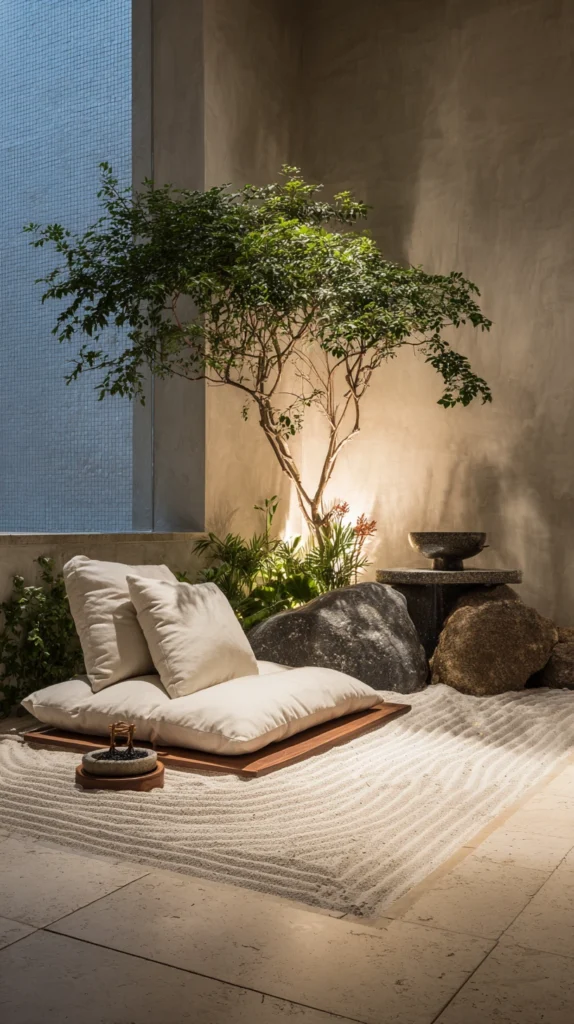
Dedicated meditation spot — tiny investment, enormous mental return.
My apartment patio corner:
The unused corner:
- 3×3 feet of dead space
- Behind the furniture
- Nothing there
- Potential wasted
Zen corner transformation:
The elements:
Ground layer:
- Small tray (12×12 inches)
- Fine sand or pea gravel
- Mini rake ($8)
- Raked pattern, 5-minute ritual
Seating:
- Floor cushion (outdoor fabric)
- 24×24 inches
- Low to ground
- Intentionally simple
Single plant:
- Bonsai (if patient)
- Small Japanese maple (container)
- Or bamboo in pot (dramatic)
- One plant only — restraint is the point
Sound:
- Small tabletop fountain ($35–60)
- Recirculating pump
- Trickling sound (masks city noise)
- Mental reset tool
Lighting:
- One solar lantern
- Warm amber glow
- Ground level
- Evening meditation possible
Why it works psychologically:
Dedicated purpose:
- Space designed for one thing
- Brain associates corner with calm
- Ritual reinforced by place
- 10 minutes there = genuinely restorative
Contrast effect:
- Tiny within small space
- Separate from social area
- Private within private
- Escape from the escape
Cost breakdown:
- Sand tray + rake: $25
- Floor cushion: $35
- Tabletop fountain: $45
- Solar lantern: $15
- Small plant: $20
- Total: $140
My Zen corner: Used every morning. Therapist noticed improvement before I mentioned the corner. Cheapest therapy available.
5. Rooftop Astroturf Lounge (Urban Grass Fantasy)

Fake grass transforms hard surfaces — instant softness anywhere.
My concrete rooftop access:
The brutal surface:
- Pure concrete rooftop
- Zero softness anywhere
- Hot underfoot in summer
- Harsh and uninviting
Artificial turf solution:
Modern artificial turf:
- Not your grandfather’s astroturf
- Soft, realistic, durable
- UV resistant (won’t fade)
- Drains water through backing
Where to buy:
- Home Depot: $1–2 per sq ft
- Amazon rolls: similar pricing
- Order cut pieces or rolls
- No installation required (just lay flat)
Coverage:
- My rooftop: 10×12 feet = 120 sq ft
- Cost: $150–180 for quality turf
- No adhesive needed (weight holds it)
- Rolled up and stored in winter
Layering on top:
Furniture directly on turf:
- Low-profile sectional
- Ground-level aesthetic
- Barefoot comfort (key benefit)
- Picnic blanket optional
Planting in containers:
- Tall planters at corners
- Grasses or bamboo
- Define the space edges
- Soften the rooftop feel
Privacy with turf:
- Combined with fabric room dividers
- Creates defined room on open roof
- Separated from building access
- Your own rooftop world
Heat management:
Rooftop gets hot:
- Shade sail overhead ($80–120)
- Triangle or rectangle
- Attached to anchor points
- Blocks 30% of sun (feels much cooler)
Cost breakdown:
- Artificial turf (120 sq ft): $180
- Low sectional: $350
- Shade sail: $90
- Corner planters (4): $80
- Total: $700
My rooftop: Concrete wasteland to most-used space in building. Other tenants now doing the same.
Rooftop Tips
Check weight limits:
- Buildings have load ratings
- Containers of soil are heavy
- Ask building management
- Lightweight potting mix preferred
Wind management:
- Rooftops are windy
- Heavier furniture (or anchor it)
- Planters need weight (gravel base)
- Windbreak helps enormously
6. Courtyard Dining Room (Al Fresco Every Night)

Small courtyard as permanent dining space — outside becomes the main dining room.
My 10×10 courtyard:
The underused courtyard:
- Between apartment units
- Concrete ground
- Overhead coverage (partial)
- Potential for dining ignored
Permanent dining setup:
The table:
- Round (fits better in small square)
- 36-inch diameter (seats 4 comfortably)
- Folding option (flexible)
- Teak or powder-coated metal (weather)
Why round beats rectangular:
- No wasted corners
- Fits more people proportionally
- Easier conversation
- Better in tight square spaces
Overhead lighting:
Lantern pendant:
- Outdoor-rated pendant light
- Hung from pergola or hook
- Over table center
- Defines dining zone from above
No pergola option:
- Freestanding shepherd’s hook
- Hang lantern from it
- Move as needed
- $20 at garden centers
Table setting that stays outside:
Weather-resistant tableware:
- Melamine plates (look like ceramic)
- Stainless cutlery in outdoor caddy
- Cloth napkins in weighted holder
- Set the table — it stays set
Why permanent setup matters:
- Removing friction = more use
- Already set = eat outside spontaneously
- Feels like real dining room
- Commitment signals intention
Plants as walls:
Four corners planted:
- Large planters (24 inches)
- Tall plants (4–5 feet)
- Olive trees (classic)
- Or tall ornamental grasses
- Creates dining room “walls”
Cost breakdown:
- Round table + 4 chairs: $280
- Pendant lantern + hook: $45
- Four corner planters + plants: $160
- Outdoor tableware set: $50
- Total: $535
My courtyard: Eat outside 5 nights a week in good weather. Indoor dining table now used for work only.
7. Fire Escape Garden (Urban Guerrilla Planting)
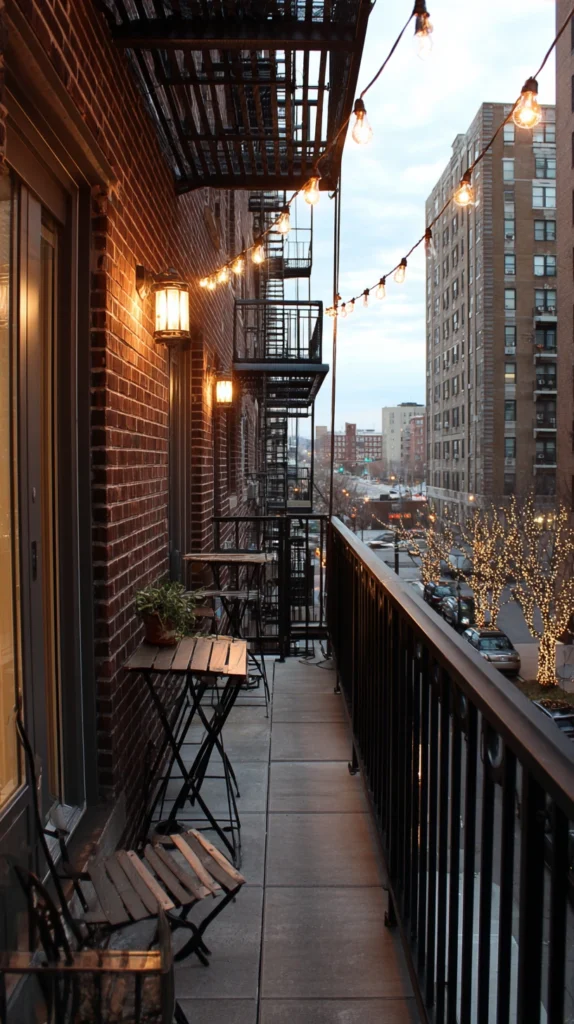
Every inch of metal grating used — plants where nobody thought possible.
My fire escape situation:
Important note first:
- Check local codes (fire escapes must stay clear)
- Keep center path always clear
- Lightweight only (no heavy containers)
- Hang from railing, not stacked on grating
Legal and lightweight approach:
Railing planters:
- Clip-on railing boxes
- Hang on outside of railing
- No floor space used
- Weight on railing, not grating
What fits:
- Herb boxes (12 inches wide)
- Trailing flower boxes
- Small succulent trays
- Compact vegetable varieties
The urban garden:
Railing herbs:
- Basil (sun-loving, productive)
- Chives (grows anywhere)
- Mint (contained in box — critical)
- Cherry tomatoes (dwarf variety)
Trailing flowers:
- Petunias (colorful, long-blooming)
- Lobelia (purple, delicate)
- Calibrachoa (million bells)
- Nasturtium (edible too)
Vertical on wall:
If wall space available:
- Mounted planter pockets (fabric)
- Suction-cup hooks for lightweight pots
- Magnetic planters for metal walls
- Living wall expanding up
The transformation:
Before:
- Metal grating, rust, nothing
- Seen as fire hazard only
- Never spent time there
- Industrial and ugly
After:
- Green on every railing section
- Herbs within arm’s reach cooking
- Morning coffee spot (folding stool)
- Neighborhood talking point
Cost breakdown:
- Railing planter boxes (6): $72
- Herb plants and seeds: $25
- Trailing flower starts: $20
- Folding stool: $18
- Total: $135
My fire escape: Neighbors on upper floors leaned over to ask how I did it. Urban gardening community found me.
8. Sunken Seating Illusion (Cozy Pit Feel Without Digging)

Low furniture creates sunken lounge aesthetic — no construction required.
My flat concrete patio:
The problem:
- Flat, level, boring
- No levels or dimension
- Felt like a parking lot
- No sense of enclosure
Low-profile furniture solution:
Floor-level seating:
- Platform sofa (8 inches off ground)
- Floor cushions
- Low coffee table (10 inches)
- Everything close to ground
Why it creates the sunken feeling:
Psychological enclosure:
- Low seating = perspective changes
- Sky fills view (not buildings)
- Intimate and cave-like
- Different from standing world
Plants become walls:
- At seated height, planters are taller
- Same plants feel more enclosing
- Proportions shift with seating height
- Instant “room” at low level
The layered setup:
Ground:
- Large outdoor rug (9×12)
- Soft underfoot
- Anchors everything
- Warmth against concrete
Seating layer:
- Platform sofa (two-piece)
- Floor cushions for extra guests
- Low poufs as footrests
- All at same low height
Table:
- Low coffee table (center)
- Or large tray on floor
- Or wooden crate repurposed
- Accessible from all seating
Overhead:
- Shade sail (creates ceiling)
- Or market umbrella (lower attachment)
- Defines space vertically
- Completes the “room” feel
Cost breakdown:
- Platform floor sofa: $380
- Large outdoor rug: $90
- Low coffee table: $65
- Floor cushions (4): $60
- Shade sail: $85
- Total: $680
My patio: Three people assumed I had a sunken firepit area from photos. All above ground. All illusion.
9. Windowsill Herb Bar (No Outdoor Space Required)
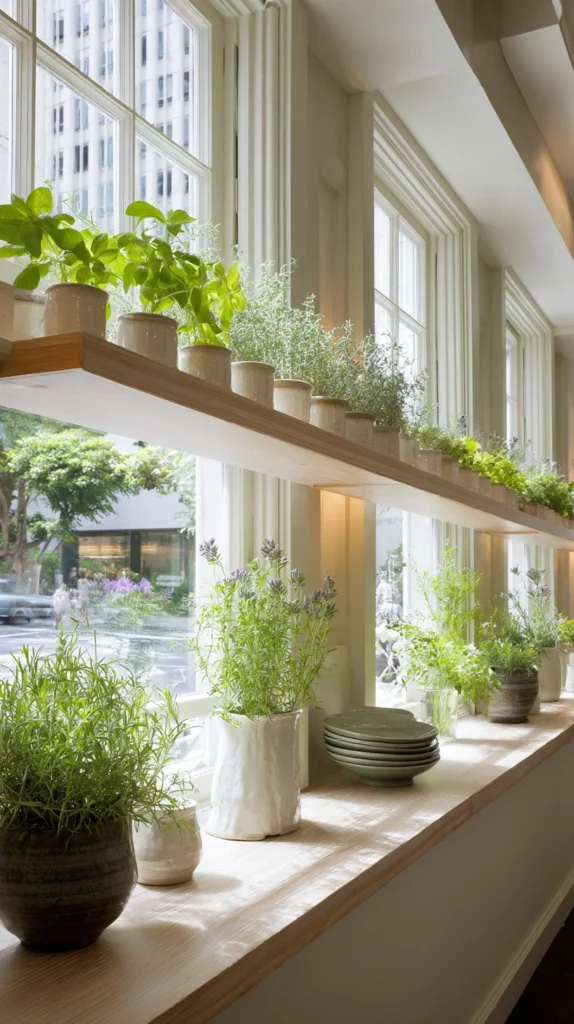
Deep windowsill becomes productive garden — works with zero outdoor access.
My south-facing windowsill:
The situation:
- Ground floor apartment
- No balcony, no patio
- One south-facing window
- 6-inch deep sill
Maximizing six inches:
Tiered windowsill shelves:
- Three-tier shelf unit (fits inside window)
- Each level 4 inches deep
- 12 pots total in one window
- No outdoor space needed
Product:
- IKEA GRUNDTAL rail system
- Or window shelf brackets
- Custom wood shelves ($20 in lumber)
- Many approaches, same result
Plant selection for windows:
Full sun (south-facing):
- Basil (needs heat)
- Cherry tomatoes (dwarf, container)
- Peppers (compact varieties)
- Herbs across the board
Lower light (north-facing):
- Mint (shade tolerant)
- Parsley (moderate light)
- Lettuce (cool and shaded)
- Chives (adaptable)
Extending outward:
Window box outside:
- Mounted below window exterior
- Adds another tier of plants
- Visible from inside and out
- Doubles the growing space
The indoor-outdoor blur:
Open window effect:
- Window open = fragrance inside
- Basil smell fills apartment
- Green visible from every angle in room
- Garden even without going outside
Container selection:
Small terracotta (4-inch):
- Classic, breathable
- Dries faster (good for herbs)
- Stackable on shelves
- Consistent look (match them)
Cost breakdown:
- Window shelf system: $35
- Terracotta pots (12): $24
- Herb seeds and starts: $30
- Window box (exterior): $25
- Total: $114
My windowsill: Fresh herbs daily. Rent in city with no outdoor access. Zero compromise.
Windowsill Growing Tips
Most common mistake:
Overwatering:
- Small pots dry fast (true)
- But overwatering kills herbs fastest
- Stick finger 1 inch deep before watering
- Dry at 1 inch = water, moist = wait
Light reality:
- Most herbs need 6+ hours direct sun
- South window only option for most
- Grow lights fill the gap ($20 clip-on)
- Don’t fight the light — work with it
10. Side Passage Transformation (The Forgotten Space)
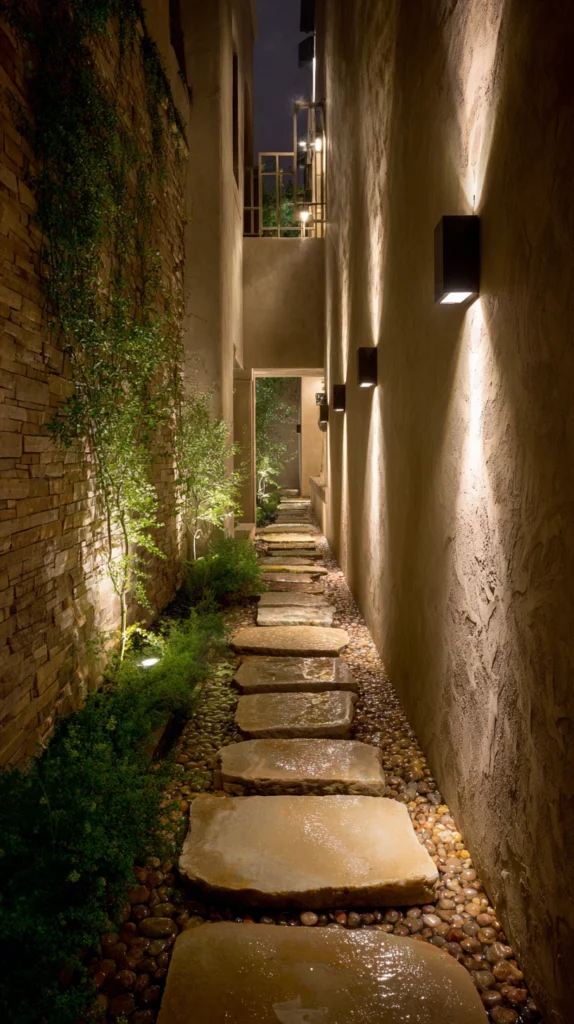
Narrow side passage becomes secret garden — spaces everyone ignores.
My 3-foot-wide side passage:
The ignored strip:
- 3 feet wide, 20 feet long
- Between house and fence
- Concrete, weeds, forgotten
- Used only to access backyard
Transformation approach:
The journey matters:
- Not a destination but a passage
- Design the walk, not the stay
- Create experience along length
- Arrival in backyard feels earned
Ground treatment:
Stepping stone path:
- Center of passage
- Round or irregular stones
- Moss between stones
- Soft and inviting underfoot
Either side of stones:
- Fine gravel (weed suppression)
- Or shade-tolerant ground cover
- Baby’s tears (shade, soft)
- Or Irish moss (green carpet)
Vertical walls (both sides):
Trellis against fence:
- Flat trellis attached to fence
- Climbing plant (shade-tolerant)
- Hydrangea vine (stunning)
- Or climbing hydrangea (slow but worth it)
Wall-mounted planters:
- Every 3 feet along passage
- Ferns or shade plants
- Brackets screwed into fence
- Lush tunnel effect
Lighting the path:
Ground-level solar lights:
- Every 4 feet along path
- Low and directional
- Illuminates at night
- Makes passage magical after dark
Scent corridor:
Fragrant plants:
- Jasmine (climbing, intoxicating)
- Mint (ground, releases when brushed)
- Lavender (if any sun reaches)
- Walk through scent = memorable
Cost breakdown:
- Stepping stones: $40
- Trellis panels (3): $45
- Wall-mounted planters (6): $48
- Plants: $65
- Solar path lights: $35
- Total: $233
My passage: Guests comment every time. “Your little garden corridor is the best thing.” Ten feet of ignored concrete, transformed.
11. Shed Roof Deck (Unexpected Platform)
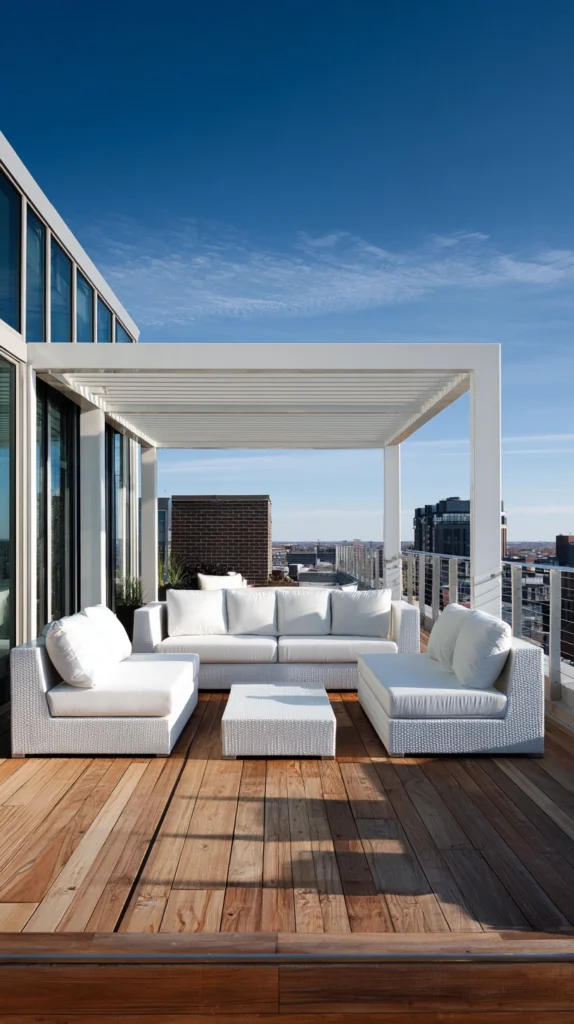
Flat shed roof becomes elevated retreat — space nobody thought to use.
My garage/shed situation:
Important first:
- Structural check required (consult professional)
- Flat roofs only (not pitched)
- Weight limits matter (200 lbs per sq ft typical)
- Access must be safe (proper ladder or stairs)
My flat garage roof:
- 12×16 feet (192 sq ft)
- Single-story height
- Structurally sound (confirmed)
- Existing roof access via ladder
Making it a deck:
Surface treatment:
- Decking tiles (snap-together)
- No fasteners needed
- Sits on rubber feet
- Protects roof membrane
Decking tile options:
- Wood composite: $2–4 per sq ft
- Teak tiles: $4–6 per sq ft
- My cost: $300 for 192 sq ft composite
Railing for safety:
Freestanding railing system:
- Post bases weighted with sandbags
- No roof penetration (critical)
- Cable railing (modern, minimal)
- Required for any roof deck
Elevation benefits:
Above everything:
- Above fence sightlines
- Above neighbor windows
- Privacy achieved by height
- Views previously unavailable
Above noise:
- Street noise drops at height
- 8 feet up makes significant difference
- Quieter, more peaceful
- Different world above it all
Furnishing the roof:
Lightweight only:
- Aluminum furniture (not steel)
- Inflatable or folding pieces
- Nothing that can’t come down easily
- Wind-rated or anchored
Cost breakdown:
- Decking tiles: $300
- Freestanding railing: $280
- Lightweight furniture: $220
- Plants in lightweight pots: $80
- Total: $880
My roof deck: Only one in the neighborhood. Block party moved there. Elevated living changes perspective literally and figuratively.
12. Balcony Bedroom Extension (Sleep Outside Sometimes)

Balcony becomes occasional outdoor sleeping space — ultimate retreat use.
My 6×10 balcony:
The idea:
- Balcony adjacent to bedroom
- Sliding door connection
- Why not sleep outside sometimes?
- City camping, no camping required
Making it sleepable:
Day bed / outdoor sofa bed:
- IKEA KUNGSHOLMEN outdoor sofa
- Or custom foam in weatherproof cover
- Converts from sitting to lying
- 180 cm = fits one person (two if close)
Weatherproofing the sleep:
Overhead coverage:
- Shade sail or retractable awning
- Blocks rain (light rain, not storm)
- Must be in place before sleeping
- Or sleep only on clear forecast nights
Side enclosure:
- Bamboo privacy screen (previous idea)
- Blocks wind
- Reduces dew exposure
- Creates microclimate
The experience:
Summer nights:
- City sounds become white noise
- Stars visible (if skies permit)
- Air dramatically better than inside
- Sleep quality notable difference
Morning wake-up:
- Natural light gradual
- Birds (urban ones too)
- Coffee immediately outside
- Best morning possible
Comfort requirements:
Non-negotiables:
- Comfortable mattress pad (outdoor, waterproof)
- Good pillow (bring inside when not in use)
- Light blanket (temperatures drop at night)
- Mosquito net (optional but game-changing)
Mosquito net setup:
- Canopy frame (ceiling hooks)
- Net hangs over sleeping area
- Tucks under mattress
- Adds romance and function
Cost breakdown:
- Outdoor daybed sofa: $280
- Waterproof mattress pad: $60
- Retractable shade: $150
- Mosquito net canopy: $35
- Total: $525
My sleeping balcony: Used 40 nights last summer. Best sleep of the year, consistently. Guests ask to use it.
13. Tiny Pond in a Pot (Water Feature Anywhere)
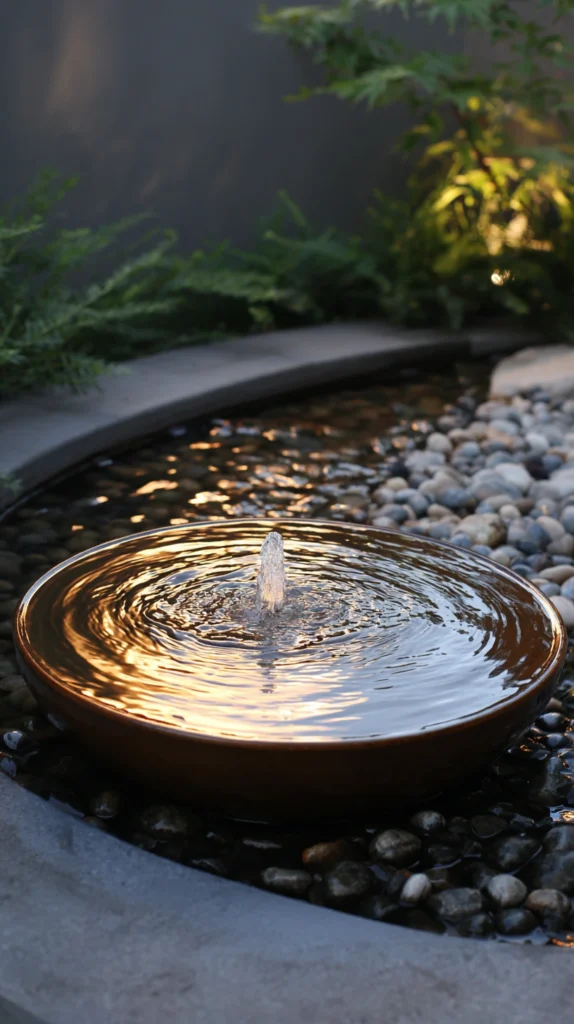
Container water garden — pond experience without a pond.
My courtyard corner:
The misconception:
- “I need space for a pond”
- “Water features are complicated”
- “Too much maintenance”
- All wrong — container pond changes this
The container:
What works:
- Half wine barrel (classic, $40)
- Large glazed ceramic pot (beautiful, $50–100)
- Galvanized stock tank (modern, $80)
- Any watertight container over 15 inches wide
My choice (glazed ceramic):
- 20-inch diameter, 16 inches deep
- Deep blue glaze
- Looks intentional and beautiful
- Holds enough water for plants and fish
Water plants:
The essentials:
Oxygenator (underwater):
- Hornwort or anacharis
- Keeps water clear
- Fish love it
- Essential for balance
Surface cover:
- Water hyacinth (floats, purple flowers)
- Or mini water lilies (needs sun)
- Covers 60–70% of surface
- Blocks algae growth
Vertical accent:
- Dwarf papyrus (architectural)
- Or water iris (flowers)
- Grows up from pot submerged
- Adds height and drama
Adding fish:
Goldfish or mosquito fish:
- 2–3 small goldfish
- Eat mosquito larvae (functional)
- Add movement and life
- Feed once daily (small amount)
Maintenance reality:
Almost none:
- Water plants balance the ecosystem
- Fish eat algae and insects
- Top up water weekly (evaporation)
- Clean twice yearly (not hard)
The effect:
Sound:
- Small solar fountain pump ($15)
- Bubbling water sound
- Surprisingly loud (pleasant)
- Masks ambient noise
Wildlife:
- Birds come to drink
- Dragonflies appear (urban surprise)
- Butterflies visit
- Living ecosystem in 20 inches
Cost breakdown:
- Glazed ceramic container: $75
- Water plants (3 varieties): $35
- Goldfish (3): $6
- Solar fountain pump: $18
- Total: $134
My container pond: First thing guests notice. “You have a pond?” Yes. In a pot. In 12 square feet.
Container Pond Tips
Algae control:
- Surface coverage is everything
- Cover 60–70% = clear water
- Less coverage = green water
- Plants, not chemicals
Mosquitoes:
- Moving water prevents breeding
- Fish eat larvae
- Both together = zero mosquito problem
- Stagnant + no fish = mosquito factory
14. Staircase Garden (Vertical Steps Planted)
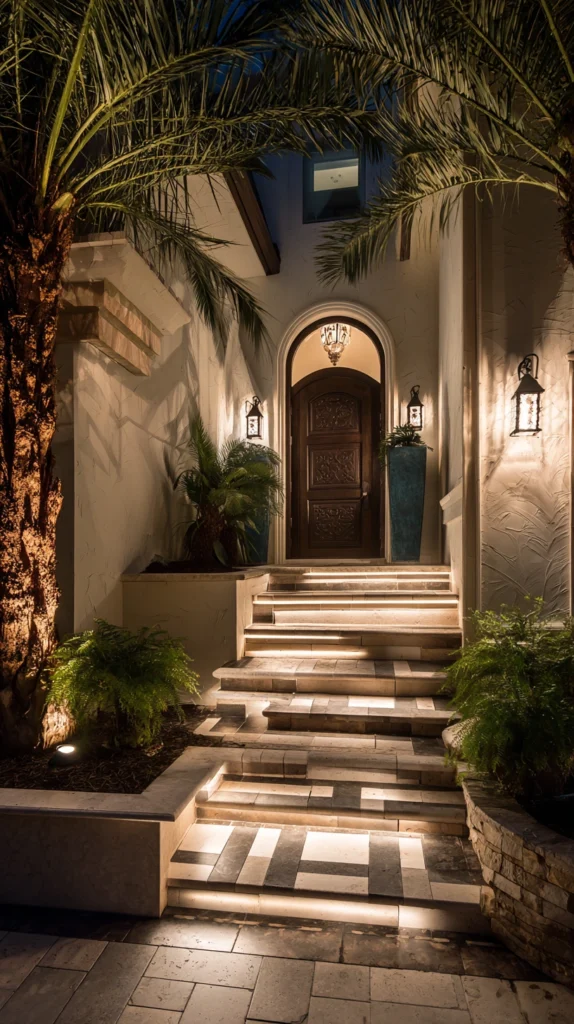
Every step becomes a planting shelf — ordinary stairs into a living cascade.
My front stoop stairs:
The opportunity:
- Five steps, 4 feet wide
- Plain concrete, nothing on them
- Leading to front door
- Most-seen part of exterior
Transforming the steps:
Pots on every step:
- One large pot per step edge
- Alternating sides (left, right, left)
- Graduated heights (ascending)
- Trailing plants spill down
The graduated planting:
Bottom step (widest view):
- Largest pot (18 inches)
- Most dramatic plant
- Ornamental grass or agave
- Sets the tone
Middle steps:
- Medium pots (12 inches)
- Flowering plants
- Petunias, geraniums, begonias
- Color and fullness
Top step (eye level at door):
- Smallest pot (8 inches)
- Fragrant plant
- Lavender or rosemary
- Scent greeting at door
Matching containers critical:
All same style:
- Terracotta (classic)
- All same color glaze
- Or all weathered zinc
- Consistency = designed, variety = clutter
Trailing plants cascade:
The waterfall effect:
- Trailing plants spill down from each step
- Sweet potato vine (fast, lush)
- Trailing lobelia (delicate purple)
- Looks deliberate and abundant
Lighting the stairs:
Step lights:
- Solar step lights (adhesive or screw)
- One per step (underside of each)
- Safety and drama
- Glowing cascade at night
Seasonal rotation:
Spring:
- Pansies, violas, snapdragons
- Cool-season color
Summer:
- Petunias, geraniums, calibrachoa
- Heat-tolerant and prolific
Fall:
- Ornamental kale, mums
- Seasonal and festive
Winter:
- Evergreen cuttings
- Pinecones and branches
- Simple and elegant
The welcome effect:
Curb appeal reality:
- Most-photographed homes have planted stairs
- Signals care and attention
- Invites approach
- First impression transformed
Cost breakdown:
- Matching pots (10): $80
- Plants (seasonal): $55
- Step lights (5): $40
- Total: $175
My staircase: Mail carrier commented. Neighbors slow their cars. Front door arrival is an experience now.
Stair Garden Maintenance
Seasonal swap:
- Change plants 3–4 times yearly
- Budget $40–60 per season
- Keeps it fresh and intentional
- Never looks tired
Watering:
- Steps dry fast (exposure)
- Water every 1–2 days in summer
- Self-watering pots ($5–10 more)
- Worth it for top steps especially
The Small Space Mindset Shift
Stop waiting for more space.
The trap:
- “When I have a yard, I’ll do it right”
- “This balcony isn’t worth investing in”
- “I’m renting so why bother”
- “It’s too small to matter”
The reality:
Renters benefit most:
- Portable containers move with you
- Investment in daily life quality
- Low cost, high return
- No reason to wait
Small spaces force creativity:
- Constraints produce better design
- Intentional beats accidental every time
- Thoughtful always beats spacious-but-random
- Your limitation is your advantage
Daily use beats occasional perfection:
- A balcony used daily beats a yard used occasionally
- Proximity to outdoor space matters
- Small and accessible wins over large and distant
- Design for use, not for impression
Getting Started This Weekend
Pick the one that fits your situation:
Balcony only:
- Idea #1 (bistro) or Idea #2 (privacy)
- Start with lights first always
- Weekend transformation possible
- Immediate daily use
No outdoor space:
- Idea #9 (windowsill herbs)
- Surprising how satisfying
- Instant results
- Zero cost barrier
Neglected side passage:
- Idea #10 (secret corridor)
- Often the most dramatic transformation
- Ignored becomes remarkable
- Weekend project
My recommendation for everyone:
String lights first, always.
Any tiny outdoor space becomes magical with warm overhead lighting. Every other upgrade works better under good light. Start there, even before furniture.
Then add one plant. Then define the floor. Then build slowly.
See the difference first. Then expand based on how much you use it.
The space you have right now is enough to change your daily life. You just haven’t designed it yet.
Quick Summary
Best ideas by space type:
Balcony: Bistro corner (#1), privacy screen (#2), vertical garden (#3), sleeping extension (#12) Rooftop: Astroturf lounge (#5), sunken seating illusion (#8) Courtyard: Dining room (#6), Zen corner (#4), container pond (#13) No outdoor space: Windowsill herb bar (#9) Neglected areas: Fire escape (#7), side passage (#10), staircase (#14) Unexpected platforms: Shed roof deck (#11)
By budget:
Under $150:
- Windowsill herbs: $114
- Bamboo privacy screen: $112
- Container pond: $134
- Mosaic Zen corner: $140
$150–300:
- Bistro balcony: $245
- Vertical garden wall: $141
- Side passage: $233
- Staircase garden: $175
- Fire escape garden: $135
$300–600:
- Courtyard dining: $535
- Micro Zen corner: $140
- Balcony sleeping: $525
$600+:
- Rooftop astroturf: $700
- Sunken seating: $680
- Shed roof deck: $880
Universal upgrades (do these first):
String lights: Every tiny space, instant magic, $25–50 One large planter: Statement over several small, $40–80 Outdoor rug: Anchors any arrangement, $45–90 Privacy screen: Comfort = use, $45–100
Cohesion rules for tiny spaces:
Match everything:
- All pots same style (critical)
- One light temperature throughout
- Two materials maximum
- Restraint over variety
Scale up not down:
- Bigger rug than feels right
- Larger planter than seems needed
- Fewer but bolder pieces
- Small spaces punish timid choices
Common mistakes:
- Too many small pots (cluttered, not lush)
- Furniture too large for the space (no circulation)
- Furniture too small (looks sad, not cozy)
- Mixing warm and cool lights
- Leaving one dead plant (poisons the whole space)
- Designing for photos not for use
The maintenance reality:
Tiny spaces are easy:
- Small area = fast watering (10 minutes)
- Few plants = less to manage
- Contained = weeds minimal
- High reward for low effort
Investment perspective:
Cost per daily use:
- $245 bistro set ÷ 365 days = $0.67 per day
- Less than a coffee
- Daily outdoor ritual for under $1/day
- Best money spent this year
Remember: Start with lights, add one great plant, define the floor, match your materials, and design for daily use not for the occasional guest. The smallest outdoor space, fully committed to, beats a large yard half-heartedly designed. Your retreat is waiting.