15 Garden Pathway Ideas To Elevate Your Landscaping
A garden path does more than connect one part of your outdoor space to another. It sets the pace at which a garden is experienced, guides the eye through the landscape, and quietly communicates the mood of the whole space before a single plant has been noticed. A well-designed path makes a garden feel intentional. A poorly considered one — or the absence of one entirely — leaves even a beautifully planted garden feeling unfinished.
Whether your garden is formal or wild, compact or sprawling, the right pathway transforms the way the space reads and the way it feels to move through it. The ideas below cover every material, every style, and every budget, with practical guidance on how to make each one work beautifully in a real garden.
1. The Classic Flagstone Path
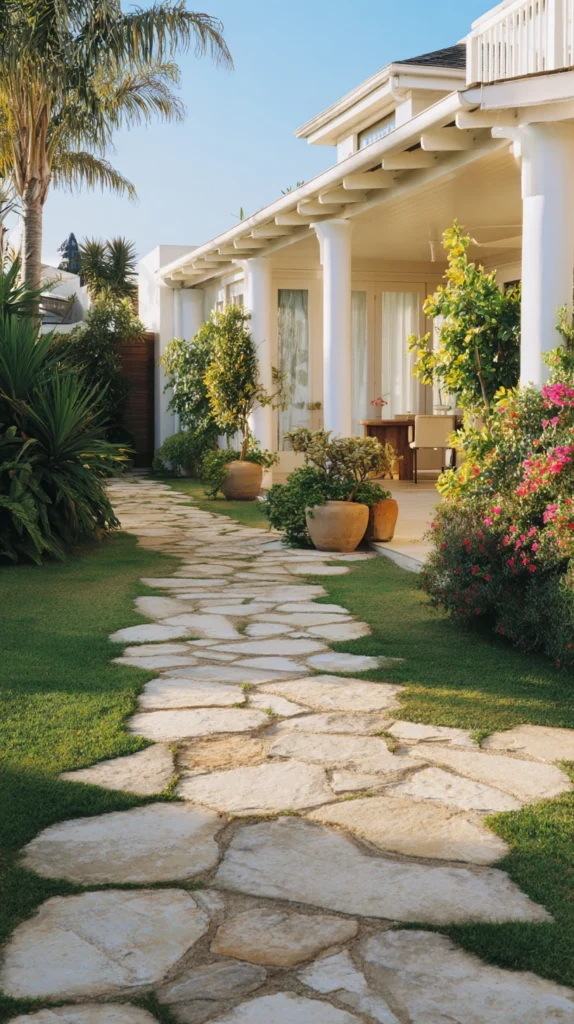
Budget: $80 – $400
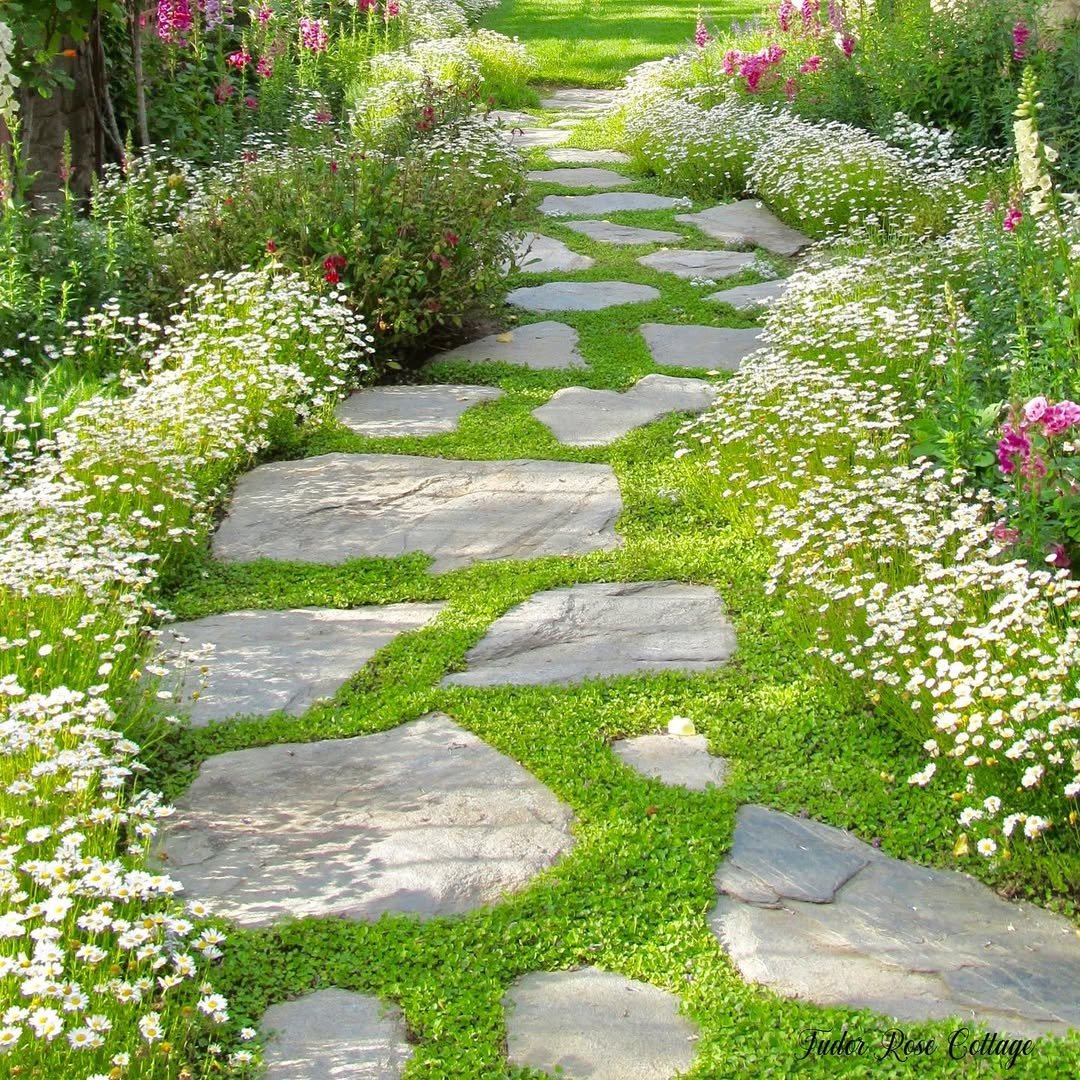
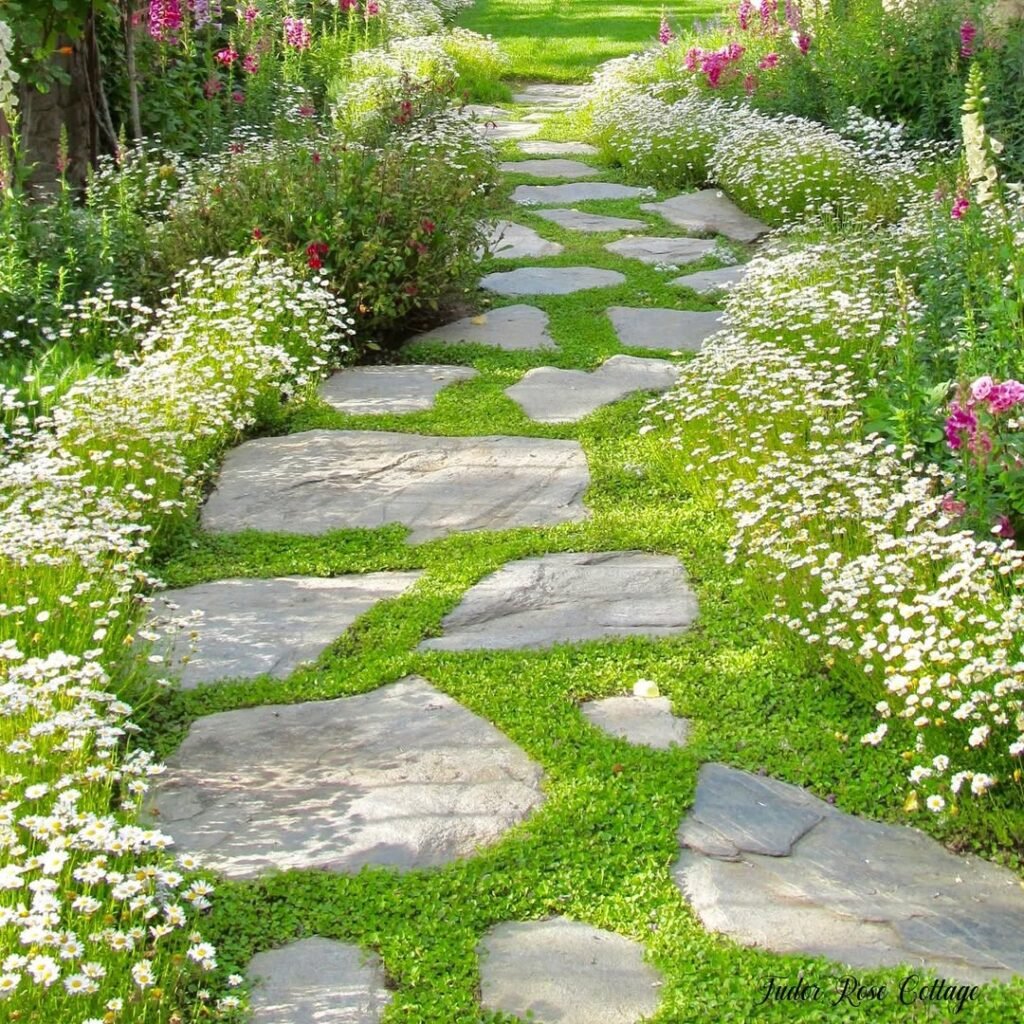
Flagstone is the most timeless pathway material available, and for good reason. Large, irregular slabs of natural stone — sandstone, limestone, slate, or granite — laid across lawn or gravel create a path that looks as though it has always been there. The natural variation in colour and texture means no two flagstone paths are identical, and the material ages beautifully, gathering moss and patina with each passing season.
Flagstone slabs cost $3–$8 per square foot depending on the stone type and your region. Lay them on a bed of compacted sand or dry mortar mix for stability, spacing them at a natural walking pace — roughly 50–60 centimetres between the centre of each slab. Too close together looks cramped; too far apart forces an awkward stride.
Design tip: Allow low-growing plants like thyme, chamomile, or mind-your-own-business to creep into the gaps between the stones. The soft green filling softens the edges of the path and makes it look as though it grew organically from the garden rather than being installed.
2. The Gravel and Stepping Stone Combination
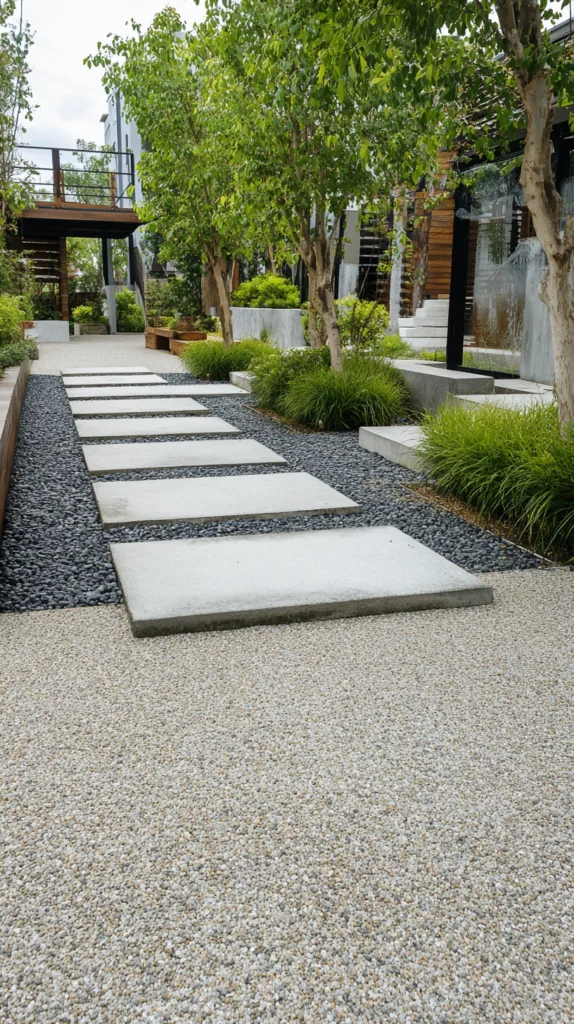
Budget: $40 – $180
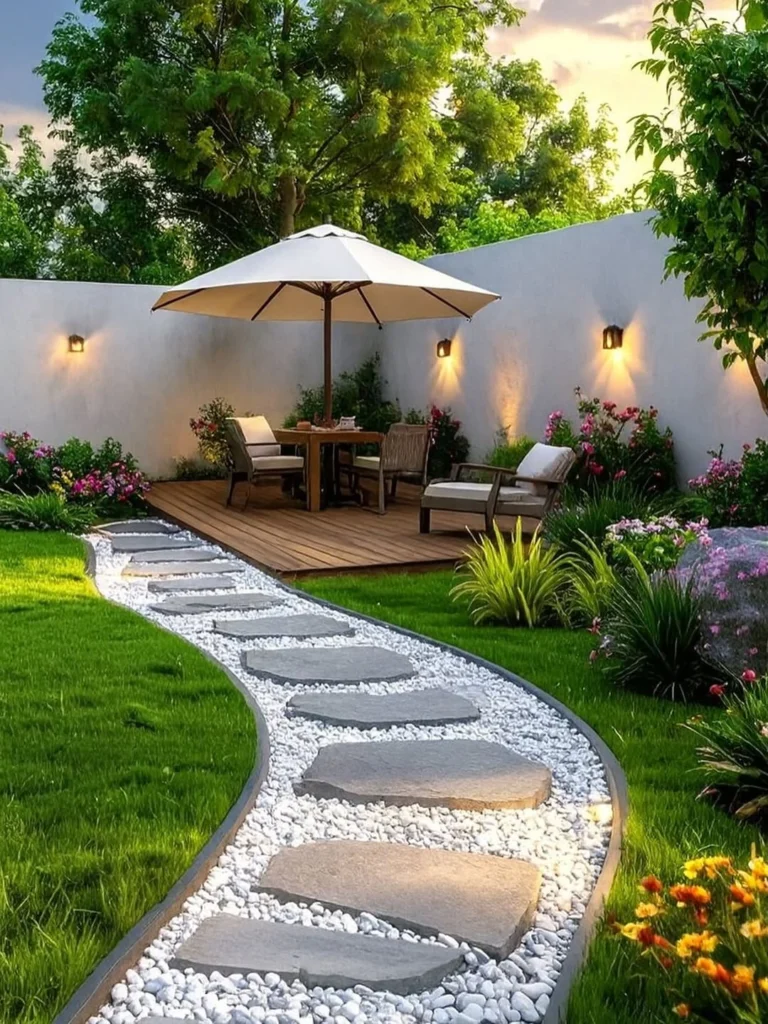
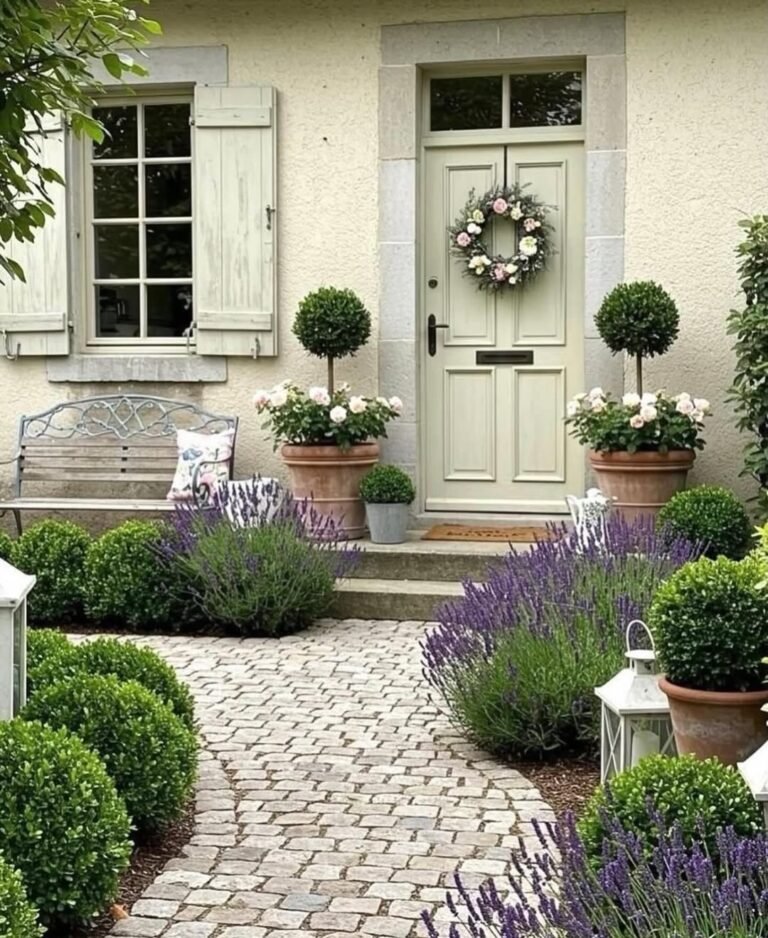
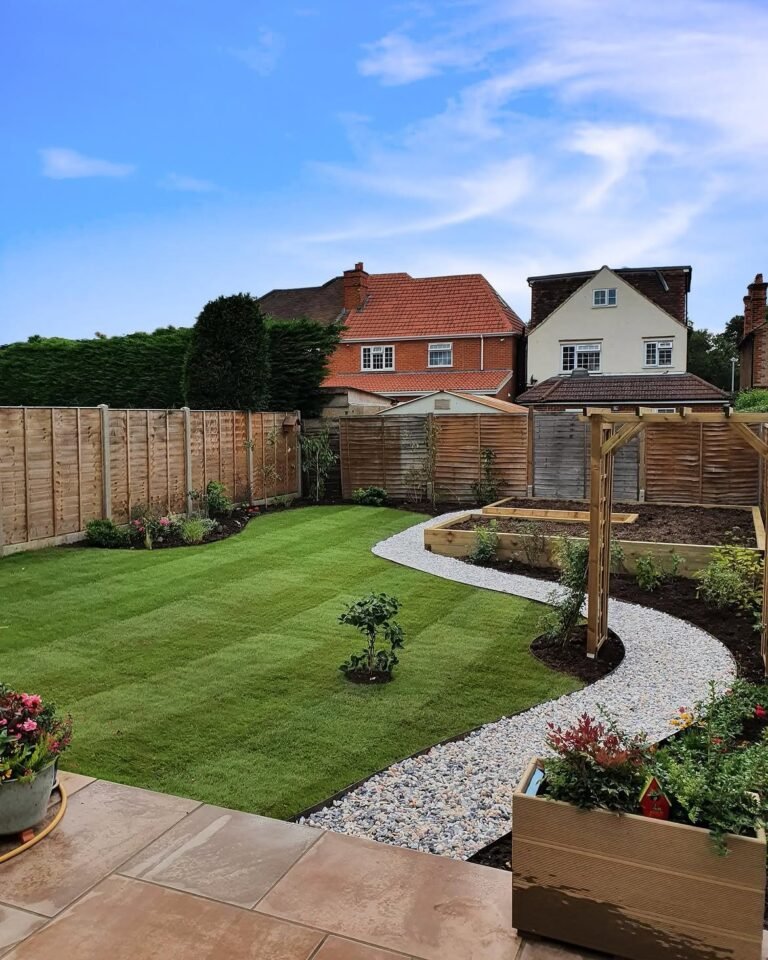
A bed of fine gravel with large stepping stones placed at intervals is one of the most versatile and affordable pathway approaches available. The gravel provides a clean, neutral base that works with almost any garden style — contemporary, cottage, or naturalistic — while the stepping stones give firm footing and visual punctuation along the route.
Pea gravel or crushed stone costs $5–$15 per bag. Lay a permeable weed-suppressing membrane beneath the gravel to prevent unwanted growth pushing through. Use stepping stones that are large enough to stand on comfortably — anything under 40 centimetres square feels precarious underfoot and disrupts the rhythm of walking.
Design tip: Vary the spacing of stepping stones slightly rather than placing them at perfectly equal intervals. A subtly irregular rhythm feels more natural and inviting than mechanical regularity, and the path reads as considered rather than measured.
3. The Brick Herringbone Pathway
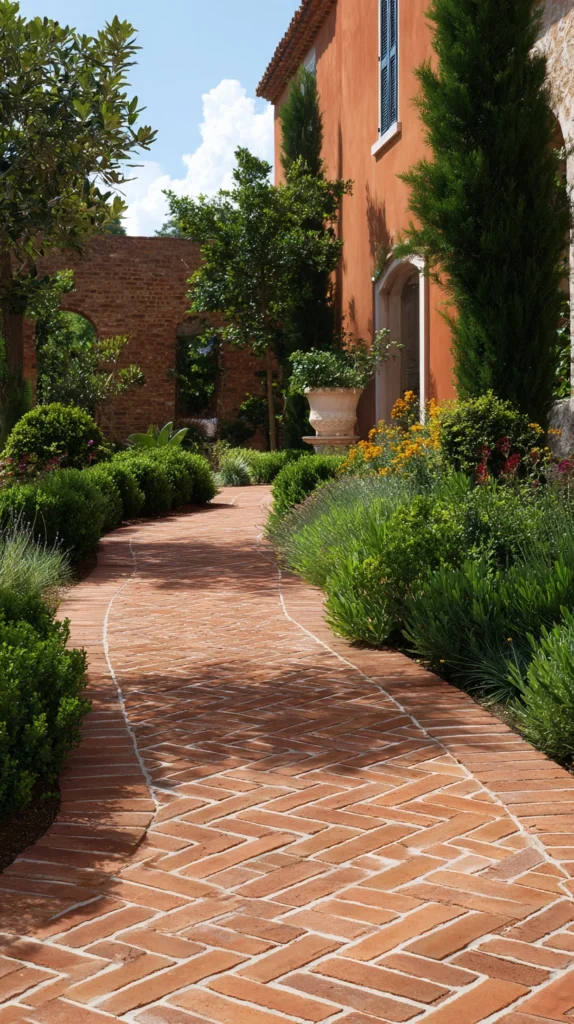
Budget: $60 – $250
Reclaimed or new bricks laid in a herringbone pattern create a pathway with warmth, character, and genuine craftsmanship. The angled interlocking pattern is both visually interesting and structurally strong — the bricks hold each other in place under foot traffic far more effectively than a simple running bond. Against the softness of a planted border, the geometry of a herringbone brick path provides exactly the right degree of contrast.
Reclaimed bricks cost $0.50–$2 each and look far more beautiful than new ones in a garden setting. The weathered surfaces, varied tones, and occasional chipped edges give the path a settled, established quality that new materials cannot replicate. Lay bricks on a compacted sand bed with a gentle fall away from the house for drainage.
Design tip: Edge the path with a single row of bricks laid lengthways as a soldier course — that is, placed vertically along each side. This contains the herringbone pattern, prevents the edges from spreading over time, and gives the path a crisp, finished appearance.
4. The Curved Grass Path
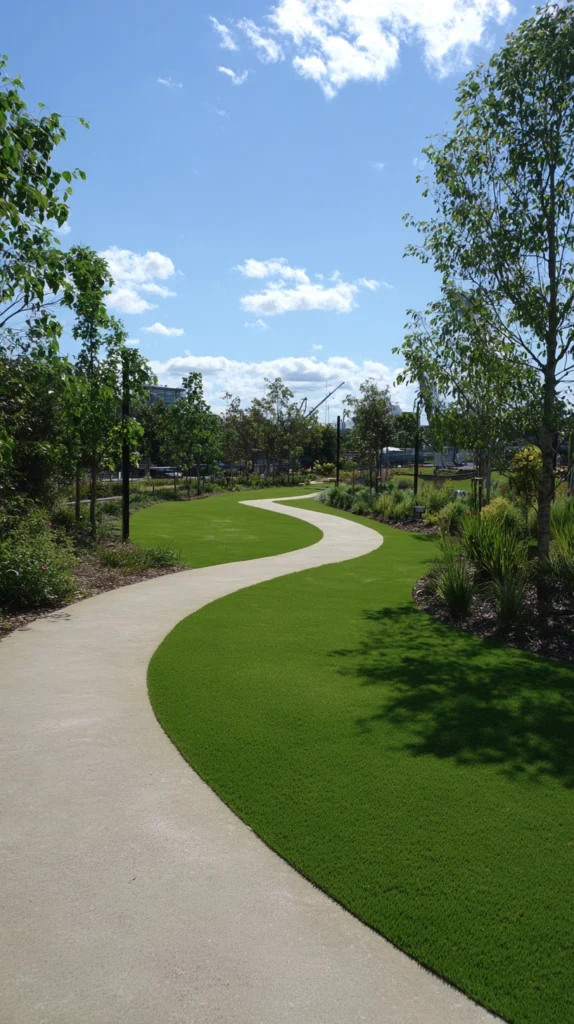
Budget: $10 – $40
Sometimes the most beautiful pathway in a garden is simply a mown strip through longer grass. A gently curving corridor of short-cut lawn winding through a wildflower meadow, an orchard, or an area of long ornamental grass is one of the most naturalistic and visually peaceful effects any garden can achieve. It costs almost nothing — only the time to mow a different pattern — and creates a sense of journey and discovery that expensive hard landscaping rarely matches.
Set the mower blades lower for the path and allow the grass on either side to grow freely, or plant it with a wildflower mix. The contrast between the cropped path and the taller surroundings defines the route clearly and creates a sense of moving through the landscape rather than across it.
Design tip: Make the curve generous and gradual rather than tight and angular. A slow, sweeping bend invites a leisurely pace and makes the garden feel larger than it is. Sharp curves in a mown path look awkward and suggest the route was designed around an obstacle rather than with intention.
5. The Wooden Boardwalk Path
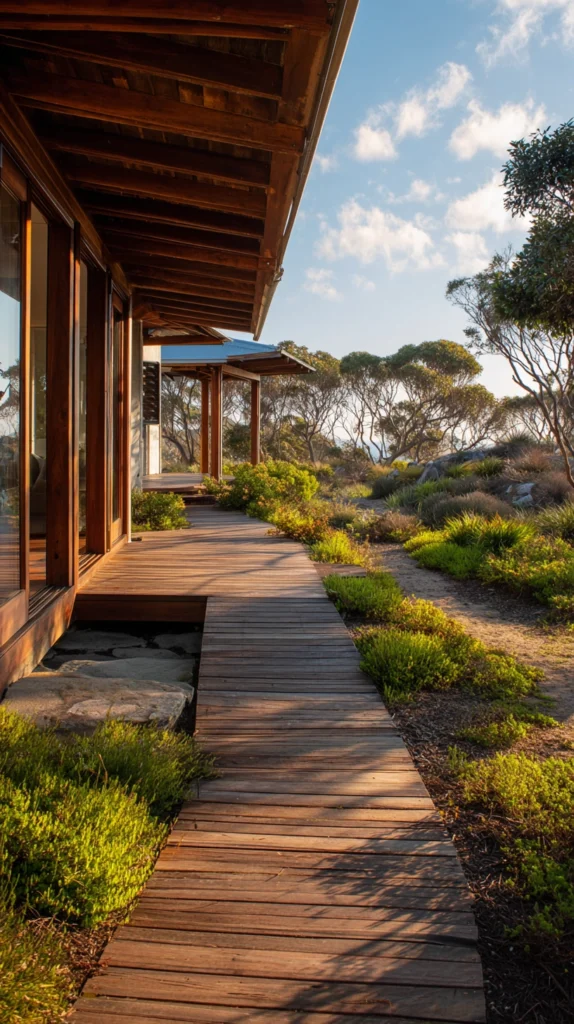
Budget: $100 – $500
A raised timber boardwalk brings a structural, architectural quality to a garden that stone and gravel paths cannot. Laid slightly above the ground level, it adds a sense of occasion to the act of walking through the garden, and in areas of soft or boggy ground it provides firm footing where other path materials would sink or shift. Over a pond, through a bog garden, or winding through a shaded fern garden, a boardwalk transforms the space beneath it into something worth exploring.
Pressure-treated hardwood decking boards cost $2–$6 per linear foot. Use joist supports to raise the boards 5–10 centimetres above ground level for airflow beneath. Leave small gaps between boards to allow rainwater to drain through and prevent the surface from becoming slippery in wet weather.
Design tip: Choose a timber with natural slip resistance rather than relying on smooth planed boards. Rough-sawn oak, larch, or cedar all provide better grip underfoot than smooth-finished decking boards, which become dangerously slippery when wet.
6. The Mossy Stone Path Through Shade
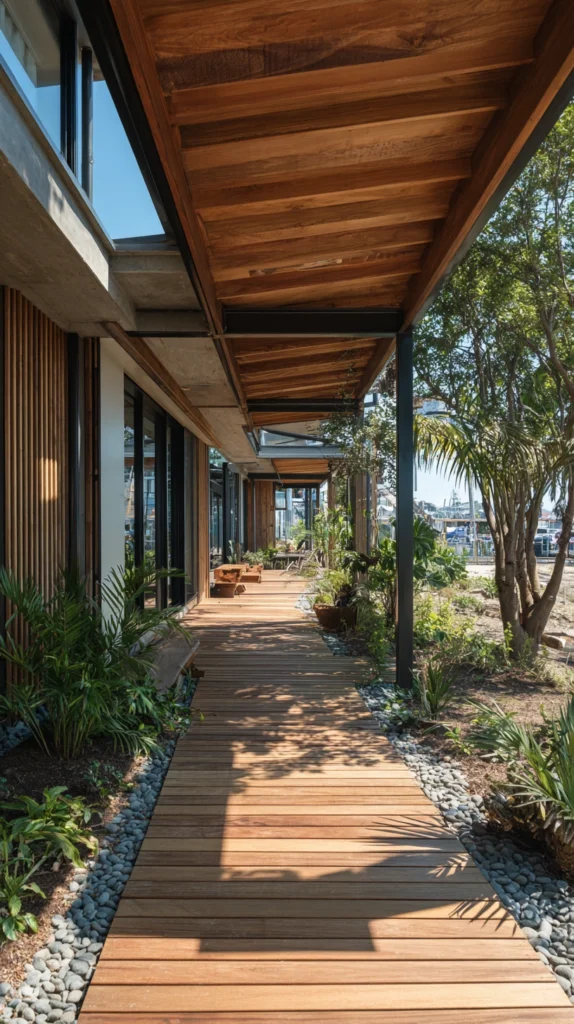
Budget: $30 – $120
In a shaded, woodland-style garden, a path of irregular stepping stones allowed to develop a coating of moss becomes one of the most atmospheric and beautiful features the space can offer. Moss takes time to establish but costs nothing to encourage — simply keep the stones moist and shaded, and nature provides the rest. The result looks ancient, settled, and completely at home in a garden of ferns and hellebores.
Irregular fieldstones or reclaimed cobbles cost $20–$60 for enough to lay a modest path. Set each stone firmly into the soil so the surface sits flush with the surrounding ground level — a stone that rocks underfoot is a hazard, and one that sits proud of the ground is difficult to mow around. Stability is as important as aesthetics.
Design tip: Introduce moss faster by blending a handful of gathered moss with buttermilk and painting the mixture onto the stone surfaces with a brush. The buttermilk creates an acidic environment that moss colonises readily, cutting the establishment time from years to months.
7. The Poured Concrete Path With Texture
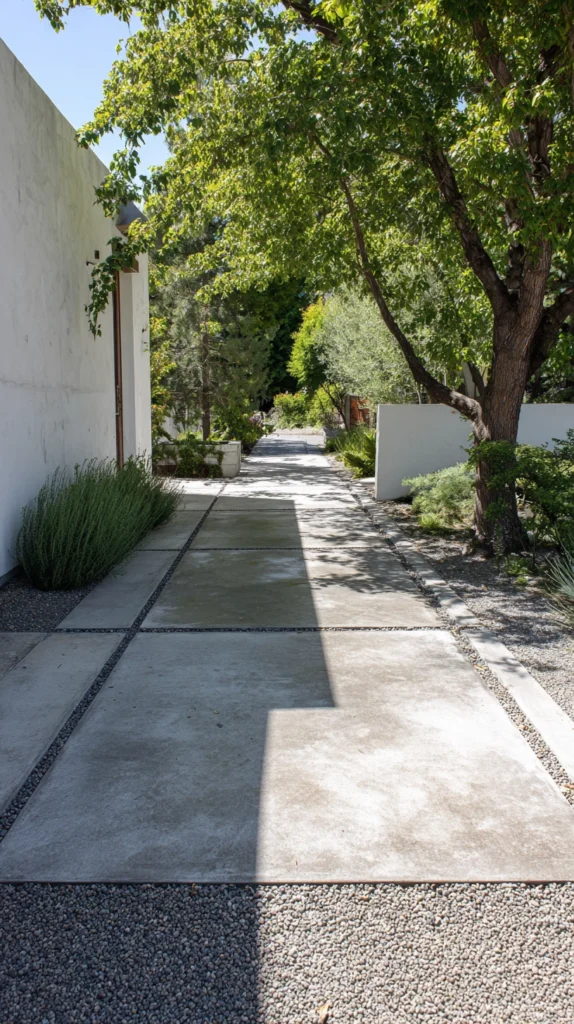
Budget: $80 – $350
Poured concrete has a reputation as a purely utilitarian pathway material, but treated with a little creativity it becomes one of the most versatile and contemporary options available. Exposed aggregate finishes, broom texturing, stamped geometric patterns, or the simple addition of a coloured oxide pigment transforms plain concrete into a surface with genuine visual interest.
A concrete path costs $4–$8 per square foot when poured professionally, or less with a DIY approach. For a more refined finish, use brushed concrete — drag a stiff broom across the surface before it fully sets to create a fine linear texture that provides grip underfoot and catches light in a subtly interesting way.
Design tip: Score expansion joints into the concrete every 1.5–2 metres as it sets. These deliberate grooves control where the inevitable cracking occurs as the concrete expands and contracts with temperature changes, turning a structural necessity into a design feature.
8. The Irregularly Shaped Crazy Paving Path
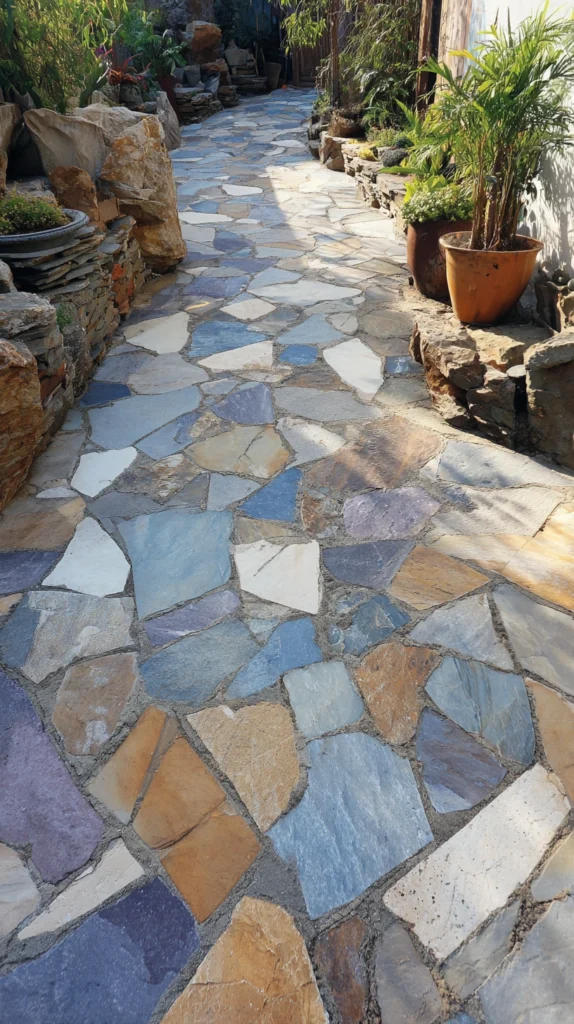
Budget: $30 – $150
Crazy paving — broken or irregularly shaped pieces of stone, slate, or concrete fitted together like a mosaic — has fallen in and out of fashion several times over the past century, and its current revival is entirely deserved. Done well, with consistent grouting and a thoughtful mix of stone sizes, it creates a path full of character, texture, and colour that no regular-format material can replicate.
Offcuts and broken pieces of natural stone are often available cheaply or free from stonemasons, demolition sites, or salvage yards. The labour is in the fitting — pieces need to be arranged so there are no awkward thin slivers, no rocking stones, and no gaps too wide to grout neatly. Take time to lay the pieces out dry before committing to mortar.
Design tip: Use a consistent grout colour throughout the entire path rather than mixing different grouts in different sections. A uniform grout colour unifies the irregular stone pieces and makes the path read as a coherent surface rather than a collection of random fragments.
9. The Corten Steel Edged Gravel Path
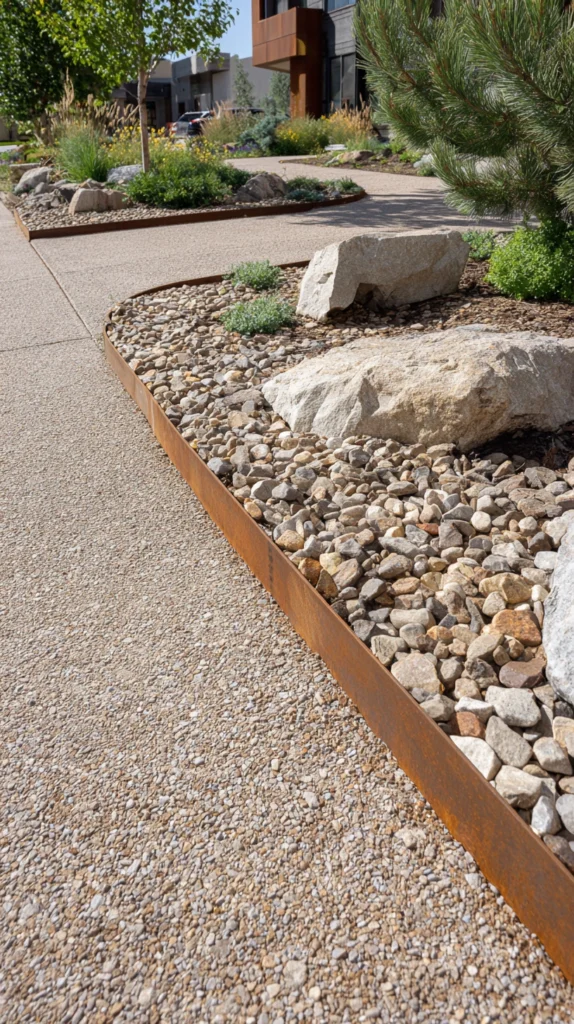
Budget: $120 – $500
Corten steel — the warm, rust-toned weathering steel used widely in contemporary landscape design — used as a path edging material gives a gravel path an extraordinarily crisp, modern finish. The thin steel strips hold the gravel in a clean line against the lawn or border, preventing the spreading and migration that unedged gravel paths are prone to, while the rich amber-brown of the weathered steel adds warmth and colour at ground level.
Corten steel edging strips cost $4–$8 per linear foot. They require no painting or maintenance — the surface rust is the intended finish, and it deepens in colour and richness over time. Against pale limestone gravel, the warm tones of the steel create one of the most elegant pathway combinations available in contemporary garden design.
Design tip: Install the steel edging so its top sits just 1–2 centimetres above the gravel surface rather than flush with it. A slightly raised edge prevents gravel from being kicked onto the lawn during normal use and keeps the path looking sharp between maintenance sessions.
10. The Decomposed Granite Path
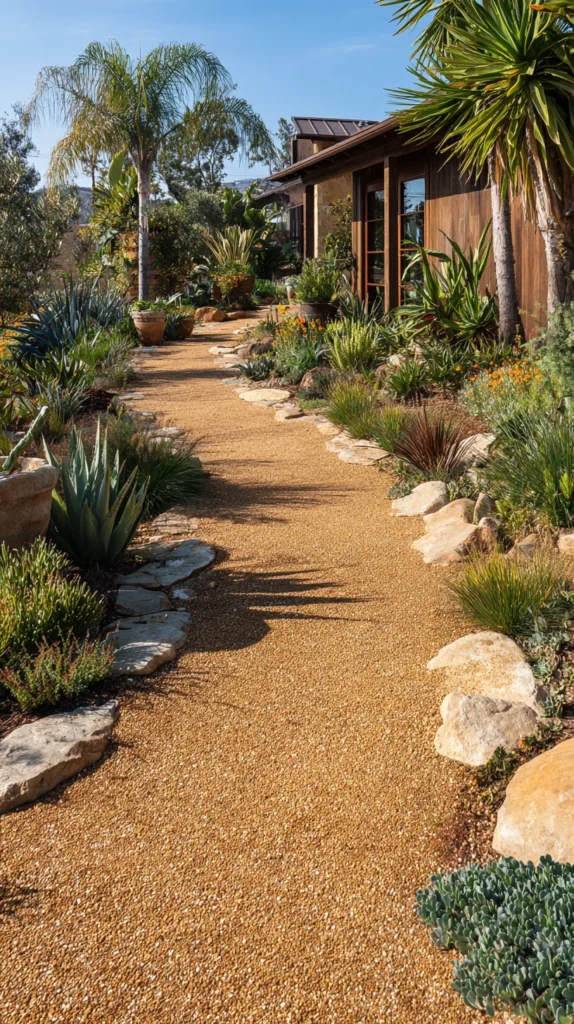
Budget: $30 – $120
Decomposed granite — a naturally occurring gravel composed of fine granite particles that compact firmly underfoot — creates a path surface that is softer in appearance than paving, more stable than loose gravel, and far cheaper than natural stone. It is widely used in American Southwest garden design but works beautifully in almost any informal or naturalistic garden setting.
A stabilised decomposed granite mix, which includes a binding agent that makes the surface harder and more water-resistant, costs $5–$12 per bag and is the better choice for paths that receive regular foot traffic. The natural golden-brown tone of the material works particularly well with warm-coloured planting — ornamental grasses, lavender, agaves, and salvias all look at home alongside it.
Design tip: Apply decomposed granite in two layers — a compacted base layer of 5 centimetres followed by a finer top layer of 2–3 centimetres. Compacting each layer separately creates a stable, firm surface that resists ruts and hollows far better than a single thick application.
11. The Stepping Stone Path Through Lawn
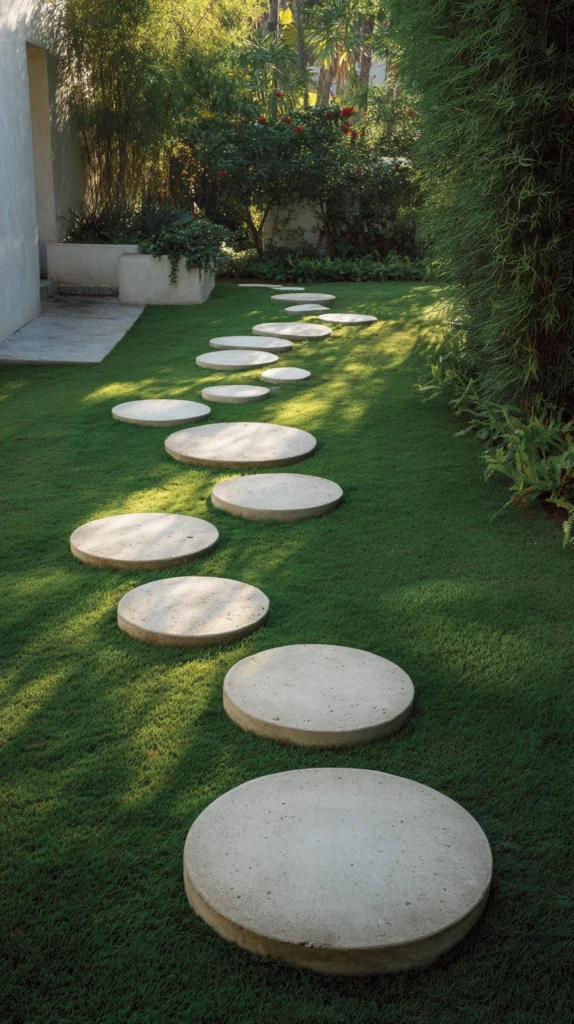
Budget: $25 – $100
A series of stepping stones set flush into a lawn is the simplest and most satisfying pathway solution for a garden that does not need a formal hard surface. The stones define the route without interrupting the visual continuity of the lawn, and when set at the right spacing they make walking across the garden feel purposeful and natural rather than arbitrary.
Circular concrete stepping stones cost $5–$15 each. Natural stone rounds cut from a log cross-section cost a similar amount and look warmer in a cottage or woodland garden setting. Set each stone so its surface sits just below the height of the surrounding grass — the lawnmower can then pass over without catching the edge, which saves an enormous amount of trimming time.
Design tip: Before setting any stones permanently, walk the intended route naturally several times and mark where your feet actually land. People walk routes intuitively and the stone spacing that feels right when you are standing still almost always differs from the spacing that feels right when you are moving at a natural pace.
12. The Shell or Pebble Mosaic Path
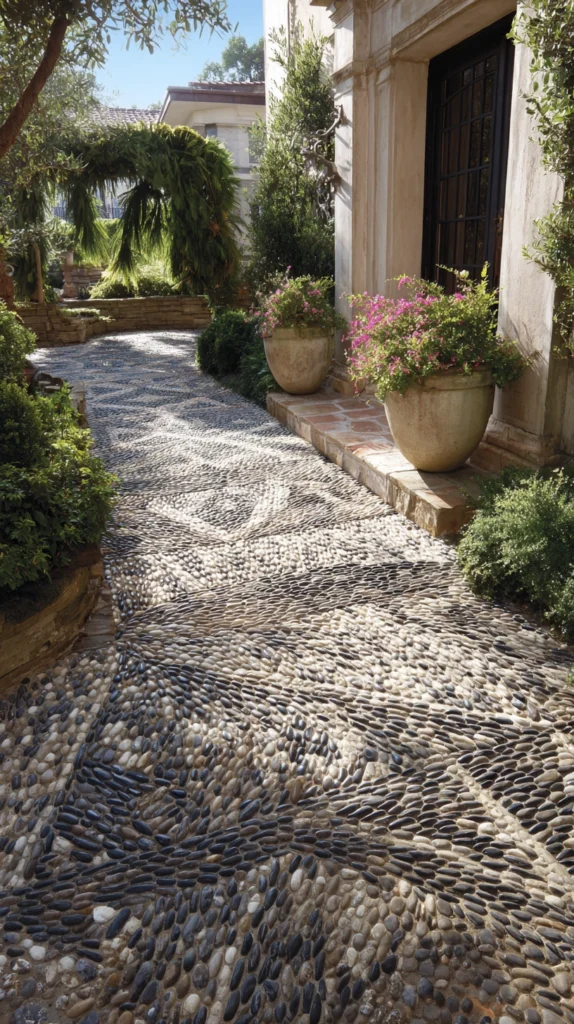
Budget: $40 – $200
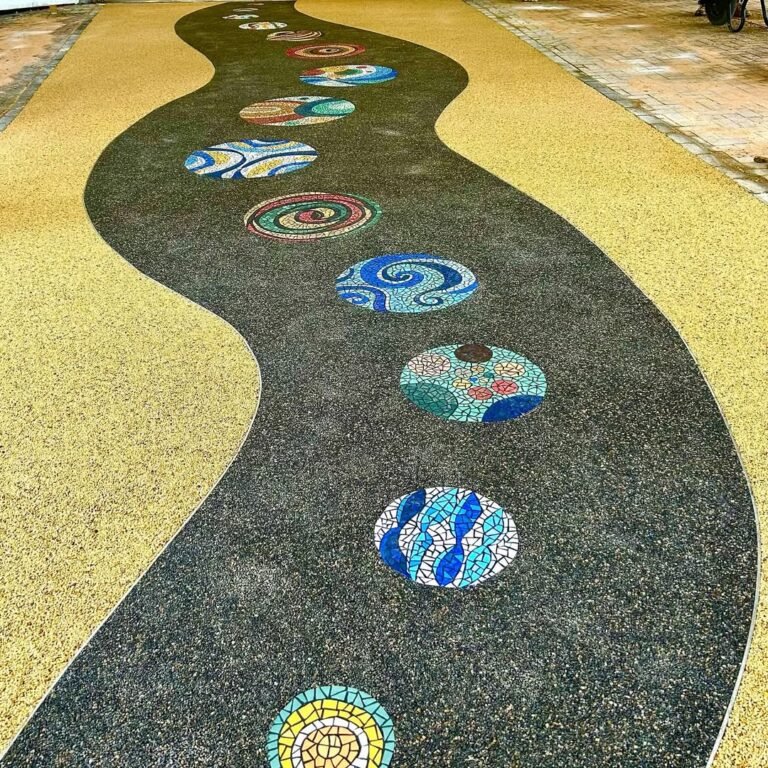
A path inlaid with pebble or shell mosaic patterns — geometric shapes, simple botanical motifs, or flowing abstract designs — elevates a garden pathway into something that functions simultaneously as craftsmanship and outdoor art. It requires patience and time rather than significant expense, and the result is completely unique, carrying the character of the person who made it in every stone.
River pebbles in contrasting colours — black, white, grey, and rust — cost $10–$25 per bag. Set them on edge in a mortar bed, packed tightly together so the pattern is dense and the surface firm underfoot. A simple geometric border pattern around the edges of a plain stone path is the easiest starting point and looks far more impressive than the effort required to create it.
Design tip: Sketch the pattern on paper at the actual scale of the path before you begin laying any stones. What looks balanced as a small drawing often needs adjustment when transferred to full size — irregular proportions and awkward spacing are far easier to correct on paper than in mortar.
13. The Reclaimed Railway Sleeper Path
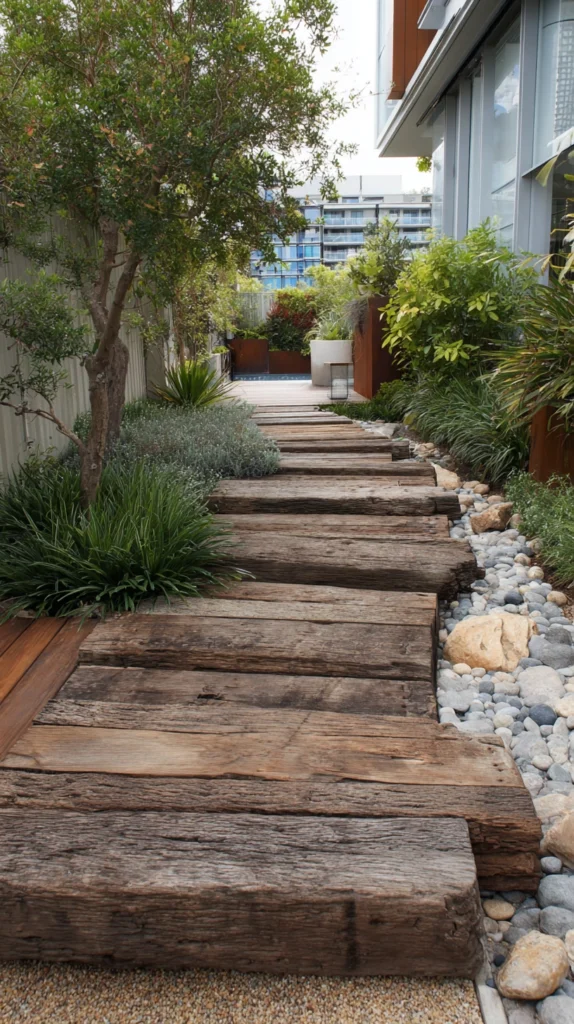
Budget: $60 – $300
Reclaimed railway sleepers — the large, heavy timber beams used to support railway tracks — make enormously characterful stepping stones and path edging. Their substantial weight, dark weathered timber, and industrial history give them a presence in a garden that few other materials can match. Laid flat as stepping pads across a gravel or bark mulch path, they define the route with a confidence that suits both contemporary and rural garden styles.
Reclaimed sleepers cost $15–$40 each depending on condition and size. New oak sleepers are available if reclaimed ones are hard to source locally, though they lack the weathered quality that makes the originals so appealing. Set each sleeper on a compacted gravel base to prevent it from sinking unevenly into soft ground over time.
Design tip: Leave small gaps between sleepers and fill them with gravel, creeping thyme, or moss rather than mortaring them solid. The breathing space between the heavy timbers softens their industrial character and helps the path integrate more naturally into the surrounding planting.
14. The Bark Mulch Forest Path
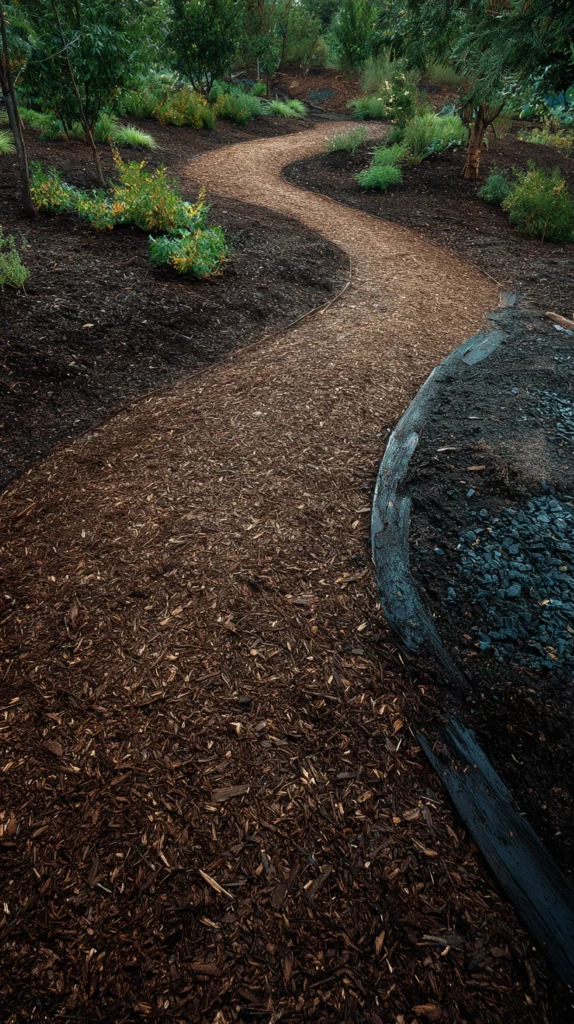
Budget: $20 – $80
A path of deep bark mulch winding through a shaded tree garden, a woodland area, or beneath a canopy of established shrubs is one of the most naturalistic and sensory pathway experiences a garden can offer. The soft, springy surface underfoot, the earthy scent of fresh bark, and the quiet, muffled sound of footsteps combine to make walking through a bark mulch path feel genuinely different from any hard surface alternative.
Bark mulch costs $5–$15 per bag or significantly less when ordered in bulk. Lay it at least 8–10 centimetres deep to suppress weeds effectively and provide adequate cushioning. Confine it with timber, stone, or metal edging on both sides to prevent it from spreading into the surrounding beds with each rainfall.
Design tip: Top up the bark mulch path each spring as the material compresses and breaks down over the winter months. A path that looked generous in summer will seem thin and weed-prone by the following spring without annual refreshing — it is a small maintenance commitment that keeps the path looking intentional year-round.
15. The Illuminated Evening Path
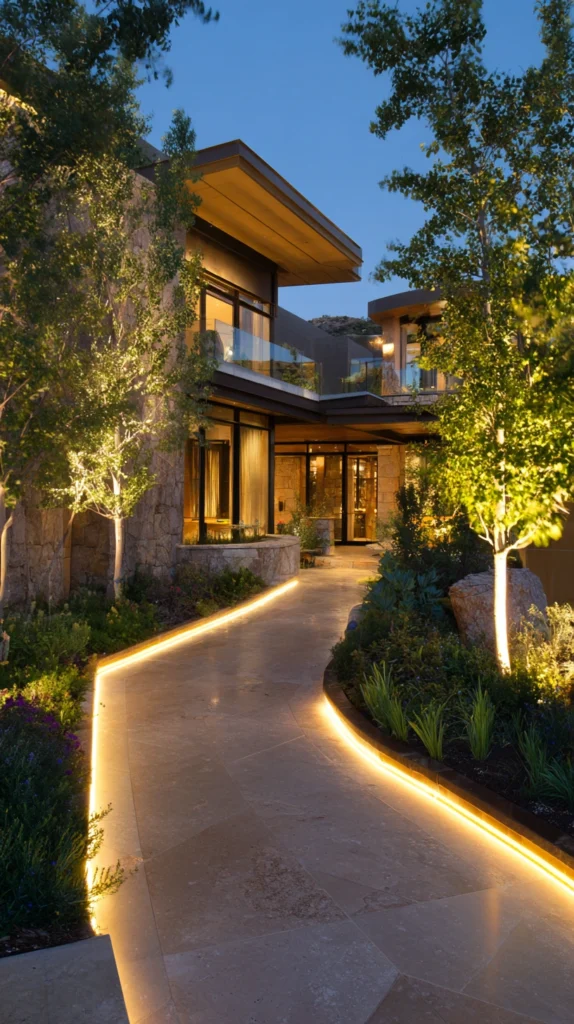
Budget: $50 – $300
A pathway designed to be as beautiful after dark as it is in daylight adds a dimension to a garden that most outdoor spaces never achieve. Low-level path lights set into the ground beside the route, solar lanterns placed at intervals along the edges, or LED strip lights set beneath the overhang of raised path edging all create a garden that comes alive in the evening and guides movement safely through the space without the harshness of overhead lighting.
Solar-powered path lights cost $5–$20 each and require no wiring. Low-voltage LED ground lights wired to a transformer cost more to install but give a far more consistent, controllable light quality. The effect at dusk — a softly lit corridor winding through a dark garden — is one of the most atmospheric things a considered pathway design can achieve.
Design tip: Light the path edges rather than the path surface itself. Lights that shine downward onto the ground create flat, uninspiring pools of light. Lights positioned to graze across paving, illuminate the undersides of plants, or cast long shadows along the path edge create depth and drama that transform the evening garden entirely.
A garden path is never just a practical surface. At its best it is the line along which the whole garden is read — the guide that determines what is noticed, what is saved for the end, and what mood the space ultimately creates. Choose the material and the route that suit both your garden’s character and your own, lay it with care, and let the planting do the rest.