13 Garden Mirror Ideas
A garden mirror is one of the most effective and most underused tools in outdoor design. It doubles the apparent depth of a small space, brightens a shaded corner, multiplies the visual effect of planting in front of it, and creates a moment of genuine surprise — the reflected garden appearing to continue through the mirror into a space that does not exist. When positioned well, a garden mirror makes the garden feel larger, more planted, and more considered with a single object that costs less than most garden furniture and takes an afternoon to install.
The thirteen ideas below cover every mirror application in the garden — from a simple arched mirror on a fence to a full moon gate installation. Each includes what it costs and a practical tip to help you position and use the mirror for the best possible visual effect in the specific garden it occupies.
1. A Classic Arch Mirror on a Painted Fence
Budget: $40 – $150
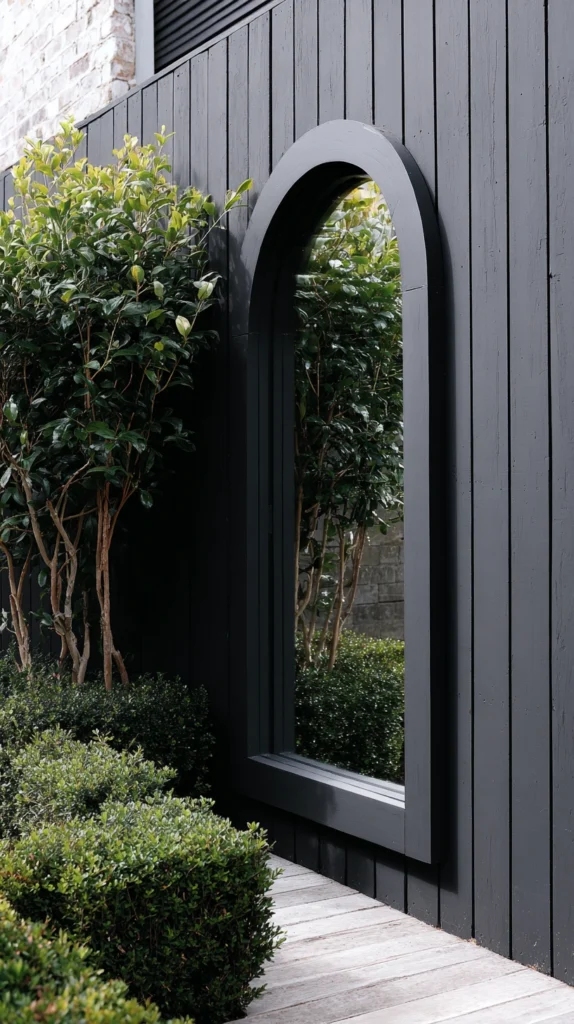
An arched garden mirror fixed to a painted fence panel is the most commonly seen and most reliably effective garden mirror application. The arch form references a doorway — immediately suggesting a passage to a garden beyond the mirror’s surface — and the painted fence behind it creates a clear, consistent backdrop that makes the reflection of the garden in front look specifically designed rather than incidentally reflected. Against a dark fence the effect is especially dramatic.
An outdoor-rated arched garden mirror of 60×90 cm costs $40–$100. A larger 60×120 cm version runs $70–$150. Fix to the fence using stainless steel screws through the mirror’s hanging points or with exterior-grade adhesive mirror clips — standard interior mirror fixings corrode within two to three seasons of outdoor humidity and should never be used on an external surface. Paint the fence behind the mirror in a dark tone — navy, charcoal, or deep green — to maximise the contrast between the mirror surface and its background.
Mirror tip: Position the arch mirror so its base sits approximately 20–30 cm above the ground rather than flush with the fence base. A mirror whose lower edge is at ground level reads as a flat reflective surface. One elevated slightly above ground level creates the convincing illusion of a threshold — an opening rather than a surface — which is the quality that makes arch mirrors so effective as apparent garden doorways.
2. A Circular Mirror as a Moon Gate
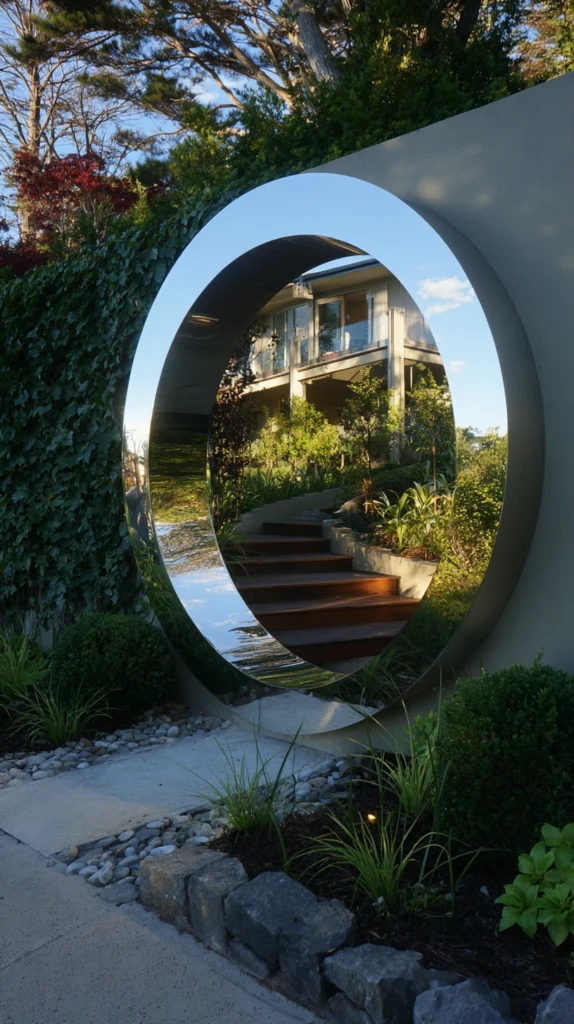
Budget: $50 – $200
A large circular outdoor mirror positioned on a garden wall or fence creates the Western version of the Chinese moon gate — a circular opening that frames the garden beyond it in a perfect disc. Unlike a structural moon gate, a circular mirror provides both the framing effect and the illusion of depth through the reflected garden appearing behind the surface, creating a more complex and more spatially interesting effect than a solid circular frame around open space.
A circular outdoor mirror of 60 cm diameter costs $50–$120. A larger 80 cm version runs $80–$200. Position at eye height when standing — approximately 150–160 cm to the centre of the circle — on the wall or fence that terminates the garden’s main sight line. Frame the mirror on each side with a climbing plant or tall architectural plant in a large pot to soften the visible edge and create the sense that the circular opening is surrounded by natural growth rather than framed by a wall.
Mirror tip: Position a circular moon gate mirror so that the reflection it captures is the most interesting and most planted view available from its installation point. A mirror that reflects a bare fence or a plain lawn surface wastes its potential entirely. A mirror that reflects a densely planted border, a specimen tree, or a colourful container display doubles the visual impact of that planting and creates the most convincing sense of a garden that extends beyond the visible boundaries.
3. A Mirror Behind a Water Feature
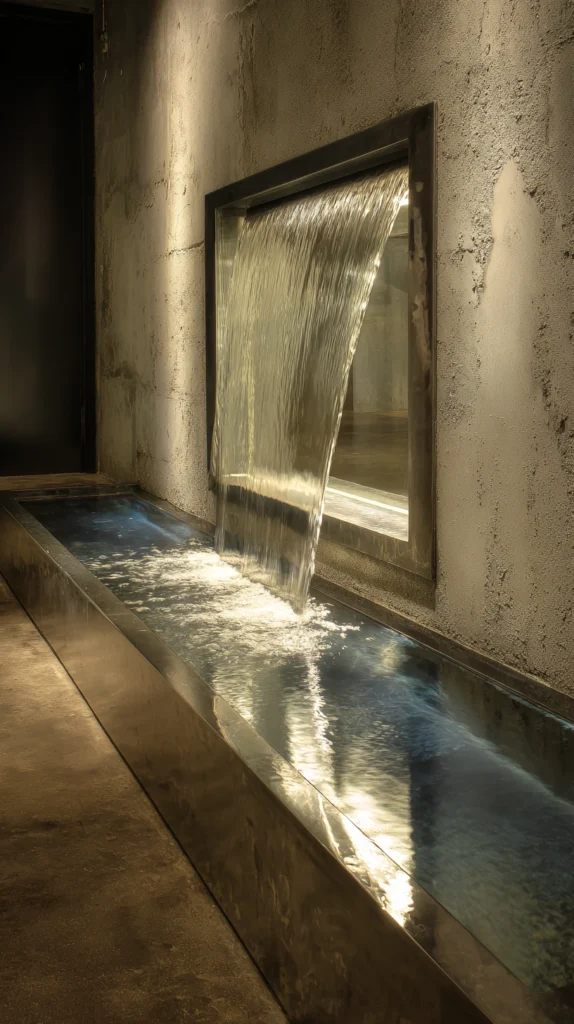
Budget: $60 – $200
Positioning a garden mirror directly behind a wall-mounted water spout or a fountain — so that the water feature appears in both the real and reflected views simultaneously — creates one of the most sophisticated and most specifically garden-design-aware mirror applications available. The reflected water doubles the visual movement of the feature and creates a symmetrical composition in which the real water and its reflection appear to flow toward each other from a shared central source.
A rectangular mirror of 50×70 cm mounted behind a wall-mounted water spout and basin costs $50–$120 in mirror materials. The water feature itself costs $50–$200. Ensure the mirror is rated for high-humidity and splash-prone outdoor positions — mirrors with an aluminium backing rather than a silver backing resist the edge deterioration that moisture causes to standard mirror glass in wet outdoor conditions. Fix the mirror before installing the water feature to allow the spout and pipe to be run over or beside the mirror’s fixing points without compromising either installation.
Mirror tip: Light the mirror and water feature combination from below or from the side in the evening with a small, warm-white LED spotlight — the combined reflection of the lit water surface and the illuminated surrounding plants in the mirror creates an evening garden moment of considerable atmospheric beauty at the cost of a single $15–$30 outdoor spotlight fixture and its positioning.
4. A Mirror in a Shaded Corner to Brighten It
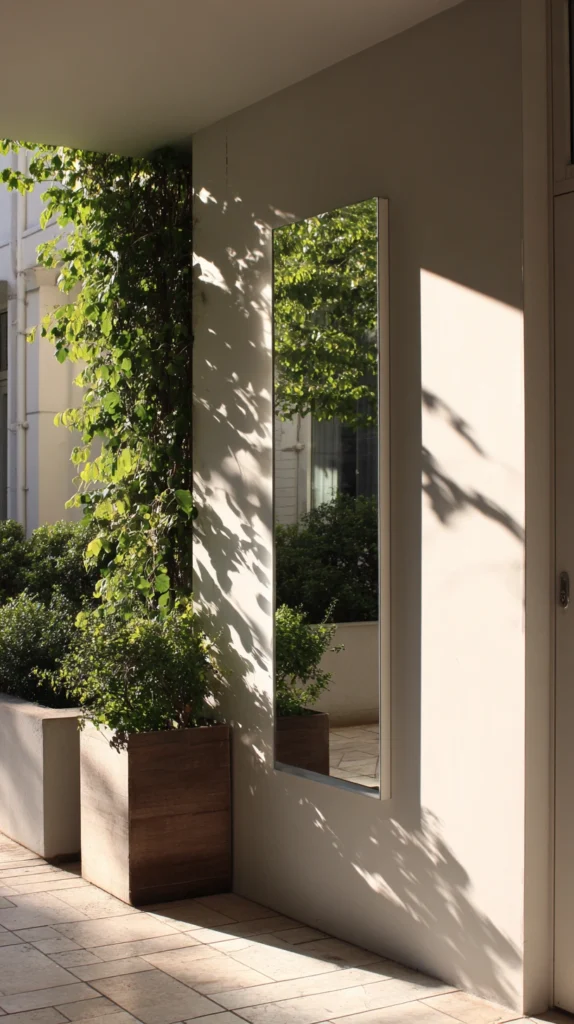
Budget: $40 – $120
A garden mirror positioned in the darkest, most shaded corner of the garden captures whatever light reaches that corner and reflects it back into the space, creating the impression of a significantly brighter area than the actual light level would produce. In a north-facing corner where no flowering plants perform well and the general effect is of a forgotten, unused area, a mirror transforms the space by making it visually lighter and by reflecting the more interesting planting from the opposite side of the garden into the dark corner view.
Any outdoor-rated mirror of 60×80 cm or larger suits this application at $40–$120. Position the mirror facing toward the garden’s main light source — the south-facing side — so that it captures and reflects the maximum available daylight back into the shaded area. Surround with shade-tolerant plants — ferns, hostas, and heucheras — whose dark foliage and varied texture reads clearly in the reflected view and creates the impression of a planted garden room in the corner rather than a light-reflecting surface on a bare wall.
Mirror tip: Avoid positioning a garden mirror in a corner where it will be in direct strong sunlight for extended periods. A mirror in full direct sun acts as a focusing reflector and can concentrate sunlight onto plants or surfaces in its reflected path with enough intensity to scorch foliage or create uncomfortable glare for anyone seated in the garden. An angled position — slightly off-axis from the direct sun path — provides the light-brightening quality of the mirror without the concentrated reflection that direct sun exposure creates.
5. A Mirror Framed in Climbing Plants
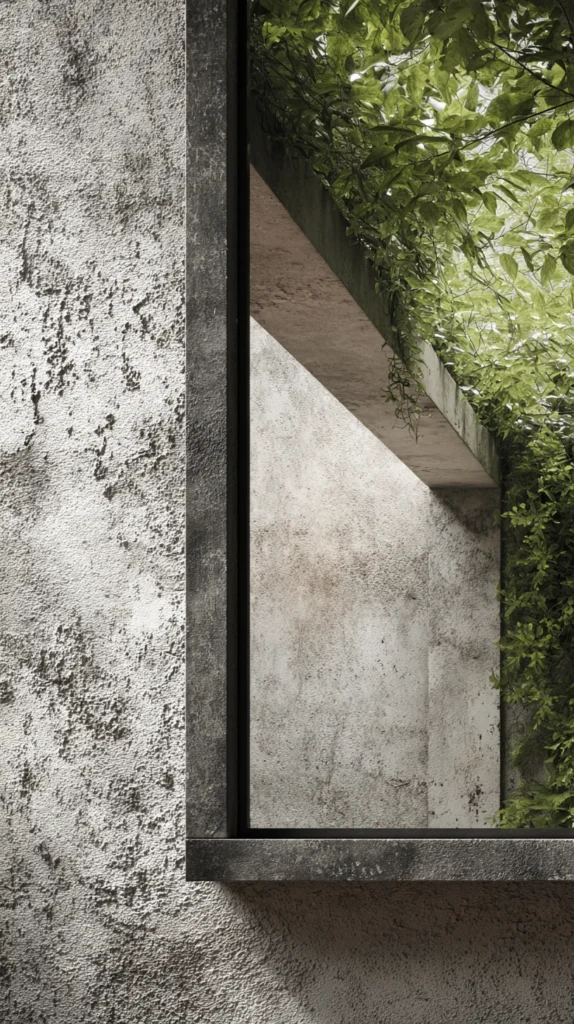
Budget: $60 – $200
A garden mirror with its edges partially covered by climbing plants — trained to grow over the frame and partially across the mirror face — creates the most naturalistic and most romantically beautiful mirror installation available. The plants growing into and around the mirror edge blur the boundary between the real garden and its reflection and create the convincing impression that the mirror is a window into a garden that exists beyond the fence or wall it is attached to.
Fix the mirror first and then plant the climbing plants at the base of the fence on either side. Jasmine, small-leafed ivy, and Clematis viticella are the most suitable species for partially framing a garden mirror — all three produce small, delicate foliage and flowers that read clearly in the reflected view and grow at a rate that can be managed without obscuring the mirror surface entirely. Train stems over the frame and allow a few to reach slightly across the mirror edge for the most convincing planted-frame effect.
Mirror tip: Clean the mirror surface every six to eight weeks through the growing season to remove the condensation deposits, bird droppings, and plant debris that accumulate on a mirror exposed to the garden environment. A dirty mirror surface reduces the clarity of the reflection and undermines the spatial illusion that is the primary purpose of the installation. A clean mirror in a well-planted position creates a genuinely convincing spatial effect. A dirty one with the same planting creates a murky, unconvincing one.
6. A Long Horizontal Mirror on a Low Wall
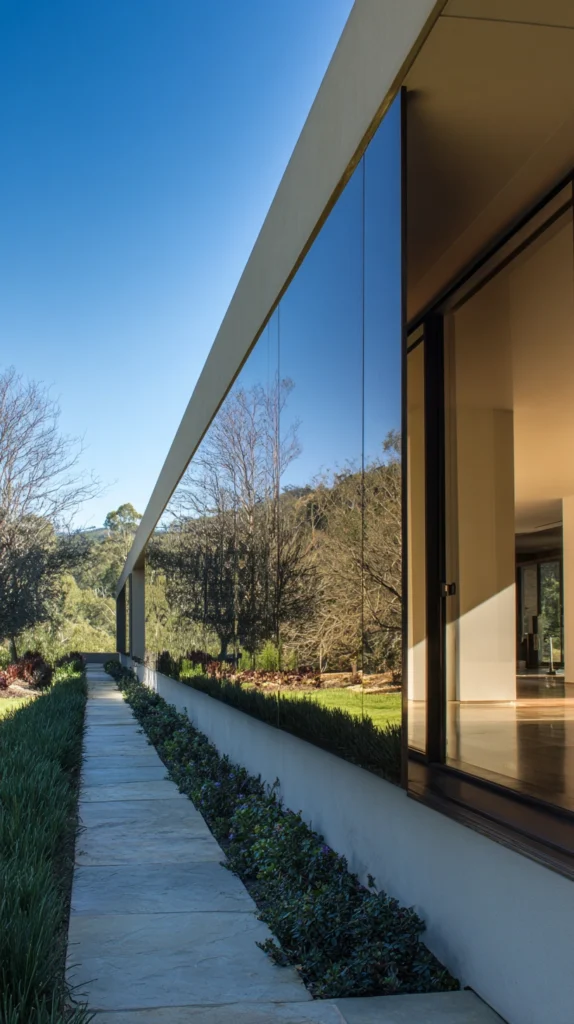
Budget: $50 – $180
A long, low horizontal mirror — 120 cm or wider by 40–50 cm tall — positioned along a low boundary wall at a height where it reflects the planting and sky above the wall rather than the wall surface itself creates a visual extension of the garden horizontally rather than in depth. It is particularly effective in a long, narrow garden where the primary spatial challenge is width rather than depth — the wide horizontal reflection creates the impression of a garden that extends further to the sides than the actual boundary allows.
A long horizontal outdoor mirror of 120×40 cm costs $60–$150. A wider 150×50 cm version runs $80–$180. Fix to a low rendered wall or brick boundary using exterior mirror clips at four points — the length of a horizontal mirror requires four fixing points rather than the two sufficient for a standard portrait-format mirror to prevent the mirror from bowing in its centre under its own weight and the stress of any wind movement across its face.
Mirror tip: Position a horizontal mirror at the height where the reflection captures the sky and the tops of plants rather than the ground and lower foliage. A mirror that reflects the sky doubles the sense of openness in a confined garden space — the reflected sky above the planting creates a visual ceiling that makes even a small enclosed garden feel less bounded. A mirror that reflects the ground surface creates the opposite effect, emphasising enclosure rather than releasing it.
7. A Lean-To Mirror Against a Fence
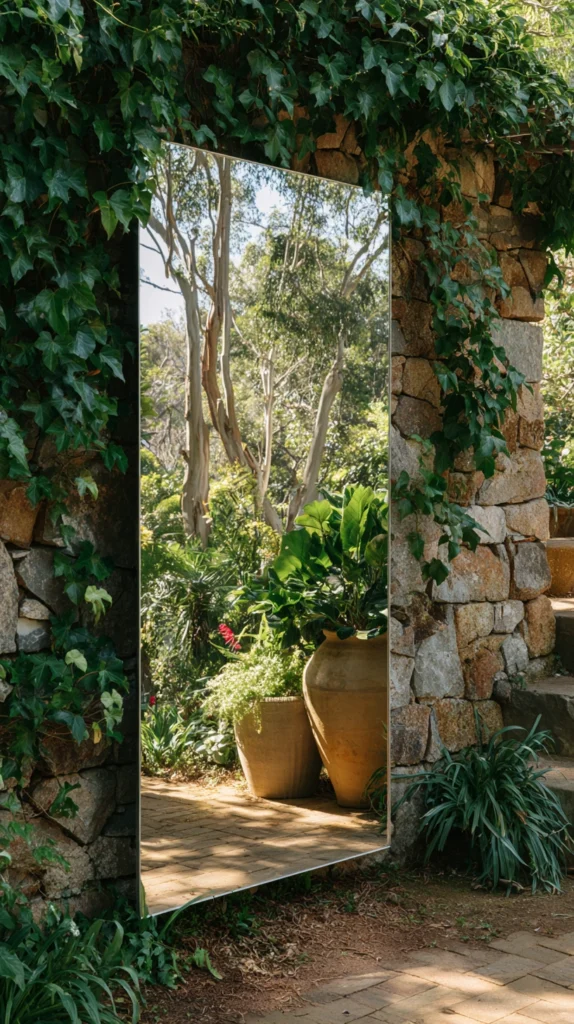
Budget: $30 – $100
A large outdoor mirror leaned casually against a fence or wall — rather than formally mounted — creates a more relaxed, more interior-styling-influenced garden aesthetic that suits contemporary and boho garden styles. The lean-to position is immediately recognisable from interior design contexts and imports the same quality of effortless style into the garden when executed with the right mirror size and the right surrounding plants.
A large rectangular mirror of 60×120 cm or 80×150 cm costs $50–$150 for outdoor-rated versions. Position on a flat, level surface with the bottom edge resting on stable ground — brick, stone, or a timber plank beneath the mirror edge prevents the base from sinking into soft soil and keeps the mirror at the correct lean angle. Surround with tall pot plants — an ornamental grass, a large agapanthus, or a standard bay tree — positioned beside and slightly in front of the leaning mirror to create the casual, styled quality that makes this application work.
Mirror tip: Secure a lean-to garden mirror with a discreet wire or chain from two fixings on the upper part of the fence behind it — visible from behind but not from the front. An unsecured leaning mirror is a significant safety hazard in any garden where children or pets are present and can be knocked over by strong wind gusts even in a normally sheltered garden position. The safety fixing takes five minutes to install and prevents the only serious risk associated with this otherwise effective and effortless mirror application.
8. A Mirror at the End of a Garden Path
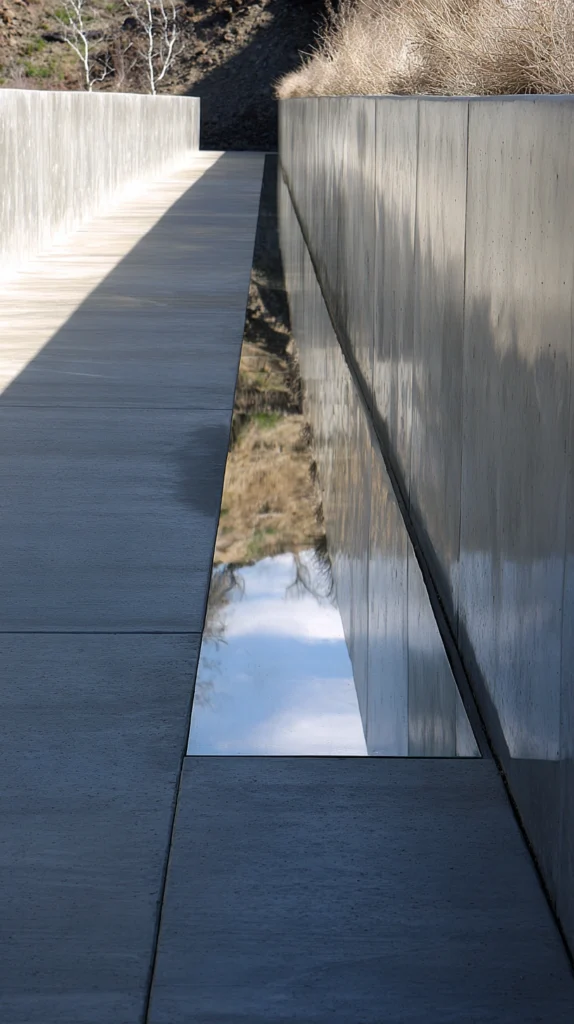
Budget: $50 – $180
A garden mirror positioned at the far end of the main garden path — centred on the path’s sight line and fixed at eye level — creates the most immediately convincing garden depth illusion available. From the main viewpoint at the opposite end of the path, the mirror appears to extend the path beyond the boundary in a genuinely convincing way, particularly when the surrounding planting on each side of the mirror replicates the planting on the corresponding sides of the path in front of it.
Position the mirror so its centre is at the eye level of a standing adult — approximately 150–160 cm from the ground. The path surface and the planting on each side of the path leading toward the mirror should be visible in the lower half of the reflected view. Avoid placing the mirror at a position where the viewer’s own reflection is directly visible from the primary viewing point — the illusion is most effective when the reflection shows garden rather than the garden’s occupants looking back at themselves.
Mirror tip: Angle the mirror very slightly off the direct sight line axis of the path — 5 to 10 degrees — so that a viewer standing at the path’s main entrance point does not see their own reflection directly. An angled mirror reflects adjacent planting rather than the viewer standing in front of it, which maintains the spatial illusion far more effectively than a mirror aligned perfectly with the path axis that reflects the viewer’s approach at every moment of use.
9. A Repurposed Window Frame as a Garden Mirror
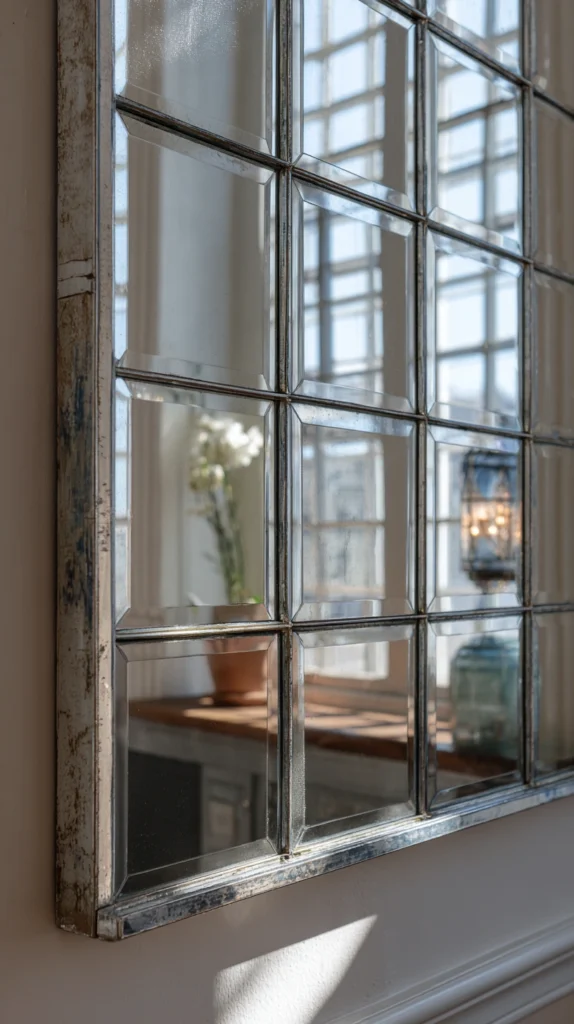
Budget: $10 – $60
An old window frame — the timber or metal structure from which the original glass has been removed — fitted with mirror glass rather than window glass creates one of the most charming and most specifically character-filled garden mirror frames available. The window frame format references the idea of a window looking into another garden in the most direct and most convincing way available, and a genuinely old frame with its original paint layers and weathering adds a quality of history that no new mirror frame can replicate.
Reclaimed window frames cost $5–$30 from architectural salvage yards and online resale platforms. A glazier or glass merchant will cut mirror glass to fit the frame for $10–$30 depending on the number of panes and their individual sizes. Fix mirror glass into the existing rebate using exterior mirror adhesive ($5–$10 per tube) and silicone sealant around the outer edge for weatherproofing. The total cost of a repurposed window frame garden mirror sits between $20 and $60 for a feature of considerable character and visual impact.
Mirror tip: For a multi-paned window frame with divided sections, use mirror glass in some panes and leave others as open apertures through the frame. The combination of solid reflective panes and open panes that allow direct views through the frame creates a particularly interesting visual effect — parts of the garden appear to be reflected and parts appear to extend through the frame simultaneously, which is a more complex and more visually engaging effect than a single solid mirror surface of the same dimensions.
10. A Mirror on Each Side of a Garden Gate
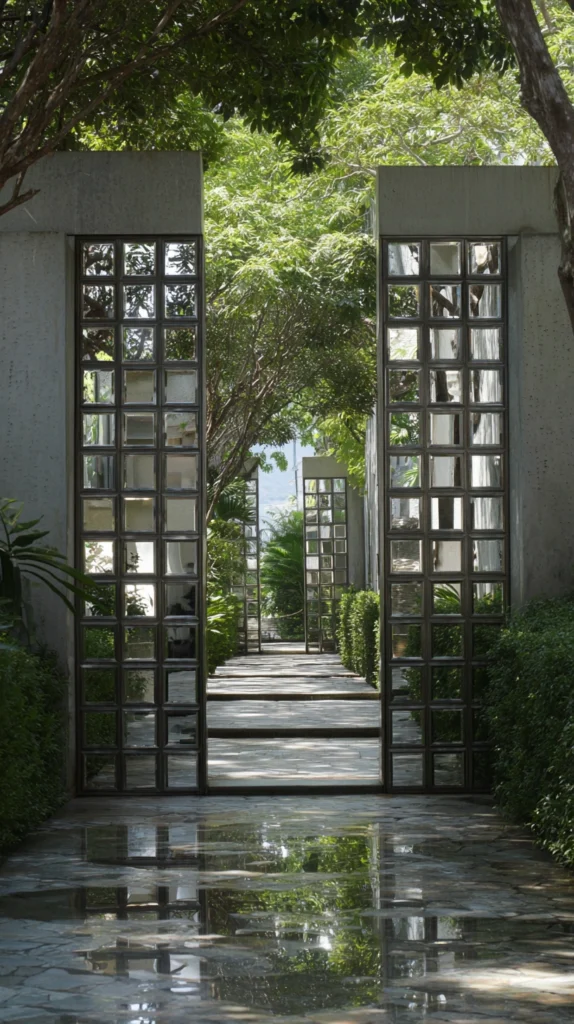
Budget: $80 – $300
Positioning a mirror on each side of a garden gate or entrance — one on the approach side and one on the garden side — creates a double spatial expansion at the garden’s most important threshold. The approach mirror makes the garden appear to begin further back than the gate’s actual position. The garden-side mirror makes the garden appear to continue further than the actual boundary. Together they create a layered spatial complexity at a garden entrance that no other single intervention achieves.
Two matching outdoor mirrors of 50×70 cm cost $80–$200. Fix one on each post of the gate at the same height — the visual symmetry of matched mirrors at equal heights on each side of the entrance reinforces the threshold effect and makes the installation read as a considered design decision rather than two separate mirrors placed near each other. Frame each mirror with matching climbing plants on the gate posts to unify the two mirrors into a single composed entrance feature.
Mirror tip: Use identical mirrors — the same dimensions, the same frame style, and the same mounting height — on each side of a garden gate. Two different mirrors at a garden entrance creates a confused visual statement. Two identical ones creates a designed architectural feature that references the formal symmetry of a traditional garden entrance without requiring any built structure beyond the gate posts that are already present.
11. A Mirror Inside a Planted Alcove
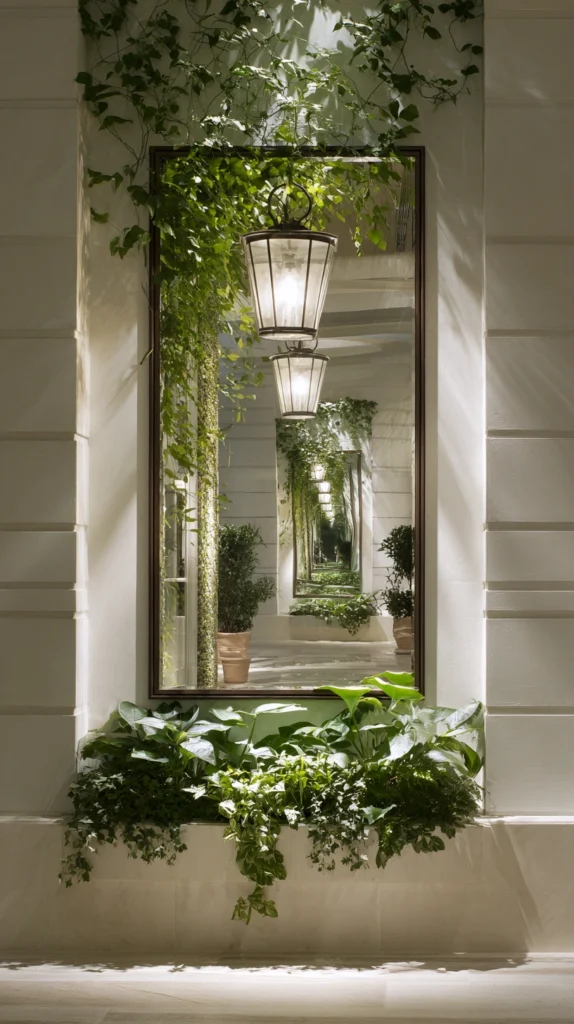
Budget: $60 – $200
A garden mirror positioned at the back of a planted alcove — a recess in a hedge, a niche in a wall, or a built timber frame — creates a garden feature of unusual spatial complexity. The surrounding plants of the alcove appear in the mirror’s reflection, creating the impression of a garden room within a garden room — a space inside a space that appears to extend further in every direction than the physical structure that contains it. This is the most architecturally sophisticated garden mirror installation on this list.
A mirror of 60×80 cm or 70×90 cm fits most standard alcove dimensions at $50–$130. A built timber alcove frame — two vertical side posts connected by a horizontal top beam — costs $30–$60 in materials and creates the necessary structural context for the mirror installation if no natural alcove exists within the garden boundaries. Plant the sides of the alcove with a fragrant climber — jasmine or a climbing rose — so that the reflected view includes the flowering plant on each side of the mirror as it grows across the alcove’s inner faces.
Mirror tip: Place a single object — a stone, a small pot, or a sculptural object — directly in front of the mirror in the centre of the alcove floor space. The object appears in the reflection and creates the spatial ambiguity of an object that exists both in front of and behind the mirror surface simultaneously, which is the most specifically optical quality of a garden mirror installation and the one that creates the most genuinely surprising and most memorable spatial effect for any visitor to the garden.
12. A Mirror as Part of a Garden Art Installation
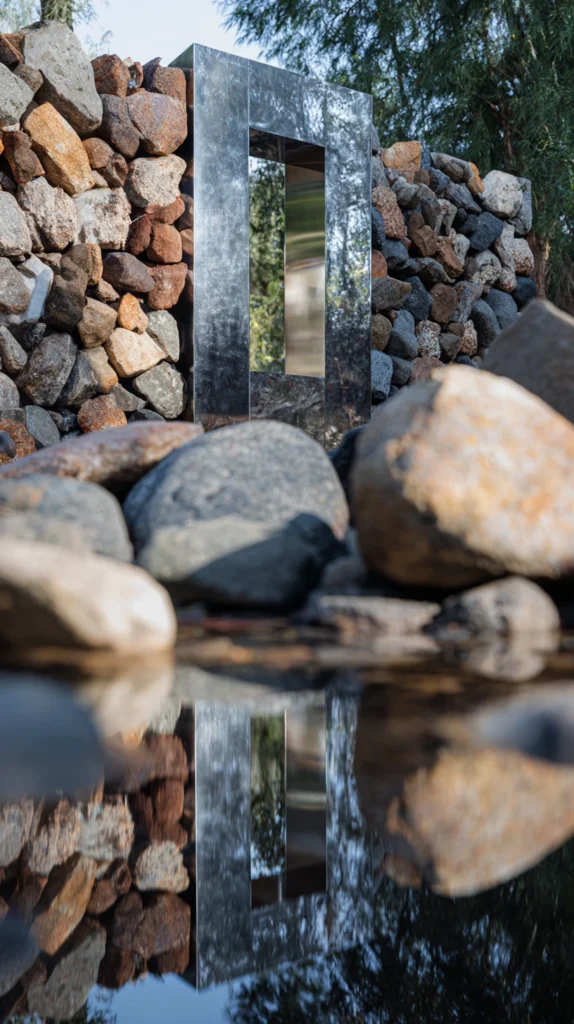
Budget: $40 – $200
A garden mirror used as the primary element of a deliberately composed garden art installation — combined with coloured glass, stone sculpture, driftwood, or mosaic tiles in a designed arrangement on a fence or wall — creates a garden art piece of genuine originality that goes beyond the purely functional spatial illusion of a standard mirror placement. The mirror contributes its reflective quality to the composition while the surrounding elements create the artistic context that gives the installation its specific character and meaning.
A mirror of 50×70 cm as the central element of the installation costs $40–$100. Surrounding mosaic tiles cost $5–$20 per square metre of coverage. Driftwood pieces cost $0–$15. Coloured sea glass costs $5–$15 per bag. The total installation cost depends entirely on the materials chosen and the size of the composition — a modest installation with one mirror and natural found-object surroundings costs $40–$80. A more elaborate mosaic and mirror composition costs $100–$200 in materials.
Mirror tip: Design the surrounding composition so that the most interesting elements of the garden art piece are visible in the mirror’s reflection — positioning pots, plants, or garden ornaments in front of the installation so they appear in the reflected view adds a layer of depth to the art piece that a purely decorative surrounding composition without a reflected foreground does not achieve.
13. A Full-Length Mirror on a Garden Structure
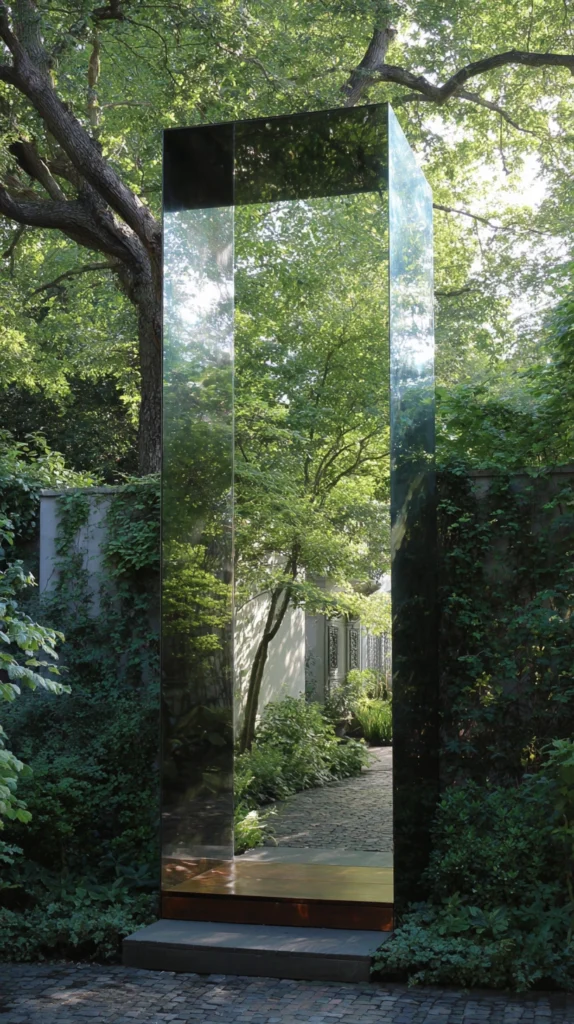
Budget: $80 – $300
A full-length garden mirror — 150–180 cm tall by 50–60 cm wide — fixed vertically to the side of a garden shed, the end post of a pergola, or a standalone timber frame creates the most impactful and most immediately stunning mirror installation available in any garden of any size. At full human height the mirror produces a reflection of the whole garden scene — plants, sky, and surrounding space — that transforms the visual scale of even a compact garden into something that reads as genuinely expansive.
An outdoor-rated full-length mirror of 150×50 cm costs $80–$200. A larger 180×60 cm version runs $120–$300. Fix using four exterior mirror clips — top, bottom, and two midpoints — into a solid vertical timber surface. A full-length mirror fixed to the side of a garden shed at the end of the garden’s main sight line from the house window creates the maximum possible spatial effect — the reflected full-garden view visible both from within the garden and from the main indoor viewpoint simultaneously.
Mirror tip: Apply an anti-bird strike decal or a subtle frosted vinyl strip at mid-height on any large outdoor mirror — a precaution that prevents birds from flying toward the reflected garden in the mirror surface and striking the glass. A small frosted strip at 80–90 cm height is virtually invisible from normal viewing distances and garden viewing angles but provides adequate visual interruption for birds approaching the mirror at flight speed. This simple addition costs $3–$8 and prevents the most common safety issue associated with full-length outdoor mirrors in planted garden settings.
A garden mirror works best when it is positioned with as much thought as any other garden feature — where the reflection captured, the sight line from the main viewpoint, the surrounding plants, and the relationship between the mirror and the boundary it is fixed to have all been considered before a single fixing hole is drilled. The mirror that has been positioned in the right place by a gardener who has stood at the main viewpoint and checked the reflection before fixing it produces a spatial effect far beyond what any mirror placed by instinct alone achieves.
Start with a simple arch mirror on the fence that ends the garden’s primary sight line from the house. Check the reflection from the kitchen window or the main back door before fixing. Adjust the position until the reflection is the most interesting view available from that direction. Fix it there. Everything else — the surrounding plants, the lighting, the framing — can follow once the fundamental positioning is right.