14 Summer Succulent Garden Ideas That Are Easy to Maintain
There is a reason succulents have become one of the most loved garden plants of the past decade. They are architectural without being cold, colourful without demanding constant attention, and forgiving in a way that makes them genuinely ideal for gardeners of every experience level. They store water in their leaves, tolerate neglect with remarkable good humour, and produce some of the most quietly beautiful textures and forms in the plant kingdom — all with a fraction of the care that most other garden plants require.
Summer is when succulents truly come into their own. The heat, the long days, and the reduced rainfall that challenge most other plants are precisely the conditions succulents are built for. The ideas below range from a single pot on a doorstep to a full garden transformation, covering every scale and every budget with practical guidance on making each one work beautifully through the hottest months of the year.
1. The Raised Succulent Bed
Budget: $60 – $250
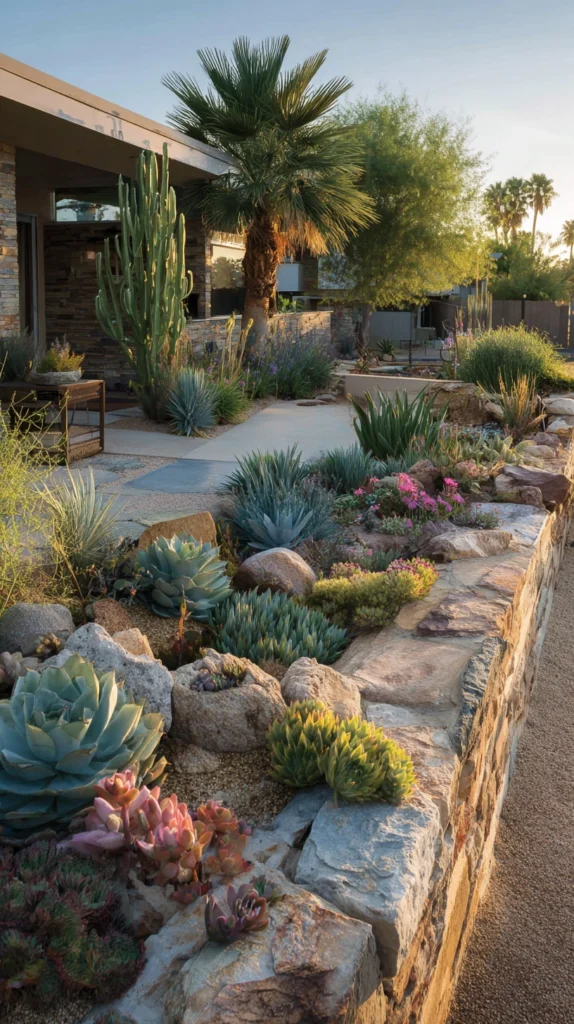
A raised bed filled with free-draining gritty soil and planted with a generous mix of succulent varieties is the most impactful way to introduce succulents to a garden at scale. The raised structure improves drainage — the single most important factor in succulent health — and allows you to control the soil composition completely, replacing heavy clay or waterlogged garden soil with the lean, gritty mix that succulents genuinely thrive in.
Fill the bed with a mix of two parts horticultural grit to one part compost — far leaner than you might expect, but succulents perform better in poor, fast-draining soil than in rich, moisture-retentive mixes. Plant a combination of tall architectural agaves or aloes as focal points, mid-height echeverias and sedums for body, and low-growing sempervivums and delospermas to fill the edges and spill over the sides.
Garden tip: Top-dress the entire bed with a layer of fine gravel or grit after planting. A 2–3 centimetre gravel mulch prevents moisture from sitting against the base of the plants, reflects heat upward through the foliage, and gives the bed a clean, finished appearance that makes the planting look considered rather than simply assembled.
2. The Terracotta Pot Collection
Budget: $30 – $120
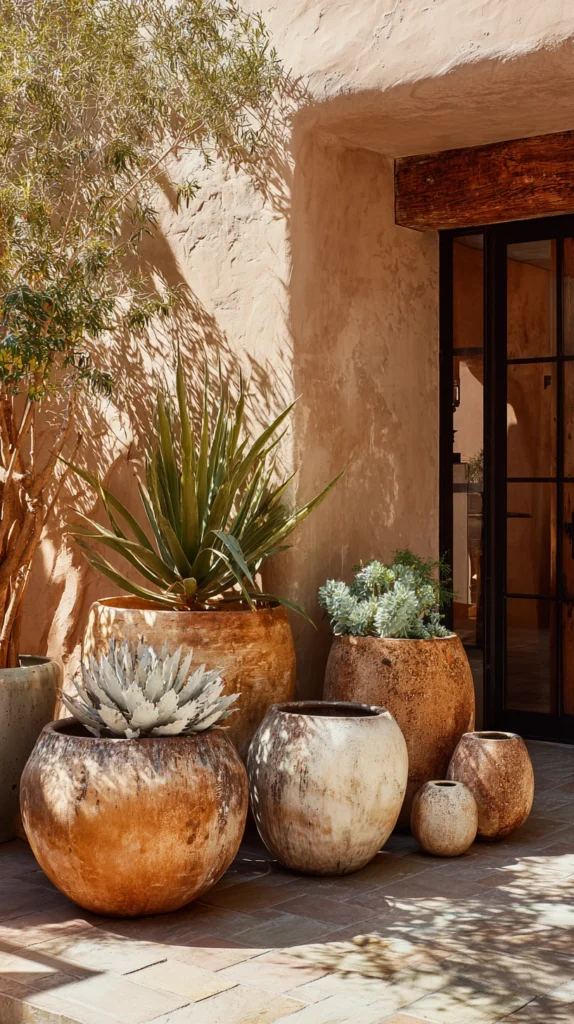
A grouped collection of terracotta pots in varying sizes, each planted with a different succulent variety, is one of the most satisfying and adaptable garden displays available. Terracotta is the ideal material for succulents — it is porous, which means excess moisture evaporates through the pot walls rather than sitting around the roots, and it warms quickly in sunlight, creating the kind of warm root environment that succulents love.
Group pots in odd numbers — three, five, or seven — at varying heights. Place taller varieties like aeoniums or euphorbias in the largest pots at the back, medium rosette forms like echeverias in the middle, and small clustering varieties like sempervivums in the smallest pots at the front. The layered arrangement creates depth and visual interest from every angle.
Garden tip: Elevate the smaller pots on upturned pots, bricks, or a tiered plant stand rather than placing everything at ground level. Varying the heights of a grouped pot arrangement by even 15–20 centimetres makes the collection look far more curated and allows each plant to be seen clearly rather than being hidden behind its neighbours.
3. The Vertical Succulent Wall Panel
Budget: $50 – $200
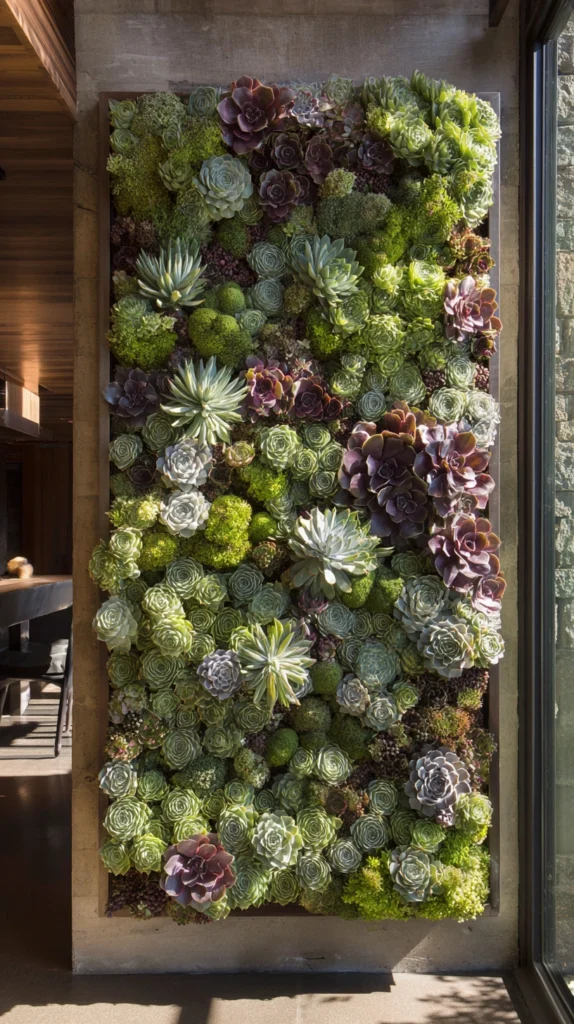
A vertical panel or frame filled with succulents — mounted on a garden wall, fence, or freestanding frame — creates a living artwork that takes up no ground space and stops visitors in their tracks. The naturally geometric rosette forms of echeverias and sempervivums arranged in colour-graduated patterns across a vertical panel have a graphic, almost mosaic-like quality that no other plant type can replicate.
Wooden shadow box frames filled with a chicken wire and moss substrate cost $30–$80 to build at home. Pre-made succulent wall planter systems are available from garden centres for $50–$150. Plant succulents densely — the tighter the planting, the more impressive the panel looks — and lay the frame flat for six to eight weeks after planting to allow roots to establish before mounting it vertically.
Garden tip: Choose slow-growing, compact varieties for a vertical panel rather than fast-growing types that will quickly outgrow their position and disrupt the pattern. Sempervivums, small echeverias, and sedums are the best choices — they stay neat, produce offsets that fill gaps naturally, and tolerate the drier conditions of a vertical growing position better than most.
4. The Rock Garden Succulent Landscape
Budget: $80 – $350
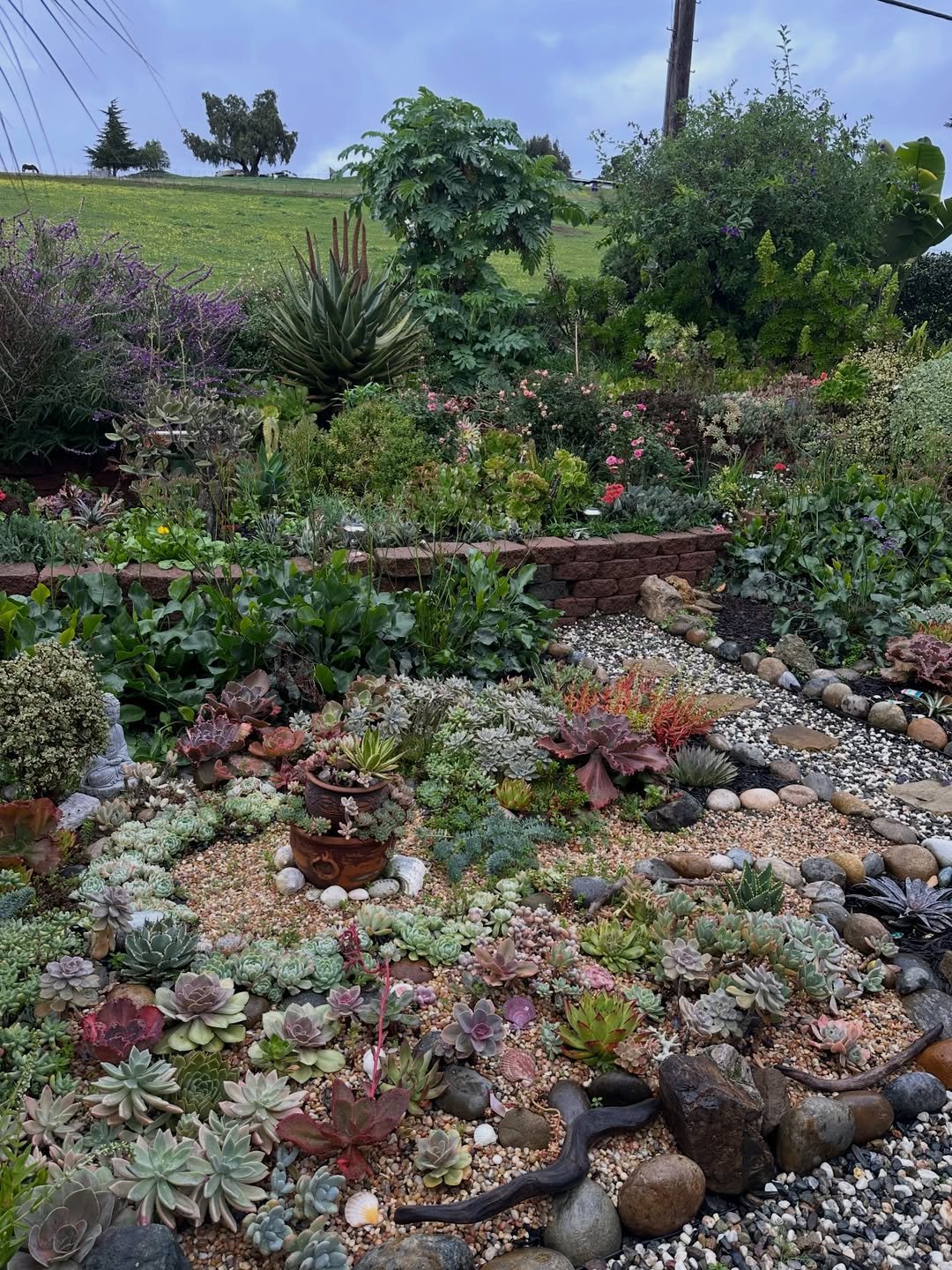
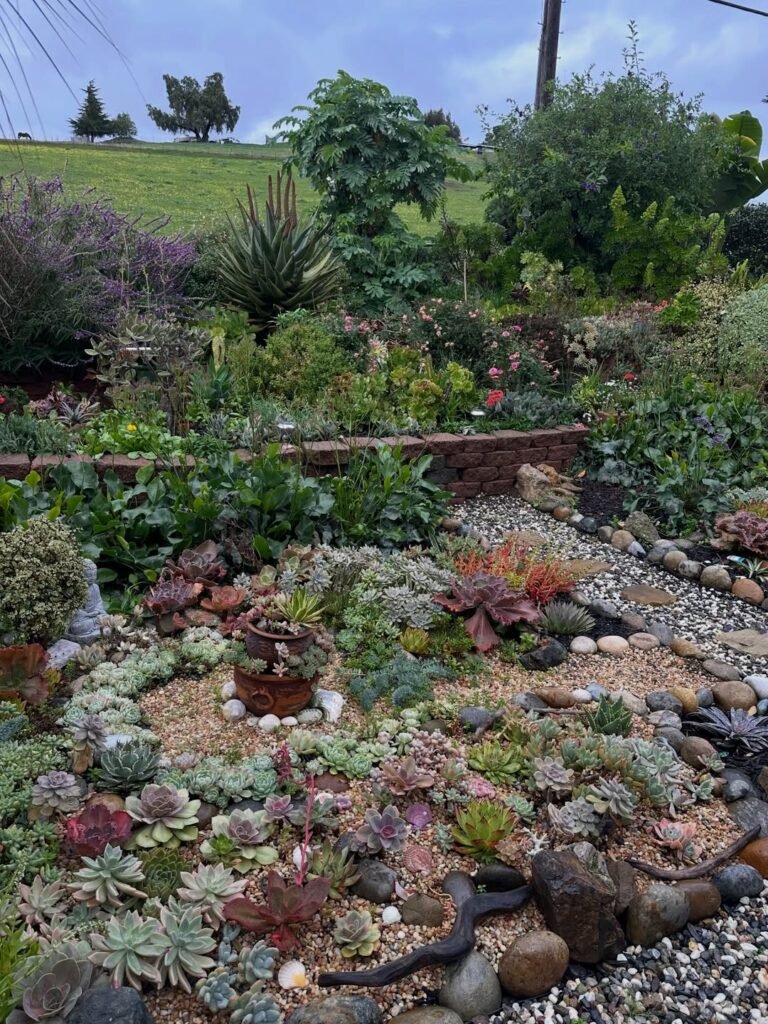
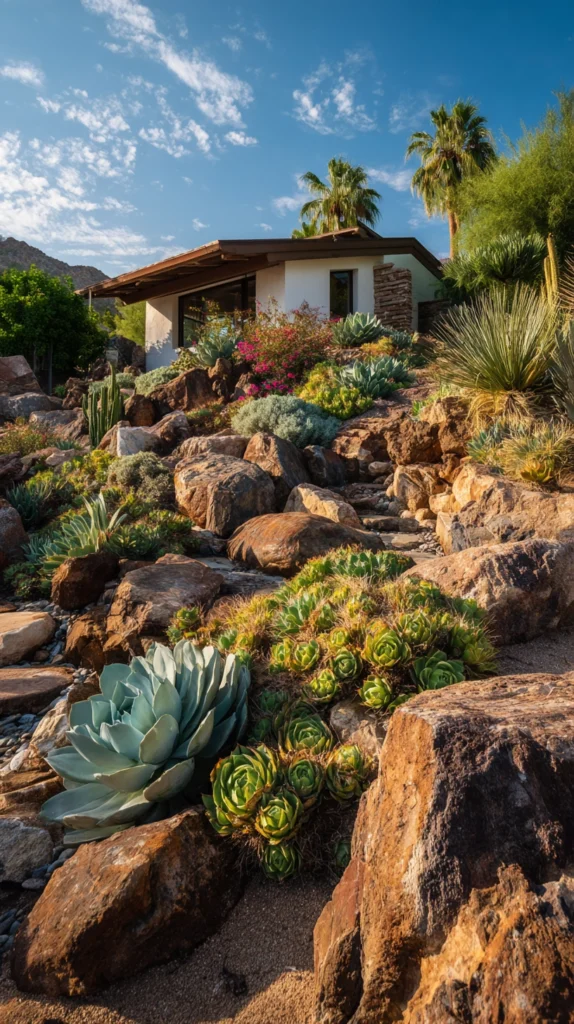
Succulents and rocks are natural companions — in the wild, many succulent species grow in rocky outcrops and stony hillsides where water drains freely and the sun-warmed rock provides the heat their roots thrive in. A rock garden planted with succulents replicates these conditions in a domestic setting, creating a landscape that looks genuinely naturalistic and requires almost no maintenance once established.
Place large rocks first, burying at least a third of each rock below soil level so they look embedded rather than simply placed on the surface. Fill the gaps between rocks with gritty, free-draining soil and plant succulents in the pockets and crevices. Sedums work beautifully as ground-covering plants between rocks. Agaves and aloes provide dramatic height. Lewisias and delospermas add seasonal colour in the gaps.
Garden tip: Use rocks from a single geological source rather than mixing different stone types. A rock garden built from one consistent stone — all sandstone, all limestone, or all slate — looks as though the rocks belong together and emerged naturally from the ground. Mixed stone types from different sources always looks like a collection of individual rocks rather than a unified landscape.
5. The Succulent Wreath for the Garden Gate
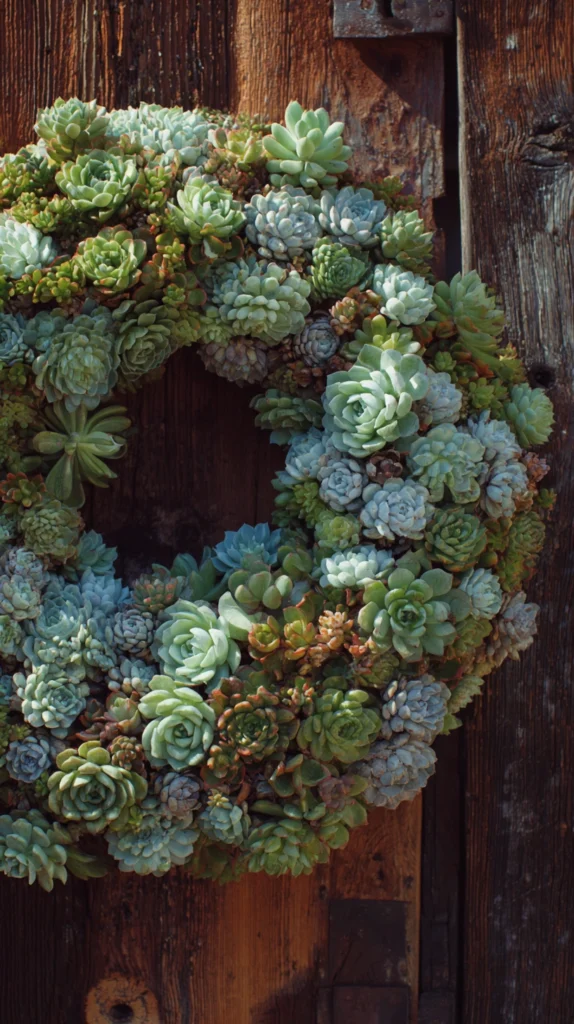
Budget: $30 – $90
A living succulent wreath — a moss-filled wire frame planted with small succulent rosettes — hung on a garden gate or exterior wall is one of those ideas that looks complex but is genuinely straightforward to make. The succulents root into the moist moss substrate and stay healthy for months with minimal watering, creating a circular living arrangement that looks beautiful from midsummer well into autumn.
Wire wreath frames cost $5–$15. Sheet moss ($8–$20 per bag) fills the frame and holds moisture around the roots. Use sempervivums, small sedums, and crassula varieties — all are compact, slow-growing, and tolerant of the dry conditions a hanging wreath experiences. Secure each plant with a U-shaped pin of bent wire until the roots establish themselves in the moss.
Garden tip: Soak the completed wreath in a tray of water for ten minutes once every two to three weeks rather than watering it from above. Immersion watering reaches the roots far more effectively than surface watering on a vertical display, and the moss substrate holds enough moisture between soakings to keep the plants healthy without constant attention.
6. The Wheelbarrow Succulent Garden
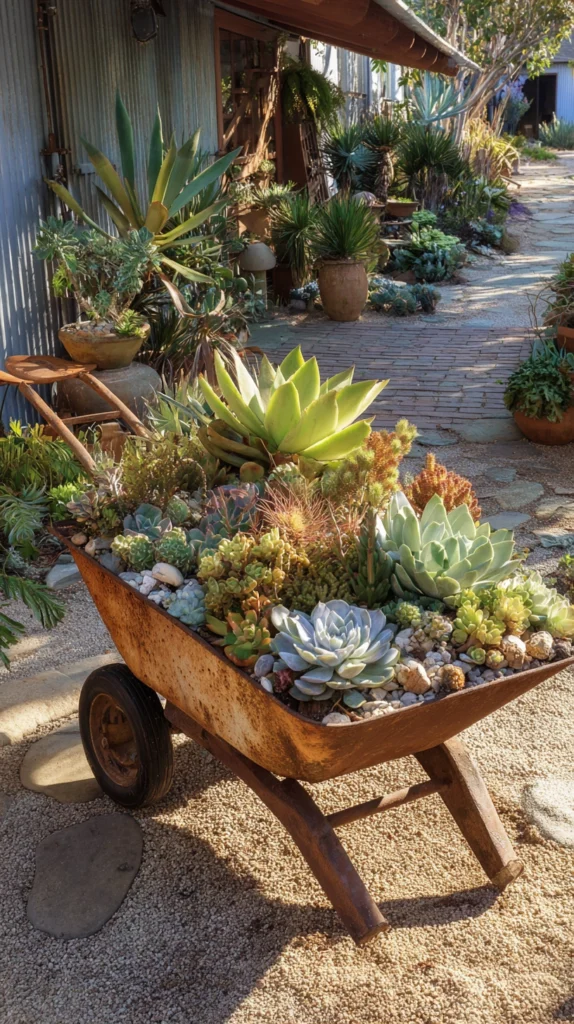
Budget: $40 – $150
An old or decorative wheelbarrow filled with gritty compost and planted with a generous mix of succulents is one of those garden displays that manages to be simultaneously rustic, practical, and genuinely attractive. The wheelbarrow provides excellent drainage through its base holes, its mobility means you can move the display into the sunniest position at any time of year, and its visual character — somewhere between garden tool and garden feature — suits every outdoor style from farmhouse to contemporary.
Drill additional drainage holes in the base if the wheelbarrow does not already have them — succulents in a container without drainage will rot at the roots within weeks. Fill with a mix of compost and horticultural grit, plant generously, and top-dress with gravel. An agave or aeonium at the centre as a focal point, surrounded by trailing sedums spilling over the edges, creates a display with height, body, and movement.
Garden tip: Park the wheelbarrow at a slight angle — one handle slightly lower than the other — rather than perfectly level. The gentle tilt looks natural and intentional, improves drainage toward the lower end, and gives the display a relaxed, slightly whimsical character that suits the informality of a wheelbarrow planter perfectly.
7. The Succulent Pathway Edging
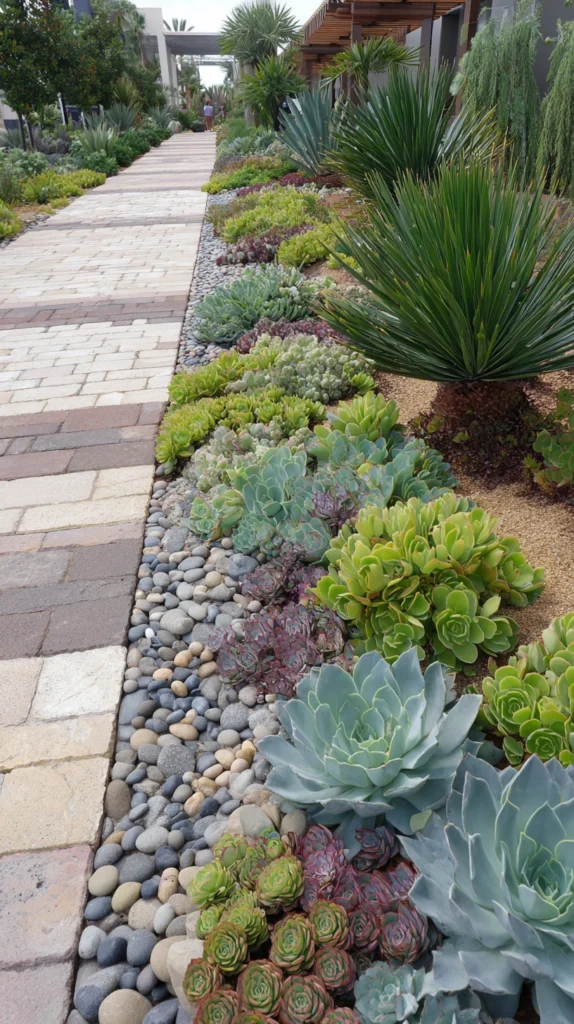
Budget: $30 – $100
Low-growing succulents planted along the edges of a garden path create a living border that softens the transition between hard surface and planted bed in a way that few other plants can match. Sempervivums, sedums, and delospermas all spread slowly to form dense, weed-suppressing mats that require no cutting, minimal watering, and produce flowers that attract bees and pollinators throughout summer.
Plant in drifts of single varieties rather than alternating individual plants — a run of ten identical sempervivums reads as a deliberate design choice while alternating different varieties every few plants looks restless and busy. Allow the plants to spill slightly over the path edge — the gentle encroachment of foliage onto the hard surface is part of the charm and softens the geometry of the path naturally.
Garden tip: Choose varieties with contrasting colours for neighbouring drifts to create visible distinction between sections of the edging. Green sempervivums next to burgundy-tipped ones, or blue-grey sedums beside golden-leaved varieties, create a tapestry effect at ground level that looks beautiful and complex while requiring almost no maintenance to sustain.
8. The Succulent Dish Garden
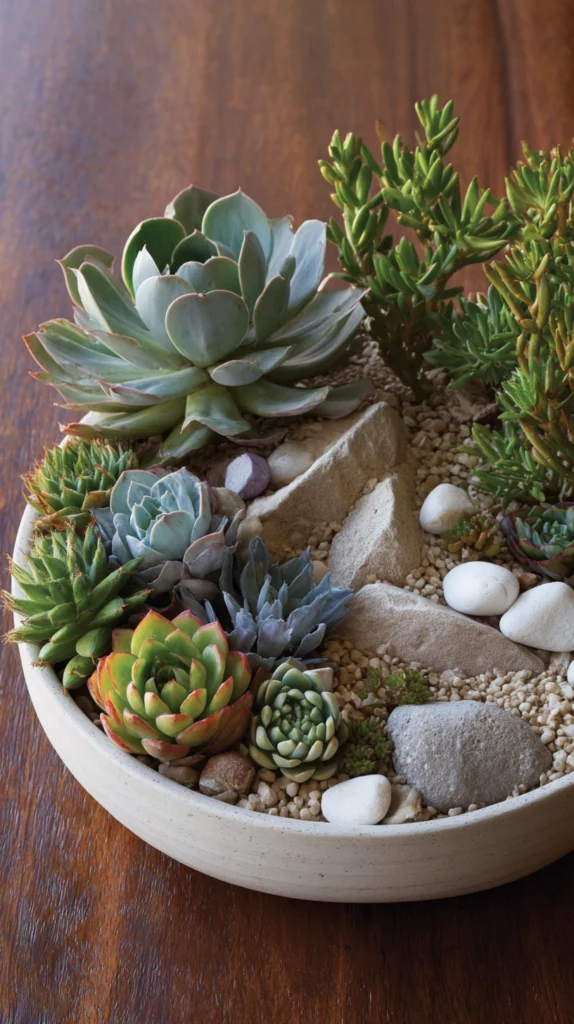
Budget: $20 – $70
A wide, shallow dish — a large ceramic bowl, a terracotta saucer, a vintage enamel basin — planted with a close arrangement of different succulent varieties creates a miniature landscape in a single container. The scale forces you to consider composition carefully, which means a well-planted dish garden has the quality of something considered and crafted rather than simply potted up.
Choose varieties with contrasting forms — a tall spiky haworthia beside a flat rosette echeveria beside a clustering crassula — and contrasting colours. Arrange plants while still in their nursery pots before committing to a final position. Top-dress every exposed soil surface with fine grit and add a small piece of interesting rock or driftwood as a focal point. The finished dish should look like a landscape viewed from above.
Garden tip: Resist the temptation to use potting compost straight from the bag in a shallow dish garden. Standard potting mixes retain too much moisture for succulents in a shallow container with limited volume — mix in at least fifty percent horticultural grit to create the fast-draining substrate the plants need to thrive through a wet summer.
9. The Drought-Tolerant Succulent Slope
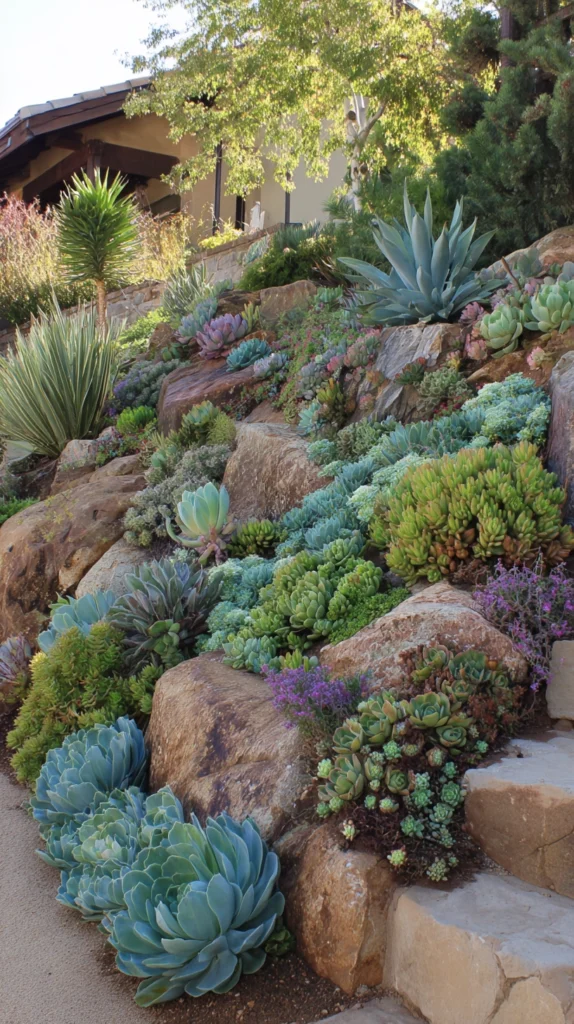
Budget: $50 – $200
A sloped or banked area of garden that is difficult to mow, impossible to irrigate consistently, and prone to drying out in summer is ideal succulent territory. Planted with a mix of ground-covering succulents — sedums, delospermas, ice plants, and spreading sempervivums — a dry bank transforms from a maintenance problem into one of the most low-effort, high-impact areas of the garden.
The natural drainage of a slope suits succulents perfectly. Plant through a permeable membrane to suppress weeds during establishment and top-dress with gravel to lock moisture into the soil and prevent erosion during heavy rain. Within two to three seasons the plants will have spread to cover the bank completely, and the maintenance requirement drops to almost nothing.
Garden tip: Anchor the gravel mulch on a steep slope by pegging landscape fabric over the surface after application, then cutting planting holes where needed. Loose gravel on a steep bank migrates rapidly downhill in heavy rain — a secured fabric layer beneath keeps the gravel in place and protects the young plants from being dislodged during downpours.
10. The Succulent Container Tower
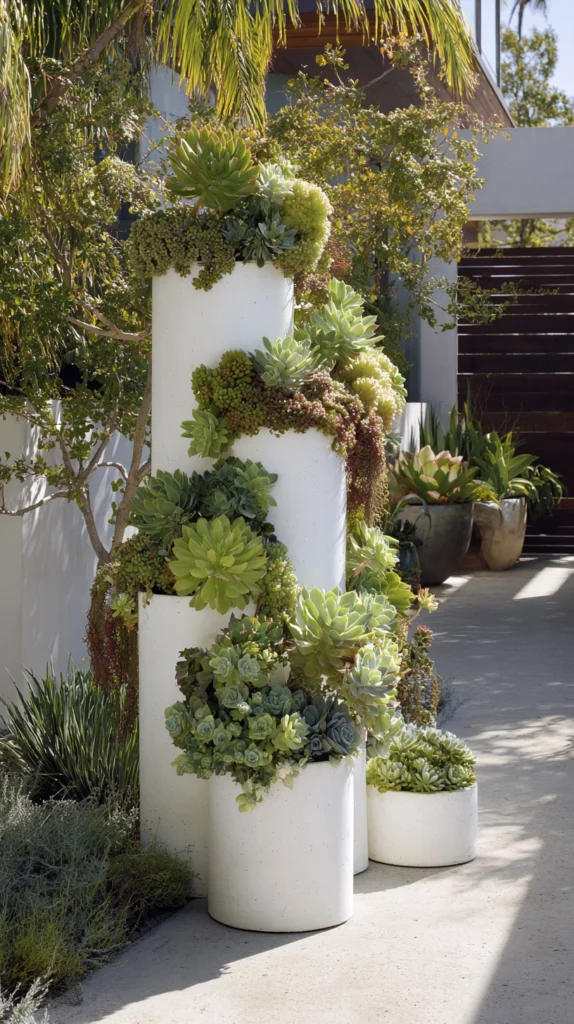
Budget: $40 – $160
A tower of stacked containers — each one slightly smaller than the one below — planted with cascading succulents creates a vertical display with real presence that suits a patio, courtyard, or entrance area where ground space is limited. The cascading habit of sedums, trailing jade, and string of pearls looks particularly beautiful when the plants have a height from which to hang, and the tower format provides exactly that.
Use containers with matching or complementary finishes for a cohesive look — all terracotta, all concrete-effect, or all glazed ceramic in the same colour family. Secure each tier to the one below with a central metal rod or wooden dowel to prevent the tower from toppling in wind. Plant the top tier with the most upright variety and choose progressively more trailing types for each lower level.
Garden tip: Water the tower from the top and allow water to percolate down through each tier naturally. The lower tiers will receive some residual moisture from the tier above, which means they need slightly less frequent direct watering — factor this in when assessing moisture levels at each level to avoid the lower plants becoming waterlogged while the top tier stays appropriately dry.
11. The Succulent Trough Garden
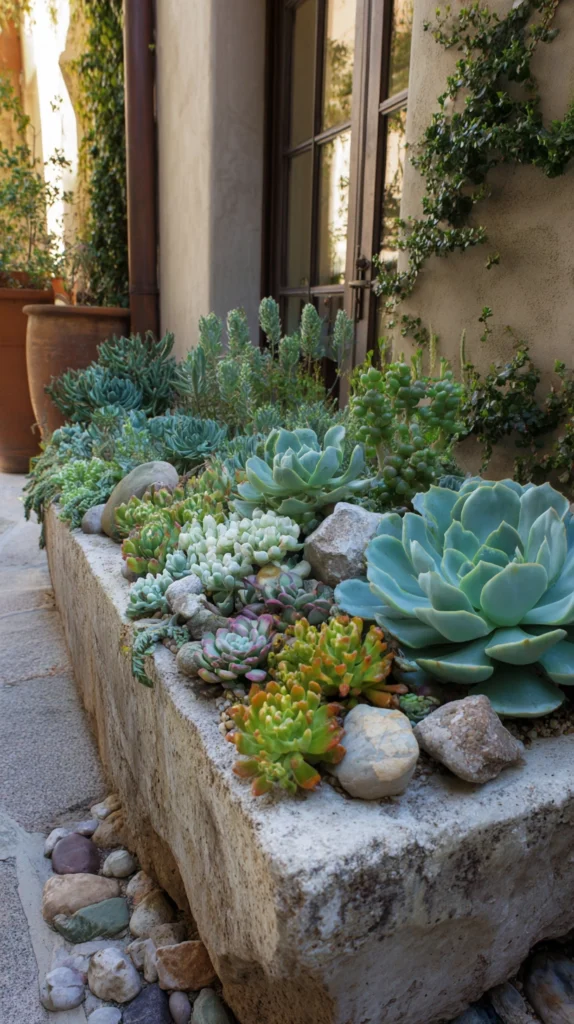
Budget: $50 – $180
A long stone or concrete trough — the kind originally used as a cattle drinking vessel — planted with a curated selection of succulents is one of the most satisfying and enduring garden containers available. The weight and solidity of a genuine stone trough gives it a permanence and presence that no plastic or timber container can replicate, and succulents in a stone trough look as though they belong there completely.
Genuine antique stone troughs are expensive ($100–$400) but last indefinitely and improve with age. Hypertufa troughs — made from a mixture of cement, perlite, and peat that mimics the texture of stone — can be made at home for under $20 in materials and are almost indistinguishable from real stone once weathered. Drill drainage holes in any trough that does not already have them before planting.
Garden tip: Age a new hypertufa or concrete trough quickly by painting the exterior with a mixture of live yoghurt and water, then leaving it in a shaded, damp position for several weeks. The beneficial bacteria in the yoghurt encourage moss and lichen growth on the surface, giving a brand new trough the settled, weathered appearance of something decades old.
12. The Fairy Garden Succulent Miniature Landscape
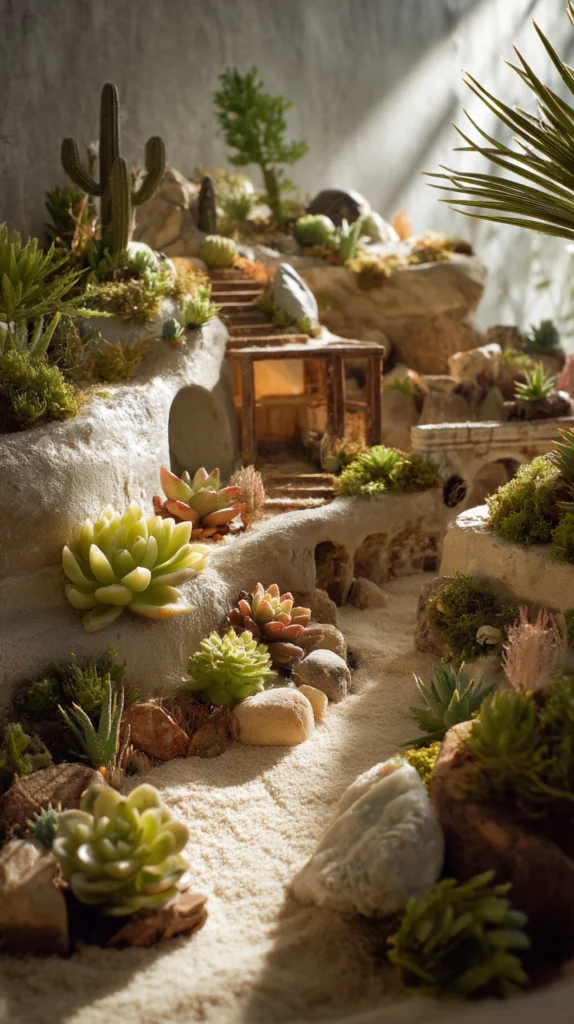
Budget: $25 – $80
A miniature fairy garden — a shallow container planted with tiny succulents and accessorised with small-scale decorative elements like miniature benches, tiny pathways of fine gravel, small pebble stepping stones, and miniature garden ornaments — is one of the most charming and creative uses of succulents available. It works as a children’s project, as a patio focal point, and as a genuinely beautiful small-scale garden feature in its own right.
The naturally small scale of many succulent varieties — particularly miniature echeverias, haworthias, and small crassulas — makes them perfectly proportioned for a miniature landscape. The slow growth habit means the arrangement stays in scale and in proportion for a full season without the plants outgrowing their positions and disrupting the composition.
Garden tip: Choose a container with significant depth — at least 10 centimetres — even for a miniature landscape. Shallow containers dry out rapidly in summer heat and the limited soil volume makes consistent moisture levels very difficult to maintain. A deeper container holds enough substrate to buffer the plants through warm, dry periods without needing daily watering.
13. The Succulent Living Mulch
Budget: $30 – $100
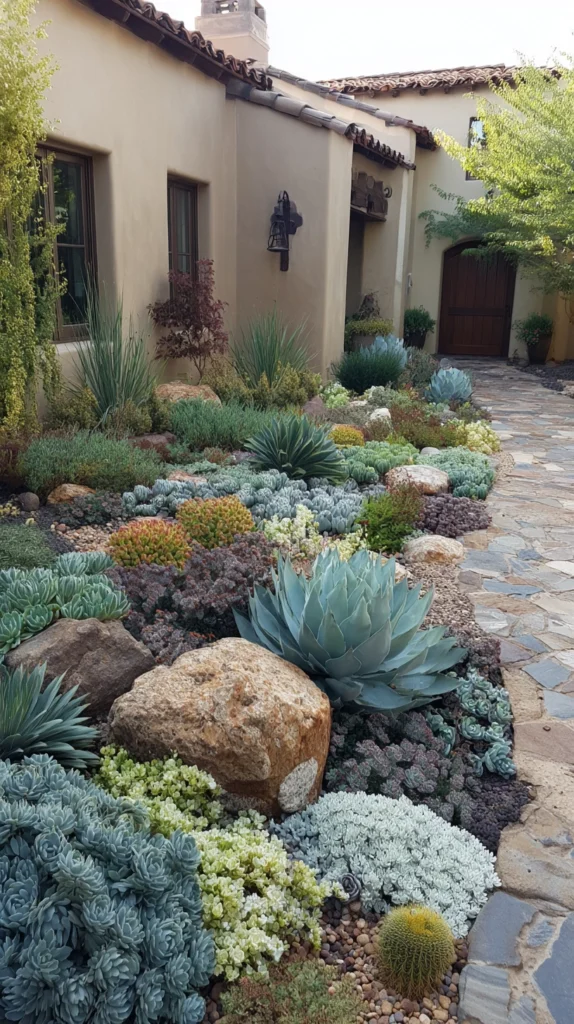
Using low-growing succulents as a living mulch beneath taller specimen plants — a banana, a large agave, a statement olive tree — creates a layered planting effect that looks like a considered design decision and functions as a genuinely effective ground cover. The succulents suppress weeds, retain soil moisture, and fill what would otherwise be bare, unattractive soil around the base of the feature plant.
Sedums and sempervivums are the most effective living mulch succulents — both spread steadily to fill gaps, tolerate the dry conditions beneath a large canopy, and require no cutting or deadheading to stay neat. Plant them in a loose, naturalistic arrangement around the base of the specimen plant rather than in a formal pattern, and allow them to find their own level as they spread.
Garden tip: Leave a clear unplanted circle of approximately 20 centimetres around the base of the specimen plant before the succulent mulch begins. Planting ground-cover succulents directly against the trunk or stem of a feature plant can trap moisture against the bark and create conditions that encourage rot — the small gap provides essential airflow and access for watering and feeding the main plant.
14. The Full Succulent Front Garden
Budget: $200 – $800
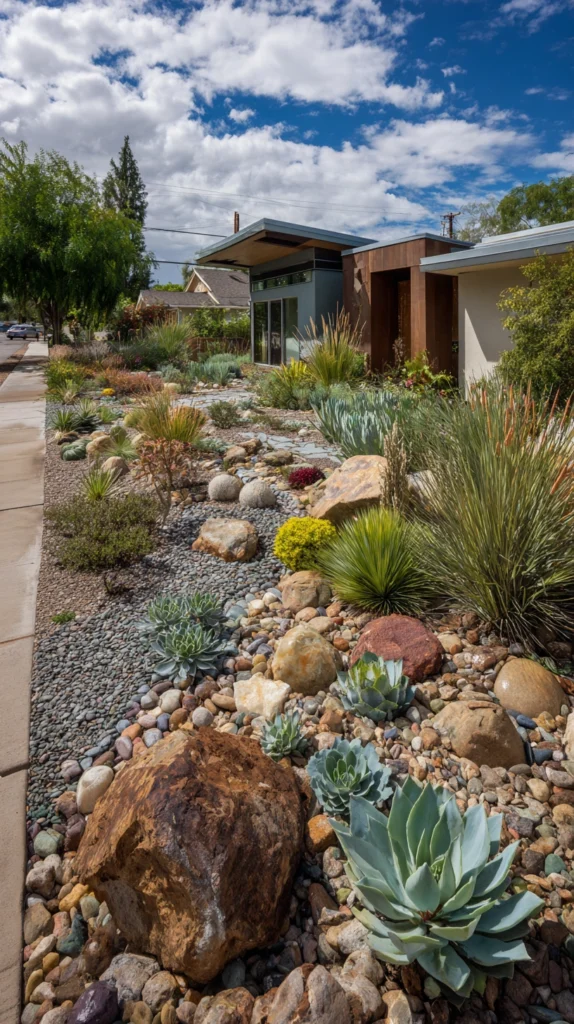
The most ambitious idea on this list and, in the right climate, the most transformative. Replacing a water-hungry, labour-intensive front lawn with a fully planted succulent garden — a composition of statement agaves, aloes, and euphorbias amid a sea of ground-covering sedums and ice plants, with pale gravel mulch and natural stone edging — creates a front garden that is genuinely beautiful, genuinely drought-tolerant, and genuinely almost maintenance-free.
The upfront investment is higher than most other ideas here, but the long-term saving in water, time, and seasonal replanting more than compensates. A well-designed succulent front garden reaches its full beauty within two to three seasons as the plants establish and fill in, and then largely takes care of itself for years without intervention.
Garden tip: Include at least one statement plant with significant height and sculptural presence — a large agave americana, a tree aloe, or a euphorbia ingens — as the focal anchor of the design. A succulent garden planted exclusively with low ground-covering varieties, however beautiful individually, reads as flat and one-dimensional from the street. Height and vertical structure are what give the planting drama and presence from a distance.
Succulents reward the gardener who understands their fundamental needs — excellent drainage, plenty of sun, and the restraint to water far less often than instinct suggests — and forgives almost everything else. Start with a single pot or a small raised bed, learn what each variety does through a season of observation, and let the collection grow as your confidence does. By the second summer, the garden will be taking care of itself while you simply enjoy what it has become.