12 Kitchen Garden Ideas You Can Start This Weekend
A kitchen garden does not require a large plot, a full season of planning, or any particular level of experience. It requires a container, some compost, a handful of seeds, and the decision to start.
The ideas below are chosen specifically because every one of them can be begun on a Saturday morning and deliver something harvestable within weeks — not months. The barrier to a productive kitchen garden is almost always inertia rather than the lack of space, skill, or time that people assume is the real obstacle.
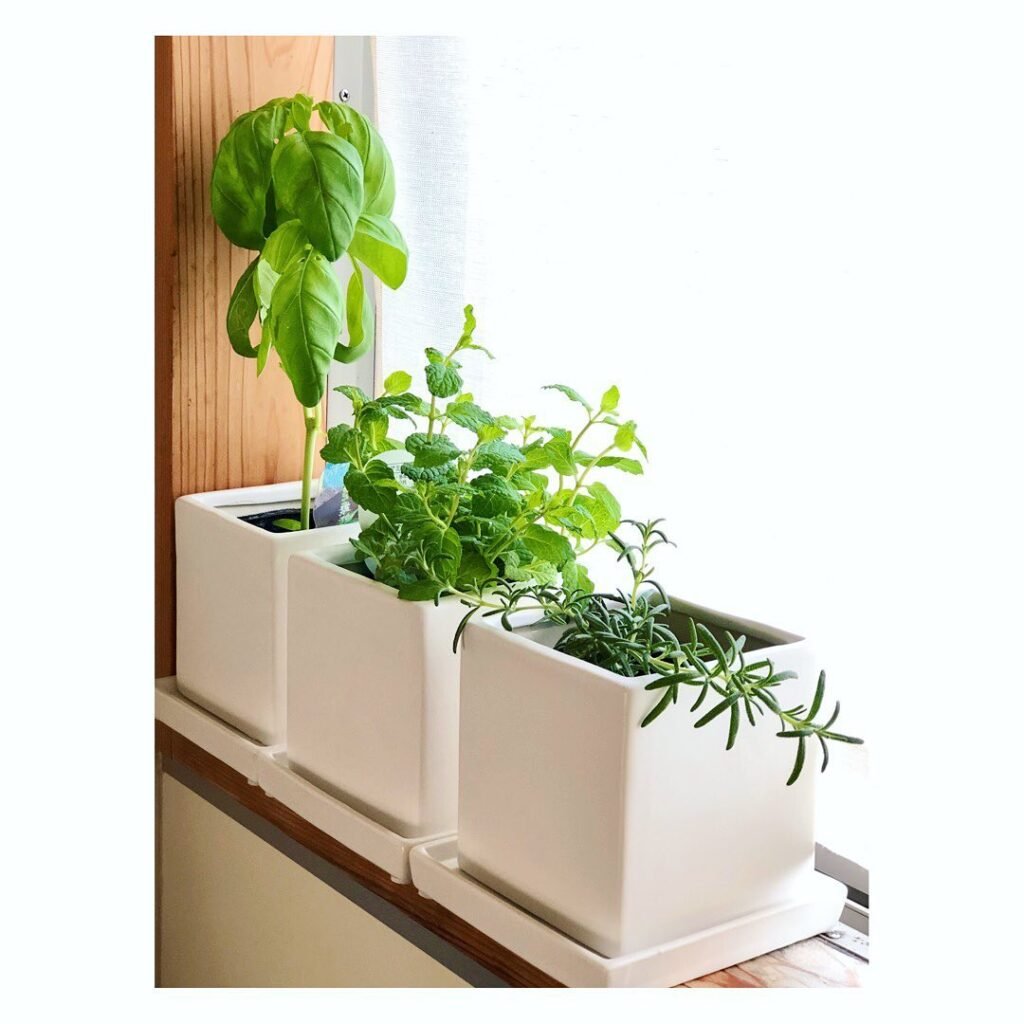
Whether you have a large sunny garden, a small paved terrace, a balcony, or a single south-facing windowsill, there is a kitchen garden idea here that fits your situation. Each one includes what it costs, what you will need, and a practical tip to get the best from it from the very first weekend you put it in place.
1. The Windowsill Herb Tray
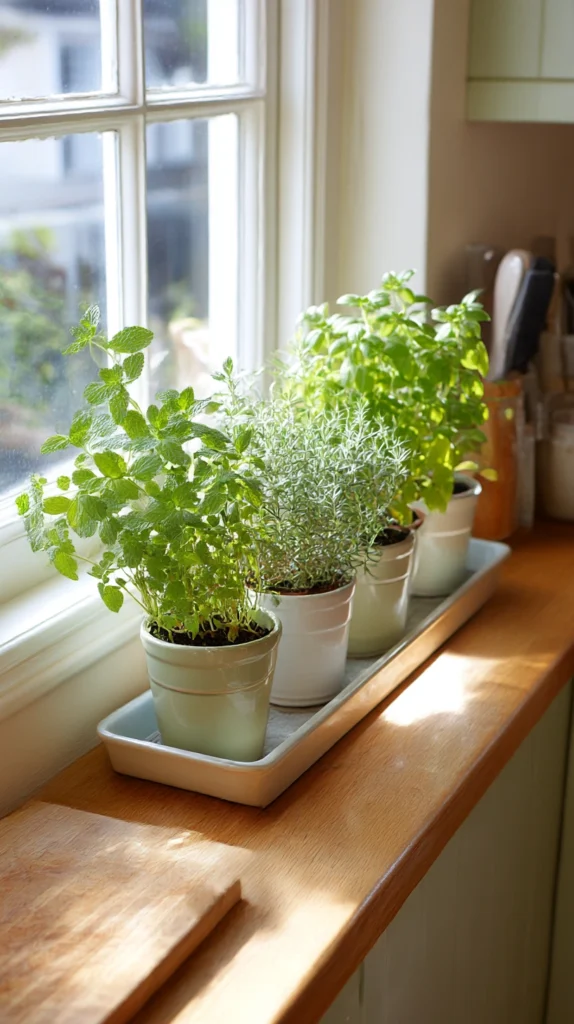
Budget: $15 – $50
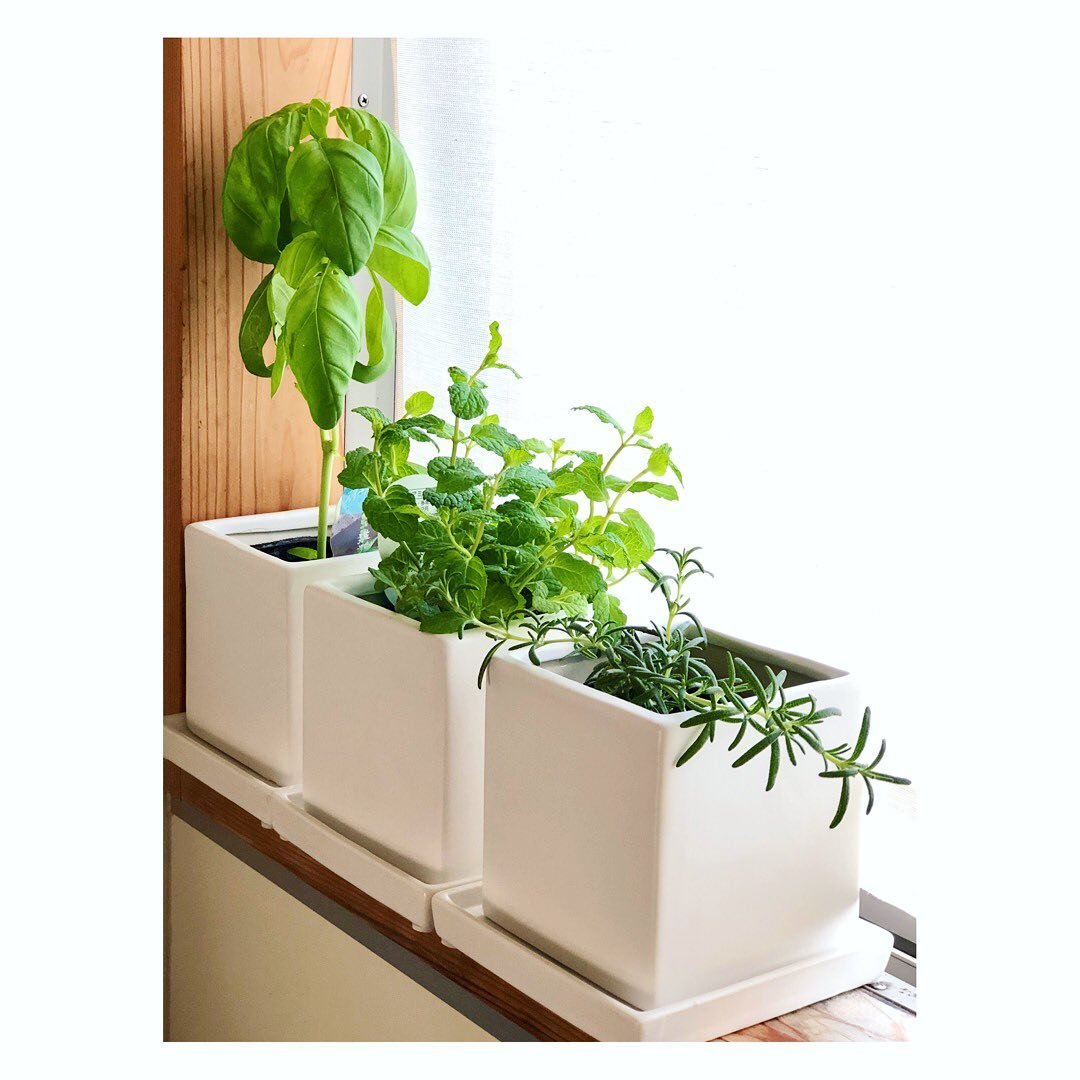
A tray of herb pots on a sunny windowsill is the smallest and most immediately useful kitchen garden it is possible to create. Basil, chives, flat-leaf parsley, and mint on the kitchen windowsill mean that fresh herbs are within arm’s reach of the chopping board at every meal — a convenience that transforms everyday cooking far more than most people expect before they try it. It costs less than a single bunch of supermarket herbs and produces more leaves in a single season than you could realistically buy for the same money.
A long rectangular windowsill tray costs $8–$20 from most homewares retailers. Fill individual pots with a good quality potting compost — herbs in windowsill conditions exhaust the nutrients in cheap compost within a few weeks and the quality of the leaves suffers noticeably. Start with plug plants or small pots at $2–$5 each for an instant result, or sow basil and chives from seed at $2–$3 per packet for a cheaper but slightly slower start. A south or west-facing windowsill receives enough light for most herbs through the summer months.
Weekend tip: Water windowsill herbs from below by placing the pots in a shallow tray of water for twenty minutes rather than pouring water over the top. Bottom watering encourages roots to grow downward toward moisture rather than remaining shallow, and prevents the compaction of fine compost that overhead watering causes over time. Empty any standing water from the tray after twenty minutes to prevent waterlogging.
2. The No-Dig Raised Bed
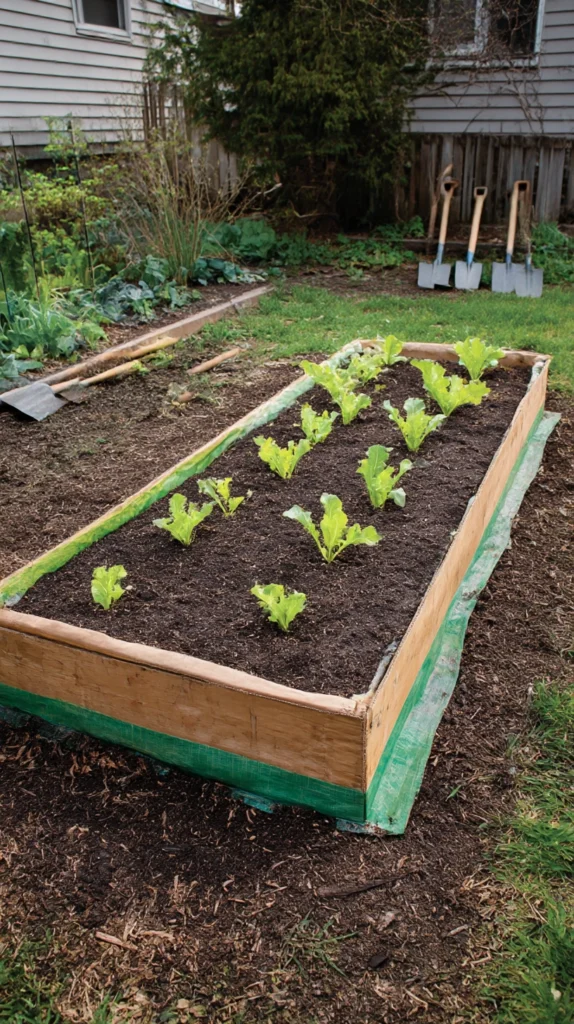
Budget: $50 – $180
A no-dig raised bed can be built and planted in a single morning with no specialist tools, no groundwork, and no need to break up existing soil or grass. Lay flattened cardboard directly over the ground, top it with 15 cm of good garden compost, and plant straight into the compost layer. The cardboard smothers existing vegetation within weeks and worms improve the soil structure below it while you are already harvesting from the bed above. It is the fastest route to a productive kitchen garden from a standing start.
Cardboard is free from any supermarket or furniture retailer — remove all tape and staples before laying and overlap every join by at least 15 cm without exception. Garden compost or well-rotted manure costs $20–$50 per large bag and a typical first bed of 120×60 cm requires four to six bags to reach the required depth. Plant plug plants or direct-sow seed immediately into the compost layer. By the following season the cardboard has fully decomposed and the bed soil is measurably improved compared to the original ground beneath.
Weekend tip: Build the bed on a Friday evening and plant it on Saturday morning. The overnight moisture that settles into the cardboard and compost makes the whole structure more stable for planting and gives the compost time to settle to its true depth before you add plants. A bed built and planted in the same hour sometimes shifts slightly as the layers compress under the weight of watering.
3. The Salad Container
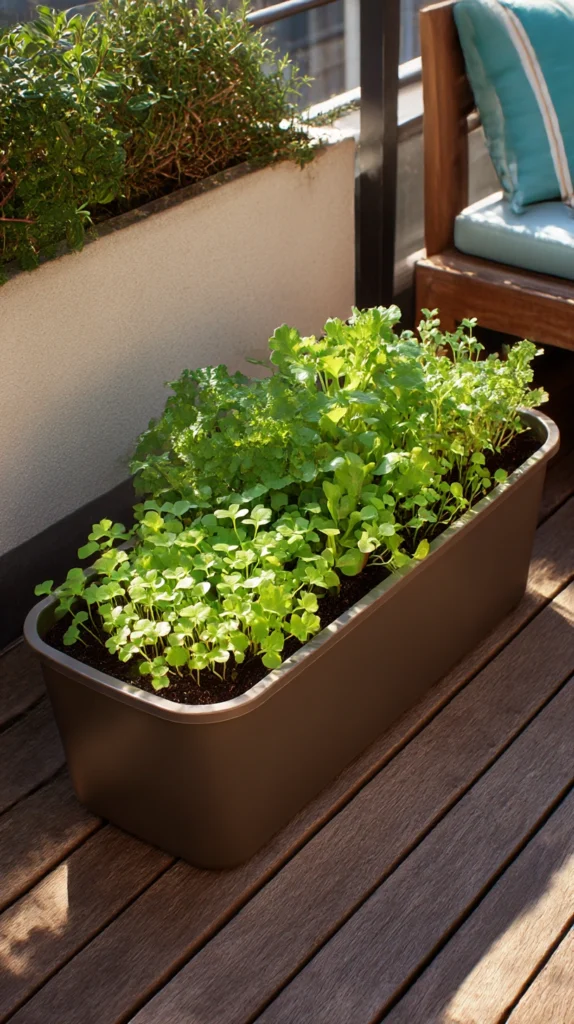
Budget: $20 – $60
A large container filled with a cut-and-come-again salad mix is the most immediately productive kitchen garden setup for a patio, balcony, or doorstep. Sow a mixed salad leaf blend — combining lettuce, rocket, spinach, and mustard leaves — scatter seed across the compost surface, press gently in, and water. The first leaves are ready to cut within three to four weeks and the container continues producing after each harvest for a further six to eight weeks before needing to be resown. It is the closest thing to a kitchen garden on autopilot that exists.
A large rectangular planter of 60×30 cm or a round pot of at least 35 cm diameter provides enough growing volume for a genuinely productive salad container. Fill with quality multipurpose compost at $8–$15 per bag. A mixed salad leaf seed packet costs $2–$5 and contains enough seed for multiple sowings through the season. Harvest by cutting the outer leaves with clean scissors 2–3 cm above soil level — do not pull the whole plant — and new growth regenerates from the base within one to two weeks of each cut.
Weekend tip: Place the salad container in a position that receives morning sun and afternoon shade during the hottest weeks of summer. Direct afternoon sun in peak summer triggers bolting — the plant runs to seed and becomes bitter — within days. Afternoon shade delays this significantly and produces better-flavoured, more productive leaves than a full-sun position through the hottest months of the growing season.
4. The Cherry Tomato Tower
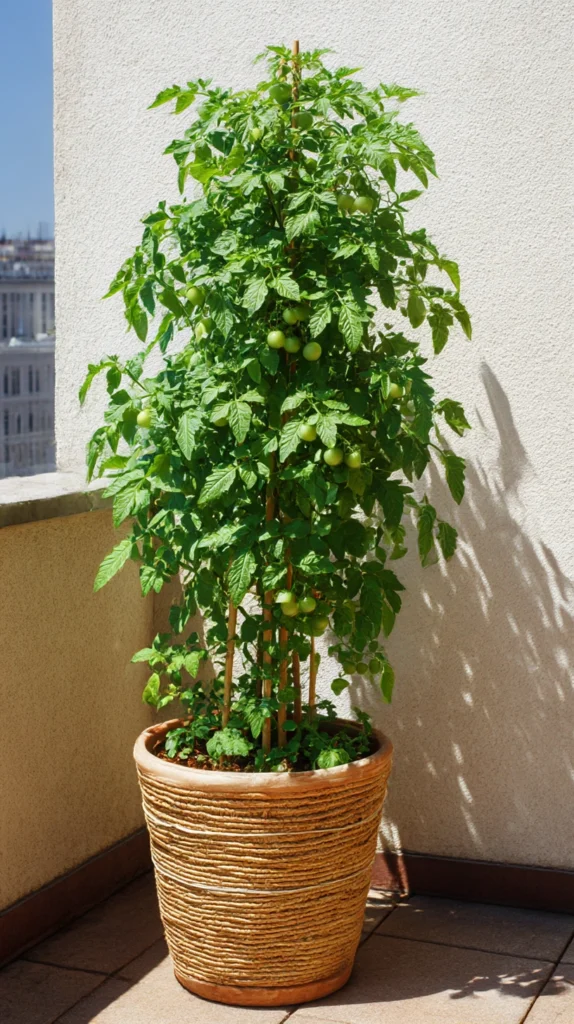
Budget: $30 – $80
A single cherry tomato plant in a large container with a cane support is one of the most productive and satisfying kitchen garden setups for a sunny terrace or patio. Cherry tomato varieties are significantly more forgiving than larger beefsteak types, ripen faster, and produce a continuous succession of fruits from July through to the first autumn frost. A single well-grown plant in a 30–40 litre container can produce several hundred fruits across the season — a return that makes it one of the best-value food plants available for a small outdoor space.
Buy a grafted cherry tomato plant in late spring for $6–$15 — grafted plants are more vigorous and more disease-resistant than standard varieties and are worth the small additional cost for a container situation where the plant has no access to the wider soil ecosystem. Plant into a 30–40 litre container filled with high-quality tomato compost at $10–$20 per bag. Install a 1.2 metre cane support at planting and tie the main stem in every 15–20 cm as it grows. Feed with a high-potassium liquid fertiliser every two weeks once the first flowers open.
Weekend tip: Remove sideshoots — the small shoots that appear in the angle between the main stem and each leaf branch — every week without fail for cordon-type varieties. Left to grow, sideshoots become secondary stems that compete for the plant’s energy and significantly reduce fruit size and total yield. Pinch them out when they are 1–2 cm long, before they have time to develop into substantial growth that takes real effort to remove.
5. The Patio Herb Spiral
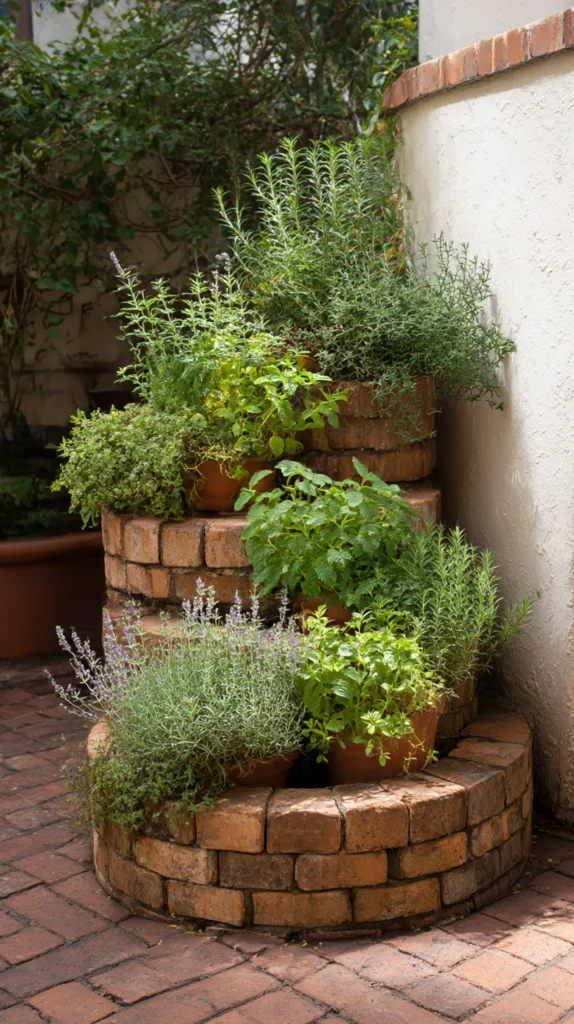
Budget: $40 – $150
A herb spiral — a small raised structure built in a spiral form from bricks, stones, or timber that creates different growing microclimates at different heights and aspects — is one of the most space-efficient kitchen garden features available and genuinely achievable in a single weekend. The top of the spiral is the driest and sunniest position, ideal for Mediterranean herbs. The base is moister and more shaded, ideal for mint and parsley. The spiral form packs more distinct growing environments into a 1-metre footprint than a flat bed of ten times the area.
Build the spiral from reclaimed bricks, dry stone, or timber offcuts at minimal or zero material cost if salvage is available locally. Fill with a free-draining compost mixed with 20–30 percent horticultural grit at the top for Mediterranean herbs, and standard multipurpose compost at the base for moisture-loving varieties. A complete herb spiral planted with six to eight different varieties costs $40–$80 in plants and materials — less if bricks and compost are sourced locally or already available. The structure takes three to four hours to build and can be planted in the same afternoon.
Weekend tip: Build the spiral on a north-south axis so that the inner curve faces south and the outer curve faces north. This orientation maximises the sun exposure on the warm, dry Mediterranean herb side of the structure and ensures the shadier, moister north-facing base receives the conditions that moisture-loving herbs prefer. The orientation is a five-second decision that makes a significant difference to how well every herb performs in its position.
6. The Balcony Grow Bag Setup
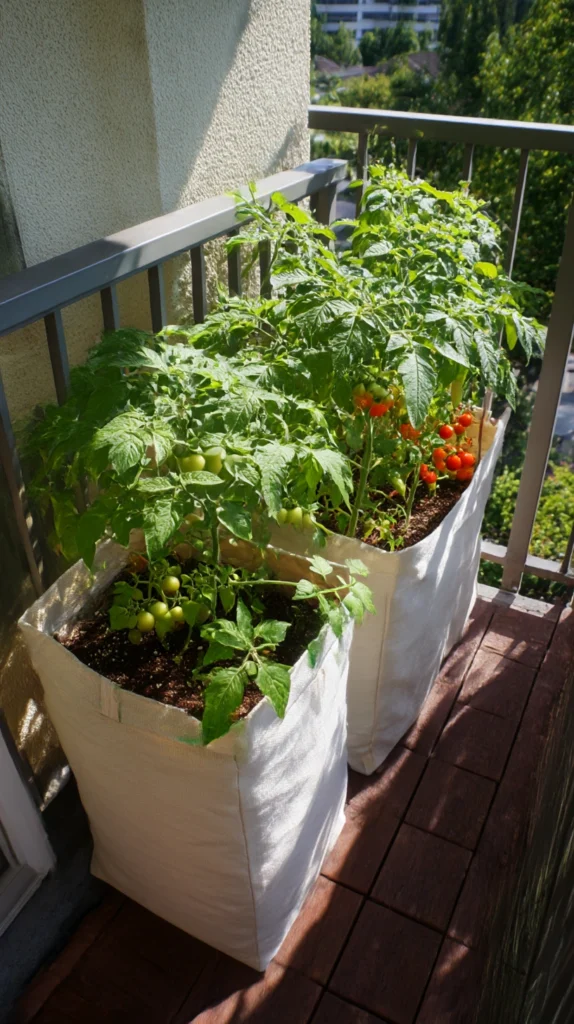
Budget: $25 – $80
A balcony is not a barrier to a productive kitchen garden — it is a specific set of growing conditions that certain crops suit very well. Grow bags of tomatoes, chillies, and herbs on a sunny balcony railing or floor space make excellent use of the warm, sheltered conditions that balconies often provide. The key is choosing crops that stay compact, tolerate container growing without significant compromise, and produce enough to make the effort worthwhile in a limited space. All three criteria are met by cherry tomatoes, dwarf chilli varieties, basil, and trailing nasturtiums.
A standard grow bag costs $8–$15 and supports two cherry tomato or three chilli plants comfortably. A railing planter — a container with hooks that hang over a balcony rail — costs $15–$30 and is ideal for trailing herbs and edible flowers that do not need deep root space. Position grow bags against the wall of the building rather than at the balcony edge where wind exposure is greatest. Wind desiccates container plants rapidly and is the most common cause of failure on exposed balcony growing setups. A sheltered position against the wall significantly reduces water requirements and plant stress.
Weekend tip: Check the load-bearing capacity of your balcony before filling it with containers and compost. A standard grow bag filled with wet compost can weigh 15–25 kg — multiple bags add up quickly and older or smaller balconies may have weight restrictions. Your building management company or a structural engineer can advise if you are unsure, and it is always worth checking before rather than after.
7. The Cut-and-Come-Again Chard Pot
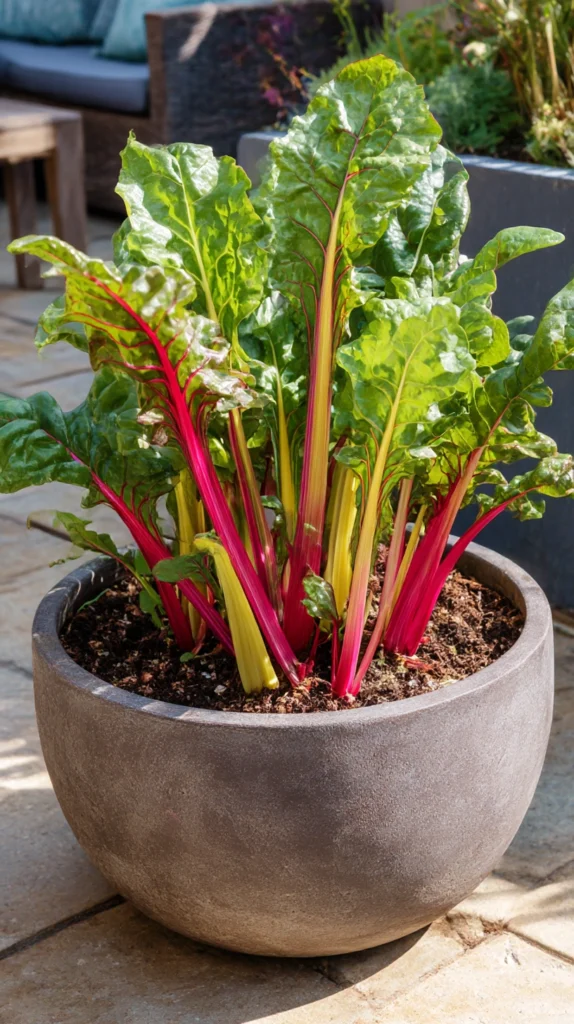
Budget: $15 – $40
Swiss chard and rainbow chard are two of the most productive and visually attractive vegetables available for container growing. The brightly coloured stems — in red, yellow, orange, and white depending on variety — make the pot as ornamental as any flowering plant, while the leaves provide a continuous harvest of nutritious greens from summer through to winter. A single large container of rainbow chard sown in early summer produces harvestable leaves from eight weeks after sowing and continues through autumn and into early winter with minimal attention.
A 35–40 cm pot filled with good quality multipurpose compost at $8–$15 per bag supports four to five chard plants comfortably. Sow seed 2 cm deep and thin to the strongest seedlings once established. Begin harvesting outer leaves individually once they reach 15–20 cm in height — the central growing point continues producing new growth for months when only outer leaves are removed. Feed with a liquid fertiliser every two to three weeks from midsummer to maintain the steady growth that makes chard so continuously productive through the second half of the season.
Weekend tip: Harvest chard leaves when they are young and mid-sized rather than allowing them to reach their maximum size. Young leaves are more tender, less coarse in texture, and significantly better in flavour than large mature ones — and regular harvesting of young growth keeps the plant in a productive state rather than allowing it to stall as oversized leaves exhaust its energy reserves. Little and often is always the right approach to chard harvesting.
8. The Three Sisters Bed
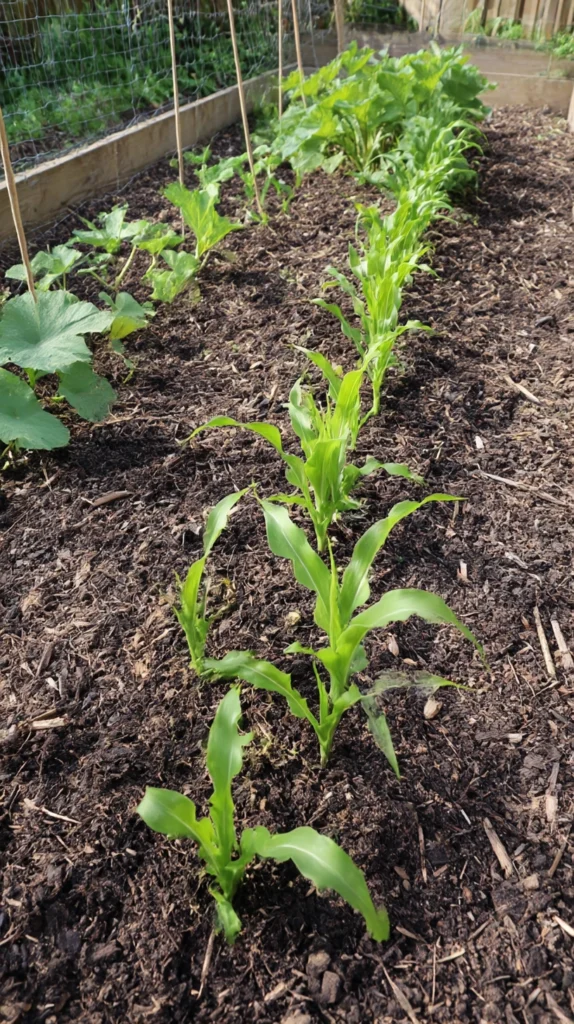
Budget: $15 – $50
The Three Sisters is a Native American companion planting system that combines sweetcorn, climbing beans, and squash in the same bed in a mutually beneficial arrangement — the corn provides a climbing frame for the beans, the beans fix nitrogen in the soil that feeds the corn and squash, and the squash leaves shade the ground to suppress weeds and retain moisture. It is one of the most productive, low-input planting combinations available for a kitchen garden bed and can be established in a single weekend from seed with very little additional input through the season.
Sweetcorn seed costs $2–$5 per packet. Climbing bean seed costs $2–$4. Squash seed — courgette, butternut, or summer squash — costs $2–$5. The entire planting can be established for under $15 in seed. Sow the corn first in a block of at least four rows to ensure good wind pollination. Once corn reaches 15 cm, sow beans at the base of each plant. Once beans are established, sow one squash plant at each corner of the block. The three crops together occupy the space productively from sowing to first frost without needing any additional weeding, watering beyond the first establishment period, or fertiliser.
Weekend tip: Plant sweetcorn in a block rather than a single row — corn is wind-pollinated and a single row rarely achieves the density of pollen distribution needed for fully filled cobs. A 4×4 plant block pollinating itself is significantly more productive than the same sixteen plants in a single long row, and the difference in cob quality between the two arrangements is immediately visible at harvest.
9. The Strawberry Hanging Basket
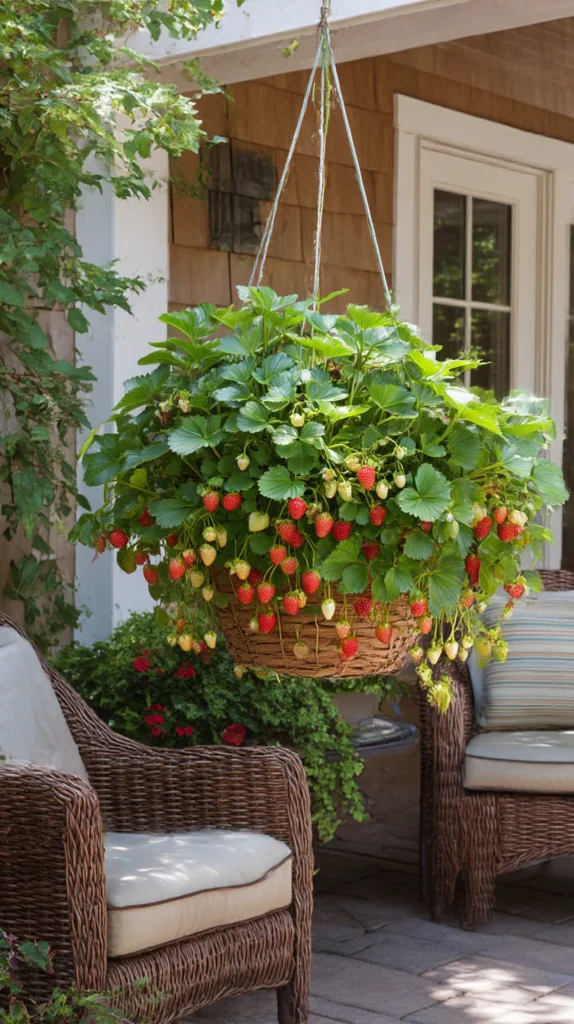
Budget: $20 – $60
Strawberries in a hanging basket or wall-mounted pocket planter are one of the most charming and practical kitchen garden ideas for a small space. The fruits hang over the edge of the basket as they ripen, keeping them off the soil where slugs and grey mould would otherwise claim them before you get the chance. A basket at eye height also makes harvesting the most effortless it can be — no bending, no parting of ground-level foliage, just ripe strawberries at the end of a visible stem at reaching height.
A 35–40 cm hanging basket costs $8–$20. Fill with a moisture-retentive compost at $8–$15 and plant six to eight strawberry plug plants at $1–$3 each — varieties such as Elsanta, Honeoye, and Cambridge Favourite are reliable producers for basket growing. The basket will need watering daily in warm weather — hanging baskets dry out faster than any other container format because they are exposed to air on all sides. A built-in water reservoir liner ($3–$8) at the base of the basket significantly reduces the watering frequency required through the peak summer months.
Weekend tip: Feed strawberry baskets with a high-potassium liquid fertiliser every ten days from the moment the first flowers open until the last fruit of the season is harvested. Potassium is the nutrient most directly responsible for fruit size, sweetness, and flavour in strawberries — consistent feeding through the fruiting period produces noticeably better fruit than the same variety grown in the same basket without supplementary feeding.
10. The Vertical Pallet Planter
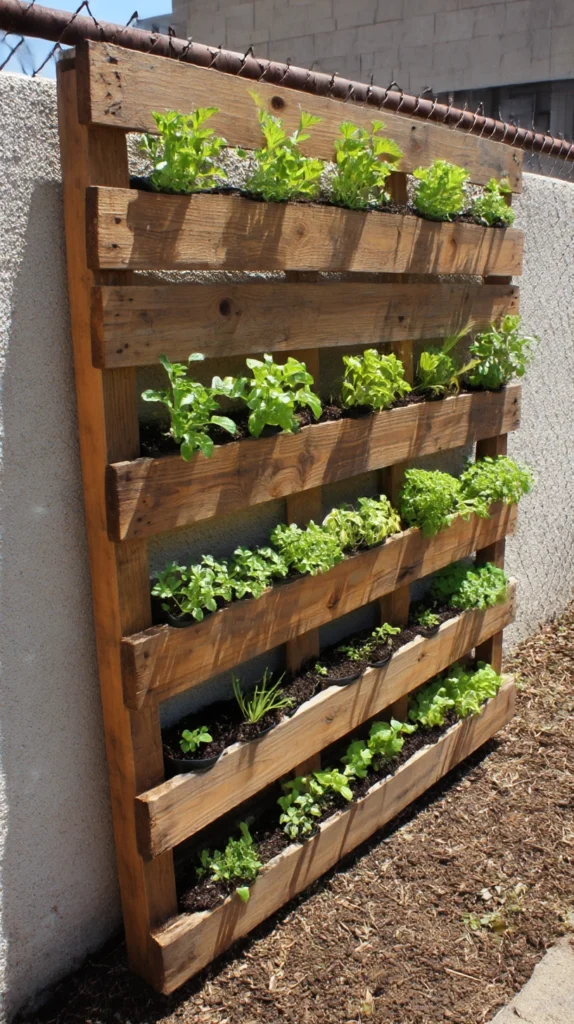
Budget: $10 – $50
A reclaimed wooden pallet stood upright against a fence or wall, lined with landscape fabric and filled with compost in the gaps between the slats, makes a productive vertical kitchen garden from a material that is widely available at zero or minimal cost. Planted with herbs, salad leaves, or strawberries, it turns a bare fence panel into a growing surface without consuming any ground space — one of the most space-efficient kitchen garden setups available for a small paved garden or courtyard.
Source an untreated or heat-treated pallet (marked HT on the pallet stamp) rather than a chemically treated one — chemically treated pallets contain pesticides that leach into food crops and should not be used for edible growing. Line the gaps between slats with landscape fabric stapled in place, fill with multipurpose compost, and plant herb plugs or salad seedlings directly into the pockets. The total cost excluding compost is often zero. Plants and compost together cost $15–$40 for a generously planted pallet. Water thoroughly after planting and daily through the first two weeks until plants are established.
Weekend tip: Lay the pallet flat on the ground for two weeks after planting before standing it upright. This gives the plants time to establish their root systems in the compost pockets while gravity works in their favour — plants in an upright pallet planted the same day it is stood up tend to fall out or dry out before roots have had time to anchor properly in the relatively shallow pockets between the slats.
11. The Chilli Container Collection
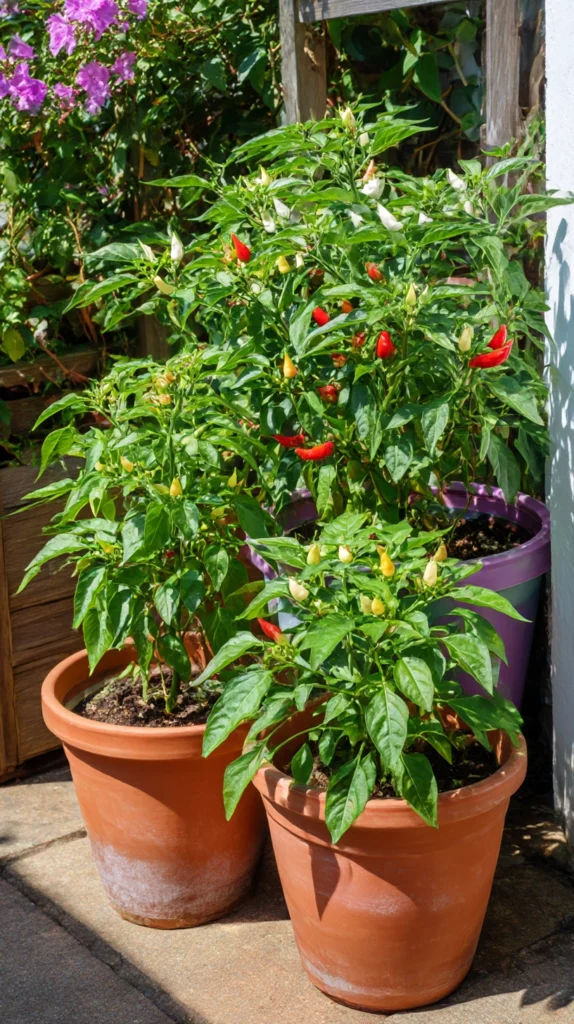
Budget: $30 – $100
Chillies are among the best container crops available for a sunny kitchen garden — they are compact, genuinely heat-loving, ornamental enough to sit on a terrace without looking out of place, and productive enough to supply a household’s chilli needs through the whole season from just three or four plants. The fruits ripen from green through yellow, orange, and red over several weeks, giving the container a constantly changing appearance that is as decorative as any flowering pot plant through the summer and autumn months.
Chilli plants in 9 cm pots cost $3–$8 each from garden centres from late spring. Choose a mix of mild, medium, and hot varieties to suit different uses in the kitchen — Padron, Apache, and Cayenne together cover most cooking applications. Plant into 20–25 cm individual pots or a single large container of 40 cm diameter shared between two plants. Use a rich, well-drained compost and feed fortnightly with a high-potassium liquid fertiliser once the first flowers appear. Chillies perform noticeably better in warm, sheltered conditions — a south-facing wall behind the containers reflects additional heat that accelerates fruit development.
Weekend tip: Pick a few chillies while still green rather than waiting for all of them to ripen to red. Harvesting green fruits triggers the plant to produce more flowers and set more fruit — a plant where all fruits are left to ripen simultaneously tends to slow flower production significantly once the red fruits mature. A mix of green and red harvesting throughout the season keeps the plant productive for several additional weeks compared to a wait-for-red approach.
12. The Weekend Sowing Plan
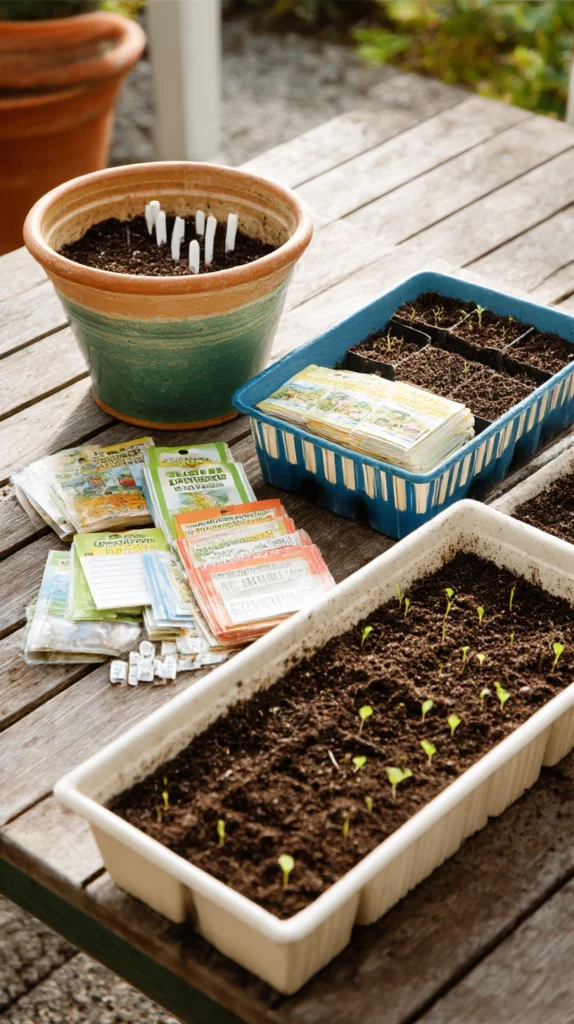
Budget: $10 – $40
The most underrated kitchen garden idea of all is simply making the commitment to sow something small every single weekend through the growing season. Not a large project — not a raised bed or a new container setup — just a row of radishes, a pot of salad leaves, a handful of spring onion seeds tucked into a spare corner. The cumulative effect of one small sowing per weekend from April through August is a kitchen garden that produces something harvestable at every point in the season without ever demanding a significant single outlay of time, money, or energy.
A seasonal sowing kit — five or six seed packets covering fast-maturing crops including radish, salad leaves, spring onion, rocket, and dwarf French beans — costs $10–$25 in total and provides enough seed for the entire growing season of weekend sowings. Keep the packets in a labelled tin or box near the back door so they are visible and accessible without a trip to the shed or garden centre. The proximity of the seeds to the door is the single most reliable predictor of whether the weekend sowing habit actually develops and sustains itself through the season.
Weekend tip: Note the sowing date on a small label pushed into the soil at each new sowing. A written sowing date tells you exactly when to expect germination, when to thin, and when to harvest — and removes the guesswork that causes most kitchen garden beginners to either water too anxiously before germination is due or abandon a planting they assume has failed when it simply has not had enough time. Dates take ten seconds to record and save hours of uncertainty through the season.
Every kitchen garden on this list was designed to be started this weekend rather than next month, next season, or when the conditions are perfect — because the conditions are rarely perfect and the weekend is always now. The best kitchen garden is not the most ambitious one. It is the one that actually gets started, however small, and built on from there one weekend at a time.
Pick one idea from this list that suits the space and the time you have today. Buy what you need on the way home if you do not already have it. Sow, plant, or build before Sunday evening. The first harvest will follow sooner than you expect, and it will taste considerably better than anything you could have bought for the same effort.