15 Wildflower Garden Ideas for a Natural Summer Look
A wildflower garden is not a garden that has been neglected — it is a garden that has been managed with a different intention. The difference between a patch of weeds and a wildflower meadow is not the plants but the decisions made around them: which ones are sown, which are edited out, where the mown path runs, and when the whole area is cut back. Get those decisions right and the result is one of the most beautiful, most ecologically rich, and most genuinely low-maintenance garden styles available.
The fifteen ideas below cover every scale of wildflower gardening — from a single pot of meadow annuals on a balcony to a full garden conversion. Each one includes what it costs and a practical tip to help you establish the natural abundance that makes this style look so effortlessly beautiful through every week of summer.
1. A Broadcast-Sown Annual Wildflower Bed
Budget: $5 – $20
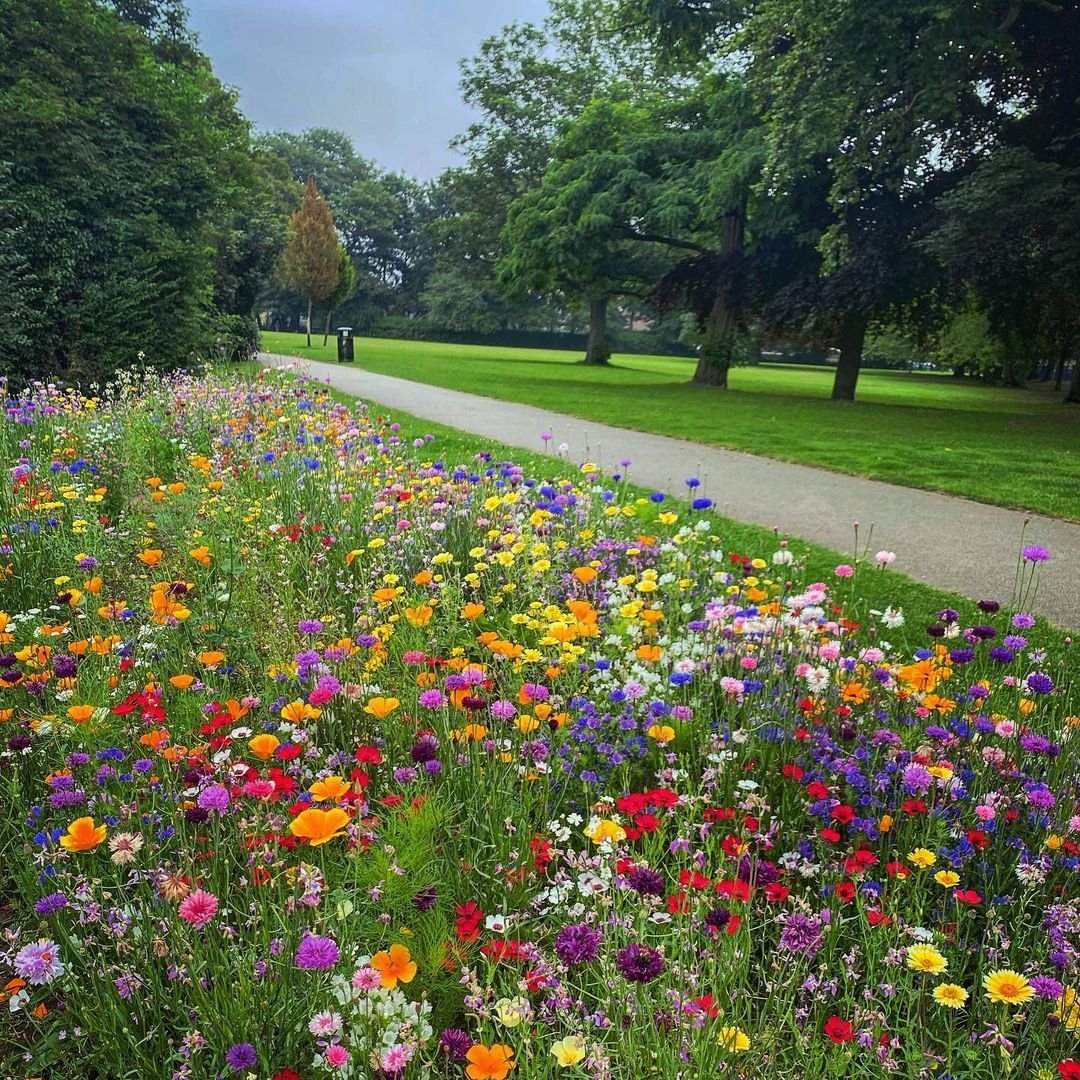
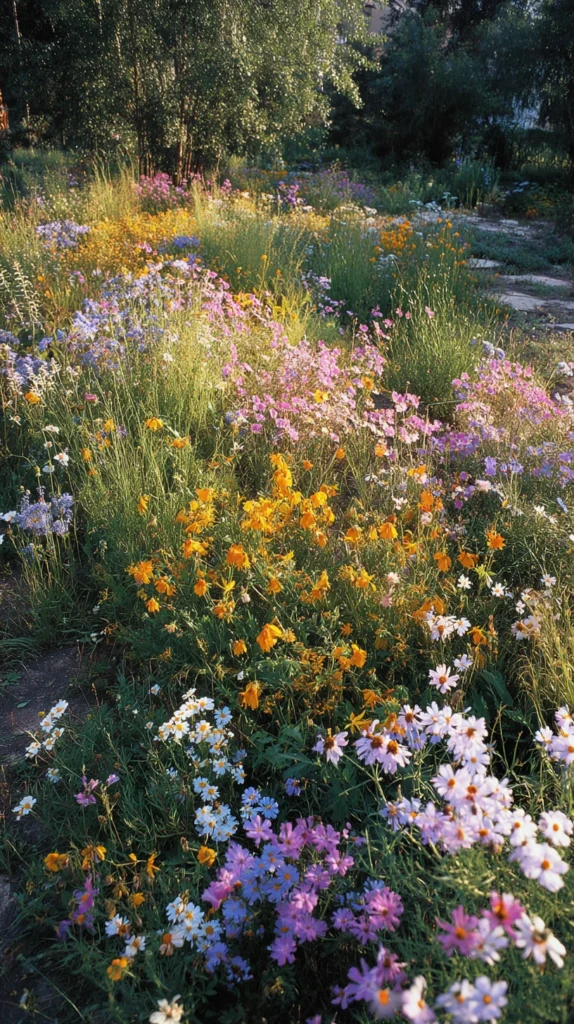
The simplest and most immediately colourful wildflower idea — scatter a packet of mixed annual wildflower seed onto cleared, bare soil in spring or autumn, rake lightly, water once, and leave. Within six to eight weeks the bed produces a dense, multicoloured display of poppies, cornflowers, phacelia, and ox-eye daisies that looks designed and costs almost nothing to create.
A 100g packet of mixed annual wildflower seed costs $5–$15 and covers approximately 10 square metres at the recommended sowing rate. The only preparation required is removing all existing vegetation and raking the soil to a fine surface tilth — wildflowers germinate poorly in competition with established grass or weeds and the bare soil preparation is the single most important step in establishing a successful display.
Growing tip: Mix the seed with dry silver sand before sowing — two parts sand to one part seed. The sand makes even distribution across a large area significantly easier and shows clearly which ground has been sown and which has not. It also creates a slightly gritty surface environment around each seed that improves contact between seed and soil.
2. A Native Perennial Wildflower Meadow Strip
Budget: $15 – $60
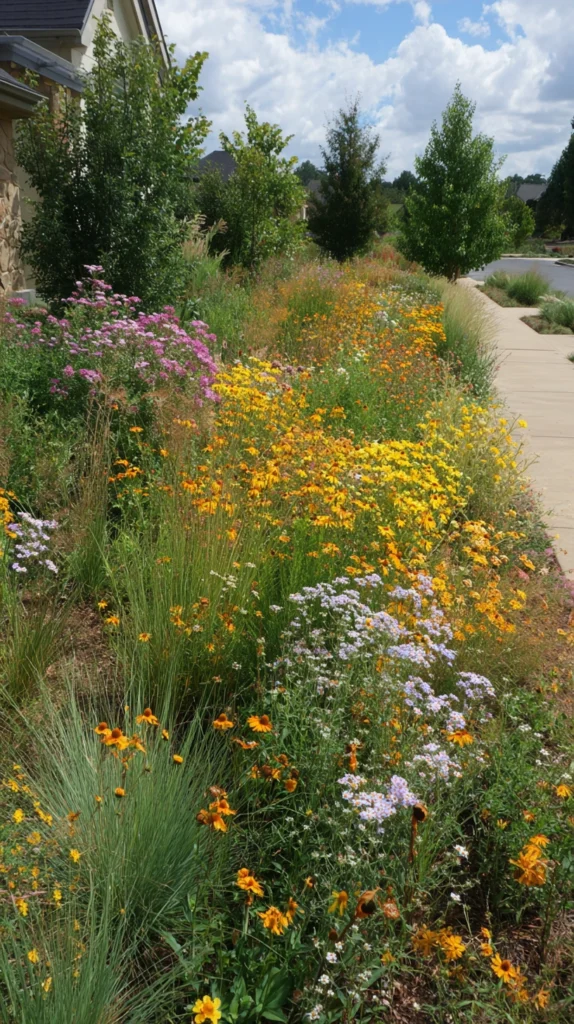
A strip of native perennial wildflowers — knapweed, field scabious, ox-eye daisy, ragged robin, and betony — established along a garden boundary creates a self-sustaining, self-seeding wildflower planting that improves with every passing year. Unlike annual mixes that need resowing each season, a perennial wildflower strip plants itself once and returns more abundantly each summer for decades.
A mixed native perennial wildflower seed packet costs $8–$20. Alternatively, perennial plug plants cost $2–$4 each and establish faster than seed — twelve to fifteen plugs planted at 20–30 cm spacing create a generous 1-metre wide strip of 3–4 metres length within one season. Sow or plant into existing grass that has been scarified to expose bare soil, or into a fresh, cleared bed.
Growing tip: Do not feed or improve the soil in a perennial wildflower strip. Wildflowers evolved in nutrient-poor conditions and rich, fertile soil produces excessive coarse grass growth that overwhelms the flowering species within two to three seasons. Lean soil is the most important growing condition for a successful perennial wildflower planting.
3. A No-Mow Lawn Conversion
Budget: $10 – $40
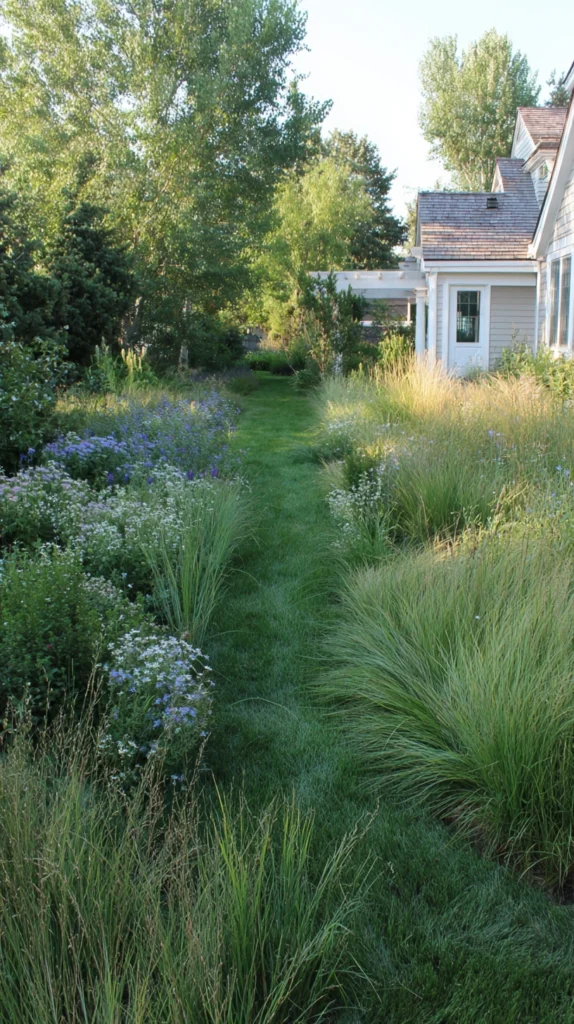
Stopping mowing an area of lawn and allowing what is already in the grass to flower — clover, self-heal, bird’s-foot trefoil, plantain, and native grasses — creates a wildflower lawn from material that is already present in most garden lawns. The existing lawn flora is more varied than most gardeners realise and reveals itself quickly when the mowing pressure is removed.
A no-mow lawn conversion costs nothing beyond the decision to mow less. Oversow with a clover and fine fescue grass mix ($10–$25 per packet) to accelerate the transition and add additional nectar species. Yellow rattle seed ($5–$15) sown in autumn acts as a natural grass suppressor by parasitising the roots of coarse grasses and opening the sward for finer wildflower species to establish.
Growing tip: Mow one or two paths through the no-mow lawn area to signal that the longer grass is deliberate rather than unmaintained. A mown path through long grass is the visual indicator that distinguishes a wildflower lawn from a lawn that has simply not been cut — and that distinction is the difference between a garden that looks designed and one that looks neglected.
4. A Wildflower Container Garden
Budget: $15 – $60
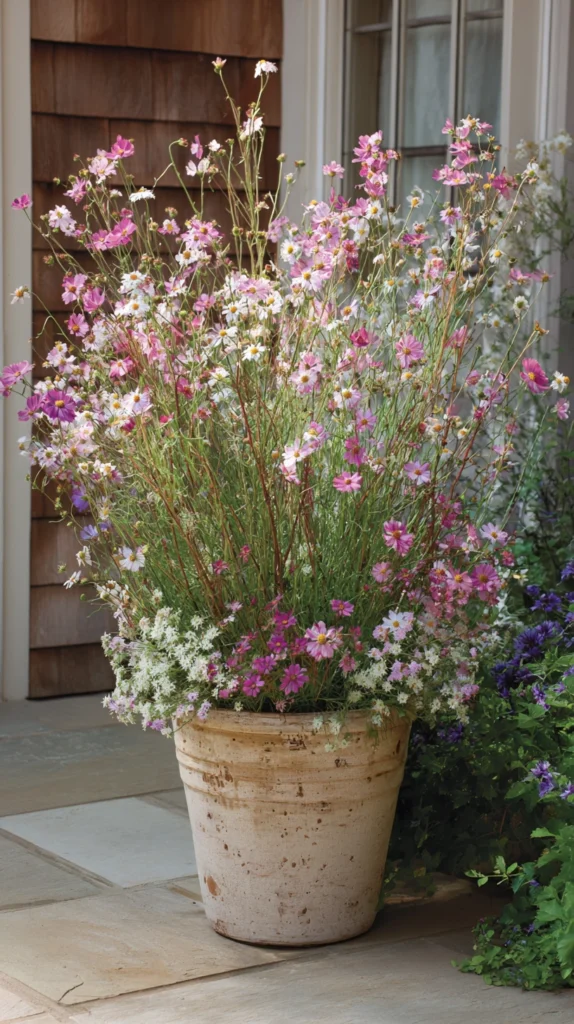
A large container or window box sown with a compact annual wildflower mix brings the wildflower garden to a balcony, terrace, or doorstep with no garden space required. Cornflowers, California poppies, night-scented stock, and phacelia all grow well in containers and produce a display that is as visually abundant as any ground-level wildflower bed when sown at the recommended density.
A large container of 40 cm diameter or a 60 cm window box costs $10–$30. Fill with a lean, gritty compost mix — 50 percent standard multipurpose compost and 50 percent horticultural grit — which provides the nutrient-poor conditions that wildflowers prefer. A compact wildflower seed mix specifically formulated for containers costs $4–$10 per packet and contains species selected for smaller root systems and proportional stem height.
Growing tip: Thin container wildflower seedlings to 5–8 cm spacing once they reach 3–4 cm in height. The instinct to leave all seedlings in place produces a overcrowded display where the individual plants compete for light and water and produce fewer flowers per plant than a thinned planting managed at the right density for the container size.
5. A Cornfield Annual Wildflower Scheme
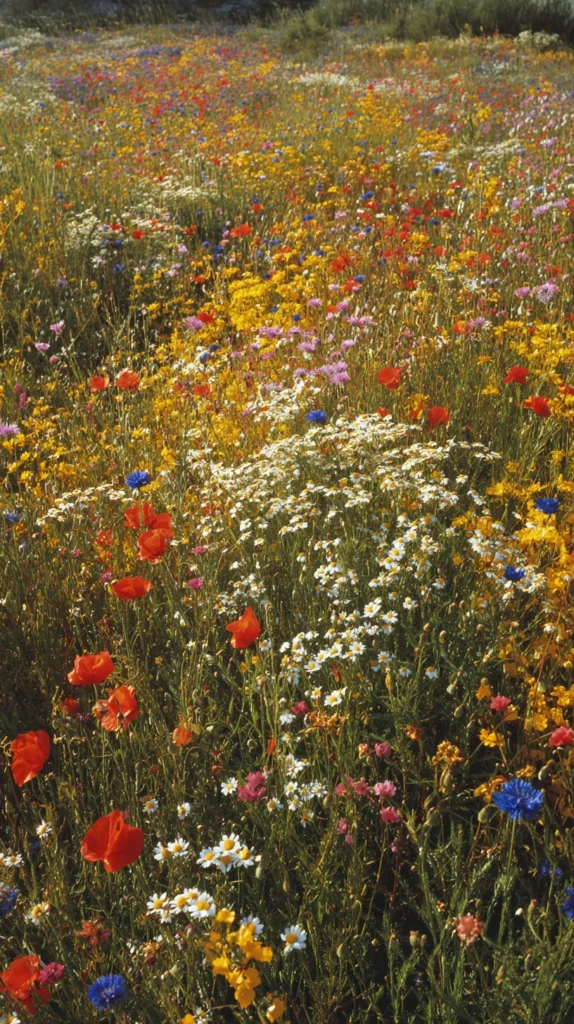
Budget: $5 – $15
A cornfield wildflower mix — combining the arable weed species that once coloured harvest fields before herbicide use eliminated them — produces one of the most vivid and most historically evocative wildflower displays available. Red poppies, blue cornflowers, yellow corn marigolds, and white corn chamomile together create the classic summer wildflower palette in pure seed form at almost zero cost.
A cornfield mix seed packet costs $5–$12 and covers 10–15 square metres. Sow in spring or autumn onto cleared, bare soil without any soil improvement. Cornfield species are all annual and must be resown each year — they do not self-seed as reliably as native perennial wildflowers — but the drama of the first-year display justifies the annual resowing effort completely. The display peaks in June and July from a spring sowing.
Growing tip: Make a small autumn sowing of cornfield seed as well as the main spring sowing. Autumn-sown poppies overwinter as rosettes and flower two to three weeks earlier than spring-sown plants — a staggered sowing of the same mix extends the peak display period from three weeks to five or six weeks through careful timing of the two sowings.
6. A Yellow Rattle and Meadow Grass Conversion
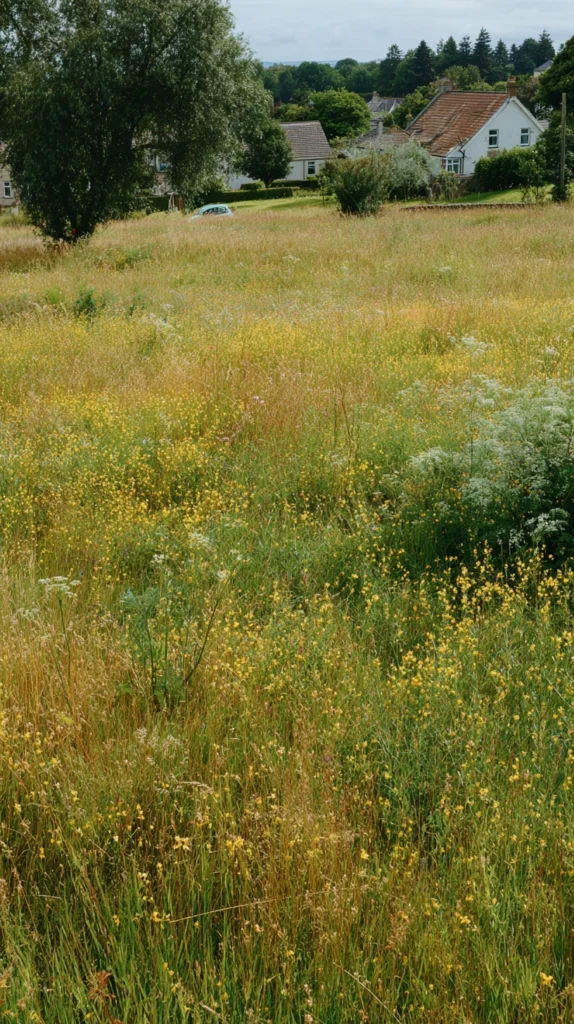
Budget: $10 – $30
Yellow rattle (Rhinanthus minor) is the key to converting an existing lawn or rough grass area into a wildflower meadow. As a semi-parasitic annual that draws nutrients from the roots of surrounding grasses, it progressively weakens coarse grass species and opens the sward to allow native wildflowers to establish in the gaps created. It is the most ecologically targeted wildflower garden intervention available.
Yellow rattle seed costs $5–$15 per packet. It must be sown fresh in autumn — seed stored through winter loses viability rapidly. Sow directly onto a scarified area of existing grass in September or October and allow to germinate and flower through the following May and June before the area is cut in late July. Within two to three seasons of yellow rattle management the grass density reduces visibly and wildflower species establish in the opened ground.
Growing tip: Never sow yellow rattle seed that is more than six months old — the viability drops to almost zero in seed stored through a winter and the resulting poor germination is often mistaken for unsuitable growing conditions rather than the seed quality issue that is almost always the real cause of yellow rattle establishment failure.
7. A Wildflower Lawn Path Edging
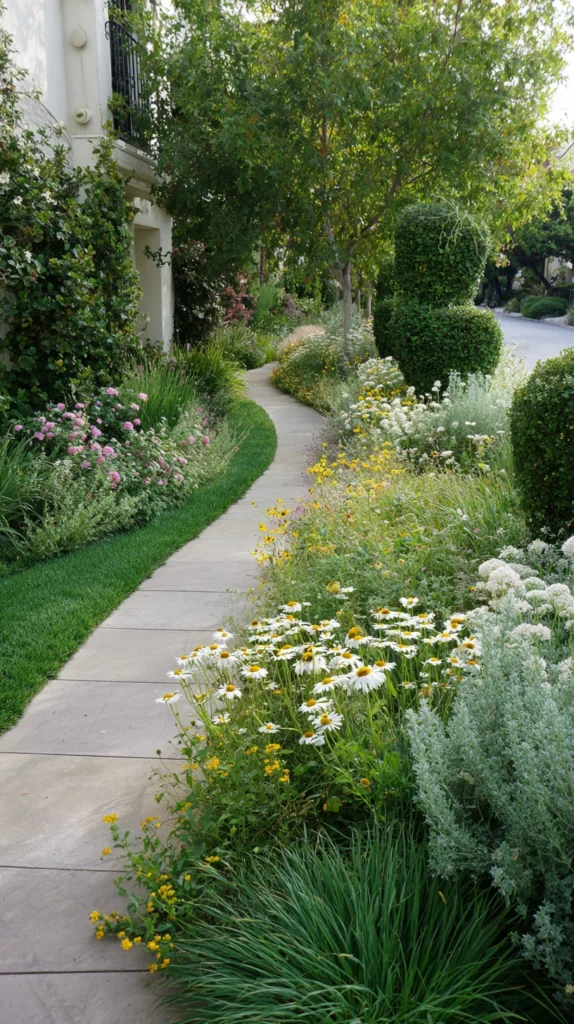
Budget: $8 – $25
Allowing a strip of 30–60 cm on each side of a garden path to grow as wildflower rather than mown lawn creates a path edging that provides colour, fragrance, and pollinator habitat through the whole summer without requiring any planting, any maintenance, or any cost beyond the seed. The contrast between the mown path surface and the flowering grass either side makes both more visually interesting than either would be alone.
Oversow the path edge strips with a native clover, self-heal, and bird’s-foot trefoil mix at $8–$20 per packet to accelerate establishment of nectar species in the existing lawn flora. Maintain the path itself with a regular mow and cut the wildflower strips once in late September — the single annual cut maintains the grassy character of the strip, removes the thatch, and allows seed to set before the autumn cut removes the season’s growth.
Growing tip: Keep the mown path at least 45 cm wide — wide enough for comfortable side-by-side walking. A path narrowed by wildflower growth on both sides becomes impractical to use comfortably and starts to feel overgrown rather than romantically abundant. The width of the mown surface determines whether the wildflower path edging looks designed or simply untrimmed.
8. A Shaded Woodland Edge Wildflower Planting
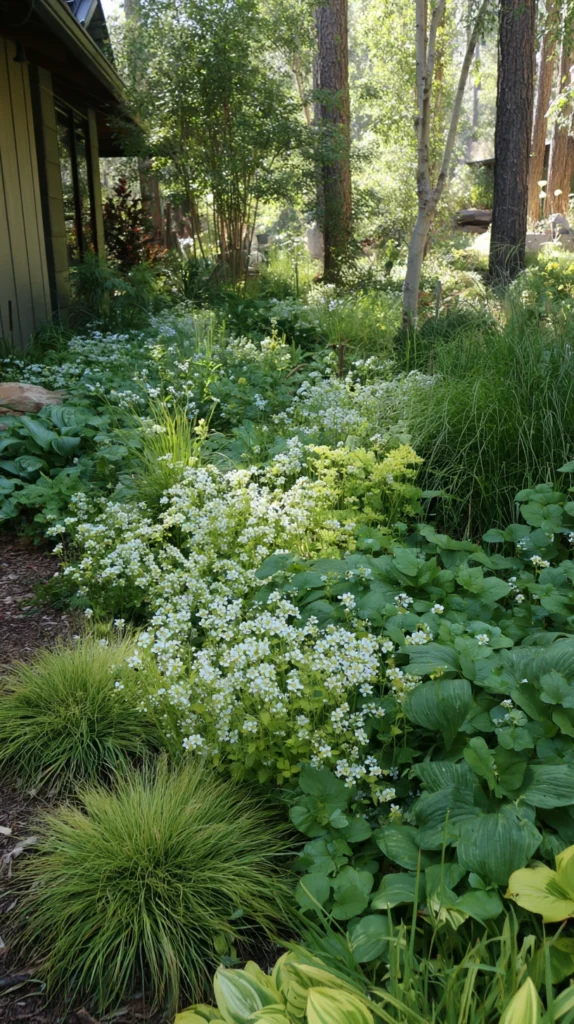
Budget: $20 – $80
A wildflower planting for partial or dappled shade — wood anemones, wild garlic, bluebells, foxgloves, primroses, and wood sorrel — creates a spring and early summer display in the most challenging garden position and one of the most beautiful. Shade-tolerant native wildflowers have a particular delicacy and charm that open-ground species do not and they establish in the conditions that most other wildflowers find impossible.
Wild bluebell bulbs cost $0.50–$2 each — plant in autumn in groups of twenty or more for the most impactful spring display. Primrose plug plants cost $2–$5 each. Wild garlic (Allium ursinum) bulbs cost $0.30–$1 each and naturalise rapidly into large, fragrant drifts within three to four years of initial planting. All three establish under deciduous tree canopy in partial shade and need no ongoing management beyond the initial planting.
Growing tip: Plant woodland wildflower bulbs in autumn as soon as they are available from specialist bulb suppliers — September and October are the optimal planting months and bulbs planted before November establish significantly better than those planted later in the season. Bulbs left unplanted until December have already experienced their first post-harvest dormancy and establish less reliably than fresh autumn-planted stock.
9. A Wildflower Roof Garden or Green Roof
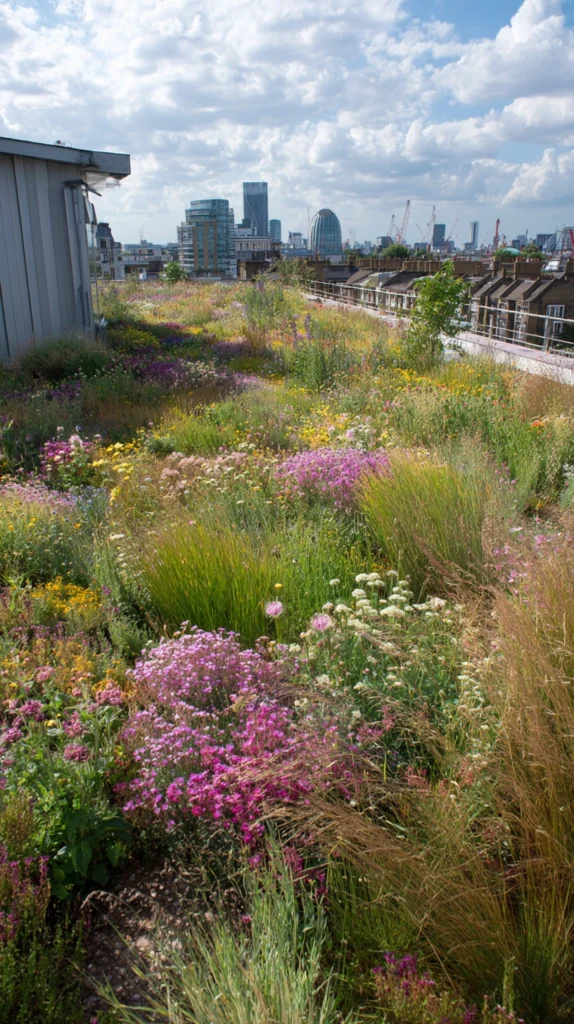
Budget: $80 – $400
A wildflower green roof on a garden shed, log store, or summerhouse creates one of the most ecologically valuable and most visually charming garden features available — a flowering meadow seen from above at full summer height, visited constantly by pollinators, and requiring no watering, no feeding, and no mowing in its established state. It is a wildflower garden that exists in the vertical plane and occupies no ground space at all.
A sedum and wildflower green roof mat costs $15–$30 per square metre. A standard 2.4×1.8 metre shed roof requires approximately 4.5 square metres at $70–$135 in plant material. A waterproof membrane and drainage layer beneath the planting mat adds $40–$80 to the total installation cost. Water the installed roof mat twice weekly for the first six weeks of establishment before reducing to natural rainfall dependence once the root system has fully developed into the substrate.
Growing tip: Include yellow rattle in the seed mix applied over a new wildflower green roof in its first autumn after installation. The yellow rattle progressively reduces the vigour of any coarse grasses included in the initial green roof mat and opens the surface for finer-leaved wildflower species — creating the diverse, varied wildflower community that a monoculture sedum roof never achieves across the same area.
10. A Wildflower Border Within the Formal Garden
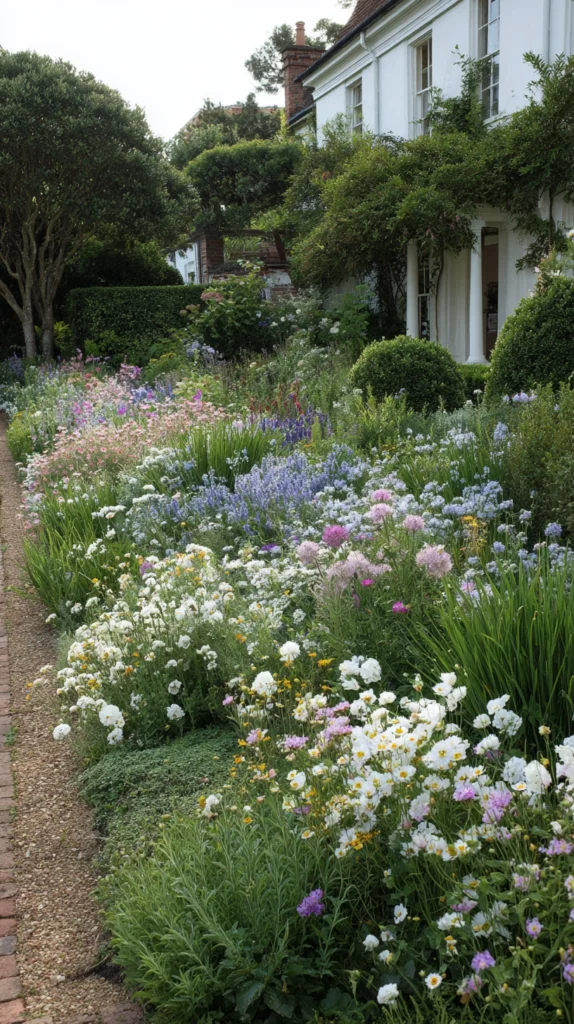
Budget: $10 – $50
Dedicating one border of a formal garden to wildflower planting — with a cleanly cut lawn edge and neat surrounding beds to contextualise it — creates the most visually interesting contrast available in garden design: the deliberate, confident placing of apparent wildness within a clearly ordered context. The formal setting makes the wildflower border look more intentional, not less, and the wild border makes the formal surroundings look less rigid by comparison.
Sow a native perennial wildflower mix directly into a cleared formal border at $8–$20 per packet. Maintain the border edge and surrounding lawn to a precise, crisp standard — the cleaner the context, the more successfully the wildflower planting reads as a design decision rather than a maintenance lapse. The visual tension between formal structure and wild planting is the point of the whole idea and it requires the formal elements to be genuinely formal.
Growing tip: Edit the wildflower border in late spring to remove any truly coarse weed species — thistles, docks, and nettles — that would look out of character in a formal garden context. The aim is native wildflowers rather than any plant that grows without sowing. This light editing takes thirty minutes per season and maintains the intended character of the planting without undermining its naturalistic quality.
11. A Meadow Garden With Mown Paths
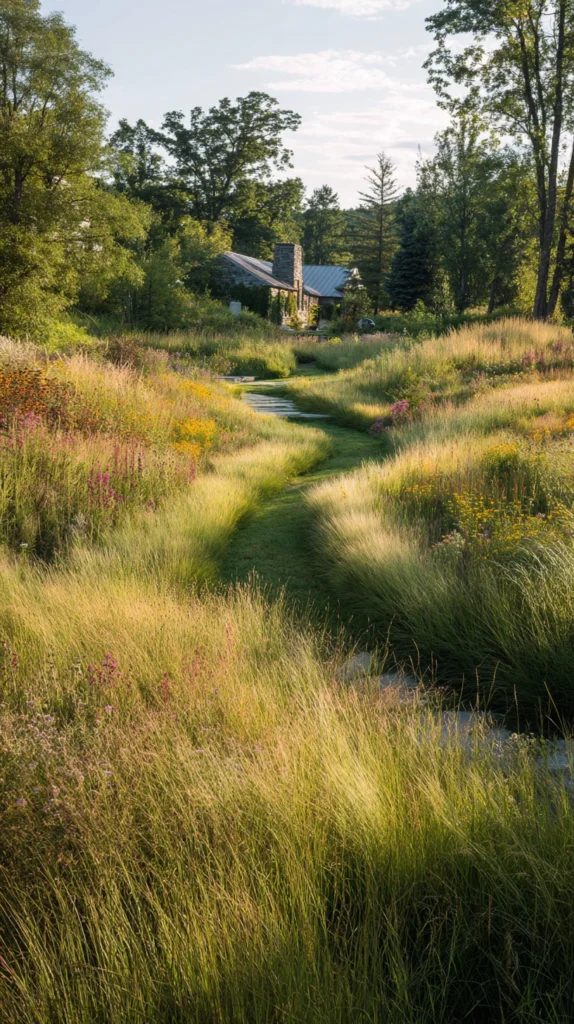
Budget: $20 – $80
A larger area of garden converted to meadow — with a network of mown paths running through it at varying widths — creates an immersive wildflower garden experience where the visitor moves within the planting rather than observing it from the outside. The paths are the design element that transforms a meadow from a visual feature into a garden space that can be entered, explored, and spent time in.
Establish the meadow area with a mixed perennial wildflower seed at $15–$40 per packet sufficient for the intended area. Mow the path network with a rotary mower set at its lowest setting and maintain it with a weekly pass through the season. The paths can be curved, straight, or a combination — a curved path through meadow planting reads as more naturalistic and more romantically interesting than a grid of straight paths through the same area.
Growing tip: Leave the mown paths in place through winter rather than allowing the whole area to become uniform in height. A meadow with visible mown paths through winter reads as a managed, considered space rather than simply an area of garden that has not been maintained — and the structural clarity of the path network through a dormant meadow makes the space look more interesting in winter than a single uniformly tall and untouched area would achieve.
12. A Wildflower Pond Edge
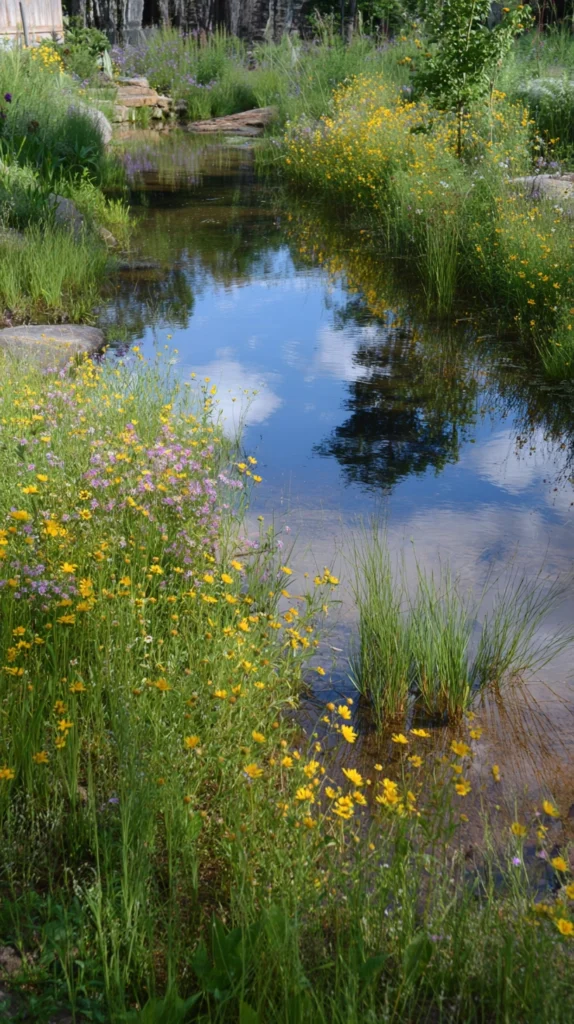
Budget: $20 – $80
Planting the margins of a garden pond with native marginal wildflowers — yellow flag iris, marsh marigold, purple loosestrife, meadowsweet, and ragged robin — creates the most ecologically complete garden feature available and one that looks most natural and most abundantly beautiful in midsummer when all the marginal species are simultaneously in flower.
Native marginal pond plants cost $5–$15 each from aquatic plant specialists. Plant in aquatic baskets at the correct water depth for each species — marsh marigold at 0–5 cm depth, yellow flag iris at 5–15 cm, and purple loosestrife at the pond edge in moist soil rather than in standing water. Once established, all marginal wildflowers spread and self-seed freely into any available marginal habitat without any management or replanting.
Growing tip: Leave marginal plant stems standing through winter rather than cutting them back in autumn. The hollow stems of dead marginal wildflowers provide overwintering habitat for aquatic insects, solitary bees, and other invertebrates that are essential to the ecological functioning of the pond ecosystem. Cut back in late February before new growth begins, removing only the previous year’s dead stems.
13. A Balcony Wildflower Meadow in Troughs
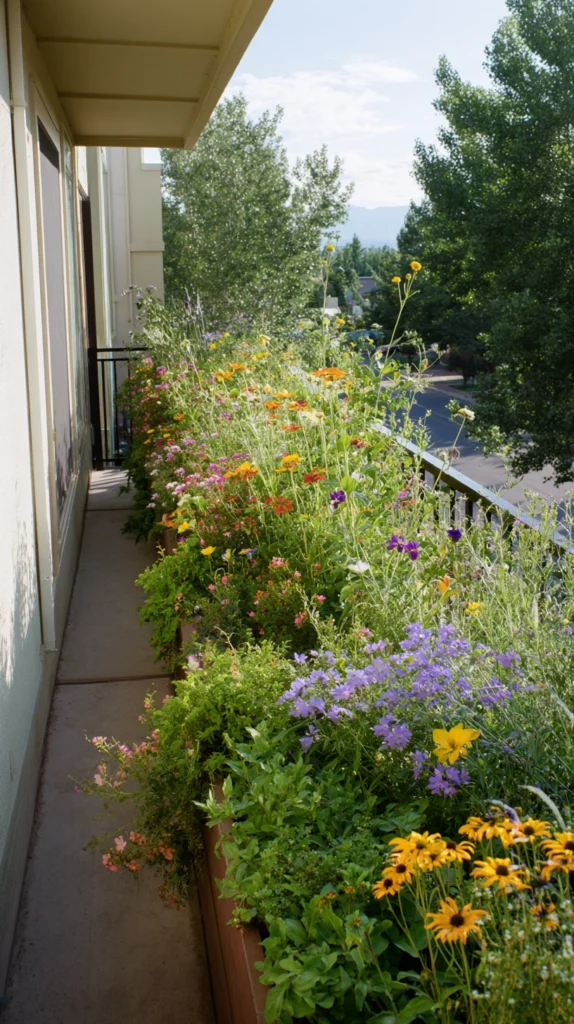
Budget: $20 – $80
Long window box troughs arranged along a balcony railing — sown with a compact meadow mix of cornflowers, poppies, and phacelia — create a wildflower display visible from street level and from within the apartment that brings one of the most specifically outdoor and seasonal garden experiences to a space that has no access to ground-level growing.
Long balcony troughs of 60–80 cm length cost $10–$25 each. Use a lean compost mix and sow a compact annual wildflower mix at $4–$10 per packet. Water regularly — balcony containers dry out significantly faster than ground-level plantings and wildflowers in a trough require daily watering in warm weather to sustain the bloom period through July and August. A self-watering trough with a built-in reservoir ($15–$30) reduces the watering frequency significantly.
Growing tip: Deadhead troughs of annual wildflowers every two weeks through the season rather than leaving spent blooms in place. Deadheading prevents seed set, redirects the plant’s energy into producing new flowers, and extends the peak display by three to four weeks compared to an unmanaged trough left to go to seed naturally through the summer months.
14. A Children’s Wildflower Garden
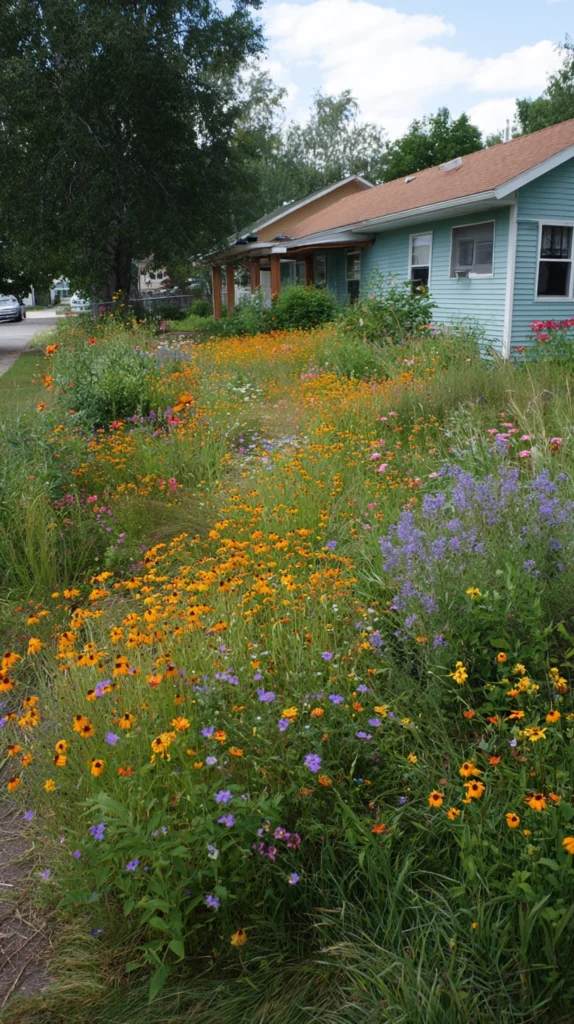
Budget: $5 – $30
A small dedicated wildflower patch sown by and for children — with seeds selected for speed of germination, ease of growing, and the sheer spectacle of the resulting plants — is one of the most effective garden-based learning experiences available. Sunflowers, poppies, cornflowers, and nigella are all fast, reliable, and visually rewarding enough to maintain a child’s interest from sowing to flowering without losing attention in the weeks between.
A child’s wildflower seed collection — five or six species in individual packets — costs $10–$25 from most garden centres. Mark each child’s sowing with a handmade label using a painted stone or a lolly stick to give them ownership of a specific patch within the shared area. The ownership of a defined area is the detail that produces genuine investment in watering, watching, and reporting on progress through the growing season.
Growing tip: Sow giant sunflowers alongside the wildflower mix in a children’s garden — they germinate in five to seven days, grow visibly taller each day, and flower dramatically within ten weeks. The sunflower is the wildflower garden plant that holds a child’s attention most completely through the full growing arc from seed to flower, and including it alongside slower-developing wildflowers maintains enthusiasm through the weeks when smaller species are still establishing.
15. A Complete Wildflower Garden Scheme
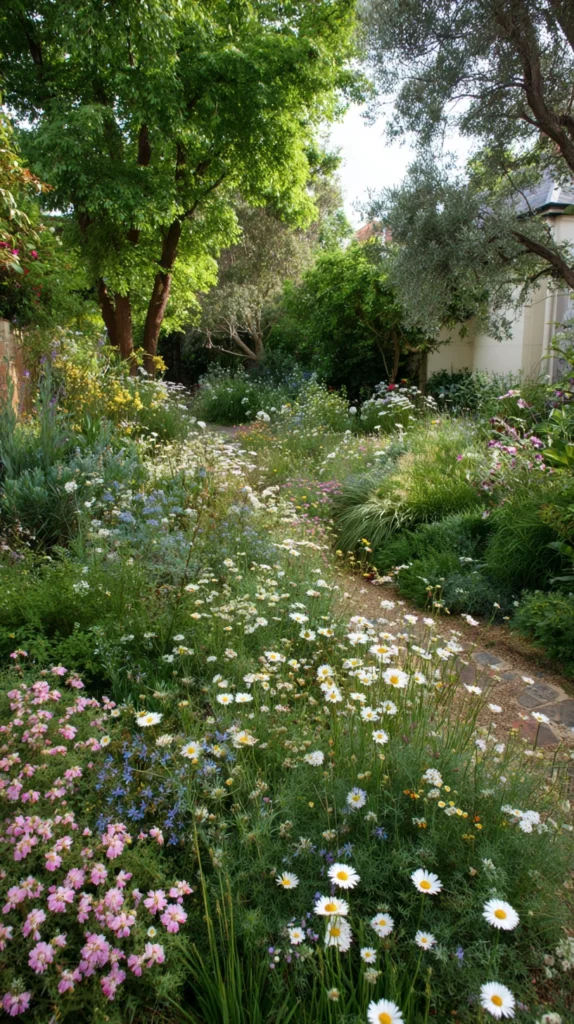
Budget: $60 – $300
A fully realised wildflower garden — a meadow strip along the boundary, a no-mow lawn section with mown paths through it, a pond edge planted with native marginals, a woodland corner of bluebells and primroses, and a compact annual mix in containers on the terrace — creates one of the most biodiverse, most visually varied, and most genuinely sustainable gardens available. It costs a fraction of any conventional garden and asks for less time to maintain than almost any other style.
The complete wildflower garden scheme can be assembled across two or three seasons rather than all at once — the meadow strip in year one, the no-mow lawn conversion in year two, the pond edge planting in year three. Each element improves the ecological whole as it is added, and the cumulative effect after three seasons is a garden that supports a measurably richer range of insects, birds, and small mammals than any equivalent conventionally planted and maintained garden of the same area.
Growing tip: Keep a simple record of what flowers in each section of the wildflower garden and when — a photograph taken on the same date each year shows the development of the planting more clearly than memory alone can recall. The record also identifies which sections are improving over time and which may need intervention, which is the most useful management information a wildflower gardener can have at the start of each new growing season.
The wildflower garden looks natural because it is natural — but it looks good because someone made the right decisions about where to sow, what to edit, how to frame the wildness with something mown or structured, and when to cut back and start again. Those decisions cost very little and take very little time, which is why the wildflower garden rewards the gardener who is willing to manage less but observe more.
Start with a single packet of seed and a single cleared patch of bare soil. Sow it, step back, and let the summer show you what it wants to become. The wildflower garden always has more to say than the gardener expects — and the best version of it is always the one that was listened to carefully rather than planned entirely in advance.