13 Food Forest Layout Ideas That Maximize Harvest in Small Backyards
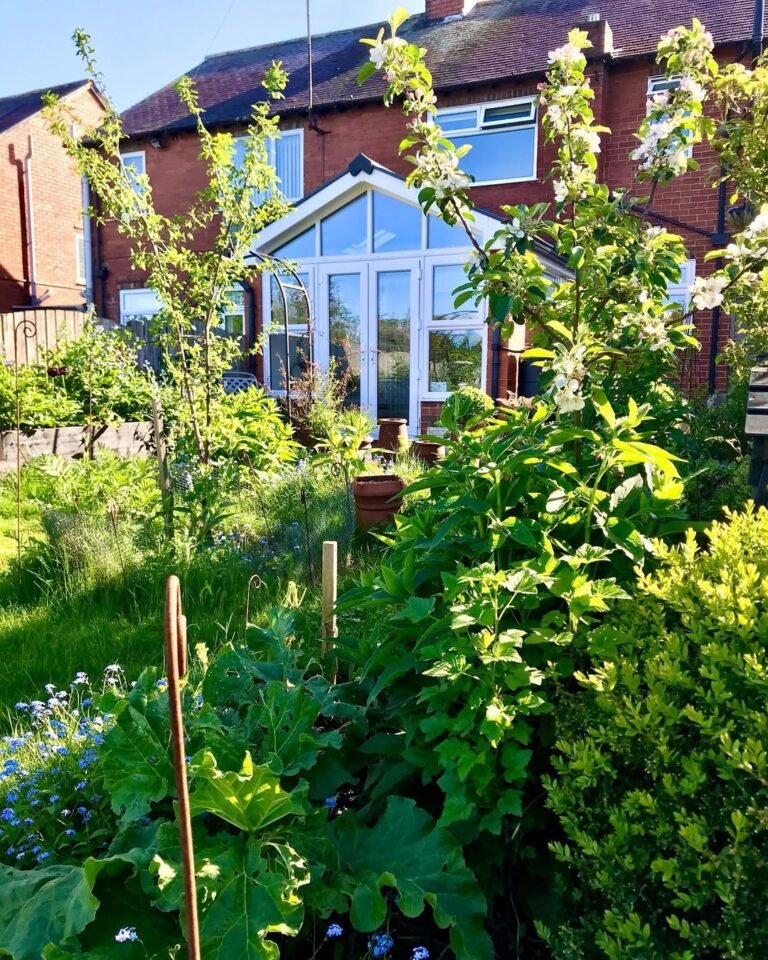
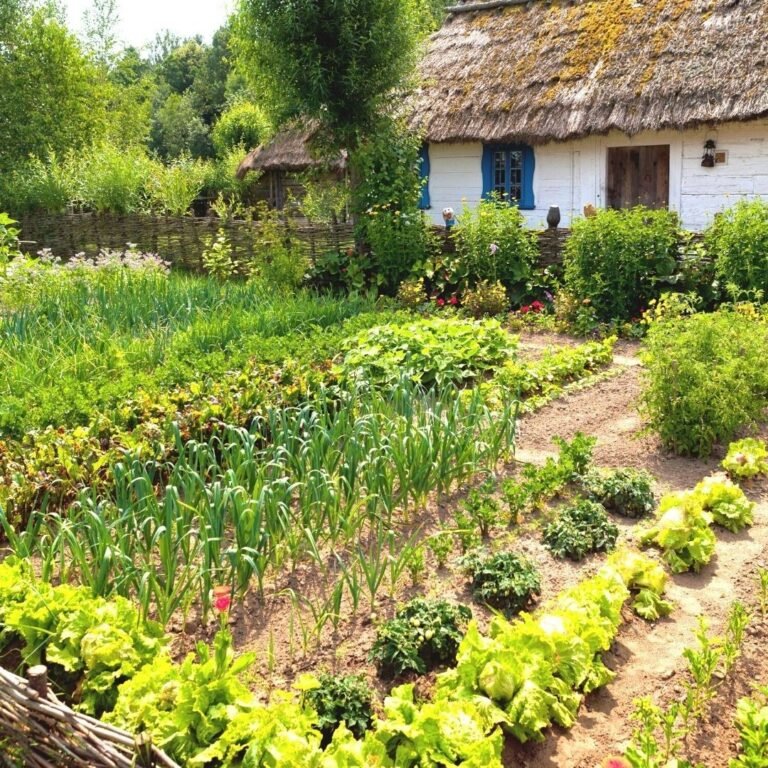
Went to a neighbour’s backyard once expecting a vegetable garden and found something else entirely. It looked like a wild corner of a woodland. It also produced more food per square foot than any organized raised bed setup I had ever seen.
She called it a food forest. About 30 feet by 40 feet. A small apple tree. A hazel beside it. Blackcurrants below. Wild garlic carpeting the ground. Strawberries at the edges. Runner beans climbing the hazel. An elder at the back for privacy. Raspberries along the fence.
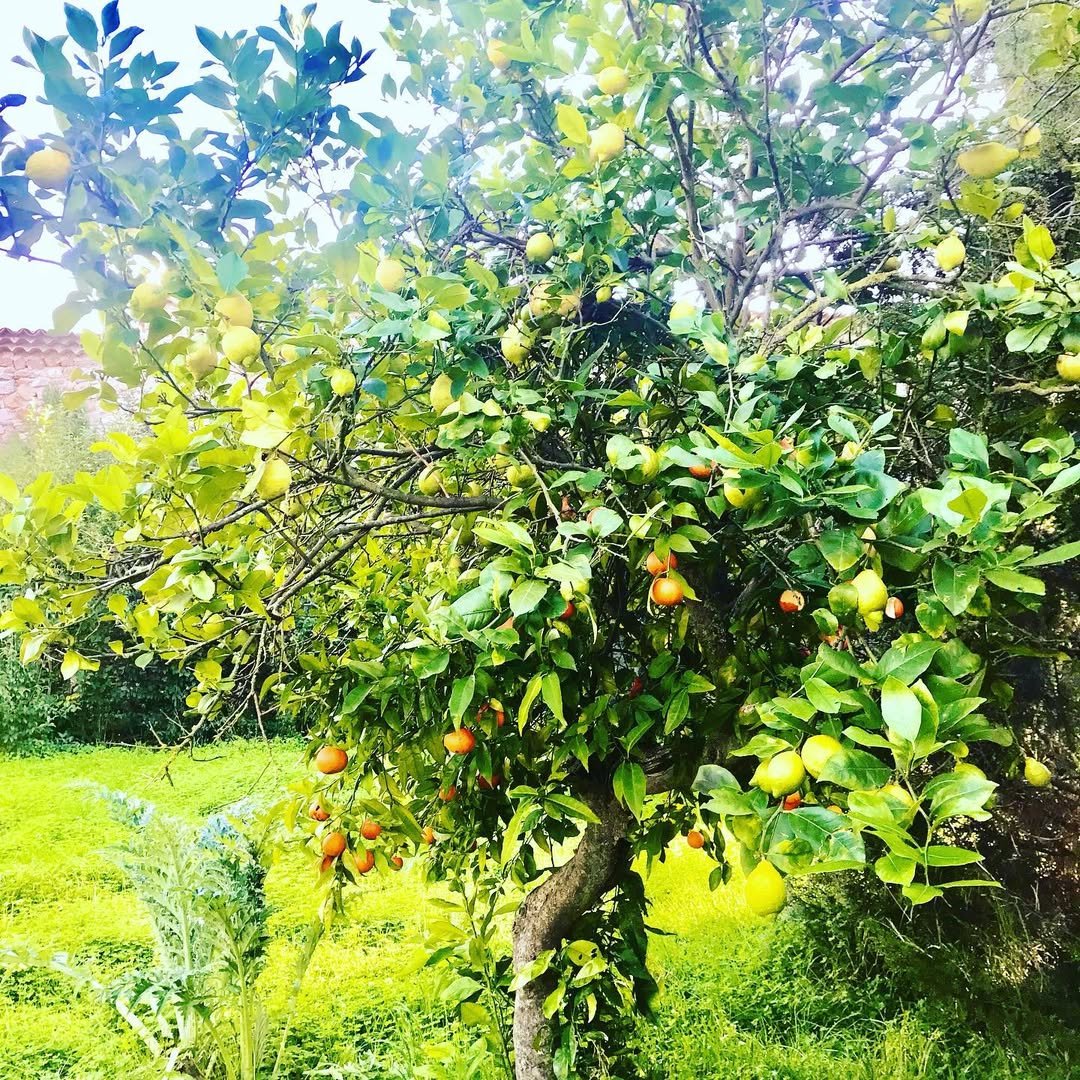
Every inch: producing something. Nothing requiring fertiliser, irrigation, or much maintenance. The whole system: feeding itself.
The food forest is not a different version of the vegetable garden. It is a different philosophy. The vegetable garden works against the natural tendency of the land (toward shrubs and trees) by constant intervention. The food forest works with it — choosing the plants that naturally form layers, choosing species that support each other, and then largely stepping back.
The result: more food from less effort. More resilience in drought and wet. More biodiversity. More beauty.
Here are 13 layout ideas that make this possible in a small backyard.
What a Food Forest Is
The definition:
- A designed planting that mimics the structure of a natural woodland
- Productive plants chosen for every layer: from tree canopy to ground cover
- The system: designed to be largely self-sustaining once established
- The time investment: heavier in year one and two; declining every year thereafter
The seven layers (as established in earlier articles in this series):
- Canopy (large trees)
- Sub-canopy (small trees and large shrubs)
- Shrub layer
- Herbaceous layer
- Ground cover
- Root (underground crops)
- Vine/climber
In a small backyard:
- The canopy layer is often absent (the trees are too large)
- Or: one small canopy tree on a dwarfing rootstock
- The emphasis: sub-canopy, shrub, and ground layers
- All seven layers achievable on a quarter-acre site if the scale of each layer is appropriate
The difference from a standard garden:
- A standard garden: annual replanting, constant irrigation, fertiliser application
- A food forest: the system feeds itself (leaf mulch, nitrogen-fixing plants, deep-rooted mineral accumulators)
- Year three of a food forest: less work than year one of a raised bed
- Year ten: minimal maintenance, significant harvest
Why Small Backyards Are Not a Limitation
The counterintuitive truth:
A 20×30 foot food forest:
- One dwarf apple (sub-canopy): self-fertile, 8 feet
- Two blackcurrant bushes (shrub layer): 3–4 feet high, highly productive
- Comfrey (herbaceous): the fertiliser plant
- Wild garlic (ground cover): the spring food crop
- Strawberries (ground cover): the summer fruit
- Climbing beans on the fence (climber layer)
- Three different crops ready at any time from April to November
Compared to 20×30 feet of raised beds:
- The raised beds: limited to one layer (whatever is planted this season)
- The food forest: five productive layers simultaneously
- The productivity: the food forest wins, per square foot, over time
The time factor:
- Year one food forest: less harvest than raised beds (establishing)
- Year three: comparable
- Year five: the food forest ahead
- Year ten: the food forest significantly ahead, with a fraction of the labour
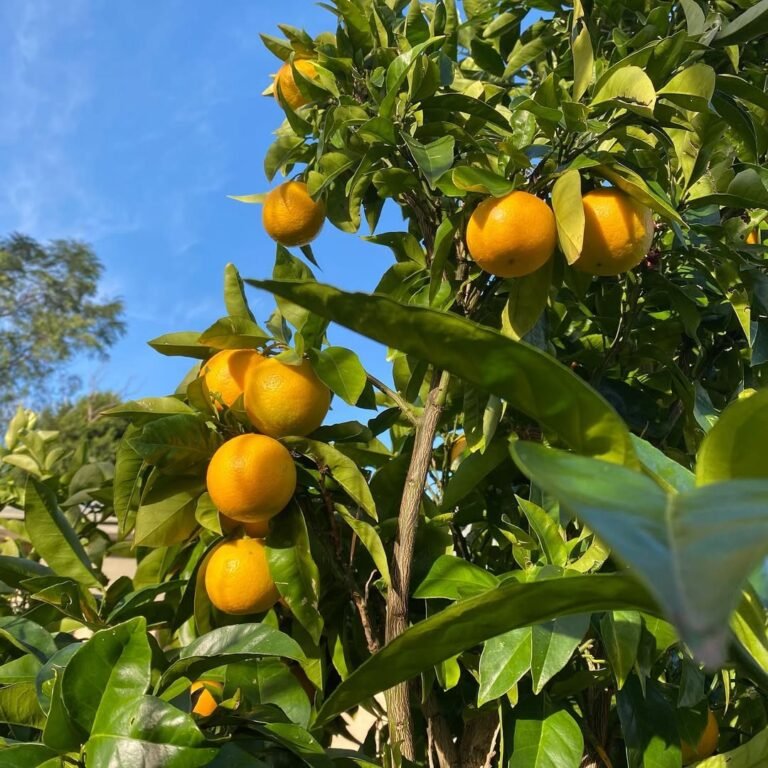
1. The Single Fruit Tree Food Forest (The Minimum Viable Version)
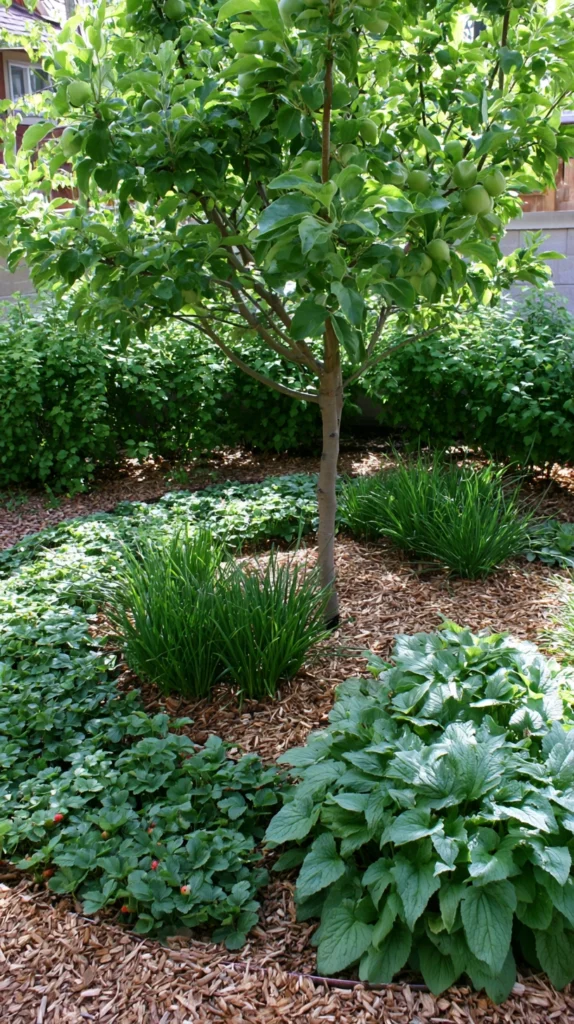
One dwarf or semi-dwarf fruit tree at the centre, with productive plants in every ring outward — the food forest for the smallest backyard or the most cautious beginning.
Why one tree is enough to begin:
The tree as the anchor:
- One tree creates the structure from which all other layers are organised
- The shade it casts: determines what can grow beneath
- The leaf fall: the beginning of the mulch system
- The root system: the beginning of the underground network
- One tree: the food forest’s first decision, and the most important one
The tree selection:
For the smallest backyards:
Apple on M27 rootstock:
- The most dwarfing apple rootstock available
- Final height: 4–5 feet
- Grown in the ground or in a large pot
- Some support needed (staked throughout its life)
- Full fruit production: 15–20 apples per tree in good years
- The smallest possible productive apple tree
Apple on M9 rootstock:
- The standard dwarfing rootstock for garden apples
- Final height: 8–10 feet
- More productive than M27
- Requires staking for first few years
- The standard choice for a small food forest
Quince on Quince A rootstock:
- Self-fertile (one tree: no pollination partner needed)
- Beautiful blossom
- Fragrant fruit
- Hardy and reliable
- An under-planted food forest tree
Cordon or espalier apple:
- Trained flat against a fence or wall
- Takes almost no horizontal space
- Full production in a 2-foot wide footprint
- Ideal for a very small space
The rings around the tree:
Ring one (beneath the canopy — 0–3 feet from the trunk):
- Do not plant within 18 inches of the trunk (root competition)
- From 18 inches to the drip line: the guild planting
- Comfrey (deep-rooted mineral accumulator)
- Bulbs (alliums, daffodils in the outer ring)
- Wild garlic (the spring ground cover)
Ring two (the drip line to 5 feet from trunk):
- Strawberries (the ground cover at this distance)
- Chives (the companion plant)
- Nasturtiums (nitrogen fixers, edible)
- Herbs (thyme at the drier edge)
Ring three (5–8 feet from trunk):
- Currant bushes (blackcurrant, whitecurrant, redcurrant)
- Raspberry canes (the productive shrub layer)
- The perennial herbs (sage, rosemary at the sunny edge)
Cost breakdown:
- Dwarf apple tree (bare root, winter): $25–40
- Guild plants (comfrey, chives, wild garlic): $15–25
- Strawberry runners (12): $12
- One currant bush: $15
- Total: $67–92
The single tree food forest in year three: the apple tree laden in September. The blackcurrant finished in July. The wild garlic from April through June. The strawberries June and July. The raspberries July and August. One tree: the structure for eight months of continuous harvest.
Single Tree Tips
The pollination question:
- Some apple varieties: self-fertile (one tree sufficient)
- Most: need a pollination partner within 50 feet
- Check the specific variety: the most important single purchase decision
- Self-fertile varieties: Braeburn, Bramley (technically a partial triploid), Cox, James Grieve
- If neighbours have apple trees: pollination often happens naturally
The guild over time:
- Year one: plant the tree, establish a few guild plants
- Year two: add more layers as the tree grows
- The guild: not completed in one planting
- Each addition: another layer of the system
2. The Fence-Line Food Forest (The Vertical Backyard)
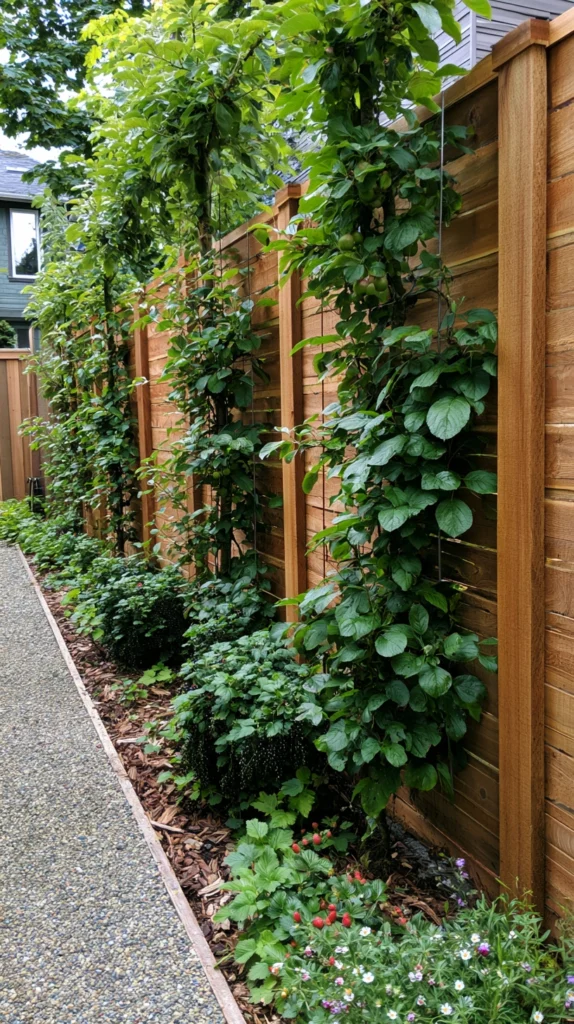
The fence as the structure for a productive vertical garden — the food forest that uses the garden’s boundaries as its growing surface.
Why the fence is the food forest’s most underused resource:
The vertical space:
- A 20-foot fence: the same growing surface as 20 feet of horizontal space, used vertically
- Most gardens: the fence grows grass against it and nothing else
- The fence-line food forest: the fence fully planted from ground to the top
- The yield: from what was previously dead space
The fence-line layers:
The climber (top):
- Trained to the full fence height
- A climbing rose (the fruit: rosehips, the food; the flowers: edible)
- Or: a thornless blackberry (the most productive edible climber)
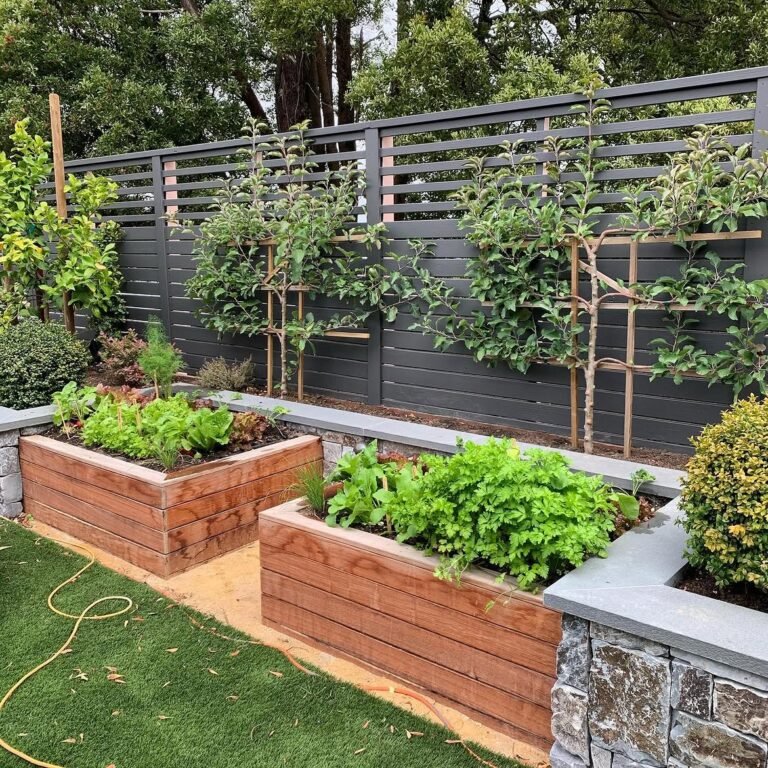
- Or: an espalier fruit tree trained flat against the fence (the most productive fence-trained tree)
- The climber: the canopy layer of the fence-line forest
The mid-level (fence base to 4 feet):
- Currant bushes (all three: black, white, red)
- Jostaberry (the blackcurrant-gooseberry hybrid: very productive)
- The productive shrub layer: the hardest-working zone
The ground level (0–12 inches):
- Wild strawberries or alpine strawberries (the most shade-tolerant strawberry)
- Chives (edible and pollinator-attracting)
- Marjoram
- The ground cover: filling the soil from wall base to the outer edge of the shrub layer
The nitrogen-fixing elements:
- Russian comfrey (planted at intervals along the fence)
- The comfrey: accumulates minerals and releases them as it dies back
- Cut comfrey: used as a mulch for the whole fence-line system
- The comfrey: doing two jobs (ground cover and fertility)
The fence-line design:
Both sides (if there are two fence lines):
- The sunny fence (south-facing): the espalier fruit trees, the warmth-loving herbs
- The shadier fence (north-facing): the currants, the gooseberries, the climbing hydrangea
- Different plants: different fence aspects
- The whole garden boundary: productive
Cost breakdown:
- Three currant bushes (mixed): $40–55
- Thornless blackberry or climbing rose: $20–30
- Wild strawberry runners (6): $8
- Russian comfrey crowns (3): $12
- Total: $80–105
3. The Three-Zone Small Food Forest (The Structured Layout)
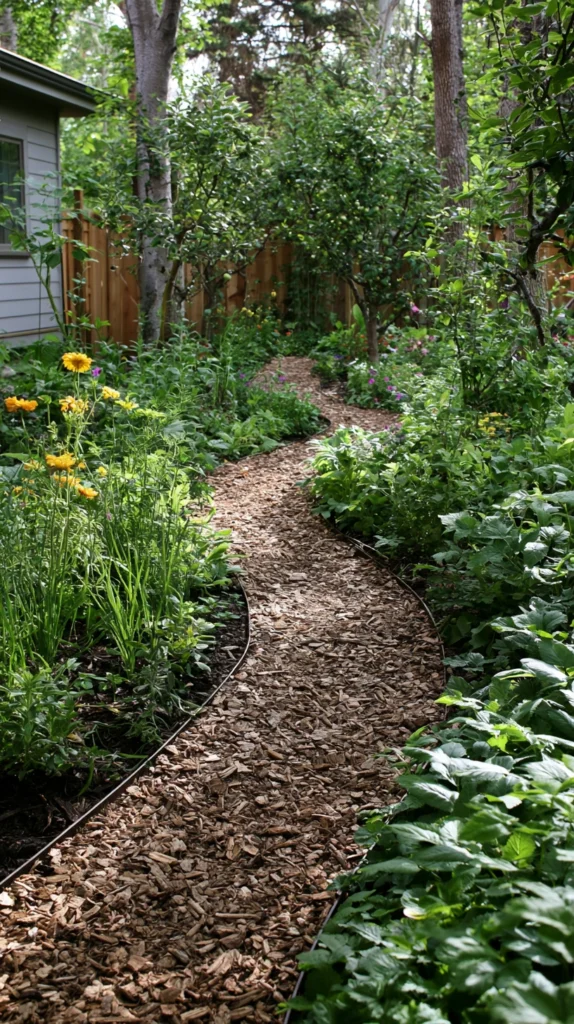
The backyard divided into three distinct food forest zones by their character and their labour requirement — the design that brings order to a food forest without losing its naturalistic quality.
Why zones prevent the food forest from feeling unmanageable:
The gardener’s comfort:
- A food forest with no zone structure: can feel overwhelming
- Every part: needing attention simultaneously
- No clear starting point or finish point
- The zoned food forest: three areas, each with a different rhythm
The zones:
Zone one: The intensive zone (nearest the house)
- The herbs and kitchen crops
- Frequent harvesting (daily)
- More maintenance (regular picking, occasional dividing)
- Benefit from proximity to the kitchen
- Plants: the kitchen herbs, salad leaves, chives, edible flowers
- The human-focused zone
Zone two: The productive zone (middle)
- The fruit bushes and perennial vegetables
- Weekly harvesting
- Moderate maintenance (annual pruning, mulching)
- Plants: currants, gooseberries, raspberries, globe artichoke, asparagus, rhubarb
- The harvest zone
Zone three: The self-managing zone (furthest from the house)
- The trees, the elder, the comfrey
- Minimal maintenance
- The system that sustains itself
- Plants: the fruit tree, the elder, the hazel, the comfrey, the ground cover
- The wild zone
The transitions:
Between zones: gradual, not hard:
- A mown grass path or a bark chip path between zones
- The transition: physical (the path) but not a hard boundary
- Plants from one zone: allowed to seed into the next
- The zones: a management framework, not a physical barrier
Cost breakdown:
- Zone one plants: $30–50
- Zone two plants: $60–90
- Zone three trees and large plants: $60–100
- Paths between zones: $20–40
- Total: $170–280
4. The Guild-Based Layout (Partners, Not Solo Performers)
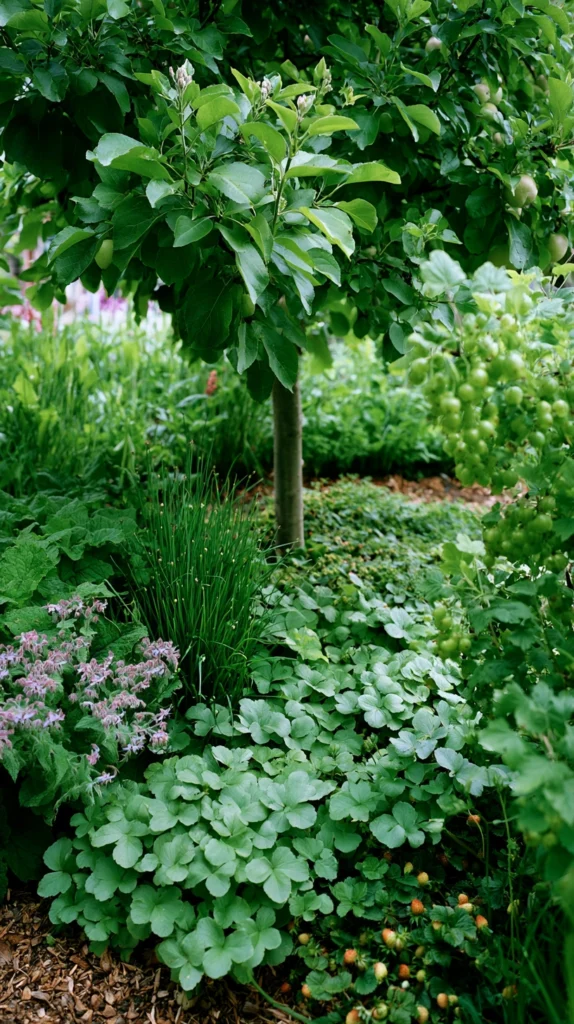
Each productive tree or shrub surrounded by a companion guild of supporting plants — the food forest design based on plant relationships rather than plant types.
What a guild is:
The guild concept:
- A group of plants that support each other
- One central plant (the productive focus)
- Supporting plants that feed it, protect it, attract its pollinators, and deter its pests
- The guild: the productive unit of a food forest
The apple guild:
Central plant: the apple tree
The nitrogen fixer:
- Siberian pea shrub (Caragana arborescens): nitrogen-fixing, hardy
- Or: clover as ground cover
- The nitrogen: from the air into the soil into the apple’s roots
The mineral accumulator:
- Comfrey (the standard)
- Dandelion (the common mineral accumulator — deep tap root mines minerals)
- The minerals: brought up from the subsoil, released to the surface when the plants die back
The pollinator attractor:
- Borage (blue flowers: bees love them)
- Phacelia (the best pollinator plant available)
- The pollinators attracted: also pollinate the apple
- The pollinator plant: one plant doing two jobs (attractive to bees, pollinating the fruit tree)
The pest deterrent:
- Chives (the allium: deters certain pests)
- Tansy (deters flying insects)
- The guild: reducing pest pressure through companion planting
The ground cover:
- Strawberry (productive ground cover)
- Or: low-growing thyme
- Covering the soil: preventing weed establishment and moisture loss
The hazel guild:
Central plant: the hazel (for nuts and coppiced poles)
Companion plants:
- Ramsons (wild garlic): the spring ground cover
- Comfrey: the mineral accumulator
- Violets: the low ground cover (edible flowers)
- The guild: supporting the hazel’s productivity
Cost breakdown:
- One guild of supporting plants (around one central tree): $30–50
- Central tree (already counted in Idea #1): separate
- Total per guild: $30–50
5. The Keyhole Bed Layout (Maximum Access, Minimum Space)
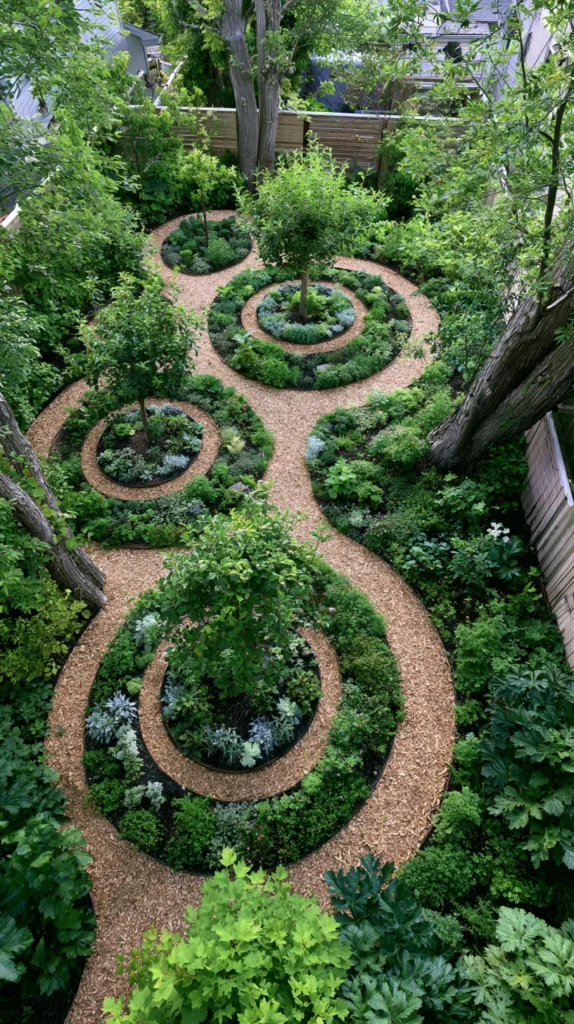
Garden beds designed in a keyhole shape — the most space-efficient layout for a small food forest, maximizing the productive area reachable from the paths.
Why keyhole beds:
The access problem:
- In any garden bed: the further from the edge, the harder to reach without stepping on the soil
- Stepping on the soil: compacts it (damaging the structure)
- The keyhole bed: a circular bed with one path entering the centre
- From the central path point: every inch of the bed is within arm’s reach
The design:
The keyhole shape:
- A roughly circular bed (8–12 feet in diameter)
- A single narrow path (18 inches wide) cutting from the edge to the centre
- The path: the keyhole
- From the centre of the path: 360-degree reach to the entire bed
What grows in the keyhole bed:
- The centre: the tallest plant (the tree or large shrub)
- The inner ring: the shrub layer
- The outer ring: the ground cover and herbs
- The layers: accessible from the central path without stepping on any plant
Multiple keyhole beds:
Two or three keyhole beds:
- Each with a different productive focus
- Bed one: fruit tree as the centre, currants in the middle ring, wild garlic as ground cover
- Bed two: hazel at centre, jostaberry in the middle ring, strawberries as ground cover
- Bed three: elder at centre, raspberries in the middle ring, comfrey and herbs as ground cover
- Three beds: the complete small food forest, all accessible without soil compaction
The paths between:
- Bark chip paths connecting the keyhole beds
- The paths: permanent (never planted)
- The beds: never walked on
- The soil: perpetually uncompacted and biologically active
Cost breakdown:
- Bark chip for the paths: $40–60
- No additional cost beyond the plants chosen for the layers
- Total: $40–60 for the path infrastructure
6. The Perennial Vegetable Forest (Vegetables That Come Back)
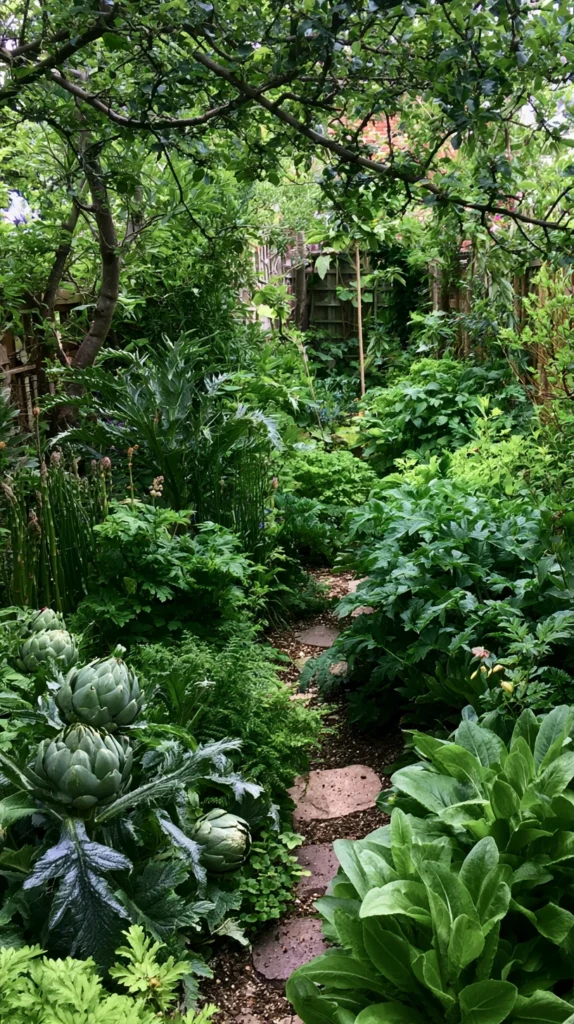
A food forest structured around productive perennial vegetables — the yield without the annual replanting.
Why perennial vegetables are the food forest’s most underrated component:
The annual vegetable problem:
- Annual vegetables: replanted every year
- The food forest: designed around permanence
- Perennial vegetables: grow once, harvest for years
- The combination: perennial vegetables form the herbaceous layer of the food forest
The perennial vegetables:
Asparagus:
- Takes three years to establish (patience)
- Produces for 20+ years once established
- The most rewarding perennial vegetable in any garden
- Plant the crowns once, harvest every spring until the gardener moves house
Globe artichoke:
- The most architectural vegetable available
- 4–5 feet tall, structural in the food forest
- The flower bud: the food (must harvest before it flowers)
- Hardy perennial in most temperate climates
- The artichoke: the herbaceous layer’s most impressive plant
Sorrel:
- The first green from the food forest in early spring
- Lemony, sharp, the first fresh flavour of the year
- Returns every spring, spreads slowly
- Almost no maintenance required
Good King Henry (Blitum bonus-henricus):
- The perennial spinach alternative
- Grows in the shade of trees (specifically adapted to woodland conditions)
- Young shoots: like asparagus. Leaves: like spinach.
- The perfect food forest vegetable
Sea kale (Crambe maritima):
- Forced in spring (covered with a bucket to blanch)
- The blanched shoots: a delicacy
- The leaves: edible through summer
- Hardy and low-maintenance
Groundnut (Apios americana):
- A climbing legume (uses the vine layer)
- Underground tubers (the root layer)
- Nitrogen-fixing (the fertility function)
- Triple-purpose food forest plant
The perennial vegetable layout:
By layer:
- Globe artichoke: the herbaceous layer’s tall structural plant
- Asparagus: planted in a dedicated bed within the food forest (it needs its own space)
- Sorrel and Good King Henry: under the trees (shade-tolerant)
- Sea kale: in a sunny position in the outer food forest area
- The layout: each plant in the condition it prefers
Cost breakdown:
- Asparagus crowns (10): $20–30
- Globe artichoke (2 plants): $18–25
- Sorrel, sea kale, Good King Henry (seeds): $10–15
- Total: $48–70
7. The Microclimate-Based Layout (Using Every Weather Condition)
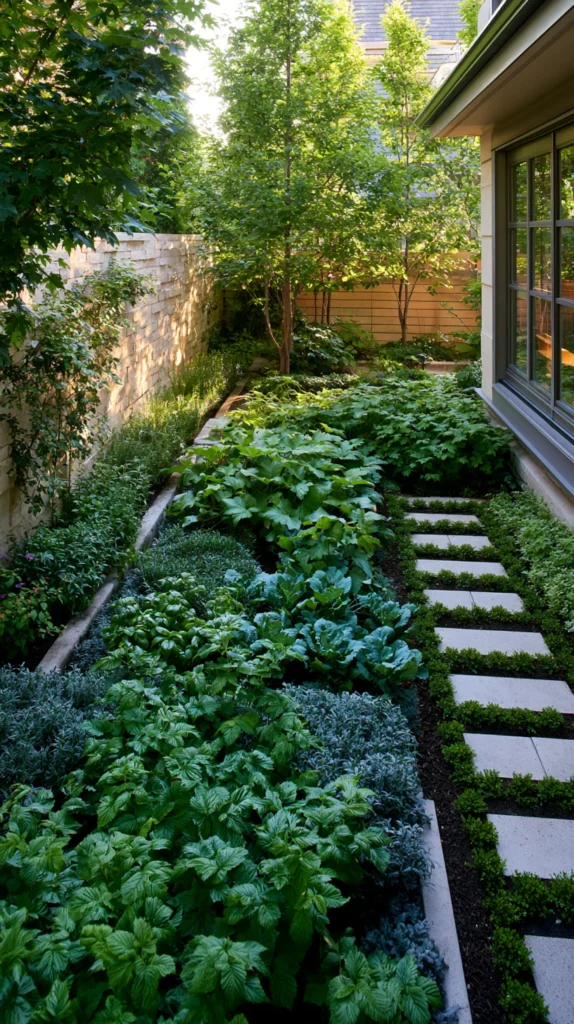
Positioning plants according to the microclimates created within the food forest itself — the layout that uses sun, shade, wet, and dry as productive conditions rather than problems.
Why microclimates are the food forest’s assets:
The standard garden view:
- The shady corner: a problem (nothing grows)
- The wet area: a problem (plants rot)
- The hot, dry wall: a problem (nothing thrives)
- The standard garden: fighting these conditions
The food forest view:
- The shady corner: the perfect habitat for shade-loving food plants
- The wet area: the bog garden habitat
- The hot, dry wall: the Mediterranean herb and fruit condition
- The food forest: using these conditions
The microclimates:
The sunny south-facing area (hot and dry):
- Mediterranean herbs: rosemary, thyme, sage, oregano
- Fig trees (where climate allows)
- Grapes (on a south-facing fence)
- The dry annual harvest: the Mediterranean larder
The shady north-facing area:
- Gooseberries (the most shade-tolerant fruit)
- Whitecurrants (tolerates more shade than blackcurrant)
- Good King Henry, sorrel, ramsons
- The shady food forest: still productive
The moist area (near a downpipe, lower part of a sloped garden):
- Elderberry (loves moisture)
- Raspberries (prefers moisture)
- Mint (the contained moisture-loving herb)
- The bog plants: productive in the very conditions that fail everything else
The wall base (warm microclimate):
- Fan-trained peach or nectarine (the wall heat makes these possible in cool climates)
- Climbing kiwi (again, the wall warmth)
- The productive wall: using the brick’s heat storage
Reading the microclimate:
Before planting:
- Observe the garden for one full year (or one full season)
- Note where the frost settles (frost hollows: avoid for fruit blossom)
- Note where water collects
- Note the sun pattern throughout the day
- The planting: after the observation
Cost breakdown:
- No additional cost over standard plant choices
- The microclimate layout: using the same plants more effectively
- Total: $0 additional
8. The Wildlife and Food Forest Hybrid (Productive Ecology)
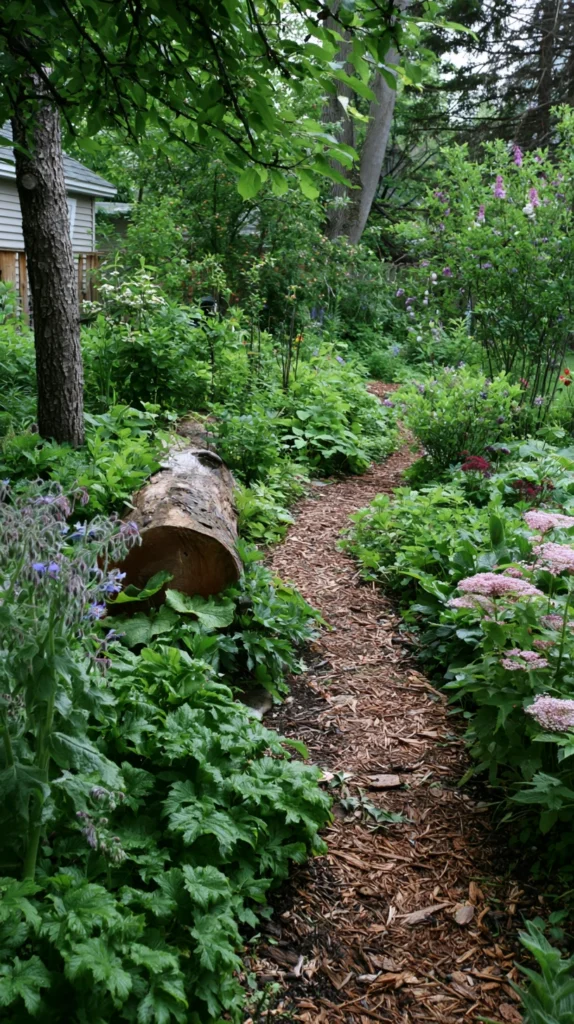
A food forest designed equally for food production and wildlife habitat — the layout that invites the beneficial insects, birds, and small animals that make the food forest more productive.
Why wildlife increases food forest productivity:
The pollination:
- Food forest fruit: requires pollination
- Pollinators: attracted to a diverse habitat
- A food forest with good pollinator habitat: measurably more productive than one without
- The flowers grown for pollinators: also pollinate the food plants
The pest control:
- Birds: eat insects (including pests)
- Hedgehogs: eat slugs
- Predatory insects (ladybirds, lacewings, ground beetles): eat pest insects
- The wildlife: the biological pest control that eliminates the need for intervention
The wildlife features:
Pollinator plants:
- Borage: bees love it, the flowers are edible
- Phacelia: one of the best bee plants available
- Comfrey: the bumblebee’s most important spring plant
- The pollinator plants: also in the food forest
Insect habitat:
- Dead wood in the corner: beetle habitat
- A bee hotel (drilled wood blocks): solitary bee nesting
- Long grass patch: overwintering insect habitat
- These features: a few square feet, contributing significantly
Bird habitat:
- Berry-producing plants: the hawthorn, the elder, the crab apple
- A birdbath with fresh water
- Dense shrubs for nesting
- The birds: the food forest’s pest managers
Small mammal habitat:
- A log pile: hedgehog and small mammal shelter
- Dense ground cover: shelter for beetles and frogs
- A shallow dish of water: for all wildlife
- The wildlife-friendly food forest: the complete ecological system
The productive dual role:
Every wildlife feature: also productive:
- Elder: the elderflower cordial and elderberry wine
- Crab apple: the crab apple jelly (and wildlife magnet)
- Hawthorn: the haws (berries for wildlife) but also the young leaves are edible in spring
- The wildlife plants: not sacrificing productivity — adding to it
Cost breakdown:
- Wildlife-specific additions: $30–60
- A birdbath: $25–50
- Log pile: $0 (from fallen wood or arborist material)
- Bee hotel: $10–20
- Total: $65–130
9. The Vertical Stacking Layout (Height as Productivity)
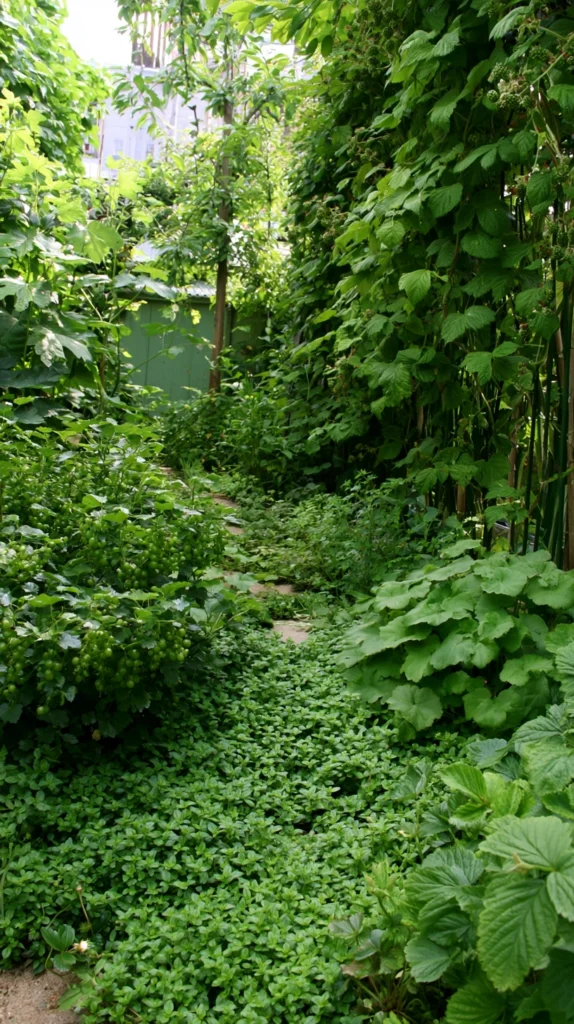
Using every available height — from ground to 10 feet — as productive growing space — the food forest that produces in the air as well as at ground level.
Why vertical layering multiplies productivity:
The mathematics:
- A 10-foot square of flat garden: 100 square feet of productive space
- A 10-foot square of food forest planted to 10 feet high in five layers: effectively 500 square feet of productive surface
- The multiplication: from the layering
The vertical layers in 10 feet of height:
Ground level (0–6 inches):
- Wild strawberry, creeping thyme, chamomile
- The carpet that covers the soil
Low herbaceous (6 inches–2 feet):
- Mint (contained), chives, parsley, sorrel
- The herb and salad layer
Medium herbaceous (2–4 feet):
- Globe artichoke, comfrey, tall herbs
- The structural herbaceous layer
Shrub (4–8 feet):
- Currants, gooseberries, elder, hazel (coppiced short)
- The fruiting shrub layer
Canopy (8–10 feet):
- Dwarf apple, small pear, quince
- The fruit tree layer
Climbers (using fence height):
- Climbing beans or squash in summer
- Thornless blackberry as a permanent climber
- The climber layer: using the fence height
The stacking principle:
Each layer: different light requirements:
- The canopy layer: full sun
- The shrub layer: tolerates some shade from above
- The herbaceous layer: tolerates more shade
- The ground cover: tolerates significant shade
- The stacking works because each layer needs less light than the one above
Choosing each layer by light need:
- Full sun herbs (Mediterranean): in the gap zones between the trees (not under the canopy)
- Shade-tolerant herbs: directly under the canopy
- The placement: by light need, not by aesthetics
Cost breakdown:
- The cost is the sum of plants at each layer — already covered in other ideas
- The layout principle: no additional cost
- Total: $0 additional — this is a layout principle, not an additional purchase
10. The No-Dig Food Forest (The Soil-First Approach)
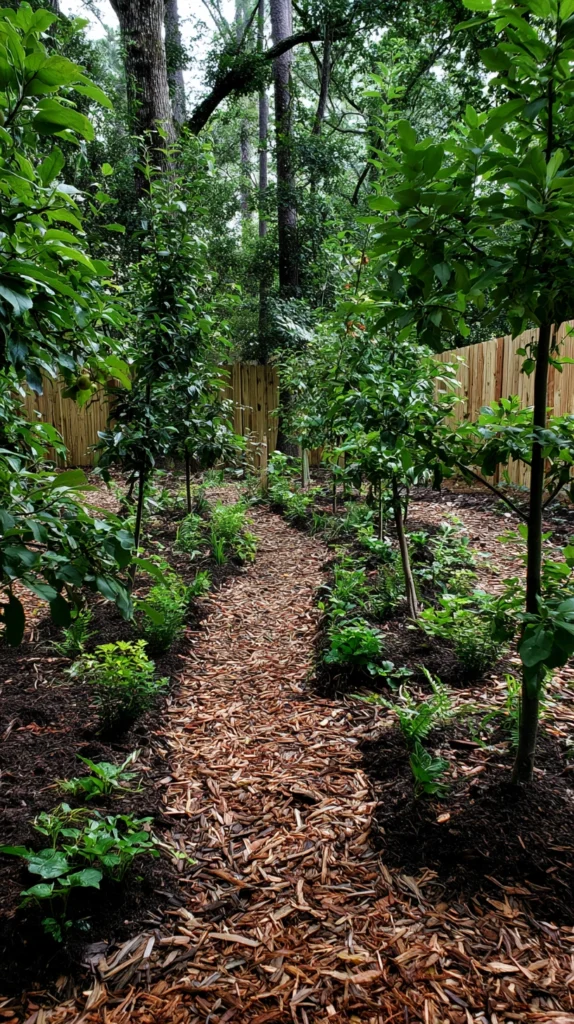
A food forest established and maintained entirely without digging — the layout philosophy that prioritises soil health above all else.
Why no-dig is the food forest’s most important principle:
The soil as the system:
- The food forest: depends on soil biology
- Soil biology: the fungi, bacteria, nematodes, and invertebrates that process organic matter and make nutrients available
- Digging: destroys the fungal networks (mycorrhizae) that connect trees and plants underground
- No-dig: preserves these networks
- The food forest that never digs: over time, the most biologically rich and productive soil
The establishment method:
Sheet mulching (the no-dig establishment):
- Cardboard over the entire area (any existing vegetation: cardboard kills it, no digging required)
- Overlap cardboard generously (no gaps — weeds grow through gaps)
- Compost over the cardboard (4–6 inches)
- Planting through the compost, through the cardboard, into the native soil beneath
- The cardboard: rots within 6–12 months (improving the soil as it does)
- The establishment: without a spade
The ongoing maintenance:
Annual mulch addition:
- A layer of compost or wood chip each autumn
- Applied around (not on top of) the plants
- Never dug in — left on the surface
- The worms: take it into the soil
- The process: the most productive soil amendment available
The wood chip mulch:
- Wood chip (arborist chip, not composted bark)
- Applied 4–6 inches deep between plants
- The fungal species that colonise wood chip: specifically beneficial to fruit trees
- The food forest with a wood chip mulch: the mycelial network building every year
The compost from within:
The food forest making its own fertility:
- Comfrey cut and left as mulch
- Fallen leaves: left in place (not raked)
- Spent plant material: left where it falls (if not diseased)
- The system: feeding itself
- Year five onwards: no external fertility input required in a well-established food forest
Cost breakdown:
- Cardboard for establishment (recycled): $0
- Compost (4 cubic yards for a 20×30 food forest establishment): $120–160
- Wood chip (arborist chip, often free): $0
- Total: $0–160
11. The Four-Season Food Forest (Harvest in Every Month)
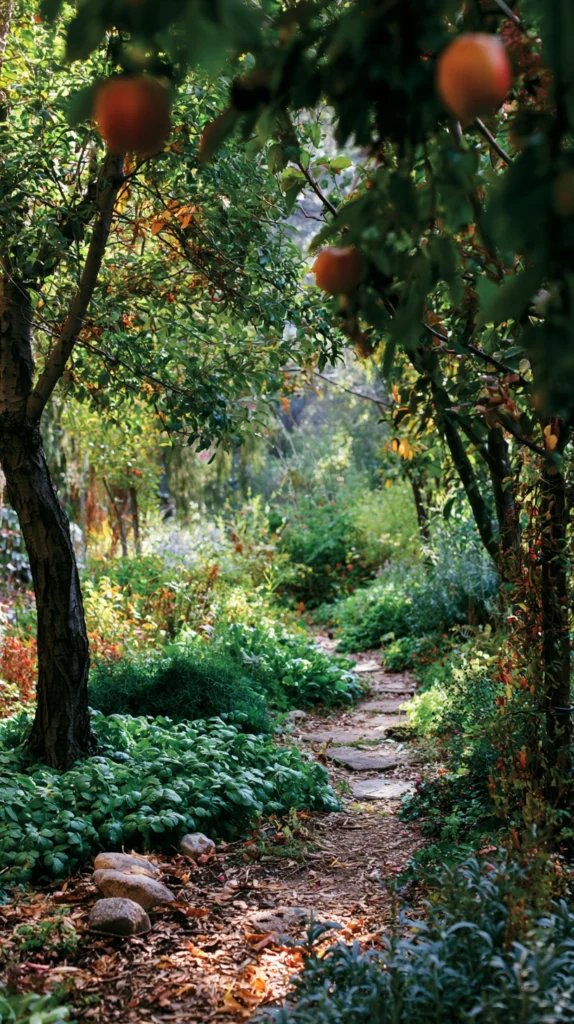
A food forest specifically designed so that something is always harvestable — the layout that eliminates the “hungry gap” entirely.
Why continuous harvest requires planning:
The accidental harvest gap:
- A food forest planted without timing consideration: months of nothing, then abundance
- The apple harvest in September: followed by nothing until the wild garlic in April
- A six-month gap: not inevitable — avoidable with plant selection
The month-by-month planting:
January–February:
- Forced chicory (grown from roots lifted in autumn, forced in the dark)
- Stored apples, pears, quince from the autumn harvest
- Dried herbs from the previous summer
March:
- The first sorrel leaves (the earliest fresh green from the food forest)
- The first chives emerging
- Overwintered broad beans (planted in October)
April:
- Wild garlic (the carpet of the food forest floor)
- Asparagus (from year four onward)
- Gooseberries (the first fruit)
May:
- Wild garlic and wood sorrel still
- Early strawberries
- Elderflower (the harvest that requires timing: a 2-week window)
- Salad leaves
June:
- Strawberries at peak
- Gooseberries
- Cherries (if a cherry tree is in the system)
- Broad beans
July:
- Blackcurrants
- Redcurrants
- Whitecurrants
- Raspberries (the main summer berry)
August:
- Raspberries continuing
- Jostaberry
- Cobnuts (the hazel’s early harvest)
- Elderberries beginning
September:
- Apples
- Pears
- Quince
- Blackberries (if a thornless blackberry is in the climber layer)
- Elderberries
October:
- Late apples
- Hazelnuts (the nut harvest)
- The last autumn raspberries (if an autumn-fruiting variety)
- Medlar (the very late fruit)
November–December:
- Stored fruit from October harvests
- The last hardy kale from the herbaceous layer
- Parsnips from the root layer
The plants that close the winter gap:
Adding the gap-fillers:
- Autumn-fruiting raspberry (‘Autumn Bliss’, ‘Joan J’): October harvest
- Sorrel: the first spring green
- Stored crops: the bridge
- The gap: effectively closed
Cost breakdown:
- Autumn raspberry canes (3): $15–22
- Sorrel (already suggested in other ideas): $0 additional
- Total: $15–22 additional to close the gap
12. The Forest Garden Design Aesthetic (Beautiful and Productive)
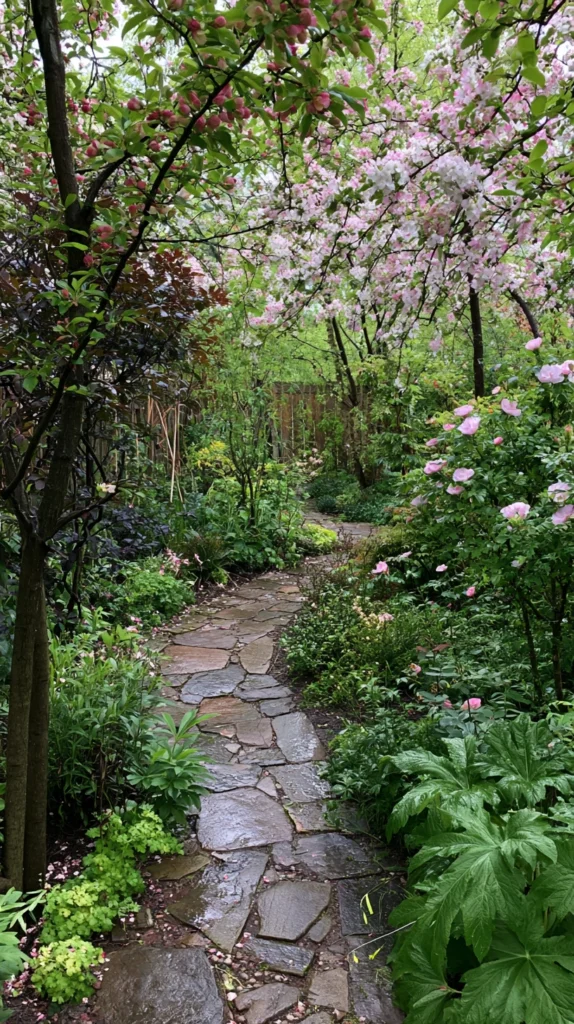
A food forest designed to be as beautiful as a garden, not just as productive as an allotment — the layout that reconciles the productive and the ornamental.
Why the beautiful food forest is worth designing:
The objection:
- “A food forest will look like a wild mess”
- The concern: aesthetics versus productivity
- The reality: a well-designed food forest is more beautiful than a standard garden
- The autumn food forest specifically: the most beautiful garden version available
The design principles:
Seasonal interest throughout:
- Spring blossom (fruit tree flowers): the most beautiful spring garden moment
- Summer leaf and fruit: the lush, abundant garden
- Autumn colour (hazel, apple, elder): the copper and gold
- Winter structure (bare fruit tree, evergreen herbs, dried seed heads): the architectural garden
- The food forest: designed for year-round visual interest, not just the harvest
The plant selection for beauty as well as productivity:
The beautiful and productive:
- Japanese quince (Chaenomeles): the most beautiful spring flower, the fruit is the quinces
- Crab apple ‘John Downie’: the blossom and the fruit both extraordinary
- Sambucus nigra ‘Black Lace’: the deeply divided black-purple foliage, the elderflower, the elderberry
- Rosa rugosa: the most beautiful rose for a food forest (hips and flowers both productive, extremely hardy)
The structure:
- The fruit trees: the bones of the garden in winter
- The currant bushes: the shrub layer structure
- The perennial herbs: the evergreen anchors
- The food forest structure: the garden’s structure
The accidentals:
- Self-seeded plants welcomed if productive
- The nasturtium that seeds itself at the base of the apple
- The borage that appears beside the currant
- The accidental food plant: the food forest’s most charming quality
Cost breakdown:
- Aesthetically selected varieties (slightly more expensive than standard): $20–40 additional over standard choices
- Total: $20–40 additional for the beautiful food forest rather than just the productive one
13. The Complete Small Backyard Food Forest (All Elements Working Together)
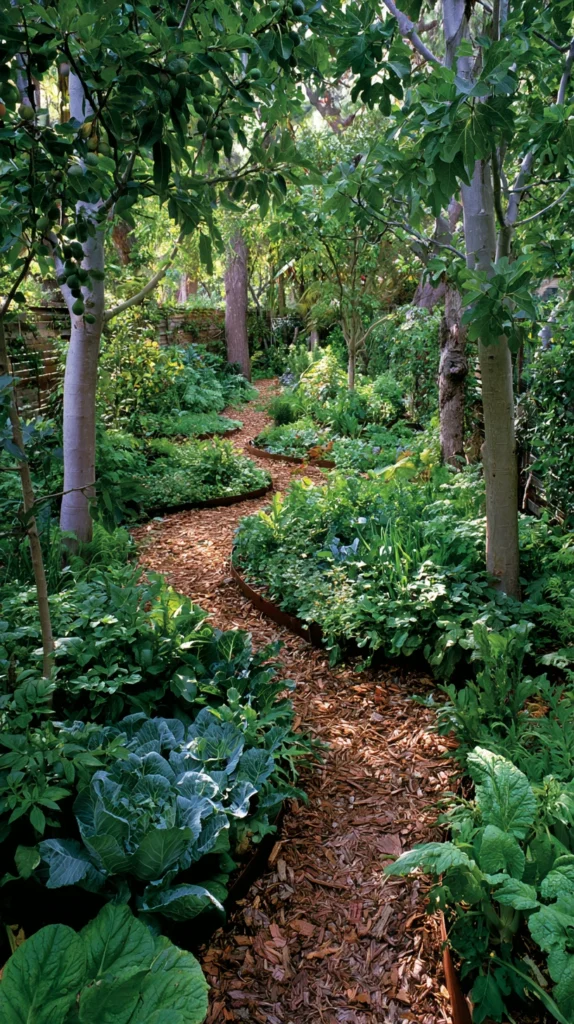
A 20×40 foot backyard fully transformed into a functioning food forest — the complete design from bare lawn to productive system.
The design:
The layout:
- Three keyhole beds (from Idea #5)
- Fence-line planting on two sides (from Idea #2)
- The no-dig establishment (Idea #10)
- The guild-based planting (Idea #4)
- Planned for four-season harvest (Idea #11)
- Designed to be beautiful (Idea #12)
The planting list:
Bed one (the fruit tree bed):
- Apple ‘James Grieve’ on M9 (self-fertile, early variety)
- Apple guild: comfrey, chives, borage, strawberry
- Blackcurrant (2 plants)
Bed two (the shrub-dominant bed):
- Hazel (the sub-canopy)
- Ramsons (wild garlic ground cover)
- Jostaberry
- Autumn-fruiting raspberry (3 canes)
Bed three (the perennial vegetable bed):
- Globe artichoke (the dramatic centrepiece)
- Asparagus (a dedicated row at the bed edge)
- Sorrel
- Good King Henry
Fence line one (the sunny fence):
- Rosa rugosa (the beautiful and productive rose)
- Thyme and rosemary at the base
- Strawberries along the fence base
Fence line two (the shadier fence):
- Elder (the fence-height large shrub)
- Gooseberries
- Alpine strawberries
- Wild garlic
The paths:
- Bark chip throughout
- The paths: permanent and never planted
The establishment:
Year one:
- Sheet mulch the entire area
- Plant trees and large shrubs
- Establish the basic guild plants
- The food forest: planted but sparse-looking
Year two:
- Fill in the layers
- The fruit tree: establishing
- The currants: beginning to produce
- Wild garlic: beginning to spread
- The first raspberries
- The first asparagus (not harvested: establishing)
Year three:
- The system begins to function
- The first full fruit tree harvest
- The asparagus: first harvest
- The ground layers: well-established
- Minimal maintenance required
Year five:
- The food forest: self-sustaining
- The mulch system: functioning without external inputs
- The harvest: continuous from April to November
- The maintenance: four hours per year (pruning and the annual mulch)
The complete harvest calendar for this food forest:
April–May: wild garlic, sorrel, chives, asparagus, elderflower June–July: strawberries, gooseberries, currants, raspberries August–September: jostaberry, apples, rosehips, hazelnuts, elderberries October–November: late apples, stored nuts, last herbs December–March: stored apples, dried herbs, forced roots
No month without something.
Cost breakdown:
Year one:
- Apple tree: $35
- Hazel: $20
- Elder: $15
- Rosa rugosa: $18
- Guild plants (comfrey, borage, chives): $20
- Currants and jostaberry (3): $40
- Raspberry canes (3): $18
- Asparagus crowns (10): $25
- Globe artichoke: $12
- Wild garlic, sorrel, Good King Henry: $15
- Strawberry runners (12): $12
- Bark chip (from arborist — free): $0
- Cardboard for establishment: $0
- Compost: $60
- Total year one: $290
Year two additions (filling in):
- Additional ground cover and guild plants: $40–60
- Total year two: $40–60
Grand total for the complete small backyard food forest: $330–350
Compared to:
- Annual vegetable garden (seeds, transplants, fertiliser, irrigation): $150–200 per year, indefinitely
- The food forest: established once, productive indefinitely, improving every year
Year five: the food forest producing its annual harvest for the cost of four hours of pruning and a bag of wood chip. The total investment: $330 made once, five years ago.
The Food Forest Principles
Applied to any size and any layout:
Start with the trees:
- The trees live the longest
- They structure everything else
- Plant them first, establish the rest around them
- A tree planted now: producing in three years
Use the layers:
- Every layer: another opportunity to harvest
- A garden with five productive layers: five times the productivity of a garden with one
- The layering: the food forest’s fundamental efficiency
Let the system do the work:
- Design it right: it runs itself
- The comfrey: makes fertiliser
- The mulch: suppresses weeds
- The diversity: manages pests
- The system: replacing the gardener’s labour over time
Be patient with establishment:
- Year one: invisible progress
- Year three: the system functioning
- Year ten: the extraordinary, self-sustaining garden
- The patience: the investment in the long game
Getting Started This Weekend
The first food forest planting:
Plant one tree.
Not a plan for the full system. Not the complete guild. Not the keyhole beds and the fence-line plantings.
One tree.
The apple on M9. The quince. The hazel. Whichever tree suits the space and the desire.
Plant it in the best position available. Sunny, away from structures, in good-draining soil. Stake it lightly (firm stake but the tree should be able to sway slightly — it strengthens the trunk).
Mulch around it. A circle of wood chip or compost, 3 feet in diameter, 3 inches deep. Keep it away from the trunk.
That tree is the food forest. Everything that comes after — the guild, the ground cover, the second and third shrubs — grows around that tree.
The food forest that is now a spreading, productive, self-managing system: started the same way. One tree planted on one Saturday.
This Saturday.