15 Cottage Garden Ideas That Feel Romantic and Lush
The cottage garden is the most forgiving and the most generous garden style available — it rewards relaxed management, thrives on self-seeding and natural abundance, and looks better the more it is allowed to spill, overlap, and fill every available space with flowers. Unlike formal or contemporary styles where precision is the measure of success, the cottage garden measures success in abundance. The more it flowers, the more it works.
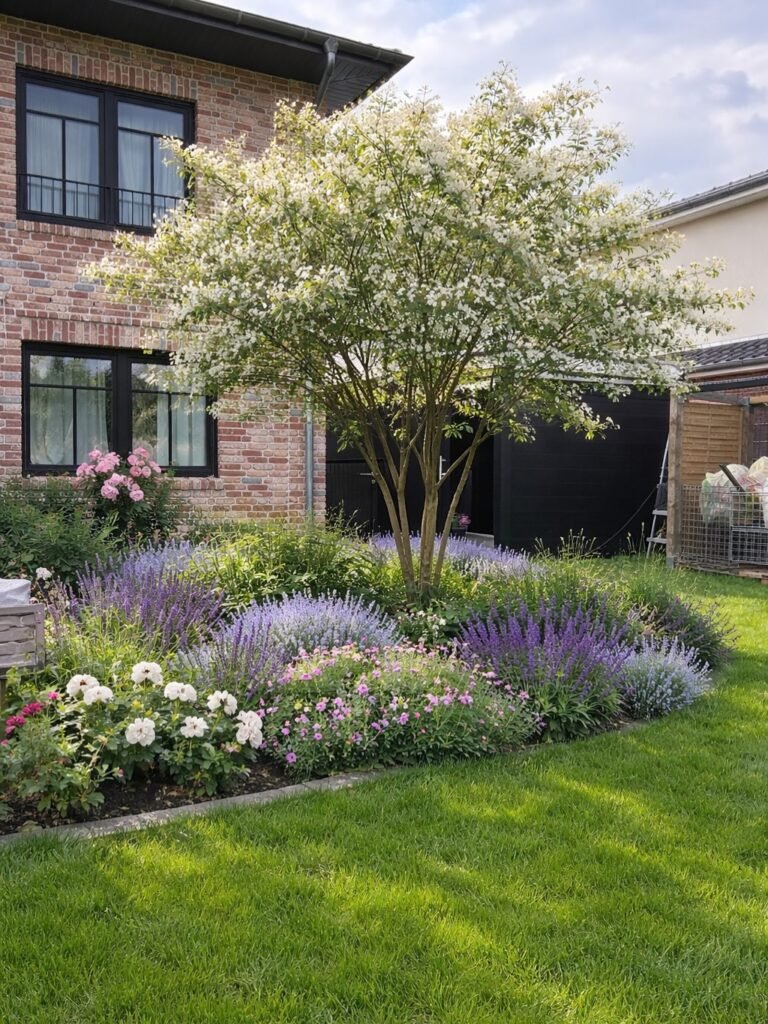
The fifteen ideas below bring the cottage garden aesthetic into any garden — from a single abundant border to a complete cottage scheme with a rose arch, a winding path, and a seat surrounded by planting. Each one includes what it costs and a practical tip to help you establish the relaxed, romantic abundance that makes this style so consistently beautiful and so persistently loved.
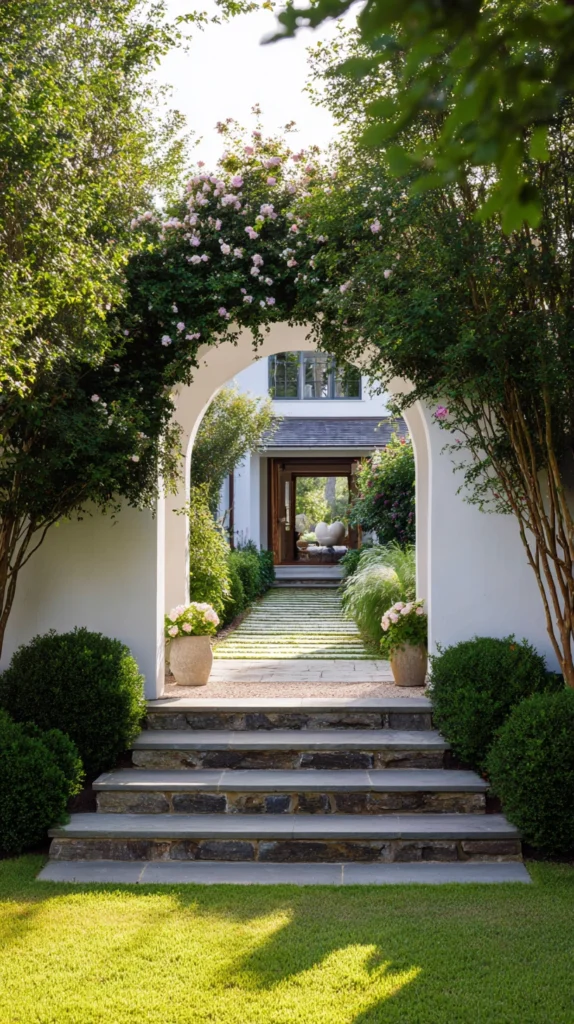
1. A Rose-Covered Garden Arch
Budget: $80 – $400
A garden arch covered in a climbing rose is the most iconic and most immediately romantic cottage garden feature available. A well-established rose arch in full flower is the image that defines the cottage garden aesthetic in virtually every photograph of the style ever taken — and it is achievable in any garden with a path to arch over and two to three years of patience.
A metal or timber garden arch costs $50–$200. A climbing rose in a 3-litre pot costs $15–$40. Varieties including Veilchenblau, Félicité-Perpétue, and The Generous Gardener are all reliably vigorous, fragrant, and well-suited to arch training. Train the rose stems along the arch frame from the first season — one stem up each upright and then trained across the top — for the most complete coverage within three growing seasons.
Growing tip: Tie rose stems to the arch with soft twine rather than wire or plastic ties — soft twine accommodates the stem’s growth and does not cut into the bark the way rigid fixings do over time. Retie annually in late winter when you can see the full stem structure clearly before new growth obscures the architecture of the plant against the arch frame.
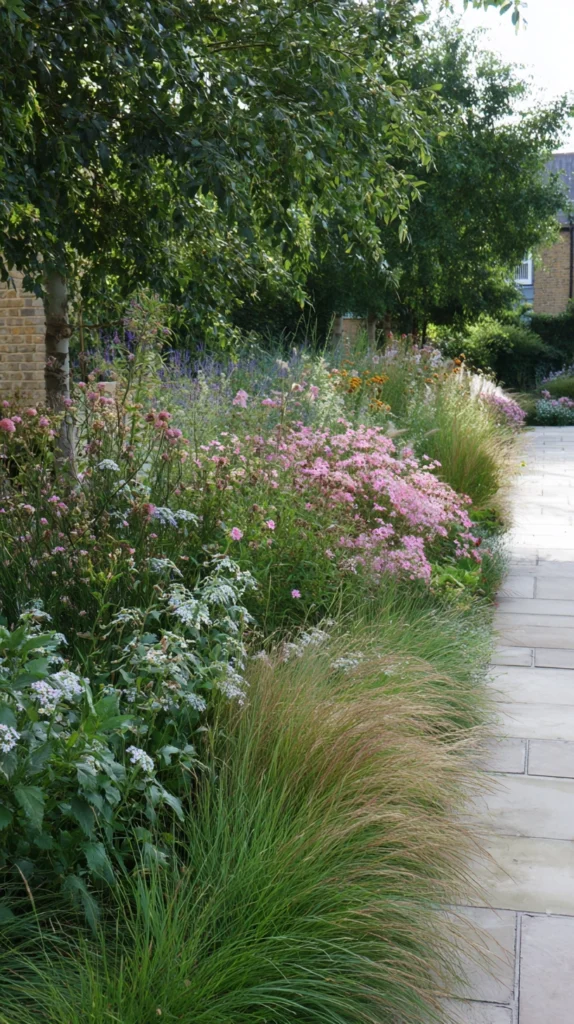
2. The Self-Seeding Border
Budget: $30 – $120
A cottage garden border that relies on self-seeding plants for its ongoing replanting requires almost no annual expenditure after the first season — foxgloves, aquilegia, verbena bonariensis, nigella, and honesty all seed freely through the border and produce new plants each year in gaps and positions chosen by the plant rather than the gardener. The result looks natural because it genuinely is.
Establish the self-seeding border with five or six reliable self-seeders at $5–$12 each from a garden centre, or from $2–$4 seed packets for those easily grown from direct sowing. Allow plants to go to seed each year without deadheading — the seed is the investment in next year’s border. Thin the resulting seedlings each spring rather than buying new plants and the border effectively replants itself at no ongoing cost beyond the time spent editing.
Growing tip: Leave the border in place through winter rather than cutting it back in autumn. Self-seeding plants need the autumn and early winter period to shed their seed onto the soil surface below — a border cleared in October removes the seed heads before seed dispersal is complete and significantly reduces the number of self-seeded plants that appear the following spring.
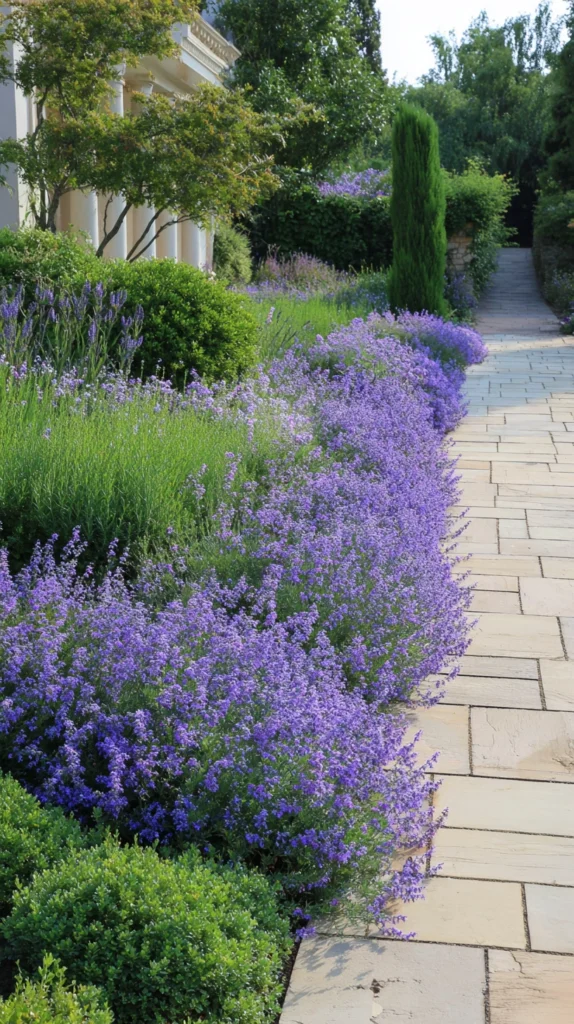
3. A Cottage Garden Path Edged With Catmint
Budget: $40 – $150
Nepeta (catmint) planted along both sides of a cottage garden path — allowed to billow slightly over the path edge rather than clipped back — creates one of the most romantically abundant path edgings available. The soft silver-green foliage and waves of lavender-blue flower spikes from June through to September make catmint the ideal path plant for a style that values softness over precision.
Nepeta Six Hills Giant costs $6–$12 per plant. A 6-metre path with catmint on both sides requires sixteen to twenty plants at $96–$240. Cut the whole plant back by half after the first flush of flowers in June — new growth and a prolific second flush appear within four weeks and the plant continues flowering until the first frosts. Catmint self-seeds modestly and spreads slowly by underground runners, filling the path edge more generously with each passing season.
Growing tip: Plant catmint through the path edge rather than beside it — allow a stem or two to grow directly across the path surface so the path appears to emerge from within the planting rather than running between it. The slight encroachment of the planting onto the path is the quality that makes a cottage garden path look romantically overgrown rather than simply bordered.
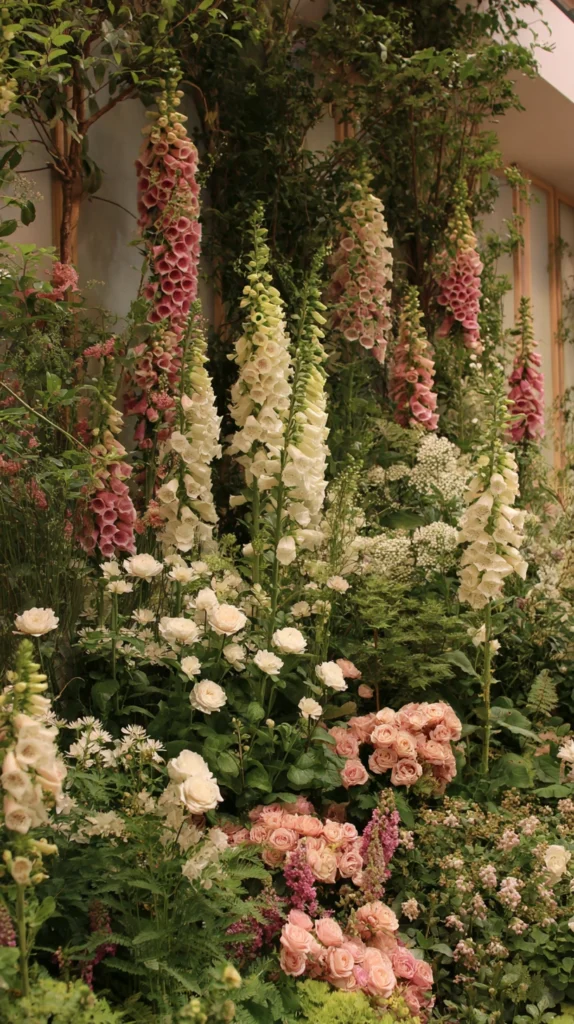
4. A Foxglove and Rose Border
Budget: $60 – $220
The classic cottage garden combination — tall foxglove spires rising above the lower mound of a shrub rose — creates a vertical layering of texture and colour that is both structurally effective and visually iconic. The tall, spotty interior of the foxglove flower and the flat, fragrant petals of the rose represent two entirely different flower forms that complement each other more than almost any other pairing in the cottage garden vocabulary.
Foxglove plants cost $3–$8 each. A shrub rose suitable for cottage garden use — David Austin varieties including Gertrude Jekyll, Lady of Shalott, and Olivia Rose are the most reliable — costs $15–$40 each. Plant the foxgloves in groups of three or five behind and between the roses rather than in single specimens scattered across the border — the group planting reads as an intentional design decision rather than an accidental arrangement.
Growing tip: Foxgloves are biennial — they grow as a leafy rosette in their first year and flower in their second before dying. Leave the spent flower spikes on the plant for four to six weeks after flowering to allow seed to set and fall. The self-seeded foxgloves that appear the following spring are indistinguishable from bought plants and the cycle of self-seeding makes the foxglove effectively permanent in a border where it is allowed to seed freely.
5. Climbing Roses on the House Wall
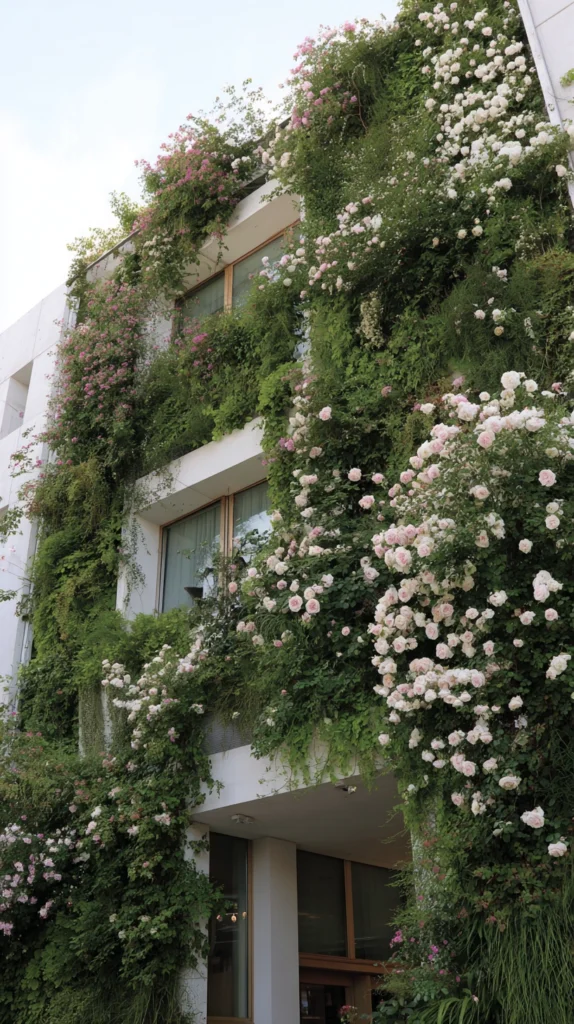
Budget: $80 – $300
A climbing or rambling rose trained against the house wall — framing a door, climbing around a window, or covering a broad wall section — creates the most characteristically cottage garden exterior feature available and one that transforms the relationship between the house and the garden in a way that no other plant achieves. A house with roses growing on it looks as though it belongs in its garden rather than sitting within it.
Install horizontal wire supports fixed with vine eyes to the wall at 40 cm intervals before planting. A climbing rose in a 3-litre pot costs $15–$40. Warm-coloured varieties including Climbing Compassion and Warm Welcome suit red brick and terracotta walls. Pale varieties including New Dawn and Climbing Iceberg suit rendered or pale stone walls. Allow three to four years for the rose to cover its allotted wall section fully.
Growing tip: Train the lowest stems horizontally along the base of the wall before encouraging any upward growth — the low horizontal stems are what produce the flowering sideshoots that cover the lower section of the wall. A rose trained only upward from the base concentrates all its flowering at the top of the wall and leaves the most visible section of the planting bare and woody.
6. A Mixed Cottage Border With a Long Season
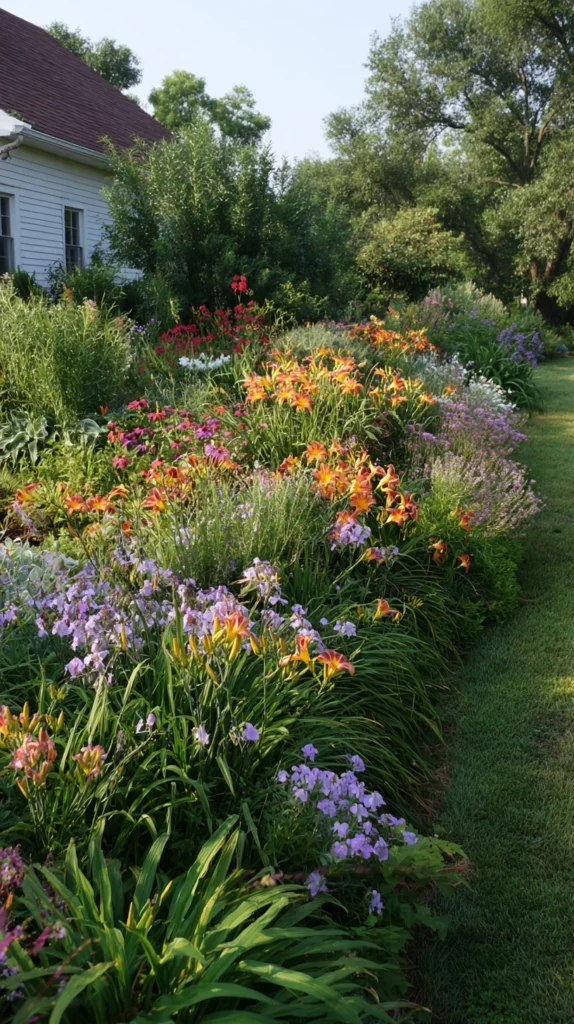
Budget: $100 – $400
A cottage border planted to provide continuous colour from April through to October — with spring bulbs giving way to early perennials, then midsummer abundance, and finally late perennials and seed heads through autumn — creates the most rewarding and most seasonally complete version of the cottage garden style. The succession of flowering is managed through careful plant selection rather than constant intervention.
A long-season cottage border might include alliums ($2–$4 per bulb) for April and May, hardy geraniums ($5–$12) and aquilegia ($5–$10) for June, echinacea ($7–$15) and salvia ($6–$14) for July and August, and rudbeckia ($6–$12) and aster ($7–$15) for September and October. The overlap between these groups at each seasonal transition ensures there is never a visible gap in the flowering calendar.
Growing tip: Plant each perennial in groups of three rather than using individual specimens distributed evenly across the border. Grouped perennials create the bold drifts of colour that make a cottage border look abundantly planted even when individual plants are still establishing — a border of individual specimens looks sparse until the plants are several years old, while a grouped border looks generous from its first season.
7. A Sweet Pea Wigwam
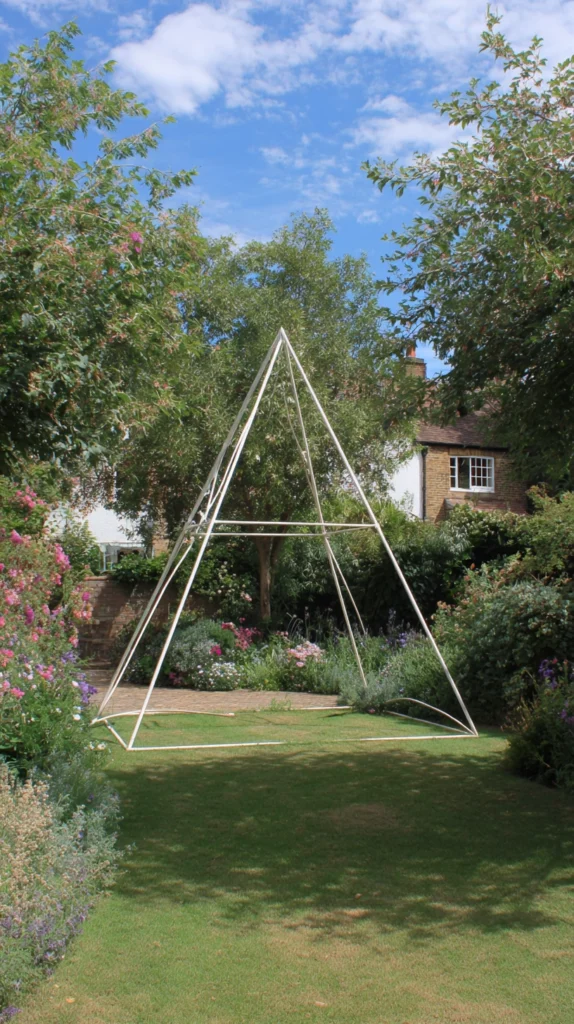
Budget: $10 – $40
A wigwam of six to eight canes tied at the top, with sweet peas sown or planted at the base of each cane, creates one of the most beautiful and most fragrant vertical features available for a cottage garden. The flowering season runs from June through to August if the stems are cut regularly, and the fragrance of a sweet pea wigwam in still evening air is among the finest things a summer garden produces.
Bamboo canes cost $5–$10 per pack of twenty. Sweet pea seeds cost $3–$6 per packet — sow one seed per cane position in March indoors or directly in April. Varieties including Matucana, Cupani, and almost any heritage or Spencer variety produce the most fragrant flowers. Cut stems every two to three days without fail — a single unpicked pod triggers the plant to cease flowering and the whole wigwam stops within a week of the first seed pod being allowed to develop.
Growing tip: Soak sweet pea seeds in water overnight before sowing and nick the seed coat of any that have not softened by morning. The hard seed coat of some sweet pea varieties significantly delays germination — soaking and nicking accelerates germination by two to four weeks compared to unsupported dry sowing of the same seeds in the same conditions.
8. A Cottage Garden Front Garden
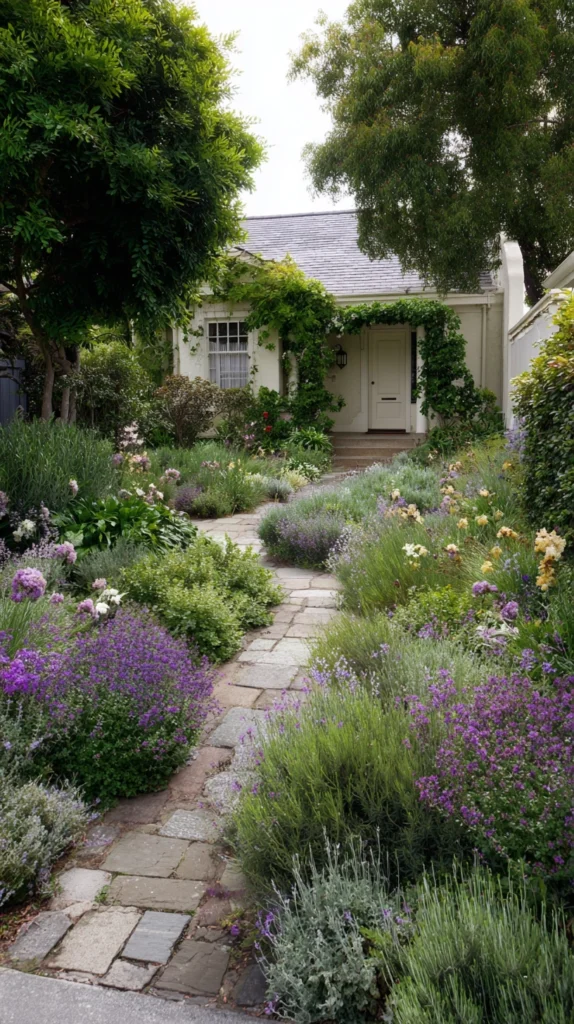
Budget: $80 – $350
A cottage garden front garden — a path to the door bordered by abundant informal planting, with a climbing rose over the gate and lavender spilling onto the path — is the most welcoming and the most romantically beautiful front garden aesthetic available. It gives the impression that the house has been loved for a long time and that whoever lives there has a genuine relationship with the garden around it.
A front garden cottage scheme typically includes lavender path edging ($5–$10 per plant), a standard rose or climbing rose on the gate or doorway ($15–$40), hardy geraniums as ground cover ($5–$12 each), and alliums and foxgloves as vertical accents ($3–$8 each). The total planting cost for a generous front garden cottage scheme sits between $80 and $300 depending on plot size and plant quantities required.
Growing tip: Allow the front garden planting to spill slightly onto the path and over the boundary in the spirit of the cottage garden style rather than clipping it back to a strict boundary. The slight overflow is what gives the front garden its generous, uncontained quality — a front garden with all its planting held precisely within its defined beds looks more formal than the cottage style intends, regardless of the plant species used.
9. A Wisteria and Clematis Covered Pergola
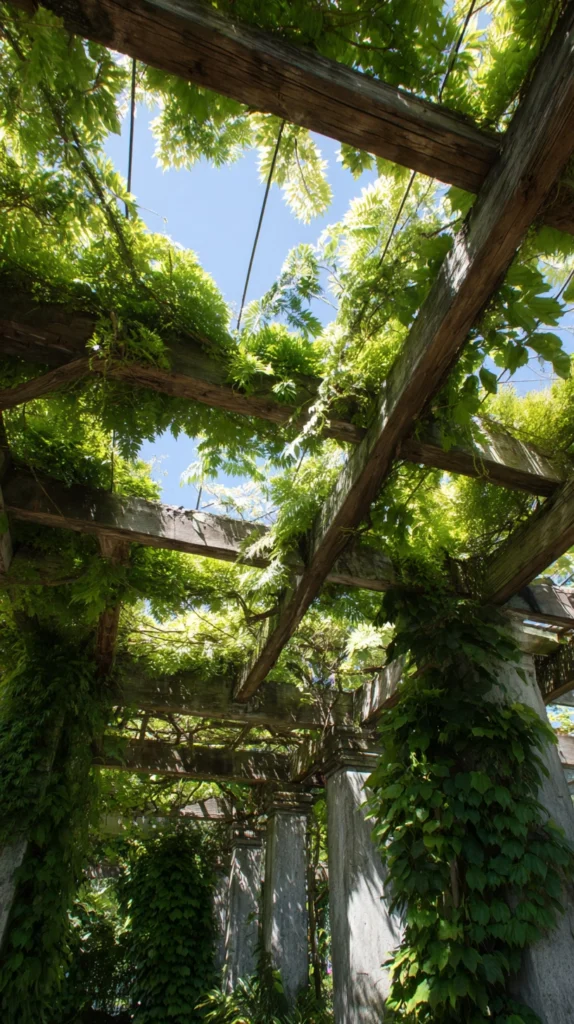
Budget: $150 – $800
A pergola covered in wisteria for late spring and a late-flowering clematis for summer and early autumn creates a structure with two distinct but equally beautiful seasonal moments — the cascading flower racemes of wisteria in May and June followed by the nodding flowers of a viticella or texensis clematis from July through September. The same structure provides the romantic canopy of a cottage garden for five months of the year.
A timber pergola kit costs $200–$600. A wisteria plant costs $20–$50. A Clematis viticella variety such as Purpurea Plena Elegans or Polish Spirit costs $10–$25. Train the clematis through the established wisteria framework rather than providing separate support — the two plants coexist without competition when the clematis is pruned hard each February (which it needs anyway as a viticella type) while the wisteria is pruned twice yearly to develop its flowering spur system.
Growing tip: Feed both the wisteria and the clematis with a high-potassium fertiliser in spring and early summer rather than a nitrogen-rich feed. Nitrogen encourages leafy growth at the expense of flowers in both species — potassium encourages the prolific flowering that is the primary reason both plants are grown in a cottage garden setting.
10. A Cutting Garden Within the Cottage Border
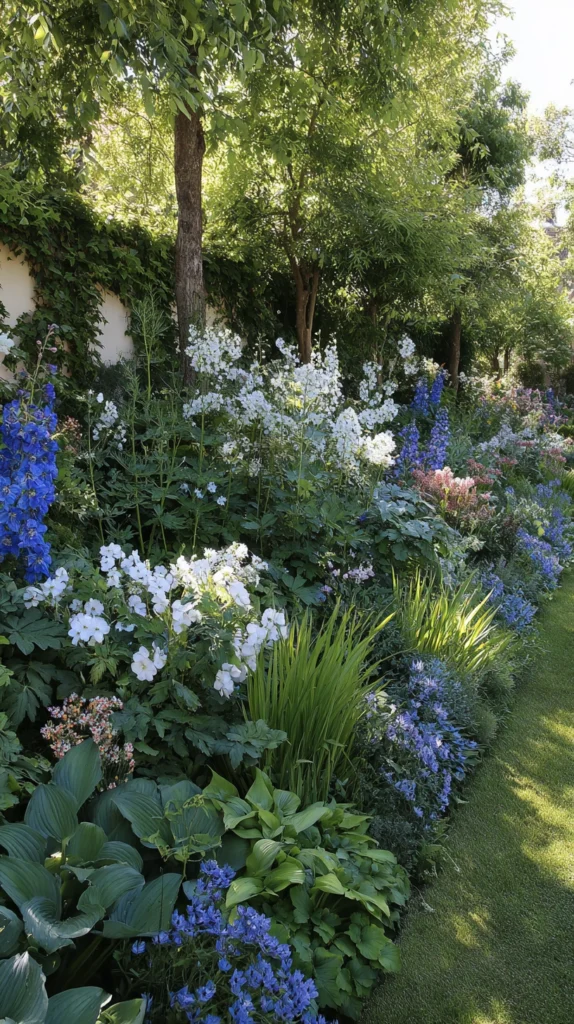
Budget: $30 – $120
Incorporating cut flower crops — cosmos, sweet William, scabiosa, and larkspur — directly into the cottage garden border creates a planting that serves two purposes simultaneously: it contributes to the romantic abundance of the garden while supplying a constant source of fresh flowers for the house through the summer months. The act of cutting for the vase also serves as deadheading, which extends the flowering season of the plants remaining in the border.
Cosmos seed costs $2–$5 per packet and fills any gap in the cottage border with airy pink and white flowers from July through to October. Sweet William biennial plants cost $4–$8 per pack of plugs and provide fragrant, long-lasting flowers from late May onward. Larkspur grown from direct-sown seed costs $2–$4 per packet and self-seeds reliably into the cottage border in subsequent seasons.
Growing tip: Cut flowers for the house in the early morning when stems are fully turgid from the cool overnight hours and place immediately in deep cool water. Flowers cut in the afternoon heat of a cottage garden — however convenient — wilt faster in the vase and last four to five days less than morning-cut equivalents. The morning harvest is always worth the early start.
11. A Herb and Flower Potager
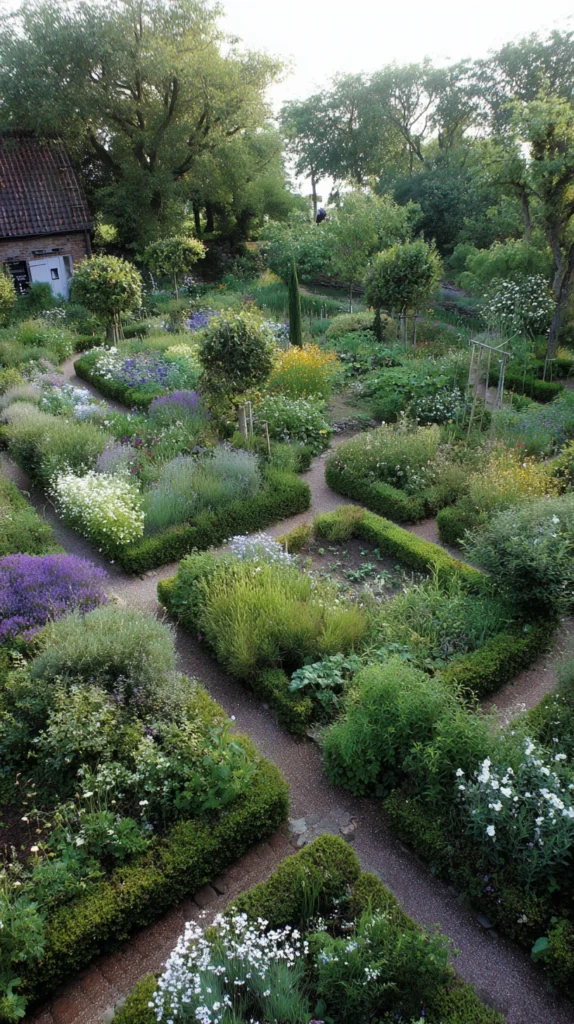
Budget: $80 – $300
A cottage garden potager — combining culinary herbs, edible flowers, and ornamental vegetables in a formally structured but abundantly planted layout — creates the most romantic and most productive combination available in a single garden space. The edible and the beautiful are inseparable in this format and each makes the other more interesting.
Borage ($2–$4 per seed packet) fills gaps with blue flowers and edible leaves. Nasturtium ($2–$4 per packet) trails over path edges and provides both edible flowers and leaves. Calendula ($2–$5 per packet) produces orange flowers for salads and is one of the most prolific self-seeders in any cottage garden. Intersperse with culinary herbs — rosemary, sage, thyme, and chives — at $2–$6 each to provide fragrance, structure, and kitchen productivity from the same planting.
Growing tip: Allow borage and nasturtium to self-seed freely through the potager each season. Both are vigorous annual self-seeders that appear reliably in unexpected positions each spring — this self-distributing quality is what gives the potager its most characteristically cottage garden quality of appearing to plant itself with a generosity and spontaneity that no deliberately planted scheme fully replicates.
12. A Lavender and Rose Walk
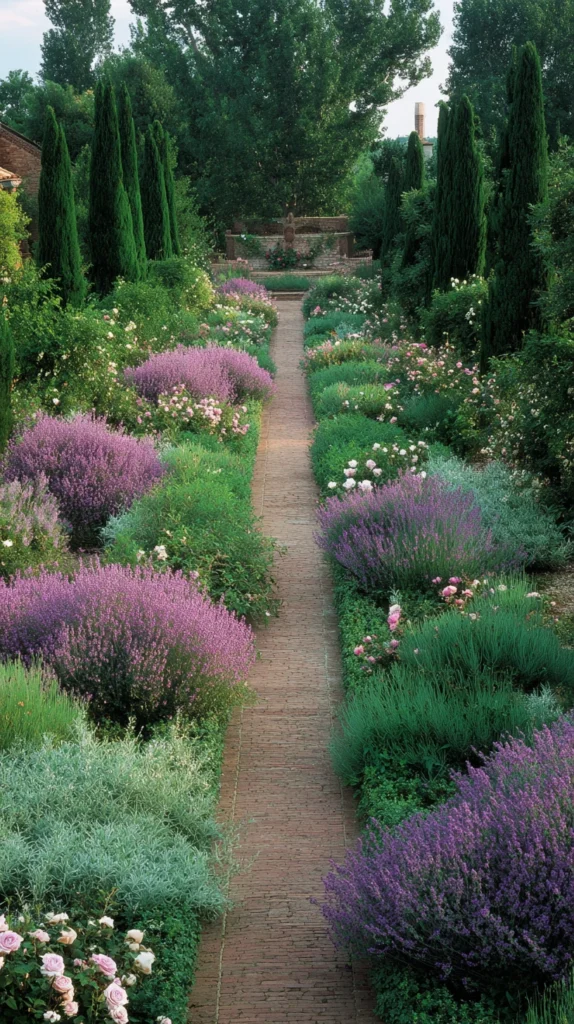
Budget: $100 – $400
A garden path with lavender planted on both sides and a climbing or standard rose at regular intervals — every 2–3 metres — creates one of the most fragrant and most visually consistent cottage garden experiences available. The walk itself becomes the feature, and moving through it on a warm summer morning when both the lavender and the roses are in flower is one of the most sensory experiences any garden produces.
Lavender Hidcote costs $4–$10 per plant. A standard rose on a 60 cm clear stem — the format that best suits a formal lavender walk — costs $25–$60 each. Plant the standards at 2-metre intervals along the walk and lavender between and in front of each standard at 30 cm spacing. The lavender edging becomes denser and more effective with each passing year as the plants spread to their natural 45–50 cm spread.
Growing tip: Trim lavender plants by one third immediately after the main flowering flush — typically in late July or early August — to encourage compact growth and a secondary flush of smaller flower spikes in late summer. Lavender left untrimmed after its first flowering flush becomes woody and open at the base within three seasons and loses the dense, cushion-like form that makes it most effective as a walk edging plant.
13. A Wildflower Meadow Corner
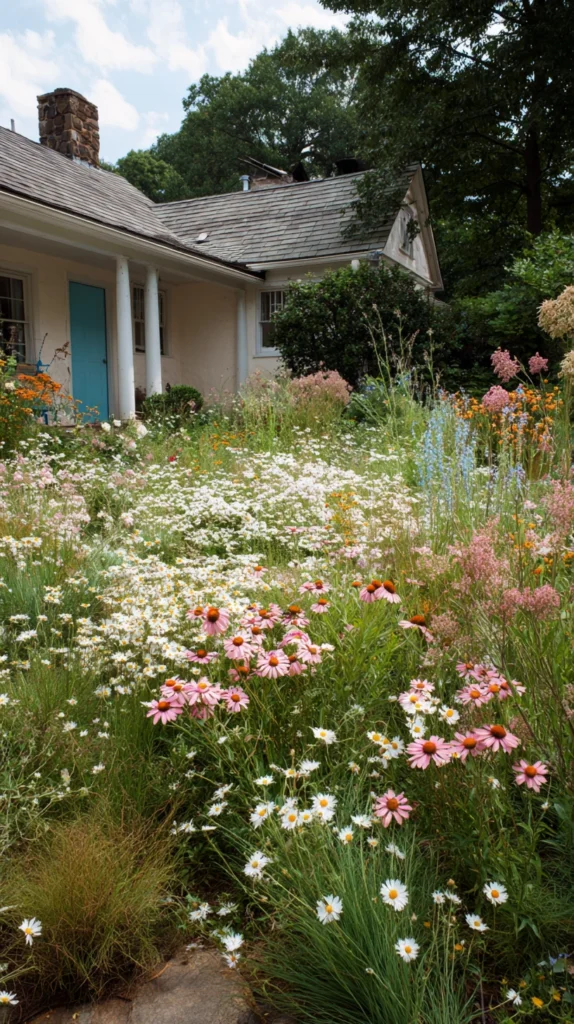
Budget: $10 – $50
A corner of the cottage garden left to grow as a wildflower meadow — sown with a native flower seed mix and managed with a single annual autumn cut — creates the most naturalistic and most ecologically rich version of the cottage garden aesthetic. It looks relaxed and romantic because it is relaxed and genuinely wild, and it attracts more biodiversity than any cultivated planting of equivalent area.
A 100g packet of mixed native annual and perennial wildflower seed covers approximately 10 square metres at the recommended broadcast-sowing rate and costs $5–$15. Sow onto bare soil in spring or autumn — wildflowers do not establish in competition with existing grass or vegetation. Edge the meadow with a clearly mown strip to signal that the wildness is deliberate rather than neglected.
Growing tip: Leave the meadow standing through winter until late February before cutting. The dried seed heads and stems provide shelter for overwintering insects and food for seed-eating birds through the coldest months — cutting in October removes this resource at precisely the time it is most needed. A meadow cut in late February retains its ecological value through winter and regenerates fully from the base by May.
14. Roses Scrambling Through Trees
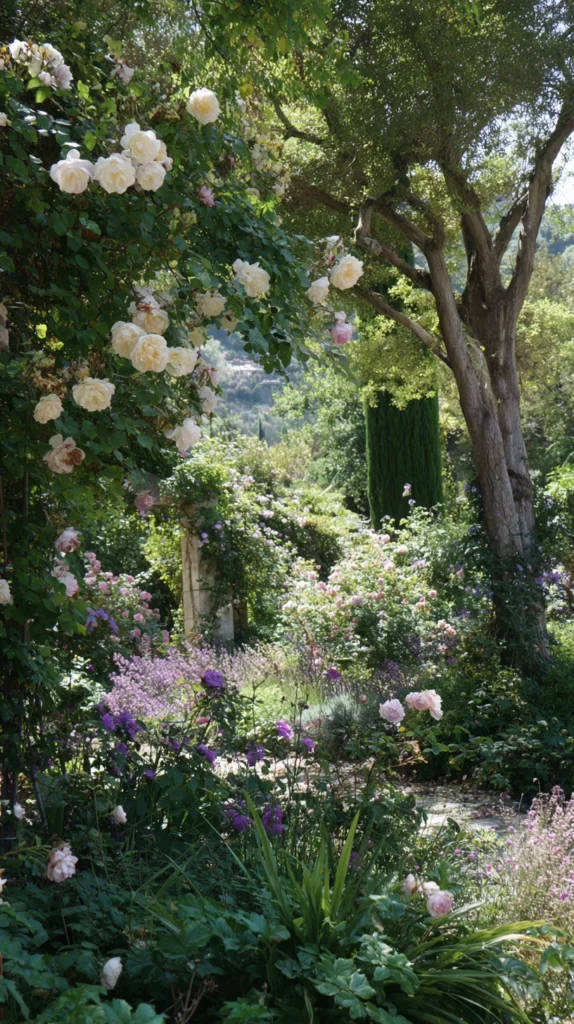
Budget: $20 – $60
A rambling rose planted at the base of a mature garden tree and allowed to scramble freely through the canopy creates one of the most spectacularly beautiful and most specifically cottage garden effects available — a tree in full summer leaf suddenly erupting in flower from an apparently spontaneous source within its canopy. It requires no training, no tying, and no ongoing management once established.
Vigorous rambling roses best suited to tree planting include Kiftsgate, Rambling Rector, and Bobbie James — all produce large trusses of fragrant, single or semi-double white flowers in midsummer. They cost $15–$40 per plant. Plant at the drip line of the tree rather than at the trunk — the rain shadow directly beneath the canopy is too dry for reliable establishment. Water in the first season but never again once the roots reach beyond the canopy drip line.
Growing tip: Do not attempt to prune a rambling rose scrambling through a tree — the scale and the inaccessibility of the plant in the canopy makes pruning both impractical and unnecessary. These vigorous ramblers flower on the previous year’s long new growth and the tree provides natural pruning through the shade it casts and the occasional branch that dies and falls through the rose. Manage only the stems at the base if they encroach on a path or structure.
15. A Complete Cottage Garden Scheme
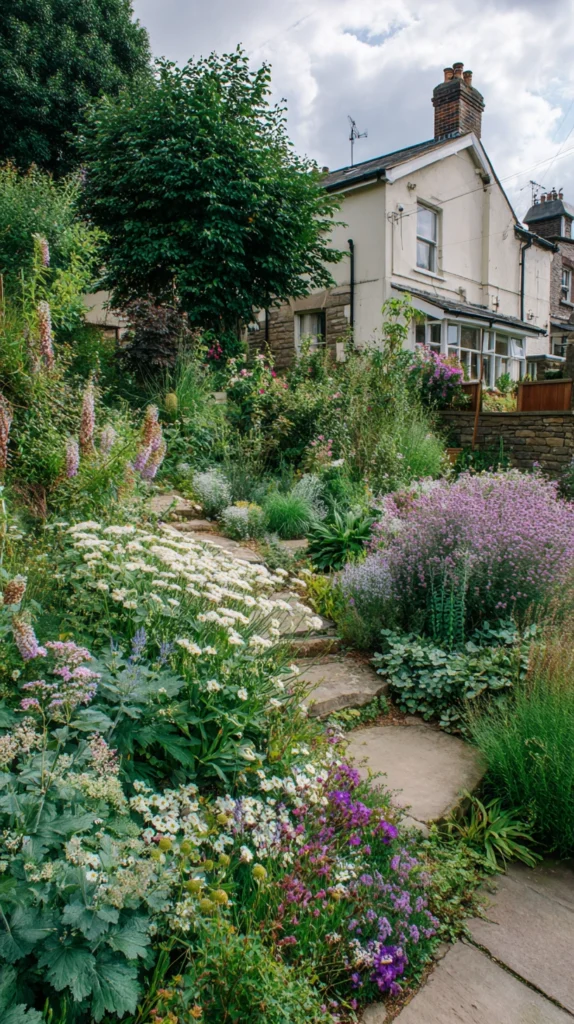
Budget: $400 – $1,500
A fully realised cottage garden — a rose arch over the gate, a winding path edged with catmint and lavender, deep borders of self-seeding perennials, a sweet pea wigwam, climbing roses on the house wall, a wildflower corner, and a seat surrounded by fragrant planting — creates a garden that is simultaneously the most romantic and the most personally characterful style available in domestic garden design. It takes three to five years to reach its full character and then continues to improve indefinitely.
A complete cottage garden assembled from the individual ideas on this list costs $400–$1,500 spread across the first three years of establishment — significantly less if seed is used rather than plants wherever possible and if self-seeded progeny are used to fill gaps rather than new purchased plants. The style rewards the patient and the attentive gardener — it cannot be completed in a weekend and is never truly finished, which is one of its most enduring appeals.
Growing tip: Resist the urge to fill every gap immediately. The cottage garden’s most romantic quality — the sense that it has been growing and seeding and layering for many years — cannot be purchased in a single planting session. Leave space for self-seeding to fill gaps naturally, allow plants to spread beyond their original positions, and let the garden reveal what it wants to become over three or four seasons before making any permanent decisions about what belongs and what does not.
The cottage garden is the most forgiving of all garden styles — it accommodates imperfect planting, uneven spacing, unexpected self-seeding, and the occasional total failure of a plant with more grace than any other aesthetic because all of these things are simply part of the natural abundance it is built on. The gardener who worries less about precision and more about generosity almost always produces the better cottage garden.
Start with a rose, a handful of seeds, and a willingness to let things spill. Add more as the seasons show you what the garden needs and where. The cottage garden always tells you what to plant next — you only need to pay enough attention to hear it.