14 Cinder Block Garden Ideas
Cinder blocks are one of the most underrated and most versatile building materials available for garden projects. They are cheap, they are heavy enough to require no additional fixing in most applications, they are universally available, and they come with two hollow cavities per block that are exactly the right size for a small plant, a candle, or a vertical growing pocket. Every idea on this list is achievable on a genuinely minimal budget and most require nothing more than the blocks, a few plants, and a clear day to build.
The fourteen ideas below cover the full range of cinder block garden applications — from a simple raised bed stacked in an afternoon to a complete outdoor feature wall with integrated planting. Each includes what it costs and a practical tip to help you get the most from one of the most affordable building materials in any garden project.
1. A Classic Cinder Block Raised Bed
Budget: $30 – $100
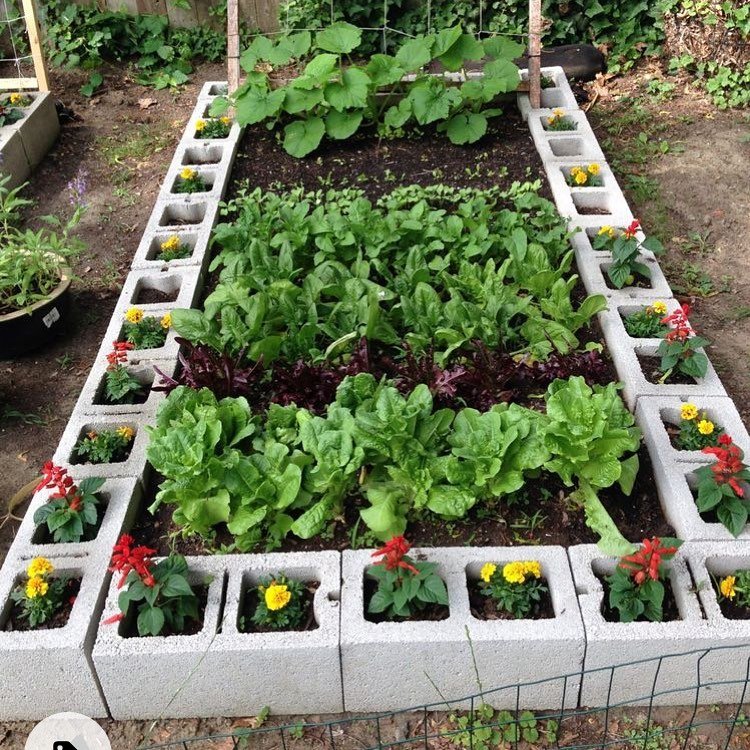
A raised bed built from cinder blocks stacked two courses high — arranged in a rectangle with the hollow cavities facing upward — is the most practical, most durable, and most affordable raised bed structure available for a kitchen garden or ornamental border. The hollow cavities in the top course of blocks are an added bonus: each one creates a small individual planting pocket for herbs, succulents, or trailing flowers that adds productive planting to the top edge of the bed.
Standard cinder blocks cost $1.50–$3 each from builders merchants and DIY retailers. A 120×60 cm raised bed two courses high requires approximately eighteen blocks at $27–$54 in materials. No mortar, no fixings, and no specialist skills are required — the blocks sit on each other and on the ground by gravity alone. Fill the bed with a quality compost and topsoil mix and plant immediately. The cavities in the top course can be filled with compost and planted with herbs or trailing succulents to double the planting capacity of the same footprint.
Build tip: Offset the blocks in the second course by half a block length relative to the first — the staggered joint between courses creates a significantly more stable wall than blocks stacked with aligned joints and is the standard technique used in all masonry construction for the same reason. An offset-course cinder block raised bed requires no mortar and resists the outward pressure of wet compost far more effectively than a straight-joint stacked version of the same dimensions.
2. Vertical Cinder Block Herb Planter
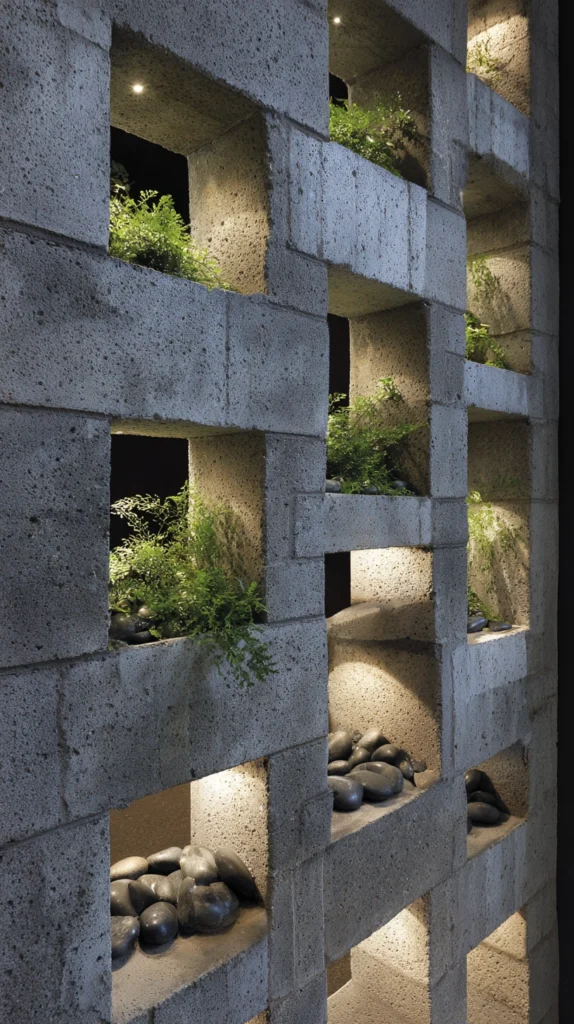
Budget: $15 – $50
A row of cinder blocks stood on their ends against a wall or fence — with the hollow cavities facing outward and each cavity filled with compost and planted with a single herb — creates a vertical herb garden of five to ten planting pockets in a wall footprint of 60×40 cm. The individual cavities suit compact herbs perfectly and the wall-facing orientation means the herb planter occupies virtually no floor space in any garden or patio where ground area is limited.
Five cinder blocks stood on end cost $7.50–$15. Fill each cavity with quality potting compost and plant with thyme, basil, chives, oregano, or compact parsley at $2–$5 per plant. Position in full sun against a south or west-facing wall for the best herb production. The compost in individual cavities dries faster than ground-level containers — water daily in warm weather and consider a self-watering insert for each cavity if daily watering is not practical through the hottest weeks of summer.
Build tip: Line each cavity with a small piece of landscape fabric cut to fit before filling with compost. The fabric prevents compost from washing out through the drainage gaps at the base of each cavity during watering without blocking water movement entirely — a balance that keeps the compost consistently moist without becoming waterlogged, which is the primary cause of poor herb performance in small-cavity vertical planters.
3. A Cinder Block Bench
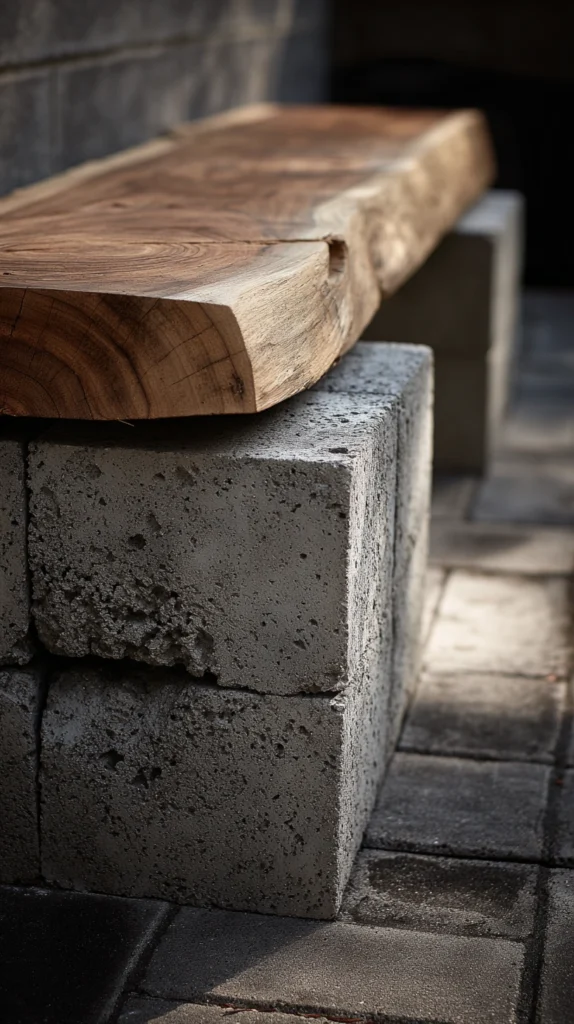
Budget: $20 – $80
Two stacks of cinder blocks — each stack two or three blocks high — positioned at the correct spacing to support a timber plank seat create a bench that is completely stable without any fixings and entirely adjustable in height by adding or removing blocks. In a patio or garden context where permanent furniture cannot be installed, the cinder block bench provides solid, permanent-feeling seating at an entry-level cost.
Two stacks of three blocks each cost $9–$18 in blocks. A reclaimed timber plank or scaffold board of 180–200 cm length and 25 cm width costs $10–$30 from salvage yards or timber merchants. Place the plank across the two stacks at the spacing that suits the available plank length — standard seat height of 45 cm is achieved with a three-block stack of standard blocks. Secure the plank to the top blocks with a single lag screw through each end for safety in any situation where the bench might be used by children or in an exposed position.
Build tip: Position the two block stacks on a flat, level surface rather than on sloping or soft ground. A cinder block bench stack on an uneven surface develops a slight lean as the soil compresses unevenly under the weight of the blocks and the user — on a paved or compacted gravel surface the stacks remain perfectly stable indefinitely without any additional levelling or fixing required.
4. A Fire Pit Surround
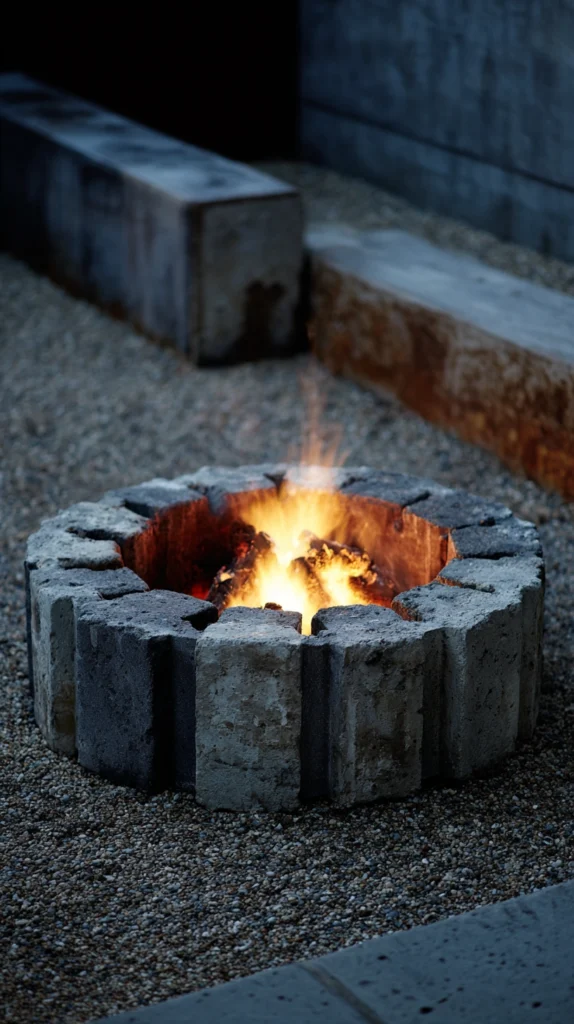
Budget: $20 – $60
A ring of cinder blocks arranged in a circle creates a robust, fireproof fire pit surround that contains the fire effectively, retains heat more efficiently than an open fire on bare ground, and costs a fraction of any manufactured fire pit of equivalent capacity. The hollow cavities in the blocks allow air to circulate through the base of the fire and improve combustion while the block walls contain any rolling embers within the fire area.
A fire pit circle of 60 cm diameter requires twelve to fifteen cinder blocks arranged in a single course at $18–$45 in blocks. Stack a second course for additional height and fire containment — a two-course fire pit surround of 40 cm height is more effective at containing fire and retaining heat than a single-course version. Leave a small gap between two adjacent blocks in the lowest course on the windward side for primary air supply to the fire at its base.
Build tip: Do not use standard cinder blocks for a fire pit that will be subjected to very high temperatures from a large, sustained fire — standard blocks can crack under extreme thermal stress. For casual fire use and modest fire sizes, standard blocks perform adequately. For a fire pit designed to sustain large fires regularly, use purpose-made fire bricks ($1.50–$3 each) for the inner ring of the surround where the highest temperatures are reached, with standard cinder blocks for the outer decorative surround.
5. A Cinder Block Outdoor Shelf Unit
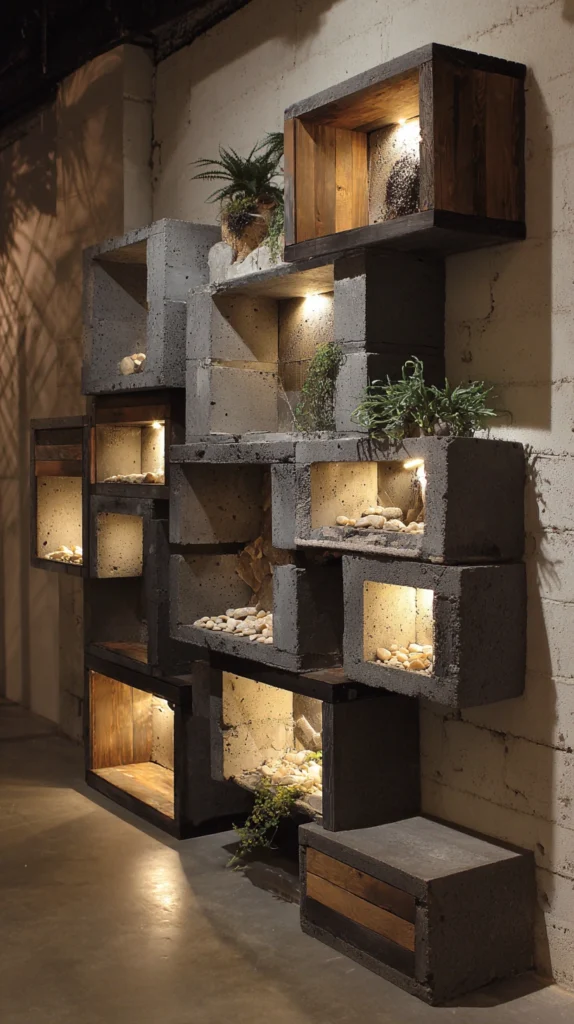
Budget: $25 – $80
Stacks of cinder blocks used as shelf supports — with timber boards, scaffold planks, or reclaimed wood laid across each pair of stacks — create a freestanding outdoor shelving unit in any configuration and at any height. The weight of the blocks provides stability without any fixings, the height of each shelf is adjustable by adding or removing blocks, and the complete unit can be disassembled and relocated in minutes if the garden layout changes.
A three-shelf unit with two stacks of blocks per shelf level requires six block stacks of varying heights and three timber boards. Six blocks per stack, three boards, total block requirement of eighteen blocks: cost $27–$54 in blocks plus $15–$30 in boards for a total material cost of $42–$84. Style with a consistent plant material — all terracotta, all matching white pots, or a consistent colour scheme — to make the assembled unit read as a designed shelf feature rather than improvised storage.
Build tip: Ensure all block stacks on the same shelf level are exactly the same height — a difference of even half a block between the two support stacks on the same shelf creates a visibly angled shelf surface that looks unstable and reads as poorly built regardless of how carefully the other elements have been assembled. Use a spirit level across each timber board after placing to confirm the shelf is level before loading it with plants or objects.
6. A Painted Cinder Block Feature Wall
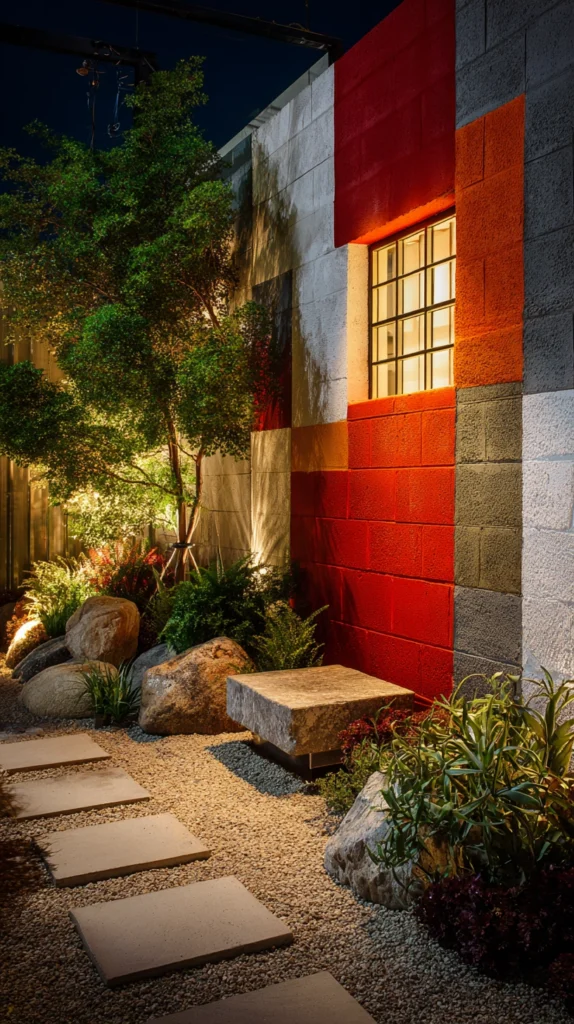
Budget: $40 – $150
A dry-stacked cinder block wall — three to four courses high, mortared for permanence or stacked for flexibility — painted in a bold exterior colour creates an affordable decorative garden wall that functions as a planting backdrop, a privacy screen, or a defining boundary between different garden zones. Painted in deep navy, sage green, or warm terracotta, a cinder block wall reads as a designed masonry feature rather than a construction material on display.
A 3-metre long, four-course cinder block wall requires approximately forty-eight blocks at $72–$144 in materials. Two coats of masonry paint in a bold exterior colour cost $15–$30 per litre — a wall of this size requires two to three litres at $30–$90 in paint. The total project cost for a painted cinder block garden wall sits between $100 and $230 — significantly less than rendered brick, timber, or stone alternatives of the same dimensions and with equivalent visual impact.
Build tip: Apply a coat of masonry primer before the colour coat on any porous cinder block surface. Standard blocks are highly absorbent and apply unpainted — the first colour coat is absorbed unevenly into the block surface, requiring additional coats to achieve a consistent finish. A primer coat seals the block surface and allows the colour coat to dry evenly with full coverage in a single application, saving both paint and application time.
7. A Cinder Block Planter Tower
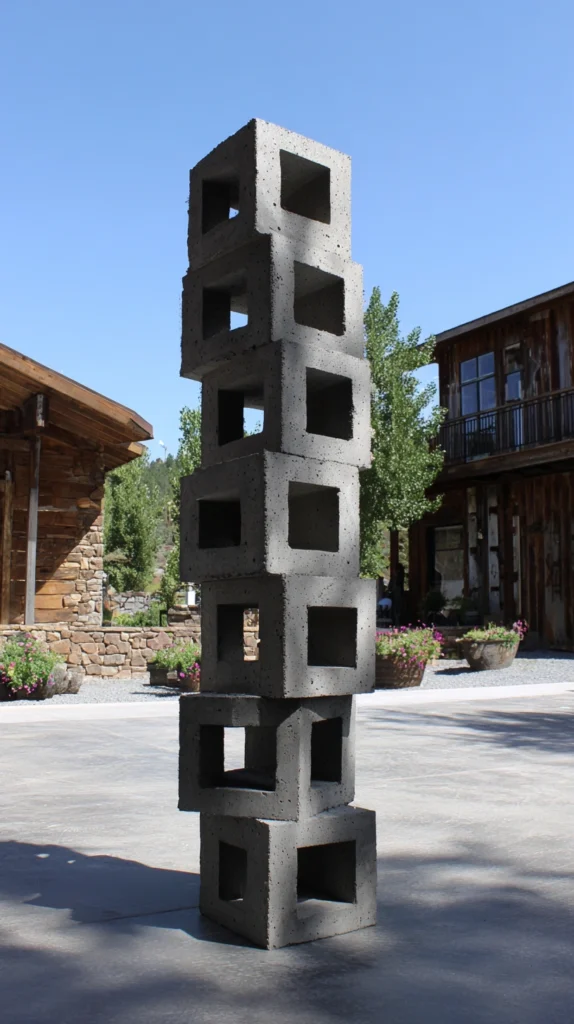
Budget: $15 – $50
A tower of individual cinder blocks stacked in a staggered pattern — each block rotated 90 degrees from the one below and offset so that the cavities face outward in different directions at each level — creates a three-dimensional planting tower with planting pockets facing multiple directions and at multiple heights. The tower provides a vertical planting feature of considerable visual interest in a ground footprint of one single block.
A five-level tower requires five blocks at $7.50–$15 in materials. Fill each exposed cavity with compost and plant with a trailing succulent, a compact herb, or a small annual flower. Position on a flat, stable surface — the tower is stable through the weight of the individual blocks when correctly centred on each other but should not be placed on an uneven surface or in a position where it could be toppled by wind or impact. A five-block tower reaches approximately 100 cm in height and provides ten planting pockets facing outward in alternating directions.
Build tip: Rotate each block exactly 45 degrees from the one below rather than 90 degrees for the most stable tower configuration. A 45-degree rotation centres each block more precisely on the one below and reduces the cantilevered overhang at each level that makes a 90-degree rotation tower progressively less stable as the number of levels increases. A 45-degree tower is stable at six to seven levels. A 90-degree rotation becomes unstable above four levels without additional support.
8. A Cinder Block Outdoor Kitchen Base
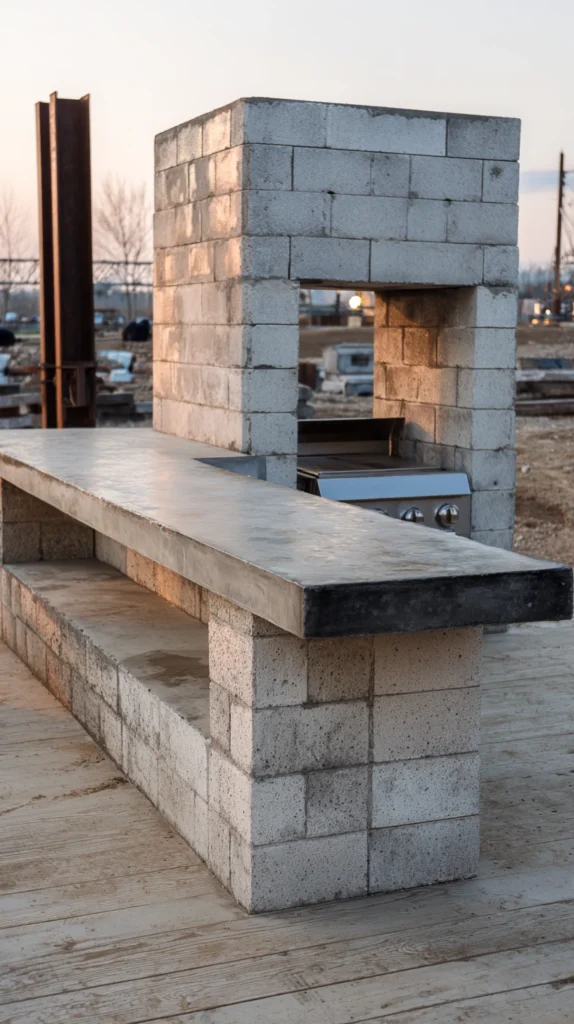
Budget: $50 – $200
Stacked cinder blocks used as the structural base for an outdoor kitchen counter — topped with a tile, stone, or poured concrete worktop — create one of the most affordable and most durable outdoor cooking surfaces available. The block base is completely weatherproof, requires no joinery skills to construct, and supports a drop-in grill insert or a portable burner at exactly the right working height for comfortable outdoor cooking.
A standard outdoor kitchen counter base of 120×60 cm at 90 cm working height requires approximately thirty-six blocks at $54–$108 in materials. A tiled or poured concrete worktop costs $20–$60 in materials. A drop-in grill insert for the countertop costs $80–$200. The complete outdoor kitchen base and worktop — without the grill insert — costs $75–$170 in materials, which is a fraction of the cost of any equivalent prefabricated outdoor kitchen structure of similar dimensions and durability.
Build tip: Mortar the block courses in an outdoor kitchen base for permanent installation — unlike a decorative wall or a raised bed where dry-stacking is adequate, a working surface that supports cooking equipment and is regularly loaded with the weight of food, utensils, and users benefits significantly from the additional structural stability that mortared joints provide. Use exterior mortar rated for outdoor use rather than standard interior wall mortar.
9. A Cinder Block Retaining Wall
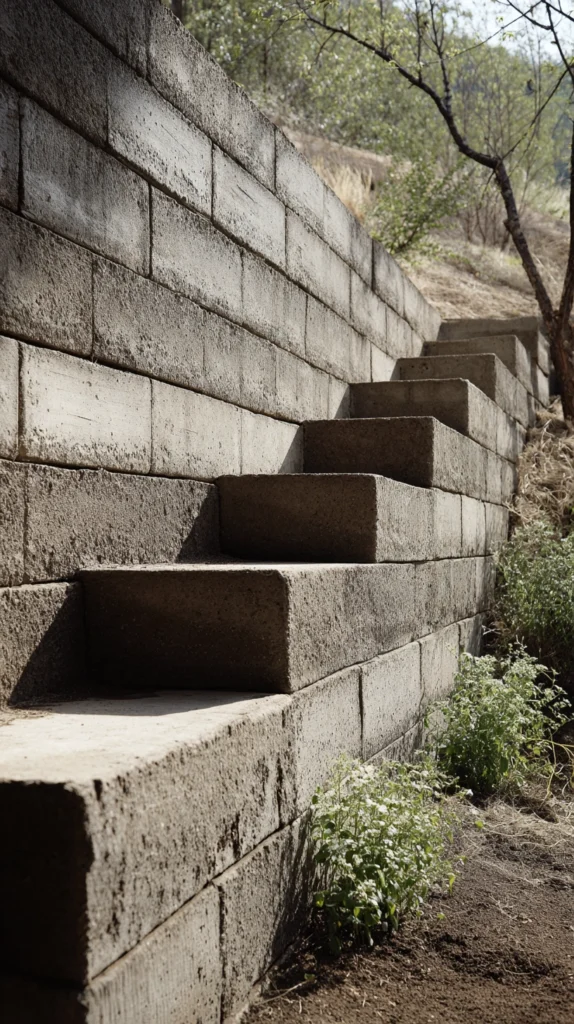
Budget: $50 – $250
Cinder blocks stacked and mortared as a retaining wall for a sloped garden section — holding back the soil of a raised terrace or creating a level planting bed on an uneven site — provide structural support at a material cost significantly lower than poured concrete, timber sleepers, or natural stone retaining walls of the same length and height. The hollow cavities in the blocks can be filled with drainage aggregate behind the wall to prevent hydrostatic pressure from building against the wall face.
A retaining wall of 3 metres length and 60 cm height requires approximately thirty-six blocks at $54–$108 in materials plus mortar and drainage aggregate at $20–$50. The total project cost of $75–$160 in materials is significantly less than timber sleeper retaining walls ($100–$300 for the same size) and considerably less than natural stone walls of equivalent dimensions. Structural retaining walls over 60 cm height should be checked against local building regulations before construction.
Build tip: Install a length of perforated drainage pipe (agricultural drain) behind the retaining wall before backfilling with soil. The drainage pipe collects groundwater from the retained soil and directs it away from the base of the wall — preventing the hydrostatic pressure that builds behind an undraining retaining wall and is the most common cause of retaining wall failure in all materials, including cinder block, regardless of the quality of the construction above the drainage level.
10. Cinder Block Stepping Stones
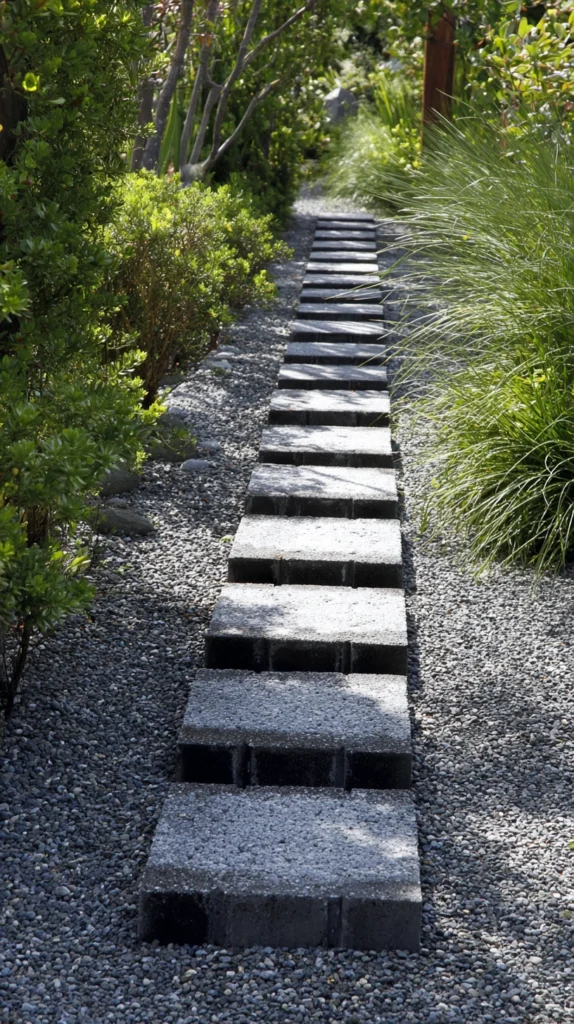
Budget: $10 – $40
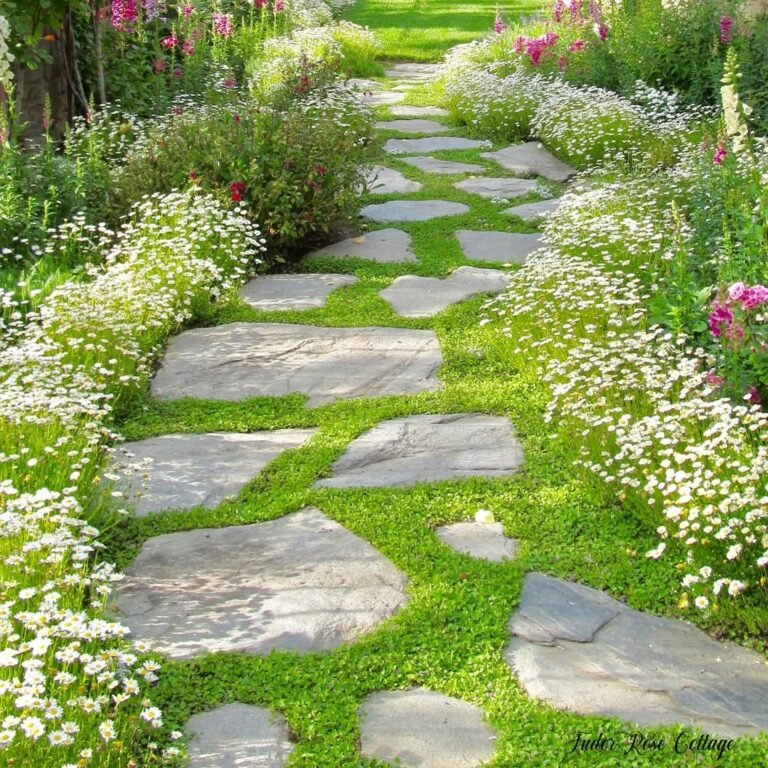
Cinder blocks laid flat in the ground — set flush with the lawn or soil surface — create a firm, permanent stepping stone path at a material cost of $1.50–$3 per stone. The large, flat surface of a standard cinder block laid flat provides a generous, stable stepping area and the uniform size creates a visually consistent path without the variation in size and shape that requires more careful placement in a natural stone stepping stone arrangement.
A 5-metre path requires eight to ten blocks at $12–$30 in materials. Set each block in a 5 cm layer of compacted sharp sand — lay the block on the sand, press firmly and level, and check with a spirit level before moving to the next position. Allow the top surface of each block to sit flush with the surrounding lawn or soil surface rather than proud of it — a block surface proud of the lawn becomes a mowing obstacle and a trip hazard, while a flush-set block is invisible until walked upon.
Build tip: Plant the cavities of stepping stone blocks with a low, creeping plant — thyme, baby tears, or moss — that grows into the hollows and softens the industrial appearance of the concrete material. A cinder block path with planted cavities looks like a designed garden feature. The same path without planted cavities looks like a path made from building site waste. The plants cost $2–$5 each and are the difference between the two outcomes.
11. A Cinder Block Compost Bin
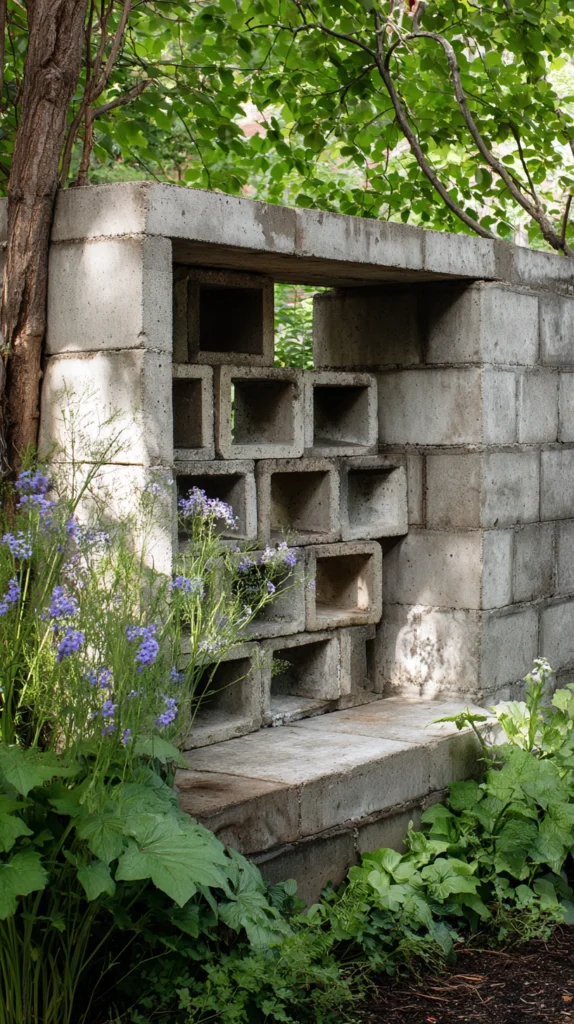
Budget: $30 – $80
A three-sided cinder block enclosure — open at the front for access and at the top for adding material — creates a functional, permanent compost bin that is more durable, more rodent-resistant, and less expensive than most manufactured compost bin alternatives. The gaps between unstacked or loosely stacked blocks allow air circulation through the composting material, which accelerates decomposition without any additional intervention.
A compost bin enclosure of 90×90 cm base area and 90 cm height requires approximately thirty-six blocks at $54–$108 in materials — the front is left open for access and no mortar is required if the blocks are stacked with a slight inward lean for stability. The hollow cavities in the blocks provide additional air circulation channels through the bin walls. A dividing wall down the centre of the enclosure creates a two-bay system — one bay for fresh material and one for maturing compost — at the cost of an additional ten to twelve blocks.
Build tip: Leave the blocks on the front face of the bin loose — not mortared — and arranged in columns rather than courses so that individual blocks can be removed from the front opening to access the composted material at the base without dismantling the whole structure. A front access system that requires removing only two or three blocks for each compost extraction is significantly more practical than a fully mortared enclosure that requires a spade extended over the top wall to access the finished compost at the base.
12. A Cinder Block Garden Table
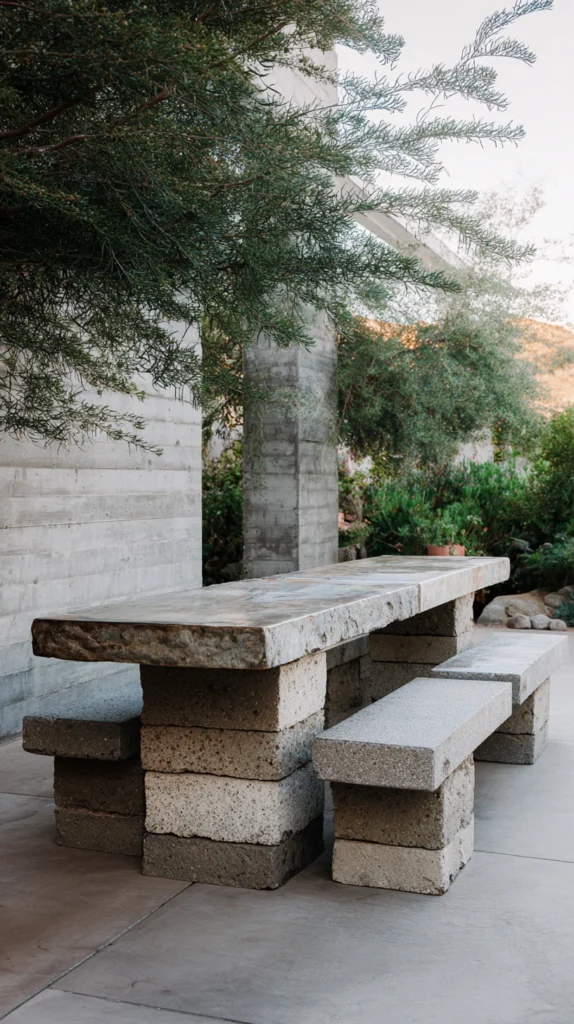
Budget: $40 – $120
Two rows of cinder blocks — each row three blocks high — positioned at dining table width apart with a large timber board, a slab of concrete, or a stone tile laid across them as the table surface create an outdoor dining table of genuine substance and considerable durability at a fraction of the cost of any equivalent outdoor furniture purchase. The weight of the blocks makes the table completely stable in any wind condition and the concrete or stone top surface is fully weatherproof without any maintenance.
Two rows of six blocks each cost $18–$36. A concrete paving slab of 90×60 cm costs $15–$30 from garden centres. A reclaimed oak or pine board of the same dimensions costs $15–$40 from timber merchants or salvage yards. The complete table — blocks plus top surface — costs $33–$76 in materials and provides a dining surface of considerable presence and durability that a manufactured equivalent at the same price point cannot match in either weight or longevity.
Build tip: Place a thin rubber or foam mat between the block tops and the table surface material to prevent the surface from rocking on any slight height variation between the two block rows. Even a small height difference between the two support rows creates a noticeable rock in the table surface when loaded with food and people — the rubber mat absorbs any variation and provides the consistent, stable surface contact that makes the table pleasant to use and reassuring in its solidity.
13. A Cinder Block Pond Edging
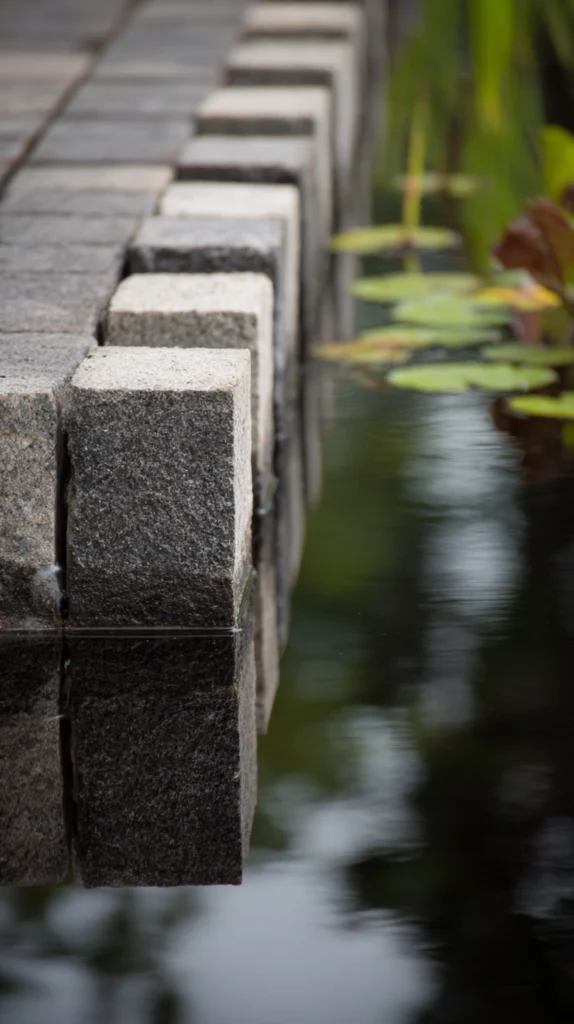
Budget: $20 – $60
Cinder blocks laid flat around the edge of a garden pond — with the cavities facing upward and filled with marginal aquatic plants, pebbles, or water-loving groundcover — create a pond edging that integrates planting into the structure of the pond edge rather than simply placing plants beside it. The block cavities filled with aquatic planting medium and planted with marginal species create individual planting pockets at the water’s edge that look intentional and architectural while providing natural filtration benefits through the marginal plant root systems.
A circular pond edge of 1.5 metres diameter requires approximately twelve blocks at $18–$36 in materials. Fill cavities with aquatic planting compost ($5–$10 per bag) and plant with dwarf cattails, water mint, or iris sibirica at $5–$12 each per block. The block edge also provides a stable, firm walking surface around the pond perimeter for maintenance access — more practical than the soft soil edge that often becomes muddy and unstable in wet weather around garden ponds.
Build tip: Set pond edge blocks partially into the ground so that their top surface sits 3–5 cm above the water surface level rather than at ground level or below it. Blocks at this height prevent the most likely overflow pathway — the gentle slope from the surrounding ground into the pond during heavy rain — while remaining low enough not to trap water between the pond liner and the block edge during prolonged dry periods when the pond level drops.
14. A Cinder Block Succulent and Cacti Garden
Budget: $25 – $100
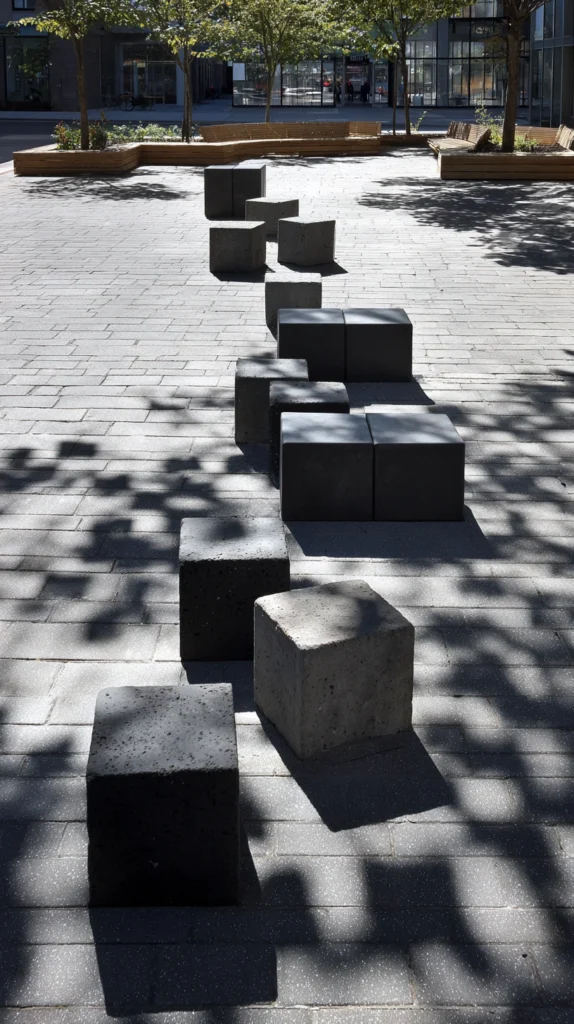
An arrangement of cinder blocks — stacked, angled, and grouped in varying configurations across a sunny paved area or gravel garden — with every cavity planted with a different succulent or cactus species creates a low-maintenance, drought-tolerant planted garden feature of genuine visual originality. The industrial aesthetic of the concrete blocks and the architectural quality of succulents and cacti complement each other in a combination that suits contemporary, minimalist, and desert-inspired garden styles equally well.
Ten to fifteen cinder blocks in a free-form grouping cost $15–$45. Succulent and cactus plants in small 5–8 cm pots cost $2–$8 each — choose a range of species with different leaf colours, forms, and textures for the most visually interesting result. Fill each cavity with a 50/50 mix of cactus compost and horticultural grit before planting. Succulents in cinder block cavities require watering only once every two to three weeks in summer and virtually not at all through winter, making this one of the lowest-maintenance garden features available for any sun-exposed position.
Build tip: Arrange the cinder blocks in the succulent garden in an informal, asymmetric grouping rather than in neat rows or precise stacks. A formal arrangement of cinder blocks with succulents looks like a construction project that has been partially planted. An informal grouping of the same blocks at varying angles and heights — some flat, some stood on end, some angled — looks like a designed garden installation. The arrangement decision costs nothing and makes the entire difference to how the finished feature is perceived.
Cinder blocks are one of the few garden materials where the most creative applications cost the least — the block itself is cheap and the ideas for using it require no specialist skills, no specialist tools, and very little time to execute beyond the physical effort of placing, stacking, and planting. Every project on this list is achievable in a single day and most in an afternoon, which makes cinder block one of the most genuinely accessible and most genuinely satisfying building materials available for anyone who wants to improve their garden without a significant financial investment.
Pick one idea from this list that addresses the most obvious gap in the garden you currently have. Collect the blocks, gather the plants, and build it this weekend. The material cost will almost certainly be under $50. The result will look considerably more than $50 worth of improvement — which is the quality that makes cinder block the best-kept secret in low-budget garden design.