How to Grow Happy Zinnias in Just a Few Weeks
Zinnias are the most rewarding fast-growing flowers available for any summer garden. From seed to first bloom in six to eight weeks, they produce vivid, long-lasting flowers in a colour range that spans the full warm spectrum — from pale cream and soft coral through to vivid scarlet, deep burgundy, and bright orange. They are heat-tolerant, drought-tolerant once established, and among the best cut flowers available from any home garden.

Getting them to thrive requires understanding a small number of conditions they genuinely need — and once those are met, zinnias are remarkably forgiving and extraordinarily productive.
This guide covers everything from choosing the right variety to getting the first blooms in the shortest possible time, with practical growing advice at each stage and tips to keep the flowers coming from early summer right through to the first autumn frost.
1. Choose the Right Variety for Your Goal

Cost: $2 – $6 per seed packet
Zinnia varieties differ significantly in height, flower size, and colour range — and the right choice at the seed packet stage sets the whole growing experience up for success or frustration. Giant varieties like Benary’s Giant and Oklahoma produce large, dahlia-like flowers of 10–12 cm on 60–90 cm stems and are the best choice for cutting. Compact varieties like Zahara and Profusion are shorter at 25–40 cm, more weather-resistant, and ideal for containers, border edging, and anyone growing in a climate with humid summers where powdery mildew is a concern.
For the fastest bloom from seed, choose Profusion or Zahara series — both produce their first flowers in fifty to fifty-five days from sowing compared to sixty to seventy days for larger varieties. For the most impressive cut flowers from a kitchen garden, Benary’s Giant is the gold standard. For the widest colour range in a small space, State Fair Mixed and Tall Mixed are reliable, easy-to-find choices that produce a varied display without requiring multiple seed packets.
Growing tip: Buy zinnia seed from a specialist seed supplier or reputable garden retailer rather than from a discount store. Zinnia seed has a relatively short viability period and discount seed that has been poorly stored or is past its best-before date produces poor germination rates that give the impression the growing has failed when the seed quality is the actual problem. Fresh, well-stored seed germinates at 90 percent or above in the right conditions.
2. Start at the Right Time

Cost: $0
Timing is the most important factor in getting zinnias to their first flower quickly. Zinnias are genuinely tropical in their requirements — they need warm soil to germinate and warm air temperatures to grow quickly. Sowing too early in cold conditions produces sluggish, stressed seedlings that are overtaken within weeks by a sowing made at the right time into warm soil. The golden rule: do not sow zinnias outdoors until nighttime temperatures are consistently above 10°C and soil temperature has reached at least 18°C.
In most temperate climates this means mid-May to early June for outdoor direct sowing. For an earlier start, sow indoors in individual cells under a heat mat ($20–$40) set to 21–24°C from mid-April onward — zinnia seed germinates in three to five days at this temperature and seedlings can be transplanted outdoors once the risk of cold nights has passed. Starting indoors gives a two to three-week head start on the outdoor sowing date and brings the first flowers into bloom by late June in a temperate garden.
Growing tip: Zinnias dislike root disturbance — always sow in individual cells or paper pots if starting indoors rather than in seed trays that require pricking out later. Pricking out zinnia seedlings damages the delicate root system and causes a setback of one to two weeks that erases the advantage of the early indoor start. A seedling grown in an individual cell and transplanted without any root disturbance establishes immediately and continues growing without interruption from sowing to flowering.
3. Sow Directly into Warm Soil

Cost: $2 – $6 per seed packet
Direct sowing into a prepared outdoor bed in late May or early June produces the fastest, healthiest zinnias available — plants that have grown in their permanent position from germination develop stronger root systems and more robust stems than transplanted seedlings of the same age. Zinnias sown directly into warm soil in full sun are often in flower within fifty-five to sixty days and they frequently outperform earlier-started indoor sowings by the middle of July.
Prepare the seedbed by raking to a fine, level tilth and removing any weed growth or large stones. Sow zinnia seed 5 mm deep in rows 30–45 cm apart or in a broadcast pattern across the prepared area. Thin seedlings to 20–30 cm spacing once they reach 5–8 cm height — use the thinned seedlings to fill gaps in other areas of the garden rather than discarding them, as zinnia thinnings transplant successfully if the roots are kept intact and the plants are moved on a cool, overcast day.
Growing tip: Sow two seeds per position rather than one and thin to the strongest seedling once both have germinated. Two seeds per position ensures that any germination failure — caused by a defective seed, a soil pest, or a cold night — does not leave an empty gap in the planting. The cost of an extra seed per position is negligible and the insurance value against gaps in the display is significant.
4. Get the Sunlight Requirement Right
Cost: $0
Zinnias need a minimum of six hours of direct sunlight per day to flower well — ideally eight or more. This is not a preference but a genuine requirement: zinnias in partial shade produce taller, weaker stems, fewer flowers, and are significantly more susceptible to powdery mildew than the same variety in full sun. The most common reason for disappointing zinnia performance in a garden where everything else appears correct is insufficient direct sun reaching the growing position through the day.
Assess the sun hours at the intended growing position by checking it at two-hourly intervals through a typical summer day. A position that receives direct sun from 9am to 3pm is borderline adequate. A position in direct sun from 8am to 5pm is ideal. If the best available sunny position still receives only four to five hours of direct sun, choose compact Zahara or Profusion series — both are specifically bred for better performance in lower-light conditions than standard zinnia varieties.
Growing tip: Do not plant zinnias directly beneath or immediately north of taller plants, structures, or fences that create shade during any part of the peak sunlight hours of the day. Even two hours of shade at midday — when the sun is at its highest intensity — reduces zinnia performance noticeably relative to a position with uninterrupted full sun through the same period. The investment in sun assessment before planting saves the disappointment of a poorly performing zinnia bed through an entire growing season.
5. Prepare the Soil Simply and Well
Cost: $10 – $30
Zinnias are not demanding in their soil requirements but they perform significantly better in well-draining, moderately fertile soil than in heavy, waterlogged, or nutrient-depleted ground. Waterlogged soil is the most common cause of zinnia failure after insufficient sunlight — the plants establish poorly, grow slowly, and are more susceptible to fungal diseases than zinnias in freely draining conditions. Any soil improvement effort should prioritise drainage above fertility.
Incorporate a 5 cm layer of garden compost or well-rotted manure into the top 20 cm of the bed before sowing ($10–$20 per large bag if not home-made). On heavy clay soils, add a bucket of horticultural grit per square metre to improve drainage ($5–$10 per large bag). Avoid high-nitrogen fertilisers before sowing — excess nitrogen produces lush, leafy zinnia growth at the expense of flowers and increases susceptibility to powdery mildew through the season.
Growing tip: Rake the prepared zinnia bed to a firm, level surface before sowing rather than leaving it in a rough, freshly dug state. Zinnia seeds are large enough to see and handle individually and they germinate best in firm contact with moist soil — a rough, cloddy seedbed creates air pockets around each seed that prevent the soil-to-seed moisture contact that drives fast, even germination. A firm, level, raked seedbed produces germination two to three days faster than a roughly prepared equivalent.
6. Water at the Base, Not Overhead
Cost: $0 – $30
Zinnias are genuinely drought-tolerant once established but they have one specific vulnerability that undermines growing success more often than any other single factor: powdery mildew triggered by wet foliage. Overhead watering — from a watering can, a sprinkler, or rain deflected from an overhead structure — deposits water on the large zinnia leaf surface where it sits and creates ideal conditions for powdery mildew spores to germinate and spread. Watering at the base of each plant, directly to the soil, eliminates this risk entirely.
A simple soaker hose laid along the zinnia row costs $15–$30 and delivers water directly to the soil surface without any leaf contact. A watering can used with care — directing the spout to the soil rather than over the plants — achieves the same result at no additional cost. Water in the morning rather than the evening — any moisture that does reach the foliage through accidental overhead watering dries during the warmth of the day rather than sitting on the leaves through the cool night hours when mildew development is fastest.
Growing tip: Allow zinnia soil to dry out slightly between waterings once plants are established — typically waiting until the top 2–3 cm of soil is dry before watering again rather than watering on a daily schedule regardless of soil moisture. Consistently wet soil around established zinnias promotes root rot and mildew far more than the occasional missed watering that a moderately dry period produces. Zinnias that experience mild drought stress between watering events are notably more disease-resistant and more floriferous than those kept consistently moist.
7. Feed Lightly and at the Right Stage
Cost: $8 – $20
Zinnias do not require heavy feeding — in fertile garden soil they need no supplementary fertiliser at all. In containers or in poor garden soil, a balanced liquid fertiliser applied every two weeks from bud formation onward produces larger flowers and a longer blooming season than unfed plants in the same conditions. The critical feeding rule for zinnias is to avoid high-nitrogen products — nitrogen drives the leafy growth that mildew colonises most aggressively and actively reduces flowering relative to the available nutrients.
A balanced granular fertiliser (equal NPK ratio) incorporated at planting costs $8–$15 per bag and feeds the plants through the first six to eight weeks of growth. A high-potassium liquid feed ($8–$15 per bottle) applied every two weeks once buds are visible encourages prolific flowering at the expense of excess leafy growth — which is precisely the direction the feeding strategy should take in a zinnia planting intended to maximise flower production through the season.
Growing tip: Do not feed zinnia seedlings in the first two weeks after germination — newly germinated seedlings have sufficient nutrition in the seed itself and in the prepared seedbed to sustain initial establishment. Feeding too early stimulates rapid leafy growth at the expense of root development, producing tall, soft seedlings with shallow root systems that are more vulnerable to wind damage and water stress than seedlings allowed to establish their root systems before their above-ground growth is stimulated by additional nutrition.
8. Pinch for More Flowers

Cost: $0
Pinching out the growing tip of a zinnia seedling once it reaches 15–20 cm height — removing the top 5–8 cm of the main stem above a leaf node — is the single growing intervention that produces the most dramatic increase in flower quantity per plant. Pinching removes the dominant growing tip and triggers the plant to produce two or three branching stems in its place, each of which develops its own flower buds. A pinched zinnia produces twice to three times more flowers through the season than an unpinched plant of the same variety in the same conditions.
The pinch delays the first flower by one to two weeks relative to an unpinched plant — a trade-off that is invariably worthwhile for the additional flower quantity and longer season that results. Pinch with clean fingers or clean scissors — pressing out the soft growing tip cleanly just above the highest leaf pair. The plant’s response — two or three vigorous new side shoots appearing within ten to fourteen days of the pinch — is one of the most satisfying moments in any summer growing season.
Growing tip: Do not pinch zinnia plants that are growing for the very earliest possible flowers — a handful of unpinched plants alongside the majority of pinched ones provides early season flowers while the pinched plants are still branching. This mixed approach gives the best of both strategies: a few early flowers from the unpinched plants and a sustained, abundant display through July to October from the greater number of pinched plants developing their fuller branching structure.
9. Deadhead Consistently for Continuous Bloom
Cost: $0
Deadheading zinnias — removing spent flower heads as they fade — is the maintenance habit that keeps the plants flowering continuously rather than redirecting their energy into seed production and slowing flower output. A zinnia plant that is regularly deadheaded remains in active flower production for four to five months. The same plant left to set seed on its first spent blooms begins to reduce its flower production within weeks of the first seeds ripening.
Deadhead by cutting the spent stem back to the next leaf pair or side shoot below the faded flower — a clean cut with sharp secateurs or scissors rather than snapping the stem, which damages the plant tissue below the break point. Check the entire plant every two to three days through the peak of the season — zinnias in full production require frequent deadheading to stay at their most floriferous and the twice-weekly pass through the planting that this requires takes less than five minutes per ten plants once the habit is established.
Growing tip: Allow a small number of zinnia plants — two or three per bed — to set seed on their final flush of flowers in late summer or early autumn rather than deadheading everything through the season. The collected seed from these plants can be saved and sown the following spring at zero cost — zinnia seed saved from open-pollinated varieties (not F1 hybrids) produces plants that closely resemble the parent and provides a free seed source that makes the zinnia planting effectively self-funding from the second season onward.
10. Cut Them for the House and Get More Outside
Cost: $0
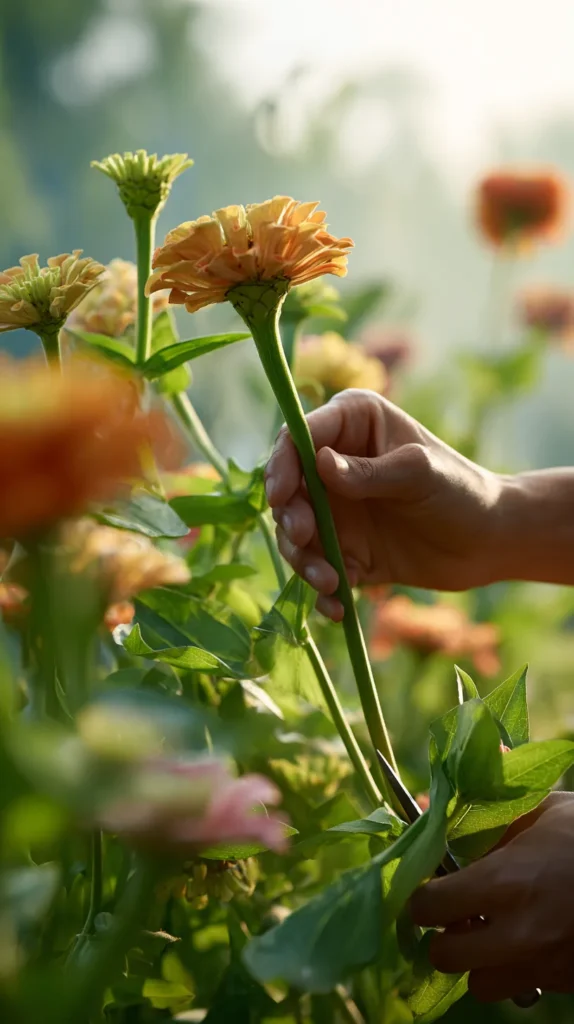
Cutting zinnia stems for indoor arrangements is the most enjoyable form of deadheading available — it removes the spent or fully open blooms that would otherwise redirect the plant’s energy toward seed production, while producing a supply of fresh cut flowers for the house that rivals anything available from a florist at the peak of the season. A zinnia cut at the right stage lasts seven to twelve days in a vase — longer than many commercially produced cut flowers — and cutting consistently keeps the plants producing new buds at a rate that matches or exceeds the removal of existing flowers.
Cut zinnia stems for vases when the flower is fully open but before the central disc begins to show pollen — a stage sometimes called the “wiggle test” stage, where the stem is held just below the flower head and shaken gently. A stem ready for cutting holds the flower head rigid on a firm stem. A stem that wobbles is not yet firm enough and will wilt quickly in a vase regardless of cutting technique or conditioning treatment. Cut to a length that includes at least two leaf pairs below the flower head — the cut point at the second leaf pair produces the most new branching growth below the cut.
Growing tip: Cut zinnia stems for vase use in the early morning rather than in the afternoon heat. Morning-cut stems are fully turgid from the cool overnight hours and survive the transition from garden to vase with minimal wilting. Afternoon-cut stems — even when placed immediately in water — have experienced hours of transpiration and often wilt in the vase within twenty-four hours of cutting regardless of how carefully the conditioning is managed. The time of cutting is one of the most reliable predictors of cut zinnia vase life.
Zinnias reward the gardener who gets the fundamentals right and then largely leaves them alone — full sun, warm soil, water at the base, a pinch at the right moment, and consistent deadheading through the season. These are not complicated requirements and they are not time-consuming to meet. What they are is specific — and the zinnia that receives all of them performs at a level that genuinely surprises gardeners who have previously grown the same variety without that specific attention.
Sow the seed, wait for the warmth, pinch once, and cut consistently. The first flower will arrive in six to eight weeks and the last one will still be opening in October. Between those two moments, the zinnia is the hardest-working and most generously rewarding flower in the summer garden — and it always has been.