14 Mediterranean Garden Ideas
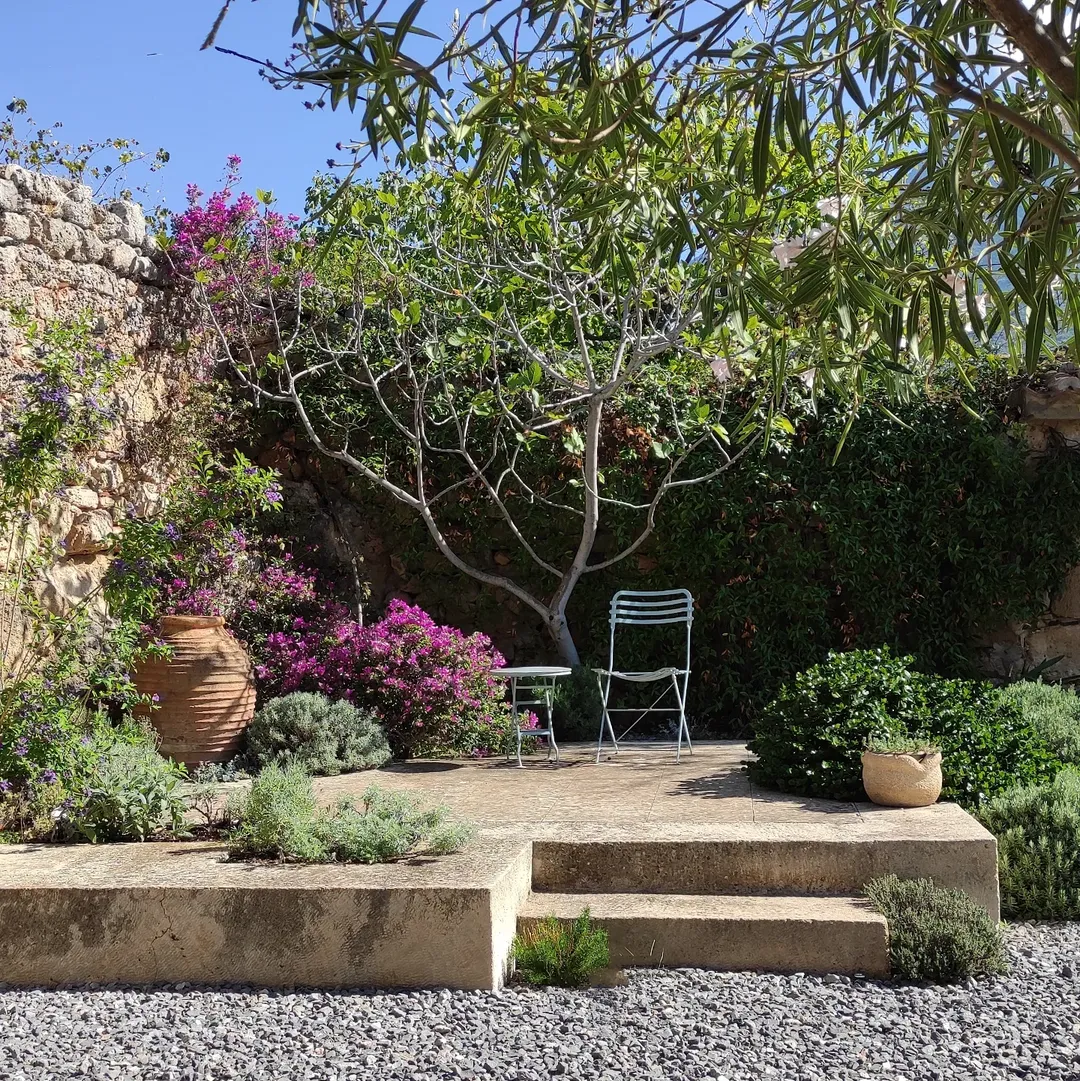
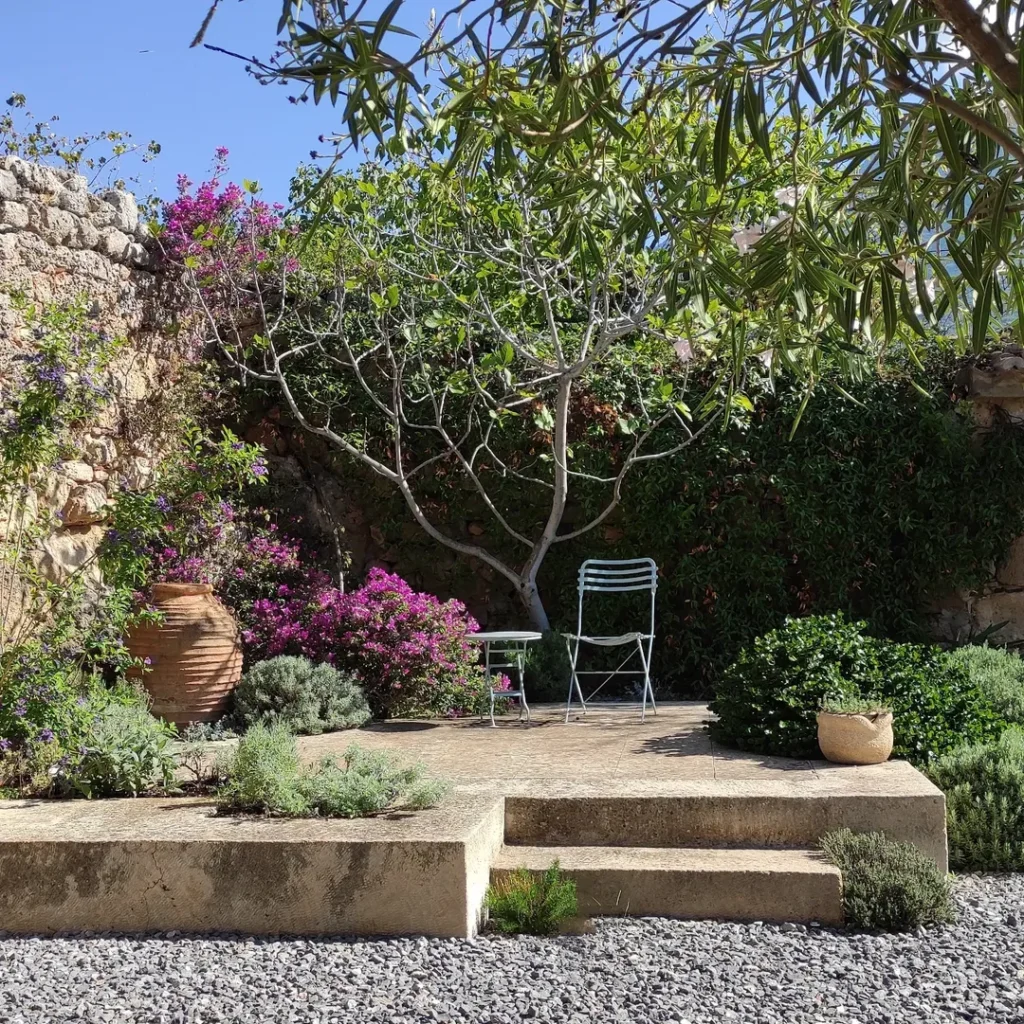
Few garden styles feel as immediately transporting as the Mediterranean. The warm stone, the scent of lavender and rosemary carried on a dry afternoon breeze, the terracotta pots overflowing with silvery foliage, the dappled shade of an olive tree over a simple table and two chairs — it is a set of sensory experiences so deeply associated with warmth, ease, and good living that even a modest version of it in a northern climate garden can shift the mood of the entire outdoor space.
@/mediterranean.garden.society
The Mediterranean garden works because it is built on honesty. It does not fight its conditions. It chooses plants that love heat and drought, materials that age beautifully in sun and rain, and a philosophy of outdoor living that treats the garden as a room to be used rather than a view to be admired from inside. The ideas below bring that philosophy into gardens of every size and every budget.
1. The Terracotta Pot Collection
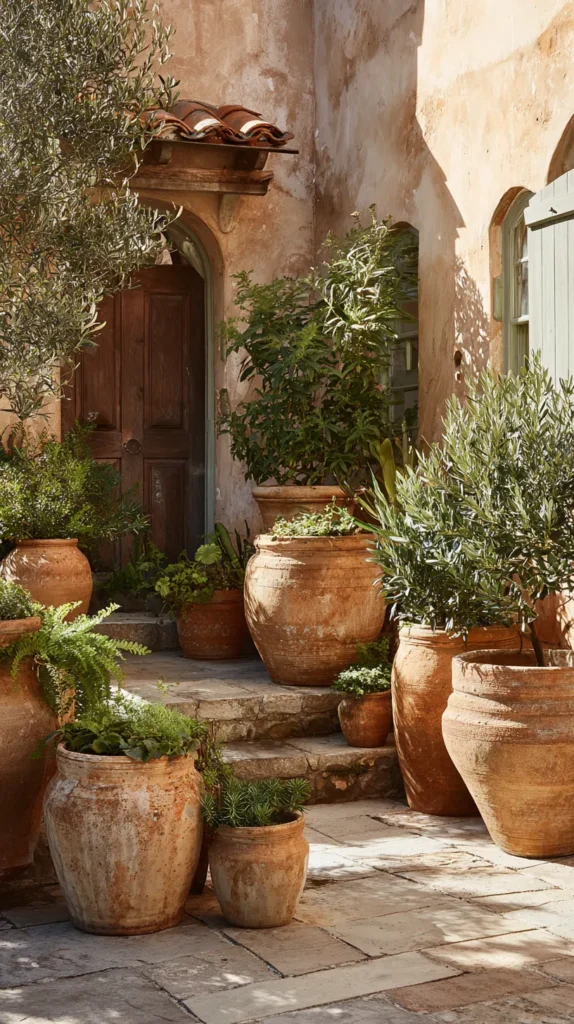
Budget: $50 – $300
No element defines the Mediterranean garden more immediately than a generous collection of terracotta pots. Grouped on a sun-baked patio, clustered around a doorway, or arranged in a loose procession along a garden path, terracotta pots planted with lavender, rosemary, agapanthus, pelargoniums, and succulents create the essential Mediterranean mood in even the smallest outdoor space. The pots themselves are as important as the plants — their warm, earthy colour and porous texture are irreplaceable.
Group pots in odd numbers at varying heights, with the largest at the back and smallest at the front. Allow the pots to weather naturally — the white salt deposits and moss that develop on aged terracotta are part of the beauty, not a sign of neglect. A brand new terracotta pot looks pleasant; a weathered one looks like it belongs.
Garden tip: Raise terracotta pots off the ground on pot feet or small pieces of tile during wet seasons. Terracotta sitting directly on cold, wet ground for extended periods is vulnerable to frost cracking — a small gap beneath the pot allows drainage and airflow that significantly extends the life of even unglazed garden terracotta.
2. The Gravel Garden
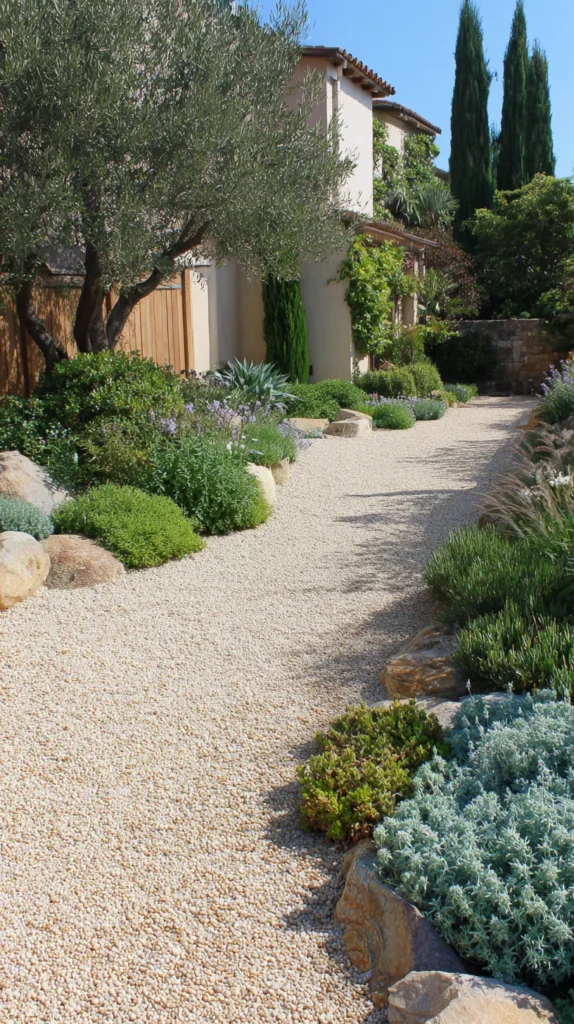
Budget: $80 – $400
Pale gravel replacing lawn is the single most transformative step toward a genuinely Mediterranean garden aesthetic. Crushed limestone, golden flint, or white marble chippings laid over a permeable membrane create a low-maintenance, drought-tolerant ground surface that reflects heat upward through plant stems, suppresses weeds effectively, and looks beautiful from the first day of installation. Planted through the gravel with lavender, cistus, euphorbias, alliums, and ornamental grasses, it becomes a complete landscape.
The depth of the gravel layer matters significantly — lay at least 7 centimetres to suppress weeds effectively and give the surface enough visual substance to read as intentional rather than thin. Thinner layers allow light to reach weed seeds through the membrane and the surface compacts and disappears into the soil within a single season.
Garden tip: Use a single gravel type throughout the garden rather than mixing different stone colours or sizes in different areas. A consistent gravel surface reads as a unified design decision and makes the garden feel larger and more cohesive. Different gravels in adjoining areas look accidental rather than considered.
3. The Olive Tree Focal Point
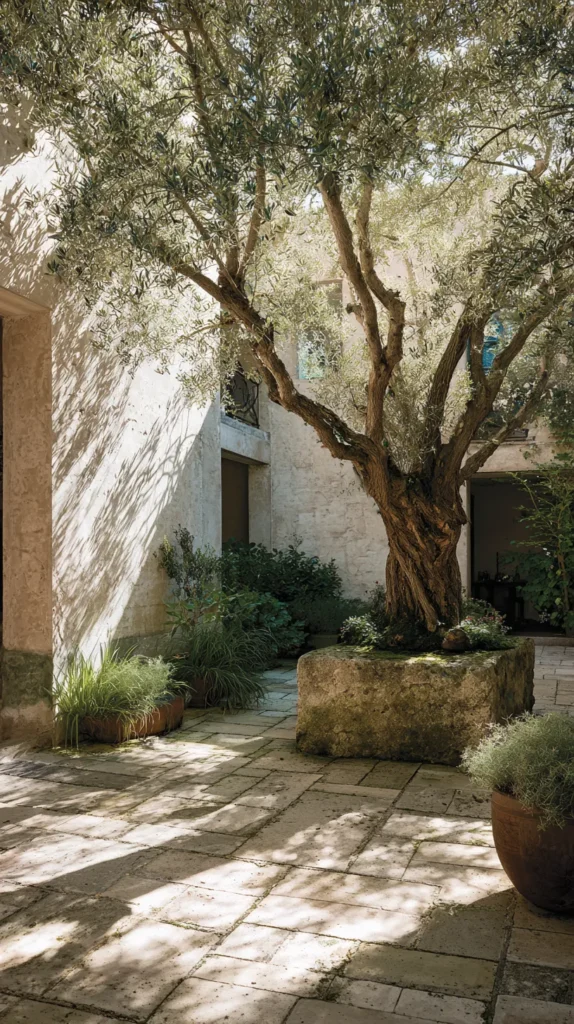
Budget: $60 – $400
A single olive tree — whether planted in the ground or grown in a large terracotta or stone container — is the most powerful and authentic focal point a Mediterranean garden can have. The silvery-green foliage, the gnarled and characterful trunk even on relatively young specimens, and the particular quality of light filtered through olive leaves on a sunny afternoon are impossible to replicate with any other plant. One olive tree does more for a Mediterranean garden than any combination of other elements.
Young olive trees in 10-litre containers cost $20–$60. Semi-mature specimens with characterful trunks in large containers cost $150–$400 and create an immediate, established presence. In all but the coldest climates, olives are hardy enough to remain outdoors year-round — they tolerate temperatures down to approximately minus ten degrees Celsius once established.
Garden tip: Resist the temptation to feed olive trees generously. Olives grown in rich, fertile soil produce excessive leafy growth at the expense of the gnarled, architectural character that makes them beautiful. A lean soil and minimal feeding keeps the growth rate slow and the form characterful — exactly the conditions they experience naturally in the Mediterranean.
4. The Sun-Bleached Courtyard
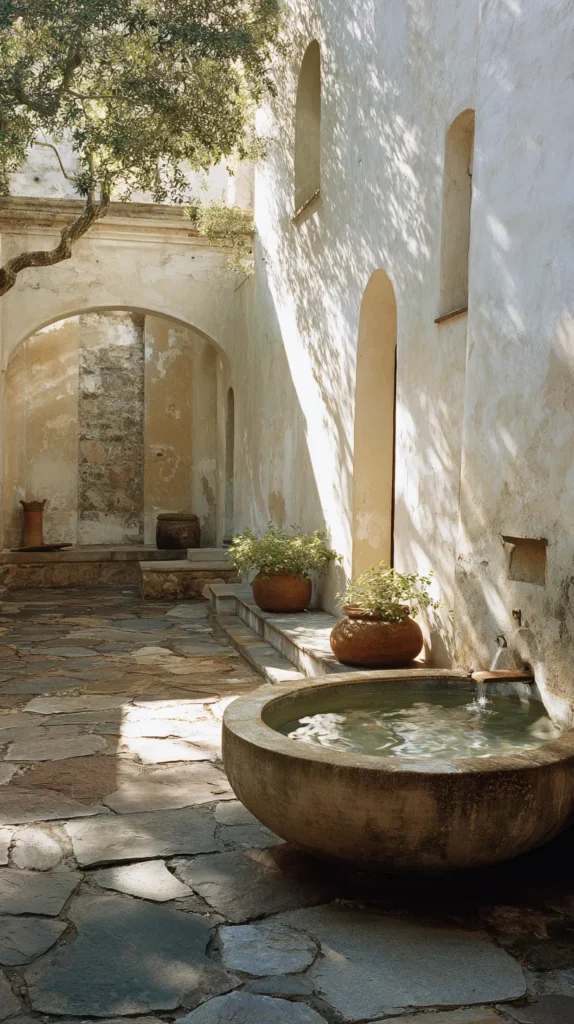
Budget: $150 – $800
An enclosed courtyard space — even a modest one — with pale rendered or limewashed walls, a floor of reclaimed stone or terracotta tiles, a central feature such as a stone urn or small fountain, and pots of bougainvillea, jasmine, or plumbago climbing the walls is the purest distillation of Mediterranean outdoor living available to a domestic garden. The enclosure traps warmth, muffles street noise, and creates a sense of sanctuary that open gardens rarely achieve.
Limewashing an existing brick or rendered wall costs $30–$80 in materials for an average courtyard and transforms the character of the space immediately. Traditional lime wash in white or pale ochre gives a surface with genuine depth and slight variation in tone that flat emulsion cannot replicate — each coat applied over a damp base soaks in unevenly and creates the sun-bleached, layered quality associated with Mediterranean architecture.
Garden tip: Add a simple water feature to a courtyard space — even a small wall-mounted lion’s head spout running into a stone basin costs $80–$200 and transforms the acoustic environment of an enclosed courtyard completely. The sound of moving water masks background noise, creates a cooling psychological effect on warm days, and gives the courtyard a sensory richness that no amount of planting alone can achieve.
5. The Lavender Pathway
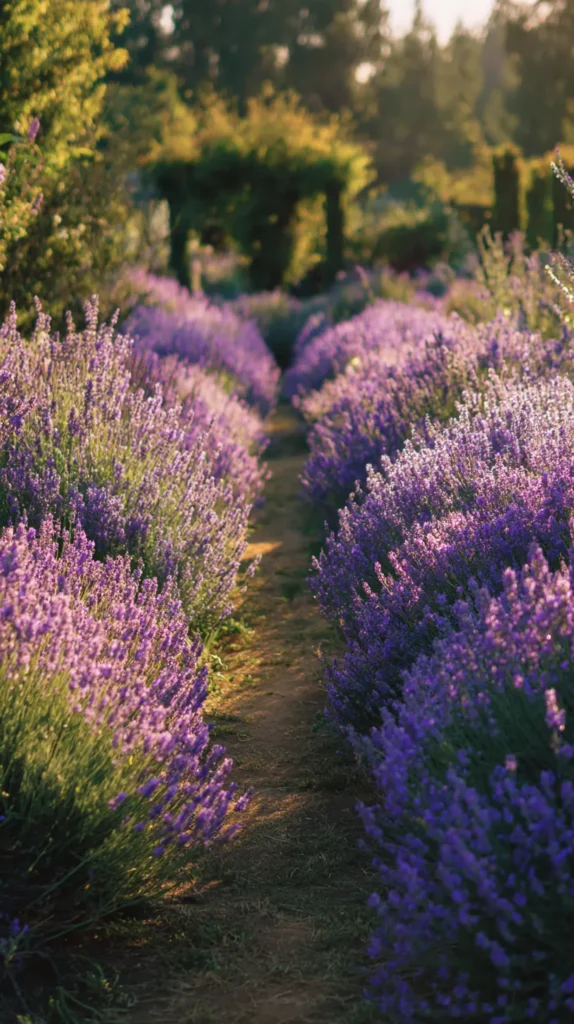
Budget: $40 – $150
A path flanked on both sides by lavender planted in dense, continuous rows is one of the most sensory and evocative experiences a Mediterranean garden can offer. The combination of the silvery foliage, the purple flower spikes in midsummer, and the fragrance released whenever a brush against a plant or a warm afternoon heats the essential oils in the leaves creates a garden moment that stops people in their tracks every single time.
Lavandula angustifolia varieties — Hidcote, Munstead, and Imperial Gem — are the most compact and most reliable for pathway edging, staying neat and well-shaped with a single annual trim after flowering. Space plants 30–40 centimetres apart for a dense, continuous hedge effect rather than individual specimens. The path beneath can be gravel, stone, or mown grass — all three suit lavender equally well.
Garden tip: Cut lavender back by approximately two thirds immediately after flowering each year — never cutting into the woody base growth. A lavender plant that is trimmed consistently stays compact and productive for ten or more years. One that is never cut becomes woody, open, and short-lived within five years, losing the tight mounding form that makes lavender pathway edging so beautiful.
6. The Pergola With Climbing Vines
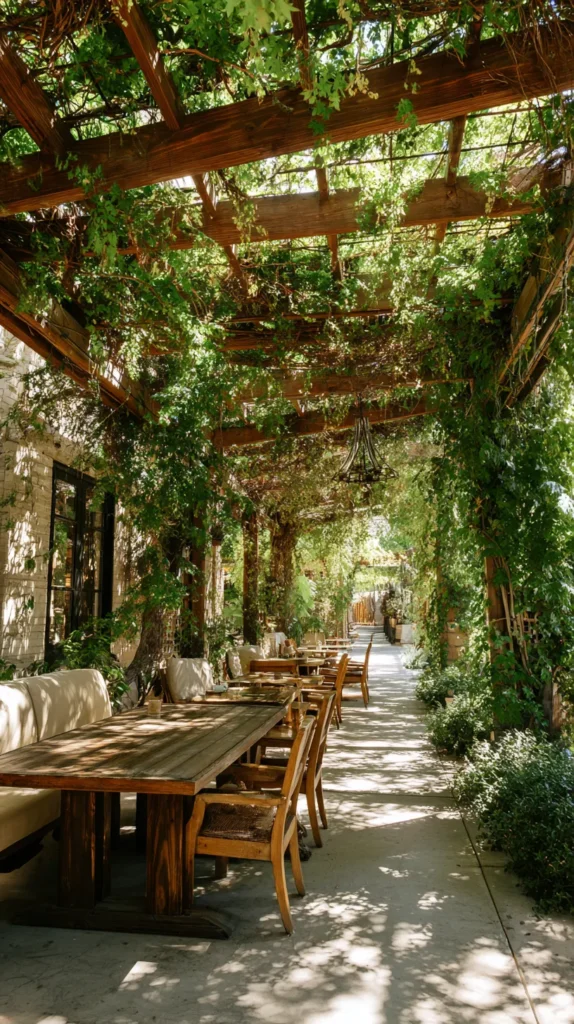
Budget: $200 – $1,500
A timber or steel pergola draped in grapevines, wisteria, bougainvillea, or jasmine provides the most atmospheric shade in any garden and the most unmistakably Mediterranean outdoor dining experience available. The dappled light filtering through a canopy of vine leaves, the scent of jasmine or wisteria overhead, and the loose bunches of grapes visible in late summer among the foliage create an outdoor room that no manufactured shade structure can replicate.
Vitis vinifera — the common grapevine — is the most authentic and practical climbing plant for a Mediterranean pergola. It establishes quickly, covers generously, produces attractive foliage with beautiful autumn colour, and the grapes themselves, however small and sharp in a cool climate, add an authenticity to the setting that purely ornamental climbers cannot match.
Garden tip: Train the permanent woody framework of a grapevine along the main pergola beams in the first two or three years before allowing it to branch and cover freely. A vine with a well-established permanent framework covers a pergola more evenly and is easier to manage than one allowed to scramble freely from the beginning. The investment of early training produces a far more beautiful and controlled canopy.
7. The Herb Garden in Stone Raised Beds
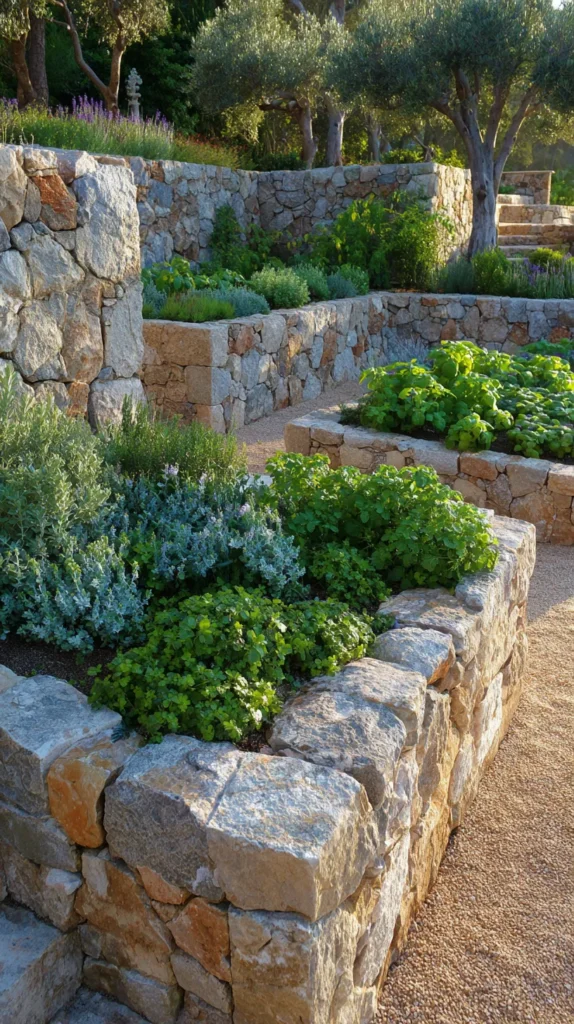
Budget: $80 – $300
Rosemary, thyme, oregano, sage, basil, and bay planted in low stone or rendered brick raised beds create a kitchen garden that is simultaneously practical and authentically Mediterranean in character. The raised structure improves drainage for the free-draining conditions these herbs prefer, the stone or rendered walls retain warmth and radiate it back to the plants during cool evenings, and the grey-green and silver foliage tones of Mediterranean herbs are among the most beautiful in any garden.
Arrange the raised beds in a simple geometric layout — two or three rectangular beds separated by gravel or stone paths — and plant each one densely with a single herb or a complementary group. A bed of nothing but thyme, allowed to spill over the edges, smells extraordinary and looks completely intentional.
Garden tip: Plant rosemary at the corners of stone raised beds where it can grow into its naturally architectural form without competition from neighbouring plants. Corner-planted rosemary becomes a structural element that anchors the geometry of the bed layout, and its woody, upright habit provides year-round presence even after softer herbs have died back in winter.
8. The Cypress Tree Avenue
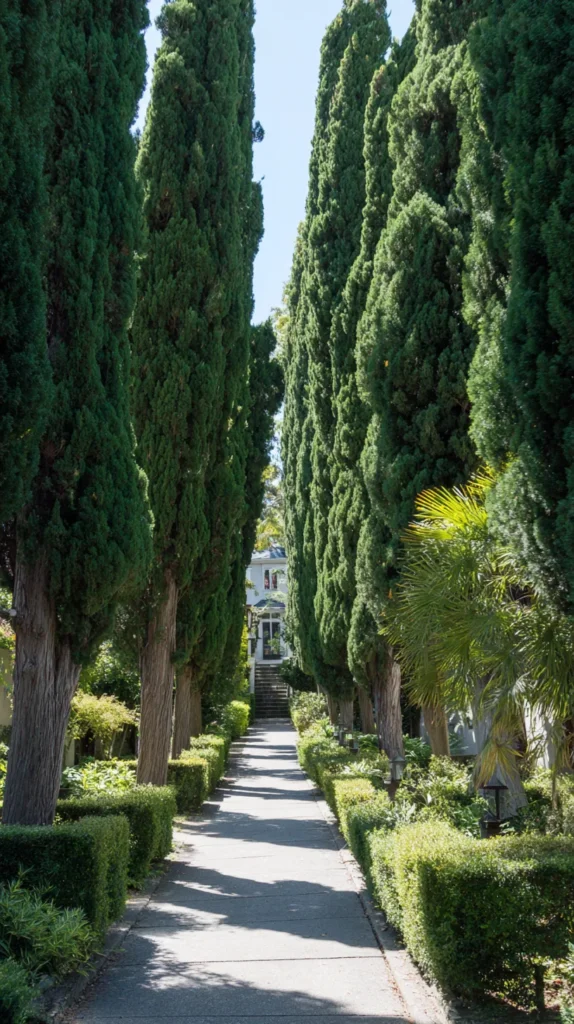
Budget: $100 – $600
A row of Italian cypress trees — Cupressus sempervirens — planted in a formal avenue along a garden path or boundary line is the most architecturally powerful planting statement a Mediterranean garden can make. The dark, pencil-thin columns of cypress rising against a pale sky or a white wall are one of the most recognisable and evocative images of the Mediterranean landscape, and even a modest row of four or six young trees planted along a garden path creates an unmistakable sense of place.
Young cypress trees in 5-litre containers cost $10–$25 each. They establish quickly and grow steadily in well-drained soil in a sunny position, reaching meaningful height within five to seven years. Space them 1–1.5 metres apart for a formal avenue effect — closer planting creates a dense screen, wider spacing reads as individual specimens rather than a unified architectural row.
Garden tip: Stake newly planted cypress trees for their first two seasons using a low stake placed at one third of the tree’s height rather than a tall stake reaching to the top. A low stake allows the upper trunk and canopy to flex in wind, which stimulates the development of a strong, self-supporting trunk. A tall stake that immobilises the whole tree produces a weaker stem that struggles when the stake is eventually removed.
9. The Dry Stone Wall Planting
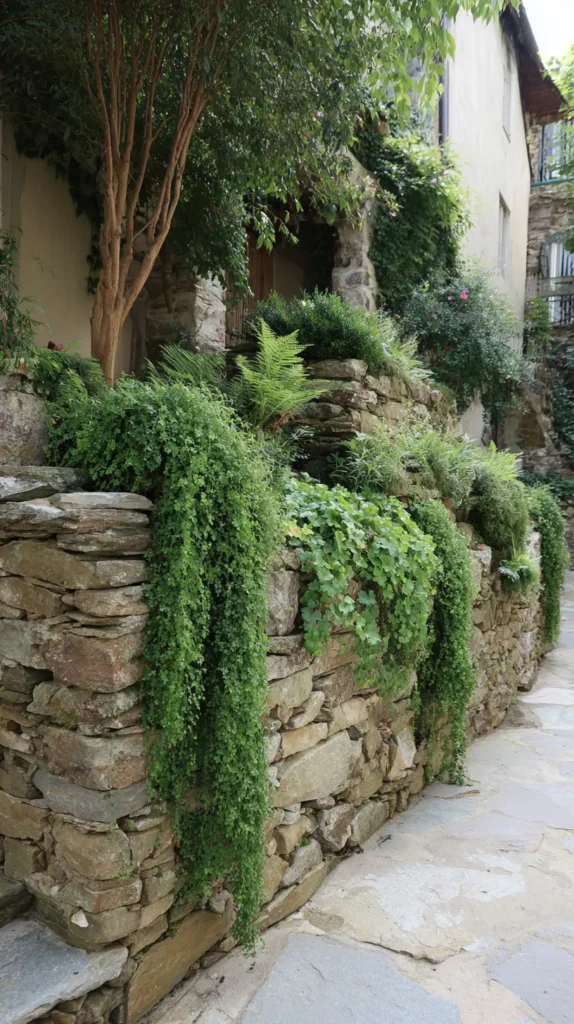
Budget: $60 – $300
A dry stone wall — stones stacked without mortar in a traditional method that leaves gaps between the stones — creates a habitat as much as a garden structure. Aubrieta, thyme, sedums, valerian, and erigeron planted into the gaps between the stones colonise the wall and soften it into a flowering, textured surface that is more beautiful than any mortared or rendered alternative. In a Mediterranean garden, a planted dry stone wall is both a boundary and a garden feature in its own right.
Local stone always looks more at home in a garden than imported stone — the geological connection to the surrounding landscape gives a dry stone wall a sense of belonging that even beautifully crafted walls in foreign stone struggle to achieve. A simple reclaimed stone retaining wall, a single course high, planted along its cap with thyme and sedum costs as little as $60 in materials and transforms the character of a garden edge.
Garden tip: Plant into dry stone walls when building them rather than trying to insert plants afterward. Tuck small plug plants or root cuttings into the gaps as you lay each course, packing the root zone with a mixture of gritty soil and moss. Plants established during construction integrate into the wall fabric far more successfully than those pushed into gaps in a completed wall.
10. The Fig Tree and Vine Wall
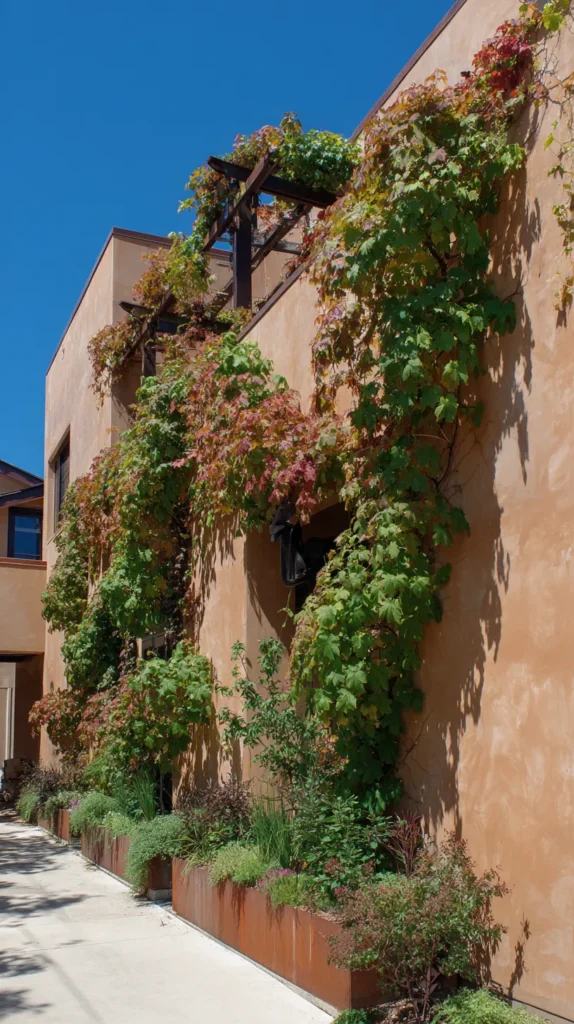
Budget: $40 – $200
A fig tree trained as a fan against a warm, south-facing wall and a grapevine trained beside it on horizontal wires creates a productive and visually beautiful wall covering that is quintessentially Mediterranean. Both plants benefit from the additional warmth a sunny wall provides, produce edible crops even in cooler climates when given a sheltered position, and develop an attractive woody framework that looks architectural and intentional in winter when the leaves have fallen.
A young fig in a 3-litre container costs $15–$30. A grapevine cutting or young plant costs $10–$25. The horizontal training wires needed to support them cost less than $10 in materials. The investment is minimal; the character these two plants give to a garden wall within three to four seasons is considerable and entirely irreplaceable.
Garden tip: Restrict the root run of a fig tree planted against a wall by installing a root barrier or by planting into a large sunken container. A fig with an unrestricted root system in fertile soil produces enormous quantities of foliage and very little fruit — a constrained root system encourages the tree to direct its energy into fruit production rather than vegetative growth.
11. The Mosaic Feature Panel
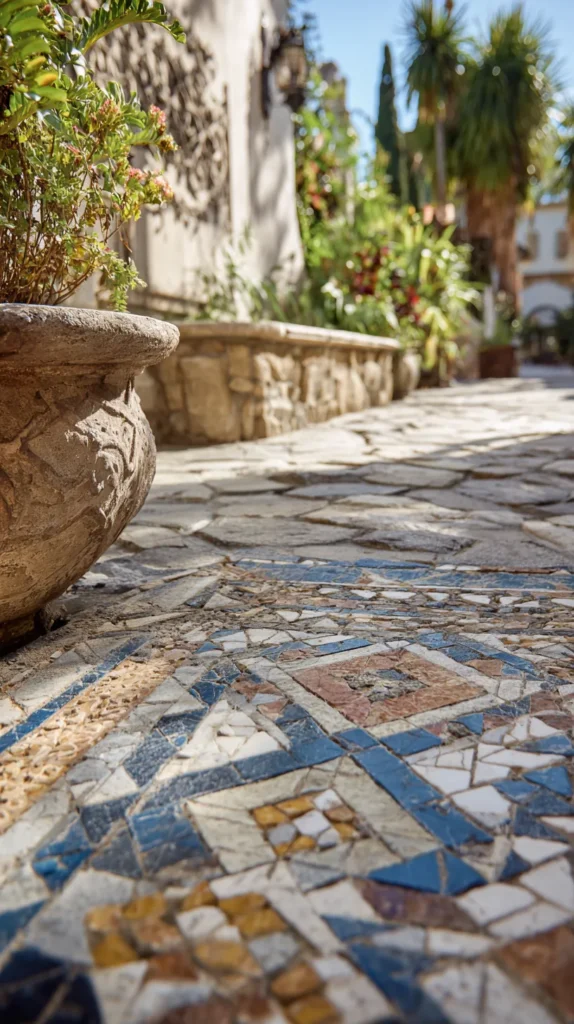
Budget: $50 – $250
A hand-laid pebble or tile mosaic panel — set into a patio surface, mounted on a garden wall, or used as a decorative centrepiece in a gravel garden — brings the craftsmanship and colour of traditional Mediterranean decorative arts into the garden. Simple geometric patterns in black and white pebbles, a sun motif in terracotta and cream tile fragments, or a flowing abstract design in broken ceramic all work beautifully as garden art pieces that add colour and personality to a space that relies primarily on natural materials.
River pebbles in two contrasting colours cost $10–$25 per bag. Broken terracotta tiles and ceramic fragments can often be sourced free from tile showrooms or building sites. The technique of setting pieces into a mortar bed is straightforward enough for a beginner to achieve creditable results on a first attempt — start with a simple geometric design rather than a figurative image.
Garden tip: Seal a completed pebble or tile mosaic with an outdoor stone sealer ($15–$25) after the mortar has cured for at least 28 days. Sealing enhances the colour depth of the stones and tiles, prevents staining from leaf tannins and organic matter, and reduces the freeze-thaw cracking that unsealed mosaic surfaces experience in cold winters.
12. The Outdoor Kitchen and Pizza Oven
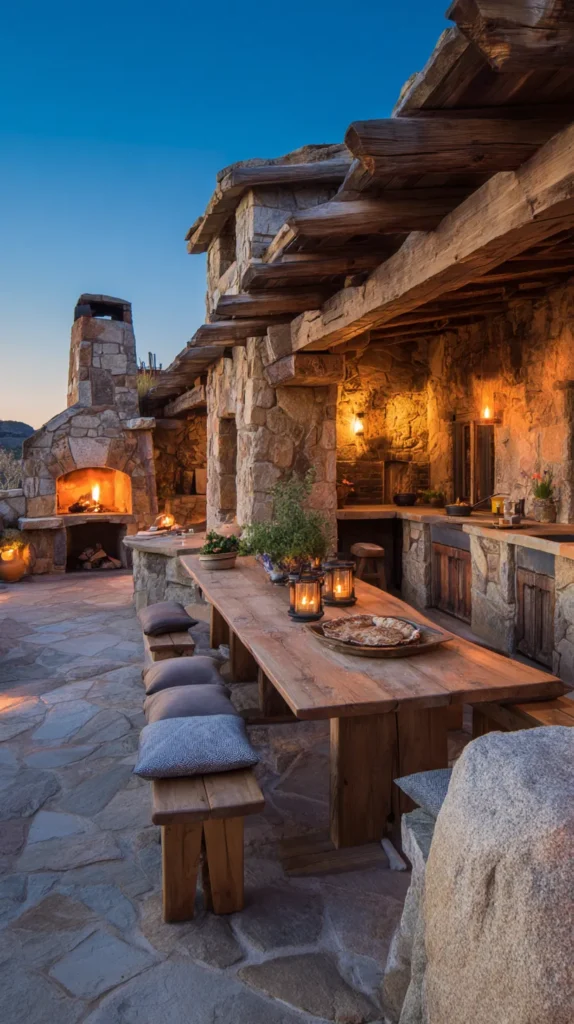
Budget: $300 – $3,000
Nothing embodies the Mediterranean philosophy of outdoor living — the belief that the best meals are cooked and eaten outside, in company, over a long afternoon — more completely than an outdoor kitchen with a wood-fired pizza oven. A simple rendered brick oven, a stone work surface, a charcoal grill, and a long table with mismatched chairs beneath a pergola creates an outdoor living space that will be used every warm day of the year and becomes the natural centre of the garden’s social life.
A pre-cast dome pizza oven kit costs $300–$600 and can be built in a weekend on a simple rendered brick base. Custom-built stone and brick outdoor kitchen structures cost $1,000–$3,000. The investment is recouped in the first summer of use by the quality of life it creates — cooking outside on a warm evening is one of the most pleasurable things a garden can make possible.
Garden tip: Position the pizza oven and outdoor kitchen close to the house and to the indoor kitchen rather than at the far end of the garden. The practical convenience of a short distance between the indoor food preparation area and the outdoor cooking space means the outdoor kitchen gets used constantly rather than occasionally. A beautiful outdoor kitchen at the far end of a long garden is used for special occasions; one conveniently positioned beside the back door becomes a daily habit.
13. The Scented White Garden
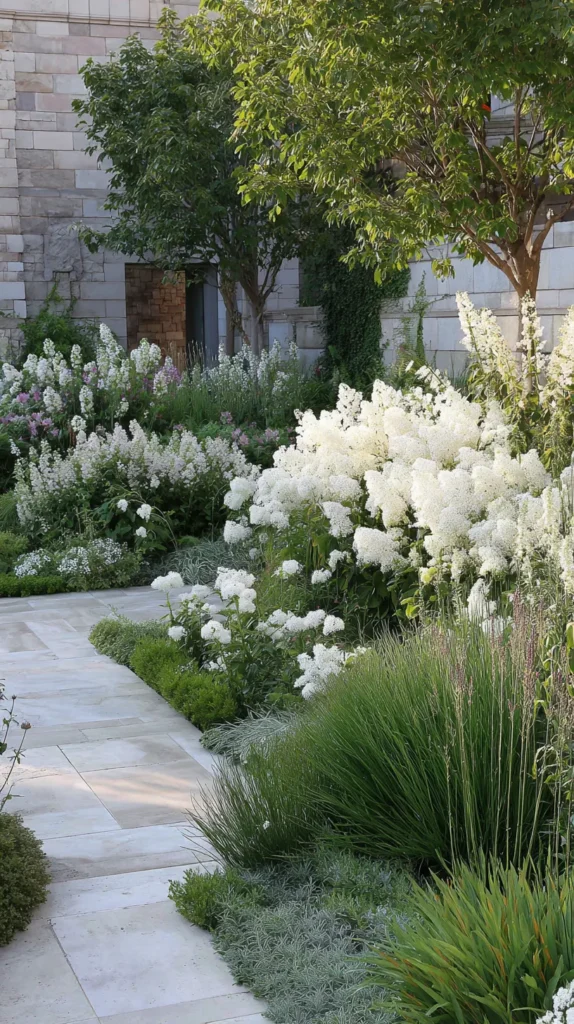
Budget: $50 – $200
A planting scheme of exclusively white-flowering, fragrant plants — white roses, white jasmine, white agapanthus, white lavender, white cistus, and white valerian — against pale stone or rendered walls and pale gravel creates a garden that glows in the evening light and fills the air with fragrance from midsummer onwards. The all-white palette has a luminous, almost otherworldly quality at dusk that coloured planting schemes cannot replicate, and the Mediterranean connection comes through the fragrance and the planting palette rather than the colour.
White planting schemes require more attention to foliage than coloured ones — with no flower colour variation to provide interest, the texture, tone, and form of the foliage becomes the primary design element. Silver artemisia, grey-leaved phlomis, glaucous euphorbia, and feathery fennel all provide the foliage contrast that prevents an all-white scheme from reading as flat and monotonous.
Garden tip: Plant the most fragrant species — jasmine, white roses, and white lavender — closest to the outdoor seating area where their fragrance will be most appreciated. Fragrant plants placed at a distance provide a background scent; those planted within two or three metres of where people sit create an immersive sensory experience that is one of the greatest pleasures a garden can offer.
14. The Shaded Dining Terrace
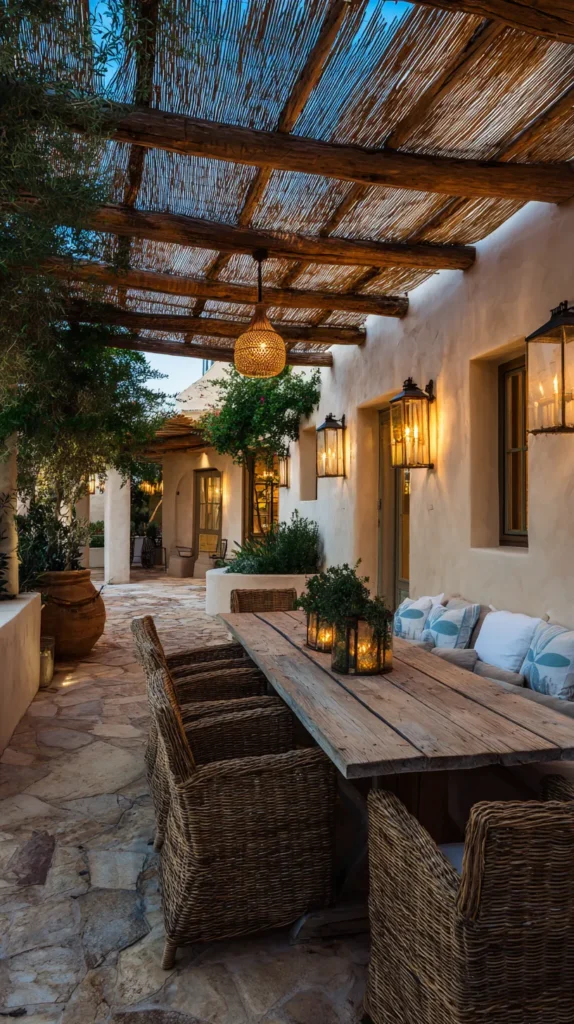
Budget: $200 – $1,500
A simple stone or gravel terrace, a long table of weathered timber or stone, mismatched chairs, a pergola covered in climbing vines overhead, a string of warm lights for evenings, and a pot of rosemary within reach of the table — this is the Mediterranean garden at its most essential and most achievable. It requires no rare plants, no expensive materials, and no professional installation. It requires only the conviction that outdoor meals, eaten slowly in good company with the garden all around, are one of the best things a summer can offer.
The table is the centrepiece and it is worth getting right. A solid timber table in oak, teak, or reclaimed pine weathers beautifully outdoors, improves with age and use, and suits the character of a Mediterranean terrace far better than glass, metal, or composite alternatives. A good outdoor table is a piece of furniture that lasts twenty years or more and becomes one of the most used and most loved objects in the house.
Garden tip: Light the dining terrace with warm-toned string lights at canopy height rather than ground-level path lights or overhead spotlights. Lights at canopy level — threaded through pergola beams or strung between posts — create a warm, enclosed glow at the height where people are sitting and looking, rather than lighting the ground where no one is looking. The quality of evening light on a well-lit outdoor dining terrace is what keeps people at the table long after the food is finished.
The Mediterranean garden is ultimately less about specific plants or materials than it is about a way of being in the garden — unhurried, sensory, and deeply connected to warmth, fragrance, and the pleasure of being outside. Take the ideas that suit your space and your climate, adapt them honestly to what your garden can realistically provide, and let the philosophy do the rest. A small gravel garden with a terracotta pot of lavender and an olive tree in a sunny corner is already, in all the ways that matter, a Mediterranean garden.