13 Thanksgiving Prep Laundry Room Organization Tips
The laundry room becomes a different room in the week before Thanksgiving. Not because anything in it changes. Because the demands on it quadruple overnight.
The tablecloths from last year still folded at the back of the linen shelf — now urgently needed and definitely wrinkled. The guest towels that were fine in the bathroom closet — now requiring inspection, washing, and pressing. The children’s dress clothes, located somewhere in the house, now requiring immediate laundering. And over the weekend: the aprons, the napkins, the kitchen towels used in quantities that dwarf any ordinary week.
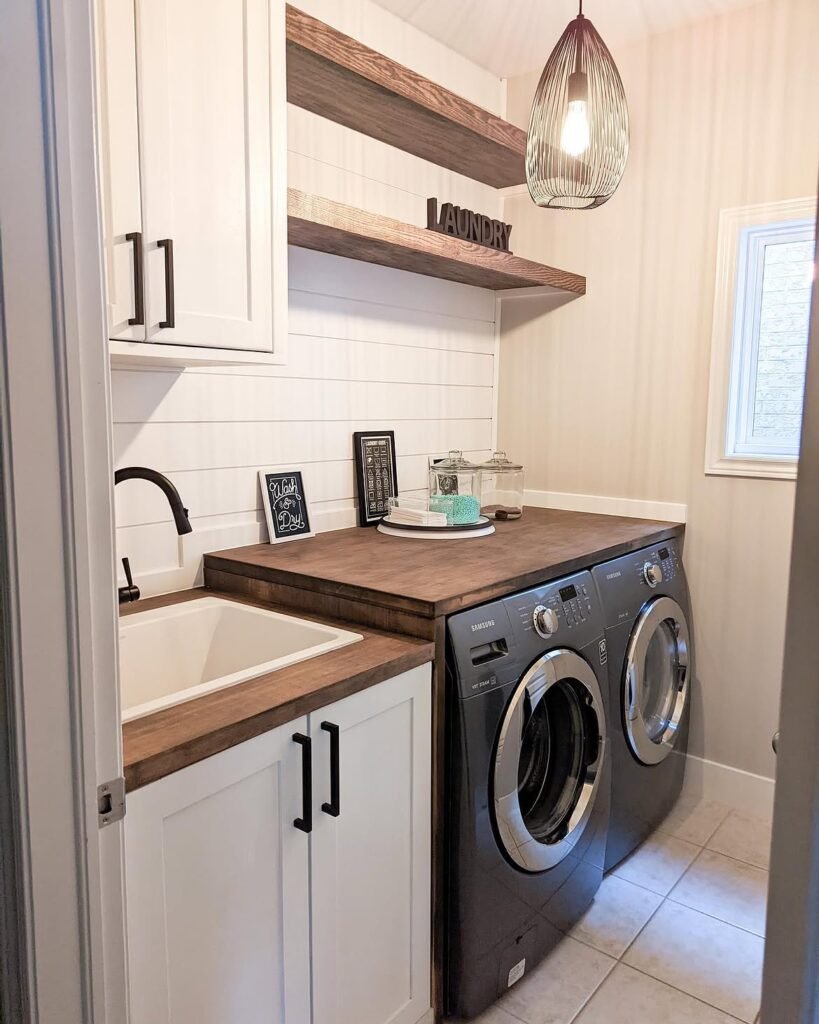
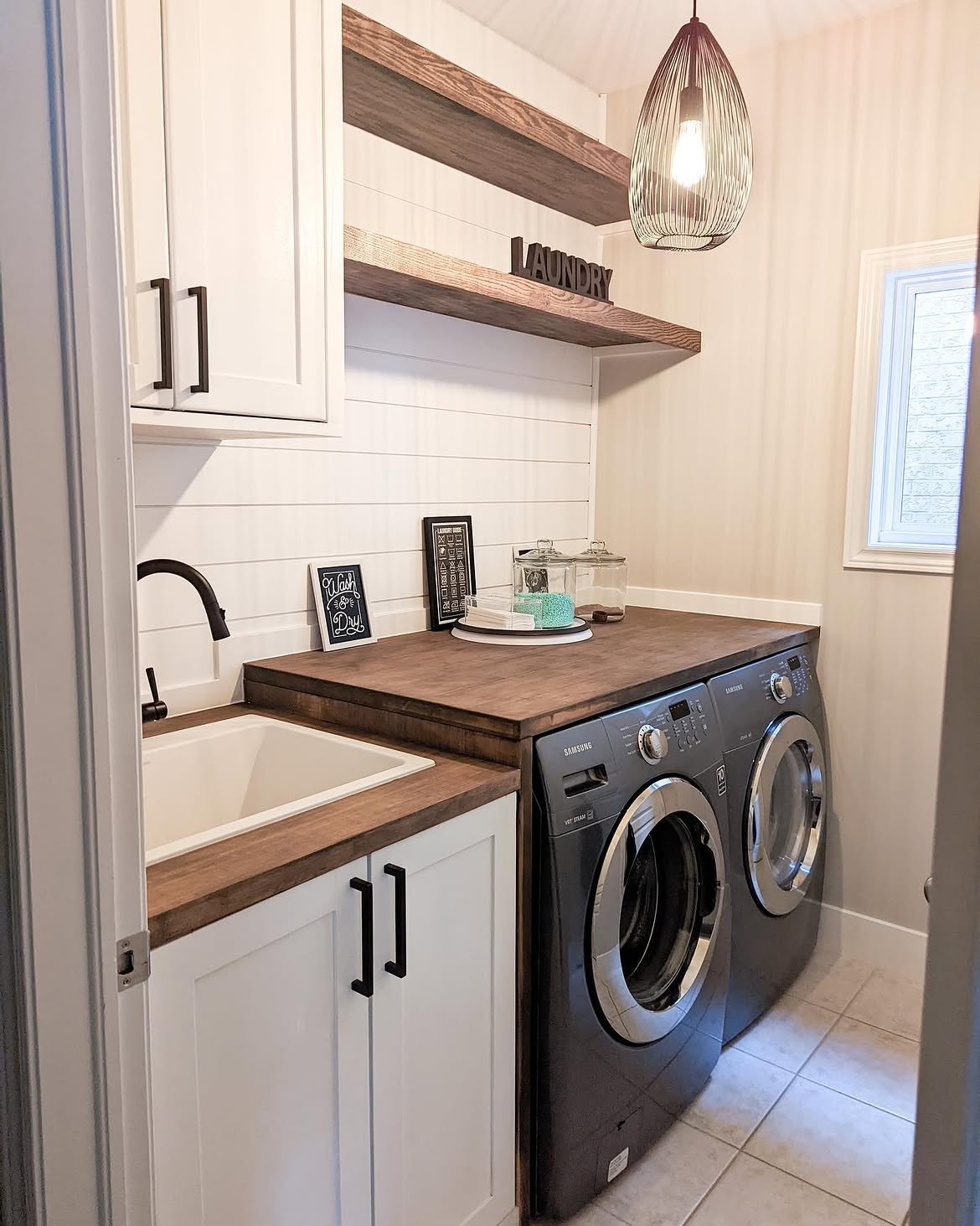
The laundry room that handles everyday washing without trouble often does not handle Thanksgiving washing without stress. The volume, the variety, the timing, and the simultaneous demands of the pre-holiday week: all different from the standard Monday load.
Getting the laundry room organized before Thanksgiving arrives — not the day before, but the week before — means the room handles what is coming instead of adding to the chaos.
Here are 13 tips that get it there.
What Thanksgiving Does to the Laundry Room
The specific demands:
The volume increase:
- Standard week: one to three loads
- Thanksgiving week: six to twelve loads minimum in most households with guests
- The volume: the laundry room’s primary challenge
The textile variety:
- Tablecloths (often large format, awkward)
- Cloth napkins (often many, often stained quickly)
- Guest towels (multiple sets)
- Guest bedding (one complete set per guest room)
- Good dress clothes (requiring gentler cycles)
- Kitchen towels and aprons (requiring frequent washing during cooking)
- Standard household laundry (which does not stop)
The timing:
- Pre-Thanksgiving: certain items needed by a specific date (tablecloths need to be washed and pressed before Thursday)
- During: the kitchen towels and aprons cycling rapidly
- Post-Thanksgiving: the volume of napkins, linens, and towels from the meal itself
The result when not organised:
- The tablecloth found at 10pm Wednesday with a wrinkle that will not come out by morning
- No guest towels in the bathroom because they are still in the dryer
- The apron needed at 8am Thursday that was not washed
- The chaos that is not about Thanksgiving — it is about the laundry room
1. The Pre-Thanksgiving Linen Audit (The Week-Before Step)
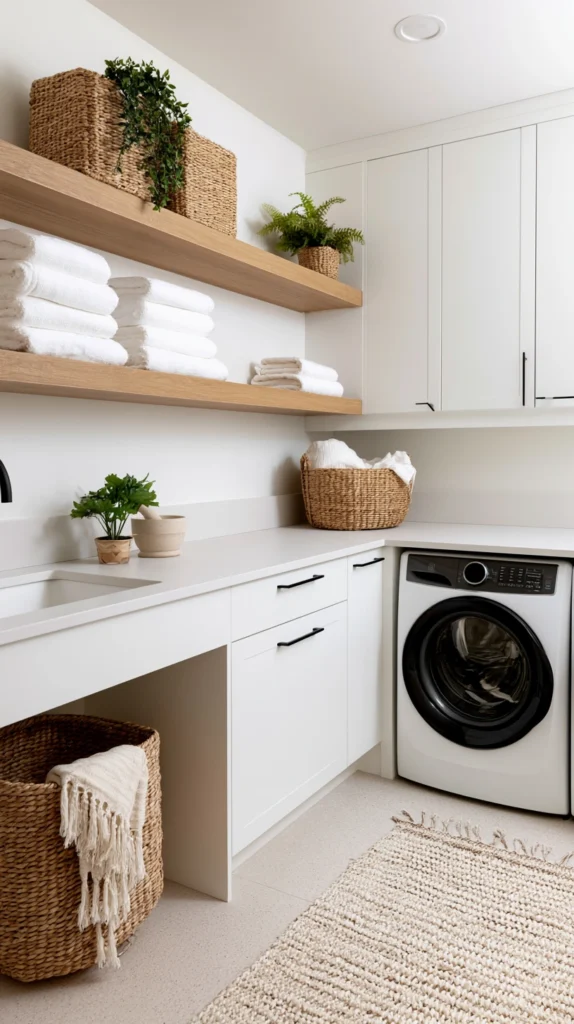
A systematic walk-through of all household linens before the week begins — the step that prevents the Wednesday-night panic.
What the linen audit involves:
Pull everything out:
- Tablecloths and table runners from wherever they are stored
- Cloth napkins (all of them — the everyday ones and the formal ones)
- Guest towels (from the linen closet and any stored locations)
- Guest bedroom linens (sheets, pillowcases, duvet covers)
- Kitchen textiles (clean aprons, clean kitchen towels)
- Dish cloths and cloth napkins for kitchen use during cooking
Assess each item:
- Does it need washing? (Most stored items: yes)
- Does it have stains from last year? (More than expected: yes)
- Is it in good condition or does it need replacing before guests arrive?
- Is there enough of each category (napkins especially)?
The stain discovery:
Last year’s tablecloth:
- The most common pre-Thanksgiving laundry discovery
- Washed and folded last year: but a stain missed, set in by time
- The discovery now (one week ahead): enough time to treat and re-wash
- The discovery on Wednesday night: not enough time
Treatment options for set stains:
- Oxygen-based stain remover (OxiClean or similar): the most effective for most dining stains
- Soak for 4–6 hours before washing
- For wine or berry: white wine vinegar soak before the oxygen treatment
- For grease (gravy): dish soap worked into the stain before soaking
The audit creates the laundry list:
- Everything pulled and assessed: sorted into “needs washing,” “needs treating and washing,” “fine”
- The “needs washing” pile: the actual Thanksgiving laundry load list
- Known in advance: the volume and the timing requirements
The calendar:
- Work backward from Thursday
- Tablecloths and formal napkins: washed and pressed by Wednesday at the latest
- Guest bedding: ready before guest arrival (whenever that is)
- Kitchen towels: ongoing through the week
Cost breakdown:
- Stain remover (if needed): $5–10
- Time: 30–45 minutes
- Total: $5–10
The audit done on the Saturday before Thanksgiving: everything known, everything scheduled. No panic later in the week. The most important 45 minutes of Thanksgiving prep.
Audit Tips
The linen closet reorganisation:
- While everything is out: reorganise what goes back
- Tablecloths folded so they unfold without creases (the roll method: rolled rather than folded)
- Napkins by set (all twelve of the formal napkins together)
- The organisation now: faster access during the holiday
2. The Thanksgiving Laundry Schedule (Planning the Loads)
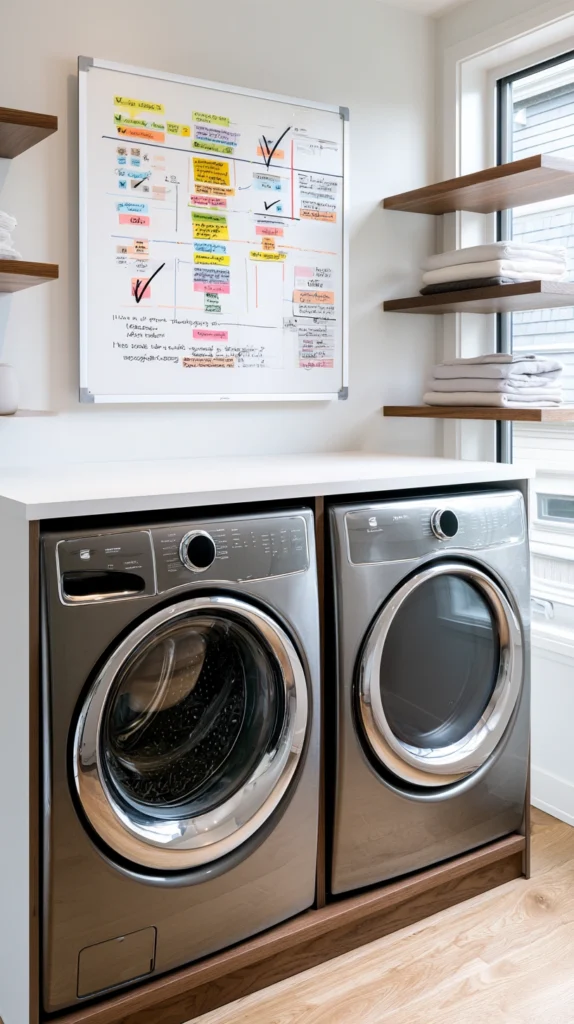
A written schedule for every load that needs to be done before, during, and after Thanksgiving — the single most effective organisation tool for the holiday laundry volume.
Why a schedule outperforms ad-hoc washing:
The capacity reality:
- A standard washer: one load takes 45–90 minutes
- One dryer load: 45–60 minutes
- The dryer often the bottleneck (dryers cannot run faster than physics allows)
- Without a schedule: loads stack up, the timing collapses
The schedule structure:
Saturday (6 days before):
- Formal tablecloths and table runners (highest priority, need pressing after)
- Formal cloth napkins
Sunday:
- Guest bedroom one linens (sheets, pillowcases)
- Guest bedroom two linens (if applicable)
- Guest towels (bath towels, hand towels)
Monday:
- Any items requiring second treatment (stains that did not come out Saturday)
- Dress clothes that need washing
Tuesday:
- Additional guest items
- Clean aprons and kitchen towels (the pre-cooking supply)
Wednesday:
- Minimal planned laundry (too late for anything new)
- Emergency washing only
- Dryer clear by end of day for the Thursday cycle
Thursday (Thanksgiving Day):
- Kitchen towels on rotation throughout the day
- Aprons as needed
Friday (the post-meal wash):
- All napkins from the meal
- Tablecloths from the table
- Kitchen towels and aprons from cooking
- Guest towels (first change)
The schedule written and posted:
- On the laundry room wall or inside a cabinet door
- Not in a phone (needs to be visible while doing laundry)
- Checked off as each load completes
Cost breakdown:
- Time to create: 15 minutes
- Paper to post: $0
- Total: $0
3. The Station System (Sorting by Destination, Not Category)
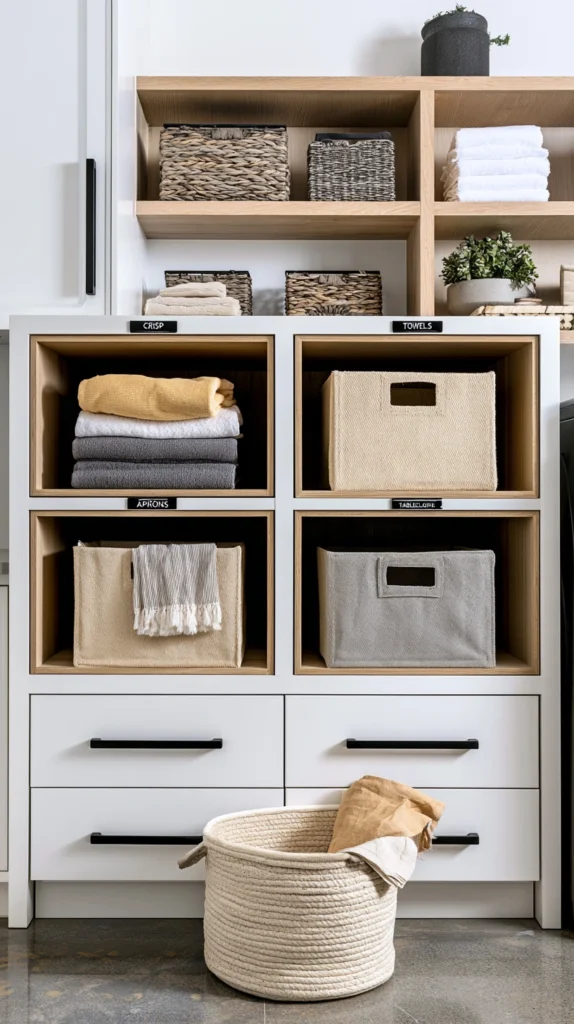
Sorting laundry by where it goes when done, not by wash category — the Thanksgiving-week sorting method that reduces the chaos of multiple competing priorities.
Why destination-based sorting works better during the holidays:
The normal sorting:
- Whites together
- Darks together
- Delicates together
- The sort: by wash instruction
The Thanksgiving sorting problem:
- Whites include: guest towels, formal napkins, everyday shirts
- All cannot wait for each other
- The guest towels needed Thursday. The everyday shirts needed Monday.
- Sorting by wash type only: the timing is lost
The destination-based system:
Bin 1: Guest Room One (before Saturday)
- Sheets, pillowcases, towels for Guest Room One
- All washed, dried, and returned to the guest room before that guest arrives
- The bin: labelled. The timing: on the schedule.
Bin 2: Formal Dining (before Wednesday)
- Tablecloths, table runners, formal napkins
- All washed, pressed, and folded before Wednesday evening
- The bin: labelled with the wash settings (usually delicate or gentle)
Bin 3: Kitchen (ongoing through the week)
- Kitchen towels, aprons, oven mitts that need washing
- Ongoing — not a one-and-done wash
- The bin: near the washing machine, filled and emptied multiple times
Bin 4: Everyday (as needed)
- Normal household washing
- Does not stop because it is Thanksgiving week
- The lowest priority bin: washed when the higher-priority bins allow
The physical bins:
Separate, labelled containers:
- Four bins: one per destination
- Labels: written tape, or a piece of paper attached
- The bins: the visual reminder of what needs to be done
Cost breakdown:
- Laundry bins (if not owned): $10–20 each
- Labels: $0
- Total: $0–80 (depending on whether bins need to be purchased)
4. The Express Pressing Station (Wrinkle Management)
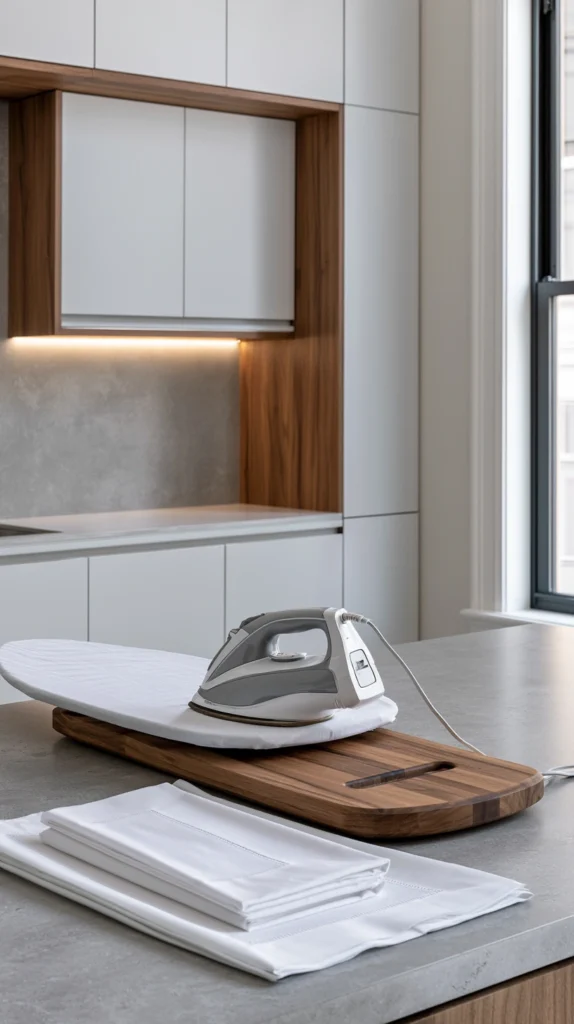
A dedicated pressing setup that stays accessible through the Thanksgiving week — the ironing solution for the linens that must look right.
Why pressing is the most skipped step:
The avoidance:
- Setting up the ironing board: takes 2 minutes
- The perception: takes much longer
- The result of avoidance: tablecloths with fold marks, napkins that look slept in
- The alternative: keep the ironing board set up for the week
The ironing board:
Leaving it out:
- An ironing board that is always set up: used
- An ironing board that is stored and must be retrieved: often not retrieved
- The friction of retrieval: the reason items are used wrinkled
- The board out all Thanksgiving week: the friction removed
The iron:
- Steam iron with a water reservoir: the most effective for tablecloths and napkins
- The steam function: critical for linen and cotton (the standard tablecloth materials)
- A quality iron at the correct temperature: the difference between smooth and “good enough from a distance”
The Thanksgiving linens pressing guide:
Tablecloths:
- Iron while slightly damp (take from the dryer slightly before fully dry, or mist with water)
- Iron on the reverse side first, then the right side
- The centre of the table: the most visible — iron this section last (stays freshest)
- Fold immediately after pressing (along the same fold lines as the finished position on the table)
Cloth napkins:
- Iron all napkins in a session
- The assembly line: quicker than doing one at a time
- Stack immediately after ironing
- Store flat (not stuffed in a drawer)
The linen setting:
The linen and cotton setting:
- Usually the hottest setting on any iron
- The steam: essential
- The temperature: too low and the wrinkles do not come out regardless of effort
- Too hot: scorching risk on white linens
- Test on a corner first if uncertain
Cost breakdown:
- Quality steam iron (if upgrade needed): $30–60
- Spray bottle for misting: $3
- Total: $3–60
The pressing station in use: the tablecloth that would have been used with visible fold lines: pressed and smooth. The napkins that were stiff from the dryer: soft and folded. The hour spent pressing: the visual quality of the Thanksgiving table.
5. The Stain-Treatment Kit (Assembled and Accessible)
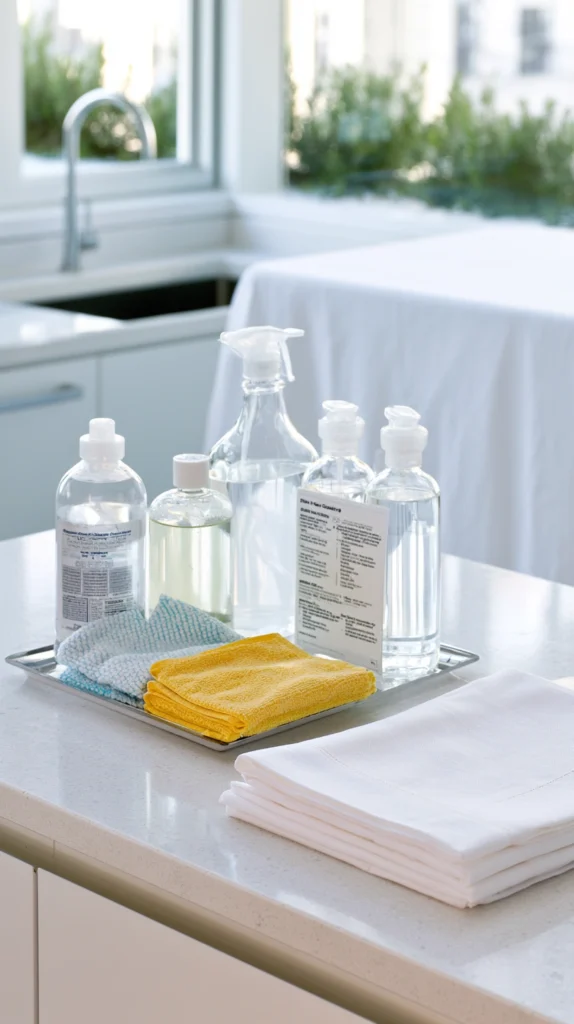
A collection of stain-treatment products, assembled in one place and accessible throughout the Thanksgiving period — the response kit for the inevitable spills.
Why a dedicated kit prevents the delay:
The spill at Thanksgiving:
- The gravy at the tablecloth
- The cranberry sauce on the napkin
- The wine on the guest towel
- All inevitable. All easier to treat immediately.
The delay problem:
- Spill happens
- Person looks for stain remover
- Cannot find it (or finds the wrong product)
- The stain sits for 30 minutes
- The set stain: harder to remove
The kit assembled:
For dining stains specifically:
- Oxygen-based stain remover (OxiClean, White Glo): the general-purpose dining stain solution
- White wine (or soda water): for wine and dark liquid spills — the immediate treatment
- Dish soap: for grease (gravy, butter, oil)
- White vinegar: for wine and berry stains (before the oxygen treatment)
- Club soda: immediate application to lift fresh liquid
The application:
The immediate treatment:
- Blot (never rub — rubbing spreads and sets the stain)
- Apply the correct treatment
- Let it sit (do not immediately wash off)
- Then: to the laundry
The kit location:
In the laundry room and in the kitchen:
- Laundry room: for treating before washing
- Kitchen or dining area: for immediate treatment at the table
- Two kits: or one portable kit moved as needed
The spray bottle:
- Pre-mixed oxygen-based solution in a spray bottle
- Spray directly on the stain
- No measuring required
- The fastest possible treatment
Cost breakdown:
- OxiClean or equivalent: $8–12
- White vinegar (already in the kitchen): $2
- Spray bottle: $2
- Total: $12–16
6. The Guest Towel System (The Hospitality Detail)
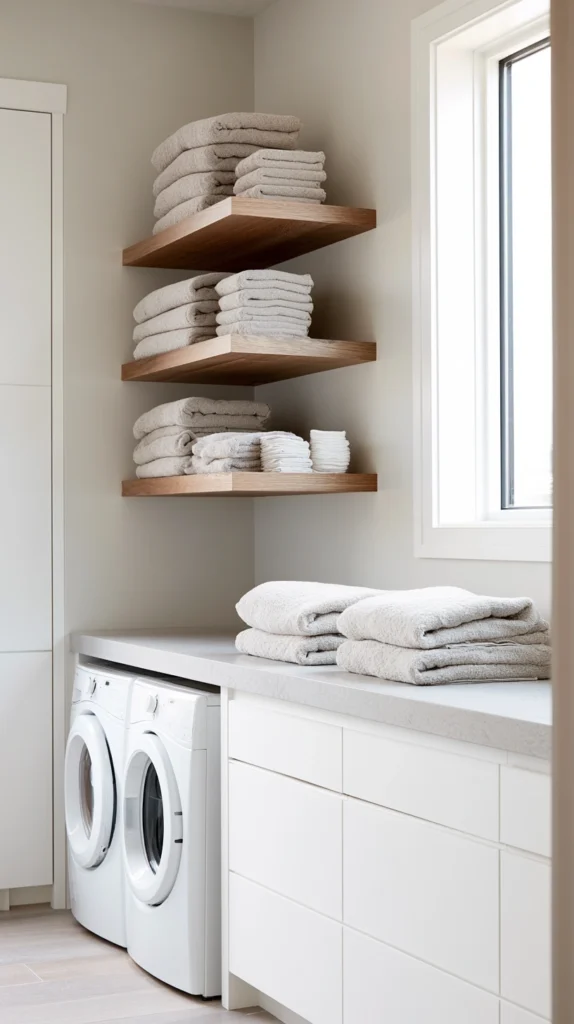
A system for managing guest towels from arrival through departure — the hospitality detail that most guests remember and most hosts underplan.
Why guest towels require a specific system:
The standard approach:
- One set of guest towels in the bathroom
- They are used for three to five days without replacement
- The guest: using progressively damper towels as the stay continues
- The host: not noticing (the towels are not in the host’s bathroom)
The hospitality approach:
- Fresh towels mid-stay (for visits over two days)
- Clean, pressed hand towels in the bathroom daily (if possible)
- The towels replaced before they feel damp and used
- The guest: arriving to fresh towels every morning is a hotel-quality hospitality detail
The system:
The supply:
- Enough towels for each guest to have two fresh bath towels for the visit
- Plus two hand towels per person per day of visit
- The volume: requires knowing in advance how many guests for how many days
The rotation:
- Used towels: collected each morning (or ask guests to leave them on the floor as the signal)
- Washed and dried: through the day
- Returned to the bathroom: before the guest returns in the evening
- The rotation: the service standard
The laundry room setup for the rotation:
Quick-dry towels:
- Microfibre or thin cotton: dry in 30–40 minutes in the dryer
- Thick luxury towels: can take 60–90 minutes
- For Thanksgiving guest rotation: thinner towels or setting the dryer to high
- The rotation needs to complete within a few hours
The towel organisation:
In the laundry room:
- Clean guest towels: on a shelf or rack, neatly folded
- The distinction from household towels: different colour or a separate storage location
- Taking the correct towel to the correct room: the system
Cost breakdown:
- Additional guest towels (if needed): $15–40 for a basic set
- Total: $0–40 (depending on existing stock)
7. The Table Linen Ironing Order (The Most Critical Pre-Thanksgiving Timing)
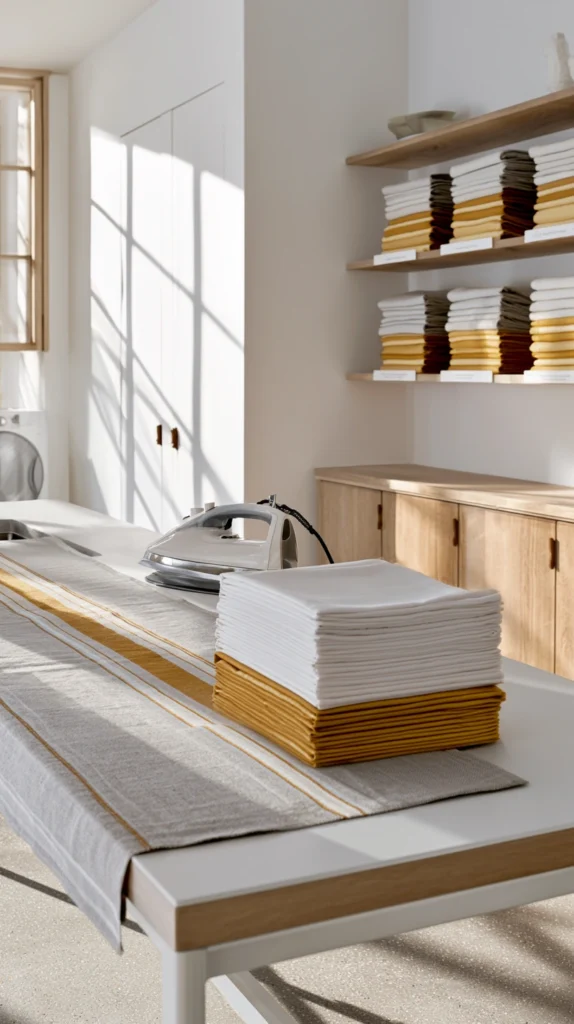
A specific schedule for when each table linen needs to be washed and pressed, working backward from Thanksgiving — the timing that prevents the Wednesday-night crisis.
Why Wednesday night is too late:
The timeline reality:
- A tablecloth washed and dried on Wednesday afternoon: still needs pressing
- Pressing the tablecloth: 30–45 minutes
- If the tablecloth is already set: it will wrinkle in the dryer
- The Wednesday evening timeline: usually no time for this
The correct timing:
Tablecloth: Wash Saturday or Sunday
- Dry thoroughly
- Press while still slightly damp (best results)
- Fold immediately after pressing
- Store flat if possible (rolling is better — no new fold lines)
Table runner: Same timing as tablecloth
- Smaller, easier to press
- Can be done in the same pressing session
Formal cloth napkins: Wash Sunday
- Press on Monday
- Stack neatly, stored flat
- Available Wednesday for final fold (the decorative fold)
The napkin fold:
- The decorative napkin fold: done the day before or morning of Thanksgiving
- Cannot be done ahead and stored (the fold will collapse)
- The plan: napkins pressed early in the week, the decorative fold done Thursday morning
The table setting day:
Wednesday:
- The tablecloth already clean and pressed: laid on the table
- The table runner in position
- The napkins folded and placed
- The table set the night before: one less task on Thanksgiving morning
Cost breakdown:
- No additional cost (the schedule itself)
- Total: $0
8. The Kitchen Textile Rotation (The Cooking Day System)
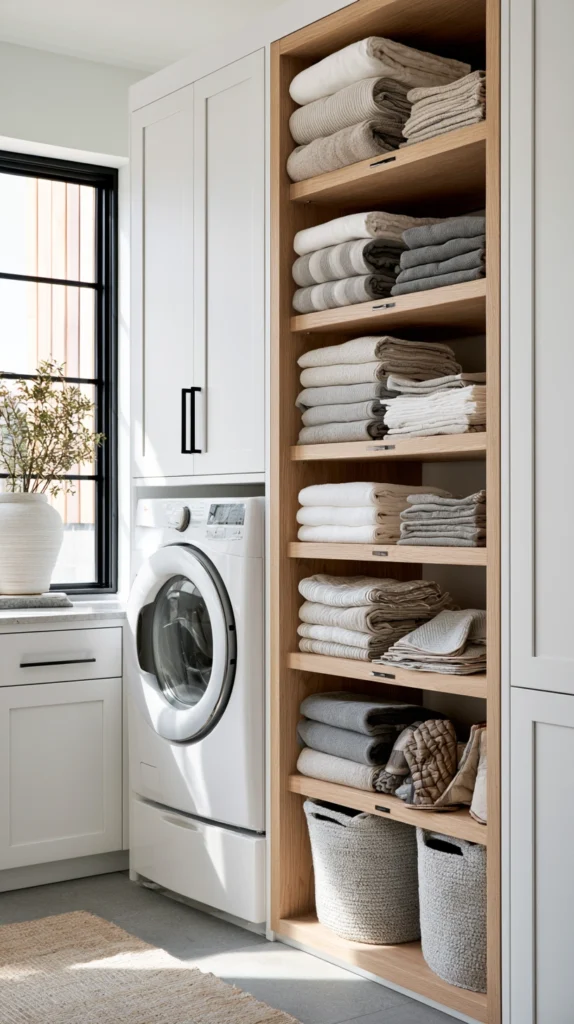
A rotation system for kitchen towels and aprons through the Thanksgiving cooking day — the system that keeps the kitchen functional through eight hours of cooking.
Why the kitchen textile situation collapses on Thanksgiving:
The cooking day reality:
- Standard week: three or four kitchen towels used per day
- Thanksgiving cooking day: ten to fifteen
- The standard supply: completely exhausted by noon
- The towels that ran out: used past the point of cleanliness
The two problems:
- Bacteria on damp towels (a genuine food safety concern during cooking)
- Running out of clean towels during the most demanding cooking day of the year
The preparation:
The stock:
- Eight to twelve clean kitchen towels ready before cooking begins
- Significantly more than any ordinary day
- The supply: the buffer against the depletion
The rotation:
- Used towels: go into a dedicated laundry bin immediately when damp or soiled
- Never reused if damp (bacteria grow on damp kitchen textiles)
- The discipline: easier if the bin is right there in the kitchen
The in-day washing:
Running a load mid-day:
- Kitchen towels washed at midday: dry by mid-afternoon
- Back in the supply for the afternoon cooking push
- The timing: in the wash before the turkey goes in, out of the dryer by the time serious basting begins
The dedicated apron:
One apron per cook:
- The apron: replaced mid-day if significantly soiled
- One clean apron at the start
- A second clean apron for the serving period (the presention moment)
- The clean apron at serving: the visual tidiness of the meal
The bin position:
In or right beside the kitchen:
- Not in the laundry room (too far — the towel will be reused before someone carries it there)
- A bin or a designated hook in the kitchen
- Used towels: go directly there, not to a pile on the counter
Cost breakdown:
- Additional kitchen towels (if needed): $15–30 for a set
- Kitchen bin (if needed): $10–15
- Total: $0–45
9. The Post-Thanksgiving Laundry Priority System (The Day-After Plan)
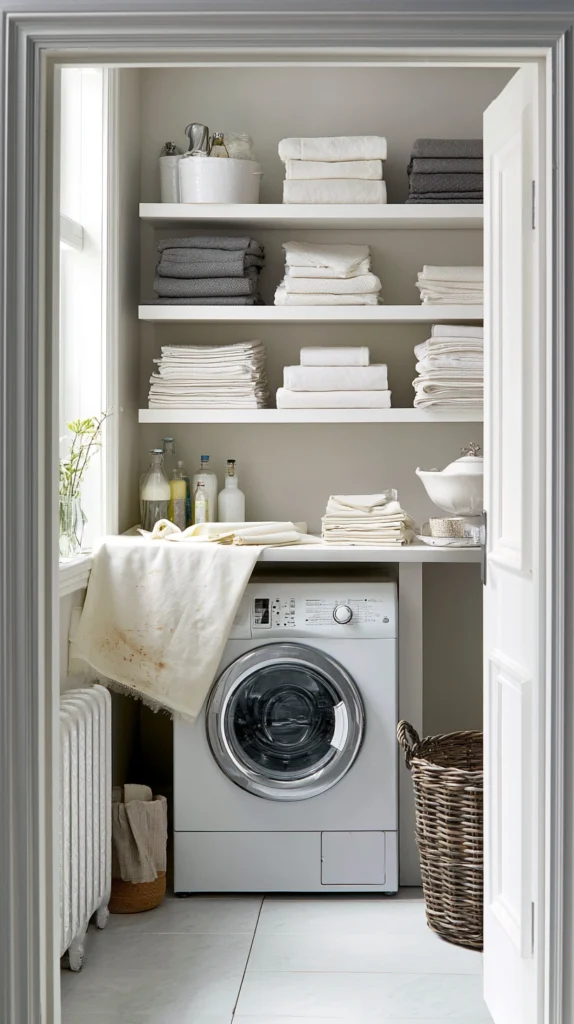
A clear system for handling the large quantity of post-Thanksgiving laundry — the organisation that prevents the pile from sitting for a week.
Why the post-Thanksgiving laundry is different from pre-Thanksgiving:
The pre-Thanksgiving laundry:
- Planned in advance
- Done on a schedule
- Largely stain-free
- No particular urgency
The post-Thanksgiving laundry:
- Large in volume
- Stained (by definition — this is after the meal)
- Immediate treatment needed (stains set with time)
- Done when tired (after Thanksgiving)
The priority order:
Priority one (treat and wash immediately — Friday morning at the latest):
- The tablecloth (the largest and most visible — any stain has been on it since Thursday)
- Cloth napkins (twelve or more, all stained)
- The most heavily soiled kitchen textiles
Priority two (wash Friday):
- Guest towels (if guests are still in residence, these continue cycling)
- Guest bedroom linens (begin when guests depart)
- Remaining kitchen towels and aprons
Priority three (wash over the weekend):
- Guest bedroom linens (complete)
- Personal clothing worn for the holiday
- Standard household laundry (back to normal by Monday)
The stain treatment at the table:
The best time to treat is immediately:
- At the table, with club soda or white wine from the bottle on the table
- The host: a moment of immediate treatment saves thirty minutes of soaking later
- The blot and the first treatment: at the table before the dishes are cleared
The tablecloth inspection before washing:
Before putting the tablecloth in the washer:
- Find every stain
- Treat each one individually
- A stain not found before washing: may set during the wash cycle
- The inspection: five minutes that prevent having to treat and rewash
Cost breakdown:
- Stain treatment products (already assembled from Tip #5): $0 additional
- Total: $0
10. The Overnight Soak System (For the Difficult Stains)
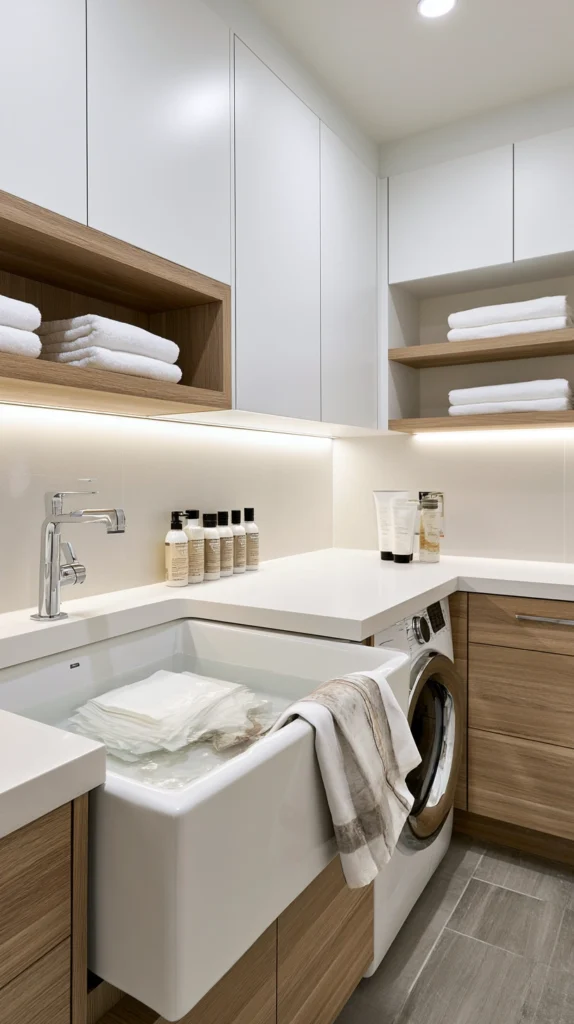
Pre-treating heavily stained items with an overnight soak before washing — the method for the stains that will not respond to standard pre-treatment.
Why overnight soaking is the Thanksgiving-stain solution:
The difficult stains:
- Red wine (the most common)
- Cranberry sauce
- Gravy (if allowed to dry)
- Pumpkin pie filling
- These: the stains that require more than a spray and a standard wash cycle
The overnight soak:
The method:
- Fill a basin or the bathtub with cold water
- Add oxygen-based stain remover (follow the package quantity)
- Submerge the stained item
- Leave for 6–12 hours (overnight is ideal)
- The oxygen: works slowly and steadily through the soak period
- Wash normally in the morning
Cold water:
- Always cold for the soak (hot water sets protein stains — meat drippings, milk-based sauces)
- The cold water soak: the safety choice for unknown stain types
What not to soak:
Delicate fabrics:
- Silk, velvet, embroidered items: do not soak
- Check care labels before any treatment
- Delicates: hand-treat with a gentle stain remover, then hand wash or gentle cycle
Wool:
- Wool does not tolerate long soaks
- Brief treatment and then washing: the alternative
The multiple-item soak:
The napkin batch:
- All twelve napkins: in the tub together
- One large soak: much more efficient than treating individually
- The tub: the holiday-laundry tool that the bathtub never expected to become
Cost breakdown:
- Oxygen-based stain remover (already in the kit from Tip #5): $0 additional
- Total: $0
11. The Linen Storage Upgrade (Organised Before and After)
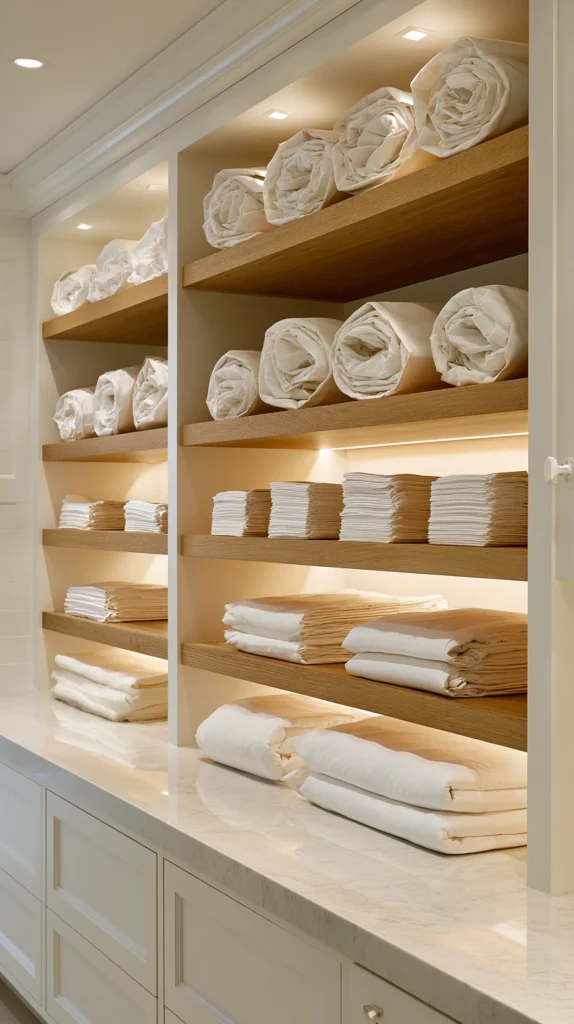
Improving linen storage before Thanksgiving so the linens come out cleanly and return organised — the organisation that saves time both pre- and post-holiday.
Why the linen storage is a Thanksgiving problem:
The typical linen closet:
- Everything stuffed in
- Nothing folded consistently
- The tablecloth for twelve: somewhere in the closet, probably under other things
- The search: part of the Thanksgiving pre-preparation
The organised alternative:
By category and frequency of use:
- Tablecloths: on the most accessible shelf (they are needed annually — not stored at the very back)
- Cloth napkins: folded by set (the everyday set, the formal set)
- Guest linens: by guest room (all Guest Room One items on one shelf)
- Kitchen linens: near the kitchen, not at the back of the linen closet
The folding method:
Tablecloths — the roll method:
- Rolled rather than folded: no fold lines when unrolled
- The roll: stored in a tube of paper towel or in a section of PVC pipe (prevents the roll from collapsing)
- The tablecloth for Thanksgiving: unwrapped and laid perfectly smooth
- No ironing required if rolled (or at least minimal)
Cloth napkins — the flat stack:
- All folded to the same dimensions
- Stacked flat
- The whole set: removed together without unfolding others
The labelling:
Clear labels on each shelf:
- “Formal tablecloths”
- “Guest Room One”
- “Everyday napkins”
- The label: eliminates the search
The post-Thanksgiving replacement:
Returning items to the correct place:
- After washing: returned to the labelled position
- Not stuffed in wherever there is space
- The storage: maintained even after the holiday
- The next holiday: the same organised access
Cost breakdown:
- Shelf dividers or bins: $15–30
- Labels: $5
- Total: $20–35
12. The Dryer Efficiency Maximiser (Getting More Out of the Machine You Have)
Techniques for running the dryer more efficiently during the high-volume Thanksgiving laundry week — the time-saving methods that do not require a new appliance.
Why dryer efficiency matters specifically during Thanksgiving week:
The bottleneck:
- The washer: can be loaded again immediately after emptying
- The dryer: requires 45–60 minutes per load, no shortcut
- The dryer is always the limiting factor when volume is high
- Improving dryer efficiency: the leverage point
The wool dryer balls:
The most effective dryer efficiency tool:
- Three to six wool dryer balls per load
- Separate the items in the drum (more hot air reaches each item)
- Reduce drying time by 25–40%
- Reusable for hundreds of loads (no ongoing cost)
- No fragrance (synthetic fragrance in dryer sheets: unnecessary in the kitchen laundry context)
The load size management:
Under-loading is as inefficient as over-loading:
- An under-loaded dryer: the items tumble but are not separated by other items
- The clothes pile together, dry slower
- A properly loaded dryer: enough items that the ball and tumble action works
Over-loading:
- A packed dryer: the air cannot circulate
- Drying times increase dramatically
- The outer items dry, the centre stays damp
- The result: rewashing required
The correct load:
- The dryer no more than two-thirds full
- The items tumbling freely
- The dryer balls: able to move between items
Cleaning the lint trap:
Before every Thanksgiving-week load:
- The lint trap cleaned: airflow maintained
- A clogged lint trap: extends drying time by 30% or more
- The safety benefit: also significant (lint is a fire hazard)
- 30 seconds per load: the cleaning time
The damp-dry strategy:
For items that need pressing:
- Remove from the dryer while still slightly damp
- The moisture: makes pressing significantly easier
- The item goes from dryer to ironing board
- The pressing station already set up (Tip #4): the flow maintained
Cost breakdown:
- Wool dryer balls (set of 6): $12–18
- Total: $12–18
13. The Recovery Day System (Getting Back to Normal)
A plan for getting the laundry room back to its standard functioning state by the following Monday — the post-Thanksgiving recovery that closes the holiday chapter.
Why the recovery plan matters:
The Monday reality:
- Thanksgiving was Thursday
- Guests left Saturday
- Sunday: the post-holiday slump
- Monday: life resumes — school, work, the ordinary demands
- The laundry room on Monday: either functional or still buried under the holiday pile
The recovery day (Sunday):
The priority list for Sunday laundry:
- Guest bedroom linens (final wash and return to storage)
- Any remaining stained items (last chance for the soak treatment)
- Thanksgiving-specific textiles (tablecloths returned to storage — clean)
- Standard household laundry: started so it is not waiting on Monday
The return to storage:
Tablecloths:
- Washed, pressed, rolled (the roll method from Tip #11)
- Returned to the labelled shelf
- Notes added for next year (if there were any stains that needed specific treatment — a post-it on the tablecloth’s shelf: what to treat and how)
Guest linens:
- Washed and dried
- Returned to the guest room storage
- The guest room: reset and ready (for the next guest, or simply returned to normal)
Kitchen linens:
- The Thanksgiving supply: returned to normal stock
- The additional kitchen towels: folded and in the drawer
- The aprons: washed and hung
The laundry room itself:
The reset:
- All sorting bins emptied and returned to storage
- The ironing board: folded away
- The surfaces: cleared
- The stain treatment kit: restocked (replace anything used)
Monday morning:
- The laundry room: at its ordinary level
- The pile: gone
- The room: capable of handling the ordinary week
The note for next year:
The most useful Thanksgiving laundry investment:
- A note in the kitchen or linen closet: what stains required special treatment
- Which items needed replacing
- What worked and what did not
- The note: the gift to next year’s pre-Thanksgiving preparation
Cost breakdown:
- Time to reset: 2–3 hours on Sunday
- Total: $0
The Complete Thanksgiving Laundry Timeline
Assembled from all 13 tips:
Ten days before (two Saturdays before Thanksgiving):
- Order or purchase any needed supplies (stain remover, dryer balls, additional towels)
One week before (Saturday):
- Linen audit (Tip #1): 45 minutes
- Create the laundry schedule (Tip #2): 15 minutes
- Set up sorting bins (Tip #3)
- First load: formal tablecloths and napkins (Tip #7)
- Set up pressing station (Tip #4)
Sunday:
- Guest bedroom linens
- Press tablecloths and napkins from Saturday’s wash
- Guest towels
Monday:
- Any stained items that need re-treating
- Dress clothes
Tuesday:
- Clean apron and kitchen towel supply ready (Tip #8)
- Any remaining prep items
Wednesday:
- Emergency washing only
- Dryer clear by end of day
- Table set with the pressed tablecloth and napkins (already done)
- Stain kit in position (Tip #5)
Thursday (Thanksgiving Day):
- Kitchen textile rotation through the cooking day (Tip #8)
- Immediate stain treatment at the table (Tip #5)
Friday:
- Priority one washing: tablecloth, napkins (with stain pre-treatment)
- Guest towel rotation continues
- Guest bedroom linens begin if guests are departing
Saturday–Sunday:
- Remaining post-holiday laundry
- Recovery day (Tip #13): Sunday
Monday:
- Laundry room: normal
- Standard week resumed
The Principle Behind All 13 Tips
The Thanksgiving laundry is a project, not a task.
A task: done when the item needs washing. A project: planned, scheduled, equipped, and executed with a system.
The household that treats Thanksgiving laundry as a task: discovers Wednesday at 10pm that the tablecloth is wrinkled.
The household that treats it as a project: has the tablecloth pressed, folded, and on the table by Tuesday, and is managing kitchen towel rotation with clean towels available through Thursday.
The laundry room is not the problem. The planning is either there or it is not. With 13 practical steps and a schedule, it is there — and the room handles what is coming instead of adding to the holiday’s considerable demands.
Getting Started This Week
The one action that has the most impact before anything else:
Do the linen audit (Tip #1).
Pull out the tablecloth. Check it for last year’s stains. Check the napkins. Check the guest towels. Know what needs washing before the week makes everything urgent.
Twenty minutes today. The laundry room’s most important Thanksgiving task is the one that prevents all the urgent ones.