15 Fire Pit Garden Design Ideas for Autumn
The fire pit changed how I use the garden more than anything else I have ever added to it. Not the pergola. Not the raised beds. Not the string lights or the paving or the outdoor kitchen.
The fire pit.
Because the fire pit is the only addition that changed the season. Before it: the garden from May to August. After it: the garden from March to November. Eight months of a space that previously offered five. Three additional months from one addition.
The fire is not a decorating choice. It is a calendar decision. Every hour the fire burns extends the outdoor season that the garden was designed for. Every evening gathered around it is an evening that would otherwise have been inside.
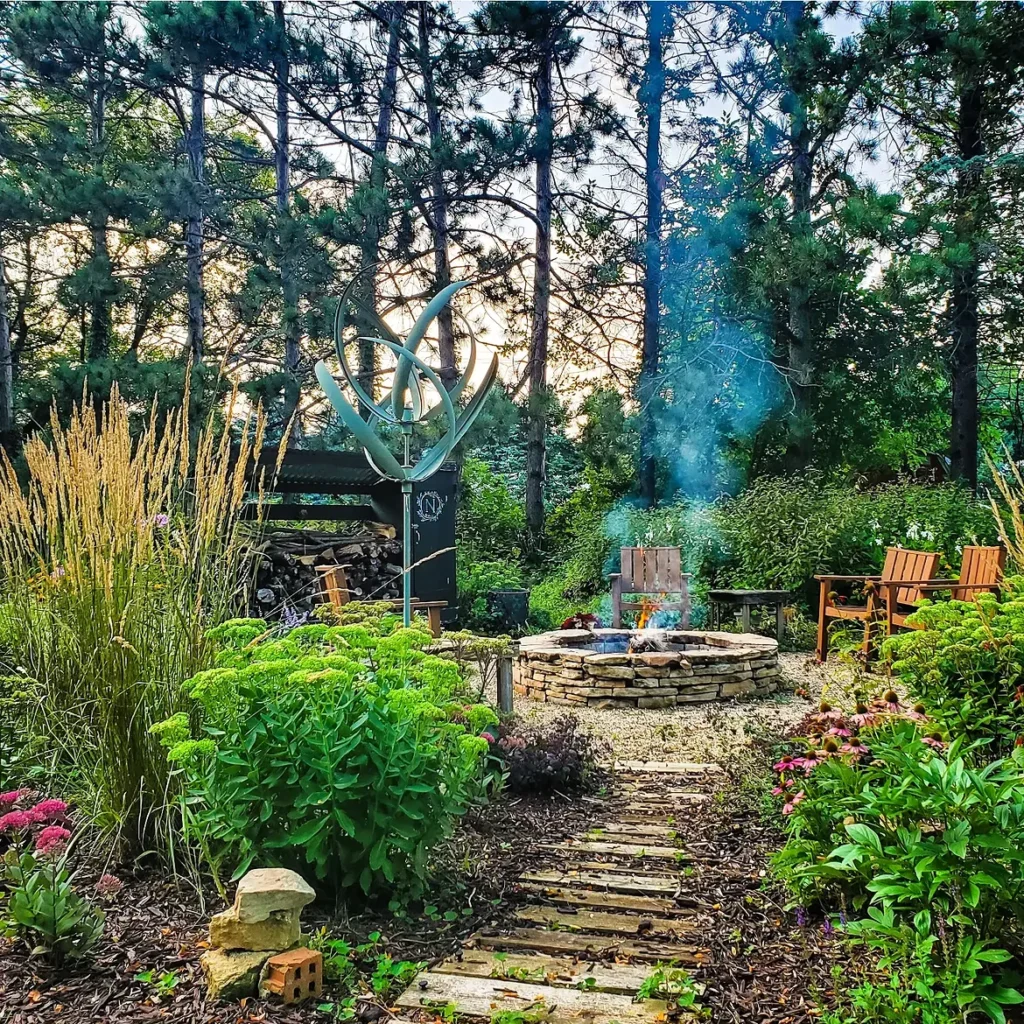
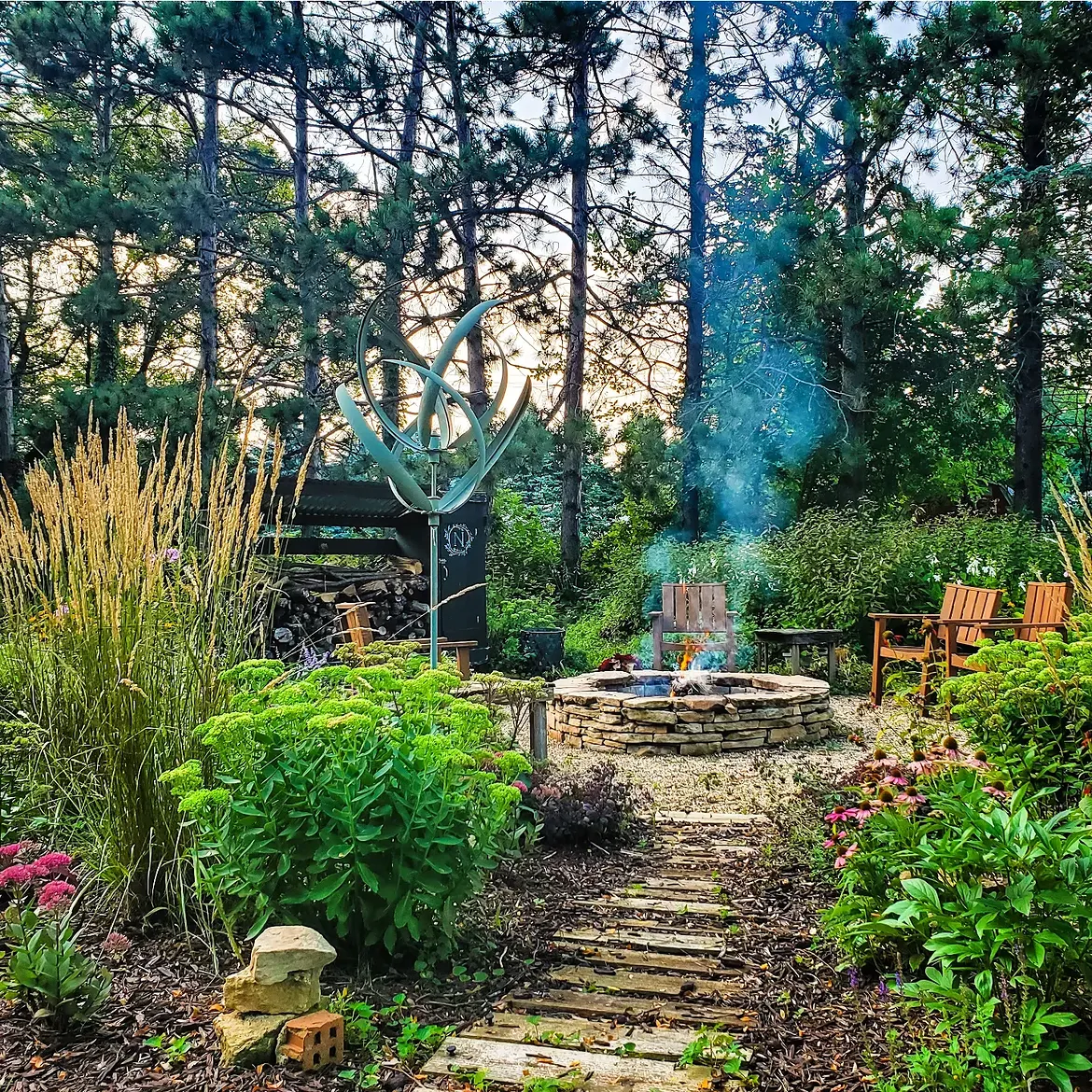
The garden that has a fire: used differently. Used more. The fire: the engine of outdoor living in autumn.
Here are 15 design ideas — from the simplest DIY setup to the most elaborate designed fire garden — built on that understanding.
Why Fire Changes the Autumn Garden Specifically
The temperature equation:
Without fire:
- October evening at 50°F (10°C)
- No heat source: uncomfortable outdoors after 30 minutes
- The garden: closes down when it gets cold
With fire:
- Same October evening
- Fire radiating at 3.5 feet: the ambient temperature around the circle rises by 15–20°F
- October evening: comfortable until midnight
- The fire: the most effective season-extension technology available
The social physics of fire:
What fire does without being asked:
- Everyone faces it
- Conversations deepen
- Phones disappear
- Nobody suggests going inside
- The fire manages the gathering without any management from the host
The Palaeolithic explanation:
- Humans have sat around fires for 300,000 years
- The behavioural response: deeply embedded
- The fire circle: the oldest social institution available
- The garden that recreates it: touching something that precedes memory
The lighting contribution:
- Autumn dark at 5–6pm
- The fire: the primary light source for the October evening
- The amber of firelight at 1800K: the warmest available light source
- Everything in the circle: transformed by it
The Five Fire Types
Before choosing any design:
Wood fire pit:
- The most atmospheric (smell, sound, crackling)
- The ritual of building, lighting, and tending
- Requires dry wood management
- The labour: part of what makes it special
- The most elemental choice
Propane fire table:
- Instant on and off
- Doubles as a coffee table when unlit
- No ash management
- The most practical for frequent use
- Smokeless (no smell on clothes — can be a benefit or a loss depending on perspective)
Bioethanol fire bowl:
- Smokeless
- No chimney or flue needed
- Fuel poured into the burner
- Clean and contemporary
- The most design-flexible (can be placed anywhere)
Chiminea:
- The most wind-resistant (the opening faces the seating, not the wind)
- Clay or cast iron
- Compact footprint
- The most traditional-looking
- Clay: beautiful but must be protected from hard frost
Gel fuel fire bowl:
- Portable
- Instant
- Lowest heat output
- The entry-level version
- For occasional rather than regular use
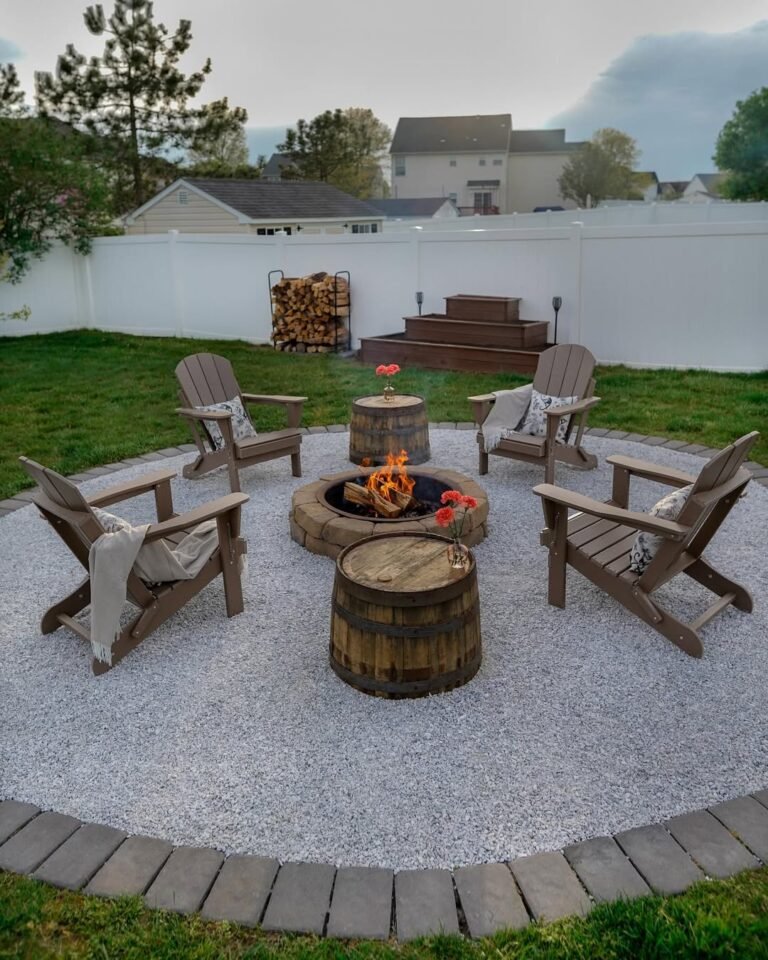
1. The Simple Stone Ring (The Most Ancient Design)
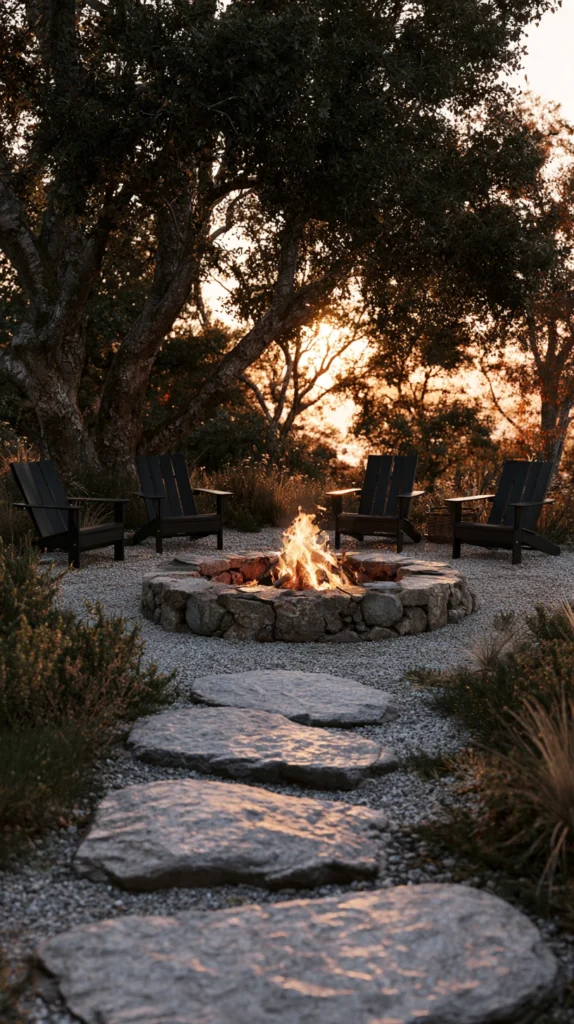
A circle of large stones surrounding a wood fire — the oldest fire design available and the most appropriate for a naturalistic garden.
Why the stone ring is often the best choice:
The authenticity:
- The stone ring: the original fire design
- No manufactured fire bowl, no purchased pit
- Stones gathered from the garden or landscape
- The result: a fire feature that looks as if it has always been there
The DIY:
- Gather or purchase large stones (minimum 8 inches diameter)
- Arrange in a circle (approximately 3 feet diameter)
- Clear vegetation from within the circle (down to the mineral soil)
- No other construction required
The stone selection:
Not all stones are suitable:
- Porous stones (limestone, sandstone, some river stones): can trap water which turns to steam and causes the stone to crack in heat
- Granite and fieldstone: generally heat-safe
- Dense, non-porous stones: the correct choice
- Test: tap the stone — a clear ring suggests density; a dull thud suggests porosity
The raised ring:
For a more permanent installation:
- The stones stacked two or three high
- A deeper bowl effect
- More containment for ash
- More defined as a garden feature
What to place the stone ring on:
Compacted mineral soil or gravel:
- Not grass (will burn and die)
- Not wood chips (fire hazard)
- A prepared area of compacted gravel or stone dust: ideal
- The circle of gravel surrounding the stone ring: extends the non-combustible surface
Cost breakdown:
- Stones (collected from the garden or local landscape): $0
- Or: purchased fieldstone: $30–60
- Gravel for the base area: $20–40
- Total: $0–100
The stone ring in the garden: the most-visited feature in a garden that has had significant investment in designed elements. The most primitive: the most compelling.
Stone Ring Safety
The non-negotiables:
- No fire within 10 feet of any structure, fence, or tree canopy
- The ember travel distance: further than most people estimate on windy days
- A bucket of water or sand: always within reach of the fire
- Extinguish completely before going inside: not mostly extinguished — completely
2. The Cast Iron Fire Bowl (The Portable Classic)
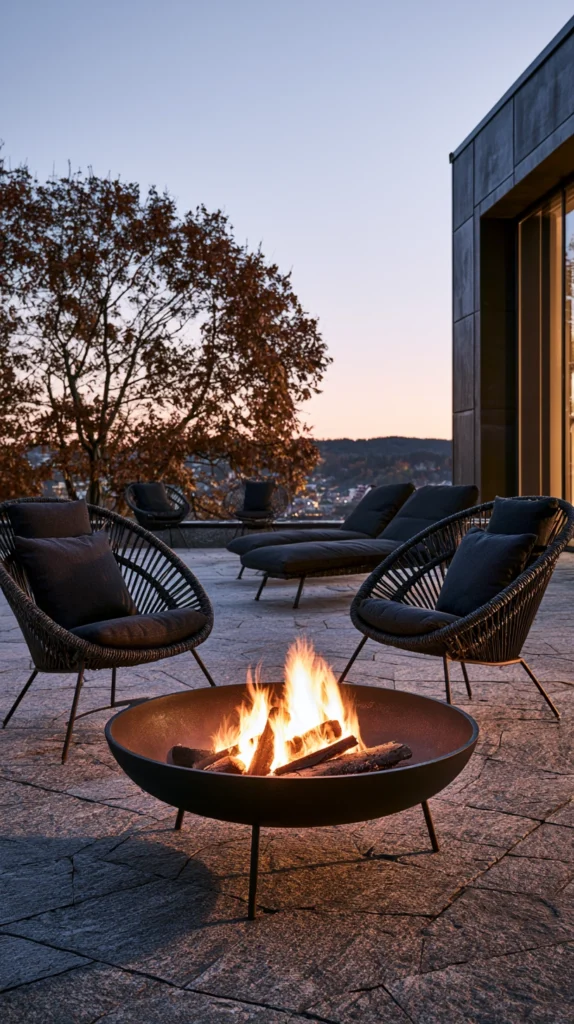
A cast iron fire bowl on legs, positioned for optimal seating — the classic fire feature that offers the wood fire experience with the flexibility of relocation.
Why cast iron is the preferred material:
The heat retention:
- Cast iron: absorbs heat and releases it slowly
- A cast iron bowl that has been burning for an hour: radiating heat from the metal itself, not just from the fire
- The warmth: continues after the fire dims
- The heat retention: extends the comfortable outdoor period beyond the active fire
The patina:
- Cast iron: rusts to a warm red-brown patina with outdoor exposure
- The patina: not a problem — an aesthetic quality
- Season with oil (similar to a cast iron pan) to slow and control the rusting
- The aged cast iron: the most beautiful version of this material
The legs:
- The bowl elevated on legs: air circulates beneath
- The fire: draws air from below (improves combustion)
- The ground beneath: protected from heat
- The leg height: 12–18 inches (standard)
The size:
The size-to-seating relationship:
- Small bowl (18 inches): intimate for two
- Medium bowl (24 inches): adequate for four
- Large bowl (30 inches+): adequate for six to eight
- The seating: 3.5 feet from the edge of the bowl (not from the centre)
The autumn-specific advantage:
The portable fire:
- On a night when the wind is from an unusual direction: the bowl can be repositioned
- The seating rearranged: everyone stays on the sheltered side
- The bowl: facing the opening toward the seating
- The flexibility: valuable in the variable autumn wind conditions
Cost breakdown:
- Cast iron fire bowl (medium, 24 inches): $80–150
- Total: $80–150
3. The Built-In Stone Fire Pit (The Permanent Investment)
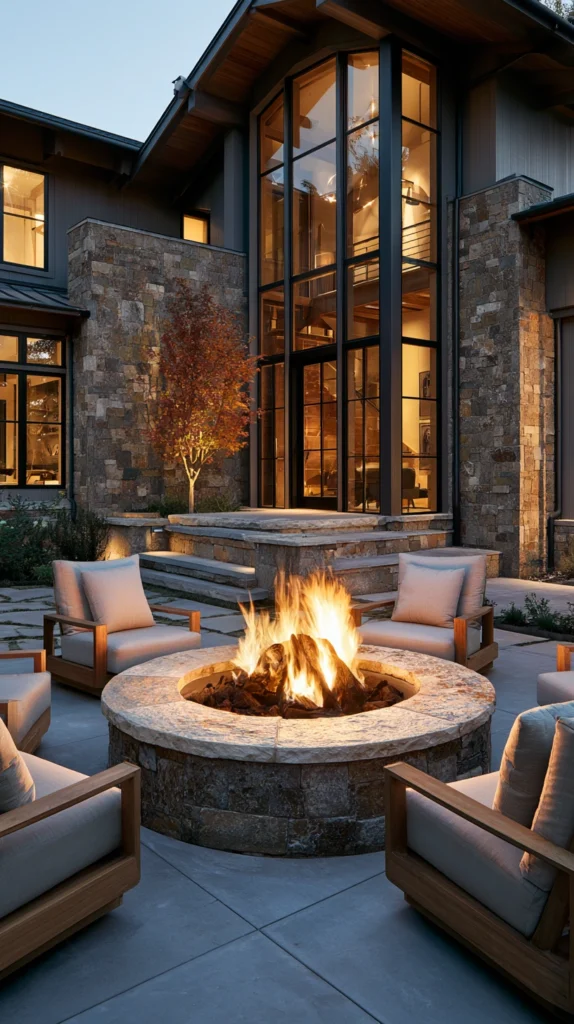
A built-in fire pit constructed from stone, brick, or concrete block, set into the ground or built slightly raised — the permanent garden feature that defines the fire circle forever.
Why the permanent fire pit changes the garden:
The permanence signal:
- A built-in fire pit: the garden organised around it
- Not an object placed in the garden: a feature the garden was designed for
- The guests: arriving at a fire that belongs here
- The belonging: the signal of intention and investment
The design:
Level with the ground (sunken):
- The bowl set into the earth: the fire at ground level
- The seating: around the fire at a lower eye level (the fire most visible, most immersive)
- The most dramatic fire experience
- The most involved construction (excavation required)
Slightly raised (12–18 inches):
- The standard built-in fire pit height
- The fire: at a comfortable viewing level from seated position
- No excavation required: the walls built up from grade
- The most accessible construction
The construction materials:
Dry-stack stone:
- Fieldstone or reclaimed stone
- No mortar
- The most naturalistic appearance
- The stone adjustable if needed
- The gaps between stones: part of the character
Mortared brick:
- More formal
- The circle: precise
- More permanent than dry-stack
- The material: specific to the style of the garden (suits cottage and traditional gardens)
Concrete block (lined with fire brick):
- The most structurally robust
- Faced with stone or brick for appearance
- The fire brick lining: protects the structural block from heat cracking
- The most DIY-accessible permanent construction
The fire pit diameter:
- 36 inches interior: minimum functional diameter
- 42 inches: comfortable
- 48 inches: generous — allows a good fire with room for ash management
The surrounding:
The prepared area:
- A non-combustible surface extending 2 feet from the pit edge in all directions
- Stone, concrete, or compacted gravel
- The seating: outside this non-combustible zone
- The transition from fire zone to seating: the circle layout
Cost breakdown:
- DIY construction with reclaimed stone: $80–150 materials
- Professional built-in fire pit: $500–1,500
- Total: $80–1,500 depending on approach
4. The Fire Table Design (The Multipurpose Centre)
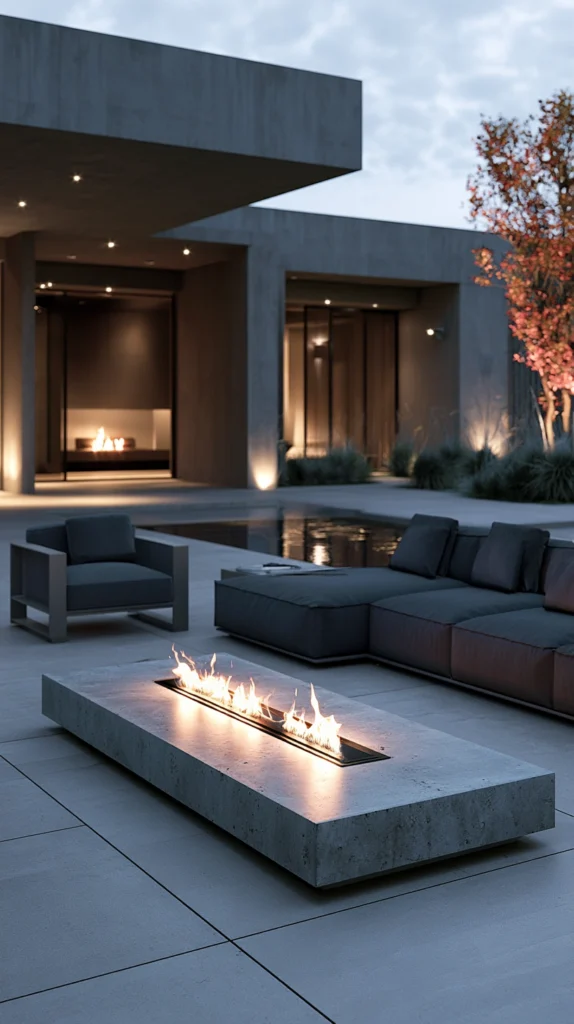
A propane or bioethanol fire table at the centre of the seating — the fire feature that is also a coffee table when not burning.
Why the fire table suits the designed garden:
The dual function:
- Unlit: a coffee table
- Lit: the fire feature
- The same piece of furniture: doing two things
- In a small garden where every element must work hard: the fire table earns its position
The contemporary aesthetic:
The fire table look:
- Clean-lined, architectural
- No rustic quality (that is the stone ring or cast iron bowl)
- Suits contemporary or modern garden design
- The fire: as an architectural element, not a primitive one
The materials:
Concrete tabletop:
- The most contemporary and most architectural
- Ages to a warm grey patina
- Can be stained (warm ochre or terracotta for the autumn palette)
- Heavy (stays in position)
Slate or stone tabletop:
- Similar aesthetic to concrete
- More expensive
- The natural variation in the stone: the biophilic quality within the contemporary design
Steel frame:
- Black powder-coated
- The frame: part of the aesthetic
- Clean and permanent
The flame:
- Within a glass media bed (glass beads or fire glass)
- The glass: the contemporary fire fire medium
- Lava rocks: the more naturalistic option within a fire table
- The flame and the media: the fire art within the furniture
The autumn use:
The warming table:
- Hands extended over the fire: immediate warmth
- The intimacy: reaching toward the warmth together
- The social gesture: hands over the fire as a social act
- The low profile of the fire table: makes this natural
Cost breakdown:
- Concrete fire table with propane burner: $250–500
- Or steel fire table: $200–400
- Total: $200–500
5. The Chiminea Corner (The Wind-Protected Fire)
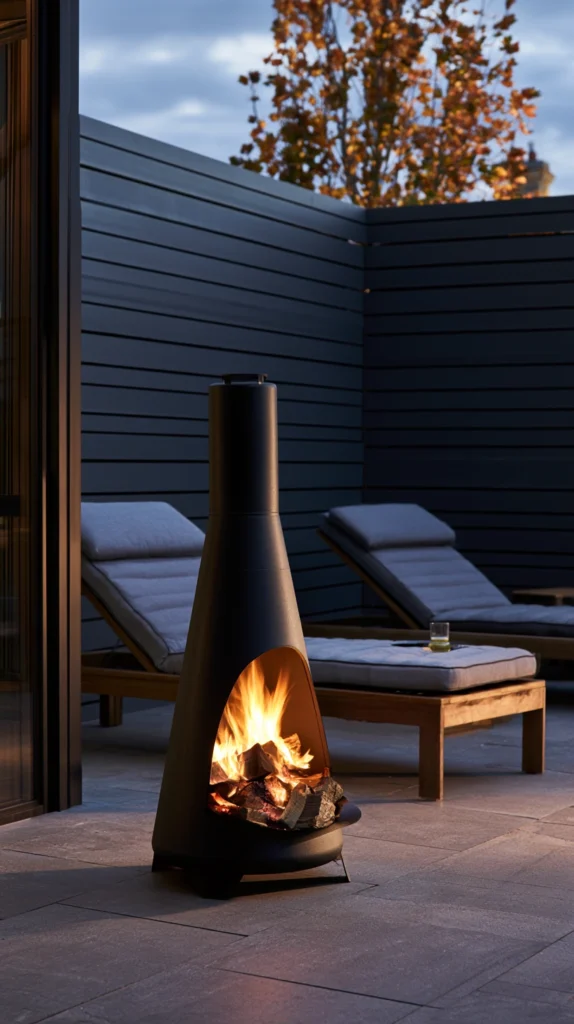
A clay or cast iron chiminea positioned in the most sheltered corner available — the fire solution for exposed gardens.
Why the chiminea suits windy sites:
The aerodynamics:
- The chiminea: the fire enclosed on all sides except the front opening
- Wind from any direction other than the opening: does not affect the fire
- The open fire pit: significantly affected by wind (erratic flames, smoke driven into the seating area)
- The chiminea in an exposed autumn garden: the practical choice
The chimney effect:
- The narrow neck of the chiminea: creates a chimney draw
- The fire: burns hotter and cleaner
- The smoke: drawn upward through the neck and out of the seating area
- The smokeless fire experience: achieved through the chimney, not the fuel
The clay chiminea:
The aesthetic:
- The traditional form (Mexican in origin)
- The pot-bellied form on three legs
- Warm terracotta clay
- The most traditional looking option
The limitation:
- Clay: cracks if soaked with water and then frozen
- In cold climates: must be covered or stored inside for the winter
- The clay chiminea: a three-season feature (autumn, spring, summer)
- Not a winter feature unless protected
The cast iron chiminea:
- The cold-climate version
- More durable in frost
- Heavier (not as portable)
- The patina: developing over time as with all cast iron
The corner positioning:
Two walls or a hedge on two sides:
- The corner: naturally sheltered
- The chiminea opening facing the seating (not facing the wall)
- The chiminea: the functional reason to use this corner
- The corner: previously unused, now the fire zone
Cost breakdown:
- Clay chiminea (medium): $60–120
- Cast iron chiminea: $100–200
- Total: $60–200
6. The Fire and Water Design (The Elemental Pairing)
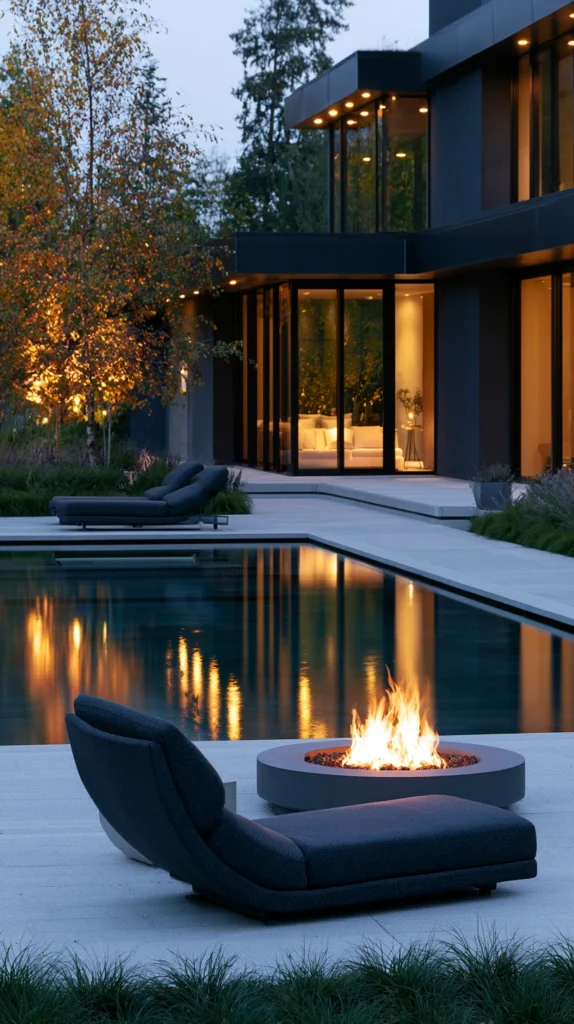
A fire feature positioned in relationship to a water feature — the two most fundamental natural elements in one garden composition.
Why fire and water together are more than either alone:
The elemental contrast:
- Fire: hot, volatile, active, consuming
- Water: cool, still, passive, reflecting
- The opposition: the most fundamental in nature
- Together: the whole range of elemental experience
The practical combination:
The pond reflecting the fire:
- A fire pit positioned near a pond or water feature
- The fire: reflected in the still water
- From the seating: two fires — the real one and its reflection
- The reflection: the fire doubled, the beauty amplified
The water feature nearby:
- A small fountain or water basin near the fire circle
- The sound of water against the sound of crackling fire
- Two natural sounds: the acoustic composition
- The fire: the primary warmth source. The water: the acoustic companion.
The design:
The distance:
- The water feature: close enough to see the reflection
- Far enough that the heat does not evaporate the water or stress nearby plants
- Approximately 6–8 feet: the functional relationship
- The fire and the water: in sight of each other from the seating
The reflection:
- For the best reflection: the fire facing the water (not side-on)
- The seating: positioned to see both the fire and the reflection simultaneously
- The view: the fire before you, its reflection in the water before it
The steam:
- In cool autumn air: the fire creates heat haze
- Near water: steam can form at the water surface
- The atmospheric combination: the fire and the steam
Cost breakdown:
- Fire feature (existing): no additional cost
- Adding a small water feature: $80–200
- Or positioning the fire near an existing water feature: $0
- Total: $0–200
7. The Low Seat Wall Fire Circle (The Built-In Seating Ring)
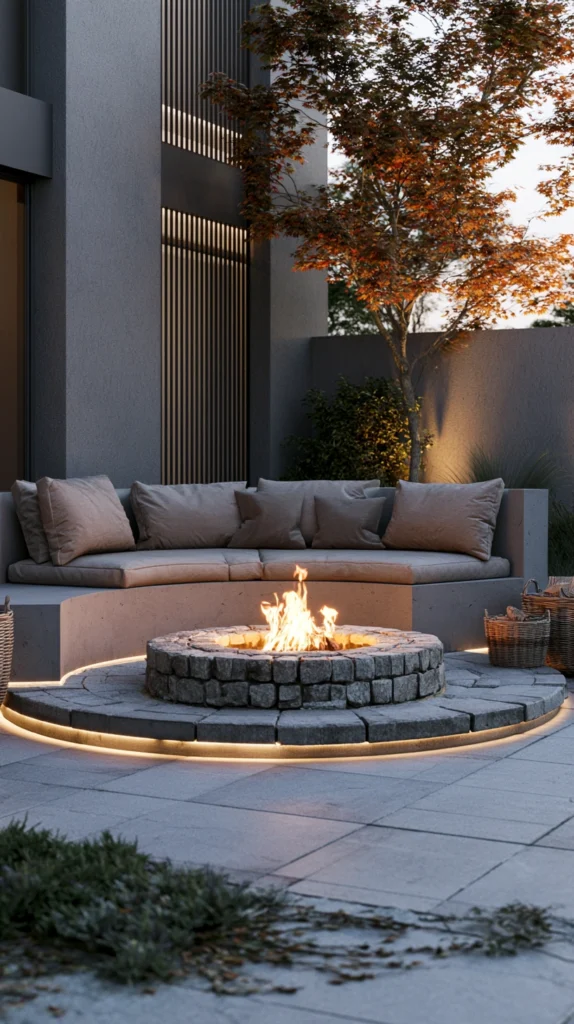
A circular low wall of stone or brick surrounding the fire pit, used as the seating — the most integrated fire circle design.
Why the built-in seating wall is the superior fire circle:
The integration:
- The seating and the fire: one designed element
- Not furniture placed around a fire: the fire and the seating designed together
- The integration: the quality of a commissioned space versus a furnished space
The wall as the seating:
- A low wall (18 inches high, 12 inches wide): the bench
- Cushioned for comfort (cushions stored in a nearby box when not in use)
- The cushion: the seasonal signal (different cushion colours for different seasons)
- The wall: permanent. The cushions: the seasonal decoration.
The construction:
Stone seat wall:
- Dry-stack or mortared fieldstone
- Flat capstones: the seating surface
- The capstone: 12 inches wide (comfortable as a bench)
- The capstone in natural stone: warm in the sun (retains heat) — sits warmly even before the fire is lit
The circle diameter:
The seating and the fire together:
- Fire pit: 36–42 inch interior diameter
- Wall distance from fire edge: 3.5 to 4 feet (the standard fire circle distance)
- The exterior of the wall: defines the total circle diameter
- A typical complete fire circle with seat wall: 12–15 feet total diameter
The width of the seat wall:
- 12 inches: minimum comfortable seating width
- 16 inches: allows leaning back (the cushion provides the backrest)
- 18 inches: a comfortable bench with a cushion
The planting at the back of the wall:
Seating that faces the fire, planting behind:
- Grasses and structural plants behind the wall
- The planting: the backdrop to the fire circle
- In autumn: the copper grasses and the warm light of the fire
- The circular planting: the frame of the fire experience
Cost breakdown:
- Stone and mortar (DIY built-in fire circle with seat wall): $300–600
- Professional construction: $1,000–2,500
- Cushions for the seat wall: $120–200
- Total: $420–2,700
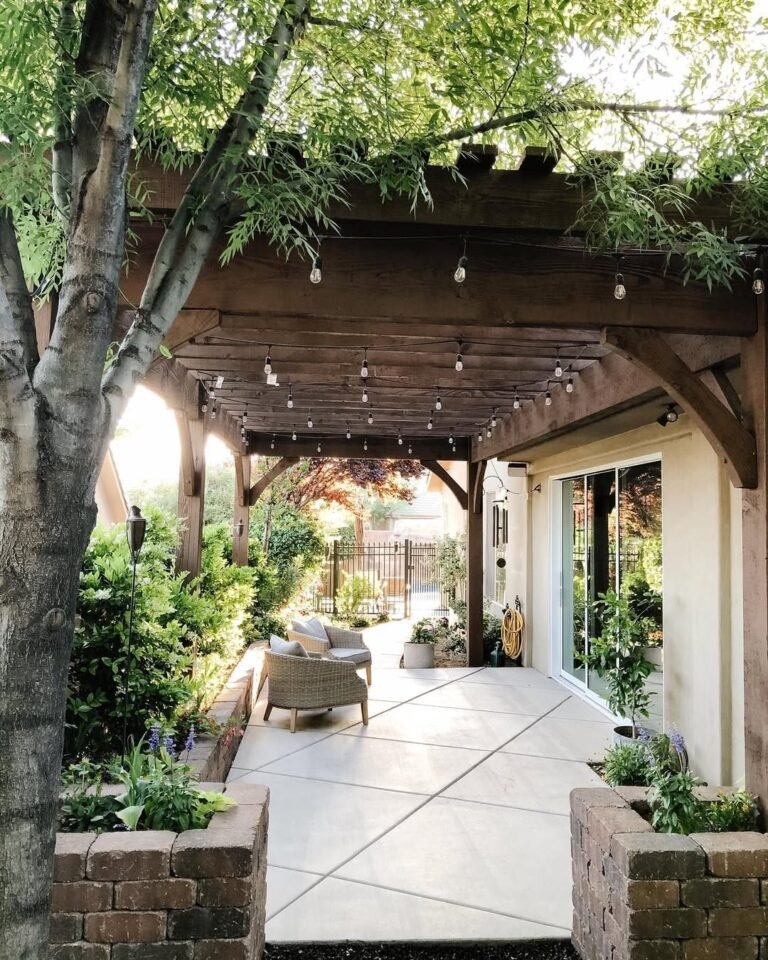
8. The Pergola Fire Garden (The Covered Autumn Room)
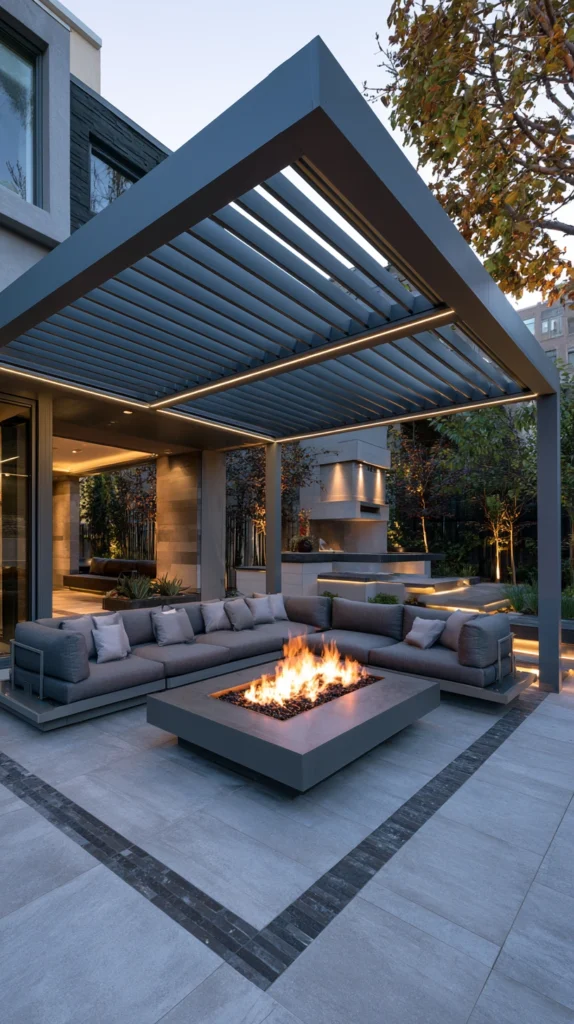
A fire pit or fire table positioned beneath a pergola with an overhead heater as supplementary warmth — the all-weather fire garden.
Why a covered fire space extends the season further than an open one:
The rain problem:
- The uncovered fire: extinguished by rain
- The covered fire: burning through October rain
- The pergola: the season extension beyond the fire itself
- The combination of fire and cover: the outdoor space that functions in all autumn conditions
The fire type for a covered space:
Critical: the fuel choice:
- Wood fire under a pergola: smoke accumulates
- This is both unpleasant and potentially hazardous
- Bioethanol or propane under a covered pergola: smokeless — the correct choice
- The wood fire: for open or semi-open positions only
The pergola design for fire:
The ventilation:
- Even smokeless fires: the space above the fire is warmer
- A pergola with gaps in the roof structure: adequate ventilation for bioethanol or propane
- Solid roof: use a propane fire table with a low burner (not a tall flame) and ensure the pergola has good side ventilation
- The vent above: the safety of any covered fire space
The overhead heater addition:
As supplement to the fire:
- The fire table: the centre and the gathering point
- The overhead infrared heater: the ambient warmth throughout the pergola
- The two together: the fire for the social experience, the heater for the temperature management
- The covered fire garden: genuinely comfortable in October and into November
The design:
The fire table at centre:
- The pergola: defines the covered room
- The fire table: at the centre of that room
- Seating: around the fire table
- The overhead heater: mounted from the pergola beam above the seating, not above the fire
Cost breakdown:
- Pergola (existing or new): $350–600
- Propane or bioethanol fire table: $200–400
- Overhead infrared heater: $150–250
- Total: $700–1,250 (assuming existing pergola)
9. The Scandinavian Hygge Fire Circle (The Nordic Simplicity)
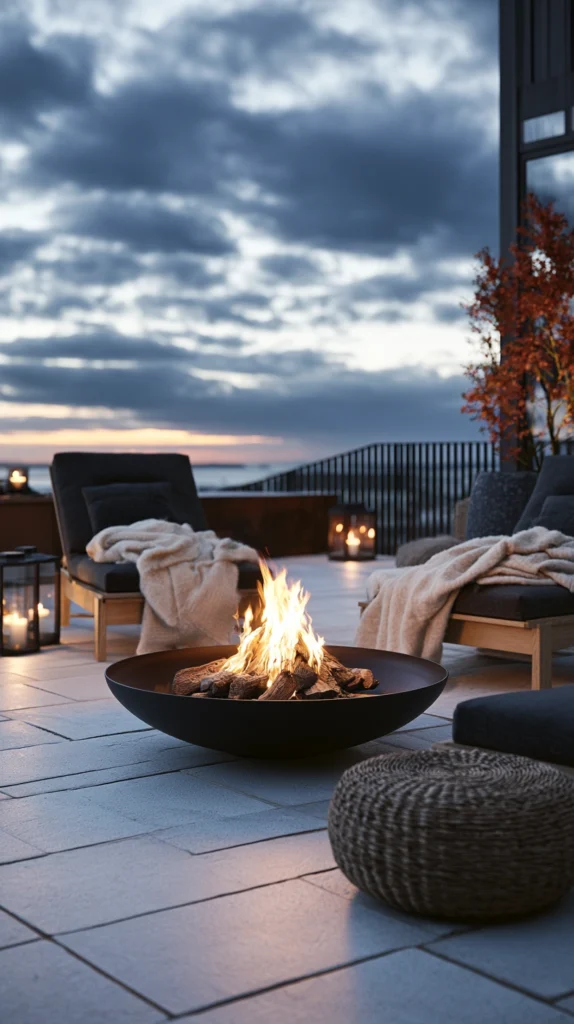
A simple, low, design-forward fire arrangement inspired by Nordic outdoor culture — the fire circle that prioritises warmth and togetherness over complexity.
Why the Scandinavian approach to outdoor fire is different:
The hygge concept:
- Hygge (Danish-Norwegian): the quality of cosiness, convivial warmth, comfortable togetherness
- Not a decorative style: a philosophy of wellbeing
- The fire: central to hygge
- The fire circle designed for hygge: comfortable, simple, warm, complete
The simplicity:
- No complexity of design
- The best chairs available, arranged around the best fire available
- The drinks accessible
- The blankets present
- The simplicity: the intention
The Nordic palette:
For the fire circle:
- Natural materials (birch, stone, pine)
- The colour palette: the grey of birch bark, the warm amber of pine, the cool green of spruce
- Nothing bright: the hygge palette is muted and warm
The birch fire:
- Birch wood: the most beautiful firewood for an autumn garden
- Burns hot and clean
- The white bark: beautiful even as firewood
- The smell: specific and distinctive
The seating:
The deep and warm:
- Heavy wool blankets
- Low chairs with high backs
- The seating: designed for staying
- The cup holder: within reach
The candles beside the fire:
- The Nordic outdoor tradition: candles beside the fire, not instead of it
- Multiple hurricane candles on a low table beside the seating
- The warm light: at multiple levels (fire, eye level, ground)
- The addition of the candle: the hygge detail
The fire circle as conversation design:
The Nordic understanding:
- The fire: enables conversation rather than competing with it
- No television or music (in the hygge tradition)
- The fire: the entertainment
- The people: the point
Cost breakdown:
- Low, deep chairs (4): $200–320
- Heavy wool blankets (4): $80
- Hurricane candles (5): $25
- Birch firewood (a basket): $15
- Total: $320–440 (assuming a fire feature already exists or using an existing fire bowl)
10. The Fire Pit Garden Room (The Defined Outdoor Space)
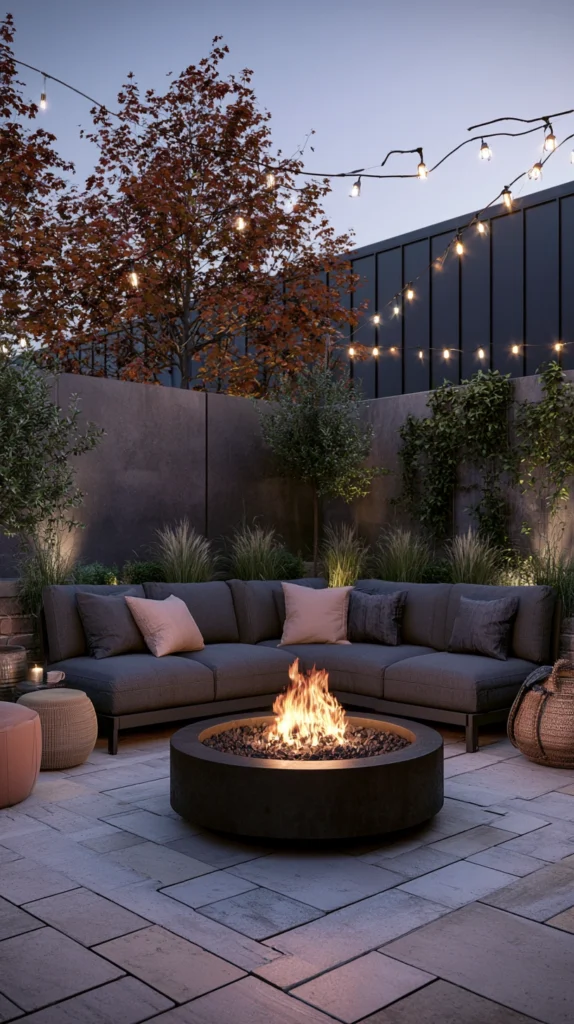
A fire pit at the centre of a designed outdoor room — with defined edges, surfaces, planting, and seating — rather than in an undifferentiated garden space — the difference between a fire feature and a fire garden.
Why the room around the fire matters:
The open fire pit in an undefined garden:
- Chairs pulled up to a fire pit in the middle of the lawn
- The fire: present. The room: absent.
- The experience: a fire in a field rather than a fire in a garden room
The fire garden room:
- The fire: at the centre of a defined, enclosed, designed space
- The space: complete (a floor, edges, planting, lighting, furniture)
- The fire: the element the room was designed for
- The experience: being somewhere, not just standing near something
The room components:
The floor:
- A non-combustible surface around the fire (as required for safety): the design starting point
- This practical requirement: becomes the floor of the room
- Options: stone, gravel, compacted granite, permeable paving
- The floor: defines the room’s extent
The edges:
- Something that marks the transition from the room to the rest of the garden
- Low planted border
- Low stone wall
- A change in surface material
- Or: the seat wall itself (Idea #7)
The overhead element:
- Optional but powerful
- A pergola, a shade sail, or string lights: defines the ceiling
- The ceiling: completes the room
- Without a ceiling: a floor and some furniture. With: a room.
The planting:
At the room’s edges:
- Structural planting (grasses, evergreen shrubs)
- Framing the fire room
- In autumn: the grasses at their peak — the copper and gold of miscanthus and pennisetum against the warm light of the fire
Cost breakdown:
- Surface material for the floor: $150–400
- Low planted border: $80–150
- String lights for the ceiling: $50
- Total: $280–600 (assuming the fire feature exists)
11. The Fire Pit With Autumn Planting Integration (The Garden Grows to the Fire)
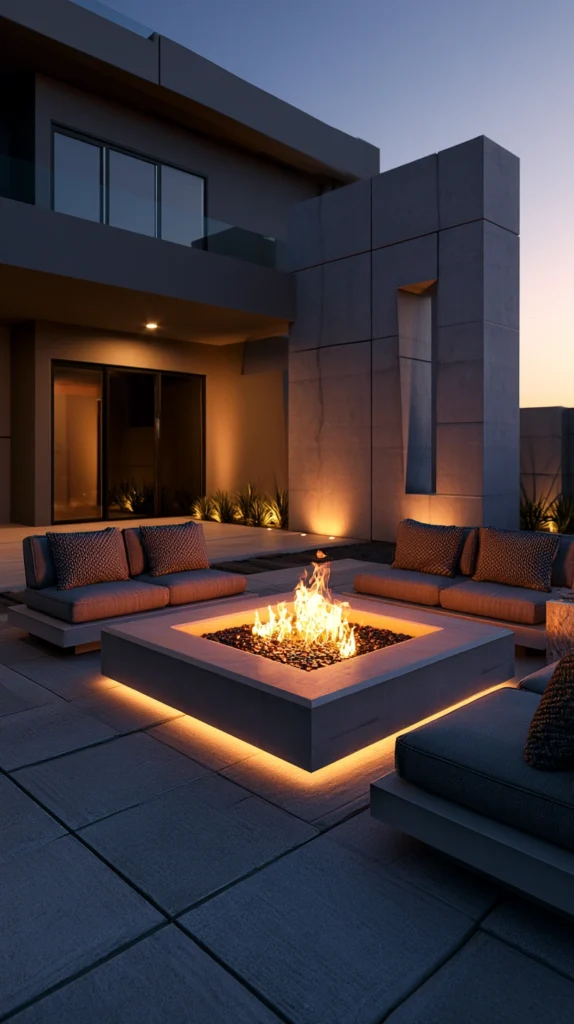
Autumn planting — grasses, mums, ornamental kale, seed heads — arranged immediately around the fire circle — the fire feature that is also a garden display.
Why the planting transforms the fire circle:
The planted fire circle:
- The fire: not a clearing in the garden but surrounded by the garden
- The plants: part of the fire experience
- The grasses: catching the firelight (their seed plumes glow in warm light)
- The kale: the deep purple against the amber flame
The specific plants:
Behind and beside the seating (not in front of the fire):
- Ornamental grasses (miscanthus, pennisetum, Karl Foerster): the planting that works hardest in autumn light
- Their seed plumes catch the fire light — the most beautiful plant-and-fire combination
In containers (flexibility):
- Terracotta pots of autumn plants can be positioned where needed and moved when the fire is lit
- Some plants: too close to the fire is a problem
- Containers: the flexible solution
The distance from the fire:
- Planting within 3 feet of the fire: fire hazard (dry plant material)
- Planting 3–6 feet from the fire: visually present, safely distant
- The design: the planting forms the backdrop to the fire and the seating, not the inner circle
The seasonal rotation:
Autumn fire planting:
- Ornamental grasses: peak in October
- Chrysanthemums: peak September–October
- Ornamental kale: peak October–November (deepens with frost)
- Seed heads (echinacea, rudbeckia): standing through the fire season
Winter transition:
- As the autumn planting finishes
- The structural grasses: still standing through winter
- The fire: continuing
- The planting and the fire: both extending through the transition from autumn to winter
Cost breakdown:
- Three ornamental grasses in containers: $45–65
- Two chrysanthemum pots: $20–30
- Two ornamental kale: $12–16
- Total: $77–111
12. The Moveable Fire Circle (The Flexible Garden)
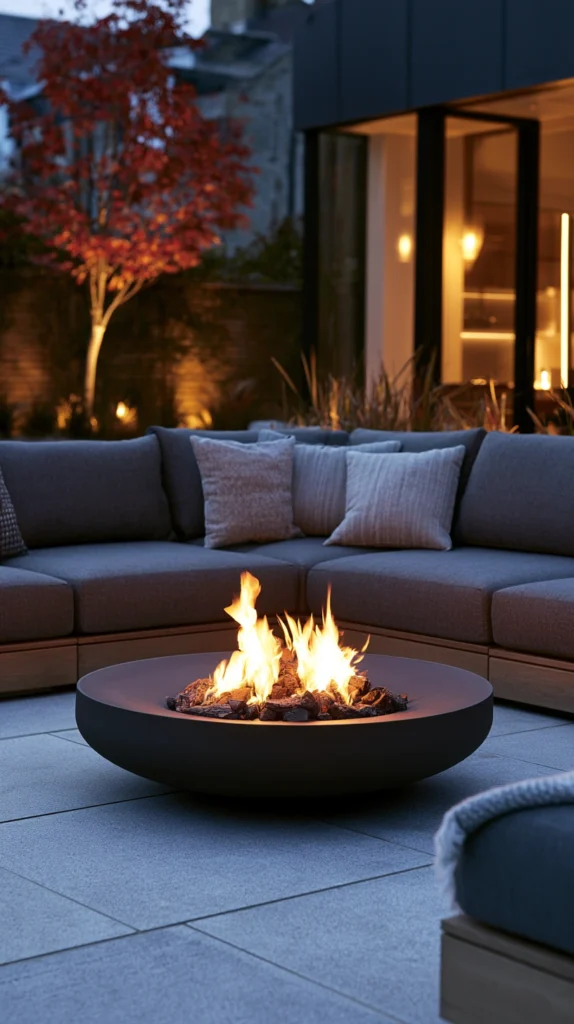
A fire bowl or bioethanol unit that can be repositioned within the garden — the fire design for gardens where permanent placement is not possible or desirable.
Why moveable matters:
The wind problem revisited:
- The permanent fire pit: the seating must adjust to the wind
- The moveable fire bowl: the fire adjusts to the seating
- The distinction: significant in an autumn garden where the wind changes direction
- The flexible fire: placed with its back to the wind, the seating on the sheltered side
The rain shadow:
- A garden with a pergola and an open area: both spaces available
- The moveable fire: under the pergola when it rains, in the open garden when it does not
- The two fire positions: two different experiences from one fire
The moveable options:
A lightweight steel fire bowl with handles:
- Can be carried by two people
- Not moved when hot (safety)
- Positioned at the start of the evening, left in place
- Available in various sizes
A bioethanol floor-standing burner:
- Often the most design-forward option
- Completely smokeless (suitable anywhere)
- No ash management
- The cleanest fire experience
- Moved as furniture is moved
The bioethanol specifically:
The most versatile fire:
- No chimney, no flue, no fixed gas connection
- Can be used indoors (if well-ventilated) as well as outdoors
- The fire: taken inside in winter if desired
- The outdoor fire bowl that extends further into winter than any other
Cost breakdown:
- Lightweight steel fire bowl with handles: $60–120
- Or bioethanol floor-standing burner: $80–200
- Total: $60–200
13. The Log Store Feature (Function as Beauty)
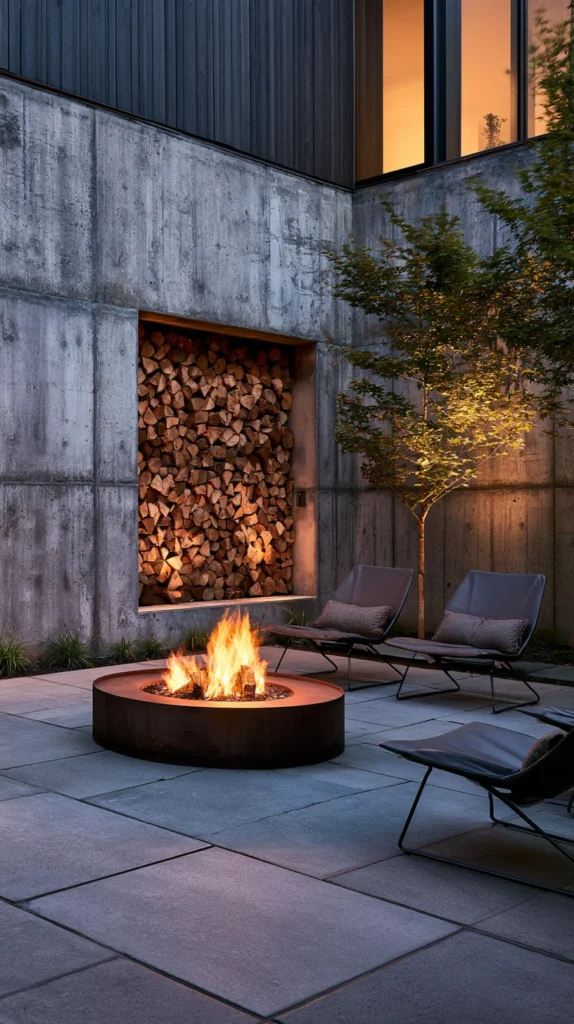
A designed log store that is visible in and integral to the fire garden — the storage that is also part of the display.
Why the log store belongs in the fire garden design:
The function made beautiful:
- Wood fire requires wood
- Wood requires storage
- The storage: hidden in most gardens (functional, ignored aesthetically)
- The designed log store: the wood’s storage is part of the fire garden’s aesthetic
The specific autumn quality:
Stacked wood as autumn decoration:
- A neat stack of split logs: warm, rustic, seasonal
- The texture of the stacked ends: the pattern of grain and growth ring
- The colour: warm amber and grey
- The stack: a garden feature in itself
The log store types:
The open-sided timber log store:
- A simple timber structure (two uprights, a roof, open sides)
- The logs: visible through the sides
- The roof: keeps rain off the top layers (the burning logs need to be dry)
- Most available as a purchased unit or simple DIY construction
The stacked art approach:
- Logs stacked in a circular or geometric form (deliberately sculptural)
- The stack: as much about the form as the function
- A circular stack: the Holz Hausen (German tradition of circular log stacking)
- The Holz Hausen: hollow inside, extremely stable, dries wood faster than flat stacking
The wheelbarrow:
- An old wheelbarrow filled with logs
- The wheelbarrow: beside the fire (wood within reach)
- The rustic utility: the aesthetic
- The wheelbarrow turned log store: an object with two autumn functions
The proximity:
- The log store: beside the fire, not across the garden
- The walking distance to replenish the fire: as short as possible
- The fire circle design: considers the log replenishment
Cost breakdown:
- Timber log store (small): $60–120
- Or DIY from reclaimed timber: $0–30
- Wheelbarrow as log holder: $0 (if already owned)
- Total: $0–120
14. The Fire Pit Seasonal Styling (Dressing the Existing Feature)
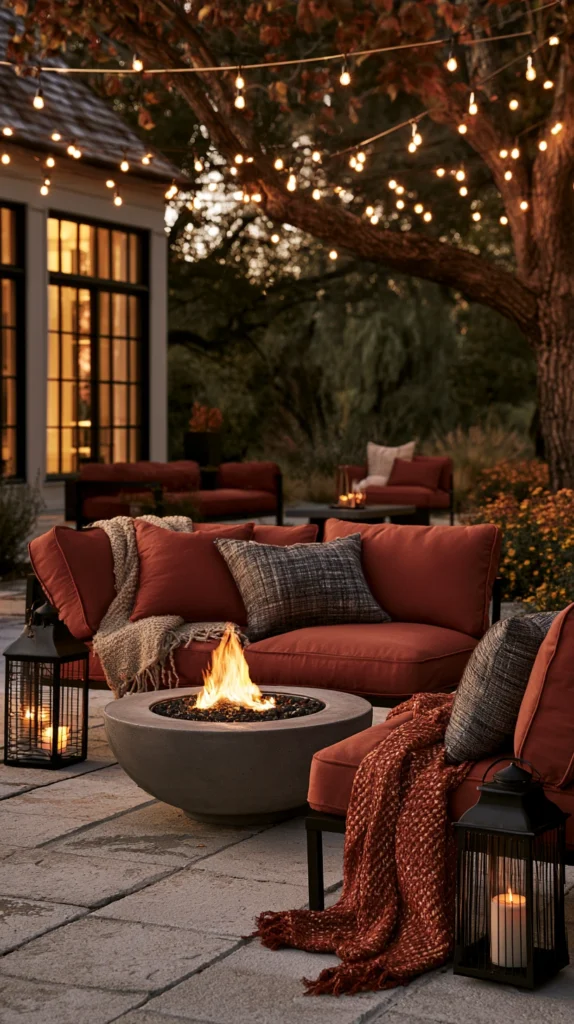
Autumnal styling of an existing fire pit area — the seasonal approach that changes the character of the fire garden without changing the structure.
Why seasonal styling the fire area is as important as any new installation:
The existing fire pit:
- Many gardens: already have a fire feature
- The fire feature: may not reflect the season
- The summer version: pale cushions, light furniture, minimal
- The autumn version: the same fire, dressed differently
What changes with autumn styling:
The cushions:
- Summer pale blue and cream: removed
- Autumn copper, rust, deep burgundy: installed
- The seating: immediately autumnal
- As covered in the autumn seating and cozy articles: the cushion is the fastest seasonal update
The textiles:
- Heavier throws on every armrest
- Wool or heavy cotton
- The texture: part of the autumn experience
- Stored in a deck box beside the fire: always available
The table:
The fire table in autumn:
- The surface: dressed for the season
- A cluster of pumpkins at one end
- Candles in autumn colours
- A small arrangement of dried botanicals
- The table: the styling detail
The surrounding:
The planting moved to the fire area:
- Autumn container plants repositioned around the fire circle
- Copper grasses, burgundy mums, ornamental kale
- The fire: now within a planted garden, not in a cleared space
The lighting:
The additional autumn lighting:
- The fire alone: not sufficient for the longer dark evenings
- Floor lanterns at the seating area edge
- String lights if a pergola exists overhead
- The fire and the additional warm light: the complete autumn evening
Cost breakdown:
- Autumn cushion covers (4): $60–80
- Four throws: $70
- Autumn table styling (pumpkins, botanicals): $25
- Additional lanterns (3): $35
- Total: $190–210
15. The Complete Autumn Fire Garden (The Designed Experience)
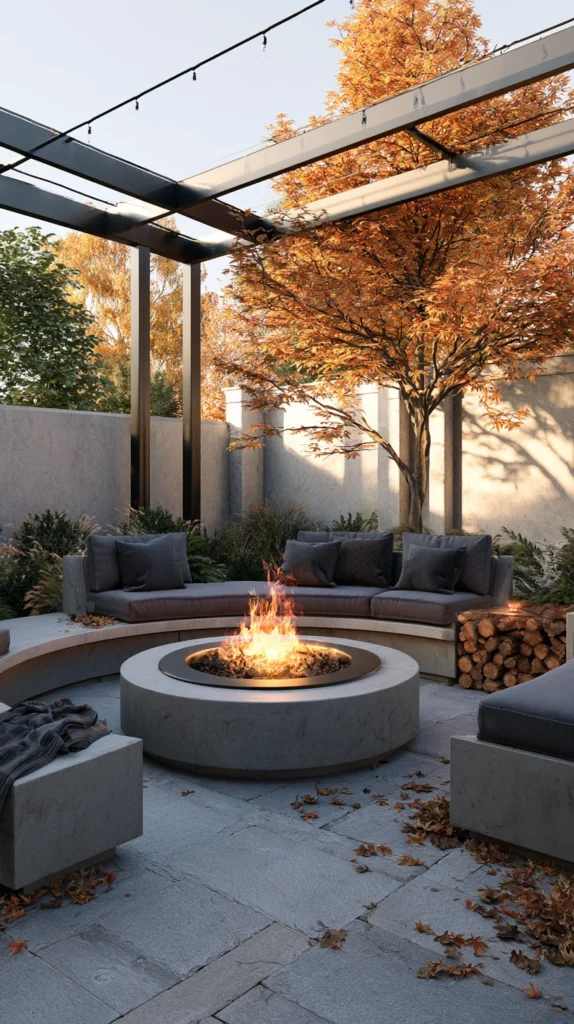
A fire garden designed as a complete outdoor room, with the fire as the anchor of every design decision — the definitive autumn outdoor space.
What separates the complete fire garden from a fire pit with chairs:
The intention:
- A fire pit with chairs: functional
- A fire garden: intentional
- The intention: visible in every element
- The garden: designed for the experience of being in it, not just for the function of the fire
The elements of the complete fire garden:
The fire feature:
- The appropriate type for the garden (one of the 14 ideas above)
- In the right position (sheltered, accessible, at the correct distance from any structure)
- The right size for the number of people who regularly use the garden
The seating:
- Deep, low, comfortable
- Arranged in a circle or arc around the fire
- All seats: roughly equidistant from the fire
- Enough seats: for the household plus guests
The surface:
- Non-combustible around the fire
- Comfortable and appropriate for the garden beyond that
- The surface transitions: clean and designed
The enclosure:
- Something on three sides: fence, hedge, wall, or dense planting
- The enclosure: retains warmth and creates the room quality
- The open side: the view into the garden or beyond
- The tension: enclosed enough to retain warmth, open enough to feel in the garden
The overhead:
- String lights (at minimum)
- Or a pergola with lights
- The overhead: the ceiling of the outdoor room
The warmth:
- The fire (primary)
- The overhead heater if covered (secondary)
- The throws and blankets (personal)
- The three-source warmth system
The lighting:
- The fire: the primary light
- Ground-level lanterns at the seating edge: the supplementary light
- All 2700K or below: the warm light requirement
The seasonal planting:
- Around the edges of the fire circle
- Autumn palette: grasses, mums, kale, seed heads
- Container-mounted: flexible positioning
- The living season: present in the fire garden
The log store:
- Visible and nearby
- The wood accessible without leaving the fire circle
- The stacked logs: part of the aesthetic
The autumn details:
Seasonal styling on the table or the surfaces:
- Pumpkins
- Dried botanicals
- Autumn foliage
- The season: expressed in objects as well as temperature and light
The complete design in action:
An October evening:
5:30pm: The fire lit (the ritual). The string lights come on automatically at dusk.
6pm: Dark. The fire burning steadily. The lanterns at the seating edge already glowing. The copper grasses behind the seating catching the firelight.
6:30pm: Guests arrive at the gate. The lantern-lined path guides them. The fire visible at the end of the path.
7pm: Everyone seated. The throws pulled out from the deck box. The fire tended by whoever is nearest. Nobody suggested going inside.
10pm: The fire lower. The last log added. The string lights still on. Two hours later than anyone expected to stay.
The complete fire garden: extends the outdoor evening by four or more hours on a cold October night. Makes the garden, rather than the house, the natural place to be.
Cost breakdown for the complete fire garden:
Assuming a starting point of nothing:
- Fire feature: $80–300
- Built-in seating or chairs: $200–500
- Surface preparation: $150–400
- Pergola (optional): $350–600
- String lights: $50
- Ground-level lanterns: $100
- Throws and cushions: $150
- Log store: $60–120
- Autumn planting and styling: $80–110
- Total: $1,220–2,330
Phased over two or three seasons:
Season one ($200–400):
- A good fire bowl
- Four deep chairs
- Four throws
Season two ($300–500):
- String lights
- Ground-level lanterns
- Autumn planting in containers
Season three ($500–1,000):
- Surface preparation
- Built-in seating or pergola
- Log store
The fire garden: not a weekend project but a garden developed with intention over time.
The Question Before Any Fire Design
Before choosing a fire type, a position, a design:
What is the primary reason for being outside in autumn?
If the answer is: warmth and gathering — the fire pit or fire bowl at the centre of a seating circle is the answer.
If the answer is: outdoor dining extended into autumn — the fire table at the centre of the dining area.
If the answer is: all-weather use regardless of rain — the covered pergola with a smokeless fire table.
If the answer is: the simplest possible — the stone ring, the dry wood, the four chairs.
The design follows the purpose. Every fire design on this list serves a purpose. The question is which purpose is the right one for this garden and this household.
The wrong fire in the right position: still better than no fire. The right fire in the right position: the season extended by months, the garden used in all the ways it was always possible to be used.
That extension: the whole point of the fire garden.
Getting Started This Weekend
The immediate autumn fire solution:
Buy one good fire bowl or chiminea ($80–150).
Not the smallest. Not the cheapest. One that will last several seasons and perform well.
Position it in the most sheltered spot available.
Backs to the prevailing wind. Seating on the open side. Not in the middle of an exposed lawn.
Add four chairs and four throws.
Already in the house: bring them outside. They do not need to be outdoor-specific for the first season.
Light it on the first cold October evening.
The rest of the design: the elaboration of this moment.
The fire: the beginning. The fire garden: what grows around it.