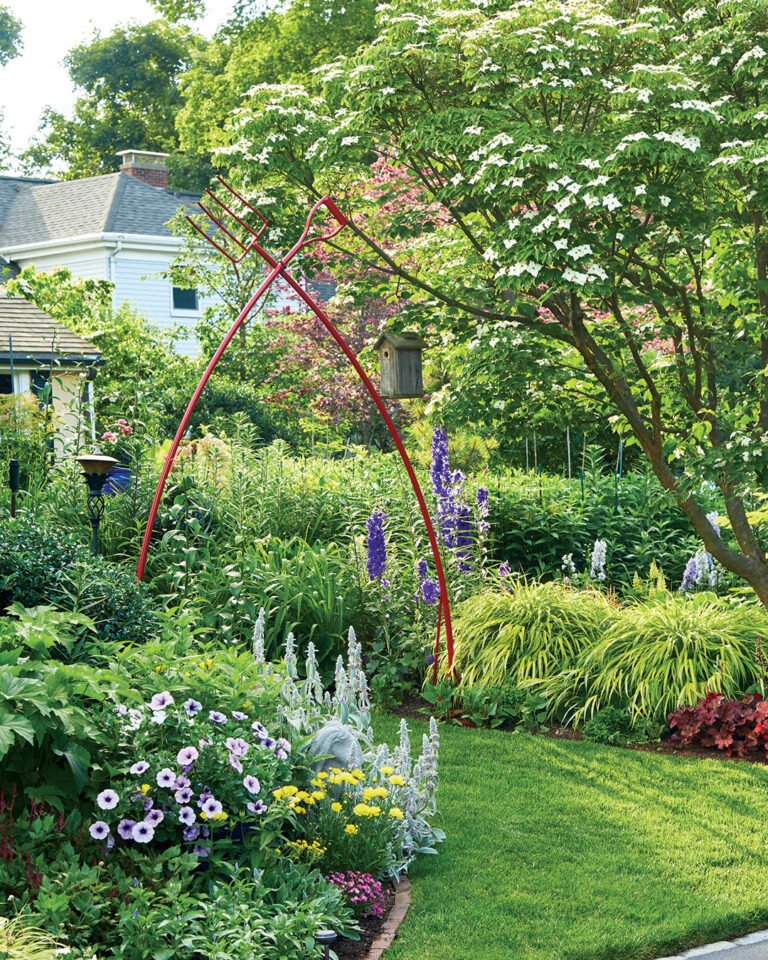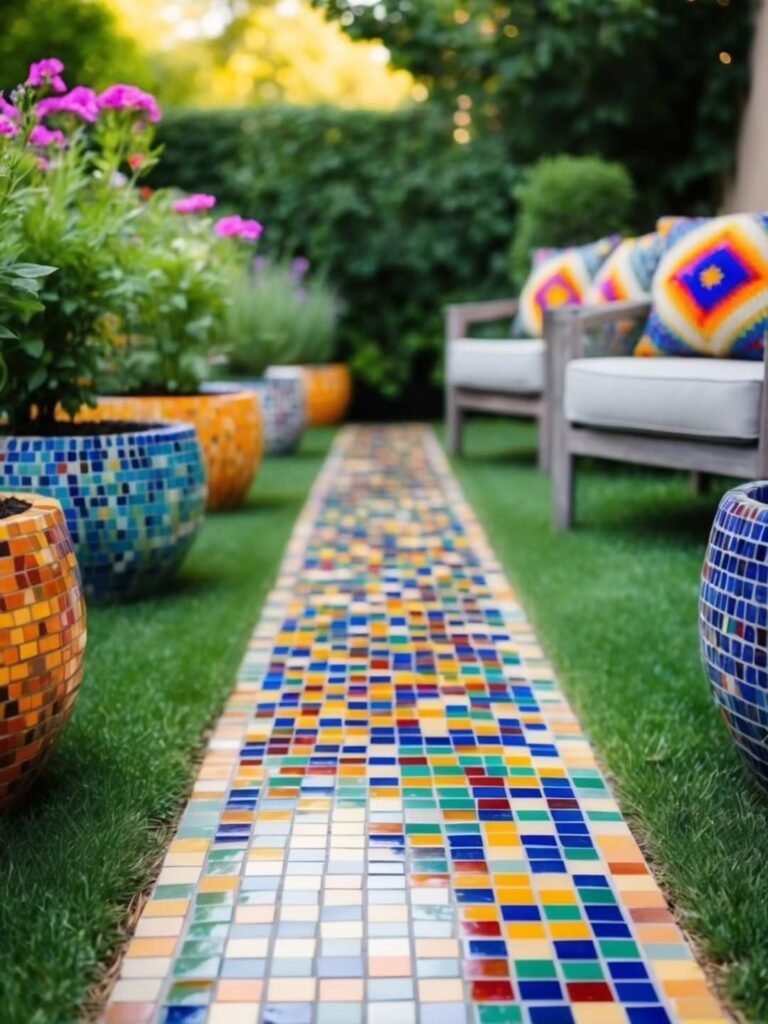
15 Summer Garden Layout Ideas That Feel Organized and Aesthetic
A garden layout is not just a plan — it is the logic beneath everything the garden does and looks like. The most beautiful planting in the world looks less than it could in a poorly organised space, and a thoughtfully laid-out garden with modest planting always punches above its weight. Organisation and aesthetic are not separate qualities in garden design. In the best gardens they are the same quality expressed two ways.
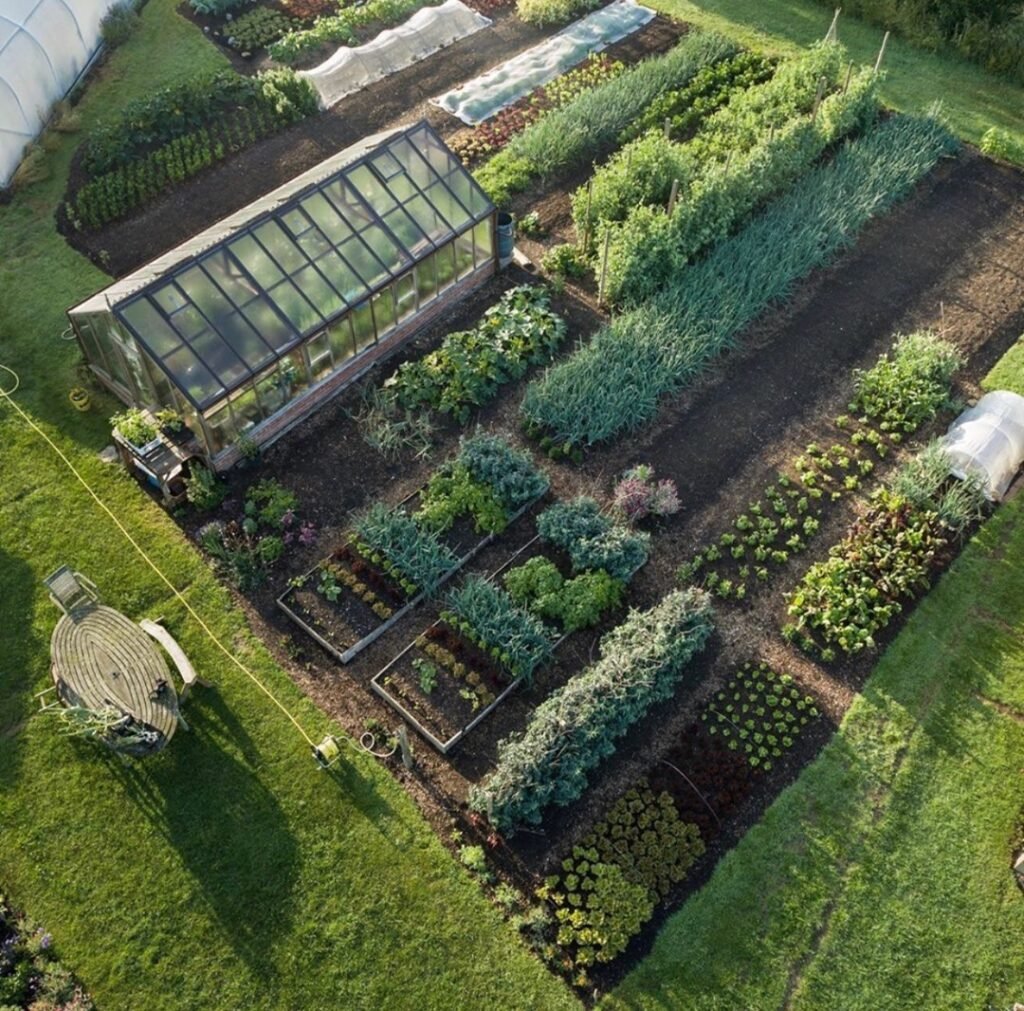
The fifteen layout ideas below cover every garden scale, style, and budget. Each one addresses a specific organising principle — symmetry, flow, zoning, enclosure, sight lines — and translates it into a practical, achievable garden setup with a cost guide and a layout tip to help you get it right from the ground up.
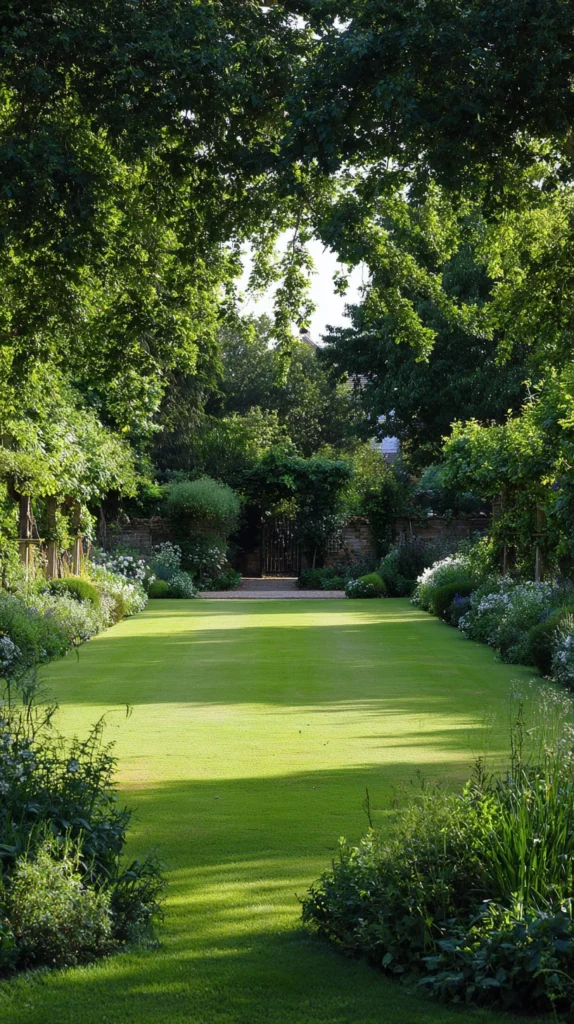
1. The Central Lawn With Border Frame
Budget: $100 – $500
A central lawn panel surrounded on all four sides by planting borders is one of the most timelessly organised garden layouts available. The lawn provides a clear, open centre that gives the eye somewhere to rest, and the borders frame it with colour and structure in a way that makes the whole garden feel intentional.
The borders should be at least 90 cm deep — anything narrower looks like an edging strip rather than a proper border. Edge the lawn cleanly with a half-moon edging tool ($15–$30) twice per season to maintain the crisp line between grass and planting that makes this layout look organised rather than overgrown at its edges.
Layout tip: Make the central lawn slightly narrower than it is long — a 3×4 metre lawn reads as more considered than a 3×3 square. A rectangle with a clear long axis gives the garden a directional quality that a square lawn lacks, and it makes the borders at each end feel like deliberate destinations rather than simply more of the same.
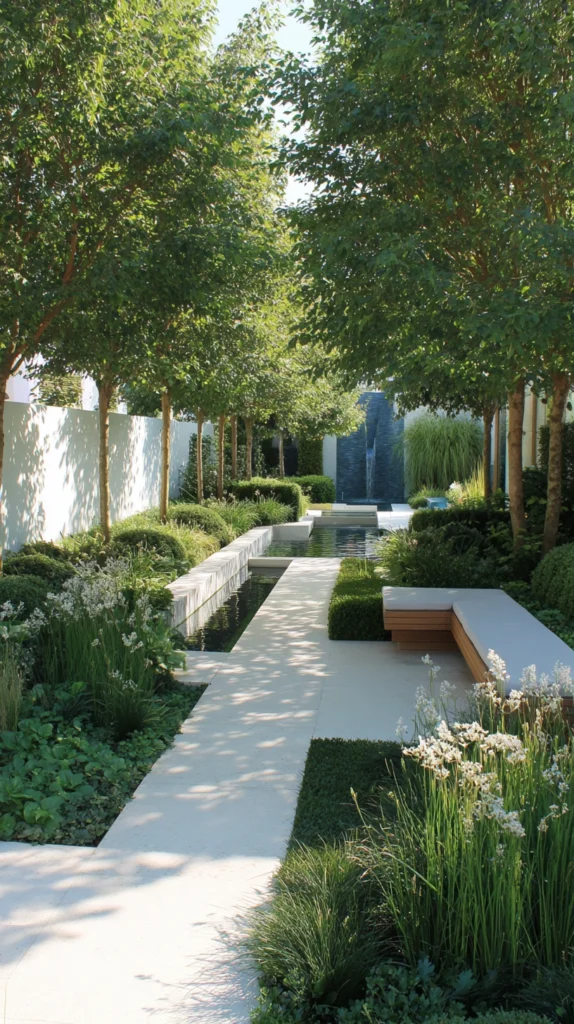
2. The Diagonal Garden Layout
Budget: $80 – $300
Rotating the main axis of a garden by 45 degrees — running paths, beds, and lawn panels diagonally across the space rather than parallel to the boundaries — is the most effective layout trick available for making a small, rectangular garden feel significantly larger than it is.
The diagonal line is longer than either the width or the length of the rectangle it crosses, which extends the primary sight line of the garden and creates a sense of depth that a parallel layout cannot achieve within the same footprint. Mark the diagonal with a string line before laying any path or edging to keep the angle consistent across the whole design.
Layout tip: Align the main diagonal toward the most attractive view or the most useful corner of the garden — a seating area, a specimen tree, or a garden building. The diagonal sight line draws the eye immediately to wherever it points, and whatever sits at the end of it becomes the focal point of the whole garden layout by default.
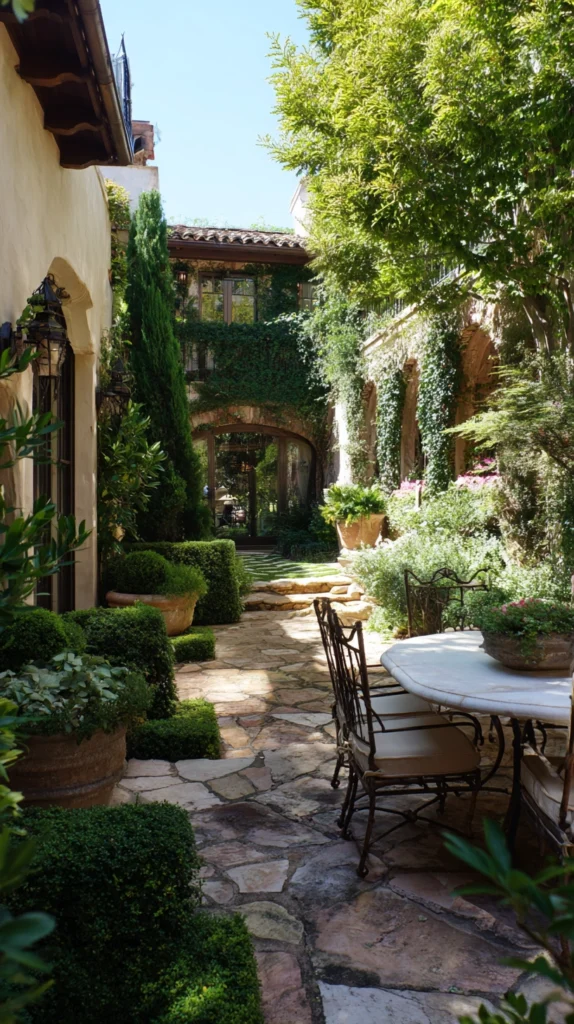
3. The Room Divider Layout
Budget: $150 – $600
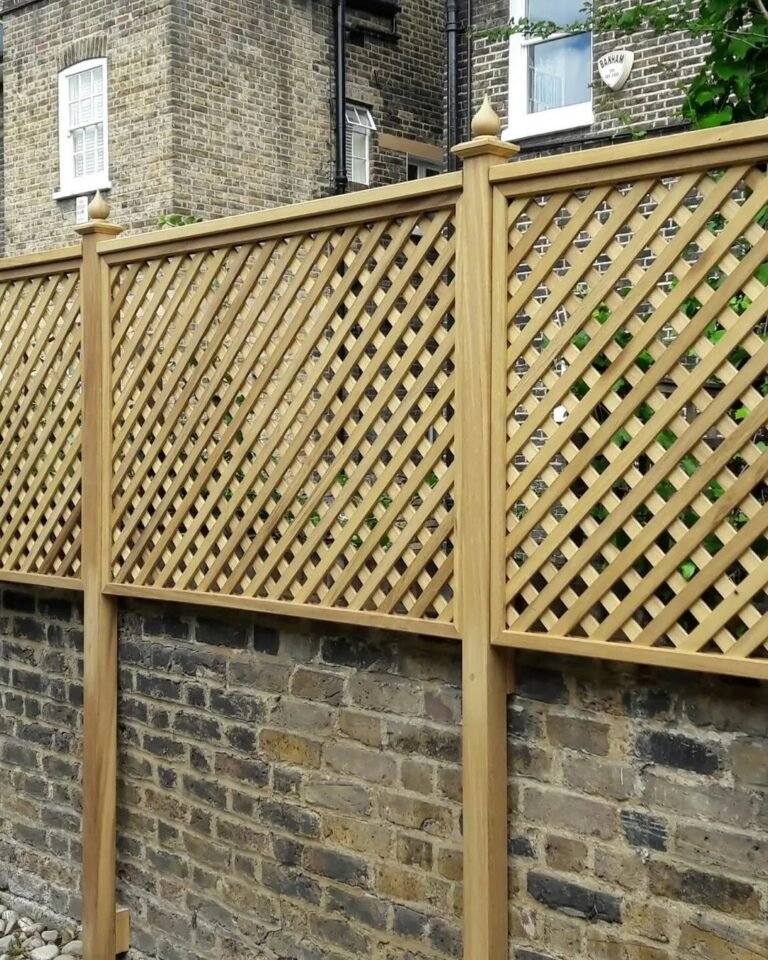
Dividing a long, narrow garden into a series of distinct outdoor rooms — separated by hedges, trellis panels, pergola arches, or planting — creates a sequence of spaces that makes the garden feel considerably larger and more interesting than a single open view from end to end.
Each room can serve a different purpose — a dining area, a planting garden, a lawn, a vegetable plot — which organises the garden functionally as well as visually. The transition between rooms, marked by an arch, a gap in a hedge, or a change in paving material, creates the moments of arrival and discovery that make a garden genuinely engaging to move through.
Layout tip: Make the dividers between garden rooms slightly opaque rather than transparent — a solid hedge or a trellis covered in climbing plants rather than an open metal frame. Partial concealment of the next garden room creates curiosity and draws movement through the garden in a way that a fully visible sequence of spaces does not.
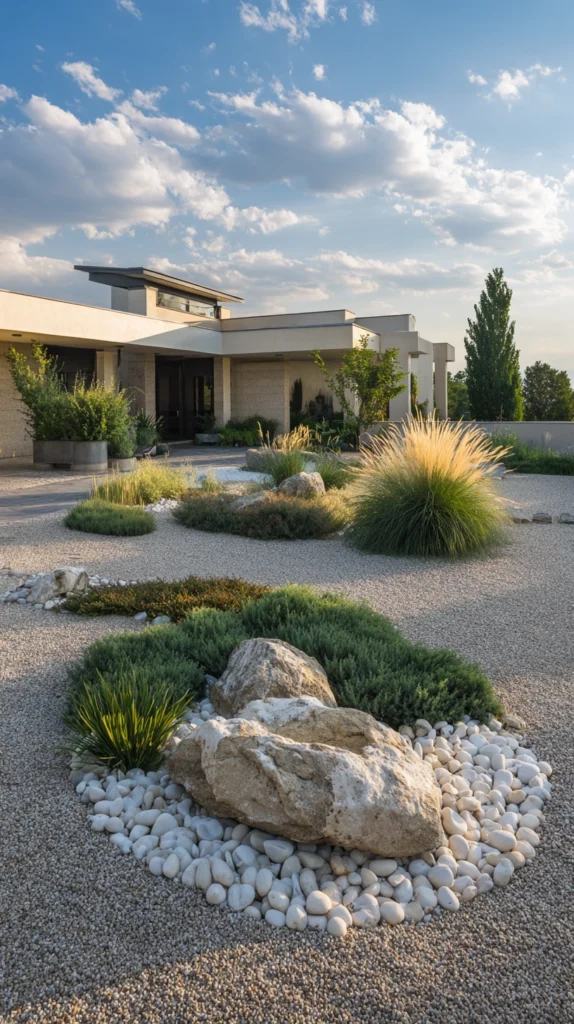
4. The Gravel Garden With Island Beds
Budget: $200 – $800
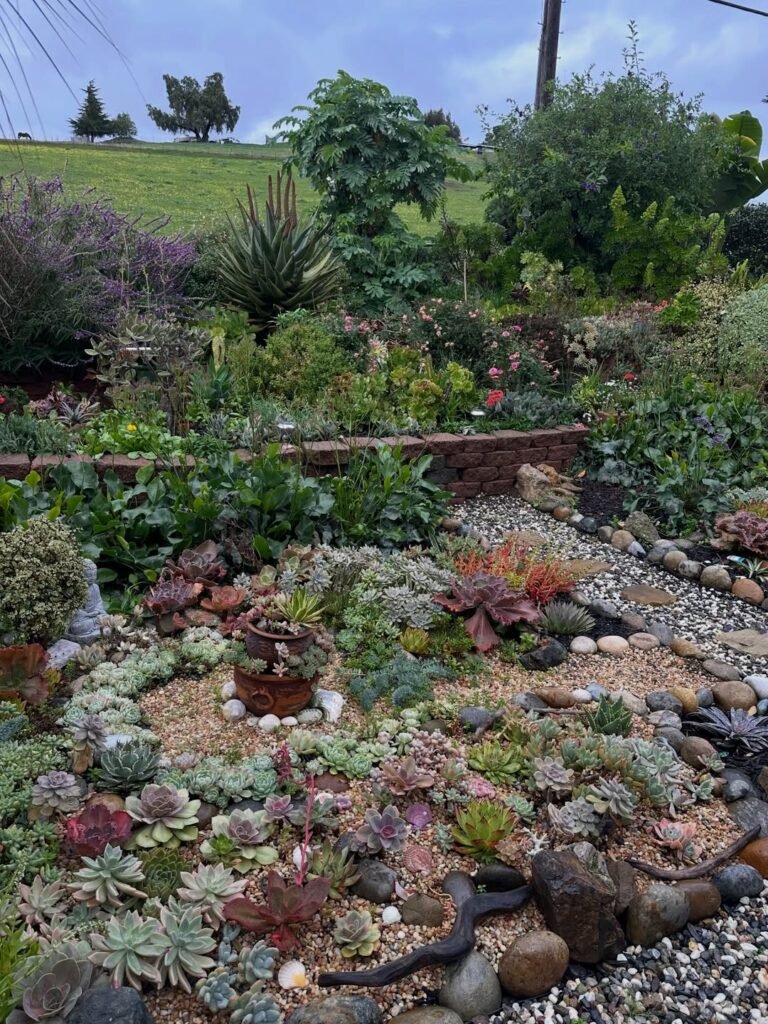
A garden laid entirely in gravel with raised island planting beds emerging from the gravel surface creates a contemporary, low-maintenance layout that suits hot, dry conditions and works at any scale from a small town garden to a generous suburban plot.
The gravel provides a unified ground plane that makes the whole garden read as a single composition rather than a collection of separate elements. Island beds cut from the gravel in organic or geometric forms allow bold, architectural planting — agave, lavender, ornamental grasses — to be positioned as sculptural features rather than simply as background planting.
Layout tip: Keep island bed shapes simple — a circle, an elongated oval, or a clean rectangle. Complicated or fussy bed outlines cut from a gravel surface look overwrought and are difficult to edge cleanly. A simple shape executed well always reads better in a gravel layout than an ambitious shape that loses its definition within two growing seasons.
5. The Kitchen Garden Quadrant Layout
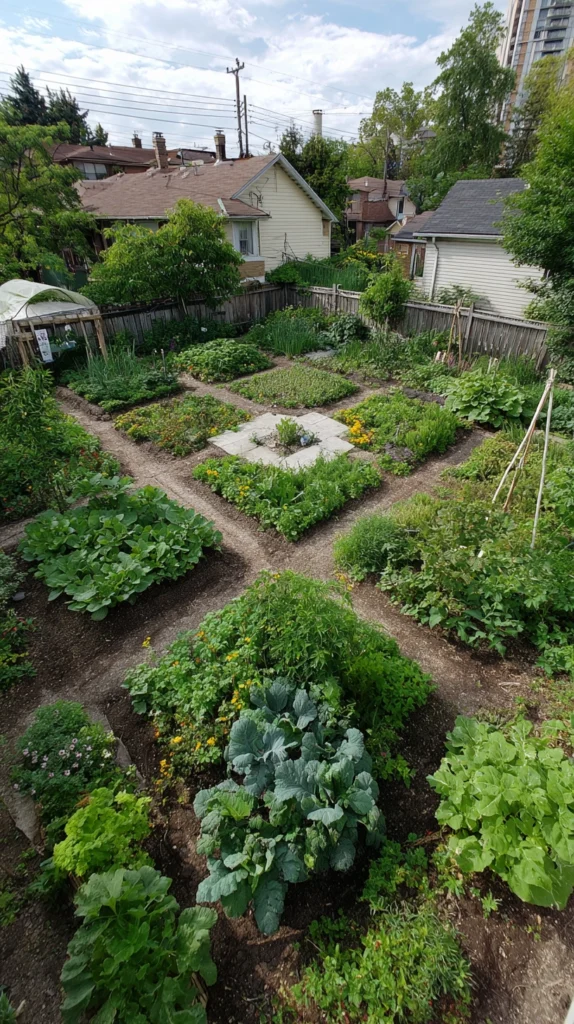
Budget: $150 – $500
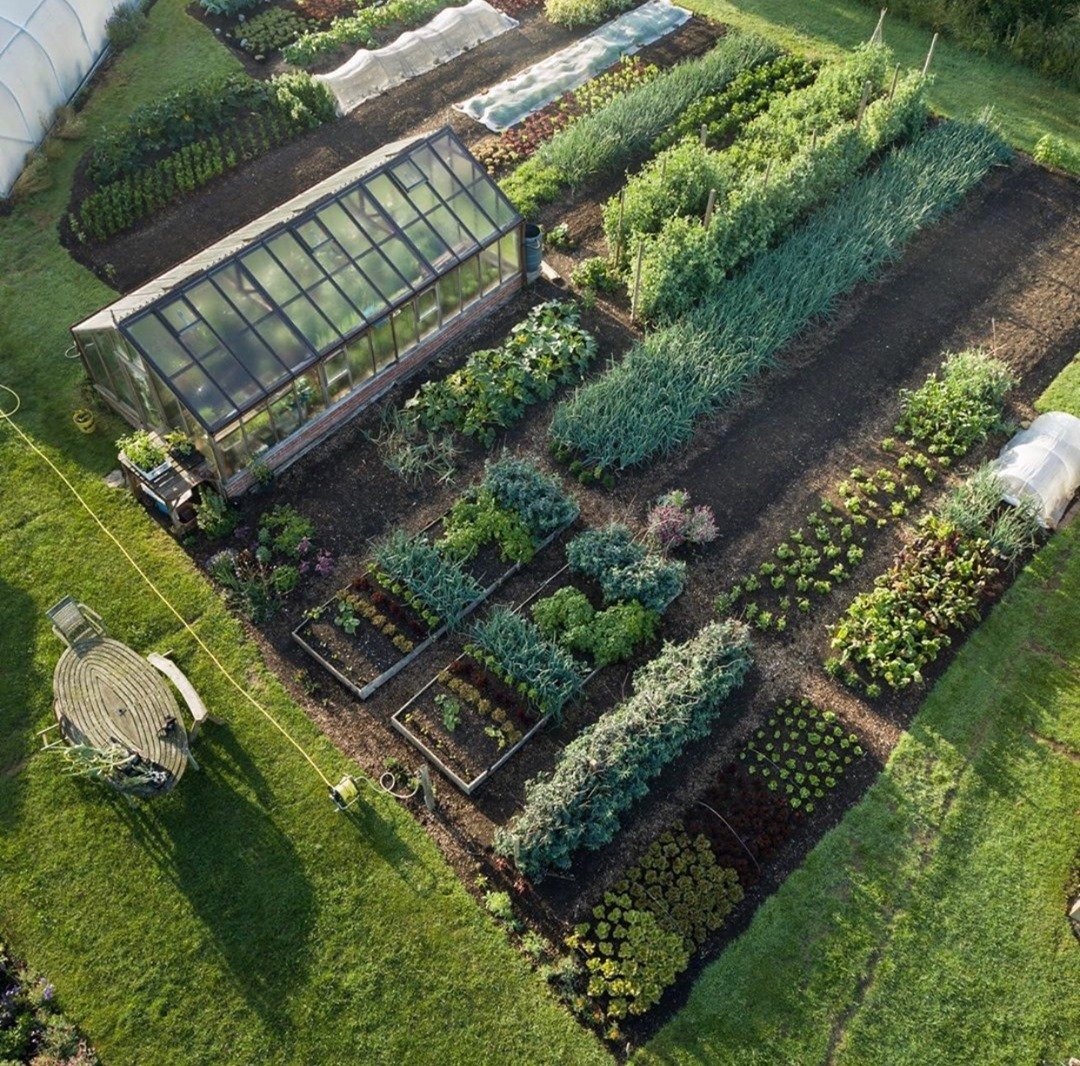
A formal kitchen garden divided into four equal quadrants by two crossing paths — with a focal point at the centre where the paths meet — is the most organised and most visually satisfying productive garden layout available. The symmetry imposes order on what might otherwise be a chaotic collection of vegetable beds.
The crossing paths need to be wide enough for a wheelbarrow — at least 60 cm, ideally 90 cm. The central focal point can be a pot, a standard tree, a sundial, or a clipped topiary ball — any vertical element that gives the eye a resting point at the convergence of the two main axes and reinforces the formality of the layout.
Layout tip: Rotate crops between the four quadrants each season — brassicas, roots, legumes, and alliums in a four-year rotation that returns each crop family to its original bed every fourth year. The quadrant layout makes rotation intuitive and manageable in a way that an irregular bed arrangement rarely achieves without a written plan consulted each spring.
6. The Curved Border and Winding Path Layout
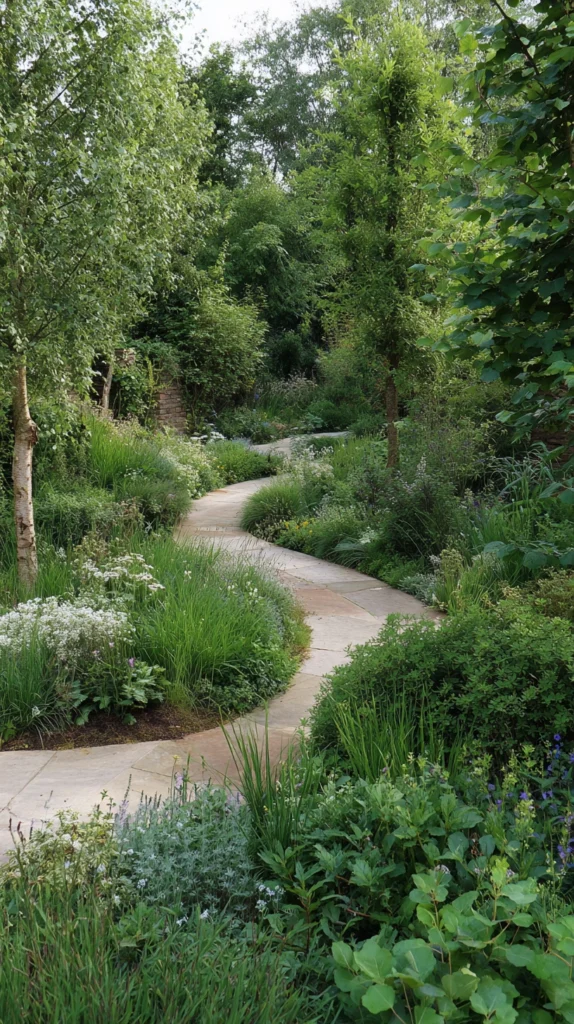
Budget: $100 – $400
A garden organised around a gently winding central path with curving borders either side creates a naturalistic, relaxed layout that makes even a small garden feel as though it has more to discover than is immediately visible from the entrance.
The curves should be generous and smooth rather than tight and fussy — a curve with a radius of at least 2 metres reads as deliberate and flowing. Curves that change direction too quickly look like mistakes rather than design decisions and are difficult to mow, edge, and maintain to a standard that keeps the layout looking organised rather than shapeless.
Layout tip: Mark curved paths and borders with a garden hose laid on the ground before cutting any turf or laying any edging material. A hose holds a smooth, consistent curve that can be adjusted by eye until the line looks exactly right from the key viewing point — usually the back door or the main seating area. Cut the turf to the hose line only once the curve looks perfect from that position.
7. The Courtyard Enclosure Layout
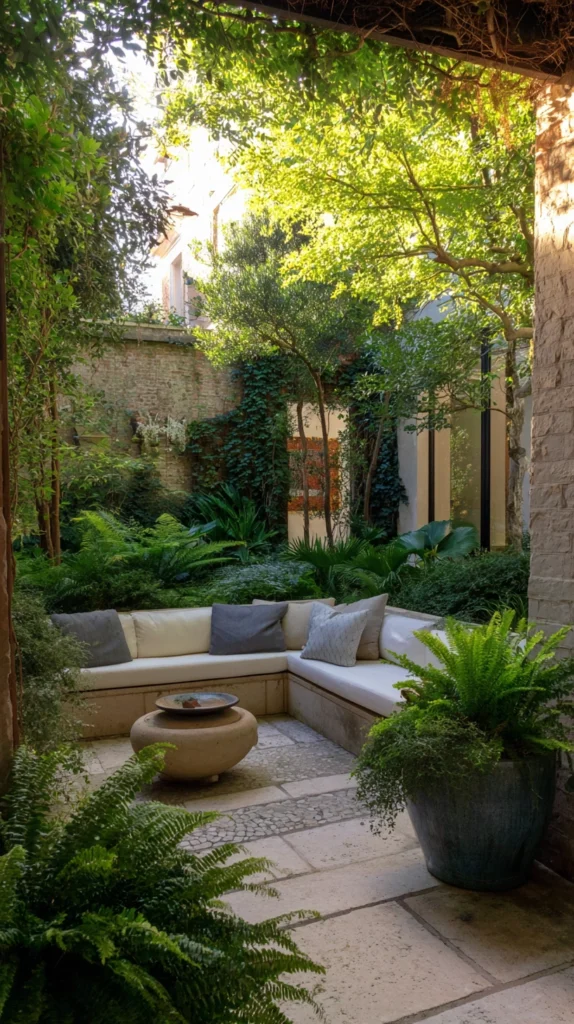
Budget: $300 – $2,000
An enclosed courtyard garden — surrounded on three or four sides by walls, fences, or tall hedges — creates the most defined and most private garden layout available. The enclosure turns a small outdoor space into a room and gives every plant, surface, and piece of furniture within it a contained context that makes each element look more deliberate than it would in an open garden.
The enclosure does not need to be expensive — close-boarded fencing costs $40–$80 per linear metre and creates immediate privacy. A hornbeam or yew hedge planted from bare root costs $5–$15 per plant and reaches enclosing height in three to four years at minimal cost. Within the enclosed courtyard, keep the layout simple — one surface material, one key planting, one seating area.
Layout tip: Whitewash or paint the interior walls of a courtyard garden in a warm white or pale colour. Light-coloured walls reflect more light into the space, make the area feel larger and more luminous, and provide the surface against which planting, pots, and furniture look most completely resolved. A courtyard with dark, unpainted brick or timber walls loses much of its potential as a bright, inviting outdoor room.
8. The Symmetrical Formal Garden Layout
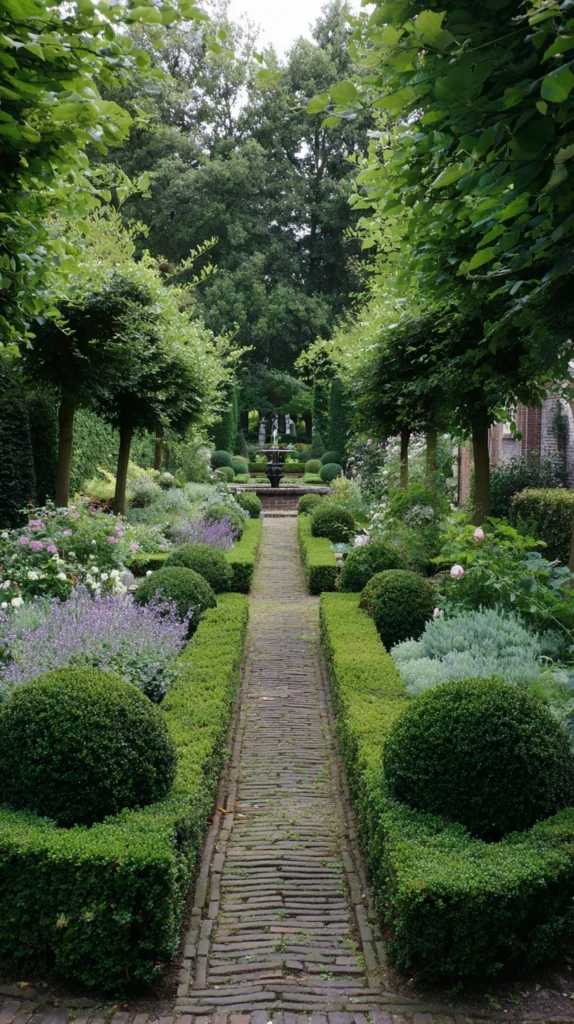
Budget: $200 – $800
A strictly symmetrical garden layout — matching borders on each side of a central axis, identical planting in mirrored positions, paths that run parallel to the boundaries — imposes the most complete visual order available in garden design and creates a sense of scale and authority that informal layouts rarely achieve.
The symmetry needs to be maintained precisely to read as formal rather than approximate — matching plants of the same species, size, and shape on each side, clipped to the same profile at the same time each season. One overgrown side in a formal layout undermines the whole scheme immediately and completely. The maintenance commitment is higher than an informal garden but the visual reward is proportionally greater.
Layout tip: Establish the central axis of a formal garden first and mark it permanently with a stretched string line or a physical feature — a path, a rill, or a mown strip — before placing any other element. Everything in a formal layout is positioned in relation to this axis, and getting the axis exactly right at the outset saves every subsequent measurement and placement decision from being slightly wrong.
9. The Layered Slope Layout
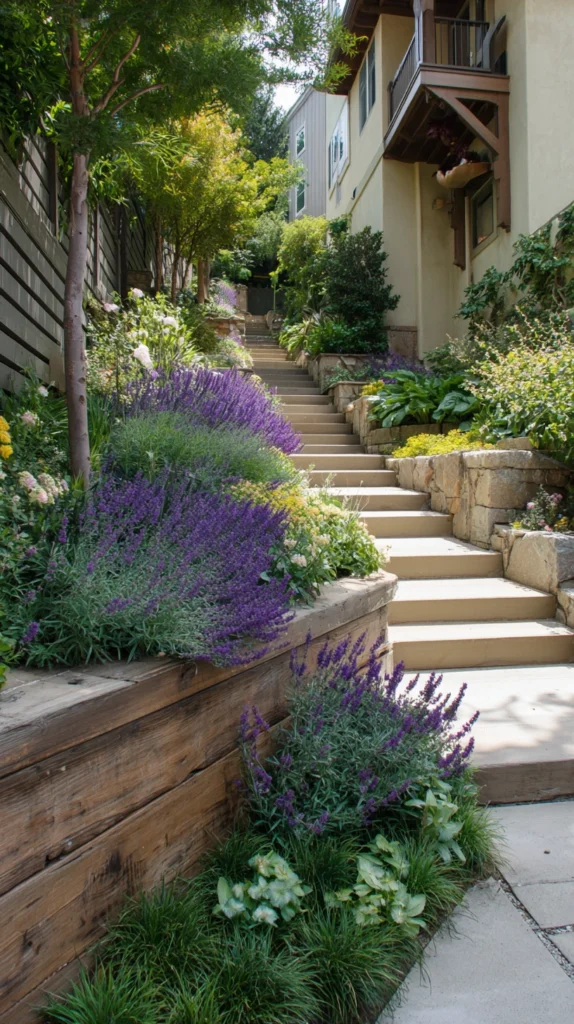
Budget: $200 – $1,000
A sloping garden organised into horizontal terraces — each level retained by timber, stone, or brick and connected by steps — turns a difficult gradient into a series of organised planting and seating levels that make the garden more usable, more interesting, and considerably more aesthetic than an unmanaged slope.
Timber sleeper retaining walls cost $15–$40 per sleeper. Stone retaining walls in dry-stone or mortared construction run $80–$200 per linear metre professionally built. Steps between levels need a riser of no more than 15 cm and a tread of at least 35 cm for comfortable, safe use — proportion of the steps is the detail that determines whether a terraced garden is a pleasure or a nuisance to move through daily.
Layout tip: Plant the retaining walls themselves wherever the material allows — pockets of sempervivum in a dry-stone wall, trailing thyme in the gaps of a brick wall, or a climbing rose trained along a timber sleeper face. A planted retaining wall integrates the engineering of the terracing into the garden planting scheme rather than leaving it as a visible structural element that sits apart from the rest of the design.
10. The Prairie-Style Open Layout
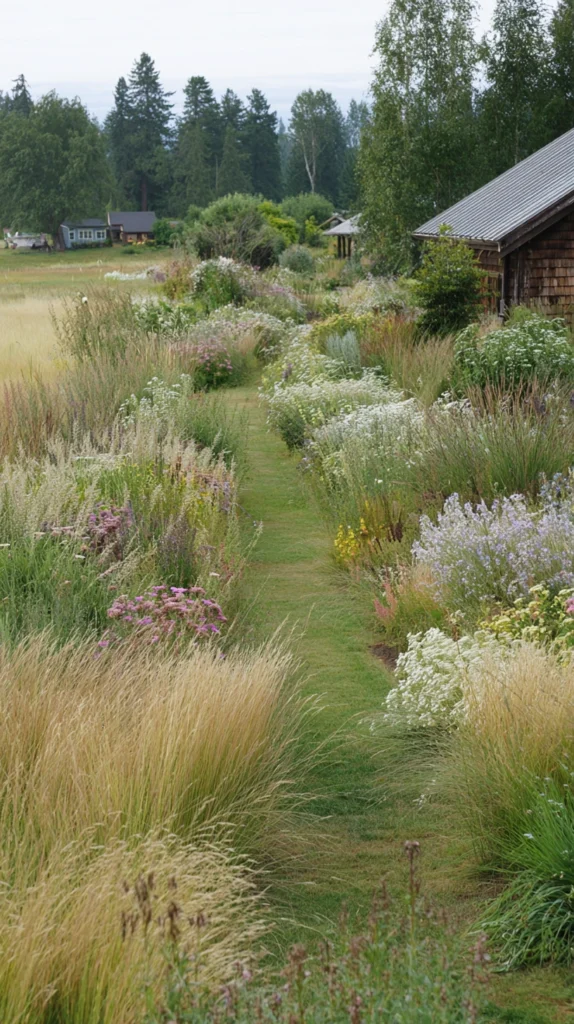
Budget: $150 – $500
A prairie-style layout — a generous, open planting of ornamental grasses and tall perennials across a broad, relatively flat area with a simple mown path running through it — creates the most naturalistic and most seasonally complete garden aesthetic available. It looks spectacular in late summer and autumn and provides genuine winter structure through December and February.
Key prairie plants include Echinacea ($6–$14), Rudbeckia ($6–$12), Pennisetum and Calamagrostis grasses ($8–$20), Verbena bonariensis ($5–$10), and Sanguisorba ($8–$16). Plant in large, flowing drifts of a single species rather than individual plants scattered through the planting — drift planting creates the wave-like rhythm that gives prairie-style gardens their characteristic movement and coherence when viewed from a distance.
Layout tip: Mow one or two simple, wide paths through the prairie planting rather than viewing it only from its edges. A path that enters the planting and moves through it creates an immersive experience that looking at the planting from outside never provides, and the contrast between the mown path surface and the tall planting on each side is one of the most visually satisfying details in any naturalistic garden layout.
11. The Productive and Ornamental Mixed Layout
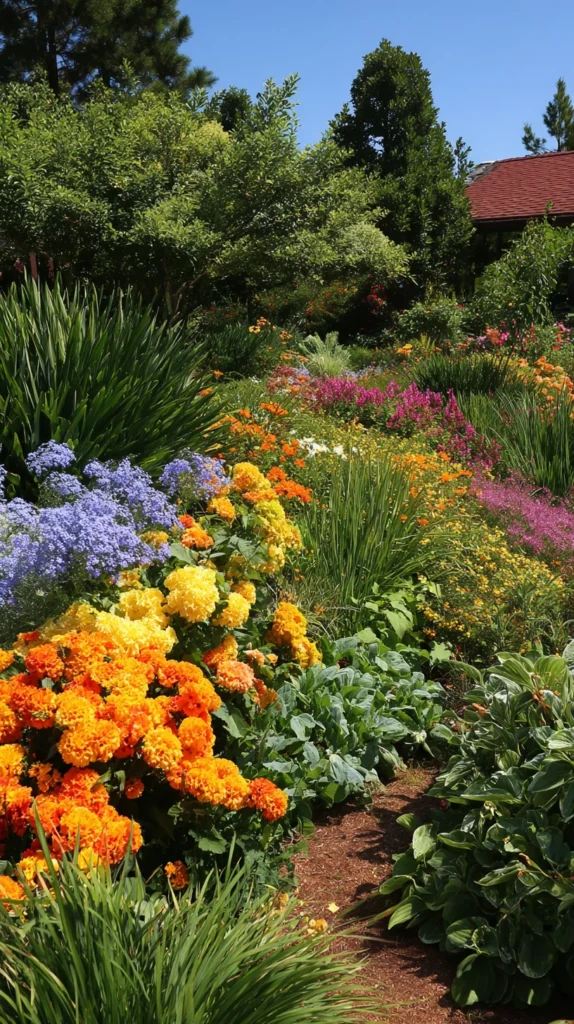
Budget: $120 – $450
A garden layout that integrates productive planting — vegetables, herbs, fruit — with ornamental planting in the same borders rather than separating them into distinct kitchen garden and ornamental garden areas creates the most visually interesting and most practically useful hybrid available.
Kale and chard among hardy geraniums and salvias, climbing beans on obelisks beside tall perennials, a standard gooseberry as a focal point in an ornamental border — the productive elements add seasonal interest and change to the ornamental planting while the ornamental plants soften the utilitarian quality that a purely productive border can have. The result is a garden that is beautiful every day and productive every week.
Layout tip: Choose ornamental qualities in productive plants rather than simply accepting whatever the most productive variety offers visually. Red-stemmed chard, purple-podded climbing beans, architectural cardoon, and multi-coloured dwarf kale are all productive and visually significant enough to hold their place in an ornamental border — varieties chosen only for yield with no ornamental quality do not work in a mixed layout regardless of how productive they are.
12. The Destination Garden Layout
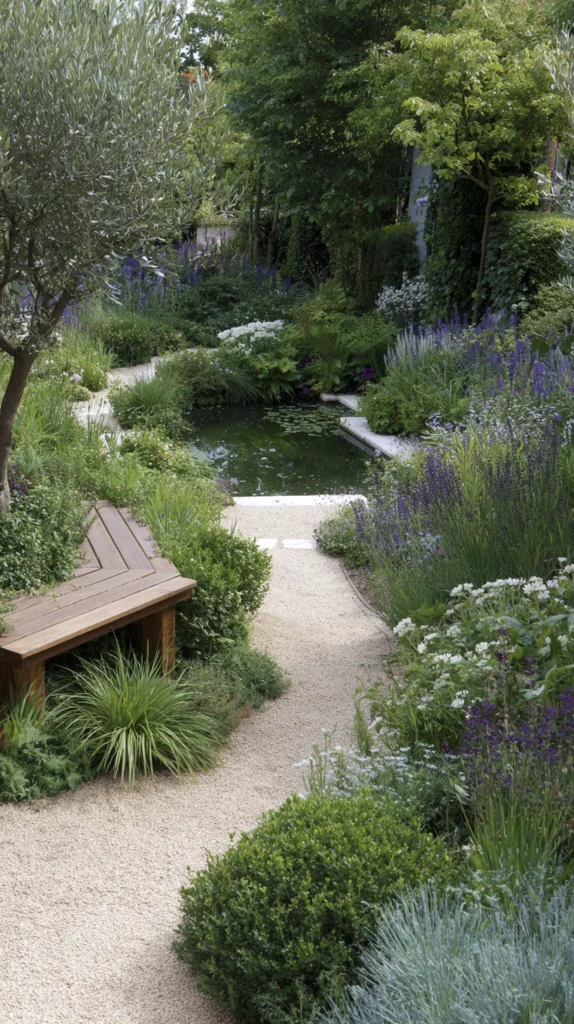
Budget: $100 – $500
A garden organised around a series of destinations — a bench at the end of a path, a seating area behind a hedge, a water feature at the turn of a border — gives movement through the garden a purpose and rhythm that a garden without deliberate focal points rarely achieves. You always know where you are going and why.
The destinations themselves can be modest — a single chair beside a planted corner costs almost nothing. What matters is that each one is positioned with intention: at the end of a sight line, in a defined space, with a view back toward the house or toward the garden that makes sitting there feel different from standing anywhere else. The placement is the design, not the object placed.
Layout tip: Create at least one destination in the garden that is not visible from the house — a seat around a corner, a bench behind a hedge, a clearing reached through a gap in the planting. A destination that must be discovered rather than simply walked to creates a sense of space and variety in the garden that is disproportionate to the physical area involved in creating it.
13. The Minimalist Gravel and Green Layout
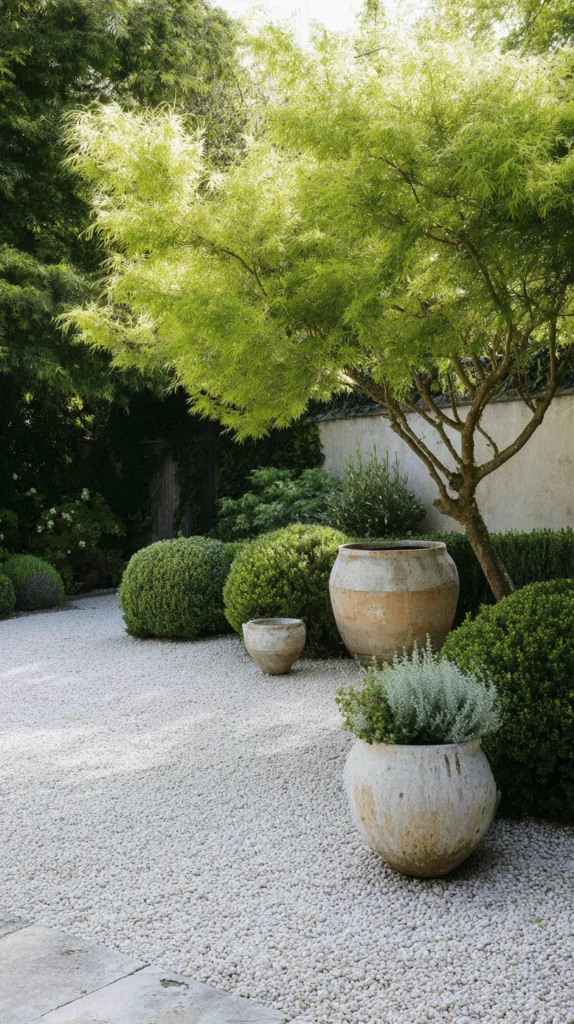
Budget: $150 – $600
A layout of pale gravel ground cover, deep green clipped hedging, and a small number of carefully positioned plants or specimen trees in large clay pots creates the most contemporary and most serene garden aesthetic available — one that requires almost no seasonal change and looks consistently resolved through every month of the year.
The key to this layout is restraint in every decision — one gravel colour, one hedge species, one pot material, three plant species maximum. Every additional variety or material added to the palette dilutes the clean, considered quality that makes this layout so effective. Edit every choice and then edit again — the right version of this garden always has fewer elements than the version originally planned.
Layout tip: Use a single large pot rather than several smaller ones as the primary ornamental feature in a minimalist gravel layout. One 60 cm diameter pot with a well-grown olive tree or clipped bay makes a confident, sufficient statement in a spare layout. Three smaller pots in the same position look like a compromise and reduce the visual authority of the whole scheme.
14. The Wildlife Corridor Layout
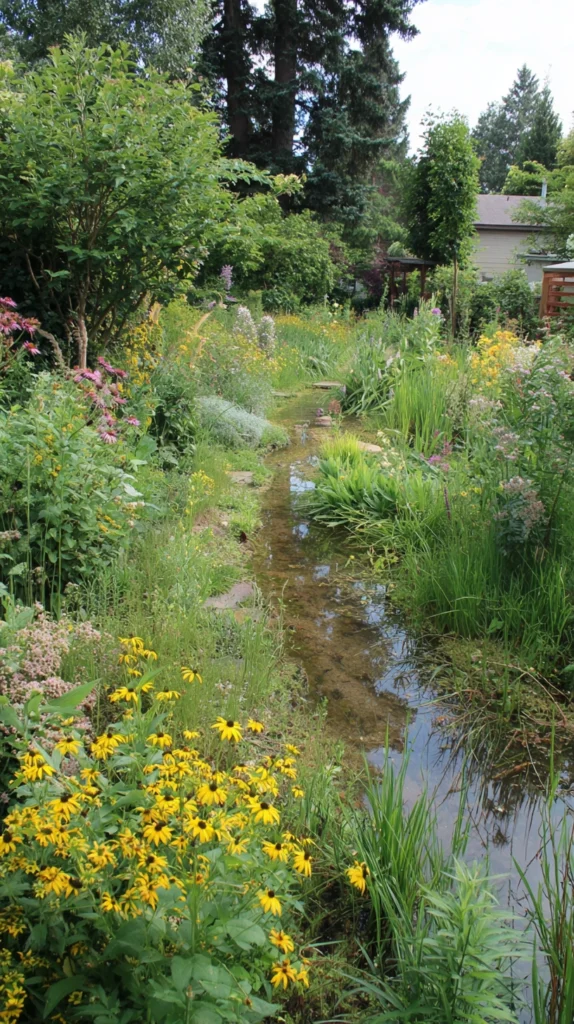
Budget: $60 – $300
A garden organised to create connected wildlife habitat — a native hedge along one boundary, a wildflower meadow strip, a pond, and a log pile — while still including organised paths, seating, and lawn creates the most ecologically valuable and increasingly the most aesthetically appreciated garden layout in current garden design.
The wildlife elements do not need to dominate the garden to be effective — a 1-metre wildflower strip along one fence, a small pre-formed pond in one corner, and a log pile behind the shed collectively support a far richer ecosystem than a purely ornamental garden of the same size while occupying a relatively small proportion of the total garden area.
Layout tip: Edge the wildflower meadow strip with a clean mown path on the garden side — the contrast between the mown edge and the taller, wilder strip signals clearly that the planting is deliberate rather than neglected. A wildflower area without a clean edge looks like a garden that has not been maintained. The same planting with a crisp mown edge looks like a considered design decision.
15. The Outdoor Room Sequence Layout
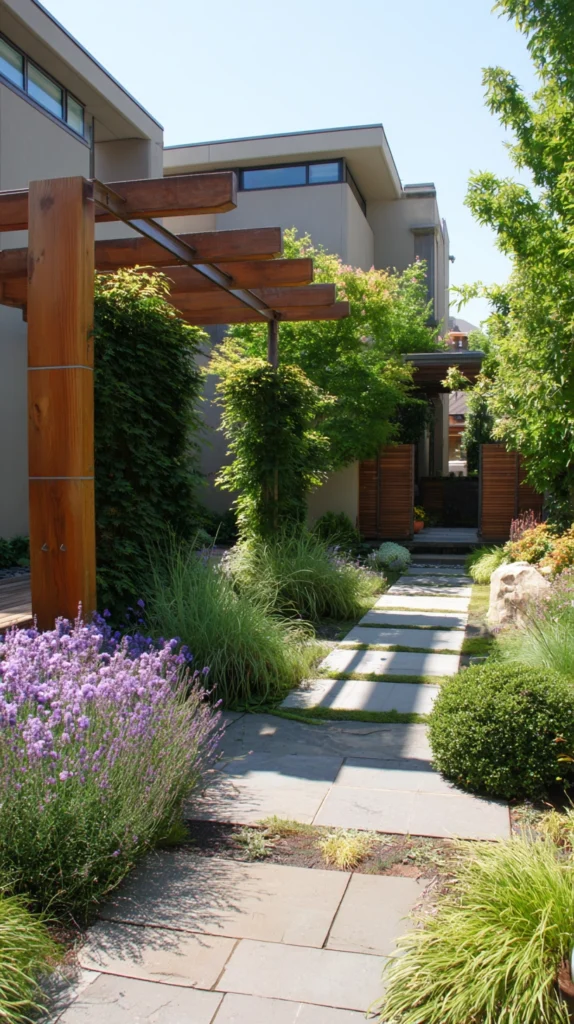
Budget: $400 – $2,000
The most complete and most ambitious garden layout treats the entire garden as a sequence of outdoor rooms — each with its own character, its own purpose, and its own design — connected by paths, arches, and transitions that make moving through the garden an experience as considered as moving through a well-designed interior.
A typical sequence might include an entrance garden that frames the arrival, a main seating and dining room, a planting room with the most detailed horticultural interest, and a kitchen garden. Each room has its own surface, its own planting palette, and its own lighting scheme — and the total experience of moving through all of them is significantly richer than any single garden space, however beautifully designed, can provide on its own.
Layout tip: Design the transitions between rooms as carefully as the rooms themselves. The arch, the gate, the gap in the hedge, the change in path surface — these are the moments of passage that give the sequence its rhythm and its sense of arrival. A well-designed transition between two ordinary garden rooms creates more atmosphere than two individually well-designed rooms connected by an unconsidered path.
Every garden layout on this list works from the same underlying principle — that organisation and aesthetics are not competing priorities but the same quality expressed through planning. A garden that knows what it is, where its paths go, what its boundaries are, and what each area is for always looks more beautiful than one of equal planting quality without that underlying clarity.
Choose the layout that fits the garden you actually have rather than an idealised version of it. Work with the existing boundaries, the existing levels, and the existing light — the best garden layouts always begin with an honest assessment of the site as it stands rather than a vision of what it might eventually become. Start there and the design decisions that follow are almost always clearer and more achievable than anything planned in the abstract.