15 Artistic Garden Mosaic Ideas
There is something deeply satisfying about a mosaic. It takes broken, discarded, or ordinary materials — fragments of tile, glass, stone, ceramic — and arranges them into something that is greater than the sum of its parts. In a garden setting, mosaic brings colour, personality, and genuine craftsmanship to surfaces and structures that would otherwise be purely functional.
A plain garden wall becomes a work of art. A concrete stepping stone becomes something worth looking at. A terracotta pot becomes a piece that stops visitors in their tracks.
Mosaic is also one of the most accessible forms of garden art. It requires no specialist equipment, no formal training, and no significant budget. What it requires is patience, a willingness to learn through doing, and an eye for colour and pattern that most people discover they have the moment they start laying pieces on a surface and moving them around. The ideas below cover every scale, every style, and every level of ambition — from a beginner’s first stepping stone to a full garden wall installation worthy of a public space.
1. The Mosaic Stepping Stone Path
Budget: $30 – $120
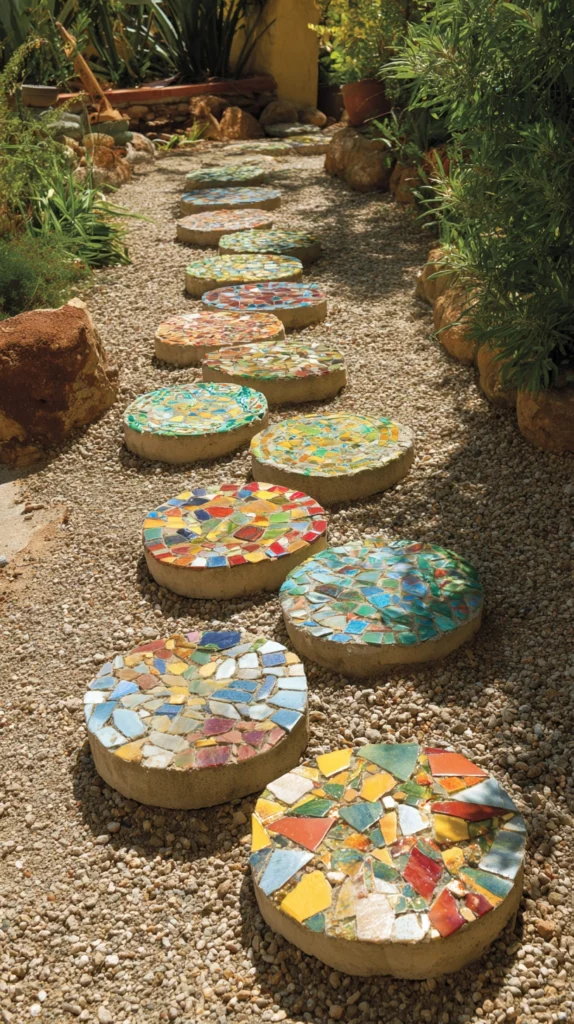
A series of hand-made mosaic stepping stones set into a garden path is the ideal entry point for anyone new to mosaic making. Each stone is a self-contained project — small enough to complete in an afternoon, forgiving enough to accommodate imperfection, and rewarding enough in the finished result to make the next one immediately appealing. A path of six to eight mosaic stones, each with a different design but a consistent colour palette, becomes one of the most personal and characterful features in any garden.
Cast concrete stepping stone moulds cost $5–$15 each and are reusable. Tile adhesive and grout cost $15–$30 for enough to complete several stones. Use vitreous glass tiles, broken ceramic, or reclaimed tile fragments as the mosaic material — all three are suitable for outdoor use and available cheaply from tile suppliers, charity shops, or your own broken crockery collection.
Garden tip: Seal completed mosaic stepping stones with an outdoor-rated stone sealer before laying them in the garden. Unsealed grout absorbs moisture, freezes in winter, and begins to crack and crumble within a single season. A sealed surface repels water, resists frost damage, and keeps the colours of the mosaic looking vivid for years.
2. The Mosaic Garden Wall Panel
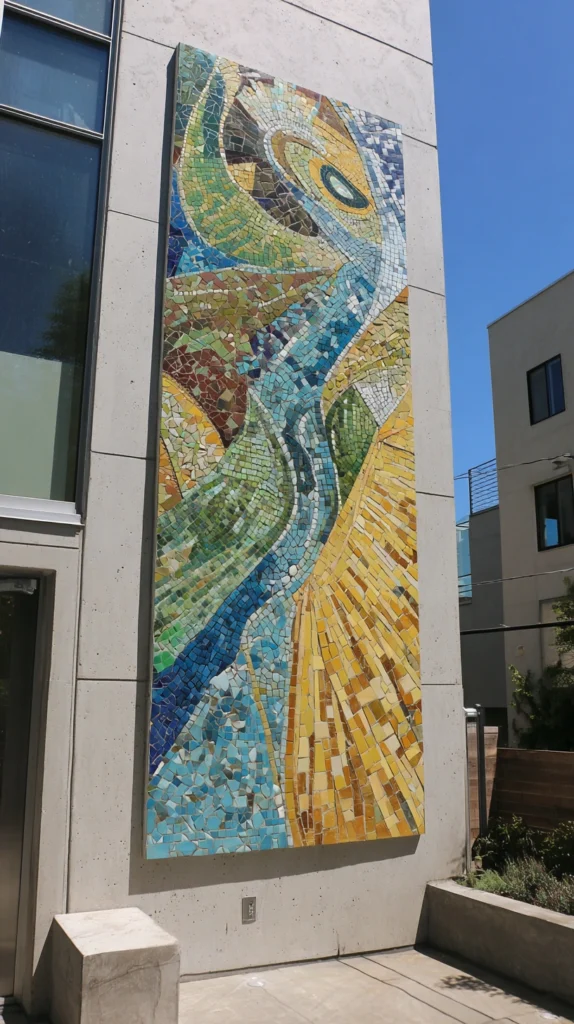
Budget: $60 – $300
A mosaic panel mounted on or set into a garden wall transforms a plain boundary into a focal point of genuine artistic interest. The scale of a wall panel allows for ambition — a large sun motif in amber and gold, a flowing abstract composition in blues and greens, a botanical illustration of a plant from the garden itself — and the permanence of a wall-mounted piece justifies the time and care invested in making it. A well-executed mosaic wall panel becomes one of the defining features of the garden.
Use exterior-grade tile adhesive and weatherproof grout for any wall-mounted outdoor mosaic — standard interior products fail in frost and rain within months. Mount the mosaic on a sheet of cement backer board ($15–$25) rather than directly on the wall surface, which makes the panel removable and replaceable if needed and provides a stable, non-porous substrate that adhesive bonds to reliably.
Garden tip: Design the panel on paper at its actual finished size before cutting a single piece of tile. Scaling up a small sketch to full size almost always reveals proportion problems and spacing issues that are invisible at thumbnail scale. A full-size drawing used as a laying guide saves hours of adjustment and produces a more confident, resolved composition.
3. The Mosaic Birdbath
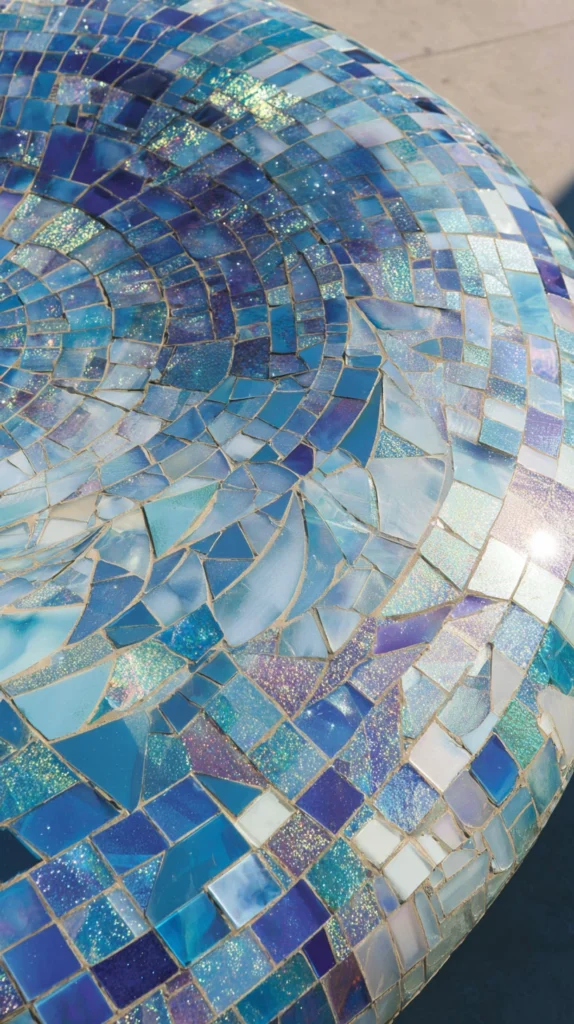
Budget: $40 – $150
A plain concrete or terracotta birdbath covered in mosaic becomes one of the most beautiful and wildlife-friendly features a garden can offer. The mosaic surface — iridescent glass tiles in blues, greens, and purples that shimmer in moving water and sunlight — transforms a functional garden accessory into a piece of garden sculpture that is genuinely worth looking at from every angle and in every light condition.
Use pool-safe glass mosaic tiles rather than ceramic for the interior water surface of a birdbath — they are non-porous, unaffected by prolonged water contact, and their reflective quality in water is far more beautiful than ceramic alternatives. The exterior of the birdbath can use any outdoor-rated mosaic material. Complete the grout joints inside the bowl with a waterproof, non-toxic grout that is safe for the birds using it.
Garden tip: Apply the mosaic to the outside of the birdbath before tackling the interior bowl. The curved interior requires pieces cut to a smaller size and arranged in a radial pattern — a technique that is significantly easier to execute once you have built confidence and familiarity with the adhesive and grout on the simpler exterior surfaces.
4. The Mosaic Terracotta Pot
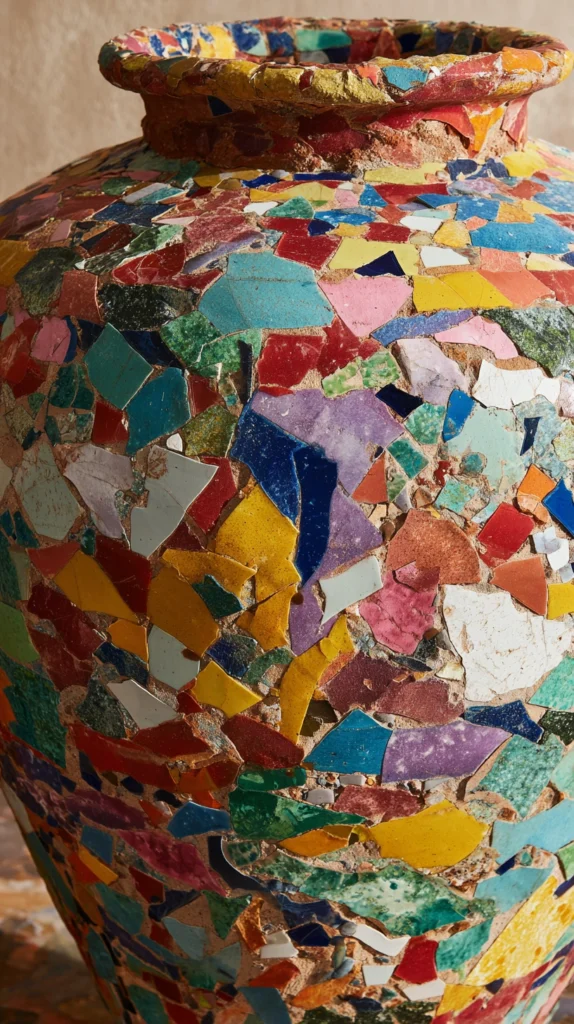
Budget: $20 – $80
Covering a plain terracotta pot in mosaic is one of the most immediately satisfying small-scale mosaic projects available. The cylindrical form is straightforward to work on, the curved surface adds a three-dimensional quality to the finished piece that flat panels cannot achieve, and the result — a pot that looks as though it came from a Moroccan or Mediterranean artisan market — is genuinely impressive for the relatively modest investment of materials and time it requires.
Broken mirror glass combined with coloured ceramic fragments creates a surface that catches light beautifully and suits both contemporary and traditional garden styles. Use a waterproof tile adhesive rated for outdoor use and apply it generously enough to hold each piece firmly — thin adhesive on a curved surface allows pieces to slide before the adhesive sets, which is the primary cause of frustration in mosaic pot projects.
Garden tip: Work on one quarter of the pot’s circumference at a time, allowing each section to set firmly before rotating the pot and continuing. Trying to mosaic the entire circumference at once results in pieces sliding on the curved surface before the adhesive grips. Working in sections eliminates this problem and produces cleaner, more even spacing between pieces.
5. The Pebble Mosaic Patio Feature
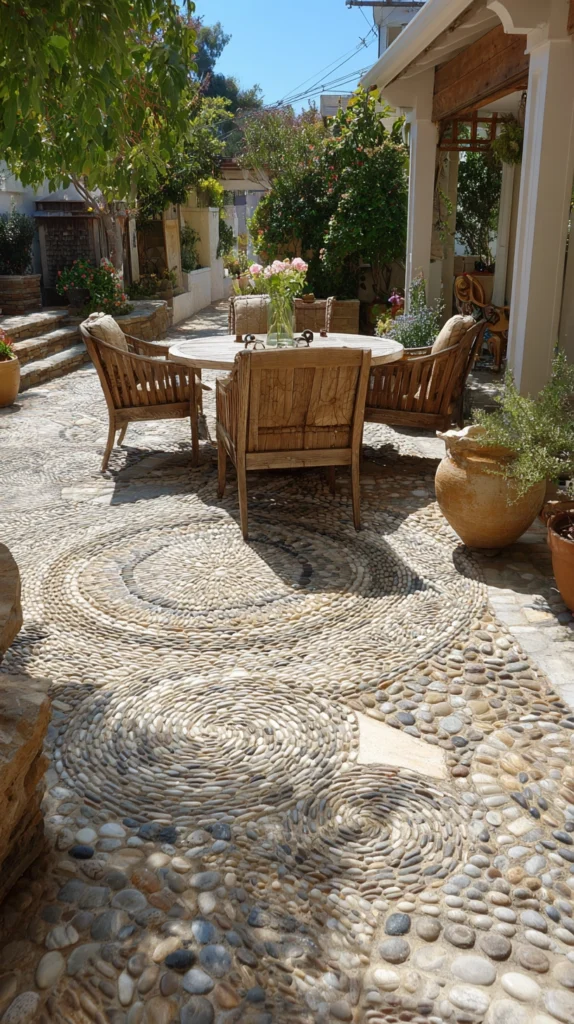
Budget: $50 – $250
A pebble mosaic panel set into a patio or courtyard floor — worked in black and white river pebbles, coloured cobbles, or a combination of pebble and cut stone — creates a permanent, floor-level artwork that gives the outdoor space a sense of craftsmanship and considered design. Traditional pebble mosaic has been used in Mediterranean and Eastern gardens for centuries, and the technique translates beautifully into contemporary garden settings.
Set pebbles on their edge in a mortar bed rather than laying them flat — edge-set pebbles are more stable, present a smaller surface area to the elements, and create a denser, more intricate-looking pattern than flat-laid stones. Pack them tightly together so the mortar between them is minimal and the pattern reads clearly from standing height.
Garden tip: Choose pebbles that are as consistent in height as possible within each colour group. Mixed heights in a pebble mosaic floor create an uneven surface that is uncomfortable to walk on and catches water in the low points. Sorting pebbles by size before you begin — grouping them into shallow, medium, and deep categories — makes laying a level surface significantly easier.
6. The Mosaic House Number or Name Plaque
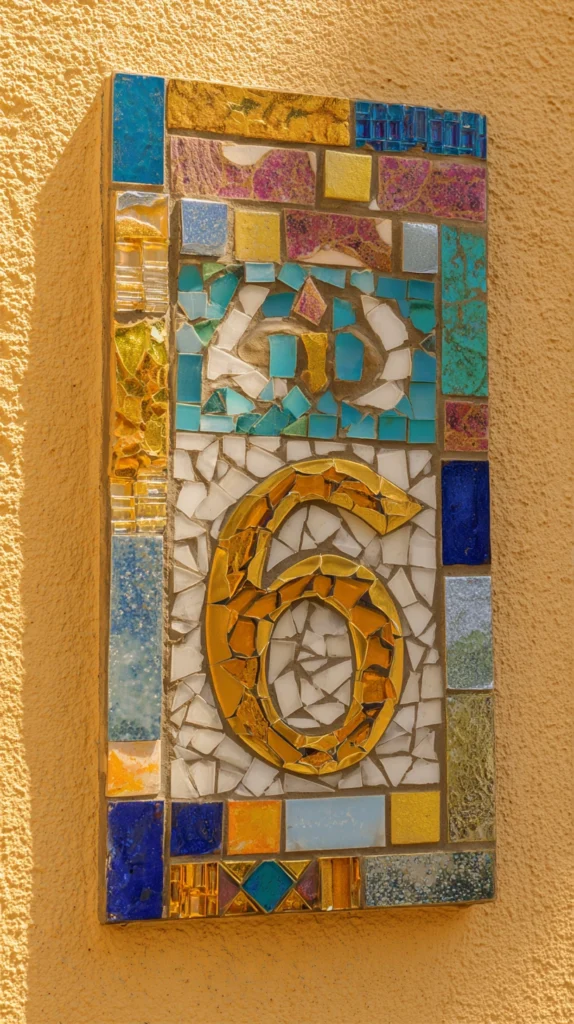
Budget: $25 – $100
A mosaic house number or name plaque is the most practical and visible application of the craft available to a home garden. Positioned beside the front gate or at the entrance to the garden, a beautifully made mosaic plaque introduces the character and colour of the garden to visitors before they have even stepped inside. It is also one of the most achievable mosaic projects for a beginner — the small scale, the simple text subject, and the contained format make it an ideal first serious project.
Use gold or silver smalti — the traditional glass mosaic material used in Byzantine and Roman mosaics — for the numerals or letters. Smalti has a depth and luminosity that no other material can replicate and makes text within a mosaic read with a clarity and presence that ceramic or vitreous glass cannot match. The background can use any outdoor-rated material in a complementary colour.
Garden tip: Choose a bold, simple font for mosaic lettering rather than a decorative or serif typeface. Thin strokes and elaborate serifs that look elegant in print become fragile and difficult to read when translated into mosaic pieces — a strong, geometric sans-serif font retains its clarity and legibility at any viewing distance.
7. The Mosaic Garden Table Top
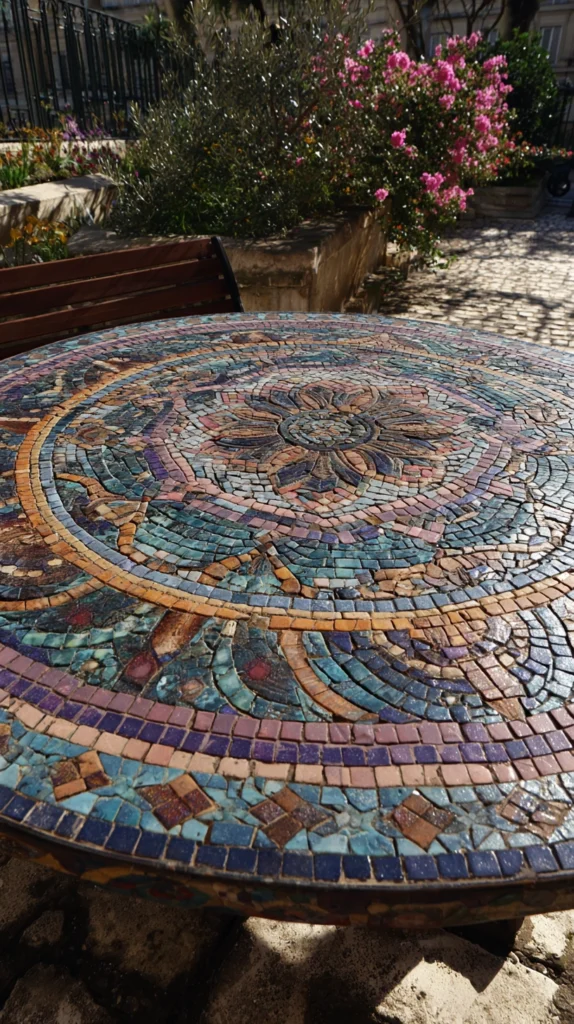
Budget: $50 – $200
A mosaic table top — a plain concrete, MDF, or existing table surface covered in mosaic — creates an outdoor table that is simultaneously a functional piece of furniture and a work of art. In a Mediterranean or Moroccan-inspired garden, a mosaic table top in geometric patterns of turquoise, cobalt, white, and terracotta becomes the centrepiece of an outdoor dining or seating area and sets the colour palette for everything around it.
Use ceramic mosaic tiles rated for outdoor use on a table surface — they are more resistant to scratching and impact damage from cups and plates than glass tiles, and their slightly matt surface is more practical for a dining table than the reflective surface of glass. Finish with multiple coats of outdoor-rated tile sealer to prevent staining from food and drink.
Garden tip: Design a mosaic table top with a defined central motif and a geometric border rather than a pattern that continues uniformly across the entire surface. A central focal point — a sun, a flower, a geometric star — gives the table a natural orientation and makes the design read clearly from above. A border frames the composition and conceals the edge where the mosaic meets the table frame.
8. The Mosaic Garden Bench
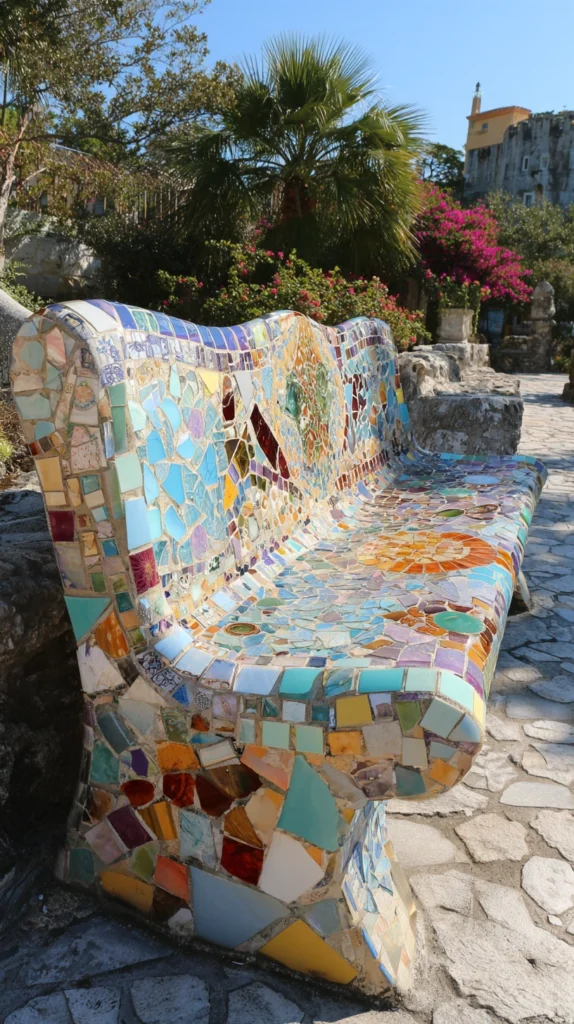
Budget: $80 – $350
A concrete, stone, or timber garden bench covered in mosaic becomes a piece of garden sculpture that earns its place in the garden regardless of whether it is being used as seating. Antoni Gaudí’s mosaic benches in Park Güell in Barcelona remain among the most celebrated examples of outdoor mosaic in the world, and while a domestic garden bench cannot aspire to that scale, the same principle — broken ceramic and tile arranged in organic, flowing patterns on curved seating surfaces — creates something genuinely extraordinary at garden scale.
Apply mosaic to the back and sides of a bench as well as the seat surface — a bench mosaiced only on the seat looks incomplete, while one covered on all visible surfaces reads as a fully resolved piece of garden art. Use rounded, smoothed tile edges on the seating surface itself to ensure comfort in use — sharp tile edges on a mosaic seat are uncomfortable and impractical.
Garden tip: Use the opus vermiculatum technique — the ancient Roman practice of outlining the main shapes in the design with a single row of carefully fitted pieces before filling in the background — to give your mosaic bench design clarity and definition. The outline row separates figure from background, makes the design readable from a distance, and gives the finished piece the confident, resolved quality of a professional mosaic.
9. The Mosaic Fountain or Water Feature
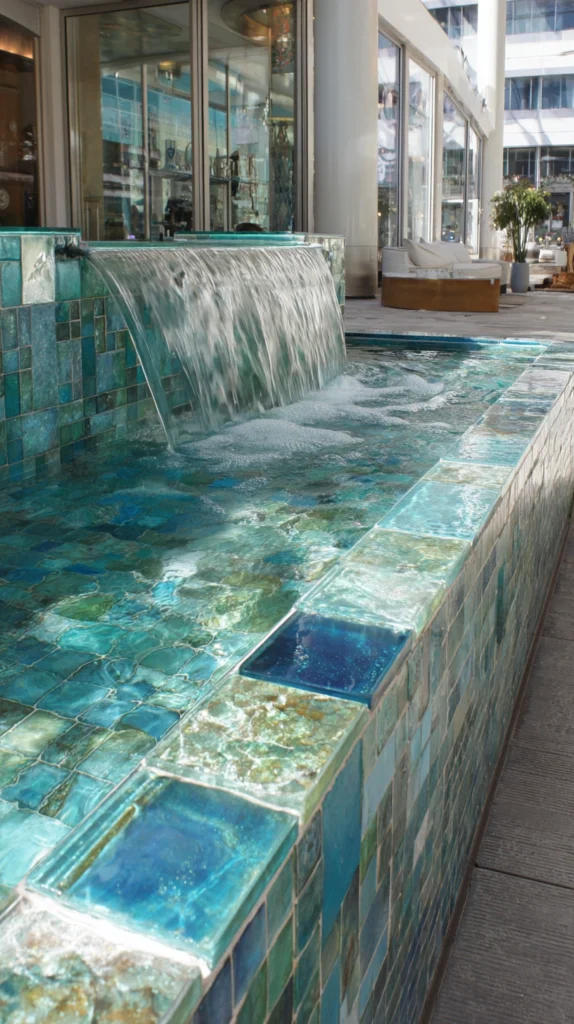
Budget: $100 – $600
A mosaic-covered water feature — a wall fountain, a raised pond surround, a freestanding water bowl, or a simple spout and basin — combines the visual richness of mosaic with the acoustic pleasure of moving water in a way that makes both elements more powerful. Iridescent glass tiles and mirror fragments on a surface in contact with flowing water catch and refract light with a constantly changing, living quality that static dry mosaic surfaces cannot achieve.
Use only fully vitrified, frost-proof tiles and epoxy or polyurethane adhesive for any mosaic in permanent contact with water. Standard cement-based adhesives dissolve in prolonged water immersion, and any tile that is not fully vitrified will absorb water, freeze, and spall in frost. The material choices for a water feature mosaic are more demanding than for dry surfaces — but the visual effect of a well-executed water mosaic rewards the additional care.
Garden tip: Apply a coat of waterproof membrane over the entire water-contact surface before beginning the mosaic if working on a rendered or concrete basin. The membrane seals the substrate against moisture penetration and provides a secondary waterproofing layer that protects the structure even if the grout joints develop hairline cracks over time.
10. The Mosaic Tree Surround
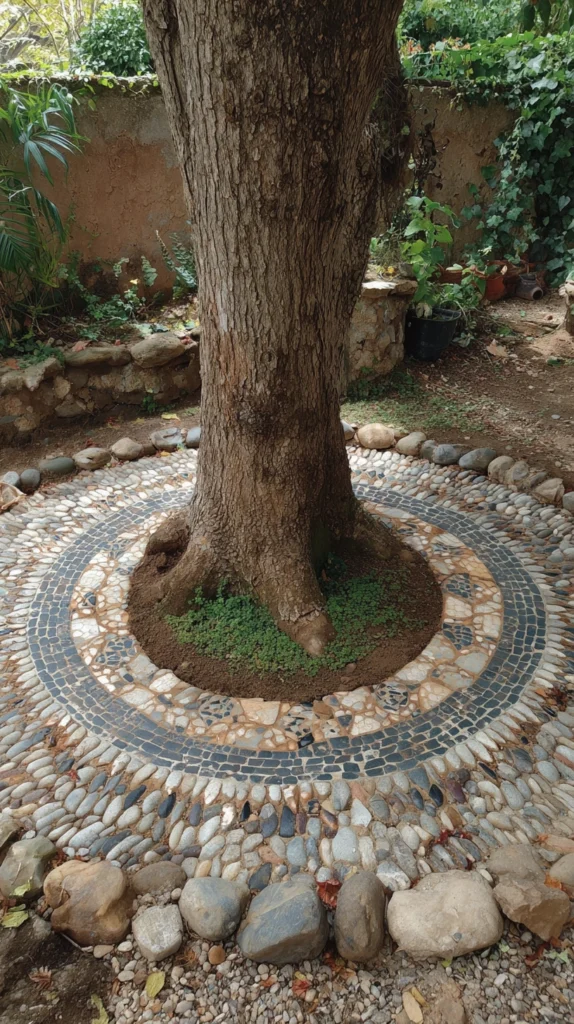
Budget: $40 – $180
A mosaic panel set into the ground around the base of a tree — a circular or square frame of pebble or tile mosaic surrounding the trunk — transforms a plain tree planting into a composed, intentional garden feature. It marks the tree as significant, gives the ground beneath it a decorative treatment that bare soil or mulch cannot provide, and creates a level of detail at ground level that rewards close inspection from every approach to the tree.
Use only permeable materials and open grout joints in a tree surround mosaic to allow water and air to reach the tree’s root system. A solid, impermeable mosaic surface laid over tree roots restricts gas exchange and water penetration in a way that damages the tree’s health over time — the mosaic design must be planned to preserve the permeability of the soil beneath.
Garden tip: Incorporate the natural surface roots of the tree into the mosaic design rather than trying to work around them. Roots that break through a mosaic surround over time disrupt and crack the work — a design that acknowledges and incorporates the roots from the beginning treats them as a design element rather than a problem and produces a more naturalistic, integrated result.
11. The Mosaic Plant Labels and Markers
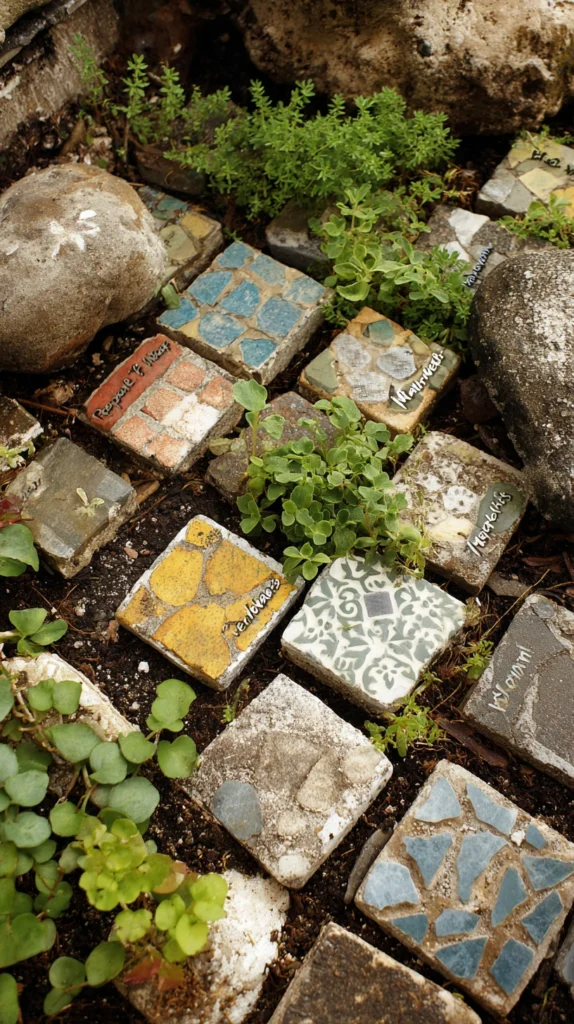
Budget: $15 – $60
Small mosaic plant labels — smooth river pebbles, pieces of slate, or small terracotta tiles with the plant name picked out in tiny mosaic letter pieces or simply decorated with a colour-coded mosaic pattern — are a charming and practical addition to a kitchen garden or herb bed. They are also an excellent entry-level mosaic project that can be completed with minimal materials, minimal time, and the fragments left over from larger mosaic projects.
Use permanent outdoor paint for the lettering on mosaic markers rather than trying to spell out names in tiny individual mosaic pieces — the scale is too small for individual letter pieces to remain legible at close range. The mosaic element provides the decorative identity of each marker while the painted text provides the practical information. The combination of mosaic decoration and painted text is both beautiful and functional.
Garden tip: Varnish or seal painted lettering on outdoor plant markers with at least two coats of exterior-grade clear varnish before placing them in the garden. Unprotected paint on an outdoor surface survives one season at best — properly sealed lettering remains legible for three to five years before needing repainting.
12. The Mosaic Gazing Ball
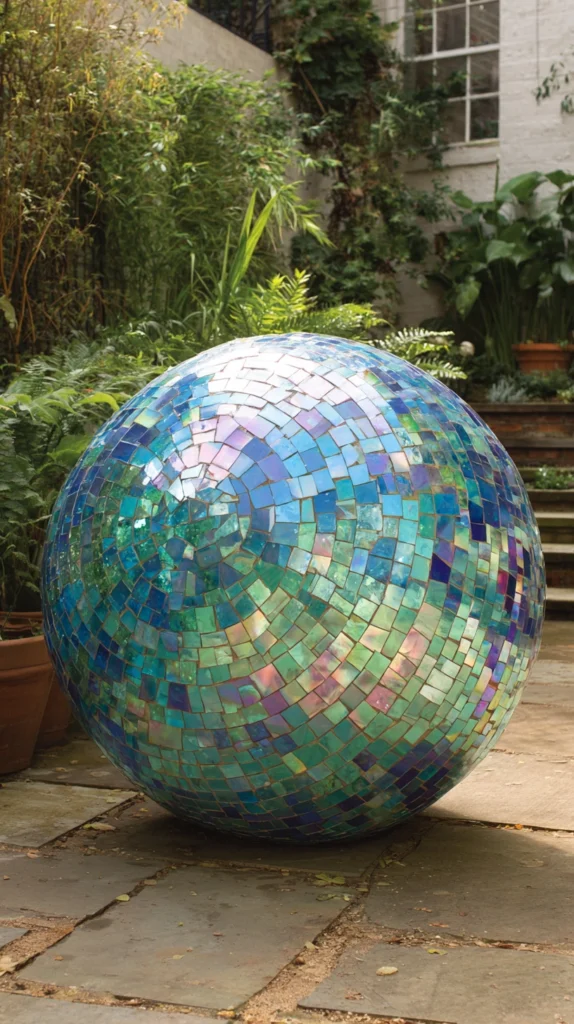
Budget: $30 – $120
A gazing ball — a reflective sphere traditionally placed in garden borders as a focal point — covered in mosaic rather than the conventional mirror glass becomes a piece of garden sculpture with depth, colour, and texture that its plain reflective counterpart entirely lacks. A polystyrene or concrete sphere covered in iridescent glass tiles, mirror fragments, and coloured smalti catches light from every angle and creates a constantly shifting, glittering focal point that looks beautiful in any season and any weather.
Polystyrene spheres in sizes from 15 to 40 centimetres diameter cost $5–$20 and provide the lightest and most affordable base for a mosaic gazing ball. For a more permanent outdoor piece, cast a concrete sphere in a rubber ball mould ($15–$30) for a weather-resistant base that handles frost without deteriorating. Seal the completed mosaic thoroughly before placing it in an exposed garden position.
Garden tip: Mount the completed gazing ball on a simple plinth — an upturned terracotta pot, a short section of timber post, or a purpose-made ball stand — rather than resting it directly on the soil. A sphere sitting on soil sinks, rolls, and collects moisture at the base contact point that accelerates deterioration. A raised plinth displays the ball properly and protects the base of the mosaic from ground moisture.
13. The Mosaic Mural on a Garden Shed

Budget: $80 – $400
A full mosaic mural covering one exterior wall of a garden shed transforms the most utilitarian structure in any garden into its most striking feature. A large-scale botanical illustration, a landscape vista, an abstract colour field, or a figurative scene rendered in mosaic tiles on a shed wall creates a permanent garden artwork of genuine ambition and visual presence that improves the entire garden from the moment it is completed.
Prepare the shed wall surface thoroughly before beginning — any loose, flaking, or unsound paint must be removed and the surface primed with an exterior bonding primer before adhesive is applied. A shed wall that is not properly prepared will allow pieces to detach within a single winter as the timber expands, contracts, and flexes with temperature and moisture changes.
Garden tip: Use mesh-backed mosaic sheets for large areas of background colour in a shed mural rather than placing individual tiles one by one. Mesh-backed sheets allow a 30×30 centimetre section of mosaic to be positioned and pressed into adhesive in a single movement, covering background areas far faster than individual tile placement. Reserve individual tile placement for the detailed areas of the design where precision matters.
14. The Mosaic Raised Bed Surround
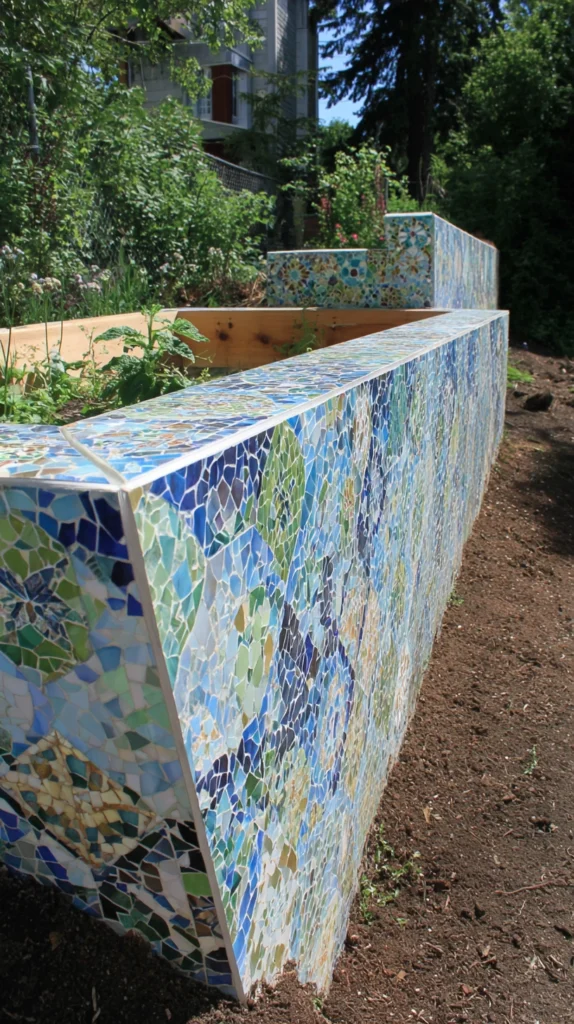
Budget: $60 – $280
The exterior walls of a raised vegetable or flower bed covered in mosaic panels give a kitchen garden a decorative richness and artisan character that painted timber or plain brick cannot match. Botanical motifs — illustrations of the crops growing inside the bed — make the most thematically coherent decoration, but geometric patterns, abstract colour compositions, and figurative scenes all work equally well. A raised bed with a beautiful mosaic exterior is a piece of garden furniture as much as a growing structure.
Apply the mosaic to the exterior faces of the raised bed walls only — the interior growing surfaces must remain plain timber or brick to avoid any risk of tile adhesive, grout chemicals, or ceramic fragments contaminating the soil and the food crops growing in it. The mosaic is purely exterior decoration and must be kept entirely separate from the growing environment.
Garden tip: Design the mosaic panels for each face of the raised bed as a continuous composition that reads as a single image when viewed from outside — rather than treating each face as an independent panel. A design that wraps continuously around all four exterior faces gives the raised bed a sculptural, considered quality that four separate independent panels cannot achieve.
15. The Grand Mosaic Entrance Feature
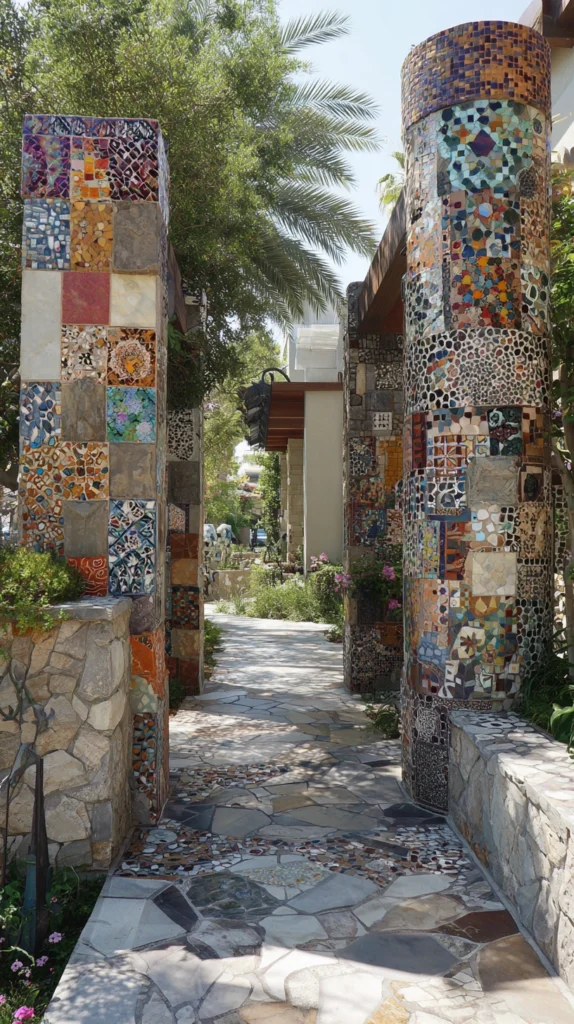
Budget: $200 – $1,500
The most ambitious idea on this list — a full mosaic treatment of a garden entrance feature, incorporating gate pillars, a surrounding wall section, a paved threshold panel, and possibly a mosaic name or number plaque — creates a garden entrance of extraordinary character and lasting visual impact. This is mosaic at its most architectural and most permanent, requiring careful planning, quality materials, and a level of commitment that puts it beyond a weekend project — but producing a result that will define the character of the garden for decades.
Plan the entrance mosaic as a unified design in which all the individual elements — pillars, wall, threshold panel, plaque — connect visually through a shared colour palette, a continuous pattern, or a design that flows from one element to the next. A grand entrance mosaic that treats each element independently looks assembled rather than designed; one that flows continuously across all surfaces looks as though it was always there.
Garden tip: Commission a small test panel in the intended materials and colour palette before committing to the full entrance installation. A test panel approximately 30×30 centimetres, made with the actual tiles, adhesive, and grout you intend to use, reveals how the colours read together in the specific light conditions of your garden entrance, how the grout colour affects the overall tone, and whether the design works at the intended scale — all questions that are far easier and cheaper to answer in a test panel than in a completed installation.
Mosaic rewards the maker who begins. The first stepping stone teaches you what no book or instruction can — how the adhesive behaves, how the grout transforms the piece, how a composition that looked uncertain suddenly resolves itself the moment the grout is wiped back and the colours emerge. Start with the smallest idea on this list, make it with care, and place it somewhere in the garden where you will see it every day. The next project will follow naturally, and the garden will grow richer with each one.