14 Garden Fence Decor Ideas That Add Style and Privacy
A garden fence is rarely celebrated for what it could be. Most fences are installed with a single practical purpose — to mark a boundary, contain a pet, or block a sightline — and then largely ignored as a decorative opportunity. This is a missed chance of considerable scale. A fence represents some of the largest surface area in any garden, and a fence that is treated as a blank canvas rather than a bare boundary transforms both the style and the atmosphere of the outdoor space in a way that planting and furniture alone cannot achieve.
The best fence decor does two things simultaneously — it adds genuine visual interest and personality to the garden, and it enhances the sense of enclosure and privacy that a good fence should provide. The ideas below cover every fence style, every garden aesthetic, and every budget, each one treating the fence as a feature worth investing in rather than a structure worth ignoring.
1. The Climbing Plant Covered Fence
Budget: $30 – $200
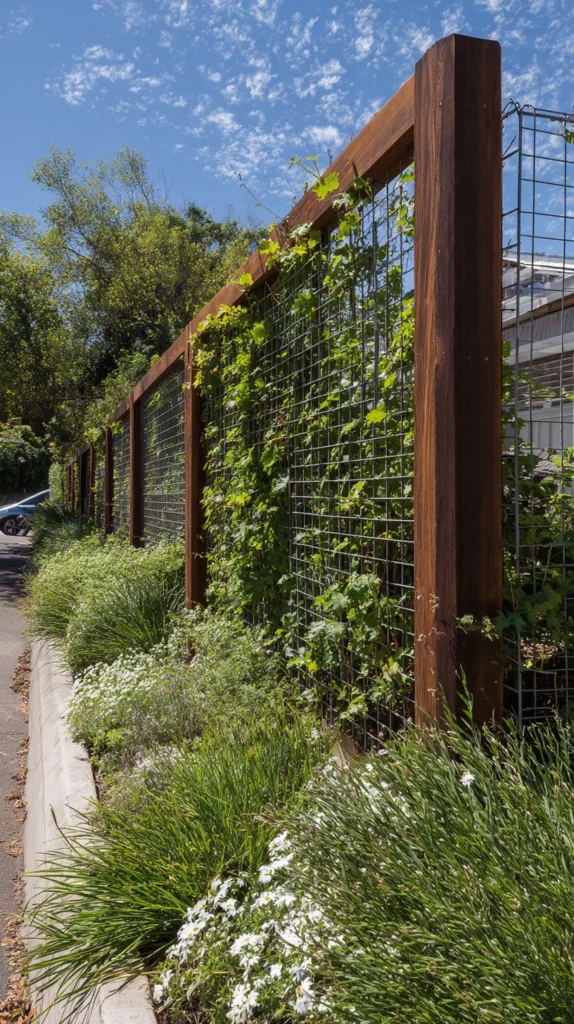
A fence covered in climbing plants is the most naturalistic, most ecologically generous, and most enduringly beautiful fence treatment available. Clematis, climbing roses, honeysuckle, jasmine, wisteria, and ivy trained across a timber fence transform a flat, painted surface into a living, flowering, fragrant wall that changes character with every season. No amount of paint, decoration, or applied ornament produces a result with the same depth, beauty, and organic warmth as a fence covered in well-chosen climbers.
Fix horizontal training wires at 30-centimetre intervals across the fence face using vine eyes screwed into the timber — this gives climbing plants a consistent framework to grip and keeps the stems and foliage away from the fence surface, which significantly improves air circulation and reduces the moisture retention that rots timber panels prematurely. Clematis montana covers a fence rapidly and produces an extraordinary flush of small pink or white flowers in spring. Rosa ‘Zephirine Drouhin’ is thornless, repeat-flowering, and fragrant — ideal for a fence beside a path or seating area.
Garden tip: Plant climbers at least 30 centimetres away from the base of the fence rather than directly against it. The soil directly at the base of a fence is typically dry, compacted, and nutrient-poor — the fence above intercepts rainfall and the foundations below compete for moisture. Planting 30 centimetres out puts the roots in better soil and the plant grows toward the fence naturally as it establishes.
2. The Painted Fence Feature Wall
Budget: $20 – $80
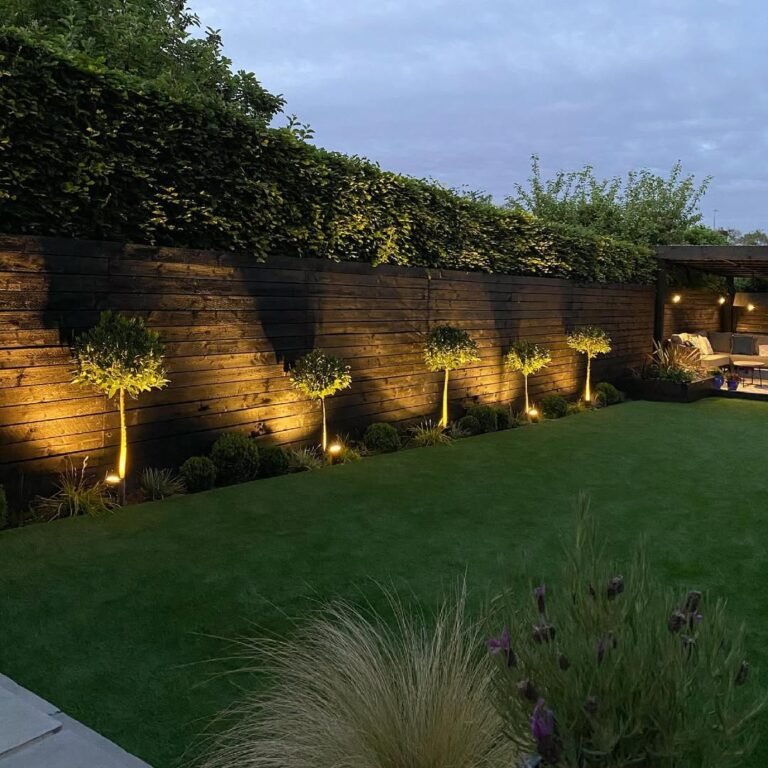
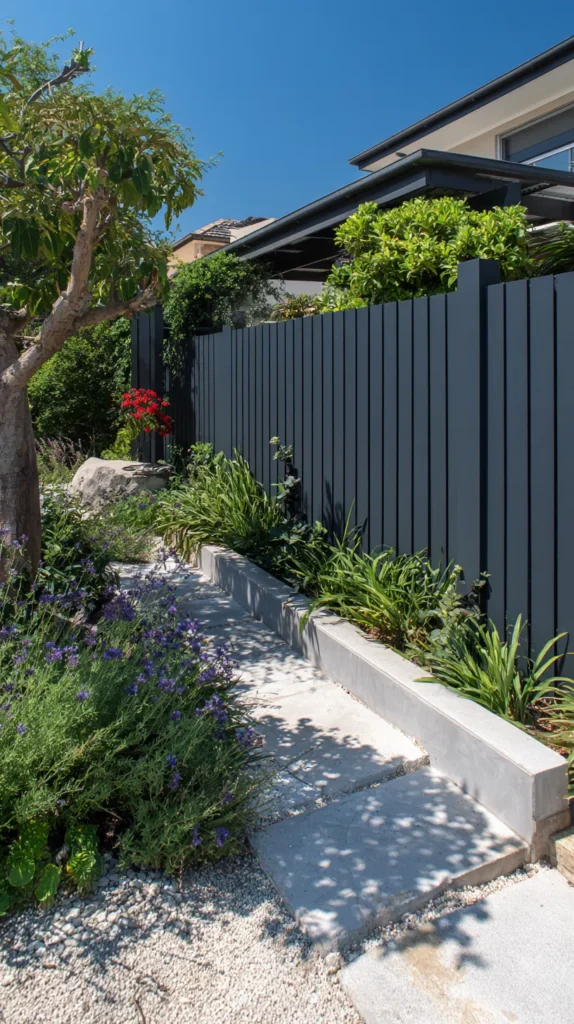
A fence painted in a strong, considered colour becomes a feature wall that sets the mood of the entire garden. Deep charcoal, forest green, navy blue, warm terracotta, and dusty sage all read as sophisticated, contemporary fence colours that make plants in front of them look more vivid and the garden as a whole feel more designed. The difference between a standard brown timber fence and the same fence painted in a carefully chosen colour is transformative — it costs almost nothing and changes everything.
Exterior timber paint in deep colours costs $15–$40 per tin and covers approximately 10–12 square metres per litre. Dark fence colours — particularly charcoal and near-black — recede visually, making the garden feel larger by pushing the boundary back. Light colours advance and make a small garden feel more enclosed. Deep greens and blues suit planting-heavy gardens; charcoal and black suit contemporary, architectural spaces.
Garden tip: Paint the fence posts and any horizontal rails the same colour as the panels rather than leaving them in a contrasting tone. A fence where the structural elements are a different colour from the infill panels draws attention to the construction rather than the overall surface, which interrupts the feature wall effect. A single consistent colour across the entire fence reads as an intentional design decision.
3. The Vertical Garden Fence
Budget: $60 – $300
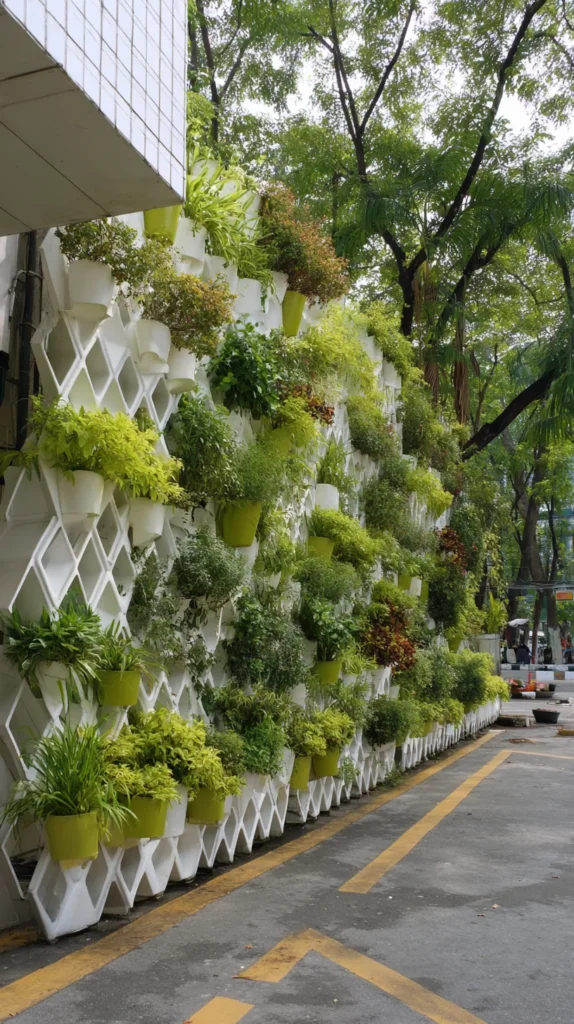
A fence fitted with vertical planting pockets, modular planter systems, or a series of wall-mounted containers transforms a flat boundary into a productive, three-dimensional growing surface. Herbs, trailing flowers, ferns, succulents, and strawberries all grow well in wall-mounted planters, and the density of planting that a fully planted fence wall can achieve creates a lush, green backdrop that no paint colour or decorative panel can replicate.
Modular pocket planter systems designed for fence mounting cost $30–$80 for a section covering approximately one square metre. Individual wall-mounted planters in terracotta, metal, or ceramic cost $5–$20 each and can be arranged in any pattern across the fence face. A south or west-facing fence planted with herbs — rosemary, thyme, oregano, mint, and chives — creates a productive kitchen garden on a vertical surface that takes up no ground space.
Garden tip: Install a simple drip irrigation line behind any vertical planting system before attaching the planters to the fence. Watering individual wall-mounted planters by hand is time-consuming and inconsistent — the upper planters are easy to reach, the lower ones are easily forgotten, and the plants in the middle dry out fastest. A drip line on a timer eliminates all of these problems in a single installation.
4. The Mirror and Reflective Panel Fence
Budget: $50 – $250
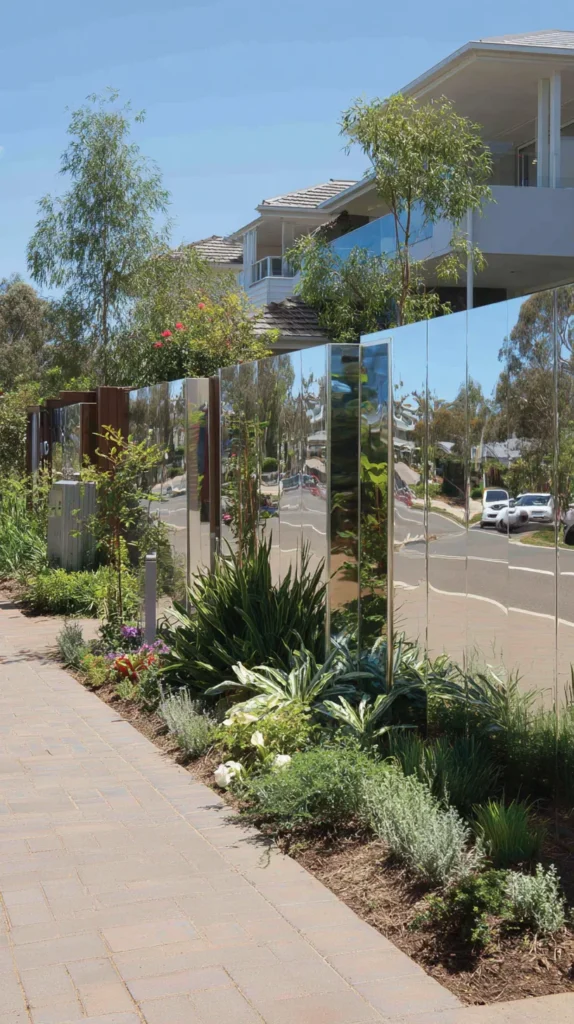
Weatherproof mirrors or polished metal reflective panels mounted on or set into a fence create the illusion of depth, borrow light from the brightest part of the garden, and make a small enclosed space feel significantly larger than it is. A full-length arched mirror mounted on a fence at the end of a path creates the convincing illusion of a garden continuing beyond the boundary. A series of smaller mirrors arranged across a shaded fence face fills a dark corner with reflected light and reflected planting.
Use only specifically rated outdoor mirrors or stainless steel mirror-finish panels rather than interior mirrors — standard mirror glass backing deteriorates rapidly in outdoor conditions and produces black spots and edge corrosion within a single season. Outdoor-rated mirrors cost $40–$150 each. Brushed or mirror-finish stainless steel panels cost $50–$200 and are completely weatherproof.
Garden tip: Position fence mirrors so they reflect the most attractive section of the garden — a planted border, a specimen tree, a patch of open sky — rather than reflecting the viewer standing directly in front of them. A mirror that primarily shows the observer looking at themselves loses the illusion of depth and space that makes garden mirrors so effective. Angle the mirror very slightly so the reflection shows the garden rather than the person.
5. The Trellis Extension and Screen
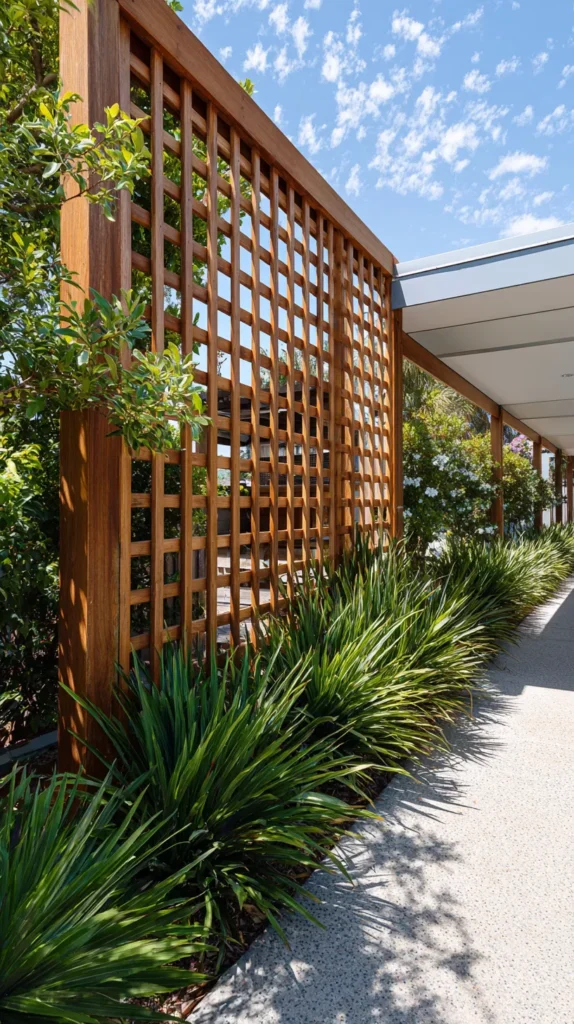
Budget: $30 – $150
Adding a trellis extension above the top of an existing fence increases the height of the boundary — for privacy, for wind filtering, and for the additional climbing plant surface it provides — without the weight, cost, or visual bulk of a solid fence extension. A 30–60 centimetre trellis topper above a standard 1.8-metre fence panel adds meaningful height and privacy while allowing air to pass through the open lattice structure, which actually makes the fence more wind-resistant than a solid extension would be.
Timber trellis panels cost $10–$30 each for standard sizes. Diamond lattice suits traditional and cottage garden styles. Square grid trellis suits contemporary gardens. Fix the trellis to the existing fence posts rather than to the panel tops — post-to-post fixing is far more stable than panel-to-panel, and a trellis extension fixed to the posts will outlast the fence panels beneath it.
Garden tip: Plant one climbing plant per trellis panel rather than one per fence section. A single climbing plant given the full width of one trellis panel covers it more evenly and more densely than several plants competing for the same surface. Clematis viticella varieties are particularly well suited to trellis toppers — they are compact enough not to overwhelm the structure and flower prolifically on the current season’s growth.
6. The Fence Planter Box Row
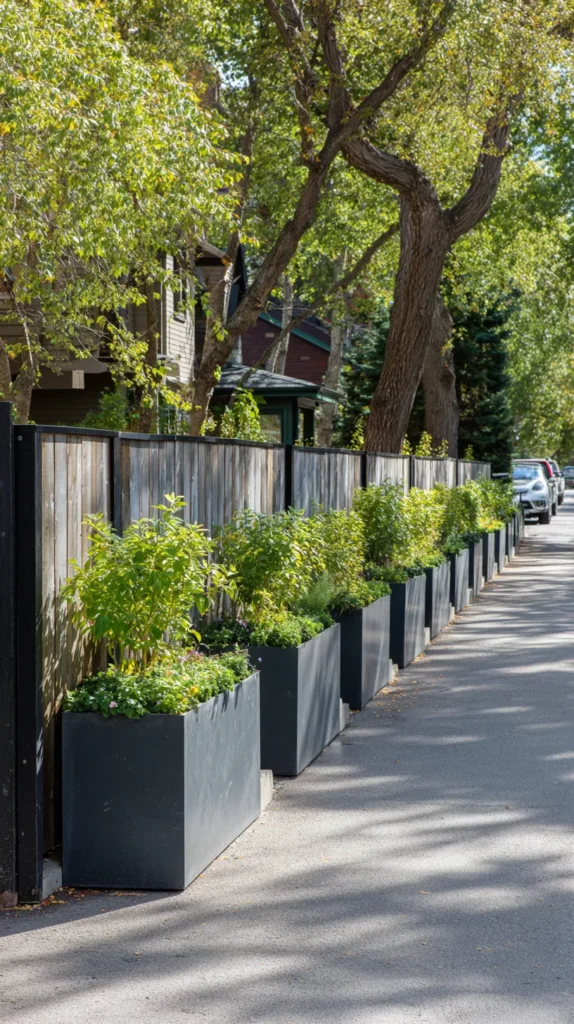
Budget: $40 – $180
A continuous row of planter boxes fixed to the top rail of a fence — or bracketed to the fence face at a consistent height — creates a planted border at an elevated level that adds colour, fragrance, and visual interest to the fence line without requiring any ground space at the base. Trailing petunias, lobelia, bacopa, pelargoniums, and trailing herbs all perform beautifully in fence-mounted planters and create a soft, colourful curtain of growth that drapes down the fence face through the summer months.
Timber or metal trough planters at 60–90 centimetres long cost $10–$30 each. Fix them with heavy-duty L-brackets to the top fence rail rather than hanging them on hooks — a planter full of damp compost is considerably heavier than it looks and a hook fixing will fail in wind. L-bracket fixing distributes the weight across the rail and remains secure regardless of how much rain the compost absorbs.
Garden tip: Line timber fence planter boxes with heavy-duty polythene before filling with compost. The polythene prevents the compost moisture from being in constant contact with the timber box walls, which extends the life of the planter significantly. Pierce the polythene at the base of the box in several places for drainage before lining — retained moisture with no outlet is worse for both the timber and the plants than no lining at all.
7. The Bamboo and Natural Screen Panel
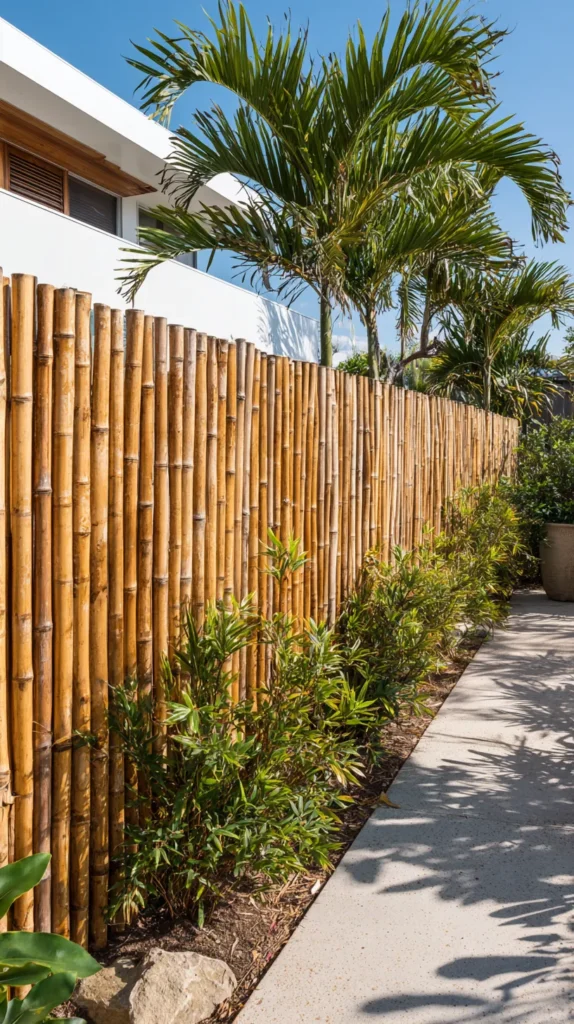
Budget: $50 – $200
Natural bamboo screening panels, reed panels, or woven willow hurdles fixed to or in front of an existing fence add texture, warmth, and an organic quality that no painted or decorated timber fence can replicate. The natural golden-brown tones of bamboo and reed complement planting and terracotta beautifully, suit Mediterranean, Japanese, and naturalistic garden styles, and create a fence surface with a tactile richness that manufactured panels lack entirely.
Bamboo screening panels cost $15–$40 per metre. Reed screening rolls cost $10–$30 per metre. Both can be fixed directly to an existing fence framework using galvanised staples or cable ties. They will weather naturally over time — bamboo fades from gold to silver-grey, reed from pale straw to warm brown — and both look more beautiful as they age than they do when new.
Garden tip: Fix natural screening panels with a small gap between the panel and the existing fence surface behind it rather than flush against it. The air gap allows moisture to evaporate from both surfaces after rain, which dramatically extends the life of both the screening panel and the fence behind it. Panels fixed flush to a damp fence surface retain moisture between the two layers and accelerate rot in both.
8. The Fence Art Installation
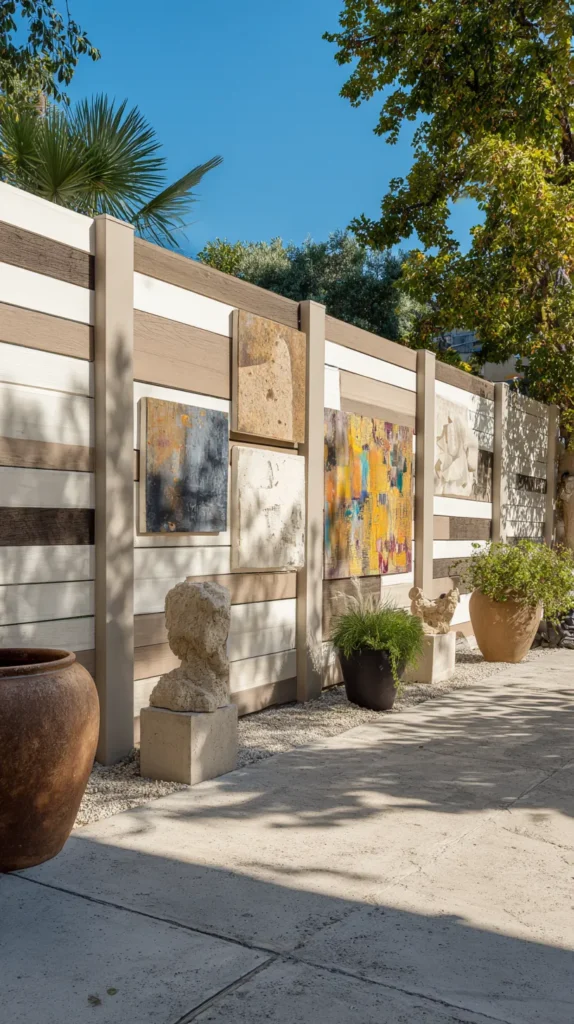
Budget: $30 – $200
A fence treated as an outdoor gallery wall — hung with weatherproof art panels, ceramic pieces, sculpted metal forms, painted timber panels, or a series of framed botanical prints behind glass — brings personality and genuine artistic character to a garden boundary in a way that no other treatment achieves. A carefully chosen collection of outdoor art pieces on a fence creates a garden that rewards close inspection and reveals more detail the longer you spend in the space.
Weatherproof metal art panels in botanical, geometric, or abstract forms cost $20–$80 each. Ceramic wall pieces designed for outdoor use cost $15–$60. Painted timber panels sealed with exterior varnish cost whatever the materials and creative effort amount to — a hand-painted panel is often the most personal and characterful option available. Space pieces with deliberate gaps between them rather than covering every inch of the fence.
Garden tip: Use a consistent hanging height for all art pieces on a fence wall — align the centre of every piece at the same height, as you would hang pictures on an interior wall. Pieces hung at random heights create a restless, accidental arrangement; pieces aligned at a consistent centre height read as a considered gallery regardless of how different the individual pieces are in size and shape.
9. The Espalier Fruit Tree Fence
Budget: $60 – $300
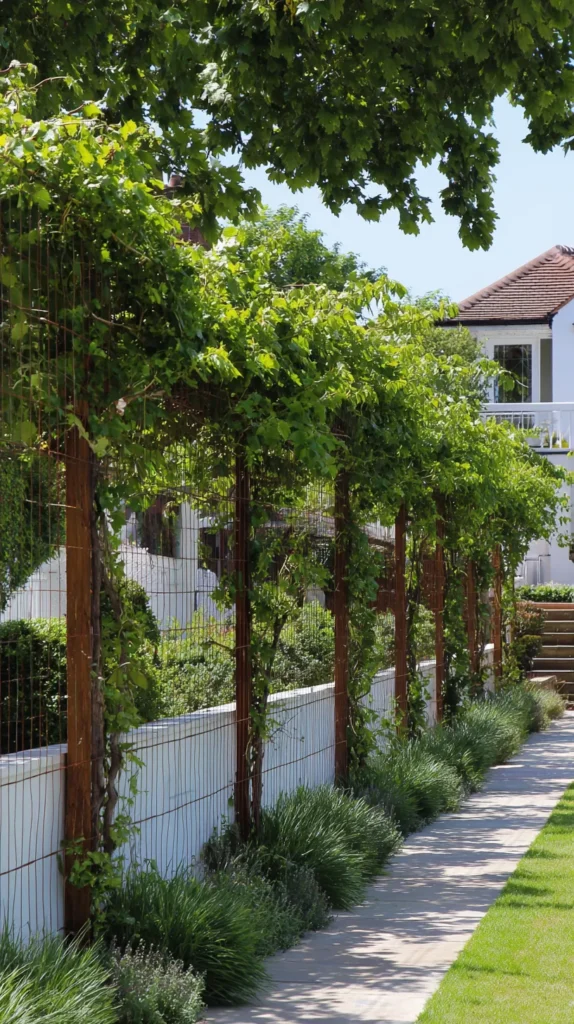
An espalier fruit tree — a tree trained flat against a fence with its branches spread horizontally on wires to create a two-dimensional fruiting form — is one of the most beautiful and most productive things a garden fence can support. Apples, pears, figs, and peaches all respond well to espalier training, producing better fruit quality on a warm, sheltered fence than they would as freestanding trees in the open garden. A fence line of espalier fruit trees in blossom in spring is one of the most extraordinary sights a domestic garden can offer.
Train horizontal wires at 40-centimetre intervals up the fence face using vine eyes. A young feathered maiden apple or pear tree ($20–$40) provides the initial framework from which horizontal tiers are trained over three to four years. The process is slower than most garden projects but the result — a productive, beautiful, living fence covering — lasts decades and improves with each passing year.
Garden tip: Choose a self-fertile apple or pear variety for a single espalier fence rather than one that requires a pollination partner. James Grieve, Grenadier, and Conference are all self-fertile, reliable croppers that perform well as espaliers on a sheltered fence. A variety that requires a pollinator will flower every year without setting fruit if the partner variety is not within pollinating distance.
10. The String Light Fence Canopy
Budget: $30 – $120
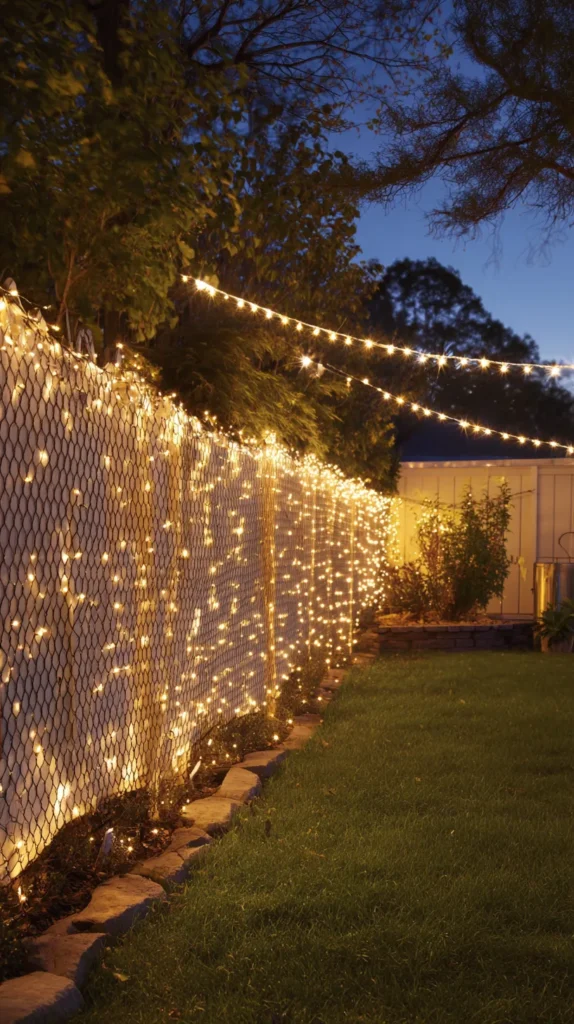
Outdoor string lights fixed to the top of a fence and draped in a loose canopy above the seating area — or simply threaded along the fence face at a consistent height — transform the garden after dark and give the fence a warm, atmospheric presence that its daytime character rarely suggests. A fence hung with warm white string lights becomes the most inviting boundary in the neighbourhood after dark and extends the usable hours of the outdoor space well beyond sunset.
Solar-powered outdoor string lights cost $15–$40 per string and require no wiring. Mains-powered LED string lights cost $20–$50 per string and give a more consistent, controllable light output. Fix the lights to the fence using small screw hooks at regular intervals — hooks give a clean, intentional line, while random-draped string looks accidental rather than designed.
Garden tip: Choose warm white bulbs at 2700K colour temperature rather than cool white or daylight spectrum for outdoor string lights on a garden fence. Warm white creates the golden, inviting glow that makes outdoor spaces feel genuinely welcoming after dark. Cool white produces a harsher, more clinical light that suits commercial settings rather than residential gardens.
11. The Woven Willow or Hazel Hurdle Fence
Budget: $60 – $400
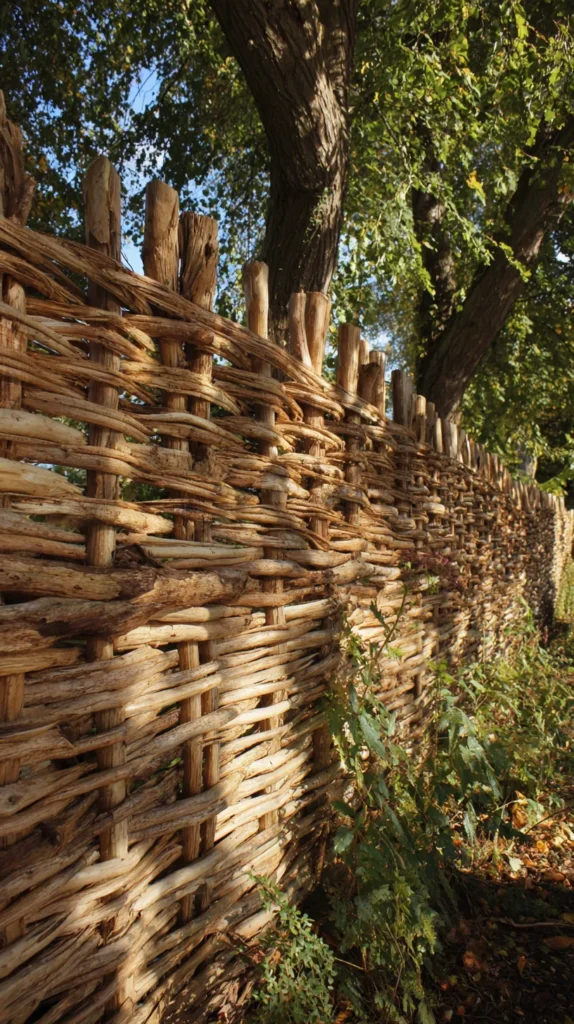
Woven willow or hazel hurdle panels — traditionally made by hand from flexible willow rods or split hazel woven around upright stakes — create a garden fence with a craft quality and an organic character that no manufactured panel can replicate. The irregular, handmade surface texture, the warm honey-brown tone of new hazel, and the architectural woven pattern of willow make these panels among the most visually interesting boundary treatments available for a cottage, rural, or naturalistic garden style.
Hazel hurdle panels cost $40–$80 each for a standard 1.8×1.8 metre panel from a craft supplier or country show. Willow panels cost $50–$100 each. Both last five to ten years in an outdoor setting before needing replacement — significantly shorter than timber board fencing but at a lower initial cost and with considerably more character. Replace individual panels as needed rather than the entire fence run.
Garden tip: Fix hurdle panels to a metal post framework rather than to timber posts. Metal fence posts driven into the ground last indefinitely without rotting — attaching relatively short-lived hurdle panels to long-lasting metal posts means only the panels ever need replacing, and the post framework can support several generations of hurdles without ever needing attention.
12. The Outdoor Shelving and Storage Fence
Budget: $50 – $250
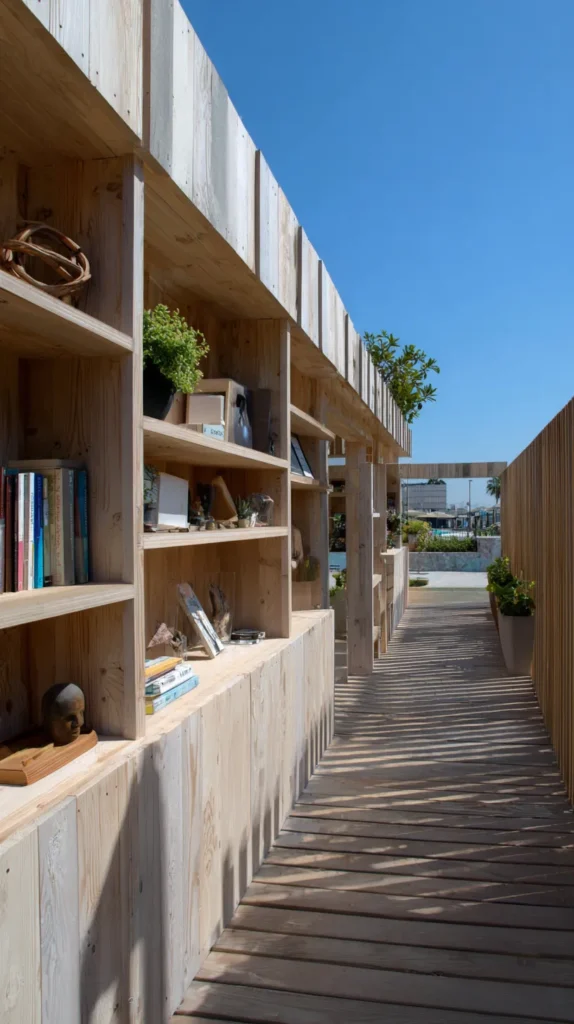
A fence wall fitted with outdoor shelving — for potted plants, garden tools, lanterns, decorative objects, and seasonal displays — becomes a functional and decorative element that works harder than any purely ornamental treatment. A row of wall-mounted timber shelves on a sheltered fence face, stocked with terracotta pots at varying heights, a collection of garden ceramics, and a few seasonal plants, creates a display that changes with the garden calendar and makes the fence the most interesting surface in the outdoor space.
Exterior-grade timber shelving brackets cost $5–$15 each. Cut shelving from a single length of treated timber at consistent depths — 20–25 centimetres is practical for most pots and objects. Space the shelves at varying heights rather than at perfectly equal intervals — a varied spacing looks considered and allows taller plants and objects on lower shelves without the shelf above interfering.
Garden tip: Anchor heavy shelving units to fence posts rather than to fence panels. Fence panels are designed to resist horizontal wind pressure but are not engineered to carry vertical shelf loads — fixing shelving to a panel face rather than to the posts risks pulling the panel fixings loose under load. Post-fixed shelving is stable, permanent, and capable of carrying significant weight without any risk to the fence structure.
13. The Gabion Basket Fence
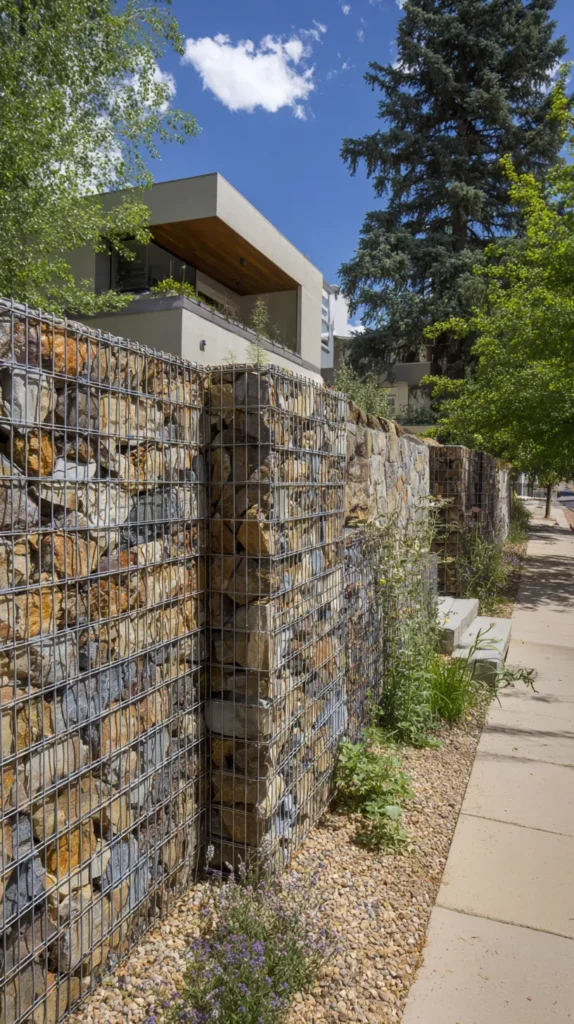
Budget: $150 – $800
Gabion baskets — steel wire mesh cages filled with stone, flint, recycled glass, or reclaimed brick — used as a freestanding fence or retaining boundary create one of the most substantial, characterful, and visually interesting garden boundaries available at any price. The combination of the industrial steel mesh and the natural or reclaimed fill material has a raw, honest quality that suits contemporary, industrial, and naturalistic garden styles equally well, and the weight and solidity of a gabion fence creates a sense of permanent enclosure that timber and metal panel fences cannot match.
Standard gabion basket frames in 1×1×0.5 metre sizes cost $20–$50 each empty. Fill with local fieldstone ($30–$60 per tonne), recycled glass ($40–$80 per bag), or reclaimed brick fragments sourced free from demolition sites. The fill material determines the character of the finished fence — pale limestone gives a light, contemporary look; dark flint gives a dramatic, moody boundary; recycled glass adds colour and translucency.
Garden tip: Fill the visible face of each gabion basket with the most attractive pieces of stone or material placed carefully by hand, then fill the interior with more randomly sorted material. The face of the gabion is what the garden sees — a carefully composed face of consistent, attractive stones makes the finished basket look considered and crafted rather than simply dumped full of rubble.
14. The Privacy Screen With Planting Gaps
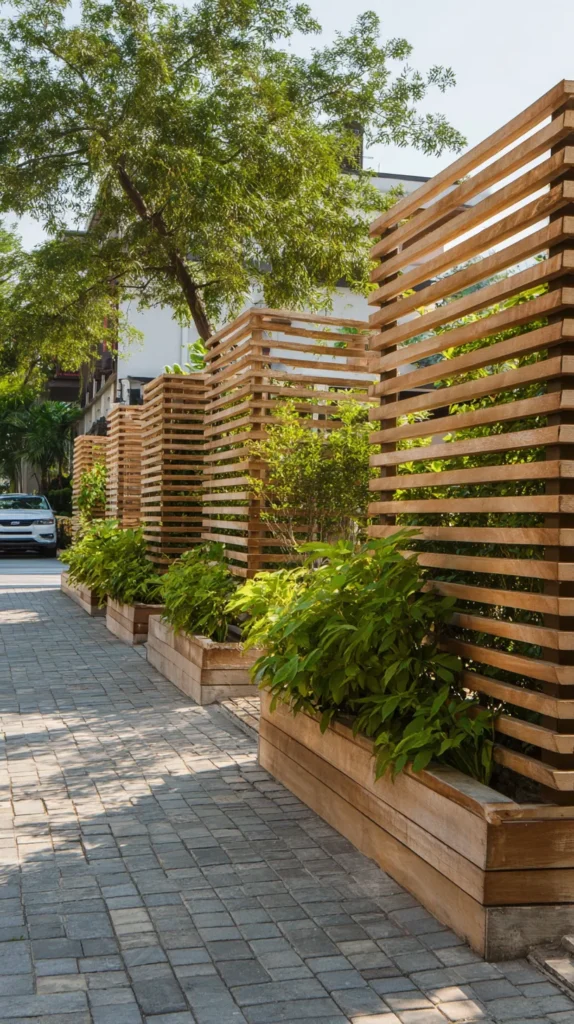
Budget: $100 – $600
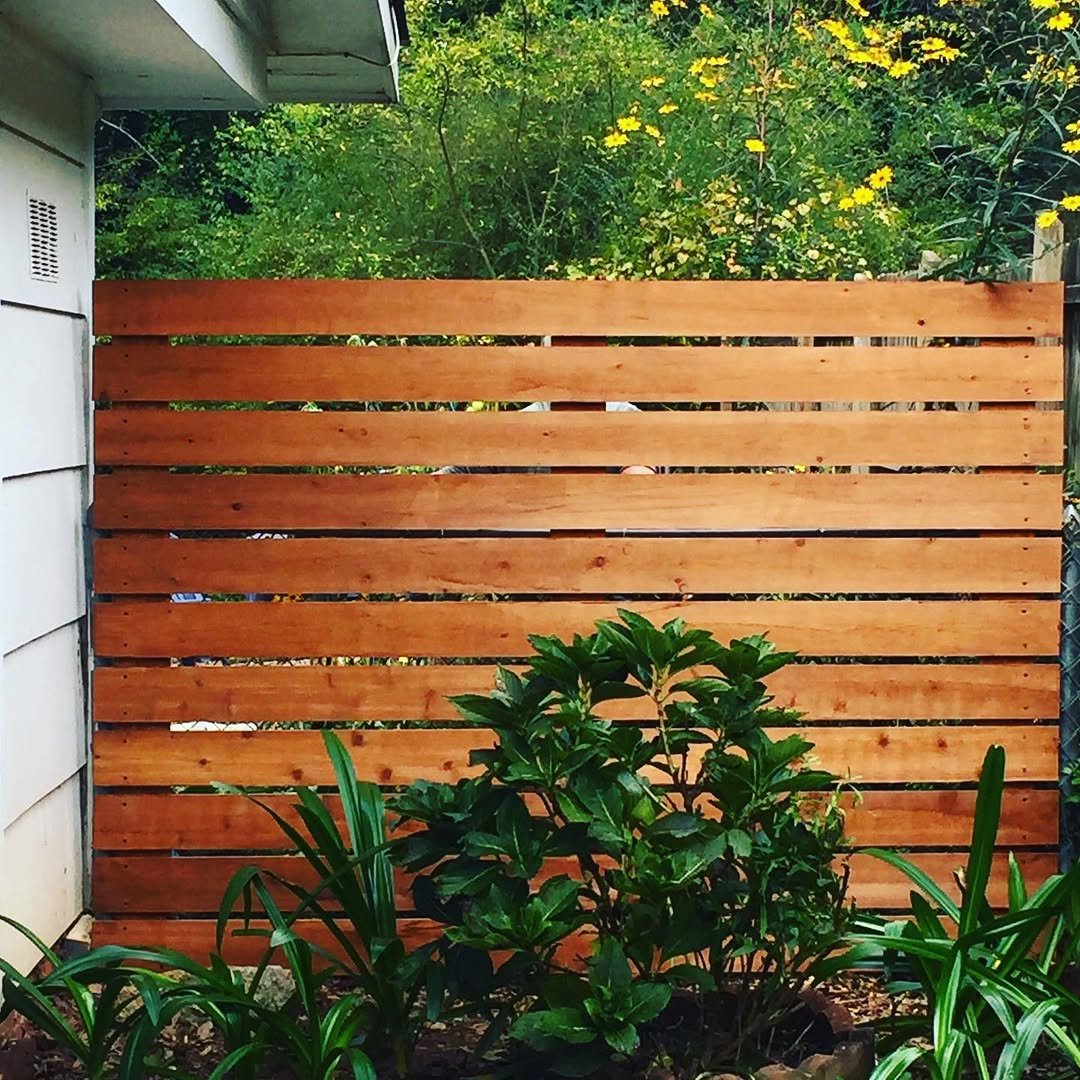
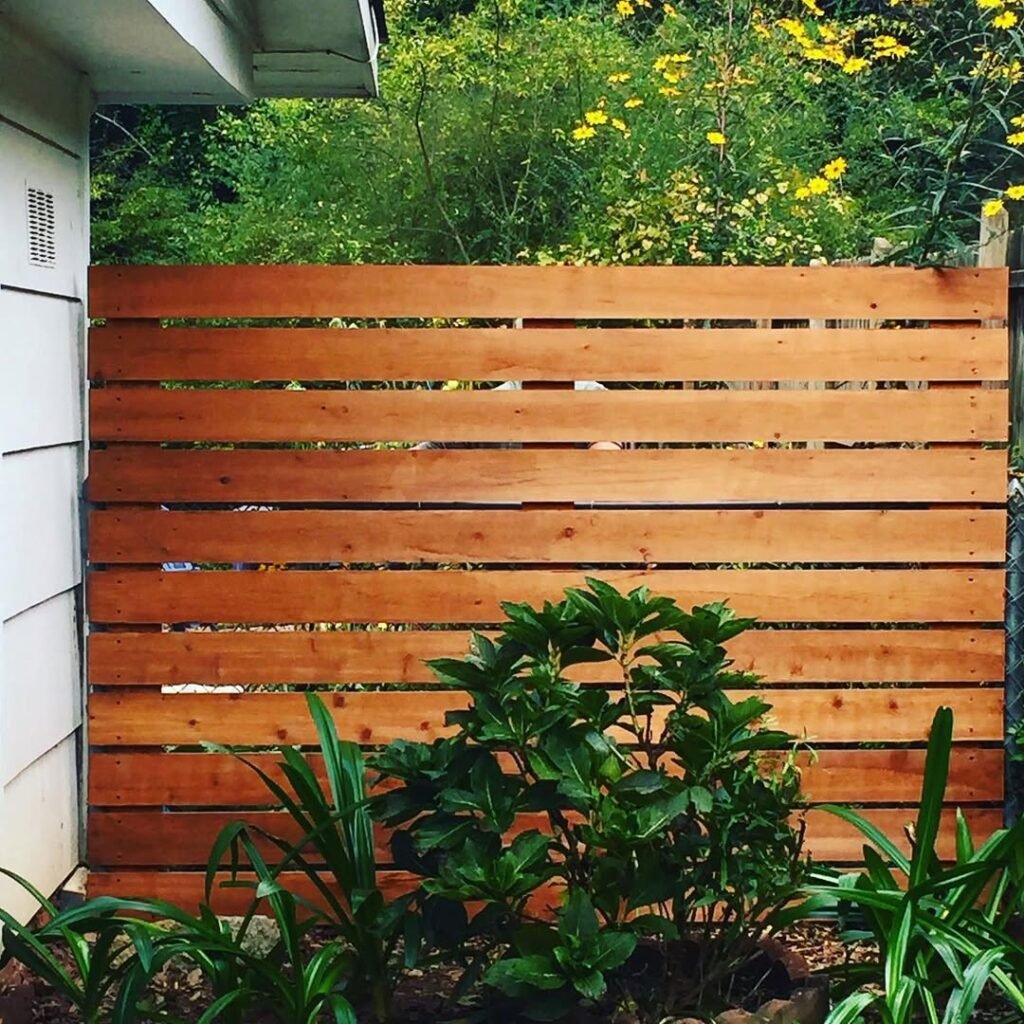
A purpose-designed privacy screen — rather than a standard fence panel — built with deliberate gaps, slots, or cutouts that allow filtered light through and frame specific views of the planting behind creates a boundary with far more visual interest and spatial sophistication than a solid fence. The gaps create a rhythm across the fence surface, the filtered light creates pattern and shadow on the ground and on adjacent surfaces, and the glimpses of planting visible through the slots give the boundary a layered, three-dimensional quality that solid panels entirely lack.
Horizontal timber baton screens with consistent gaps between each baton cost $80–$200 per panel to build from treated hardwood. Laser-cut corten steel screens with botanical or geometric cutout patterns cost $150–$400 per panel. Both create a fence that provides meaningful privacy while remaining visually permeable — the privacy comes from the density of the screen material rather than from complete opacity.
Garden tip: Plant directly behind a slatted or cutout privacy screen rather than leaving the space behind it empty. The planting visible through the gaps in the screen — a bamboo, a grass, a climbing rose — is part of the fence’s visual composition, and a well-chosen plant seen in fragments through a geometric screen creates a layered, almost painterly effect that solid fencing and open planting in front of it could never achieve together.
A garden fence treated as a design opportunity rather than a practical necessity changes the entire character of the outdoor space. It creates enclosure that feels welcoming rather than defensive, privacy that feels generous rather than closed, and a boundary that contributes to the beauty of the garden rather than simply containing it. Choose the treatment that suits your fence, your garden style, and your budget, invest in it properly, and let the boundary become one of the things that makes the garden worth being in.