15 Outdoor Plant Shelf Ideas for Stylish Displays
An outdoor plant shelf does something a collection of pots on the ground rarely achieves — it organises plants into a composition rather than a collection. At eye level, plants are seen differently: the individual pot, the leaf form, the texture of the compost surface all become part of a considered arrangement rather than objects on a floor that have to be stepped around. A shelf brings the garden to the viewer rather than asking the viewer to move through it.
The fifteen ideas below cover every form of outdoor plant shelf — from a simple wall-mounted bracket to a full freestanding unit — for every space from a balcony to a large terrace. Each includes what it costs and a practical tip to help you style, plant, and maintain the display through every season.
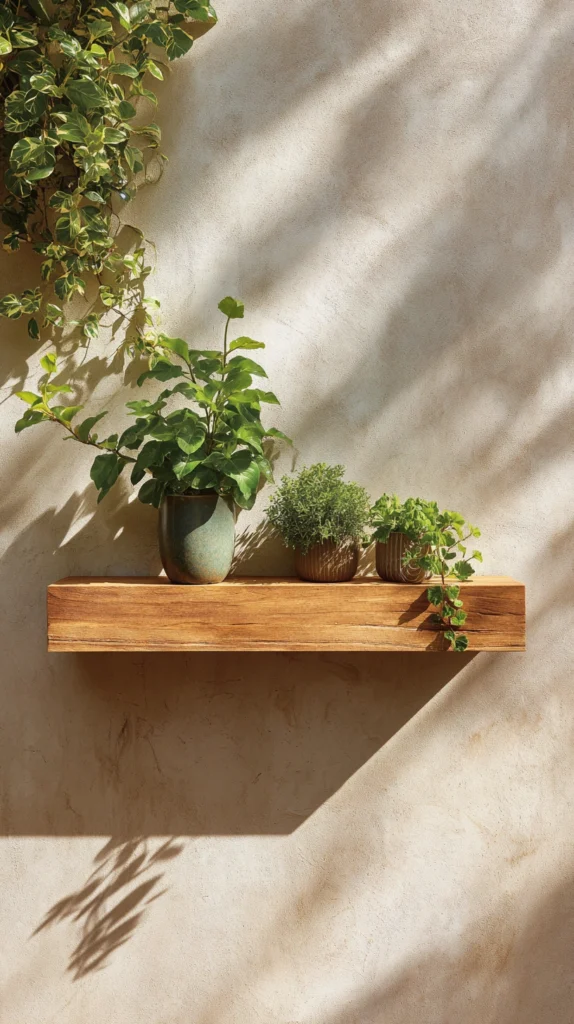
1. A Simple Wall-Mounted Timber Shelf
Budget: $20 – $80
A single timber shelf fixed to a fence or exterior wall — broad enough for three or four pots, set at eye height, and painted or oiled to match the surrounding surfaces — is the most straightforward and most versatile outdoor plant shelf available. It works against any wall, in any garden style, and with any combination of plants from herbs to succulents to trailing annuals.
A solid timber shelf of 90×20 cm in treated pine or hardwood costs $15–$40 in materials and takes thirty minutes to fix using two L-bracket wall fixings ($5–$10 per pair). Seal with an exterior timber oil ($10–$20) before installation. Set at 140–160 cm from the ground — the height at which pots on the shelf sit at natural viewing level for a standing adult and where trailing plants cascade most effectively without reaching the ground.
Style tip: Use pots of varying heights on a single shelf — one tall, one medium, one low — rather than all the same height. Varied pot heights create visual rhythm along the shelf and make the arrangement look curated rather than simply placed. Three identical pots in a row is storage. Three pots at different heights with different plants is a display.
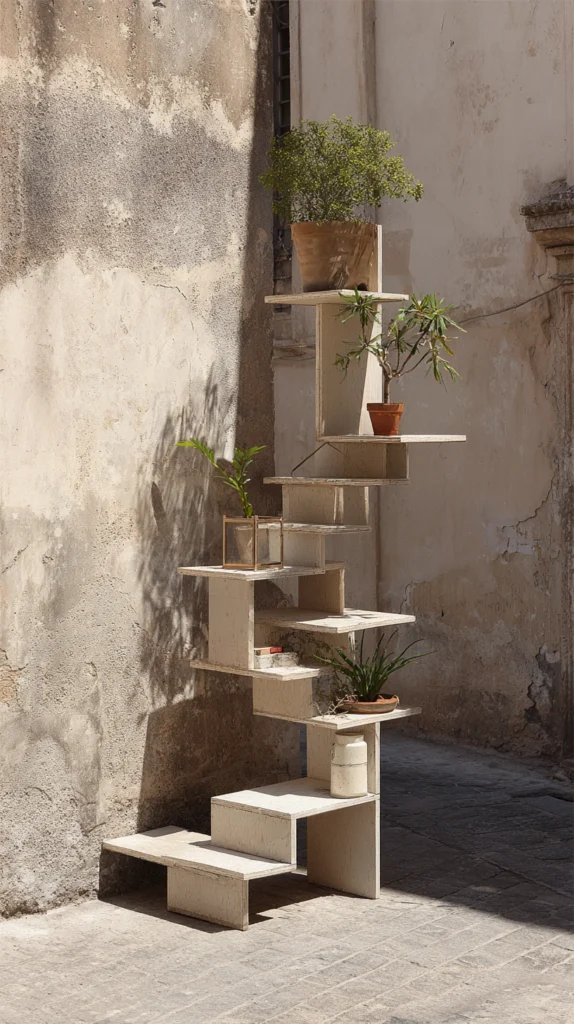
2. A Tiered Ladder Plant Stand
Budget: $40 – $150
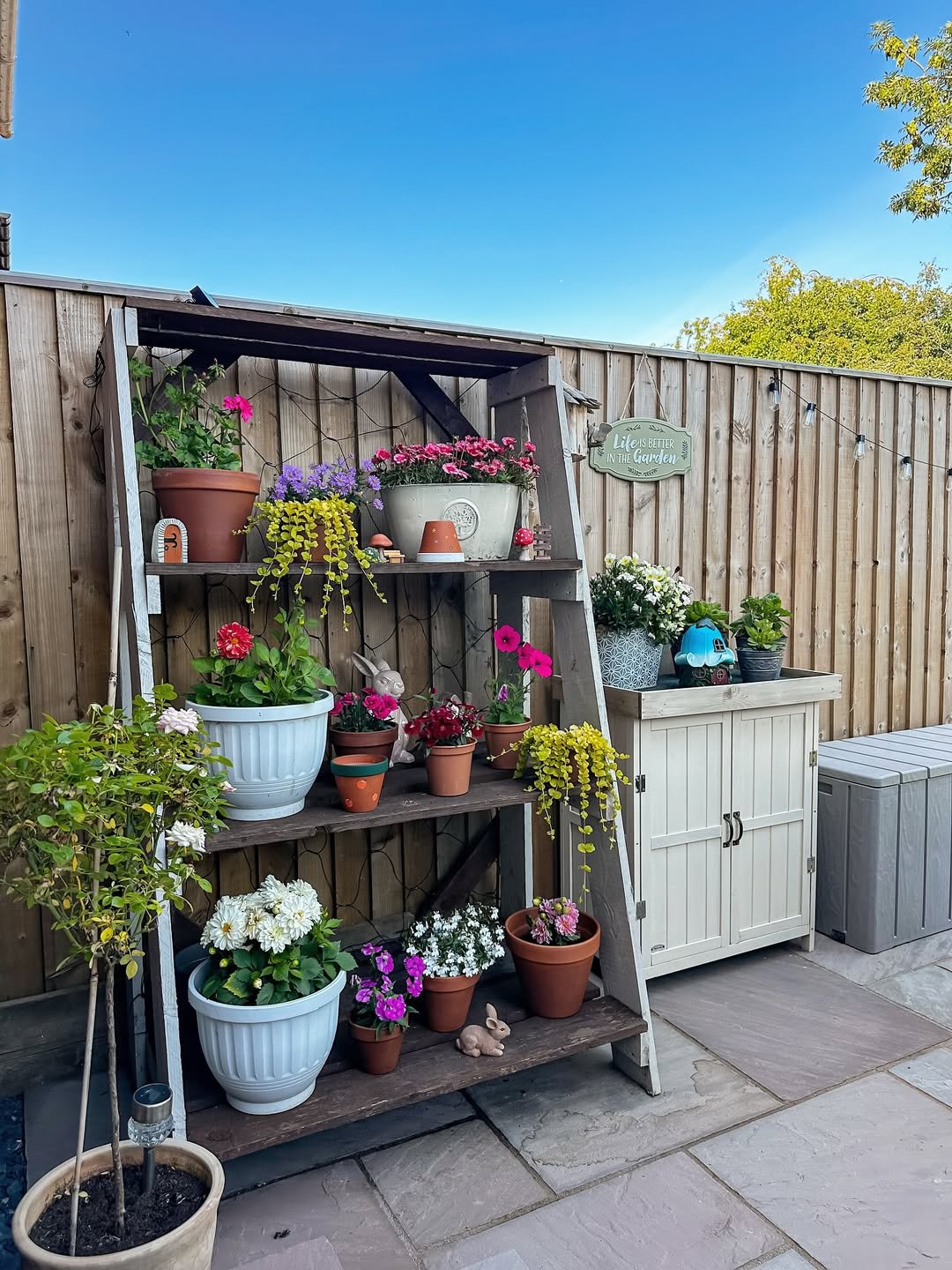
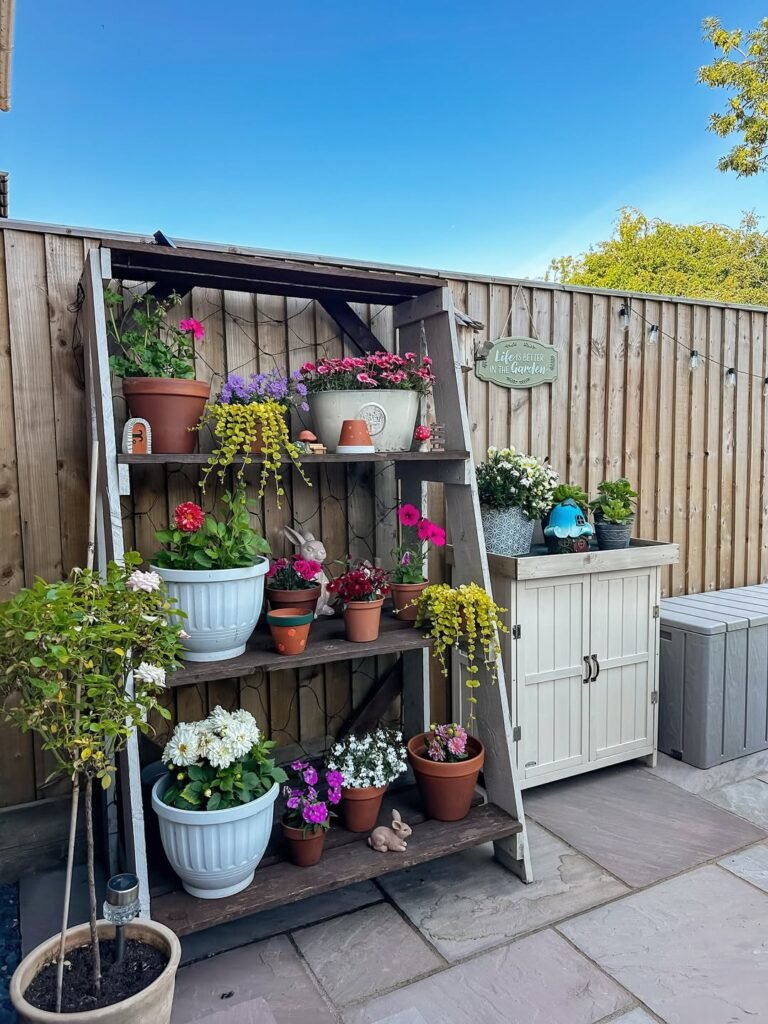
A freestanding ladder-style plant stand — three or four horizontal rungs between two angled side rails — provides multiple planting levels from floor to above-shoulder height in a footprint of no more than 60×40 cm. It is the most space-efficient outdoor plant display format available for a narrow balcony, a small terrace corner, or a doorstep where floor space is the limiting constraint.
Timber ladder plant stands in pine, acacia, or bamboo cost $40–$100. Powder-coated metal versions in black or white run $50–$150. Position on a surface that receives even light across all levels — a ladder stand against a north-facing wall leaves the lower shelves in deep shade while the upper ones receive adequate light, producing an uneven display where plants on lower rungs progressively decline regardless of watering and feeding.
Style tip: Plant the upper rungs with the tallest plants and graduate downward with shorter varieties toward the bottom — the natural pyramid created by the ladder form reads most coherently when the planting follows the same graduated scale as the structure itself. Tall plants on low rungs create a top-heavy appearance that draws attention to the mismatch between plant and shelf height rather than to the composition as a whole.
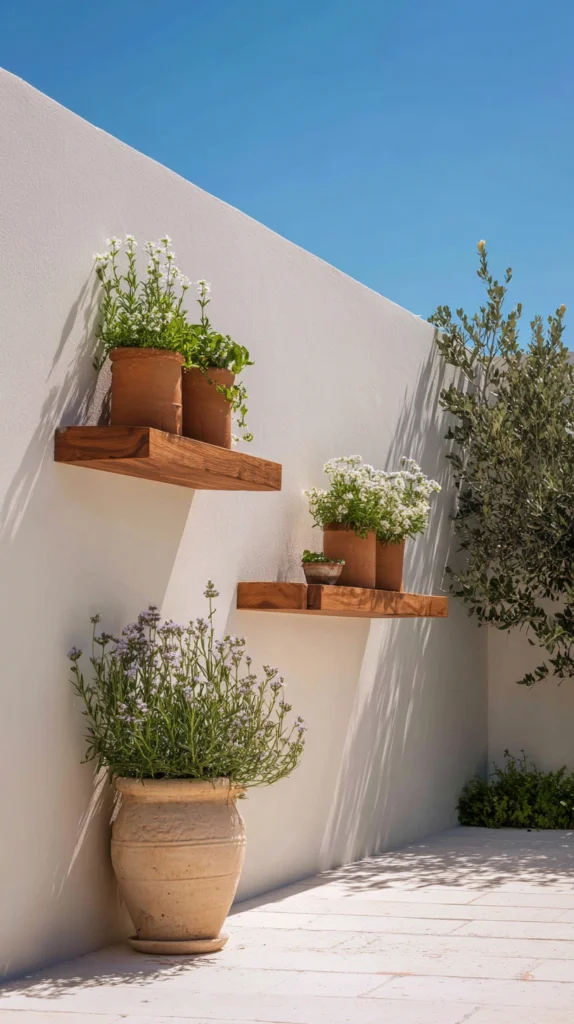
3. A Floating Shelf on a Garden Wall
Budget: $30 – $120
A floating shelf — fixed directly to a rendered or masonry garden wall without visible brackets — creates a clean, contemporary plant display surface that reads as an architectural feature of the wall rather than an addition to it. Against a white or pale rendered wall with a collection of terracotta pots, it creates one of the most specifically Mediterranean and most visually elegant outdoor plant displays available.
A hardwood floating shelf of 80×20 cm costs $25–$60 in material. Fix using concealed shelf supports ($10–$20 per pair) rated for outdoor use — standard interior floating shelf fixings corrode in outdoor conditions within two to three seasons and should never be used on an external wall regardless of how protected the position appears. Seal the shelf on all faces with an exterior oil or varnish before installation to prevent moisture absorption through the exposed end grain.
Style tip: Install floating shelves at two heights on the same wall — one at 150 cm and one at 110 cm — rather than a single shelf. Two floating shelves at different heights create a composed wall arrangement that reads as a curated vignette from across the garden. A single shelf reads as a ledge that plants have been placed on rather than a deliberate display arrangement.
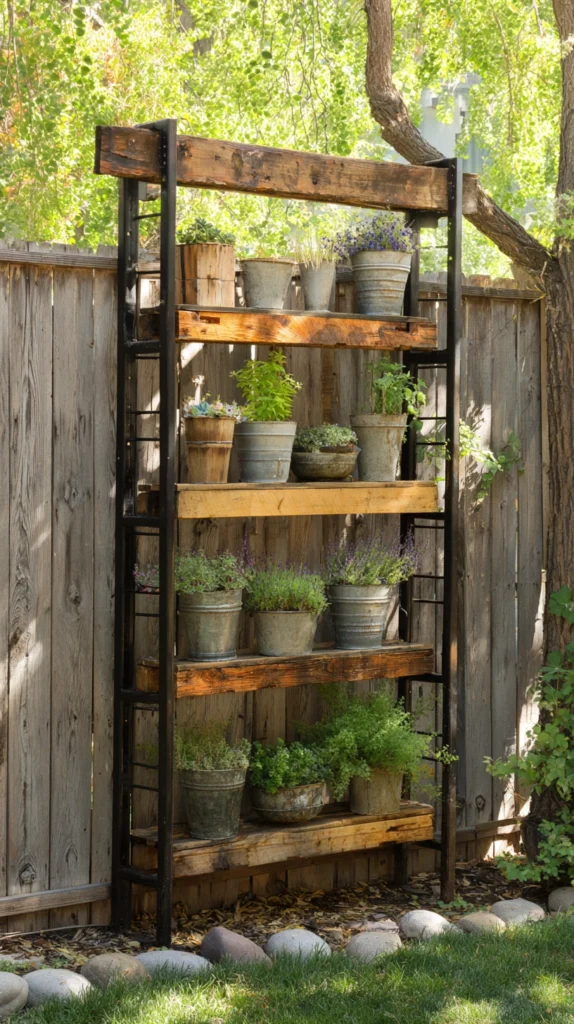
4. A Reclaimed Pallet Shelf Unit
Budget: $5 – $40
A wooden pallet stood upright against a fence or wall and fitted with additional horizontal boards between the slats creates a multi-level plant shelf from a material that is widely available at zero or minimal cost. With a coat of exterior paint and a consistent arrangement of matching pots, a pallet shelf unit looks considerably more intentional than its origins suggest.
A heat-treated pallet (marked HT on the stamp) costs nothing if sourced from a supermarket, furniture retailer, or building site. Timber boards for additional shelves cost $5–$15 in total. Two coats of exterior paint in a consistent colour ($15–$25 per tin) unify the structure and make the whole unit read as a designed feature rather than a repurposed shipping pallet. Use matching terracotta or white ceramic pots throughout to reinforce the considered quality of the display.
Style tip: Paint the pallet in a dark colour — charcoal, forest green, or navy — rather than white if the surrounding fence or wall is also painted. A dark pallet shelf against a pale wall creates a graphic, intentional contrast. A white pallet against a white fence dissolves into the background and the shelf reads as less defined and less deliberate than a contrasting colour would produce against the same surface.
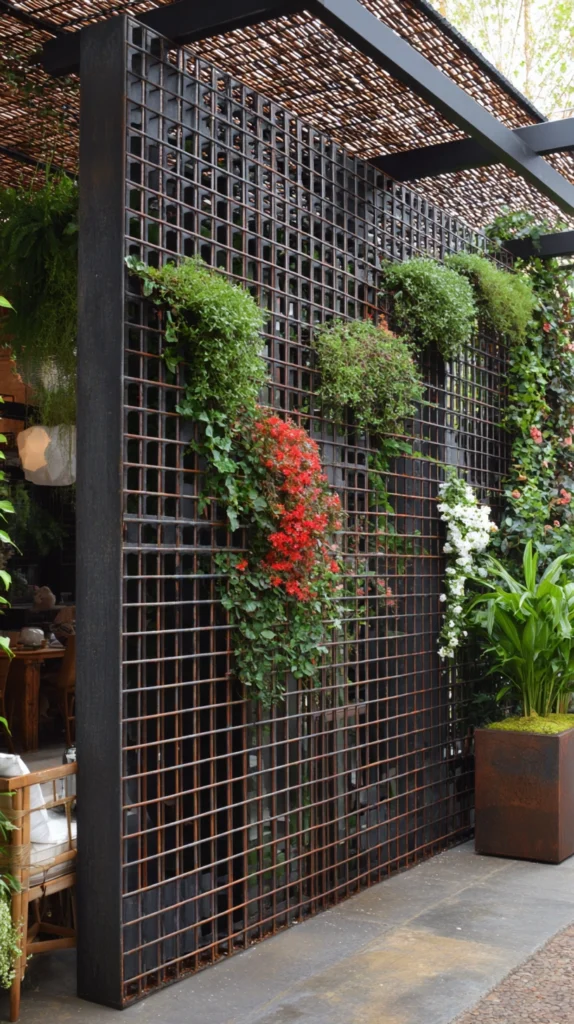
5. A Metal Grid Wall Panel With Clip-On Pots
Budget: $30 – $100
A powder-coated metal grid panel fixed to a fence or wall — with S-hooks, clip-on planters, and small hanging baskets attached at different heights — creates one of the most flexible and most vertically generous plant display surfaces available. The grid allows any combination of display heights and can be completely rearranged without any additional tools or fixings.
A metal grid panel of 60×60 cm costs $15–$35. A larger 90×60 cm version runs $25–$50. Clip-on metal planters suitable for the grid cost $5–$15 each. S-hooks for hanging small baskets cost $1–$3 each. The total display surface — panel, clips, hooks, and six to eight small planters — costs $50–$120 and can be installed and fully planted in under two hours without any specialist tools or skills beyond a drill and two wall plugs.
Style tip: Arrange planters on the grid at three different heights — high, mid, and low — with no more than two planters at each height level. The varied heights create the layered, gallery-wall quality that makes a grid plant display look composed. Filling the grid at a single consistent height with planters spaced evenly across it looks like an installed system rather than a styled arrangement.
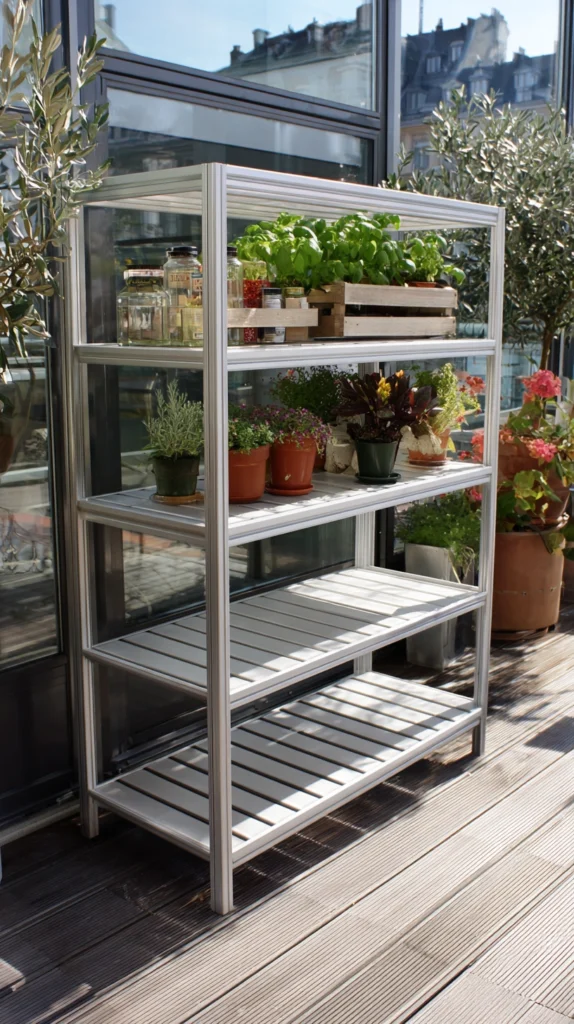
6. A Greenhouse Staging Shelf for the Terrace
Budget: $60 – $200
Aluminium greenhouse staging — the slatted, adjustable shelving originally designed for glasshouse use — brought onto a terrace or balcony creates a lightweight, weather-resistant, purpose-built plant display surface that is significantly more practical and more durable than most shelving systems designed specifically for outdoor decorative use. It can be extended with additional sections as the collection grows and disassembled at the end of the season.
Aluminium greenhouse staging in a 60×120 cm two-tier section costs $50–$120. Additional extension sections run $30–$60 each. The slatted surface allows perfect drainage through the shelf surface rather than requiring drip trays beneath every pot — one of the most practical advantages of staging over solid-surface shelving for outdoor plant display in a climate with regular summer rainfall.
Style tip: Cover the functional aluminium staging surface with a wooden slatted insert ($10–$20) or a layer of gravel ($5–$10) to create a more decorative surface beneath the plant display. Bare aluminium staging has a functional, clinical quality that suits a greenhouse but reads as slightly industrial on a residential terrace — the simple addition of a more attractive surface material transforms the unit from functional equipment to a considered display structure.
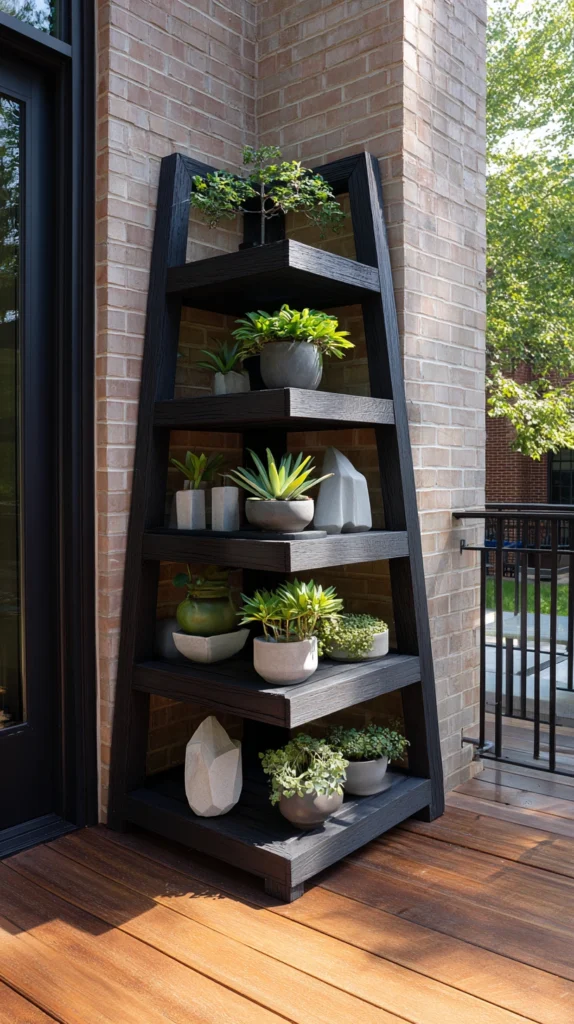
7. A Corner Shelf Unit for a Terrace or Balcony
Budget: $50 – $200
A purpose-built or adapted corner shelf unit — with three or four shelves graduating from wide at the base to narrow at the top — occupies a corner position that standard square or rectangular shelving units waste completely. It makes the fullest possible use of a corner’s vertical space and creates a display that is visible and attractive from two directions simultaneously rather than one.
Freestanding timber corner shelf units for outdoor use cost $60–$150 in pine or acacia. A DIY version built from treated timber boards and simple angle brackets costs $30–$80 in materials. Paint or oil before assembly. Position in a corner that receives at least four hours of direct sun per day for the broadest range of plant species — a corner shelf unit in deep shade supports only the most tolerant shade species and limits the display’s colour and variety significantly.
Style tip: Place the largest pot at the base of the corner unit and reduce pot size progressively toward the top. The visual pyramid this creates reflects the natural plant-height logic of a garden border — tall at the back and base, small at the front and top — and makes the display read as naturally coherent rather than assembled from whichever pots were available at the time.
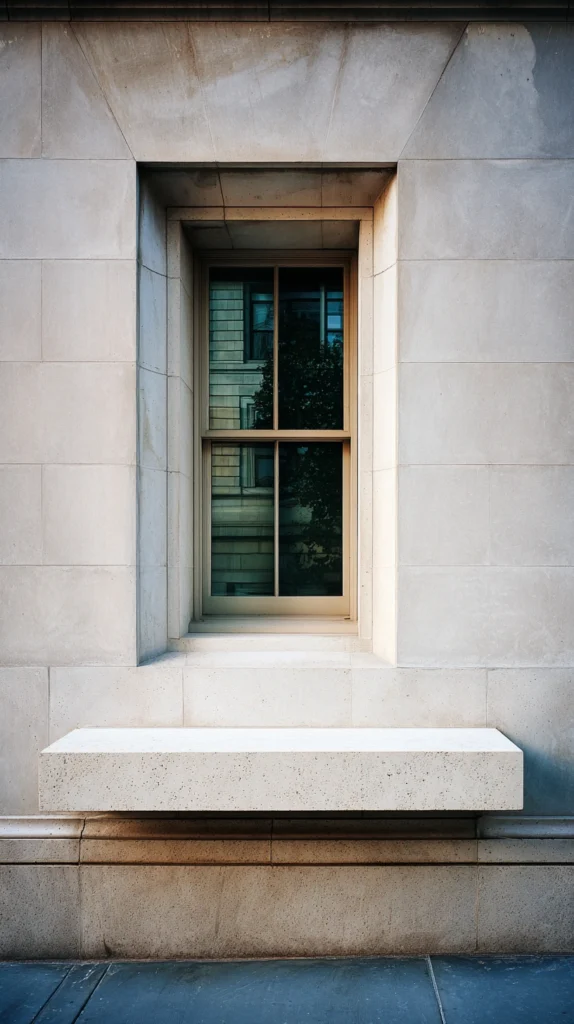
8. A Windowsill Shelf Extension
Budget: $15 – $60
A simple bracketed shelf fixed directly beneath an exterior windowsill — or an adjustable window box bracket extended outward from the sill — creates an additional plant display surface at exactly the height where plants are most visible from inside the house and most attractive to anyone approaching the building from the outside. It is the outdoor plant shelf that serves two audiences simultaneously.
A pair of heavy-duty window box brackets costs $10–$25 and supports a shelf or long planter of up to 80 cm in length. A timber shelf board cut to width costs $5–$15. Fix into the masonry of the window reveal rather than into the window frame — the additional weight of pots and wet compost requires fixings into solid material rather than the comparatively thin timber of the window frame surround.
Style tip: Plant the windowsill shelf with a single species across its full length rather than a mix of different plants in individual pots. A row of identical white pelargoniums, a continuous run of lavender, or a uniform line of small terracotta herb pots creates a stronger visual statement from both inside and outside the house than the same shelf occupied by five or six unrelated plants in different pot styles.
9. A Hanging Rope and Timber Shelf
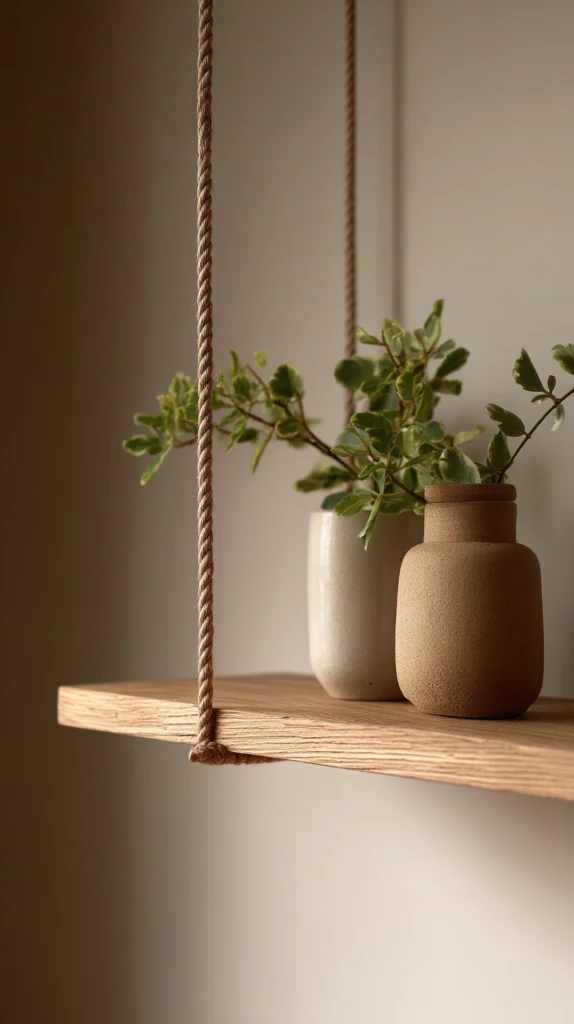
Budget: $20 – $80
A timber board suspended from a fence or pergola by two lengths of natural rope — knotted through holes drilled at each end of the board — creates a swing-shelf plant display that has genuine character and movement. The slight sway in a light breeze adds animation to the display that a fixed shelf never provides, and the natural rope and timber combination suits a boho, coastal, or tropical garden aesthetic particularly well.
A hardwood shelf board of 80×20 cm costs $10–$25. Natural sisal or jute rope costs $3–$8 per 5-metre reel. Fix the upper ends of the rope to a structural timber — a pergola beam, a fence post, or a purpose-installed hook — rated for the combined weight of the shelf and the pots it will carry, allowing at least a 50 percent safety margin above the expected load.
Style tip: Hang the rope shelf at slightly different heights on each side — 2–3 cm lower on one end — rather than perfectly level. A very slightly angled shelf reads as relaxed and handmade rather than machine-precise, which suits the rope and timber format. A perfectly level swing shelf has a slightly effortful quality that works against the casual, natural aesthetic the material pairing is intended to create.
10. A Plant Shelf Within a Garden Storage Bench
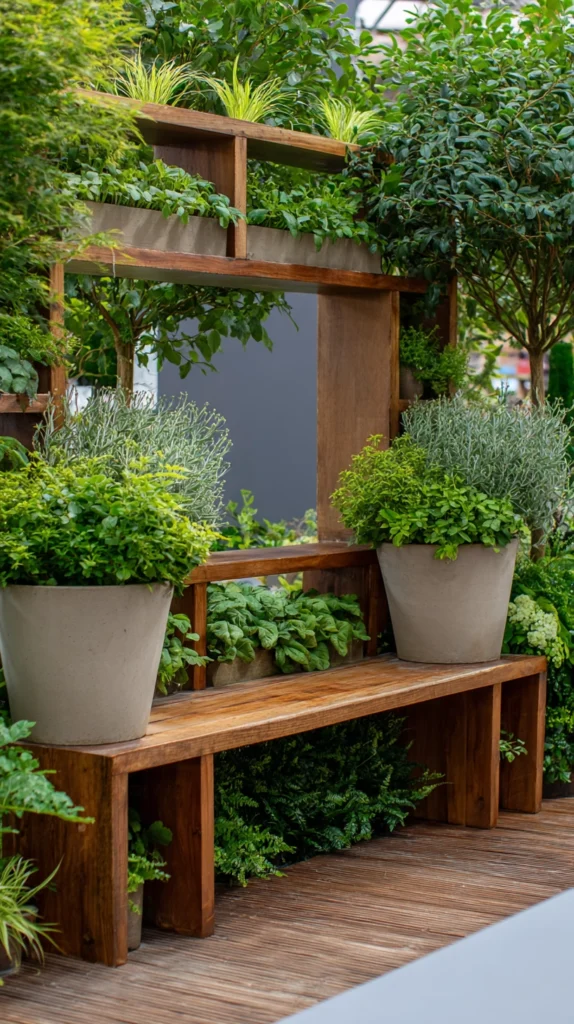
Budget: $100 – $400
An outdoor storage bench with open shelves at each end — or with the top surface used as a plant shelf while the interior storage houses cushions and garden accessories — creates the most multifunctional outdoor plant shelf available. It serves as seating, as storage, and as a plant display simultaneously within a single piece of outdoor furniture.
A timber storage bench with open side shelves costs $120–$300. A bench with integrated planter boxes built into the ends costs $150–$400. Position in a partially sunny location where the plants on the shelf ends receive adequate light while the bench surface remains comfortable as seating. The combination of function and display in a single piece of furniture makes this the highest-value plant shelf option for any garden or terrace where space is genuinely limited.
Style tip: Style the open shelf ends of a storage bench as you would a pair of matching bookends — mirrored plantings on each end with the bench seating area as the negative space between them. Two identical terracotta pots of the same species at each end create a formal symmetry that gives the bench a designed, furniture-quality appearance rather than a storage bench that happens to have plants on it.
11. A Bamboo Ladder Shelf for a Tropical Look
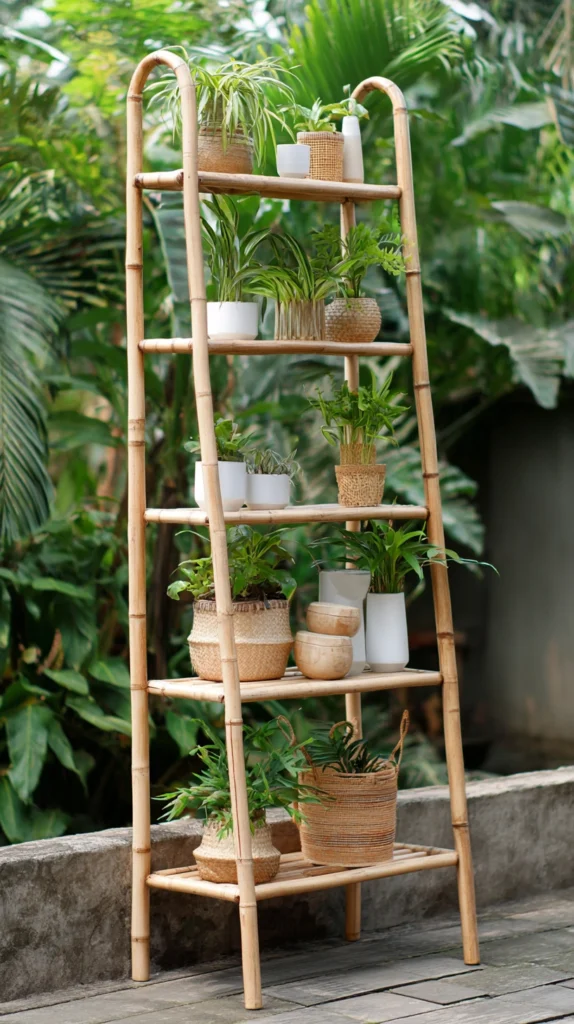
Budget: $30 – $100
A ladder-style shelf made from or finished in bamboo creates the most appropriate display structure for a tropical or Balinese-inspired outdoor scheme — the natural material, warm colour, and slightly irregular surface of bamboo reads as genuinely organic in a way that painted MDF or powder-coated metal cannot replicate regardless of the plants displayed on it.
A purpose-made bamboo ladder shelf costs $40–$100. A DIY version lashed from large-diameter bamboo poles ($10–$20 per pole) using natural twine creates the most authentic version of the format at minimal cost. Treat with a bamboo sealer or outdoor varnish ($10–$15) before use — natural bamboo exposed to alternating wet and dry conditions splits and bleaches within two to three seasons without any surface protection.
Style tip: Display plants in dark glazed ceramic pots or woven basket pot covers on a bamboo ladder shelf rather than in terracotta or white ceramic. The contrast between the warm honey tone of the bamboo structure and dark or woven pot materials creates the layered natural aesthetic that suits the tropical style. Terracotta on bamboo creates two competing warm-material tones that merge into an undifferentiated warmth rather than a clear composition.
12. A Pegboard Plant Wall
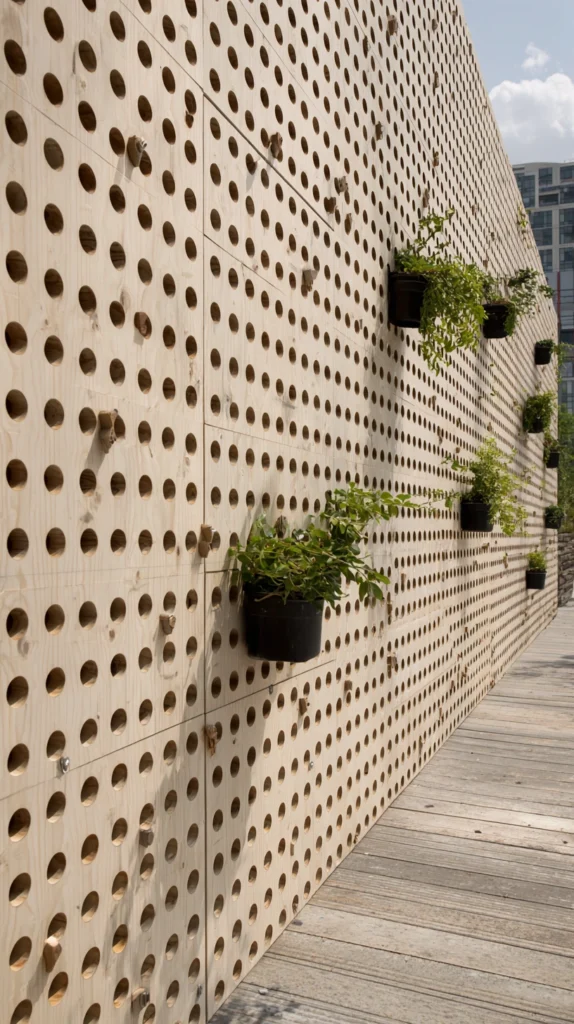
Budget: $30 – $100
A weatherproofed pegboard panel fixed to a fence or wall — with peg hooks of varying lengths supporting individual pots, hanging baskets, and small planters at any height — creates the most completely configurable outdoor plant shelf available. Every element of the display can be repositioned without tools at any time, which makes it the most responsive and most creative format for a garden where the plant collection changes seasonally.
Exterior-grade pegboard or pegboard sealed with a waterproof exterior paint costs $20–$50 for a 60×90 cm panel. Galvanised peg hooks suitable for outdoor use cost $1–$3 each. Fix the panel to the fence with spacer blocks that hold it 3 cm away from the fence surface — the air gap allows drainage from hanging pots and prevents moisture from becoming trapped between the panel and the fence surface behind it.
Style tip: Paint the pegboard in a single bold colour rather than leaving it in its natural wood tone. A boldly coloured pegboard — deep green, terracotta, or charcoal — creates a defined display background that makes each plant stand out individually against the colour field behind it. A natural or pale pegboard tends to blend with the fence surface it is mounted on and reduces the visual separation between the display and its background.
13. A Zinc or Galvanised Trough Shelf Display
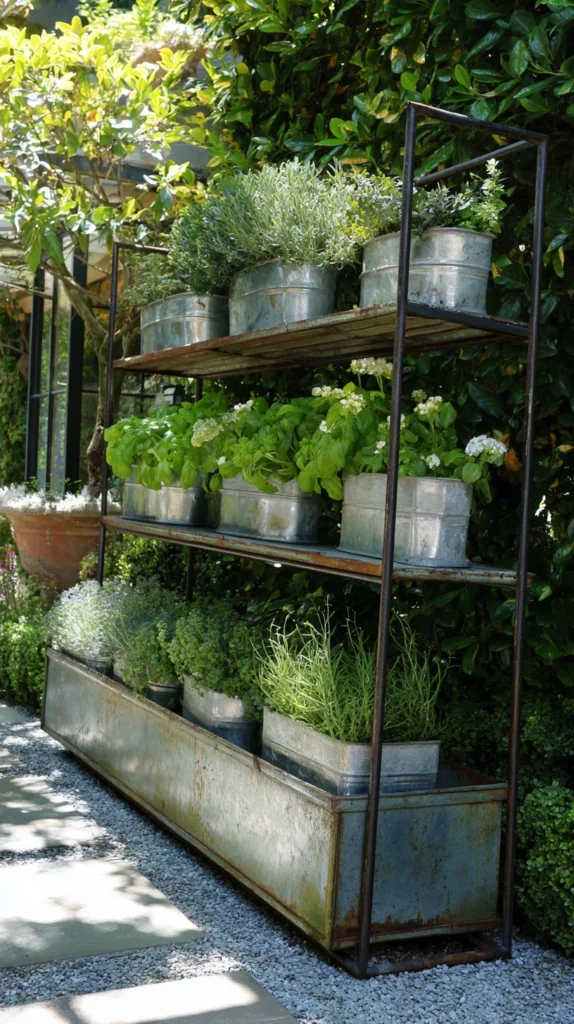
Budget: $40 – $150
A collection of galvanised zinc troughs in varying lengths — arranged on a shelf, mounted on a wall bracket, or hung at different heights — creates a cohesive, contemporary plant display in a single consistent material that reads as an installation rather than a collection. The industrial-farmhouse aesthetic of galvanised metal suits rustic outdoor spaces, kitchen garden terraces, and any outdoor scheme that values material honesty over decorative finish.
Galvanised zinc troughs in 30–60 cm lengths cost $8–$25 each. A collection of five in graduating lengths costs $40–$100. Mount on a timber shelf board using U-bolt fixings ($3–$6 each) that hold the trough securely without obscuring its sides. Drill drainage holes in the base of each trough before planting — galvanised troughs have no drainage holes as standard and waterlogging is immediate and complete without them.
Style tip: Plant each galvanised trough in the collection with a single species rather than a mixed planting. A display of four troughs each containing one species of herb, one species of succulent, one trailing annual, and one structural grass creates a clearly organised collection that reads as considered. Four troughs each containing a random mix of different plants reads as four over-planted containers rather than a display.
14. A Built-In Planter Shelf Along a Boundary Wall
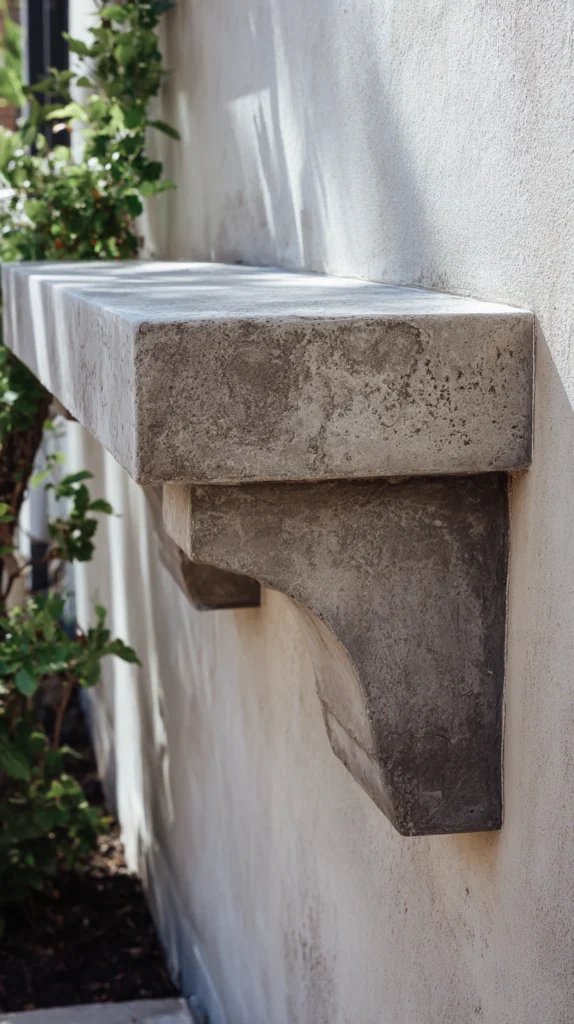
Budget: $200 – $800
A purpose-built planter shelf constructed as part of a boundary wall or garden structure — a wide coping of 30–40 cm that doubles as a plant display surface at the top of a rendered garden wall — creates the most integrated and most permanent outdoor plant shelf available. It reads as architecture rather than furniture and gives the garden a polished, built quality that no freestanding or wall-fixed unit achieves at the same level of visual integration with the surrounding structure.
A masonry boundary wall with a wide coping suitable for plant display costs $200–$600 per linear metre to build professionally. A rendered block wall with a stone or tile coping of 35 cm width costs $150–$400 per linear metre as a DIY project for someone with basic masonry experience. The wide coping allows generous pot sizes and creates a display surface that is as permanent and as structurally solid as the wall itself beneath it.
Style tip: Space pots along a built-in coping shelf at generous intervals — 40–60 cm between each pot — rather than filling the surface densely. A wide wall coping with pots every 40 cm reads as a measured, architectural display. The same coping covered with pots at 15 cm intervals reads as a storage surface. The generosity of the spacing is what makes a built-in display feel designed rather than accumulated.
15. A Freestanding Etagère for a Styled Terrace
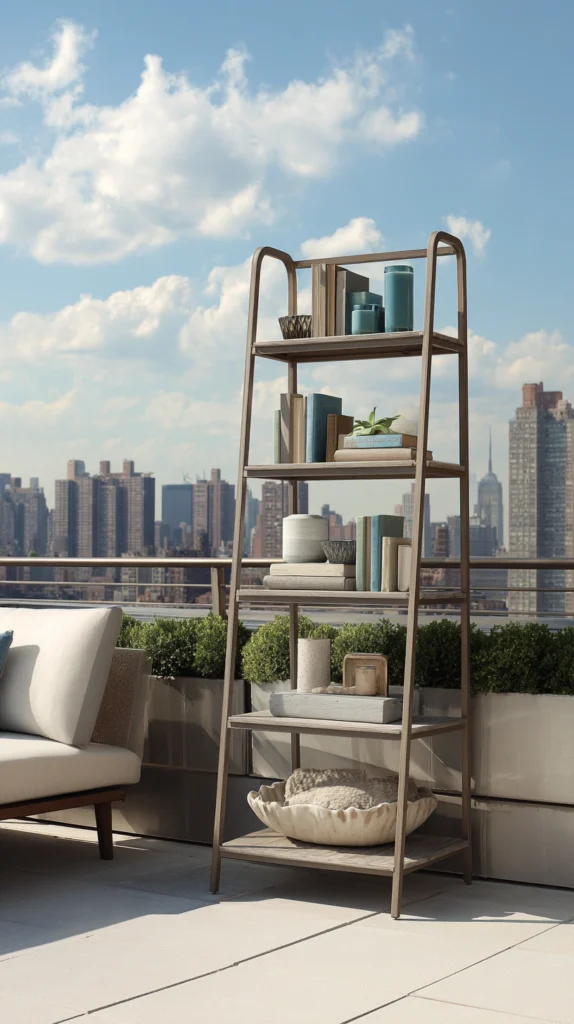
Budget: $80 – $350
A freestanding etagère — the tall, narrow, multi-tiered display unit borrowed from interior styling — brought outdoors onto a sheltered terrace or covered outdoor room creates the most formally styled and most visually striking outdoor plant display available. At four or five tiers it provides substantial plant display capacity within a footprint of 60×30 cm and reads as a deliberate interior-quality display piece rather than garden equipment.
Outdoor-rated etagère units in powder-coated steel or treated rattan cost $80–$250. A solid timber version in painted or oiled hardwood runs $120–$350. Position on a sheltered terrace where the unit is protected from strong wind — a tall, top-heavy unit loaded with pots becomes unstable in exposed positions and must be secured to a wall or weighted at the base. Anchor to a wall using a single discreet fixing at the top tier back rail for safety in any position with wind exposure.
Style tip: Treat the outdoor etagère as a single composition rather than five separate shelves — choose a consistent colour palette across all tiers, alternate trailing plants on every other shelf, and position the largest pot at the base and the smallest at the top. A well-styled etagère with a clear internal logic looks like a designed installation. A randomly assembled one looks like a shelf unit that has been collecting plants over time without any guiding intention.
The outdoor plant shelf transforms the way a garden or terrace is experienced by lifting the plant collection to the level at which it is most naturally seen, most easily tended, and most directly appreciated. Every idea on this list creates that quality — the difference between them is scale, material, and the specific aesthetic they suit most naturally.
Start with a single shelf in the position where you most regularly stand or sit in the garden — the surface that is most directly in your field of view during the time you spend outside. Style it with three or four plants, a consistent pot material, and varying heights. Let that one shelf tell you whether you need more, and where the next one belongs.