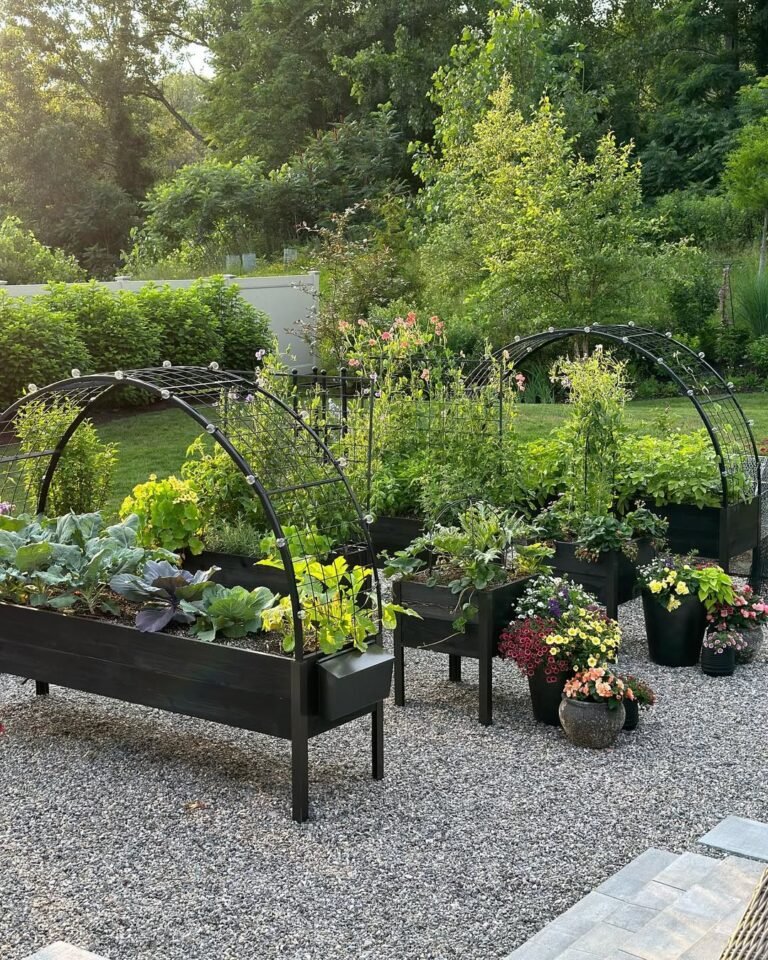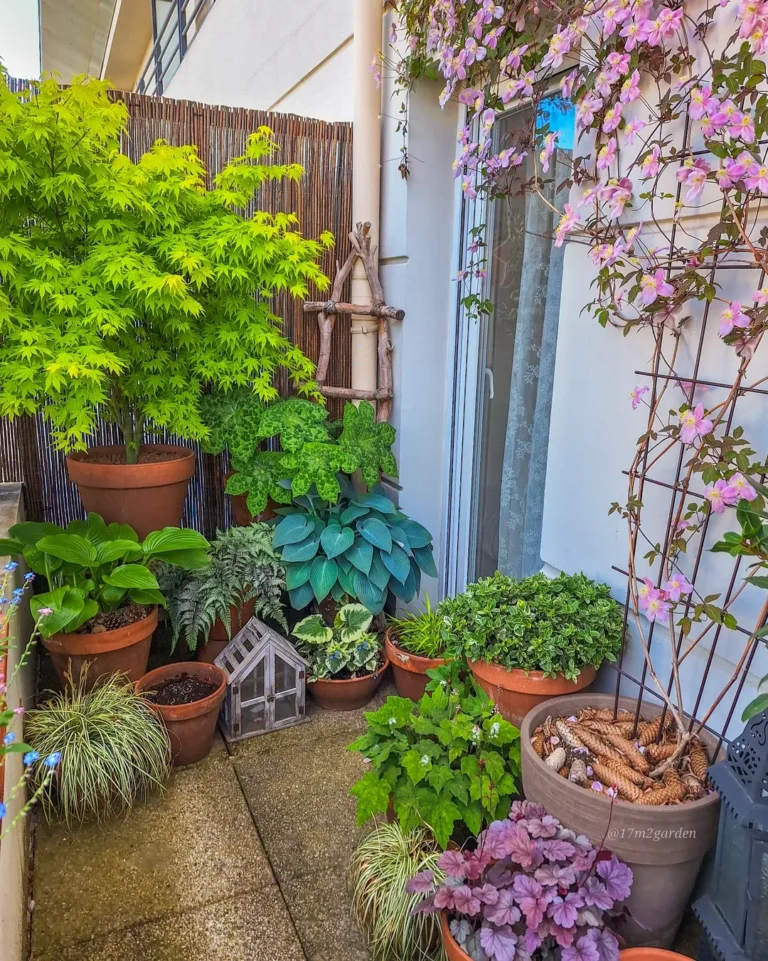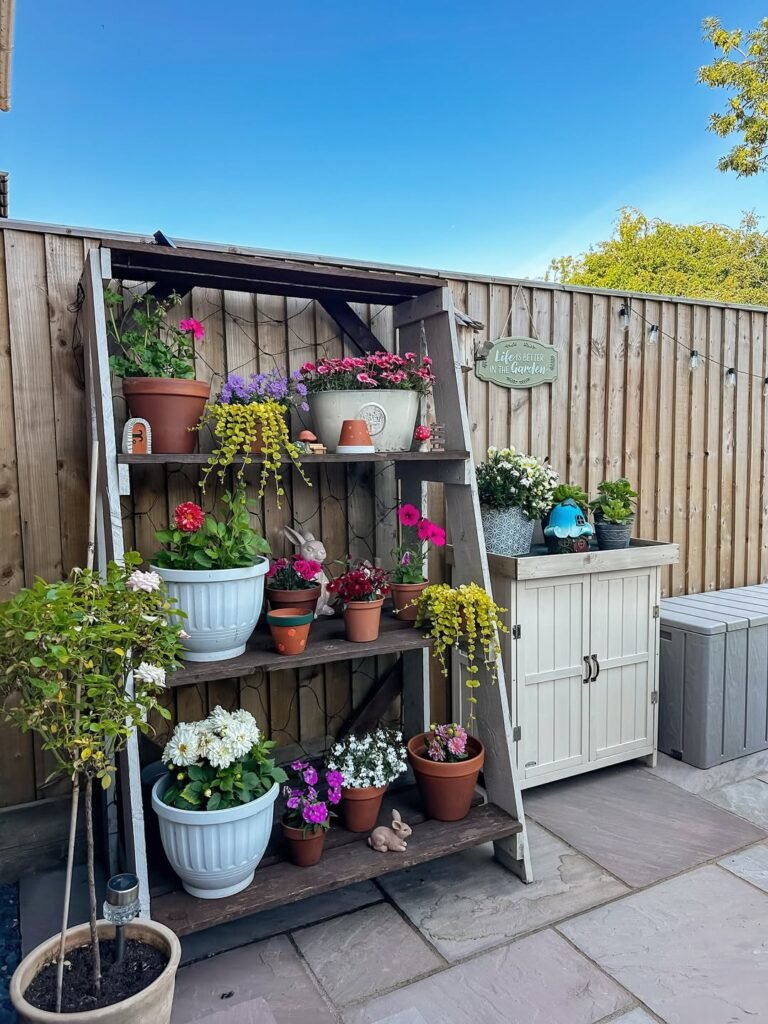
15 Hugelkultur Garden Ideas for Self-Watering Raised Beds
My raised beds needed constant watering and fertilizing for six years. Summer meant daily watering without fail or plants wilted.
Annual fertilizer bill: $80. Time spent watering: 200+ hours yearly.
Then I built my first hugelkultur bed – buried wood under soil. Year one: half the watering. Year two: almost zero watering needed.
Now my hugelkultur beds produce better vegetables with 90% less water and zero fertilizer. Same space, completely different system.
Let me show you 15 hugelkultur designs that create self-watering, self-fertilizing gardens.
Why I Switched from Traditional Raised Beds
My standard raised bed problems:
Daily summer watering:
- 30 minutes with hose
- 7 days a week
- Can’t skip or plants die
- Vacation = plant death
Constant fertilizing:
- Monthly liquid feed
- Compost top-ups
- Soil depletes fast
- Ongoing expense
Production decline:
- Soil quality drops yearly
- Yields decrease
- Need soil replacement
- Expensive cycle
After building hugelkultur beds:
Watering reduced:
- Year 1: Every 2-3 days (50% reduction)
- Year 2: Weekly in heat (80% reduction)
- Year 3: Almost never (90% reduction)
- Wood acts like sponge
Fertilizing eliminated:
- Decomposing wood feeds plants
- Year 2: Explosive growth
- Year 3-5: Peak fertility
- Zero fertilizer added
Production increased:
- Better yields yearly
- Larger vegetables
- Disease resistance
- Self-improving system
Time savings: 180 hours yearly Cost savings: $80 fertilizer + water bills
How Hugelkultur Works
The science:
Buried wood:
- Absorbs water like sponge
- Releases slowly to roots
- Irrigation system underground
- Nature’s reservoir
Decomposition process:
- Wood breaks down slowly (5-20 years)
- Releases nutrients gradually
- Feeds soil life
- Creates fertility
Fungal networks:
- Mycorrhizae colonize wood
- Transfer nutrients to plants
- Extend root systems
- Symbiotic relationships
Heat generation:
- Decomposition creates warmth
- Extends season slightly
- Faster spring growth
- Bonus benefit
My revelation: Forests don’t need watering or fertilizing – hugelkultur brings forest soil to garden.
1. Classic Mound Hugelkultur (My First Build)
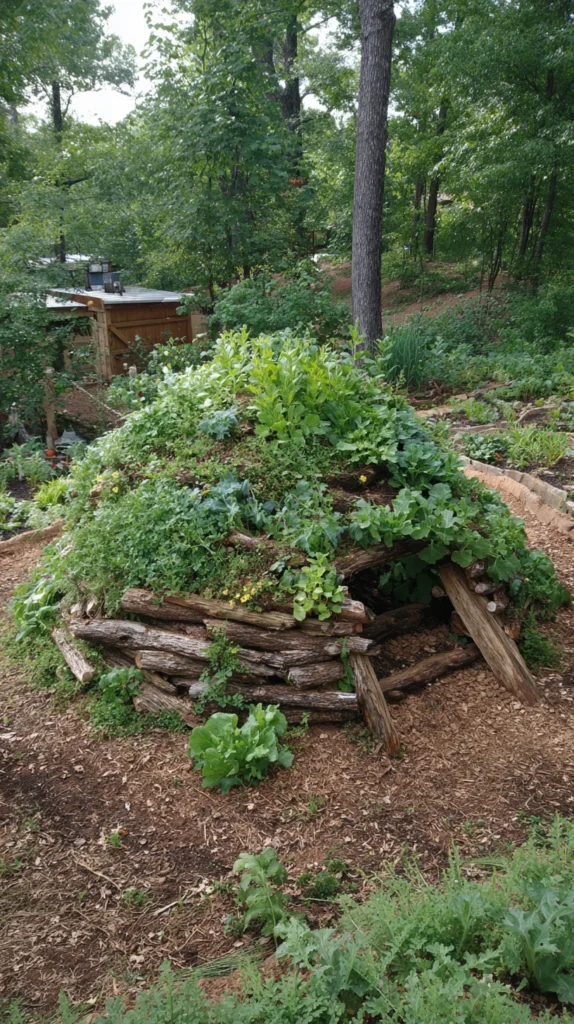
Traditional above-ground mound – Germanic permaculture design.
My 6-foot mound:
Construction (one weekend):
Saturday – Wood layer:
- Stacked old logs and branches (8×3 feet base)
- Assorted sizes (6-inch to 12-inch diameter)
- Avoided walnut, cedar (allelopathic)
- Free wood from tree trimming service
Sunday – Covering:
- Layer of cardboard (weed barrier)
- 6 inches garden soil
- 3 inches compost
- Planted same day
Shape:
- Dome-shaped mound
- 3 feet tall at center
- Slopes to ground at edges
- Looks like giant loaf
Year 1 challenges:
Nitrogen tie-up:
- Wood decomposition uses nitrogen
- Plants yellowed slightly
- Added compost tea
- Problem solved by fall
Settling:
- Mound sank 8 inches
- Expected behavior
- Topped with compost
- Stabilized year 2
Year 3+ benefits:
Peak performance:
- Wood fully colonized (fungus)
- Incredible water retention
- Explosive plant growth
- Best bed in garden
Current status (year 5):
- Mound now 2 feet tall (settled)
- Never water except planting
- Tomatoes produce double
- Zero fertilizer 3 years
My classic mound: Proof of concept, convinced me to build more, best long-term investment.
Classic Mound Construction Tips
What I learned:
Wood selection:
- Hardwoods last longer (oak, maple)
- Softwoods work too (faster decomposition)
- Rotten wood is perfect (already decomposing)
- Free sources: Tree services, storm cleanup, firewood scraps
Layering matters:
- Large logs bottom (longest-lasting)
- Medium branches middle
- Small twigs top
- Fill gaps with leaves/grass clippings
First year management:
- Nitrogen boost helpful (compost, manure)
- Extra watering until established
- Expect settling
- Be patient
2. In-Ground Trench Hugelkultur (Flat Yard Solution)
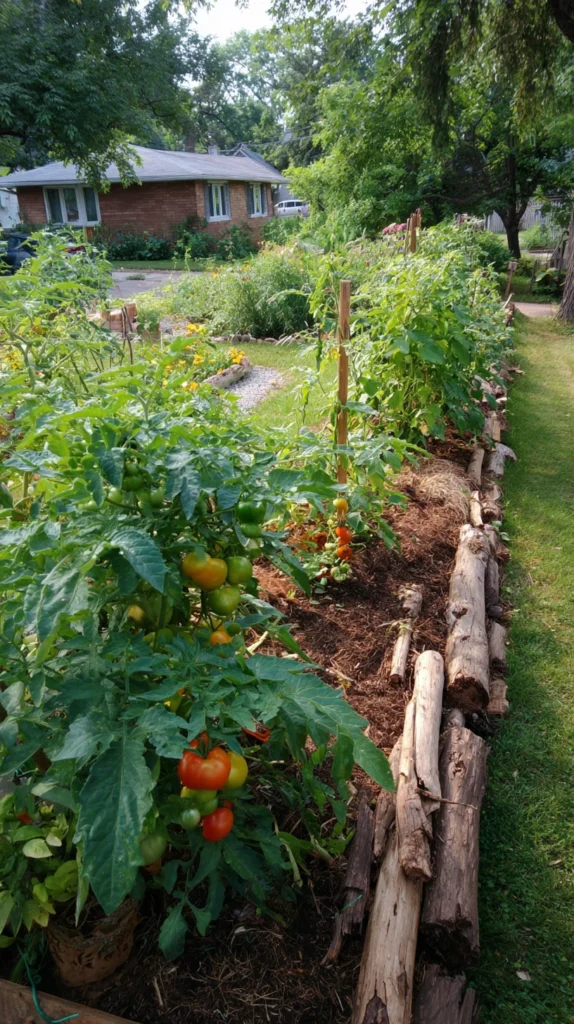
Buried wood in trench – no raised mound needed.
My 20-foot trench bed:
Construction:
Excavation:
- Dug trench 2 feet deep, 3 feet wide
- 20 feet long
- Saved topsoil separately
- Weekend project
Filling:
- Logs in bottom (6-12 inch diameter)
- Branches and twigs filling gaps
- Grass clippings and leaves
- Saved topsoil back on top
Final height:
- Level with ground (no mound)
- Looks like regular bed
- HOA-friendly
- Flat yard maintained
Benefits:
Hidden system:
- Neighborhood accepts it
- Looks normal
- Functions identically
- Invisible hugelkultur
Wind protection:
- Not elevated
- No wind damage
- Stable
- Ground-level growing
My trench bed: Tomatoes and peppers thrive, never watered after June, discrete installation.
3. Raised Bed Hugelkultur Hybrid (Best of Both)
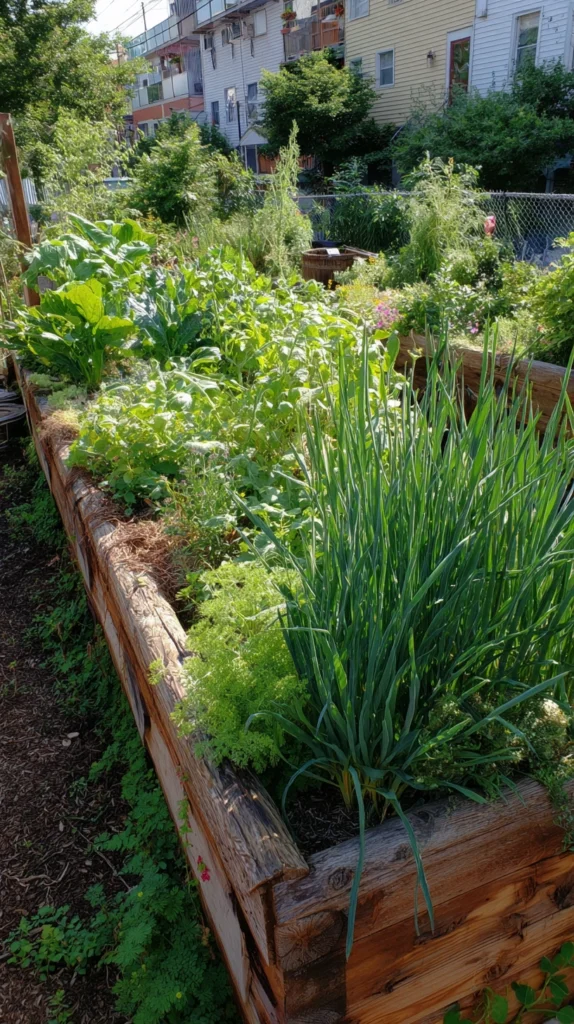
Wood core inside raised bed – combines systems.
My 4×8 raised bed conversion:
Existing bed:
- Cedar 4×8 raised bed
- 18 inches tall
- Been using 5 years
- Soil depleted
Renovation:
- Removed top 12 inches soil (saved)
- Laid logs in bottom (filled 6 inches)
- Branches and twigs
- Original soil back on top
- 2-hour project
Results:
Water retention:
- Before: Daily watering needed
- After: 2-3 times weekly
- 60% reduction
- Wood sponge working
Fertility:
- Before: Monthly fertilizing
- After: Zero fertilizer year 2+
- Better production
- Self-fertilizing
Easy retrofit:
- Existing beds convertible
- No new construction
- Minimal disruption
- Immediate benefits
My hybrid beds: Four raised beds converted, all outperforming original setup.
4. Keyhole Hugelkultur Garden (Circular Design)
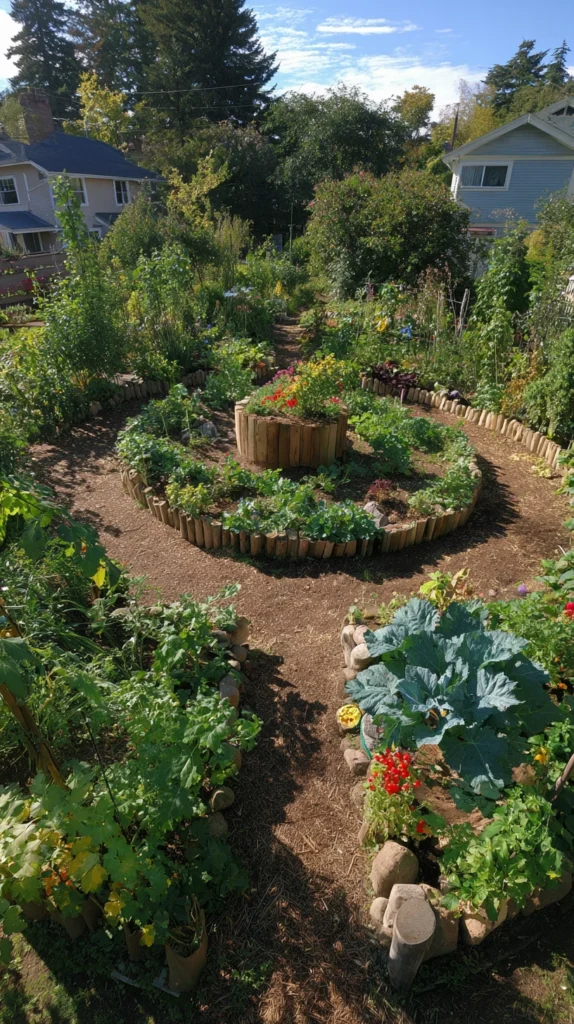
Round bed with wood core – permaculture classic.
My 8-foot diameter keyhole:
Design:
- Circular raised bed (3 feet tall)
- Wedge-shaped path to center
- Central compost basket
- Wood buried throughout
Wood placement:
- Concentric rings of logs
- Radiating from center
- Largest logs deepest
- Creates drainage and storage
Central compost:
- Wire mesh basket
- Kitchen scraps go here
- Nutrients leach outward
- Self-fertilizing system
Planting zones:
Near center (richest): Heavy feeders (tomatoes, squash) Middle ring: Moderate feeders (peppers, beans) Outer edge: Light feeders (lettuce, herbs)
My keyhole: Most productive bed per square foot, beautiful circular design, everything accessible.
5. Hugelkultur Swale (Contour Water Harvesting)
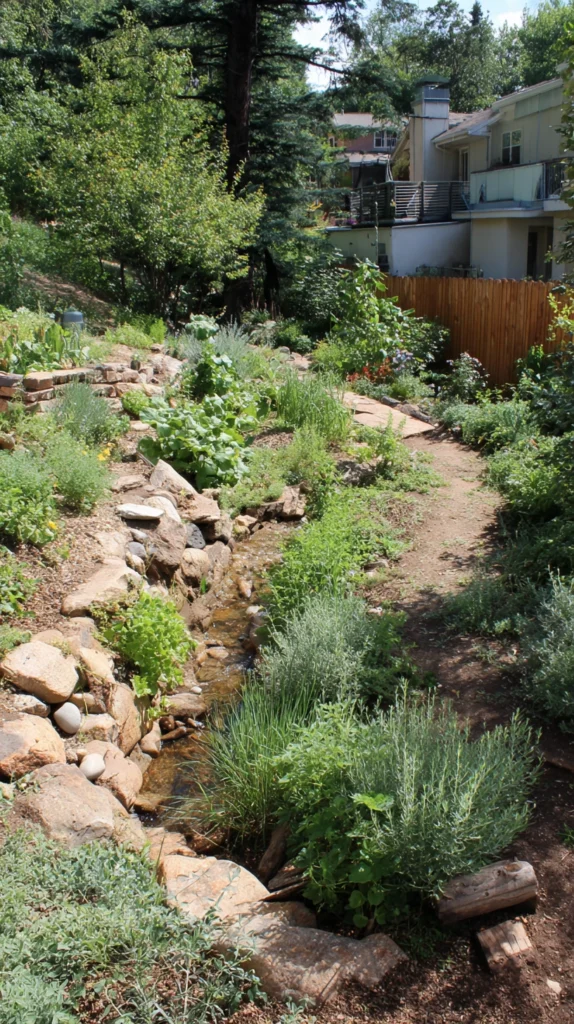
Buried wood on contour – captures and stores rainfall.
My sloped backyard (12% grade):
Design:
- Dug trench on contour (level)
- 30 feet long, 18 inches deep
- Filled with wood and organic matter
- Mound on downhill side
Function:
Rain collection:
- Runoff hits swale
- Water absorbed by wood
- Stored underground
- Released slowly
Erosion prevention:
- Was washing soil downhill
- Swale catches water
- Plants stabilize
- Problem solved
Production:
- Annual vegetables on mound
- Perennial herbs in swale
- Fruit trees above (utilize stored water)
- Multi-layer system
My swale: Solved erosion problem, created productive space, never water even in drought.
6. Lasagna Hugelkultur (No-Dig Layering)
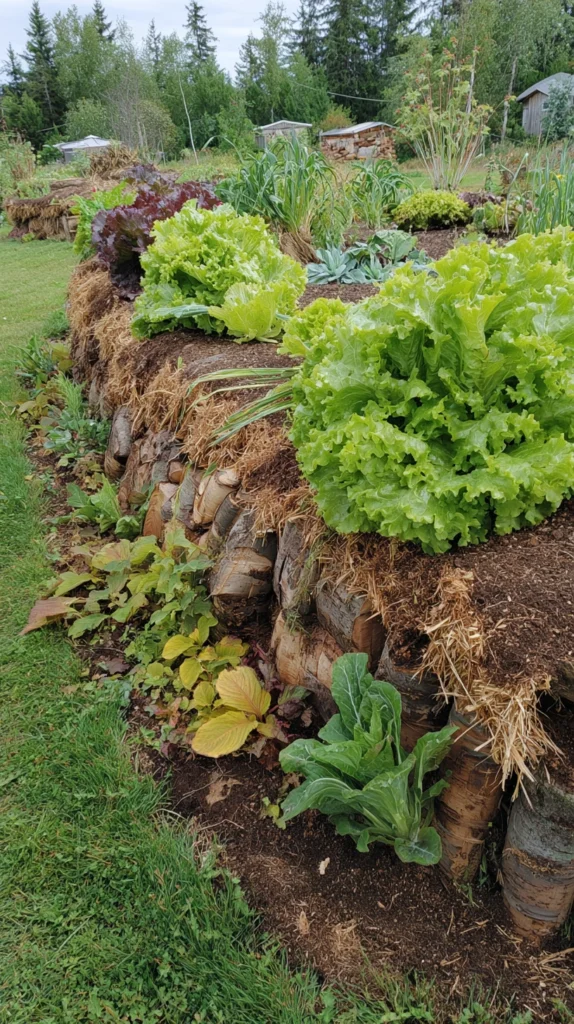
Sheet composting with wood core – easiest construction.
My 10×10 lasagna bed:
No digging required:
Layer 1: Cardboard over grass (smother weeds) Layer 2: Logs and branches (wood core) Layer 3: Grass clippings (green) Layer 4: Leaves and straw (brown) Layer 5: Compost (2 inches) Layer 6: Quality topsoil (3 inches)
Built in afternoon:
- No excavation
- Stacked layers
- Planted immediately
- Minimal effort
Decomposition:
- Bottom layers break down
- Creates soil over time
- Settles gradually
- Keeps adding layers
Perfect for:
- Lawn conversion
- No heavy digging
- Weekend project
- Instant garden
My lasagna bed: Easiest build, killed lawn, produced vegetables same season.
7. Mini Hugelkultur (Container Scale)
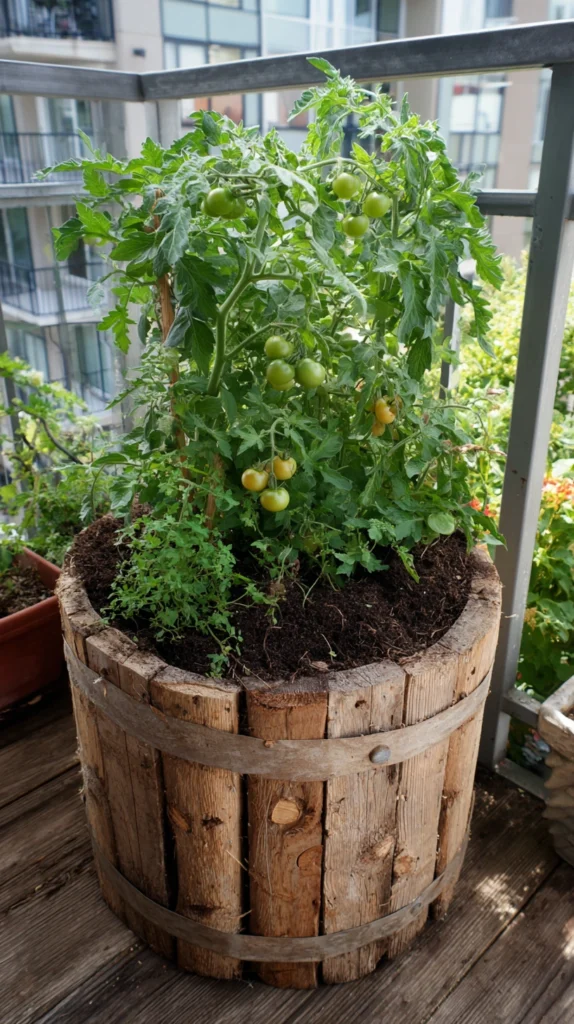
Small-scale wood burial – balcony/patio option.
My container experiment:
Large container:
- Half wine barrel (25 gallon)
- Drilled extra drainage
- Wood core inside
Wood selection:
- Small branches (1-2 inch diameter)
- Cut to fit container
- Filled bottom third
- Topped with soil
Results:
Water retention:
- Before (soil only): Daily watering
- After (with wood): Every 2-3 days
- Significant improvement
- Container-friendly
Production:
- Cherry tomato thrived
- 40+ pounds tomatoes
- Container size limits
- But impressive
My mini hugelkultur: Proves concept works at any scale, perfect for renters.
8. Hugelkultur Spiral (3D Growing)
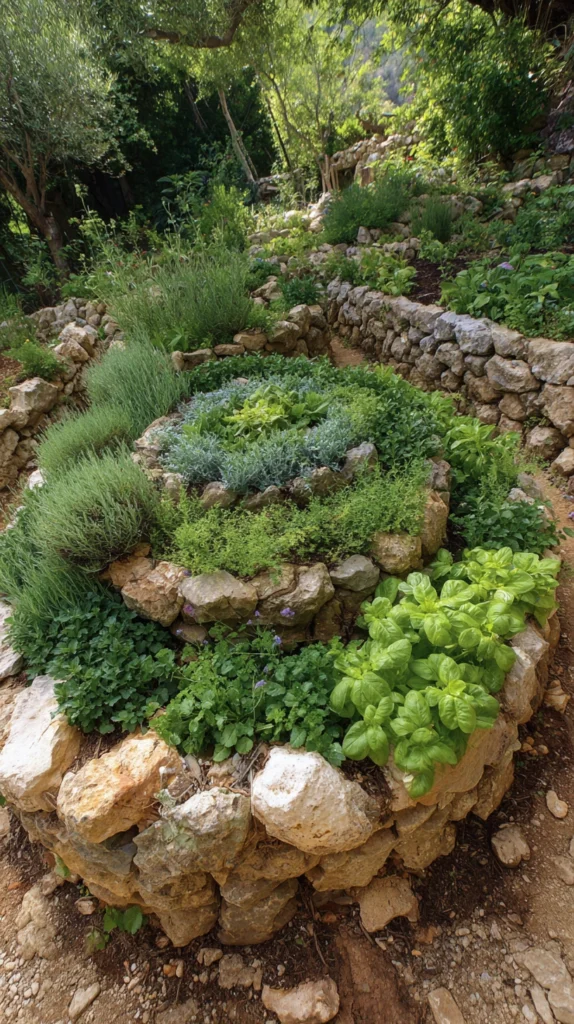
Spiral mound with wood core – multiple microclimates.
My 6-foot spiral:
Construction:
- Base logs in spiral pattern
- Gradually rises to 3 feet at center
- Stone edging defines spiral
- Wood core throughout
Microclimate zones:
Top (hot, dry):
- Mediterranean herbs
- Rosemary, thyme, oregano
- Full sun, excellent drainage
Middle spiral:
- Basil, parsley
- Moderate moisture
- Good sun
Bottom (cool, moist):
- Lettuce, cilantro
- Most moisture from wood
- Partial shade from height
Benefits:
Space efficiency:
- 28 square feet footprint
- 50+ square feet planting surface
- Vertical growing
- Maximum productivity
Water distribution:
- Wood absorbs at bottom
- Wicks upward
- Self-irrigating spiral
- Genius design
My spiral: Most beautiful bed, 30+ herb varieties, zero watering needed.
9. Path Hugelkultur (Walk-On Growing)
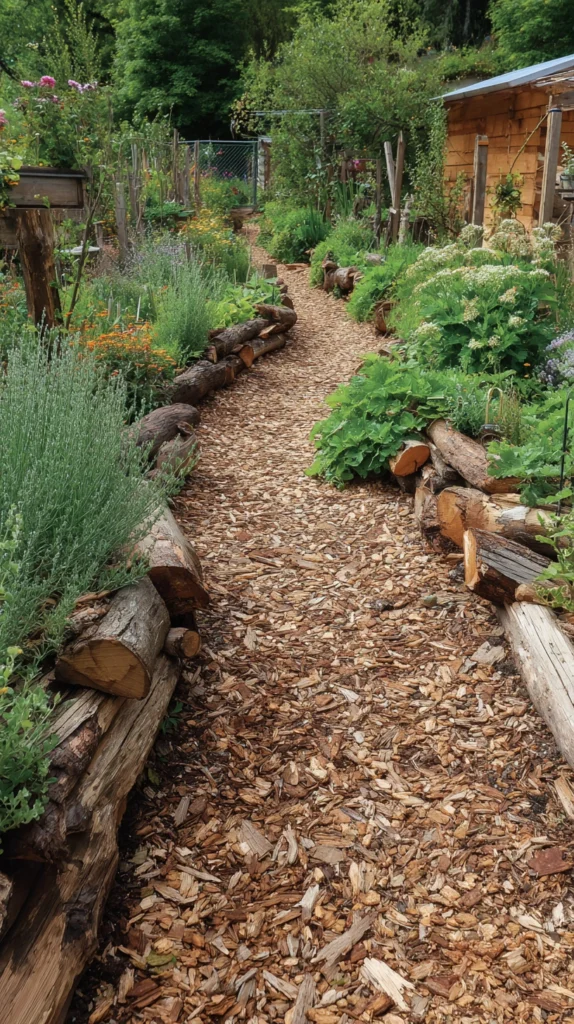
Wood under garden paths – dual purpose.
My garden pathway system:
Path construction:
- Excavated paths (12 inches deep)
- Filled with logs and branches
- Wood chips on top (walking surface)
- 3-foot wide paths
Function:
Water storage:
- Rain soaks into path wood
- Wood stores water
- Adjacent beds benefit
- Underground irrigation
Decomposition:
- Wood breaks down slowly
- Feeds path plants
- Eventually becomes soil
- Renew every 5-10 years
Bonus planting:
- Low herbs in paths (thyme)
- Walkable ground covers
- Fragrant when stepped on
- Productive paths
My path system: 60 feet of paths, stores water for beds, produces herbs, multiple functions.
10. Hugelkultur Terrace (Slope Solution)

Terraced mounds on hillside – erosion control.
My sloped yard (25% grade):
Four terraces:
- Each 8 feet wide
- Hugelkultur mounds retain slope
- 2 feet tall each
- 6 feet between terraces
Construction:
Each terrace:
- Logs placed horizontally (across slope)
- Filled behind with soil and branches
- Creates flat planting area
- Holds slope
Benefits:
Erosion stopped:
- Was losing topsoil yearly
- Terraces hold everything
- Stable now
- Problem solved
Usable space created:
- Slope was unusable
- Now four productive beds
- 200+ square feet gained
- Problem to asset
Water management:
- Each terrace captures water
- Wood stores it
- Upper terrace overflows to lower
- Cascade irrigation
My terraces: Solved major problem, created productive space, beautiful tiered garden.
11. Hugelkultur Hugel-Wall (Retaining Wall Alternative)
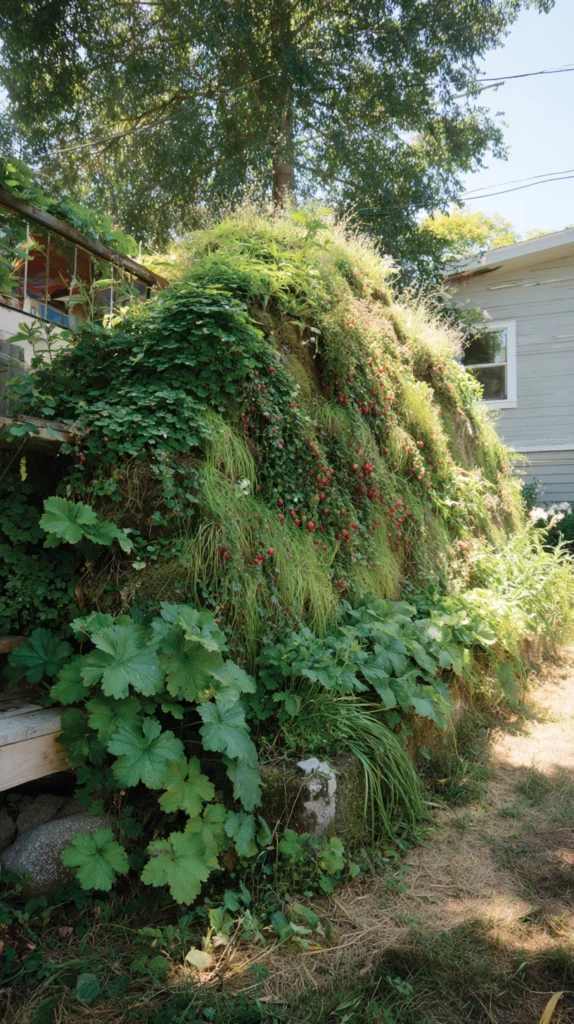
Wood-core retaining structure – living wall.
My patio elevation change:
Instead of retaining wall:
- Built hugelkultur mound as wall
- 12 feet long, 3 feet tall
- Wood core provides stability
- Plants stabilize surface
Structure:
- Large logs horizontal (retaining)
- Stacked and backfilled
- Soil and compost covering
- Immediate planting
Planting:
- Cascading herbs
- Strawberries trailing down
- Root systems stabilize
- Beautiful and functional
Cost comparison:
- Retaining wall quote: $800
- Hugelkultur wall: $0 (free wood)
- Plus produces food
- Triple win
My hugel-wall: Solved grade change, created planting space, cost nothing.
12. Annual Garden Hugelkultur (High Production)
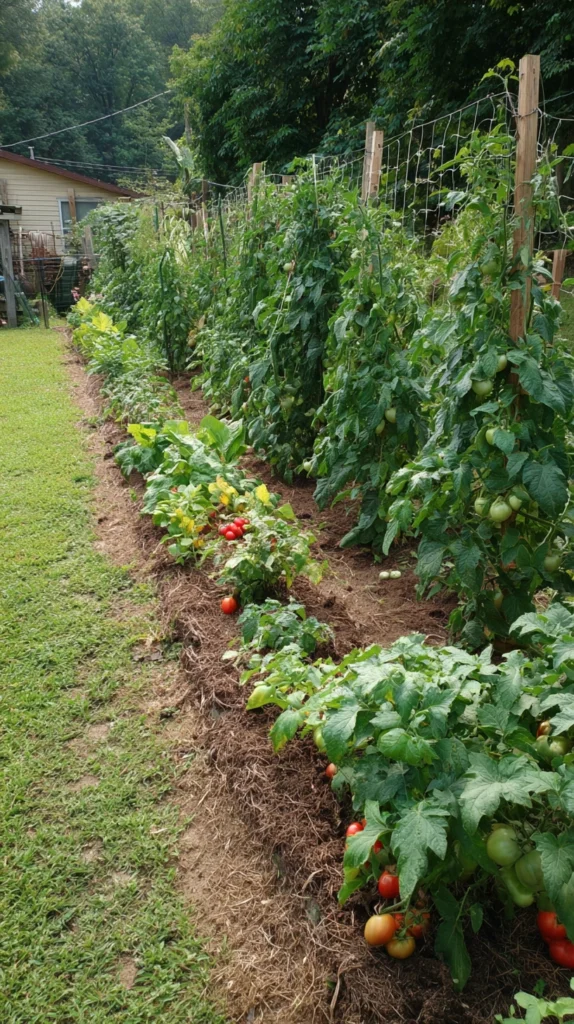
Wood core under annual vegetables – intensive growing.
My 20×4 annual bed:
Design:
- Logs buried 18 inches deep
- 6-inch soil cover
- Planted in rows
- Traditional appearance
What I grow:
- Tomatoes (heavy feeders)
- Peppers
- Squash
- Beans
Performance:
Year 1:
- Slight nitrogen deficiency
- Light yellowing
- Added fish emulsion
- Recovered quickly
Year 2:
- Explosive growth
- Tomatoes 8 feet tall
- Double normal production
- Zero fertilizer
Year 3-5:
- Peak performance
- 50% more yield than standard bed
- Never fertilize
- Rarely water
My annual bed: Highest producing, intensive vegetables, wood decomposition feeds heavy feeders.
13. Perennial Hugelkultur Food Forest (Long-Term System)
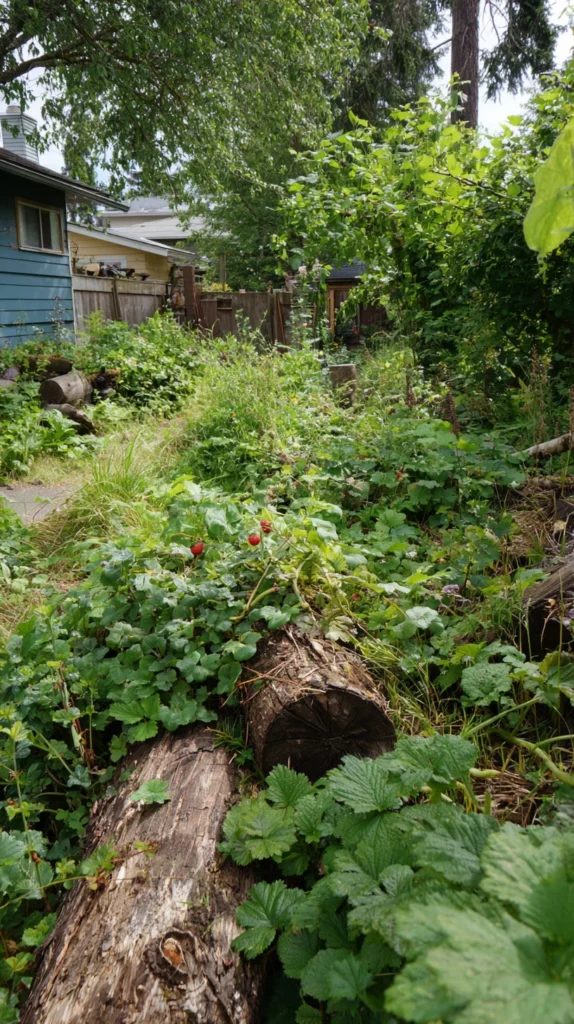
Wood buried under perennial plants – ultimate permaculture.
My 15×15 food forest:
Woody core:
- Entire logs (12-18 inch diameter)
- Will last 20+ years
- Permanent infrastructure
- Long-term thinking
Plantings:
Tree layer: Dwarf apple, pear Shrub layer: Blueberries, currants Herbaceous: Rhubarb, asparagus, herbs Ground cover: Strawberries, clover All perennial: Plant once, harvest decades
Why hugelkultur perfect here:
Perennials need stability:
- Long-term water storage
- Slow nutrient release
- Established fungal networks
- Matches plant timeline
Zero maintenance:
- Never disturbed
- Wood decomposes undisturbed
- Self-sustaining system
- Set and forget
My food forest: Year 7, producing abundantly, never watered or fertilized, perfect synergy.
14. Wicking Hugelkultur (Desert Gardening)
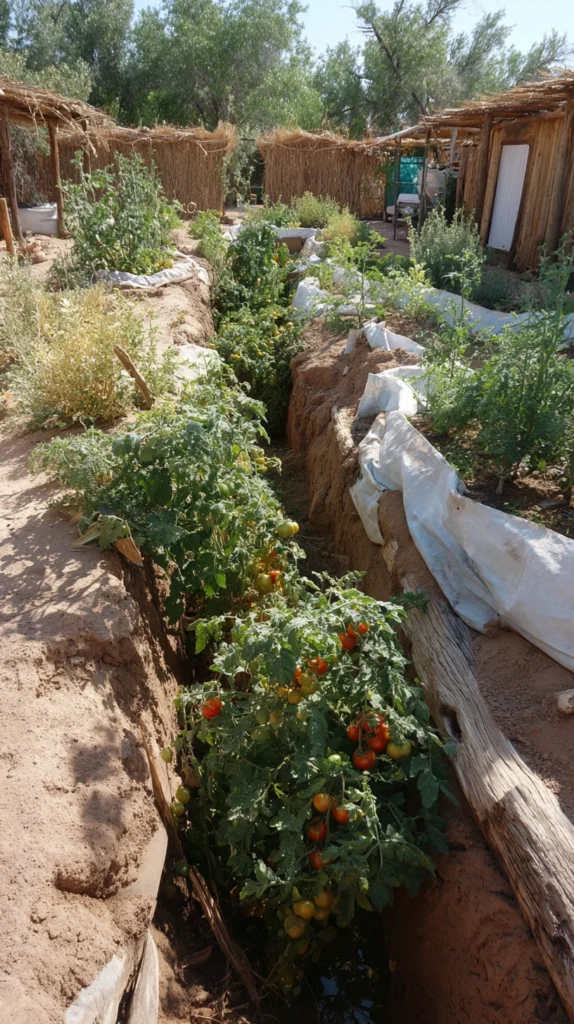
Deep wood with wicking action – extreme drought solution.
My friend’s Arizona garden:
Construction:
- Trench 3 feet deep
- Large logs at bottom
- Gravel layer
- Wicking fabric
- Soil on top
Water management:
Deep watering:
- Saturate wood at planting
- Wood holds gallons
- Wicks upward slowly
- Weeks between watering
Function in heat:
- 115°F summers
- Wood insulates roots
- Constant moisture
- Surviving extreme conditions
Results:
- Tomatoes in desert
- Watering weekly (vs daily for neighbors)
- 85% water savings
- Game-changer for arid climates
15. Small-Space Hugelkultur (Urban Garden)
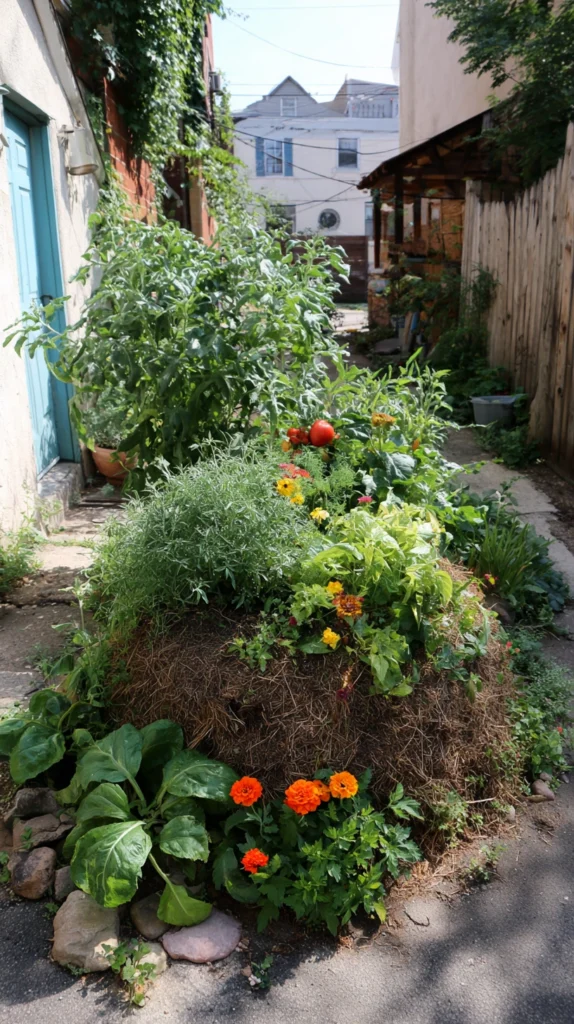
Compact wood-core bed – tiny yard solution.
My 4×4 urban bed:
Constraints:
- Small yard (15×20 total)
- Need maximum production
- Limited water access
- Minimal time
Solution:
- Single 4×4 hugelkultur bed
- Wood core throughout
- Intensive planting
- Self-sufficient system
Production:
- 4 tomato plants
- Companion planted (basil, marigolds)
- Lettuce underneath
- 60+ pounds harvest
Urban benefits:
Water independence:
- City water expensive
- Wood stores rain
- Reduces bill
- Sustainability
Low maintenance:
- Busy urban life
- Can’t water daily
- Hugelkultur forgives neglect
- Perfect for city gardeners
My urban bed: Proves even tiny spaces benefit, maximum production minimum space.
Building Your First Hugelkultur
Step-by-step process:
Wood Selection
Best woods:
Hardwoods (ideal):
- Oak, maple, ash (long-lasting)
- 10-20 year decomposition
- Maximum benefits
- Best choice
Softwoods (acceptable):
- Pine, poplar, willow (faster decomposition)
- 5-10 years
- Work fine
- Readily available
Perfect wood:
- Partially rotted already
- Started decomposing
- Fungus colonized
- Best results
Avoid:
- Walnut, black locust (allelopathic – inhibits growth)
- Cedar, redwood (rot-resistant = slow decomposition)
- Treated lumber (chemicals)
- Painted wood
My sources:
- Tree trimming services (free)
- Storm cleanup (abundant)
- Firewood too big to split
- Neighbor’s brush piles
Size and Placement
Dimensions:
Minimum effective:
- 6 feet long minimum
- 3 feet wide minimum
- 18 inches wood depth minimum
- Smaller works but less benefit
Optimal size:
- 8-12 feet long
- 4 feet wide (reach from both sides)
- 2-3 feet wood depth
- Maximum benefit
My recommendation: Start with 8×4 feet, 2 feet wood – manageable build, good results.
Construction Timeline
My typical build:
Day 1 (4 hours):
- Collect wood
- Position in location
- Stack logs and branches
- Cover with organic matter
Day 2 (2 hours):
- Add soil layer
- Compost topping
- Mulch surface
- Plant if desired
Total time: 6 hours for 8×4 bed
Can spread over weeks:
- Place wood when available
- Cover gradually
- No rush
- Flexible timeline
First-Year Management
What to expect:
Nitrogen Tie-Up
The challenge:
Fresh wood decomposes:
- Microbes consume nitrogen
- Temporarily unavailable to plants
- Yellow leaves possible
- Natural process
My solutions:
Nitrogen boost:
- Compost (high nitrogen)
- Grass clippings
- Coffee grounds
- Organic fertilizer if needed
Skip year 1:
- Let wood age without planting
- Year 2 ready
- Most patient approach
- Best results
I planted year 1 – added compost tea monthly, minor yellowing, fine by mid-season.
Settling and Sinking
Expected behavior:
First year:
- Bed sinks 6-12 inches
- Wood compresses
- Gaps fill
- Natural settling
Maintenance:
- Top up with compost
- Add soil as needed
- Expect this
- Not a problem
By year 2: Settling mostly complete, stable height, occasional top-up.
Watering Schedule
Year 1 (establishment):
Still need watering:
- Wood not fully saturated
- Decomposition starting
- Water like normal bed
- But slightly less
My year 1:
- Watered every 2-3 days
- Half the time of regular beds
- Immediate benefit
- But not zero-water yet
Year 2+: Water weekly or less, wood saturated, self-irrigating, dramatic reduction.
Long-Term Benefits Timeline
What happens when:
Year 1: Establishment
Process starting:
- Wood absorbing water
- Decomposition beginning
- Fungal colonization
- Some benefits
Production:
- 10-20% better than standard bed
- Modest improvement
- Patience required
- Building foundation
Year 2: Acceleration
Sweet spot beginning:
- Wood saturated
- Active decomposition
- Fertility increasing
- Benefits obvious
Production:
- 30-50% better than standard
- Watering cut 80%
- Fertilizer eliminated
- Excited gardener
Year 3-7: Peak Performance
Maximum benefits:
- Complete fungal network
- Nutrient-rich decomposition
- Water storage optimized
- System mature
Production:
- 50-100% increase over standard
- Water maybe monthly
- Never fertilize
- Gardening bliss
Year 8-15: Gradual Decline
Wood mostly decomposed:
- Benefits decreasing
- Still better than standard
- But not peak
- Transition time
Renewal:
- Add more wood to core
- Or rebuild entirely
- Or accept incredible soil created
- Options available
My oldest bed (year 8): Still outperforms standard beds, declining but good, considering rebuild.
Common Hugelkultur Mistakes
I made these errors:
Mistake 1: Used All Small Branches
Too-small wood:
- Broke down in 2 years
- Benefits ended quickly
- Needed larger logs
- Learned hard way
Fix: Use mix of sizes, larger logs (6-12 inch) = longer benefits.
Mistake 2: Built Too Small
Tiny mound (4×2 feet):
- Minimal benefit
- Wood dried out
- Not enough mass
- Disappointing
Fix: Minimum 6×3 feet, preferably larger, mass matters.
Mistake 3: No Nitrogen Boost Year 1
Planted heavy feeders:
- Tomatoes yellowed badly
- Struggled all season
- Wood consumed nitrogen
- Poor harvest
Fix: Light feeders year 1, or nitrogen boost, or wait until year 2.
Mistake 4: Ignored Settling
Expected stable height:
- Sank 10 inches
- Surprised
- Looked messy
- Should have anticipated
Fix: Expect 30% settling, plan for it, top up as needed.
Mistake 5: Wrong Wood Type
Used cedar:
- Barely decomposed
- Minimal benefits
- Wrong choice
- Wasted effort
Fix: Avoid rot-resistant woods, choose readily-decomposing species.
Cost-Benefit Analysis
My investment vs returns:
Initial Costs
My 8×4 hugelkultur bed:
Materials:
- Wood: Free (tree service)
- Cardboard: Free (stores give away)
- Compost: $15 (1 cubic yard)
- Topsoil: $25 (if needed, I used existing)
- Total: $15-40
Labor:
- 6 hours build time
- DIY (free)
- Weekend project
- One-time effort
Ongoing Savings
Annual savings per bed:
Water bill reduction: $30 yearly (90% less water) Fertilizer eliminated: $20 yearly Soil amendments: $15 yearly (no replacement needed) Total savings: $65 yearly per bed
Over 10 years: $650 savings per $40 investment
ROI: Under 1 year, then pure profit
Production Increase
Yield improvement:
Standard 8×4 bed: 60 pounds vegetables Hugelkultur 8×4 bed: 90-100 pounds vegetables Increase: 40-60 pounds more
Value: 50 pounds × $3/lb = $150 additional value
My Complete Hugelkultur System
What’s actually in my garden:
Seven hugelkultur beds:
- Classic mound (8×3, year 5): Tomatoes, peak performance
- Trench bed (20×3, year 4): Peppers, excellent production
- Raised hybrid ×4 (4×8 each, year 2-3): Mixed vegetables
- Keyhole (8-foot diameter, year 3): Kitchen garden, heavy use
Total hugelkultur space: 350 square feet
Production:
- 400+ pounds vegetables annually
- From beds I rarely water
- Never fertilize
- Minimal maintenance
Time savings:
- Was: 4 hours weekly watering
- Now: 30 minutes weekly (checking only)
- Saved: 180 hours yearly
Cost savings:
- Fertilizer: $80 yearly
- Water: $120 yearly (summer increase)
- Saved: $200 yearly
ROI timeline:
- Investment: $200 (all beds over 3 years)
- Annual savings: $200
- Payback: 1 year
- Years 2+: Pure profit plus better production
Best decision: Converting to hugelkultur, will never go back to standard beds.
Getting Started This Season
Don’t convert everything at once.
This spring:
Build one test bed:
- 8×4 feet (manageable)
- 2 feet wood depth
- Free wood (tree service)
- $15-40 investment
Plant light feeders:
- Lettuce, beans, squash
- Low nitrogen needs
- Forgiving
- Success likely
Compare to standard bed:
- Keep one regular bed
- Side-by-side test
- See difference yourself
- Convince yourself
My recommendation:
Start with single classic mound:
- 8×4 feet
- 2 feet wood core
- Compost top
- Plant year 1
After seeing year 2 results, you’ll build more. Guaranteed.
Now go bury some wood and create self-watering gardens!
Quick Summary:
Best hugelkultur designs:
Easiest start: Classic mound (weekend build, proven results) Flat yards: In-ground trench (no mound, hidden system) Existing beds: Raised bed hybrid (retrofit in 2 hours) Small spaces: Container scale (balcony/patio option) Slopes: Terraces or swales (erosion control + production)
By space available:
Tiny (under 50 sq ft): Mini hugelkultur container, spiral bed Small (50-200 sq ft): Classic mound, keyhole, raised hybrid Medium (200-500 sq ft): Multiple beds, annual garden, trench system Large (500+ sq ft): Food forest, terrace system, path network
Essential wood choices:
Best: Oak, maple, ash, fruit woods (10-20 year lifespan) Good: Pine, poplar, willow (5-10 years, readily available) Perfect: Partially rotted (already decomposing, immediate benefits) Avoid: Walnut, cedar, treated lumber, painted wood
Construction timeline:
Day 1: Place wood, stack and fill gaps (4 hours) Day 2: Cover with soil/compost, plant (2 hours) Total: 6 hours for 8×4 bed Or spread: Over weeks as wood becomes available
Water retention timeline:
Year 1: 50% reduction in watering (wood absorbing) Year 2: 80% reduction (wood saturated, active decomposition) Year 3+: 90% reduction (mature system, self-irrigating) Peak years 3-7: Nearly zero watering needed
Fertility timeline:
Year 1: Nitrogen tie-up possible (boost with compost) Year 2: Fertility increasing (decomposition feeding plants) Years 3-7: Peak fertility (explosive growth, zero fertilizer) Years 8-15: Gradual decline (wood mostly decomposed)
Minimum effective size:
Length: 6 feet minimum (8+ feet ideal) Width: 3 feet minimum (4 feet ideal, both sides accessible) Wood depth: 18 inches minimum (24+ inches better) Smaller works: But diminished benefits
First-year management:
Nitrogen boost: Compost, grass clippings, or fish emulsion Settling expected: 30% height reduction (6-12 inches) Light feeders: Lettuce, beans, squash (avoid heavy feeders) Water normally: Still establishing, full benefits year 2+
Annual savings (per 8×4 bed):
Water: $30 (90% reduction in irrigation) Fertilizer: $20 (eliminated after year 1) Soil amendments: $15 (no replacement needed) Total: $65 yearly × 10 years = $650 saved
Production increase:
Standard bed: 60 lbs vegetables Hugelkultur bed: 90-100 lbs vegetables Increase: 50-60% more production Value: $150 additional yearly
Investment breakdown:
Materials:
- Wood: Free (tree services, storm cleanup)
- Cardboard: Free (weed barrier)
- Compost: $15
- Topsoil: $0-25 (if needed)
- Total: $15-40 per bed
Labor: 6 hours (DIY), one-time build
Common mistakes:
- Too small (under 6 feet, minimal benefit)
- All small wood (decomposes too fast)
- Wrong wood type (cedar, walnut, treated)
- No nitrogen boost year 1 (yellow plants)
- Unrealistic expectations (be patient, peaks year 3)
Design variations:
Above ground: Classic mound (traditional, highest profile) Below ground: Trench (flat yard, hidden) Hybrid: Wood in raised bed (retrofit existing) Vertical: Spiral, terrace (slopes, microclimates) Structural: Hugel-wall, path (dual purpose)
Best for specific needs:
Maximum water storage: Deep trench (3 feet wood) Fastest benefit: Partially rotted wood (already decomposing) Longest lifespan: Large hardwood logs (20 years) Urban small space: Container or 4×4 bed Slope erosion: Terrace or swale on contour Drought climate: Wicking design (deep wood, gravel layer)
Free wood sources:
- Tree trimming services (abundant, free delivery)
- Storm cleanup (branches everywhere)
- Neighbors’ brush piles (ask permission)
- Arborists (often pay to dump, will deliver)
- Firewood too big to split (perfect size)
Quick start plan:
Month 1: Collect wood (as available), choose location Month 2: Build bed (one weekend), cover and plant Season 1: Water normally, add nitrogen if needed Year 2: Dramatic improvement, reduced watering Year 3: Peak performance, nearly zero inputs
Success indicators:
- Wood colonized by white fungus (mycorrhizae)
- Watering frequency decreasing yearly
- Plant growth increasing yearly
- Soil darkening and improving
- Zero fertilizer needed after year 1
- You building more beds (convinced)
Remember: Wood acts as sponge (stores water underground), decomposition feeds plants (free fertilizer), bigger is better (minimum 6×3 feet), be patient year 1 (peaks year 2-3), use free wood (tree services abundant), start with one bed (prove concept), expand gradually (build as convinced), think long-term (5-20 year system).