15 Garden Archway Ideas That Feel Romantic and Elegant
A garden arch changes the experience of a garden more profoundly than almost any other structural element available. It creates a moment of transition — a threshold between one part of the garden and another — and it frames the view beyond it in a way that makes everything on the other side look more considered and more deliberate than it did before the arch existed. Pass through a rose-covered arch on a warm June morning and the garden beyond it feels discovered rather than simply visited.
The fifteen ideas below cover every arch material, style, and application — from a simple metal hoop over a path to a full timber pergola tunnel. Each one includes what it costs and a practical tip to help you choose the right structure, plant it well, and maintain it so the arch improves with every passing season rather than deteriorating from the first.
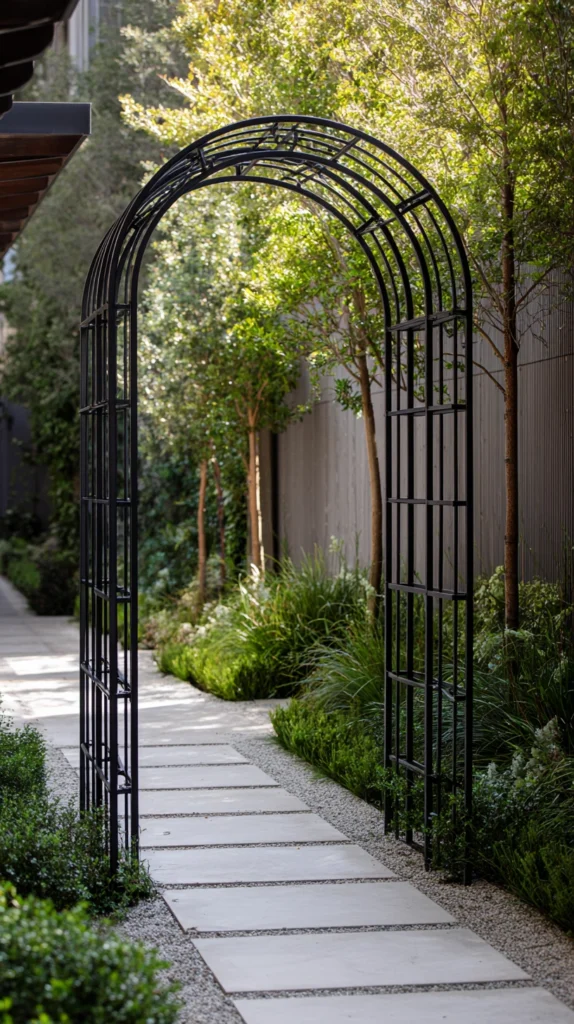
1. A Classic Climbing Rose Arch
Budget: $60 – $250
A garden arch covered in a climbing rose is the most iconic and most romantically beautiful archway available for any garden — and the most reliably photographed. The combination of an arching structure and a rose in full flower creates a threshold of such visual and sensory impact that it is difficult to improve upon regardless of budget or scale. One good arch, one good rose, and three years of patience produces a feature that defines the garden for decades.
A powder-coated steel arch costs $40–$120. A timber arch in pressure-treated pine runs $60–$150. A hardwood arch in oak or teak costs $150–$400. A climbing rose in a 3-litre pot costs $15–$40. Varieties including Zéphirine Drouhin (thornless, deep pink, highly fragrant), The Generous Gardener (pale pink, repeat-flowering), and Veilchenblau (violet, single-flowered) are all reliably vigorous, fragrant, and well-suited to arch training.
Garden tip: Plant one rose at the base of each upright rather than a single rose at one side only. A rose growing from both sides covers the arch twice as quickly and produces a more complete, balanced canopy than a single plant trained across the full width from one starting position. By year three the two plants have met in the middle and the arch is covered from all sides simultaneously.
2. A Wisteria Moon Gate
Budget: $150 – $600
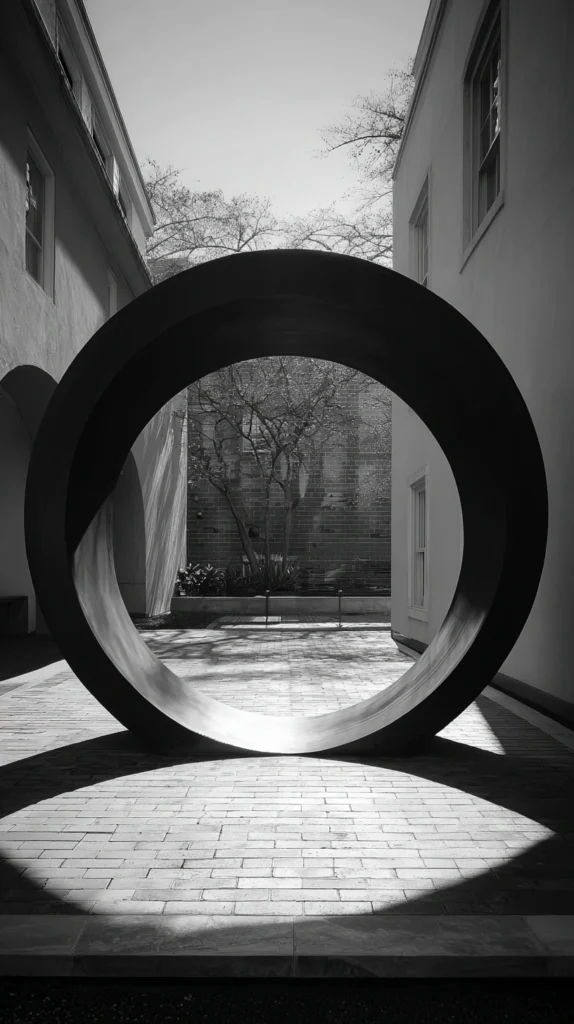
A circular moon gate arch — the Chinese garden tradition of a round or oval opening in a wall or fence — draped in wisteria creates the most dramatic and most specifically oriental garden archway available. The hanging racemes of wisteria flowers passing through and around the circular frame in late spring produce an overhead canopy of extraordinary beauty that no other climbing plant in a similar format approaches.
A mild steel circular moon gate arch costs $150–$400 from specialist garden metalwork suppliers. A purpose-built rendered masonry moon gate costs $500–$1,500 professionally constructed. A wisteria sinensis in a 3-litre pot costs $20–$50 — choose a grafted plant, which flowers years sooner than a seed-grown specimen. Train two plants from the base, one on each side of the circle, and allow them to meet at the top of the arch over two to three seasons.
Garden tip: Prune wisteria twice yearly without fail — once in August cutting the current season’s whippy growth back to five or six leaves, and again in February cutting those same shoots back to two or three buds. Without this double-pruning regime, wisteria produces excessive leafy growth at the expense of flowers and the arch becomes a dense green canopy rather than the flowering feature it is planted to be.
3. A Sweet Pea Arch for Summer
Budget: $20 – $80
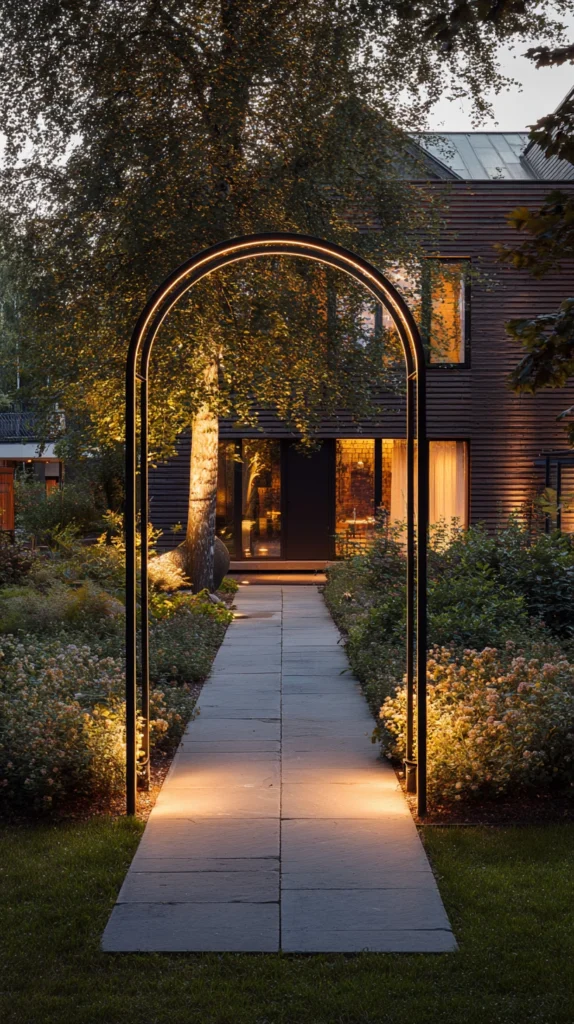
A metal or timber arch covered in sweet peas — sown in autumn for an early display or in spring for a midsummer one — creates the most fragrant garden archway available through June, July, and August. Sweet peas climb readily by tendril and cover a standard garden arch completely within six to eight weeks of planting, producing a continuous succession of cut flowers for the house at the same time as they beautify the garden structure they are growing on.
A simple steel hoop arch costs $30–$60. Sweet pea seed in a heritage or Spencer variety costs $3–$6 per packet — sow at least six seeds per arch upright for the densest coverage. Varieties including Matucana (deep purple, intensely fragrant), Painted Lady (pink and white bicolour), and Cupani (maroon and purple, the most fragrant of all) provide the best fragrance. Cut the flowers every two to three days without fail — a single unpollinated seed pod triggers the plant to stop flowering almost immediately.
Garden tip: Soak sweet pea seeds in water overnight before sowing and nick any that remain hard after soaking with a sharp knife on the side opposite the eye. The hard seed coat of some sweet pea varieties can significantly delay germination — pre-soaking and nicking accelerates emergence by up to two weeks and produces significantly more even germination across the full batch of seeds sown.
4. A Timber Pergola Tunnel
Budget: $400 – $2,000
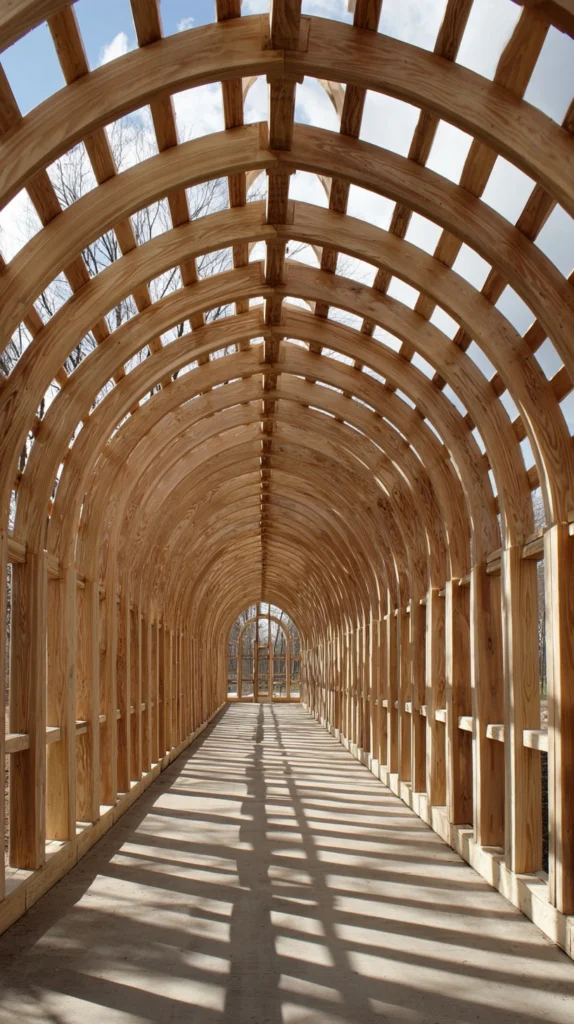
A series of arches connected into a pergola tunnel — three, four, or more timber frames in a line with horizontal connecting rails along the top — creates the grandest and most immersive archway experience available for a larger garden. Walking through a fully planted pergola tunnel in midsummer is one of the most complete enclosed garden experiences available, combining dappled light, fragrance, and the particular quality of air in a planted space that outdoors alone rarely achieves.
A three-arch timber pergola tunnel in pressure-treated timber costs $400–$800 in materials. A five-arch version runs $600–$1,200. A hardwood tunnel in oak or sweet chestnut costs $1,000–$2,000 for a substantial structure. Plant with a mix of climbing roses, clematis, and wisteria distributed between the uprights — one climbing species per upright pair — for the most varied and most complete seasonal display across the full length of the tunnel.
Garden tip: Install the complete pergola tunnel structure — all uprights, all cross-beams, all connecting rails — before planting any climbers. Structural assembly around existing climbing plants is significantly harder than planting into a completed structure, and the adjustments and levelling that are always required during timber frame installation cause less damage to an empty structure than to one already occupied by established plants and their root systems.
5. A Black Steel Minimalist Arch
Budget: $40 – $150
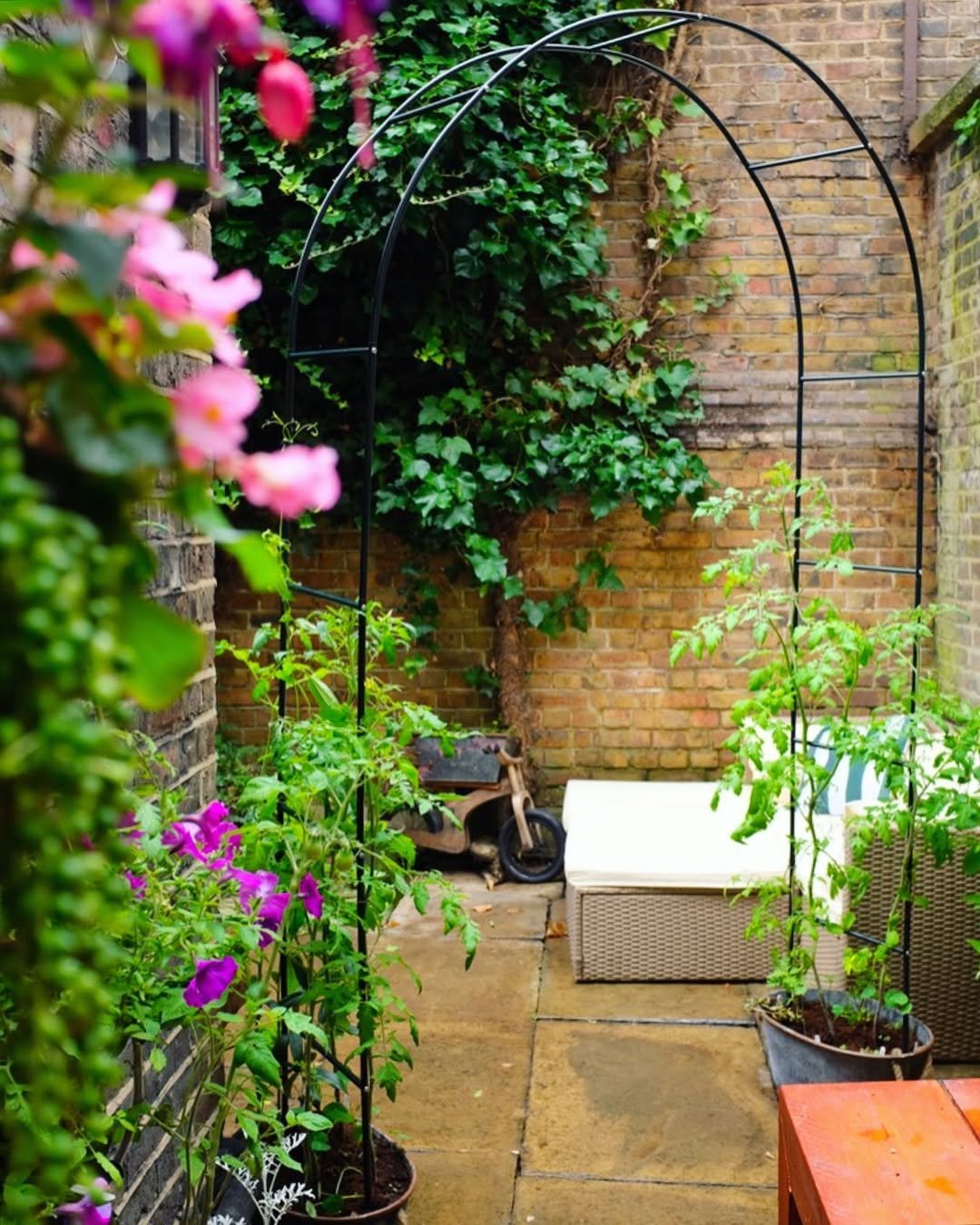
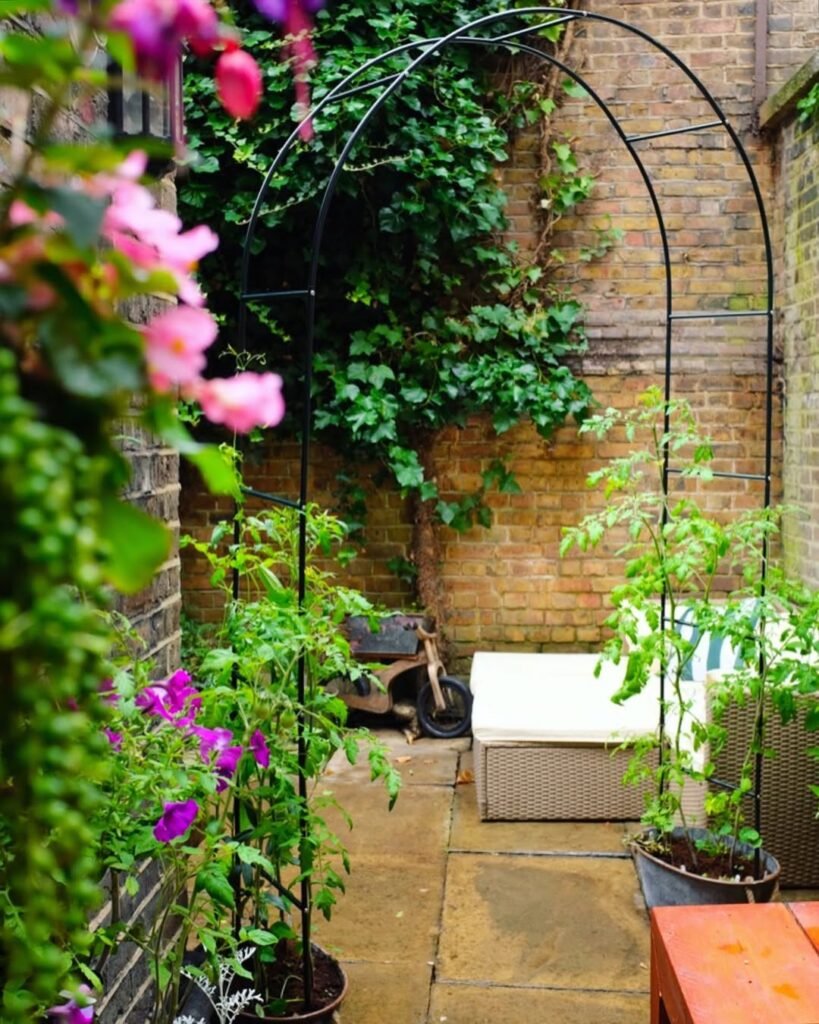
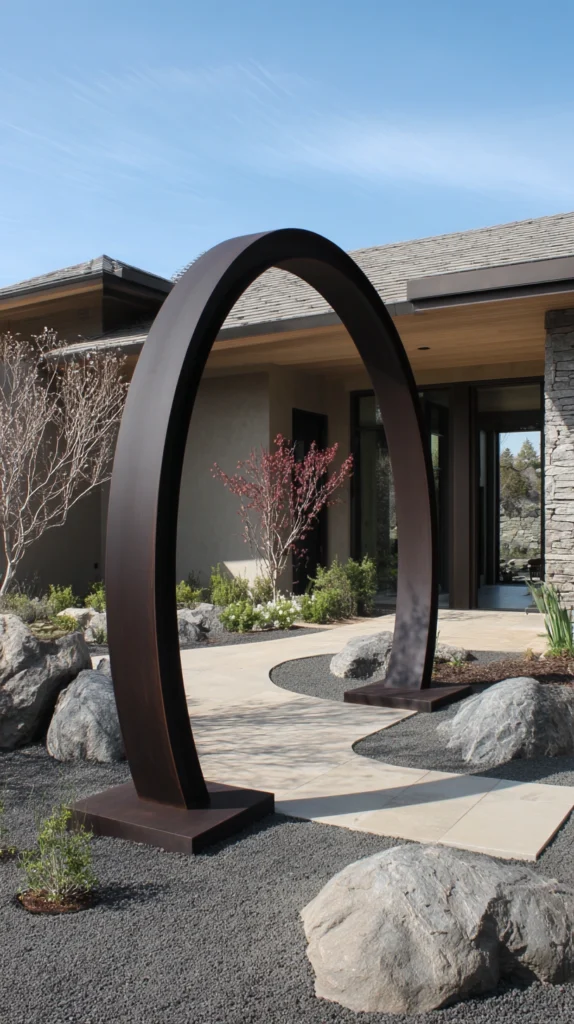
A powder-coated black steel arch over a garden path — even without a climbing plant trained over it — creates a graphic, architectural garden moment that suits contemporary and modern garden styles. Used as a gateway between two garden spaces, as a visual full stop at the end of a path, or as a compositional frame around a view, a black steel arch provides structural and aesthetic value from its first day in the garden regardless of the planting status of its uprights.
A powder-coated steel arch in black or anthracite costs $40–$120 for a standard 1.2-metre width. A wider version at 1.5 metres runs $60–$150. The black finish suits Clematis viticella varieties trained over it — the dark flowers (Purpurea Plena Elegans, Etoile Violette) against the black structure creates the closest thing to a monochrome garden composition available and one of the most specifically contemporary floral arrangements in any garden style.
Garden tip: Lean the arch uprights slightly inward at the top — 3–5 degrees toward each other — rather than setting them perfectly vertical. The slight lean creates the subtly tapered profile of a traditional garden arch that reads as elegant rather than factory-standard from a distance. A perfectly vertical arch with a semicircular top looks like a product. A slightly tapered one looks like it was designed specifically for the garden it occupies.
6. A Clematis-Covered Cottage Arch
Budget: $50 – $180
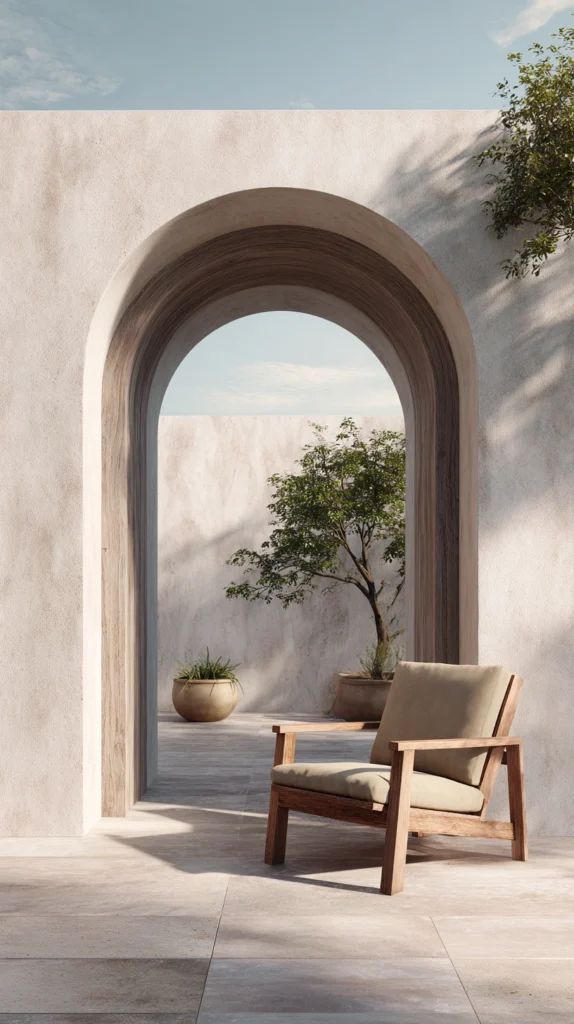
A timber or metal arch trained with two or three clematis varieties — chosen to flower in succession through spring, summer, and early autumn — creates a cottage garden archway with the longest flowering season available from a single climbing genus. No other climbing plant produces such a range of flower size, colour, and season across different varieties and species, making clematis the most versatile and most rewarding arch plant in the cottage garden.
A spring-flowering Montana clematis costs $10–$25 and produces masses of small pink or white flowers in April and May. A summer-flowering large-flowered hybrid (Nelly Moser, Jackmanii) costs $10–$20 and provides vivid colour from June through August. An autumn viticella (Polish Spirit, Etoile Violette) costs $10–$20 and extends the display through September and October. All three can be trained on the same arch in a layered planting for a display that spans eight months of the year.
Garden tip: Tie clematis stems to the arch framework at 15–20 cm intervals as they grow rather than allowing them to find their own way — clematis climbs by wrapping its leaf stems around any available support and without guidance it clusters at the nearest point of the structure rather than distributing its growth evenly across the full surface of the arch. Regular tying-in through the growing season produces a more complete coverage at the end of the season than any amount of growth without direction.
7. A Hornbeam or Yew Pleached Arch
Budget: $200 – $800
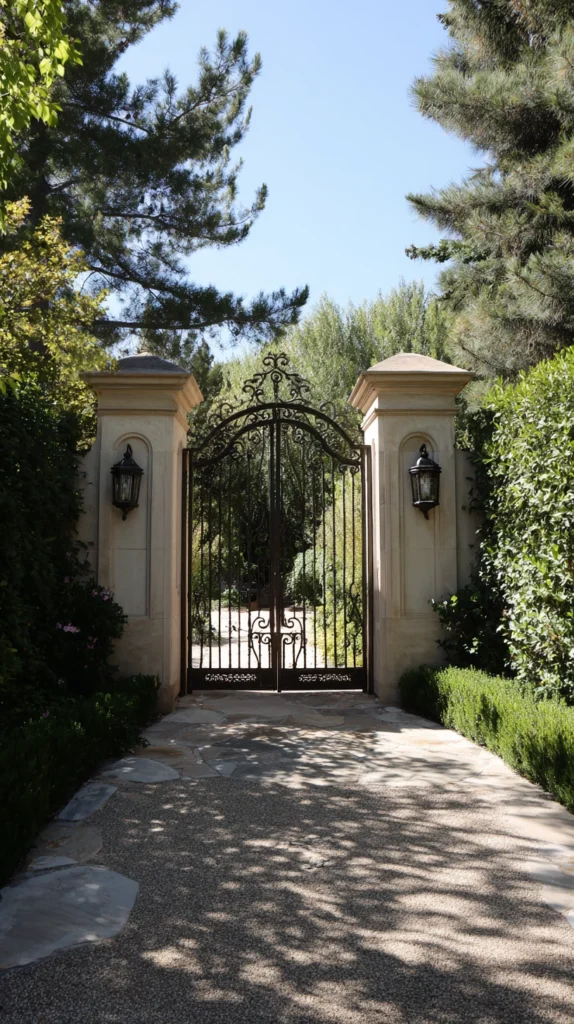
A living arch of pleached hornbeam or yew — two rows of trees planted on each side of a path and trained to meet overhead — creates the most permanent and most architecturally authoritative garden archway available. Unlike a planted metal or timber frame arch, a pleached tree arch becomes more solid and more imposing with every passing year and eventually has the quality of a built structure rather than a planted one.
Pleached hornbeam trees for arch training cost $30–$80 each. Two trees are required per arch — one on each side. The frame onto which the trees are initially trained costs $20–$50 in bamboo canes and wire per arch position. The arch takes four to six years to reach its intended form and thereafter needs a single annual clip in late summer to maintain the clean, enclosed profile that makes a pleached arch so distinctive in a formal garden.
Garden tip: Train the two trees to meet at the apex using a temporary bamboo cane bridge tied between the two upper leaders — this guides the growth of each tree toward the other rather than allowing them to continue growing vertically past the meeting point without joining. Once the two leaders have grown together and been lashed in contact for one full growing season, they begin to graft together naturally and the joined apex becomes self-supporting.
8. A Bamboo and Twine Japanese Garden Arch
Budget: $15 – $60
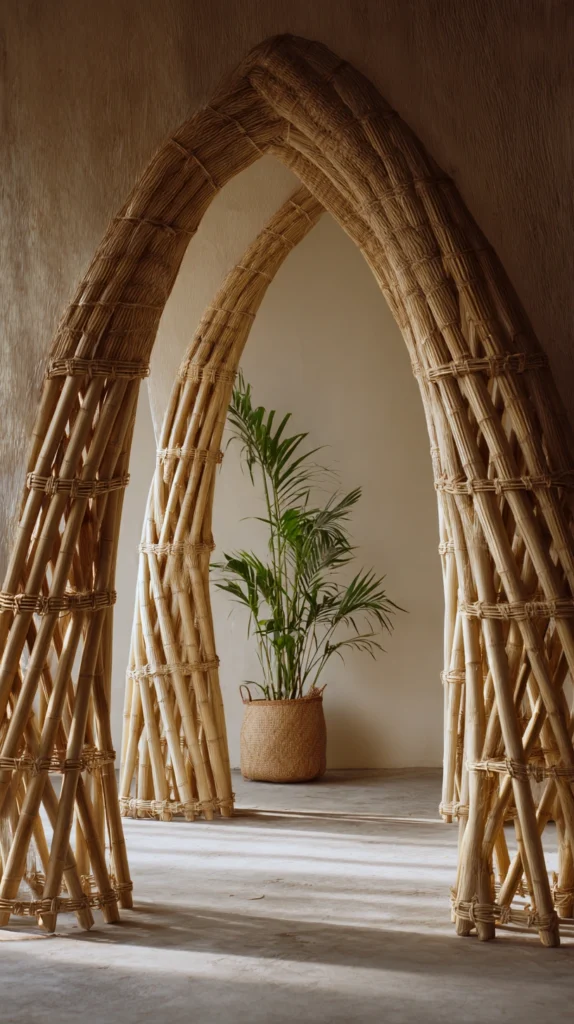
An arch constructed from large-diameter bamboo poles lashed together with natural twine in a simple A-frame or curved form creates the most natural and most immediately distinctive archway available for a Japanese-inspired or naturalistic garden scheme. The material is authentic, the construction is straightforward, and the result is uniquely characterful in a way that no manufactured metal or timber arch replicates.
Large-diameter bamboo poles of 4–6 cm diameter cost $5–$15 each from specialist bamboo suppliers or garden centres with good Asian garden ranges. A simple A-frame arch requires four poles and costs $20–$60 in materials including twine. The arch should be replanted every three to five years as bamboo exposed to alternating wet and dry outdoor conditions eventually splits and weakens. Plant with Japanese climbing hydrangea or actinidia kolomikta for the most contextually appropriate coverage.
Garden tip: Apply a coat of bamboo sealant or outdoor varnish to all poles before assembly. Natural untreated bamboo exposed to full outdoor conditions bleaches and splits within two to three seasons without surface protection. A sealed pole maintains its warm honey-brown tone for four to five seasons before needing retreatment — the sealed version looks better and lasts significantly longer than an untreated one in the same exposed position.
9. A Honeysuckle Scented Arch
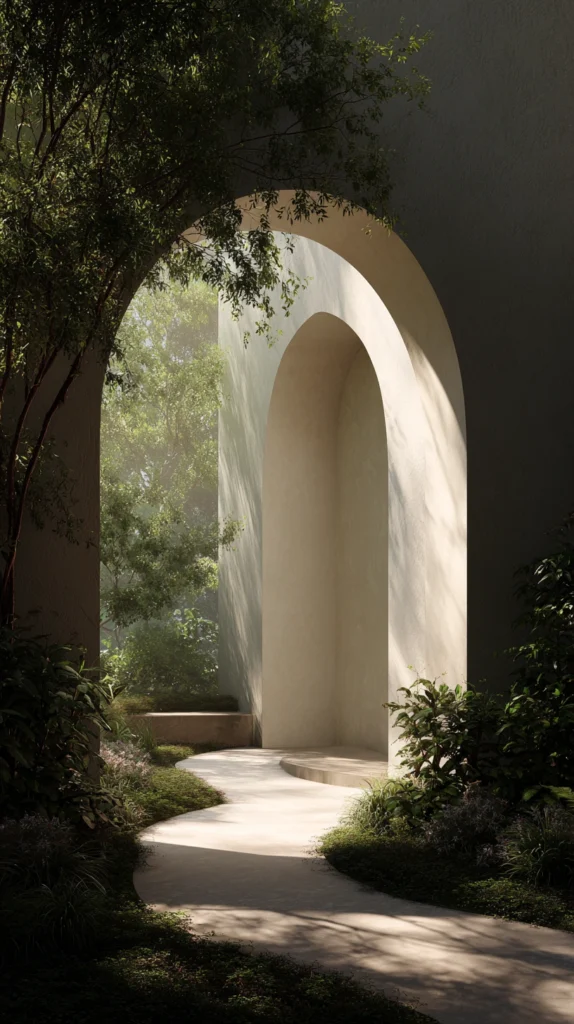
Budget: $50 – $180
An arch covered in native honeysuckle (Lonicera periclymenum) — positioned beside the main seating area or over the path most frequently used on summer evenings — creates the most fragrant garden archway available for a temperate garden. Honeysuckle’s perfume is strongest in the evening and most intense on still, warm nights, which makes this arch most fully experienced precisely when most people are in the garden to appreciate it.
Lonicera periclymenum Belgica (early Dutch honeysuckle) costs $10–$25 and flowers from May through July. Lonicera periclymenum Serotina (late Dutch honeysuckle) costs $10–$25 and flowers from July through September. Planting one of each variety at the base of each arch upright provides flowers and fragrance from May through September simultaneously from the same structure. A metal arch to support them costs $40–$120.
Garden tip: Allow honeysuckle to twine freely through the arch framework rather than tying it systematically to specific rails. Honeysuckle climbs by twining its stems around any available support and produces a more natural, more abundant coverage when allowed to find its own path through a structure than when formally tied to specific positions at regular intervals. A lightly guided honeysuckle arch always looks more romantic than a formally trained one.
10. A Willow Weave Living Arch

Budget: $20 – $80
Two rows of living willow rods pushed into moist soil on each side of a path — woven together at the top to create a living arch — create a garden feature that roots and grows into an increasingly substantial living structure over the first two to three growing seasons. The arch leafs out through summer and creates dappled, leafy shade overhead in a way that no manufactured arch can replicate without many years of climbing plant growth.
Living willow rods (Salix viminalis) cost $0.50–$2 each from specialist willow suppliers. A single arch requires eight to twelve rods at $4–$24. Push the rods 30 cm into moist, prepared soil in February or March while fully dormant, positioning four to six rods on each side of the path and weaving the tops together in a dome or pointed arch form before leaf break. Water through the first growing season — once rooted, willow requires no additional irrigation even through summer drought.
Garden tip: Trim the living willow arch once in late winter each year — removing stems that have grown too far beyond the intended arch form and weaving vigorous new growth back into the framework rather than removing it. The annual winter maintenance shapes the structure progressively toward a more defined form with each passing year and the increasingly dense woven framework becomes more visually striking rather than less as it matures.
11. A Rose and Clematis Combination Arch
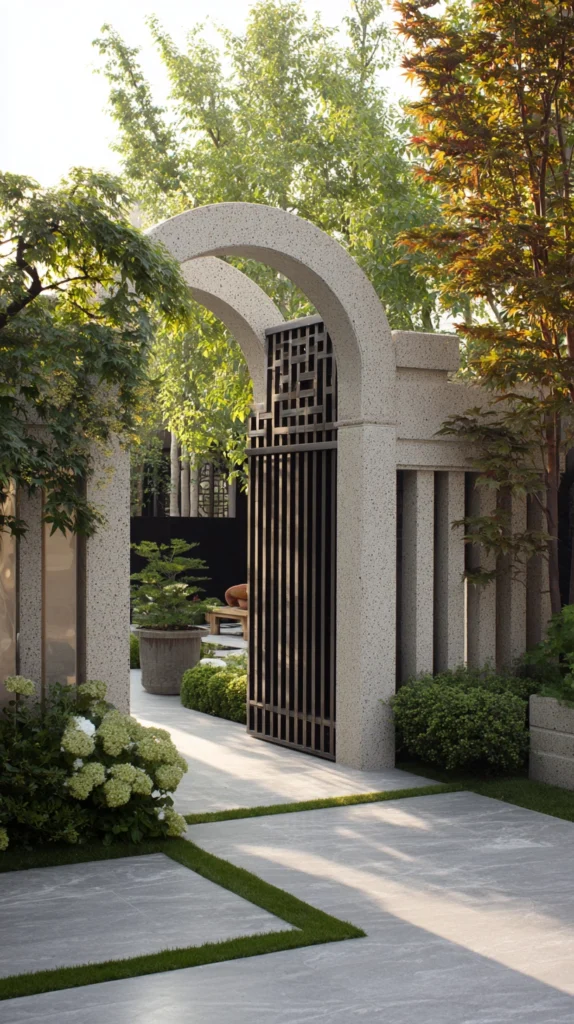
Budget: $70 – $250
The most reliably successful and most frequently recommended climbing plant combination for a garden arch is a rose and a late-flowering clematis trained on the same structure — the rose covering the arch from June through August with its main flush, and the clematis extending the display through September and October after the rose has largely finished. The two plants together provide flower from May through to October from a single garden arch.
A repeat-flowering climbing rose costs $15–$40. A Clematis viticella or texensis variety costs $10–$25. Plant the rose first and allow it one full growing season to establish before introducing the clematis at the base of the same upright. The clematis is pruned hard to 30 cm each February — this annual hard pruning prevents the clematis from smothering the rose beneath it and encourages the strong new season’s growth on which the viticella and texensis groups produce their best flowers.
Garden tip: Choose a rose and clematis with complementary rather than identical colours for the most interesting combination. A soft pink rose with a deep purple clematis (Etoile Violette) creates a contrast that makes both flowers more vivid by proximity. Matching colours — a pink rose with a pink clematis — reduces the visual impact of both and produces a uniform single-colour arch rather than the layered, varied composition that the combined planting is capable of achieving.
12. A Formal Stone or Brick Arch
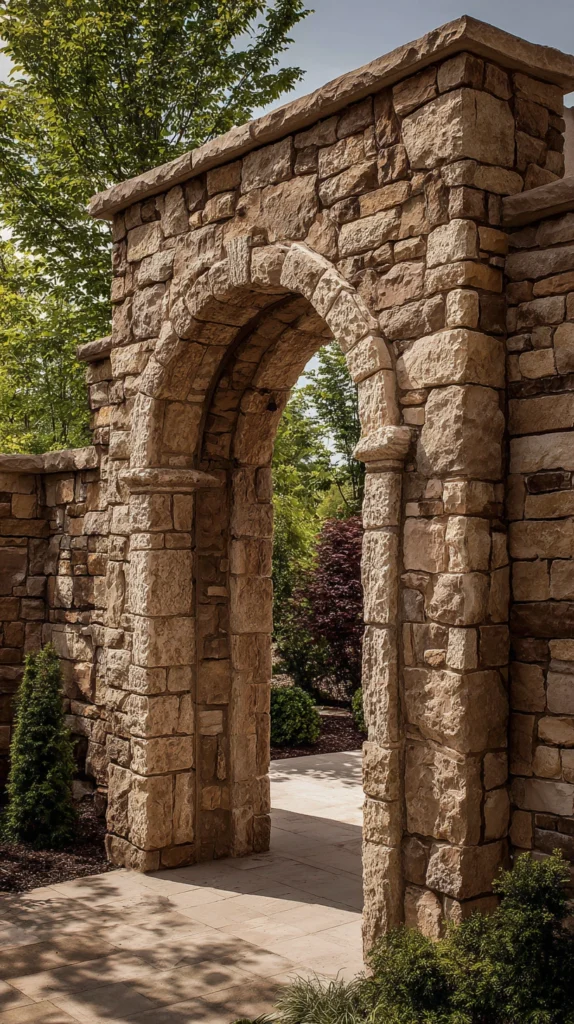
Budget: $500 – $3,000
A built stone or brick arch — a permanent masonry structure spanning a path or gateway between two garden spaces — is the most architecturally significant and most enduringly beautiful archway available for a formal or traditional garden. Unlike any planted or fitted metal structure, a masonry arch only improves with age, weathers into the garden rather than standing apart from it, and provides a sense of permanence and history that no temporary structure can replicate regardless of how well it is planted.
A simple brick arch of 90 cm width and 2 metres height costs $1,500–$3,000 professionally built. A dry-stone arch in a region where the stone type suits the garden costs $800–$2,000 from an experienced dry-stone waller. Either structure requires no maintenance beyond an occasional pointing of the mortar joints in a brick arch — dry-stone arches require no maintenance at all. Train a climbing rose or wisteria over a masonry arch using simple vine eye and wire fixings into the mortar joints.
Garden tip: Position a masonry arch so that it frames a specific view — a seat, a pot, a specimen tree, or a further garden feature — rather than simply spanning a path at a convenient structural location. The arch that frames something worth looking at becomes a composition. The arch that simply marks a transition point in the path becomes a structural feature. The difference between the two is a matter of five minutes of consideration before the footings are dug.
13. A Fruit Arch — Apples and Pears
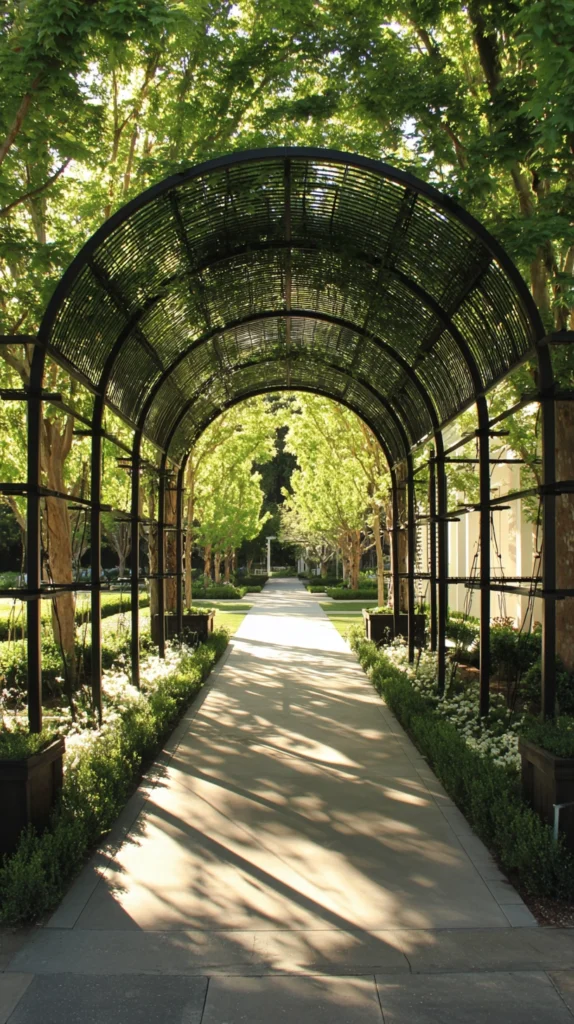
Budget: $100 – $400
Apple and pear trees trained to meet over a path — grown as espaliers or cordons trained up and over a metal or timber arch framework — create a productive fruit arch that provides blossom in spring, developing fruit through summer, and a harvest of apples or pears in autumn. It is simultaneously the most ornamental and the most productive arch type available, providing fruit and beauty from the same structure across every month of the growing season.
A metal tunnel arch framework of 1.2 metre width costs $60–$150. Trained cordon or espalier apple trees suitable for arch growing cost $20–$50 each — two trees are needed, one on each side. Rootstock M26 produces a compact, productive tree well-suited to trained forms. Varieties that provide both good blossom and good eating — James Grieve, Sunset, or Lord Lambourne — suit this format best and are available from specialist fruit nurseries.
Garden tip: Summer-prune the trained side shoots of a fruit arch in late July — cutting the current season’s lateral shoots back to three leaves above the basal cluster. This summer pruning is the single most important annual task in maintaining the productivity and form of a fruit arch — it builds up the fruiting spur systems that carry next year’s crop while keeping the arch within its allotted space and preventing the dense, leafy growth that reduces both fruit quality and ornamental appeal.
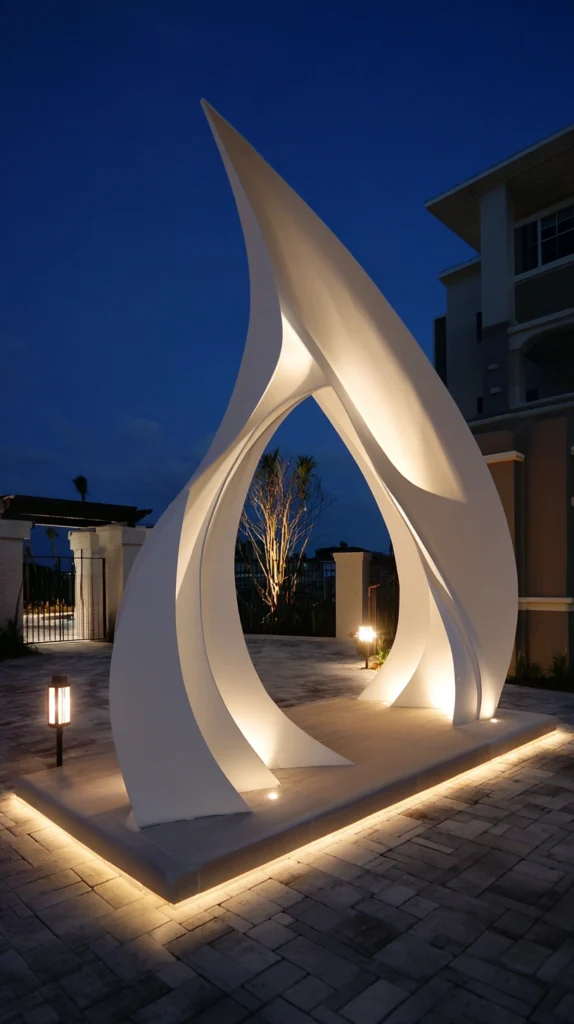
14. A Passionflower Tropical Arch
Budget: $40 – $150
Passiflora caerulea — the hardiest passionflower available for temperate gardens — trained over an arch creates one of the most exotic and visually extraordinary garden archways available outside the tropics. The intricate, alien beauty of the passionflower bloom — combining purple, white, and blue in a structure of almost engineered complexity — creates a genuinely unique garden moment when viewed at close range from beneath an arch it has been trained to cover.
Passiflora caerulea in a 2-litre pot costs $10–$25 from most garden centres. It is vigorous enough to cover a standard arch in a single growing season in a warm, sheltered position and flowers from June through October on new growth. It is semi-hardy — the top growth may be killed in hard winters but the plant regenerates vigorously from the root in spring. A metal arch costs $40–$120. Plant in full sun against a south or west-facing wall for the warmest possible growing conditions.
Garden tip: Cut passionflower back hard — to within 30 cm of the ground — in March each year regardless of whether the previous season’s growth has been winter-killed. Passionflower flowers on the current season’s growth and the new shoots produced after hard pruning are significantly more productive and more vigorous than old growth retained from the previous year. An annually cut passionflower arch flowers more prolifically and more reliably than an unpruned one of the same age.
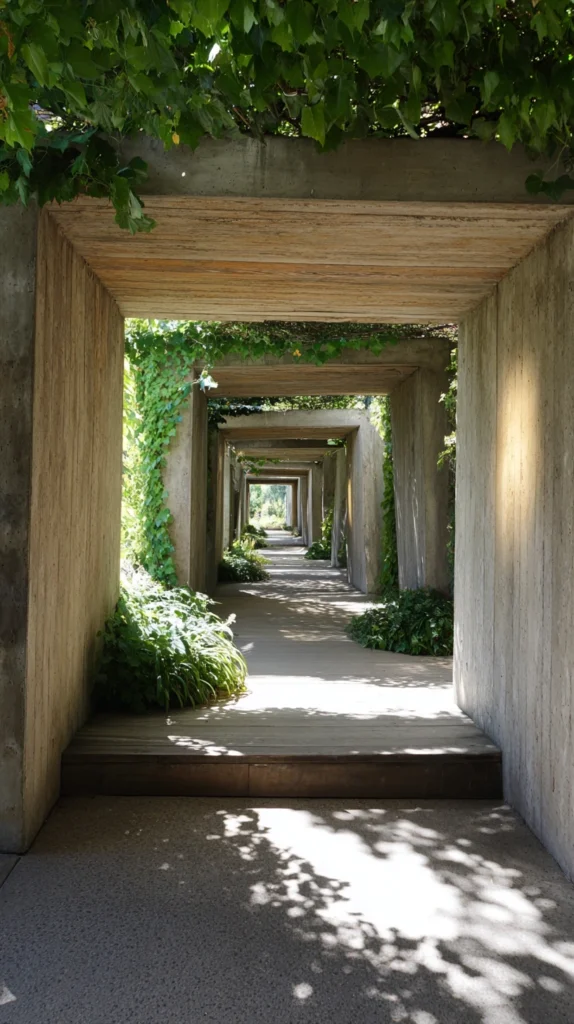
15. A Multi-Arch Garden Tunnel With Seasonal Planting
Budget: $300 – $1,500
A tunnel of three or more arches planted with a different species on each pair of uprights — wisteria on the first, climbing rose on the second, clematis on the third, honeysuckle on the fourth — creates the most varied and most continuously beautiful garden archway experience available. Each pair of uprights contributes a different colour, form, and season of interest, and the tunnel as a whole provides something extraordinary to walk through from April through to October without a single gap in its seasonal display.
A three-arch metal tunnel costs $120–$300. A four-arch timber tunnel runs $200–$500. Climbers for the uprights — two plants per pair at $15–$40 each — cost $90–$240 for a four-arch tunnel fully planted. The management of four different climbing species on the same structure requires slightly more specific knowledge than a single-species arch but the result through a complete growing season justifies every additional complexity of the planting and pruning calendar.
Garden tip: Create a clear path of at least 90 cm width through the tunnel — wider than feels instinctively necessary when the structure is empty. A tunnel path that feels generous when the arch is new becomes narrow when the climbing plants mature and their growth reduces the effective width of the passageway on both sides. Design the usable path width for the mature planted tunnel rather than the bare installed structure and the experience of walking through it remains pleasant at every stage of the planting’s development.
A garden arch is always an act of intention — it says that this garden has a path worth following, a view worth framing, and a threshold worth marking. Whatever material it is built from and whatever plant is trained over it, the arch commits the garden to having a narrative structure rather than simply a collection of features arranged in a space. That commitment is always repaid, and it is always most fully repaid on the day the arch is in full flower and the path through it leads somewhere worth going.
Choose the arch that suits the garden you already have rather than the garden you hope to create. Install it, plant it well, and then be patient — the best garden arches are always the ones that have been there long enough to look as though they have always been there. That quality takes a few seasons to develop and then never leaves.