14 Garden Edging Ideas That Make Beds Look Clean
A garden edge is the detail that separates a maintained garden from a neglected one. The same plants in the same soil with the same mulch look entirely different depending on whether the edge between the border and the lawn is crisp and defined or soft and encroaching. Edging is the most leverage-per-minute task in any garden — ten minutes of edge maintenance produces a visual result that three hours of weeding rarely matches from a distance. And a permanent edging material takes that ten-minute task off the seasonal schedule entirely.
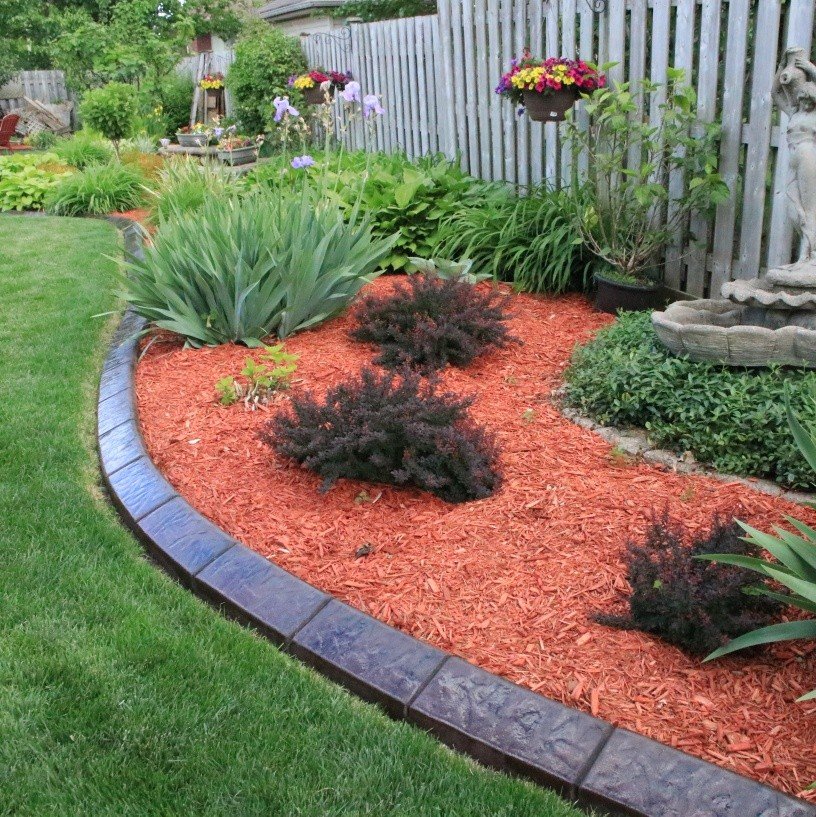
The fourteen ideas below cover every edging material, style, and budget — from a simple re-cut soil edge to a full bespoke Corten steel border. Each one includes what it costs and a practical tip to help you install and maintain it correctly from the first season.
1. A Re-Cut Lawn Edge
Budget: $0 – $30
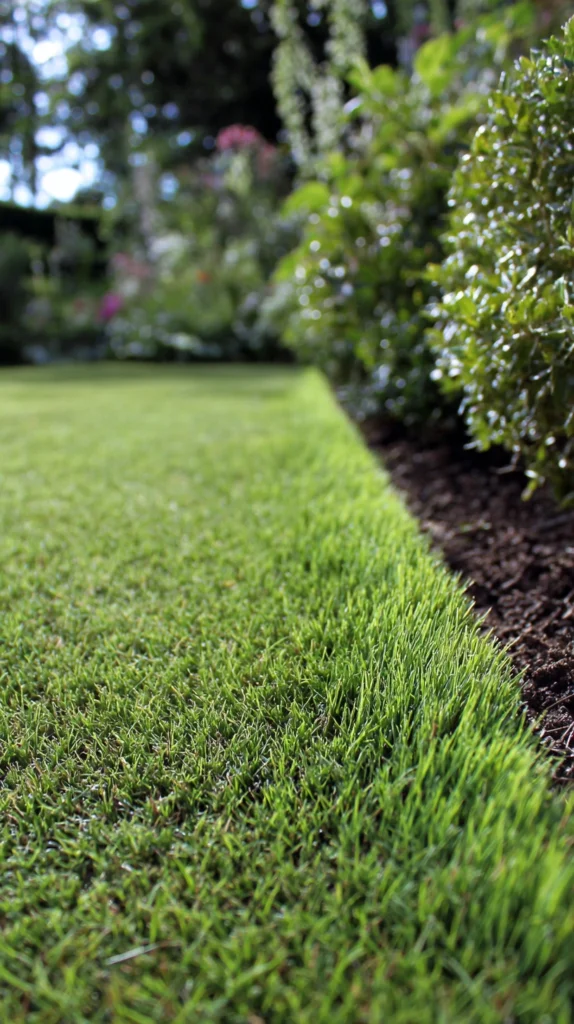
The simplest and most immediately impactful edging intervention costs almost nothing. A half-moon edging spade used to cut a clean, sharp vertical edge between lawn and border — 8–10 cm deep, perfectly straight on a formal path or gently curved on an informal one — transforms the appearance of the whole garden in an afternoon with no materials beyond the tool itself.
A half-moon edging spade costs $20–$40 and lasts indefinitely with basic care. Re-cut the edge in spring before growth begins and once more in midsummer when grass has pushed back into the border. The cut itself takes ten minutes per ten linear metres and produces an immediately visible result that no amount of weeding or planting achieves as rapidly or at as low a cost per visual impact.
Edging tip: Cut the edge at a slight inward angle — 85 degrees rather than perfectly vertical. The slight undercut creates a shadow line at the border edge that makes the line appear crisper and deeper than a flat vertical cut. It also prevents the grass from bridging the cut and recolonising the border as quickly as it would against a perfectly flat vertical soil face.
2. Flexible Steel Lawn Edging
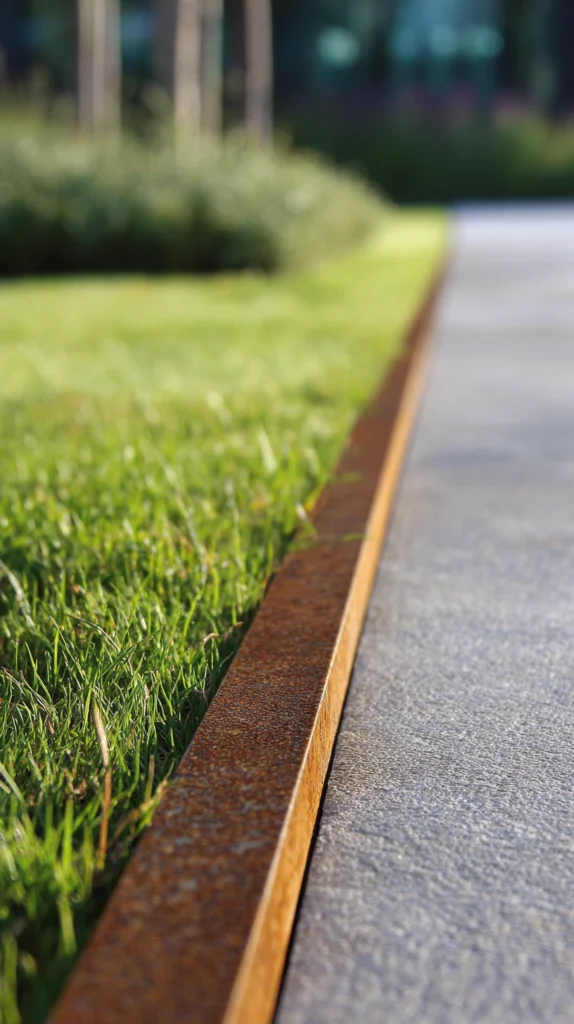
Budget: $40 – $120
A permanent steel lawn edging strip hammered into the soil at the border edge replaces the recurring twice-yearly re-cutting task with a permanent clean line that holds its position through every season without any maintenance. It is the infrastructure upgrade that changes the quality of the border appearance most permanently for the lowest ongoing effort of any material on this list.
Flexible mild steel edging in a 100-metre roll costs $50–$120. Corten weathering steel costs slightly more but develops the warm rust patina that suits naturalistic and contemporary gardens particularly well. Both are hammered into the soil at the border edge to a depth of 8 cm, flush with the lawn surface, using a rubber mallet and a timber driving block. A standard garden border of 10 linear metres costs $5–$12 in edging material.
Edging tip: Set the top edge of the metal edging 3–5 mm above the lawn surface rather than flush with it. This small protrusion creates a definitive visual boundary that reads clearly from the main viewpoint of the garden and prevents mower wheels from running directly over the edging strip — which causes the edging to be gradually pushed downward and eventually buried below the lawn surface level.
3. Natural Stone Edging
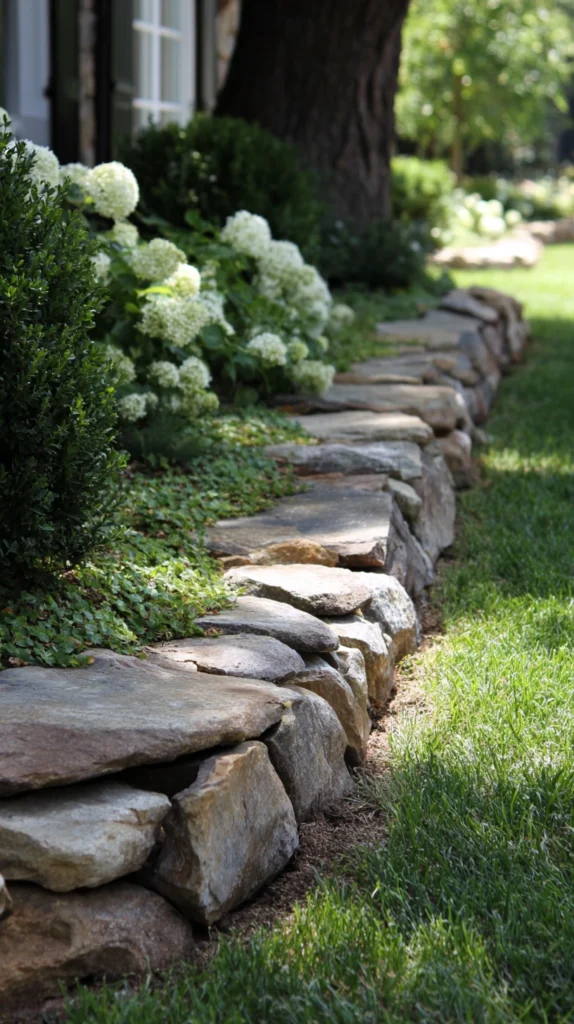
Budget: $40 – $200
Flat pieces of natural stone — sandstone, slate, or limestone — laid end-to-end along a border edge create one of the most beautiful and most permanent edging solutions available. The natural material ages and weathers into the garden rather than remaining a visually distinct addition to it, and the slight variation in height and surface between individual stones suits informal and cottage garden styles perfectly.
Natural stone edging pieces in 20–30 cm lengths cost $2–$6 each. A 5-metre border edge requires fifteen to twenty pieces at $30–$120 in materials. Bed each stone in a 5 cm layer of compacted sharp sand for stability — stones simply pressed into soft soil shift and tilt within one winter of frost heave and rainfall. A level, consistently bedded stone edge lasts decades without replacement.
Edging tip: Choose stones of consistent thickness — 30–50 mm — for the most level finished edge. Mixed-thickness stones in the same edge produce an uneven top line that reads as irregular rather than naturally varied. The height consistency is what makes a natural stone edge look considered rather than assembled from whatever stones were available.
4. Reclaimed Brick Edging
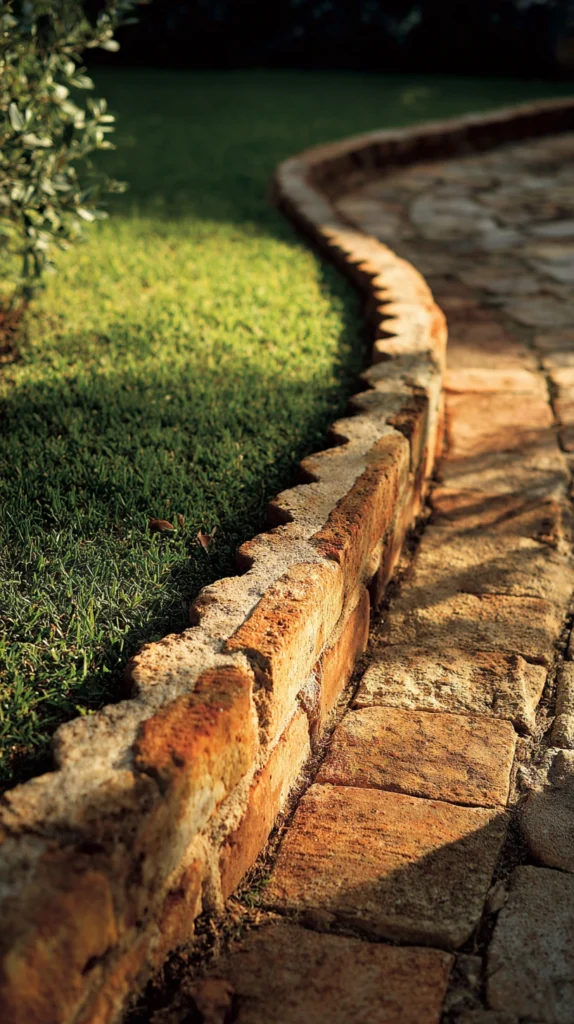
Budget: $30 – $150
Reclaimed house bricks set on their end or on their side along a border edge create a warm, characterful edging that suits cottage gardens, kitchen gardens, and any setting where a traditional, handcrafted aesthetic is the goal. Bricks set at a 45-degree angle — the classic Victorian sawtooth pattern — add additional visual interest to the border edge while providing an effective barrier between lawn and planting.
Reclaimed bricks cost $0.50–$2 each from salvage yards. A 5-metre border edge set sawtooth requires approximately twenty to twenty-five bricks at $10–$50 in materials. Bed in a mortar haunch on both sides for permanence or in compacted sharp sand for a removable installation. The sawtooth pattern requires no cutting — bricks are set alternating left and right at 45 degrees in a continuous run along the border edge.
Edging tip: Source bricks from a single salvage batch rather than mixing bricks from different demolition sites. Bricks from different sources vary in colour, size, and weathering quality — a sawtooth edge laid from mixed sources looks inconsistent from along its length. A single-source batch produces the uniform warmth of tone that makes reclaimed brick edging so visually appealing.
5. Corten Steel Edging for a Modern Look
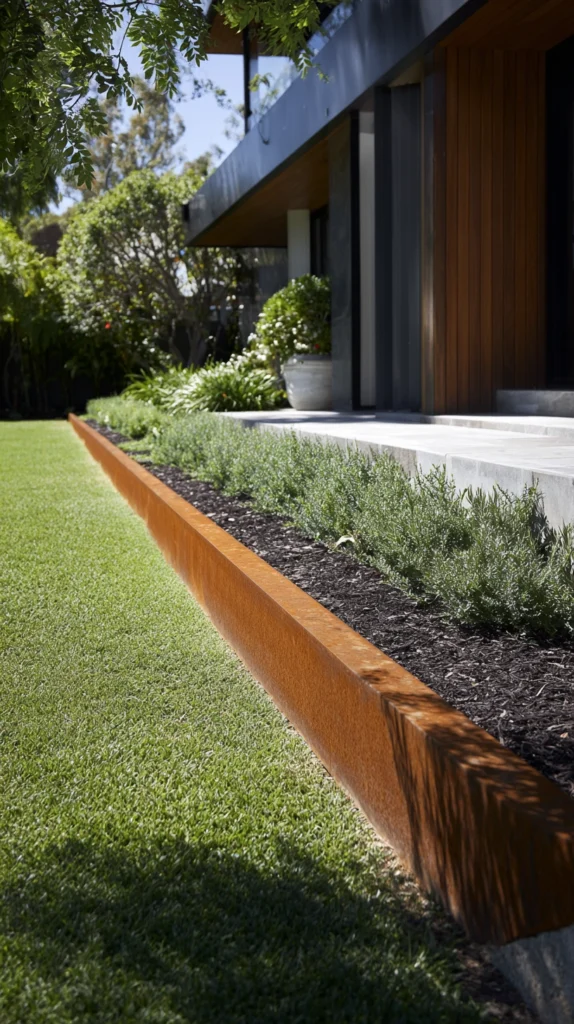
Budget: $60 – $250
Corten — weathering steel — develops a stable, warm rust patina that does not progress to structural deterioration the way conventional steel rusting does. As a border edging it creates one of the most specifically contemporary and most visually striking garden edge treatments available — the deep orange-red of the weathered surface contrasts dramatically with green lawn and dark mulched border soil in a way no painted or galvanised alternative achieves.
Corten steel edging strip in 3 mm thickness costs $3–$8 per linear metre from specialist garden metal suppliers. A 10-metre border edge costs $30–$80 in materials. Install with dedicated steel stakes driven at 1-metre intervals along the inside of the edging strip — Corten is stiffer than mild steel and holds curves less easily, making a straight or very gently curved run the most practical application for home gardeners installing without specialist bending equipment.
Edging tip: Allow Corten to begin its weathering process before installation by leaving it outdoors in wet conditions for two to three weeks. The initial rust bloom that develops is uneven and orange-bright in its first weeks — allowing it to weather partially before installation means the edge arrives in the garden already developing the consistent, warm rust quality rather than the raw, patchy initial appearance that takes one to two wet seasons to develop fully in position.
6. Wooden Log Roll Edging
Budget: $15 – $60
Log roll edging — small timber rounds wired together in a flexible roll — creates a rustic, naturalistic border edge that suits a wildflower garden, a children’s garden, or any informal planting where a softer, more organic material suits the aesthetic better than metal or stone. It is one of the most affordable and most immediately installed edging options available from any garden centre.
A log roll edging in 1-metre or 3-metre rolls costs $8–$20 per roll depending on log diameter and timber quality. A 10-metre border edge costs $25–$60 in total. Drive each roll into the soil so that the top of the log sections sits at lawn surface level — log roll set too high creates a trip hazard and catches the mower. Treat with a timber preservative annually to extend the lifespan beyond the three to four years that untreated softwood log roll typically achieves in ground contact.
Edging tip: Use large-diameter log roll — 10 cm or above — for any border that will be regularly viewed from a normal garden distance. Small-diameter log roll at 5–6 cm reads as toy-like at anything other than close range and lacks the visual weight to define a border edge convincingly from the main viewpoint of the garden. Larger diameter sections have the presence to read as a genuine design element rather than a decorative accessory.
7. Lavender Hedge Edging
Budget: $50 – $200
A low clipped hedge of lavender along the front of a border creates a fragrant, flowering, living edge that is one of the most specifically beautiful edging treatments available for a sunny, well-drained garden. It defines the border with a natural material that changes through the season — silver-green foliage from winter through spring, vivid purple flower spikes from June through August, and a compact, clipped form year-round.
Lavender Hidcote plants cost $4–$10 each and should be spaced 25–30 cm apart. A 5-metre border edge requires eighteen to twenty plants at $72–$200. Trim immediately after flowering in late summer to maintain the compact hedge form — lavender left untrimmed after its first flowering flush becomes woody and open at the base within three seasons, losing the dense, cushion-like profile that makes it most effective as an edging plant.
Edging tip: Plant lavender edging in a single straight line rather than a double row. A double row of lavender creates a hedge wide enough to be a border feature in its own right rather than an edging for the planting behind it — the single-row planting at 25 cm spacing produces a sufficiently dense and visually effective edge without consuming the border depth that a double row requires.
8. Rope or Twisted Timber Edging
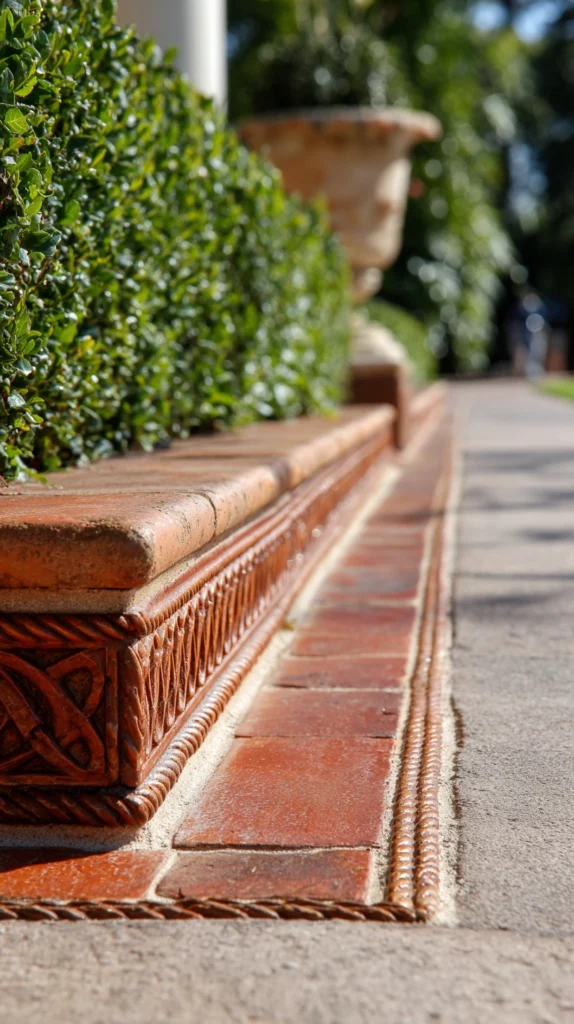
Budget: $20 – $80
Twisted rope-effect concrete or terracotta edging tiles — the classic Victorian kitchen garden border — create an ornate, period-appropriate edge for formal vegetable gardens, rose borders, and any planting scheme with a traditional or heritage character. The rope detail provides a stronger visual definition than plain tiles and suits the cottage garden, potager, and walled garden aesthetic particularly well.
Terracotta rope-edging tiles cost $2–$5 each in 30 cm lengths. A 5-metre border edge requires seventeen tiles at $34–$85. Bed in a 5 cm layer of compacted sharp sand and back-fill with soil on the border side — no mortar is required for a stable installation in most garden soil conditions. Genuine terracotta versions age and weather beautifully over time. Concrete alternatives are more durable but less visually interesting as they age.
Edging tip: Paint terracotta rope edging with a terracotta sealant before installation in gardens with hard winter frosts. Unsealed terracotta is porous and absorbs water that expands on freezing — in areas with repeated hard frosts this freeze-thaw cycle eventually causes the terracotta to crack and spall from the surface. A single coat of sealant applied before installation prevents moisture absorption and significantly extends the working life of the tiles.
9. Cobblestone or Sett Edging
Budget: $50 – $200
A single row of granite cobblestones or setts set along the border edge creates a robust, highly attractive, and extremely permanent edge treatment that suits formal gardens, contemporary designs, and any garden where the materials used elsewhere — stone paving, rendered walls — warrant an edge material of comparable quality and longevity. A single row of setts lasts indefinitely without replacement or maintenance.
Granite setts cost $2–$5 each. A 5-metre border edge set in a single row requires approximately twenty-five setts at $50–$125. Lay on a full mortar bed for maximum stability — setts laid on sand shift under foot traffic and the gaps between them widen unevenly over time. Brush kiln-dried sand into the joints after laying and seal with a stabilising binder to prevent weed colonisation in the gaps.
Edging tip: Mix reclaimed and new granite setts in the same edging run to create the tonal variation of a genuinely old European cobbled surface. New granite setts alone have a uniformity that reads as recently installed. A mix of reclaimed and new provides the colour variation and slightly irregular surface that makes granite sett edging look established from its first season in the garden.
10. Aluminium Edging for Curves
Budget: $30 – $100
Flexible aluminium edging — lighter and softer than steel, more corrosion-resistant than mild steel, and considerably more manageable for curved border edges than any rigid alternative — is the most practical material for borders that change direction frequently or follow a gently serpentine line. It bends to any curve by hand without tools and holds its shape once driven into the soil.
Aluminium edging strip in 3 mm thickness costs $2–$5 per linear metre. A 10-metre curved border edge costs $20–$50 in materials. Aluminium does not rust and requires no maintenance beyond occasional straightening if ground movement causes a section to deviate from its intended line. Finish in a natural silver or with a spray-applied black paint ($8–$12 per can) for the most discreet appearance at the border edge.
Edging tip: Pre-bend aluminium edging into the approximate curve required before driving it into the ground. Aluminium bent in position — against the resistance of the soil — achieves a less smooth, less consistent curve than aluminium bent by hand over a knee or against a post before installation. The pre-bent curve is also easier to fine-adjust by eye before the first stake is driven than an edging strip that is being shaped and fixed simultaneously.
11. Bamboo Edging
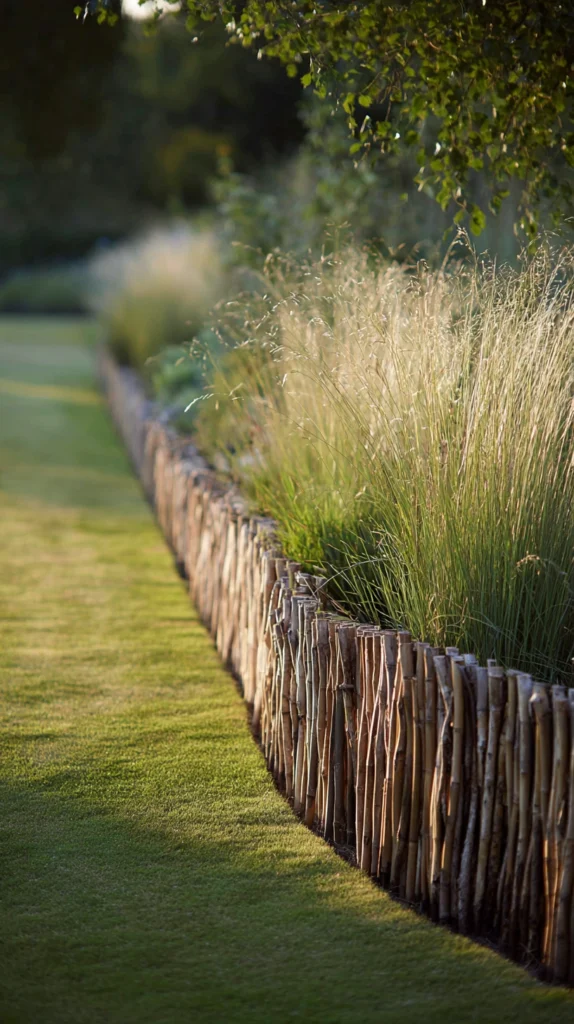
Budget: $15 – $60
Bamboo cane edging — natural bamboo poles lashed together horizontally at 10 cm and 20 cm heights to create a low fence-like border edge — suits a Japanese garden, a contemporary Asian-inspired scheme, or any garden where natural materials and a clean, linear aesthetic are the primary design values. It is also one of the most straightforward edging installations available, requiring no tools beyond a mallet and some garden wire.
Natural bamboo edging rolls in 1-metre or 2-metre sections cost $8–$20 per roll. A 10-metre border edge costs $40–$100. Treat with a bamboo sealant or outdoor varnish ($10–$15) before installation to prevent premature splitting and bleaching in UV — natural untreated bamboo exposed to alternating wet and dry conditions degrades within two to three seasons without this protection.
Edging tip: Use natural unbleached bamboo rather than processed or dyed versions for a garden border. Natural bamboo weathers from its initial warm honey-brown to a consistent silver-grey within two to three seasons — a colour that suits most garden palettes and looks more authentic than the uniform greenish-brown of a processed bamboo product that never quite achieves the character of a genuinely natural material.
12. A Mown Grass Edge With No Material
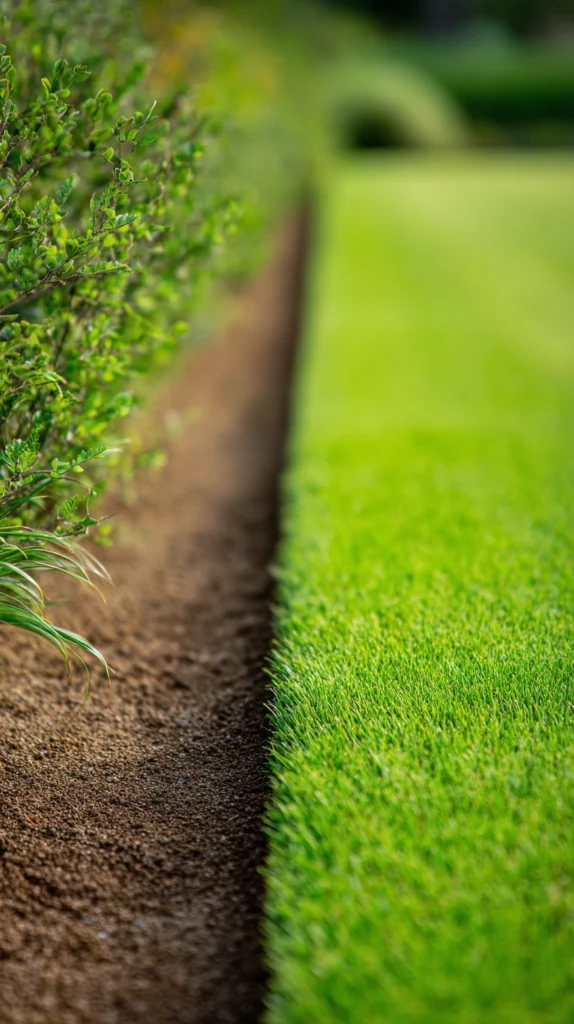
Budget: $0
A border where the grass is kept consistently short along the front edge with a long-handled lawn edger — used monthly through the growing season — and the soil surface of the border is kept raked back from the edge creates a clean, defined border line without any material at all. It is the approach used in the finest gardens worldwide and it requires only a consistent maintenance commitment rather than any capital investment in materials.
A long-handled rotary lawn edger costs $20–$50 and trims grass along a border edge in one-third of the time a half-moon spade takes to produce the same result. Used monthly through April to September it maintains the lawn-to-border boundary in a consistently clean state without the seasonal re-cutting that a soil-only edge requires. The tool investment pays back in time within one summer of regular use.
Edging tip: Use a long straight cane or a garden line as a guide when cutting a straight border edge with either a half-moon spade or a rotary edger — following the existing edge by eye consistently drifts the line in one direction over successive cuts, producing an edge that has moved 5–10 cm from its intended position within one growing season. A physical guide line re-establishes the correct position at the start of each season before the first cut is made.
13. Corrugated Metal Edging
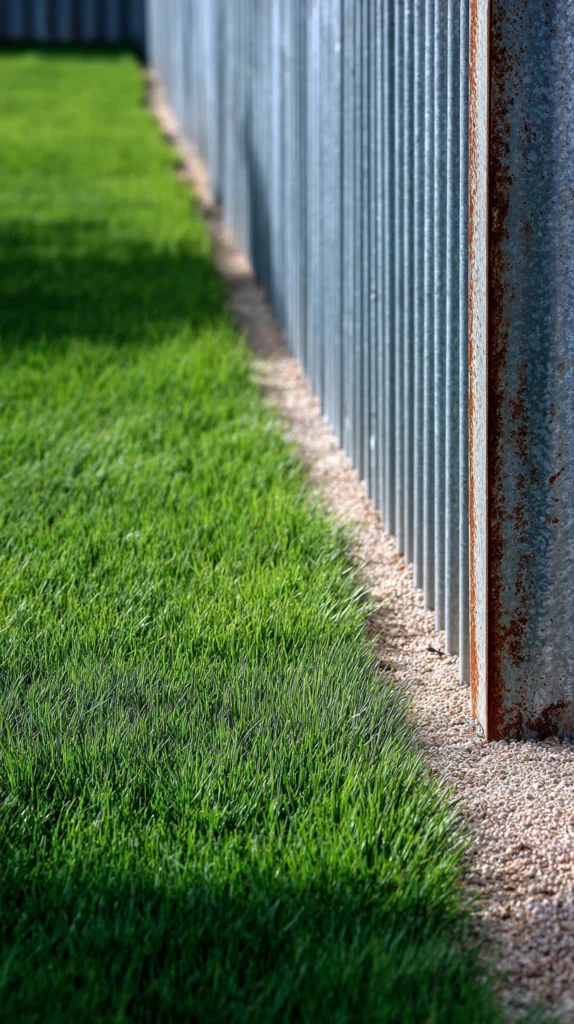
Budget: $40 – $150
Sections of corrugated steel or galvanised sheet metal used as border edging — with the corrugated face presented outward toward the lawn — creates an industrial, contemporary edge treatment that suits a modern or architectural garden style. The texture of the corrugation provides visual interest that flat metal edging does not and the material weathers from silver-grey to a warm, mottled rust over several seasons in an untreated finish.
Corrugated galvanised sheet steel in cut sections costs $20–$60 for a 5-metre border edge depending on the gauge of metal and the source — builders merchants, roofing suppliers, and online metal retailers all supply suitable material. Drive into the soil with a rubber mallet and a flat timber driving block placed across the corrugation tops. Leave untreated for a natural weathering finish or apply a black metal primer ($10–$15 per tin) for a more designed, consistent appearance.
Edging tip: Overlap adjacent corrugated panels by one full corrugation width rather than butting the ends together. A butted joint between two panels eventually opens as the soil moves with seasonal moisture changes and produces a visible gap and misalignment in the edging line. An overlapping joint maintains a continuous, clean edging line regardless of minor soil movement in the ground beside it.
14. A Low Box Hedge Border Edge
Budget: $60 – $300
A low clipped hedge of box (Buxus sempervirens) along the front of a formal border is the most classically beautiful and most permanently defined border edge available. At 15–20 cm height, a box hedge does not compete visually with the planting behind it — it simply frames it with a dark, dense, evergreen line that reads as a clean, authoritative boundary in every season and in every light condition.
Box plants suitable for low edging cost $2–$5 each and need spacing at 20–25 cm intervals — a 5-metre border edge requires twenty to twenty-five plants at $40–$125. Clip twice yearly — in June and in September — to maintain the compact form. Box blight is a significant concern in many gardens: choose the blight-resistant alternative Ilex crenata (Japanese holly) at $3–$7 per plant for the same visual effect with significantly better disease resistance in gardens where blight has been a problem.
Edging tip: Feed box hedging with a balanced slow-release fertiliser in April each year — box is a hungry plant that depletes soil nutrients quickly in a confined edging position and unfed plants develop a progressively yellowish, sparse appearance over two to three seasons. A single annual feed application in spring produces the deep, consistent dark green that makes a box edge look its best and maintains the dense, compact growth habit that frequent clipping alone cannot sustain.
A clean garden edge is the most visible expression of a garden that is cared for — it communicates attention and intention from thirty metres away before a single plant has been noticed or identified. Every idea on this list produces that quality, from the zero-cost re-cut soil edge to the permanent Corten steel strip, and the right choice is always the one that suits the garden’s existing character and the time available to maintain it.
Start with the edge rather than with the planting — a border with a clean edge and modest planting always looks better than a richly planted border with a ragged one. Fix the edge first, maintain it consistently, and let the planting improve within its clearly defined boundaries. The edge is always the frame that makes everything inside it look better than it would without it.