14 Child Friendly Garden Design Ideas for Play and Learning
My garden was off-limits to my kids for years. “Don’t step on the flowers!” “Get off the grass!” “Stop digging!” Constant yelling.
They stayed inside playing video games while I gardened alone. We were 30 feet apart living separate lives.
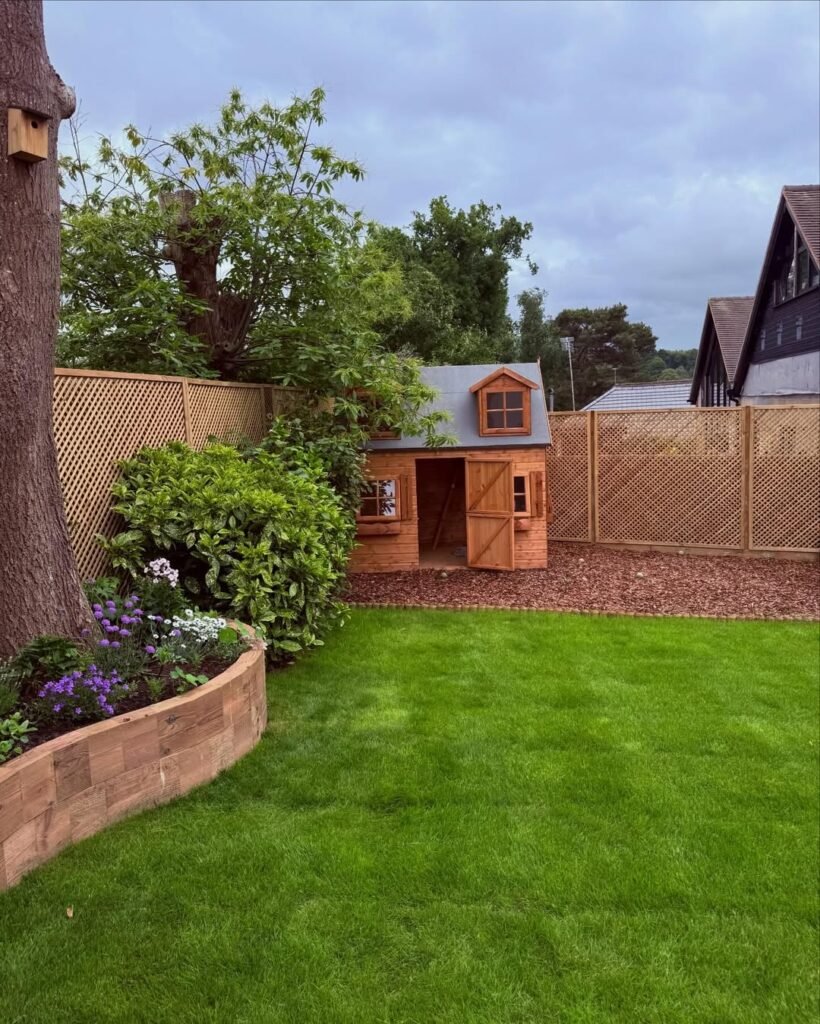
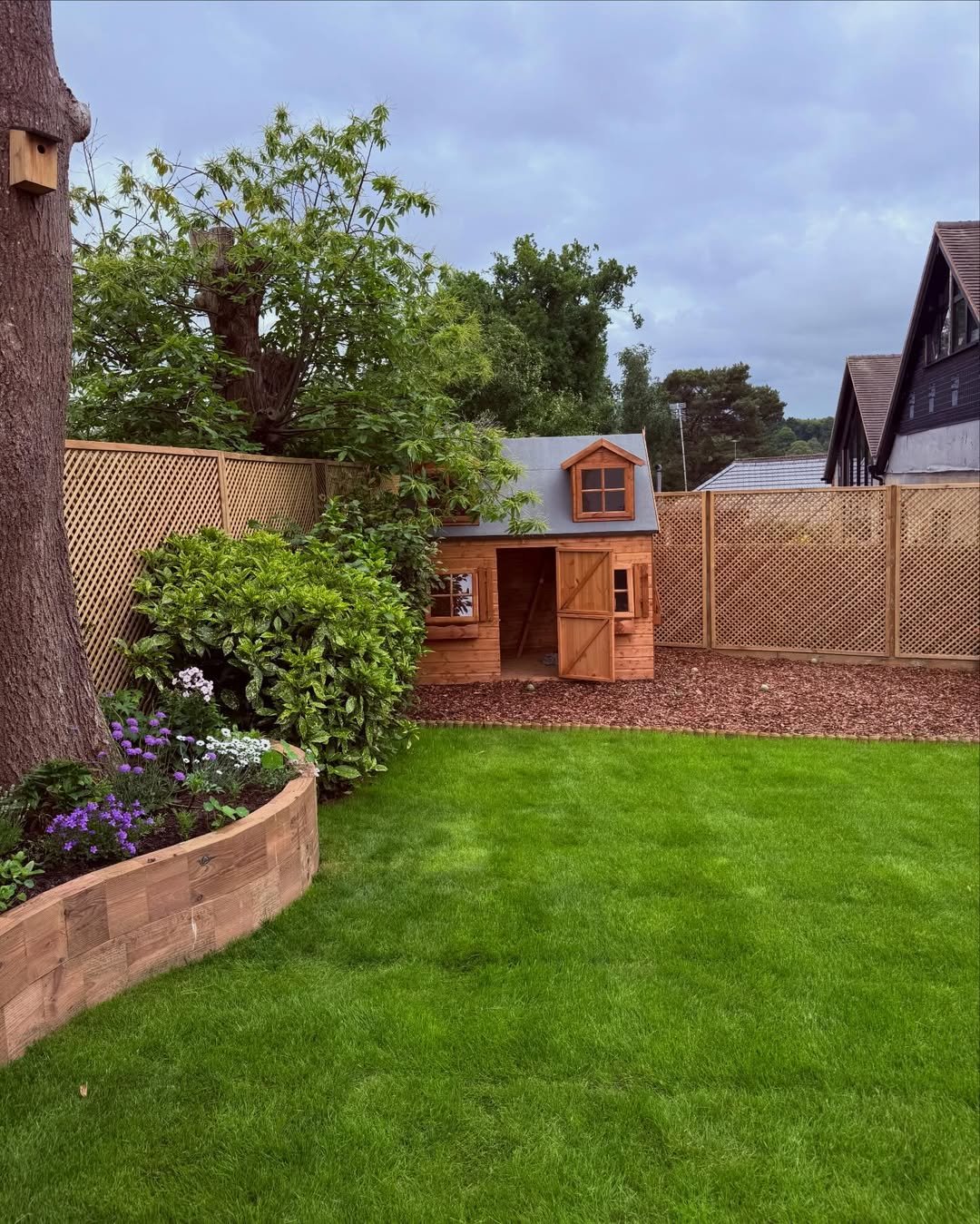
Then I redesigned one section as their space. Suddenly they were outside 3+ hours daily. Digging, playing, learning, exploring.
Now the garden brings us together instead of keeping us apart. Same yard, completely different family dynamic.
Let me show you 14 garden designs that welcome kids instead of excluding them.
Why My Garden Excluded Kids
My pristine garden problem:
What I had:
- Perfect perennial beds (no touching!)
- Mulched edges (stay off!)
- Decorative plants (look don’t pick!)
- Manicured lawn (walk carefully!)
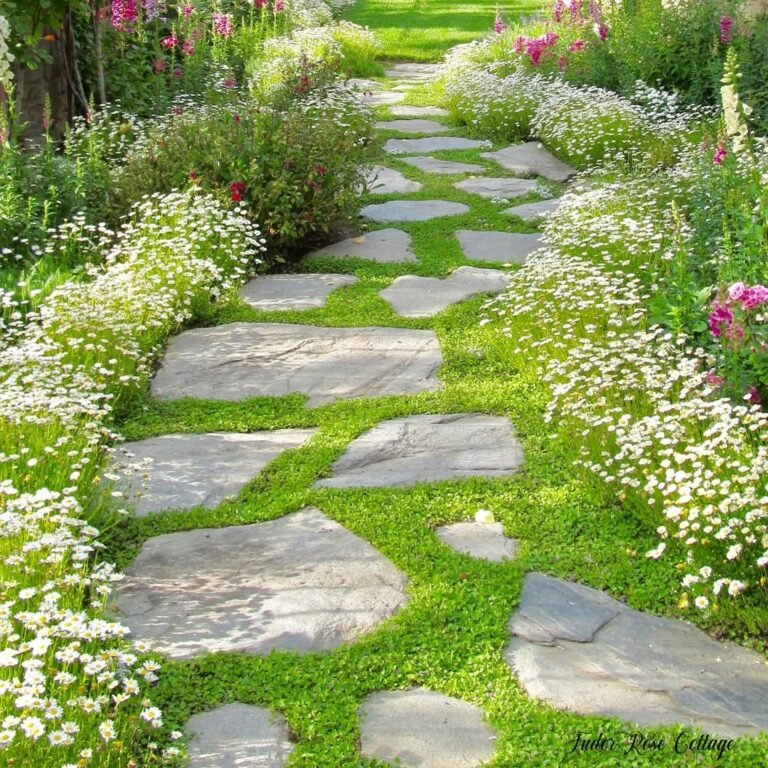
Kid perspective:
- Everything off-limits
- Constant rules
- Nothing to do
- Boring and restrictive
My behavior:
- Anxious when kids outside
- Always correcting
- Protecting plants from children
- Stressed gardening
Time together:
- Me: 10 hours weekly gardening
- Kids: Maybe 15 minutes (reluctantly)
- Separate activities
- Missed opportunity
After creating kid zones:
First changes:
- Digging pit (free sand, $0)
- Sunflower house (seed packet, $3)
- Dedicated “their space” (100 sq ft)
- Permission to make mess
Results within week:
Kid behavior changed:
- Asked to go outside
- Spent hours digging/building
- Stopped playing video games as much
- Happy and engaged
My stress vanished:
- Stopped hovering/correcting
- Could garden while they played
- Together but independent
- Peaceful coexistence
Current reality (2 years later):
- Kids outside 2-3 hours daily (was 15 min)
- Garden time together (not separately)
- They garden WITH me
- Actually helping
My revelation: Gardens can nurture kids and plants simultaneously – designing for both creates family space, not adult-only territory.
1. Sunflower House (My Gateway Project)
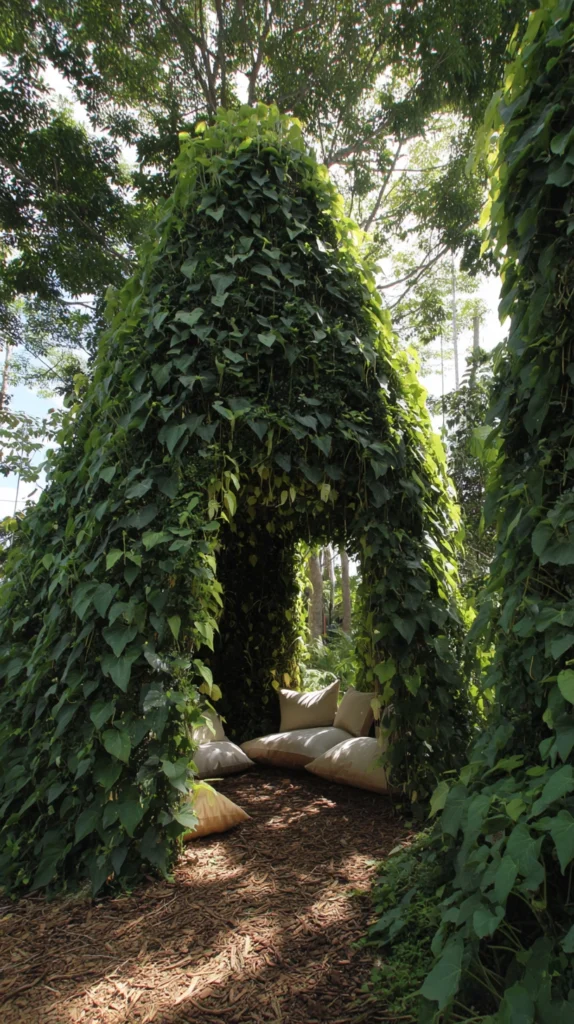
Living fort walls – simple and magical.
First kid-focused project:
Planting design:
- 8×8 foot square outline
- Mammoth sunflowers (12-14 feet tall)
- Planted 12 inches apart
- Opening for door (4 feet wide)
Construction:
Spring planting (April):
- Kids helped plant seeds
- 1 inch deep
- Watered together
- Their investment began
Summer growth:
- Shoots appeared (week 2, excitement!)
- Growing daily (measureable progress)
- Kids checked constantly
- Living structure forming
Peak (August):
- Sunflowers 12+ feet tall
- Walls formed
- Interior “room”
- Secret hideout complete
Inside space:
Floor:
- Mulch (soft landing)
- Old rug (comfort)
- Cushions (seating)
- Cozy den
Activities observed:
- Reading books (shaded spot)
- Playing dolls/cars
- Secret club meetings
- Hours of play
Educational value:
Science lessons:
- Seed to plant (lifecycle)
- Growth measurement (math)
- Pollinator observation (bees everywhere)
- Nature connection
Responsibility:
- Kids watered “their” sunflowers
- Checked daily
- Pride in creation
- Ownership
Cost: $3 seed packet, countless hours of play value.
My sunflower house: Changed everything, showed kids garden can be theirs, gateway to more projects.
Sunflower House Tips
What worked:
Variety choice:
- Mammoth sunflowers (tallest)
- Single-stalk types (don’t branch)
- Pole beans added (vertical interest)
Timing matters:
- Plant May 1 (my zone 7)
- Peak August-September
- Plan for school vacation
- Maximum play time
Succession planting:
- Plant second round (June)
- September house
- Extends season
- Continuous magic
2. Mud Kitchen (Messy Play Heaven)
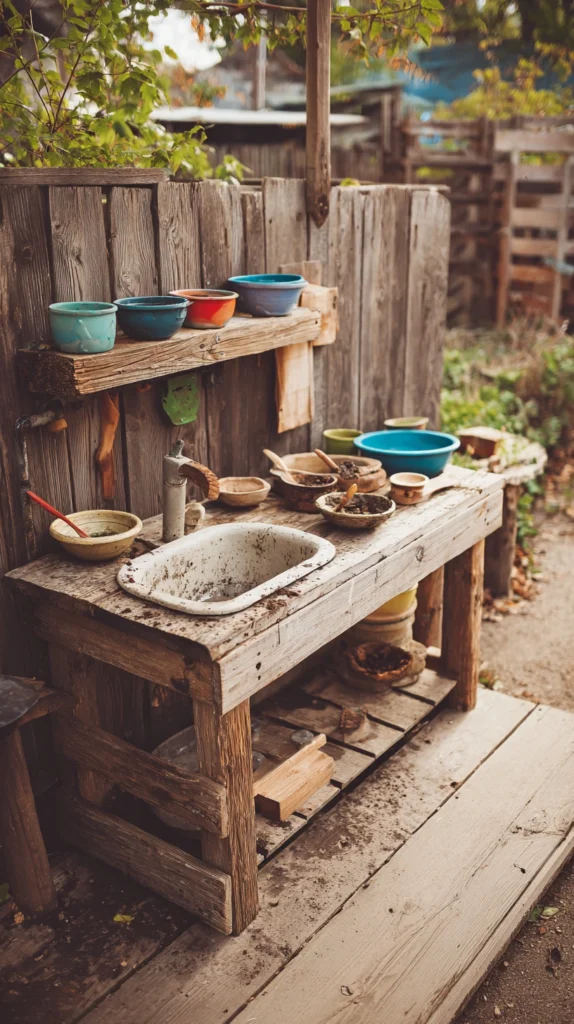
Outdoor pretend kitchen – encourages imaginative play.
My DIY mud kitchen:
Structure:
- Old sink from ReStore ($5)
- Mounted on wooden frame
- Counter height (kids’ height)
- Storage shelves below
Equipment provided:
Real kitchen items:
- Old pots and pans (thrift store, $10)
- Wooden spoons, whisks
- Muffin tins, bowls
- Measuring cups
Natural “ingredients”:
- Mud (free, unlimited)
- Water access (hose nearby)
- Sand, dirt, grass clippings
- Leaves, flowers, sticks
Stations:
Sink area:
- Running water (hose connection)
- Drain to garden bed
- Washing station
- Water play
Cooking zone:
- Flat counter space
- “Stove” (old grill grates)
- Prep area
- Mixing spot
What happens:
Creative play:
- “Mud pies” by the dozen
- “Soup” making (dirt + water + leaves)
- “Restaurants” (serving imaginary customers)
- Hours of engagement
Social play:
- Siblings cooperate
- Friends invited
- Negotiating roles
- Communication skills
Benefits I observed:
Sensory experience:
- Texture exploration (squishy mud)
- Temperature differences (cool mud)
- Natural materials
- Brain development
Independence:
- Self-directed play
- Problem-solving (recipes)
- Decision-making
- Confidence building
My stress:
- Zero (they’re just messy)
- Outdoor mess okay
- Hose rinse after
- Worth the dirt
Cost:
- Sink: $5
- Wood: $30 (frame)
- Kitchen items: $15 (thrift)
- Total: $50
My mud kitchen: Most-used feature, friends request to come over, best $50 investment.
3. Dedicated Digging Pit (Excavation Zone)
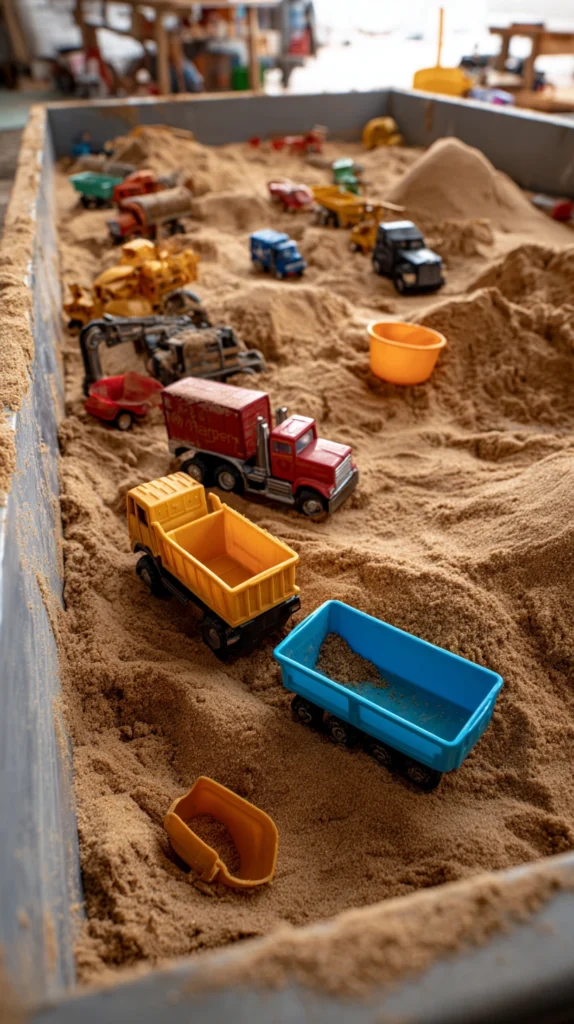
Sanctioned dirt area – channeling destructive energy.
My digging pit setup:
Location:
- 6×6 foot square
- Back corner (not prominent)
- Near water source
- Out of main view
Fill material:
Mix of textures:
- 50% sand (digging easy)
- 30% garden soil (moldable)
- 20% small rocks (treasure)
- Perfect consistency
Depth:
- 12 inches deep
- Excavated existing soil
- Filled with mix
- Generous depth
Equipment supplied:
Real tools (kid-sized):
- Shovels (2, metal not plastic)
- Buckets (5 various sizes)
- Dump trucks (3)
- Sifters (homemade, 1/4-inch mesh)
What kids do:
Excavation projects:
- Dig to “China” (ongoing quest)
- Find “treasures” (I bury toys sometimes)
- Build roads and mountains
- Construction site play
Creative building:
- Sand castles
- Mud bricks (sun-dried)
- Tunnels (always collapse, keep trying)
- Engineering experiments
Why it works:
Contained mess:
- All digging happens here
- Not in flower beds!
- Defined boundary
- Acceptable chaos
Deep engagement:
- 45+ minute sessions
- Lost in play
- Quiet focus time
- Mental absorption
Physical activity:
- Digging is work
- Hauling buckets
- Squatting, bending
- Healthy exercise
My relief:
- Stopped finding holes everywhere
- Channeled destructive energy
- They ask to dig here
- Problem solved
Cost:
- Sand: $30 (1 cubic yard)
- Soil/rock: Free (existing)
- Tools: $40
- Total: $70
My digging pit: Saved my flower beds, kids play here 30+ min daily, wise compromise.
4. Fairy Garden Station (Miniature World)
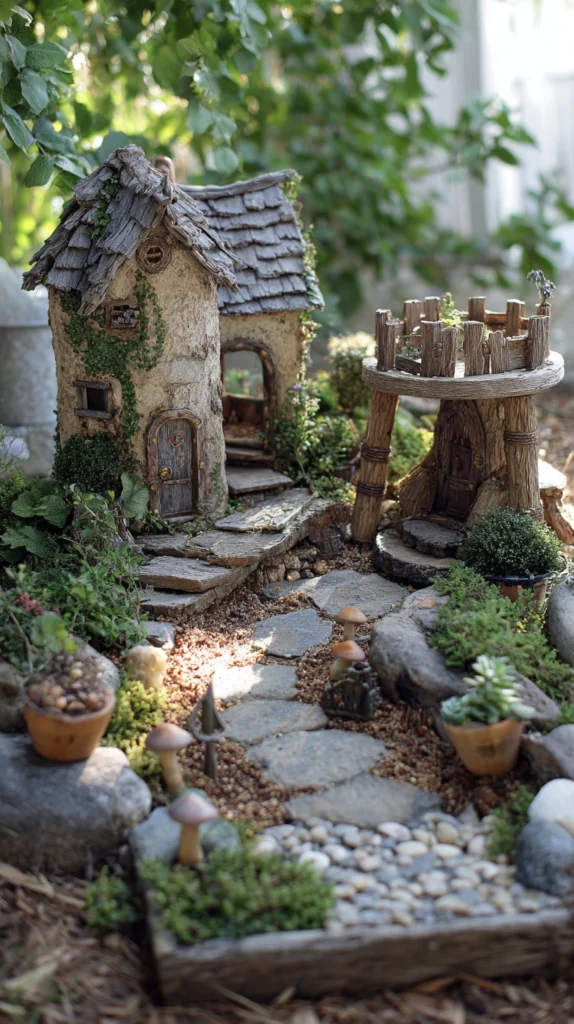
Tiny landscape for imagination – appeals to “magical” age.
My daughter’s fairy garden:
Container:
- Large ceramic pot (24 inches)
- Broken sections create “ruins”
- Mossy areas
- Miniature landscape
Structures:
Fairy houses:
- Small dollhouse ($15)
- Painted to look natural
- Moss roof (glued on)
- Tiny door and windows
Pathways:
- Small pebbles
- Winding through plants
- Stepping stone effect
- Scale appropriate
Plants:
Miniature varieties:
- Baby tears (ground cover)
- Miniature roses
- Tiny hostas
- Moss patches
Scale consideration:
- Small leaf plants
- Slow growing
- Maintains proportion
- Manageable size
Accessories:
Homemade items:
- Twig furniture (benches)
- Acorn cap dishes
- Shell birdbath
- Natural materials
Store-bought:
- Tiny fairy figurines (6)
- Miniature animals
- Small lanterns (solar)
- Special touches
Play patterns:
Story creation:
- Elaborate narratives
- Fairy characters
- Drama and adventure
- Creative writing
Tending garden:
- Waters daily
- Moves items around
- Adds treasures found
- Ownership pride
Friend engagement:
- Friends help design
- Collaborative building
- Social imagination
- Shared project
Cost:
- Container: $20
- Plants: $30
- Fairy items: $40
- Total: $90
My fairy garden: Daughter’s favorite spot, 6+ months engagement, teaches garden care.
5. Pizza Garden (Edible Circle)
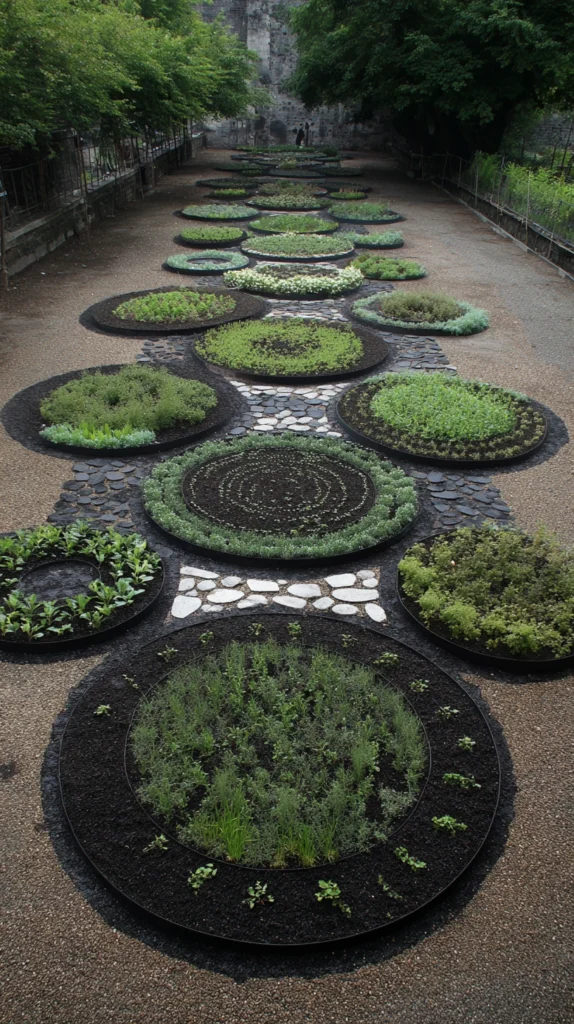
Themed vegetable garden – learning through growing food.
Our circular pizza garden:
Design:
- 6-foot diameter circle
- Divided into 6 “slices”
- Each slice different ingredient
- Visual and functional
Slice plantings:
Slice 1 – Tomatoes:
- Cherry tomatoes (easy success)
- Kids’ favorite
- Eat off vine
- Constant harvest
Slice 2 – Basil:
- Sweet basil (pizza essential)
- Smells amazing
- Pinching practice
- Pesto making
Slice 3 – Peppers:
- Sweet bell peppers
- Mild flavor
- Colorful harvest
- Pizza topping
Slice 4 – Oregano:
- Perennial herb
- Returns yearly
- Pizza spice
- Drying lessons
Slice 5 – Onions:
- Green onions (quick)
- Pull and regrow
- Continuous supply
- Easy win
Slice 6 – Garlic chives:
- Garlic flavor
- Flowers edible
- Perennial
- Low maintenance
Educational value:
Seed to pizza:
- Plant in April
- Harvest July-September
- Make pizza together
- Complete cycle
Math concepts:
- Circle divisions (fractions)
- Spacing measurements
- Growth tracking
- Harvest counting
Responsibility:
- Kids’ garden (their job)
- Water every evening
- Check for pests
- Harvest when ready
Friday tradition:
- Pizza night
- Harvest from garden
- Kids make pizza
- Eat their work
Results:
Vegetable acceptance:
- Eat what they grew
- Try new things
- Proud of food
- Less picky
Garden enthusiasm:
- Check garden daily
- Excited about growth
- Connected to food
- Understanding nutrition
Cost:
- Plants/seeds: $25
- Border stones: $20
- Soil amendments: $15
- Total: $60
My pizza garden: Teaching tool disguised as fun, kids eating vegetables they refused before, huge win.
6. Tee Pee Bean Fort (Climbing Structure)
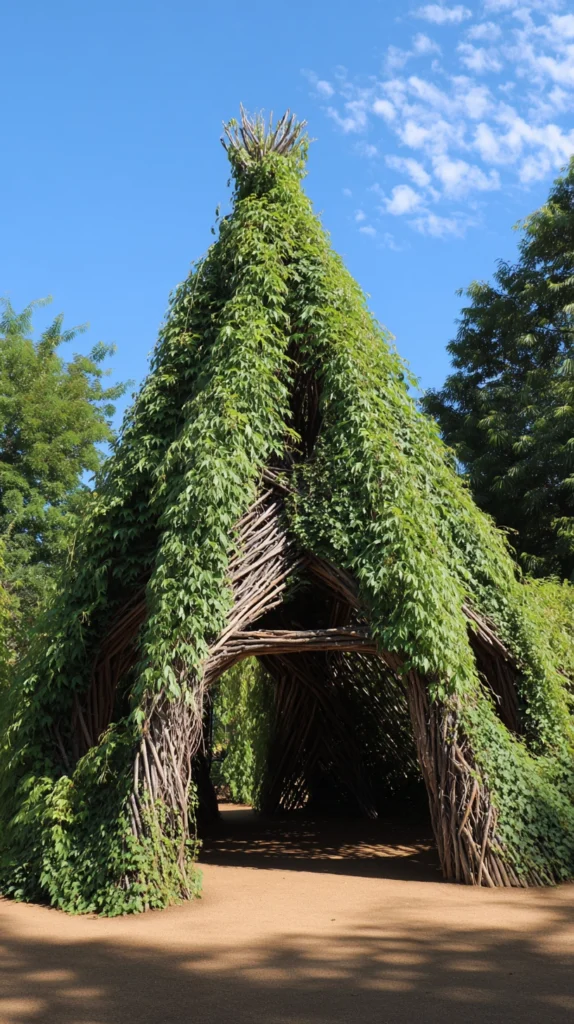
Living climbing frame – beans create walls.
Our bean tee pee:
Structure:
- 8 bamboo poles (8 feet tall)
- Arranged in circle (6 feet diameter)
- Tied at top (twine)
- Opening for door
Plants:
Pole beans:
- Scarlet runner beans (red flowers)
- Kentucky wonder (productive)
- Purple pod beans (dramatic)
- Mixed varieties
Planting:
- 3 seeds per pole base
- Planted after frost
- Kids helped plant
- Their investment
Growth:
- Vines climb poles (training needed first weeks)
- Cover structure by July
- Living walls formed
- Green cave created
Inside space:
Floor:
- Wood chips (soft)
- Old picnic blanket
- Kid-sized chairs
- Reading nook
Activities:
- Reading hideout
- Secret meetings
- Picking beans through walls
- Peaceful retreat
Educational aspects:
Plant growth:
- Daily visible change
- Climbing mechanism (tendrils)
- Flower to bean (lifecycle)
- Harvesting practice
Food production:
- Beans all summer
- Fresh eating (raw pods)
- Cooking lessons
- Garden to table
Maintenance:
Watering:
- Kids’ job
- Every evening
- Quick task
- Builds responsibility
Harvesting:
- Pick from inside
- Fun treasure hunt
- Eat while playing
- Constant snack
Cost:
- Bamboo poles: $20 (8 poles)
- Bean seeds: $12 (3 varieties)
- Twine: $3
- Total: $35
My bean tee pee: Combines play and food, totally organic construction, replant annually.
7. Sensory Garden Path (Texture Walk)
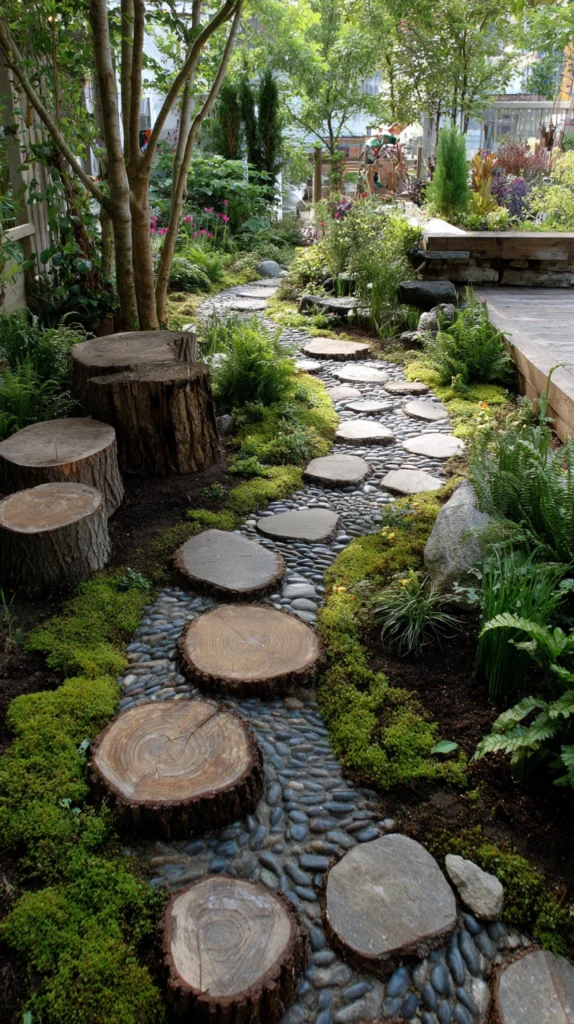
Different surface materials – tactile exploration.
Our sensory path:
Design:
- 20-foot winding path
- 5 different sections
- 2 feet wide
- Barefoot encouraged
Surface sections:
Section 1 – Smooth river rock:
- Rounded pebbles
- Foot massage effect
- Cool temperature
- Pleasant feeling
Section 2 – Soft moss:
- Thick moss patches
- Squishy soft
- Damp cool
- Unusual texture
Section 3 – Wood rounds:
- Tree trunk slices
- Varied sizes
- Stepping stones
- Warm wood feel
Section 4 – Soft mulch:
- Fine bark mulch
- Cushiony
- Slightly springy
- Comfortable
Section 5 – Paving stones:
- Flat smooth stones
- Solid surface
- Warm in sun
- Conventional
Alongside plantings:
Touch-me plants:
- Lamb’s ear (fuzzy soft)
- Lavender (brushing releases scent)
- Ornamental grass (tickly)
- Mint (rub and smell)
Purpose:
Sensory development:
- Different textures
- Temperature differences
- Encouraging touch
- Brain development
Mindfulness:
- Slow walking
- Noticing details
- Present moment
- Calming activity
Rainy day bonus:
- Different wet textures
- Puddle jumping areas
- Mud between toes
- Sensory richness
Use patterns:
Morning routine:
- Barefoot walk after breakfast
- Wakes them up
- Outdoor start to day
- Grounding
Calm-down tool:
- When overstimulated
- Sensory reset
- Works remarkably well
- Behavior management
Cost:
- River rock: $40
- Wood rounds: Free (tree service)
- Mulch: $20
- Stones: $30
- Plants: $30
- Total: $120
My sensory path: Unexpected behavior tool, kids use independently, therapeutic value.
8. Nature Scavenger Hunt Garden (Educational Layout)
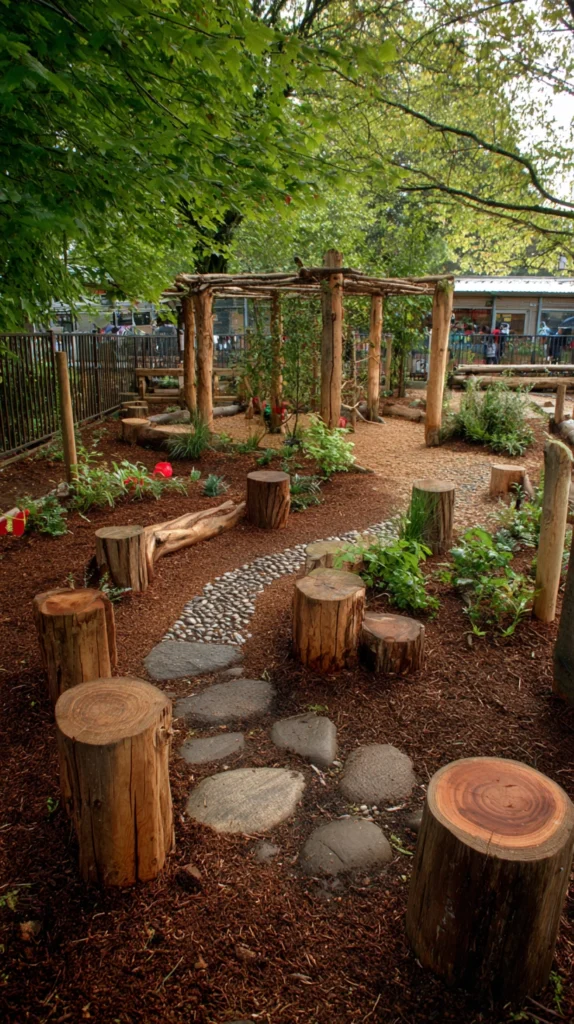
Designed for discovery – intentional learning opportunities.
My educational garden design:
Hunt stations:
Station 1 – Insect hotel:
- Stacked wood/bamboo/pine cones
- Drilled holes (various sizes)
- Observing bugs
- Magnifying glass provided
Station 2 – Bird feeding area:
- Multiple feeders
- Birdbath
- ID chart posted
- Binoculars hung nearby
Station 3 – Butterfly garden:
- Milkweed for monarchs
- Nectar flowers
- Butterfly ID guide
- Net for catch-and-release
Station 4 – Rock collection:
- Different rock types
- Labeled examples
- Encourage collecting
- Sort by characteristics
Station 5 – Seed observation:
- Different seed types displayed
- Dandelion puffs (blow!)
- Seed pods to open
- Dispersal methods
Scavenger hunt lists:
Seasonal lists:
- Spring: New buds, worms, robins
- Summer: Butterflies, bees, flowers
- Fall: Seeds, changing leaves, migrations
- Winter: Tracks, evergreens, birds
Laminated cards:
- Waterproof checklist
- Dry erase marker
- Check off finds
- Reusable
Educational value:
Science concepts:
- Lifecycles (butterfly, plant)
- Food chains (bugs → birds)
- Seasons (observable changes)
- Nature connections
Observation skills:
- Noticing details
- Patient watching
- Identifying species
- Attention practice
Journal keeping:
- Kids draw observations
- Date entries
- Track over time
- Science journaling
My 8-year-old:
- Can identify 15 bird species
- Knows butterfly lifecycle
- Understands pollination
- Genuine interest developed
Cost:
- Insect hotel materials: $20
- Bird supplies: $40
- Plant seeds: $20
- Educational materials: $30
- Total: $110
My learning garden: Academic value, nature connection, screen-free learning.
9. Sandbox with Cover (Classic Play)
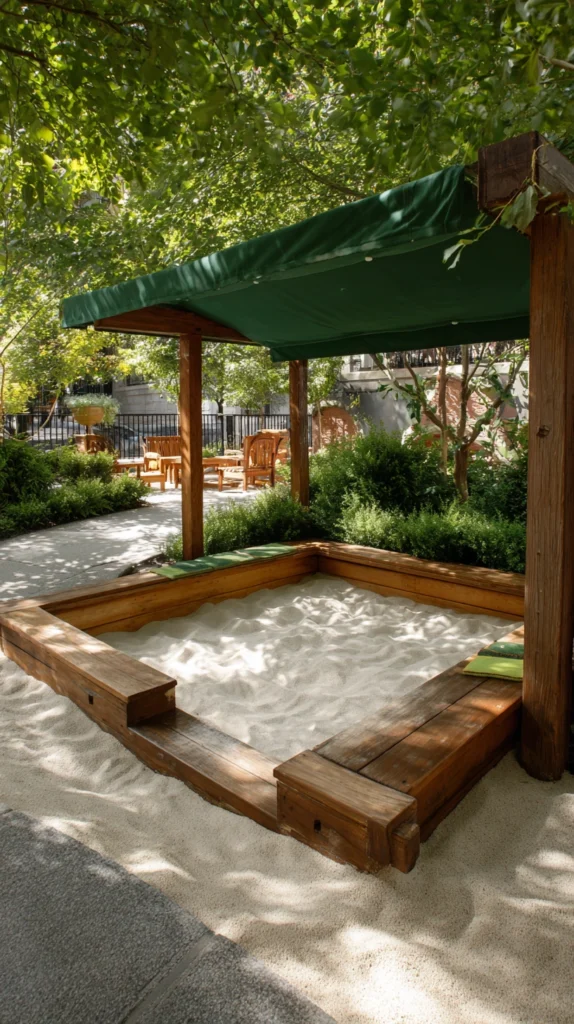
Permanent sand play area – protected and clean.
Our built-in sandbox:
Structure:
- 6×6 foot box
- 18 inches deep
- Cedar frame
- Built-in seating (frame edges)
Sand:
- Play sand (not construction)
- 1.5 cubic yards
- 12-inch depth
- Fine texture
Cover:
Hinged lid:
- Wood frame
- Screen material (breathable)
- Lifts open
- Keeps out animals
Why cover matters:
- Cats use uncovered sandbox (litter box)
- Keeps rain from flooding
- Cleaner sand
- Non-negotiable
Accessories:
Stored in waterproof bin:
- Shovels and buckets
- Molds (castles, shapes)
- Dump trucks
- Sifters
Built-in features:
Corner shelter:
- Small roof section (3×3)
- Shade from sun
- Protection from rain
- Usable always
Use patterns:
Year-round:
- Even cool weather
- Texture play
- Building projects
- 4-season activity
Social hub:
- Friends invited
- Cooperative play
- Sharing toys
- Social development
Age range:
- Used by toddler (age 2-4)
- Still used by 8-year-old
- Longevity
- Multi-year investment
Cost:
- Cedar lumber: $120
- Sand: $50
- Cover materials: $60
- Total: $230
My sandbox: Most-used play feature, 6 years and counting, best long-term investment.
10. Pumpkin Patch (Seasonal Project)
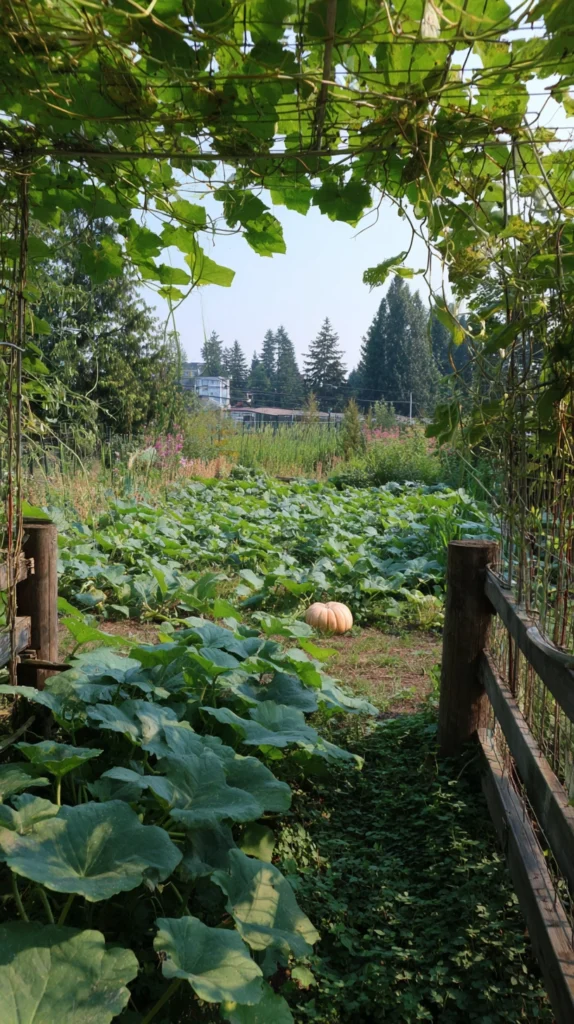
Fall harvest tradition – anticipation building.
Our annual pumpkin patch:
Spring planting (May):
- 6 pumpkin plants
- Large area (10×15 feet)
- Kids help plant
- Vines spread everywhere
Varieties:
Mixed sizes:
- Jack-o-lantern (medium, carving)
- Sugar pie (small, cooking)
- Atlantic giant (one huge, competition)
- Variety fun
Summer care:
Kids’ responsibilities:
- Watering (evening)
- Watching vines grow
- Checking for flowers
- Anticipation building
Name the pumpkins:
- Kids name forming pumpkins
- Track specific ones
- Personal investment
- Excitement
Fall harvest:
October picking:
- Wait until fully orange
- Kids pick their pumpkins
- Wheelbarrow transport
- Sense of accomplishment
Uses:
Jack-o-lanterns:
- Carving party
- Use their grown pumpkins
- Pride in creation
- Halloween tradition
Cooking:
- Pumpkin pie
- Toasted seeds
- Pumpkin bread
- Seed to table
Educational value:
Long-term project:
- Plant in May
- Harvest October
- 5-month timeline
- Delayed gratification
Math:
- Measuring growth
- Counting pumpkins
- Weight guessing/measuring
- Practical math
Biology:
- Flower to fruit
- Pollination (bees)
- Growth observation
- Plant lifecycle
Cost:
- Seeds/plants: $15
- Space (temporary use)
- Total: $15
My pumpkin patch: Annual tradition, marks seasons, creates memories and photos.
11. Teepee Reading Nook (Quiet Space)
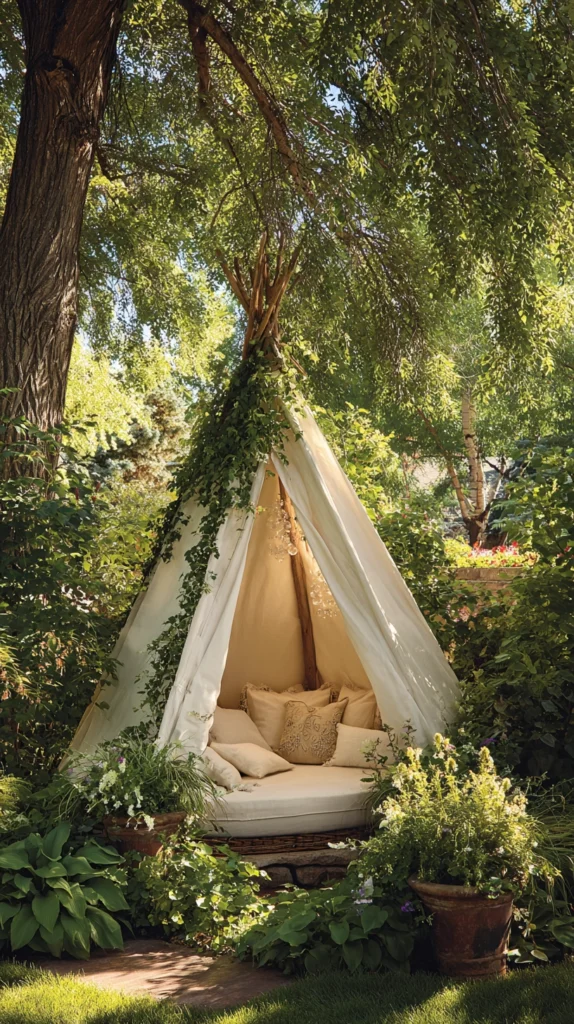
Shaded retreat with books – calm-down spot.
Our reading teepee:
Structure:
- Wooden frame (permanent)
- Canvas cover (removable)
- 6 feet tall
- 5-foot diameter base
Interior:
Comfortable seating:
- Outdoor cushions
- Bean bag chairs
- Soft rugs
- Cozy
Bookshelf:
- Waterproof bin
- Nature books
- Garden guides
- Age-appropriate
Surrounding plantings:
Privacy screen:
- Tall ornamental grasses
- Creates enclosure
- Rustling sound
- Peaceful
Shade trees:
- Natural cooling
- Dappled light
- Perfect reading light
- Comfortable
Purpose:
Calm zone:
- Overwhelmed retreat
- Quiet time alone
- Self-regulation
- Emotional tool
Reading encouragement:
- Books accessible
- Comfortable spot
- Associated with pleasure
- Literacy support
Use observed:
Independent use:
- Kids go when needed
- Don’t always ask
- Self-directed
- Maturity building
Weather dependent:
- Mainly nice weather
- Cool seasons best
- Summer too hot midday
- Morning/evening use
Cost:
- Teepee: $80 (kit)
- Cushions: $60
- Books: $40
- Landscaping: $50
- Total: $230
My reading teepee: Behavior management tool, literacy corner, peaceful retreat.
12. Raised Bed Kid Garden (Their Plot)
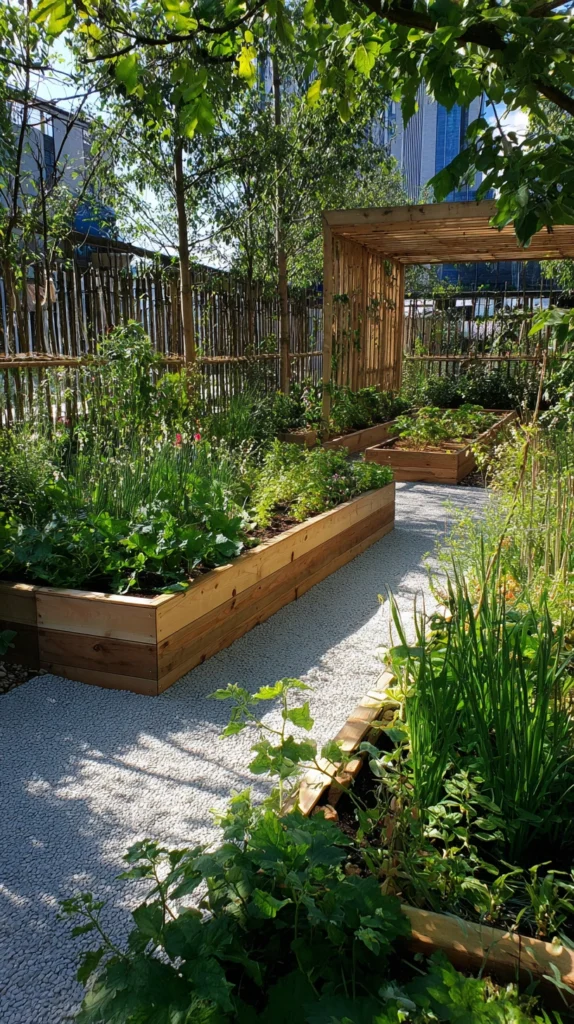
Personal growing space – responsibility and ownership.
Kids’ dedicated raised bed:
Bed specs:
- 4×4 feet (manageable size)
- 12 inches tall (comfortable height)
- Their names on signs
- Clear ownership
Plant selection:
Kid-friendly criteria:
- Fast-growing (quick results)
- Hard to kill (forgiving)
- Edible (rewarding)
- Interesting (holds attention)
What we plant:
Cherry tomatoes:
- Eat off vine
- Constant harvest
- Sweet flavor
- Kid favorite
Sugar snap peas:
- Climb trellis
- Eat raw
- Sweet and crunchy
- Early harvest
Radishes:
- 25 days to harvest
- Instant gratification
- Spicy (fun)
- Success guaranteed
Sunflowers:
- Giant variety
- Track height
- Drama
- Save seeds
Strawberries:
- Perennial (return yearly)
- Sweet berries
- Low maintenance
- Always producing
Kids’ responsibilities:
Daily:
- Check soil moisture
- Water if needed
- Pick ripe vegetables
- 10 minutes
Weekly:
- Weed (we do together)
- Check for pests
- Harvest count
- 20 minutes
Rules:
Their decisions:
- What to plant (within reason)
- When to harvest
- How to arrange
- Ownership
My role:
- Advisor not boss
- Help when asked
- Encourage experiments
- Support learning
Results:
Vegetable eating:
- Will try vegetables they grew
- Pride in harvest
- Less picky
- Healthy eating
Responsibility:
- Remember to water
- Care about results
- See consequences
- Life skill
Cost:
- Raised bed: $40 (cedar kit)
- Soil: $25
- Seeds/plants: $30
- Total: $95
My kid beds: Most educational feature, tangible results, pride-building.
13. Stepping Stone Path (Creative Project)
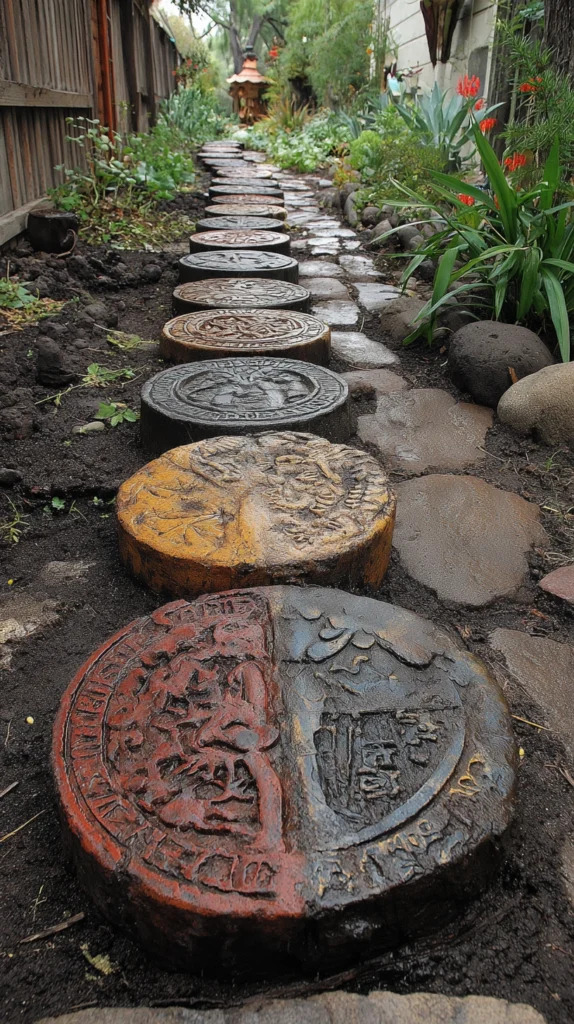
Decorated stones – art meets function.
Our stepping stone path:
DIY concrete stones:
- Concrete mix
- Round molds (pizza pans work)
- 12-inch diameter
- 2 inches thick
Decoration process:
Kids’ involvement:
- Handprints in wet concrete
- Name and date
- Decorative stones pressed in
- Mosaic tiles
- Personal artwork
Materials used:
- Glass gems
- Broken tile
- Shells from beach
- Smooth stones
- Found objects
Installation:
Path layout:
- From house to play area
- 15 feet total
- 8 stepping stones
- Functional art
Spacing:
- Kid-stride distance
- Walking path
- Functional route
- Daily use
Value:
Permanent art:
- Kid artwork lasts
- Handprint keepsake
- Growth documented
- Memory creation
Pride:
- Show visitors
- “I made that!”
- Contribution to garden
- Sense of belonging
Rainy day project:
- Indoor mixing
- Outdoor decorating
- Weather irrelevant
- Creative time
Cost:
- Concrete: $30 (5 bags)
- Decorative items: $20
- Molds: $15
- Total: $65
My stepping stones: Functional keepsakes, personalized path, art project with purpose.
14. Bug Hotel and Observation Station (Nature Study)
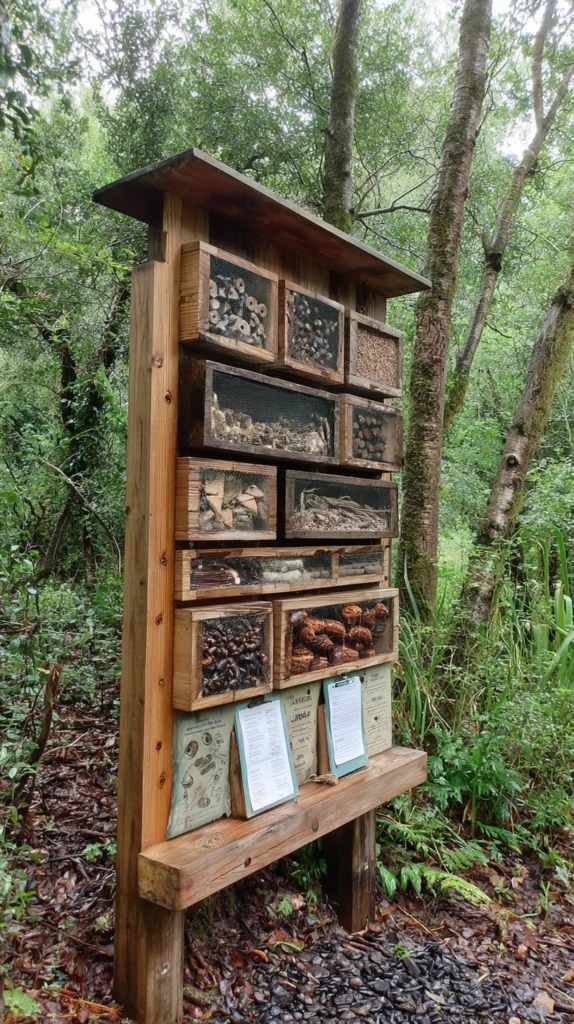
Insect habitat – close-up nature study.
Our bug hotel:
Structure:
- Wooden frame (3×2 feet)
- Multiple compartments
- Different materials
- Vertical installation
Compartment fill:
Various materials:
- Bamboo tubes (bees)
- Drilled wood blocks (beetles)
- Pine cones (spiders)
- Bark pieces (various insects)
- Hollow stems (solitary bees)
Observation setup:
Study station:
- Bench facing hotel
- Magnifying glasses (3)
- Bug ID guide (laminated)
- Journal notebook
Camera mount:
- iPad holder
- Close-up photos
- Time-lapse possible
- Digital documentation
What lives there:
Residents observed:
- Mason bees (spring)
- Ladybugs (summer)
- Lacewings
- Various beetles
- Spiders (not insects but cool)
Educational use:
Daily checks:
- Morning observation
- Count species
- Note activity
- Pattern recognition
Seasonal changes:
- Different residents
- Winter dormancy
- Spring emergence
- Year-round learning
Science lessons:
Concepts learned:
- Insect anatomy
- Lifecycles
- Beneficial bugs
- Ecosystem roles
Skills developed:
- Patient observation
- Detail noticing
- Scientific method
- Documentation
My kids now:
- Not afraid of bugs
- Understand beneficial insects
- Garden helpers not pests
- Educated respect
Cost:
- Wood frame: $25
- Materials: Free (collected)
- Observation tools: $30
- Total: $55
My bug hotel: Science education, nature connection, overcome fear through understanding.
Safety Considerations
Keeping kids safe while playing:
Toxic Plant Avoidance
Plants I removed:
- Foxglove (deadly if eaten)
- Daffodil bulbs (toxic)
- Castor bean (extremely toxic)
- Angel’s trumpet
Safe alternatives:
- Sunflowers (seed eating okay)
- Marigolds (safe)
- Snapdragons (name says it all)
- Herbs (safe to taste)
Rule taught:
- Never eat without asking
- Even safe plants (pesticides)
- Washing first
- Supervision
Physical Safety
Sharp objects:
- No rose bushes near play areas
- Cactus elsewhere
- Thorny plants contained
- Clear paths
Hard surfaces:
- Mulch under climbing structures
- Soft landings
- 12-inch depth minimum
- Safety standard
Chemical-Free Gardening
My commitment:
- Zero pesticides
- Zero herbicides
- Organic fertilizers only
- Safe to touch/taste
Pest management:
- Hand-picking
- Beneficial insects
- Accepting damage
- Kid-safe methods
Age-Appropriate Design
What works when:
Ages 2-4 (Toddler)
Best features:
- Sandbox (classic)
- Sensory path (exploration)
- Large stepping stones (gross motor)
- Mud kitchen (simple play)
Ages 5-7 (Early Elementary)
Add complexity:
- Fairy garden (imagination)
- Vegetable growing (responsibility)
- Bug observation (learning)
- Building projects (construction)
Ages 8-10 (Late Elementary)
Independence:
- Own garden bed (full responsibility)
- Bigger projects (planning)
- Scientific observation (documentation)
- Teaching younger siblings (leadership)
Budget-Friendly Kid Gardens
Maximum fun, minimum cost:
Free/Nearly Free ($0-50)
What costs nothing:
- Digging pit (existing dirt)
- Sunflower house ($3 seeds)
- Stepping stones (concrete $30)
- Scavenger hunts (free)
Total: $33
Starter Kid Garden ($100-200)
Essential features:
- Small raised bed ($40)
- Sandbox ($80)
- Kid tools ($25)
- Seeds/plants ($30)
Total: $175
Complete Kid Garden ($500-1,000)
Full transformation:
- All basic features
- Plus structures (teepees)
- Plus permanent features
- Multi-year use
Maintenance with Kids
Realistic expectations:
Daily Reality (15 minutes)
Quick tasks:
- Water check (kids do)
- Pick up toys
- Harvest ripe vegetables
- Safety scan
Weekly Together (1 hour)
Shared work:
- Weeding (teach identification)
- Harvesting (show ripeness)
- Planting (seasonal)
- Project time
Teaching Moments
Not just playing:
- Work alongside
- Explain as you go
- Hands-on learning
- Quality time
My Complete Kid-Friendly Garden
What we actually have:
Play zones (6):
- Sunflower house (annual replant)
- Mud kitchen (permanent)
- Sandbox with cover (permanent)
- Digging pit (permanent)
- Bean teepee (annual)
- Reading nook (permanent)
Growing areas (4):
- Pizza garden (circular, 6 feet)
- Kids’ raised beds (2 beds, 4×4)
- Pumpkin patch (seasonal, 150 sq ft)
- Fairy garden (container)
Learning features (3):
- Nature scavenger stations
- Bug hotel
- Sensory path
Total space: 500 square feet dedicated to kids (20% of yard)
Investment over 4 years:
- Year 1: $300 (basic features)
- Year 2: $250 (expansions)
- Year 3: $200 (refinements)
- Year 4: $150 (replacements)
- Total: $900
Results:
- Kids outside 2-3 hours daily (was 15 min)
- Screen time reduced 60%
- Family gardening time together
- Healthy, active, learning
- Priceless value
Getting Started This Weekend
Don’t build everything at once.
This weekend ($10-30):
Priority 1 – Sunflower house:
- Seed packet ($3)
- Plant with kids
- Anticipation begins
- Zero pressure
Priority 2 – Digging area:
- Designate space (free)
- Add sand if needed ($15)
- Provide tools
- Immediate play
Priority 3 – Simple garden bed:
- Kids choose 3 plants ($12)
- Help plant
- Their responsibility
- Ownership starts
Total: $30
Next month ($100):
- Add sandbox
- Create mud kitchen
- Build on success
My recommendation:
Start with sunflowers:
- Magical growth
- Kids invested
- Success guaranteed
- Builds momentum
See their engagement increase, add more features based on what they actually use.
Now go create a garden that welcomes kids instead of excluding them!
Quick Summary:
Best starter projects:
Sunflower house: Living fort ($3 seeds, magical) Digging pit: Contained mess ($30 sand, engaged play) Pizza garden: Growing food ($60, educational) Mud kitchen: Pretend play ($50, hours of use) Bean teepee: Climbing structure ($35, annual)
By age group:
Ages 2-4: Sandbox, sensory path, mud kitchen, simple digging Ages 5-7: Add fairy garden, vegetable growing, bug observation Ages 8-10: Own garden beds, science projects, responsibility
Essential features:
Play spaces:
- Digging/sand area (tactile, creative)
- Living structures (sunflower, beans)
- Pretend play (mud kitchen, fairy garden)
- Quiet retreat (reading nook, shade)
Growing areas:
- Kids’ own beds (responsibility)
- Themed gardens (pizza, pumpkin)
- Quick-success plants (radishes, beans)
- Eating while growing (cherry tomatoes)
Learning opportunities:
- Bug hotels (observation)
- Scavenger hunts (discovery)
- Sensory paths (texture)
- Nature journaling (documentation)
Budget levels:
Starter ($30-50):
- Sunflower house
- Digging area
- Simple garden bed
- Immediate engagement
Standard ($150-250):
- Add sandbox
- Mud kitchen
- Raised beds
- Multiple zones
Complete ($500-1,000):
- All play features
- Learning stations
- Permanent structures
- Multi-year investment
Kid-friendly plants:
Fast-growing:
- Radishes (25 days)
- Beans (50-60 days)
- Sunflowers (80 days)
- Quick success
Hard to kill:
- Marigolds (forgiving)
- Zinnias (easy)
- Mint (impossible to kill)
- Success guaranteed
Edible rewards:
- Cherry tomatoes (constant)
- Sugar snap peas (sweet)
- Strawberries (perennial)
- Herbs (fragrant)
Safety requirements:
Remove toxic plants:
- Foxglove, daffodils, castor bean, angel’s trumpet
- Replace with safe alternatives
Physical safety:
- Soft mulch under structures (12 inches)
- No thorny plants near play
- Rounded edges on hardscape
Chemical-free:
- Zero pesticides/herbicides
- Organic methods only
- Safe to touch and taste
Maintenance expectations:
Daily (15 min):
- Kids water their areas
- Quick pickup
- Safety check
Weekly (1 hour):
- Weed together
- Harvest together
- Project time
- Teaching moments
Seasonal (4 hours):
- Replant annuals
- Refresh areas
- Major projects
Space allocation:
Minimum (100-200 sq ft):
- One play feature
- One growing area
- Starter garden
Ideal (300-500 sq ft):
- Multiple play zones
- Several growing areas
- Learning features
- Complete experience
Space-saving options:
Vertical features:
- Bean teepees (small footprint)
- Sunflower houses (temporary)
- Hanging sensory items
Dual-purpose:
- Paths that teach (stepping stones)
- Edible landscaping (berry bushes)
- Shade structures (reading nooks)
Common mistakes:
- Everything off-limits (defeats purpose)
- No kid input (they won’t care)
- Adult-only aesthetics (not engaging)
- Expensive fragile plants (stressful)
- No designated kid space (conflict)
- Too many rules (discouraging)
Educational value:
Science concepts:
- Plant lifecycles
- Insect identification
- Pollination
- Weather/seasons
Math applications:
- Measuring growth
- Counting harvests
- Spacing calculations
- Time tracking
Life skills:
- Responsibility
- Delayed gratification
- Cause and effect
- Problem-solving
Behavioral benefits:
Physical activity:
- Digging, carrying, planting
- Outdoor exercise
- Healthy habits
- Energy outlet
Screen time reduction:
- Alternative entertainment
- Engaging activity
- Can’t garden and screen
- Natural choice
Emotional regulation:
- Calm-down spaces
- Sensory grounding
- Nature connection
- Stress relief
Quick projects (weekend builds):
Sunflower house: 1 hour planting Stepping stones: 2 hours (plus drying) Digging pit: 3 hours excavation Mud kitchen: 4 hours building Fairy garden: 2 hours setup
Rental-friendly options:
Container gardens: Move with you Sandbox: Portable frame Temporary structures: Bean teepees Potted plants: No ground planting
Success indicators:
- Kids ask to go outside (vs dragging them)
- Play duration increased (15 min → 2 hours)
- Screen time reduced naturally
- Friends want to come over
- Kids helping in garden (not hindering)
- Vegetable consumption increased
- Nature knowledge growing
- Family time together outside
Remember: Start small (one feature, $30), let kids help choose (ownership matters), prioritize play over perfection (messy is okay), add learning opportunities (teach while playing), design evolves with kids (age-appropriate), safety first always (remove toxic plants), celebrate failures (learning moments), garden together not separately (quality time builds connection).