13 Fall Garden Lighting Ideas for Cozy Nights Outside
The garden went dark at 6pm in October and nobody went outside anymore. Same furniture. Same seating area. Same space that had been used every evening in August.
The only thing that changed was the light — or rather, its absence.
It took longer than it should have to understand that the darkness was not the problem. The absence of a designed response to the darkness was the problem. In summer, the long evenings provided the light for free. Nobody had to think about it. The garden worked without any lighting investment because the sun was managing it.
October withdrew that free service. The garden that had no designed lighting: gone. The garden that had been thought about, lit warmly, equipped for the dark hours: available every evening regardless of the hour.
Here are 13 lighting ideas that give the autumn garden its evenings back — and make those evenings better than anything summer’s free light could provide.
Why Autumn Lighting Is Different From Summer Lighting
The conditions that change:
The hours of darkness:
- August: dark at 8:30–9pm
- October: dark at 6pm
- November: dark at 4:30pm
- Three to four extra hours of darkness per evening
- The lighting: must cover a much longer period
The cold:
- The lighting must work with warmth sources, not in isolation
- A well-lit space that is not warm: cold and uninviting regardless of the light
- The lighting: part of the warmth-and-light system
- Never designed without considering the heat source alongside
The aesthetic shift:
- Summer lighting: often subtle supplementation of natural light
- Autumn lighting: the primary light source for the outdoor space
- The responsibility: greater
- The opportunity: the space can be more dramatically transformed because the natural light is no longer there to compete
The colour temperature rule (unchanged):
- 2700K or below: always
- In summer: the correct choice
- In autumn: even more critical
- Cool white light in October: the most efficient way to make a garden feel cold and unwelcoming regardless of any other effort
The Autumn Light Sources and Their Characters
What each source provides:
Fire (1800K–2200K):
- The warmest light source available
- Movement (flickering)
- Associated with warmth and safety at a biological level
- The anchor of every autumn outdoor space
Candles (1800K–2500K):
- Slightly cooler than fire but still very warm
- Intimate scale
- The scale: right for a table or a small grouping
- The multiple candles: create a different quality than one
Edison and warm LED bulbs (2200K–2700K):
- The manufactured equivalent of candle temperature
- Can be made more permanent and reliable than actual candles
- The string light: this source, repeated across a space
Solar lights (varies — check packaging):
- Quality varies enormously
- Warm white options now widely available
- Not as reliable or as warm as mains-powered
- Useful for the garden beyond the main seating area
Lanterns (the container for other sources):
- Not a light source themselves
- The container that holds and shapes the light source inside
- The lantern: determines the quality of the light that emerges (warm metal, coloured glass, etc.)
1. The Fire-Centred Lighting System (The Primary Source)
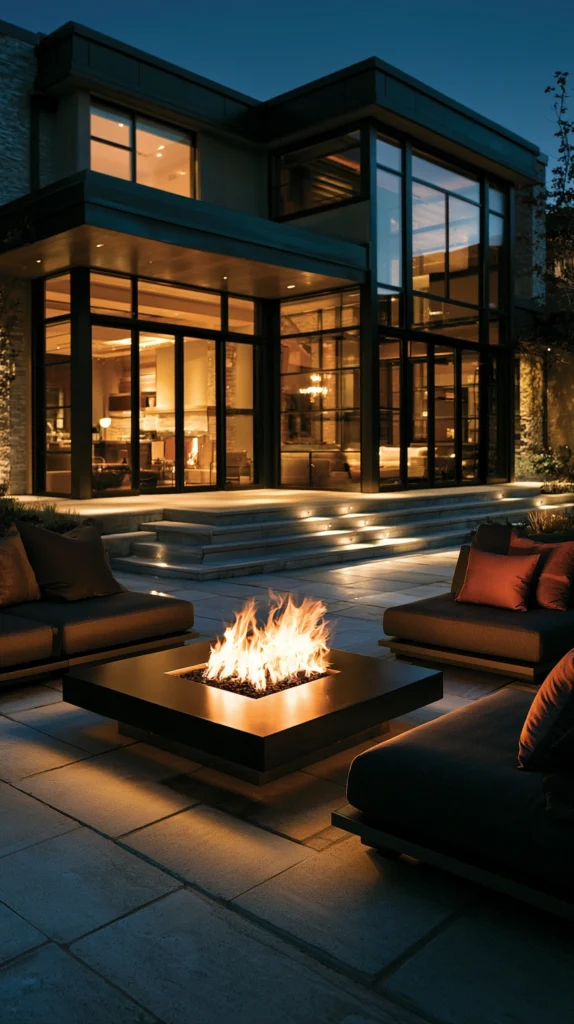
A fire — in a fire pit, fire table, chiminea, or fire bowl — as the primary light source, with other elements as secondary — the hierarchy that makes all autumn lighting work.
Why fire must be the anchor:
The physics of autumn lighting:
- Other light sources: illuminate
- Fire: does something more than illuminate
- The warmth is felt before the light is seen
- The movement of flame: the most compelling visual available in any garden
- No string light or lantern creates the same magnetic quality
The fire as the hierarchy’s top:
All other lights are subordinate:
- String lights overhead: the ambient environment
- Lanterns beside: the supplementary warmth
- The fire: the centre around which everything else is organised
- Everything else exists in relationship to the fire, not independently
The positioning (repeated from other articles, worth repeating):
Fire at the centre of the seating circle:
- All seats: facing the fire
- No seat has its back to the fire
- The distance: 3.5 to 4 feet from the fire edge to the nearest seat
- At this distance: warm enough, comfortable, safe
The fire as the evening’s organiser:
The ritual of lighting:
- The fire lit: the evening begins
- The guests: arrive after the fire is lit (already warm when they sit down)
- The fire dying: the signal that the evening is ending
- The fire manages the rhythm of the evening without any other cue
The fire plus the other light sources:
What the fire cannot do alone:
- Illuminate paths (unsafe to walk to the seating in darkness)
- Illuminate the table (the fire is at ground level, the food on the table is above it)
- Illuminate the surrounding garden (the fire lights a circle, not the whole space)
- These jobs: for the supplementary lights
Cost breakdown:
- Fire pit or chiminea: $80–280
- Wood (per evening): $3–8
- Total: $80–280 initial
The fire in October: the primary reason the garden is still being used at 9pm. Everything else supports it. Nothing replaces it.
Fire Tips for Autumn
The wind concern:
- Autumn winds: stronger than summer winds
- Open fire pits: affected by wind (the fire behaviour changes, sparks can travel)
- A fire pit with some screening (a fence, hedge, or low wall on the windward side): significantly better performance
- The chiminea: naturally more wind-resistant (the opening faces the seating, not the wind)
The dry wood requirement (different in autumn):
- Autumn: the wood stored over summer is at its driest (best burning quality)
- Recently rained-on wood: poor burning, excessive smoke
- Store wood under cover: the difference between a good fire and a frustrating one
2. The Amber String Light Canopy (The Overhead Amber Ceiling)
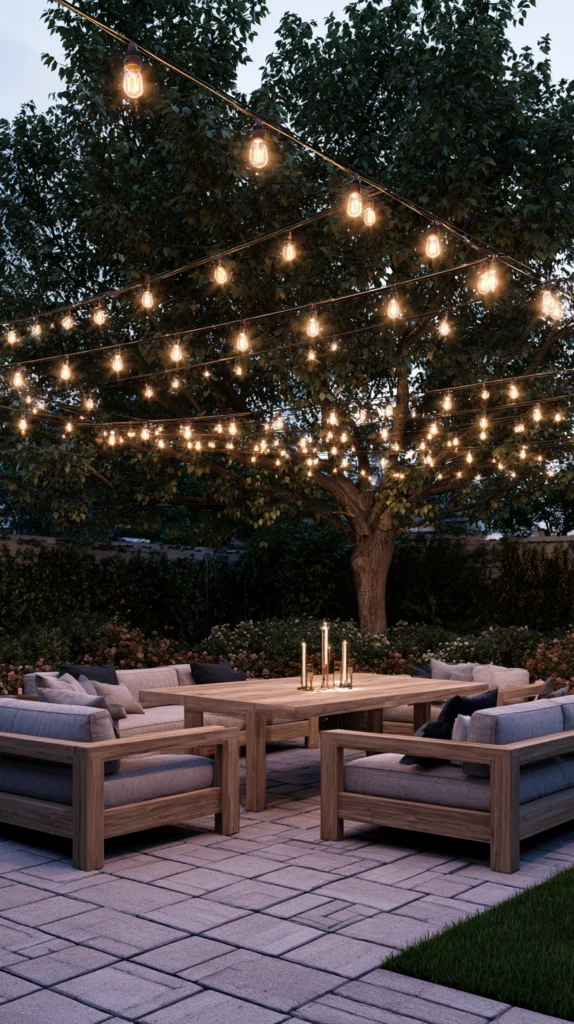
Warm Edison string lights hung overhead across the seating area — the atmospheric ceiling that defines the outdoor room after dark.
Why the canopy is the single most impactful autumn lighting addition:
The room definition:
- The seating area during the day: defined by the furniture
- At night without lighting: the furniture is invisible, the space undefined
- At night with a warm string light canopy: the room exists — defined by the warm circle of light overhead
- The canopy: creates the room at night that the furniture creates during the day
The amber quality in autumn specifically:
The amber + autumn palette:
- Autumn: copper, rust, warm gold (as established throughout this series)
- Warm amber string lights: in perfect colour harmony with the autumn garden
- The light that falls on terracotta pots, copper cushions, dried grasses: warm and flattering
- The same cool white light on the same objects: all the warmth removed
The configuration:
Full grid (most effective):
- Parallel runs across the entire seating area
- All lines the same height
- The uniform ceiling: the most composed version
- For a defined pergola space: the standard treatment
Zig-zag or informal:
- Lines not parallel: some higher, some lower
- The informal: the festival quality
- Between existing trees, fence posts, and structures
- More casual, more charming, less permanent-looking
The specific autumn adjustment:
Timer set for 5pm (not 9pm):
- Summer timer: 9pm (dusk)
- October timer: 5pm or 5:30pm (dusk)
- The timer: updated with the season
- The garden: always lit when the evenings begin
The autumn canopy with fire:
- String lights overhead, fire below
- Both warm amber sources: the ceiling and the floor simultaneously
- Looking up: the string lights
- Looking down: the fire
- The space between: where the sitting is
Cost breakdown:
- Two 50-foot warm Edison light strands: $50–70
- Timer switch: $12
- Posts or attachment points (if needed): $20–40
- Total: $82–122
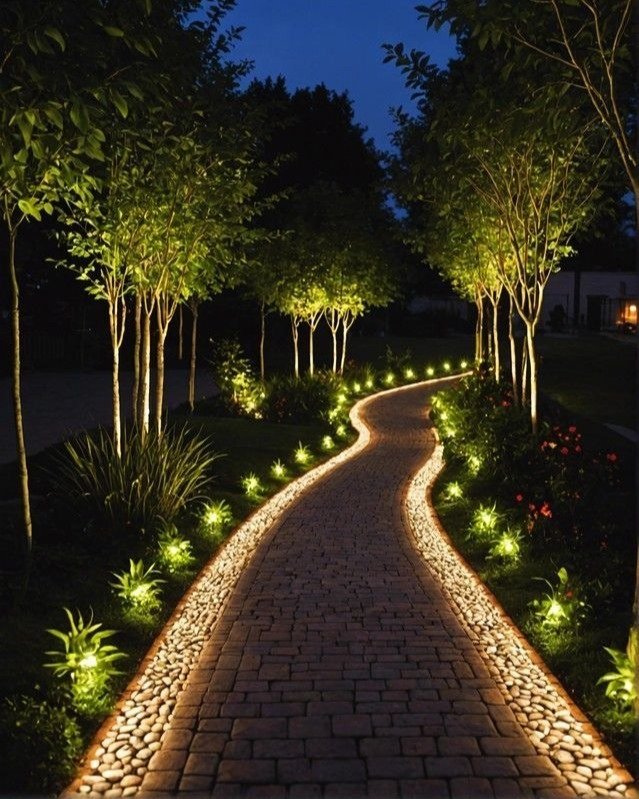
3. The Lantern Trail (Guiding the Autumn Path)
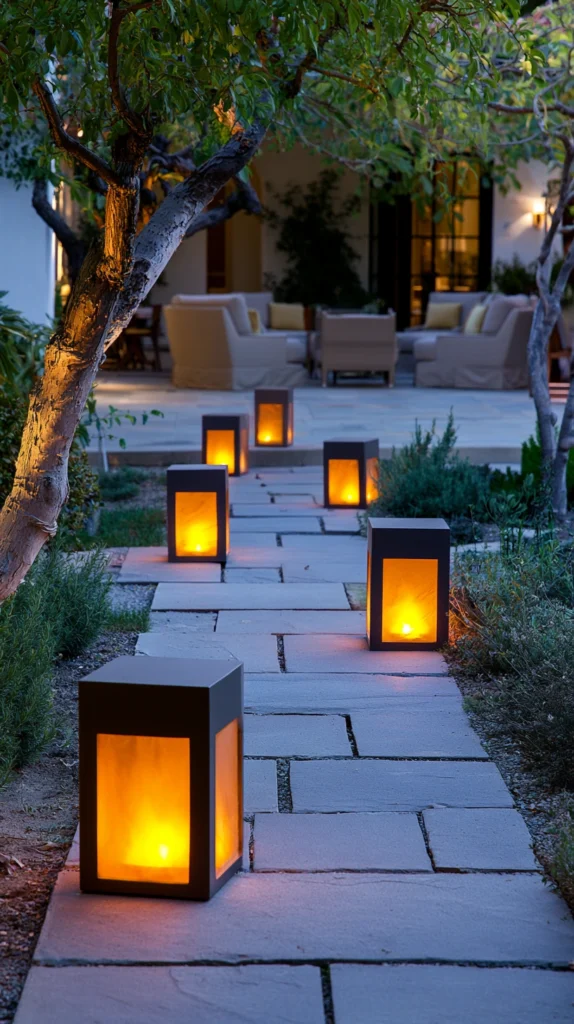
A series of matching lanterns along the path from the house to the seating area — the lighting that makes the journey through the dark garden safe and beautiful simultaneously.
Why the path lighting matters as much as the seating lighting:
The safety consideration:
- From the house to the seating: the path is walked in darkness every evening the garden is used
- Unlit path: a trip hazard, a deterrent to using the garden
- Lit path: safe and inviting
- The lighting of the path: the enabler of everything else (the seating area cannot be used if people will not walk to it)
The invitation quality:
The path of lights stretching away from the house:
- Seen from inside the house
- The warm lights visible through the window
- The visual invitation: the path drawing toward the seating area
- The lit path: from the inside, the garden exists and is ready
The lantern choice:
Matching throughout:
- All the same lantern on the path
- The consistency: the path reads as a designed trail, not random objects placed
- Matte black: the most autumn-compatible finish
- Aged bronze or copper: warmer, more Shire-appropriate (for those also developing a hobbitcore aesthetic)
The placement:
Alternating sides:
- Left side, then right side, then left
- The zig-zag: more interesting than a single row
- The eye: follows the alternation, experiencing the full path
Spacing:
- 3–4 feet between lanterns (each pool of light slightly overlapping)
- No complete darkness between pools
- The continuous warmth: the path never dark even between lanterns
The flameless candle:
Timer-set for dusk:
- All lanterns come on simultaneously
- No manual management
- The path: always prepared when the evening arrives
The high-quality flameless:
- The difference between cheap flameless and quality flameless: enormous
- Quality brands (Luminara, for example): realistic flicker, warm colour, reliable timer
- Cheap: static glow, cool colour, unreliable timer
- The investment in quality flameless: worth it for something used nightly
Cost breakdown:
- Eight matching matte-black lanterns: $100–130
- Flameless candles, quality (8): $60–80
- Total: $160–210
4. The Candlelit Table (The Intimate Dining Light)
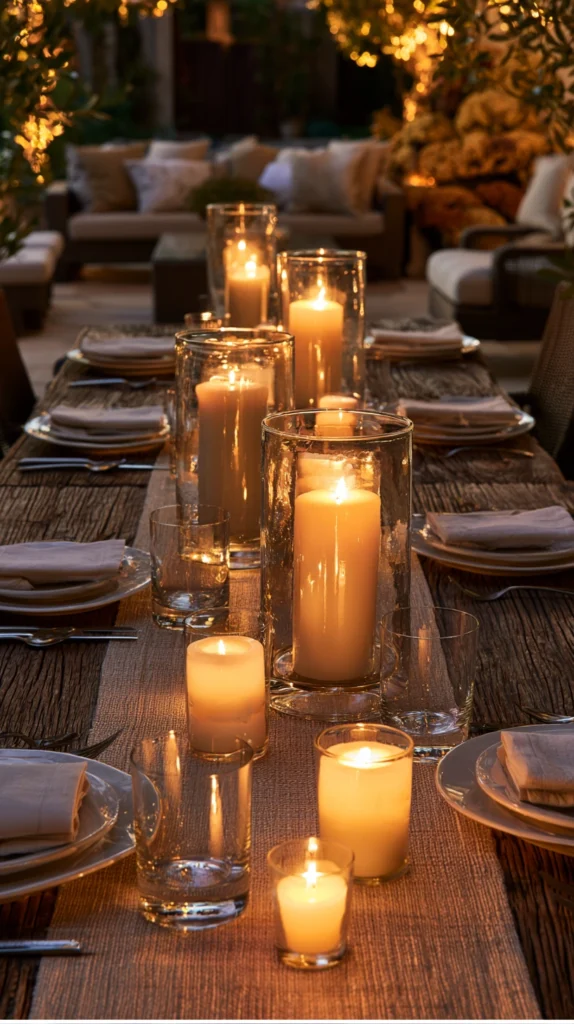
Multiple candles on the outdoor dining table, with hurricane glasses to manage the autumn wind — the specific table lighting that makes an outdoor autumn meal feel like an occasion.
Why table candlelight is different from ambient candlelight:
The intimacy:
- Candles on a table: lighting at face height
- Face height: most flattering, most intimate
- The specific quality of candlelight at a table: the reason all romantic restaurant scenes are shot in candlelight
- This quality: available outside in autumn
The autumn wind problem:
Open candles in autumn:
- The wind: extinguishes them within minutes
- The frustration: worse than no candles
- The hurricane glass: solves this entirely
The hurricane glass:
- A tall clear glass cylinder around the candle
- The flame: protected from wind while remaining visible
- The glass: slightly diffuses the flame (more beautiful than the raw flame in some cases)
- Essential for an autumn outdoor table
The arrangement:
Five or seven candles down the centre (odd numbers):
- Not one candle: five or more
- The line of candles: the table’s centrepiece
- The height variation: tall in the centre, shorter at the ends
- The warmth of five flames together: noticeably warmer than one
The botanical surround:
Around the base of the candles:
- Dried autumn leaves scattered
- Small pine cones
- Sprigs of rosemary or thyme
- The seasonal material: connecting the table to the garden
- The dried material: no watering, no arrangement after the first time
The table lighting and the overhead string light:
These are not competing:
- The string light above: the ambient ceiling
- The candles on the table: the intimate table-level light
- The fire (if near the table): the surrounding warmth
- All three: different heights, different scales, different characters
- Together: the fully lit autumn outdoor dining experience
Cost breakdown:
- Hurricane glasses (5–7): $20–35
- Pillar candles (5–7): $15–25
- Dried botanical materials for the table: $0–10
- Total: $35–70
5. The Copper Wire Fairy Light Wrap (Trees and Structures)
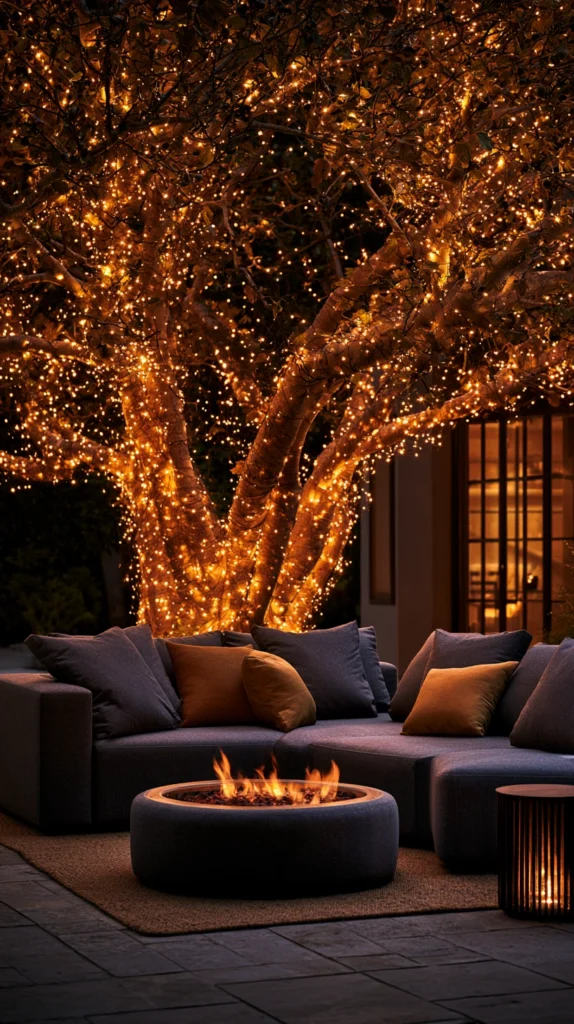
Copper wire fairy lights wrapped through the branches of trees and around structures — the warm light that turns existing garden elements into glowing features.
Why copper wire lights are specifically autumnal:
The colour:
- Copper wire: the colour of autumn itself
- The warm amber bulbs against copper wire: a specifically October palette
- No other fairy light type: looks as correct in an autumn garden
The movement:
- The thin copper wire follows every branch movement
- In autumn wind: the lights move with the tree
- The moving warm light: the quality that distinguishes this from any fixed light source
- The aliveness: specific to this light type in this season
The trees:
The wrapping:
- As described in the summer festival lighting article: trunk first, then branches
- In autumn: the effect is different
- The leaves are still there in early autumn (adding colour to the lit tree)
- By November: the bare branches, fully lit, more architectural
- The same tree: two entirely different lighting installations through the season
The autumn-specific opportunity:
The leaf colour lit from within:
- October, just before leaf fall: the leaves still on the tree
- Warm amber lights behind autumn-coloured leaves
- The leaves: glowing gold and copper from within
- A brief window (two to three weeks) of the most beautiful tree lighting available
After leaf fall:
The bare branch configuration:
- The lights become more visible (no leaves obscuring)
- The branch structure: revealed
- The shadow: cast upward and outward onto walls and fences
- The silhouette: the tree’s winter identity, illuminated
The solar option for trees:
Away from the main power area:
- A tree further from the house: no convenient power source
- Solar battery fairy lights: charge during the day, run through the evening
- Quality has improved significantly
- For a medium-sized tree: adequate with a quality brand
Cost breakdown:
- Copper wire fairy lights (3 strands, 33 feet each): $45
- Solar option: $50–60
- Total: $45–60
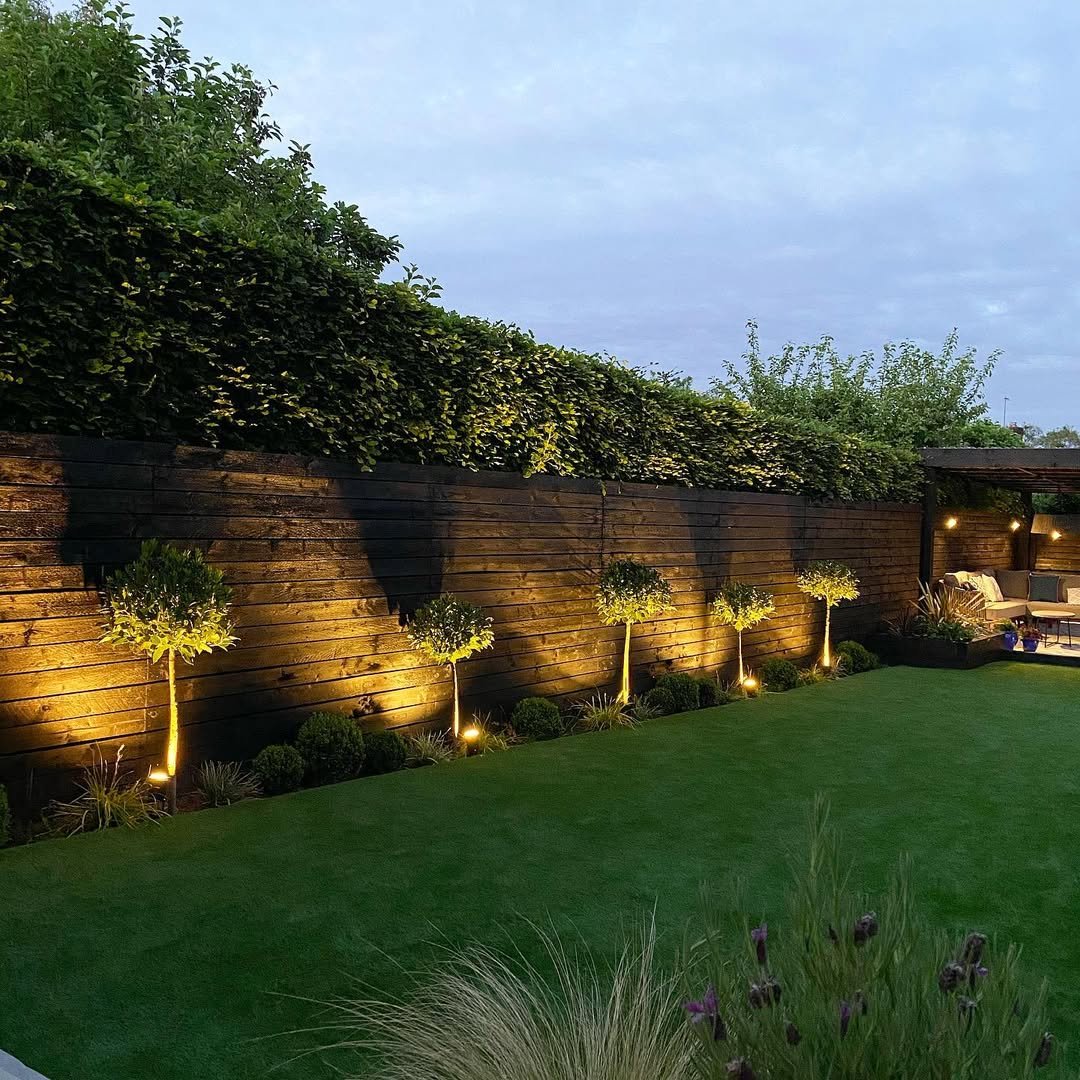
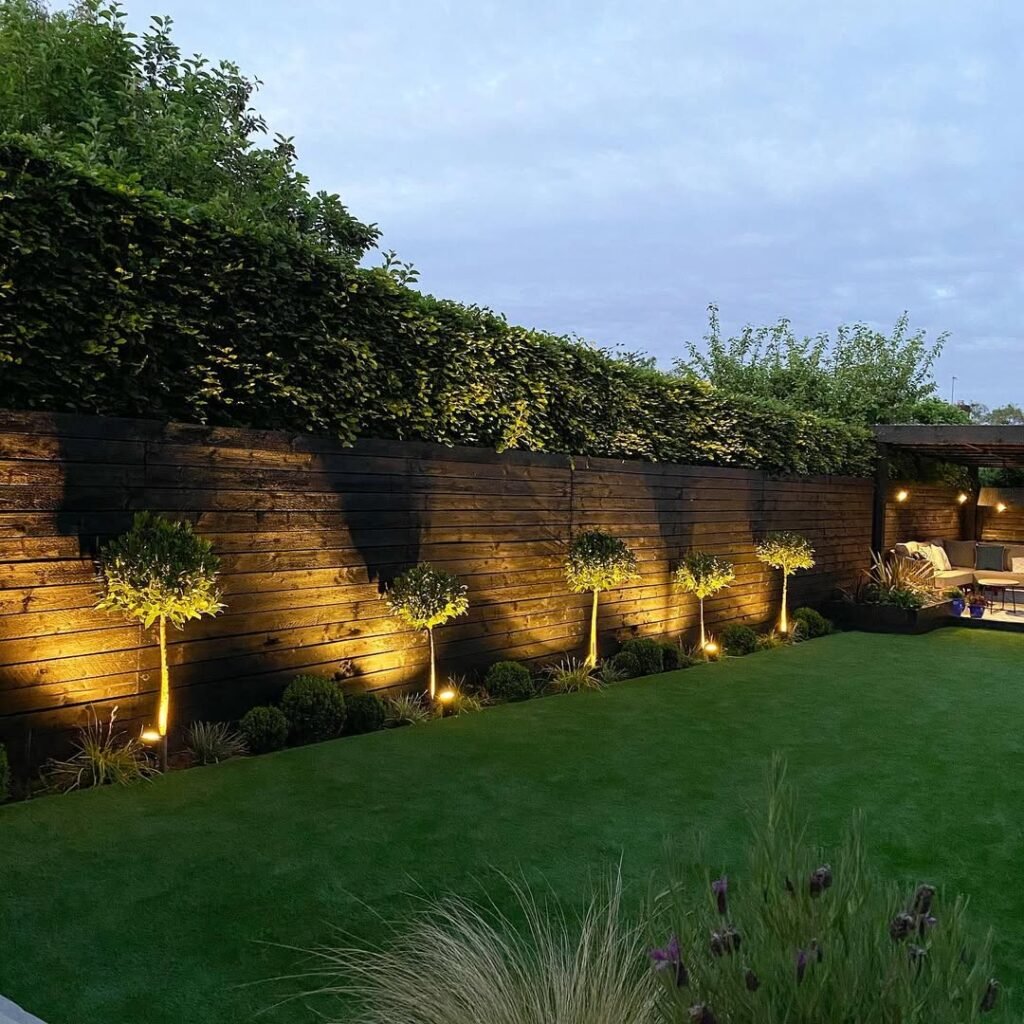
6. The Uplighting System (Drama From Below)
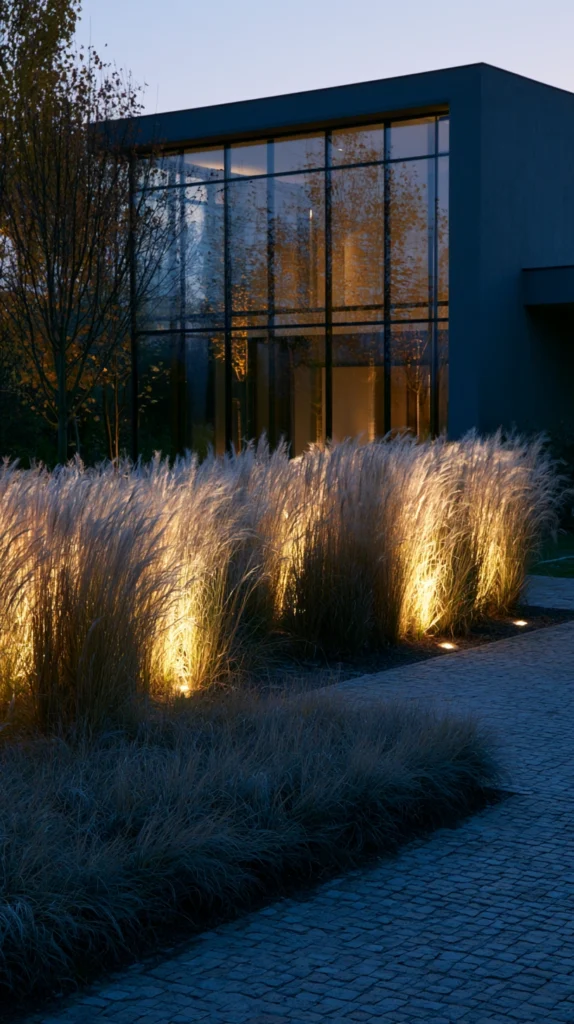
Solar or wired spotlights at the base of key plants, trees, and structures, aimed upward — the dramatic lighting that turns the autumn garden into something theatrical at night.
Why uplighting creates a different quality of autumn garden:
The unusual direction:
- All natural light: from above
- All standard artificial light: from above or at eye level
- Uplight: from below
- From below: unfamiliar, dramatic, shadow projected upward rather than downward
- The unusual: registers as designed and distinctive
The autumn plant specifically:
What uplighting does to autumn plants:
Ornamental grasses:
- A grass uplighted from below: the seed plumes glow
- In any autumn breeze: the moving plumes, lit from below, cast changing shadows
- The shadow: animated, projected onto the fence or wall behind
- The most dramatic autumn garden lighting effect available
Structural plants (phormium, bamboo, large perennials):
- The form: revealed by light from below
- During the day: a plant among plants
- At night with uplight: a sculpture
- The same plant: transformed
Trees:
- The underside of the canopy: lit
- The branches: visible against the dark sky
- The bark texture: dramatically revealed
- An otherwise ordinary tree: something worth stopping for at night
The positioning:
At the base, slightly off-centre:
- Not aimed straight up the centre of a plant
- Positioned at the outer edge of the canopy or plant spread, angled inward and upward at 30–45 degrees
- The angle: creates the shadow rather than eliminating it
- The shadow: the most interesting part of uplighting
Solar spike lights:
Most accessible option:
- No wiring required
- Push into the ground beside the plant
- Adjust the angle of the solar panel face
- Quality brands: adequate brightness for most plants
- Move and experiment: no permanent commitment
The limitation:
- Solar is less bright than mains-powered
- In very shaded positions: may not charge adequately
- The investment in one or two mains-powered uplights for the most important plants: worthwhile if the garden is used regularly
Cost breakdown:
- Solar spike uplights (4 quality units): $45–60
- Or mains-powered (2 units + transformer): $60–100
- Total: $45–100
7. The Floor Lantern Cluster (The Ground-Level Warmth)
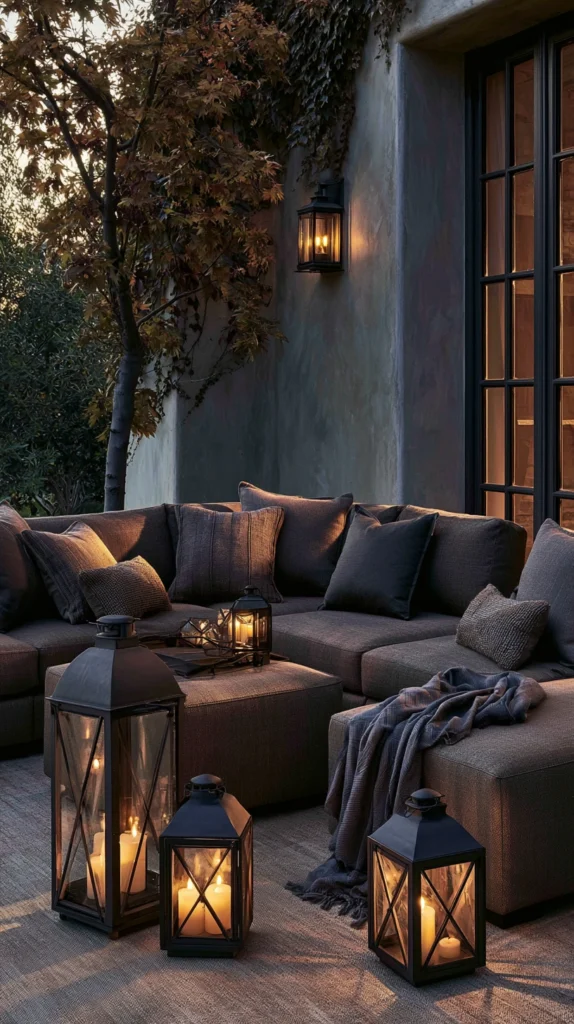
A grouping of varied lanterns at ground level, creating warm pools of light at and below sitting height — the supplementary lighting that fills the space between the fire and the overhead canopy.
Why floor-level lighting is specifically important in autumn:
The seating height:
- In autumn: sitting lower (in deep chairs, around a fire, close to the ground)
- Low seating: the eye is at a lower level than standard
- Overhead lighting at a lower-seated level: above the head, not at the face
- Ground-level lighting: at or below the seated eye level
- The ground-level light: experienced, not just seen from below
The cluster arrangement:
Why clustering is more effective than distributing:
- Individual lanterns spread throughout a space: functional illumination
- Lanterns clustered together: a scene
- The cluster: an object that rewards close attention
- Three lanterns of different heights, grouped: read as intentional
- Three lanterns distributed evenly: read as lit
The composition:
The height hierarchy within the cluster:
- One tall (18–24 inch): the anchor
- Two medium (12–14 inch): the body
- Two or three short (6–8 inch): the base
- All touching or nearly touching: the cluster
- The pyramid form from the side: the composition
The lantern finish for autumn:
Matte black:
- The most contemporary autumn choice
- Disappears at night (the light is visible, the lantern is not)
- Compatible with all other material choices in the autumn garden
Aged copper or bronze:
- The most specifically autumnal finish
- Catches the warm light
- The oxidised copper: the colour of the season
- More character than black
The flameless inside:
The timer for the cluster:
- All lanterns in the cluster: same timer
- Come on at dusk: all simultaneously
- The simultaneous ignition: the cluster appears as a single thing activating
Cost breakdown:
- Five matching lanterns (varied heights, matte black): $65–90
- Quality flameless candles (5): $40–55
- Total: $105–145
8. The Moroccan Lantern Hanging System (Pattern and Shadow)
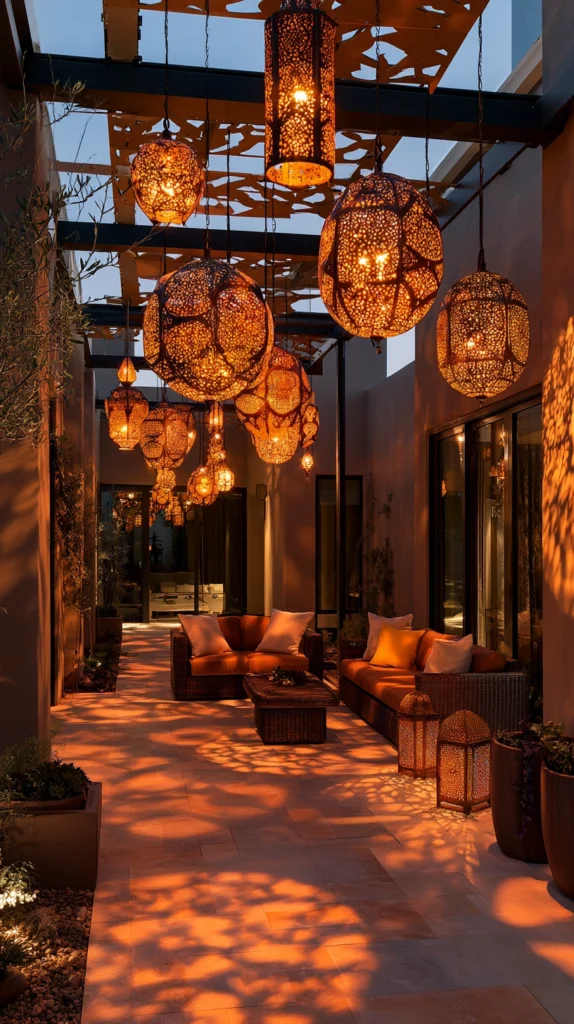
Pierced metal lanterns hung from tree branches, pergola beams, or shepherd’s hooks — the light source that adds pattern to the autumn garden’s surfaces.
Why patterned light is specifically valuable in autumn:
The bare surfaces:
- Autumn: some garden surfaces becoming bare (as plants die back, more wall, fence, and ground visible)
- Bare surfaces: available as projection screens
- Pierced lanterns: project patterns onto these surfaces
- The pattern: the decoration applied by light to surfaces that would otherwise be plain
The autumn mood:
The patterns in warm amber:
- Geometric patterns on an old stone wall
- Stars through a climbing plant
- The light moving as the lantern swings in autumn wind
- The outdoor surface: alive with moving warm pattern
The suspension options:
From a branch:
- S-hook over a branch
- The lantern: swinging in any breeze
- The pattern: moving
- The most casual suspension — and the most charming for the movement
From a shepherd’s hook:
- Stable in wind (the hook is fixed)
- The lantern: at a consistent height
- The pattern: more consistent (less movement)
- Useful for path lighting where a stable pattern is more appropriate
From the pergola:
- Hung from a beam or cross-member
- The pattern: projected downward onto the table or seating area
- Multiple lanterns hung at varied heights: varied scale of pattern projected
The variety:
Three different lanterns, same family:
- All pierced metal
- All the same or similar finish (aged brass, or all oxidised black)
- Different sizes and patterns
- Together: a variety of pattern scales projected simultaneously
- The layered patterns: more interesting than any single pattern
The real candle option for hanging lanterns:
Unlike floor-standing lanterns:
- A hanging lantern: moves
- Real candle in a moving lantern: the flame also moves (unpredictably)
- The unpredictable flame + the moving pattern: maximum dynamic quality
- Safety consideration: ensure the candle is appropriately contained and the lantern cannot fall
Cost breakdown:
- Three pierced lanterns (varied sizes and patterns): $60–90
- Candles or flameless equivalents: $15–25
- S-hooks or shepherd’s hooks: $20–35
- Total: $95–150
9. The Bonfire and Torch Arrangement (The October Night)
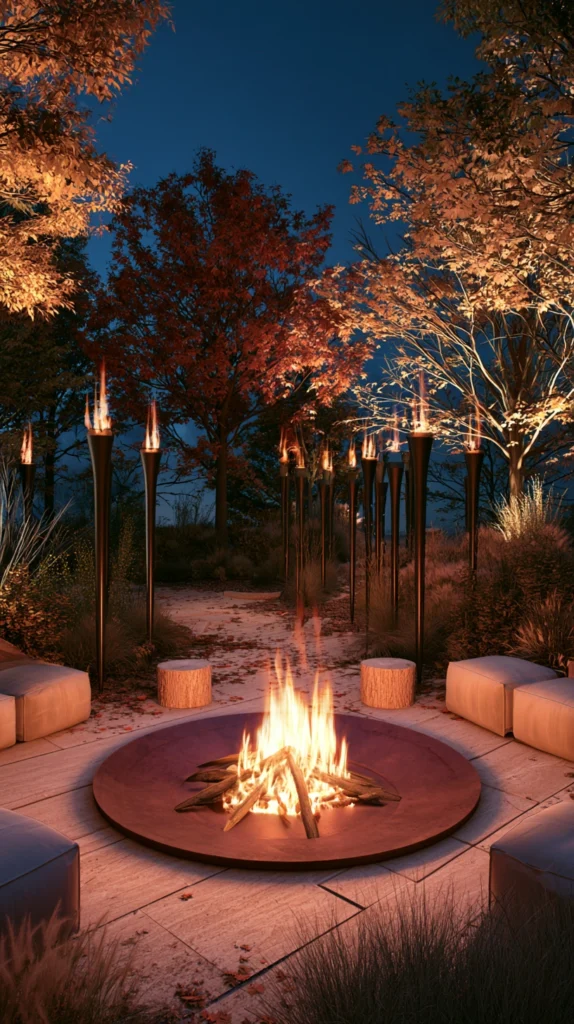
A bonfire or line of garden torches for a specific occasion — the large-scale seasonal lighting for the autumn gathering.
Why large-scale fire is specifically appropriate in October:
The seasonal traditions:
- Bonfire Night (UK, November 5th)
- Samhain / Halloween gatherings
- Harvest festivals
- The autumn: globally a season associated with gathering around fire
- The bonfire: the large-scale cultural expression of the autumn fire tradition
The torch avenue:
Along the path or around the perimeter:
- Garden torches (metal stakes with oil cups): at 4-foot intervals
- Both sides of the main path: a corridor of flame
- The arrival experience: walking between torches to reach the gathering
- The most theatrical garden lighting available
The tiki torch reality:
The design quality variance:
- Cheap bamboo tiki torches: look cheap
- Quality metal-stake oil torches: a different aesthetic
- Black powder-coated or weathered steel: the correct material
- The investment in quality torches: the difference between effective and kitschy
The fuel:
Citronella oil:
- Repels some insects (a bonus in any mild autumn evening)
- Burns cleanly
- The smell: distinct and associated with outdoor evenings
Standard torch oil:
- Burns cleanly and brightly
- No insect-repellent quality
- Slightly more bright than citronella
The safety management:
The non-negotiables:
- Nothing flammable overhead (trees in leaf, pergola fabric, string lights too close)
- 3-foot minimum clearance from plants
- Extinguish before going inside
- Wind: the primary concern with torches (more than with a contained fire)
The bonfire:
The occasion fire:
- Unlike the fire pit (nightly use), the bonfire is occasional
- The occasion: makes it special
- The scale: larger than the fire pit
- The bonfire needs preparation (a safe site, dry wood, appropriate size for the space)
- Not a substitute for the fire pit: an addition for specific occasions
Cost breakdown:
- Eight quality garden torches: $80–120
- Torch oil (per evening): $8–12
- Total: $80–120 initial
10. The Windowsill and Threshold Candles (The Cottage Interior Glow)
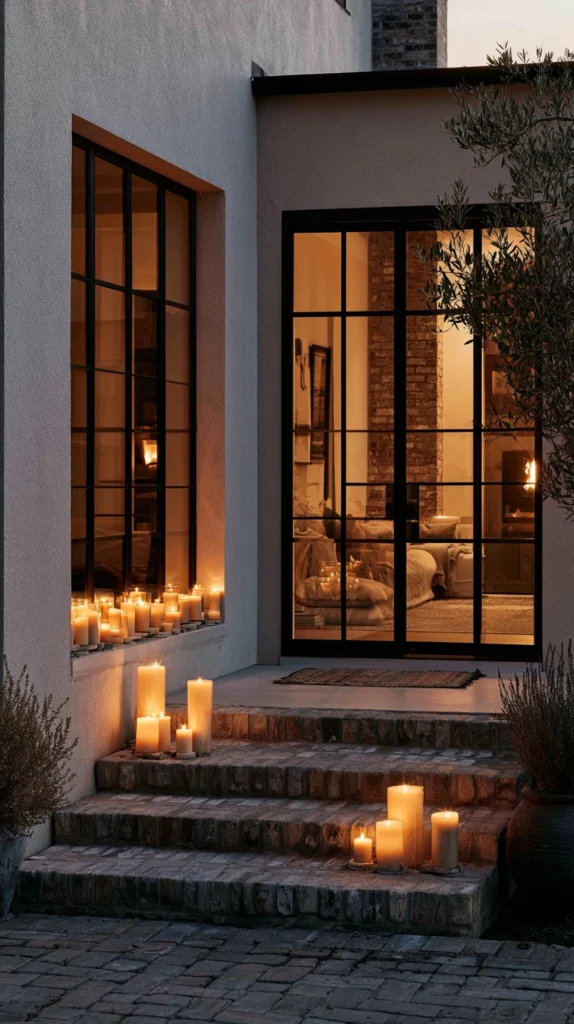
Candles placed on windowsills, steps, and doorways — the lighting that creates the impression of a home lit from within and welcomes people to the outdoor space.
Why threshold lighting changes the outdoor experience:
The invitation:
- The outdoor seating area: in the garden
- The journey to it: past the house
- A house with candles at the windows and steps: the home is alive and waiting
- The experience of arriving: transformed by this
The cottage quality:
The lit window from outside:
- A warm candle visible through a window: the oldest domestic signal of welcome
- From the garden: this is home
- The relationship between the lit interior and the lit garden: the home extends outward
- The boundary between inside and outside: softened by matching the light quality (both warm amber)
The placement:
Windowsills (exterior-facing):
- Candles in weighted holders (wind)
- Or flameless LED (no wind concern)
- The warm light: visible from the path approaching
- Also visible from the garden: looking back at the house
Steps and doorways:
- A candle at each step: the lit ascent
- A pair of lanterns at the door frame: the lit threshold
- The step candles: functional (illuminating the step) and aesthetic (the warm guide)
The coordination with the outdoor lighting:
The same temperature throughout:
- Windowsill candles: warm amber
- Path lanterns: warm amber
- Seating area lights: warm amber
- The house and the garden: speaking one light language
- The coordination: the invisible design decision that makes the whole feel coherent
The practical (flameless in many positions):
- Exterior windowsills: wind exposure
- Unattended positions: fire safety
- Quality flameless with timer: the practical solution for most of these positions
- Real candles: reserved for attended positions (the table, the fire circle)
Cost breakdown:
- Six flameless candles for windowsills and steps: $30–45
- Two small lanterns for the doorway: $25–35
- Total: $55–80
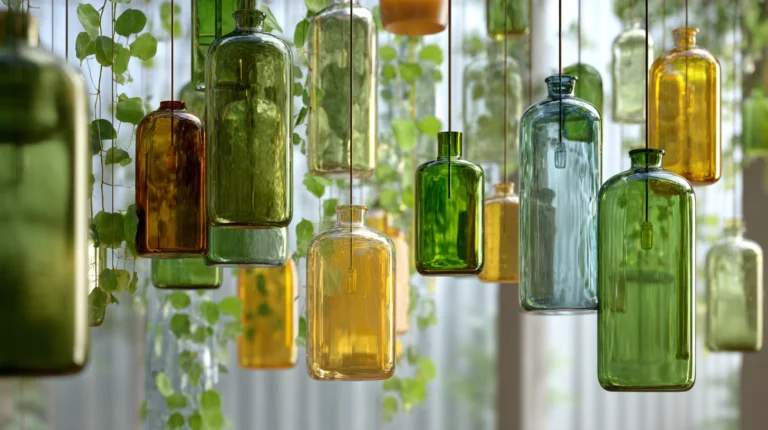
11. The Coloured Glass Lantern Accent (The Jewel Detail)
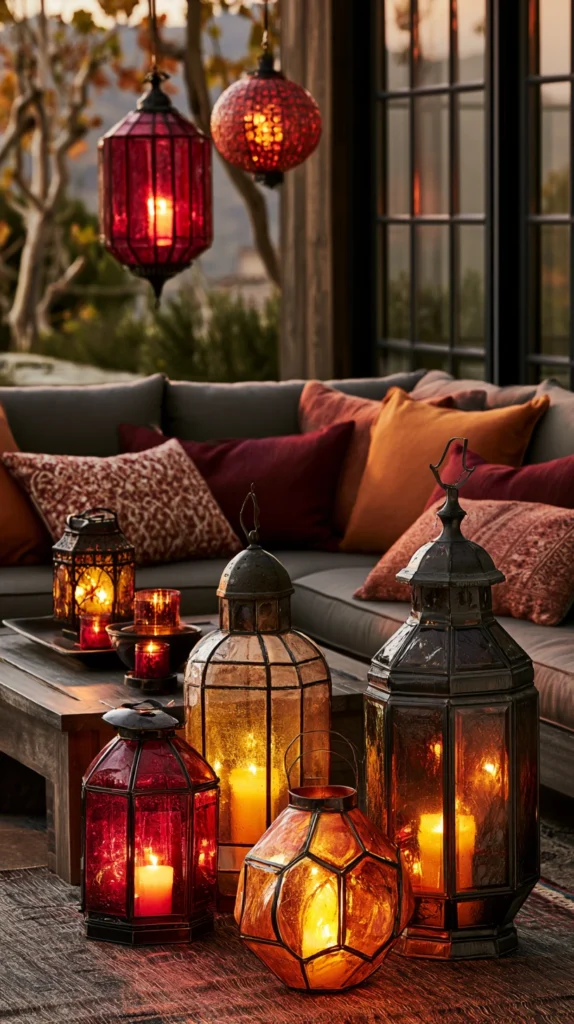
A few coloured glass lanterns — deep amber, ruby red, or teal — among the standard warm-white sources — the accent that adds depth and specificity to the autumn lighting composition.
Why coloured glass is used sparingly but effectively:
The restraint principle:
- All-coloured lighting: theme park
- One or two coloured glass lanterns among many warm-white sources: jewels
- The restraint: what makes the colour meaningful
- The contrast: the coloured lantern visible because it is the exception
The autumn colours:
Deep amber glass:
- The most temperature-appropriate
- Warms everything further
- Not technically “coloured” — just more saturated version of warm white
- The amber glass lantern: the standard that extends the warm light principle
Ruby red:
- The most dramatic
- Rich and jewel-like
- One ruby red lantern among five warm white: the focal point of any grouping
- Associated with autumn harvest, warmth, celebration
Deep teal or blue-green:
- The unexpected colour
- Creates contrast with the warm amber sources around it
- More contemporary
- Used as the single accent in an otherwise warm composition
The placement:
Within the floor lantern cluster:
- The majority warm white
- One ruby red: the anchor of the cluster
- The red: draws the eye to the cluster
- From it: everything else reads
On the table among white candles:
- Four white hurricane candles
- One deep amber glass candle holder
- The amber: subtly richer than the others
- The slight variation: worth noticing
The hanging jewel:
From a branch or shepherd’s hook:
- A single ruby or amber glass lantern, hung alone
- The light through the coloured glass: the garden’s focal point at that position
- Seen from across the garden: always found
Cost breakdown:
- Two or three coloured glass lanterns: $20–40
- Total: $20–40 — the lowest-cost addition that adds the most specificity
12. The Smart Lighting System (The Automated Autumn Garden)
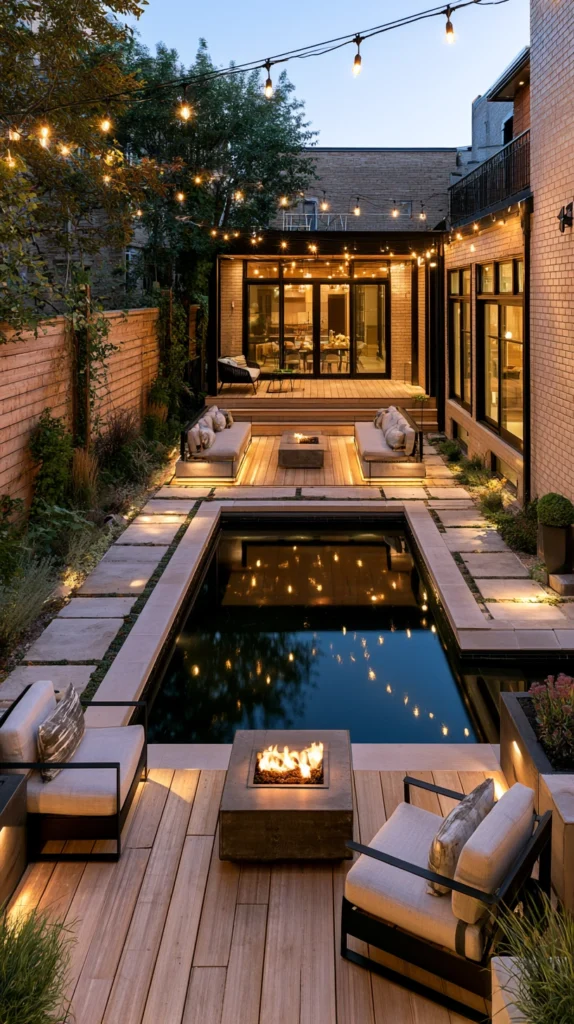
Smart outdoor lights controlled by phone, sunset timer, or voice — the technology that removes all friction from the autumn garden’s lighting.
Why automation matters more in autumn than summer:
The friction chain (from the retreat article — repeated here for lighting specifically):
- Want to use the garden in the evening
- Lighting requires manual switching (going outside, turning things on)
- The switching: a reason to not go out immediately
- If the garden is not already lit when the decision is made: the decision is often “stay inside”
- If the garden is always lit when the evening arrives: the decision is made by the garden, not by the person
What “smart” means for outdoor lighting:
Sunset-triggered:
- Every major smart plug platform: supports sunrise/sunset triggering
- The system: adjusts automatically as the days shorten
- A system set in September: still correctly timed in November
- The manual adjustment: made once (or never, if the sunset trigger is used)
Phone controlled:
- Turn on or adjust brightness from inside the house
- Pre-empt the arrival: garden lit before going outside
- The garden: ready before you are
Scene setting:
Different scenes for different uses:
- “Pre-dinner”: full brightness, more functional light
- “Dining”: 70% brightness, more intimate
- “After-dinner”: 40% brightness, ambient only
- The scenes: set once, used every evening
What to automate:
String lights (the primary):
- Smart outdoor plug on the string lights
- Turns on at sunset, off at midnight (or chosen time)
- Zero friction: the garden is always lit
Uplights and path lights:
- If solar: no automation needed (they are inherently automatic)
- If mains: smart plug for the transformer
What not to automate:
The fire and the candles:
- These require physical presence to manage
- The automation: handles the electric and the flameless
- The fire and real candles: the manual element, the ritual
- The ritual of lighting the fire and the candles: the automation cannot replace this and should not try to
Cost breakdown:
- Smart outdoor plugs (2–3): $25–45
- No additional light fixtures needed (automation is for existing lights)
- Total: $25–45 — the addition with the highest return on existing investment
13. The Complete Autumn Lighting Design (All Sources Working Together)
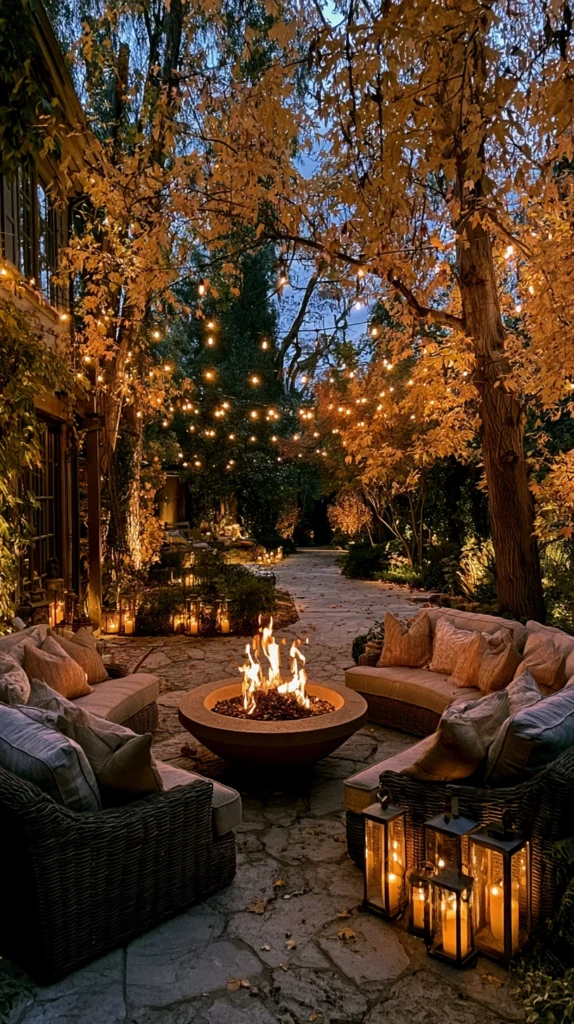
A garden where every area has its lighting role defined, every source is warm, and the whole system activates at dusk — the lighting design that turns the autumn garden from a space into an experience.
The zones and their lighting:
The journey zone (house to seating):
- Path lanterns on alternating sides (Idea #3)
- Windowsill and threshold lights visible from the path (Idea #10)
- The arrival: from a lit house, along a lit path, toward a lit seating area
- The journey: never in darkness
The seating zone (the primary destination):
- String light canopy overhead (Idea #2): the ceiling
- Fire at the centre (Idea #1): the anchor
- Floor lantern cluster at one edge (Idea #7): the supplementary warmth
- The seating zone: lit at three levels simultaneously (overhead, eye level, ground)
The dining zone (if separate from seating):
- Candles on the table with hurricane glasses (Idea #4)
- A pendant overhead from the pergola (separate from the string light canopy)
- The dining zone: more intimate, more specifically functional
The garden zone (beyond the main seating):
- Uplights on key plants (Idea #6)
- Fairy lights in trees (Idea #5)
- The garden beyond: not ignored but not over-lit
- The darkness: present as backdrop, the lit elements as features within it
The special occasion additions:
- Moroccan lanterns for decoration (Idea #8)
- Coloured glass accents (Idea #11)
- Garden torches for gatherings (Idea #9)
The automation:
- All mains-powered lights on smart plugs (Idea #12)
- Set to sunset trigger
- The manual elements: fire and real candles (these are the ritual, not a friction)
The colour temperature, again:
- Every single source in this system: 2700K or below
- The system only functions as described if this single rule is applied consistently
- One 4000K bulb in the string lights: the warmth of the entire system reduced
- The temperature: the invisible requirement that makes everything else work
The cost:
Phased building:
Phase one ($150–200) — the essential:
- String light canopy with timer
- Three path lanterns with flameless
- The garden usable after dark immediately
Phase two ($200–300) — the full system:
- Fire pit or chiminea
- Floor lantern cluster
- Fairy lights in one tree
- The system: warm and multi-source
Phase three ($200–350) — the details:
- Uplights on key plants
- Smart plugs for automation
- Coloured glass accent lanterns
- Table candles and hurricanes
Total complete system: $550–850 over three phases
The One Question That Determines Everything
Before any purchase, before any installation:
At 6pm on an October evening: what does the garden look like from inside the house?
From the kitchen window, or the living room window, or wherever the view of the garden is:
- Is it dark?
- Is it warm?
- Does it invite?
If it is dark: the lighting system has not started yet. If it is warm: the first phase is working. If it invites: the complete system is functioning.
The test: every evening. The result: the reason to go outside or the reason to stay in.
The garden that invites from the window: used. Every evening. More evenings in October and November than in July and August, because the effort of going outside has been removed by the design.
The design is the lighting. The lighting is the design.
Everything on this list: in service of one thing. The warm window in October, seen from inside. The decision to go out rather than stay in.
That decision: available to any garden. Tonight.