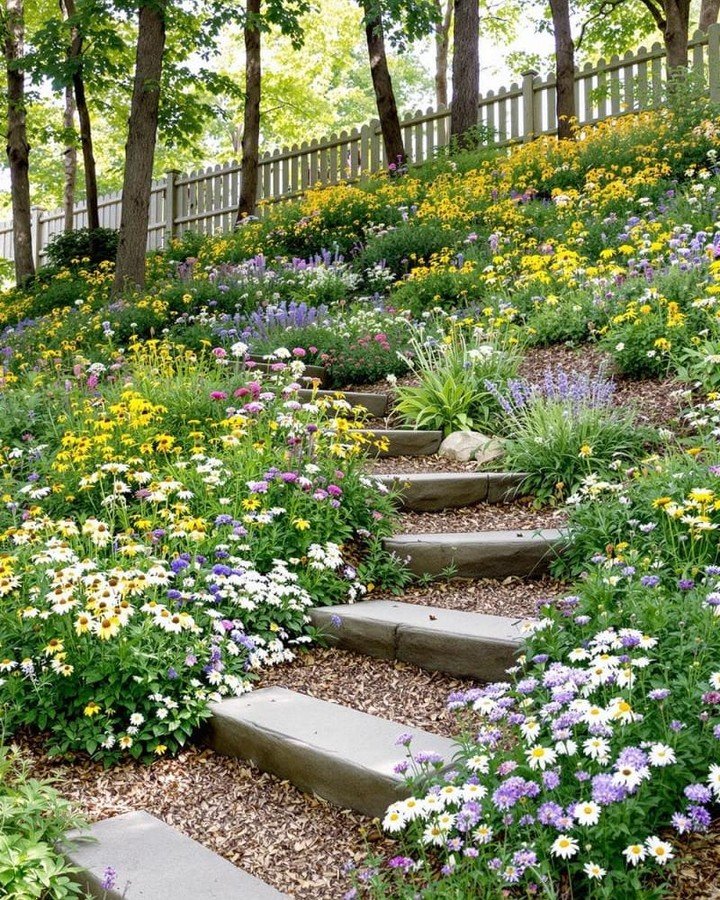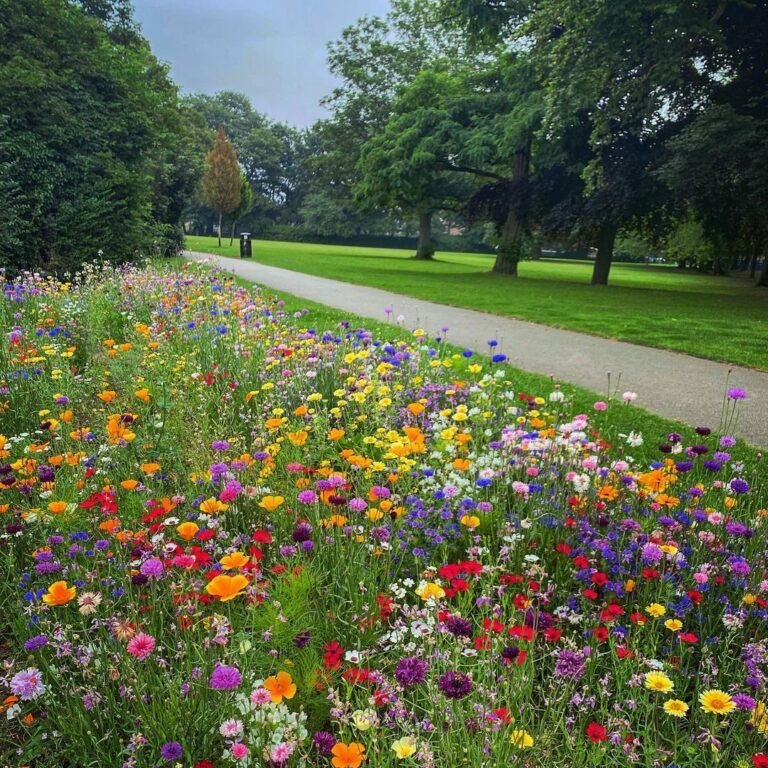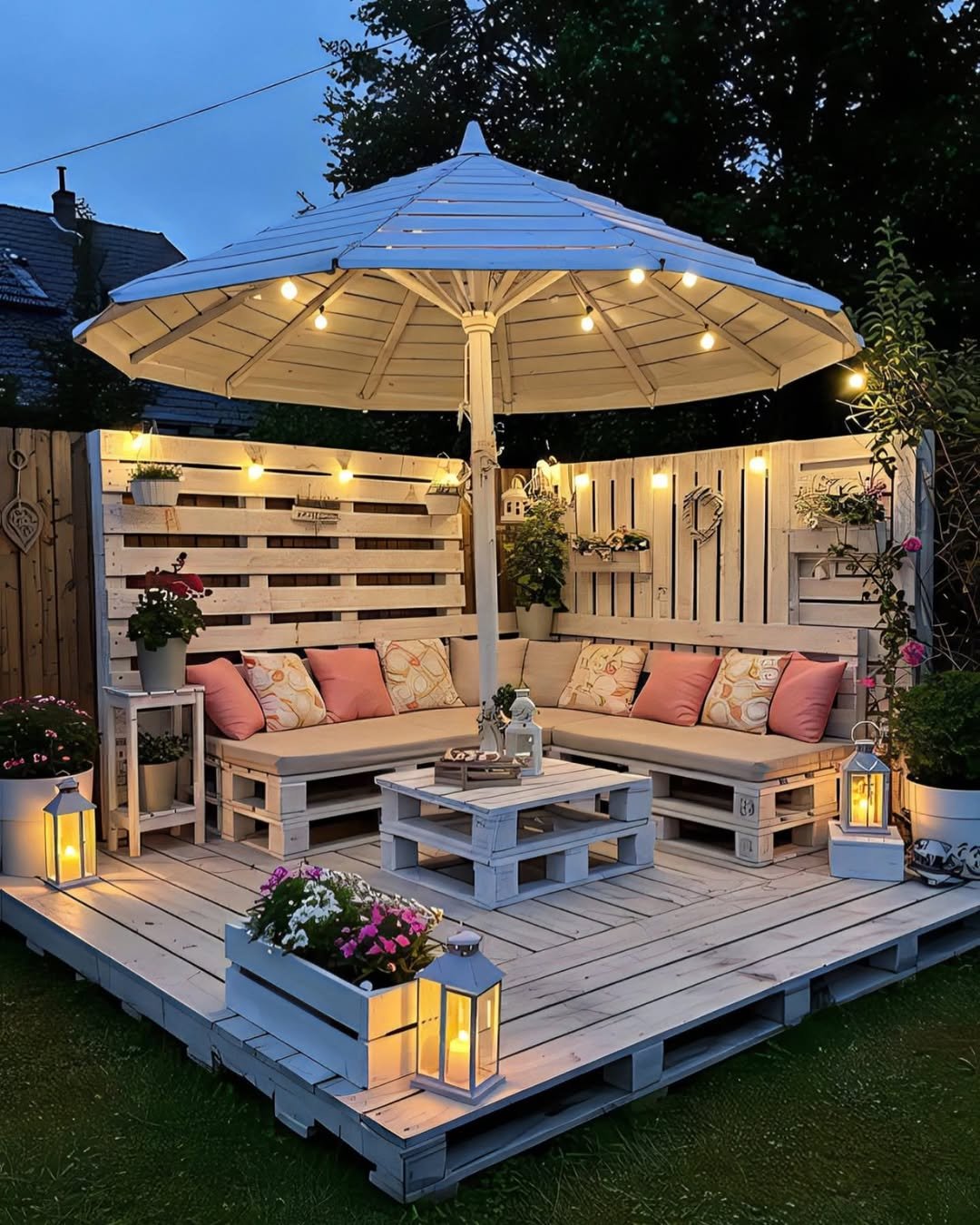
14 Fall Garden Decor Ideas to Extend the Season
September arrives and most people look at the garden and start mentally checking out. The tomatoes are done. The bedding plants are leggy. The summer furniture has been outside since May and is starting to look tired.
The garden: scheduled for abandonment for the next six months.
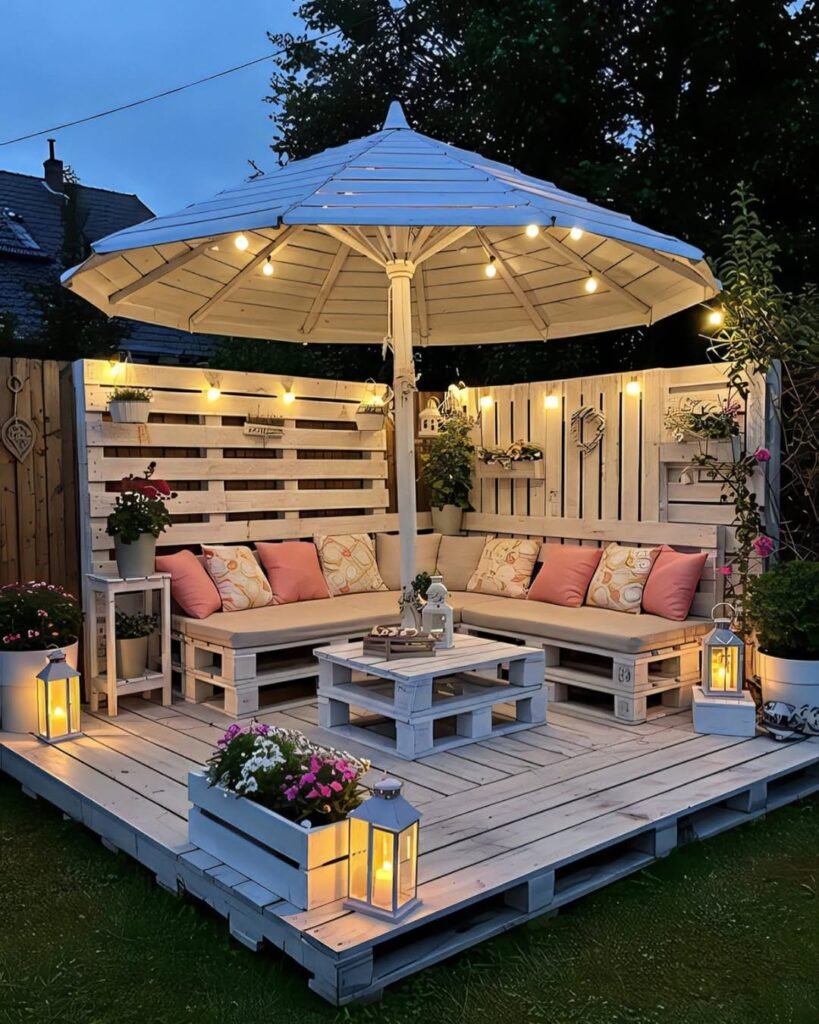
But autumn is not the end of the outdoor season. It is a completely different season with its own aesthetic, its own palette, and its own reasons to be outside. The garden that was designed for summer sun becomes something richer and more complex in autumn light. The low angle of October sun on a rusted seed head or a copper-toned grass is worth designing for specifically.
Here are 14 ideas that extend the outdoor season by treating autumn as what it is — one of the best months to be outside — rather than a closing down of something that was better before.
Why Autumn Is the Garden’s Best-Kept Secret
The case for the autumn garden:
The light:
- Summer sun: overhead, high, flat
- Autumn sun: low angle, long shadows, everything golden
- The same garden: more beautiful in October light than July light
- No additional design required for this — the light arrives and transforms whatever is there
The colours available:
- Autumn palette: one of the richest available to any garden
- Copper, rust, amber, burgundy, deep purple, warm gold
- The seasonal colours: impossible to replicate in summer
- The garden that uses them: extraordinary for three months of the year
The temperature:
- Autumn air: crisp but often comfortable for sitting outside
- The heat of summer: often made the garden uncomfortable at midday
- October: often the most pleasant temperature for actually sitting outside
- The season designed for cosy outdoor sitting: this one
The relative emptiness:
- Most people: have abandoned their garden by October
- Yours: still being used
- The visitors: surprised and pleased
- The garden: appreciated differently because few others have one going at this time of year
The Seasonal Design Shift
The autumn garden requires different thinking than the summer garden:
Structure over flowers:
- Summer: flowers carry the display
- Autumn: flowers fade, but seed heads, grasses, and framework plants carry on
- The autumn garden: designed around structure
- Structure: the permanent investment that summer flowers merely decorate
Warm light sources:
- Summer evenings: long, light until 9pm
- Autumn evenings: dark by 6pm
- The garden: only works after dark with warm lighting
- Every hour of October evening: needs lighting to be usable
Warmth and shelter:
- Summer: the garden is warm enough without help
- Autumn: requires warmth design (fire, heater, sheltered corner, blankets)
- The investment in warmth: what keeps the season alive through October and into November
The colour palette shift:
- Away from: cool pinks, light blues, whites
- Toward: amber, rust, copper, warm purple, deep red
- The cushions, the pots, the planting: all shift
- One or two cushion changes: the simplest seasonal update
1. The Autumn Fire Setup (The Season’s Engine)
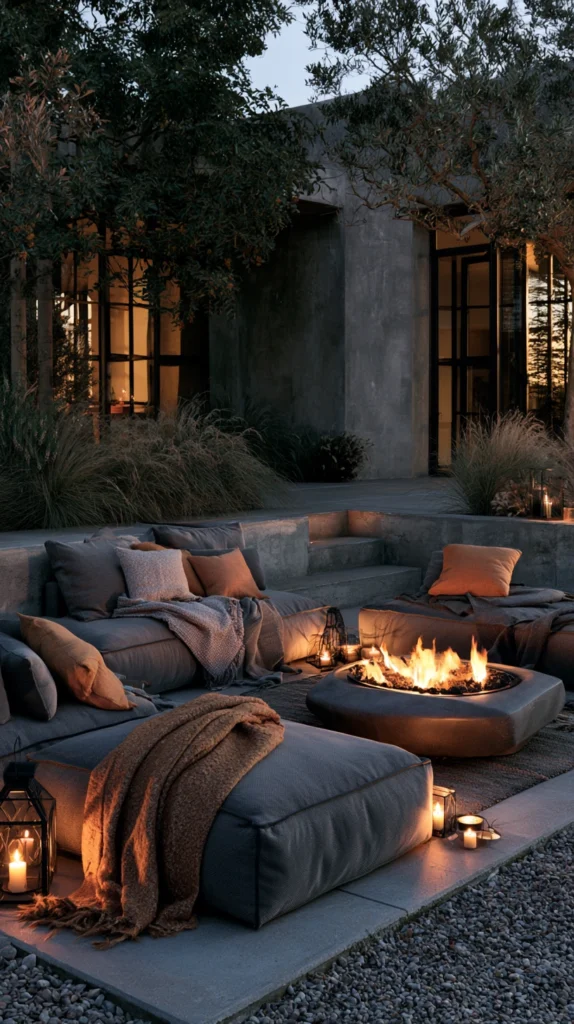
A fire feature — fire pit, fire table, or chiminea — with seating reconfigured around it — the single feature that makes the difference between a garden that is used in autumn and one that is not.
Why fire is the autumn garden’s essential element:
The temperature solution:
- October evenings: 45–55°F in most temperate climates
- Without heat: uncomfortably cold for sitting outside after 7pm
- With fire: comfortable until 10pm or later
- The fire: extends the outdoor evening by three to four hours
The gathering quality:
- Fire: the reason to be outside even when it is cold
- Everyone: drawn to it without being asked
- Conversations: happen at fires that would not happen indoors
- The autumn gathering around fire: one of the pleasures most distinctive to the season
The autumn fire setup:
The fire positioning:
- The fire: the center of the autumn outdoor arrangement
- The summer furniture arrangement may have faced a different direction (toward a view, toward the garden)
- For autumn: rearrange so all seating faces the fire
- The fire: the focal point it was not in summer
The seating:
- Deep and low (keeps people from leaving)
- Every seat: a blanket (available without going inside)
- Closer together than summer seating (the warmth shared is also physical proximity)
- The distance from fire: 3.5–4 feet from the fire edge (close enough for warmth, far enough for comfort)
The autumn additions:
Blankets (one per seat, stored outside):
- A deck box beside the seating
- Blankets retrieved without going inside
- The availability: the critical detail
- Available: used. Stored inside: often not retrieved.
Hot drink station:
- Small table or trolley beside the seating
- Thermos of hot drinks, or a means to heat water (an outdoor kettle beside the fire is a pleasure in itself)
- Self-service, no trips inside required
- The station: the self-contained autumn outdoor experience
The fire types for autumn:
Wood fire pit (most atmospheric):
- The smell of wood smoke in autumn air: specific and irreplaceable
- Associated with the season
- The tending: part of the autumn ritual
- Dry wood from summer: burns best in autumn
Chiminea:
- More compact than a fire pit
- Radiates heat more directionally (toward the front opening)
- Terracotta: beautiful as a garden object even unlit
- Well suited to smaller garden spaces
Cost breakdown:
- Fire pit or chiminea: $80–280
- Blankets (4, stored outside): $70
- Drinks station: $45
- Total: $195–395
My autumn fire evenings: used the fire from September through November. Sat outside with guests until 10pm on an October Friday. Nobody mentioned the cold. The fire managed it.
Autumn Fire Tips
Dry wood preparation:
- Summer: the time to cut and stack wood for autumn fires
- Wood: needs at least 6 months of drying to burn well
- Wet wood: smokes, does not sustain a flame, frustrating
- A simple log store (even just a tarp over stacked logs, elevated on pallets): makes autumn wood ready
The fire lighting ritual:
- The act of lighting the fire: the signal that the evening is beginning
- Not just functional: ceremonial
- A reliable fire-starting method (a firestarter cube plus dry kindling) makes the ritual pleasant rather than frustrating
- The ritual: part of why the fire creates the experience it does
2. The Warm-Toned Container Refresh (The Palette Shift)

Replacing or supplementing summer containers with autumn-coloured planting — the simplest visual signal that the garden has been dressed for the new season.
Why containers are the easiest seasonal update:
The mobility advantage:
- Containers: moved, replaced, and refreshed without any permanent change
- The same pots, different plants: a different garden
- The seasonal refresh: an afternoon’s work
- The garden: immediately reads as “in season” rather than “summer that is still going”
The autumn container palette:
The plants:
Ornamental kale and cabbage:
- Deep purple-red rosettes with frilled edges
- Last through frost (intensify in colour with cold)
- One of the most dramatic single-container plants available in autumn
- Planted in a terracotta pot: the quintessential autumn container
Sedums (Stonecrop, now reclassified as Hylotelephium):
- Flat heads of small flowers, turning copper-rust through autumn
- Long season (June through November)
- Structural and interesting even as they age and dry
- Particularly beautiful in terracotta
Heuchera (coral bells):
- Year-round foliage plant, but the autumn and winter colours are extraordinary
- Varieties: deep bronze-black, copper-orange, wine-red
- Permanent planting in a container — not seasonal, so contributes beyond autumn
- Suited to partial shade
Calluna (heather):
- Flowers in late summer through autumn in pink, white, or mauve
- Compact, low, suits mixed container arrangements
- Works as a “filler” alongside taller structural plants
Ornamental grasses (in containers):
- A grass in a terracotta pot, feathery plumes catching autumn light
- Stipa tenuissima: gold-blonde, catches any breeze
- A single specimen grass in a quality pot: a significant autumn focal point
The container mix:
The thriller-filler-spiller for autumn:
- Thriller: ornamental kale or a tall grass
- Filler: heuchera or heather
- Spiller: a low trailing plant (ivy works year-round, trails over the pot’s edge)
- The formula: applies in autumn as in summer, with seasonal plant substitutions
The pot colour:
Terracotta:
- The most autumn-compatible material
- Warm orange-clay colour: harmonises with the autumn palette perfectly
- Ages and develops character over time
- The pot that looks better in October than in June
Dark glazed ceramic:
- Deep navy, charcoal, or forest green glazed pots
- Against autumn planting: dramatic
- The dark pot makes bronze heuchera and copper sedums glow
Cost breakdown:
- Four seasonal container plants (kale, sedum, heuchera, grass): $30–55
- Terracotta pot (if needed): $25–45
- Compost top-dressing: $8
- Total: $63–108
3. The Seed Head and Dried Grass Display (Nature’s Autumn Decor)

Leaving (or adding) seed heads and dried grasses as intentional structural features — the design approach that treats autumn’s natural transitions as aesthetic assets.
Why this is the most authentic autumn garden approach:
The philosophical shift:
- Summer garden management: deadhead flowers (removes the spent flower to encourage more blooms)
- Autumn garden management: leave the seed heads (they become the display)
- The change in the act: a change in the philosophy
- Letting the garden be what it becomes: the most honest autumn design
What seed heads add:
Texture:
- The papery seed heads of echinacea: a different texture from any fresh flower
- The bobbing heads of sanguisorba: still moving in any breeze
- The structural stars of allium: architectural after the flowers have long gone
- The texture: richest in the garden after the flowers are done
Movement:
- Dried grasses: catch any autumn wind
- The movement: more visible and more dramatic in autumn (the wind is stronger)
- A grass border in an October gale: spectacular
- The same border in summer: understated
Wildlife:
- Seed heads: food for goldfinches, sparrows, and other birds
- The bird on the echinacea seed head: as much a garden feature as the flower was
- Leaving seed heads: inviting wildlife into the autumn garden
- The birds: the autumn garden’s living decoration
The best plants for autumn seed heads:
Echinacea (coneflower):
- The orange-brown cone after petals fall: architectural for months
- Birds strip the seeds through autumn and winter
- The cone: still standing in January, dusted with frost
Rudbeckia:
- Similar to echinacea but smaller
- The dark centres: visible against pale stems
- Mass planting: a field of brown-gold structure through autumn
Allium:
- The spherical seed heads: last all season after June flowering
- Large varieties (Allium giganteum): golf-ball size seed spheres on tall stems
- Bronze and silver in autumn light
Stipa, Calamagrostis, Miscanthus (grasses):
- The seed plumes: peak in autumn
- Catch low sunlight: the grass appears to glow
- Do not cut until February — they stand through winter providing structure
Phlomis:
- Whorled seed heads on upright stems
- Architectural and distinctly autumnal
- The structure: remains interesting in frost and snow
The display approach:
Leave rather than remove:
- The effort: almost zero (the removal is what costs effort)
- The reward: immediate structure without additional planting
- The principle: the autumn garden designed by not doing
Cost breakdown:
- No cost if working with existing planting
- Add two or three plants specifically for autumn seed head quality: $25–45
- Total: $0–45
4. The Pumpkin and Gourd Arrangement (The Autumn Icon)
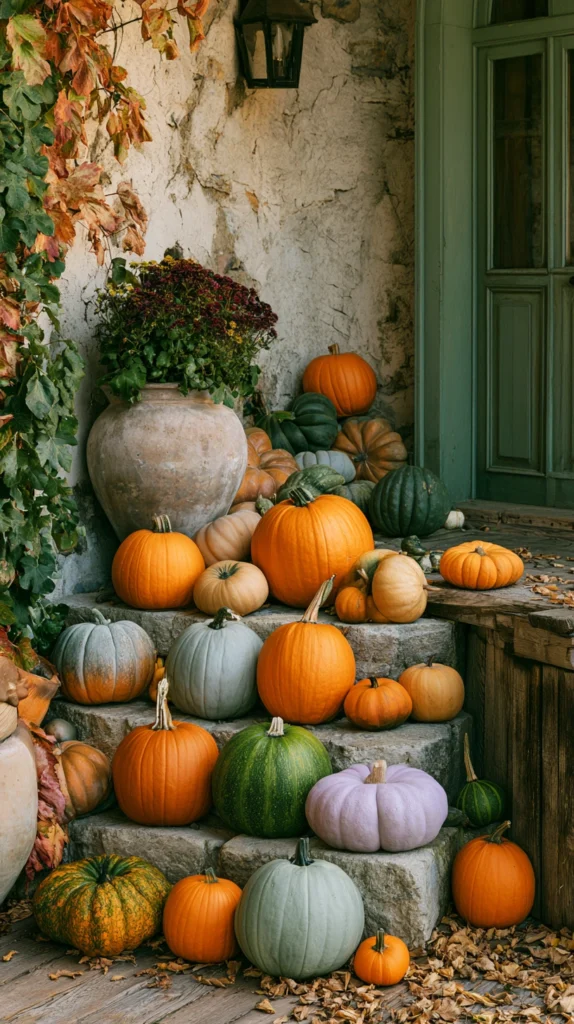
Curated groupings of pumpkins, gourds, and squash — the seasonal object arrangement that has become ubiquitous for good reason, and is worth doing correctly.
Why pumpkins read as autumn design (not just decoration):
The specific quality:
- Pumpkins: grown and harvested specifically at this moment in the year
- The object is the season
- No equivalent exists in summer — pumpkins are temporally specific in a way most decor is not
- Using them: a connection to the agricultural calendar
The design version versus the cliché:
What makes it design:
- Varied sizes (not all the same, never just three identical orange spheres)
- Varied colours (the palette beyond orange: cream, white, dusty green, dark green, striped)
- Odd numbers (three, five, seven — not even numbers)
- Natural grouping (close together, some touching, some slightly apart — not lined up)
What makes it cliché:
- Three identical orange pumpkins, evenly spaced
- A single pumpkin on a step
- Printed “welcome” signs alongside
- The designed version: avoids all of these
The palette of autumn pumpkins and gourds:
Cream and white:
- ‘Polar Bear’, ‘Cotton Candy’, ‘Baby Boo’ (small white)
- Works against dark fences and dark surfaces
- The white pumpkin: surprisingly dramatic
Dusty green:
- ‘Crown Prince’, ‘Hubbard’
- A sophisticated alternative to orange
- Suits a more muted, contemporary garden aesthetic
Deep orange-red:
- ‘Red Kuri’, ‘Cinderella’ (also known as ‘Rouge Vif d’Etampes’)
- A deeper, richer red-orange than standard carving pumpkins
- The most photographed pumpkin variety
Striped:
- ‘Candy Roaster’, various ornamental gourds
- The most varied and individual-looking option
- Each one slightly different: genuinely unique grouping
The arrangement locations:
Entrance steps (most common):
- The arrival experience
- Stacked grouping on the steps beside the door
- Mix of sizes flowing from large at the base to small at the top
Around the fire circle:
- Pumpkins placed around the base of the fire seating area
- As organic as objects around a fire should be
- Some at ground level, some on a log or raised surface for height variation
In the garden border:
- Pumpkins placed among the autumn planting
- Resting on the mulch between plants
- As if they belong to the garden rather than having been placed in it
- The most naturalistic approach
Cost breakdown:
- Five to seven varied pumpkins and gourds (farmers market): $20–45
- Total: $20–45
The longevity: whole pumpkins (uncarved) last 2–3 months outdoors. Through October and November. Replace for Christmas with evergreen.
5. The Outdoor Candle and Lantern Multiplication (Warm Light for Dark Evenings)
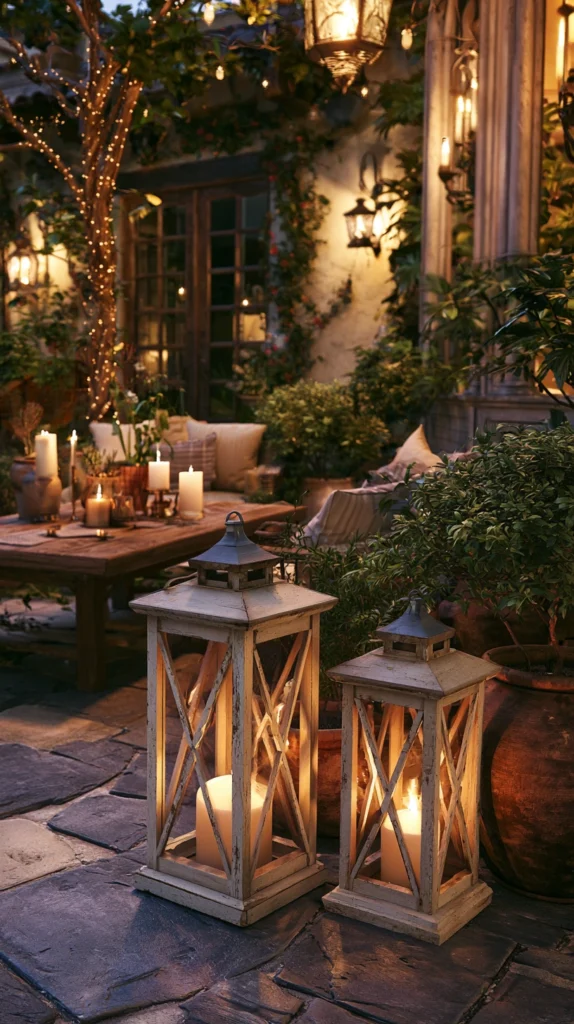
Significantly more candles and lanterns than the summer arrangement used — the adaptation to autumn’s early darkness.
Why the lighting must increase in autumn:
The dark arrives earlier:
- Summer: dark at 9pm
- October: dark at 6pm (and earlier through autumn)
- Three extra hours of darkness per evening in the outdoor space
- Lighting designed for 9pm summer darkness: completely inadequate for 6pm October darkness
The atmosphere question:
- Without warm lighting: autumn outdoor space in the dark = cold and uninviting
- With warm lighting: autumn outdoor space in the dark = cosy and compelling
- The difference: entirely determined by the presence and quality of the light
What to add for autumn:
More lanterns at ground level:
- The summer arrangement: two or three lanterns at the seating
- The autumn arrangement: six to ten lanterns at various ground-level positions
- More pools of warm light: more areas of the space visible and warm-feeling
- Ground-level lanterns specifically: warm at the level of the seated body (not overhead)
The line of lanterns along the path:
- From the house to the fire or seating area
- A guided warm path through the dark garden
- Eight small lanterns along a 15-foot path: transforms arrival into something special
Glass hurricane candles:
- The wind in autumn: a problem for open candles
- Hurricane glasses: protect the flame while still allowing warm light
- Three to five on the table, at varying heights
- Real flame: not just warm — alive
The colour temperature rule (unchanged from any season):
- 2700K or below on every source
- Warm amber, not white
- The cold white light: destroys the autumn cosy atmosphere more immediately than almost anything else
Flameless LED with timers:
- Set to come on at dusk
- Come on earlier in autumn (dusk earlier)
- The garden: always lit when the evening needs it, without manual management
- Timers set for the new dusk time: a five-minute adjustment each time the clocks change
Cost breakdown:
- Five additional lanterns (matte black or aged metal): $55
- Hurricane candle holders (3): $25
- Flameless candles for lanterns (5): $30
- Total: $110
The October lighting: the same space that was comfortable and attractive in summer sunlight until 9pm. In October, dark by 6pm, the lanterns made the space available again. The fire and the lights together: the garden stayed open.
6. The Autumn Wreath and Entrance Decor (The Welcome Signal)
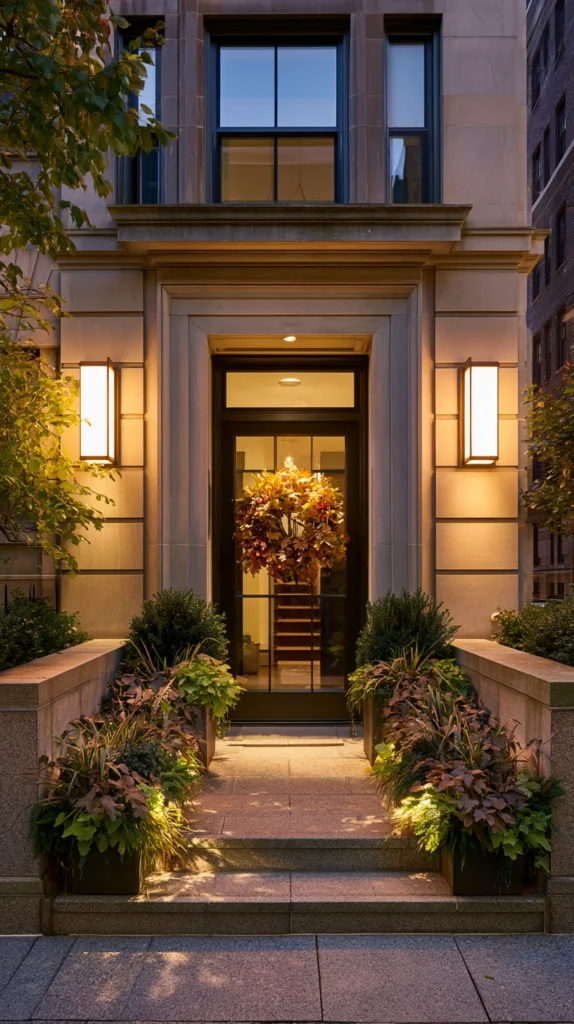
A wreath or entrance arrangement made from autumn botanical materials — the signal that this garden has been dressed for the season.
Why the entrance matters for the autumn garden:
The expectation set:
- A visitor approaching: the entrance seen first
- Autumn wreath on the gate or door: signals that what follows is seasonal and intentional
- No entrance treatment: the garden may still be beautiful, but it reads as summer that has not been cleared yet
- The entrance treatment: declares the season
The materials:
For a wreath:
- A grapevine base: the most natural and long-lasting
- Dried cotton stems
- Dried hydrangea heads (papery, cream through dusty pink)
- Preserved eucalyptus
- Sprigs of rosehip (the red berries of the rose after flowering)
- Dried seed heads (from the garden)
- Physalis (Chinese lanterns): papery orange-red cases
The palette:
- Cream, warm rust, copper, deep red, olive green
- The colour palette: matched to the season
- No bright colours: the autumn wreath is warm and muted
The making:
A wreath from the garden:
- Clippings from the garden’s own plants: the most authentic option
- Seed heads, dried grasses, sprigs of evergreen, dried flowers
- Wound onto a circular wire frame
- A wreath that is entirely the garden’s own production
Or: the foraged version:
- Autumn walks produce: rosehips, ivy, dried grasses, seedheads
- The wreath: a record of where the autumn has been spent
- Free and specific to the season and location
The entrance arrangement beyond the wreath:
A pot of autumn planting either side of the gate or door:
- Exactly as in Idea #2, but positioned at the entrance
- The flanking pots: the signal before the garden itself is reached
Pumpkins at the step:
- A grouping (as in Idea #4) at the base of the entrance steps
- The entrance zone: pots, pumpkins, wreath
- The signal: fully given before anyone enters the garden
Cost breakdown:
- Grapevine wreath base: $8
- Dried botanical materials (some from the garden, some purchased): $15–25
- Total: $23–33
7. The Evergreen and Structural Planting Edit (The Autumn Framework)
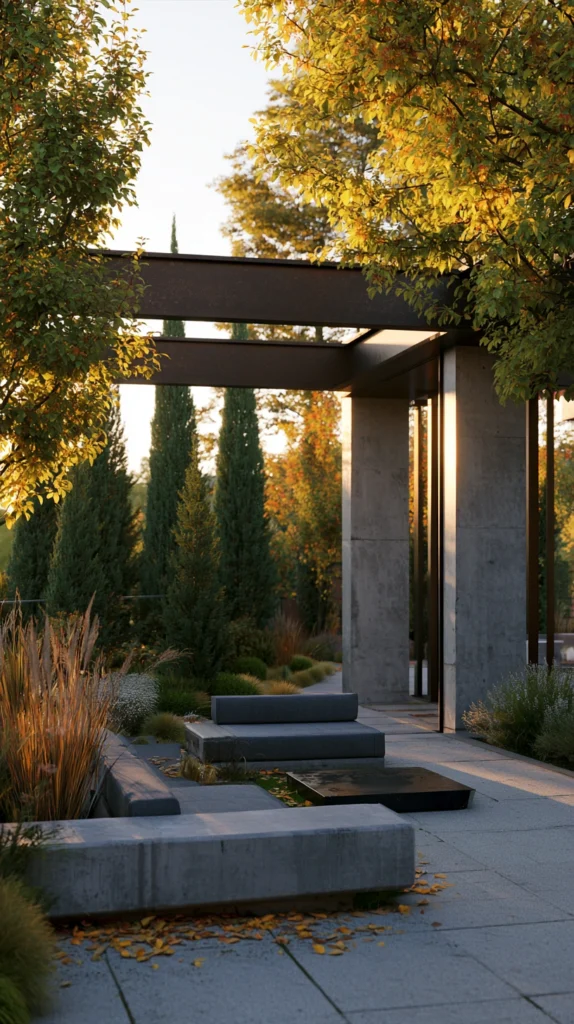
Assessing and adding evergreen structure before winter — the strategic investment that makes the garden look intentional through autumn and winter rather than empty and waiting for spring.
Why autumn is the time for this:
The revelation:
- As autumn progresses and deciduous plants die back: the skeleton of the garden is revealed
- If that skeleton is well-designed: the garden looks structured and intentional
- If the skeleton is absent: the garden looks bare and waiting
- The assessment: clearest in October when the bones are becoming visible
The structural plants:
Box (Buxus) or box alternatives:
- Clipped ball or topiary shape
- Year-round structure
- In autumn: the only remaining green rounded form when everything else has faded
- The most useful single structural plant for this purpose
Yew:
- The deepest, richest green
- Clips into almost any form
- The structural backbone of the garden
- Also: birds eat the red berries through winter (an added October-November feature)
Phormium (New Zealand Flax):
- Architectural fan of sword-like leaves
- Year-round presence
- Works in pots or ground
- Bronze-purple varieties: particularly beautiful in autumn light
Hellebore (Lenten rose):
- The bridge plant between autumn and late winter
- Flowers from January–April (extraordinary in a garden otherwise bare)
- The foliage: evergreen, deep green, present through autumn
- Plant in autumn: the first flowering arrives by January
Sarcococca (sweet box):
- Winter-flowering shrub (January–February)
- Intensely fragrant (fills the garden on a cold day)
- Evergreen, compact
- Plant in autumn: the reward is the extraordinary winter scent
The edit:
Remove what is no longer contributing:
- Dead annuals: out
- Leggy, past-their-best summer plants: out
- The bare soil: mulched immediately after clearing
- What remains: the structure that was always there, now visible
The mulch:
A fresh application of dark bark mulch:
- After clearing summer planting
- The beds: tidy and dark
- Against dark mulch: any remaining plants more vivid
- The mulch: the autumn equivalent of tidying a room before guests arrive
Cost breakdown:
- Dark bark mulch (2 cubic yards): $80
- Two box balls in terracotta (structural anchors): $55
- One hellebore: $16
- Total: $151
8. The Copper and Amber Cushion Update (The Palette Refresh)

Replacing summer cushions with autumn-toned equivalents — the simplest indoor-to-outdoor design shift that changes the reading of an entire seating area.
Why cushion colour matters seasonally:
The palette signal:
- Pale blue and white cushions in October: summer that has not been packed away
- Copper, rust, and amber cushions in October: the garden dressed for the season
- The same furniture: entirely different seasonal reading from the cushion choice
- The smallest change: the largest seasonal shift
The autumn cushion palette:
Copper and burnt orange:
- The most distinctly autumnal colour
- Against dark grey or charcoal furniture: extraordinary
- Against natural wood: warm and harmonious
- The single most impactful colour choice for autumn outdoor seating
Deep rust:
- Slightly darker and more muted than orange
- Pairs with everything in the autumn garden
- Complements the copper tones of ornamental grasses
Warm mustard:
- The yellow-gold of autumn leaves
- Works as an accent alongside copper and rust
- A warmer, richer yellow than the clear yellows of summer planting
Plum and deep burgundy:
- The darkest autumn colour
- Works as the “dark” in a cushion arrangement
- Pairs with the lighter copper and mustard tones
- Particularly beautiful in late afternoon autumn light
Olive and deep sage:
- The green of the autumn garden
- Neither summer-fresh green nor winter-dark green
- The dusty, complex green of this specific season
The arrangement:
The layered cushion approach:
- The solid copper: the primary cushion (two or four on the sofa)
- The mustard pattern: an accent (one or two)
- The plum: a deeper accent (one or two)
- The three tones together: the autumn seating composition
Storage of summer cushions:
- Summer cushions stored in a deck box or vacuum storage bags
- Not discarded: retrieved next May
- The seasonal rotation: the investment that serves both summer and autumn
Cost breakdown:
- Four outdoor cushions (copper/rust/amber tones): $80
- Two accent cushions (mustard or plum): $35
- Storage bags for summer cushions: $15
- Total: $130
9. The Apple and Harvest Display (The Edible Autumn)
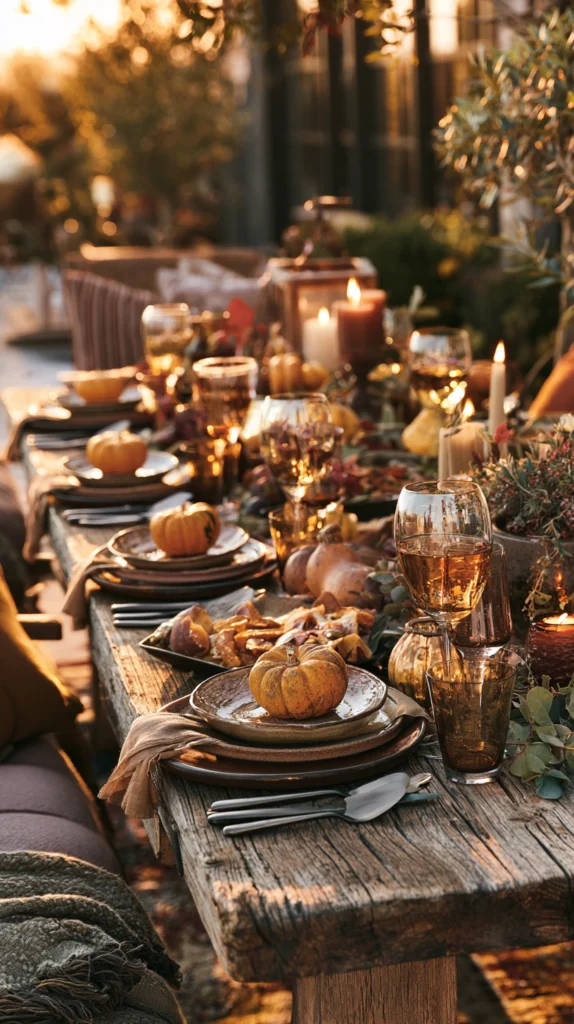
Harvested or purchased apples, pears, and autumn produce as a garden display — the design that uses the season’s actual food as its decoration.
Why harvest produce belongs in the autumn garden:
The authenticity:
- Pumpkins (Idea #4) and harvest produce: objects that could only be here now
- Not objects that reference autumn: objects that are autumn
- The difference: between a seasonal affectation and a genuine seasonal connection
The visual quality:
Apples:
- Red and green together: particularly beautiful (the contrast)
- Piled in a basket or wooden trug: abundant and warm
- On the outdoor table: the centerpiece that also feeds
Pears:
- A more elegant shape than apples
- Yellow-gold in autumn: perfectly tonal
- A bowlful: simple and beautiful
Quince:
- If the garden or a neighbour has a quince tree: the yellow-gold fruit is extraordinary
- Fragrant when ripe (the scent fills a room or outdoor space)
- Not commonly eaten raw: but as a display object, and eventually for quince jelly, perfect
The display:
A wooden crate or trug at the base of the seating:
- A layer of apples or mixed seasonal produce
- Not neat: tumbled
- The abundant, generous quality of a harvest
- Positioned so it is noticed from the main seating
A bowl on the outdoor table:
- Mixed small pumpkins, apples, and pears
- The table centerpiece that replaces summer’s candles (alongside them, not replacing them entirely)
- Seasonal and edible simultaneously
From the garden itself:
If the garden has a fruit tree:
- Windfalls gathered and displayed before they are used
- The apples from this tree, displayed here: the most authentic version of this idea
- The garden: feeding itself and decorating itself simultaneously
Cost breakdown:
- A bag of mixed apples (farmers market): $8
- Mixed seasonal produce (squash, pears): $12
- Wooden trug or crate: $15 (if not already owned)
- Total: $35
10. The Outdoor Rug and Textile Refresh (Warmth Underfoot and Around)

Changing the outdoor rug and adding outdoor-rated throws for the autumn seating — the tactile comfort update that changes the physical experience of being in the garden.
Why textiles matter more in autumn than summer:
The tactile experience of cold:
- Summer: bare feet on a cool outdoor rug is pleasant
- October: bare feet on anything feels cold
- The rug in autumn: communicates warmth before the body registers temperature
- The throw: the first thing reached for, the reason people stay
The autumn outdoor rug:
Warmer tones than summer:
- Summer rug might be a cool grey, a pale green, or a simple stripe
- Autumn rug: the same principle as the cushion update (Idea #8)
- Warm rust, deep terracotta, or a warm-toned pattern
- The entire seating area: shifted into the autumn palette with one object
The pile:
- A flat-weave rug: fine in summer
- Autumn: a slightly more textural or thicker pile reads as warmer (visually as well as actually)
- Not a luxury carpet: but the visual weight of a denser rug
The outdoor throw:
One per seat, always outside:
- The principle from Idea #1 extended throughout the seating
- Not one shared throw: one per person
- Each throw: the person’s own, available immediately
- The gesture: everyone is equally warm, nobody negotiates for the blanket
The material:
- Heavy wool or wool-look: warmest and most visually substantial
- Outdoor-rated: resists moisture better than pure interior throws
- Colour: matches the cushion palette (copper, rust, deep green)
- Quality: better throws are used more, justify their cost through regular use
The storage:
Deck box (already suggested in Idea #1):
- Throws stored in the deck box between uses
- Brought out at the start of each outdoor session
- Put away at the end
- The 30-second ritual: worth establishing as a habit
Cost breakdown:
- Autumn-toned outdoor rug (medium): $75
- Two quality outdoor throws: $65
- Total: $140
11. The Autumn Table Setting (Al Fresco Dining in the New Season)
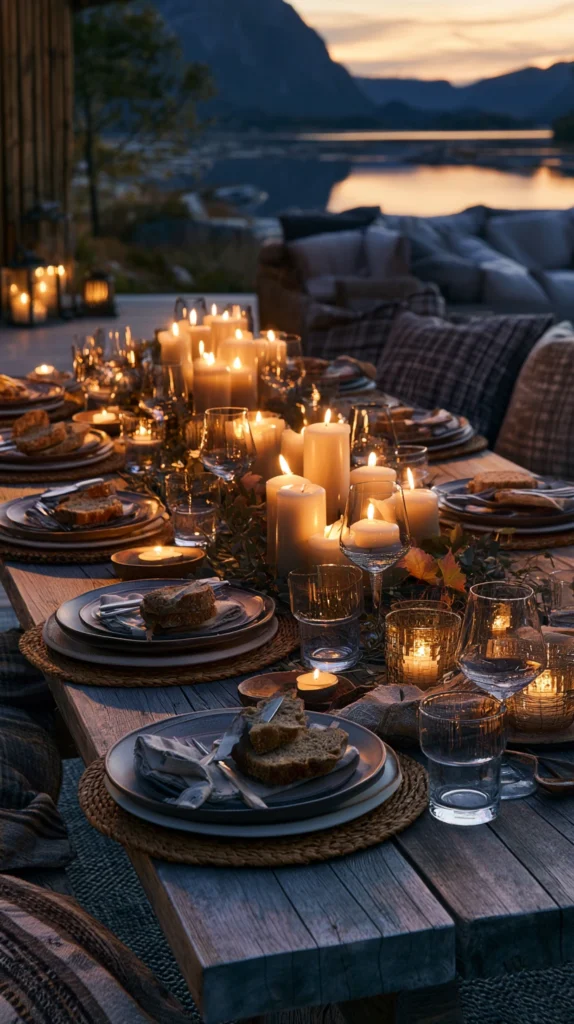
A dressed outdoor table with autumn materials — making outdoor dining as possible and beautiful in October as in August.
Why outdoor dining in autumn is underrated:
The conditions:
- A still October evening: often more comfortable than a gusty August one
- The light: as described throughout this article — golden and warm
- The fire nearby: keeps warmth
- The meal: the same, but experienced differently by the season around it
The table setting:
The cloth:
- An outdoor-rated cloth in an earthy linen or canvas tone
- Or: no cloth, the natural wood or stone table as its own surface
- The autumnal table: not white linen (summer) but warm, textured
The centerpiece:
The natural material centerpiece:
- A cluster of candles at varied heights (hurricane glasses for wind protection)
- Surrounded by: dried seed heads, a few small pumpkins, sprigs of rosehip or rosemary, pine cones
- The centerpiece: gathered from the autumn garden and the local landscape
- Cost: approximately zero if gathered rather than purchased
Leaves as plates:
- Large flat leaves (maple, oak, magnolia) under each plate
- A nod to the season that costs nothing
- Replaced as they curl or wilt (frequent opportunities for refreshing the table)
The warming dishes:
What is served matters for the autumn outdoor meal:
- Hot food: not a salad or cold appetizers
- Soup in handled mugs: people hold their warmth
- Bread still warm from the oven: brings the heat to the table
- Hot drinks (mulled wine, cider, tea) as a matter of course
- The meal: designed for warmth as well as flavour
The timing:
Earlier than summer:
- Summer outdoor dinner: 7pm start is comfortable
- October outdoor dinner: 6pm or earlier (before darkness arrives)
- Or: lean into the darkness — start at dusk, light the candles and fire before guests arrive, the table already golden by the time anyone sits
- Both approaches work: the choice is the design
Cost breakdown:
- Hurricane candle glasses (additional, for wind protection): $20
- Dried botanical centerpiece materials (gathered): $0–10
- Total: $20–30 — the most affordable significant-impact idea on this list
12. The Elevated Bird Feeding Station (The Autumn Wildlife Garden)
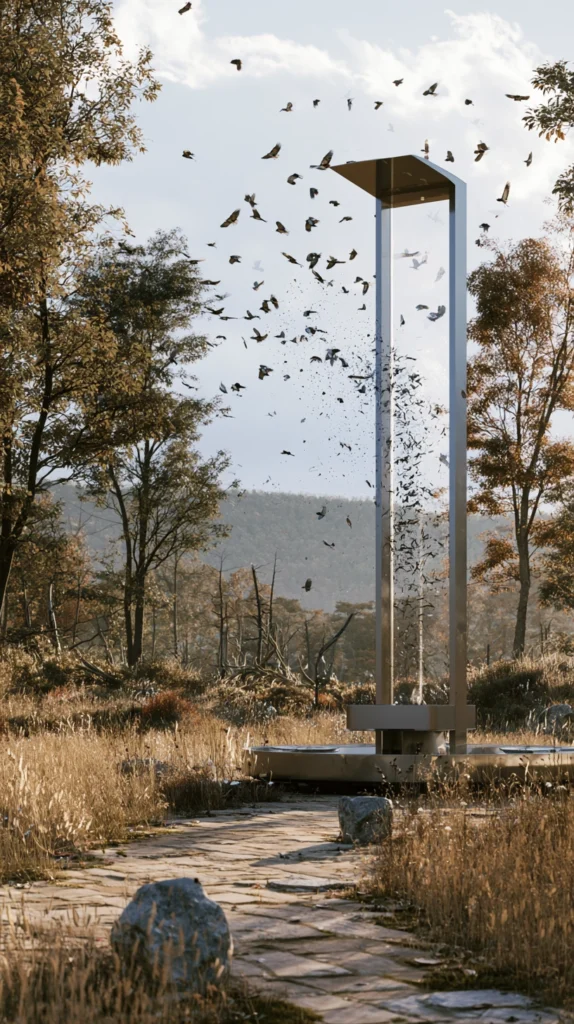
A dedicated bird feeding station with feeders, seed, and suet — the autumn feature that brings movement and life to a garden that is otherwise quietening down.
Why birds in the autumn garden are a design element:
The aliveness:
- As the garden quietens: flowers fade, insects fewer, the general activity level drops
- Birds: increase their activity in autumn (driven by the shorter days, the need to accumulate food stores, the movement of migratory species)
- A well-stocked feeding station: draws more bird activity in October than any other month
- The birds: the autumn garden’s living, moving feature
The visual quality:
A goldfinch on a seed head:
- The image of the autumn garden, captured in a phrase
- Goldfinches specifically: attracted by seed heads (echinacea, rudbeckia, teasel)
- The combination of Idea #3 (leaving seed heads) and this feeding station: the complete bird invitation
The station:
A freestanding pole with multiple feeders:
- Positioned where visible from the main seating area (or from inside the house)
- Multiple feeder types: attracts different bird species simultaneously
- The variety: a more interesting display than a single feeder
The feeders:
Sunflower heart feeder:
- No husks: no mess beneath the feeder
- The most universally popular seed type for garden birds
- Attracts: blue tits, great tits, sparrows, finches, nuthatches
Suet ball or fat block holder:
- Particularly important in autumn (birds need the fat calories as temperatures drop)
- Attracts: woodpeckers, starlings, and the same small birds as seed feeders
Niger seed feeder (long tube with small ports):
- Specifically for goldfinches and siskins
- The small ports: accessible only to these smaller-beaked birds
- The result: a dedicated goldfinch feeder
The positioning:
Visible from seating:
- The whole point of this as a design element: the birds are a feature
- If not visible: a kindness to birds but not a garden feature
- The station positioned so the main seating area has a clear sightline: the birds become part of the garden experience
Near enough for detail, far enough for safety:
- Birds: need to feel safe (not too close to human activity)
- 10–15 feet from regular seating: usually sufficient
- Cats: the primary threat (position feeders so cats cannot easily ambush birds)
Cost breakdown:
- Freestanding feeding station with pole: $35–65
- Initial feeders (3 types): $25
- Seed mix and suet (per month): $15–25
- Total: $75–115 initial, plus monthly restocking
13. The Autumn Sound Element (Water in the Cool Season)

A water feature maintained through autumn — the sound design element that fills the quieter garden with life when plant noise (bees, grasshoppers, the rustling of dense summer foliage) has subsided.
Why sound matters more in autumn:
The quieter garden:
- Summer: full of sound (insects, birdsong at peak, wind through dense leafy growth)
- Autumn: quieter (insects mostly gone, leaves thinning and then falling, the garden more still)
- The quieter garden: the silence is noticeable
- A water feature: fills the acoustic space that summer’s life vacated
The specific autumn quality of water sound:
Rain amplified:
- Autumn: more rain than summer
- Rain falling into a garden pond or bowl: a richer sound than rain on a dry garden
- A water feature: catches rain audibly in a way that amplifies the season’s characteristic sound
Frost and water:
- As temperatures drop: the water feature becomes something to watch as well as hear
- Ice forming at the edges on cold mornings
- The interaction between the pump’s movement and the forming ice: visually interesting
The autumn water feature maintenance:
Running through autumn:
- Most water features: can run through autumn without issue
- The pump: protected from freezing by being removed before sustained hard frost (typically December or January in most temperate climates)
- Autumn itself: generally mild enough for the pump to continue
The leaves:
- Autumn leaves fall into ponds and water features
- A net over a pond during leaf fall: reduces work significantly
- Or: accept the leaves as organic matter, net them out in spring
- A small water feature (bowl, urn): leaves removed by hand every few days
The still-water option:
If the pump is already winterized:
- A large stone or glazed ceramic bowl, filled with water
- Floating leaves on still water: a different beauty than running water
- Floating a few floating LED lights: the still-water version of the floating candle idea (Idea #5 in the lighting article)
- Cost: zero if the bowl is already there
Cost breakdown:
- Existing water feature: no additional cost to continue running it through autumn
- Adding a new small fountain (urn or bowl type): $80–150
- Total: $0–150
14. The Lantern-Lit Autumn Path (The Seasonal Journey)
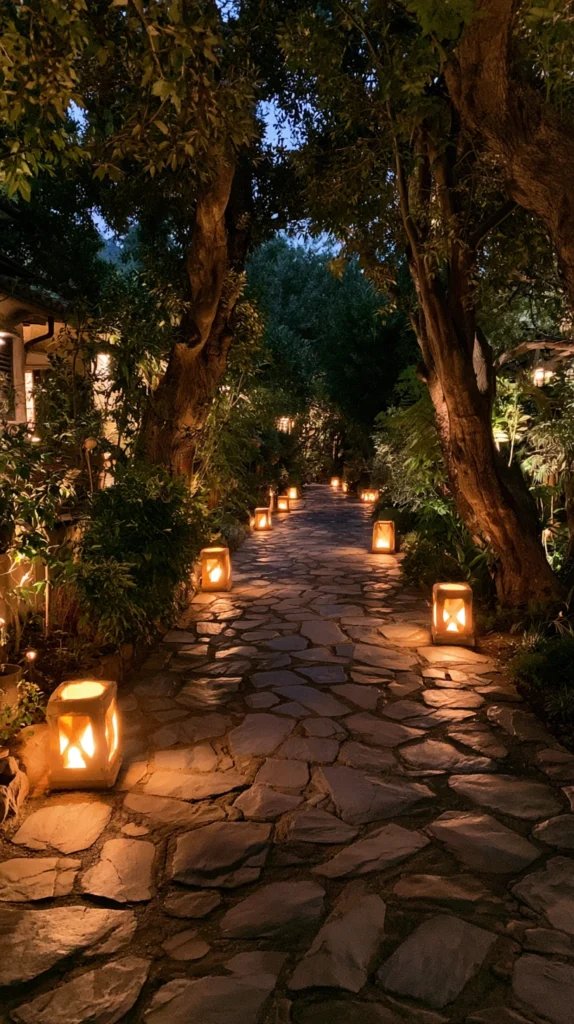
A path through the garden specifically lit and decorated for the autumn season — the feature that makes walking through the garden in October an experience as distinct from summer as possible.
Why a path through the autumn garden is a specific design opportunity:
The changed garden:
- The same garden: different in October
- The light, the colours, the mood: entirely changed
- A path that was walked quickly in summer (to get to the seating): worth walking slowly in autumn
- The design: slowing the walk, making the autumn garden worth traversing
The lighting:
Lanterns along the path (both sides):
- Matching matte-black lanterns
- Spaced 3–4 feet apart
- Flameless LED candles with timers inside each
- The path: automatically lit at dusk without manual management
The warm corridor:
- Walking between rows of warm amber lanterns in the dark
- The path through the garden: transformed into a destination rather than a route
- The arrival at the fire or seating area: preceded by the walk through the lit path
- The journey: part of the autumn garden experience
The botanical additions along the path:
Autumn containers at intervals:
- A terracotta pot with ornamental kale or a grass: every few feet
- Between the lanterns: the autumn planting
- The path: light and plant alternating
Leaves on the path:
- In the Japanese garden tradition: fallen leaves on a path are swept — but one pass per day, not continuously
- The leaves gathered at the edge of the path: as a seasonal feature, not as debris
- Or: a brief period each morning of allowing fallen leaves to collect on the path before clearing
- The leaves: the season’s contribution to the path’s appearance
Pumpkins at the path entrance:
- At the point where the path begins (leaving the house, entering the garden)
- A grouping of three or five pumpkins: the gate between the domestic and the autumn garden
- As in Idea #4: the pumpkins as an entrance marker
The end of the path:
The destination matters:
- Every good path: leads somewhere
- The autumn path: leads to the fire (Idea #1) or the seating area
- The destination lit and warm before the walk begins
- The approach through the lantern-lit path: the anticipation of what is at the end
Cost breakdown:
- Eight matching lanterns (if not already owned): $100
- Flameless candles with timers (8): $55
- Seasonal path containers (2–3): $35
- Total: $190
Or: if the lanterns are already owned from previous setups: the path costs only the containers, since the lanterns are already part of the garden’s existing collection. The autumn path: the lanterns rearranged from their summer positions into a dedicated path formation.
The Autumn Garden as a Season in Its Own Right
The sequence of ideas, built together:
Foundation (the warmth that makes everything else possible):
- Idea #1 (fire setup): the season’s engine
- Idea #5 (candle and lantern multiplication): the evening’s light
- Idea #10 (textiles and rug): the physical warmth
Planting and nature (the garden dressed for the season):
- Idea #2 (container refresh): the plants changed
- Idea #3 (seed heads and grasses): the existing planting valued
- Idea #7 (structural edit): the bones of the garden prepared
- Idea #12 (bird feeding): the wildlife invited
Decor and display (the seasonal signals):
- Idea #4 (pumpkins): the iconic autumn object
- Idea #6 (wreath and entrance): the arrival experience
- Idea #8 (cushion update): the seating palette
- Idea #9 (harvest display): the seasonal food as decoration
The experience (the reason to be outside):
- Idea #11 (autumn table): the meal outdoors
- Idea #13 (water sound): the acoustic autumn garden
- Idea #14 (lantern path): the journey through the season
Together: a garden that is not managing a closing-down, but actively celebrating the season it is in.
Getting Started This Weekend
The three-idea autumn start under $100:
Idea #2 (container refresh): $63–108
- Four seasonal plants, in existing or one new terracotta pot
- The planting: done in an afternoon
Idea #5 (lantern multiplication): $55
- Three additional lanterns with flameless candles, deployed along the path from house to seating
- Timers set for the new earlier dusk
Idea #8 (cushion update): $80 (if replacing rather than adding)
- Or: simply bring out the cushions in warmer tones that were already owned
Total: under $100 for an afternoon of work.
The garden after this afternoon: reads as autumn. Not as a summer garden in decline — as a garden that has dressed for the new season.
The light does the rest. The low October sun, arriving at the angle it only arrives at now, landing on copper ornamental grasses and dark terracotta and the warm glow of a lantern lit by a timer nobody had to remember to set.
The season is already there. The garden just needed to be dressed for it.