12 Vibrant Shade Garden Ideas
A shaded garden is not a problem — it is a specific set of conditions that a specific and genuinely beautiful range of plants evolved precisely to thrive in. The mistake most people make with shade is trying to fight it: planting sun-lovers that struggle, cutting back the trees that create it, or giving up on the area entirely and covering it in bark. Work with the shade rather than against it and the result is often the most lush, the most richly textured, and the most visually interesting part of the garden.
The twelve ideas below show every way of making a shaded garden genuinely vibrant — through bold foliage colour, surprising flower, layered texture, and the particular quality of light that dappled shade produces on a warm summer day. Each includes what it costs and a practical growing tip to help you get the most from the conditions you already have.
1. A Bold Hosta Collection
Budget: $60 – $250
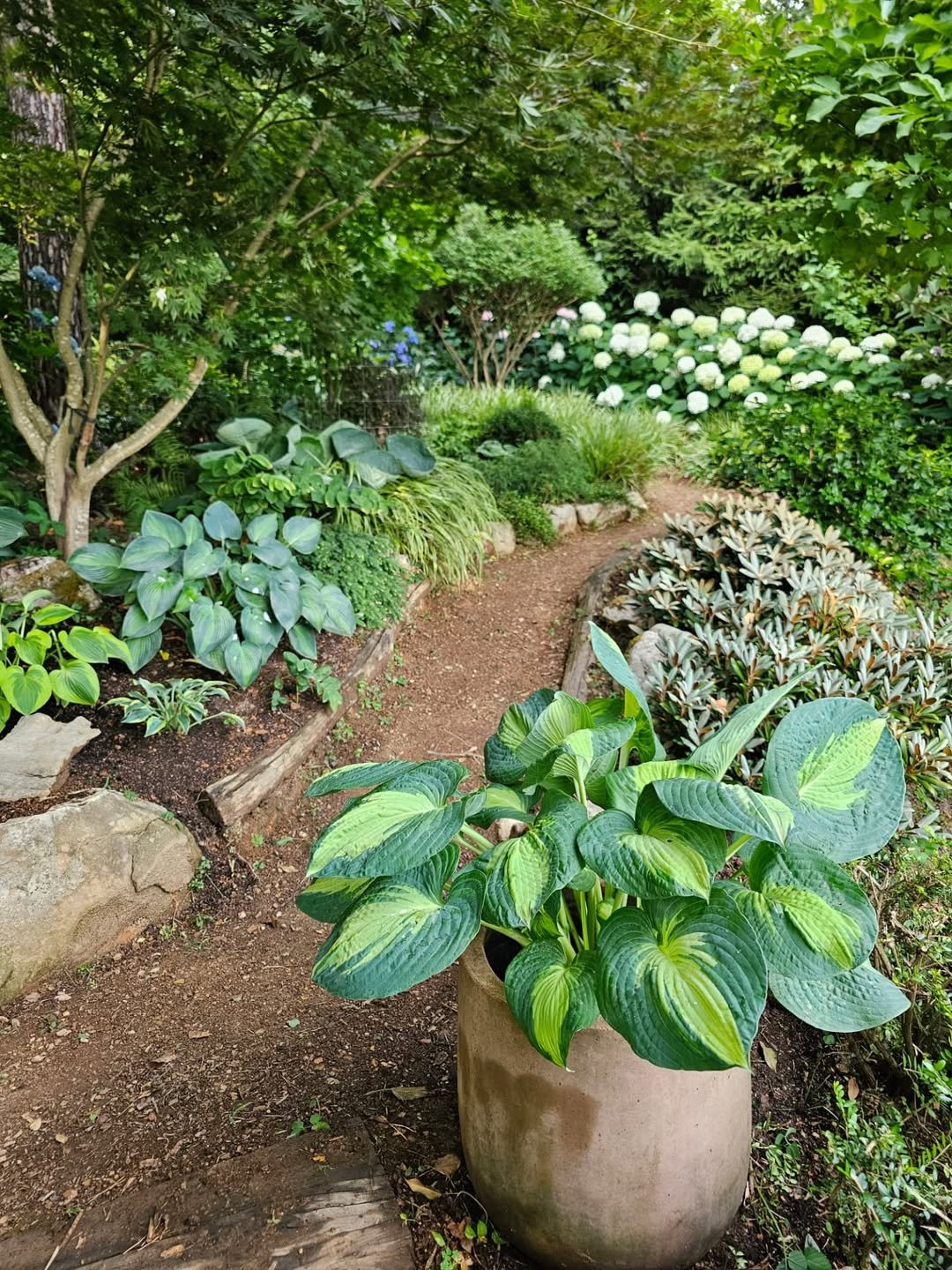
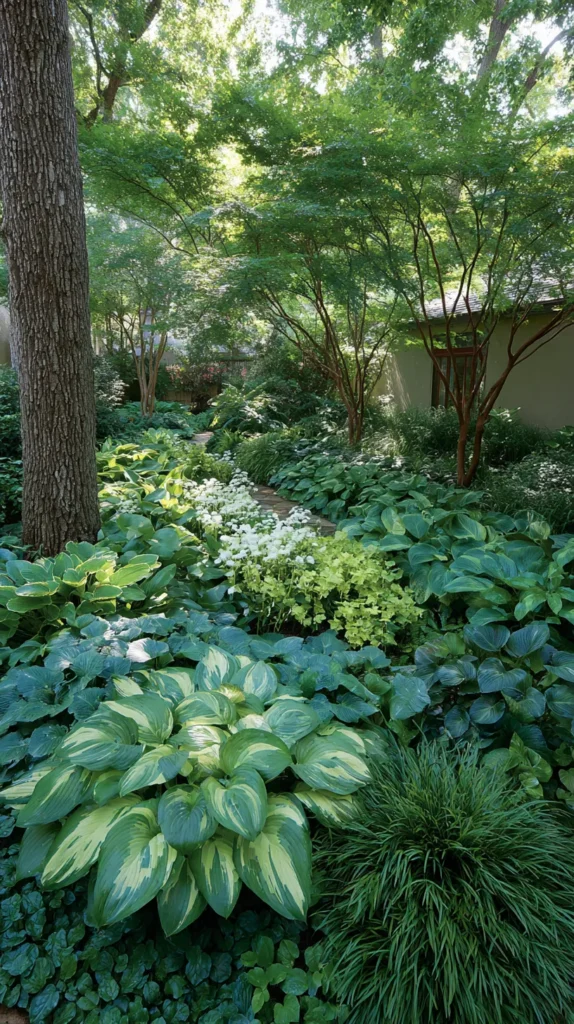
Hostas are the undisputed kings of the shade garden and they are at their most spectacular when planted in a deliberate collection — large-leafed varieties beside small, deep blue-green beside chartreuse, heavily textured beside smooth and glossy. The variation between hosta varieties is extraordinary and a collection of six to eight different cultivars creates a planting as visually rich as any flowering border, entirely through foliage alone.
A range of hosta varieties costs $10–$40 each depending on size and rarity. Standards such as Hosta Sum and Substance (giant gold), Hosta Halcyon (blue-grey), and Hosta June (gold with blue margins) together provide the size, colour, and texture contrast that makes a hosta collection visually satisfying from any viewpoint. Plant in groups of three where space allows rather than as individual specimens — grouped planting creates bolder impact from the first season.
Growing tip: Apply a ring of sharp horticultural grit around each hosta clump in spring. The abrasive surface significantly deters slugs from crossing to reach the foliage — one of the most reliable and most cost-effective slug deterrent methods available, costing $5–$10 per large bag and lasting through the entire growing season without needing replacement after rain the way pellets and other treatments do.
2. A Fern and Foliage Woodland Floor
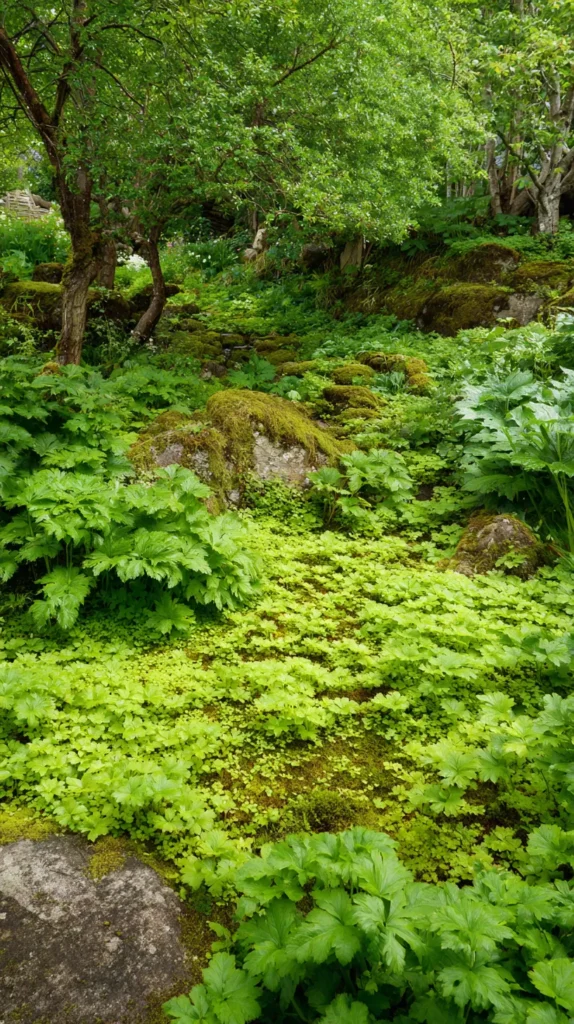
Budget: $50 – $200
A ground layer of mixed hardy ferns — hart’s tongue fern, soft shield fern, male fern, and lady fern — planted at varying densities creates one of the most naturally beautiful garden carpets available and requires almost no maintenance once established. The different textures and greens of the fern fronds together create the layered, abundant quality of a natural woodland floor in a way that no single species can achieve alone.
Hardy fern plants cost $6–$15 each. Plant at 30–45 cm spacing for a generous planting that closes canopy within two seasons. Mulch annually with leaf mould ($15–$30 per bag) — the most appropriate mulch for a fern planting, which mimics the natural accumulation of decomposed leaf material on a woodland floor and feeds the soil while maintaining the open, moisture-retentive structure that ferns depend on for sustained vigorous growth.
Growing tip: Mix evergreen and deciduous fern species within the same planting. Evergreen species — hart’s tongue, soft shield fern, and Dryopteris affinis — maintain ground cover and visual interest through winter while deciduous species die back. The combination ensures the woodland floor planting looks inhabited rather than bare through the coldest months of the year.
3. Astilbe for Midsummer Colour
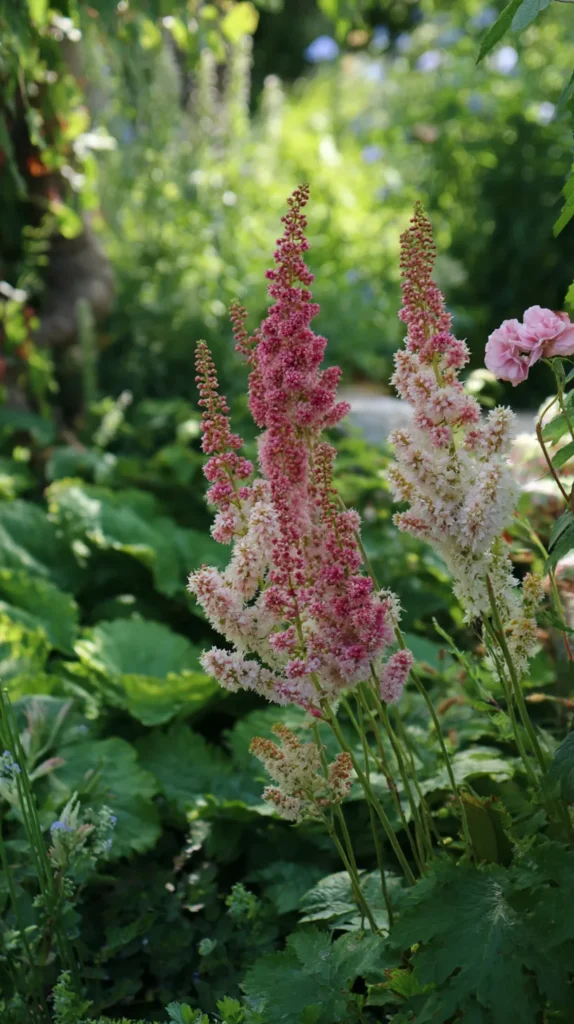
Budget: $60 – $220
Astilbe produces some of the most vibrantly coloured flowers available for a shaded position — plumes of red, cerise, salmon, lilac, and white rising above attractive ferny foliage from June through to August. No other reliably shade-tolerant perennial delivers equivalent intensity of flower colour through the midsummer period, which makes astilbe one of the most valuable and most underused plants in the shade garden.
Astilbe plants cost $8–$18 each. The colour range spans deep red (Astilbe Fanal, $8–$15), bright pink (Astilbe Bressingham Beauty, $10–$18), pale lilac (Astilbe Amethyst, $8–$15), and pure white (Astilbe Bridal Veil, $8–$16). Plant in consistently moist soil — astilbe is one of the few shade perennials that also requires moisture and declines significantly in dry shade. Mulch generously each spring to retain soil moisture through dry summer spells.
Growing tip: Leave astilbe flower plumes standing through autumn and winter rather than cutting them back after flowering. The dried bronze and copper plumes are among the most attractive dried seed head structures in any garden through the winter months and provide genuine interest in the shade garden at a time when almost nothing else is contributing to the visual character of the planting.
4. Heuchera and Tiarella for Year-Round Colour
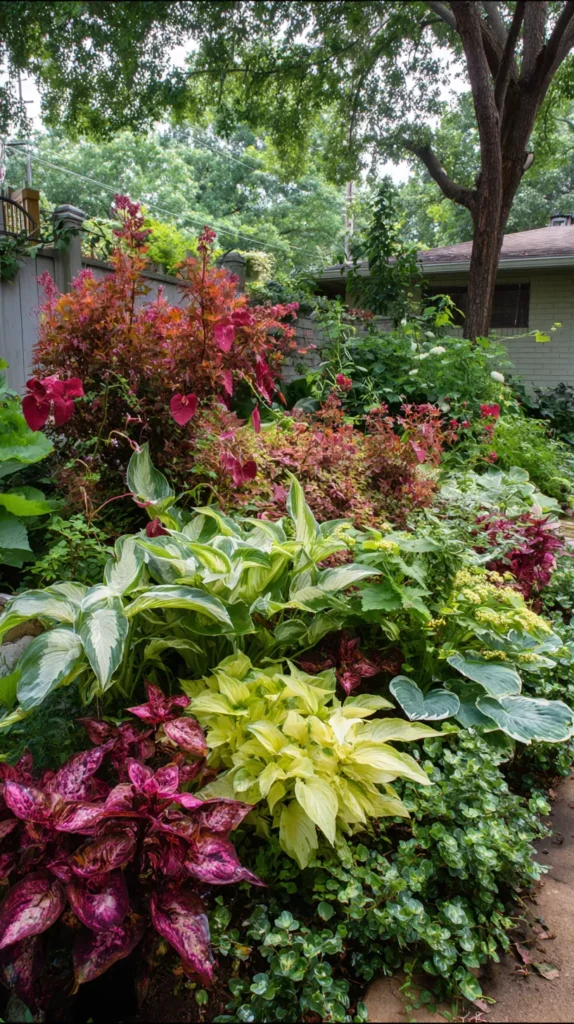
Budget: $50 – $180
Heuchera — coral bells — has been transformed by breeding into one of the most extraordinary foliage plants available for shade, with leaf colours ranging from lime green and amber through to deep burgundy, chocolate brown, and almost black. Combined with the delicate white flower spires of Tiarella in the same bed, the two plants together create a year-round shade garden display that suits the front of a shaded border perfectly.
Heuchera varieties cost $8–$18 each. A collection of six in contrasting colours — Palace Purple (deep burgundy), Lime Rickey (lime green), Obsidian (near black), Fire Alarm (vivid red), Caramel (amber), and Georgia Peach (peach-apricot) — creates a foliage palette of extraordinary richness for $48–$108 in plants. Tiarella plug plants run $5–$10 each and flower in May and June before the heuchera foliage takes over as the season’s primary display.
Growing tip: Divide heuchera clumps every three to four years in spring by lifting the plant and replanting only the younger outer sections with fresh root growth. The central woody section that develops in older heucheras produces progressively fewer leaves and less vigorous growth over time — regular division keeps the planting looking fresh and full rather than developing the woody, open-centred quality that marks an unmanaged heuchera after four or five seasons.
5. A Hydrangea Focal Point
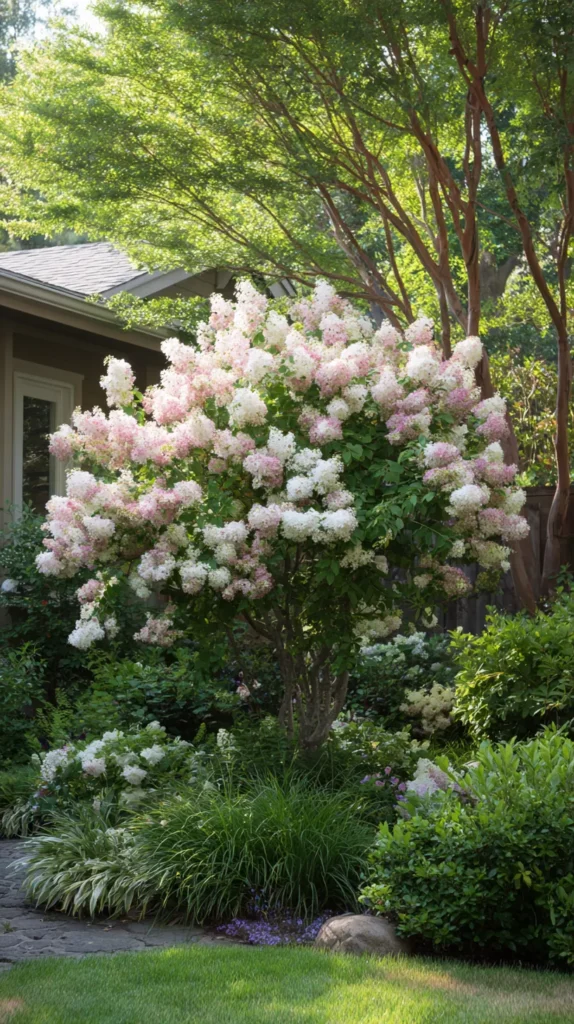
Budget: $20 – $80
A large, established hydrangea — whether the mophead, lacecap, paniculata, or climbing form — is the most visually dominant flowering shrub available for a shaded or partially shaded garden position. In midsummer the flower heads are impressive at any scale, and as they dry through autumn they become one of the finest structural features in any garden through the winter months. A well-positioned hydrangea is always the focal point of the area it inhabits.
Mophead hydrangeas (Hydrangea macrophylla) cost $15–$40 in 3-litre pots. Paniculata types — taller, more architectural, and tolerant of more sun — run $20–$60. Climbing hydrangea (Hydrangea petiolaris) costs $20–$50 and covers a shaded north-facing wall in a dense, self-clinging framework that produces white lacecap flowers in June on a surface where almost no other flowering climber will perform. All hydrangeas improve significantly with each passing season as the root system establishes.
Growing tip: Do not cut back mophead and lacecap hydrangeas in autumn. The flower heads protect the emerging buds directly beneath them from frost — removing the old heads in autumn exposes the new buds to winter damage and dramatically reduces the following season’s flowering. Cut back only after the risk of hard frost has passed in late March or early April, removing the old flower head just above the first pair of plump, healthy buds visible on each stem.
6. Foxgloves for Dramatic Height
Budget: $10 – $40
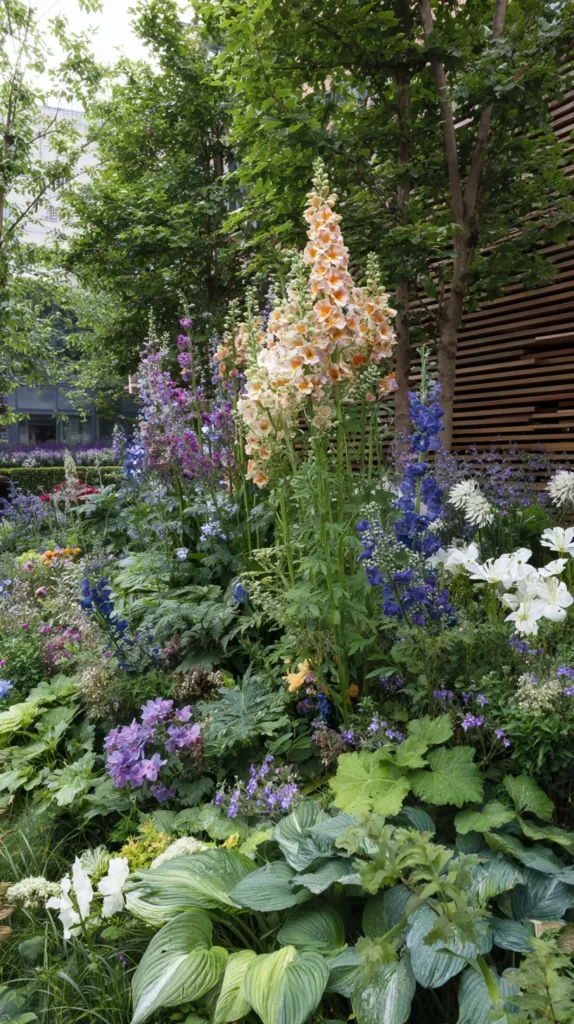
Foxgloves are native to woodland edge habitats and they perform in shade with the same drama they produce in full sun — the tall, spotted flower spires reaching 1.2–1.5 metres provide vertical punctuation in a shaded border that few other shade-tolerant plants can match. In a dappled light position, the translucent quality of the foxglove flower tube glowing from within as the light passes through it is genuinely beautiful in a way that full sun exposure never produces.
Foxglove plug plants cost $3–$8 each. They are biennial — leafy rosettes in year one, flowering spires in year two — but self-seed so freely that a bed established from purchased plants in year one becomes self-perpetuating from year two onward at no additional cost. Plant in groups of five or seven for a bold drift of vertical flower at a height that makes the whole shade border feel significantly taller and more generously planted than it is at the low and medium planting layers.
Growing tip: Leave spent foxglove flower spikes on the plant for four to six weeks after the main flowers fade to allow seed to ripen and fall to the ground naturally. The self-seeded plants that appear the following spring are indistinguishable from purchased plants and the cycle of self-seeding makes foxglove effectively permanent in any shaded border where the seed is given the opportunity to reach the soil surface.
7. A White Garden for the Shade
Budget: $80 – $300
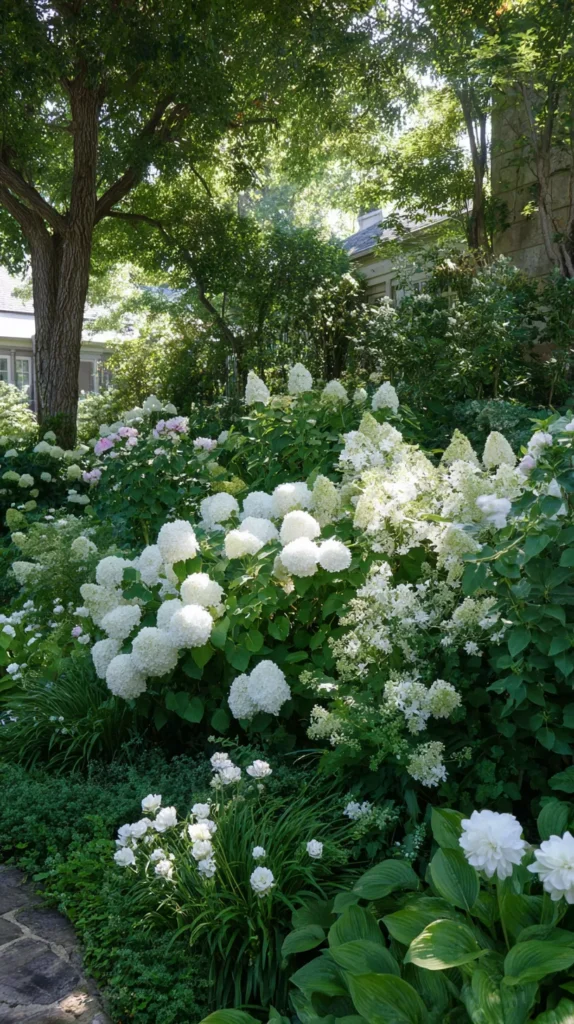
White and pale flowers glow in shade in a way that vivid colours rarely do — they reflect the available light back out of the planting rather than absorbing it, and in dappled or deep shade they can appear almost luminous at dusk. A white shade garden — white astilbe, white foxglove, white hydrangea, white bleeding heart, and white Solomon’s seal — creates the most visually bright and most spatially generous shade planting available within a restricted colour palette.
White astilbe costs $8–$16. White foxglove plug plants run $3–$8 each. White Hydrangea arborescens Annabelle — one of the most reliable and most spectacular white-flowering shrubs for shade — costs $15–$40. Solomon’s seal (Polygonatum) with its arching stems and pendant white flowers costs $8–$18 per plant and adds a graceful architectural quality that no other white shade plant provides. Together these five plants create a complete and cohesive white shade border for $60–$150 in plants.
Growing tip: Include a silver or pale gold foliage plant within the white shade border to add luminosity on cloudy days when white flowers alone look washed out rather than glowing. Hakonechloa macra Aureola — a golden-striped Japanese forest grass — costs $8–$18 and provides warm, bright foliage at the border front that prevents the all-white planting from feeling cold and recessive in overcast summer conditions.
8. A Layered Canopy, Shrub, and Ground Layer Planting
Budget: $150 – $600
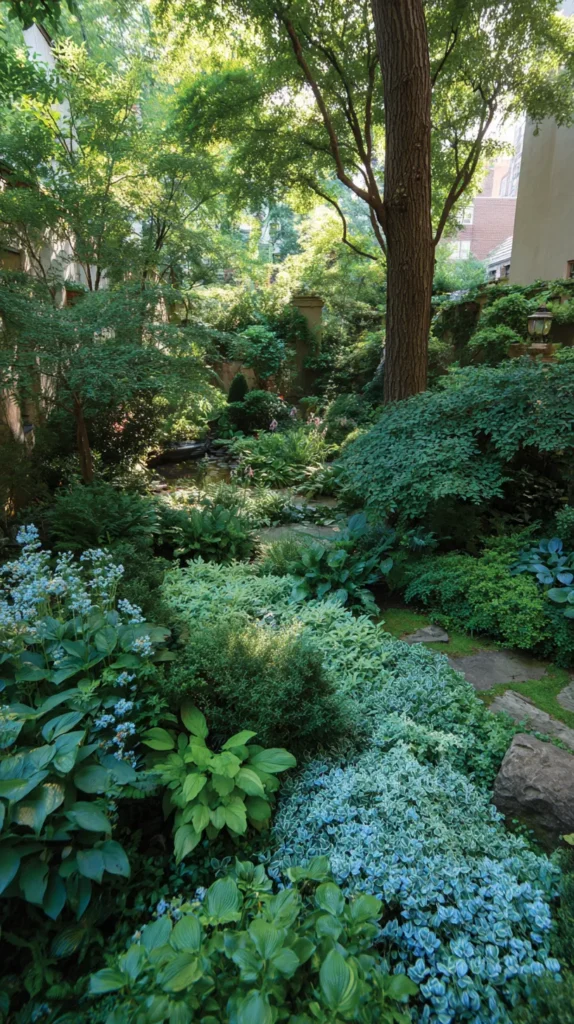
A shade garden planted in three distinct vertical layers — a canopy of deciduous trees that creates dappled shade, an understorey of shade-tolerant flowering shrubs, and a ground layer of woodland perennials and bulbs — creates the most complete and most self-sustaining shade garden available. Each layer supports the others ecologically and aesthetically, and the whole system requires progressively less management with each passing season as it reaches equilibrium.
Understorey shrubs suitable for the middle layer include Camellia ($20–$60), Mahonia ($15–$40), Sarcococca ($12–$30), and Viburnum davidii ($15–$35). Ground layer perennials — epimedium ($6–$12), pulmonaria ($6–$12), and wild ginger ($5–$10) — provide dense, weed-suppressing coverage at soil level. The combination of three layers is what prevents the shade garden from becoming a sparse, difficult area and transforms it into one of the richest and most rewarding planting environments in any garden.
Growing tip: Plant the ground layer before the shrub layer reaches its full spread — the understorey shrubs will take three to five years to develop to their mature size and the ground layer plants need those years to establish a dense, self-sustaining carpet before the increasing shade from the shrubs above tests their resilience. Plants established in light shade tolerate deep shade far better than plants moved directly into the deep shade created by a mature shrub.
9. Pulmonaria for Early Spring Interest
Budget: $30 – $100
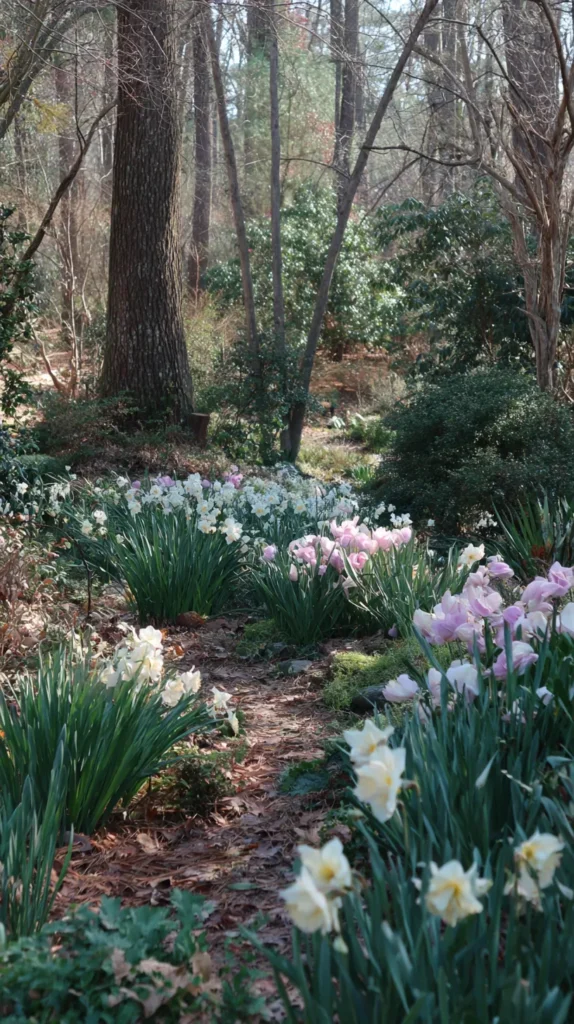
Pulmonaria — lungwort — is one of the most undervalued shade garden plants available. It flowers from February through to April, when almost nothing else in the shade garden is performing, producing pink buds that open to blue flowers — often simultaneously on the same stem — above attractively silver-spotted evergreen leaves that provide ground cover interest through every month of the year. It is the plant that makes a shade garden worth looking at in late winter.
Pulmonaria plants cost $6–$14 each. Key varieties include Pulmonaria Sissinghurst White (pure white flowers, heavy silver spotting), Pulmonaria Blue Ensign (deep blue, dark green leaves), and Pulmonaria Diana Clare (silver foliage, violet-blue flowers). Plant at 30 cm spacing for a planting that closes into a dense, weed-suppressing carpet within two seasons. Cut the leaves back hard to the ground after flowering in May — fresh, clean new foliage emerges immediately and looks significantly better than the old, often mildew-affected leaves from the previous season.
Growing tip: Divide pulmonaria clumps every three years in September immediately after cutting back the old foliage. Autumn division allows the divisions to establish their root system through the cool, moist autumn and winter months before the energy demands of flowering and new leaf production in February test the vigour of each newly established plant.
10. Epimedium as a Ground-Covering Workhorse
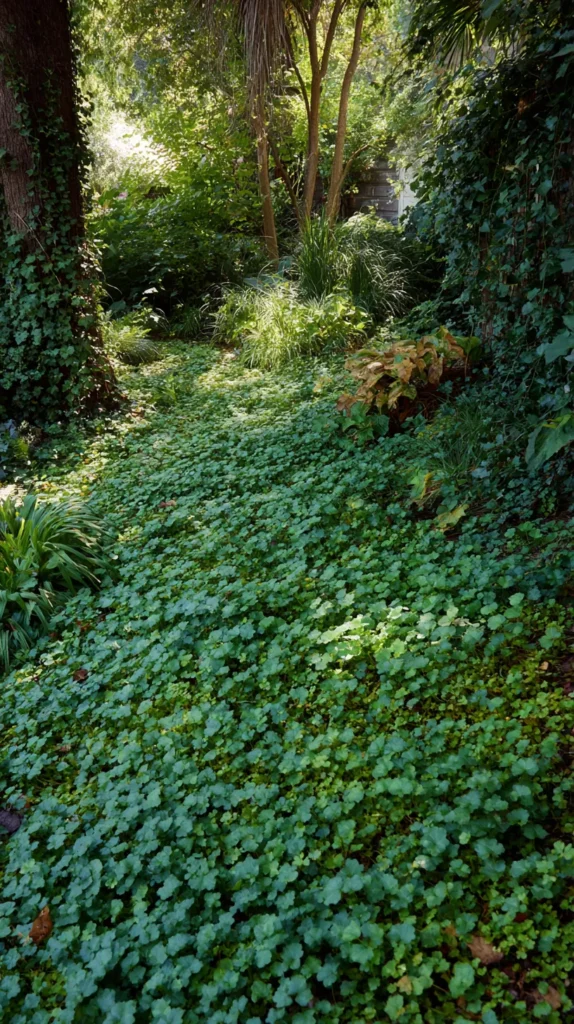
Budget: $40 – $150
Epimedium — barrenwort — is the toughest and most reliable ground cover available for deep, dry shade under trees where almost nothing else will grow. The heart-shaped leaves are attractive in their own right and in many varieties take on bronze and red tints in autumn and winter, while the small, spidery flowers in yellow, white, pink, and purple appear in spring before the new season’s foliage expands to cover them. It is the plant that makes difficult shade conditions look genuinely well-planted.
Epimedium plants cost $6–$15 each. Key varieties include Epimedium x perralchicum (yellow flowers, semi-evergreen), Epimedium rubrum (red and white flowers, strong autumn colour), and Epimedium x youngianum Niveum (white flowers, compact habit). Plant at 30–40 cm spacing — epimedium spreads steadily by underground rhizome and fills a dry shade area more reliably and more attractively than any other available ground cover species in the same conditions.
Growing tip: Cut all epimedium foliage to ground level in February before the new flower stems emerge. The old leaves from the previous season obscure the delicate spring flowers if left in place — the flowers appear so close to the ground that even partially overlapping old foliage is enough to hide them completely. The fresh new leaves that follow the flowers are a significant improvement on the old winter foliage in every variety.
11. A Shade Garden Water Feature
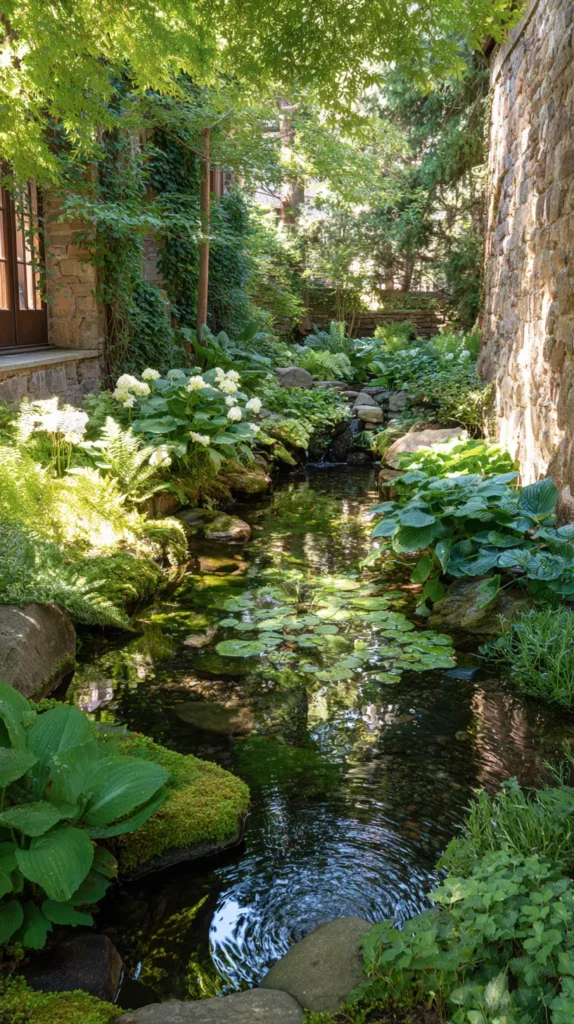
Budget: $50 – $300
A small water feature in a shaded garden corner — a wall-mounted spout into a stone basin, a pebble fountain beneath a tree canopy, or a simple raised pool — brings light, sound, and movement into the one garden area where both are most needed and most appreciated. Still water in shade reflects the available light back upward through the surrounding foliage — the effect is subtle in full shade but immediately visible and genuinely beautiful in dappled conditions.
A self-contained solar pebble fountain costs $40–$100. A wall-mounted spout with a small reservoir basin runs $80–$200. Plant the surrounding ground with moisture-loving shade species — astilbe, iris sibirica, and hostas — that benefit from the increased ambient humidity created by the water feature’s evaporation in the warm summer months. The combination of moving water and moisture-loving plants in a shaded corner produces the most convincingly natural and most pleasingly restful garden feature available in any shaded position.
Growing tip: Position the solar panel for a solar-powered shade garden water feature in the nearest sunny position rather than beside the water feature itself — most solar fountain pumps include a cable that allows the panel to be placed up to 2–3 metres from the pump and fountain head. A panel positioned in a sunny spot charges more completely and provides more reliable pump operation than one placed in the shade where the water feature performs best.
12. A Ferns, Mosses, and Hellebore Combination
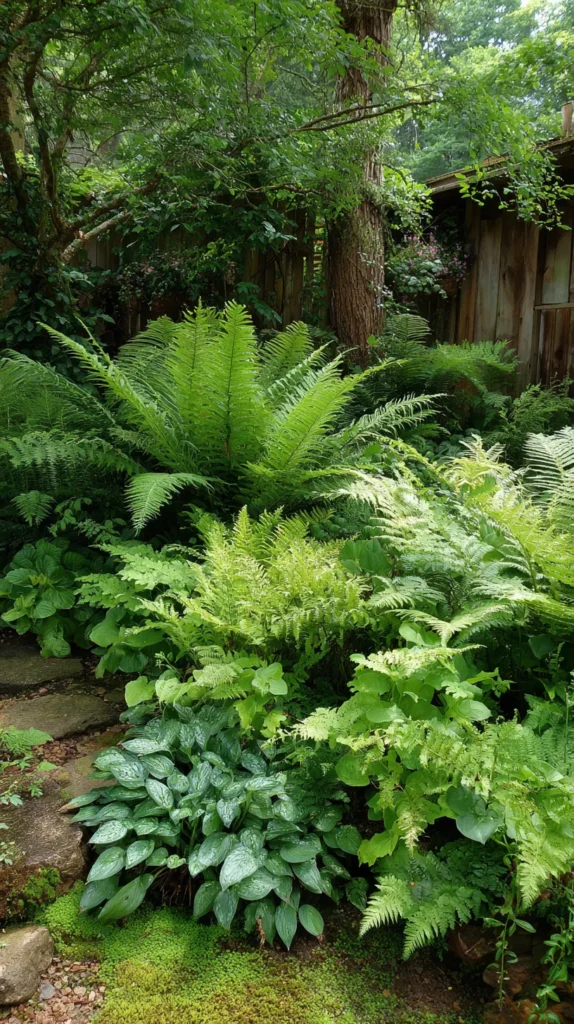
Budget: $80 – $280
Hellebores planted among established ferns and moss — in the deepest, coolest, most persistently shaded section of the garden — create one of the most refined and most specifically beautiful shade garden combinations available. The nodding, cup-shaped hellebore flowers in white, plum, dusky pink, and near-black appear from December through to April when the ferns are at their most structural and the moss is at its greenest after winter moisture. It is the shade garden at its most quietly spectacular.
Hellebore orientalis hybrids cost $8–$20 each. A collection of six in a range of colours — white, pale pink, deep plum, and spotted — provides a varied and long-lasting display for $48–$120. Hardy ferns for the surrounding planting cost $6–$15 each. Cushion moss mats for the ground surface cost $8–$20 per square metre. The combination requires no feeding, no deadheading, and very little intervention beyond the annual removal of old hellebore leaves in January to expose the emerging flower buds beneath.
Growing tip: Remove all hellebore leaves in January — cutting them cleanly at the base — before the flower buds emerge from the crown. Old hellebore leaves carry botrytis and other fungal diseases that spread to the flowers and new foliage if left in place. The plant produces a full new set of healthy leaves after flowering in spring and the clean January cut produces noticeably better flower quality and more visible blooms than a plant with its flowers obscured by the previous season’s foliage.
The shade garden is at its most vibrant when it is understood as a specific environment with its own rules rather than a limitation imposed on a garden that would prefer full sun. The plants on this list did not adapt to shade despite it being a difficult condition — they adapted to shade because the cool, moist, sheltered environment it creates suits their particular needs better than any amount of direct sunlight could.
Start with the hosta and the fern — the two plants that most completely establish the character of a shade garden and that work with every other shade species listed here. Add colour through astilbe or heuchera and height through foxglove or hydrangea. Let the planting close and layer naturally over two or three seasons and resist the urge to fill every gap immediately. The best shade gardens always arrive in their own time.