15 No Mow Lawn Ideas with Ground Covers
I spent 3 hours every weekend mowing my lawn for six years. That’s 936 hours pushing a mower around the same grass over and over.
Plus fertilizing, watering, edging, fighting weeds, reseeding bare spots. Endless work for mediocre results.
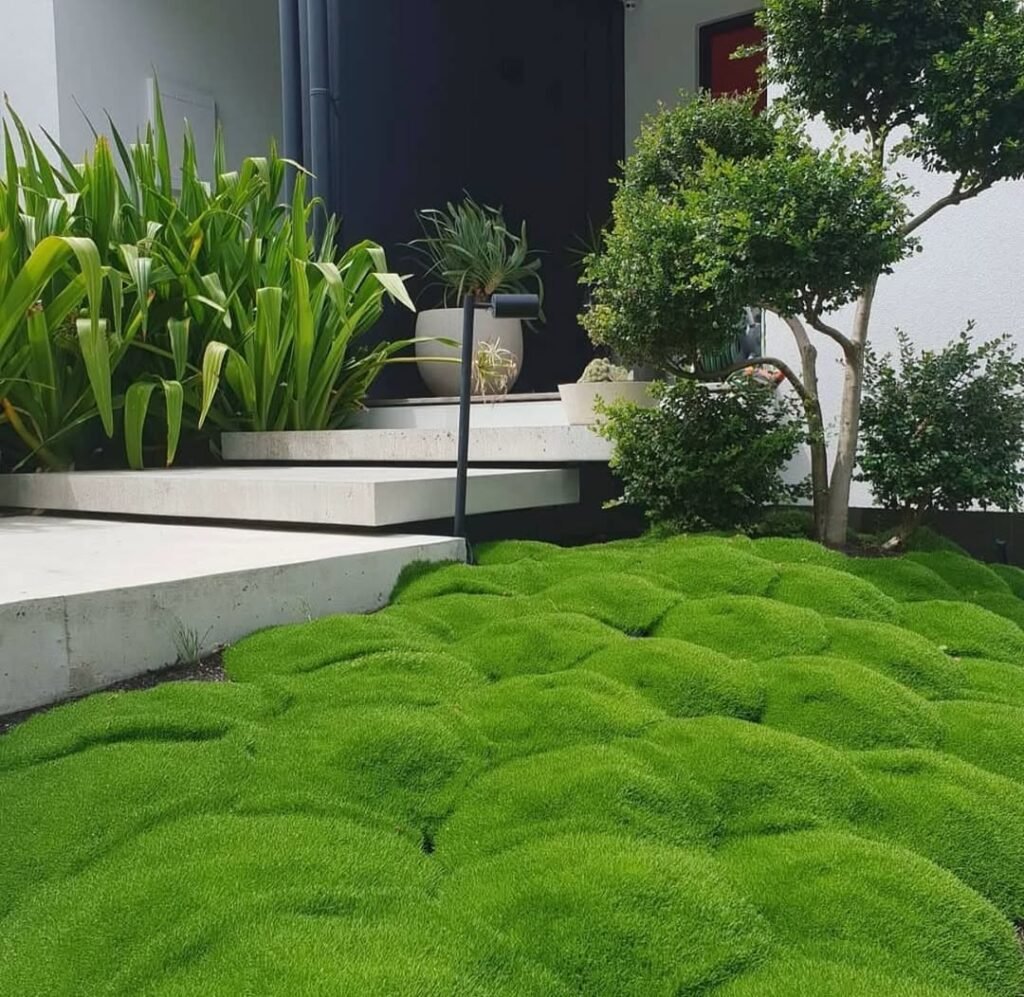
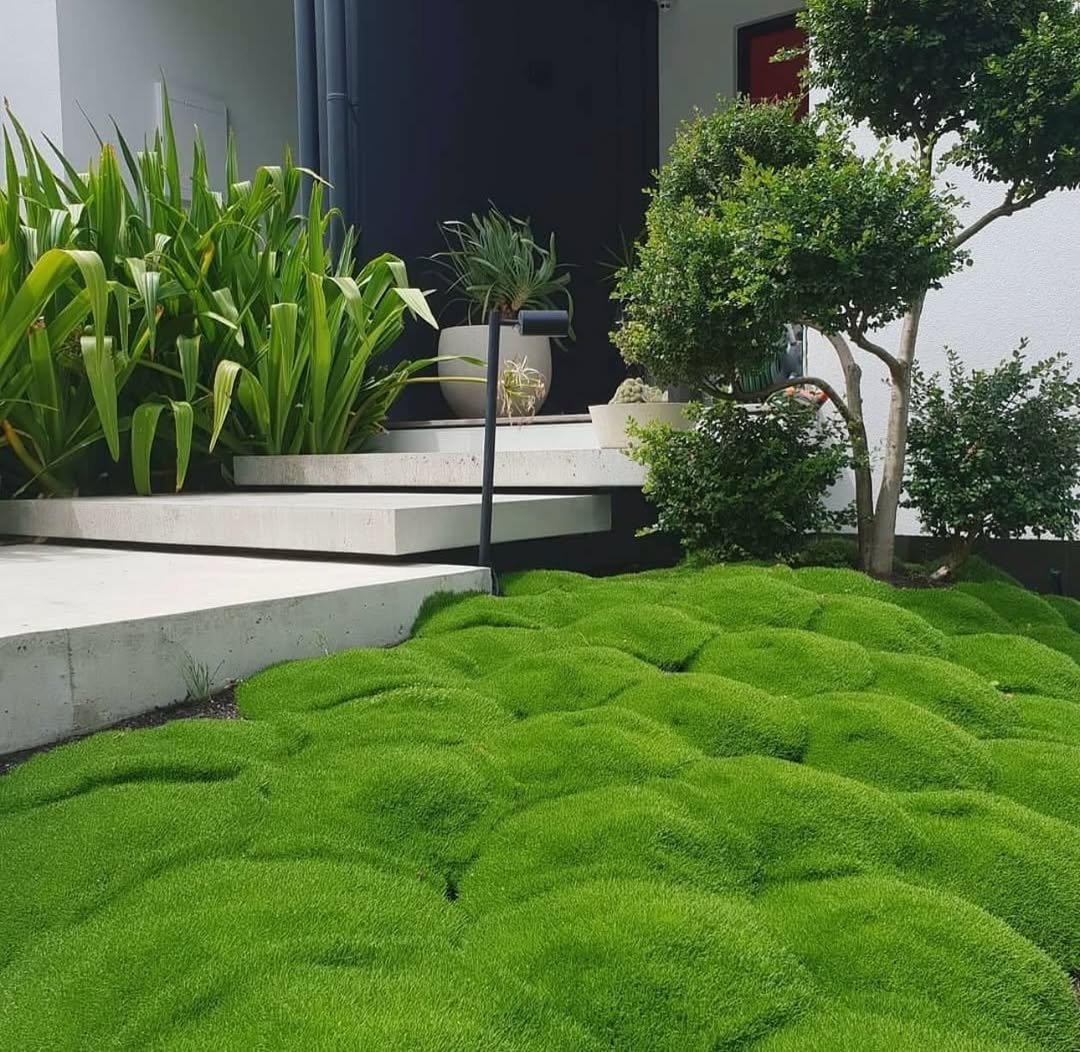
Then I replaced half my lawn with ground covers. Same green coverage, zero mowing, way less maintenance.
I’ve reclaimed 90+ hours yearly and my yard looks better than when it was all grass.
Let me show you 15 ground cover alternatives that eliminate mowing forever.
Why I Ditched Traditional Lawn
My grass lawn reality:
Weekly maintenance (April-October):
- Mowing: 1.5 hours
- Edging: 30 minutes
- Weed whacking: 20 minutes
- Total: 2.25 hours weekly
Seasonal tasks:
- Spring: Aerate, fertilize, overseed (8 hours)
- Summer: Water constantly, fight brown spots (4 hours)
- Fall: Fertilize again, rake leaves (6 hours)
- Total: 18 hours seasonal
Annual time investment: 78.5 hours (30 weeks × 2.25 + 18)
Plus costs:
- Fertilizer: $80
- Weed control: $60
- Water bill increase: $120 summer
- Gas for mower: $40
- Annual cost: $300
After replacing 60% of lawn:
- Time: 15 hours yearly (mostly borders)
- Cost: $50 (occasional mulch top-up)
- Savings: 63.5 hours and $250 annually
Why Ground Covers Beat Grass
What changed:
Zero mowing:
- Most ground covers never mowed
- Some need trimming 1-2× yearly
- 5-10 minutes vs hours weekly
- Massive time savings
Lower water needs:
- Established ground covers drought-tolerant
- Grass needs 1-2 inches weekly
- Ground covers survive on rainfall
- Water bill dropped $120/summer
Better for environment:
- No gas-powered mower
- No chemical fertilizers
- Native plants support pollinators
- Carbon-negative vs grass
More interesting:
- Flowers vs plain green
- Varied textures
- Seasonal changes
- Unique appearance
I actually enjoy my yard now instead of dreading weekend lawn care.
1. Creeping Thyme Lawn (My Main Replacement)
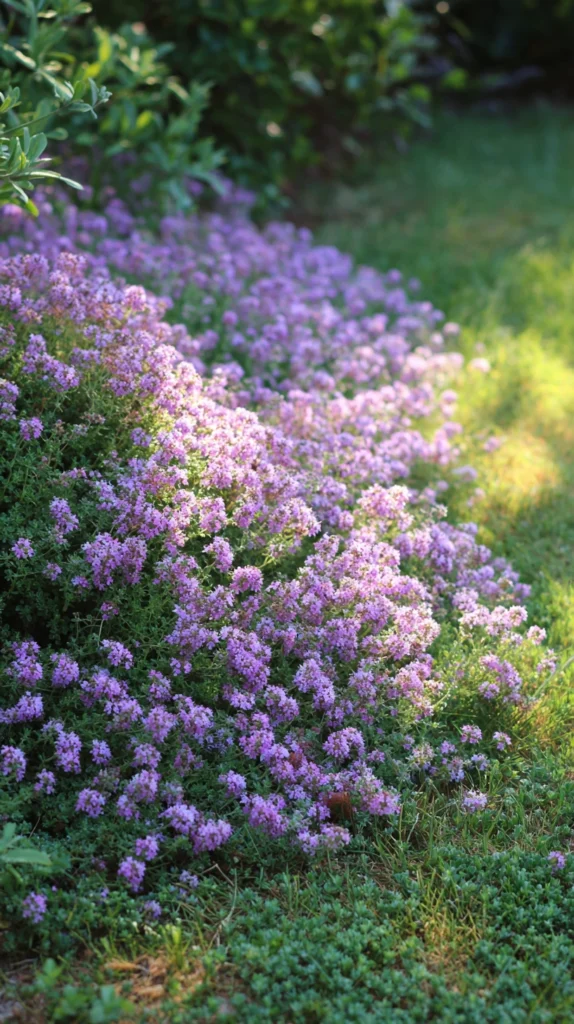
Low-growing thyme creates fragrant walking surface.
My 400 square foot thyme lawn:
Variety: Thymus serpyllum (creeping thyme) Planted: 300 plants, 6 inches apart Cost: $450 (plants $1.50 each) Time to fill in: 18 months
What it looks like:
Spring (May-June):
- Purple-pink flowers cover entire area
- Buzzing with bees constantly
- Stunning display
- Peak beauty
Summer:
- Green mat
- Fragrant when walked on
- Stays low (2-3 inches)
- No mowing needed
Fall/Winter:
- Semi-evergreen (Zone 7)
- Bronzes slightly
- Still green coverage
- Year-round interest
Benefits:
Walkable:
- Tolerates foot traffic well
- Releases fragrance when stepped on
- Feels soft underfoot
- Main path through garden
Drought-tolerant:
- Survives 4-6 week droughts
- No supplemental water after year 1
- Deep roots
- Heat-proof
Zero mowing:
- Never grows tall
- Stays 2-4 inches naturally
- Maybe trim edges once yearly
- That’s it
My thyme lawn maintenance: 2 hours yearly total (weeding first year, now nothing)
Creeping Thyme Tips
Installation:
- Remove existing grass completely
- Amend soil (add sand if clay)
- Plant 6 inches apart in checkerboard
- Mulch between plants initially
- Water first summer only
Challenges:
Weeds first year: Pull regularly (2 hours monthly) Year 2 onward: Thyme fills in, chokes out weeds Now: Zero weeding needed
My biggest mistake: Not removing all grass roots – they competed first year. Thorough removal is critical.
2. White Clover Lawn (Budget-Friendly Option)
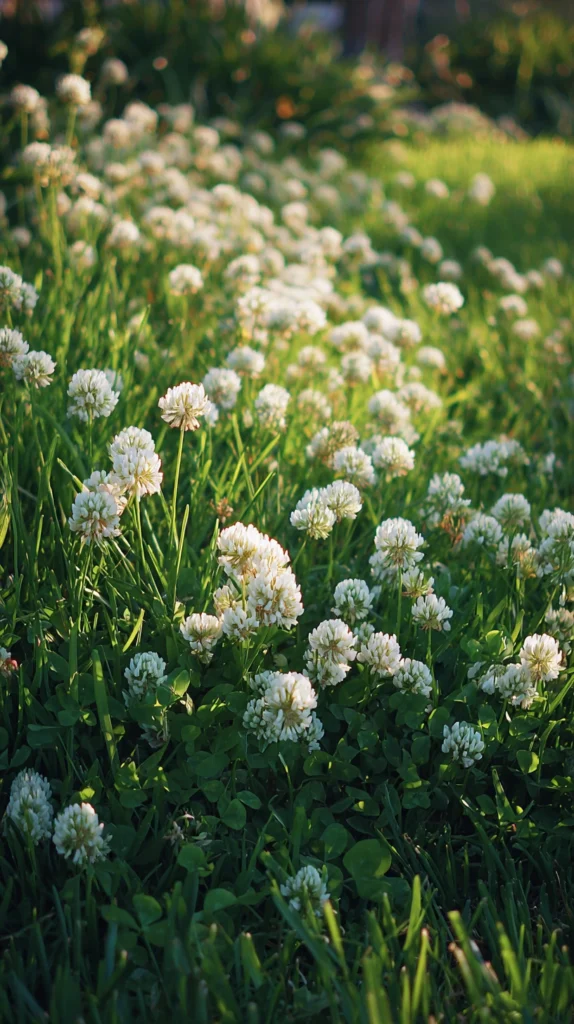
Dutch white clover – cheapest lawn replacement.
My 600 square foot clover area:
Planted: Seed, not plants Cost: $25 for seed Coverage: 3-4 months from seed Maintenance: Mow 3-4× yearly (optional)
Why clover works:
Nitrogen-fixing:
- Produces own fertilizer
- Never needs feeding
- Actually improves soil
- Greens up grass nearby
Stays relatively short:
- 4-6 inches typical height
- Can leave unmowed
- Or mow monthly for neater look
- Flexible
Drought-tolerant:
- Stays green in summer
- Grass goes dormant, clover doesn’t
- Deep taproot
- Survives without watering
Flowers:
- White blooms attract bees
- Can mow before bloom if you want
- Or leave for pollinators
- I leave them
My clover lawn cost: $25 seed, zero ongoing costs, 5 years old still thriving
Clover Lawn Reality
What I actually do:
Mowing: 4 times yearly (not weekly!)
- Late spring (before flowers set seed)
- Mid-summer
- Early fall
- Optional – could skip entirely
Watering: Never (after establishment) Fertilizing: Never (fixes own nitrogen) Weeding: Minimal (clover competitive)
Total time: 2 hours yearly vs 78 hours for grass
3. Moss Lawn (Shade Solution)
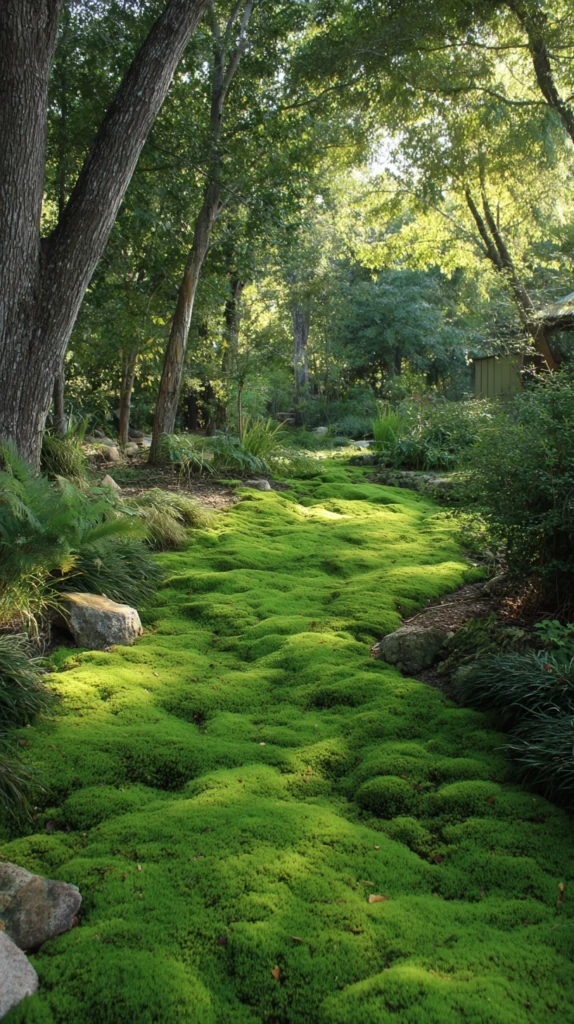
Natural moss carpets areas grass won’t grow.
My north-side moss lawn (300 sq ft):
How it started:
- Moss appeared naturally
- Grass died in shade
- I encouraged moss spread
- Removed grass completely
Establishing more moss:
Method 1 – Encourage natural:
- Stop fighting it
- Remove grass
- Moss colonizes
- Takes 2-3 years
Method 2 – Transplant:
- Gather moss from woods (with permission)
- Press into bare soil
- Mist daily first month
- Spreads over 1-2 years
Method 3 – Moss milkshake:
- Blend moss with buttermilk
- Paint on soil
- Mist regularly
- Takes longer but works
My approach: Mostly natural encouragement, transplanted some chunks
Benefits:
Thrives in shade:
- Where grass fails
- Under trees perfect
- North-facing areas
- Problem-solver
Zero mowing ever:
- Stays 1 inch tall
- Soft and cushiony
- Beautiful texture
- Peaceful green
Low maintenance:
- No fertilizing
- No mowing
- No weeding (moss crowds out)
- Just exists
Challenges:
Foot traffic: Moderate only (not main path) Needs moisture: Won’t survive drought Acidic soil preferred: Test and adjust Takes time: Slow to establish
My moss lawn: Most peaceful, zen part of yard, guests love it.
4. Creeping Phlox (Spring Spectacular)
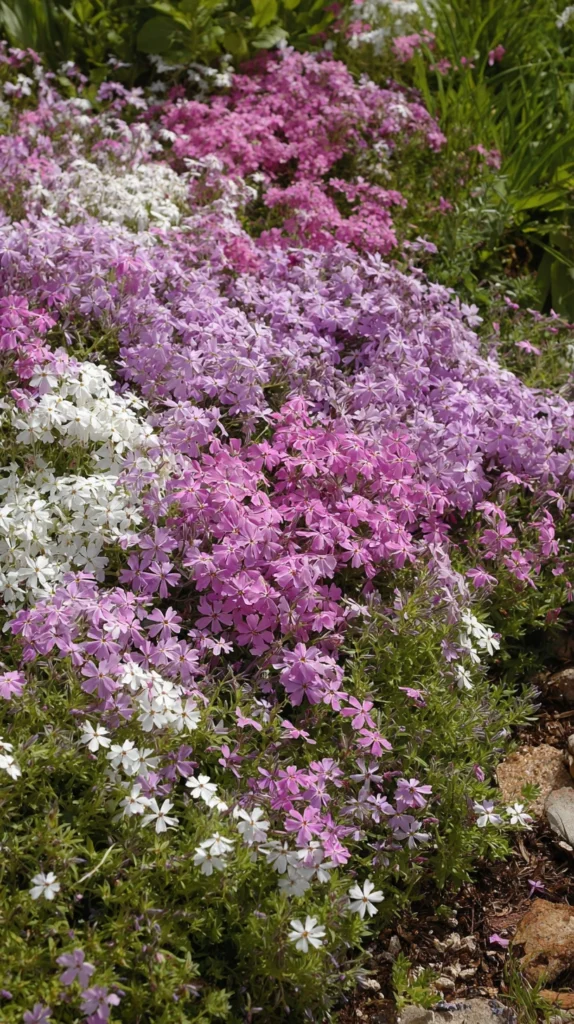
Phlox subulata creates flowering carpet.
My 200 square foot phlox area:
Colors planted:
- Purple (50% of area)
- Pink (30%)
- White (20%)
- Mixed for interest
Planted: 100 plants, 12 inches apart Cost: $200 (plants $2 each) Fill-in time: 2 years
Seasonal appearance:
April-May:
- Completely covered in flowers
- Looks like carpet of color
- Stunning display
- Neighbors stop to photograph
June-November:
- Green evergreen mat
- 4 inches tall
- Attractive foliage
- Neat appearance
Winter:
- Stays green (evergreen)
- Provides winter interest
- Looks good year-round
Benefits:
Spring show:
- 4-6 weeks solid color
- Unmatched beauty
- Pollinator magnet
- Garden highlight
Evergreen:
- Year-round coverage
- Never bare
- Winter interest
- Always looks finished
Drought-tolerant:
- Survives summer without water
- Tough plant
- Once established = indestructible
Maintenance: Shear back after bloom (optional, 30 minutes yearly)
5. Sedum Lawn (Succulent Ground Cover)
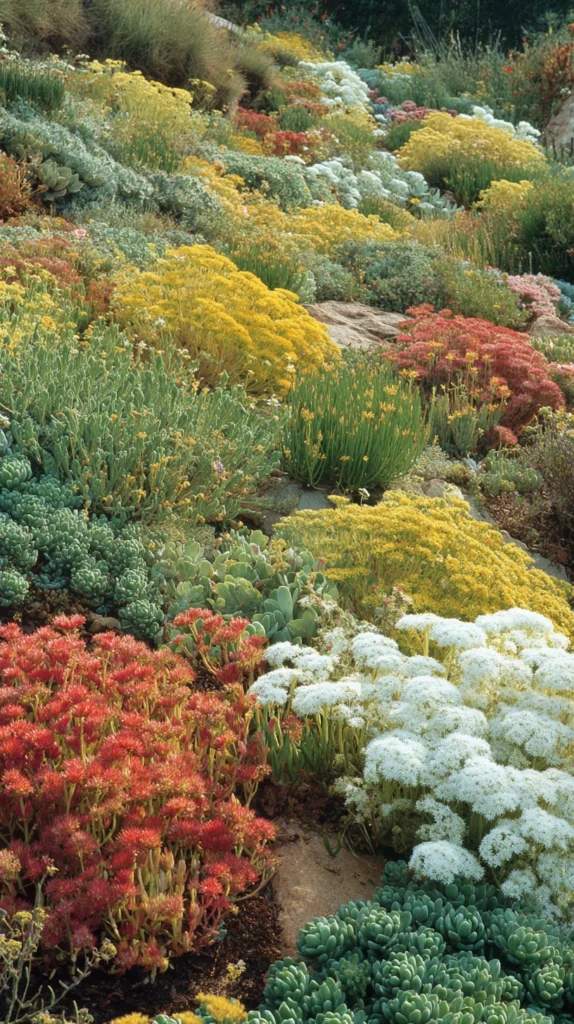
Low-growing sedums create tapestry lawn.
My 150 square foot sedum area (hot dry spot):
Varieties mixed:
- Sedum acre (yellow flowers)
- Sedum album (white flowers)
- Sedum spurium (red)
- Sedum kamtschaticum (orange)
Planted: 80 plants initially Cost: $120 Now: Covered entire area (self-spreading)
Why sedums excel:
Extreme drought tolerance:
- Succulents store water
- Survive 8+ weeks no water
- Perfect for hot spots
- Zero irrigation
Interesting texture:
- Fleshy leaves
- Varied colors
- Flowers different times
- Ever-changing
Spreads itself:
- Self-propagating
- Pieces root where they land
- Fills in naturally
- Free plants
Flowers:
- Different varieties bloom different times
- April through September
- Always something blooming
- Continuous interest
My sedum lawn: Hottest driest part of yard, never watered, looks perfect.
6. Ajuga (Fast-Spreading Purple)
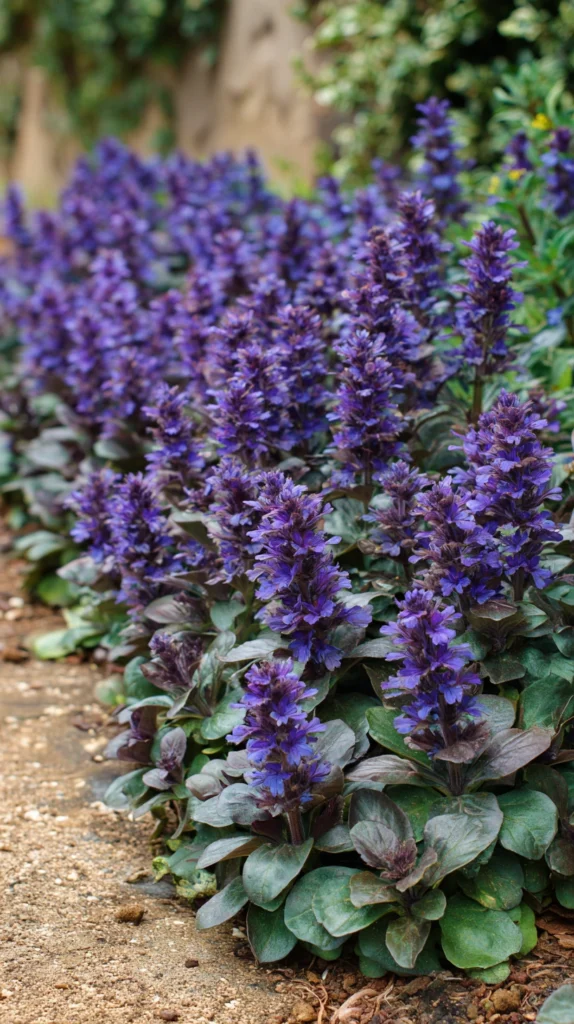
Ajuga reptans – rapid coverage with purple spikes.
My 250 square foot ajuga section:
Planted: 50 plants, 12 inches apart Cost: $75 Coverage time: 1 year (very fast!)
Characteristics:
Fast spreader:
- Fills in quickly
- Stolons run everywhere
- Complete coverage year 1
- Instant gratification
Purple flower spikes:
- April-May
- 6 inches tall
- Deep purple-blue
- Beautiful display
Foliage:
- Dark purple-bronze leaves (my variety)
- Evergreen
- 3-4 inches tall
- Attractive year-round
Benefits:
Shade-tolerant:
- Full sun to full shade
- Extremely adaptable
- Works anywhere
- Versatile
Aggressive (pro and con):
- Good: Fills in fast, chokes weeds
- Bad: Invades borders, need barriers
- Requires containment
- But effective
My ajuga lawn: Installed metal edging to contain it – now perfect low-maintenance carpet.
7. Sweet Woodruff (Shade-Loving Fragrant)
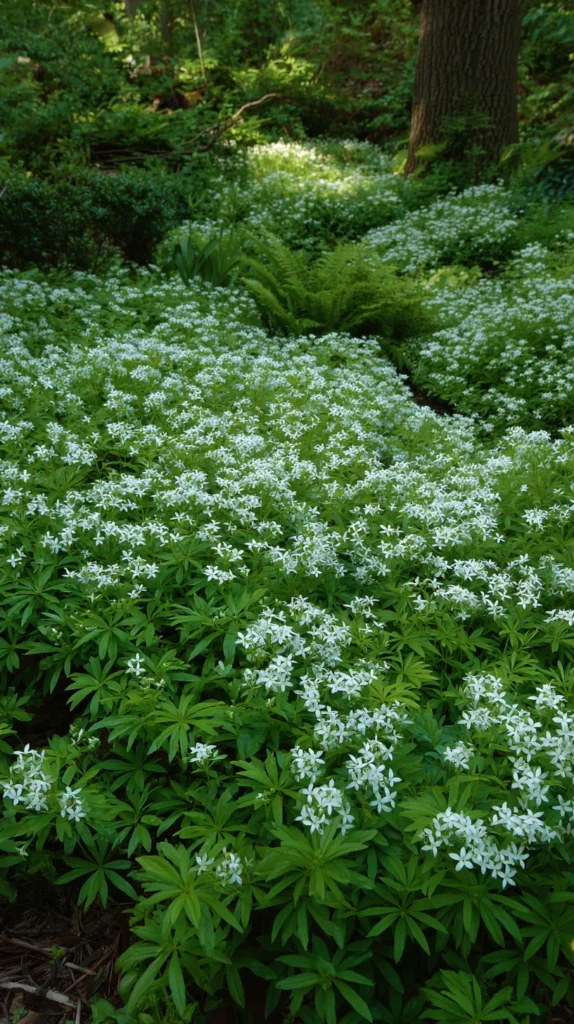
Galium odoratum – woodland ground cover.
My under-tree area (200 sq ft):
Planted: 60 plants, 10 inches apart Cost: $90 Location: Under maple tree (deep shade)
Why it works:
Deep shade tolerant:
- Thrives where grass dies
- Under trees perfect
- North sides
- Problem areas
Fragrant:
- Fresh-cut hay scent
- Especially when dried
- Pleasant smell
- Traditional May wine flavoring
White flowers:
- Late spring
- Delicate star-shaped
- Woodland feel
- Charming display
Spreads moderately:
- Not aggressive like ajuga
- Fills in 2 years
- Manageable spread
- Easy to control
My sweet woodruff: Under tree that killed grass repeatedly, now lush green carpet.
8. Liriope (Grass-Like Alternative)
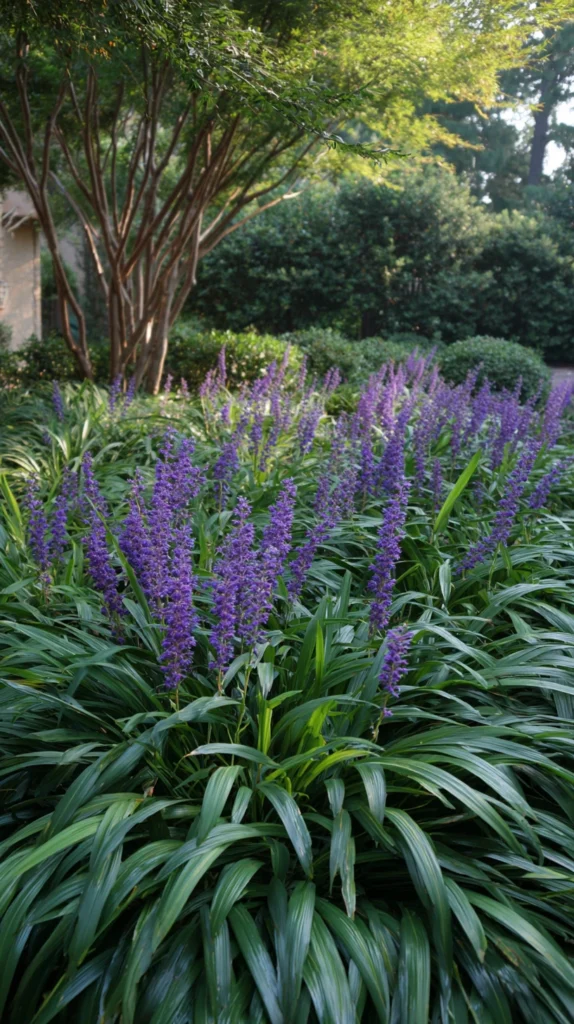
Monkey grass – looks like grass, zero mowing.
My 300 square foot liriope area:
Variety: Liriope spicata (spreading type) Planted: 75 plants, 12 inches apart Cost: $150 Fill-in time: 2 years
Appearance:
Foliage:
- Grass-like blades
- 8-12 inches tall
- Evergreen
- Looks like unmowed grass (but neat)
Flowers:
- Purple spikes (late summer)
- 12 inches tall
- Attractive
- Bonus feature
Benefits:
Looks like grass:
- Satisfies neighbors who want “lawn look”
- But never needs mowing
- Compromise solution
- Traditional appearance
Extremely tough:
- Drought-tolerant
- Deer-proof
- Disease-free
- Indestructible
Evergreen:
- Year-round coverage
- Never dormant
- Always green
- Reliable
Maintenance: Cut back once in early spring (optional, 1 hour)
9. Corsican Mint (Walkable Herb)
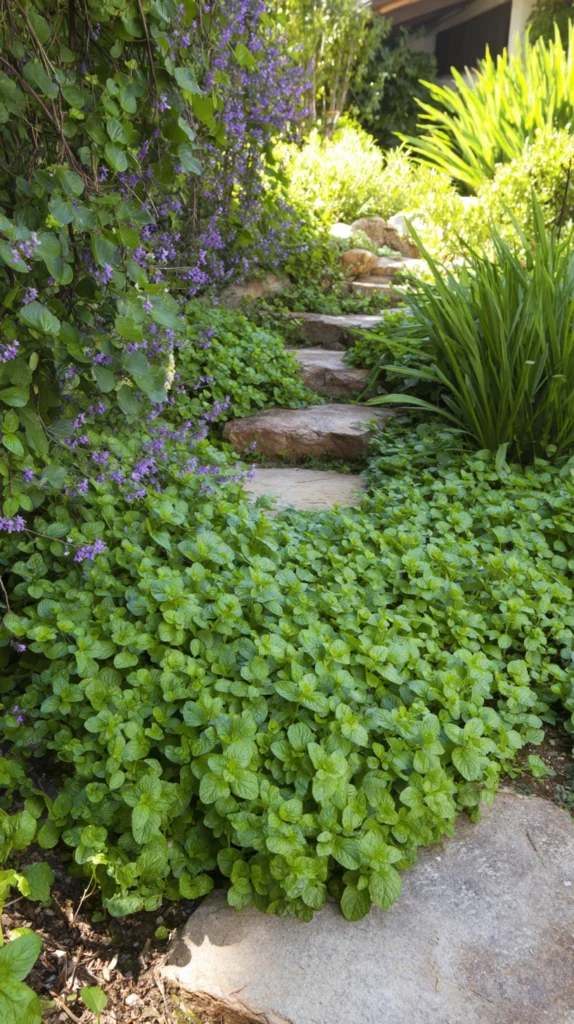
Mentha requienii – tiny fragrant ground cover.
My stepping stone gaps (50 sq ft total):
Planted: Between flagstones Cost: $40 (20 small plants) Spread: Filled all gaps in 1 year
Characteristics:
Tiny leaves:
- Smallest mint
- Carpet-like
- 1 inch tall
- Delicate appearance
Intense fragrance:
- Strong mint scent when stepped on
- Releases with foot traffic
- Pleasant experience
- Sensory element
Spreads rapidly:
- Fills cracks and gaps
- Self-seeding
- Very aggressive
- Contains itself in cracks
Benefits:
Walkable:
- Tolerates foot traffic
- Releases scent when crushed
- Interactive plant
- Pathway perfect
Tiny flowers:
- Purple micro-blooms
- Barely visible
- But there
- Summer long
My Corsican mint: Between all my stepping stones, creates living grout, smells amazing.
10. Woolly Thyme (Silver Carpet)
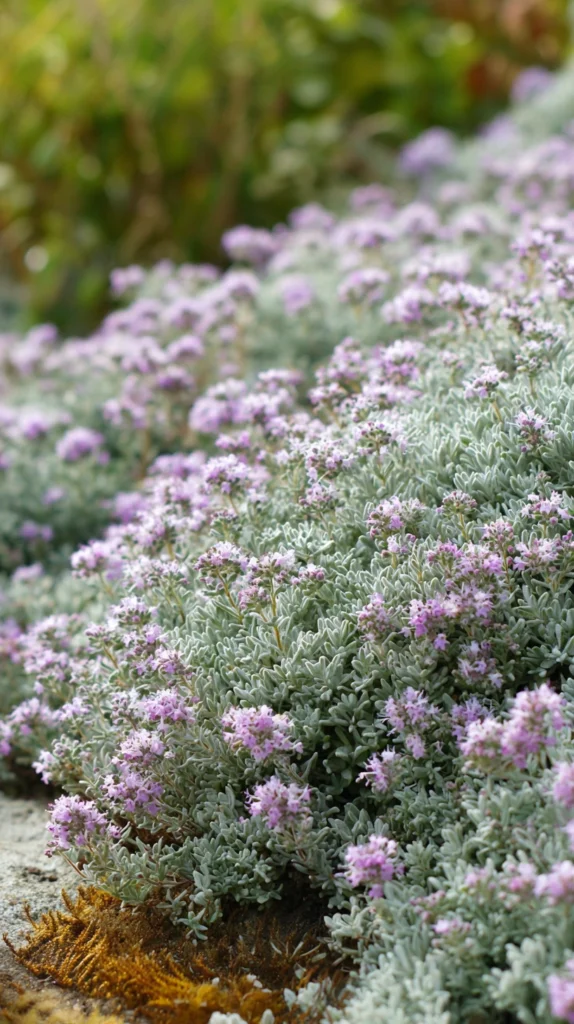
Thymus pseudolanuginosus – soft fuzzy ground cover.
My 100 square foot area:
Planted: 50 plants, 10 inches apart Cost: $75 Appearance: Silver-gray fuzzy carpet
Why woolly thyme special:
Unique texture:
- Fuzzy leaves
- Soft to touch
- Silver-gray color
- Unlike anything else
Very low:
- 1-2 inches tall
- Stays flat
- Perfect lawn replacement
- Neat appearance
Moderate foot traffic:
- Not as tough as regular thyme
- Light walking okay
- Not main path
- Decorative more than functional
Rarely flowers:
- Occasionally pink blooms
- Grown for foliage
- Texture is the point
- Year-round interest
My woolly thyme: Small area but showstopper, guests always ask what it is.
11. Mazus (Purple Blooming Creeper)
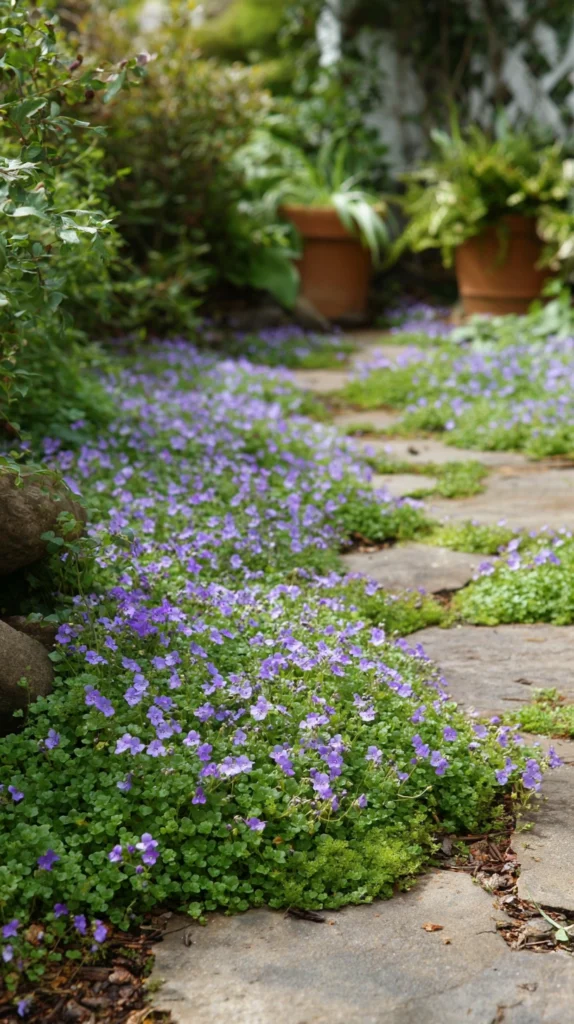
Mazus reptans – low purple flowers.
My 150 square foot section:
Planted: 40 plants, 12 inches apart Cost: $60 Coverage: 18 months
Characteristics:
Spring flowers:
- Purple snapdragon-like blooms
- Covers entire plant
- May-June
- Beautiful display
Very low:
- 1-2 inches tall
- Hugs ground
- Flat carpet
- Lawn-like height
Spreads by runners:
- Fills in gaps
- Self-propagating
- Complete coverage
- Efficient
Benefits:
Moderate foot traffic:
- Withstands some walking
- Not main thoroughfare
- Occasional steps fine
- Semi-walkable
Semi-evergreen:
- Dies back partially winter (Zone 7)
- Returns vigorously spring
- Year-round in warmer zones
- Reliable
My mazus: Side yard path, purple carpet in spring, perfect height.
12. Native Violets (Woodland Charm)
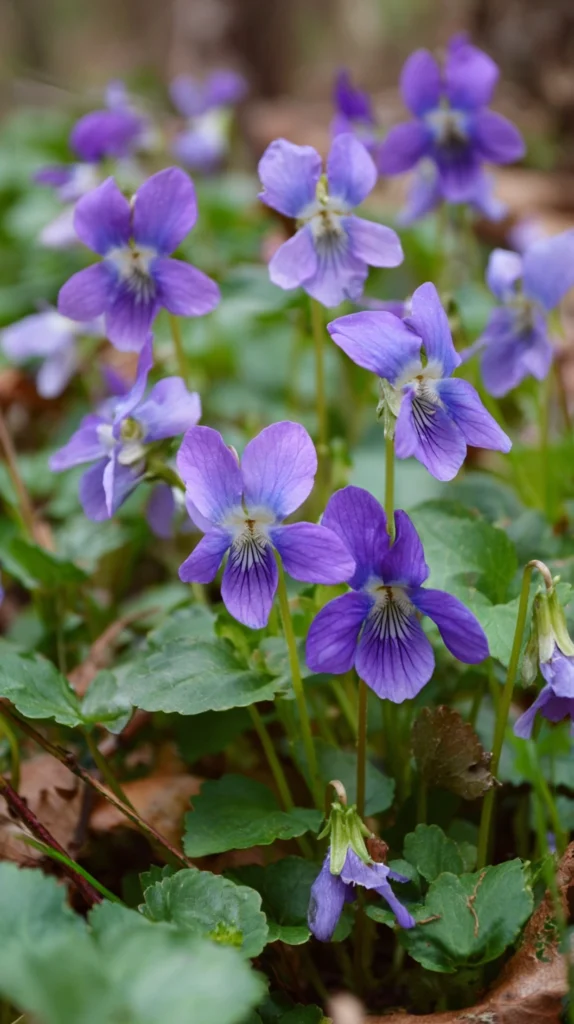
Wild violets – often viewed as weeds, actually lovely.
My approach: Stopped fighting violets, encouraged them
Area: 200 square feet under trees Cost: $0 (already there) Time to accept them as feature: Instant mental shift
Why violets work:
Already established:
- Probably in your yard already
- Stop killing them
- Free lawn replacement
- Change perspective
Spring flowers:
- Purple, white, or blue
- Charming blooms
- April-May
- Free beauty
Shade-loving:
- Thrive under trees
- Where grass struggles
- Natural fit
- Problem-solver
Self-seeding:
- Spreads naturally
- Fills bare spots
- Requires nothing
- Zero-maintenance
My violet lawn: Was fighting them for years, stopped, now enjoy free ground cover.
13. Dwarf Mondo Grass (Modern Look)
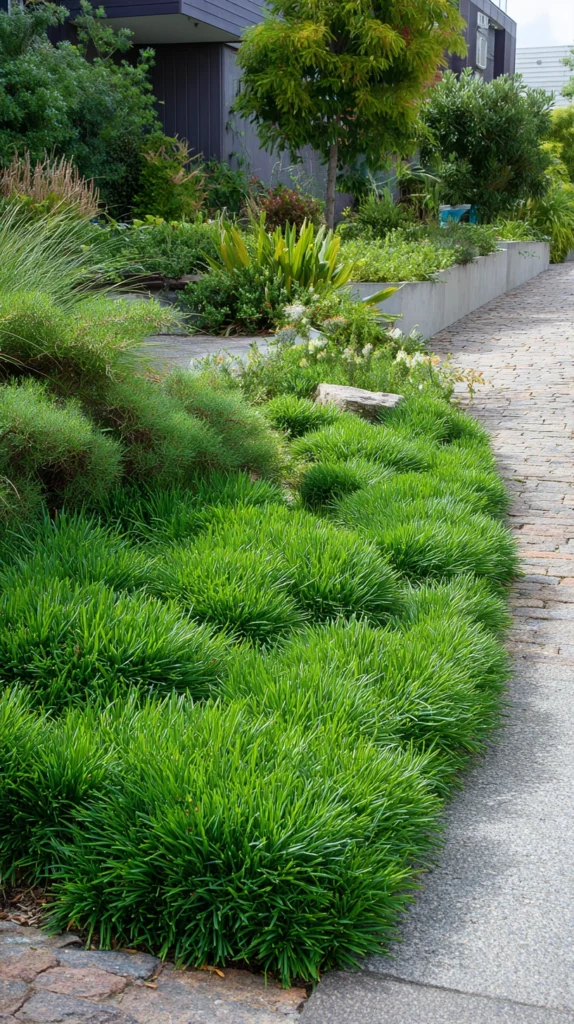
Ophiopogon japonicus ‘Nanus’ – contemporary ground cover.
My 100 square foot modern garden area:
Planted: 100 plugs, 6 inches apart Cost: $200 (expensive!) Fill-in time: 3 years (slow)
Characteristics:
Very low:
- 2-3 inches tall
- Dark green
- Fine texture
- Manicured appearance
Extremely slow-growing:
- Advantage: Never needs trimming
- Disadvantage: Slow to fill in
- Patient gardeners only
- Worth the wait
Modern aesthetic:
- Clean lines
- Contemporary gardens
- Minimalist design
- Sophisticated look
Benefits:
Zero maintenance:
- Never mow
- Never trim
- Never fertilize
- Literally nothing
Evergreen:
- Year-round perfection
- Never changes
- Constant appearance
- Reliable
My dwarf mondo: Most expensive option but stunning in modern garden section.
14. Dichondra (Lawn-Like Creeper)
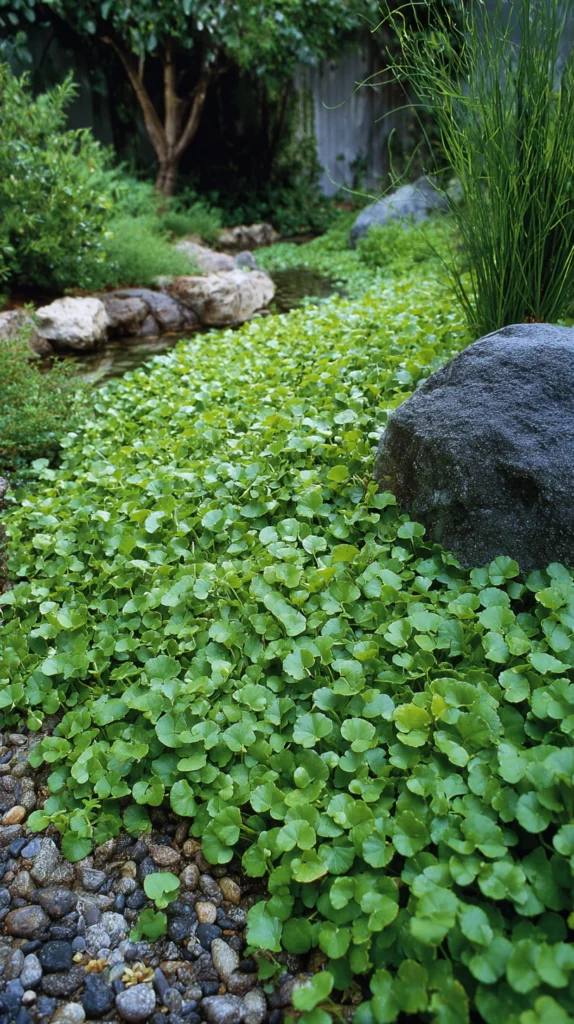
Dichondra repens – traditional lawn appearance.
My 400 square foot area (warm climate friend):
Planted: Seed Cost: $30 for seed Climate: Zones 8-11 (not hardy where I am)
Why it works (warm climates):
Looks like grass:
- Small round leaves
- 2-3 inches tall
- Lawn appearance
- Neighbors won’t complain
Can be mowed:
- Optional mowing monthly
- Or leave unmowed
- Flexible
- Adapts to preference
Tolerates foot traffic:
- Walkable
- Recovers quickly
- Main lawn replacement
- Functional
Warm climate only:
- Dies in frost
- Zones 8-11
- Not for me (Zone 7)
- But perfect in South/West
My friend’s dichondra lawn (Zone 9): Replaced entire front lawn, looks traditional, mows once monthly.
15. Mixed Tapestry Lawn (My Ultimate Design)
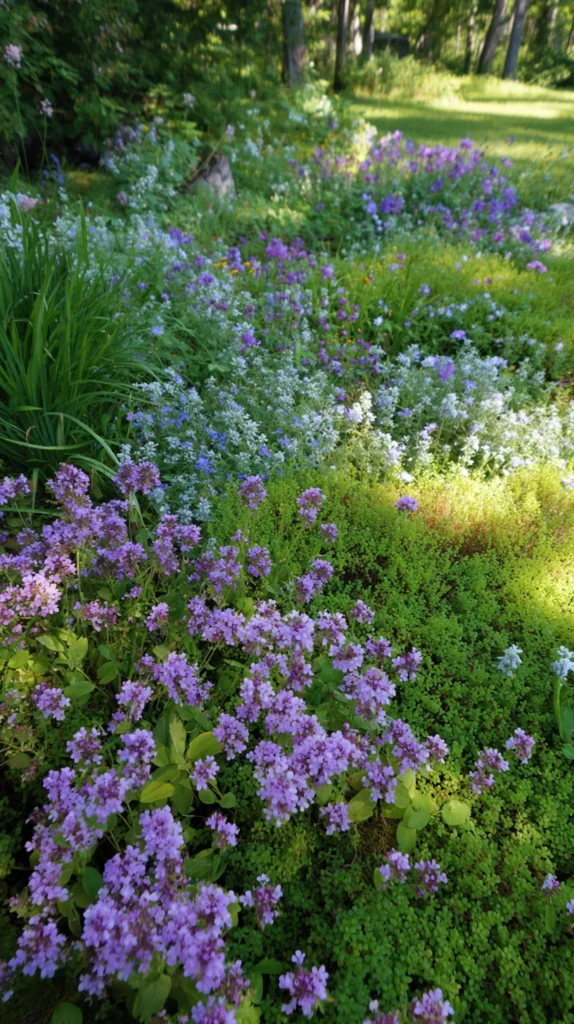
Combination of multiple ground covers – most interesting option.
My 600 square foot tapestry lawn:
Species included:
- Creeping thyme (40%)
- White clover (30%)
- Ajuga (20%)
- Violets (10%)
- Self-seeded additions
Why mixing works:
Extended interest:
- Different bloom times
- Something always flowering
- March-October color
- Never boring
Resilience:
- If one struggles, others thrive
- Diverse ecosystem
- Problem-resistant
- Robust system
Natural appearance:
- Looks like meadow
- Not monoculture
- Varied textures
- Organic feel
Pollinator haven:
- Different flowers attract different insects
- Bees constantly
- Butterflies
- Wildlife benefit
My tapestry lawn: Most beautiful, most interesting, most ecological option I’ve created.
Creating Tapestry Lawn
My installation:
- Remove existing grass
- Amend soil
- Plant in drifts (not mixed randomly)
- Let them grow together over time
- Boundaries blur naturally
Composition shifts:
- Thyme dominates dry sunny spots
- Clover takes medium areas
- Ajuga fills shady edges
- Violets colonize tree bases
- Natural selection
Maintenance: Occasional editing (remove aggressive spreaders from wrong spots), 2 hours yearly
Choosing Right Ground Cover for Your Site
Match plant to conditions:
By Sun Exposure
Full sun (6+ hours):
- Creeping thyme
- White clover
- Creeping phlox
- Sedum
- Mazus
Partial shade (3-6 hours):
- Ajuga
- Liriope
- Violets
- Clover
Full shade (under 3 hours):
- Moss
- Sweet woodruff
- Ajuga
- Violets
- Dwarf mondo grass
By Foot Traffic
High traffic (main paths):
- Creeping thyme
- White clover
- Dichondra (warm zones)
Moderate traffic (occasional walking):
- Mazus
- Corsican mint (stepping stones)
- Ajuga
Low traffic (visual only):
- Moss
- Creeping phlox
- Sedum
- Sweet woodruff
- Dwarf mondo grass
By Climate
Cold (Zones 3-5):
- Creeping thyme
- White clover
- Ajuga
- Sweet woodruff
Moderate (Zones 6-8):
- All options work
- Most versatile zones
- Choose by other factors
Warm (Zones 9-11):
- Dichondra
- Liriope
- Sedums
- Clover
Installation Process
My step-by-step:
Removing Existing Lawn
Options I’ve tried:
Smother method (my preference):
- Mow grass short
- Cover with cardboard
- Top with 3 inches compost
- Wait 3 months
- Plant through cardboard
Pros: No chemicals, builds soil, easy Cons: Takes time, plan ahead
Herbicide method:
- Spray grass killer
- Wait 2 weeks
- Remove dead grass
- Till in compost
Pros: Fast (2 weeks) Cons: Chemicals, I avoid this
Sod cutter method:
- Rent sod cutter ($80/day)
- Remove grass in strips
- Compost or discard
- Till in amendments
Pros: Immediate bare soil Cons: Physical labor, rental cost, removes topsoil
I use smother method – worth the wait for chemical-free, soil-building approach.
Soil Preparation
Most ground covers need:
- Well-draining soil
- Add compost (2-3 inches)
- Add sand if clay (1-2 inches)
- Till together 6 inches deep
Exceptions:
- Moss: Prefers poor soil, don’t amend
- Sedums: Need excellent drainage, add extra sand
Planting Spacing
My actual spacing:
Fast spreaders (ajuga, thyme): 12 inches apart Moderate spreaders (phlox): 10-12 inches Slow spreaders (mondo grass): 6 inches Seeds (clover): Broadcast, rake in
Closer spacing:
- Faster coverage
- Higher initial cost
- Fewer weeds first year
- I prefer this
Wider spacing:
- Cheaper initially
- Takes longer
- More weeding first year
- Budget option
Maintenance First Year vs Established
Reality check:
Year 1 (Establishment)
Weekly tasks (April-October):
- Water if no rain (30 minutes)
- Pull weeds (1 hour)
- Total: 1.5 hours weekly = 39 hours
Still less than grass lawn (78 hours) but not yet zero-maintenance
Year 2 Onward (Established)
Yearly tasks:
- Weed if needed (30 minutes)
- Edge borders (30 minutes)
- Maybe trim once (30 minutes)
- Total: 1.5 hours yearly
Savings: 76.5 hours annually compared to grass
The payoff comes year 2+ – patience required year one.
Weed Management
Different than lawn:
Grass lawns:
- Chemical weed killers
- Regular applications
- Ongoing battle
- Never-ending
Ground cover lawns:
Year 1:
- Hand-pull weeds weekly
- Ground cover filling in
- Competition increasing
- Decreasing problem
Year 2+:
- Dense ground cover chokes weeds
- Occasional dandelion
- Minimal weeding
- Natural suppression
My reality: Weeded 30-40 hours year 1, maybe 30 minutes yearly now
Cost Comparison
My actual costs converting 1,200 square feet:
Traditional Grass Lawn (Annual)
Maintenance:
- Fertilizer (3 applications): $80
- Weed control: $60
- Water (summer increase): $120
- Gas/oil (mower): $40
- Annual: $300
Over 10 years: $3,000
Ground Cover Conversion (One-Time + Annual)
Initial installation:
- Plants (thyme, clover, phlox mix): $450
- Soil amendments: $80
- Cardboard for smothering: $0 (free from stores)
- One-time: $530
Annual maintenance:
- Maybe mulch top-up: $30
- Annual: $30
Over 10 years: $530 + ($30 × 10) = $830
Savings over 10 years: $2,170 plus 765 hours of time
Common Ground Cover Mistakes
I made these errors:
Mistake 1: Incomplete Grass Removal
Left grass rhizomes in soil – they competed with ground covers.
Fix: Complete removal essential, use smother method to kill everything.
Mistake 2: Poor Drainage
Planted thyme in clay – rotted first winter.
Fix: Amend soil properly, add sand, ensure drainage.
Mistake 3: Wrong Plant for Conditions
Planted sun-lovers in shade – they struggled and died.
Fix: Match plant to actual site conditions, not wishful thinking.
Mistake 4: Impatience
Expected instant lawn year 1 – looked spotty, considered failure.
Fix: Accept 2-year timeline, year 1 is establishment.
Mistake 5: No Containment
Planted aggressive ajuga – invaded everything.
Fix: Install edging for spreading types, contain from start.
Neighbor Relations
How to handle traditional lawn expectations:
My approach:
Before converting:
- Talked to neighbors
- Explained plan
- Showed photos of mature examples
- Got buy-in
During installation:
- Looked messy (cardboard phase)
- Posted sign: “Future Pollinator Meadow”
- Explained to anyone who asked
- Kept edges neat
After establishment:
- Looks intentional
- Beautiful flowers
- Neighbors converted too (3 of them!)
- Spread the idea
Tips for acceptance:
Keep borders neat:
- Clean edges against sidewalk
- Don’t let it look neglected
- Intentional design obvious
- Professional appearance
Start small:
- Convert section, not whole yard
- Prove concept
- Expand gradually
- Less shocking
Educate:
- Environmental benefits
- Pollinator support
- Water conservation
- Time savings
My neighbor comments evolved:
- Year 1: “Interesting…” (skeptical)
- Year 2: “Coming along nicely” (warming)
- Year 3: “How did you do this? I want to try!” (converted)
My Complete No-Mow Transformation
What I actually converted:
Kept grass (40% of yard):
- Kids’ play area (500 sq ft)
- High-traffic zones
- Needs traditional lawn
Replaced with ground covers (60%):
- Side yards: Creeping thyme (400 sq ft)
- Under trees: Moss and sweet woodruff (300 sq ft)
- Back garden paths: Mixed tapestry (600 sq ft)
- Hot dry slope: Sedum (150 sq ft)
- Shade borders: Ajuga (250 sq ft)
Total converted: 1,700 square feet
Time savings:
- Before: 78 hours yearly (all grass)
- After: 15 hours yearly (reduced grass + ground cover maintenance)
- Saved: 63 hours yearly
Cost savings:
- Before: $300 yearly (grass maintenance)
- After: $50 yearly (minimal inputs)
- Saved: $250 yearly
Quality of life:
- Before: Dreaded weekends (mowing duty)
- After: Enjoy yard, barely maintain
- Priceless
Getting Started This Season
Don’t convert everything at once.
This spring:
Choose one area (100-200 sq ft):
- Side yard
- Under tree
- Border area
- Not entire lawn
Select appropriate ground cover:
- Assess sun/shade/traffic
- Choose from list above
- Buy plants or seed
- Budget $100-200
Install:
- Smother existing grass (cardboard + compost)
- Or remove grass
- Plant ground cover
- Mulch gaps
- Water first season
My recommendation for first conversion:
Creeping thyme in sunny side yard:
- 100 square feet
- 50 plants at $1.50 = $75
- Easy success
- Beautiful result
- Proves concept
After success with one area, expand gradually over 2-3 years.
Now go reclaim your weekends and ditch that mower forever!
Quick Summary:
Easiest no-mow ground covers:
- White clover (cheapest, $25 seed, fast)
- Creeping thyme (walkable, fragrant, beautiful)
- Ajuga (fastest coverage, 1 year)
By site conditions:
Full sun:
- Creeping thyme (drought-tolerant, walkable)
- White clover (cheap, fixes nitrogen)
- Sedum (extreme drought, hot spots)
- Creeping phlox (spring flowers)
Shade:
- Moss (deep shade, no traffic)
- Sweet woodruff (fragrant, woodland)
- Ajuga (fast, aggressive)
- Violets (free, already there)
High traffic:
- Creeping thyme (best walkable)
- White clover (tolerates mowing)
- Dichondra (warm climates only)
Low traffic:
- Moss (moderate traffic kills it)
- Creeping phlox (decorative)
- Dwarf mondo grass (modern look)
Time savings:
Traditional grass lawn: 78 hours yearly Ground cover established: 1.5 hours yearly Savings: 76.5 hours annually
Cost comparison (1,000 sq ft, 10 years):
Grass lawn: $3,000 (fertilizer, water, weed control, gas) Ground covers: $830 (initial $530 + $30 yearly) Savings: $2,170 over decade
Installation timeline:
Year 1:
- Remove grass (smother 3 months or remove immediately)
- Plant ground cover (spring or fall best)
- Water weekly if no rain
- Weed weekly (30-40 hours total)
- Looks establishing, not finished
Year 2:
- Fills in completely
- Weeding drops to minimal
- Maintenance drops to 1-2 hours yearly
- Looks intentional and beautiful
Plant costs (per 100 sq ft):
Seed (clover, dichondra): $5-10 Plants 12″ spacing (thyme, phlox): $50-100 Plants 6″ spacing (mondo grass): $150-200 Free (moss, violets): $0 (encourage existing)
Grass removal methods:
Smother (my choice):
- Cardboard + compost
- 3 months wait
- Chemical-free
- Builds soil
- Best option
Herbicide:
- 2 weeks
- Chemicals (I avoid)
- Fast but toxic
Sod cutter:
- Immediate
- $80 rental
- Physical labor
- Removes topsoil
Maintenance year 1 vs established:
Year 1: 39 hours (watering + weeding) Year 2+: 1.5 hours (minimal trim/edge) Reduction: 96% less maintenance
Common mistakes:
- Incomplete grass removal (competition)
- Poor drainage prep (plants rot)
- Wrong plant for conditions (failure)
- Impatience (takes 2 years)
- No containment for spreaders (invasion)
Best combinations (mixed tapestry):
- 40% creeping thyme (sun)
- 30% white clover (fills gaps)
- 20% ajuga (shade edges)
- 10% violets (self-seeded)
- Natural meadow appearance
Neighbor-friendly strategies:
- Start small (one section)
- Keep edges crisp (looks intentional)
- Explain benefits (pollinators, water, time)
- Show photos of mature examples
- Post educational sign during establishment
Water requirements:
Year 1: Weekly if no rain (establishing) Year 2+: Rainfall only (drought-tolerant) vs grass: 50-70% less water ongoing
Environmental benefits:
- Zero gas-powered mowing (carbon reduction)
- No chemical fertilizers/herbicides
- Pollinator habitat (flowers)
- Deeper roots (soil health)
- Native options support ecosystem
Quick start budget:
100 sq ft conversion:
- Plants/seed: $50-100
- Soil amendments: $20
- Cardboard: Free
- Total: $70-120
ROI timeline:
Initial investment: $70-120 per 100 sq ft Annual grass cost saved: $30 per 100 sq ft Time saved: 8 hours yearly per 100 sq ft Payback: 2-4 years in money, immediate in time
Success indicators:
- Ground cover filling in (year 2)
- Weeds decreasing dramatically
- Maintenance dropping to hours yearly
- Flowers attracting pollinators
- Neighbors asking how you did it
- Reclaimed weekend time
Remember: Start small (100-200 sq ft), choose plants for actual conditions, accept 2-year timeline for full coverage, keep grass for high-traffic play areas, conversion is gradual process not overnight transformation.