13 Fall Container Garden Ideas for Porches and Patios
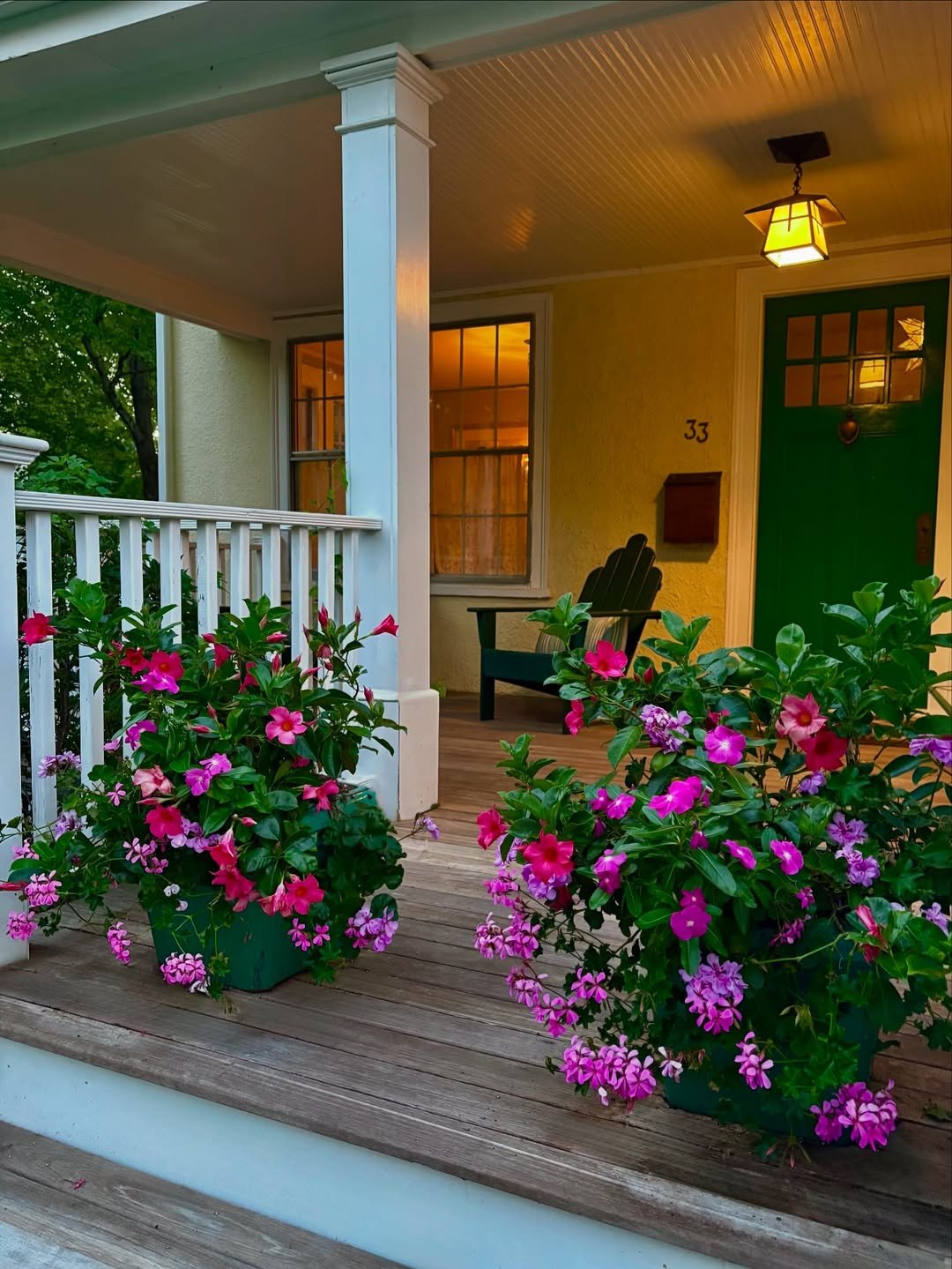
The porch containers that looked excellent in July looked embarrassing by September. Same pots, same positions, same plants that had given up weeks ago.
The summer container garden: not designed to become the autumn container garden. It was designed for one season and not replaced when that season ended.
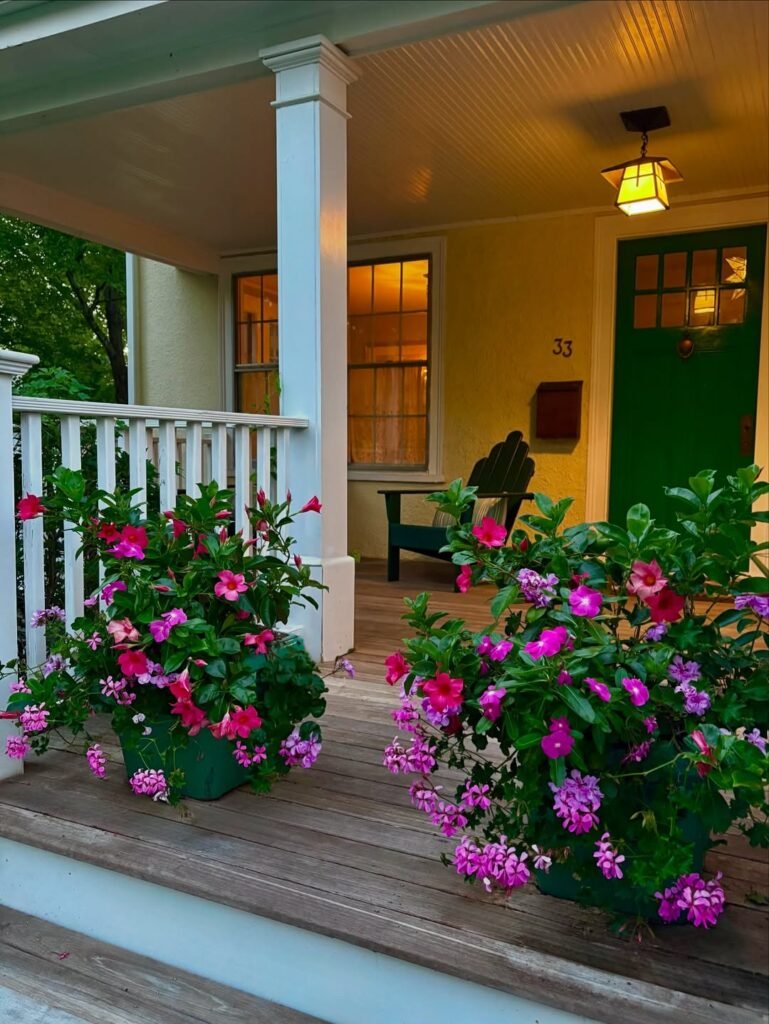
The autumn container garden is not the summer container garden minus the petunias. It is its own planting, its own palette, its own set of plants chosen for what October does to them rather than what July required. The plants that thrive now are not the ones that thrived then. The colours that suit the season are not the pale blues and bright pinks that suited the last one.
Getting the autumn container garden right is as simple as understanding what it needs to be. Not what summer was, extended. What autumn actually is.
Here are 13 container ideas that are specifically and deliberately autumnal.
Why Autumn Container Gardens Work Differently
The conditions that change everything:
The plants available:
- Summer annuals: finished, done, or declining
- Autumn-specific plants: begin to look their best
- The transition: not gradual — the summer plants need to go for the autumn ones to shine
The temperature effect:
- Cool temperatures: intensify colour in certain plants (ornamental kale deepens with cold, heuchera colour strengthens)
- The frost: actually improves some container plants
- The autumn container: designed around plants that love rather than merely tolerate the season
The light quality:
- Low angle sun: the most flattering light any garden gets
- October container: photographed better than July container
- The same pot: extraordinary in autumn light
The maintenance reality:
- Summer containers: water daily (sometimes twice)
- Autumn containers: water less frequently (cooler temperatures, more rain)
- The lower maintenance season: the most accessible time to have containers looking their best
The Autumn Container Palette
The colours that define this season’s container garden:
Deep purple-red (the signature):
- Ornamental kale and cabbage
- Dark heuchera varieties
- The depth of colour: specific to the season
Copper and bronze:
- Sedums in autumn colour transition
- Bronze fennel foliage
- Copper-toned ornamental grasses
Warm orange and rust:
- Chrysanthemums (copper and rust varieties)
- Orange viola
- Rudbeckia still going in containers
Silver and grey:
- Dusty miller
- Artemisia (silver mound)
- Silver thyme
Deep evergreen:
- Dwarf conifer
- Ivy
- Skimmia
The palette:
- Nothing pale, pastel, or cool
- Warm, rich, deep, and textural
- The season expressed through colour
1. The Classic Autumn Trio (The Foundation Container)
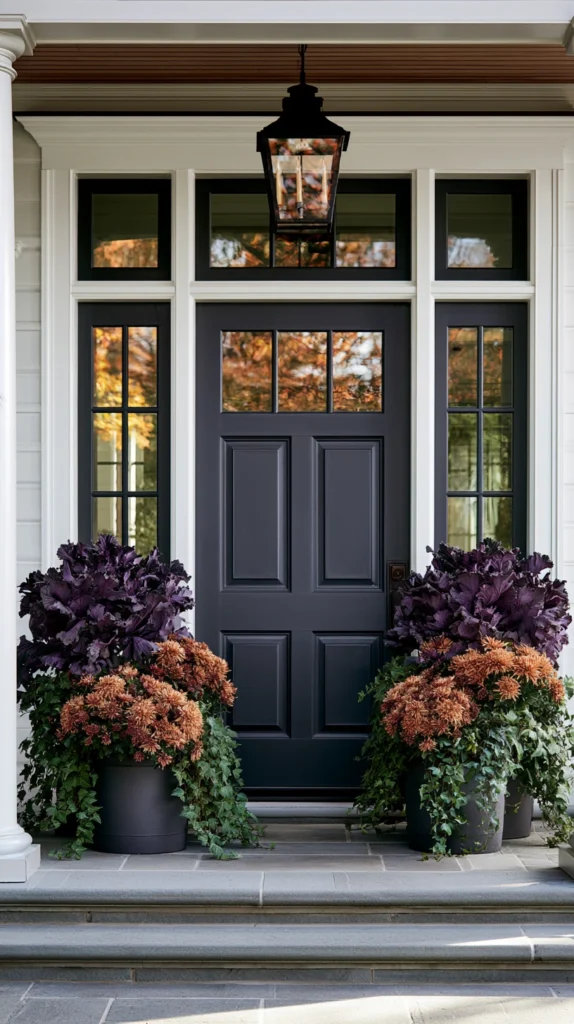
Ornamental kale, a trailing ivy, and a cushion chrysanthemum in one large pot — the reliable, beautiful, and specifically autumnal container planting that works on every porch in every climate.
Why these three plants together:
The kale:
- The statement plant of autumn container gardening
- Deep purple-red rosette: architectural and colourful simultaneously
- Hardens and deepens in colour with every frost
- Visible from across the street: the announcement of the season
The chrysanthemum:
- The flower that says autumn as specifically as pumpkins and falling leaves
- Available in: rust, copper, deep gold, deep burgundy, pale peach
- Compact cushion form: fills the container without crowding the kale
- The colour: coordinate with the kale (bronze mum beside purple kale — the complementary contrast)
The ivy:
- Trails over the pot edge
- Evergreen: continues after the kale and mum are finished
- Available in many sizes and variegation
- The connector: trails down and visually relates the pot to the ground
The combination formula:
- One kale (the thriller): the tallest, most striking element
- One or two chrysanthemums (the filler): the body of the planting
- One or two ivy (the spiller): the trailing element
- Three roles, one complete pot
The pot:
Terracotta (always for this combination):
- The warm orange-clay of terracotta: the fourth element of the palette
- Kale + mum + ivy + terracotta: the autumn container at its most authentic
- No other pot material: matches this combination
The size:
- 14–16 inch diameter minimum
- Three plants need room
- Too small: the plants crowd, the combination cannot breathe
Placement:
Symmetrical pairs at the entrance:
- Two identical containers, either side of the door
- The symmetry: the formal welcome
- The autumn signal: impossible to miss
As a single specimen:
- One large container (18 inches or wider)
- The kale larger, the mums more abundant
- Single focal point at the porch corner
Cost breakdown:
- One ornamental kale: $6–10
- Two cushion chrysanthemums: $12–16
- One or two ivy plants: $6–10
- 14-inch terracotta pot: $15–25
- Compost: $5
- Total: $44–66 per container
The classic autumn trio: planted in early September, beautiful through October and November. The kale deepens purple with every frost. The chrysanthemums: peak in October. The ivy: continues through winter, anchoring the pot.
Classic Trio Tips
The chrysanthemum longevity:
- Chrysanthemums sold as patio plants are often forced (grown with chemicals to be at peak bloom when sold)
- They may decline after three to four weeks
- Accept this and replace with fresh mums for extended display
- Or: choose later-blooming varieties (check the label for “late” or “December” varieties)
The kale after hard frost:
- Ornamental kale: edible after several hard frosts (intensifies and becomes more flavourful)
- The colour: also intensifies with frost (deeper purple)
- Remove if damaged beyond appearance, but most ornamental kales handle temperatures down to about 20°F (-7°C)
2. The Grass and Sedge Feature (Movement and Architecture)
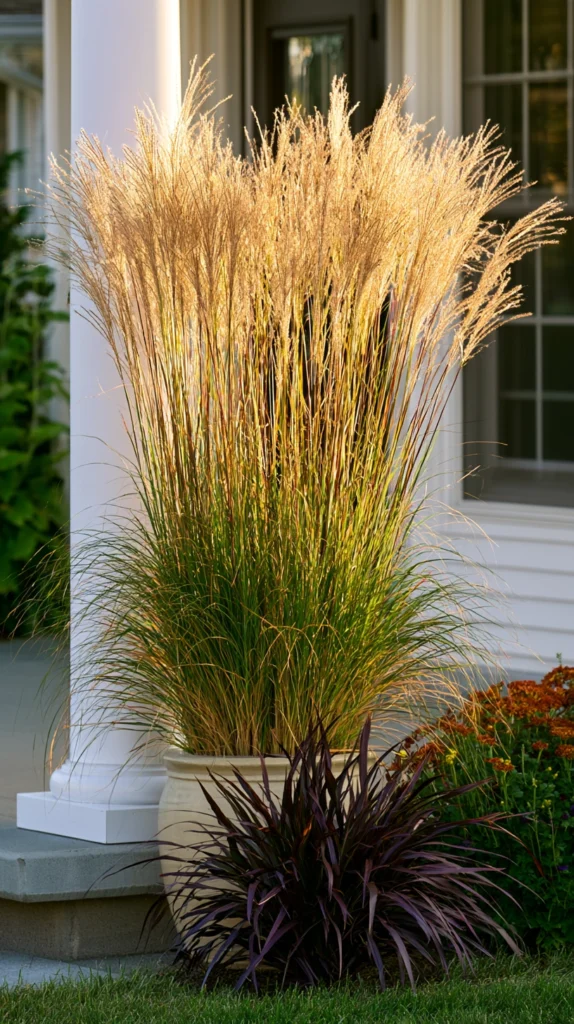
An ornamental grass or sedge as the primary plant in a tall container — the container that adds height, movement, and a different kind of beauty to the autumn porch.
Why grasses in containers work specifically in autumn:
The seasonal peak:
- Many ornamental grasses: at their most beautiful in autumn
- The seed plumes: fully developed by September
- The foliage colour: transitioning to gold and amber
- The container grass in October: the grass at its absolute peak
The movement:
- Wind in autumn is stronger than in summer
- A grass in a container: moving in the autumn breeze
- The movement: the aliveness of the container planting
- Static autumn containers: beautiful. Moving grasses: alive.
The varieties:
Stipa tenuissima (Mexican feather grass):
- Fine, pale gold, feathery
- The most graceful grass in a container
- Light catches it throughout the day
- Moves in the lightest breeze
Pennisetum (fountain grass):
- Arching, fountain form
- Purple-black variety (‘Rubrum’): most dramatic autumn container grass
- Seed plumes by late summer: feathery, arching
- Not fully hardy — overwinter inside in cold climates
Carex ‘Evergold’:
- Evergreen sedge (not a true grass)
- Yellow-green striped arching foliage
- Year-round interest: does not die back like true grasses
- Very cold-hardy
Hakonechloa macra (‘Aureola’):
- Japanese forest grass
- Gold and green variegated arching foliage
- Brilliant autumn colour (orange-gold)
- One of the most beautiful grasses in a container
The container choice:
Tall, dark, simple:
- The grass: the focus
- The pot: should not compete
- A tall dark-glazed ceramic pot: allows the grass to be fully appreciated
- Or: a simple dark-stained timber planter
The pairing:
One grass plus one dark-leaved companion:
- A grass with a deep burgundy heuchera at its base
- The grass: tall, pale, moving
- The heuchera: low, dark, still
- The contrast: the composition
Cost breakdown:
- Ornamental grass (medium specimen): $15–30
- Tall dark ceramic pot: $35–60
- Small companion plant (heuchera): $8
- Total: $58–98
3. The Monochromatic Deep Purple Container (The Drama)
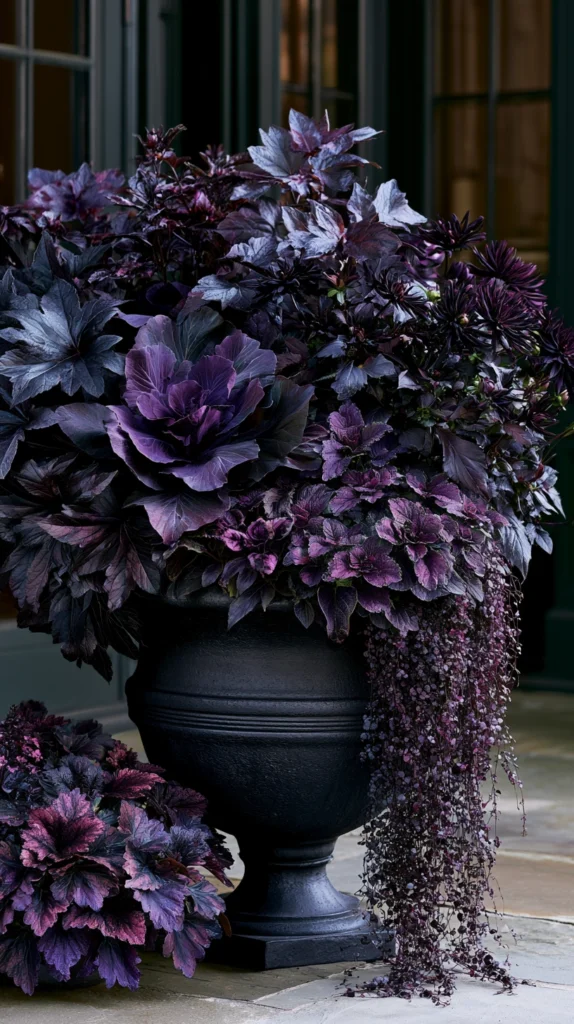
An entire container planting in deep purple and near-black tones — the sophisticated container that treats restraint as elegance.
Why a single-colour palette in a container works:
The signal of intention:
- One colour, many tones: a decision was made
- The restraint: reads as design
- Multiple unrelated colours in one pot: pretty but undirected
- The monochromatic container: directed and sophisticated
The purple autumn palette:
Dark purple ornamental kale:
- ‘Redbor’ or similar deep purple-black variety
- The deepest available colour in kale
- The anchor of the composition
Purple heuchera:
- ‘Obsidian’ (near-black), ‘Plum Pudding’ (deep plum), ‘Chocolate Ruffles’
- Adds a different form (mounding, fine-textured) to the kale’s bold rosette
- The foliage: continues after everything else is finished
Dark purple viola:
- ‘Bowles’ Black’ (near-black)
- Or any deep purple pansy
- Fill the lower level of the container
- Flowers through autumn into winter
Purple-black sweet potato vine:
- ‘Blackie’ or ‘Black Heart’
- The deep purple-black trailing element
- Adds the spiller to complete the formula
The colour variation:
The all-purple container is not flat:
- Near-black kale foliage
- Deep plum heuchera
- Purple-black viola flowers
- The variations within purple: the interest within the restraint
The pot:
White pot (maximum contrast):
- The deep purple planting against white: graphic and dramatic
- The white recedes, the purple advances
- The most striking version of this container
Or: dark glaze (tone-on-tone):
- Deep navy or charcoal glazed pot
- The planting and the pot: same family
- More subtle, more sophisticated
- The tonal relationship: elegant
Cost breakdown:
- Dark kale (1): $8
- Heuchera ‘Obsidian’ (1): $10
- Dark viola (3): $9
- Dark sweet potato vine (1): $7
- White or dark glazed 14-inch pot: $20–35
- Total: $54–69
4. The Warm Colour Explosion (Orange, Copper, and Gold)
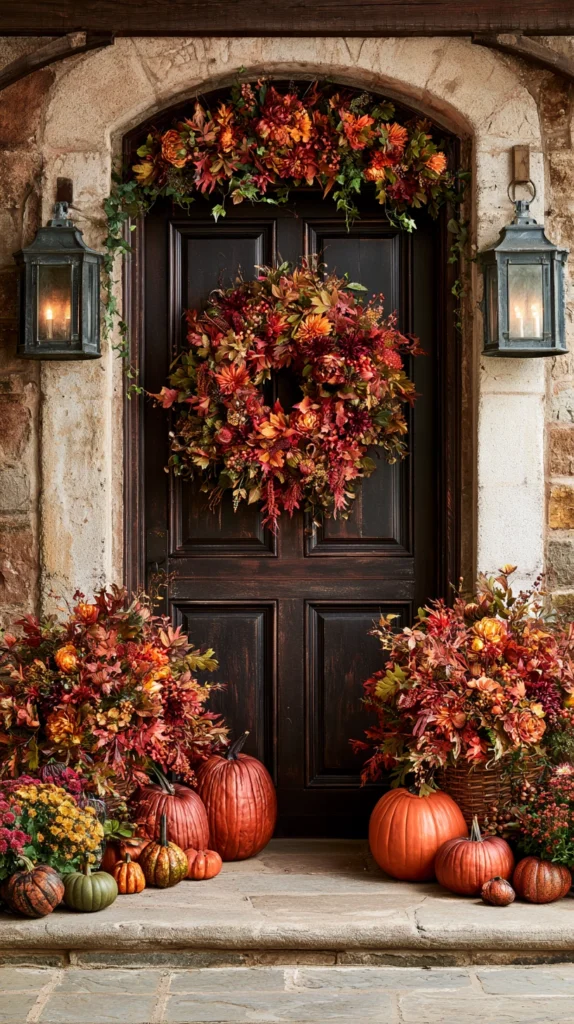
A container bursting with warm orange, copper, and gold plants — the pot that looks like autumn itself has been contained within it.
Why warm colour containers are the season’s most joyful statement:
The harvest connotations:
- Orange and gold: the colours of harvest, leaves, pumpkins, and fire
- The container: referencing the season’s full palette
- Placed near pumpkins (as covered in the pumpkin display article): the visual conversation
The warm-season plants:
Copper or rust chrysanthemum:
- The most specifically autumnal colour in any mum
- ‘Bronze Elegance’, ‘Bronfino Copper’, or similar
- The signature flower for this container
Orange and yellow viola:
- ‘Amber Kiss’, ‘Orange Blotch’, or mixed warm viola
- Fill the container front
- The continuity of colour at the lower level
Bronze or gold sedum:
- Sedum ‘Autumn Joy’ (now Hylotelephium) transitioning from dusty pink to copper-rust
- Or a small sedum in golden-orange autumn tones
- The structural element
Gold-tone grass or sedge:
- ‘Gold Fingers’ carex or similar gold sedge
- Adds texture and fine-line contrast to the rounded forms of mum and sedum
- The vertical fine-textured element
The orange sweet potato vine:
- ‘Sweet Caroline Bronze’
- Copper-toned trailing element
- The spiller that extends the palette over the edge of the pot
The pot:
Dark charcoal or near-black:
- Maximum contrast for warm colours
- The warm orange jumps forward
- The dark recedes: the flowers are the only thing visible
- The most visually dynamic version
Cost breakdown:
- Copper mum: $10
- Three orange/gold viola: $9
- Sedum in autumn colour: $8
- Gold sedge: $8
- Bronze sweet potato vine: $7
- 14-inch charcoal pot: $20–30
- Total: $62–72
5. The Cabbage and Kale Abundance Pot (Vegetable Garden on the Porch)
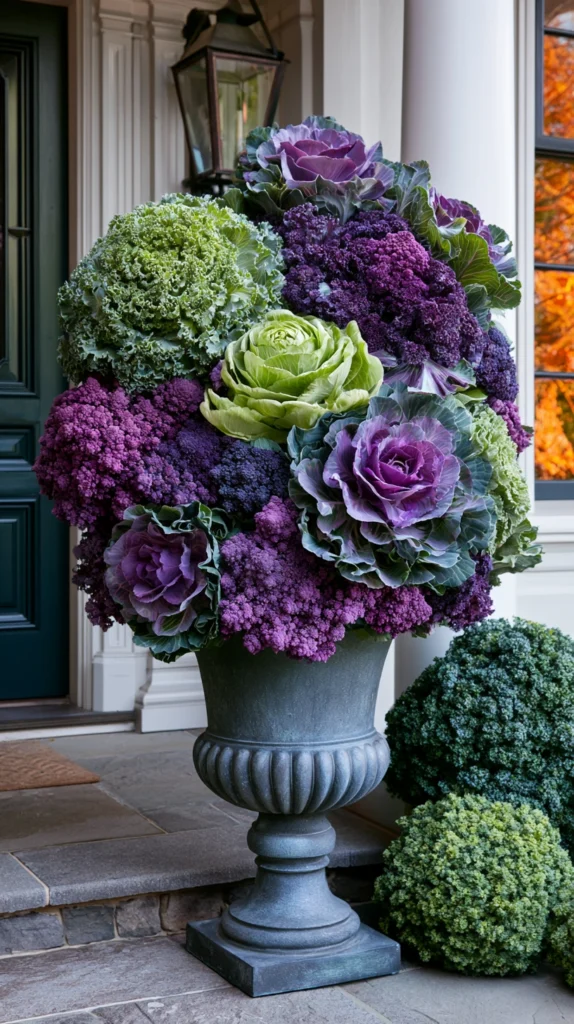
A large pot planted entirely with ornamental cabbages and kales in varied sizes and colours — the single-family pot that celebrates the most ornamental food plants available in autumn.
Why a dedicated kale and cabbage container works:
The variety within one family:
- Ornamental kales and cabbages: available in frilled, flat, purple, cream, pink, white
- All belong to the same family (Brassica oleracea ornamental group)
- Together in one container: a coherent family with internal variety
- The combination: diverse but related
The colour spectrum available:
Purple-centred with white:
- The classic bicolour ornamental kale
- Deep purple centre rosette, outer leaves transitioning to blue-green or white
- The most widely available form
Pure white or cream:
- ‘White Peacock’, or cream-centred varieties
- In a container with purple: the contrasting accent
- Against a dark pot: striking
Deep purple-black:
- Cultivars bred for the darkest possible colour
- No white: the colour pure and intense
Frilled versus flat:
- Frilled (ruffled edges): more ornate, more light-catching
- Flat (broad smooth leaves): simpler, more sculptural
- Mixed in one pot: texture variation
The arrangement within the container:
One large kale at centre:
- The tallest and most architectural
- Often the flat-leaved ‘Tuscan’ style (taller than the rounded types)
- The centre and height anchor
Three to five ornamental cabbages surrounding:
- The rounded rosette form
- Varied colours
- Filling the container around the central kale
Trailing ivy to finish:
- Evergreen
- Trails over the pot edge
- The connection to the ground
The pot:
A wide, shallow pot works for this:
- Kales and cabbages: relatively shallow-rooted
- A wide planting bowl allows more plants
- 18–24 inch diameter: allows the full “abundance” planting
Cost breakdown:
- One tall ornamental kale: $8
- Four ornamental cabbages (varied colours): $20
- Ivy trailing (2): $10
- Wide terracotta bowl (18-inch): $25–40
- Total: $63–78
6. The Evergreen Winter Framework Container (The Long Game)
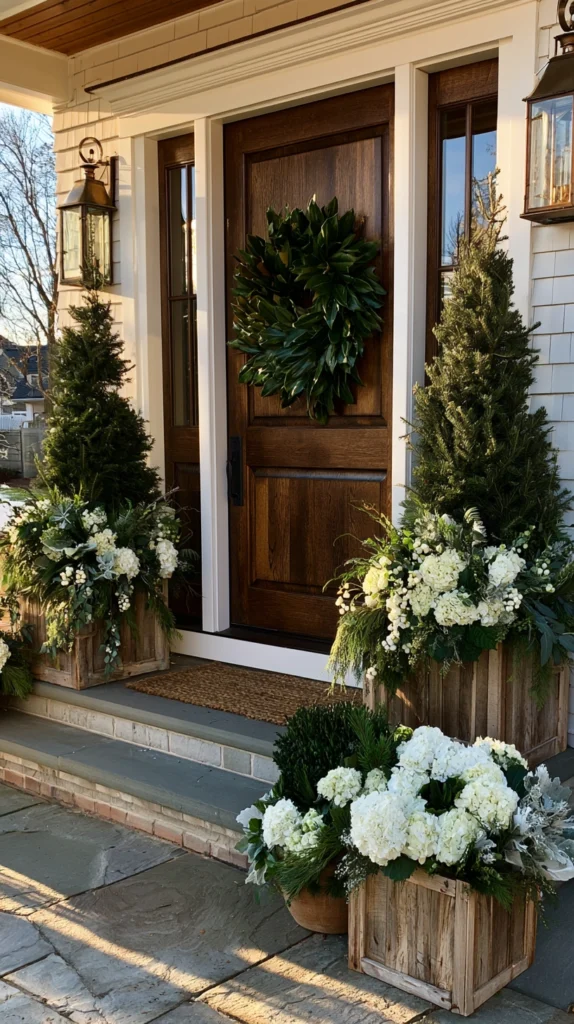
A container planted with evergreen structural plants that will carry through winter into spring — the autumn container that does not need replacing in December.
Why evergreen containers are the strategic choice:
The autumn container lifespan:
- Annual-dominant containers: beautiful for 6–8 weeks, then done
- Evergreen containers: planted once, providing value for years
- The investment: higher per plant, lower per month of display
The evergreen autumn container:
Dwarf conifer:
- ‘Rheingold’ (gold, cone-shaped, turns deeper bronze-gold in winter)
- ‘Little Gem’ Norway Spruce (perfect tiny cone shape)
- ‘Golden Mops’ (gold weeping cypress)
- The conifer: year-round architecture, intensified colour in winter
Skimmia japonica:
- Evergreen, compact
- Red berries persist from autumn through winter (one of the longest-lasting berry displays)
- Fragrant white flowers in spring
- Suited to shade: useful for north-facing porches
Euonymus fortunei:
- Evergreen ground-cover shrub
- Gold or silver variegation: bright in winter
- Compact and hardy
- The variegation: carries colour when everything else has faded
Heuchera:
- Already mentioned in other ideas: included here for its year-round contribution
- Winter foliage: often the most vivid season for the darker varieties
- The colder the temperature: the more intense the colour in some varieties
The autumn enhancement:
Seasonal plants added around the evergreens:
- Autumn: mums and viola added for the seasonal colour burst
- Winter: remove spent mums, the evergreens carry on
- Spring: replace with spring bulbs coming through (if bulbs were planted in the same pot in autumn)
- The evergreen framework: the permanent element. The seasonal additions: the changing decoration.
The layered bulb opportunity:
Plant bulbs under the evergreens:
- Spring bulbs planted beneath the evergreen root level in October
- Narcissus, tulips, scilla — any spring bulb
- By April: the bulbs emerge through and around the evergreens
- The same pot: autumn, winter, and spring all from one planting
Cost breakdown:
- Dwarf conifer: $15–25
- Skimmia (with berries): $12
- Heuchera (dark variety): $10
- Euonymus: $8
- Large ceramic or frost-proof pot (essential — terracotta can crack in frost): $30–55
- Spring bulbs (under the evergreens): $8
- Total: $83–118
7. The Rustic Trug and Crate Container (Vessels With Character)
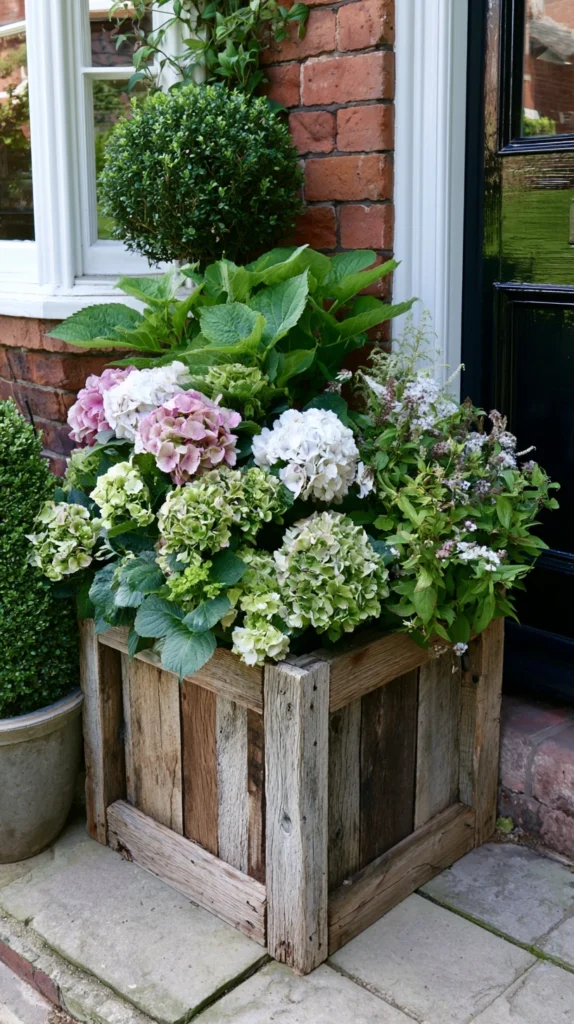
Autumn plants arranged in old wooden trugs, crates, or distressed wooden boxes — the container idea where the vessel contributes as much as the planting.
Why the vessel matters as much as the plants:
The material coherence:
- Old wood, weathered and worn: specifically autumnal
- The container and the plants: in the same material language
- Old wooden crate + ornamental kale + dried seed heads: speaking one language
- New plastic pot + ornamental kale: two different conversations
The worn quality:
- A trug that has been used: carries evidence of use
- The marks of use: the authenticity
- New vessel trying to look old: always slightly wrong
- Actually old vessel: naturally correct
The containers:
Wooden trug:
- The traditional harvesting basket
- Oblong, with a central handle
- The garden tool made into a planter
- Available new in aged-looking styles, or genuinely old from garden sales
Wine or fruit crate:
- Already aged wood (stamped with producer names — part of the character)
- Lined with plastic or burlap before planting (to prevent moisture rotting the wood immediately)
- The stamping and text: the decoration
- Free from wine merchants or grocers
Old tin or galvanised bucket:
- Drilled for drainage
- Rusted at the edges (correct for autumn)
- The grey-silver metal: complements the autumn palette
The planting in these vessels:
A loose, naturalistic arrangement:
- Not the thriller-filler-spiller formula
- More like: several plants of similar height, closely planted
- The look: as if the plants grew here
- Tumbled rather than arranged
Seasonal harvest additions:
Among the plants:
- A small pumpkin or gourd nestled among the planting
- A stem of dried wheat tucked in
- A few ornamental gourds on the soil surface
- The overlap of container planting and harvest display: the trug achieves both
Cost breakdown:
- Old wooden trug (secondhand): $0–15
- Or wine crate: $0–5
- Autumn planting (kale, mums, ivy): $25–35
- Small decorative pumpkin: $5
- Total: $30–60
8. The Thriller-Spiller-Filler in Autumn Colours (The Formula Applied Seasonally)
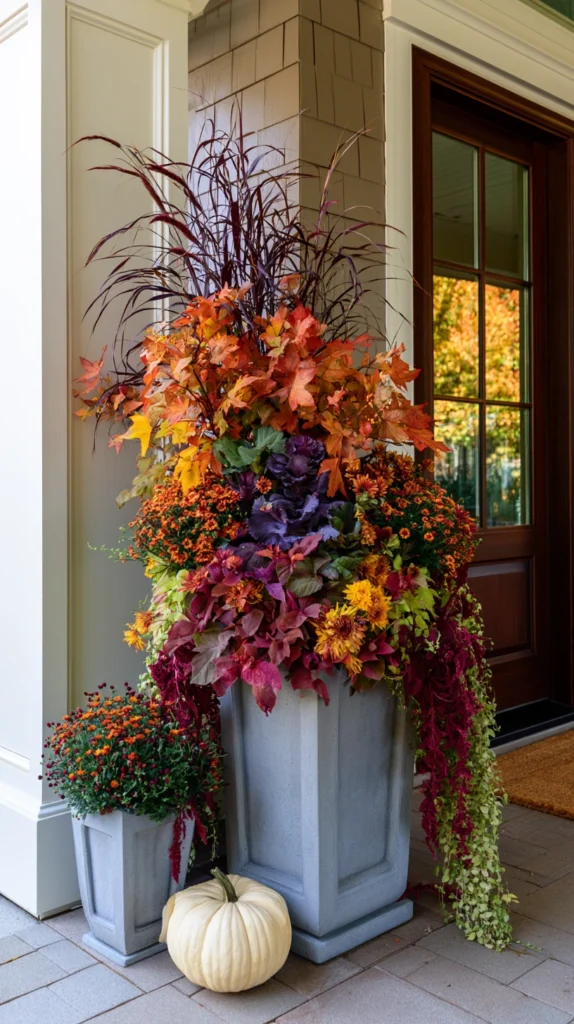
The classic container planting formula applied with specifically autumnal plants — the reliable approach that works in every size and every position.
Why the formula matters more in autumn:
The summer version of this formula:
- Everyone knows: a tall plant, a bushy plant, a trailing plant
- Used for summer containers so widely that it has become automatic
The autumn failure mode:
- The formula used, but with the wrong plants
- Summer fillers (petunias, calibrachoa) not replaced with autumn equivalents
- The formula: intact. The season: wrong.
- The fix: the same structure, different plants
The autumn thriller options:
Tall:
- Ornamental grass (stipa, pennisetum)
- Tall ornamental kale or cabbage
- Phormium (dwarf variety)
- Tall bronze fennel
- Calamagrostis grass (upright form)
The autumn filler options:
Bushy and mid-level:
- Chrysanthemum cushion form
- Heuchera (mounding)
- Sedum ‘Autumn Joy’ in copper transition
- Autumn-flowering heather (Calluna)
- Salvia microphylla (still flowering in many climates through October)
The autumn spiller options:
Trailing:
- Ivy (gold, silver, or dark green varieties)
- Sweet potato vine (‘Blackie’, ‘Sweet Caroline Bronze’)
- Autumn-flowering trailing viola
- Bacopa (if weather mild enough to continue)
- Lysimachia nummularia ‘Aurea’ (golden creeping Jenny)
Three formula combinations for autumn:
Dramatic and dark:
- Thriller: purple ornamental kale
- Filler: ‘Obsidian’ heuchera
- Spiller: dark ivy + ‘Blackie’ sweet potato vine
Warm and golden:
- Thriller: gold ‘Aureola’ hakonechloa
- Filler: copper chrysanthemum + sedum in autumn transition
- Spiller: golden creeping Jenny
Soft and textural:
- Thriller: stipa tenuissima (feather grass)
- Filler: white ornamental cabbage + silver dusty miller
- Spiller: pale ivy
Cost breakdown:
- Three to five plants per formula: $30–50
- Appropriate pot: $15–30
- Total: $45–80 per container
9. The Porch Pillar Pair (The Formal Autumn Entrance)
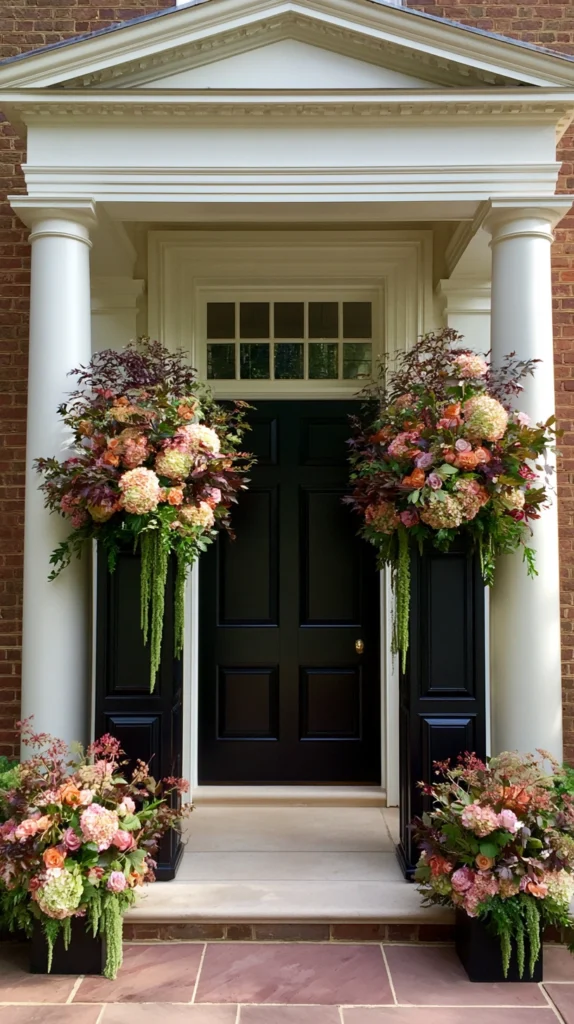
Two identical tall containers flanking the entrance, planted in matching pairs — the formal symmetry that announces a designed porch.
Why symmetry at the entrance is a specific design choice:
The formal signal:
- Matched pairs: the language of formality
- Formality: says this was intentional
- Intentional: beautiful
The asymmetric alternative:
- One large, one small: not a pair
- Pairs: both containers identical in vessel and similar in planting
- The symmetry: the design element
The tall container requirement:
Why tall containers at an entrance:
- Eye level: where the person arriving is
- Ground-level containers: visible but below eye level
- A container 24–36 inches tall: at eye level
- The entrance flanked at eye level: the formal welcome
The plants for a tall formal container:
For height from the container:
- Standard bay (Laurus nobilis) trained as a lollipop standard
- Box ball on a stem
- Clipped topiary: the most formal option
- Or: a tall grass in a tall container (the more relaxed formal)
For fullness around the base:
- Autumn planting around the base of the standard or topiary
- Cyclamens (perfect for this position in autumn — more below)
- Trailing ivy
- Dark heuchera
The standard plant through autumn:
Bay or box standard through autumn:
- Evergreen: present all season and all year
- The autumn understorey planting: the seasonal change
- Swap: summer annuals below in summer, autumn planting below in September
- The topiary: permanent. The underplanting: seasonal.
The pot pairing:
Exact match:
- Same pot, same size, same colour, from the same purchase
- Even the patina: the same age (this matters more for terracotta, which weathers at different rates)
- The visual pair: only works with genuinely matched vessels
Cost breakdown:
- Two tall ceramic or fibreglass containers: $60–120
- Two bay or box standards: $50–100
- Autumn underplanting (per container): $20–30
- Total: $150–280 for the pair
10. The Cyclamen Container (The Autumn Jewel)
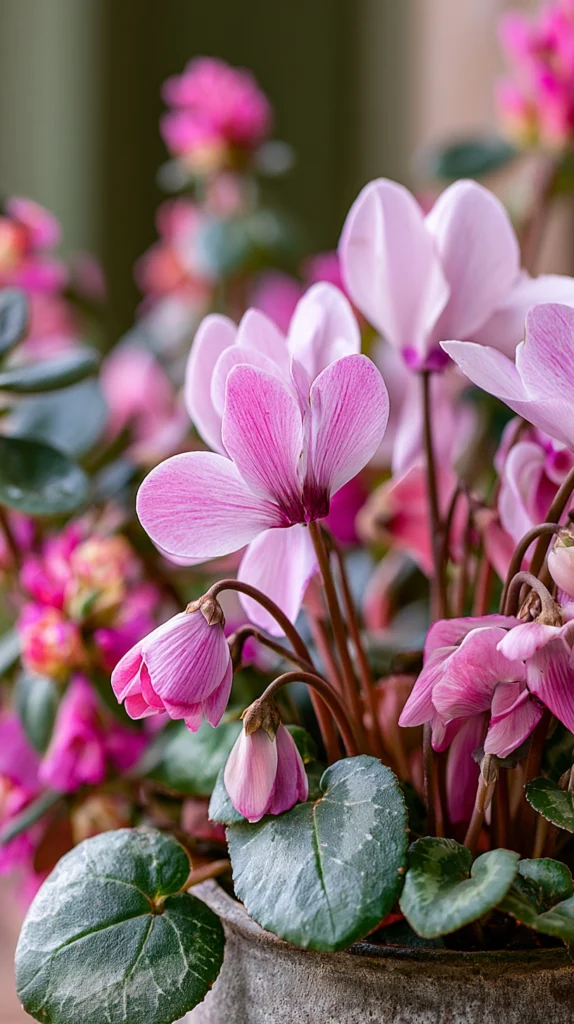
A container planted with hardy cyclamen as the primary plant — the small-flowered gem that gives autumn containers a completely different scale and character.
Why cyclamen are the autumn container’s underrated plant:
The scale shift:
- Most autumn container plants: substantial, bold, large-leaved
- Hardy cyclamen: small, delicate, intricate
- In a container: the cyclamen draws people close (the detail reward)
- The contrast with bold kale: cyclamen brings intimacy to the porch
The varieties:
Cyclamen hederifolium (the autumn species):
- Flowers September–November (flowers before the leaves emerge — the flowers appear from bare soil, extraordinary)
- Leaves: marbled silver and green, beautiful all winter
- Hardy (survives to 10°F / -12°C in well-drained soil)
- Available in pink, white, and lavender-pink
Cyclamen persicum (the florist cyclamen):
- Larger flowers, more showy
- Not fully hardy — protected position or frost-free environment needed
- Available from October onward at garden centres
- More colour options (deep red, white, salmon, pink, purple)
- Excellent for a sheltered porch position
The container design:
Cyclamen-dominant container:
- Six to eight cyclamen plants filling the container
- The flowers: a solid mass of colour at the porch level
- The marbled leaves: as beautiful as the flowers and present for longer
Cyclamen as underplanting:
- With ivy or low grass as the surrounding frame
- The cyclamen: jewel-like flowers at the front of the container
- The structural plants: provide height behind
The silver leaf quality:
The leaf as the feature:
- Cyclamen hederifolium leaves: appear after the flowers
- Silvery marbled patterns: different on every leaf
- Last all winter (the leaves are at their best January–March)
- The winter container: the cyclamen pot often more beautiful after the flowers than during
Cost breakdown:
- Six cyclamen plants (C. hederifolium): $18–30
- Decorative terracotta pot: $15–25
- Total: $33–55 — among the least expensive per visual impact
11. The Foliage-First Container (When Flowers Are Secondary)
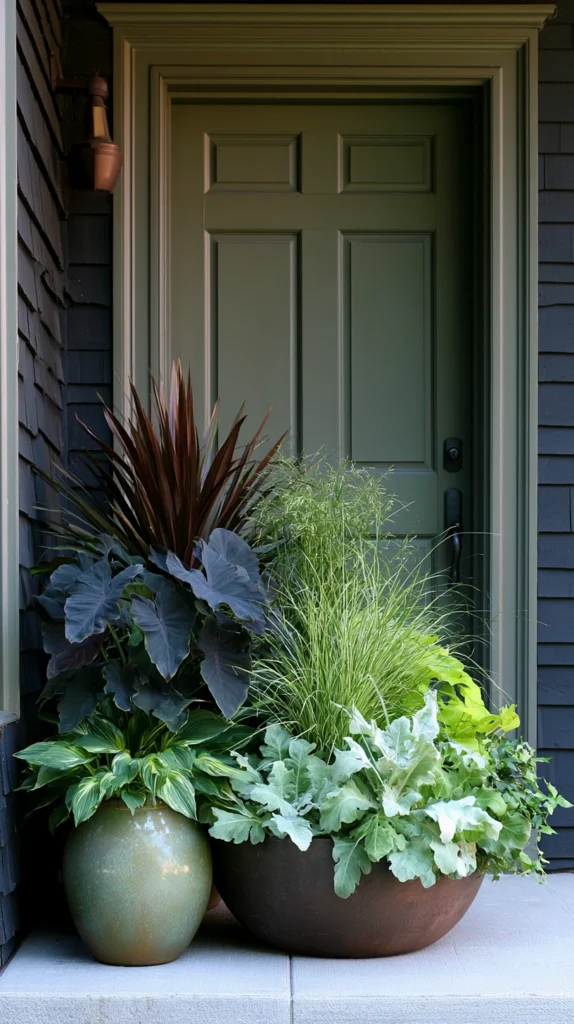
A container designed entirely around interesting autumn foliage, with flowers as the minor element — the design approach that reverses the usual priority.
Why foliage-first containers suit autumn:
The foliage season:
- Autumn: the season of foliage colour (everywhere, in the wider landscape)
- Containers that mirror this: in seasonal conversation with the wider garden
- A container full of bold foliage: belonging to the season in a way a flower-dominated container does not
The design principle:
Foliage: form, texture, colour
- Two or three foliage plants of different texture (fine grass, bold heuchera, trailing ivy)
- Colour within the foliage: the palette
- One or two plants with flowers: the accent, not the point
The foliage palette for autumn:
Bold and dark:
- Heuchera ‘Obsidian’ (near-black)
- Ajuga ‘Black Scallop’ (dark bronze-black leaves)
- Dark-leaved sweet potato vine
Fine and golden:
- Stipa tenuissima (fine gold grass)
- ‘Bowles’ Golden Sedge’ (carex)
- Golden thyme
Silver and grey:
- Stachys byzantina (lamb’s ears) in containers — silver, velvety texture
- Artemisia ‘Silver Mound’
- Dusty miller (Senecio cineraria)
Bold and structural:
- Phormium ‘Tom Thumb’ (dwarf, bronze-green fans)
- Small hosta (still present in autumn, beautiful die-back)
- Large-leafed sedum
The flower accent:
One plant for flowers (not more):
- A small ornamental cabbage
- Three viola at the front
- One Calluna (heather)
- The flower: present but not dominant
The interest through the season:
Foliage-first containers change slowly:
- Not the rapid transition of a flower-dominant container
- The heuchera: same beautiful bronze through November, December, January
- The grass: still standing in winter
- The container: consistent and reliable over a long season
Cost breakdown:
- Three or four foliage plants: $35–55
- One flower plant (viola or small kale): $6–8
- Container: $15–30
- Total: $56–93
12. The Kitchen Herb Autumn Container (Function and Beauty)
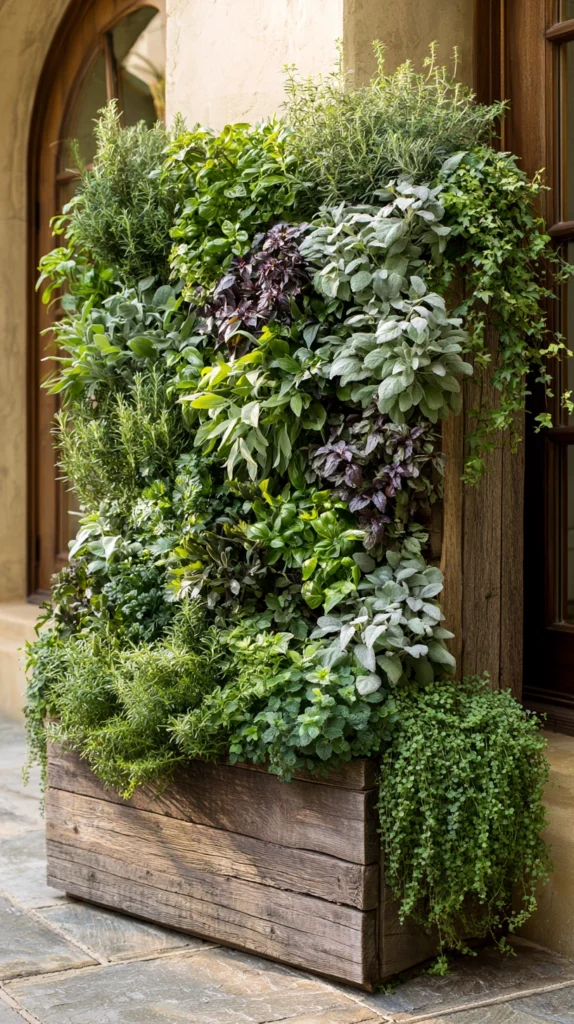
A container of herbs that are productive through autumn — the planting that combines beauty and use.
Why herbs belong in autumn porch containers:
The autumn herb quality:
- As established in the autumn garden article: cool temperatures concentrate essential oils in herbs
- Autumn herbs: more intensely flavoured than their summer counterparts
- The porch herb container: beautiful to look at AND more useful than the summer version
The autumn herb palette:
Sage:
- Grey-green leaves (some varieties: purple-flushed in autumn)
- Aromatic and structural
- Looks its best in cool weather
- The most ornamental herb in a container
Rosemary:
- Evergreen and structural year-round
- Fragrant in the most accessible way (brushed releases the oil)
- The anchor of the autumn herb container
Thyme (particularly variegated forms):
- ‘Golden King’ or ‘Silver Queen’
- The variegated foliage: beautiful in autumn
- Trails slightly over the pot edge
- The natural ground-level element
Parsley:
- Rich green in autumn
- Particularly vigorous in cool weather (as established in the vegetable garden article)
- Provides texture contrast to silver and grey-leaved herbs
Chives:
- Dying back but still present early in autumn
- The dying back: a natural process that does not need to be managed aggressively
- The dried seed heads: interesting, can be left
The ornamental herb container:
The arrangement:
- Tall rosemary at the centre or back
- Sage as the mid-level bushy element
- Variegated thyme trailing at the front
- The herb container: structured like any well-planted container (tall-medium-low)
The seasonal functionality:
Placed where accessible:
- Beside the kitchen door: reach out and pick what is needed
- The proximity: the primary practical virtue
- The beauty: the secondary virtue, but present
The porch herb container through winter:
After hard frosts:
- Rosemary: still going, often through the whole winter
- Sage: may die back in very cold climates
- Thyme: hardy in most climates
- The container: providing fresh herbs long after summer containers have ended
Cost breakdown:
- Rosemary, sage, thyme, parsley (4 plants): $16–24
- 14-inch terracotta or ceramic pot: $15–25
- Total: $31–49 — and then the herbs pay back in use throughout autumn and winter
13. The Complete Autumn Porch Display (All Containers Together)
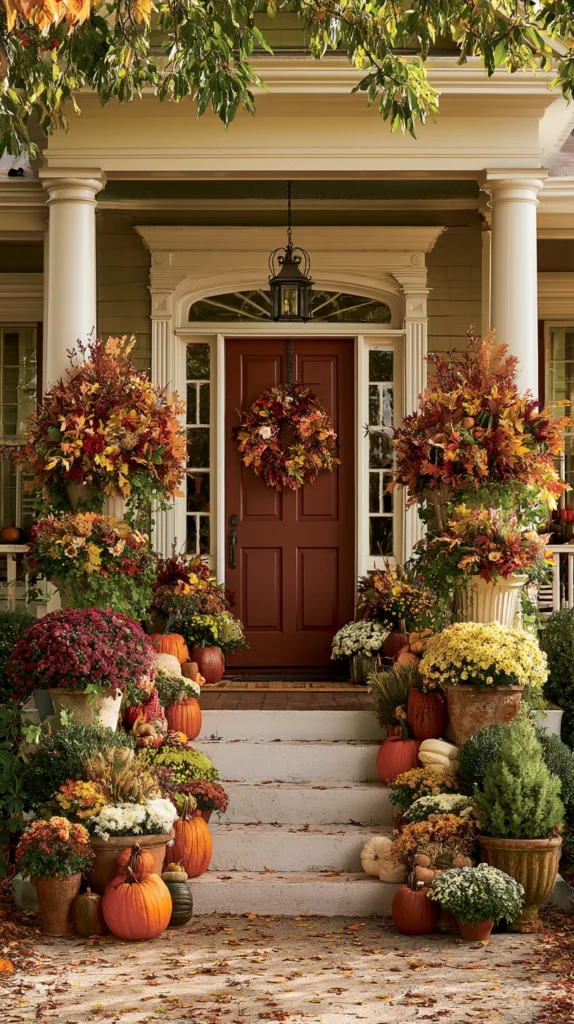
A porch or patio designed as a complete display, multiple containers working as a composition — the approach where each container relates to the others, and the whole exceeds the sum of the parts.
Why multiple containers need coordinating:
The single container:
- Beautiful
- Sufficient as an object
- One point of interest
Multiple unrelated containers:
- Busy
- Competing
- No composition
Multiple coordinated containers:
- A display
- The eye moves through the composition
- The porch: designed
The composition principles:
One palette across all containers:
- All containers: pulling from the same colour family (the autumn palette — dark purple, copper, rust, silver)
- Not: one pot in pink, one in blue, one in orange
- The unified palette: the display coheres
Varied heights across the composition:
- Some containers tall (the tall standards from Idea #9)
- Some medium (the main autumn trio)
- Some low (the cyclamen bowl, the trailing herb pot)
- The height variation: the composition has depth
A clear hierarchy:
- One container: the primary (the largest, or the most prominent position)
- Two or three: the secondary (flanking or nearby)
- Additional: the accent or fill
- The hierarchy: the composition readable at a glance
The complete porch display:
Primary position (flanking the door):
- The matched pair of tall containers (Idea #9)
- Identical, formal, the announcement of the porch
- The arrival experience
Secondary positions (steps or porch corners):
- Two or three of the Idea #1 autumn trio containers
- Terracotta, kale, mums, ivy
- The main body of the display
Accent positions (filling the composition):
- The cyclamen bowl (Idea #10) — the detail at the low level
- The herb container (Idea #12) — functional and beautiful beside the door
- A trug or crate container (Idea #7) — adding material variety
The seasonal continuity:
From the display’s elements:
- The evergreen framework containers (Idea #6): through winter
- The spring bulbs planted in the framework pots: spring
- The cyclamen: through winter and spring
- The herb container: year-round
- The display: changing through the seasons from one set of planted containers
The surface beneath:
A dark outdoor rug or mat:
- Under the porch display
- Defines the “stage” for the containers
- Anchors the composition at ground level
- Warm-toned (rust, deep olive, copper)
- Matches the container palette
Cost breakdown for the complete display:
- Matched pair of tall containers with standards: $150–280
- Three autumn trio containers: $130–200
- Cyclamen bowl: $33–55
- Herb container: $31–49
- Trug or crate accent: $30–60
- Outdoor rug: $35–60
- Total: $409–704 for a complete porch display
Phased approach:
- Start with two autumn trio containers and the herb pot: $120–160
- Add the matched pair when budget allows: $150–280
- The cyclamen and accent containers: later additions
- The complete display: built over the season and over several seasons
The Autumn Container Calendar
When to plant what:
Late August to early September (the critical window):
- Ornamental kales and cabbages: now
- Chrysanthemums: now (while still in bud — flower as they establish)
- Hardy cyclamen: now (they establish quickly)
- Oriental grasses: already in place (or plant now)
September:
- Autumn viola: now (they establish in cool weather and are incredibly hardy)
- Heather (Calluna): now through October
- Evergreen framework plants: ideal planting month for container evergreens
October:
- Spring bulbs into all containers (beneath other planting)
- Cyclamen (C. persicum from garden centres): now
- Skimmia with berries: at peak for purchase now
The replacement schedule:
When chrysanthemums finish:
- Remove spent mums
- Replace with: viola, cyclamen, or ornamental cabbage
- The framework plants (kale, ivy, grass): remain
- The container: refreshed, not replanted from scratch
When kale is damaged by hard frost:
- Replace with: cold-hardy alternatives (viola, dwarf conifer, skimmia)
- The pot: continues through winter with replacements
Getting Started This Weekend
The minimum viable autumn porch under $70:
Two matching terracotta pots (12-inch): $20–30 for the pair
Four plants for each pot:
- One ornamental kale (purple): $6 each
- One copper chrysanthemum: $7 each
- Two ivy trailing: $6 for two
Total: $55–68 for two matched porch containers
The placement:
- One each side of the front door
- The symmetry: the announcement
- The autumn palette: established
- The porch: dressed for the season
The result: a porch that tells anyone arriving that the person living here has dressed their home for autumn. Not as a performance. As an acknowledgment of the season and its distinct beauty.
The same porch in late summer — spent petunias, leggy bacopa — told a different story.
The containers changed. The story changed with them.