15 No Waste Harvesting Stations Ideas for Productive Gardens
I used to waste 30% of my harvest. Tomatoes rotted on the vine, herbs bolted while I wasn’t looking, berries dropped and molded.
Hours of growing wasted because I had no organized harvesting system.
Then I built dedicated harvest stations – designated spots with tools, storage, and processing areas right in the garden.
Now I harvest everything at its peak, process immediately, waste almost nothing. Same garden, triple the usable food.
Let me show you 15 harvesting station ideas that eliminate waste and maximize your garden’s productivity.
Why I Wasted So Much Harvest
My disorganized harvesting reality:
The problem cycle:
- Walk to garden empty-handed
- Find ripe produce
- No basket or tools
- Walk back for supplies
- Forget what I saw
- Things over-ripen
What I lost:
Tomatoes: 20+ pounds rotted on vine (forgot to check back sides) Herbs: Entire basil crop bolted (missed the window) Berries: 5 pounds dropped and molded (didn’t pick daily) Zucchini: Baseball bats I missed (hidden under leaves) Lettuce: Bitter from heat (harvested too late)
Estimated waste: 30% of potential harvest – heartbreaking after months of work.
After installing harvest stations:
Immediate improvements:
- Everything harvested at peak
- Tools always available
- Quick processing
- Daily harvest routine established
Current waste: Under 5% – only unavoidable losses.
What Harvest Stations Do
Why they work:
Centralized tools:
- Scissors, baskets, gloves right there
- No walking back and forth
- Harvest spontaneously
- Save time and crops
Processing on-site:
- Clean produce immediately
- Sort and store
- Preserve while fresh
- Maximum nutrition and flavor
Visual reminders:
- See station = remember to harvest
- Daily routine easier
- Less missed produce
- Habit formation
Better quality:
- Harvest at perfect ripeness
- Gentle handling
- Immediate cooling
- Superior produce
My harvest stations transformed gardening from frustrating waste to satisfying abundance.
1. Tomato Processing Station (My Game-Changer)
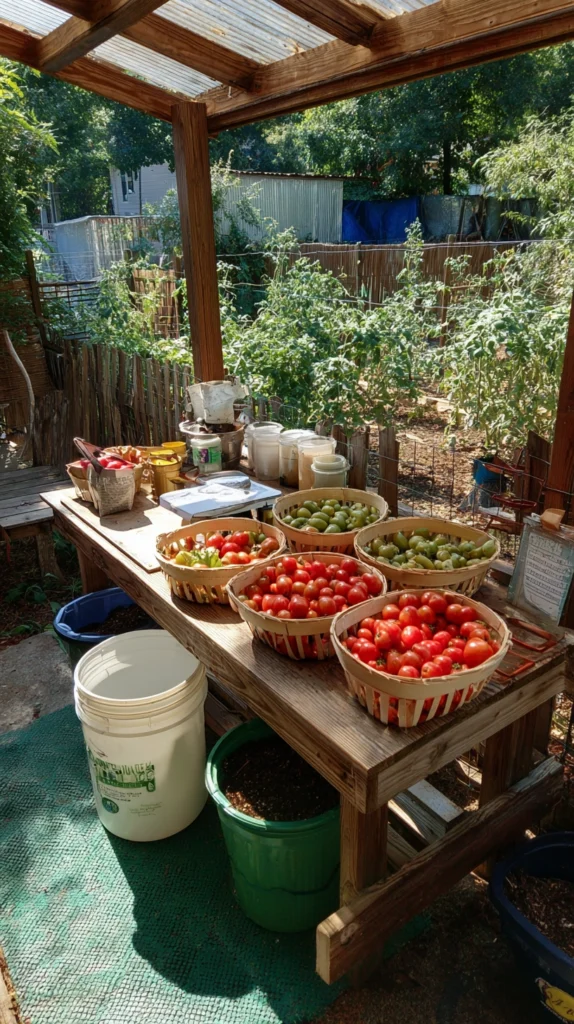
Dedicated area for tomato harvest and sorting – handles peak abundance.
My setup under patio roof:
Work surface:
- Old table (4×3 feet, $10 yard sale)
- Waterproof tablecloth
- Easy to hose clean
- Shaded location
Harvest supplies:
- 5-gallon buckets (3 total)
- Garden scissors (hanging on hook)
- Harvesting basket
- Permanent marker (labeling)
Processing equipment:
- Cutting board
- Sharp knife
- Strainer
- Compost bucket
What I do there:
During harvest:
- Pick tomatoes into bucket
- Carry to station
- Sort immediately
- Process while fresh
Sorting categories:
Perfect tomatoes: Kitchen basket (today’s eating) Slightly damaged: Sauce bucket (process same day) Green/unripe: Ripening box (check daily) Rotten/diseased: Compost bucket (away from garden)
Benefits:
Zero waste from decisions:
- Every tomato gets appropriate use
- Nothing sits and rots
- Damaged parts cut away
- Remaining parts used
Efficient processing:
- Everything in one place
- No running inside
- Work outside (messy jobs)
- Cleanup easy (hose down)
My tomato station: Processes 200+ pounds yearly, waste dropped from 30 pounds to 3 pounds.
Tomato Station Layout
What’s actually there:
Hanging on fence:
- Scissors (3 pairs, always sharp)
- Twine (tying vines)
- Garden gloves
- Harvesting knife
On table:
- Cutting board (dedicated outdoor)
- Scale (tracking harvest)
- Markers (labeling varieties)
- Towels
Under table:
- Buckets stacked
- Extra baskets
- Processing supplies
- Organized storage
Cost: $40 total (mostly yard sale finds)
2. Herb Harvesting and Drying Station (Preserve the Abundance)
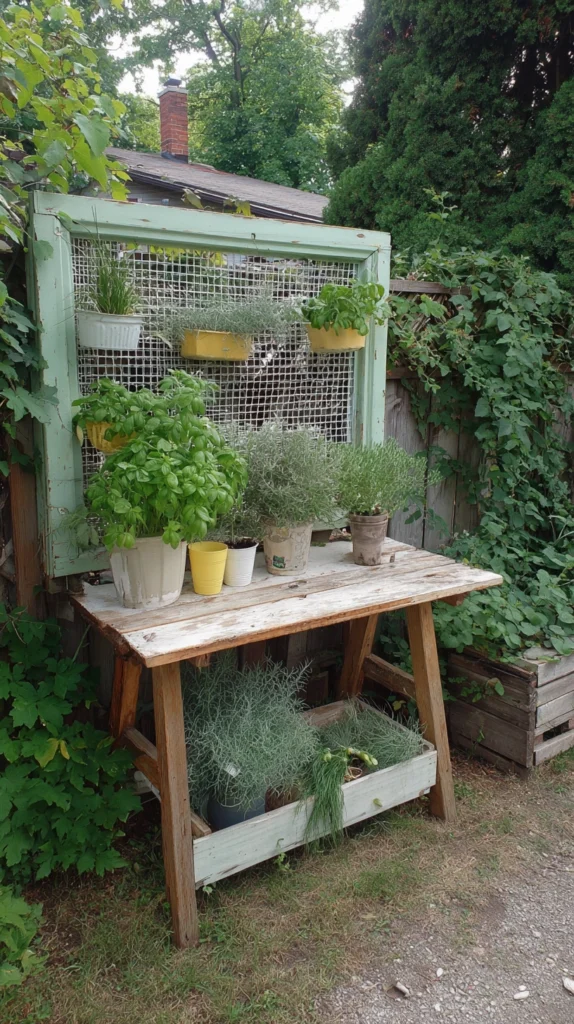
Outdoor drying rack with processing table – handle herb excess.
My herb station:
Drying rack:
- Old screen door ($5 yard sale)
- Supported on sawhorses
- Shaded location
- Good airflow
Processing table:
- Small potting bench (2×3 feet)
- Scissors hanging
- Rubber bands box
- Twine dispenser
What I harvest and dry:
Daily harvest (peak season):
- Basil (before flowering)
- Oregano
- Thyme
- Sage
- Parsley
Processing method:
- Cut stems in morning (after dew dries)
- Rinse if needed (usually skip)
- Bundle with rubber band
- Hang upside down on rack
- Dry 7-10 days
- Strip and store
Results:
Before station:
- Herbs bolted regularly
- Wasted entire crops
- Bought dried herbs winter
After station:
- Harvest continuously
- Never bolt (constant cutting)
- Dried herbs last all year
- Save $100+ yearly
My herb station: 5 minutes daily maintenance, produces year’s worth dried herbs.
3. Berry Picking Station (Immediate Cooling Setup)
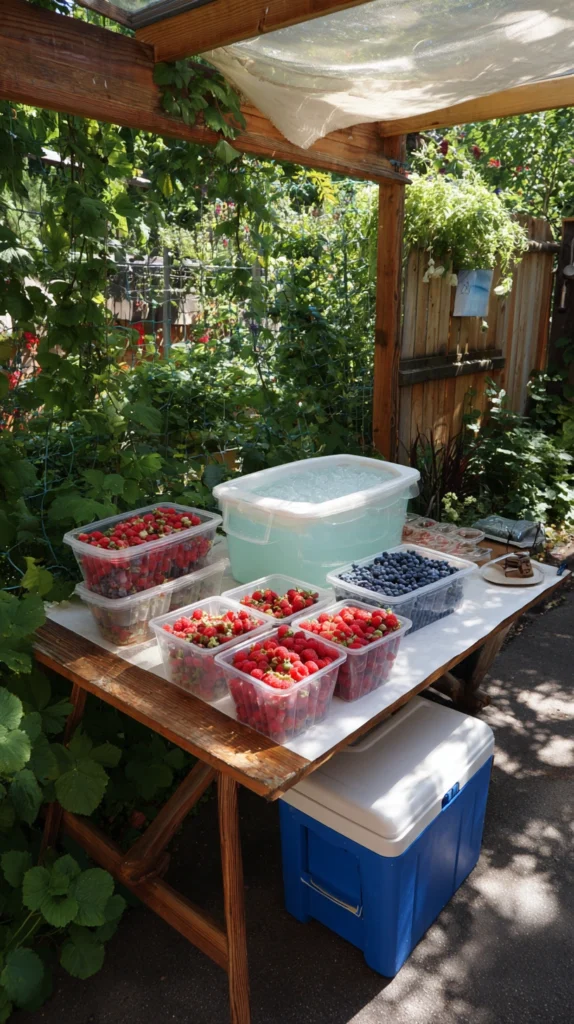
Shaded table with ice water bath – keeps berries fresh.
My berry station (between raspberry and blueberry rows):
Equipment:
- Small table (2×2 feet)
- Cooler with ice water
- Multiple small containers
- Shade cloth overhead
Harvest process:
As I pick:
- Fill small container (1 pint)
- Walk to station (10 feet away)
- Place in ice water bath immediately
- Grab empty container
- Return to picking
Why immediate cooling matters:
Room temperature berries:
- Deteriorate in minutes
- Soften quickly
- Mold starts
- 2-day shelf life
Ice-water cooled berries:
- Firm up immediately
- Mold prevented
- Flavor locked in
- 7-10 day shelf life
Science: Berries respire heat – removing field heat immediately extends storage dramatically.
My berry waste:
- Before station: 20% molded within 3 days
- After station: 5% waste, mostly overripe picks
4. Root Vegetable Cleaning Station (Soil Management)
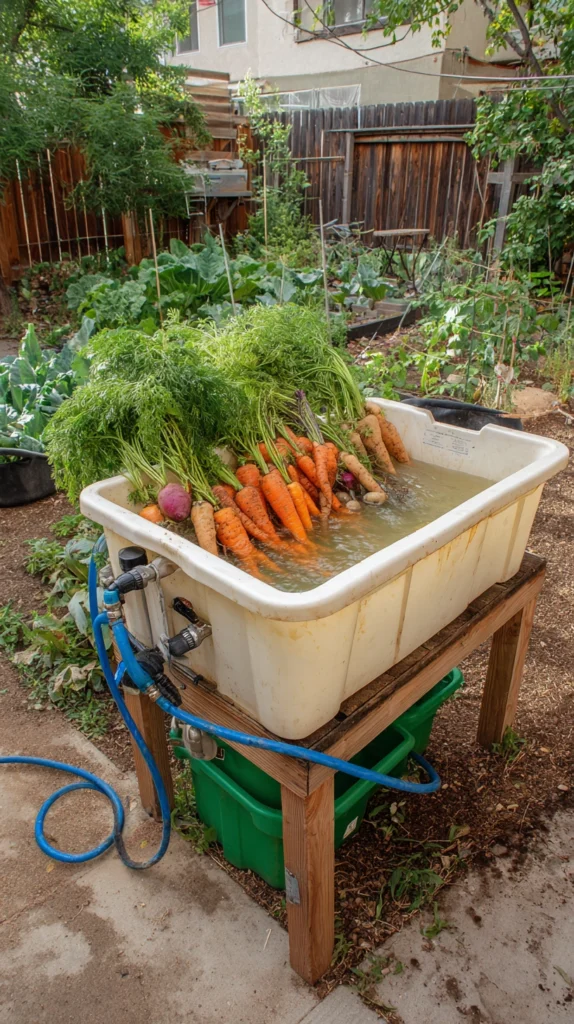
Outdoor washing area – keep soil in garden not house.
My root crop station:
Setup:
- Large plastic tub (on stand)
- Hose connection nearby
- Brush collection (various sizes)
- Crates for storage
What I wash there:
- Carrots
- Beets
- Potatoes
- Radishes
- Turnips
Process:
Three-bucket system:
Bucket 1: Initial rinse (gets dirty fast) Bucket 2: Scrub wash (brush dirt) Bucket 3: Final rinse (clean water)
Results:
- Vegetables garden-clean
- No soil in kitchen
- Can see damage/issues
- Sort immediately
Water reuse:
- Dirty wash water on garden
- Not wasted
- Nutrients recycled
- Eco-friendly
My root station: Processes 100+ pounds root vegetables, zero dirt tracked inside.
5. Salad Greens Harvest Hub (Cut-and-Come-Again Central)
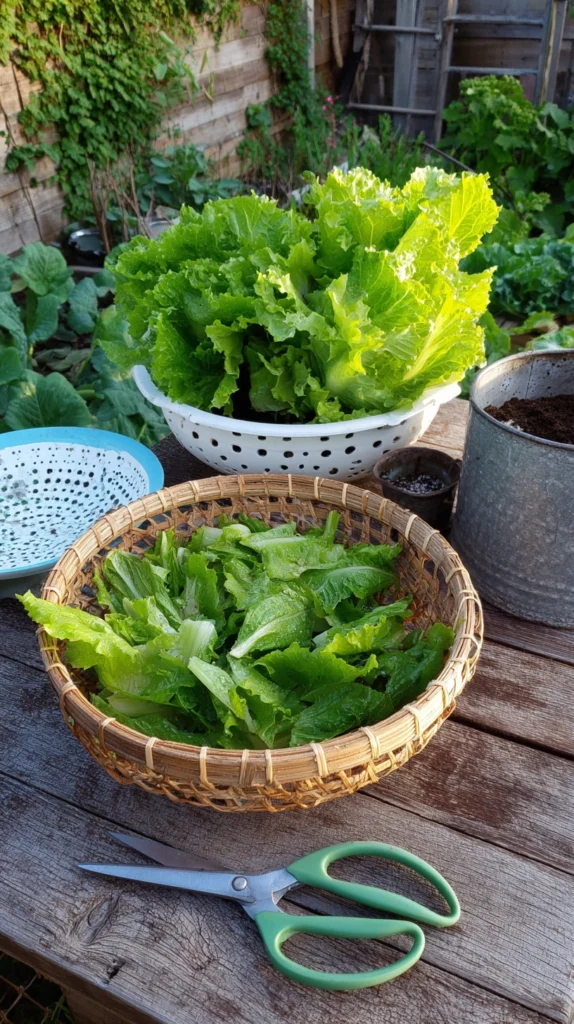
Daily cutting station with immediate washing – continuous salad production.
My greens station:
Location: Right at lettuce bed edge
Supplies:
- Sharp scissors (dedicated greens)
- Harvest basket (wide and shallow)
- Spray bottle (rinse)
- Salad spinner (outdoor)
Harvest method:
Cut-and-come-again:
- Cut outer leaves (leave 2 inches)
- Spray rinse immediately
- Into basket
- Spin dry right there
- To kitchen refrigerator
Why immediate processing:
Fresh-cut greens:
- Start wilting immediately
- Heat damages quality
- Dirt harder to remove when dry
Immediate wash and dry:
- Crisp and fresh
- Dirt rinses easily
- Ready to eat
- Extended storage
Production:
- 4×4 lettuce bed
- Daily harvest (8-10 oz)
- Continuous cutting (March-June, September-November)
- Never bitter or bolted
My greens station: 5 minutes daily harvest = fresh salads every meal.
6. Corn Harvest Processing Area (Handle the Rush)
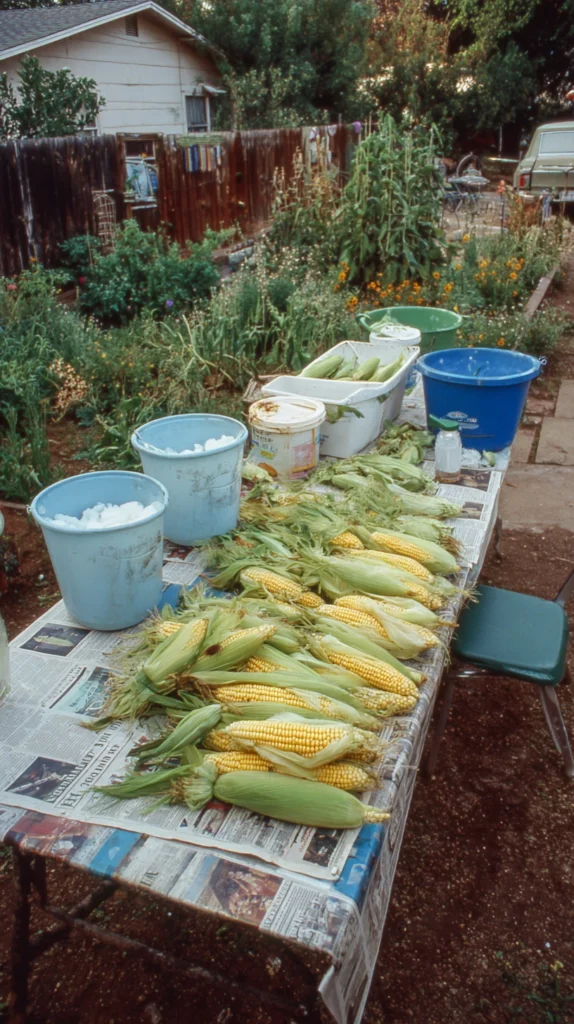
Large work table for corn shucking – manage abundance.
My corn station setup:
During corn season (2-week harvest window):
Table:
- 6-foot folding table
- Newspaper covering
- Garbage can beside
- Work standing
Supplies:
- Large bins (harvest containers)
- Brushes (silk removal)
- Buckets with water (boiling prep)
- Cooler with ice
Processing flow:
Immediate after picking:
- Shuck at station (not kitchen)
- Remove silk
- Into ice bath immediately
- Process same day (blanch and freeze)
Why timing critical:
Corn sugar converts to starch:
- Starts at picking
- Accelerates in heat
- Sweet corn = eat immediately
- Or cool fast
My method:
- Pick early morning
- Shuck immediately
- Ice bath
- Blanch within 2 hours
- Freeze same day
Quality difference: Night and day vs waiting even 4 hours.
7. Squash and Zucchini Check Station (Don’t Miss the Baseball Bats)
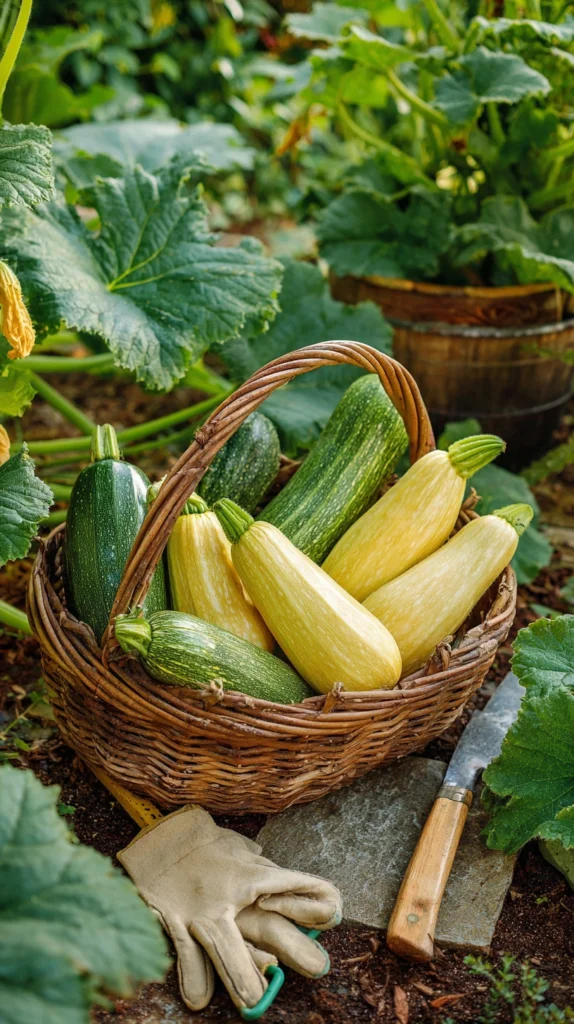
Daily monitoring post – catch squash at perfect size.
My squash station:
Equipment:
- Harvest knife (sturdy)
- Measuring stick (ideal sizes marked)
- Basket
- Gloves
Size guide on stake:
- Zucchini: 6-8 inches (mark)
- Summer squash: 4-6 inches (mark)
- Cucumber: 6-8 inches (mark)
- Check EVERY plant DAILY
Daily routine:
5-minute walk (every morning):
- Lift every leaf
- Check every plant
- Measure borderline ones
- Harvest perfect size
- Note babies for tomorrow
Why daily checks essential:
Squash grow FAST:
- 6 inches today
- 14 inches tomorrow
- Baseball bat by day 3
- Check daily or lose harvest
My mistakes before station:
- 20+ baseball bat zucchini (wasted)
- Hidden under leaves (missed)
- Over-size = bitter and seedy
- Fed to chickens (waste)
After daily station checks:
- Perfect-size harvests
- Zero baseball bats
- Everything tender
- Actual usable food
8. Cucumber Harvest and Pickle Prep Station (Immediate Brining)
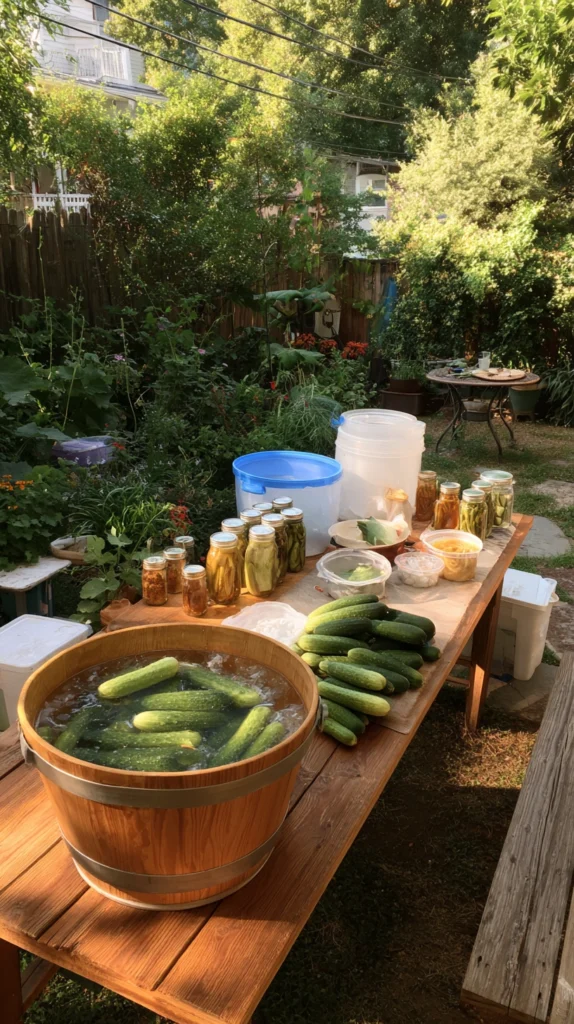
On-site pickling station – preserve at peak.
My cucumber/pickle setup:
Equipment:
- Large crock (5 gallon)
- Brine pre-mixed
- Dill and spices
- Ice bath
Same-day pickle process:
During cucumber check:
- Harvest perfect-size cukes (6-8 inches)
- Ice bath immediately (1 hour)
- Straight to brine crock
- Never enter house until pickled
Why immediate brining:
Cucumbers are 95% water:
- Start losing crispness immediately
- Even in refrigerator
- Ice bath restores firmness
- Brine within hours = crunchy pickles
Traditional vs my method:
Traditional: Pick, store, pickle later (soft pickles) My method: Pick, ice, brine within 2 hours (crunchy pickles)
Difference is dramatic – crunchiest pickles I’ve ever made.
9. Bean Processing Station (Shell, Snap, or Store)
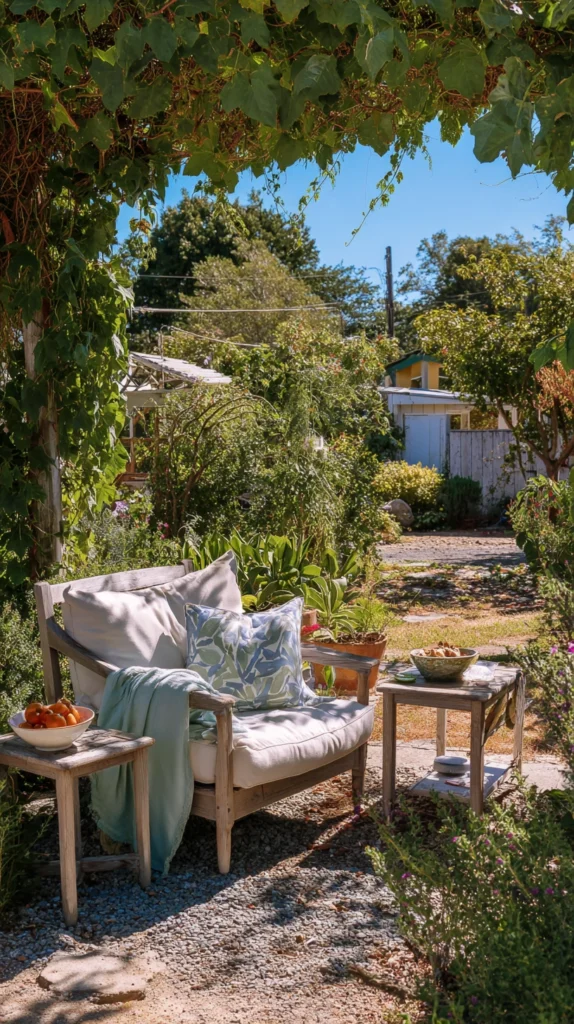
Shaded sitting area – comfortable bean processing.
My bean station:
Setup:
- Comfortable chair
- Side table
- Multiple bowls
- Shaded location
What I process:
- Snap beans (daily harvest)
- Shell beans (dry when pods rattle)
- Lima beans (shell fresh)
Processing while fresh:
Snap beans:
- Harvest into basket
- Sit at station
- Snap ends
- Into storage bowl
- Compost ends on-site
- Wash once (ready to cook)
Shell beans:
- Check daily (listen for rattle)
- Harvest dried pods
- Shell at station
- Winnow chaff outside
- Store in jars
Why station makes difference:
Before: Hauled beans inside, bags sat days, quality declined After: Process immediately while fresh, maximum flavor and nutrition
My bean station: Peaceful shelling spot, podcast time, zero waste.
10. Fruit Tree Harvest Ladder Station (Safe Picking Setup)
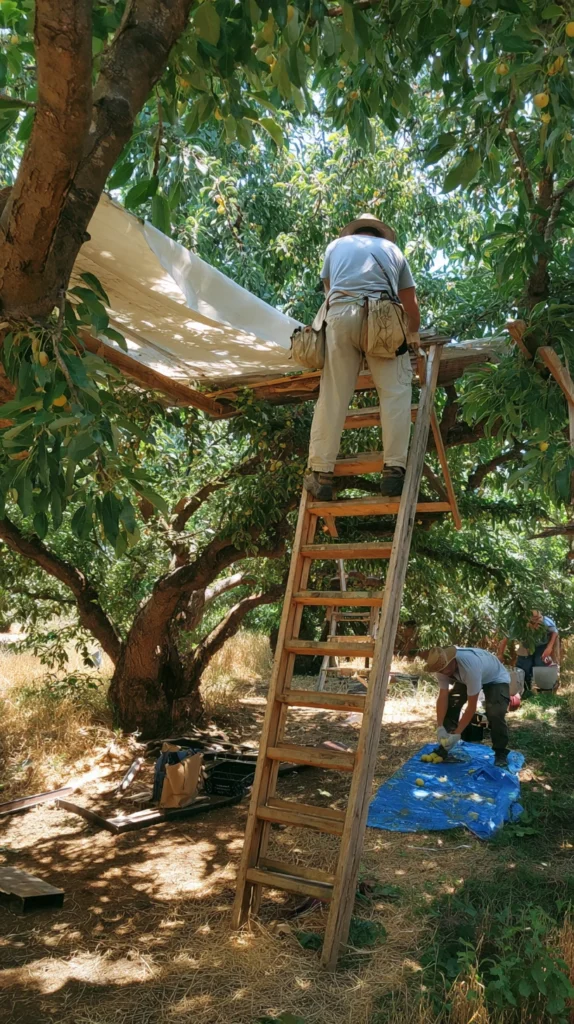
Permanent ladder placement with harvest bags – maximize tree harvest.
My apple tree station:
Equipment:
- Sturdy orchard ladder (10 feet)
- Canvas harvest bag (shoulder strap)
- Fruit picker (pole with basket)
- Padding under tree (dropped fruit)
Safe harvest:
Ladder positioning:
- Stable on level ground
- Against strong branches
- Never overreach
- Move frequently
Harvest bag:
- Shoulder strap (hands-free)
- Canvas (doesn’t bruise)
- Opens at bottom (gentle emptying)
- Holds 20+ pounds
Ground catches:
Tarp under tree:
- Catches falls
- Less bruising
- Find all fruit
- No ground rot
Two-person system:
One up, one down:
- Picker fills bag
- Ground person empties
- Sorts immediately
- Efficient and safe
My tree station: Harvests 200+ pounds apples, zero injuries, minimal bruising.
11. Pepper Harvest and Drying Station (Preserve the Heat)
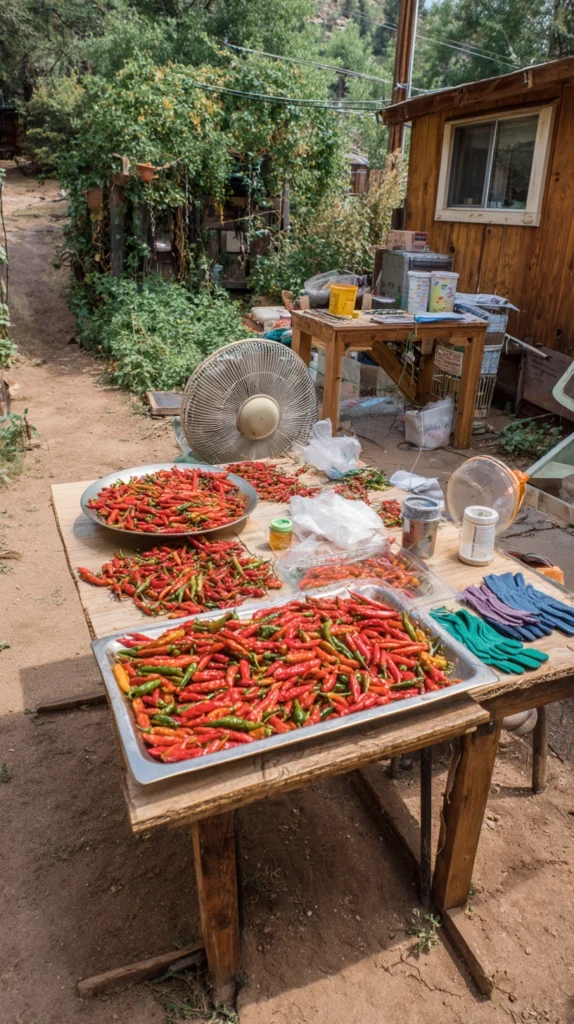
Immediate processing for hot peppers – preserve while potent.
My pepper station:
Setup:
- Table with fan
- Dehydrator (outdoor)
- Gloves (MANDATORY for hot peppers)
- Thread and needle (ristra making)
Harvest timing:
For drying:
- Fully colored
- Firm (not soft)
- Perfect condition
- Process same day
Processing methods:
Ristras (string of peppers):
- Harvest with stems
- Thread through stems
- Hang to dry
- Decorative and functional
Dehydrator:
- Slice (wearing gloves!)
- Into dehydrator trays
- 135°F for 8-12 hours
- Store in jars
Glove reminder:
ALWAYS wear gloves with hot peppers:
- Capsaicin on hands
- Transfers to eyes (agony)
- Washes off slowly
- Gloves mandatory
I learned this the hard way – rubbed my eye after jalapeños, 2 hours of pain.
12. Bulk Harvest Processing Shed (Preserve Station)
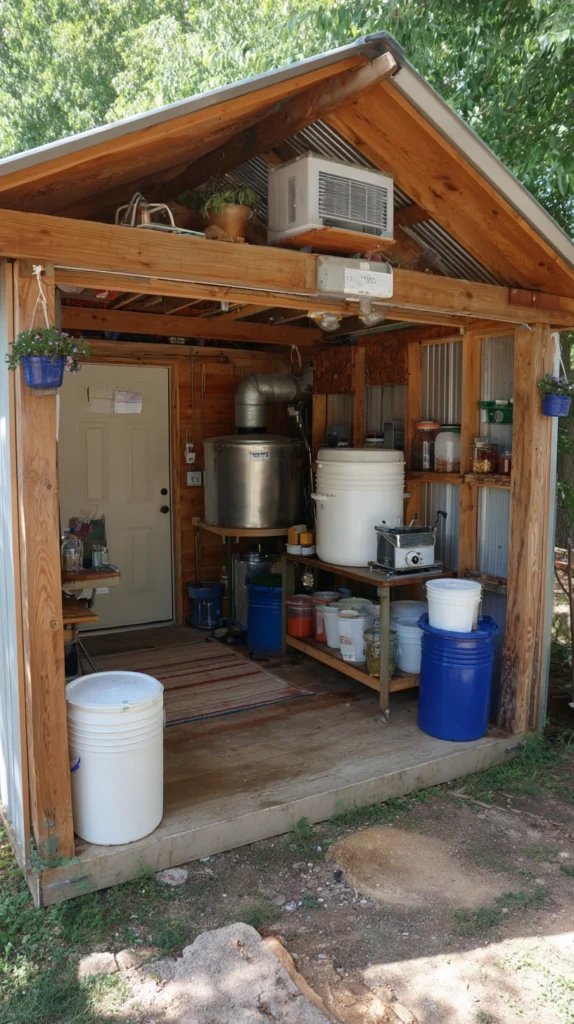
Dedicated space for large-batch preserving – handle gluts.
My processing shed (converted garden shed):
Equipment inside:
- Propane burner (outdoor cooking)
- Canning pot
- Food mill
- Dehydrator
- Freezer (small chest)
- Workspace
What I preserve there:
Peak harvest days:
- 50 pounds tomatoes (sauce)
- Bushels of beans (blanch and freeze)
- Apple harvest (sauce and butter)
- Corn (blanch and freeze)
Why outdoor processing:
Kitchen preservation problems:
- Heats up house
- Takes over kitchen
- Hours of work
- Family disruption
Garden shed processing:
- Outside heat
- Dedicated space
- Leave setup in place
- No household impact
My shed: Processes 300+ pounds produce yearly, kitchen stays functional.
13. Edible Flower Harvest Station (Delicate Handling)
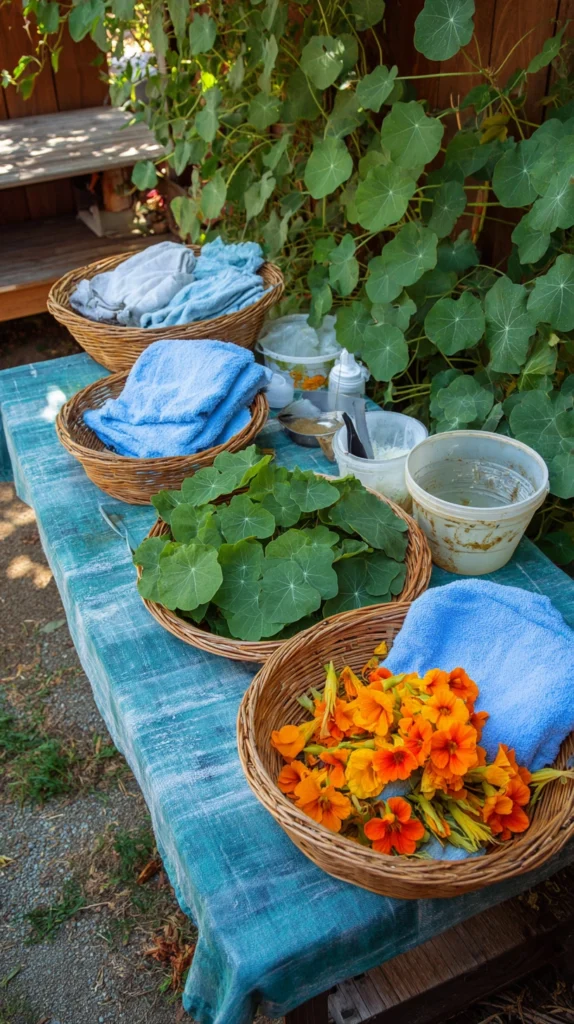
Gentle collection area – preserve flower freshness.
My flower station:
Setup:
- Shallow baskets (lined with damp towel)
- Small scissors
- Ice water containers
- Shade cloth
What I harvest:
- Nasturtium flowers
- Squash blossoms
- Calendula
- Borage flowers
- Chive blossoms
Harvest timing:
Morning picking:
- After dew dries
- Before heat
- Peak freshness
- Full of moisture
Immediate care:
Into damp towels:
- Prevents wilting
- Keeps cool
- Maintains shape
- Maximum beauty
Ice water plunge:
- Firms petals
- Extends vase life
- If using as garnish
- Quick revival
My flower station: Delicate harvest handled properly, beautiful garnishes for meals.
14. Garlic and Onion Curing Station (Proper Drying)
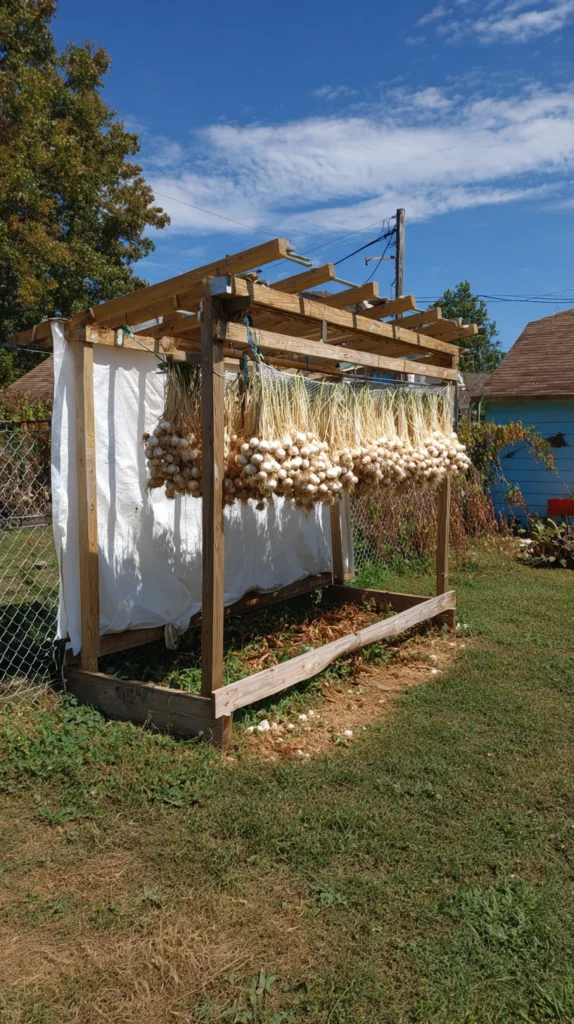
Covered drying area – cure bulbs correctly.
My allium curing station:
Structure:
- PVC frame with shade cloth roof
- Open sides (air circulation)
- Hanging racks
- Off ground
Harvest to cure process:
When to harvest:
- Garlic: 1/3 tops brown
- Onions: Tops fall over
- Dig in morning
- Dry in shade
Curing:
- Hang by stems (bundles of 6)
- Shade (sun makes bitter)
- Good airflow (prevents mold)
- 2-4 weeks until papery
- Trim and store
Why curing station essential:
Improper curing:
- Mold develops
- Sprouting begins
- Short storage
- Wasted crop
Proper curing:
- 6-8 month storage
- Full flavor development
- Hard protective skin
- Maximum harvest value
My curing station: Cures 100+ garlic bulbs, 50+ onions, zero mold losses.
15. Mobile Harvest Cart (Roll-to-Crop System)
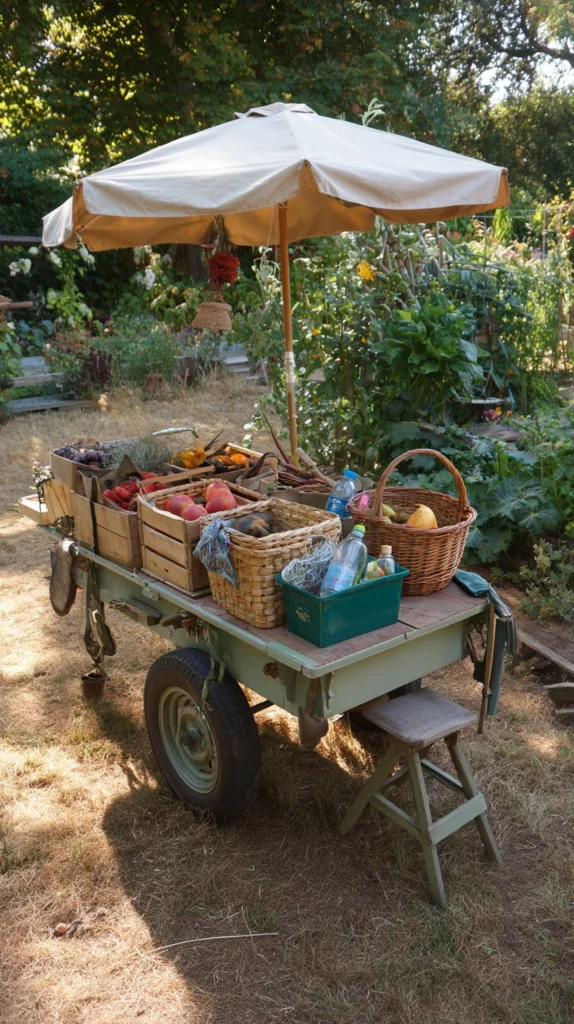
Garden cart with all supplies – ultimate flexibility.
My harvest cart:
Cart: Garden wagon (4-wheel, $80)
Permanently on cart:
- Multiple baskets (various sizes)
- All harvesting tools
- Gloves
- Twine
- Markers
- Water bottles
- Shade umbrella
- Folding stool
How I use it:
Morning harvest:
- Roll cart to ripest crops
- Everything I need on board
- Harvest efficiently
- Move to next crop
- Roll to processing station
- Empty and refill for next day
Benefits:
No trips to shed:
- Everything in one place
- Tools always available
- Can harvest spontaneously
- Save time and steps
Flexibility:
- Goes where needed
- Different crops daily
- Adapts to seasons
- Ultimate convenience
Shade and rest:
- Umbrella for hot days
- Stool for bean shelling
- Water bottles
- Comfortable harvesting
My cart: Best $150 investment (cart + supplies), eliminated 90% of trips to shed.
Designing Your Harvest Station Layout
Strategic placement matters:
Proximity to Crops
My guidelines:
Station placement:
- Within 20 feet of crops it serves
- Any farther = won’t use it
- Closer = better
- Convenience is everything
My mistakes:
- Put tomato station 50 feet from plants
- Too far to use consistently
- Moved to 15 feet
- Now use it every day
Shade Considerations
Essential for:
- Any processing station
- Produce storage (even temporary)
- Your comfort (you work longer)
- Quality preservation
My shade solutions:
- Patio roof (tomato station)
- Large umbrella (mobile cart)
- Shade cloth frame (herb drying)
- Under tree (root washing)
Water Access
Stations needing water:
- Root crop washing
- Berry cooling
- Greens processing
- Tool cleaning
My approach:
- Hose bibb at each water-needing station
- 50-foot hose reaches everywhere else
- No hauling water
- Easy cleanup
Processing Flow
Logical sequence:
Harvest → Sort → Clean → Process → Store
Station should support this flow:
- Dirty to clean direction
- Waste removal easy
- Storage accessible
- Natural progression
My tomato station flow:
- Harvest (buckets)
- Sort (table)
- Wash (hose at table)
- Process (cutting/sauce)
- Store (cooler/freezer nearby)
- Compost (bucket right there)
Storage Solutions at Stations
Keep produce fresh while harvesting:
Immediate Cooling
What needs fast cooling:
- Berries (ice bath)
- Greens (cold water)
- Corn (ice bath)
- Beans (shade at minimum)
My cooling methods:
Cooler with ice:
- Berries go straight in
- Corn after shucking
- Extends quality hours
- Worth the ice
Shade cloth:
- Draped over harvest baskets
- 10-15°F cooler underneath
- Simple and effective
- For hardier crops
Ripening Areas
What needs ripening:
- Green tomatoes (end of season)
- Melons (picked slightly under)
- Winter squash (curing)
My ripening station:
- Boxes under table
- Check daily
- Sort by ripeness
- Use at peak
Tool Organization Systems
What actually works:
Hanging Stations
At each station:
- Pegboard on fence (or wall)
- Tools outlined (know what’s missing)
- Everything visible
- Quick grab and return
My tools by station:
Tomato: Scissors, knife, twine Herb: Scissors, rubber bands, string Berry: Containers, sun hat, bug spray Root: Brushes, hose nozzle, gloves
Tool Maintenance
Keep tools working:
After each use:
- Rinse dirt off
- Dry (prevent rust)
- Hang properly
- Sharpen as needed
My maintenance:
- Saturday morning tool check
- Sharpen anything dull
- Replace broken items
- Oil moving parts
- 30 minutes keeps everything functional
Pest and Disease Management
Stations help with this too:
Early Detection
Daily harvest = daily inspection:
- Spot problems early
- Remove diseased fruit immediately
- See pest damage
- Quick intervention
My disease prevention:
- Moldy tomato spotted and removed
- Before spreading
- Whole plant saved
- Station-enabled early detection
Waste Segregation
Critical for disease control:
Two compost buckets:
Healthy waste: Regular compost Diseased waste: Trash (not composted)
Keeps diseases from recycling through garden.
Seasonal Station Adaptations
What changes through year:
Spring (Greens and Herbs)
Active stations:
- Lettuce harvest daily
- Herb processing weekly
- Light harvest load
- Quick processing
Summer (Peak Chaos)
All stations running:
- Tomato station daily
- Berry station daily
- Squash checks daily
- Herb drying constantly
- Maximum effort
My summer schedule:
- Morning harvest (7-9 AM)
- Afternoon processing (5-7 PM)
- 4 hours daily (peak season)
- Worth it for food security
Fall (Bulk Harvest)
Heavy-duty stations:
- Bulk processing shed
- Curing station (garlic, onions)
- Storage prep
- Preserving marathon
Winter (Planning)
Maintenance season:
- Clean all stations
- Repair equipment
- Reorganize
- Plan improvements
Cost Investment vs Waste Savings
My actual numbers:
Initial Investment (3 years ago)
All stations combined:
- Tables (yard sale): $25
- Tools: $80
- Containers/baskets: $40
- Cooling supplies: $30
- Drying racks: $20
- Cart: $80
- Misc: $25
- Total: $300
Annual Waste Reduction
Before stations:
- 30% harvest wasted
- 300 pounds total harvest
- 90 pounds wasted
- Value: ~$270 lost
After stations:
- 5% harvest wasted
- 400 pounds total harvest (better harvesting = more picked)
- 20 pounds wasted
- Value: ~$60 lost
Annual savings: $210 in waste prevented Plus: 100 pounds more harvested (better timing) = $300 value
Total annual benefit: $510
ROI: Paid for itself in 8 months, saves $210+ yearly ongoing.
My Complete Harvesting Station System
What’s actually in my garden:
Permanent stations:
- Tomato processing (main garden)
- Herb drying (near kitchen door)
- Root washing (north side)
- Garlic curing (shed)
- Bulk processing (shed interior)
Portable/seasonal: 6. Berry cooling (moves to crop) 7. Mobile cart (everywhere) 8. Corn shucking (only July) 9. Squash check (daily walk)
Total investment: $300 over 3 years Time saved: 2+ hours weekly (efficiency) Waste prevented: 70 pounds food yearly Money saved: $210+ annually
Best improvement I made – transformed gardening from stressful (watching waste) to satisfying (using everything).
Getting Started This Season
Don’t build everything at once.
This month:
Start with ONE station:
- Choose your biggest waste crop
- For me: Tomatoes
- For you: Maybe berries, greens, or herbs
- Start where problem is worst
Basic first station ($40):
- Small table (yard sale $10)
- Basket ($5)
- Dedicated scissors ($10)
- Buckets ($15 for 3)
- Location near crop
Use it consistently:
- Every harvest
- Build the habit
- See the difference
- Prove concept
Then expand:
- Add second station next month
- Different crop
- Gradually build system
- Spread cost over time
My recommendation:
Tomato station first:
- Most common waste crop
- Biggest impact
- Easy to set up
- Immediate results
See success, then expand to other crops over 1-2 seasons.
Now go stop wasting your hard-earned harvest!
Quick Summary:
Highest-impact stations:
Tomato processing: Prevents 20+ pounds waste yearly Berry cooling: Doubles shelf life (2 days → 7 days) Herb drying: Preserves entire crop (vs bolting losses) Squash daily check: Eliminates baseball bat syndrome
By crop type:
Tomatoes:
- Processing table with sorting buckets
- Immediate damage assessment
- Same-day sauce making
- Waste: 30% → 5%
Berries:
- Ice water bath cooling
- Small container harvesting
- Shade during picking
- Waste: 20% → 5%
Greens:
- Cut-and-come-again station
- Immediate washing/spinning
- Daily harvest routine
- Waste: Near zero
Herbs:
- Drying rack setup
- Before-bolting harvest
- Rubber band bundling
- Waste: 60% → 5%
Root crops:
- Outdoor washing station
- Three-bucket system
- Keep soil in garden
- Waste: Minimal
Essential equipment:
Every station needs:
- Dedicated scissors/knife
- Harvest containers
- Sorting surface
- Waste bucket (compost)
Processing stations add:
- Water access
- Cutting board
- Storage containers
- Cooling options
Specialized tools:
- Berry cooling: Cooler + ice
- Herbs: Drying racks, rubber bands
- Roots: Brushes, hose
- Tomatoes: Canner, food mill
Station placement guidelines:
Distance from crop: Within 20 feet (closer better) Shade required: All processing stations Water access: Washing stations, cooling setups Level surface: Tables, cutting areas
Time investment:
Building stations: 2-4 hours each (simple) Daily use: 15-30 minutes (vs 60 min without) Seasonal setup: 1 hour (getting organized) Total time saved: 200+ hours yearly (efficiency)
Cost ranges:
Basic station: $40 (table, baskets, tools) Mid-level: $100 (processing equipment) Full system: $300 (all crops covered) ROI timeline: 6-12 months (waste savings)
Waste reduction by crop:
Without stations:
- Tomatoes: 30% waste
- Berries: 20% waste
- Herbs: 60% waste (bolting)
- Greens: 25% waste (bitterness)
- Squash: 15% waste (over-size)
With stations:
- All crops: 5% waste or less
- Only unavoidable losses
- Everything harvested at peak
- Maximum usable harvest
Processing priorities:
Immediate (within hours):
- Berries
- Corn
- Greens
- Cucumbers (for pickles)
Same day:
- Tomatoes (if damaged)
- Herbs (before wilting)
- Squash blossoms
Can wait 1-2 days:
- Perfect tomatoes
- Peppers
- Beans
- Root crops (in cool storage)
Common mistakes:
- Station too far from crops (won’t use it)
- No shade (produce deteriorates)
- Inadequate cooling (quality loss)
- Poor tool organization (waste time)
- No waste segregation (disease spread)
Best practices:
Harvest timing:
- Morning after dew dries (most crops)
- Evening for greens (cooler)
- Before heat for berries
- Check daily for fast growers
Immediate processing:
- Cool within 1 hour (berries, corn, greens)
- Sort within 2 hours (tomatoes)
- Wash within 4 hours (root crops)
- Dry same day (herbs)
Disease prevention:
- Remove damaged produce immediately
- Separate diseased waste
- Clean tools between plants
- Don’t compost diseased material
Seasonal station use:
Spring: Greens and herb stations active Summer: All stations running (peak season) Fall: Bulk processing, curing stations Winter: Maintenance and planning
Space-saving strategies:
Small gardens:
- Multi-purpose stations (one table, multiple crops)
- Mobile cart (moves to need)
- Hanging tool storage (vertical)
- Folding tables (store when unused)
Large gardens:
- Dedicated stations per crop type
- Permanent structures
- Processing shed
- Multiple cooling areas
Quick start priorities:
Week 1: Identify biggest waste crop Week 2: Set up basic station ($40) Month 1: Use consistently, build habit Month 2: Add second station Season 1: Evaluate, improve, expand
ROI calculation:
Typical garden (300 lb harvest):
- Before: 30% waste = 90 lbs lost = $270
- Station investment: $300
- After: 5% waste = 15 lbs lost = $45
- Annual savings: $225 + better quality
- Payback: 16 months
Success indicators:
- Harvest waste drops below 10%
- Everything processed same-day
- Tools always available
- No frantic searching for supplies
- Family uses stations independently
- Preserving becomes manageable
- Food quality noticeably better
Remember: Start with one station (biggest waste crop), keep it simple (table + tools + containers), use it every harvest (build habit), expand gradually (prove success first), focus on convenience (within 20 feet of crop), waste prevention is wealth creation (free food from better systems).