14 Small Garden Ideas That Look Beautiful Even in Tiny Spaces
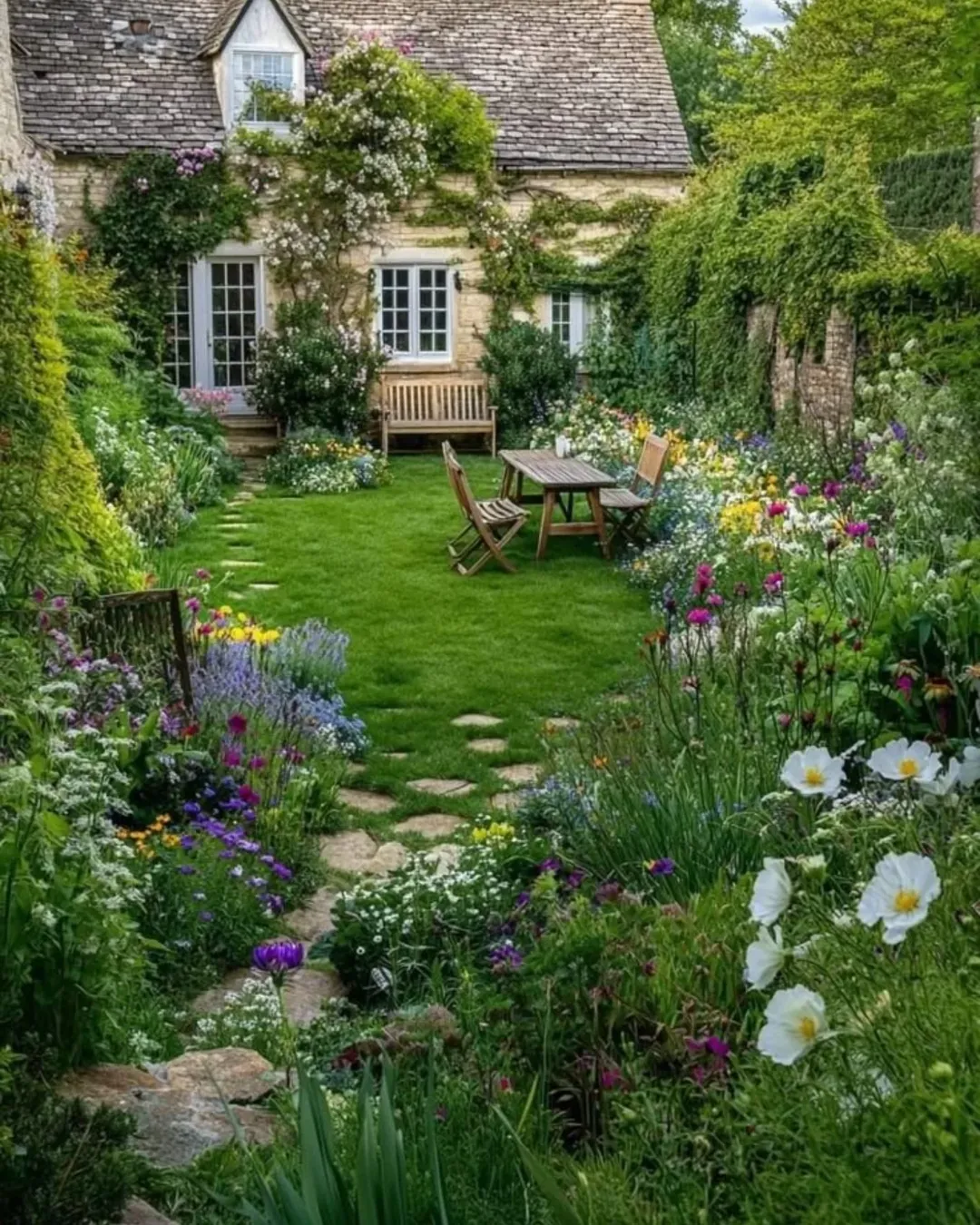
A small garden does not need to apologise for its size. The most successful small gardens are never trying to be large gardens in miniature — they are spaces that work entirely within their actual dimensions, that use every surface with intention, and that create a quality of enclosure and richness that many larger gardens struggle to achieve precisely because they have too much space to fill. Constraint, used well, is one of the best design tools available.
The fourteen ideas below are built around that principle — each one designed to make a small garden look and feel better than its footprint suggests it should. Costs and a practical tip are included throughout to help you choose the ideas that suit your specific space and get the most from them.
1. One Consistent Paving Material Across the Whole Space
Budget: $100 – $500
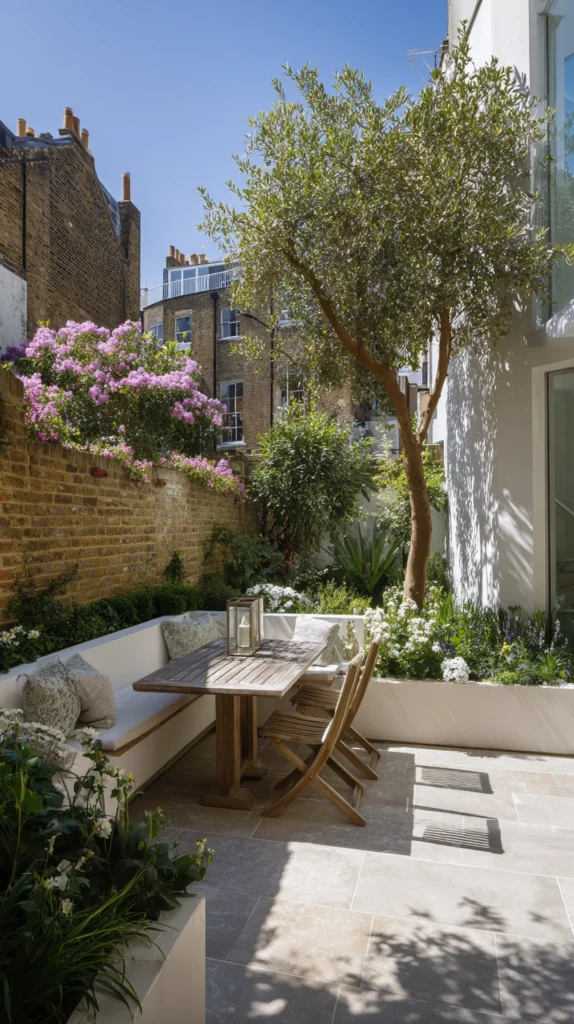
Using a single paving material across the entire garden floor — one colour, one size, one surface — is the most effective way to make a small garden feel larger and more coherent. A garden floor broken up by multiple materials, colours, and textures immediately reads as smaller and more fragmented than the same area covered in a single consistent surface.
Natural stone paving costs $20–$50 per square metre. Porcelain tiles suitable for outdoor use run $25–$60 per square metre. Grey or warm buff tones read best in a small garden — very dark paving absorbs light and makes a small space feel enclosed, very pale paving shows every mark. Choose the largest tile size the space can accommodate — counterintuitively, a larger tile format makes a small space feel bigger than a small tile of the same material.
Design tip: Lay rectangular paving tiles at a diagonal angle to the main sight line of the garden rather than parallel or perpendicular to the boundaries. The diagonal line extends the visual length of a small rectangular space and draws the eye across the widest available distance — the diagonal of the rectangle — rather than along the shortest dimension of the boundary.
2. A Single Statement Tree or Large Shrub
Budget: $30 – $200
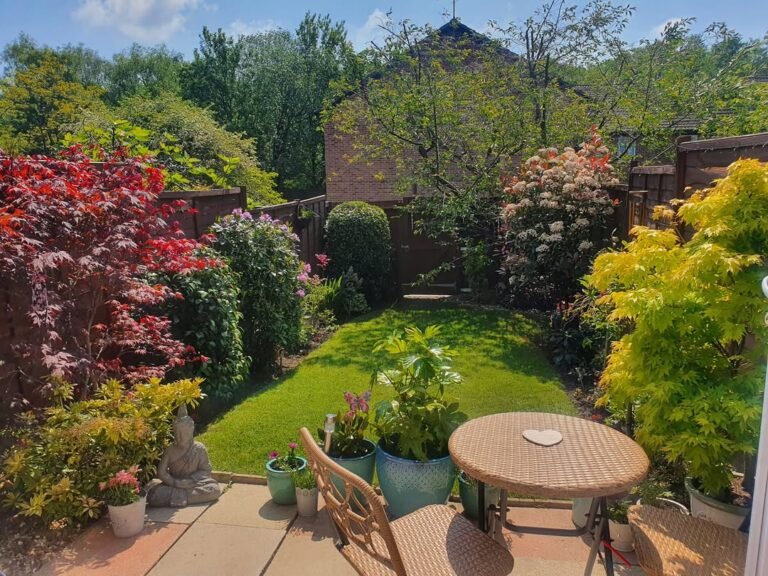
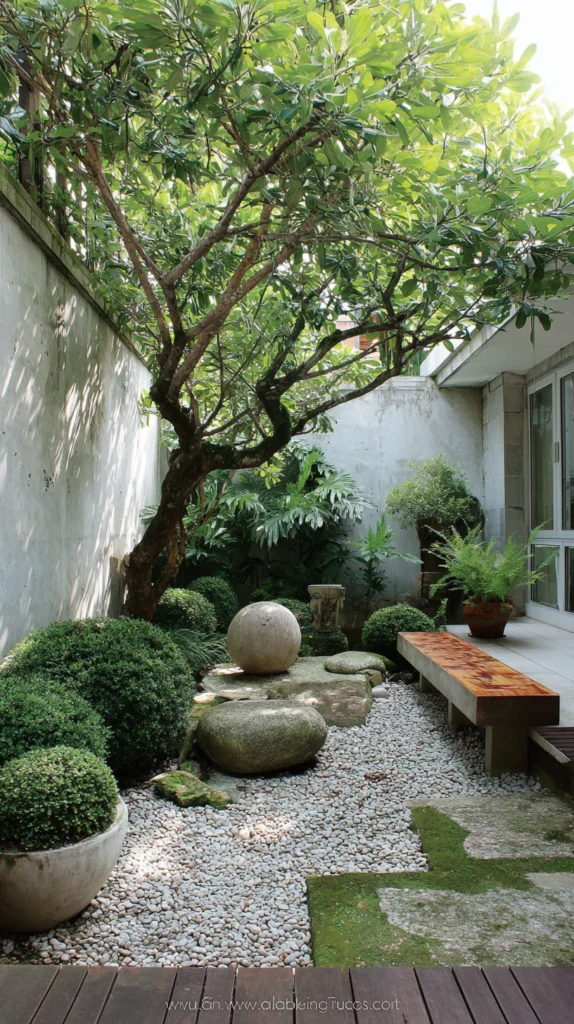
One well-chosen specimen tree or large shrub placed in the right position does more for a small garden than a dozen smaller plants scattered across the same space. It provides scale, structure, and seasonal interest in one object and gives everything else in the garden something to exist in relation to — which is the quality that makes a small garden feel designed rather than simply planted.
A Japanese maple (Acer palmatum) in a 7-litre pot costs $25–$60 and provides spring emergence, summer leaf colour, autumn fire, and winter silhouette from a single plant. A multi-stem birch runs $40–$120. A trained standard bay tree costs $30–$80. Position the specimen plant off-centre — at one third of the garden’s length rather than the midpoint — for a more dynamic composition than a centred placement produces.
Design tip: Choose the specimen plant for its winter silhouette as well as its summer character. A small garden is looked at from the house through every season of the year — a plant whose bare winter structure is as interesting as its summer leaf cover provides value for twelve months rather than six, which is a significantly better return on the space it occupies in a garden where every position counts.
3. Mirrors to Double the Perceived Depth
Budget: $50 – $200
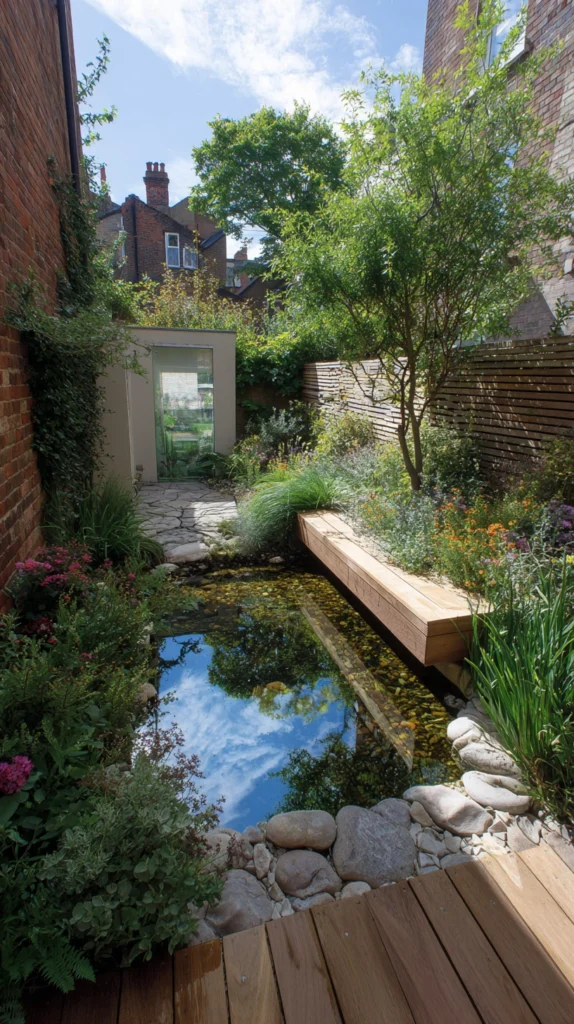
An outdoor mirror fixed to the boundary fence or wall at the far end of a small garden creates the illusion of space beyond the actual boundary — the reflected garden appears to continue through the mirror, effectively doubling the perceived depth of the space from the viewpoint of anyone sitting or standing at the opposite end.
Outdoor-rated garden mirrors in arched, circular, or rectangular formats cost $50–$150. Fix to the boundary fence with screws through the frame and ensure the mounting is secure enough to resist wind loading. Position the mirror so it reflects the most attractive part of the garden — the planting, a water feature, or a seating area — rather than the house wall or a plain fence behind the viewer.
Design tip: Frame the mirror on both sides with a climbing plant or a tall pot — the frame prevents the edge of the mirror from being immediately visible as a flat surface and makes the reflection more convincing as a view into a space beyond rather than a reflection of the space in front. A mirror with visible edges is decorative. A mirror whose edges are partially obscured by plants looks like a window.
4. Raised Planting at Multiple Heights
Budget: $80 – $400
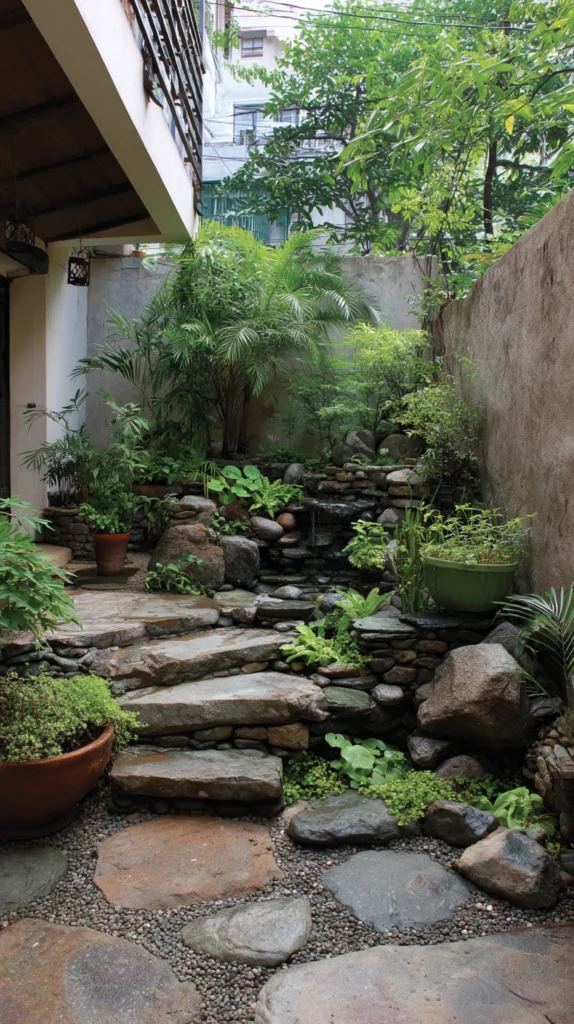
A small garden planted at a single height — all plants at the same level as the ground — reads as flat and undifferentiated regardless of how good the individual plants are. Introducing planting at multiple heights — a tall plant at the back, medium plants in the middle, low ground cover at the front, and climbers on the vertical surfaces — creates depth, layering, and the impression of a garden considerably more generously planted than its actual footprint suggests.
A tall ornamental grass for back-of-border height costs $8–$20. Medium perennials for mid-layer planting run $5–$15 each. Low-growing sedums or ajuga for ground cover cost $3–$8 each. The height gradient from back to front should be consistent across the full width of the border — a uniform height gradient creates depth from any viewpoint, while a varied height gradient reads well only from directly in front of the tallest plant.
Design tip: Position the tallest planting at the back of the border closest to the boundary, not at the back of the border farthest from the house. The boundary planting should be what the eye finds at the end of its travel through the garden — placing tall plants there draws the eye deliberately to the boundary and then stops it, creating the sense that the garden extends to a deliberate, planted edge rather than simply running out of space.
5. A Water Feature as a Focal Point
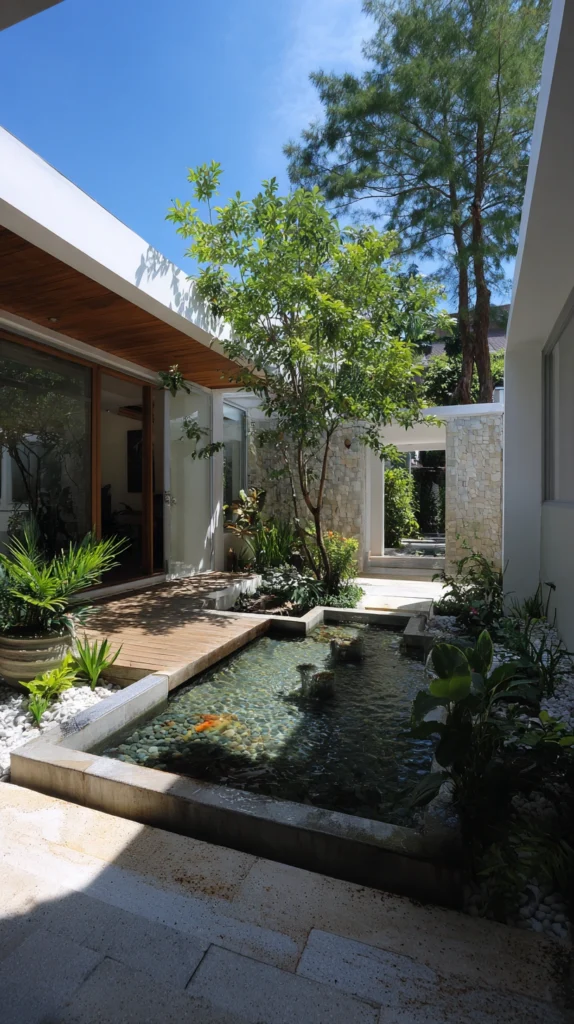
Budget: $40 – $300
A single modest water feature — a wall-mounted spout into a small basin, a self-contained millstone fountain, or a simple bowl with a solar pump — creates a focal point in a small garden that gives the eye a destination and the ear a consistent background sound that makes the space feel larger and more immersive than a silent garden of the same size.
A self-contained solar fountain in a glazed ceramic bowl costs $40–$100. A wall-mounted water spout with a reservoir basin runs $80–$200. Position the water feature at the far end of the garden’s main sight line from the house — a focal point at the end of a sight line draws the eye through the full length of the garden and makes the journey from one end to the other feel longer and more purposeful than a focal point placed to one side or in the middle of the space.
Design tip: Keep the water feature sound subtle — a gentle bubble or a slow drip rather than a vigorous splash. In a small enclosed garden, a loud water feature dominates the acoustic environment of the whole space. A quiet feature adds a layer of ambient sound that makes the garden feel alive without making conversation difficult or the space feel anything other than calm.
6. All-Green Planting for Calm and Depth
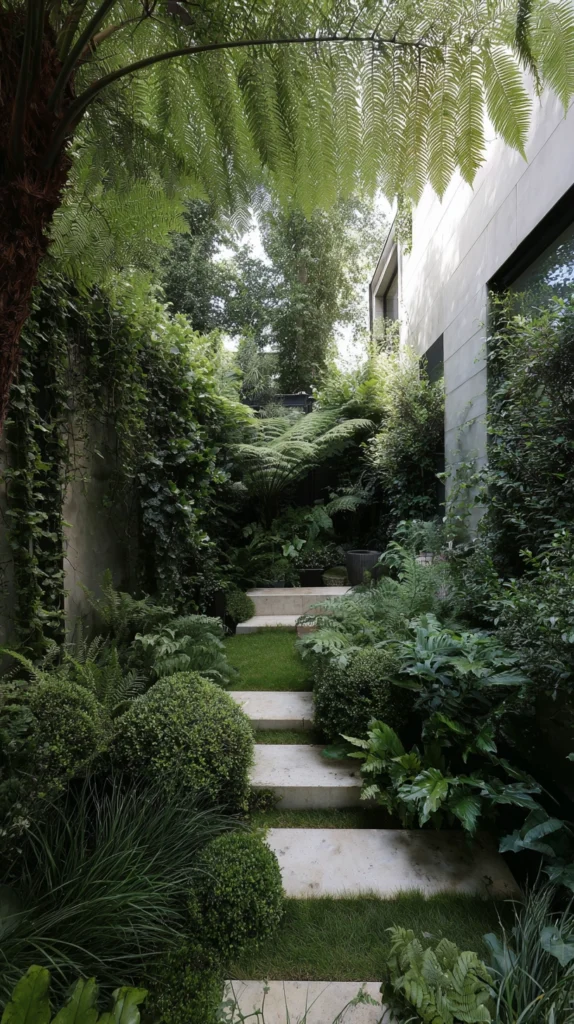
Budget: $80 – $300
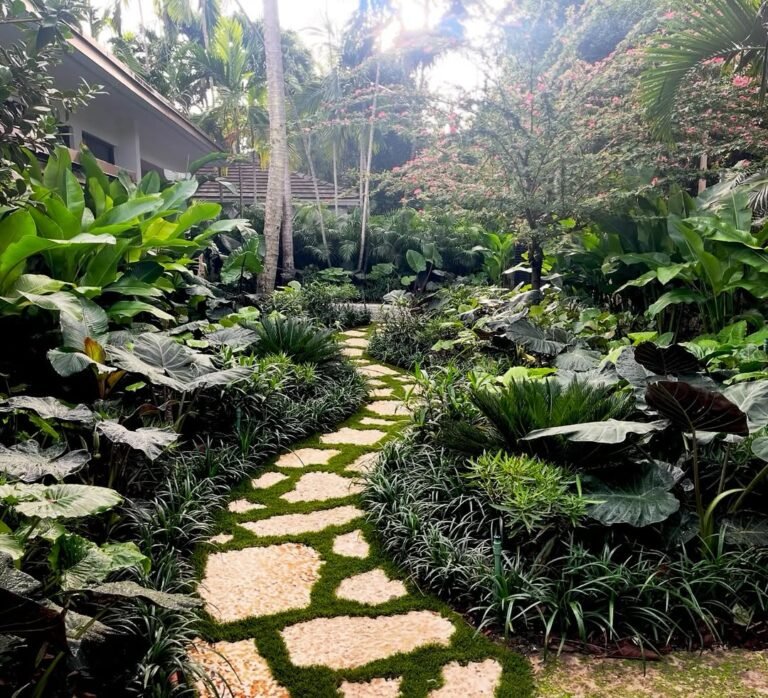
A small garden planted primarily in green — different tones, textures, and leaf forms of green rather than bright flower colour — creates one of the most restful and most spatially generous small garden aesthetics available. Colour in a small space creates visual stops. Green in its many variations creates visual flow that allows the eye to travel through the planting without interruption.
Build the all-green palette from a mix of leaf sizes and textures — large-leafed hostas ($10–$30), delicate fern fronds ($6–$15), fine ornamental grass blades ($8–$20), and smooth box topiary balls ($15–$40). Intersperse with different green tones — dark glossy green, silvery grey-green, lime, and mid-green — to create the visual richness that a single green tone cannot provide within the same restrained palette.
Design tip: Use flowering plants sparingly in an all-green scheme — one or two white-flowered species to punctuate the green rather than a mix of colours that breaks the palette. White flowers read as a tone within the green composition rather than a departure from it. Coloured flowers read as a colour accent that immediately becomes the dominant visual element in any green-first planting scheme.
7. A Defined Seating Area That Fills One Third of the Space
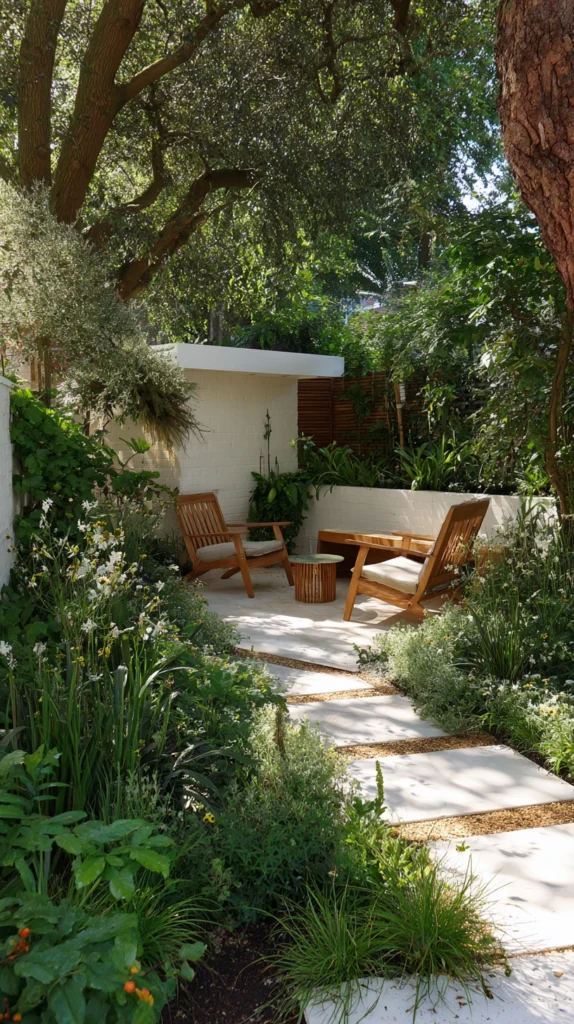
Budget: $100 – $500
Dedicating one third of a small garden to a properly defined, fully furnished seating area — with a surface, chairs, and a side table — and planting the remaining two thirds as garden creates a more functional and more beautiful space than a garden where the seating is an afterthought crammed into whatever corner remains after the planting has been placed.
A bistro table and two chairs in powder-coated steel or cast iron costs $80–$200. A small square of porcelain or composite decking to define the seating zone costs $60–$200 for a 2×2 metre area. The seating area should be large enough to sit comfortably at and exist as a defined room within the garden rather than a spot where furniture has been placed because there was nowhere else to put it.
Design tip: Position the seating area in the shadiest part of the garden during the afternoon hours rather than the sunniest. A seating area in full afternoon sun is used for thirty minutes. The same seating area with shade from a wall, a parasol, or a planted climber overhead is used for three hours. The length of time a seating area is actually used is the only meaningful measure of how well it is sited.
8. Climbing Plants on Every Vertical Surface

Budget: $30 – $150
Every fence, wall, and trellis in a small garden is a planting opportunity that adds growing density without consuming any ground space. A small garden whose vertical surfaces are covered in climbers has three to four times the plant coverage of the same garden with bare boundaries — and the overhead sense of enclosure that the climbing plants create above the seating area makes the garden feel like a room rather than a yard.
Trellis panels for fence mounting cost $15–$30 each. A climbing rose costs $15–$40. Clematis runs $10–$25. Climbing hydrangea for a north-facing wall costs $20–$40. Plant one climber per fence panel as a starting point — the coverage provided by a single well-chosen climber at three years of age is usually sufficient for one panel, and overcrowding multiple species on the same support creates competition that benefits neither plant.
Design tip: Choose climbers for a small garden that flower at different times of the year — a spring clematis Montana, a midsummer climbing rose, and an autumn-flowering Clematis viticella together provide flowering interest on the vertical surfaces for five or six months of the year with almost no overlap in their individual seasons.
9. A Gravel Garden With Sculptural Planting
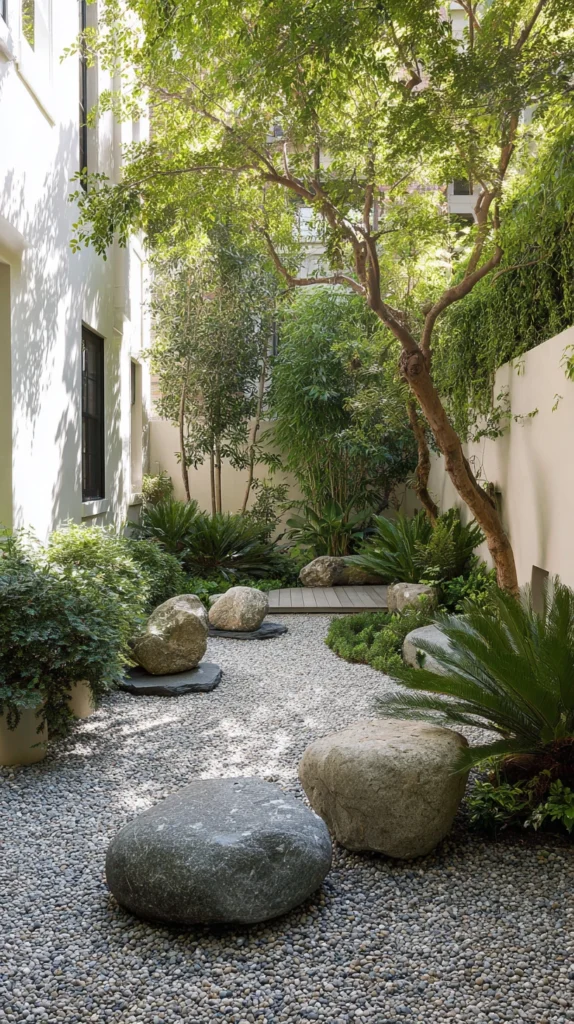
Budget: $120 – $500
A gravel surface planted sparingly with bold, architectural specimens — a single agave in a clay pot, three allium bulbs erupting from the gravel, two ornamental grasses in grouped positions — creates one of the most contemporary and most low-maintenance small garden aesthetics. The gravel unifies the floor surface while the sculptural plants give the eye specific, deliberate things to look at rather than an undifferentiated mass of plants competing for attention.
Pale gravel costs $20–$50 per large bag — a typical small garden requires three to five bags at 5 cm depth. A water-permeable membrane beneath the gravel costs $15–$30 and significantly reduces the occasional weeding the surface requires. Statement plants for the sculptural planting cost $10–$50 each. Use no more than three to five plant species in total — the restraint is what makes the gravel garden feel designed rather than simply unfinished.
Design tip: Use odd numbers of the same plant species when grouping — three grasses, five allium bulbs, one agave — rather than even numbers. Even-numbered plantings create a symmetrical or paired quality that reads as formal. Odd-numbered groups read as naturalistic — as though the plants have seeded and spread slightly of their own accord within the gravel — which is a more interesting and more convincing quality in a contemporary gravel garden.
10. Night Lighting to Create a Second Garden
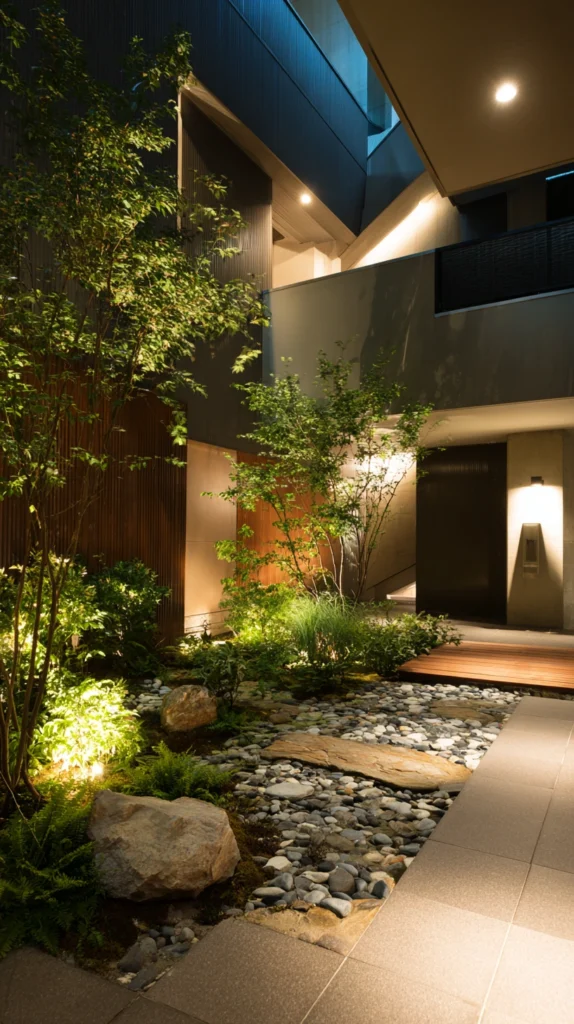
Budget: $30 – $150
A small garden lit well at night becomes an entirely different space from the one experienced by day — boundaries dissolve into darkness, lit plants glow against the black, and the garden can be enjoyed from the house through the window or from a candle-lit seating area long after the sun has set. A well-lit small garden effectively doubles its hours of use through the summer months.
Solar spike uplighters for plants and walls cost $5–$15 each. A set of four to six for a small garden runs $20–$60. String lights above the seating area cost $25–$60 for a solar-powered version requiring no wiring. Candles in glass holders on the table and along a path edge cost $10–$25. Use warm white light sources only — cool white light removes the warmth and atmosphere that makes a small garden at night feel genuinely special.
Design tip: Light the garden from below and from the sides rather than from above. Uplighters on plants and downlighters on walls create the layered, atmospheric light that makes a small garden feel significantly larger and more interesting after dark than it does under a single overhead light source that illuminates everything evenly and eliminates the shadows that give nighttime gardens their character.
11. A Living Boundary of Pleached Trees
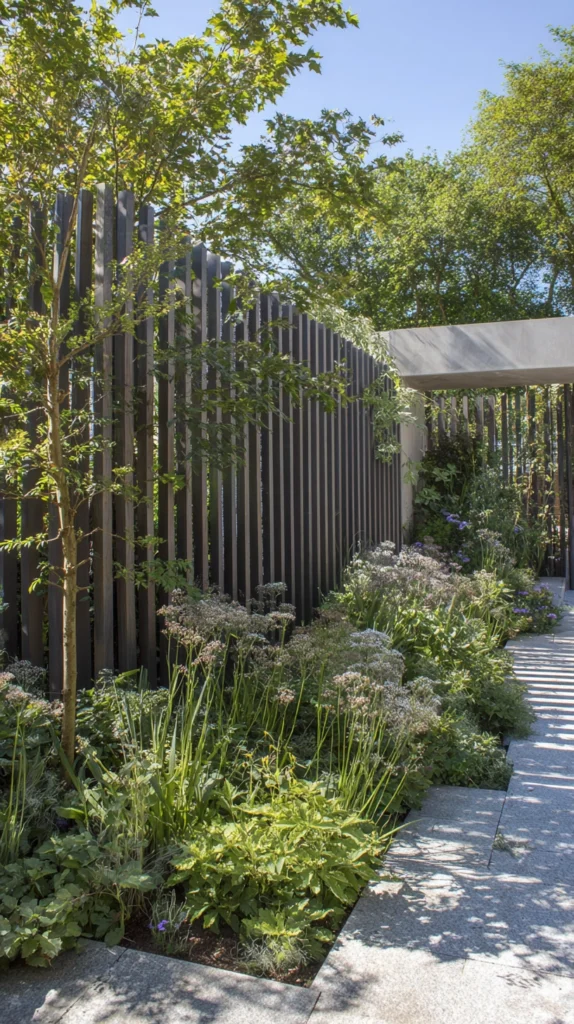
Budget: $300 – $1,200
Pleached trees — limes, hornbeams, or crab apples trained on a flat, raised framework to create a living screen at a specific height above a clear trunk — provide privacy, enclosure, and a decidedly elegant boundary for a small garden without the bulk and ground footprint of a conventional hedge. The clear trunks beneath the canopy allow light to reach the garden while the elevated canopy provides the enclosure above.
Pleached lime or hornbeam trees cost $80–$200 each, with three to five required for a typical garden boundary. The raised framework of horizontal bamboo or wire between stakes costs $30–$80. Pleached trees are available from specialist nurseries already trained to a basic framework — the gardener simply maintains the shape with an annual summer clip and ties in new lateral growth to the framework as it extends.
Design tip: Plant pleached trees at the northern boundary of a small garden rather than the southern one. Pleached trees on the south side create a solid shadow band across the garden at exactly the times of day when sun is most valued. On the northern boundary they provide privacy and enclosure without intercepting any of the southern light that a small garden depends on for plant performance and human comfort.
12. A Path That Curves Out of Sight
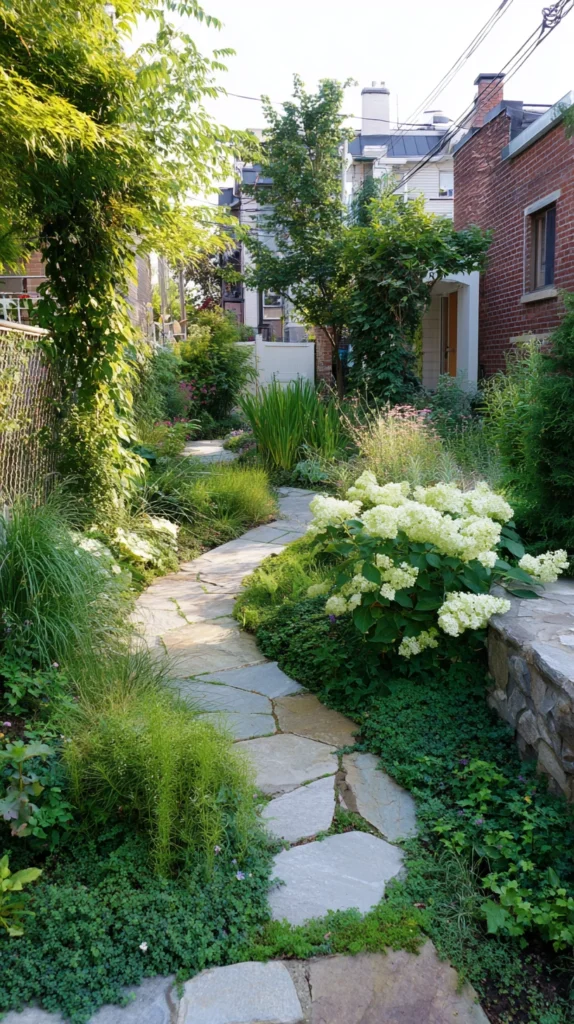
Budget: $60 – $250
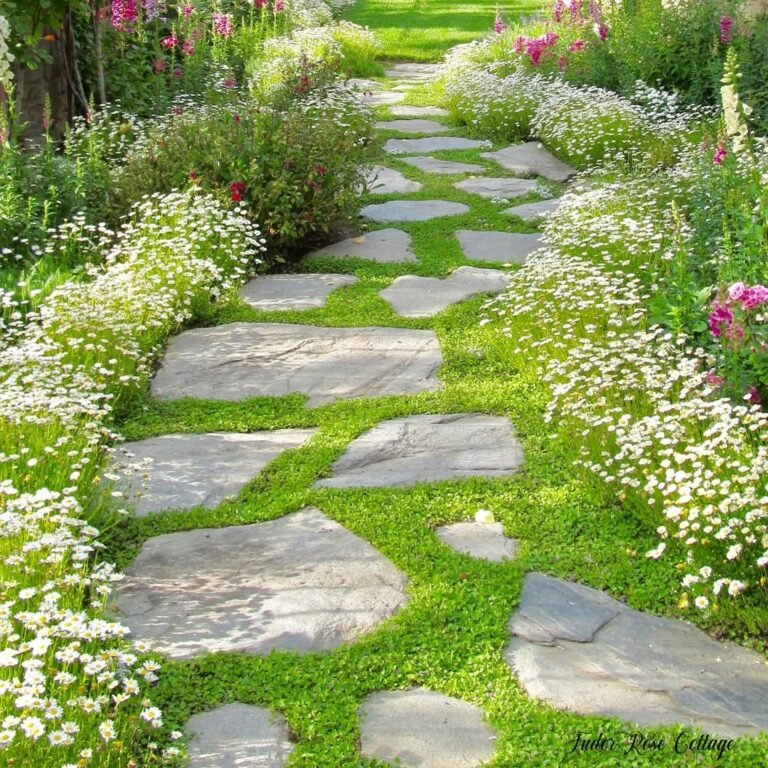
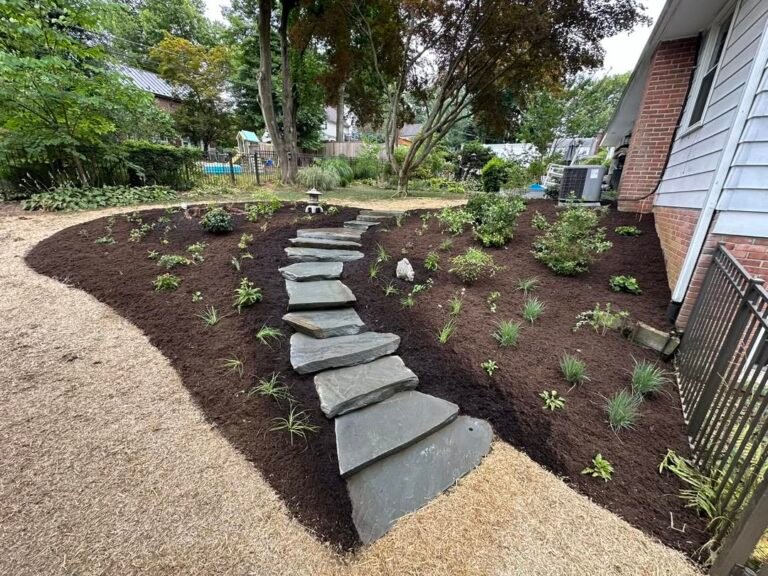
A path in a small garden that curves at one end out of direct view — behind a planted screen, around a raised bed, or through a gap in a hedge — creates the suggestion of more garden beyond the visible area. The eye and the imagination both follow a path and the path that disappears implies continuation, making the small garden feel larger than the boundary immediately visible from the entrance.
A simple stepping stone path in natural or reconstituted stone costs $3–$10 per stone. A gravelled path costs $20–$40 per metre of length in materials. The curve needs to be generous — at least a 2-metre radius to read as a deliberate design rather than a path that simply turns because the boundary got in the way. The planted screening at the curve’s end — even a single large pot — completes the illusion.
Design tip: Place a destination at the end of the path even if that destination is modest — a bench, a pot, a bird bath, or a planted corner. A path that leads nowhere underwhelms regardless of how well it is constructed. A path that leads to somewhere, however small, gives the garden a narrative and the visitor a reason to walk its full length rather than turning back at the midpoint.
13. Bold Colour in One Concentrated Area
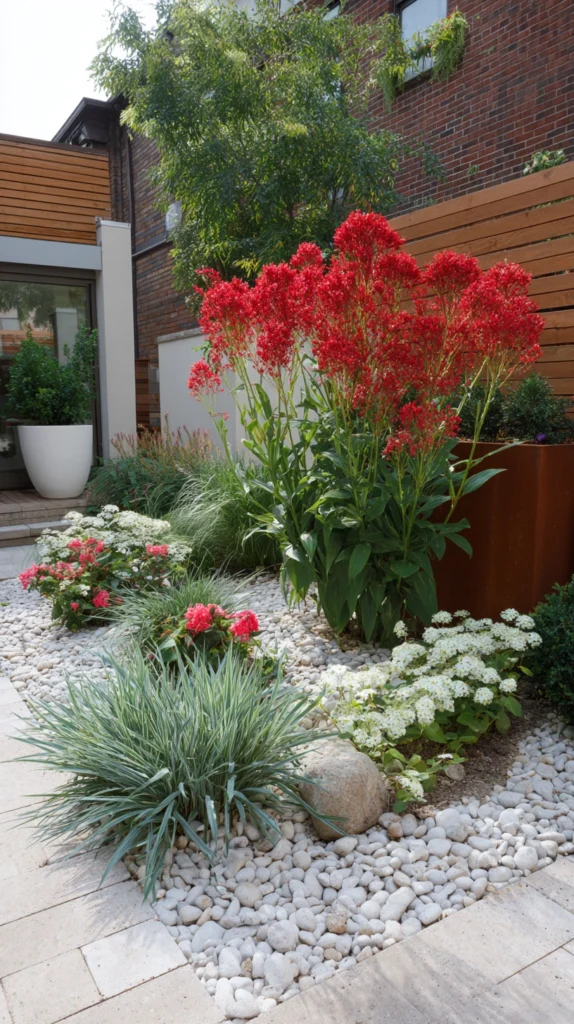
Budget: $30 – $120
In a small garden, a single concentrated area of bold planting colour — a pot of vivid dahlias beside the seating area, a raised bed of hot-coloured zinnias against a white wall, a window box of deep red pelargoniums at the house wall — creates far more visual impact than the same colour distributed thinly across the entire garden. Concentrated colour has presence. Distributed colour has noise.
A large glazed ceramic pot of $30–$60 planted with three dahlia tubers ($3–$8 each) in a single bold colour creates the concentrated colour statement for under $80. Window boxes planted with matching pelargoniums cost $25–$60 depending on box size and plant number. Choose one colour and use it exclusively in the concentrated zone — a mixed colour planting in the same zone dilutes the impact that the concentration is intended to create.
Design tip: Place the concentrated colour planting at eye level or slightly above rather than at ground level. Bold colour at ground level is less effective than the same colour at seated or standing eye height — the closer the vivid planting is to the line of sight from the primary seating position, the more impact it makes on the visual experience of the garden from that viewpoint.
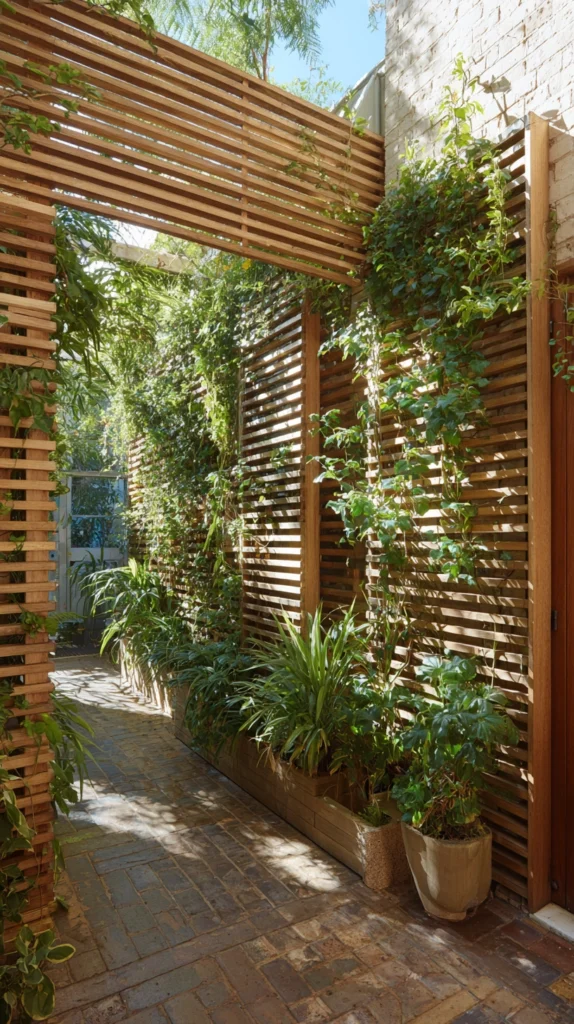
14. An Enclosed Courtyard Feeling Through Planting and Screening
Budget: $150 – $700
Even a garden that is technically open on all sides can be made to feel like an enclosed courtyard through strategic planting and screening — tall grasses or bamboo screens on two sides, a climber-covered trellis on the third, and a low border along the fourth creates the sense of walls without any fixed structure. The enclosed feeling changes the acoustic quality, the sense of privacy, and the perception of scale in a small garden more completely than any other single intervention.
Bamboo screening panels cost $20–$50 each. Tall ornamental grasses for structural screening cost $10–$25 each and require three to five plants per linear metre of effective screening. A timber trellis panel with a fast-growing climber costs $30–$80 total. The planting-created enclosure takes one to three seasons to reach full effectiveness but costs a fraction of built walls or fixed fencing at the same height and visual density.
Design tip: Leave one side of the created enclosure deliberately open — a clear view out to the wider garden, a gap that frames a borrowed landscape beyond the boundary, or an open outlook toward the house. A garden enclosed on all four sides feels claustrophobic. Enclosed on three sides with one deliberate opening feels private and sheltered — the distinction between the two is the quality that determines whether a small enclosed garden feels like a retreat or a trap.
The small garden that looks beautiful is almost never the one that tries to include everything — it is the one that chooses a small number of ideas and executes them with confidence and consistency. The clarity of the choice is what the garden communicates, and clear choices always look more resolved and more beautiful than ambitious ones that spread the available space, budget, and attention across too many competing priorities.
Start with the ground surface and one focal point. Those two decisions establish the character and the scale of the garden before anything else is added, and every subsequent idea on this list finds its right place more easily once the ground and the focal point are both right. The small garden that begins there is always the one that ends somewhere genuinely beautiful.