13 Low-Maintenance Flower Beds for a Stress-Free Summer Garden
Most gardeners do not want to spend every weekend on their knees. They want a garden that looks genuinely good through the summer months without constant deadheading, watering, and replanting — a garden that earns its keep and gives back more than it takes. That kind of garden is entirely achievable, but it starts with the choices made before a single plant goes into the ground.
The thirteen flower bed ideas here are built around plants that do the heavy lifting themselves — spreading to cover the soil, returning reliably each year, and flowering long enough to carry the garden through the whole season. Each one suits a different space, style, and budget, with practical costs and a planting tip included so you can get started with confidence and very little guesswork.
1. The Self-Seeding Cottage Bed
Budget: $50 – $180
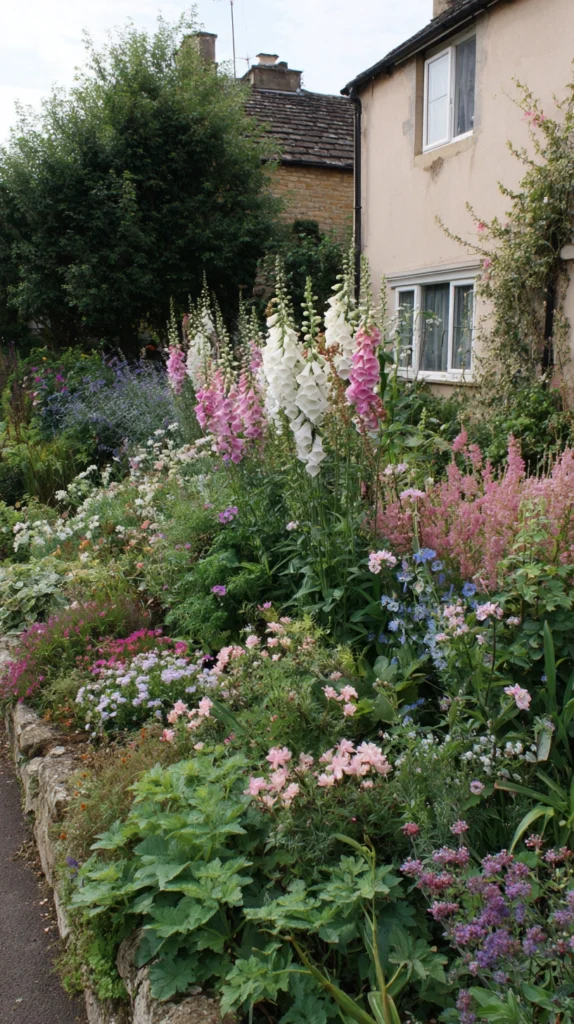
A cottage-style bed built on self-seeding plants is one of the closest things to a garden that replants itself. Foxgloves, aquilegia, hardy geraniums, and honesty scatter their seed each autumn and fill gaps the following spring without any intervention from you. The planting looks relaxed and naturalistic precisely because it is — no two seasons look exactly the same, and the bed improves in density and variety with each passing year.
Start with five or six reliable self-seeders bought as small plants for $5–$12 each, or grown from seed packets costing $2–$5. Once the first generation establishes and seeds, the bed costs almost nothing to maintain going forward. A 5 cm layer of garden compost mulched across the bed in early spring is the only annual task required — it feeds the soil, suppresses competing weeds, and gives germinating seedlings a clean surface to establish in.
Planting tip: Resist clearing the bed too thoroughly in autumn. Leave stems and seed heads standing until late winter so that seed has time to fall naturally onto the soil surface. A bed tidied too early loses next year’s free plants before they have had a chance to arrive.
2. The Drought-Proof Mediterranean Bed
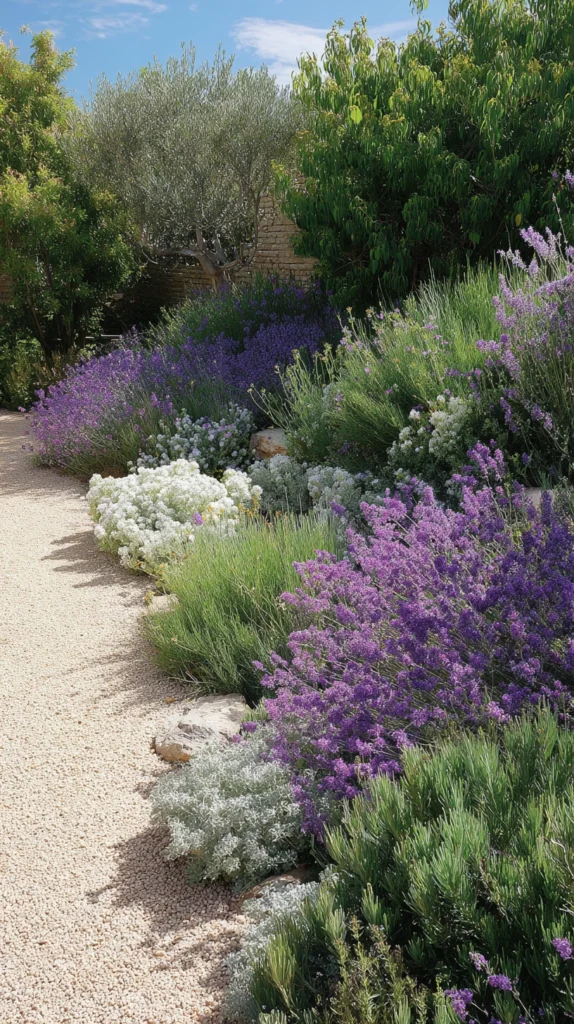
Budget: $70 – $250
A Mediterranean-style bed — planted with lavender, rosemary, cistus, santolina, and ornamental alliums in free-draining, gritty soil — is perhaps the most genuinely low-maintenance flower bed it is possible to create in a sunny garden. These plants evolved in conditions of heat, drought, and poor soil. They do not need feeding. They rarely need watering after the first season. And they look best when left largely alone to develop their natural form over several years.
Lavender plants cost $5–$15 each, cistus $8–$18, and ornamental allium bulbs $1–$3 each when bought in bulk in autumn. Prepare the bed by working horticultural grit into the existing soil at a ratio of roughly one part grit to three parts soil — this costs $10–$20 per large bag and dramatically improves drainage for plants that will rot in waterlogged conditions regardless of how much sun they receive. Top-dress with fine gravel for a finished, weed-suppressing surface.
Planting tip: Do not feed Mediterranean plants. Fertiliser encourages soft, leafy growth that is both unattractive in these species and more susceptible to frost damage in winter. Lean soil produces the compact, aromatic growth that makes these plants worth growing in the first place.
3. The Perennial Backbone Bed
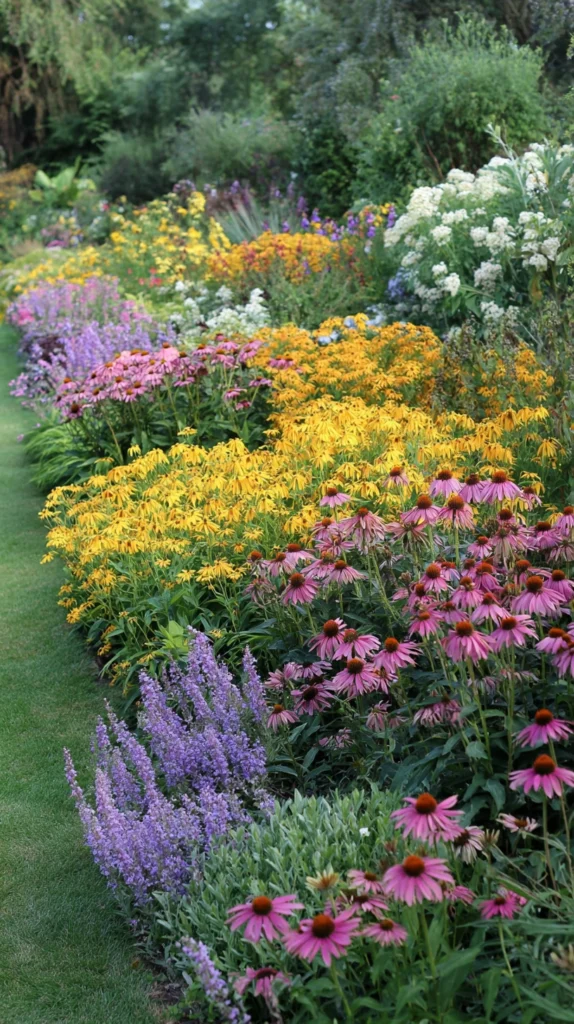
Budget: $120 – $380
A bed planted entirely with hardy perennials is the most rewarding long-term investment in a low-maintenance garden. The upfront cost is higher than buying annuals each spring, but perennials return every year, grow larger and more floriferous with age, and eventually need dividing — which produces free plants for other parts of the garden. After the first two seasons of establishment, a well-chosen perennial bed asks very little of you.
A summer-long perennial combination might include salvia nemorosa, rudbeckia, echinacea, helenium, agastache, and hardy geranium — six genera that together provide overlapping colour from June through October. Buy three plants of each variety for a well-filled result: 18 plants at $7–$15 each gives a generous bed for $126–$270. Mulch on planting, water through the first summer, and largely leave it alone from the second season onward.
Planting tip: Plant perennials in groups of three or five of the same variety rather than spacing single plants evenly across the bed. Grouped planting creates stronger visual impact, encourages faster ground coverage, and gives each variety enough space to establish its root system without competition from different neighbours on all sides.
4. The Grass and Perennial Mix Bed
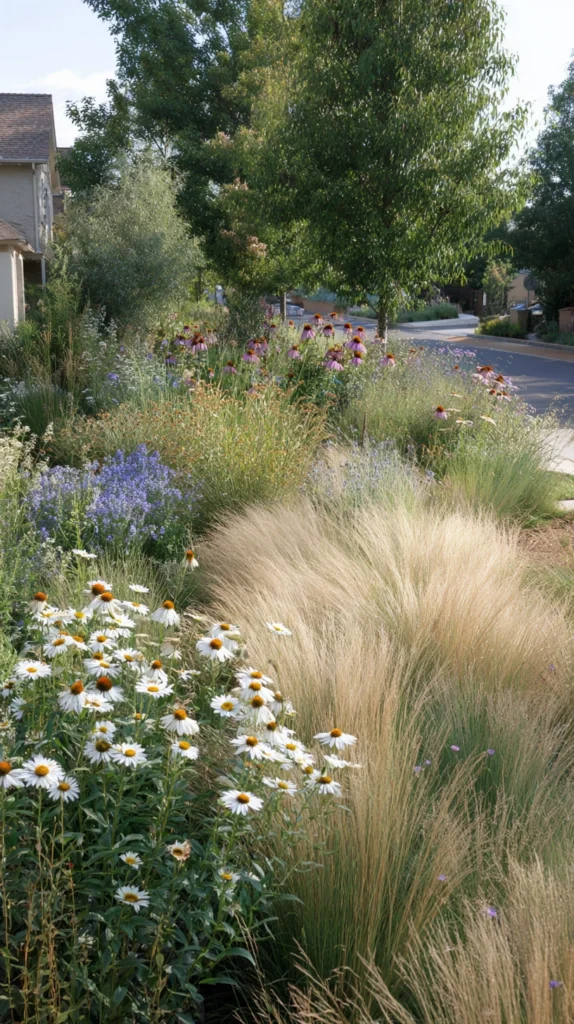
Budget: $100 – $300
Mixing ornamental grasses with summer perennials produces a bed that looks good across all four seasons rather than just the summer months. The grasses provide movement, texture, and winter structure long after the perennials have died back, and they are among the most genuinely undemanding plants in cultivation — needing only one cut to the ground in late winter and nothing else for the rest of the year. The result is a planting that earns its space twelve months at a time.
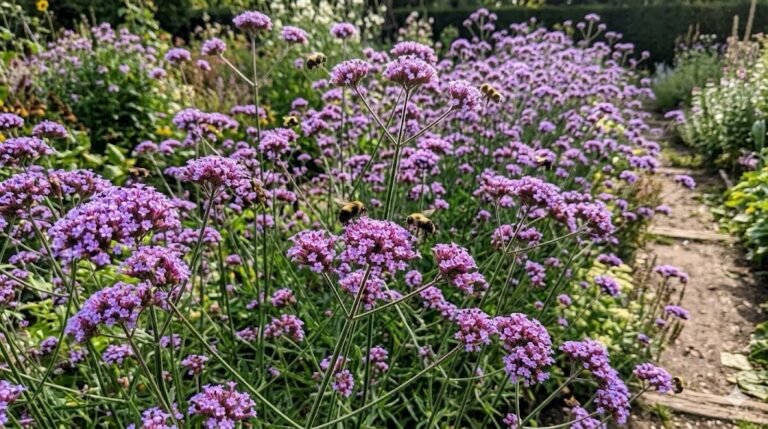
Reliable grasses for a mixed summer bed include Calamagrostis Karl Foerster ($10–$20), Pennisetum Hameln ($8–$18), and Stipa tenuissima ($7–$15). Pair with echinacea, rudbeckia, and verbena bonariensis for a naturalistic prairie feel. Space grasses at 60–80 cm centres to allow them room to develop their full form — crowded grasses look weak and flower poorly. The bed reaches its best appearance by the third growing season and continues to improve after that.
Planting tip: Cut grasses back in late February or early March rather than in autumn. The dried winter stems are among the most attractive features of this bed style, catching frost and low light in a way that no summer planting can replicate. Cutting them early removes the best part of their annual performance.
5. The Wildflower Patch
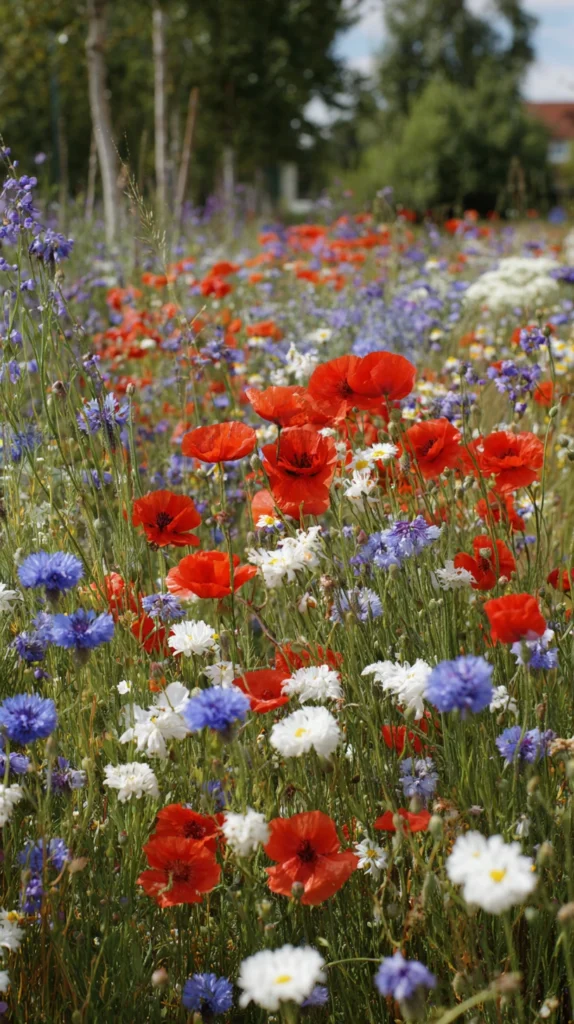
Budget: $10 – $50
Nothing on this list costs less or requires less effort to establish than a wildflower patch. Clear the ground of existing vegetation, rake to a fine tilth, broadcast-sow a mixed wildflower seed blend, water once, and leave it to grow. The result across a single season is a densely planted, naturally beautiful bed of poppies, cornflowers, ox-eye daisies, and field scabious that looks designed and costs almost nothing to create or maintain.
A 100g packet of mixed wildflower seed — enough to cover around 10 square metres — costs $5–$15 from most garden retailers. Annual varieties flower in their first year and self-seed for following seasons. Perennial varieties take a full year to establish before flowering. A combined annual and perennial mix gives the best of both — colour in year one and a strengthening, self-sustaining planting from year two onward. The only annual task is cutting the whole patch to 5 cm in late autumn.
Planting tip: Sow into bare soil only — wildflowers cannot establish in competition with existing grass or established weeds. If the area you want to plant is currently grassed, lay cardboard over it for six to eight weeks before sowing to kill the grass beneath without digging.
6. The Late Summer Colour Bed

Budget: $60 – $200
A bed planted specifically for late summer and autumn performance — rudbeckia, helenium, sedum, aster, and Japanese anemone — solves the problem that affects most gardens: looking tired and finished by August when the season still has two months left to run. This bed asks very little through the early summer when there is little to see, then peaks from August through October with a warmth and richness that the earlier season rarely matches.
Rudbeckia Goldsturm is the anchor plant of this combination, producing golden yellow daisies from August through October for $6–$14 per plant. Helenium varieties in copper, orange, and deep red cost $7–$15 each. Japanese anemone runs $8–$18 per plant and spreads steadily underground to fill gaps over time. All are fully hardy, improve with age, and need no deadheading to continue flowering through the autumn months.
Planting tip: Leave this bed completely uncut until late February. The dried stems and seed heads of rudbeckia, sedum, and helenium are genuinely beautiful in winter frost and provide critical overwintering habitat for beneficial insects. A bed tidied in October loses both its winter structure and much of its ecological value.
7. The Sunny Border With Bulb Layers
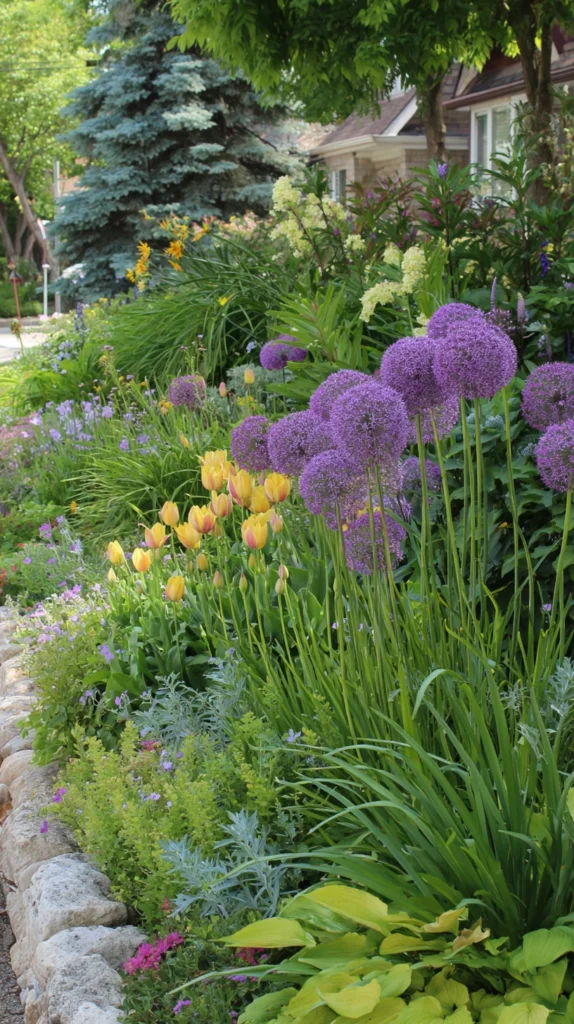
Budget: $50 – $160
Layering bulbs through an existing sunny border is one of the simplest ways to add season-long colour with almost no ongoing effort. Plant tulip and allium bulbs in autumn between established perennials, allow them to flower in spring and early summer, then let the perennials grow up around the fading bulb foliage and carry the bed through the rest of the season. The bulbs do not need lifting each year and slowly naturalise, increasing in number over time.
Tulip bulbs cost $0.50–$2 each when bought in bulk bags of 50 or 100 in autumn. Ornamental allium bulbs — among the most architectural and long-lasting of all bulb flowers — cost $1–$4 each. Allium Purple Sensation and Allium Gladiator are two of the most reliable and widely available varieties. Plant tulips 15 cm deep and alliums 10–15 cm deep between existing plants without disturbing established root systems unduly.
Planting tip: Choose tulip varieties listed as good for naturalising — Darwin Hybrids are the most reliable perennial tulips and return well for several years without lifting. Standard tulips tend to diminish after the first season and eventually need replacing, which defeats the low-maintenance purpose.
8. The Shaded Woodland Edge Bed
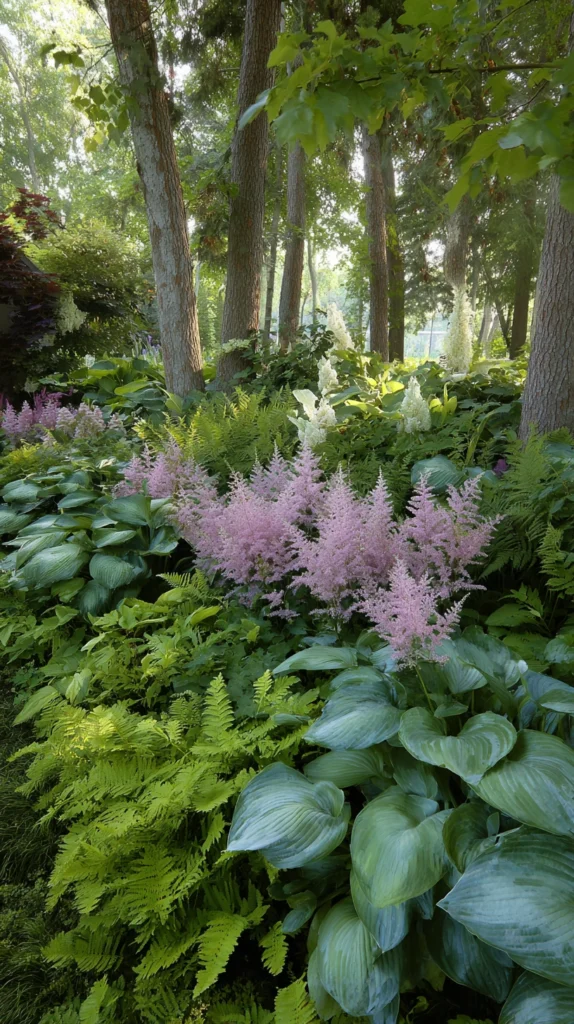
Budget: $70 – $230
A bed that sits beneath a tree canopy or along a shaded fence is naturally more moisture-retentive than a full-sun border, which means less watering and less stress for the plants within it. Astilbe, hostas, hardy ferns, and foxgloves create a lush, layered planting that fills the space generously and suppresses weeds effectively as the foliage expands through summer. This style of bed often looks better with less intervention than more — the overlapping leaves are the maintenance strategy.
Hostas are the most effective ground-covering plant for a shaded bed and cost $10–$30 each depending on variety and size. Large-leafed varieties like Hosta Sum and Substance or Hosta Empress Wu suppress weeds particularly well simply through the scale of their foliage. Astilbe adds vertical interest and summer flower colour for $8–$18 per plant. Hardy ferns cost $6–$15 each and provide evergreen structure through the winter months when everything else has died back.
Planting tip: Apply a generous mulch of leaf mould or bark chippings around the base of all plants in a shaded bed each spring. Shaded soil stays moist but can become compacted under tree canopy where rain struggles to penetrate — the mulch maintains the open, moisture-retentive structure that woodland plants prefer.
9. The Cutting Bed That Maintains Itself
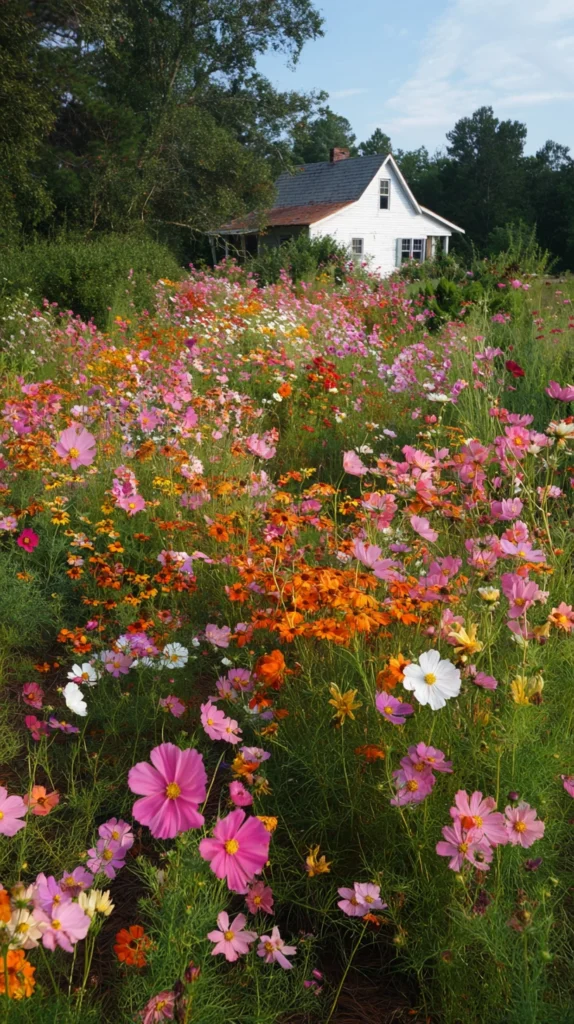
Budget: $30 – $120
A bed of cut-and-come-again flowers — cosmos, zinnias, sweet William, and rudbeckia — maintains itself through the act of cutting. Every time a stem is removed for a vase, the plant is effectively deadheaded and stimulated to produce two or three new flowering stems in its place. Regular cutting is the maintenance routine, and the reward for doing it is a constant supply of fresh flowers for the house from June through to the first autumn frost.
Cosmos seeds cost $2–$5 per packet and are sown directly into the bed after the last frost. Zinnia seeds run $2–$4 per packet and germinate quickly in warm soil. Sweet William biennials are planted in autumn for the following summer at $4–$8 per pack of plugs. Rudbeckia plug plants cost $5–$10 each and flower prolifically from July onward. The entire bed can be established for under $30 from seed or under $80 from plug plants for a faster first-year display.
Planting tip: Cut flowers in the early morning when stems are fully turgid after the cool overnight hours. Flowers cut in the afternoon heat wilt faster in the vase regardless of how quickly they are placed in water. A morning harvest takes ten minutes and produces stems that last four to seven days longer than afternoon-cut equivalents.
10. The Front Garden Kerb-Appeal Bed
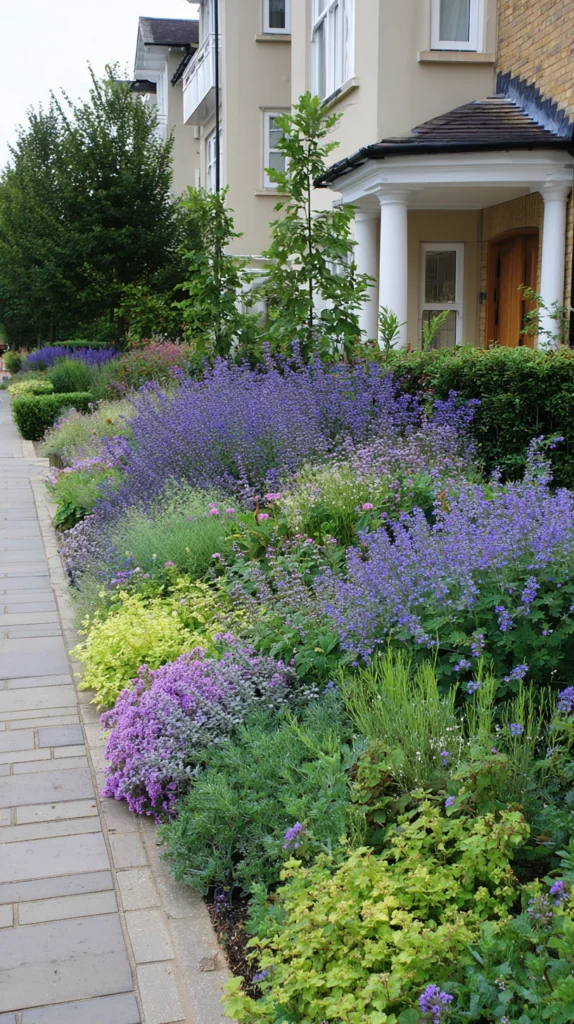
Budget: $60 – $200
A narrow front garden bed — running along a path, bordering a driveway, or framing a doorstep — is one of the most visible and highest-impact spaces in any garden, and it is also one of the easiest to maintain when planted thoughtfully. Low-growing, spreading perennials that cover the soil quickly and suppress weeds naturally are the foundation: nepeta, hardy geranium Rozanne, and alchemilla mollis are three of the best and most widely available options for exactly this purpose.
Geranium Rozanne costs $8–$15 and spreads to 60–90 cm in a single season, flowering in violet-blue continuously from June to October with almost no deadheading required. Nepeta Six Hills Giant costs $6–$12 and produces soft lavender flower spikes from May through August. Alchemilla mollis costs $5–$10 for a starter plant that will provide dozens of seedlings within two years. Together, three plants of each creates a generous front bed for $60–$120 plus mulch.
Planting tip: Cut alchemilla back hard to the ground immediately after its first flowering flush in early summer. New foliage emerges within two weeks and the plant often produces a second flush of its lime-green flowers in late summer — something it will not do if left to go to seed and exhaust itself through the first flowering period.
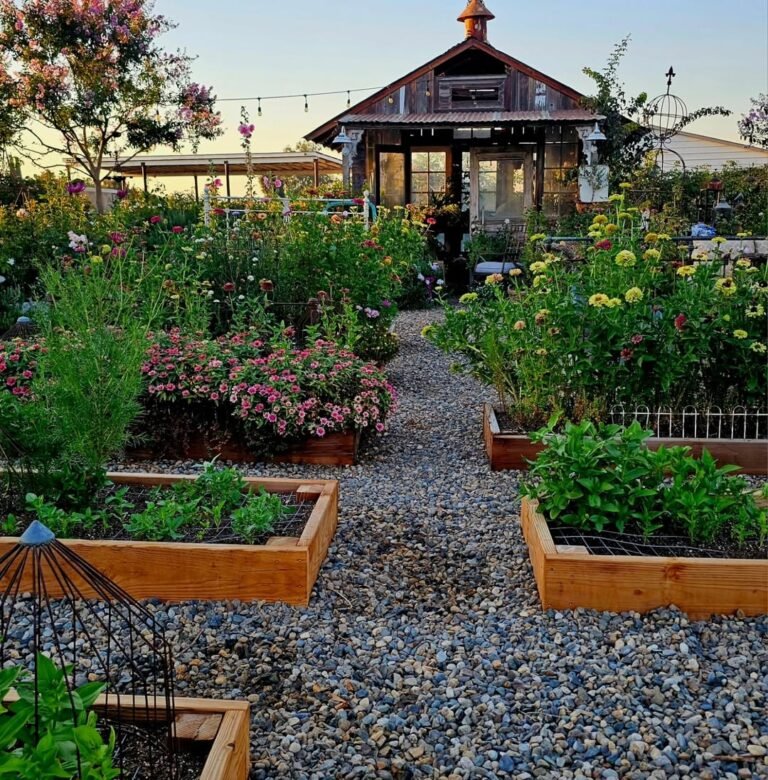
11. The Raised Bed Kitchen Garden Border
Budget: $90 – $350
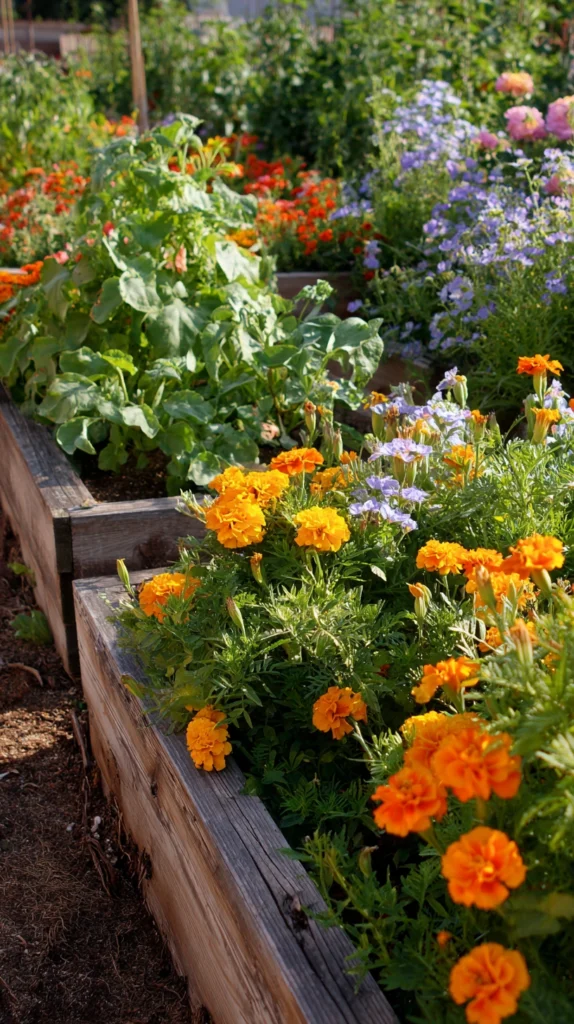
A raised bed positioned along the edge of a kitchen garden or vegetable plot — planted with companion flowers that attract pollinators and deter pests — serves a practical purpose while looking genuinely beautiful through the summer. Marigolds deter aphids. Borage attracts bees. Nasturtiums draw blackfly away from beans. Sweet peas provide cut flowers and fix nitrogen at their roots. This is a flower bed that earns its place twice over: aesthetically and practically.
A basic raised bed kit costs $40–$100. Marigold plants are $2–$5 each or grown from seed for pennies. Borage self-seeds prolifically and costs $2–$4 for an initial seed packet that will supply the garden indefinitely after the first season. Nasturtium seeds cost $2–$4 per packet. Sweet pea seeds run $3–$6 per packet. The entire planting for a standard raised bed costs $15–$30 in seed or $40–$80 in plug plants for faster establishment.
Planting tip: Allow borage and nasturtiums to self-seed freely at the base of the raised bed each autumn. Both are vigorous self-seeders that will return reliably without replanting once established — simply thin the seedlings to the spacing you want in spring and pull any that appear in inconvenient positions.
12. The Evening Garden Bed
Budget: $60 – $200
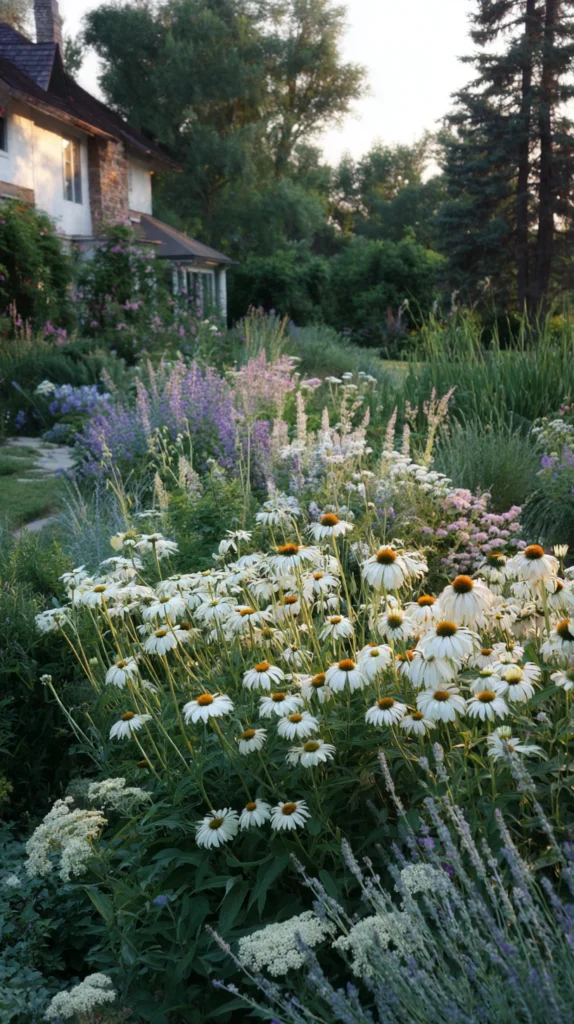
A bed planted with white, pale yellow, and soft lavender flowers glows in the low evening light after sunset in a way that saturated daytime colours cannot match. White echinacea, pale yellow rudbeckia, white Japanese anemone, and lavender agapanthus create a palette that reads quietly through the day and comes into its full beauty in the hour before dark — which is, for most working gardeners, the hour when they are actually in the garden to enjoy it.
White echinacea varieties such as White Swan cost $8–$15 each. Pale yellow rudbeckia Indian Summer runs $6–$12. White Japanese anemone Honorine Jobert is $8–$18 per plant and one of the most reliable late-summer perennials in cultivation. All three are fully hardy and improve significantly with age. Add a white-flowering ornamental allium or two ($2–$4 per bulb planted in autumn) to bridge the gap between spring and summer in this bed’s colour story.
Planting tip: Position this bed where it is visible from the house — from a kitchen window, a back door, or a seat on the terrace — rather than at the far end of the garden where it will rarely be seen during the evening hours it performs best. The most beautiful bed in a garden is wasted if it cannot be seen from where you actually spend your time.
13. The No-Dig New Bed
Budget: $40 – $160
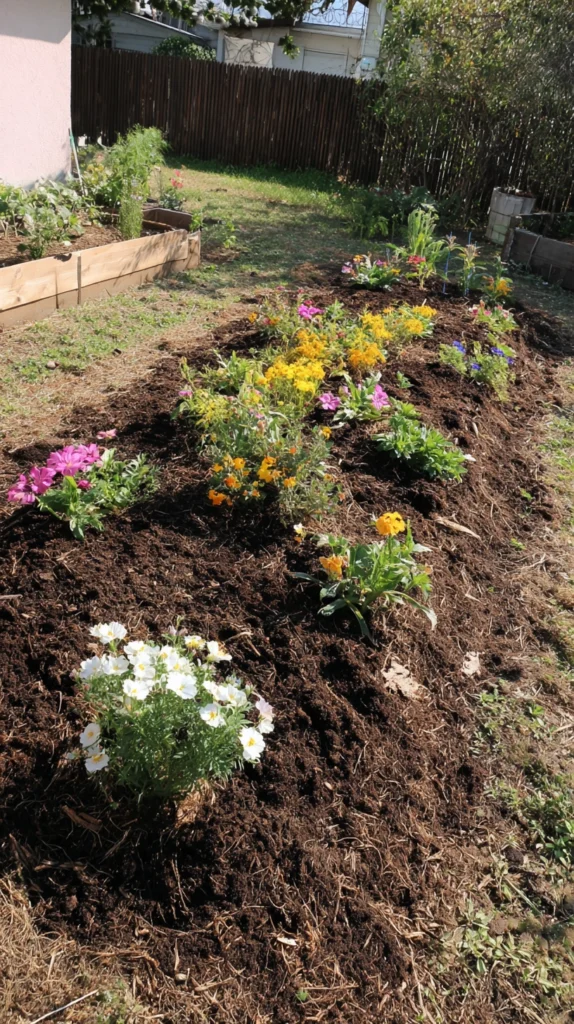
The no-dig method turns any patch of grass or overgrown ground into a productive flower bed without a spade, a rotavator, or a weekend of hard labour. Lay flattened cardboard boxes directly over the existing surface, overlap the edges generously to prevent gaps, top with 10–15 cm of good garden compost, and plant straight into the compost layer. The cardboard smothers everything beneath it within weeks, worms improve the soil structure from below, and the bed is ready to grow in from the day it is made.
Cardboard is free from any supermarket, furniture retailer, or appliance shop — remove all tape and staples before laying. Garden compost or well-rotted manure costs $20–$50 per large bag, and a typical new bed of 2×1 metres needs four to six bags to reach the required depth. Plant plugs or pot-grown plants directly into the compost with a hand trowel. By the following season the cardboard has fully broken down and the bed soil beneath is measurably improved compared to the ground that was there before.
Planting tip: Overlap every cardboard join by at least 15–20 cm without exception. A single thin join anywhere in the layer gives determined weeds exactly the gap they need to push through. The overlapping is the entire mechanism of the method — do it thoroughly and the bed stays clean for a full growing season without further weeding.
Every bed on this list is designed to give back more than it takes — in colour, in wildlife, and in the simple satisfaction of a garden that looks well-kept without demanding constant attention. The groundwork matters most: good preparation, the right plants for the right place, and a layer of mulch that works quietly on your behalf through every week of summer.
Choose the idea that fits the time and space you actually have, not the garden you imagine you might one day create. A single bed planned and planted well is worth more than five ambitious ones that never quite get finished. Start there, enjoy what grows, and let the garden tell you where to go next.