14 Flowers That Grow Quickly From Seeds
Some flowers demand patience — a seed sown in January for a June flower, a bulb planted in autumn for a spring display, a perennial established across two full seasons before it produces its best performance. And then there are the flowers on this list, which demand almost nothing of the gardener’s patience.
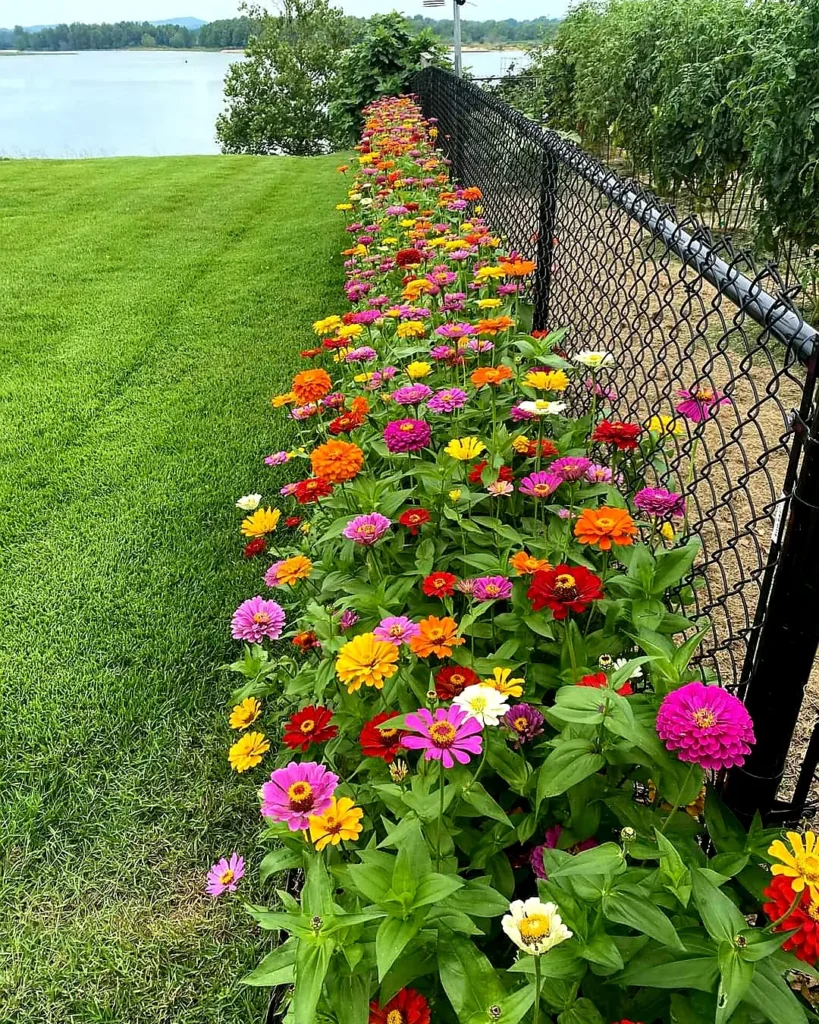
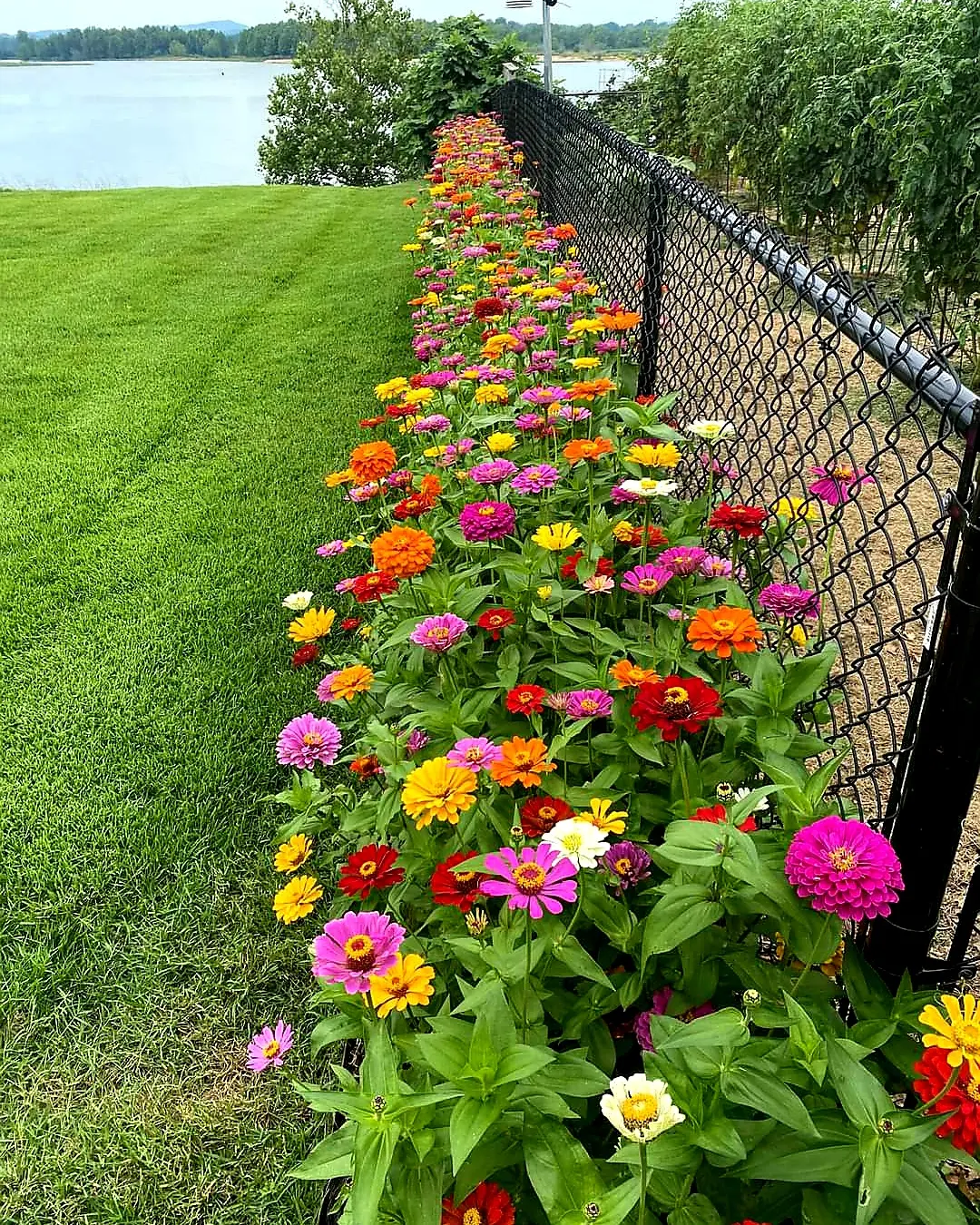
From seed to first flower in four to eight weeks, most of them can be sown directly where they are to grow, produce abundant display material through the summer, and often self-seed to return the following year without any further expenditure or effort.
The fourteen flowers below are chosen for genuine speed — not just from sowing to germination but from seed to bloom. Each includes a cost guide and a practical growing tip to help you get the fastest, most impressive result from every packet.
1. Zinnia
Cost: $2 – $6 per packet | Days to bloom: 50 – 65 days
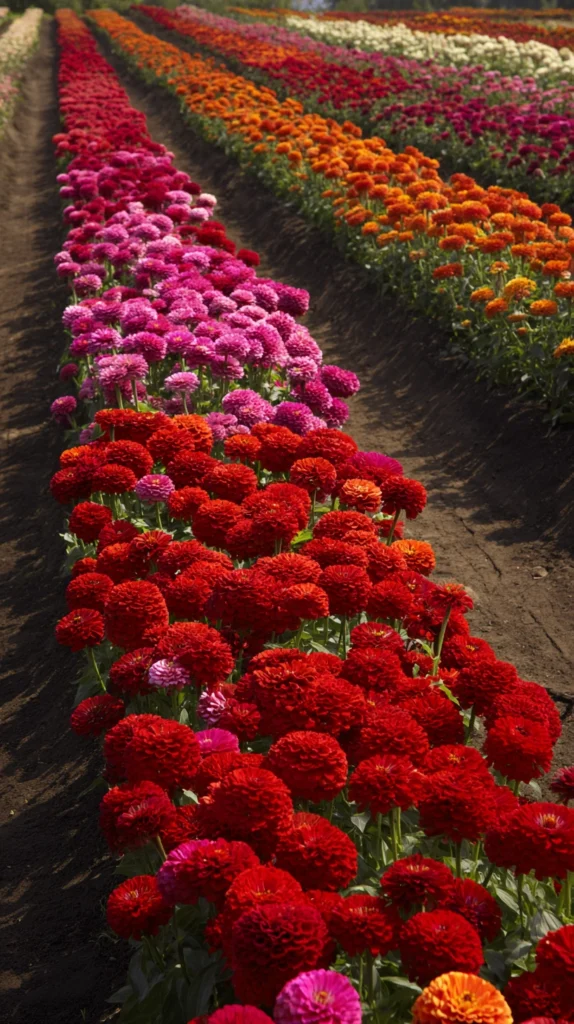
Zinnia is the fastest large-flowered annual available from seed — producing its first vivid blooms in as little as fifty days from sowing in warm conditions. It comes in the full warm colour spectrum from pale cream to deep scarlet, in forms ranging from small and compact to large dahlia-flowered, and it remains in flower from the first bloom to the first autumn frost with consistent deadheading. No other annual delivers the same combination of speed, colour intensity, and sustained performance.
Sow directly outdoors from mid-May onward once soil is warm — zinnia seed germinates in three to five days at 21°C and barely at all below 15°C. Profusion and Zahara series are the fastest to bloom. Benary’s Giant produces the largest flowers for cutting. Pinch out the growing tip at 15–20 cm height to produce a bushier plant with significantly more flowers than an unpinched equivalent of the same variety through the same season.
Growing tip: Water zinnia seedlings at the base of the plant rather than overhead and water in the morning rather than the evening. Wet zinnia foliage in cool overnight temperatures is the primary trigger for powdery mildew — the most common zinnia problem in most garden climates — and both watering practices eliminate the foliage moisture that gives mildew spores the opportunity to germinate and spread across the leaf surface.
2. Sunflower
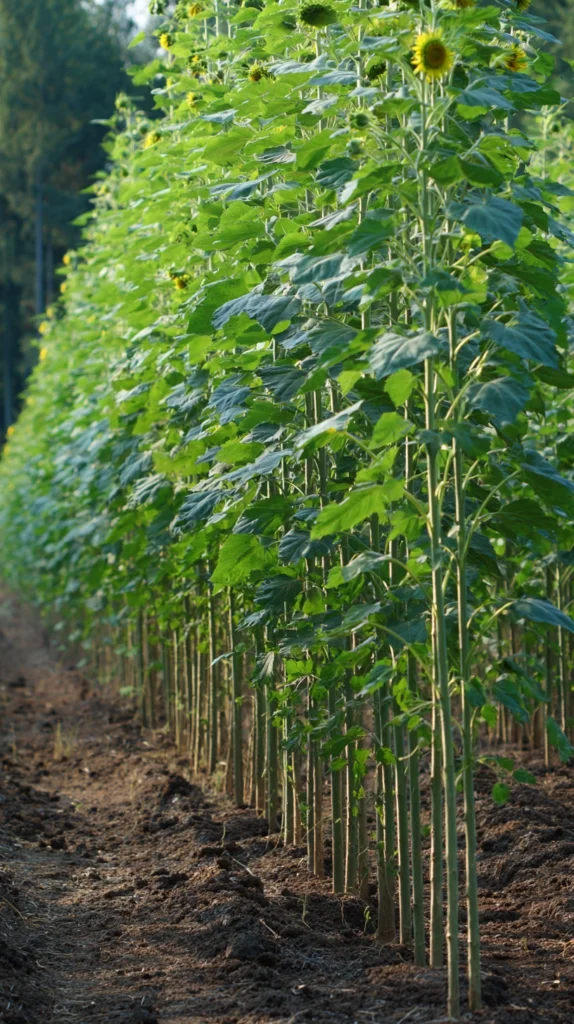
Cost: $2 – $5 per packet | Days to bloom: 55 – 75 days
Sunflowers are among the fastest and most spectacularly rewarding seed-to-flower experiences available in any garden. The large seed germinates rapidly, the seedling is visible and vigorous within days of sowing, and the flower head — from a dwarf variety at 40 cm to a giant at 3 metres — is one of the most recognisable and most enthusiastically responded-to garden flowers available at any scale of growing.
Sow directly outdoors from mid-April — sunflowers tolerate slightly cooler soil than zinnias and germinate at 12°C, making them suitable for an earlier sowing date. Single-stem varieties (Sunrich, ProCut) are best for cutting. Multi-branching varieties (Lemon Queen, Velvet Queen) produce more flowers per plant over a longer season. Dwarf varieties (Teddy Bear, Big Smile) suit containers and small gardens. Sow at the final spacing — 30 cm for cutting varieties, 45 cm for branching ones — rather than thinning, as sunflowers strongly dislike root disturbance.
Growing tip: Sow sunflower seeds vertically — with the pointed end downward and the flat face horizontal — rather than on their side or horizontally. Vertical sowing aligns the seed with the natural direction of root emergence and consistently produces faster, more even germination than random orientation sowing of the same seed in the same conditions. The difference in germination speed is two to three days — negligible individually but meaningful when early flowering is the goal.
3. Nasturtium
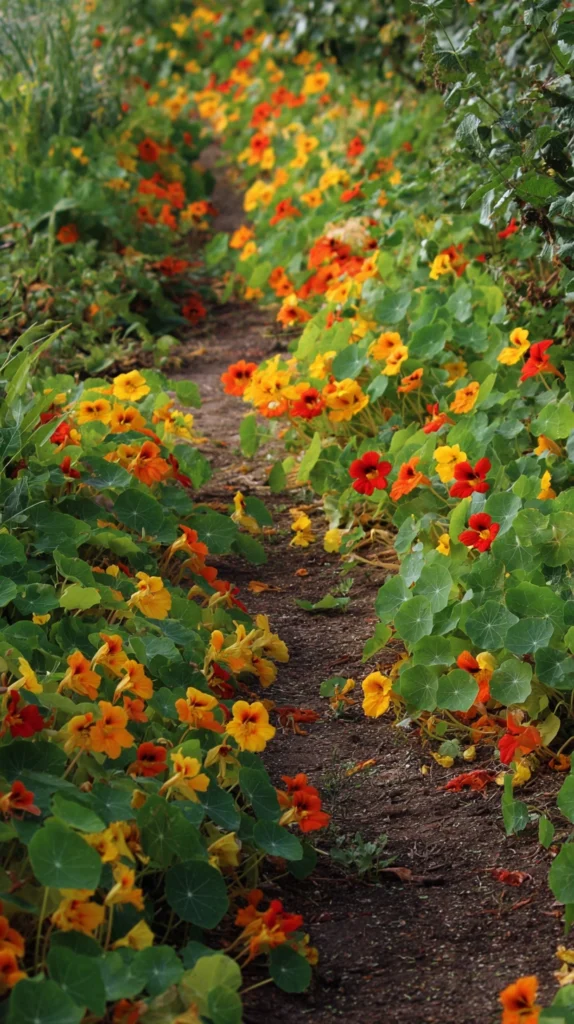
Cost: $2 – $4 per packet | Days to bloom: 35 – 52 days
Nasturtiums are the fastest-blooming edible flowering annual available from seed — first flowers appearing in as little as five weeks from sowing in warm conditions. They are entirely unfussy about soil — in fact they flower more prolifically in poor, lean soil than in rich, heavily fed ground — and they require virtually no maintenance beyond watering once established. Every part of the plant is edible: leaves, flowers, and seed pods all carry a pleasant peppery flavour.
Sow directly outdoors from late April onward, 2–3 cm deep, at 20–30 cm spacing for compact varieties and 40–50 cm for trailing ones. Trailing varieties cascade beautifully from raised beds, containers, and hanging baskets. Climbing varieties reach 1.5–2 metres and cover a trellis or fence quickly in warm conditions. Do not start indoors — nasturtiums produce a taproot that is extremely sensitive to transplanting and seedlings started in pots almost invariably struggle on being moved to their final position.
Growing tip: Soak nasturtium seeds in water for twelve hours before sowing to soften the hard seed coat — this single step accelerates germination by three to five days compared to dry sowing of the same seed in the same conditions. The softened seed coat allows the embryonic root to emerge more quickly from the seed and begin growing before the seed coat becomes an obstacle to the natural germination process.
4. Cornflower (Centaurea cyanus)
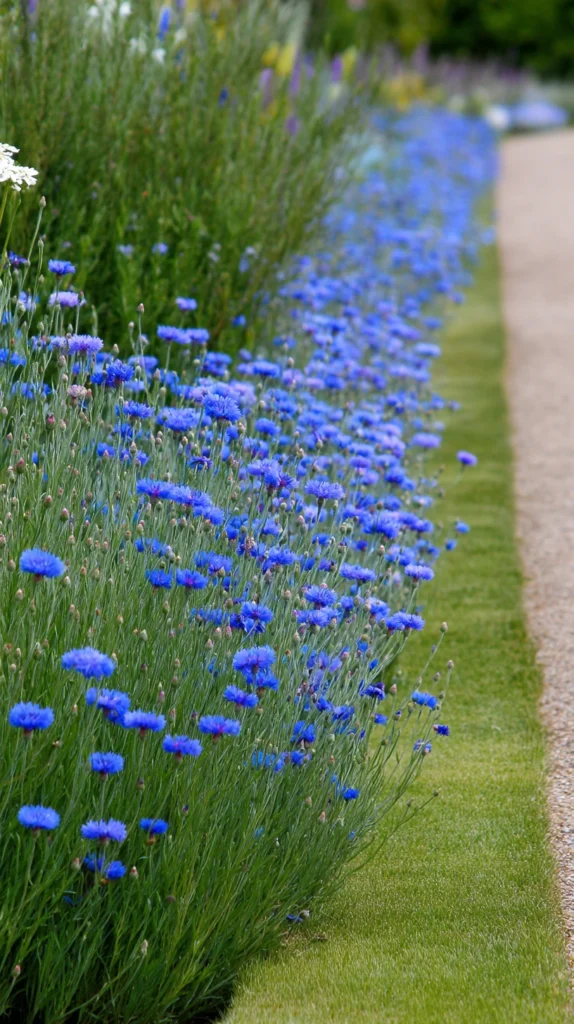
Cost: $2 – $4 per packet | Days to bloom: 50 – 60 days
Cornflowers are one of the most reliably fast-blooming and most reliably hardy annuals available from direct sowing. The vivid blue of the classic cornflower is one of the most genuinely beautiful colours in the summer garden and the plants produce a continuous succession of flowers over eight to ten weeks from the first bloom. They also tolerate an autumn sowing — sown in September they overwinter as small rosettes and flower earlier and more prolifically the following summer than spring-sown plants of the same variety.
Sow directly outdoors from March onward — cornflowers are one of the earliest outdoor sowings possible as the seed germinates at soil temperatures as low as 7°C. Scatter the seed thinly and rake lightly into the soil surface without covering deeply. Thin to 25–30 cm spacing once established. Classic Blue Boy is the most reliably blue variety. Black Ball provides deep burgundy flowers. A mixed packet provides the full range — blue, pink, white, and burgundy — from a single sowing for the widest seasonal display per packet.
Growing tip: Make two sowings of cornflower seed — one in early March and a second in late April — to provide a staggered flowering display from June through September rather than a single flush that peaks in June and declines before midsummer. The two-sowing approach costs an extra packet of seed ($2–$4) and produces a display period twice as long as a single sowing of the same quantity of seed into the same growing area.
5. California Poppy (Eschscholzia)
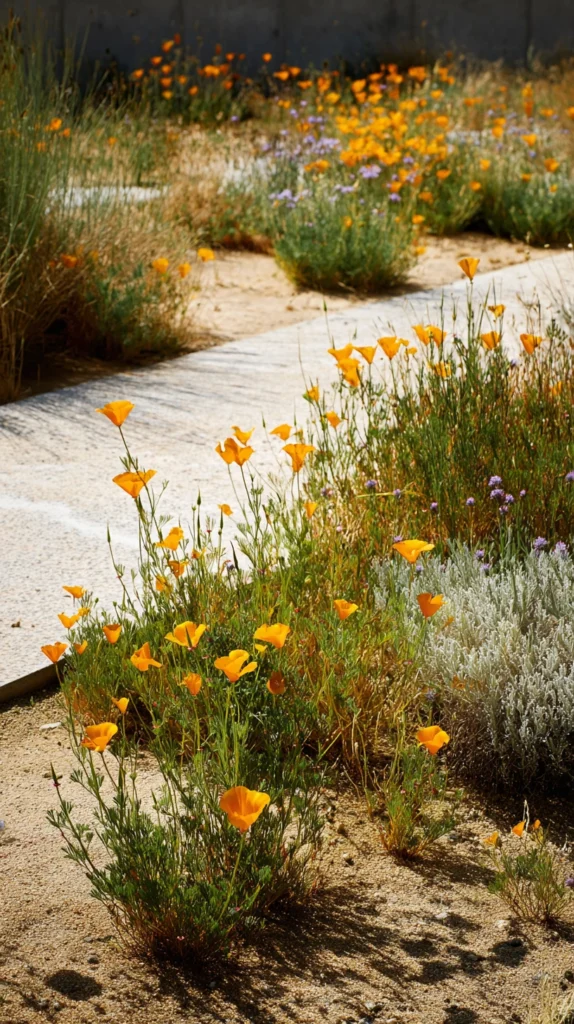
Cost: $2 – $4 per packet | Days to bloom: 50 – 60 days
California poppies are one of the most brilliant, most drought-tolerant, and most easily grown annuals available from direct sowing. The silky, vivid flowers in orange, yellow, red, and cream open in full sun and close at night and in overcast conditions — producing the spectacular display that makes a California poppy patch so memorable through June, July, and August. They self-seed prolifically in any open ground position and once introduced to a garden they return reliably each year without any further seed expenditure.
Sow directly onto prepared bare soil from March onward — California poppies dislike root disturbance and must be direct-sown in their final growing position. Scatter the tiny seed thinly onto the surface and press lightly into contact with the soil without covering — California poppy seed needs light to germinate and should not be buried. Thin to 20–25 cm spacing once established. The plants prefer poor, well-draining soil and actually produce fewer flowers in rich, heavily amended garden soil than in a lean, gritty growing medium.
Growing tip: Do not deadhead California poppies aggressively — leaving some spent flowers to set seed is the action that ensures self-seeding for the following season. Remove only the most unsightly spent flowers and allow the majority to develop their distinctive long seed pods, which shatter and scatter seed as they ripen. A California poppy bed managed in this way becomes self-perpetuating at zero ongoing seed cost after the first season’s purchase.
6. Sweet Pea
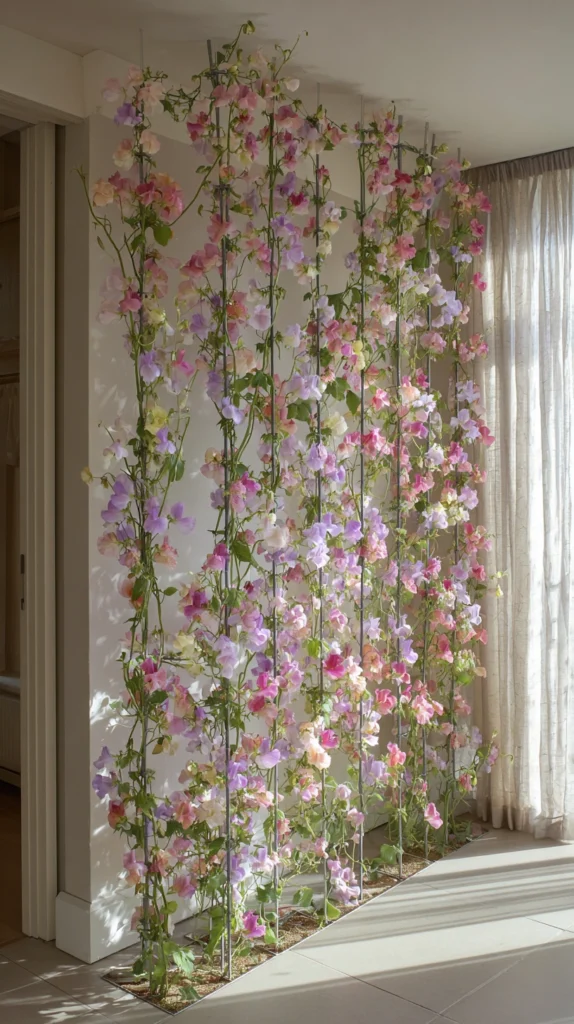
Cost: $3 – $6 per packet | Days to bloom: 65 – 90 days
Sweet peas are not the fastest on this list but they produce the most intensely fragrant flowers of any seed-sown annual and the combination of fragrance, delicate flower form, and extraordinary colour range makes them worth every day of the slightly longer growing period. The speed is maximised by sowing in autumn or early spring — autumn-sown sweet peas overwintered in a cold frame or greenhouse flower three to four weeks earlier than spring-sown ones and produce longer stems and more flowers per plant through the peak of their season.
For fastest spring results, sow in January or February in individual deep cells indoors — sweet peas need the depth for root development that standard cell trays do not provide. Soak seeds overnight before sowing to soften the seed coat. Transplant outdoors once established in April with supports in place. For the most fragrant varieties choose Spencer types — Matucana, Cupani, and Painted Lady are the three most intensely fragrant heritage varieties available. Annual cutting of stems is essential — a single unpicked pod stops flower production within days of forming.
Growing tip: Pinch out the growing tips of sweet pea seedlings once they reach 10–15 cm height to encourage multiple stems from the base rather than a single main stem. A pinched sweet pea plant produces four to six flowering stems rather than one or two, significantly increasing both the number of cut flowers available through the season and the overall visual impact of the climbing plant as it covers its support structure.
7. Cosmos
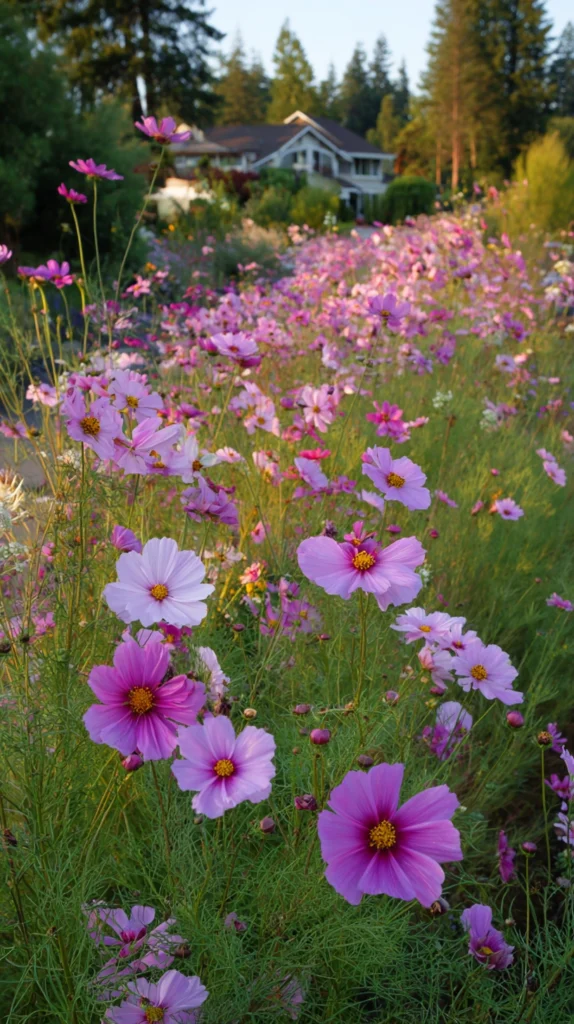
Cost: $2 – $5 per packet | Days to bloom: 55 – 70 days
Cosmos is one of the most effortlessly beautiful annuals available from seed — the feathery, ferny foliage and the large, single-petalled flowers in pink, white, crimson, and bicolour produce an airy, graceful display that suits both formal and informal garden styles and looks genuinely natural in any mixed planting. It is also a cut-and-come-again flower of the best kind — every stem cut for a vase stimulates two to three new buds to develop below the cut point, keeping the plant in active flower production until the first frost.
Sow outdoors from late April or start indoors in March for the earliest flowers. Cosmos dislikes cold soil and germinates poorly below 15°C — patience until the soil warms produces better results than an early sowing into cold ground. Sensation Mixed and Purity White are the most reliable varieties for a combined cutting and garden display. Sonata varieties are more compact at 30–40 cm and suit containers and smaller borders. Thin to 30–45 cm spacing — cosmos plants need room to develop their characteristic bushy, open form.
Growing tip: Stake tall cosmos varieties — Sensation and Double Click reach 90–120 cm — with a few bamboo canes and a ring of twine at 40–50 cm height from the ground before the plants reach that height. An unstaked cosmos plant in any position exposed to summer wind falls completely flat in the first significant storm and rarely recovers its upright form afterward. A simply staked plant bends with the wind and springs back into position every time.
8. Marigold (Tagetes)
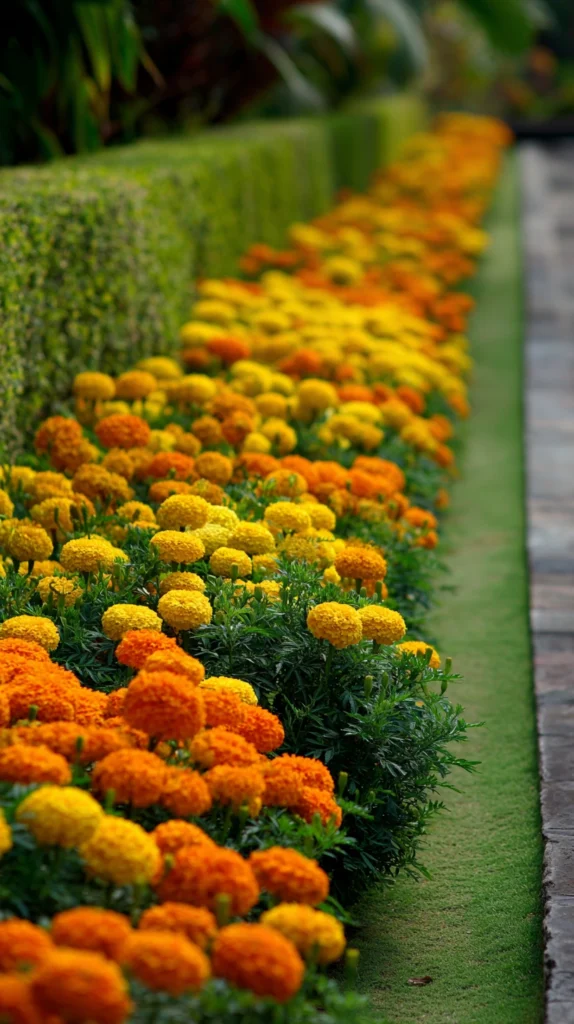
Cost: $2 – $5 per packet | Days to bloom: 45 – 60 days
Marigolds are the most reliably fast-blooming and most universally successful annual available from seed — they germinate readily, establish quickly, tolerate a wide range of growing conditions, and produce vivid orange, yellow, gold, and rust-red flowers from early summer to the first hard frost without any deadheading or significant management required. They are also among the best companion plants available for a vegetable garden, deterring aphids and attracting pest-eating beneficial insects.
African marigolds (Tagetes erecta) produce the largest flowers and the tallest plants at 40–90 cm. French marigolds (Tagetes patula) are more compact at 20–35 cm, more weather-resistant, and produce more individual flowers per plant through the season. Signet marigolds (Tagetes tenuifolia) have fine, ferny foliage and small single flowers that are entirely edible. Sow indoors in March or outdoors from mid-May. All marigold species germinate in three to seven days at 18–21°C and grow quickly to their first bud stage.
Growing tip: Deadhead French and African marigolds every five to seven days through the peak of the season to maintain the continuous, abundant flower display that makes marigolds so visually effective as a garden or border plant. Marigolds left without deadheading develop a tired, seed-pod-dominated appearance within three to four weeks of their first flowering flush — the same plants managed with regular deadheading remain in active, generous flower for the entire growing season through to October.
9. Nigella (Love-in-a-Mist)
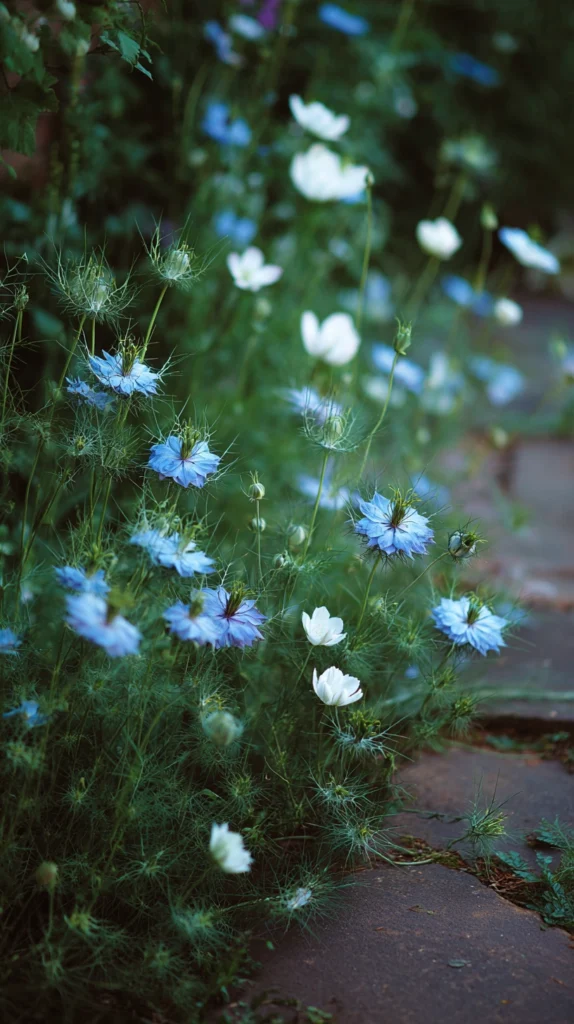
Cost: $2 – $4 per packet | Days to bloom: 55 – 70 days
Nigella produces one of the most distinctive and most delicately beautiful flowers of any annual available from direct sowing — the blue, white, or pink flowers surrounded by a ruff of feathery green bracts have the appearance of something rare and complicated but the growing requirements of something entirely straightforward. The swollen seed pods that follow the flowers are as decorative as the blooms and extend the ornamental interest of the plant from June through to September within a single growing season.
Sow directly outdoors from February onward — nigella tolerates cold soil and benefits from a cold period that breaks dormancy and improves germination. Scatter-sow thinly onto prepared bare soil and thin to 20–25 cm spacing. Miss Jekyll is the most reliably blue variety and the most frequently grown. Persian Jewels Mixed provides the full colour range including soft rose, pale blue, and white. Nigella self-seeds with remarkable reliability and a bed established in the first year returns spontaneously in subsequent seasons at zero additional cost or effort.
Growing tip: Allow the seed pods of nigella to develop fully and ripen to a paper-brown colour before cutting them for dried flower arrangements. Nigella seed pods cut when green and dried indoors retain a clean, pale green colour. Pods left on the plant until fully ripe develop the brown, striped character that makes them most attractive in dried arrangements and that is genuinely striking in a winter bouquet of dried flowers alongside pampas grass and poppy heads.
10. Poppy (Papaver)
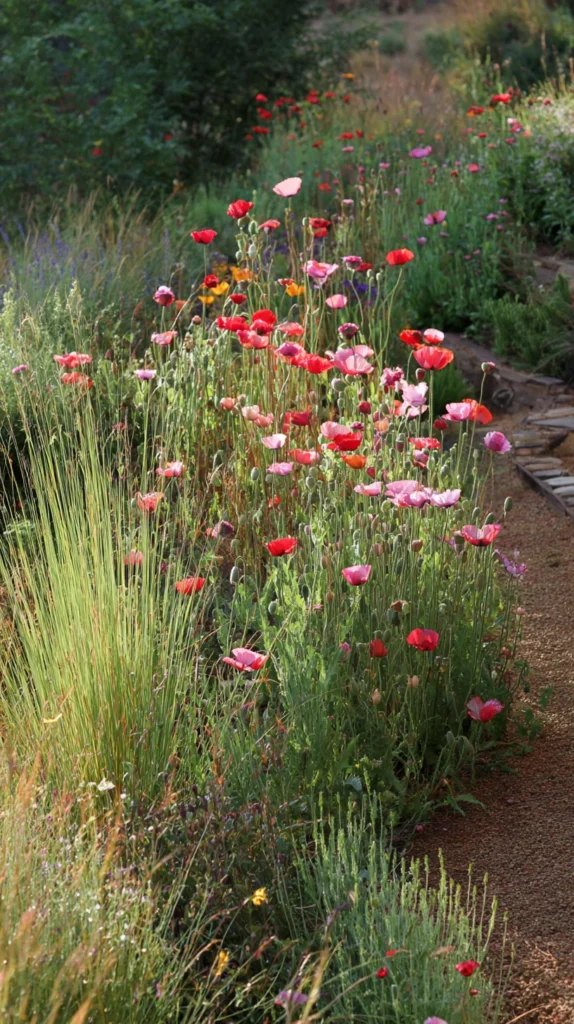
Cost: $2 – $5 per packet | Days to bloom: 50 – 70 days
Annual poppies — both the Shirley poppy (Papaver rhoeas) and the opium poppy (Papaver somniferum) — are among the most dramatic and most colourful fast-growing flowers available from direct sowing. The large, crepe-paper flowers in red, orange, pink, purple, and white are individually short-lived — each bloom lasting two to three days — but the plants produce a continuous succession of buds that keeps the display in flower for five to six weeks from the first bloom.
Sow from February onward directly onto the prepared soil surface — poppy seed requires light to germinate and should not be covered. Both species produce a taproot that cannot be transplanted successfully. They prefer cool conditions for germination and establishment, making them ideal for early sowing when other annuals cannot yet be started outdoors. Shirley poppies in a mixed packet produce the classic soft-toned cottage garden display. Opium poppies in Laciniatum (fringed petal) or peony-flowered forms provide a more dramatic, double-flowered display.
Growing tip: Mix poppy seed with dry silver sand at a ratio of one part seed to ten parts sand before sowing. The sand dilutes the tiny seed and makes even distribution across the sowing area significantly easier — preventing the dense clumping that occurs when poppy seed is scattered directly from the packet and that requires laborious thinning to correct before the seedlings become too established to disturb without damage.
11. Larkspur (Consolida)
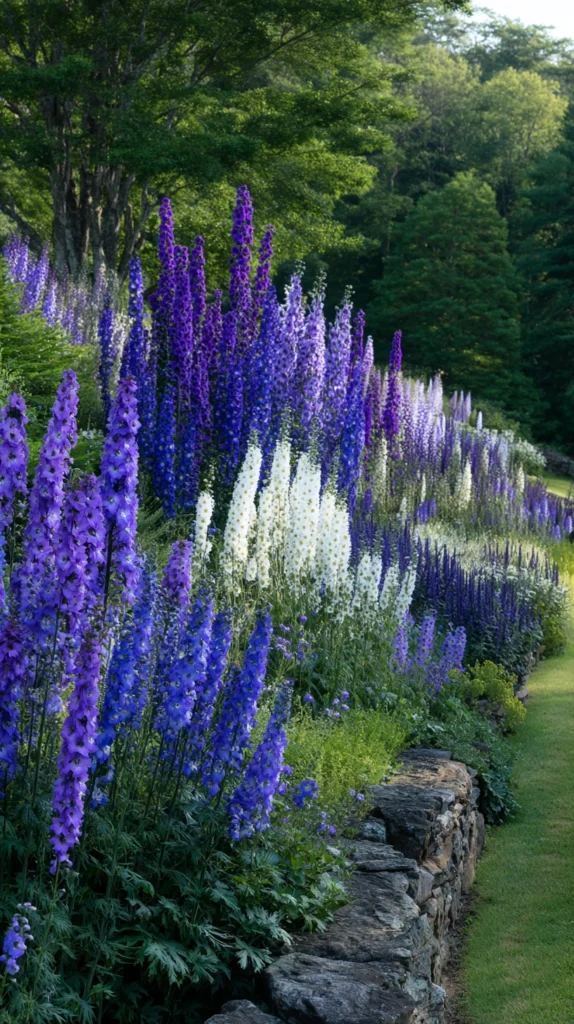
Cost: $2 – $4 per packet | Days to bloom: 55 – 65 days
Larkspur produces tall, elegant spikes of densely packed flowers in blue, pink, purple, white, and bicolour — the annual equivalent of the perennial delphinium but grown from seed in a single season and requiring none of the ongoing management that established delphinium clumps demand. The flowers last exceptionally well as cut stems — up to ten days in a vase — and dried larkspur retains its colour more completely than almost any other dried annual flower available from the same growing season.
Sow directly outdoors from late February onward — larkspur prefers to germinate in cool conditions and performs poorly when sown into warm summer soil after May. It also resents root disturbance and must be direct-sown in its final growing position. Thin to 20–25 cm spacing. Giant Imperial Mixed provides the tallest and most floriferous plants at 90–120 cm height. Dwarf Hyacinth-flowered varieties are more compact at 40–60 cm and suit smaller borders and container positions.
Growing tip: Sow larkspur in autumn — September or October — for the most impressive flowering display the following summer. Autumn-sown larkspur overwinters as small, cold-hardy seedlings, develops a deeper root system through the cooler months than a spring sowing can establish, and produces taller, more floriferous plants that flower two to three weeks earlier in the season than an equivalent spring sowing in the same garden position.
12. Phacelia
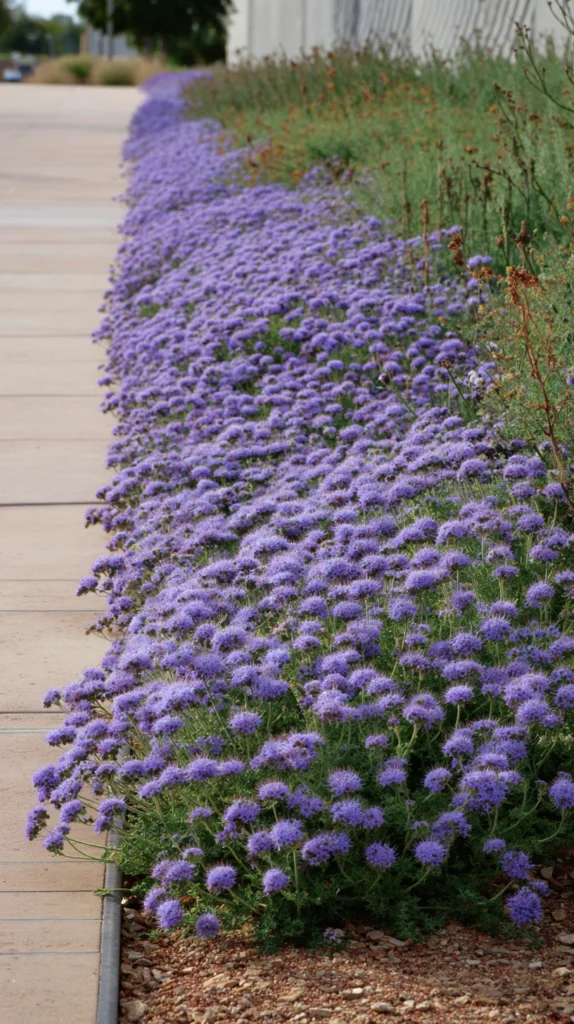
Cost: $2 – $4 per packet | Days to bloom: 40 – 55 days
Phacelia tanacetifolia is one of the fastest-flowering annuals available from seed and simultaneously one of the most intensely pollinator-visited plants in any garden through its entire flowering period. The vivid violet-blue bell-shaped flowers are produced in characteristic unfurling crozier clusters that open progressively over a four to six-week flowering period and attract bees of every species at a density that makes the plant genuinely audible at close range during the peak of the flowering season.
Sow directly outdoors from March onward onto prepared bare soil — phacelia germinates readily at cool temperatures and does not require the warmth that many annuals need for reliable establishment. Scatter the seed thinly and press lightly into the soil surface. Thin to 20 cm spacing once seedlings reach 5 cm height. Phacelia is also an excellent green manure crop — plants dug into the soil before flowering enrich the soil with organic matter and fix nitrogen from a root system that develops surprisingly quickly from germination to the point of soil incorporation.
Growing tip: Wear gloves when handling phacelia plants — the foliage contains compounds that cause contact dermatitis in some people, producing an itchy rash on sensitive skin that can be uncomfortable for several days. The condition is common enough to be worth mentioning before sowing and is entirely preventable with the simple precaution of wearing gardening gloves during any handling of the plant from seedling stage through to seed collection at the end of the season.
13. Borage
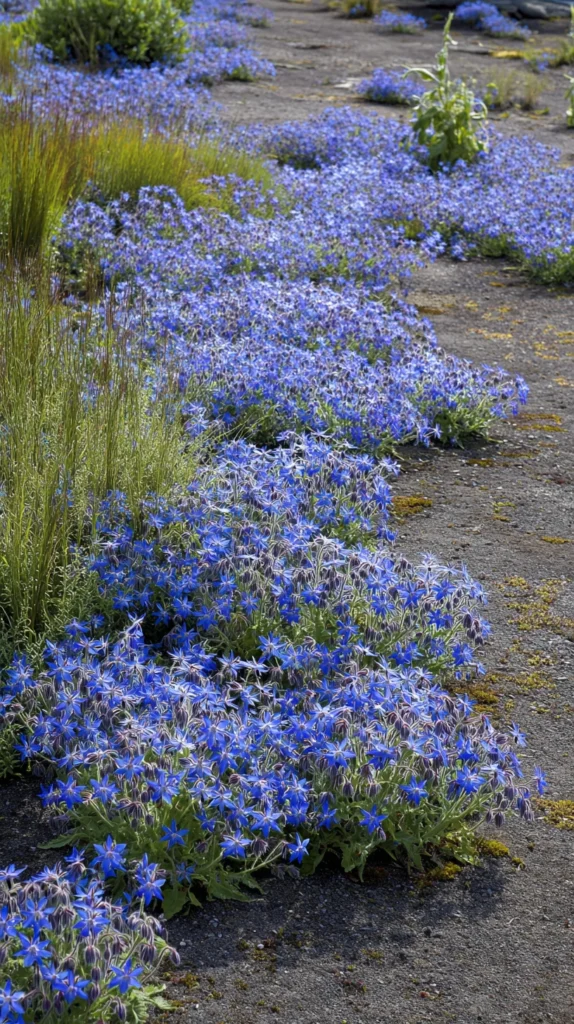
Cost: $2 – $4 per packet | Days to bloom: 50 – 60 days
Borage produces its distinctive vivid blue star-shaped flowers — one of the truest blues available from any garden plant — in an almost continuous succession from early summer to the first frost. The flowers are fully edible with a mild cucumber flavour and are among the most beautiful and most sought-after edible flowers for garnishing desserts, cocktails, and salads. The plant is also a prolific self-seeder that, once established, plants itself throughout the garden each season without any further seed purchase required.
Sow directly outdoors from April onward — borage dislikes transplanting and must be direct-sown in its final growing position. The seed is large, easily handled, and germinates reliably in three to seven days in any warm soil condition. Sow 2–3 cm deep at 30 cm spacing and thin to the strongest plant at each position. Borage grows large — reaching 60–90 cm in good conditions — so allow adequate spacing and site at the back of a border or in a position where its exuberant size does not overwhelm smaller neighbouring plants.
Growing tip: Harvest borage flowers in the morning and freeze individual blooms in ice cubes for use in cold drinks through the summer. A single borage flower frozen in an ice cube produces one of the most beautiful and most genuinely surprising drink garnishes available at any cost — the blue flower preserved in clear ice, visible in a glass of cold water or a summer cocktail, is a detail that genuinely delights everyone who sees it for the first time.
14. Rudbeckia (Black-Eyed Susan)
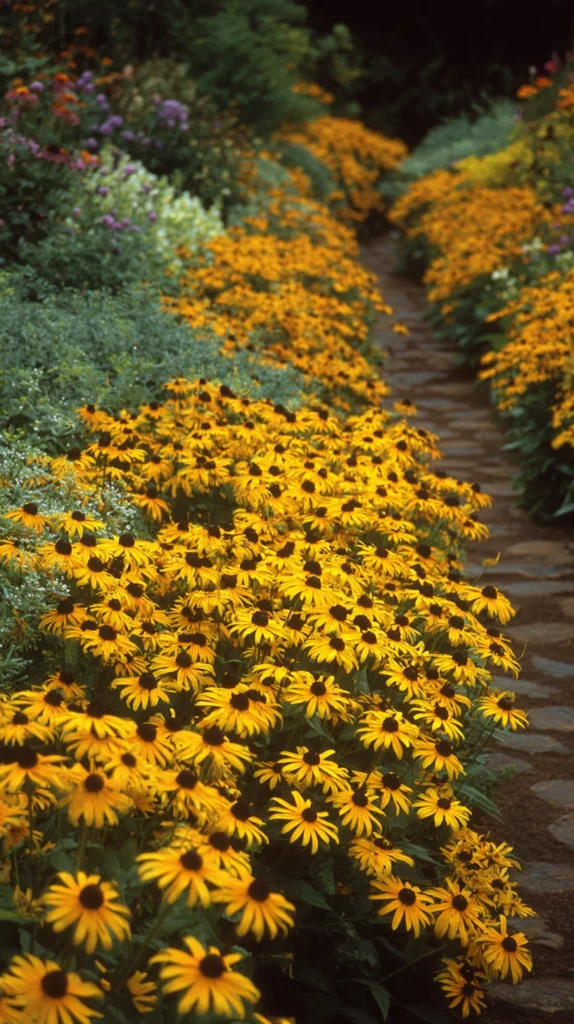
Cost: $2 – $5 per packet | Days to bloom: 70 – 80 days
Rudbeckia — annual varieties from seed — produces the most reliably warm, late-summer colour available from a seed-sown annual, with large golden-yellow daisy flowers surrounding a prominent dark central cone that gives the plant its common name. It blooms from July through to the first frosts, filling the garden with sunflower-like colour at precisely the time of year when many earlier-sown annuals are beginning to flag, and it is one of the best cut flowers available for long-lasting indoor arrangements through August and September.
Sow indoors in March for the earliest flowers in July — rudbeckia is one of the slower annuals on this list and benefits from the head start an indoor sowing provides. Germinate at 18–21°C and transplant outdoors after the last frost into a position in full sun. Rudbeckia hirta varieties — Cherokee Sunset, Prairie Sun, and Rustic Dwarfs Mixed — are the most commonly available annual types. All tolerate summer drought once established and maintain their flowering through the driest August conditions that defeat many other summer annuals.
Growing tip: Grow rudbeckia alongside cosmos in a cut flower bed — the two complement each other perfectly in both the garden and the vase, with the fine, airy cosmos foliage and petals contrasting beautifully against the bold, solid rudbeckia flower heads. A vase of mixed cosmos and rudbeckia stems cut on the same morning from a combined cutting bed is one of the most generous and most immediately appealing late-summer arrangements available from any garden regardless of its scale or complexity.
Every flower on this list asks the same straightforward things of a gardener who wants results quickly: sow at the right temperature, give adequate sun, water consistently without making the foliage wet, and cut or deadhead to keep the flowers coming. None of these requirements are difficult. All of them make a measurable difference to the speed and quality of the results.
Start with two or three varieties from this list rather than attempting all fourteen simultaneously — a zinnia, a cosmos, and a sunflower will teach you more about fast seed-growing in a single summer than any number of articles can, and the results will motivate you to sow more widely the following season. The fastest-growing flowers are always the best teachers of what a garden needs to thrive.